Escoffier, Ikeda, Umami…


Dr. Kikunae Ikeda, who is credited (and rightfully so) with the “discovery” of Umami.
Escoffier, Ikeda, Umami…

If you are one of my students (or an avid reader of this blog), you know that I think it is very important to differentiate between “taste” and “flavor” when discussing wine (or food, for that matter).   One of the reasons for this is that I teach future chefs and sommeliers, and as future professionals I think it is important that my students use the correct terminology.  Another reason is that “taste” and “flavor” are two totally different factors in the discussion of food and wine pairing.

So, one of the first questions I address in my Professional Wine Studies class is “What is a taste, and what is a flavor”?  It sometimes takes several weeks for my students to use the two terms in the proper context, so I begin with the simple fact that flavor is a combination of taste, aroma, and texture, and there are (depending on who you ask) five or six generally accepted “tastes”. 

A “taste” is defined as “a sensation that can be perceived using only the human tongue, or the taste buds”. Just a few years ago it was generally accepted that there were four basic tastes, each able to be sensed in all areas of the tongue but for many people perceived most dramatically in a particular region of the palate.  The first taste to be detected, and the one most universally enjoyed is sweetness.  The taste of sweetness evolved as a survival mechanism to point the way to energy-yielding carbohydrate.  The second taste to be perceived is generally acidity, which is sensed by most people most readily on the sides of the tongue.  Salt, generally senses in the middle of the tongue and bitterness, easily detected at the back of the tongue are the next two.

The sensation we now call the “fifth taste” is Umami.  Umami was first described in the early 1900’s by Dr. Kikunae Ikeda of Tokyo Imperial University.  Dr. Ikeda was determined to find the source of what the Japanese had long called the “deliciousness” or “savoriness” of food cooked in dashi, which is a sort of stock made from kombu (kelp).  Dr. Ikeda managed to discover the true nature of this flavor enhancer when he succeeded in extracting an amino acid, glutamate, from kombu.  Umami was referred to as “deliciousness, savoriness, or meatiness” until 2000, when a taste receptor for glutamate was discovered and  identified as an umami receptor by researchers at the University of Miami (Florida, United States) School of Medicine, confirming it as the official “fifth taste”. 

Auguste Escoffier…he may have never used the word, but he was nonetheless a great proponent of Umami.

Interestingly enough, culinary historians now argue that Auguste Escoffier, the great French Chef of the early 1900’s, is also one of the “discoverers” of umami, despite the fact that he did not know or use the word.  It seems that Escoffier was one of the first chefs to utilize reduced veal stock on a wide scale in professional kitchens.  Escoffier based many of his recipes, particularly his sauces, on reduced veal stock.  It was easily recognized that dishes cooked with veal stock were “delicious”! While Escoffier most likely did not realize it, this veal stock reduction created a liquid rich in the amino acid glutamate, which lent that “deliciousness”, in the form that we now recognize as umami, to many of his preparations – to the delight of his customers; and to the amazement of modern sensory science.

To make matters even more interesting, scientists have identified a substance named “kokumi” that is being touted as the “sixth taste”. Kokumi has been identified as a unique taste, complete with an identified sensory receptor in the taste buds, and is thought to be the taste component of the nutrient calcium.  The discovery of kokumi has opened up the possibility that there may be many more tastes identifiable by the human tongue; perhaps each nutrient has its own unique taste component.  If this is indeed the case, my “Basics of Sensory Evaluation” class just got a lot more interesting!


Tales of the Vine: The Evil and Disloyal Plant Gamay

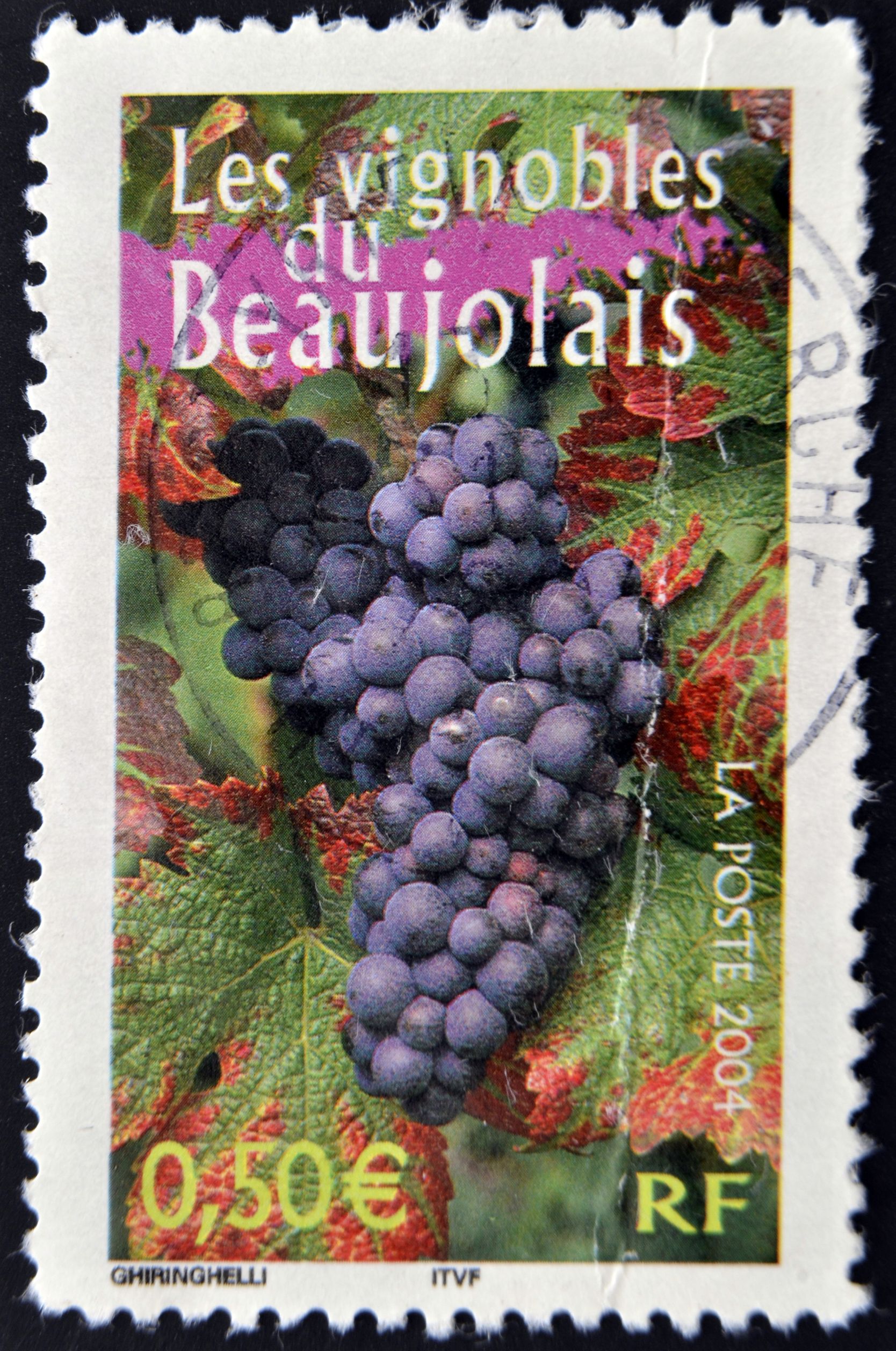
The Story of Beaujolais…

Philip the Bold, Duke of Burgundy, was one of the most powerful men in France from 1388 until his death in 1404. Philip managed to keep Burgundy independent from France and doubled the size of his dukedom by marrying the Margaret III, Countess of Flanders. Philip was an excellent capitalist and under his rule the wines of Burgundy became quite fashionable and expensive. Philip the Bold is said to have selected the clone of Pinot Noir that became the mainstay of Burgundy’s red wines and is credited with having chosen the name “pineau noir”, meaning “black pine cone”, due to the shape and size of the grape clusters.

Enamored as he was with the red wines of Burgundy, Philip was infuriated when the wine growers of his region started to plant Gamay grapes in the vineyards of Burgundy. The Gamay vines were vigorous, easy to grow and high-yielding, and their rich, fruity wines were at their best while young, making Gamay a cash-flow wine the growers loved.
 
Philip felt the presence of Gamay in the vineyards of Burgundy would harm the reputation of the fine wines he had worked so hard to promote, so he banished the grape from his kingdom. He declared Gamay “foul” and “harmful”, and in a royal decree denounced the “tres mauvais et tres desloyaus plant nomme gamay”, translated as, “the very evil and very disloyal plant called gamay”. Philip thus forbade the cultivation of Gamay in Burgundy and banished it from the Kingdom.
 
The despised Gamay was down but not out, for it soon began to thrive just beyond the Southern border of Burgundy in the region known as Beaujolais. Beaujolais, with its cold winters, hot summers, and decomposed granite soil is now known to be the one perfect spot on the face of the earth to grow Gamay. One of the wines of Beaujolais, Beaujolais Nouveau, is the first French wine to be released with every year’s new vintage, and is one of the most popular of all French wines.


The Real Rules of Food and Wine Pairing, Part Three

YUEUURXES262

In the last two posts, we’ve learned that food and wine should be paired up with an eye to their tastes, flavors, and textures.  We’ve also committed to heart the three concepts most important to making that world-class match.  Today…we reveal the “real rules” -those flavor dynamics that occur when wine meets food – and how to make them work for us!

The Real Rules…Here they are!  

  1. Any level of acidity in food…whether it is a squeeze of lemon or a topping of tomatoes, will diminish your ability to taste acidity in wine.  Simply stated, acid in food makes acid in wine less apparent.  If you are starting with a tart, high-acid wine, acidic foods will make your wine taste smoother.  The flip-side of this rule is that acidic foods can wash out low-acid wines and make them taste flabby – beware!  Acidic foods require high-acid wines.
  2. Sweet food will make the sweetness of a wine less apparent and bring out the other characters of a wine, be it acid, tannin, or bitterness.  If a wine does not contain any discernible sweetness, sweet food will reduce the fruity flavors and bring out acidic, tannic, and earthy tastes and flavors.  One of the biggest mistakes people make is pairing a savory food with a sweet sauce…like roast pork with apples…with dry, tannic wines.  Such dishes require a slightly sweet wine – or a very, very fruity wine for a good match.
  3. Fatty foods will smooth out both the tannin and acid in any wine.
  4. Salty food goes well with acidic wines – they “turbocharge” each other.
  5. Salty food goes well with slightly sweet wines – it’s the trail mix effect.
  6. Salty foods can bring out the bitter quality of tannic wines – beware!
  7. Bitter tastes in foods enhance bitter tastes in wines – beware!!
  8. Matching a flavor in the food with a similar flavor in the wine (such as “herbal”) is called a “flavor bridge” and will most likely be a great match.  Flavor matching is almost always successful and can be a very fun, creative way to pair up food and wine…but be sure the taste components are dealt with before you attempt any flavor match-ups!
  9. Flavor contrasts, will work very well when the flavors mesh together.  Experiment and have fun!  Fruit with Fish?  Herbs with Lamb?  If it works, we call this blend of flavors a “natural affinity” (meaning quite simply “they go well together!).  Happy note:  almost all flavors in food and wine go well together…it’s rare to find a real “clash”.
  10. Texture matches, such as light-bodied wines with light-bodied foods, and rich wines with rich food, are always a reliable match.  Many sommeliers consider this the most important part of food and wine pairing.  (Not me.  You know what I think…it’s all about TASTE!)

So…there you have the theory portion of your food and wine pairing knowledge.  Now..how about the practical???  Stay tuned – In the near future, I’ll be discussing specific pairings – complete with recipes, recommended wines, and (because I am the Bubbly Professor), the theory and science behind why these pairings work.  Cheers and Bon Appetit!

The Real Rules of Food and Wine Pairing, Part Two

In Yesterday’s post we learned that food and wine pair up, for better or worse, based on their tastes, flavors, and textures.  Today, in installment number two, we Get to Know “The Three Concepts”  vital to a perfect pairing.


Step two on the path to becoming a food a wine genius:  Master the Three Key Concepts…repeat them like a mantra!

Key Concept #1:  You don’t pair to flavor, you pair to taste.

Lots and lots of well-meaning people think they know food and wine pairing because they heard – somewhere in wine and food cliché-land – that you can match or contrast flavors in food and wine.  That’s true, you can…but the result is virtually meaningless (and can be a disaster) if you haven’t first dealt with the major taste components in both the food and the wine. 

It’s worth repeating…the most important component in any food and wine match-up is the taste components…sweet, acid, salt, bitter, oil, and tannin.  The presence of any of these in your food will change the way you perceive your wine…for better, or worse!

Key Concept #2:  You don’t pair to protein, you pair to preparation.   

If someone tells you they are serving up turkey, fish, or poultry for dinner, your food-and-wine pairing job has just begun.  About the only usable information we can get from this tidbit is a hint as to the overall texture of the dish.  Otherwise, we have nothing.  Let’s face it, protein is bland.  Fish, chicken, and pork have almost no taste components in them (save for varying levels of fat and a bit of umami – more on that later) before they are prepared. 

What do you really need to know before making a match?   Hopefully, if you’ve read this far, you know…you want to know what tastes are involved.  It all depends on preparation…is it broiled, fried, steamed, and even more importantly…how is it seasoned, served, or sauced?  That’s what you need to know!

Key Concept #3:  You pair to the “The Key Elements” in a dish. 

To be really, really good at pairing food and wine, you must develop an instinct for discerning the key elements in a food or wine….the tastes, the flavors, and the textures.  Most meals are a cacophony of tastes, flavors, and textures, and most wines contain at least two taste components and might carry dozens of flavors.  It would take hours to figure out a perfect pairing based on all the information available, even for the simplest meal!  So, we have to learn to cut through the clutter and figure out the one or two elements of a wine or a dish that will most impact the pairing.

A very good rule of thumb is that is the major taste components (acid, sweet, salt, bitter, oil, or tannin) are present in a discernible level in either the food or the wine, those taste components will be among the key elements.  After you have figured out the tastes, try to discern the key flavors.  Other components that might be one of your key elements include spiciness, heat as from chili peppers, or an extreme of texture such as the lightness of a lemon soufflé or the heaviness of roast prime rib accompanied by cheddar cheese mashed potatoes.

One word of caution in this step is not to rely on generalities.  Wine and food are all about creativity and subtlety so take each wine and dish on its own merits. 

Once you develop a knack for breaking a food or wine down into its key elements, and you can learn to apply a few simple rules (see tomorrow’s post) and have a great chance at a great pairing!

The Real Rules of Food and Wine Pairing, Part One…


The Truth about Food and Wine Pairing!

Or, as Miss Jane likes to call it, “Wine and Food – Deconstructed”

 Forget everything you think you know about food and wine pairing!

White Wine with Fish…

Strawberries and Champagne…

Red Wine and Chocolate…

Whatever you’ve heard, forget it!

I’m sorry to be the one to tell you this, but food and wine pairing have nothing to do with wine color, pairing to proteins, or “matching or contrasting” flavors. 

The truth of the matter is this: food and wine pair up, and pair up successfully or disastrously, based on three components:  tastes, flavors, and textures.  Learn the principles behind these truths and you will become an instant food and wine genius!  Who can resist that?

To Get Started…Defining “The Three Components”

Tastes include Sweet, Salt, Acid, Bitter, Oil, and Tannin.

A taste component, as you should have learned in elementary school, is something that can be perceived using just your tongue, or your taste buds – remember the “tongue map” and the areas where you can detect salt, sweet, acid, and bitter?  Time to dust off that memory!  I also include tannin and oil as taste components, as many scientists believe they are actaully tastes, and they have such a profound impact on a food and wine pairing. 

The truth is this:  if a wine, or a dish, is sweet, salty, acidic, bitter, or contains a lot of mouth-coating oil or tongue-drying tannin, that fact must be dealt with to make a successful match! 

Taste Components are almost always the most important factor to consider in a food and wine pairing.  Specific tastes in food will change the way you perceive specific tastes in wine.  These changes are predictable and consistent, and are outlined in my “few simple rules” chart – to be posted in the near future.

 Flavors….Fruity, Floral, Herbal, Spicy, Earthy, Nutty, Oaky, Meaty…the list goes on!

 Flavors are sensed as a combination of taste, aroma, and texture.  Please don’t confuse flavor with taste!  Cherry is a flavor, sweet is a taste (repeat after me!).  Flavors in food and wine are not that big of a deal when it comes to a successful match.

Flavors are very forgiving…they can be successful in either the “match” or the “contrast” mode.   But never, ever, attempt to pair to flavors until you have dealt with the tastes!  Flavors can be matched to highlight the flavor, such as herbal wine with herbal food.  This is called a “bridge flavor” and can make for a very successful match.  Or, flavors can be contrasted to make a meal balanced and interesting.  For instance, we can cool down a spicy food by pairing it with a fruity wine. 

Texture…Light-Bodied, Medium-Bodied, Rich, Round…

Textures are discerned using the tactile sense of touch.  Textures should usually (although not always…) be matched.  In other words, serve light bodied food with light bodied wine, and rich food with rich, full-bodied wine. However, there are some exceptions…if you want one part of the meal (that is, the food or the wine) to really shine, you can mix textures in what I like to call “the wind beneath my wings” effect. 

Textures are generally best matched rich for rich or light on light, however exceptions can be interesting.

 So….that’s just the beginning. You are two more posts away from being a wine and food genius!

Check back tomorrow for installment number two.


Follow

Get every new post delivered to your Inbox.

Join 942 other followers