P.S. I Love You – Petite Sirah, That is!

Petite Syrah...Neither Petite nor Syrah!

Zinfandel and Malbec, take a seat…the big dog has arrived. I hold in my hand a glass of  Petite Syrah.  This wine looks like red crude oil, weighs as much as a linebacker, blasts flavors like a blow torch and leaves some cotton on the roof of your mouth.  Despite the name, there is nothing petite about Petite Sirah. It’s not a small version of the grape known as Syrah.  And, for the record, the “i” you see me using isn’t a typo – but if you spell it with a “y” that’s ok as well.

So, if Petite Sirah is not petite and not Syrah, what is it?  The grape is one of those vinous mysteries, solved CSI-style with the miracle of modern DNA testing in the U.C. Davis laboratory of Dr. Carole Meredith. 

What we call Petite Sirah, it turns out, is a very old variety born and bred in the1870’s by a French Nurseryman named Dr. Francois Durif.  It seems that the good doctor wanted to create a grape that had the flavor components of Syrah and the resistance to powdery mildew of a grape known as Peloursin. He crossed Peloursin and Syrah and named the resulting grape, like any proud father, after himself.  Durif became a minor success, was planted in quite a few vineyards, and was used as a blending grape in Rhone Reds.  But, alas, Durif never really became a major French varietal as it failed to produce high-quality, distinguished wines in the South of France.

Durif migrated to the United States in the 1890’s, where it fared somewhat better.  Durif thrived in the California sun, was easy to grow and produced a high yield of  four to eight tons per acre in the Sierra Foothills and Central Valley of California.  In those days, Durif was a major player in the red blends of the Golden State.  However, the name got lost along the way.  In the early days of California wine making, most wines were field blends – wines made from a variety of grapes grown together in one vineyard with little regard to varietal pedigree.  Later, when someone needed a name for the varietal, the grape was named “Petite Syrah” due to its Syrah-like flavor and the small size of the grape – the only possible explanation for the moniker “petite”. 

Those small grapes grow in big clusters with very thick skins and high tannins.  It was this thick skin that most likely enabled the varietal to survive what I like to call our national disgrace – American Prohibition.

During prohibition most vineyards were destroyed.  Those that survived negotiated good contracts with the church (I can only imagine there was a huge increase in demand for sacramental wine in 1930), or were shipped around the country as “flavorings” or juice.  Casks of wine grape “flavorings” from California were often shipped via slow-moving trains to New York and Boston with labels warning:  “Do not allow juice to come in contact with two ounces of dried yeast…do not allow juice and yeast mixture to remain at room temperature for two weeks, do not stir mixture twice a day, and under no circumstances should you filter and chill the resulting liquid.  Do not, at any time drink the resulting liquid because if you did it would be illegal.” 

Due to its thick skins and high levels of tannin, Durif grapes held up well under the long, hot journey east and therefore, many of its vineyards survived.  After prohibition ended, Durif, now known by the name “Petite Syrah” was widely planted in California and was often  used to punch up flavor, body, and color in the ubiquitous red blends of the region.  Rumor has it P.S. was a major player in Gallo’s well-known jug wine, “Hearty Burgundy”.  

A good Petite Sirah has a deep red color, a hefty somewhat “rustic” feel and substantial but ripe tannins. Walk carefully around this wine…it can pack quite an alcoholic punch, sometimes reaching as high as 15%.  In the bottom of the glass you will find rich fruity aromas including of sweet plum, blackberry, cherry, currant and cassis.  Take a sip and you’ll notice the rich fruit flavors…I think this wine defines the term “jammy”. Go ahead and take another sip…look for the flavors of black licorice, chocolate, coffee, black pepper, vanilla, and cedar.  This wine can be quite complex…you might also find aromas and flavors of herbs, violets, brown sugar, orange peel, clove, and cinnamon.  It’s got a lot going on.

Petite Sirah is still grown inFrance, although like many a local celebrity, it was never much appreciated in its homeland. Australia has a few vines, as well as Argentina, Chile, Israel, and recently,WashingtonState. The one region to really take to Petite Sirah is California…wine producers there even have their own advocacy group called “P.S. I Love You” and aficionados call the wine by the affectionate nickname “Pets”.  The grape is grown throughout California and does particularly well in the warmer regions of the Golden State such as Lodi and the Sierra Foothills.  For my Texas readers, rest assured that since it thrives in hot climates and is mildew-resistant, Petite Sirah seems a natural match for Texas. 

Here’s my all-time favorite:

Texas Legato Petite Syrah, Texas Hill Country, 2009 – This wine was the hit of the weekend the last time my entourage and I took a Texas Winery Road Trip.  Rich and jammy with concentrated flavors of blackberry, chocolate, raspberry and black pepper, this wine paired beautifully with the Italian food we had for lunch.  I and each and every one of my pals on the road trip took several bottles of this wine home, and it tasted just as good with my roast pork, my grilled steak, and by itself on my back porch.

Wine and Romance

Is wine an Aphrodisiac? We certainly hope so!

It’s a timeless truth – Wine and Romance just seem to go together.  No less a sage than Ovid, in his 17 A.D. treatise entitled “The Art of Love” wrote:

 ”It warms the blood, adds luster to the eyes, and wine and love have ever been allies.” 

 Ancient Roman poets aside, I wonder, is there really a link between wine and romance? 

In support of this moonstruck mandate I offer the following hard science: According to the online research firm Cyberpulse, in a survey of over 500 women, 59% of the ladies would like their sweethearts to give them wine, rather than chocolates, on Valentine’s Day. (Sorry, gentlemen, flowers are de rigueur, even if they must come from the grocery store.)  The women were reported to feel than wine was “more adult and romantic than chocolate,” and that they prefer wine because “wine signifies sharing and spending time together.”

One reason – I suspect – that wine is linked to successful romance is that people seem more attractive after a glass or two of wine. In my wine tasting classes, I always admit that after first sip of Sauvignon Blanc I feel 10 degrees cooler, and other people appear 10% hotter.  I am relieved to have my suspicion, and that of generations of party people, affirmed by no less an institution than theUniversity of Glasgow in Scotland.  According to their research, another person will appear 25% more attractive after one glass of wine.  Unfortunately, that’s where the research ended…they failed to report if that other person appeared 100% more attractive after four glasses. (I believe this to be true.)

Then there is the subject of pheromones; those pesky little chemical messengers that can cause havoc in our minds and bodies.  Many people believe that pheromones are the reason that some foods and beverage possess aphrodisiac qualities.  Pheromones respond to certain odor stimuli and pass that information on to the brain, which may affect one’s state of mind, emotions, or mood.  Lucky for us, there are some wines that mimic the pheromones that are released by both men and women when they are, shall we say, interested. 

If one were interested in using the reputed aphrodisiac affect of wine to arouse the interest of a certain woman, one would reach for a glass (or a bottle) of Riesling or Chardonnay.  According to the research of Dr. Max Lake, reported in his book “Scents and Sensuality”, Chardonnay produces “neck blushing, pupil dilation, and other signs of sexual interest in a woman”.  The good doctor believes that Riesling evokes romance on the very first sip.  You must admit, Riesling is somewhat mysterious in its aromas of peach, pear, vanilla, perfume and wild flowers…like a bottle full of belly dancers waiting to be unleashed upon the unsuspecting world. 

Men, according to Dr. Lake, respond in a romantic way to red wine.  Your best bet for the wine-based seduction of a manly man is a hearty red wine that mimics good male cologne…look for a wine with earthy tones of truffle, spice, herbs and licorice.  I like to describe such wines as having a wild, untamed, character.  Cabernet Sauvignon, Syrah, and Sangiovese are good choices. 

As in all things, remember to enjoy wine and romance in moderation.  Besides the usual reasons for avoiding excess, such as avoiding public intoxication and not wanting to embarrass yourself, one would do well to heed the advice of William Shakespeare himself, when Porter, in Act III of “Macbeth” proclaims:

“Ah, wine…it provokes the desire, but it takes away the performance.”

How true, Porter…how true.

What??? Too obvious???


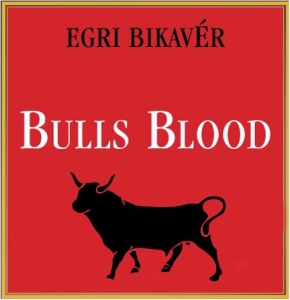
Tales of the Vine: Bull’s Blood

In the Northern Massif region of Hungary, the famous Egri Bikavér, or “Bull’s Blood Wine” is made in the area around Eger, a beautiful town about halfway between Budapest and Tokaj.

The name of the wine dates back to a Turkish invasion led by Suleiman the Magnificent around 1552.  During the invasion, Suleiman the Magnificent and his army of Turks attempted to siege of the Castle of Eger.  The defending Hungarians, led by Captain Istvan Dobo, were largely outnumbered by the invading army and the situation appeared dim. However, the Hungarian forces, fortified by days and nights of delicious food and large amounts of the local red wine, managed to successfully defend Eger. In doing so, the Turkish army was forced to withdraw, and Turkish westward expansion was delayed for forty years after this battle.

According to one legend, the enemy soldiers were frightened by the fierce fighting and red wine-stained beards of the soldiers.  Among the Turkish soldiers it was rumored that bull’s blood had been mixed into the wine, as otherwise the strength and firm resistance of the town and castle could not be explained.  Another legend states that the swords of the enemy could not cut through the Hungarian blood thickened by the wine.

The wine named for the legendary “bull’s blood” of the siege, Egri Bikavér, is still produced to this day, and is very popular on both the domestic and international markets.  Egri Bikavér is made up of a blend that has varied over the years, although the blend is anchored by the ancient Kardarka grape. Kadarka is a difficult grape to vinify, and has increasingly been replaced by Blaufränkisch, known locally as Kékfrankos.

In modern times, Egri Bikavér must contain at least three of the following 13 grapes: Kardarka, Kékfrankos (known as Blaufränkisch in German), Blauer Portugieser, Cabernet Sauvignon, Cabernet Franc, Merlot, Menoire, Pinot Noir, Syrah, Turán, Bíborkadarka, and the modern Austrian hybrids Blauberger and Zweigelt.

Tales of the Vine: The Hungry Black Rooster

The Hungry Black Rooster

The wine region we know as Chianti, running throughout the Tuscan landscape from Florence in the north and spreading south to the medieval town of Siena, is one of the oldest geographically defined wine regions on earth.  Winemaking in this region can be documented as far back as the 13th Century.  The first defined boundaries of the Chianti Wine Region were set in 1716 by The Grand Duke Cosimo III de Medici. 

 The area now known as “Chianti Classico” contains the original, historic center of the region.  Its wines are considered to be the “original” wines of Chianti and the best.  Winemakers in Chianti Classico guard the vineyards, the wine, and their region’s reputation fiercely.

In 1924, a group of grape growers and winemakers formed a group to promote and protect the image of the wines of Chianti Classico and took as their symbol the Gallo Nero, or Black Rooster.  In 2003 the Italian government gave the group, known as the Chianti Classico Wine Consortium, regulatory control of the entire production of Chianti Classico, and all the wines of the region now bear the symbol of the Black Rooster.  

The legend of the Black Rooster dates back to a 14th century boundary dispute between Florence and Siena.   After a long and drawn out battle, the two Republics settle the issue with a race between two knights on horseback.  According to the rules of the match, the knights would set off from their respective homes upon the crow of the rooster, in other words – you would think – at dawn.  The knights would race along the road between the two Republics, and where they met in the middle would be the official boundary line between Florence and Siena.

The townspeople of Siena chose as their representative a white rooster.  In order to make him a happy, strong singer, they fed and pampered their rooster until the appointed day. 

The people of Florence chose a black rooster and fed him very little, so little in fact, that on the morning of the contest he was so hungry that he woke up several hours before dawn, and crowed and crowed until he was fed.  Thus, the knight from Florence raced off for Siena in what was basically the middle of the night. Not surprisingly, he covered most of the road between the two Republics before he met up with the Knight from Siena. 

As a result, almost the whole of the land of Chianti was annexed to the Republic of Florence and the “Black Rooster”, or “Gallo Nero”  became the symbol of the Republic of Florence.  The Gallo Nero became the symbol of the original “Lega di Chianti” in the 16th century. 


Follow

Get every new post delivered to your Inbox.

Join 913 other followers