At Long Last…Wine on a Rope

10513848_sJust about everyone in the wine industry has been joking about “adult juice boxes” for years, and now…it seems like this time they really truly are here. Not only that, this wine tastes good and hangs around my neck.  Who can resist?

It seems a company called House Band Wines is making California Wines to the tag line of “hard workin’ wines to rock your taste buds!”  Cute! They make wine in “regular bottles” in several styles, includling California Chardonnay, California Merlot, and California Cabernet Sauvignon.  They also make a blend called “Red+5,” a blend of Merlot and Syrah, with small amounts of Cabernet Sauvignon, Petite Sirah, and Petite Verdot. Their white blend, “White+3″ is a blend of Chardonnay and Sauvignon Blanc with a touch of Muscat Canelli.

They all looked like fun wines…but I was distracted, delighted, and just a bit afraid of the wine in the 375-liter pouch.  With wine in a 375-ml eco-pouch, designed and ready to hang around my neck, hands-free, from my rock-n-roll lanyard (or, lets be real, my key fob), would I ever have a productive day again?

chard-merlot-finalAlas, my entire professional career I’ve been able to resist the siren song of a fully-stocked wine fridge humming along next to my desk…but this might be different.  

I tried a California Merlot, a good choice, I reasoned, as it would last all day as I scurried from meeting to meeting, grocery store and conference call. It did indeed dangle well on the end of my landyard (key fob), and the wine tasted pretty darn good.  Fresh, ripe dark fruit, a hint of vanilla, just enough zing.  If you get the chance, try some! 

You can learn more about House Band Wines here…and you’ll most likely see them at your next festival/garden party/barbeque. All places that need good wine (on a rope!)

What do Lentils, Honey, and Hay have in Common?

Hay BalesSo…what do lentils, honey, and hay have in common?  How about we throw in chicken, lavender oil, and walnuts?  Any ideas?  Ok…lets add 43 types of Cheese and 376 styles of wine.  Now you get it, right???

All of these products are Appellation d’Origine Protégée, or AOP-protected products from France. (Formerly known as or Appellation d’Origine Contrôlée, or AOC-protected products, which is still in use, along with the updated, all-EU version AOP .  Got that?)

All of you wine people out there know all about AOC laws, how confusing they can be to wine newbies, how every European Country has it own version (DOC, DO, OPAP and so forth) and how very recently the EU attempted to bring all 27 (soon to be 28) member countries under the same umbrella by creating the all-inclusive umbrella of the AOP.  Or we know just enough to get by!

A recent textbook editing assignment (about 2 months worth) has led me to be a bit more of an AOP/AOC expert than I care to be, but I must admit I have learned an awful lot along the way.  Did you know, for instance, that France currently has 43 AOP Cheeses?  Roquefort, they say, is the stinky cheese that started it all, centuries ago.  It seems that In 1411 King Charles VI (known as “The Beloved” in his youth and “The Mad” as Lentils-le-puy-en-velayhe got older) granted a monopoly for the ripening of the region’s sheep’s milk cheese to the people of Roquefort-sur-Soulzono.  To this day, according to AOP laws, only those cheeses aged in the natural Combalou caves of  Roquefort-sur-Soulzon may bear the name Roquefort.

The AOP Lentils, Lentils-le-Puy-en-Velay, I actually know from my chef days.  Widely referred to as ”French Green Lentils” these AOP lentils are in great demand all over the world due to their high protein content,  unique flavor, and ease of cooking.  All of these qualities derive from the thin soil of the town of Lu-Puy-en-Velay in the south-central France.

About that AOP Hay…Foin de Crau is an AOP designated Hay from the La Crau Region of Provence.  This is special hay due to the diversity of the grasslands where it grows, its rich mineral content, its digestibility and good flavor.  Admit it:  that doesn’t sound that much different from a wine description. If you would like, you can buy some Foin de Crau  here.

The AOP honey, Miel de Sapin de Vosges, sounds amazing.  If ever there was a product produced by buzzing little insects that deserves the protection of the French government, this is it.  “Sapin” is actually a type of fir tree that grow in the Vosges Mountain region of eastern France.  This dark brown, luscious honey is sometimes called ”Silver Fir Honey,” and while there are several AOP honeys, this type is produced only in the Vosges.

Wine Bottles on SideMy AOC/AOP research revealed some fascinating information on wine, as well.  For starters, there is a database called e-Bacchus that lists the current regulatory status of all the wines in the EU…from PDO to PGI and using traditional terms as well.  According to e-Bacchus, there are exactly 376 PDO wines in France.  Click here for a PDF of List of French AOP from E-Bacchus .  That should keep you busy for a while.

If you would like to research Walnuts from Périgord, Lavender Oil from Haute-Provence, Chickens from Bresse or any of the thousands of other AOP-protected items in the EU, just click here for the database.  Just make sure you have plenty of free time.  This is very interesting stuff.

The Bubbly Professor is “Miss Jane” Nickles of Austin, Texas…missjane@prodigy.net

A New Branch of the Chianti Family Tree?

Tree Use for ChiantiNews Flash!

Last month (February 17, 2013 to be exact), the Chianti Classico Consorzio approved the creation of a new top-tier classification of Chianti Classico DOCG wines to be known as “Gran Selezione.”  The term is expected to be approved by the Ministry of Agriculture, and if so, will be a quality level “above” Chianti Classico Riserva. 

It is estimated that approximately 7% of the production of Chianti Classico will be eligible for the  designation.  The first wines eligible to display the term on their label will be those from the 2010 vintage.

If you’ve been following my study guide on the wines of the Veneto (or even if you’ve been following Italian wines at all) you know that Italian wines are already surrounded by a jungle of regulatory and legislative classifications.  Luckily, this in no way affects how delicious, delightful, and affordable they can be!

In the interest of “keeping it simple.” here is a quick look at how this new branch of the Chianti family tree fits in with its brothers and sisters:

Chianti Classico Gran Selezione DOCG:

  • Must be produced from 100% estate-grown fruit
  • Minimum 30 months of aging  
  • Is intended to acknowledge vineyard-specific wines
  • Will represent approximately 7% of the production of Chianti Classico

chianti classico gallo neroChianti Classico Riserva DOCG:

  • Minimum 24 months of aging
  • Minimum 12.5% abv

Chianti Classico DOCG:

  • Minimum 12 months of aging
  • Minimum 12% abv

All versions of Chianti Classico must be a minimum of 80% Sangiovese, produced from grapes grown within the 100-square miles of the designated Chianti Classico region.  Up to 10% Canaiolo may used, along with up to 15% other varieties, of which Cabernet Sauvignon, Syrah, and Merlot are often used.  Yields are limited to 3 tons per acre.

Sangiovese in TuscanyBy the way, not everyone is thrilled about this new development.  A quick websearch on “New Chianti Classification” revealed a wide range of opinions up to and including disgust(!), bewilderment(!), and we are not amused(!).  Of course, many people also think it is a great idea, intended to showcase and honor the highest level of production of the region.  We will be watching how this plays out in the future!

My Source (in Italian): http://www.aisitalia.it/chianti-classico-gran-selezione.aspx

The Bubbly Professor is “Miss Jane” Nickles of Austin, Texas  – missjane@prodigy.net

If you think there is a Bubbly Professor Tuscany Quiz in your future…you are correct!


Tales of the Vine: Sherry, Sir?

"Sherry, Sir?" by William Powell Firth, 1853

Most of the students in my beginning wine studies class have never tasted real sherry.  If they have encountered it at all, it was most likely the faux version-in-a-jug known around here as “cooking sherry” and used for deglazing sauté pans in their culinary lab classes (what a shame).

They also tend to be of the opinion, common in North America, that Sherry is a drink consumed by British old ladies who sit around sipping Sherry, pinky fingers extended, while nibbling on cucumber sandwiches and bonbons.  

While this might be a mere cliché, one cannot deny the British love for Sherry.  The British have long had a love for Sherry, and are the largest export market for wines from Jerez to this day.  But have you ever wondered why?

The story goes back to the days of Sir Francis Drake, Queen Elizabeth, the famous Spanish Armada, and Europe’s exploration of the new world. 

In the 1400’s, the great capitals of Europe began sending explorers such as Ferdinand Magellan and Christopher Columbus to find passage ways for trade and to discover what lie beyond the wide oceans.  Christopher Columbus, despite being of Italian birth, made his most famous deal with King Ferdinand and Queen Isabella of Spain and set sail from Palos de la Frontera, Cadiz, and Sanlucar – all regions well known for wine.

Wine was considered absolutely necessary for these journeys, as any water on board would quickly become unfit to drink due to long length of the journeys. The wines for the ships were fortified with alcohol to give them some preservative effect, beginning the tradition of many such fortified wines.

These voyages were spectacularly successful for Spain as explorers began to return in ships heavily laden with gold, silver, and other wealth from the new world. At the same time that Spain was profiting from the plunder of Mexico and Peru, young Queen Elizabeth of England was benefitting from the wealth brought in by her expanding colonies in North America.

However, it soon became clear that America could not begin to produce the immediate wealth arriving by the galleon load from Spain’s richer New World territories. Knowing that an island kingdom must be strong to survive, Elizabeth turned a blind eye as Sir Francis Drake and other English sea captains raided and seized the treasures from Spain’s heavily laden and slow-moving gold ships. It did not take long for the King of Spain, Philip II, to have had enough of England’s daring Queen and her “sea wolves” and he soon hatched a plan to invade England.   

Golden-hinde_400In 1580, King Philip ordered that a great Armada, or Navy, be built.  His plan was to invade England, remove Elizabeth from the throne, and crown himself king in Westminster Cathedral.  However, Elizabeth heard of the plan and made a bold preemptive strike, led by the skilled seaman Sir Francis Drake.

Drake was sent out from Plymouth, on April 12, 1587. He appeared before Cadiz on April 29th, and late in the afternoon of that day he sailed boldly into the harbor, completely surprising the defenders, and throwing the Spanish land and naval forces there into a panic.

All the remainder of the day, and all the next day, Drake plundered and burned. Thirty-seven naval and merchant vessels were destroyed with very small losses on the English side. During the raid, Drake managed to seize 2,900 casks of Sherry from the Spanish naval stores, which he soon delivered triumphantly to Queen Elizabeth.

amontilladoAs you might guess, it became all the rage in England to drink the captured Sherry.  Spanish Sherry was suddenly the most popular drink in England.  Legend even tells us that the English loved to call it “sack” because, well, Drake had sacked the Spanish supply port. (There are other explanations for the term “sack” as well.)

In the ultimate show of British praise, Shakespeare praised Sherry, or “sack,” when he had Sir John Falstaff proudly declare in Henry IV, Part 2, “If I had a thousand sons, the first humane principle I would teach them should be, to forswear thin potations and to addict themselves to sack”.

At top -  “Sherry, Sir?” by William Powell Firth, 1853

Tales of the Vine: Champagne Charlie

Charles Camile Heidsieck was a successful French merchant who founded the Champagne firm Charles Heidsieck in 1851.  Soon thereafter, he visited the United Statesfor the first time, and immediately saw the potential for the American market.  He retained an American agent to facilitate import sales, and in a matter of months the mass import of Champagne was a hit.  In no time, Charles became a fixture in New York high society and earned the nickname “Champagne Charlie”.

In 1861, Charles received news of the impending Civil War in theUnited States.  With over half of his company’s assets tied up in unpaid American accounts, Heidsieck made a hasty trip to try and collect the debts owed him.  Upon his arrival, his U.S.import agent told him a grandiose lie concerning a supposed new law passed by Congress which absolved Northerners from having to pay debts to the South.  This new law, the agent claimed, also absolved him from having to pay his debt to Heidsieck.

In a last-ditch attempt to seek repayment directly from the merchants that had received the Champagne, Charles set sail for New Orleans  With the war now in full-force, he had to travel in secrecy, going as far north as Kansas to avoid detection by the Union Army.  When he finally arrived in New Orleans in 1862, he found the city to be nearly bankrupt and his debtors penniless.

One merchant offered to give Heidsieck a warehouse full of cotton in exchange for payment.  The cotton was very valuable but would have to be smuggled out of Mobile,Alabama with the use of two blockade runners. Despite Heidsieck’s best efforts, both ships were intercepted and all the cargo destroyed.

By this time, all routes to the North were completely sealed, so in order to return to Europe, Heidsieck had to go back to New Orleans to charter a boat toMexico or Cuba.  To facilitate his passage, the French consul in Mobile gave him a diplomatic pouch with a request to deliver some documents to the consulate in New Orleans.  Arriving in New Orlean son May 5, 1862; he found that the city had fallen to Union forces.  As his diplomatic pouch contained documents from French textile manufacturers about supplying the Confederate army with uniforms, “Champagne Charlie” was immediately seized, charged with spying, and imprisoned.  His imprisonment sparked a diplomatic incident between France and the United States government which would later become known as The Heidsieck Affair.

By the time he was finally released from prison, he was in frail health and his business was bankrupt.  He returned to France in November of 1862, demoralized and broke.

In early 1863, Charles Heidsieck was approached by an American missionary with a letter from the United States.  The letter came from the brother of Heidseick’s former agent inNew York.  The man was ashamed of how his brother had swindled Heidsieck out of his obligations and offered him a stack of deeds to land in Colorado as means of repayment.

As it turned out, the deeds were for one-third of all the area of a small town known as Denver, Colorado.  Denver (as we all know) was soon to become one of the wealthiest and largest cities of the American West.

In a few years time, Heidsieck was able to sell the land, repay his debts, and re-launch his Champagne House, becoming the wealthy and debonair “Champagne Charlie” once again.


Tales of the Vine: Bull’s Blood

In the Northern Massif region of Hungary, the famous Egri Bikavér, or “Bull’s Blood Wine” is made in the area around Eger, a beautiful town about halfway between Budapest and Tokaj.

The name of the wine dates back to a Turkish invasion led by Suleiman the Magnificent around 1552.  During the invasion, Suleiman the Magnificent and his army of Turks attempted to siege of the Castle of Eger.  The defending Hungarians, led by Captain Istvan Dobo, were largely outnumbered by the invading army and the situation appeared dim. However, the Hungarian forces, fortified by days and nights of delicious food and large amounts of the local red wine, managed to successfully defend Eger. In doing so, the Turkish army was forced to withdraw, and Turkish westward expansion was delayed for forty years after this battle.

According to one legend, the enemy soldiers were frightened by the fierce fighting and red wine-stained beards of the soldiers.  Among the Turkish soldiers it was rumored that bull’s blood had been mixed into the wine, as otherwise the strength and firm resistance of the town and castle could not be explained.  Another legend states that the swords of the enemy could not cut through the Hungarian blood thickened by the wine.

The wine named for the legendary “bull’s blood” of the siege, Egri Bikavér, is still produced to this day, and is very popular on both the domestic and international markets.  Egri Bikavér is made up of a blend that has varied over the years, although the blend is anchored by the ancient Kardarka grape. Kadarka is a difficult grape to vinify, and has increasingly been replaced by Blaufränkisch, known locally as Kékfrankos.

In modern times, Egri Bikavér must contain at least three of the following 13 grapes: Kardarka, Kékfrankos (known as Blaufränkisch in German), Blauer Portugieser, Cabernet Sauvignon, Cabernet Franc, Merlot, Menoire, Pinot Noir, Syrah, Turán, Bíborkadarka, and the modern Austrian hybrids Blauberger and Zweigelt.

Tales of the Vine: The Hungry Black Rooster

The Hungry Black Rooster

The wine region we know as Chianti, running throughout the Tuscan landscape from Florence in the north and spreading south to the medieval town of Siena, is one of the oldest geographically defined wine regions on earth.  Winemaking in this region can be documented as far back as the 13th Century.  The first defined boundaries of the Chianti Wine Region were set in 1716 by The Grand Duke Cosimo III de Medici. 

 The area now known as “Chianti Classico” contains the original, historic center of the region.  Its wines are considered to be the “original” wines of Chianti and the best.  Winemakers in Chianti Classico guard the vineyards, the wine, and their region’s reputation fiercely.

In 1924, a group of grape growers and winemakers formed a group to promote and protect the image of the wines of Chianti Classico and took as their symbol the Gallo Nero, or Black Rooster.  In 2003 the Italian government gave the group, known as the Chianti Classico Wine Consortium, regulatory control of the entire production of Chianti Classico, and all the wines of the region now bear the symbol of the Black Rooster.  

The legend of the Black Rooster dates back to a 14th century boundary dispute between Florence and Siena.   After a long and drawn out battle, the two Republics settle the issue with a race between two knights on horseback.  According to the rules of the match, the knights would set off from their respective homes upon the crow of the rooster, in other words – you would think – at dawn.  The knights would race along the road between the two Republics, and where they met in the middle would be the official boundary line between Florence and Siena.

The townspeople of Siena chose as their representative a white rooster.  In order to make him a happy, strong singer, they fed and pampered their rooster until the appointed day. 

The people of Florence chose a black rooster and fed him very little, so little in fact, that on the morning of the contest he was so hungry that he woke up several hours before dawn, and crowed and crowed until he was fed.  Thus, the knight from Florence raced off for Siena in what was basically the middle of the night. Not surprisingly, he covered most of the road between the two Republics before he met up with the Knight from Siena. 

As a result, almost the whole of the land of Chianti was annexed to the Republic of Florence and the “Black Rooster”, or “Gallo Nero”  became the symbol of the Republic of Florence.  The Gallo Nero became the symbol of the original “Lega di Chianti” in the 16th century. 


Tales of the Vine: The Evil and Disloyal Plant Gamay

The Story of Beaujolais…

Philip the Bold, Duke of Burgundy, was one of the most powerful men in France from 1388 until his death in 1404. Philip managed to keep Burgundy independent from France and doubled the size of his dukedom by marrying the Margaret III, Countess of Flanders. Philip was an excellent capitalist and under his rule the wines of Burgundy became quite fashionable and expensive. Philip the Bold is said to have selected the clone of Pinot Noir that became the mainstay of Burgundy’s red wines and is credited with having chosen the name “pineau noir”, meaning “black pine cone”, due to the shape and size of the grape clusters.

Enamored as he was with the red wines of Burgundy, Philip was infuriated when the wine growers of his region started to plant Gamay grapes in the vineyards of Burgundy. The Gamay vines were vigorous, easy to grow and high-yielding, and their rich, fruity wines were at their best while young, making Gamay a cash-flow wine the growers loved.
 
Philip felt the presence of Gamay in the vineyards of Burgundy would harm the reputation of the fine wines he had worked so hard to promote, so he banished the grape from his kingdom. He declared Gamay “foul” and “harmful”, and in a royal decree denounced the “tres mauvais et tres desloyaus plant nomme gamay”, translated as, “the very evil and very disloyal plant called gamay”. Philip thus forbade the cultivation of Gamay in Burgundy and banished it from the Kingdom.
 
The despised Gamay was down but not out, for it soon began to thrive just beyond the Southern border of Burgundy in the region known as Beaujolais. Beaujolais, with its cold winters, hot summers, and decomposed granite soil is now known to be the one perfect spot on the face of the earth to grow Gamay. One of the wines of Beaujolais, Beaujolais Nouveau, is the first French wine to be released with every year’s new vintage, and is one of the most popular of all French wines.


The More the Meritage

Take the word “merit” and combine it with the word “heritage.”   Put in the hands of a master wine maker and blend well.  What you have is Meritage, a relatively recent addition to the wine lexicon, coined in 1988 to describe new world wines made with the grape varieties of, and in the blended style of, the noble wines of Bordeaux.

The name “Meritage” was originally intended to give the wines of California a little much-needed marketing moxie at just about the time that California wines were beginning to be gain international acceptance. Since the inception, winemakers in California, Australia, Israel, and Argentina have embraced the name, and wine makers all over the world craft some of their finest wines with the Meritage blend and use a catchy proprietary name like “Opus One” or “Insignia” on the label.

The story of Meritage begins in the 1980’s.  Wines from California had stunned the wine world at the Paris Tasting of 1976, and the eyes of the world had begun to be opened to the fact the some darn good wine was coming from the New World.  The American public had started to embrace wine, and wine lovers from Oregon to New Jersey were happily slurping the Cabernet Sauvignon, Merlot, and Sauvignon Blanc coming out of Napa and Sonoma.

So here’s where the plot thickens:  due to labeling laws set forth by the Bureau of Alcohol, Tobacco, and Firearms, wine from the U.S. must be at least 75% the named varietal grape in order to be labeled using the name of the grape, such as “Cabernet Sauvignon”.  If a wine was not 75% one grape, it had to be called by a “made up” or proprietary name, or use the generic term “Table Wine.”

This proved vexing for a very good reason:  At the time, Americans equated generic wines or proprietary wines with bad, bad wine, which there was plenty of in those days.  Many of the first wines out of California post-prohibition were “mystery blends” of grapes grown in the warm Central Valley, distributed in big, round bottles reminiscent of a bootlegger’s stash.  These wines were labeled with generic names such as “Table Wine” or they sported proprietary names.  Who can forget Gallo Hearty Burgundy, Carlo Rossi Paisano or Italian Swiss Colony Red Table Wine?  The 75% rule was, and still is, the labeling law in the U.S. Thus, if a winemaker was making a top-flight blend in the style of the finest blended wines of Europe, no matter how expensive or delicious it may be, it had to be labeled like a jug wine.

The truth is that the ability to blend grape varieties gives a winemaker an added tool with which to create wines of complexity and balance.  Some of the finest wines in the world, such as those of Bordeaux, Chianti, and Chateauneuf-du-Pape, are blends of many different grape varieties.  So, it seemed that American winemakers were at a competitive disadvantage compared to the wines of Europe.  In order to label their wines using the accepted vernacular, the wines had to have 75% one grape, while many European wines are always blends of several different grapes, in any proportion the winemaker chooses.

Enter our hero, The Meritage Association!  Formed in 1988 by a small group of Napa Valley Vintners, the members sought to create a recognizable name associated with high-quality blended wines.  In a stroke of genius, they hosted a contest to create a catchy name.  The contest received over 6,000 submissions.  Neil Edgar of Newark, California won by suggesting “Meritage” – a combination of the words merit and heritage. As a reward for winning the contest, Mr. Edgar was awarded two bottles of the first ten vintages of every wine licensed to use the Meritage name.

So the requirements for Meritage were set forth:  A red Meritage wine must be made from a blend of Cabernet Sauvignon, Cabernet Franc, Merlot, Malbec, and Petit Verdot, the classic Bordeaux Grape Varieties.  The proportions may vary, but at least three of the grape varieties must be used.  For white Meritage, only Sauvignon Blanc and Semillon, the white grapes of Bordeaux, are permitted.  A “Meritage” does not need to use the term on the label, and many wineries prefer to use their proprietary names, but if you read the wine’s tasting notes you are likely to find the term “Meritage blend” or “Bordeaux blend” used.  Today, there are over 120 winery members of The Meritage Association, and fine wines made with the grape varieties of, and in the blended style of, the noble wines of Bordeaux continue to be some of the world’s most cherished wines.

By the way, most of the wine enthusiasts I know like to whisper the term using the pseudo-sophisticated pronunciation “meh-ri-TAHJ”, as if the wine rhymed with the uber-pricey French wine “Hermitage”.  However, according to The Meritage Association, the word should really be pronounced like “heritage” with an “m”. 


Tales of the Vine: Flying Cigars

Tales of the Vine: Flying Cigars

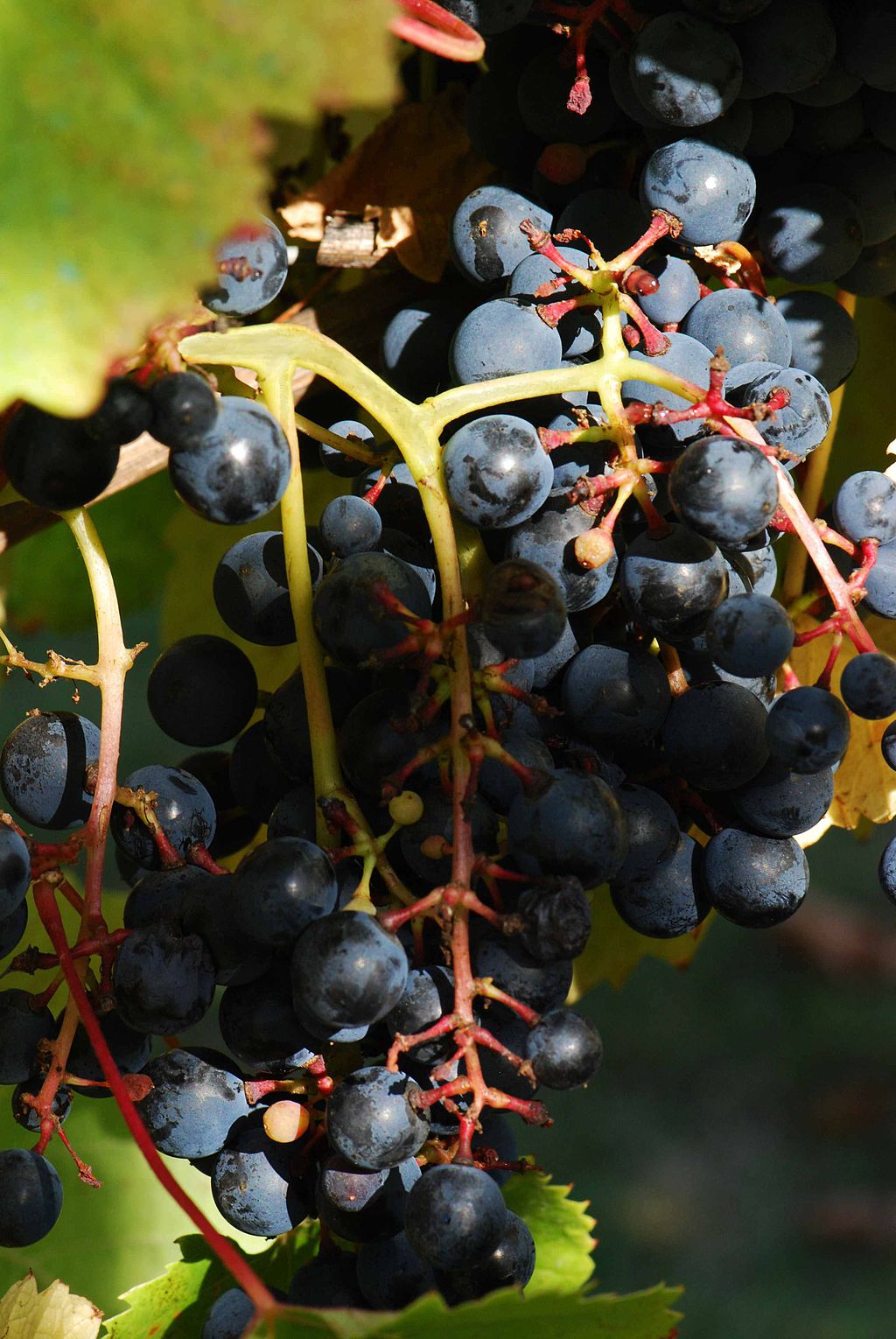
Chateauneuf-du-Pape in the Southern Rhône is one of the oldest and most prestigious wine growing regions in France.  The famous red wine of Chateauneuf-du-Pape is made from a chorus of grapes, with Grenache, Syrah, and Mourvedre making up the bulk of the blend.  A total of 13 grapes, known as the “Chateauneuf 13” are allowed in the blend.

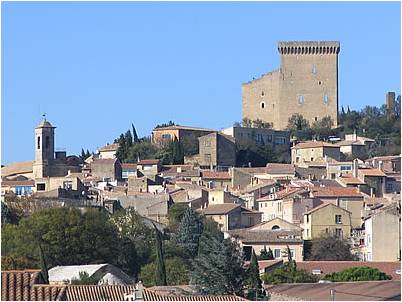
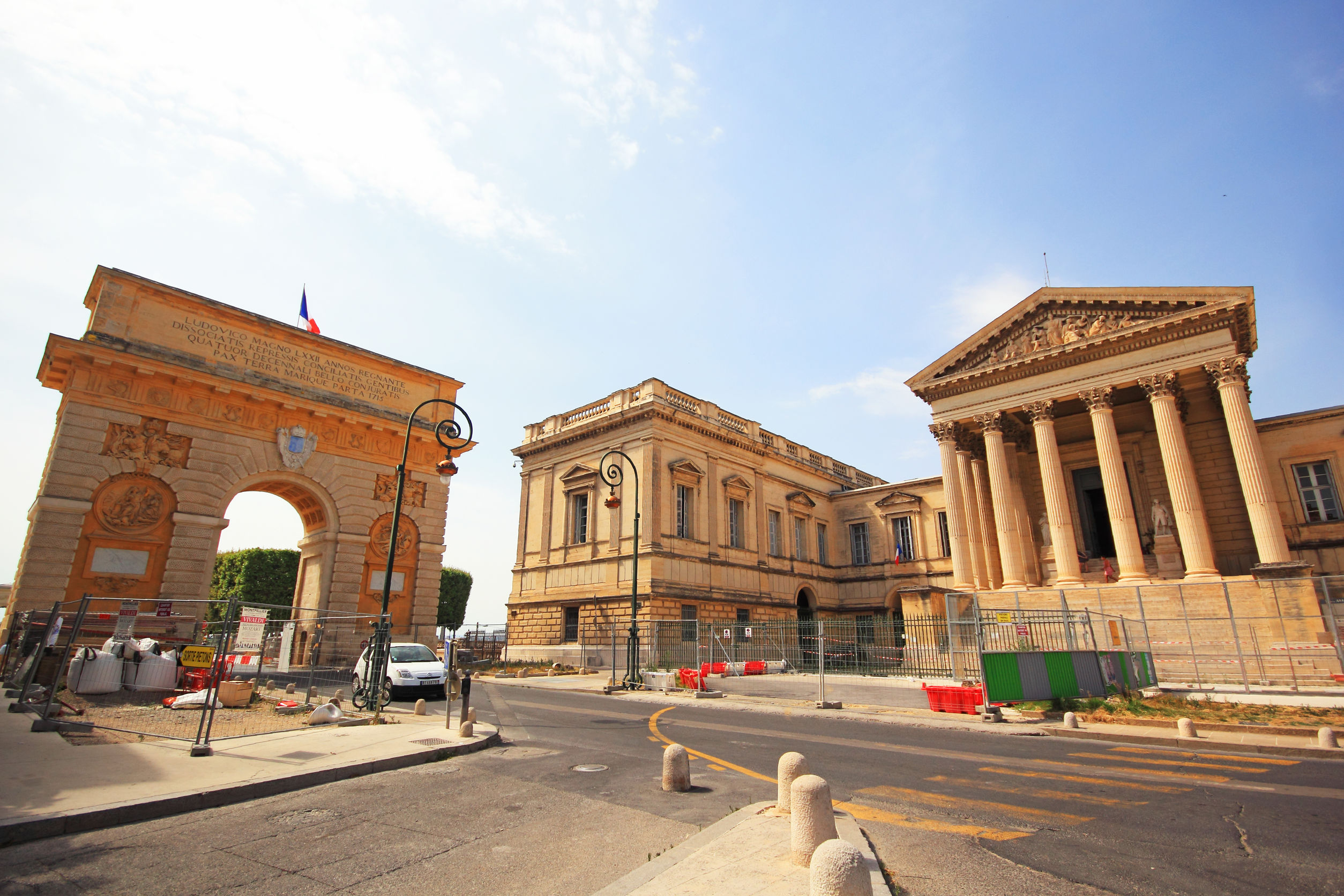
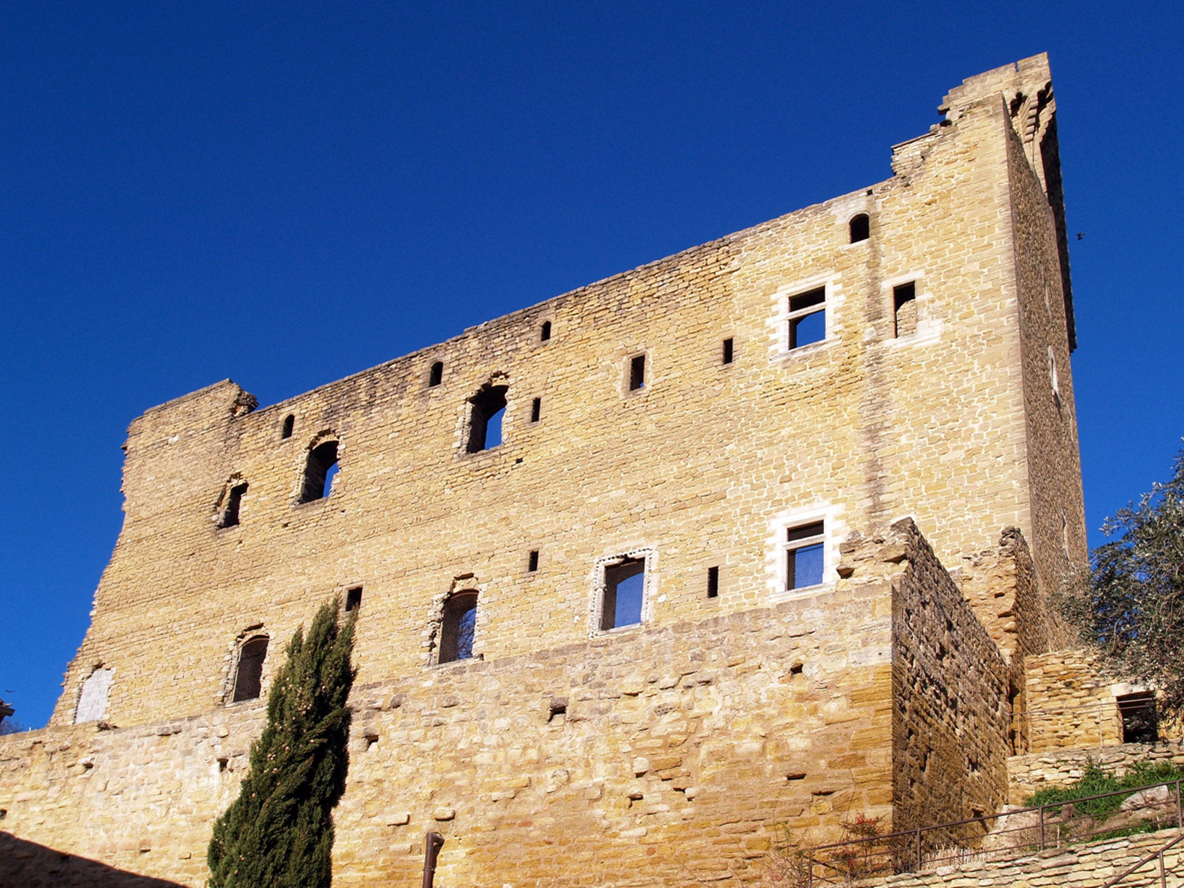
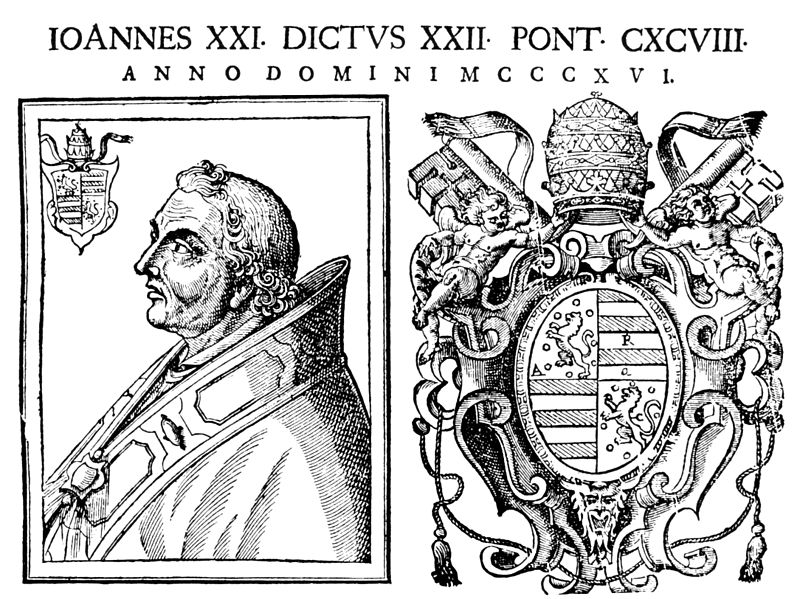
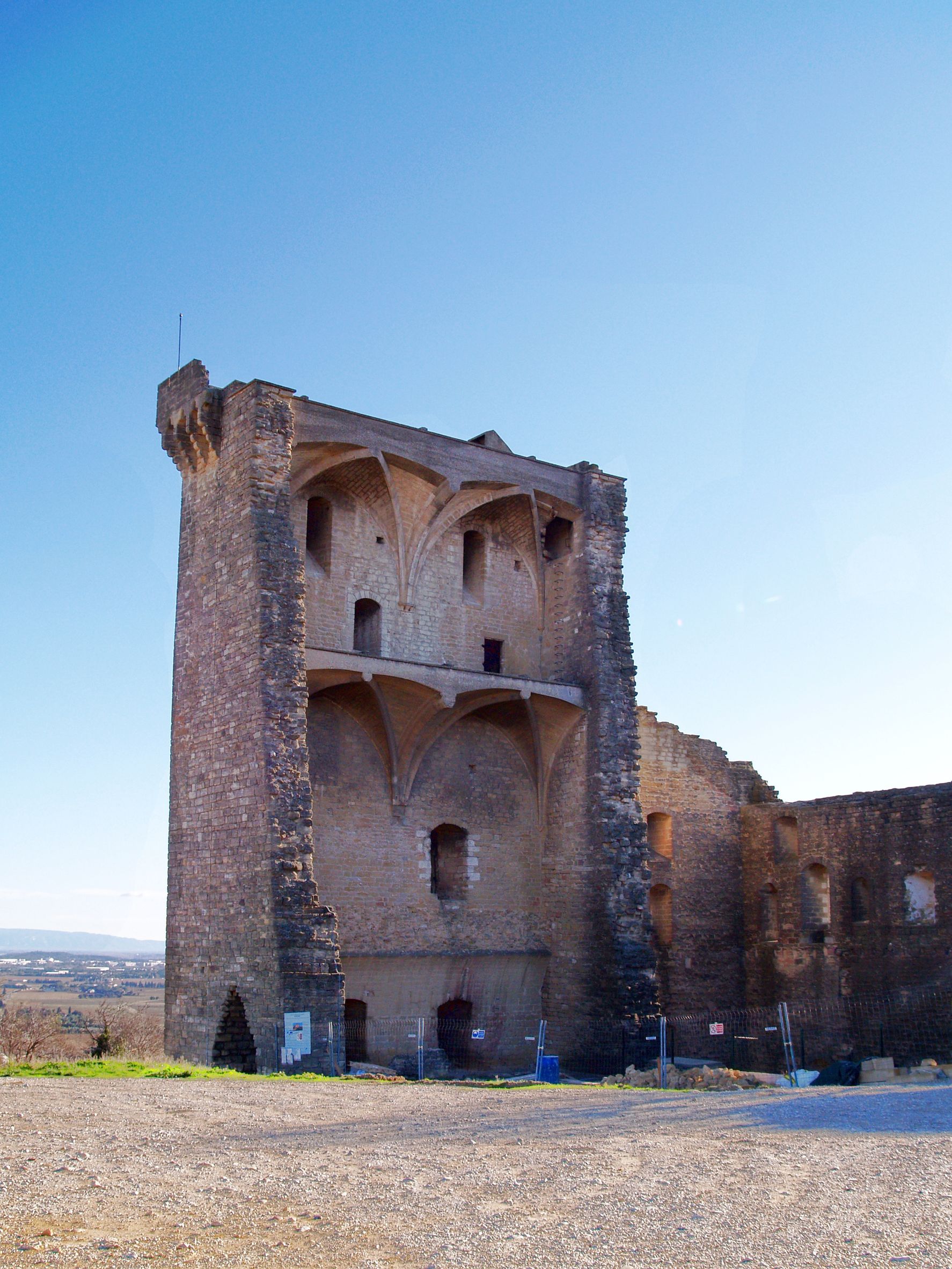
The town name, roughly translated as “New Castle of the Pope”, refers to a time in the fourteenth century when the French Pope Clement V resided not just in Rome but in the walled city of Avignon, a short fifteen-minute drive from the Chateauneuf-du-Pape wine making region. Pope Clement’s successor, Pope John XXII, built the namesake “new castle” papal estate out among the vineyards.  To this day, the castle’s majestic remains loom over the town and form a picturesque backdrop to the surrounding vineyards.

In 1954, at the height of the cold war, this famous wine region and the nearby town were suddenly plagued with a series of U.F.O. sightings.  The town and the surrounding areas were full of panic-stricken citizens and rampant rumors of an alien invasion. The town council was very concerned – but not about the public panic or the possibility of local citizens being abducted by aliens.  What concerned the town council was protecting the region’s priceless vineyards. In response, the following municipal decree was adopted:

Article 1:  The flying overhead, landing, and taking off of aeronautical machines called “flying saucers” or “flying cigars”, of whatever nationality they may be, is strictly forbidden in the territory of the commune of Chateauneuf-du-Pape.

Article 2:  Any aeronautical machine –“flying saucer” or “flying cigar”-that lands on the territory of the commune will be immediately taken off to jail.

The “flying cigar” laws remain on the books today.

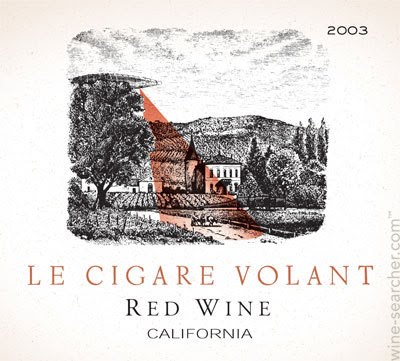
Several decades later, renegade winemaker Randall Graham of Bonny Doon Vineyards in Santa Cruz, California set out to create a California Wine based on the grape varieties and in the style of the legendary red wine of Chateauneuf-du-Pape, he named his wine, with a respectful tongue held-in-cheek, “Le Cigare Volant”.  “Le Cigare Volant” is the French term for “flying saucer”.

Oh…and by the way – you can stop worrying…as far as I know, no flying saucers have ever landed in the commune of Chateauneuf-du-Pape.


Follow

Get every new post delivered to your Inbox.

Join 911 other followers