Train the Trainer: There’s More to Class than just the Glass

There’s More to Class than Just the Glass

As a full-time wine educator, I have found myself teaching classes and leading wine tastings in some unusual spots.  Many of my classes are held in my super-comfy, perfectly designed, high-tech enhanced wine lab college classroom.  This setting is as conducive to learning as a setting can be. Wine and food conferences, and in my case mostly wine and food education conferences are also good situations for teaching and learning…at least people are sitting down, facing the speaker, and we can assume the audience wants to listen and learn.

However, part of a wine educator’s life is spent on the road, and I have also taught classes in winery barrel rooms, in restaurants during the dinner rush, and at wine bars in the midst of happy hour.  Add to the list the seminars I have led outdoors at wine festivals, trade tastings, womens’ retreats and rock concerts. (You will note I did not include private homes…Miss Jane does not do private homes.)

Let’s face it:  it can be hard to engage and actually teach students about wine when they are outside, at a rock concert, or even at a wine bar; and my educational philosophy and practice is all about engagement.  I want my students to be not just at attention but fully engaged.  Attention is great – you need to have a full repertoire of attention grabbers.  Once you have gotten your audience’s attention they should be listening, observant, and interested in what you are about to present.  Attention is valuable but it only lasts for a few minutes until minds start to wander.

Engagement, on the other hand, goes deeper than attention.  When your class is fully engaged, they are physically energized, emotionally connected, and mentally focused on the subject at hand.  Engagement in the material at hand should be one of the main goals of instruction, and “points of engagement” should be pre-scripted into your lesson plan just as carefully as your course objectives and class material.

Obviously, a wine class has a few built-in advantages when it comes to student engagement.  First of all, it’s about wine (a fascinating subject and one with broad appeal.)  Secondly, we usually have a built-in activity (also very appealing) when we lead a tasting.

The challenge for me, I have found, in leading a tasting class is not in just keeping the audience engaged, but keeping them focused on learning and not merely engaged in the tasting itself – in other words, enjoying the wine more than the class.  As we all know, this type of “tasting” can devolve into “drinking” quickly if not managed.

I am sure that we have all found that during an instructor-led tasting, students tend to get excited and chatty.  Left unmonitored, it gets louder and louder – which is great if you are at a party, or maybe if you are leading one of those tastings at a wine bar or rock concert.  However, if you want to balance fun with serious learning, this can be a challenge.

Over the years, I’ve developed my own system for walking this fine line.  When leading a tasting activity,  I generally let the students taste and talk amongst themselves for a few minutes – after all, talking is the ultimate engagement – and then try bring them gently back to attention for further instruction. To do this effectively, you need an abrupt attention grabber.  Most teachers whistle or scream or bang a spoon on a glass. There’s nothing really wrong with this technique -it certainly does work – but it can also leave students unfocused, annoyed, or even angry.  (Note:  nothing halts learning quicker than anger.)

What I do to avoid this backlash is this:  I introduce the wine, tell the class I am going to give them five minutes to taste and talk amongst themselves and will then bring them back to attention for group discussion and further instructor-led content.  Then I play some background music appropriate to the theme and setting.  When the time for tasting and talking is over and I want to turn their attention back to my presentation, I turn up the volume briefly and then turn it off.  Works everytime, and no one shoots me a dirty look or complains!

Here’s my advice to you:  try to develop a your own signature style of focusing the class after a tasting break or other group activity.  You might use a call and response, flick the lights, have everyone stand up, or use music like I do.  In a pinch, you can always bang a spoon on a glass.

Train the Trainer: Are you a visual or a verbal learner?

.

Are you a visual or a verbal learner? Do you tout the fact that there are four learning styles – and your classes engage each one of them? Do you make power point slides and handouts in an attempt to “engage visual learners”? Do you think your lecture and discussion is ideal for “engaging auditory learners”? If so, you are not alone…but many people will argue that you are wrong! Ouch!

Let’s give this side of the story a chance and consider that it might be high time to get over this antiquated idea of education.

For more than 30 years, the notion that teaching methods should match a student’s particular learning style has exerted a powerful influence on education. The wide appeal of the idea that some students will learn better when material is presented visually and others will learn better when the material is presented verbally (or kinesthetically, or logically) is evident in the vast number of learning-style tests and  teaching guides available, not to mention the reams of literature on the subject.  Just google “learning styles” and see what happens.  I got over 14 million results touting no less than 71 different “learning styles” – all in 1.3 seconds!

.

This is not to say that people do not differ in learning abilities.  A person with a high level of visual learning ability will be able to easily recall if an image was red or blue, and will have a high level of recall of people’s faces.  A person with a high level of auditory learning ability will have an uncanny ability to differentiate between different pitches, levels of volume, and the unique sound of a voice.  However, this does not imply higher levels of the construction of new knowledge, new meaning, new vocabulary, new concepts or new context based on the path of input.

Modern scientific research simply does NOT support the existence of different learning styles, nor the hypothesis that people learn better when taught in a way that matches their own unique style.  As a matter of fact, reams of literature have also been written on the subject that there are NOT four distinct learning styles. I got nearly as many google hits by using the terms “learning styles don’t exist” and “learning styles debunked” as I did on “learning styles” alone! If you don’t want to believe me (or google), perhaps you will believe a team of eminent researchers in learning psychology and their report published in December 2009 in Psychological Science in the Public Interest, a journal of the Association for Psychological Science. The report reviews the existing literature on learning styles and finds that although numerous studies have purported to show the existence of different kinds of learners such as “auditory learners” and “visual learners,” those studies have not used the type of randomized research designs that would make their findings credible.

.

Or perhaps you will believe a Harvard  Ph.D.  Dr. Daniel T. Willingham, a cognitive scientist and author of Why Don’t Students Like School, recently posted a short video on youtube entitled “Learning Styles Don’t Exist.” I highly recommend it, and his book for that matter. Dang. So, if it is just not as simple as “learning styles”, what’s an educator to do?  At the risk of oversimplification, I believe we should concentrate on what cognitive processes learners have in common rather than focusing on how they might be different. The latest research on learning, and something that has certainly changed the way I teach, is well reflected in something called “whole brain teaching.”

Whole brain teaching recognizes that maximum learning occurs when a learning activity involves visual, verbal, and emotional elements combined with activities requiring critical thinking, movement and speech.  Teaching in this way triggers action in the “whole brain”, in other words, six distinct regions of brain activity working in conjunction. And while we are at it, please forget the cliché that “we only use 10% of our brain capacity.”  The truth is actually closer to “we only engage 10% of the brain at a time when using outdated teaching techniques.”

References/for more information:

Tales of the Vine: Champagne Charlie

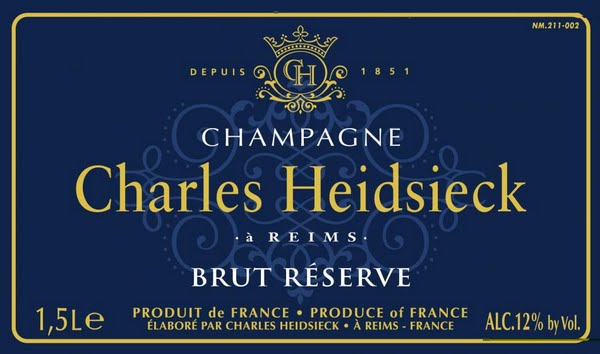
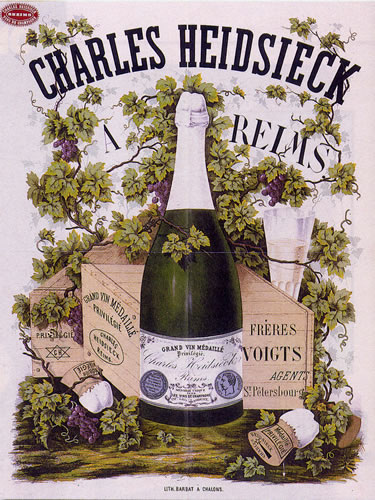
Charles Camile Heidsieck was a successful French merchant who founded the Champagne firm Charles Heidsieck in 1851.  Soon thereafter, he visited the United Statesfor the first time, and immediately saw the potential for the American market.  He retained an American agent to facilitate import sales, and in a matter of months the mass import of Champagne was a hit.  In no time, Charles became a fixture in New York high society and earned the nickname “Champagne Charlie”.

In 1861, Charles received news of the impending Civil War in theUnited States.  With over half of his company’s assets tied up in unpaid American accounts, Heidsieck made a hasty trip to try and collect the debts owed him.  Upon his arrival, his U.S.import agent told him a grandiose lie concerning a supposed new law passed by Congress which absolved Northerners from having to pay debts to the South.  This new law, the agent claimed, also absolved him from having to pay his debt to Heidsieck.
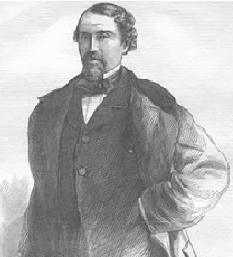
In a last-ditch attempt to seek repayment directly from the merchants that had received the Champagne, Charles set sail for New Orleans  With the war now in full-force, he had to travel in secrecy, going as far north as Kansas to avoid detection by the Union Army.  When he finally arrived in New Orleans in 1862, he found the city to be nearly bankrupt and his debtors penniless.

One merchant offered to give Heidsieck a warehouse full of cotton in exchange for payment.  The cotton was very valuable but would have to be smuggled out of Mobile,Alabama with the use of two blockade runners. Despite Heidsieck’s best efforts, both ships were intercepted and all the cargo destroyed.

By this time, all routes to the North were completely sealed, so in order to return to Europe, Heidsieck had to go back to New Orleans to charter a boat toMexico or Cuba.  To facilitate his passage, the French consul in Mobile gave him a diplomatic pouch with a request to deliver some documents to the consulate in New Orleans.  Arriving in New Orlean son May 5, 1862; he found that the city had fallen to Union forces.  As his diplomatic pouch contained documents from French textile manufacturers about supplying the Confederate army with uniforms, “Champagne Charlie” was immediately seized, charged with spying, and imprisoned.  His imprisonment sparked a diplomatic incident between France and the United States government which would later become known as The Heidsieck Affair.
By the time he was finally released from prison, he was in frail health and his business was bankrupt.  He returned to France in November of 1862, demoralized and broke.

In early 1863, Charles Heidsieck was approached by an American missionary with a letter from the United States.  The letter came from the brother of Heidseick’s former agent inNew York.  The man was ashamed of how his brother had swindled Heidsieck out of his obligations and offered him a stack of deeds to land in Colorado as means of repayment.

As it turned out, the deeds were for one-third of all the area of a small town known as Denver, Colorado.  Denver (as we all know) was soon to become one of the wealthiest and largest cities of the American West.

In a few years time, Heidsieck was able to sell the land, repay his debts, and re-launch his Champagne House, becoming the wealthy and debonair “Champagne Charlie” once again.