Jean-Antoine Claude Chaptal, Comte de Chanteloup

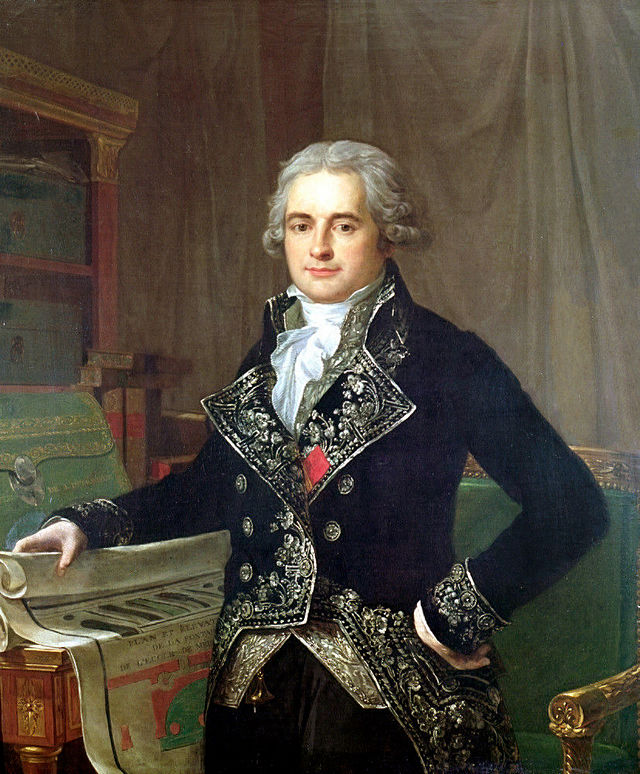
Portrait of Jean-Antoine Chaptal (1815)  by Anicet Charles Gabriel Lemonnier

Portrait of Jean-Antoine Chaptal (1815) by Anicet Charles Gabriel Lemonnier

Winemakers all over the world consider him a friend, but in public, they might pretend they don’t know him. No, he isn’t a fuzzy underworld-figure selling steroids; nor is he an embarrassing relative, nor a wine writer with a price. He is Jean-Antoine Claude Chaptal, Comte de de Chanteloup!

Perhaps we should refer to him by the name and moniker by which he is best-known (to wine lovers, that is), simply Jean-Antoine Chaptal. Jean-Antoine, a scientist, professor, and industrialist, perfected the process of adding sugar to grape must before fermentation in order to increase the final level of alcohol in the wine. That process, now known as chaptalization, is still in use today.

Jean-Antoine was actually a fascinating man. Born on June 4, 1756, he died in 1832, having lived until age 76. He was a both a chemist and a medical doctor. He chaired the chemistry department of the medical school at the University of Montpellier, and is credited with coining the term “nitrogen” (fr. nitrogène) for a gas produced via nitric acid, previously referred to as “mephitic air.”

A learned, confident, and outspoken man, Chaptal was arrested and imprisoned during the French Revolution. Despite this, after the revolution Dr. Chaptal became a statesman, succeeding Lucien Bonaparte as Minister of the Interior of the First French Empire. During his time as Minister of the Interior, Dr. Chaptal established the Paris Hospital, built a chemical manufactory near Paris, founded a school of arts, and instituted the metric system in France.

Dr. Chaptal, a decorated man of science, was conferred the title of Comte de Chanteloup by Napoleon himself.  In 1816, he was nominated a member of the French Academy of Sciences by Louis XVIII. He was awarded the Grand Cross of the Legion of Honor, the cordon of the Ordre de Saint-Michel, and his name is one of the 72 names inscribed on the Eiffel Tower. Rue Chaptal in Paris’ Montmarte neighborhood is named after him.

Perhaps, however, his greatest legacy is that silky Pinot Noir, that bracing Riesling, or that lighter-than-air Champagne that you are enjoying right now. As we know, it just might have been produced with a little help from chemistry, as seen by the mind of Jean-Antoine Claude Chaptal, Comte de Chanteloup.

The Bubbly Professor is “Miss Jane” Nickles of Austin, Texas – missjane@prodigy.net

Decoding the Amtliche Prüfungsnummer

AP rhineThis is a blog post borne of necessity…in teaching my online CSW Prep Classes, I always dread “Module 8.” Module 8, you see, covers the wines of Germany and Austria.

This does not in any way mean that I dread talking about – or partaking of – the wines of Germany and Austria. As a matter of fact, the Grosses Gewachs Mosel Riesling or Kremstal DAC Grüner Veltliner I am sipping alongside is most likely going to be the highlight of my day.

But it’s all about the words, the language, the umlauts and the eszetts. They are all a bit intimidating and confusing to me, being a native English speaker who never traveled to Europe until the 4th decade of her life.

So, in an attempt to dive straight to the heart (in das Herz) of the matter (von tge Sache) I set about to understand something that had always baffled me: Amtliche Prüfungsnummer. It turns out, the Amtliche Prüfungsnummer, while certainly appearing cryptic and complicated, contains a lot of useful information about a German wine, and absolutely reveals the seemingly complex tangle that is German wine to be a highly organized, useful system.

First of all, for the simple language (thank you, Google Translate).

Amtliche – “Official”

Prüfungsnummer – “Exam Number”

Thus, our Amtliche Prüfungsnummer, commonly referred to as the “A.P. Number,” translates as  “official exam number,” although most wine references will refer to it as the “official approval number.”  The A.P. Number identifies the wine as to producer, village of origin, and testing center where the wine was awarded its official approval. The process is required for all wines bottled under the classifications of QbA and Prädikatswein.

The actual number consists of several blocks of figures – surely you’ve seen one, looking quite complicated, such as this example:

AP wine glassA.P. NR. 2 606 319 011 07

Here is what those numbers mean:

2 606 319 011 07: 2 – The first number represents region where the wine was tested. The wine will be tested in the same general region where it was produced, however, there are only 9 testing centers as opposed to 13 quality wine regions (Anbaugebiete). This testing center – number 2 – handles wines from the Middle Mosel and Rheingau.

2 606 319 011 07: 606 – The second number, which may be two or three digits, represents the particular village within the larger testing region, where the wine was produced.

2 606 319 011 07: The third number represents the particular bottler (producer).

2 606 319 011 07: The fourth number represents the sequential order that the wine was submitted by that produce. In other words, this is the eleventh wine submitted for testing in this particular year by the producer.

2 606 319 011 07: The fifth number represents the last two digits of the year that the wine was submitted for testing, usually the year after the vintage.

Whew! Do you have information overload? It’s a lot of data, but remember, this is all to protect the quality and reputation of German wines, which is good for everyone – even us consumers. Producers are required to keep sample bottles of each wine for a certain number of years, and thus the system is such that, if a complaint were received or someone had reason to doubt a wine’s authenticity, a bottle of the specific wine could be located and tested.

Simple? No.

Effective? Yes.

I sleep better at night knowing my Pflaz Riesling (5 594 022 17 12) and my Rheingau Spätburgunder (4 383 675 01 11) is signed, sealed, and approved!

The Bubbly Professor is…”Miss Jane” Nickles of Austin, Texas – jnickles@prodigy.net


It’s all about that CLORPT

.

.

It happened again. All I really wanted to do was to get a quick, google-assisted definition of the word “colluvial.” I had read somewhere (the particular book, magazine, or webpage long since totally forgotten) that many of the soils in Alsace were colluvial.

Colluvial soils, it turns out,  are made up of materials that tend to accumulate at the bottom of steep slopes and cliffs, mainly via the action of gravity – as opposed to alluvial soils, which accumulate due to the action of rivers and streams.

But here’s what I also found out…we are living in the pedosphere! The pedosphere, which rests above the lithosphere (basically the earth’s crust and mantle) but below the atmosphere, is the outermost layer of the earth. It is where soil lives, and where soil is formed, via the weathering (breaking down) of minerals, the decomposition of organic matter, and everything moving around (as in living things moving around, as well as -ahem – colluvial and alluvial actions). The pedosphere is the foundation of all plant life (and therefore animal life) on the planet. And here we thought it was all about the specific flavor of Riesling from the Haut-Rhin!

Soil has Texture

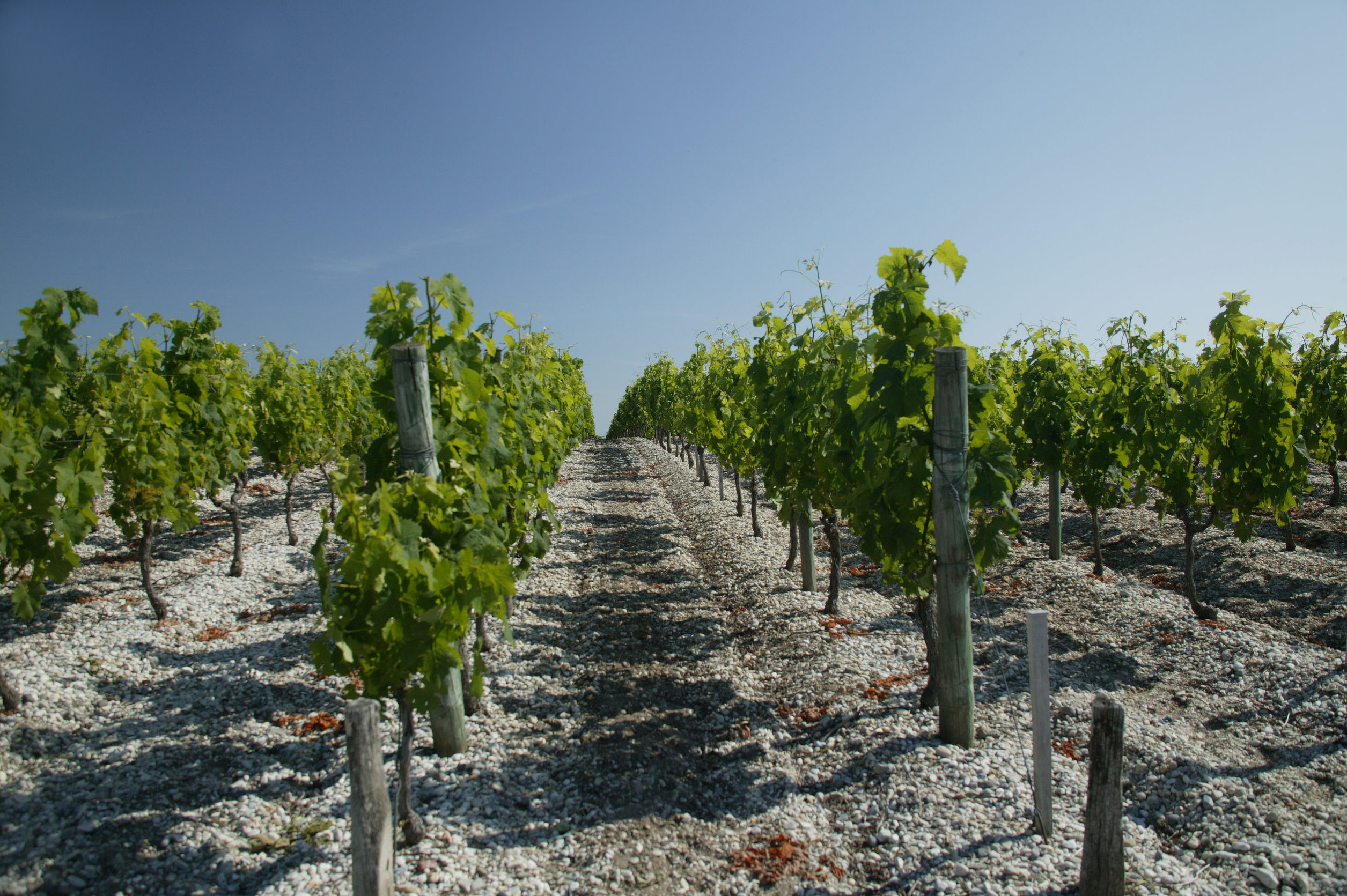
Here’s something else I learned: soil has texture. Good students of wine most likely know that the particles that make up soil are categorized by size, with clay being the smallest, silt the intermediate, and sand the largest. The blend, so to speak, of the particles is what makes up a soil’s “texture.” There are actually 12 major soil classifications, as defined by the USDA. Some of these, such as “sandy clay” or “silty clay” are self-explanatory; while “loam” is made up of somewhat equal parts of sand, silt, and clay.

.

.

Soil has Color

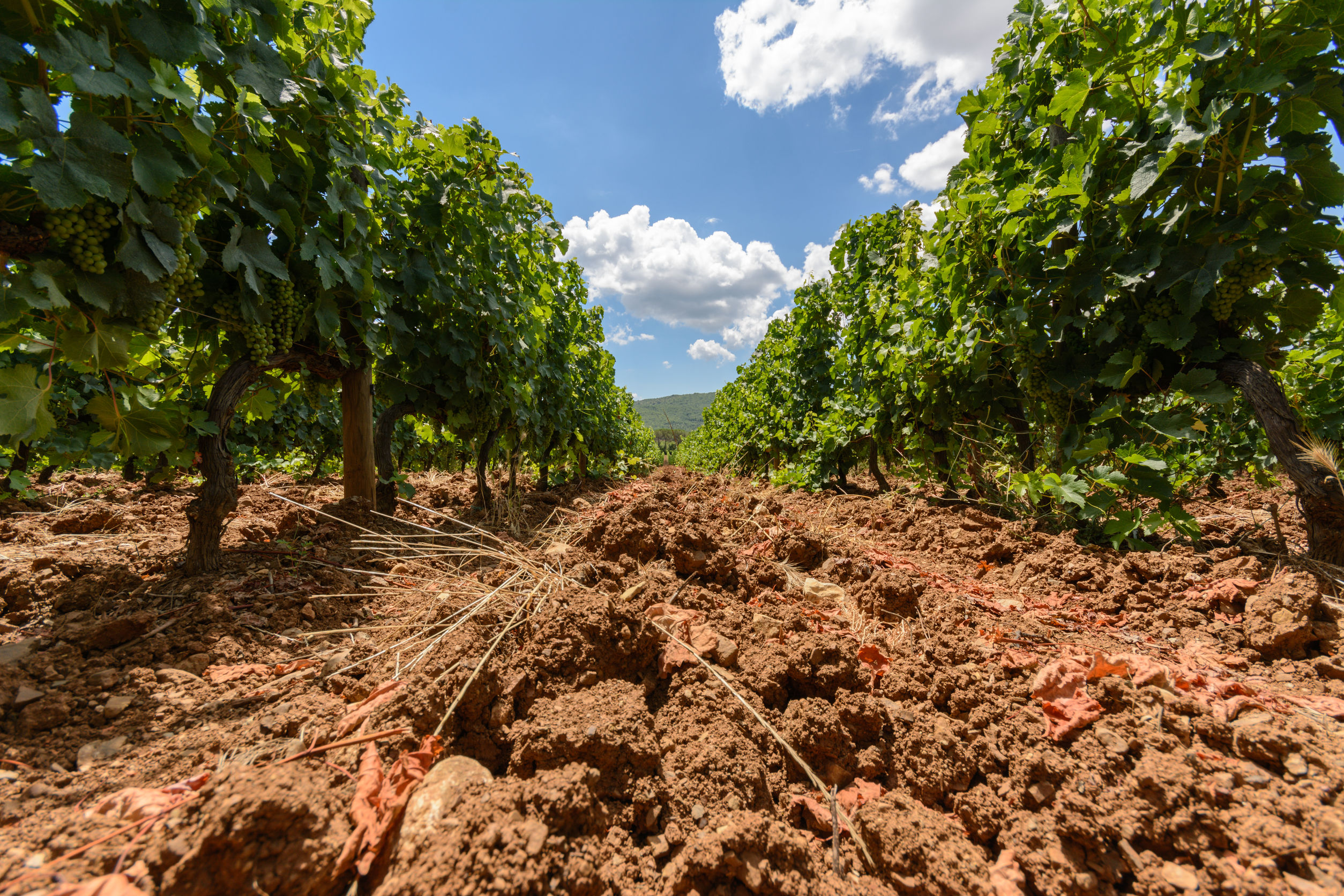
We know about bright-red terra rosa and glistening gray llicorella, so it shouldn’t come as a big surprise that the color of soil varies according to mineral content, organic material, and water. That lovely orange/brown color signals high iron content. Dark brown or black soils are high in organic material. A well-drained soil is brightly colored, while a poorly drained soil will show an uneven pattern of red, yellow, and gray.

Soil has Structure.

Is this beginning to sound a bit like wine? Color, texture, structure? Perhaps that’s a stretch – but you have to admit all things are connected. The structure of soil relates to how the soil particles arrange themselves into small clumps, called “peds.” Peds vary due to the nature of the particles themselves and the conditions under which they were formed. For instance, getting wet and drying out, freezing and thawing, being walked on, having things grown in it, and/or being moved around can all influence the nature of the peds.

There are six basic ways to describe soil’s structure, based on how these peds interplay. They are: platy, prismatic, columnar, blocky, granular, and single-grained. Platy soil is thin and flat; sometimes the result of being walked on or otherwise compacted. Prismatic soil is formed into columns; columnar soil is also formed into columns but with a salty “cap.” Blocky soil is irregular. Granular is crumbly, usually the result of plant growth. Single-grained soil refuses to “clump” together.

.

.

Good/Bad Dirt = Texture, Structure, and CLORPT

Soil “behaves” based on a combination of texture and structure. What a farmer might call “good soil” may be a granular soil with a loamy texture, as it holds water and nutrients. A vigneron, however, might prefer a sandy clay soil with a blocky texture, as it would be well-drained of both water and nutrients.

As for the specific soils we wine students love to talk about – jory, tufa, greywacke, marl, schist, shale, slate…they differ due to five major factors, known as CLORPT. (Now there’s a term I bet you never heard before!) CLORPT stands for climate, organisms, relief, parent material, and time – all the things that go into the various vineyard soils, all over the world, that make such tasty wine. And, lest we forget – they support all plant life and therefore animal life as well – one must eat before one can drink.

The Bubbly Professor is “Miss Jane” Nickles of Austin, Texas – missjane@prodigy.net
Note: I researched this post using about two dozen Wikipedia pages, the Soil Sciences of America Association,  and the “gardening resources” page on the Cornell University website.

The Good, The Bad, and the Diffuse

Structure

Structure

Last summer when I was putting together my “Palate Tune-Up” session for the SWE Conference in Seattle, I spent a great deal of time researching, thinking about, and (yuck) experiencing wine faults. After all, the main premise of the session was to learn to recognize faults – sulfur dioxide, TCA, excessive Brett and other such imbalances – in wine.

It soon occurred to me, however, that giving such a session based on the ick-factor might be something akin to career suicide. Why would people choose to attend the ick-factor session, when Cru Artisan Bordeaux was being poured right next door?

With that in mind, I decided to start the course off by pouring three spectacular wines – each chosen to represent a specific aspect of what we expect in an excellent wine – before we tested the faulty wines. So, my next challenge was to define – and then demonstrate – what makes a wine “excellent.”

As every wine lover knows, defining what makes a wine “excellent” is a challenging – and very subjective – proposal. Every time I came up with a succinct definition, I could hear the arguments and rebuttals from my future audience.

Balance

Balance

Thus, it was several weeks before I came up with my examples. I would choose a wine to represent the following three aspects of an excellent wine: Complexity, Balance, and Structure. Complexity and balance were relatively easy to define, demonstrate, and provide with near-perfect examples.

Structure, on the other hand, eluded me. I thought I knew what it meant, and I could definitely recognize both its presence and absence in a wine, but it was difficult to put into words without talking around and through the matter for less than ten minutes.

So…of course I went on a research bender. What did the wine experts among us have to say about structure?  The New Wine Lover’s Companion had a pretty good definition, basically stating that structure referred to a wine’s “architecture – its plan – including the building blocks of acid, alcohol, fruit, glycerol, and tannins.”  It went on to say that the term “structure” is meaningless without an adjective in front of it, such as “well structured” or “strong structure.”

The Wine Spectator’s online glossary also had a decent enough definition – saying it was related to “mouthfeel.”  Many other references used the rather clichéd “its like milk versus cream” line of reasoning or provided a multitude of synonyms for body – texture, backbone, weight – or provided adjectives to describe it – mouth-filling, brawny, rich, lean, gritty, velvety, smooth.

Complexity

Complexity

But I still wanted to know just what it was…the technical-sorta definition as to what provides a wine with good structure.  Professor Emile Peynaud came as close as anyone could possibly, it seemed, to delivering what I wanted to know with his definition of “structure” as “impressions of volume, form, and consistency.” In other words, structure is the taster’s sense of the wine’s physical make-up.

But it still seemed that I would need to write my own definition to convey just exactly what I meant to say. So I came up with the following: I would explain what is meant by a wine’s structure beginning with the interplay of the same set of attributes that contribute to balance in flavor. In my definition, therefore, a wine’s structure is composed of the sensory impact of acid, sugar, fruit, tannin, extract, and alcohol – but instead of noticing how these components impact flavor, we draw our attention to how they work together to create the tactile sensation of the wine.

So much for the definition! Now, I needed to define and demonstrate how a lack of structure would be described in a wine. Defining the opposite of balance was easy: unbalanced. Defining the opposite of complexity was very easy: monotony. But the only “textbook” opposite of “structure” I could find was “unstructured.” That just didn’t seem right.

Diffuse

Diffuse

So I went on another month-long research bender to find the perfect word that meant “unstructured.” I could find many ways to discuss wines with inadequate or unbalanced structure. For instance, the term “hollow” is also used to denote lack of structure; hollow wines are diluted and lack depth. A “brawny” or “rustic” wine may be described as a hefty wine with plenty of weight, flavor, and grit; but lacking in the complexity needed to bring the elements together in a refined way. And everyone’s favorite – “flabby” to describe a wine lacking in acid, or missing its “backbone.”

But there was no real “winespeak” term to define lack of balance, texturally speaking. So I found an excellent word to portray what I meant – diffuse. The term diffuse is used to describe a building or structure with no strength, or something that is scattered, spread out, or dispersed.  Remembering that “structure” refers to the elements of texture and their relationship, I think it describes a wine lacking in the regard quite well.

The Bubbly Professor is “Miss Jane” Nickles of Austin, Texas – missjane@prodigy.net