The Outer Limits: The Dordogne before Bordeaux

..

..

The Dordogne River is well-known as one of the three main waterways that flow through and handily divide the Bordeaux AOC into the areas of the Right Bank, Left Bank, and Entre-Deux-Mers. However, Bordeaux is only part of the story of the Dordogne River.

The sources of the Dordogne is found almost in the center of France—it’s just a bit too far south to call it the true center. In the mountains of the Massif Central, two small streams—the Dore and the Dogne—arise on the side of Puy de Sancy (Mount of the Cross), which at 6,184 feet (1,885 m) high is the highest mountain in the range. After a bit of meandering around, these two streams flow together and form the Dordogne River.

The upper valley of the Dordogne River is a series of deep gorges, cliffs, and lakes. The river then flows through the neighboring countryside, occasionally meeting small towns such as Lanobre (where you can visit the Château de Val [not a wine-producing Château but a well-preserved Gothic Castle]) and Bort-les-Orgues, where you can view the “Les Orgues” volcanic rock formation—which stretches over half a mile and resembles a series of 300 foot-high organ pipes, the result of cracks formed in cooling, prehistoric lava flows.

..

..

About 50 miles later the river flows through the city of Argentat, a lovely town where medieval houses line the streets along the river. From Argentat, the river twists and turns for about another 100 miles, and just before the town of Lalinde, the Dordogne flows into the Bergerac/Cotes de Bergerac AOC.

The Bergerac AOC produces red, white, and rosé wines. Bergerac reds and rosés center on Cabernet Sauvignon, Cabernet Franc, Malbec, and Merlot; also allowing for small amounts of Fer Servadou and Mérille. White wines are based on Sémillon, Sauvignon Blanc, Sauvignon Gris, and Muscadelle; varying small amounts of Ugni Blanc, Chenin Blanc and Ondenc are also allowed. The Cotes de Bergerac AOC occupies the same area as the Bergerac AOC, and produces the same range of wines but with stricter standards for yield and must weight at harvest. The Cotes de Bergerac AOC also allows for a sweet white wine; whites in the Bergerac AOC must be dry.

.

.

Tucked into the Bergerac AOC, and surrounding the actual town of Bergerac (and its famous statue of Cyrano), we find the Pécharmant AOC. The Pécharmant AOC produces dry red wines only, based on Cabernet Franc, Cabernet Sauvignon, Merlot, and Malbec. Pécharmant is required to contain at least three varieties, and no one variety can exceed 65% of the blend.

Following the river just to the west of the Pécharmant AOC, we find two wine regions: Rosette to the north of the river, and Monbazillac to the south—both produce off-dry and sweet white wines. Rosette AOC must contain 2.5%–5.1% residual sugar and is a blend of at least two of the following grapes: Sauvignon Blanc, Sauvignon Gris, Sémillon, and Muscadelle.

The Monbazillac AOC is famous for its sweet white wines that are often touted as something of a less expensive “version” of Sauternes. The grapes of the Monbazillac AOC include the principal varieties Sauvignon Blanc, Sauvignon Gris, Sémillon, and Muscadelle; other allowed varieties include Chenin Blanc, Ondenc, and Ugni Blanc. There are few restrictions on the content of the blend, provided that at least 80% of the contents consist of the principal varieties. Monbazillac blanc must contain at least 4.5% residual sugar, and the most famous wine of the appellation—Monbazillac Sélection de Grains Nobles—must contain at least 8.5% residual sugar. Grapes used in Monbazillac AOC wines must be selectively hand-harvested and may be affected by botrytis, but this is not required.  While in Monbazillac, be sure and visit the Château Monbazillac which is a historic castle, a modern winery, and a contemporary arts center!

Map of the Dordogne River by Boerkevitz, via Wikimedia Commons

Map of the Dordogne River by Boerkevitz, via Wikimedia Commons

To the north of the Dordogne, about 15 miles west of the Rosette AOC (and onward through the surrounding Bergerac AOC), we find the Montravel AOC. The Montravel AOC produces both red and white wines that closely mirror the wines of nearby Bordeaux. White wines are based on a minimum of 25% Sémillon plus a minimum of 25% (combined) Sauvignon Blanc and Sauvignon Gris; other allowed varieties include Muscadelle and Ondenc. The Haut-Montravel AOC produces sweet white wines (minimum 8.5% residual sugar) from the same blend. Red Montravel AOC is based on a required minimum of 50% Merlot and must include at least one other grape variety; allowed red grapes include Cabernet Sauvignon, Cabernet Franc, and Malbec.

For about 15 miles, the Dordogne River forms the border between the wine regions of Bergerac and Montravel (on the north bank of the river) and Saint-Foy-de-Bordeaux (on the south bank). Just past Saint-Foy-de-Bordeaux, the Dordogne dips inside the Bordeaux AOC and creates the boundary line between Bordeaux’s Right Bank and Entre-Deux-Mers. Somewhere between the AOCs of Fronsac and Margaux, the Dordogne River joins the Garonne and together, as the Gironde Estuary, they make their way into the Atlantic Ocean.

Map credit: Cyril555, via Wikimedia Commons

Map credit: Cyril555, via Wikimedia Commons

References/for more information:

The Bubbly Professor is “Miss Jane” Nickles of Austin, Texas… missjane@prodigy.net

The Outer Limits: The Garonne before Bordeaux

The beginnings of the Garonne in Spain's Aran Valley

The beginnings of the Garonne in Spain’s Aran Valley

The Garonne River is well-known to wine lovers as one of the three major waterways of Bordeaux—as well it should be. But The Garonne’s journey through Bordeaux and into the Atlantic Ocean is just a part of the full story of the river, which actually flows for over 370 miles beginning in Spain. From its source in the Pyrenees Mountains of Spain, the river flows through the fourth largest city in France and touches the wine regions of Fronton, Saint-Sardos, Brulhois, Buzet, Côtes de Marmandais, and Bordeaux (among others). It’s quite the river.

The actual source of the Garonne is somewhat up for debate—depending upon how one defines the actual source of a river and even upon the season of the year. However, experts can agree that the source of the Garonne can be found in the Aran Valley (Val d’Aran) of Spain. The Aran Valley is located in the corner of Catalonia that borders Aragon. The source of the Garonne is located on the northern side of the Pyrenees, about 25 miles from the border of France.

As we follow the Garonne from its source in the Spanish Pyrenees Mountains, after about 125 miles it flows into Toulouse—famed for its unique architecture of pinkish terracotta buildings, earning it the nickname of la Ville Rose (“the Pink City”), as well as being the fourth-largest city in France (after Paris, Lyon, and Marseille). Toulouse might well be worth a stop. For those interested in science and industry, Toulouse is the center of the European aerospace industry, the headquarters of Airbus, and the home of the Galileo positioning system. Those more interested in tourism can visit two UNESCO World Heritage Sites: the Canal du Midi and the Basilica of St. Sernin—the latter being the largest remaining Romanesque building in Europe, and a historic stop on the Santiago de Compostela pilgrimage route.
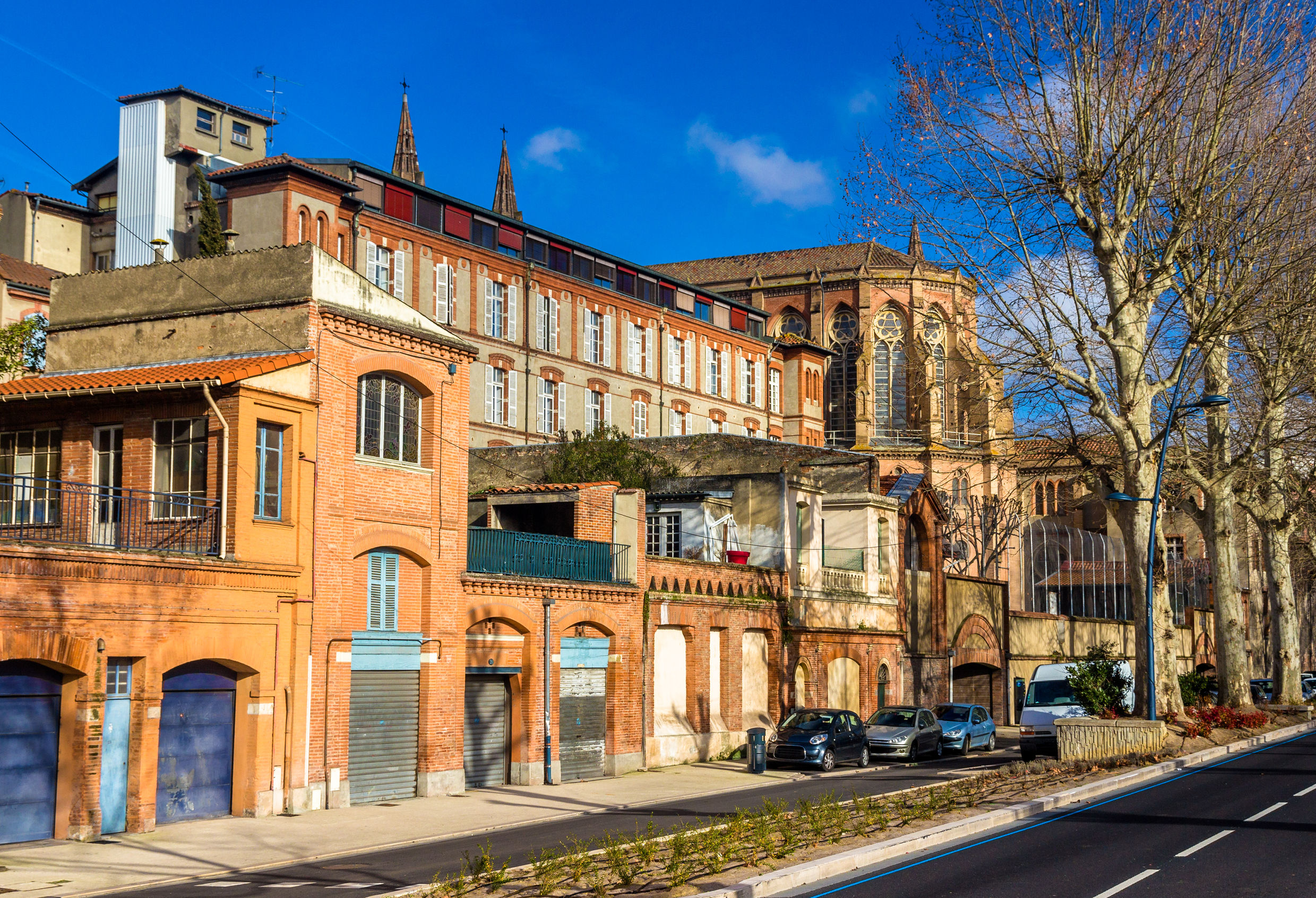
View of the Church of Gesu in Toulouse

View of the Church of Gesu in Toulouse

Following the river for about 20 more miles, we arrive at the Fronton AOC. Fronton is one of the oldest wine-producing regions in France; vines were first planted here by the Romans. However, for a good part of modern history the wines of Fronton were at a distinct disadvantage when it came to trade; as they were heavily taxed as they passed through the port of Bordeaux. These days, the Fronton AOC produces hearty and rustic reds and rosés based on the Négrette grape variety. In both styles of wine, Négrette must be at least 40% of the blend (and is permitted to be the sole grape variety); the remainder of the blend may be made up of various red grapes allowed in various proportions, including Syrah, Malbec, Gamay, Cabernet Sauvignon, Cabernet Franc, Cinsault and an interesting little red grape known as Fer. Fer, according to Jancis Robinson, is a somewhat “untamed” grape native to Southwest France that was domesticated from locally-growing wild vines. It is known as a highly tannic red grape, richly hued and aromatic that is widely grown throughout Southwest France. (Side note: the grape was likely named from the Latin word ferus meaning “wild” or “savage.”)

If we drive (or swim) across the Garonne River starting in Fronton, we will end up in the Saint-Sardos AOC. The Garonne skirts the eastern section of the boundaries of the AOC, and the sunny terraces along the river are rich in alluvial soil. The AOC produces reds and rosés. Both styles of wine must contain a minimum of 40% Syrah and 20% Tannat. Other allowed grapes include Cabernet Franc and Merlot.
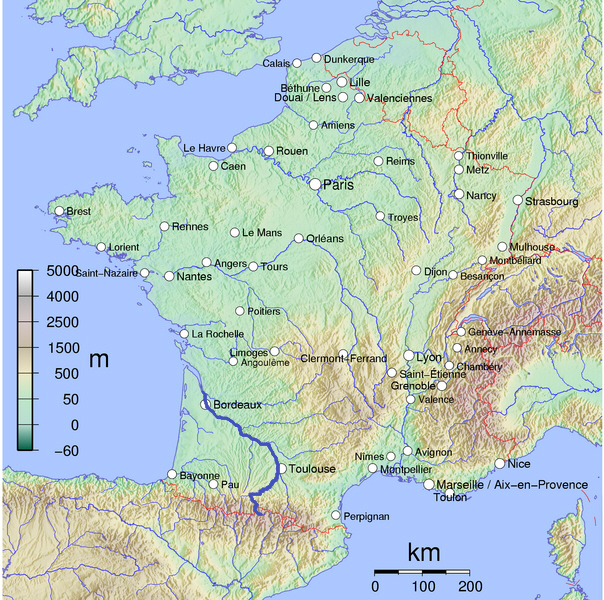
Map of the Garonne by Boerkevit, via Wikimedia Commons

Map of the Garonne by Boerkevit, via Wikimedia Commons

If we follow the Garonne another 42 miles of so, we will arrive at the Brulhois AOC. Brulhois, whose name is derived from an old Gascon word meaning “wooded slopes,” is home to many types of agriculture and is thus a very small producer of wine (despite the excellent quality of the land). The Brulhois AOC produces both red and rosé wines based on red grape blends. Principal varieties are Cabernet Franc, Merlot and Tannat and must make up a (combined) minimum of 70% of the blend. Other allowed varieties include Cabernet Sauvignon, Malbec, and Fer-Servadou (the local name for Fer). Red wines must contain at least two varieties; rosé must contain at least three.

Another 20 miles upriver we arrive at the Buzet AOC. It is easy to see the influence of Bordeaux in the wines and grapes of Buzet; the area produces white, red, and rosé wines—all based on a range of grapes that include the Bordeaux varieties in with the grapes native to Southwest France. The white wines of the Buzet AOC allow for the use of Muscadelle, Sauvignon Blanc, Sauvignon Gris, or Sémillon as principal grapes; the accessory varieties of Colombard, Petit Manseng and Gros Manseng may combine in a maximum of 10% of the blend.  The reds and rosés of the region are based on Cabernet Franc, Cabernet Sauvignon, Malbec or Merlot; a maximum of 10% may include Petit Verdot and Abouriou (combined). Abouriou is a red grape native to Southwest France, grown in very small amounts, and which tends to be low in acidity, highly tannic, deeply hued and somewhat spicy in flavor.

Next, after a drive of about 70 miles, we arrive at the city of Marmande and the Côtes de Marmandais AOC. The Côtes du Marmandais AOC, in my opinion, wins the prize as “most obscure” wine region in this trip along the Garonne. The Côtes du Marmandais, like Buzet, shares its palate of grape varieties with both Southwest France and Bordeaux. The AOC produces white, red, and rosé wines. The whites are based on Sauvignon Blanc and Sauvignon Gris, and may contain a maximum (combined) 30% Sémillon and Muscadelle. Reds and rosés must contain a maximum combined 85% Cabernet Sauvignon, Cabernet Franc, and Merlot; up to 50% may comprise Abouriou, Malbec, Fer, Gamay, and Syrah.

The Pont de Pierre (Stone Bridge) over the Garonne in the city of Bordeaux

The Pont de Pierre (Stone Bridge) over the Garonne in the city of Bordeaux

About ten miles outside of Marmande, the Garonne crosses into the Gironde department and officially flows into the Bordeaux Wine Region. About 40 miles later, just beyond the city of Bordeaux, the Garonne River meets the Dordogne River at a spot known as the Bec d’Ambès. As most wine lovers know, the Garonne and the Dordogne flow together to the Gironde estuary which separates Bordeaux’s Left Bank from its Right Bank as it flows past some of the most revered vineyards in the world. After transversing about 62 miles of prime vineyard land the Gironde Estuary empties into the Atlantic Ocean at the Bay of Biscay; thus ending the journey of the Garonne.

References/for more information:

The Bubbly Professor is “Miss Jane” Nickles of Austin, Texas… missjane@prodigy.net
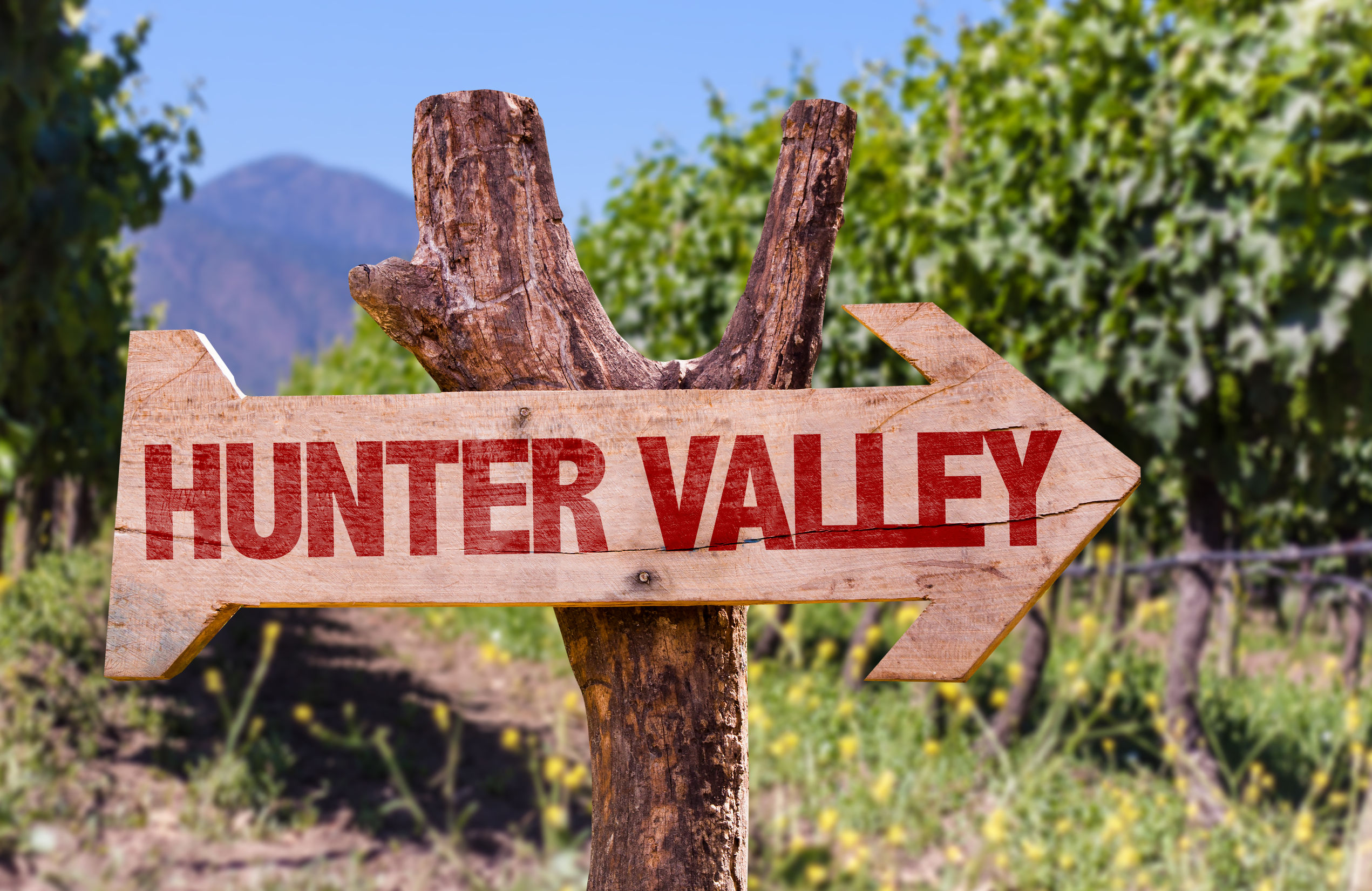
The Outer Limits: Broke Fordwich

...

Broke Fordwich. I don’t even know what to ask. Is it an animal, a vegetable, or a mineral? Is it a person, a place or a thing? God forbid it should ever show up on a wine exam, and yet there it is, staring at me from page 243 of the CSW Study Guide. Damn.

Before we go any further, here is the truth: Broke Fordwich is a place. It’s a wine region in Australia; actually, it is a subregion of the Hunter Valley Zone (and the Hunter Region) in New South Wales. The name is derived from two small towns: Broke (population 636) and Fordwich (just to the north of Broke, and apparently with an even smaller population).

Despite its homespun name, Broke Fordwich is not to be shunned as a wine region. It is a bit off-the-beaten-path, but in Winespeak we often refer to that as “authentic” or “less touristy.” The area itself uses the phrase “the tranquil side of the Hunter Valley.”

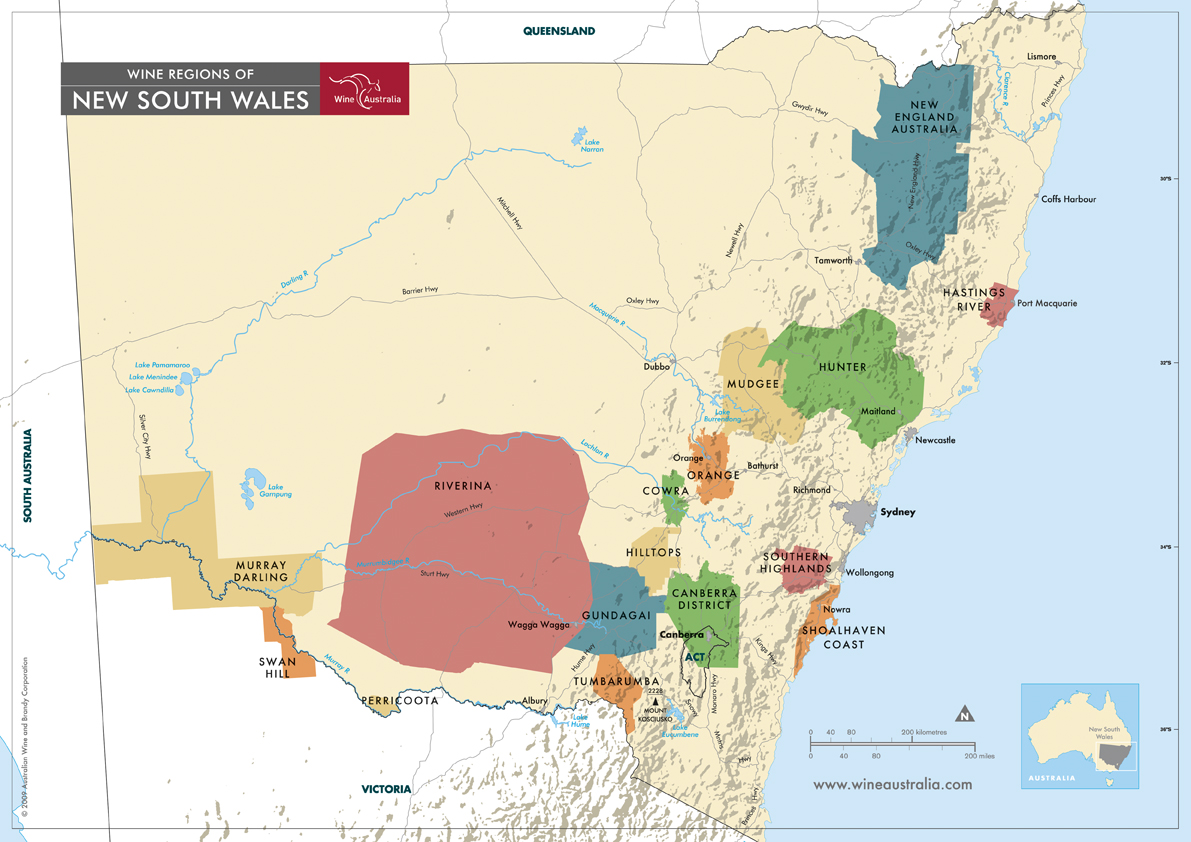
As for the location, it is important to first remember that Australian Geographical Indications range from largest to smallest as follows: State > Zone > Region > Subregion. Following along, we can find the Broke Fordwich Subregion within the State of New South Wales, the Hunter Valley Zone, and the Hunter Region (simplified as such: New South Wales > Hunter Valley > Hunter > Broke Fordwich.) The Hunter Region has two other Subregions, Pokolbin and the Upper Hunter Valley.

Photo of the Yellow Rock Escarpment by Sardaka, via Wikimedia Commons

Photo of the Yellow Rock Escarpment by Sardaka, via Wikimedia Commons

The website of Broke Fordwich (which is quite nice, and will make you want to plan a visit right now) describes the area’s location as “in the southwest corner of the mid Hunter Valley”. The area is quite beautiful, surrounded as it is by the Brokenback Mountain Range (part of the Great Dividing Range and NOT to be confused with Brokeback Mountain, which was supposedly in Wyoming). Local scenery includes views of Yellow Rock (a gorgeous escarpment) and the Wollemi Foothills.

The Broke Fordwich Subregion is tucked between the Upper Hunter Valley to the northwest and Pokolbin to the east. It geographic boundaries follow the catchment of Wollombi Brook (a tributary of the Hunter River), which flows from its source in the Brokenback Mountains/Great Dividing Range north through the towns of Broke and Fordwich.

Broke Fordwich became an official Geographical Indication in 1997. The basis for the boundaries include its unique soil, the climate-calming effects of the Wollombi Brook, and the rain shadow provided by the Brokenback Mountain Range which hugs (and partially encircles) the area to the west and south.

The Fordwich Sill, a stretch of red weathered volcanic clay running through the area, is one of the unique soil features of Broke Fordwich. This basalt- and iron-rich soil absorbs moisture quickly and releases it slowly; an excellent feature for this dry area that sits at a balmy 32.5 degrees south latitude. The red soils of the Fordwich Sill are ideal for Cabernet Sauvignon and Merlot, and tend to produce grapes that are made into rich, soft-style wines. Other soils in the area include free-draining alluvial soils (heavy on the sand), which is widely planted to the area’s well-known Semillon and other white grapes.

Map of New South Wales via Wine Australia

Map of New South Wales via Wine Australia

Broke Fordwich is responsible for about 14% of the total wine production of the Hunter Valley Zone. Not surprisingly, the most widely planted grape of the area – responsible for at least 30% of vineyard acreage – is Semillon. Semillon is followed by Shiraz, Verdelho, Chardonnay, and Merlot. A smattering of other grapes, including Cabernet Sauvignon, Barbera, Sangiovese, Tempranillo, and Pinot Noir, among others, are also grown.

About that name: The town of Broke was founded in 1830 by Major Thomas Mitchell. Mitchell named the town in honor of his fellow Napoleonic War Veteran, Sir Charles Broke-Vere.

Confusion Corner: The terms “Hunter” and “Hunter Valley” are often used somewhat interchangeably, although technically the Hunter Valley is the larger zone which encompasses the Hunter Region. No one quite knows why the original decision was made to refer to the zone as “Hunter Valley” and the smaller region as “Hunter,” and it might not really matter: there’s very little difference between the outline of the Hunter Region and the only slightly larger Hunter Valley Zone. The region just shaves a little bit off of the edges on the western and northern boundaries, and excludes the area around the city of Newcastle on the coast.

References/for further information:

The Bubbly Professor is “Miss Jane” Nickles of Austin, Texas… missjane@prodigy.net

The Outer Limits is my series of appreciative posts about small, obscure, or out-of-the-way wine regions.

The Playboy and the Electric Car

.

.

The playboy and the electric car…it’s an odd title, I’m aware. And kudos to you for even clicking on it, as it admittedly tells you very little about the story which is to follow, which is actually about Cynar.

Cynar—pronounced CHEE-nar—is an Italian amari (bitter liqueur) that is probably only known to true cocktail aficionados and CSS students. For you liquor store archeologists, it’s the big green bottle with an artichoke on the label. (Yes, an artichoke.)

Before we get into the actual story I’m burning to tell you, let’s get this out of the way: Cynar is an acquired taste. It’s not the prettiest bottle on the shelf—and it’s competing with beautiful bottles bearing pictures of rose petals, wild raspberries, and baskets of wildflowers from Provence. Also, if you glance at the bottle quickly, you might think that the C-y-n-a stands for cyanide. I’d understand if you would prefer to walk on by.

Then there’s the flavor. It has a short burst of sweetness and quickly becomes intensely bitter and very, very herbal—this followed by a vegetal flavor that you might recognize as asparagus, but will describe as artichoke because you saw the picture on the bottle. You might think that you’ve never tasted anything like it before, but then you remember the Dr. Brown’s celery soda you once bought by mistake.

Keep in mind, however, that an acquired taste is just that—it must be acquired. Remember your first taste of hoppy beer, Stilton cheese, or octopus-on-a-stick? You might not have adored it at first, but you got used to it until you started to crave it. Trust me, Cynar will be the same, and its legendary ability to calm your stomach (like many digestives) is a real thing.

The story of Cynar (and the playboy and the electric car) begins in 1952. About that time, a Venetian entrepreneur named Angelo Dalle Molle created and began to distribute Cynar, his artichoke-flavored liqueur. Rumor has it that he chose the artichoke due to its aphrodisiac properties. The story continues (with a wink and a nod) that the love-potion formulation must have worked pretty well, as the creator was a well-known and successful man-about-town, fathering six children with six different women and—at the age of 80—marrying his secretary who was 40 years younger than he.

Numerous references point to the veracity of this story, and as far as I am concerned, that’s a pretty good story. I love a good tale of love, lust, and longevity. And there’s a happy ending as well: Cynar became popular very quickly, and in 1976 Dalle Molle sold the formula to Bols (a Dutch brand famous for many spirits and liqueurs) and became a wealthy man. Many years later, well into his 90’s, he passed away peacefully—and left his young bride a fortune of over 30 million euros.

But there’s another side to the Venetian playboy of Cynar. In addition to being a businessman, he is remembered for being a patron of the arts and a utopian philanthropist. Let me explain: utopian—in the  sense that he believed in the possibility of an ideal (or, at least, better) world and philanthropist—meaning he was generous with his time and money, using both in the service of mankind.

He also had a technological/scientific side—he’s been called a true “Renaissance Man,” and in his case, it’s believable. Dalle Molle was an early adopter of information technology and believed that technology should be used to improve the quality of human life. In order to accomplish this goal, he established the Fondation Dalle Molle pour la Qualité de la Vie (Dalle Molle Foundation for the Quality of Life). The foundation is still awarding grants and prizes for projects that “encourage and promote research which allows people to benefit from science and technology and to improve quality of life.”

Through this foundation he created and funded several research institutes, including the Istituto Dalle Molle di Studi Semantici e Cognitivi (Dalle Molle Institute for Semantic and Cognitive Studies), which was established for the purpose of conducting research into languages, linguistics, and automated translation. Another project is the Istituto Dalle Molle di Studi sull’Intelligenza Artificiale (Dalle Molle Institute for Artificial Intelligence Research), founded with the goal of applying artificial intelligence to the quality of life.

Dalle Molle was very concerned about pollution, and at yet another project, the Centro Studi della Barbariga, he oversaw the design and production of over 200 electric cars. These cars were put to use as taxi cabs, vans, and as an ambulance. Seven of these cars are now in the collection of the Museo dell’automobile in the city of Vicenza.

Angelo Dalle Molle’s work lives on, and you can learn more about about his life—as both a playboy and a creator of electric cars—on the website of the Dalle Molle Foundation for the Quality of Life.

References/for more information:

The Bubbly Professor is “Miss Jane” Nickles of Austin, Texas… missjane@prodigy.net