Confusion Corner: Catalunya and Calatayud

.

.

I am back for another round of Confusion Corner! In case you missed the first two installments, in this series I attempt to unravel some of the words, terms, and concepts of wine that have always confused me. So far I’ve unraveled Verdelho from Verdejo and Rully from Reuilly. This week I have another tongue-twister, and one that has eluded me for a long time: Catalunya and Calatayud.

First of all, here is what the two things have in common (besides the fact that the words look and sound alike): They are both areas in northern Spain, and they are both DOs. They both produce a range of wines (including red, white, rosado, fortified, and sparkling) from a long list of allowed and authorized grape varieties. However, that’s pretty much where the similarities end.

First up—Catalunya: Catalunya is the Catalan name for the Spanish region also known as Catalonia (in English) and Cataluña (in Spanish). It is one of Spain’s 19 autonomies (17 autonomous communities plus 2 autonomous cities), and is the only one of the autonomies to have a DO that covers the entire region.

.

.

Catalunya is located in the extreme northeast of Spain, and shares its northern border with France and the tiny Principality of Andorra, along the Pyrenees Mountains. To the east, the area has a long coastline that borders the Mediterranean Sea; and the western boundary is shared with the autonomous community of Aragon. Valencia is to the south. Not surprisingly, the climate on the coast is Mediterranean, while inland areas share the warm, arid climate of much of the rest of Spain.

Catalunya is an absolute paradise for travelers—whether wine-related or not. The capital and largest city is Barcelona, an ideal vacation spot for those interested in art, architecture, gastronomy, history, beaches, Catalan culture, or shopping—what more could you want? For those interested in wine tourism, San Sadurní d’Anoia—the birthplace and “spiritual home” of Cava—is a very short drive from Barcelona, and dozens of Cava producers and tasting rooms are open to the public. If you don’t mind a slightly longer drive and some winding roads, you can visit Priorat, Alella, or Tarragona as well.

The Catalunya DO, approved in 1999, is authorized for the following types of wine: white (using an allowed 14 grape varieties but dominated by Garnacha Blanca), rosé (rosat in the Catalan language and generally based on Garnacha), red (from a list of over a dozen approved varieties but generally made using Garnahca, Monastrell [Mourvèdre] and Tempranillo [known here as Ul de Llebre]), vino de licor (fortified wines), and vine de aguya (slightly sparkling wines).
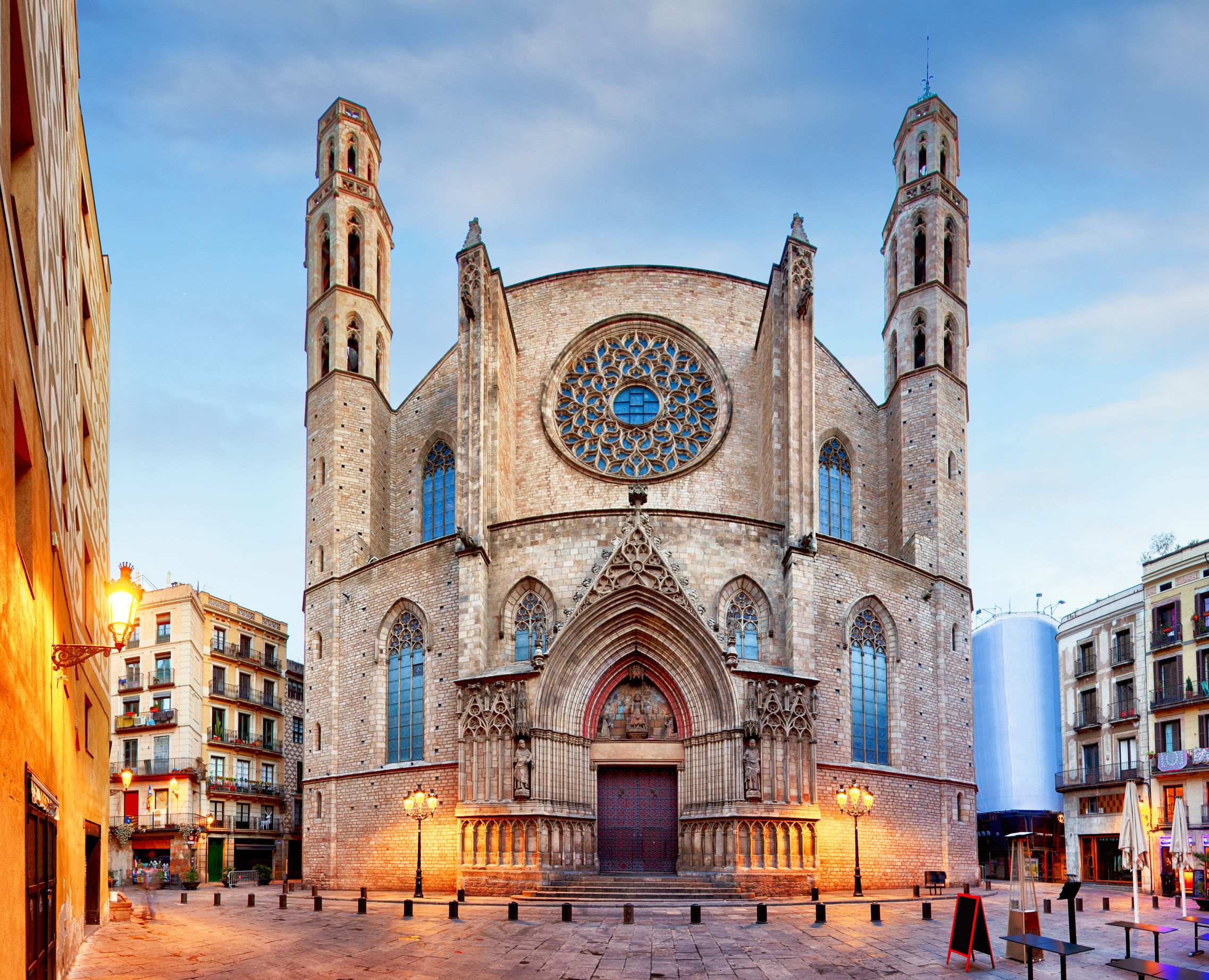
Santa Maria del Mar in Barcelona

Santa Maria del Mar in Barcelona

Wine bottled under the Catalunya DO is typically produced using grapes grown in the areas betwixt and between the 11 DOs of the region, or produced from a mix of grapes grown within the smaller DOs. The DOs of Catalunya include some very prestigious appellations (such as Priorat DOCa), some very famous areas (such as [parts of] the Cava DO and the Penedès DO), as well as some lesser-known regions (such as the Empordà, Alella, and Costers del Segre DOs).

And now for Calatayud: Calatayud is a DO located in the southwest corner of the autonomous community of Aragon. The wine region is named after the city of Calatayud (population around 20,000). Calatayud is an old city, strategically located between the Central Meseta of Spain and the Ebro River Valley. The modern city dates from around 700 CE and is famous for its many surviving examples of Mudéjar (Moorish) architecture.

The Calatayud DO area is almost completely surrounded by the mountains of the Sistema Ibérico—and as such has a hot, arid climate, like much of inland Spain. However, the area also has some elevation with many vineyards planted on south-facing hillsides—some of which reach as high as 2,600 feet (800 m). This elevation, as well as a system of criss-crossing rivers, provides some relief to the heat.

Detail of the Santa Maria Church in Calatayud

Detail of the Santa Maria Church in Calatayud

Many different styles of wines are allowed under the Calatayud DO (approved in 1990), including red, white, rosé, fortified, lightly sparkling, and fully sparkling. Garnacha is the main red grape variety, along with Tempranillo, Mazuela (otherwise known as Carignan, and named after the region of Cariñena, Calatayud’s neighbor-to-the-east), and Bobal—along with a smattering of international varieties. White grapes (and wines) make up a relatively small proportion of the area’s output and include plantings of Macabeo (aka Viura), Malvasia, and Chardonnay.

Some interesting styles of wine that are specifically defined by the Calatayud DO include Viñas Viejas (old vine) wines which must be made from vineyards that are at least 35 years old, and Calatayud Superior, which must be produced from a minimum of 85% Garnacha Tinta from vineyards that are a minimum of 50 years old.

References/for more information:

The Bubbly Professor is “Miss Jane” Nickles of Austin, Texas… missjane@prodigy.net


Valpolicella—What’s in a Blend?

.

.

Valpolicella is one of the most beloved red wines of Italy. Produced in Veneto, it is renowned for its rich fruit aromas of black cherry and cranberry, its soft tannins, and its woodsy-spice-wild berry-bitter almond flavors.

Valpolicella is also a wine of many faces. It may be produced in normale, ripasso, amarone, and recioto versions; in superiore, riserva, and spumante styles, and in the Classico and Valpantena subzones.  That’s a lot of versions of Valpolicella!

But the good news for we perpetual students of wine is that all of the variations of Valpolicella require the exact same palate of grape varieties, and it’s fairly simple at that.

For starters, there are only two grapes that are required to be used in Valpolicella. They are Corvina and Rondinella. Corvina must be at least of 45% the blend and Rondinella must be present at a minimum of 5%. So that’s the legal baseline. Above and beyond that, 25% of the blend may be made from a long list of different grape varieties (defined as “red grapes suitable for cultivation in Verona”) with the caveat that no single accessory variety may comprise more than 10% of the total blend.

.

The most well-known of these permitted accessory grapes include Corvinone, Malvasia Nera, Refosco, Marzemino, Molilnara, Oseleta, and Croatina. We’ll discuss all of these (plus Corvina and Rondinella) in a bit more detail below:

King Corvina:  Corvina, which I call King Corvina, is considered to be the superior grape in Valpolicella blends, and may comprise anywhere from 45% to 95% of the total. This grape is also known as Corvina Veronese. The name may have come from the word corvo, meaning “crow” (in reference to the color of the berries) or from the local term cruina, meaning “unripe” (and referring to its late maturation). Corvina provides a light sour cherry flavor, fresh acidity, and a hint of bitter almond to the wines of Valpolicella.

Ruby Rondinella: Rondinella, which I call Ruby Rondinella, is included as part of the Valpolicella blend for its bright ruby-red color, and fruity, cherry-esque flavors. It must be at least 5% of the blend (and is permitted to be up to 30% of the total). Rondinella is the offspring of Corvina and is thought to be named for the term rondini (meaning “swallows”), in reference to the color of the berries.

Cousin Corvinone: I call the Corvinone grape Cousin Corvinone because it was previously believed to be a clone or mutation of Corvina (and thus, technically, the same grape). However, in 1993 (God bless DNA profiling) it was proven to be a distinct variety. After it was discovered to be its own grape, the disciplinari of the various Valpolicella wines were updated to allow the use of Corvinone to continue.

.

.

Minor Molinara: Molinara freaks people out in reference to Valpolicella, and for good reason. It used to be a required part of the blend, and lots and lots of wine reference materials still state it as so. However, the rules were recently changed, and now Molinara is allowed but not required. The grape is now considered to be not-so-high quality, rather pale, and prone to oxidation (thus its demotion). However, some old-vine Molinara is grown in Veneto—specifically at the Masi, Carlo Boscaini, and Villa Bellini estates—and is used to produce some high-quality wines, some of which are bottled as a (very pale, almost rosé-like in appearance) varietal under the IGT Veronese.  There are reportedly only about 3,300 acres (1,350 ha) of Molinara in Veneto, and these days it definitely plays second fiddle to the Crovina/Rondinella team in Valpolicella. For this reason, I call it Minor Molinara —but Molinara is neither gone nor forgotten.

Obscure Oseleta: The Oseleta grape has been found to be very close to Corvina in terms of both DNA profiling and character. As such, it is an allowed grape in the Valpolicella mix, but it very rarely used. It was—once-upon-a-time—very close to extinction. Luckily, it was recovered beginning in the 1970s, primarily around the small village of Fasola-Pigozzo. Even today, Oseleta is grown in very small amounts (50 acres/20 ha) in the Valpolicella zone; as such, my nickname for the grape is Obscure Oseleta.

.

.

Crazy Croatina: Croatina has earned the nickname Crazy Croatina due to its involvement in one of the craziest grape-name schemes in all of viticulture. See if you can follow this: Croatina is also known as Bonarda, but that is not Argentina’s Bonarda (which is actually Douce Noire). Valpolicella’s Coatina is also NOT Piedmont’s Bonarda (that would be Bonarda Piemontese). Croatina is rather the version of Bonarda that is also grown in  Oltrepò Pavese—however…never forget that there are at least six different grape varieties that sometimes go by the name Bonarda. Crazy. Croatina is actually an interesting little grape, grown sparingly but across a wide swath of northern Italy, and often compared to Nebbiolo in terms of color and character. The name of the grape is derived from the term “Croatian girl,” despite the fact that it is believed to be native to Lombardy.

What else is in a blend? Other grapes that are allowed as part of the Valpolicella blend include Cabernet Franc, Cabernet Sauvignon, Sangiovese, Merlot, and Teroldego. For a more complete list, see the website of the Consorzio Valpolicella.

References/for more information:

The Bubbly Professor is “Miss Jane” Nickles of Austin, Texas… missjane@prodigy.net

Confusion Corner: Verdelho and Verdejo

.

.

I have recently started a new series called “Confusion Corner.” In these posts, I am going to try to unravel some of the more (to me) perplexing corners of the wine knowledge universe. For my first post, I tackled “Rully and Reuilly,” and due to the baffling nature of the wine world, I predict I will keep this series going for a long time.

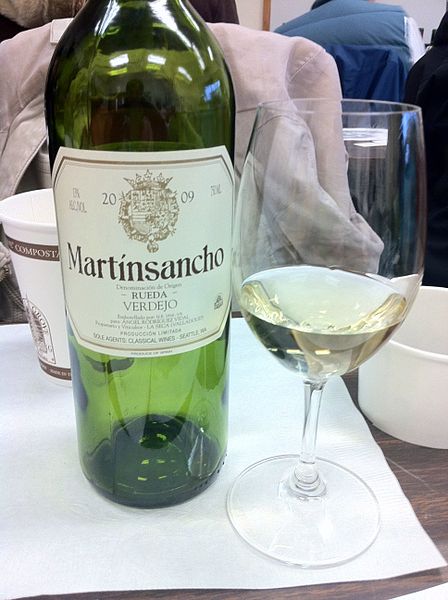
This week I will attempt to un-muddy the waters surrounding Verdelho and Verdejo. Despite the similarity in their names, Verdelho and Verdejo are two distinct grape varieties. They do have a few attributes in common—both are early-ripening, white grape varieties capable of producing richly-flavored, medium-to-full bodied white wines.

As for their differences, we can generalize them in this way: Verdejo is grown mainly in Spain (where it is famous as being the primary grape in the Rueda DO), while Verdelho is cultivated primarily in Portugal (where it is used in Madeira).

Let’s take a closer look:

Photo of Rueda by Agne27, via Wikimedia Commons

Photo of Rueda by Agne27, via Wikimedia Commons

Verdejo: The Verdejo grape variety (named for verde, after the greenish color of the grape berries) is thought to be native to the Castilla y León area of north-central Spain, and may even be native to its modern-day epicenter of Rueda.

Verdejo is one of the most widely planted white grape varieties in Spain (number five among white grape varieties, according to Wine Grapes) and accounts for a significant portion of the grape plantings in Castilla y León, Castilla-La Mancha and Extremadura.

The current favor of the grape dates from the 1970s, when the winemakers at Rioja’s Marqués de Riscal began to produce dry white wines in the Rueda DO (an area previously known primarily for fortified wines). Marqués de Riscal currently produces several Verdejo-based wines using Verdejo grapes grown in the Rueda area, including—in addition to their Rueda DO—Marqués de Riscal Limousin (from 40-year old, goblet-trained vines), and Finca Montico (using grapes from an estate vineyard located in the El Montico area).

Verdejo is (by far) the most widely grown white grape in the Rueda DO, and will comprise a majority of most of the white wines produced there. White wines of the Rueda DO are sometimes 100% Verdejo, while other times they are blended with a portion of Sauvignon Blanc, Viura, Viognier, Chardonnay, Palomino Fino, and/or Malvasia. The Rueda DO also allows for varietally-labeled Verdejo and Sauvignon Blanc (with the requisite minimum 85% proportion).

Verdejo is also allowed in seven out of the nine white-wine producing DOs located in Castilla y León, as well as close to ten other DOs located throughout Spain. Dry white wines produced using the Verdejo grape tend to highly aromatic with aromas of citrus, melon, fresh herbs, and fennel. These wines typically have medium to high levels of acidity, a high level of extract, and a touch of bitterness of the finish often described as “bitter almond.”

Verdelho in Portugal

Verdelho in Portugal

Verdelho: Verdelho is a thought to be native to the island of Madeira, and may have spread from the island to the Portuguese mainland—or it may have occurred the other way around. Either way, most of the Verdelho currently grown in Portugal is on the  island of Madeira or the Azores Islands.

In a true twist to the confusion corner, in Spain’s Galicia region and Portugal’s Dão, the Godello grape is sometimes known as Verdelho or Verdelho do Dão—but it is not the same grape. This grape, which I will call Godello-not-Verdelho, is also known as Gouveio.

Verdelho is undoubtedly best-known for its role in the fortified wines of Madeira. Madeira labeled with the term Verdelho is typically medium-dry. Verdelho is also used to produce (unfortified) dry white table wine on the island of Madeira under the Madeirense DOC; it is one of over a dozen white varieties allowed in the DOC’s white (branco) version. In addition, it is an authorized variety in the three DOCs of the Azores Islands (Pico, Graciosa, and Biscoitos) and allowed in a smattering of other Portuguese DOCs including Setúbal, Bairrada, Dão, and Palmela.

Small amounts of Verdelho are grown in other pockets of the world, including France, California, Australia (where it is sometimes use to produce a Verdelho-Semillon blend, and sometimes even Chardonnay-Verdelho-Semillon), and New Zealand. Unfortified wines produced using the Verdelho grape variety tend to be aromatic with scents of citrus, tropical fruit, fresh herbs, green grass, apricot and peaches; these wines tend to have medium-plus  body and crisp, zesty acidity. There does seem to be a bit of a divide between the Verdelho-wine styles of the old world (more subtle, herbal, and grape-like) and new world (more tropical fruit, stone fruit, and fuller-bodied).

So, what do you think? Can we move move Verdejo/Verdelho out of the confusion corner?

References/for more information:

The Bubbly Professor is “Miss Jane” Nickles of Austin, Texas… missjane@prodigy.net
Fuzzy Wuzzy was a Vine

.

.

One of the first things that a serious wine student will learn about Priorat is that it is one of the two DOCa regions in Spain, and that (its red version) is a hearty wine based around the Garnacha Tinta and Mazuelo (Carignan/Cariñena) grape varieties. Next, one might note the list of accessory varieties, which include some well-known international varieties (including Cabernet Franc, Cabernet Sauvignon, Pinot Noir, Syrah, and Tempranillo) as well as a grape known as Garnacha Peluda.

There it is: Garnacha Peluda; otherwise known as Hairy Grenache. The name peluda seems to come from the French pelut and means furry.  How cute is that? The “hairy” part of the name refers to the small white hairs covering the underside of the leaf. Other terms used to describe this hirsutulous (botanical term for slightly hairy) characteristic include downy, wooly, fluffy, fleecy, and fuzzy. But they all mean the same thing: this leaf is hairy.

Garnacha Peluda, a mutation of Garnacha Tinta (aka Grenache Noir), is considered a unique variety and is often referred to as a downy-leafed variant of Grenache—which may make the inquiring mind wonder why a certain grapevine would mutate into such a form. The answer is that growing furry leaves is a biological adaptation. Biological adaptations are changes—structural (either morphological [able to be observed] or anatomical [internal]), physiological, or behavioral—that occur over many generations of plant or animal life in order to make the organism better suited to its environment and to improve its chances of survival.

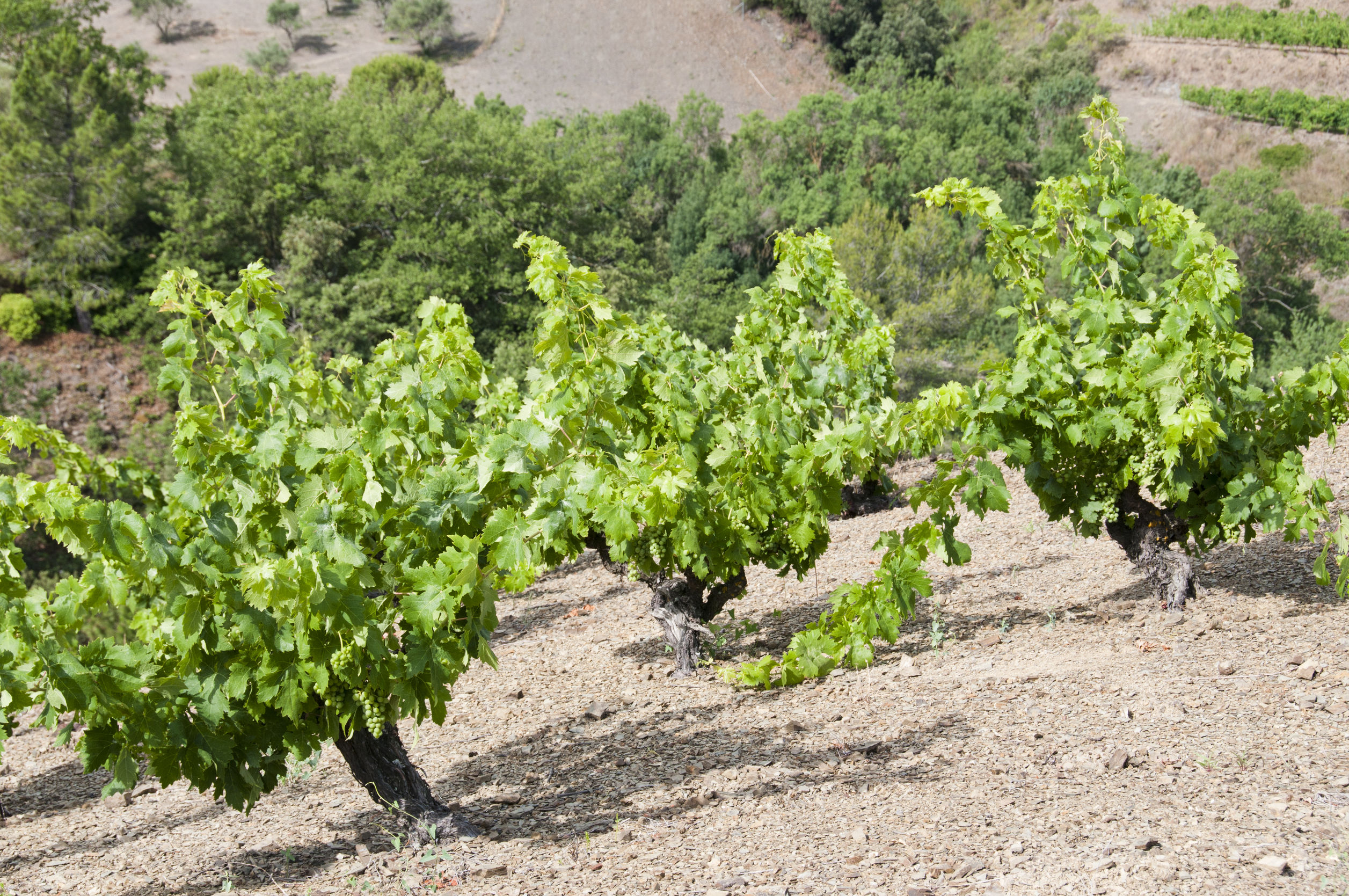
Garnacha Pelut vineyards in Priorat

Garnacha Peluda vineyards in Priorat

The hairy-leafed variation of Grenache is a result of a morphological adaptation to hot, dry environments such as found in Priorat, as well as the Roussillon and Languedoc areas of southern France. (Note: in southern France, the grape is often called Lledoner [or Lladoner] Pelut.) The fuzzy layer protects the vine from water loss due to transpiration, helps shade the leaves, and reflects sunlight to help keep the plant cool. The hairy-leaf solution is one of several ways plants adapt to hot, dry environments. Others include small leaves, curled-up leaves, wax-coated leaves, woodsy stems, and green stems but no leaves.

Compared to its non-hairy cousin, Garnacha Peluda tends to produce wines that are lower in alcohol, lighter in color, and higher in acidity. The Garnacha Peluda grape is authorized for use in the following wines:

  • Recommended/Principle variety in: Terra Alta DO, Languedoc AOC (as Lledoner Pelut)
  • Accessory grape variety in: Empordà DO, Priorat DOCa, Terrasses du Larzac AOC (as Lledoner Pelut), Côtes du Roussillon and Côtes du Roussillon-Villages AOCs (also as Lledoner Pelut)

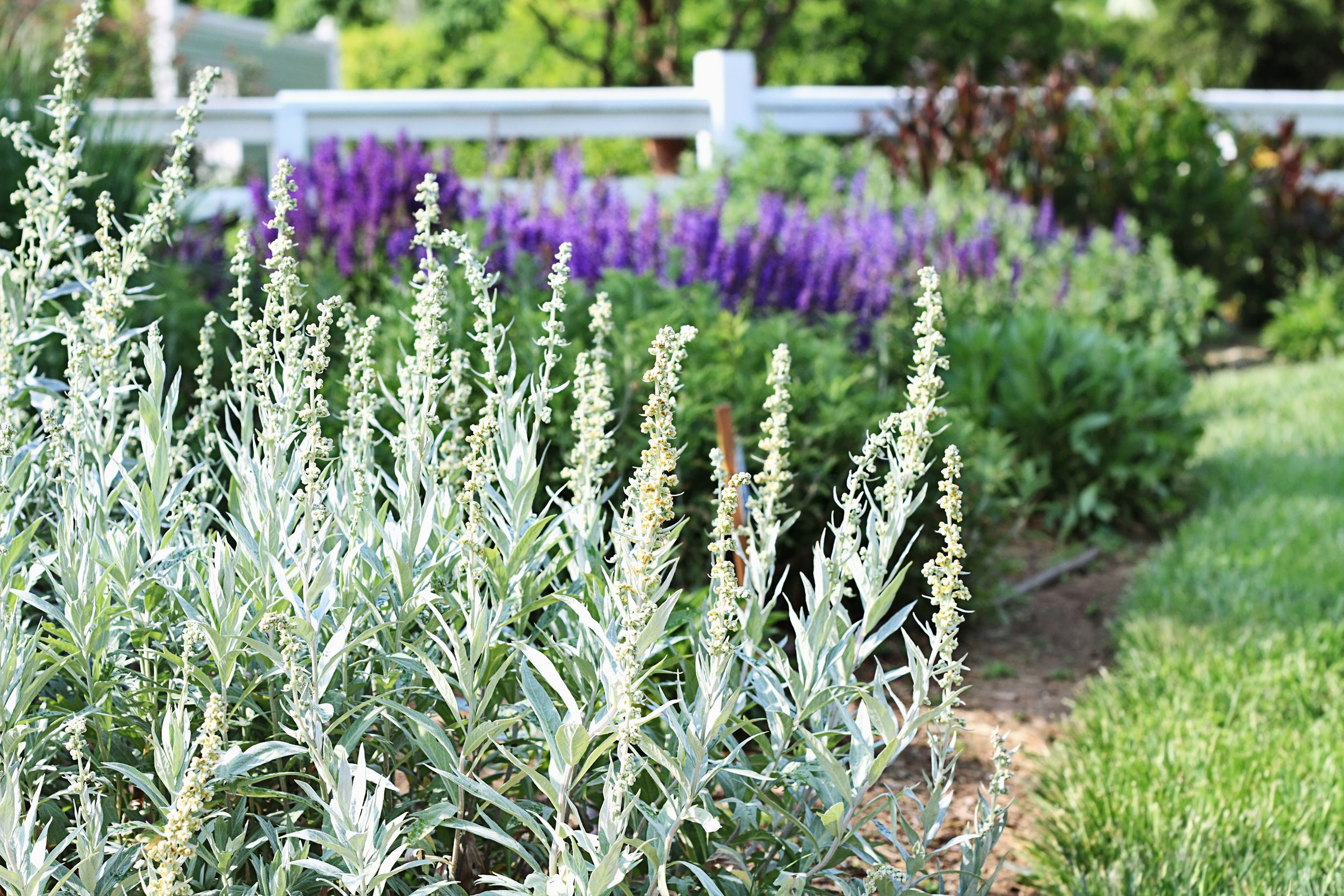
Vitis aestivalis varieties and native North American grapes native to the southwest, such as Mustang and Muscadine, are also likely to demonstrate the hairy-leafed adaptation. Many other plants have adopted this downy-leafed adaptation as well, including rosemary, sagebrush, oleander, buckthorn, magnolia, sycamore, potato, petunia, and lamb’s-ear.

Fuzzy-leafed lamb's ears

Fuzzy-leafed lamb’s ears

Another famous hairy-leafed vinifera grape is Pinot Meunier. As meunier means “miller” in French, the grape is so-named for the layer of white, downy hairs on the underside of the leaves, said to resemble grains of flour (as produced by the town miller at the local flour mill). But as we now know, it is all about that morphological plant adaptation.

References/for further information

The Bubbly Professor is “Miss Jane” Nickles of Austin, Texas… missjane@prodigy.net