Confusion Corner: Lirac and Listrac

.

I am back for another round of Confusion Corner! This is the fourth installment of the series in which I attempt to unravel some of the words, terms, and concepts of wine that have always confused me. After unraveling Verdelho from Verdejo, Rully from Reuilly, and Catalunya and Calatayud; this week I take on another tongue-twister: Lirac and Listrac.

First off, here is what these two things have in common: they are both AOC wine-producing regions in France, they are both well-established, and they are both primarily known for red wines (although the Lirac AOC produces whites and rosés as well). And then there are the differences…

First up—Listrac: One thing we need to get cleared up is that while it is very common to see the term Listrac used on its own; the actual name of this place is Listrac-Médoc. Listrac-Médoc is both the name of a commune (in the Gironde department) and an appellation d’origine contrôlée (AOC) wine-producing area of the Médoc.

.

Listrac-Médoc sits on Bordeaux’s Left Bank, at about 45°N. Just a portion (1,650 acres/668 ha) of the commune is given over to viticulture, and those grapes that are present are surrounded by other crops, forests, and meadowlands. The vineyards of the Listrac-Médoc are located in an area known as the “limestone outcrops” and are a bit west of Gironde Estuary as well as a bit inland—away from the maritime influence and the mists of the river—and as such the area has a borderline continental climate. The area is often called “the roof of the Médoc” due to its slightly elevated perch—measured at 141 feet (43 m) above sea level.  The soil is more of a limestone/clay mix as compared to the gravelly soils of the surrounding areas, and as such the vines’ roots do not grow as deeply here are they do in the more prestigious vineyards located nearby areas.

The Listrac- Médoc AOC is approved for dry red wines only. The area is mainly planted to Merlot and Cabernet Sauvignon, with a small amount of Cabernet Franc and a tiny fraction of Petit Verdot and Malbec.  The wines produced in this area are known for being “tightly wound” while young, but powerful and rich with a few years of age.

And in the other (confusion) corner, we have the Lirac AOC. The commune of Lirac, located in the Gard Department, is one of the four communes included in the Lirac AOC (the others are Roquemaure, Saint-Geniès-de-Comolas, and Saint-Laurent-des-Arbres).

The Lirac AOC is situated on the western side of the Southern Rhône Valley, about 300 miles to the east of Listrac-Médoc (and a bit further south, as Lirac sits at about 44°N).  Red, white, and rosé wines may be produced under the Lirac AOC, and the majority of the output is red. However…the area is also known for its rosés  – which makes sense when you realized that Lirac’s neighbor-to-the-south is Tavel, and that the boundary between the two wine regions is the political boundary between two communes.
.

Rosés from the Lirac AOC are based on a minimum of 80% Grenache, Cinsault, Syrah, or Mourvèdre. The other 20% is allowed to be white grapes or Carignan (although Carignan itself is limited to a maximum of 10%).

The red wines of the Lirac AOC are typically produced from a blend based on Grenache, Syrah, Mourvèdre, and Cinsault. Lirac AOC rouge tends to be in the softer “Côtes du Rhône” style of red wines, but some producers are going for a bigger, bolder style of wine. Perhaps this is not surprising considered that the region’s neighbor-to-the-east is Châteauneuf-du-Pape.

The Lirac AOC also produces a small amount of white wine from the typical Rhône varieties—namely Bourboulenc, Grenache Blanc, Roussanne, and Clairette.

And there you have it. Listrac and Lirac—confused no more.

References/for more information:

The Bubbly Professor is “Miss Jane” Nickles of Austin, Texas… missjane@prodigy.net

Salad, a Grotto, and DOC Wine: the Island of Capri

.

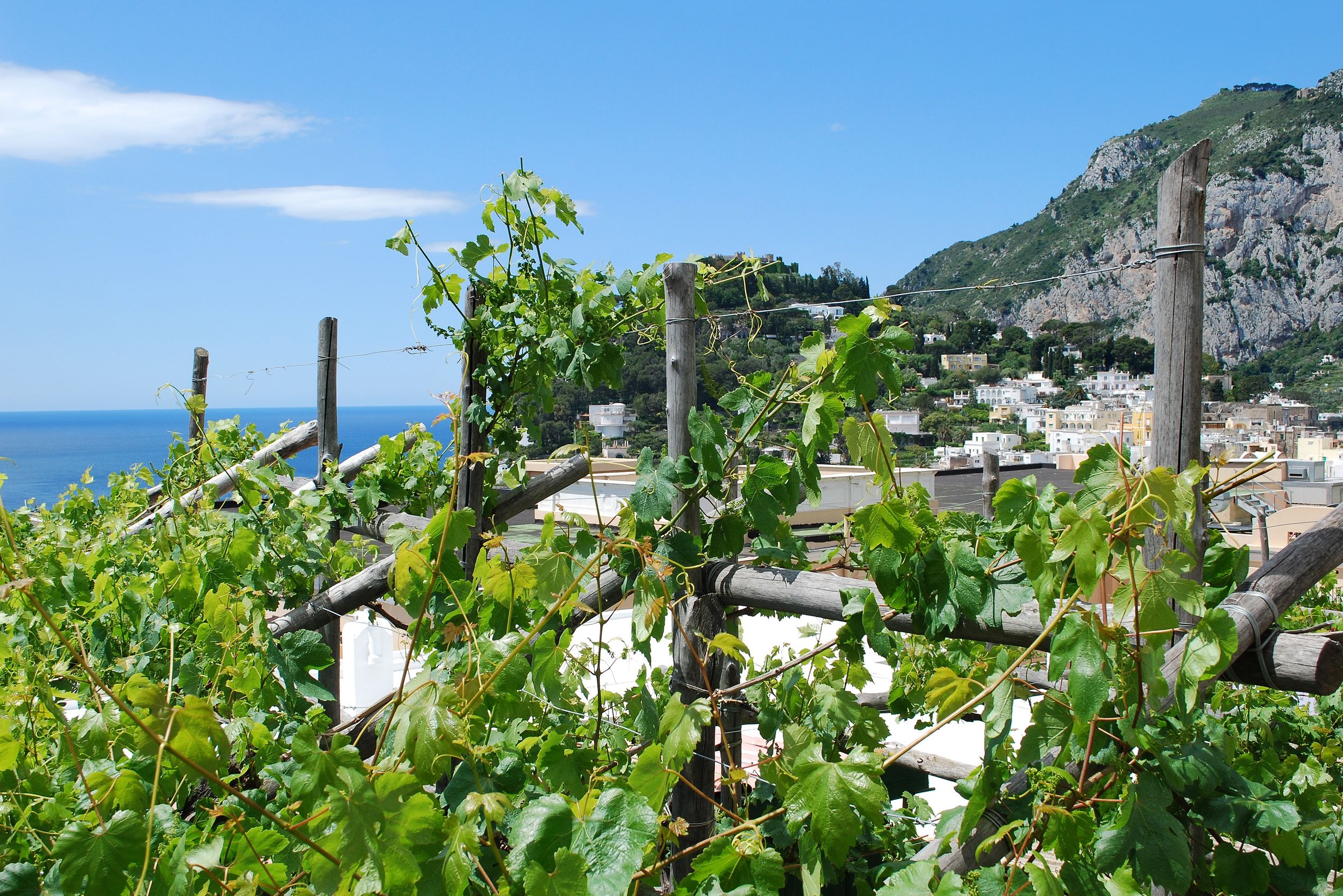
A trip to the island of Capri should be a part of any dream trip to Italy. Located on the south side of the Gulf of Naples, the island may be reached via a 40-minute ferry ride from Naples or Sorrento. Once you arrive at the island’s Marina Grande, you can take a short bus ride or a scenic funicular up to the town of Capri, and then perhaps journey a bit further to the town of Anacapri.

Either way, you’ll want to take a long gaze at the coastline, lined as it is by the faraglioni—limestone crags also known as “sea stacks” that rise above the surface of the azure sea.

You’ll also want to join the throngs of tourists at the Grotto Azzurra (the Blue Grotto). It might be crowded, expensive, and kitschy—but it must be done! The Blue Grotto is a cave, formed over the millennia by the action of the sea, on the island’s coast. The opening to the cave is about 3 feet high by six feet wide, and can only be accessed when the sea is calm and the tide is low. It is worth the wait, however, because after you duck your head and your boat slips into the 165-foot long cave, the sunlight filtering through the seawater creates a blue reflection that bathes the cavern in a clear, blue light.

.

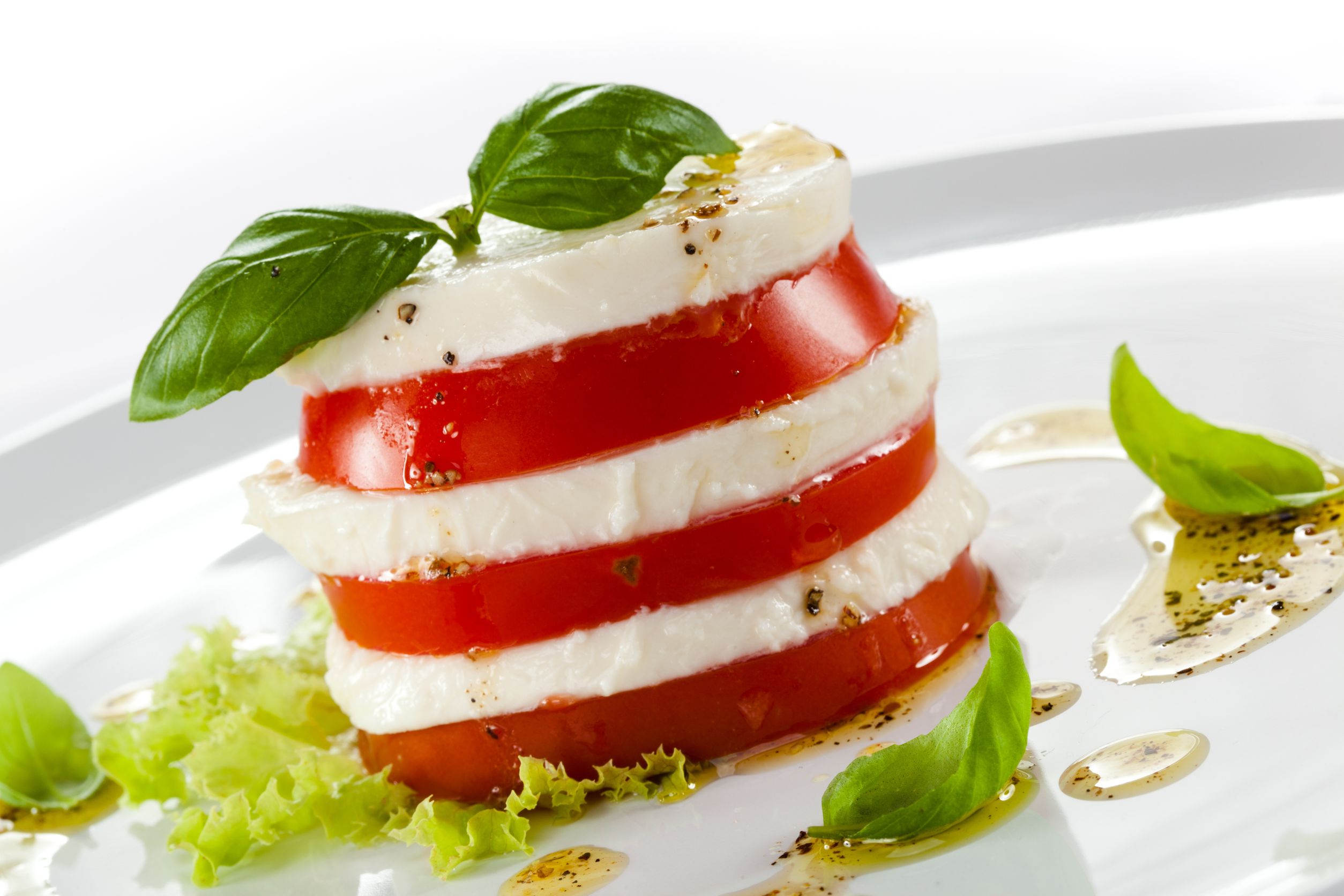
After building up an appetite, you’ll need a good meal, and an Insalata Caprese (quite literally, the “salad of Capri”) sounds like the perfect first course. This is a simple salad of sliced fresh mozzarella di buffala, tomatoes, basil, and olive oil, made to resemble the colors of the Italian flag.  (There’s a recipe in the links below.) Insalata Caprese, they say, was invented in the early 20th century to show off the  abundant produce of the sunny island, to give a nod (via those colors) to patriotism for Italy, and to appease the growing numbers of important politicians and royalty (Hollywood and otherwise) who were visiting Capri in droves.

You’ll probably need a nice glass of white wine to go along with your lunch, and you are in luck, as the island produces a red and a white wine under the Capri DOC. With just two acres planted to vines, your lunch on Capri might be your only chance to ever taste these wines, so we suggest you try a glass of each.

The white wine produced in the Capri DOC is made from a minimum of 80% (combined) Falanghina and Greco. The Falanghina grape is one of the leading grapes of Campania, and plays a role in many of the DOC-based wines of the province. Falanghina-based wines tend to be high in acidity and show aromas of peaches, pears, apricots, almonds, and a bit of “leafiness” and minerality. The Greco grape variety is also widely grown in Campania (as well as several nearby regions such as Lazio, Puglia, and Molise). Wines made from Greco sound quite similar to those made from Falanghina, and have been described as having aromas of apricot, peach, citrus, fresh herbs, and a hint of minerality along with medium body, fresh acidity and a nice balance. Sounds like a Capri Bianco DOC would pair nicely with an Insalata Caprese.

.

If your secondo of choice is some variation on pasta with tomato sauce, a glass of Capri Rosso DOC is a perfect accompaniment. Capri Rosso DOC is produced using a minimum of 80% Piedirosso.  The Piedirosso grape is likely native to Campania and is one of the most widely grown red grapes of the area (this, despite the fact that you probably never heard of it before).  Piedirosso is known for producing light-ish red wines with fruity flavors of plum, blackberry, and cherry, has a fresh bite of acidity and (not surprisingly) it’s often compared to those produced from Gamay.

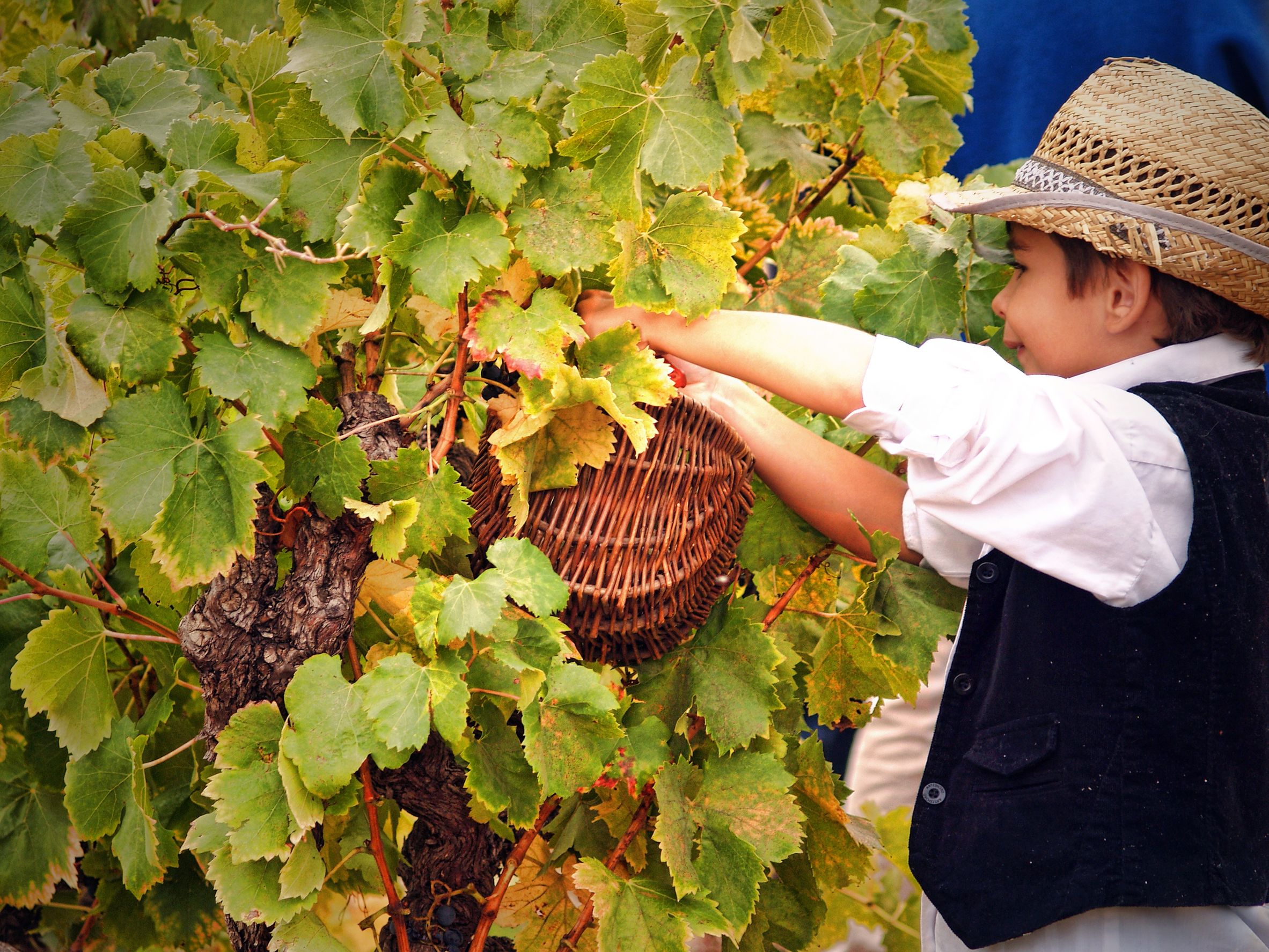
One interesting tidbit about Piedirosso is its name which derives from “red feet.” I assumed that this referred to the red feet one might acquire while stomping around in a vat of freshly-picked Piedirosso grapes, but apparently it refers to the color and shape of the stalks that attached the bunches of grapes to the vine—they are three-pronged and thus resemble the claws of a pigeon, and around harvest time, they turn red.

1.

Wine making is an ancient but dying are on the island of Capri, but it is kept alive by a small but hardy troupe of winemakers keeping the dream alive. For some great insight into Capri and its wines, I suggest a visit to the Scala Fenicia Winery. If that’s not possible in the near future, you could always just visit their website.

References/for further information:

The Bubbly Professor is “Miss Jane” Nickles of Austin, Texas… missjane@prodigy.net
The Limone and Liquore of Sorrento

.

Hugging the coastline just across the bay (and accessible by ferry) from Naples is the town of Sorrento. Sorrento is many-a-person’s touristy dream destination, and in real life it does not disappoint. While you are in Sorrento, be sure and tour the Duomo (Cathedral), visit the old town, drink coffee in the Piazza Tasso, take a day trip to the island of Capri, and drive along the coast to Amalfi. You can’t miss any of it.

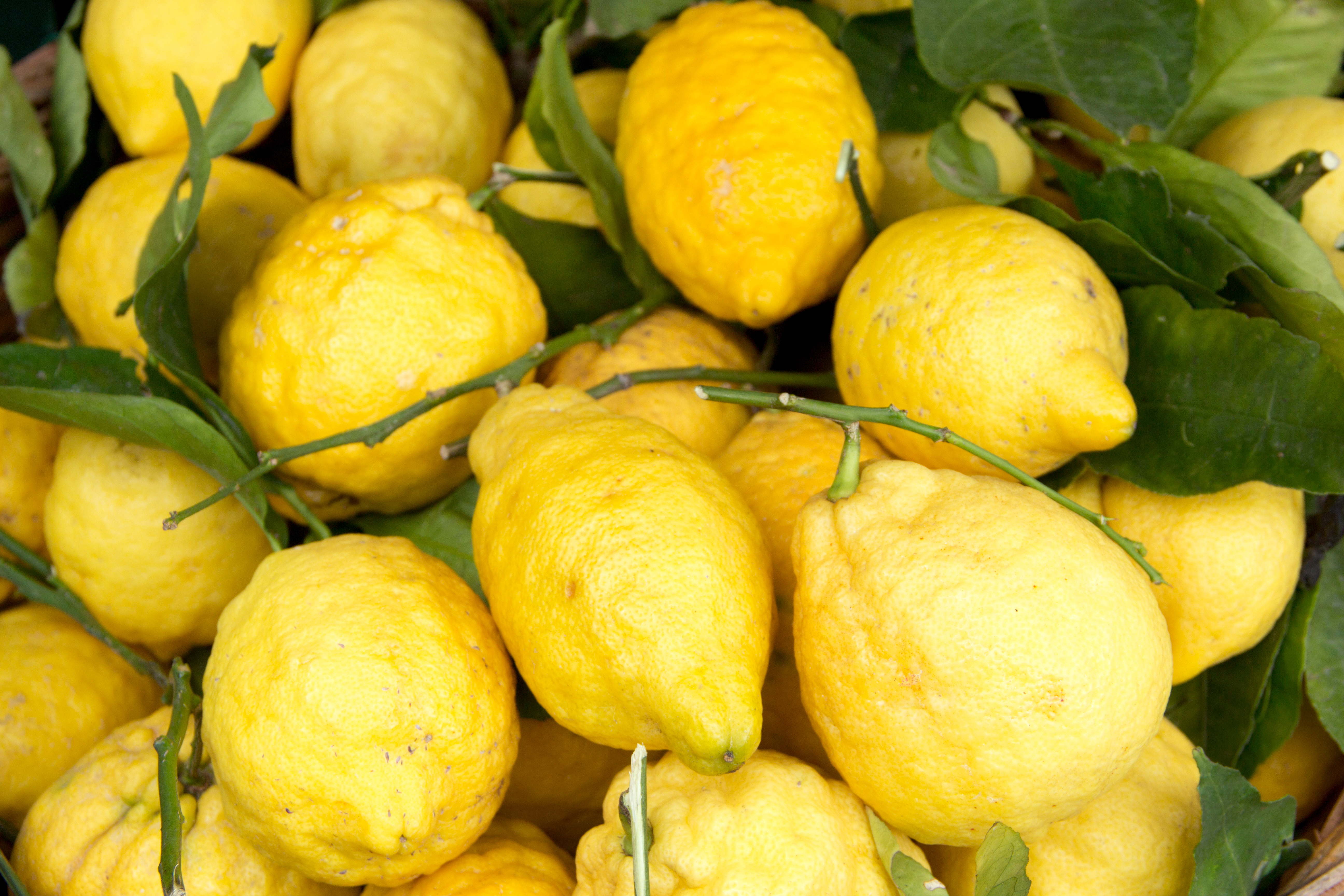
Another thing you can’t miss in Sorrento is lemons. You can eat and drink lemons—as in lemon cake, spaghetti al limon, lemon gelato, and bruschetta rubbed with lemon, all washed down with limoncello (or lemonade for the kids). Italians will have a lemon slice dipped in sugar (peel and all) for a snack. Next, you can take a stroll through the lemon trees, planted in terraced groves, thriving in the tufo and limestone soil and abundant sunshine—as they have for centuries. And while shopping for souvenirs, stroll into a ceramics studio and find a big bowl or a pitcher decorated with pictures of lemons. You’ll want to remember these lemons for a long time.

The lemons grown in Sorrento are so unique that they have been award Protected Geographical Indicaton (Indicazione Geografica Protetta/IGP) status by the European Union, complete with a consortium (the Consorzio di Tutela del Limone di Sorrento IGP) to protect, promote, and market the Limone di Sorrento. According to the consortium’s guidelines, in order to qualify as a Limone di Sorrento IGP, the lemons must have the following attributes:

  • .

    They are a “local ecotype” of the common lemon, aka Lemon of Massa, “Massese,” or “Oval of Sorrento”

  • They are grown in a geographically-delineated area of the Sorrento Peninsula that includes the districts of Massa Lubrense, Meta, Piano di Sorrento, Sant’Agnello, Sorrento, Vico Equense, and Capri.
  • They must be elliptical in shape with medium-large dimensions (weight not less than 85 grams [3 ounces]).
  • They must have a medium-thick peel and a citrine (pale-to-golden) yellow color over at least 50% of the surface.
  • They must be rich in essential oils and very fragrant, “very juicy” and with straw-colored yellow pulp.
  • The juice, characterized by an elevated acidity, must be rich in vitamin C and mineral salts.

To an American eye Limone di Sorrento might look kind of pale and funky…but these lemons are not chemically treated, colored, or dipped in wax. They are the real deal, they look natural, and they are a much sweeter lemon than those that most Americans are used to. While it’s a bit of a stretch, many people note that Limone di Sorrento are more like Meyer Lemons than the “supermarket” lemons (known as Eureka Lemons or Lisbon Lemons) that we get in the US.

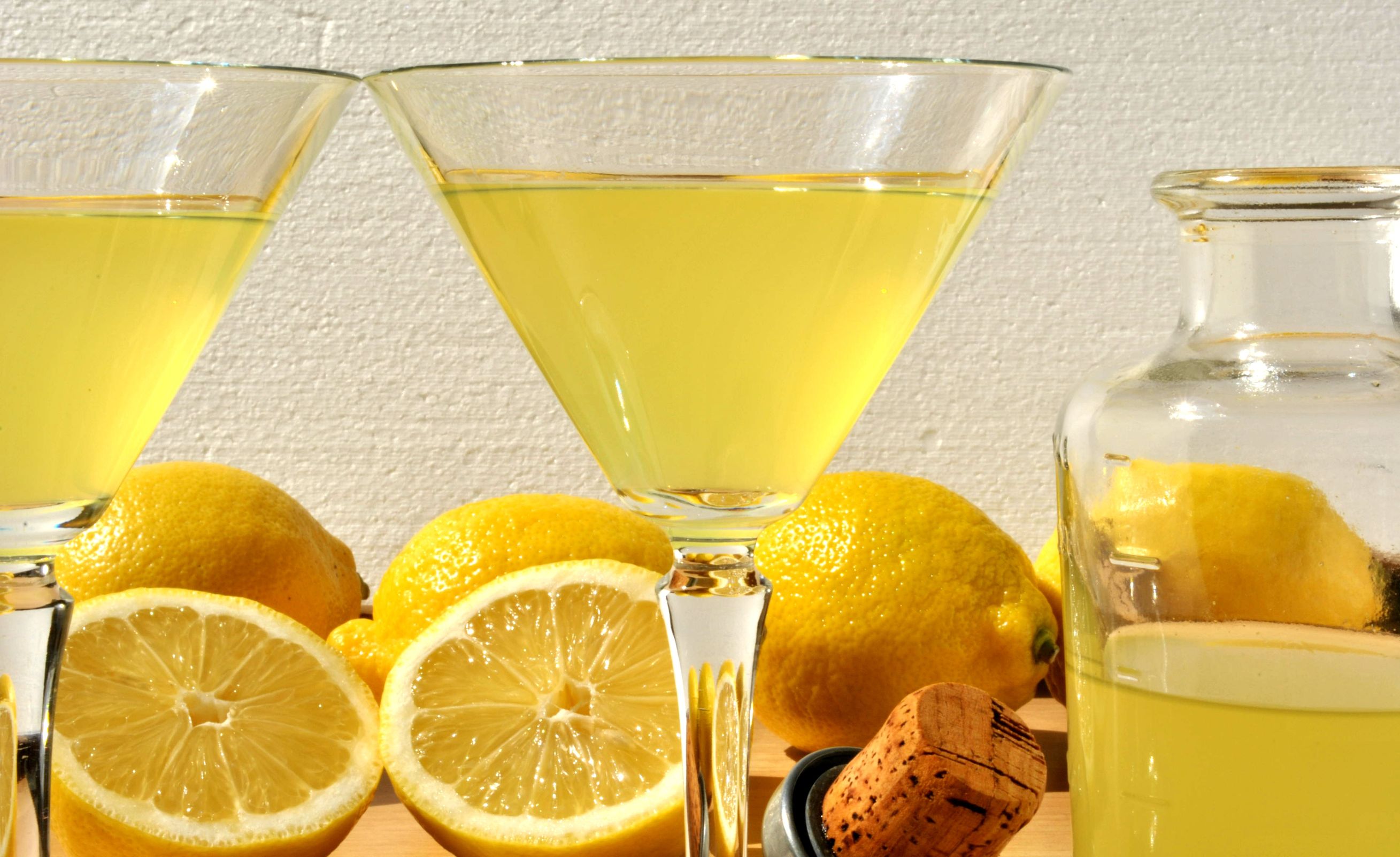
And then there is the local limoncello. As a tourist in Italy, you are certain to remember the first time you had limoncello. Perhaps it was at an aperitivo (the Italian version of “happy hour” to stretch the definition a bit) or after a meal at a restaurant. Wherever or whenever it was, I am sure you will remember it.

Photo of Sorrento’s Marina Grande by Cutiekatie via Wikimedia

The limoncello produced in Sorrento has been awarded an IGP as well, known officially as Liquore di Limone di Sorrento IGP. The technical standards for Liquore di Limone di Sorrento include the following guidelines:

  • It must contain a minimum of 30% alcohol by volume.
  • It must be produced from a base of neutral spirits via by maceration with the peels of Limone di Sorrento IGP for a minimum of 48 hours.
  • It should be between 20% and 35% sugar by volume.
  • It must be produced within the Limone di Sorrento IGP cultivation zone.
  • It must contain a minimum of 250 g (by weight) of Limone di Sorrento PGI fruit or juice per liter of liquor.
  • No other colorings or flavorings (other than Sorrento Lemons) are allowed (but ascorbic acid may be added as a stabilizer).
  • It must be citrine yellow in color, and may be clear or opalescent.
  • The aroma and flavor must be characteristic of the Limone di Sorrento IGP.

.

All of that is a bit heavy on the “technical” but doesn’t it still sound delicious? I’m thinking tonight is a good night for Pollo al Limone (as true Limone di Sorrento are hard to find outside of Italy, I’ll settle for using the recipe provided by the consorzio but substitute Meyer lemons [don’t hate me]) followed by some lemon cookies dipped in Liquore di Limone di Sorrento. Luckily, a true Liquore di Limone di Sorrento IGP can—these days—be found in good old Austin, Texas.

References/for more information:

The Bubbly Professor is “Miss Jane” Nickles of Austin, Texas… missjane@prodigy.net