Butterflies, Bubbles, and Birds: Christopher Merrett

.

Christopher Merrett (1614–1695) is something of a hero to wine lovers, as we know him to be the first person to figure out that you could add sugar to a bottle of wine, cause it to re-ferment, and make bubbles! Put in more technical terms, he is acknowledged as the first person to deliberately create a sparkling wine via the addition of sugar.

So, cheers to Christopher Merrett, on that merit alone! However, as is generally the case with these scientists of yore, he accomplished much more than just bottling bubbles: he was, in fact, a member of the Fellowship of the Royal Society and studied metallurgy, glass making, plants, birds, and butterflies.

Merret was born in Gloucestershire in the southwest of England, and earned his medical degree at Gloucester Hall (which later became Worcester College of the University of Oxford). He practiced medicine in London, becoming a Fellow of the Royal College of Physicians, and later became a founding Fellow of the Royal Society—the full name of which is officially “the Royal Society of London for Improving Natural Knowledge.”

In other words, Merret became a founding member of the oldest “learned society” in the world. The Royal Society views its role as “promoting science and its benefits, recognizing excellence in science, supporting outstanding science, and providing scientific advice for policy.”
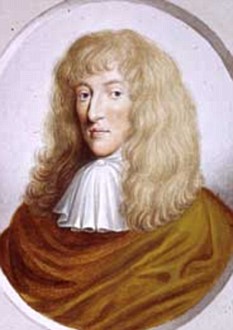
Christopher Merrett

Merrett was a keen scientific observer of the natural world and became quite famous for publishing one of the earliest taxonomies of the plants, animals, and minerals of the British Isles. Published in 1666, this work—Pinax Rerum Naturalium Britannicarum—is now acknowledged as the earliest work to contain a complete list of the birds and butterflies of England. He also had an interest in glass making and translated Antonio Neri’s L’Arte Vetraria (“The Art of Glassmaking”—written in 1612) from Italian to English, while adding 147 pages of his own.

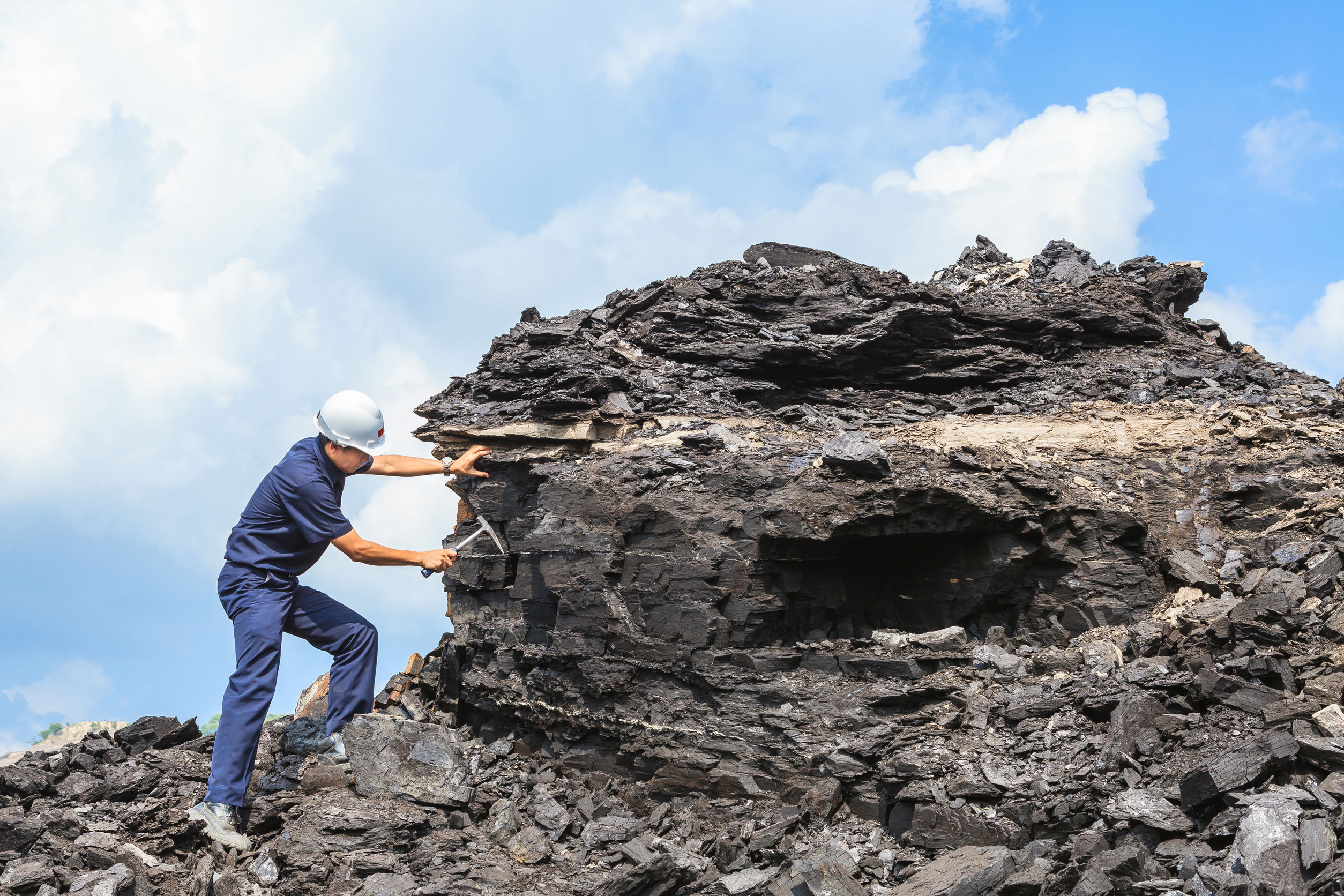
A few things going on in the scientific community as well as English society helped to lead Merrett to his discovery. For one, the English glass-making industry had become quite adept at producing hard, durable glass through the use of coal (which burns hotter) rather than wood for fires. English-produced bottled were thus sturdier—and less likely to burst—than French bottles. In addition, the English imported cork from Portugal to seal their bottles while the French were still using wooden stoppers and cloth. Finally, the English had already acquired a taste for apple cider, which was sweet and flavorful—more so than the wine imported from France.

As such, English people became accustomed to adding molasses and sugar to their imported French wines. Soon enough, Christopher Merrett—a keen observer of the natural world if ever there was one—noted that if you added sugar or molasses to French wine, and stored it in a sturdy, coal-fired English glass bottle stoppered with a tight-sealing Portuguese Cork, you ended up with a lively, flavorful, bubbly wine that was a tasty as English cider. That was an “a-ha” moment if ever there was one!

The title page of Merrett’s Pinax Rerum Naturalium Britannicarum

In 1662, Merrett delivered an eight-page paper to the Royal Society detailing the use of sugar or molasses to give wine or cider a bit of fizz. In the words of Merrett, this was “to make them brisk and sparkling.” Keep in mind that this paper was delivered in 1662, several decades before Dom Perignon’s famous “Come quickly, I am drinking stars!” moment, alleged to have occurred in 1697.

Merrett was only mildly interested in wine, and soon returned to his observations on the rest on the natural world. In addition to his studies of birds and butterflies, he went on to present several more papers on many topics to the Royal Society. These included papers on such diverse topics as fruit trees, tin mining, and coastal geography. His interests, it seems, knew no bounds.

Note: Much of the information about Christopher Merrett and sparkling wine came to light courtesy of the British wine writer Tom Stevenson.

References/for more information:

The Bubbly Professor is “Miss Jane” Nickles of Austin, Texas… missjane@prodigy.net
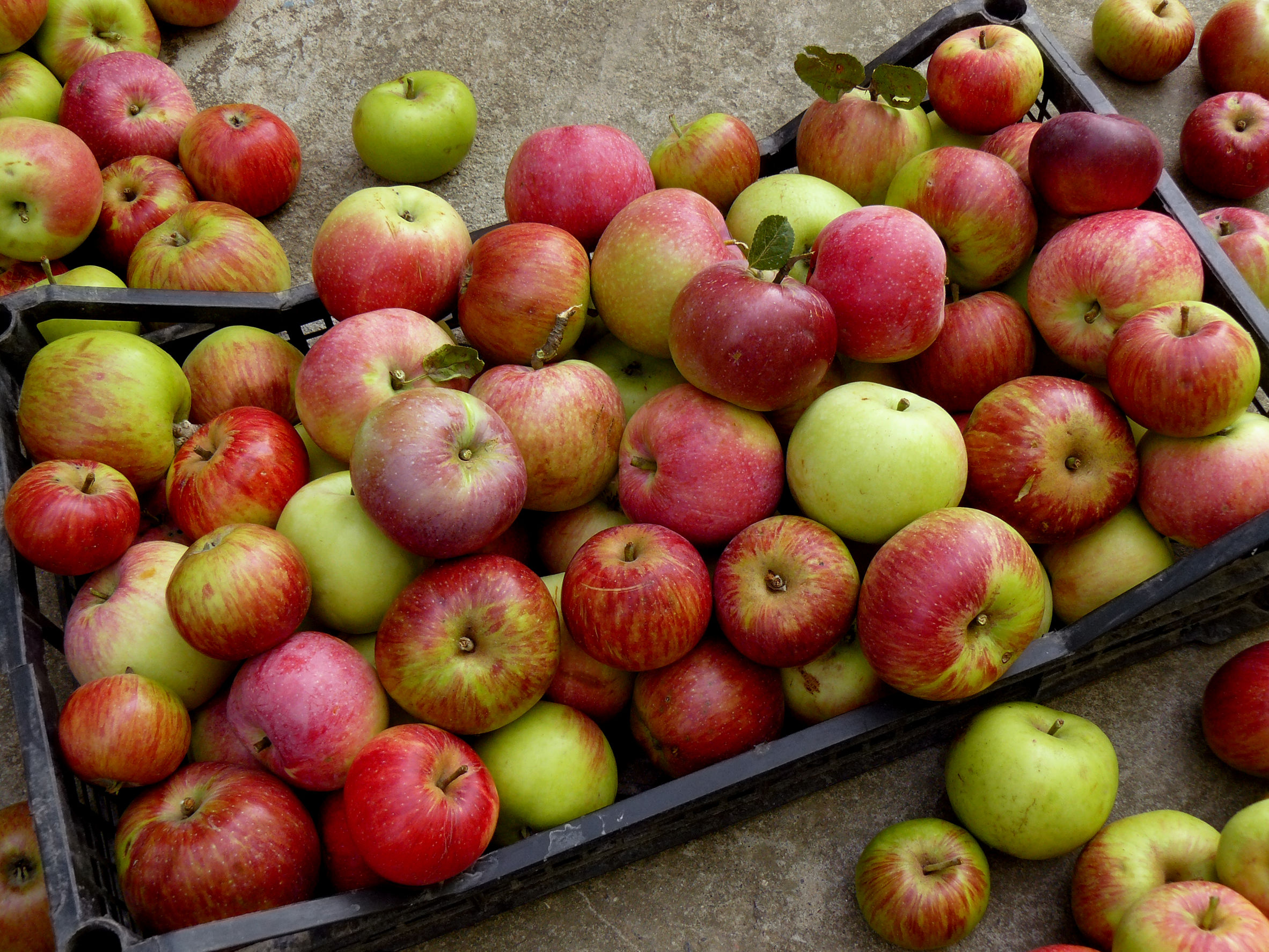
The Long Pour: Sidra de Asturias

.

Apple cider and Perry (pear ciders) hold a dear spot in many European cultures: Normandy and Brittany are known for cider as well as apple brandy, the West Country of England prides itself on their unfiltered “scrumpy” cider, and a trip to Ireland is incomplete without a taste of Magners.

Spain is considered to have the longest continuous cider culture in Europe. Spain’s cider (sidra) production is centered in the regions of Asturias and Basque Country, located in the northern part of the country. The climate, cooled by ocean breezes and with decidedly more rainfall than much of the rest of Spain, makes for the ideal growing conditions for apples.

Asturias makes 80% of Spanish cider, produced by more than a hundred small producers with the help of over 250 growers. Sidra de Asturias was awarded denominación de origen (DO) status in 2003. According to the DO guidelines, the cider must be made exclusively with cider apples of specified varieties grown within the Principality of Asturias, and produced under strict quality controls.

There are currently three styles of sidra allowed to be produced under the Sidra de Asturias DO. They are:

  • Sidra Natural (Natural Cider): Natural cider is produced from any of the 22 approved cider apple varieties. The process begins with the harvest, grinding, and pressing of the apples to create juice. Next, the juice is allowed to ferment—typically in stainless steel, or perhaps in large chestnut barrels. The newly-fermented cider is then allowed to rest for a few months, after which it is typically decanted to remove some sediment. Sidra natural is fermented to near dryness and is unfiltered. Sidra natural benefits from a “long pour.”
  • Nueva Expresión (New Expression Cider): New expression cider is produced in a manner similar to natural cider; the difference being that new expression cider is filtered and stabilized before being bottled.
  • Sidra Natural Espumosa (Natural Sparkling Cider): Sparkling cider may be produced via the tank method or by a second fermentation in the bottle. These ciders are also fermented to dryness and can be classified as “brut” in style.

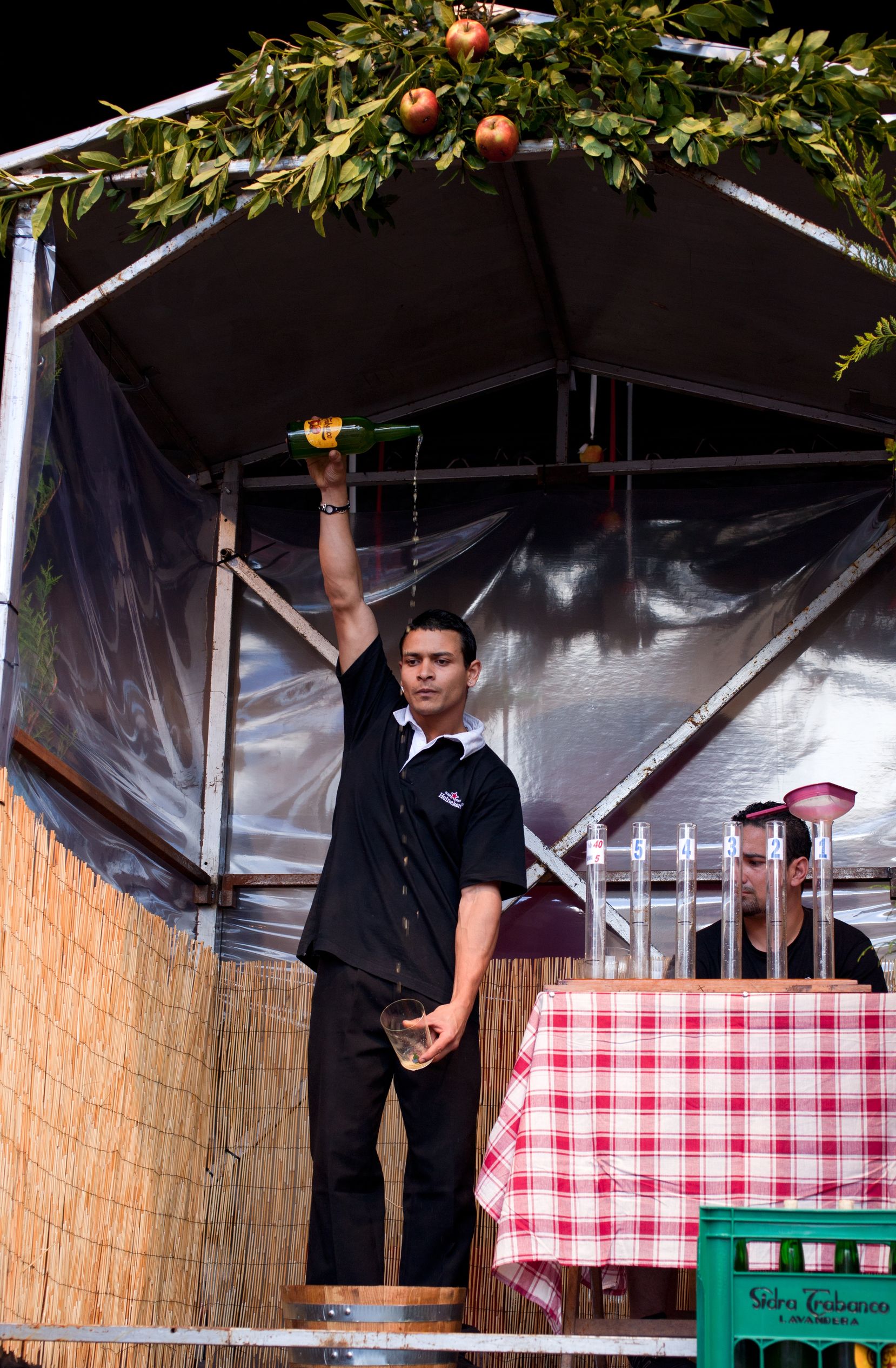
Sidra natural and other artisanal Spanish ciders benefit from aeration just before drinking; this helps to bring out the inherent complexities of the beverage as well as release some dissolved gas. This has given rise to a few colorful traditions, such as serving cider via a “long pour” with the bottle raised high above the server’s head, while the glass is held at arm’s reach below. This is termed escanciar la sidra, or “throwing the cider.”

Race of the pouring of sidra de Asturias in the town of Gijon

The long pour is serious stuff for sidra enthusiasts, and there are certain rules to achieving the perfect long pour. For starters, the glass is held with the thumb and forefinger, with the middle finger supporting the bottom of the glass (and the ring and pinky finger tucked away in the palm of the hand). The arm holding the glass must be stretched down straight with the glass held at the center of the body. The arm holding the bottle must be stretched straight and high above the head. When the bottle is tipped and the cider is poured, the stream of cider must find the glass while the glass stays still. It’s the responsibility of the cider-pourer to ensure that the cider foams.

The next time you are in Austurias, you’ll want to seek out a sidrería (cider house). It’s possible that your friendly neighborhood sidrería will serve nothing but cider, but it is also possible that they may serve a few pintxos and maybe even other types of drinks. If you visit in January, you can participate in the beginning of the txotx (pronounced “choach”) season. During txotx season, cider is served directly from the large wooden cask—actually, it is allowed to ‘shoot” in a very thin stream straight out of the barrel—while thirsty bar patrons take turns “catching” the cider in their glasses (held out at arm’s length).  Asturias sounds like a good place to be.

Well-known brands of Sidra de Asturias include J.R. Cabueñes, Herminio, Cortina, and Castañón.

References/for more information:

The Bubbly Professor is “Miss Jane” Nickles of Austin, Texas… missjane@prodigy.net
Wine Geo: Pass, Gap, and Gorge

.

I checked the ever-expanding list of American Viticultural Areas (AVAs) the other day, and for some reason my attention was drawn (once again) to the various geological formations that are mentioned in the titles. These include ridge, slope, plateau, sound, highlands, peak, ledge, and delta.  Fascinating! But…what do they all mean?

Let’s consider these for now: pass, gap, and gorge—as in Pacheco Pass, Templeton Gap, and Columbia Gorge.

What is a pass? Geomorphologically speaking, a pass (often referred to as a mountain pass) is a low-lying, somewhat flat area surrounded by much higher and more rugged terrain. A pass forms when a glacier or stream erodes away between two mountains or a series of mountains. Passes are typically the easiest route for people to travel across mountain ranges and many of the best-known passes in the world—such as the Great St. Bernard Pass in Switzerland and the Khyber Pass between Afghanistan and Pakistan—have served this purpose for millennia.

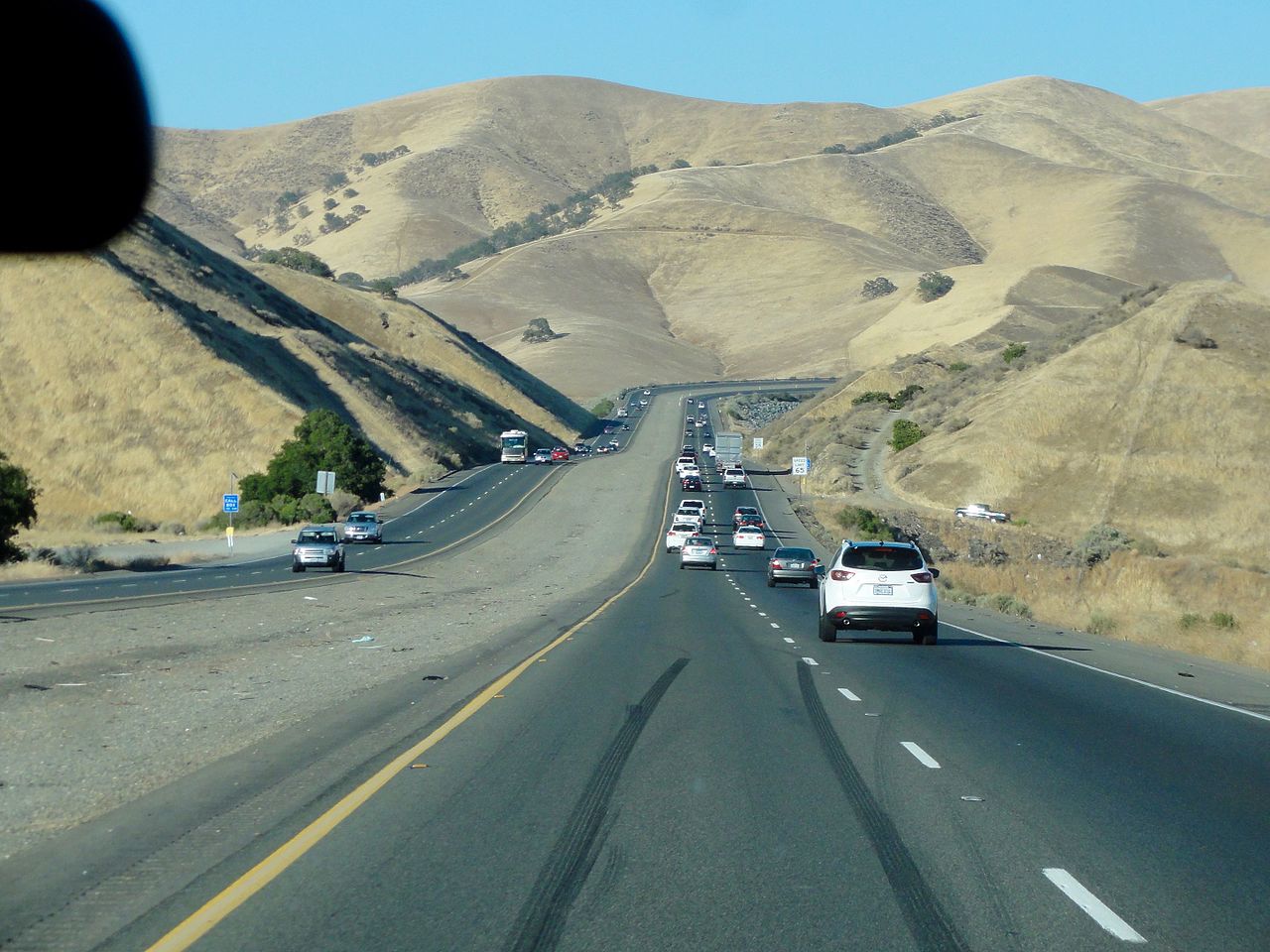
The Pacheco Pass AVA is located in north/central California, straddling the borders of San Benito and Santa Clara counties.  Casa de Fruta, part of a large fruit orchard and fruit stand complex catering to thirsty tourists on the road to Gilroy and Santa Cruz, is the only winery within the AVA. The area was awarded an AVA in 1984 after a petition was filed by the Zanger family (the owners of Casa de Fruta), who produce fruit wine under the Casa de Fruta label and vinifera-based wines under the Zanger Vineyards label.

Highway 152 along the Pacheco Pass. Photo by Chevy111 via Wikimedia Commons

The Pacheco Pass itself is a 15-mile long corridor that crosses the Diablo Range (part of the California Coast Mountain Ranges) along what is now State Highway 52. The Pass was named for Francisco Perez Pacheco who owned the land in the mid-1800s, back when the area was still a part of Mexico known as Alta California. For a time in the 1880s, the pass was known as Robber’s Pass due to two highwaymen that robbed (and sometimes murdered) travelers along the route. Even today, the stretch of the Highway 152 from Los Banos to Gilroy is quite dangerous, as witnessed by the high number of traffic accidents. There are even rumors that the pass is haunted (best not to pick up any hitch-hikers).

What is a gap? A gap is also a low area between two mountains; however, gaps are smaller than passes, and therefore more rugged and difficult to navigate.  Gaps (sometimes referred to as water gaps) are often created through the twin forces of water erosion and tectonic plate uplift.

A wind gap is a former water gap that no longer has any water due to stream capture (the diversion of a stream from its bed into a neighboring stream). The narrow valleys that remain behind after the stream has diverted allow rain, fog, and other climate features to penetrate beyond the point where the mountains would typically halt their progress.

The Templeton Gap District AVA is one of the 11 sub-appellations of Paso Robles. Surrounding the town on Templeton, it is one of the four sub-appellations hugging the western edge of the Paso Robles AVA and is the coolest of them all. The area benefits from a series of water and wind gaps carved through the California Coast Mountain Ranges by some long-forgotten water ways in addition to the Paso Robles Creek and the Salinas River. These gaps draw cool, moist air from the Pacific Ocean inland towards Paso Robles.

.

What is a gorge? A gorge is deeper than a pass or a gap, and is better described as a narrow valley with steep, rocky walls and an often-tumultuous river running through the bottom. The term comes from the French word gorge, which means throat or neck.

Wine students will easily recognize the name of the Columbia Gorge AVA, which straddles the borders of Washington State and Oregon.  The gorge itself is a deep canyon—up to 4,000 feet deep—of the Columbia River that stretches on for over 80 twisty, turn-y miles following the river as it flows west through the Cascade Mountains.  (The AVA covers about 40 of those 80 miles.) The Columbia Gorge (also technically a “water gap”) is the only water route from the Columbia River Plateau to the Pacific Ocean, and was used in 1806 by the Lewis and Clark Expedition (the first U.S. Army expedition to cross what is now the western portion of the United States) to reach the Pacific Coast.

The Columbia Gorge AVA is known for having a remarkable diversity of specific microclimates within its relatively small boundaries—so much so that the Columbia Gorge Winegrowers invite you to experience their “world of wine in 40 miles.” The soils of the Columbia Gorge AVA include alluvial soils from the river beds, colluvial soils from landslides, and soils from volcanic activity (hello, Mount Hood and Mount Adams). The elevation of the vineyards ranges from just above sea level to 2,000 feet high. The cool, moist air coming from the west turns warmer and drier as it travels inland, even losing an inch of rain a mile from west to east. That’s what we call diversity.

The Columbia Gorge

Geo notes: In addition to pass, gap, and gorge, other terms may be used to describe the breaks in mountain ridges: notch, saddle, and col, for example. These terms are not too sharply defined; overlaps exist, and usage may vary from place to place. No one ever said wine (or geology) was easy!

Geomorphology is the study of the origin and evolution of physical features of the surface of the earth (and other planets if you care to venture forth).

References/for more information:

The Bubbly Professor is “Miss Jane” Nickles of Austin, Texas… missjane@prodigy.net