Flashcards: the Good, the Bad, and the Ugly

.

Flashcards: most wine and spirits students use them; many despise them. As for myself, like most educators, I have a love/hate relationship with flashcards. Here’s why:

The Bad: Flashcards can be used solely for “rote memorization” and are often blamed for the trivialization of knowledge and an ensuing army of factoid-focused nerds.    

The Ugly: I know students who skip their reading assignments or their lectures—and dive straight into memorizing the cards.  These folks are robbing themselves of the opportunity to gain a true understanding of the subject matter.

And yet, flashcards can be an efficient and effective study method, which leads us to:

The Good: Flashcards utilize active recall and are a natural way to use spaced and targeted repetition. They are best used for fact-heavy (as opposed to concept-heavy) topics and as such, work well for vocabulary words, dates, regulations (aging requirements, grape[s] allowed in a certain product), numbers (yields, abv) and any manner of facts and figures. Flashcards also trigger your meta-cognitive faculties (did I get it right? yeah me!) which can help with attention and engagement. They’re bite-sized and portable, and a great way to use small bursts of time to study.

And…believe it or not—flashcards can, with a few tweaks, be useful for a deeper level of learning well beyond rote memorization, which leads us to:

The Excellent: Here are a few ideas for the most excellent use of flashcards:

Say the answers aloud: Whether reading, quizzing, summarizing, or flashcarding, studying out loud is always a good idea. As a more active form of study, it uses more senses (sight, hearing), and motor activity than just reading. This leads to better memory retention!

.

Add in a bit of elaboration: Don’t just state—elaborate! Using hot pink or bright yellow cards, create a deck of “instructional” flashcards with questions. These questions, used alongside your fact-based cards, should encourage you to think a bit deeper on the topic at hand. To use, shuffle the decks together, placing an instructional card at intervals of 3 or 4 cards—or keep the decks separate and use an instructional card along with every few fact-based cards. Some wine-related examples of instructional questions might include:

  • Have you ever had this wine? If so, describe it. If not, describe a wine have you had that is similar.
  • What is unique about this wine/region/grape/place/regulation?
  • Is this regulation stricter or more lenient than most?
  • What region, city, or landmark is close to this area?
  • What is the quality/reputation/price point of the wine/region/place (whatever fits)?

You can keep this technique super-simple and in your head by asking yourself one of these cheeky questions after every other card:

  • Who cares?
  • So what?
  • And this matters why…?

In my opinion, this study technique destroys the flashcards-equal-factoids conceit. Boom.

Use Confidence-based Repetition: Confidence-based repetition allows you to focus on what you need to learn without spending valuable study time on things that you already know. Here’s how it works: as you go through a stack of cards, divide it into three piles depending on how confident you are in your knowledge, and as your revision progresses, concentrate on the material you don’t know well (or at all). You can label these three piles as follows: “I know it (heck yeah),” “I kind of know it (I’ve heard of it, but can’t remember it),” or “I don’t know it (I have no clue/WTF).” As you progress, your “don’t know” stacks will get smaller and smaller, and when your “I have no clue” pile is tiny, add those cards into your next stack and move on.
.

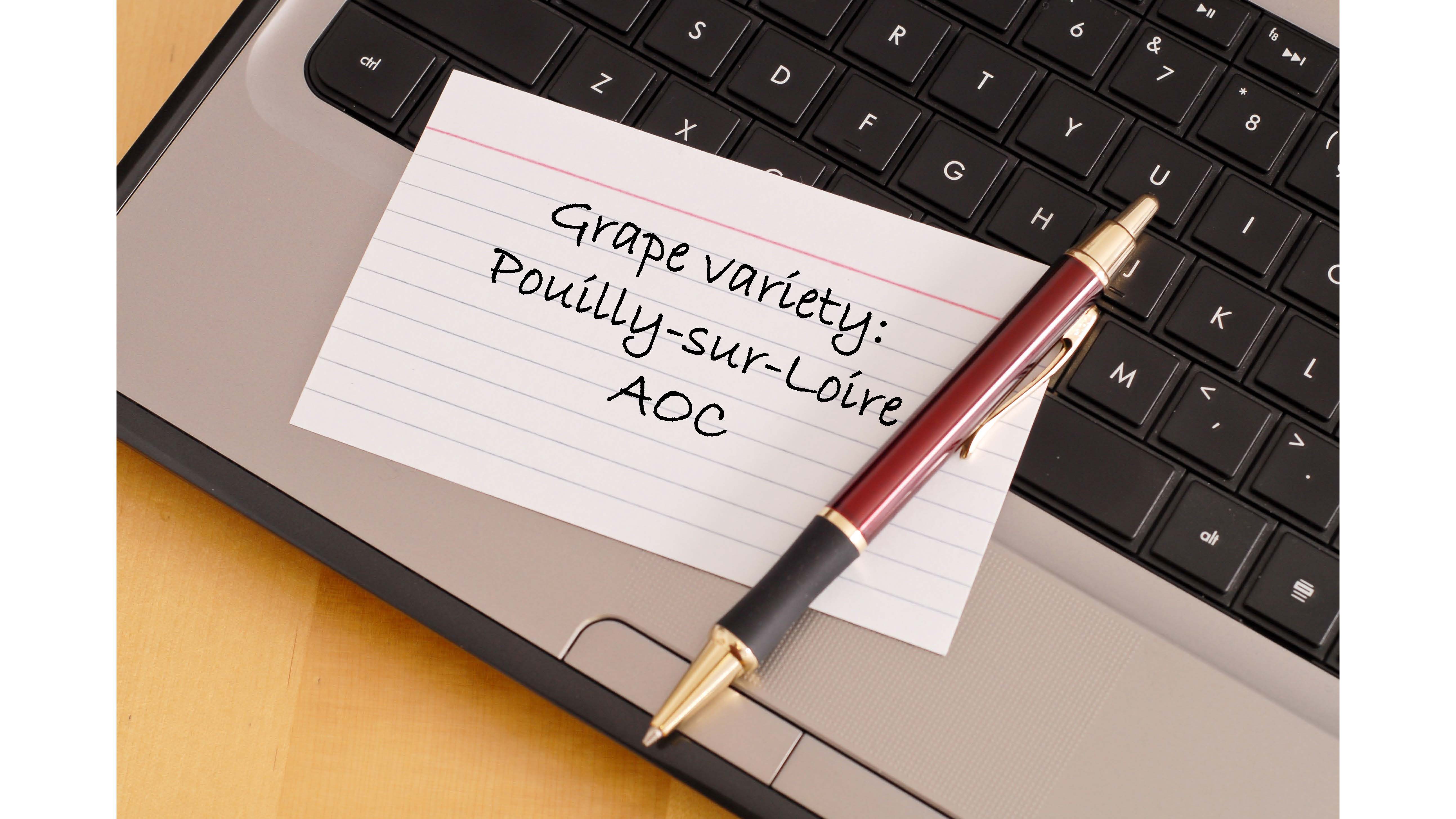
Best practices for a pre-made/digital deck: If your subject matter is super-fact-heavy, a pre-made flashcard deck can save you time. But please-please-please make sure your deck comes from a reliable source (not a random stranger off the internet). Once you’ve determined your flashcards are legit, here’s an idea of how best to use them: run through a stack/section of flashcards one time to see how you do. If you miss nearly all of them, go back to some other forms of study and revision, and then try again. When you reach the point where you get at least half of them correct, copy down (make physical copies of) just the cards you missed and work from there.

Make your own cards: Creating your own cards is a form of active learning. It involves summarizing complex topics into concise statements, and at the very least requires you to write something down. Using new information (whether it be writing something, saying something, or creating something) triggers the production effect. This means that you are more apt to remember something that you personally made, did, or said. Heck, it’s now part of your life experience and more memorable than something that you just read or heard.

Stay excellent: Avoid the following flashcard foibles:

  • Wrong time: Do NOT be tempted to dive straight into the flashcards or (gasp!) attempt to use flashcards as a means of instruction. The proper use of flashcards is in the revision/review stage of learning—after the student has the “big picture” and a good understanding of the surrounding concepts.
  • Wrong subject: Flashcards are not the most effective study technique for complicated subject matter, concepts involving hierarchies, anything that requires a two-page flowchart, or subjects that are mired in debate and/or opinion. They are also not ideal for the study of geography…unless you paste (or draw) an actual picture or map on the flashcard.
  • Over-reliance: Flashcards are not a silver bullet to wine or spirits wisdom and should always be used in conjunction with other forms of study and revision.

In conclusion: if someone tells you that flashcards are a bad way to study, react in shock and surprise— pretend they just told you that they don’t like a good old-fashioned make-out session with someone they love. Just roll your eyes and tell them (in your best Marlene Dietrich voice), “well, dahling, you must be doing it wrong.”

Click here to check out the rest of our posts on “How to Study Wine and Spirits”

The Bubbly Professor is “Miss Jane” Nickles of Austin, Texas… missjane@prodigy.net

Spaced Repetition: Conquer the Curve of Forgetting

.

If you are studying for a wine or spirits certification you already know that studying takes time. A lot of time. Just yesterday it took me two hours to read through and take notes on two pages covering the history of wine making in Bordeaux. (And this morning, I can’t remember a thing.)

One thing to keep in mind in the midst of all this book-and-flashcard work is that more does not always equal better in terms of study time. As a matter of fact, science tells us that you will retain more knowledge if you space out your study sessions rather than if you try to do it all at once—even if the total amount of study time is the equal. This sounds like good news to me: five hours of study, spread over a period of time (whether it be 5 days or five weeks) is more effective than five hours of cram time (and it’s easier to take as well).

In other words—just like with physical exercise—you are likely to see the best results if you use multiple, well-spaced study sessions, as opposed to a few long (probably miserable) nights of cramming-for-the-test.

.

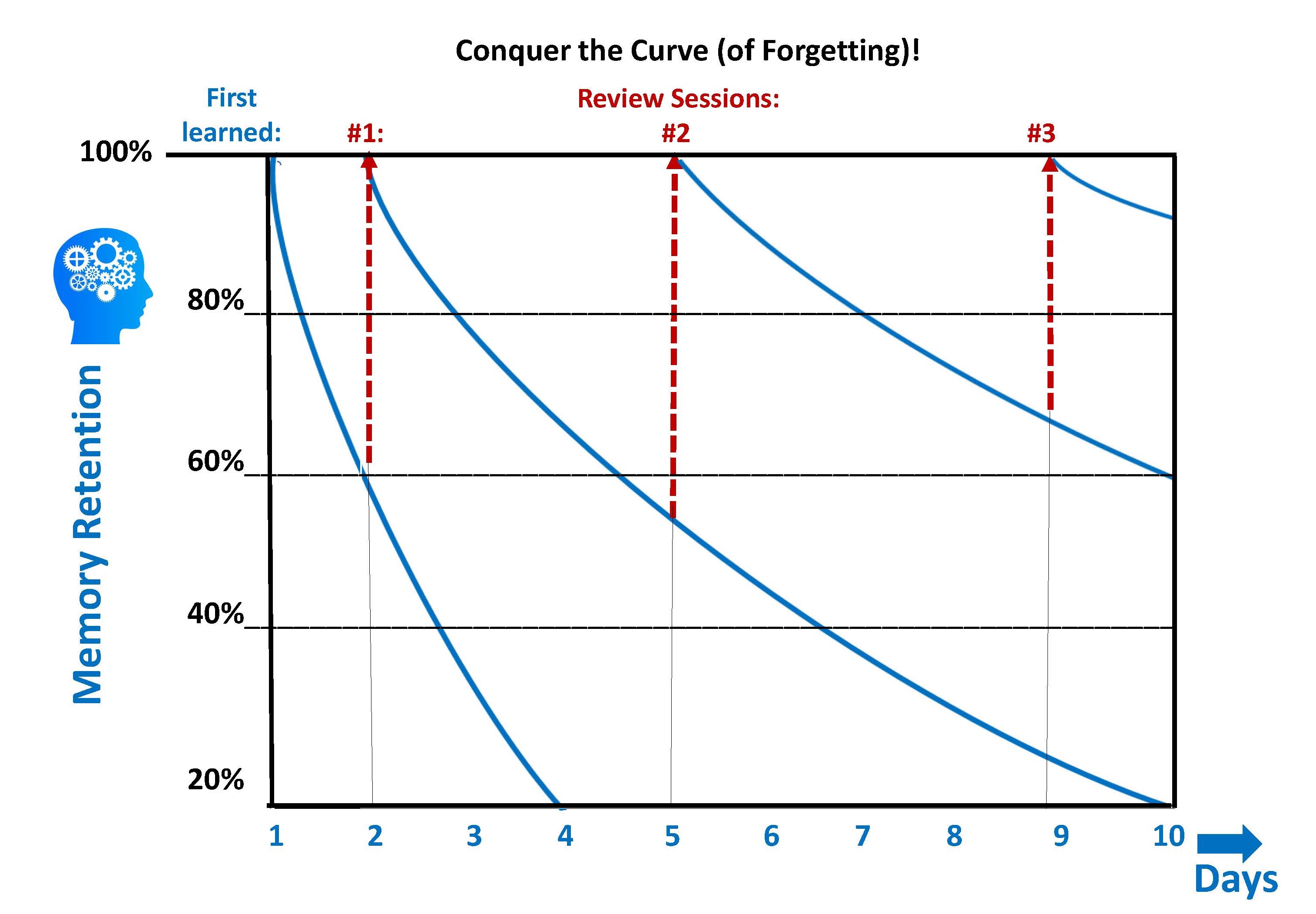
Hermann Ebbinghaus—a German psychologist who pioneered the study of memory in 1885—was one of the first to examine this phenomenon. Simply put, he observed that after learning new material, his subjects forgot 50% of the information within 30 minutes. After 24 hours, they had forgotten between 70% and 80%. Ebbinghaus dubbed this phenomenon of declining memory retention “the curve of forgetting.”

Ebbinghaus also noticed that with each repeated exposure to the new material, the speed of forgetting slowed significantly. As such, he asserted that the best way to combat the curve was through spaced intervals of active recall—what we call “spaced repetition” or “spaced practice.”

The goal of spaced repetition is to re-visit that new material when it is foggy but not completely forgotten. For most people, this means that the ideal time to revisit newly learned material is one or two days after that first exposure.  This should be followed by another short revision session after another two or three days, followed by a series of reviews spaced so that each succeeding interval is progressively longer than the one before. Remember—just like with physical muscles—every time you flex your mental muscles with a review of the material, the memory will be stronger and take a bit longer to fade.

Artist’s rendition of the curve of forgetting. Actual results may vary.

Since this is a wine and spirits blog, let’s hold an imaginary class. For the wine students, we’re having a class on the white wines of Tuscany. The spirits students are having a class on the iconic spirits of Galicia. You attend your class (and take some notes), and—like a good student should—you read you textbook and take some hand-written notes on the material in the book. Now…what do you do with your new-found knowledge and your valuable notes?

Here’s a sample sequence of how you might use spaced repetition to enhance your learning: after your first exposure (the class), review the material the next day. Skip two days and revise the material again;  then skip 3 or 4 days before revising the material; then skip 5 or 6 days (and revise again). After those five repetitions, the knowledge is going to start to stick, and you can slide the material into a longer rotation so that you review it a few more times (maybe once a week or once a month) before your deadline—whether it be an exam, job interview, competition, meet-the-parents, or some other such event. For best results, be sure and combine spaced repetition with active recall study methods (its more fun than just re-reading your notes and much more effective).

All it takes is bit of organization and some (intervals of) time. With the help of spaced repetition, you too can conquer the curve of forgetting!

References/for more information:

P.S. Here’s a little secret—cramming works. Pulling an all-nighter will help your performance on a test. However, if you cram, you will soon forget almost everything you learned. If you never want nor need to use the information again, cramming is your answer. If, on the other hand, you want to be able to use the information in the future…space it out!

Click here to check out the rest of our posts on “How to Study Wine and Spirits”

The Bubbly Professor is “Miss Jane” Nickles of Austin, Texas… missjane@prodigy.net


Tales of the Vine: Flying Cigars

Tales of the Vine: Flying Cigars

Chateauneuf-du-Pape in the Southern Rhône is one of the oldest and most prestigious wine growing regions in France.  The famous red wine of Chateauneuf-du-Pape is made from a chorus of grapes, with Grenache, Syrah, and Mourvedre making up the bulk of the blend.

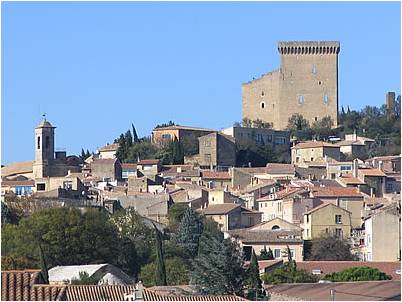
The town name, roughly translated as “New Castle of the Pope”, refers to a time in the fourteenth century when the French Pope Clement V resided not in Rome but in the city of Avignon, a short fifteen-minute drive from the Chateauneuf-du-Pape wine making region. Pope Clement’s successor, Pope John XXII, chose the town for his summer residence, and built the namesake “new castle” papal estate on a hill overlooking the vineyards. Pope John XXII also planted olive trees, expanded the vineyards, and was a great proponent of the wines of the region.

To this day, the castle’s majestic remains loom over the town and form a picturesque backdrop to the surrounding vineyards.

In 1954, at the height of the cold war, this famous wine region and the nearby town were suddenly plagued with a series of U.F.O. sightings.  The town and the surrounding areas were full of panic-stricken citizens and rampant rumors of an alien invasion. The town council was very concerned – but not about the public panic or the possibility of local citizens being abducted by aliens.  What concerned the town council was protecting the region’s priceless vineyards. In response, the following municipal decree was adopted:

Article 1:  The flying overhead, landing, and taking off of aeronautical machines called “flying saucers” or “flying cigars”, of whatever nationality they may be, is strictly forbidden in the territory of the commune of Chateauneuf-du-Pape.

Article 2:  Any aeronautical machine –“flying saucer” or “flying cigar”-that lands on the territory of the commune will be immediately confiscated and its passengers taken off to jail.

The “flying cigar” laws remain on the books today.

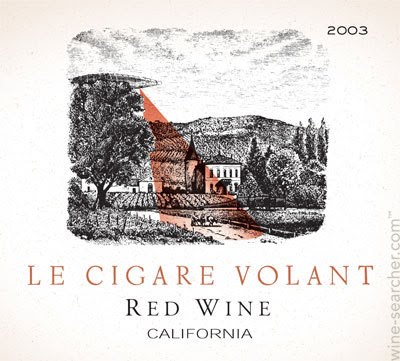
Several decades later, renegade winemaker Randall Grahm of Bonny Doon Vineyards in Santa Cruz, California set out to create a California Wine based on the grape varieties and in the style of the legendary red wine of Chateauneuf-du-Pape, he named his wine, with a respectful tongue held-in-cheek, “Le Cigare Volant”.  “Le Cigare Volant” is the French term for “flying saucer”.

Oh…and by the way – you can stop worrying…as far as I know, no flying saucers have ever landed in the commune of Chateauneuf-du-Pape.

The Bubbly Professor is “Miss Jane” Nickles of San Marcos, Texas… missjane@prodigy.net


Confusion Corner: Loir (not Loire)

.

First things first: there is an actual Loir River and Loir Valley, and they are geographically close to—but not the same things as—the Loire River and the Loire Valley.

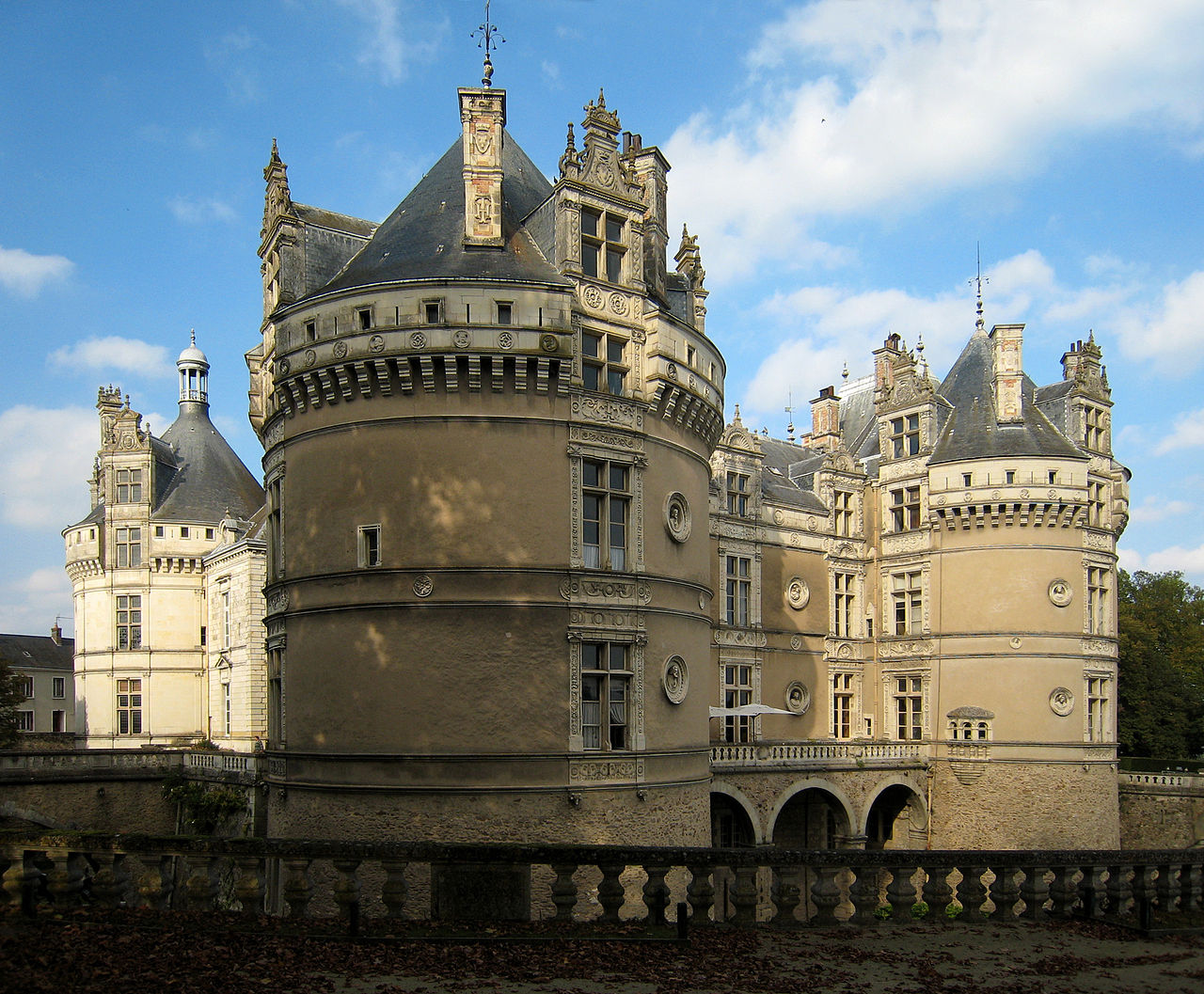
And yet, if you tell your friends you are going to the Loir Valley to taste Chenin Blanc, visit the gardens of the Prieuré de Vauboin, and tour the stunning Château du Lude—they would probably guess that you are going to the Loire Valley.

The Château du Lude in France’s Loir Valley. Photo credit: Manfred Heyde via Wikimedia Commons

Your destination, however, would be the valley of the Loir—a river that flows somewhat parallel to and about 20 miles/32 km north of the Loire River as it passes the city of Tours (and the wine regions of Touraine).

The Loir River flows—from its source just north of the town of Illiers-Combray—for a total of about 200 miles/322 km. Its waters eventually make their way into the Loire, and it is considered a third-order tributary of the larger river. Before joining the Loire, the Loir flows west/southwest for nearly 180 miles/290 km and eventually joins the Sarthe River just north of the city of Angers. From there, the Sarthe River joins the Mayenne River to form the Maine River, which flows south for a mere 7 miles/11.5 km before joining the Loire-with-an-e.   (Note: the Maine River of which we speak is a different Maine River than the more-famous Maine River [aka the Petite Maine] that flows northward through the region of Muscadet Sèvre et Maine.)

Three AOCs—considered part of the Loire Valley “family” of wine regions and often grouped together with the other regions of Touraine—are located along the Loir River. The easternmost—Coteaux du Vendômois AOC—surrounds the city of Vendôme; all three are located along a 40-mile/67-kilometer stretch of the Loir as it flows north of (and fairly parallel to) the Loire.

Graph of the Maine, Mayenne, Sarthe and Loir rivers in France by Mbursar via Wikimedia Commons

As befits the location, Chenin Blanc and Pineau d’Aunis (Chenin Noir) are the leading grape varieties planted along the Loir River. Here’s a bit more information about the AOCs and wines of the Loir (not Loire) Valley:

Coteaux du Vendômois AOC: The Coteaux du Vendômois AOC is approved for three styles of wine: red, white, and vin gris (a light-in-hue rosé made via direct press, thus avoiding skin contact). White wines are typically based on Chenin Blanc; Chardonnay is allowed as a secondary variety. Vin gris—considered the speciality of the region and also the most widely produced by volume—must be 100% Pineau d’Aunis (Chenin Noir). The reds are always a blend, requiring a minimum of 50% Pineau d’Aunis along with 10% to 40% Pinot Noir and 10% to 40% Cabernet Franc (Gamay is allowed [up to 20%] but not required).

Jasnières AOC: The Jasnières AOC (technically a sub-appellation of the Coteaux du Vendômois) is a small, white wine-only appellation. The first vineyards were planted here by Cistercian monks in the Middle Ages; centuries later the wines were beloved by Henry IV. Jasnières benefits from soil rich in tuffeau (a type of limestone) and clay, as well as south- and southwest-facing hillsides. All the wines produced under the Jasnières AOC are 100% Chenin Blanc, but the wines may be made in dry or sweet styles. Well-made Jasnières can be quite age-worthy; most producers suggest allowing the wines to age for at least five years; sweet versions may last for 12 years or even longer.

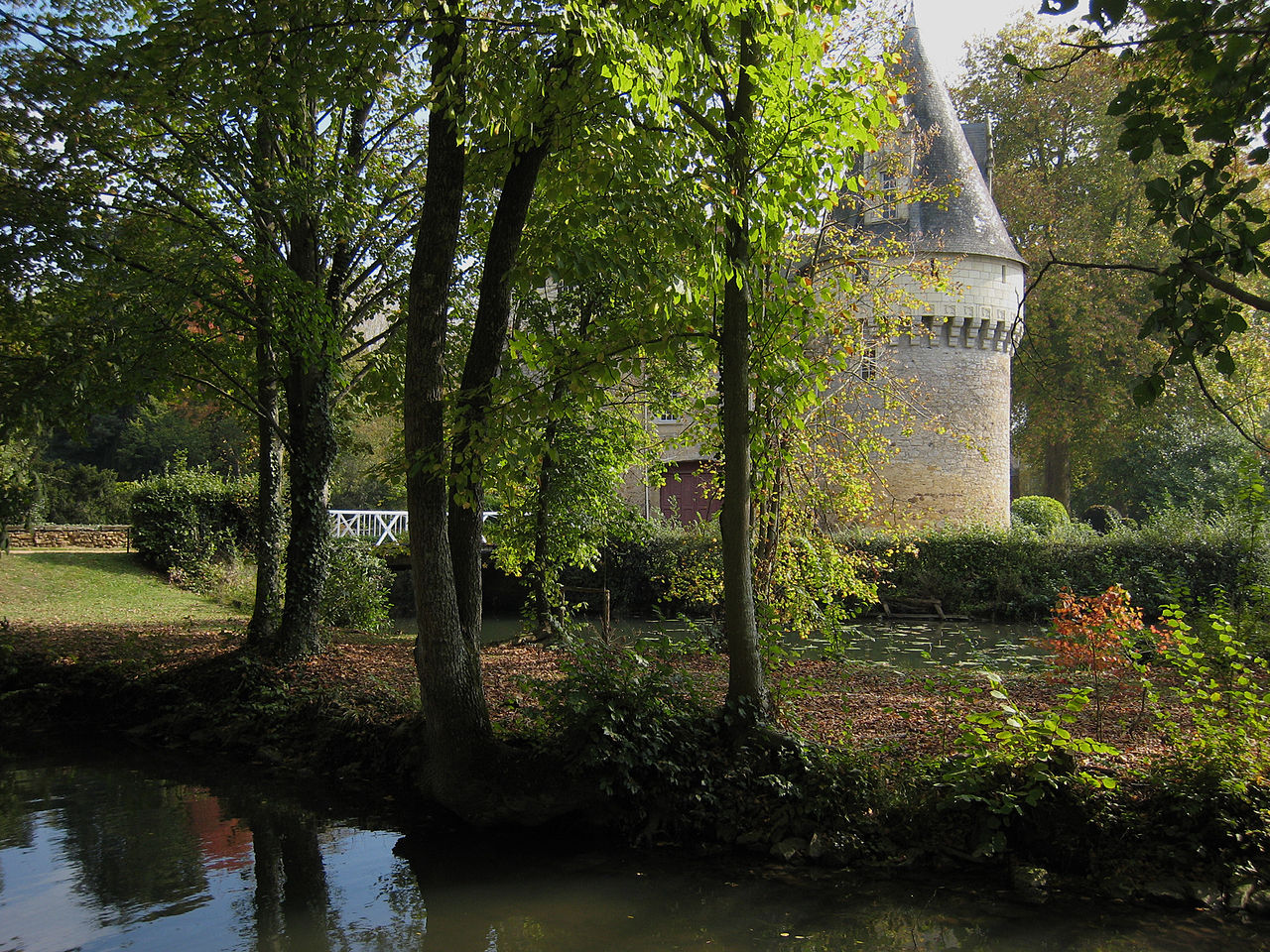
Château de Bazouges in the commune of Bazouges-sur-le-Loir (Photo credit: Manfred Heyde via Wikimedia Commons)

Coteaux du Loir AOC: The Coteaux du Loir AOC—located downriver from (and to the west of) the Coteaux du Vendômois and Jasnières—produces red, white, and rosé. The white wines are 100% Chenin Blanc and may be produced in a range of sweetness levels from dry to sweet (including some affected by botrytis). Many of the reds and rosés are 100% Pineau d’Aunis; however, they may also be produced as blends. Red wines must contain a minimum of 50% Pineau d’Aunis; the remainder is Cabernet Franc, Malbec, and/or Gamay.  Rosé blends must also include a majority of Pineau d’Aunis; the remainder may be comprised of Malbec, Gamay, and Grolleau Noir (a common component in many of the rosés produced in that other Loire Valley). The vineyards of the Coteaux du Loir AOC are protected, in part, by the magnificent Forest of Bercé (Foret de Bercé), located to the north and west of the region.

The vineyard area of the three Loir Valley AOCs combined totals just 700 acres/280 ha. Compare this to the 185,000 acres/75,000 ha of vineyards found throughout the Loire Valley region and it becomes crystal-clear that the Loir comprises just a tiny part of the Loire Valley wine story.

And yet, it seems worthwhile to know your Loir (without an e) from your Loire (with an e)—and to plan a trip to visit both!

References/for more information:

The Bubbly Professor is “Miss Jane” Nickles of Austin, Texas… missjane@prodigy.net
Go Around Again!

This post should really have a subtitle: Go Around Again—the Art of Revision. The reason I didn’t use the subtitle is because most Americans don’t understand what is meant (in the context of education) by the word “revision.” We tend to define revision as those things we do when crafting an essay, such as making edits, modifications, or changes.

However, in many parts of the English-speaking world (including England, Australia, and New Zealand), “revision” means to prepare for an exam. In my experience, Americans are more apt to say that we’re going to hit the books, review, study, pull an all-nighter, or (cover your ears) cram for the test.

Even though I live in Texas, I’ve begun to use the word revision when referring to the specific part of the learning process that one endures performs in the run-up to an exam. Which leads me to the subject of this post: it’s a great idea to approach your learning program in a two-step fashion: first you study, then you revise. Or, better yet, study-study-revise-study-study-revise (repeat, repeat, repeat). Finally, when you have made it through all the material you need to cover, you take a step back…take a deep breath, and revise-revise-revise.

Here’s a simplified set of definitions and some quick advice on the topic:

First, you study: Studying means you are learning something new or widening your knowledge of a subject. This is where you read your textbook, attend your lectures, watch your videos, take notes, and complete the exercises in your workbook. Ideally—if you are taking a class—by the time the class concludes, you have made it through the required materials and been able to keep up with the reading and other activities as indicated on class syllabus. (Or, if you are studying on your own, you’ve made it through the first round of your study plan.)

  • Theme: Concentrate on learning new information and understanding the big picture. Strive to grasp the context of this new material. Does it fit nicely in with what you already know? Do you need to build some background knowledge in order to truly understand this new information? Or—perhaps—is there something you need to un-learn? This is all–too–common in the world of wine and spirits, where some ill-informed myths are oft-repeated, such as old wine is always better, vodka tastes like water, or all rosé is plonk.
  • Techniques: Read and take notes on the text (study guide), attend webinars/lectures, watch videos, ask an expert, do extra reading/internet research, have discussions.  For wine and spirits study, taste the wines or spirits; make and record your tasting notes.

Next, you revise. Revision means you are consolidating and re-learning what you studied. Revision focuses on the details, repetition, and memorization.  You can’t run and you can’t hide at this point—please don’t stare at the textbook or binge-watch videos and call it revision. It’s time to make a commitment to your long-term memory and conquer the details. This step will require some quality time spent on your own or in a small group.

  • Theme: Drill down to the details, revisit the material; re-learn and consolidate what you already learned, strive for comprehension and understanding, be able to use (not just recite) the information, improve your speed of recall.
  • Techniques: Be active!
    • Create teaching materials and teach others (even if you have to fake it).
    • Make your own charts, diagrams, or cheat sheets—chunk information to help consolidate and contextualize your new knowledge.
    • Draw your own maps. Draw your own maps. DRAW YOUR OWN MAPS! Start by tracing, then copying, and work up to drawing your own maps from memory and annotating them with pertinent information about the regions/wines/area.
    • Make/use flashcards
    • Make/use practice quizzes
    • Recite your notes from memory (out loud).
    • Paraphrase and re-write your notes.
    • Flex your memory–every time you pull something out of your brain, you improve your ability to do so. Use as much active recall and spaced repetition as you can.

One caveat: Just because revision is the second stage of our two-step process, this does not mean you should leave it all for the week before the exam—that’s just a drawn-out version of cramming for the test. Rather, strive to fit some revision time into your schedule throughout the process—such as taking one day a week or fifteen minutes a day to revise your latest batch of new study material.

Here’s an example from the world of wine: In your CSW studies (especially if you are taking my class), when you reach the section on Tuscany you might heed the following:

  • Study phase—big picture and context:
    • Tuscany’s vinous history, location within Italy, general terroir, main grape varieties, leading wines produced in the region.
    • Testable appellations of Tuscany.
    • Terminology/vocabulary specific to Tuscany that might help you understand the area, the wines, or (especially) the label terms used in the region (Governo, Super Tuscan, Vin Santo, Brunello, Morellino, Prugnolo Gentile, Gran Selezione).
  • Revision—details and memorization:
    • Details of the various testable appellations of Tuscany—regulations, grape varieties,leading style(s) of wine(s) allowed for production.
    • Which is a DOC, a DOCG, or, (since we are talking about Tuscany), an IGT.
    • Each appellation’s specific location.
    • Noteworthy/unique details (as applicable)—this will be specific to each appellation and might include soils, winemaking techniques, location, elevation, or other factors. For instance, Carmignano is unique in the required use of Cabernet Sauvignon and/or Cabernet Franc, Vernaccia di San Gimignano is unique as the only DOCG exclusive to white wines in Tuscany, the Maremma is unique as a coastal/cooler climate region.
    • Over-learn your Tuscany-specific vocabulary terms.

This post was inspired by the most delightful of students, who just couldn’t understand why she didn’t pass the CSW on her first try. When I asked her how she studied in the time period leading up to the exam, she said, “I listened to each one of your webinars a hundred times!”

My advice to her? Go around again!

Click here to check out the rest of our posts on “How to Study Wine and Spirits”

The Bubbly Professor is “Miss Jane” Nickles of Austin, Texas… missjane@prodigy.net