(More) Travel Daydreams: The Wines of Mallorca
February 19, 2022 Leave a comment
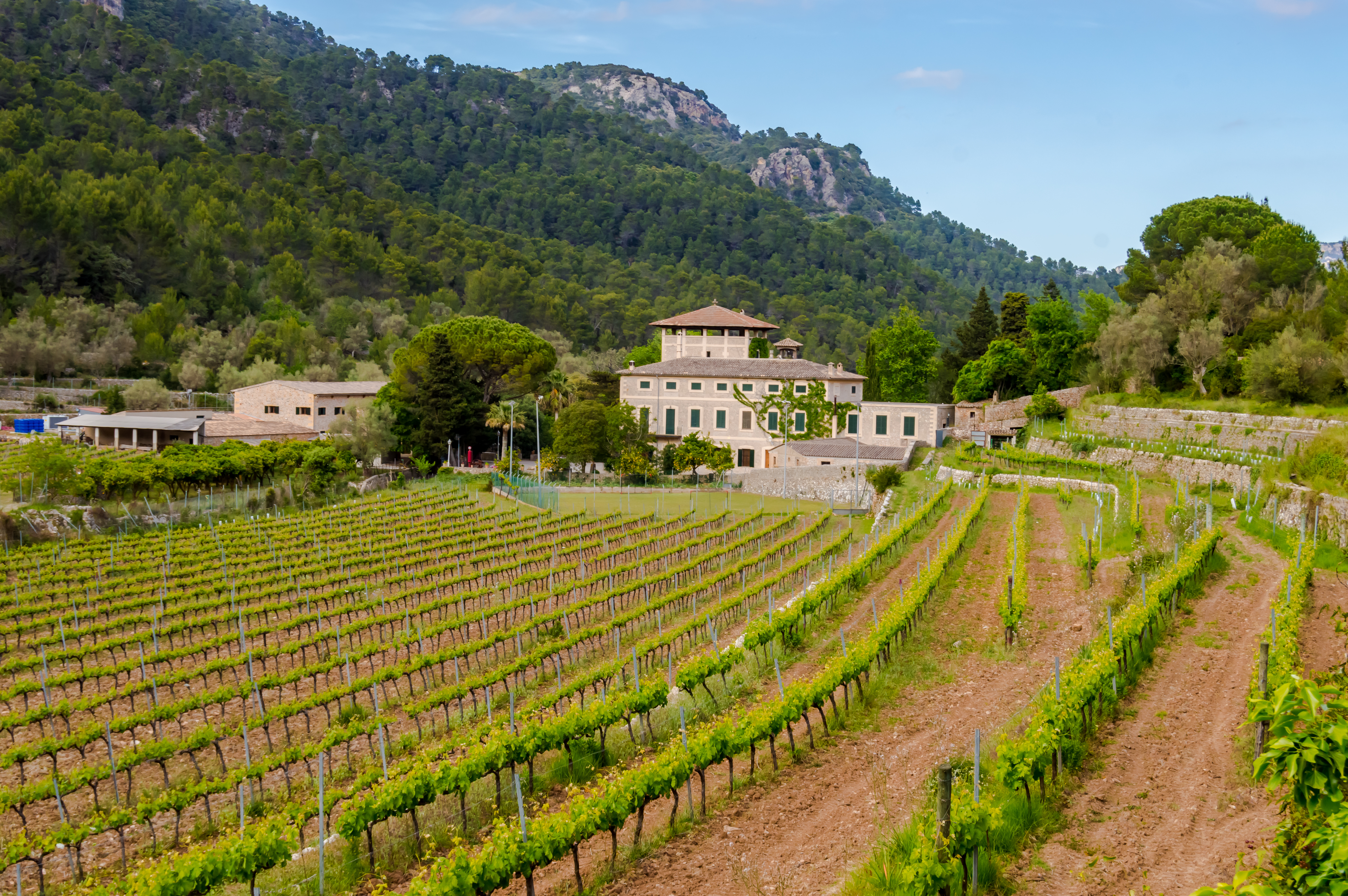
Vineyards in the Binnisallem DO
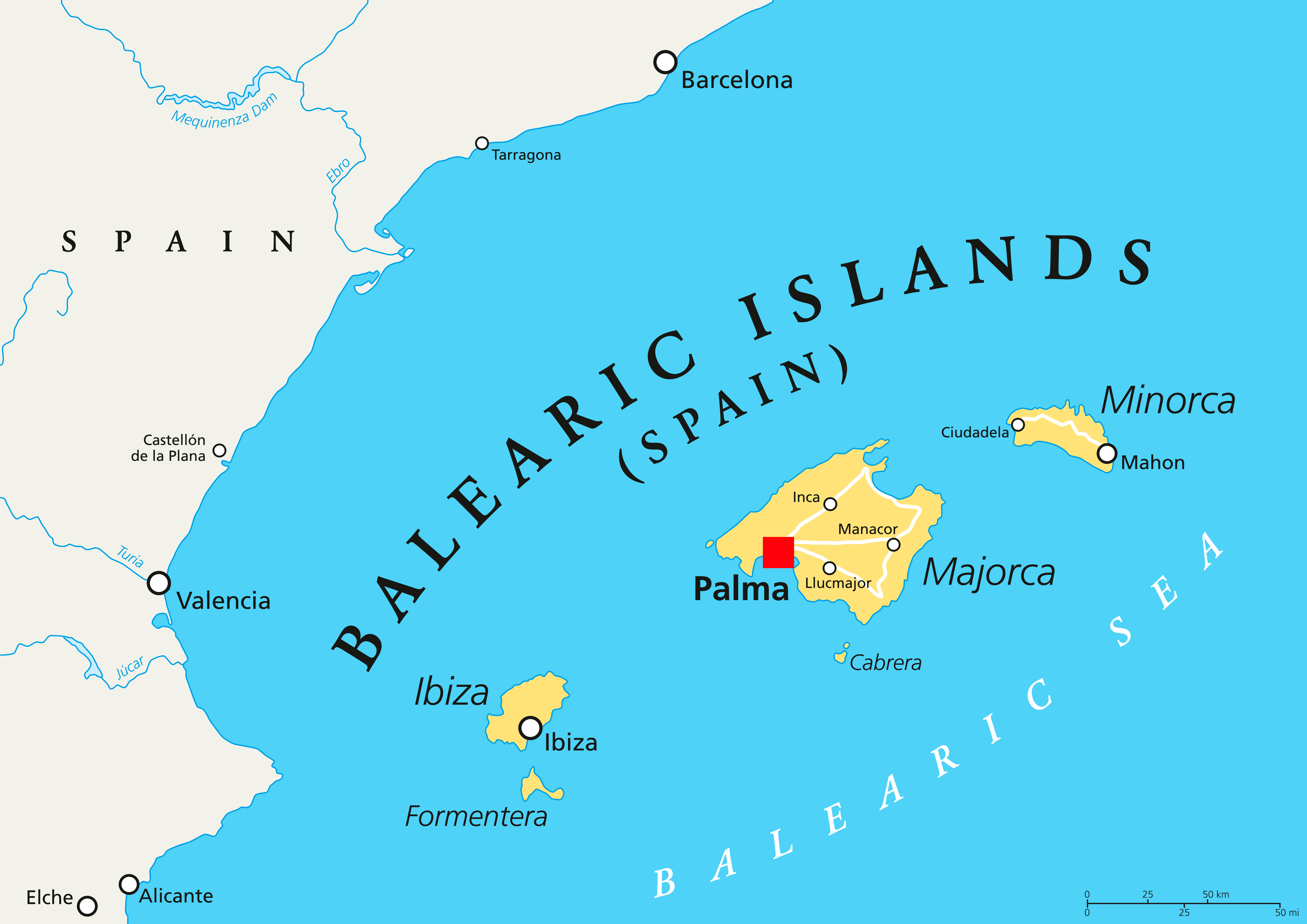
Lately, I have been indulging in a bit of travel daydreaming focused on the beautiful Spanish island of Mallorca. Last week, we published an article about the (distilled) spirits of the island. This week, I’d like to rhapsodize a bit about the island’s wines, despite the fact that they are not widely seen outside of Europe—remember, this is a travel daydream after all.
Mallorca is home to two PDO (protected designation of origin) wine regions, and two designated as VdlT (vino de la tierra/PGI/protected geographical indication). The island produces red, white, rosé, and sparkling wines from a range of grape varieties, including many that are indigenous to the Balearic Islands as well as some better-known Spanish and international varieties.
As the character of a wine truly begins with the land in which the grapes are grown, let’s start with the island’s terroir.
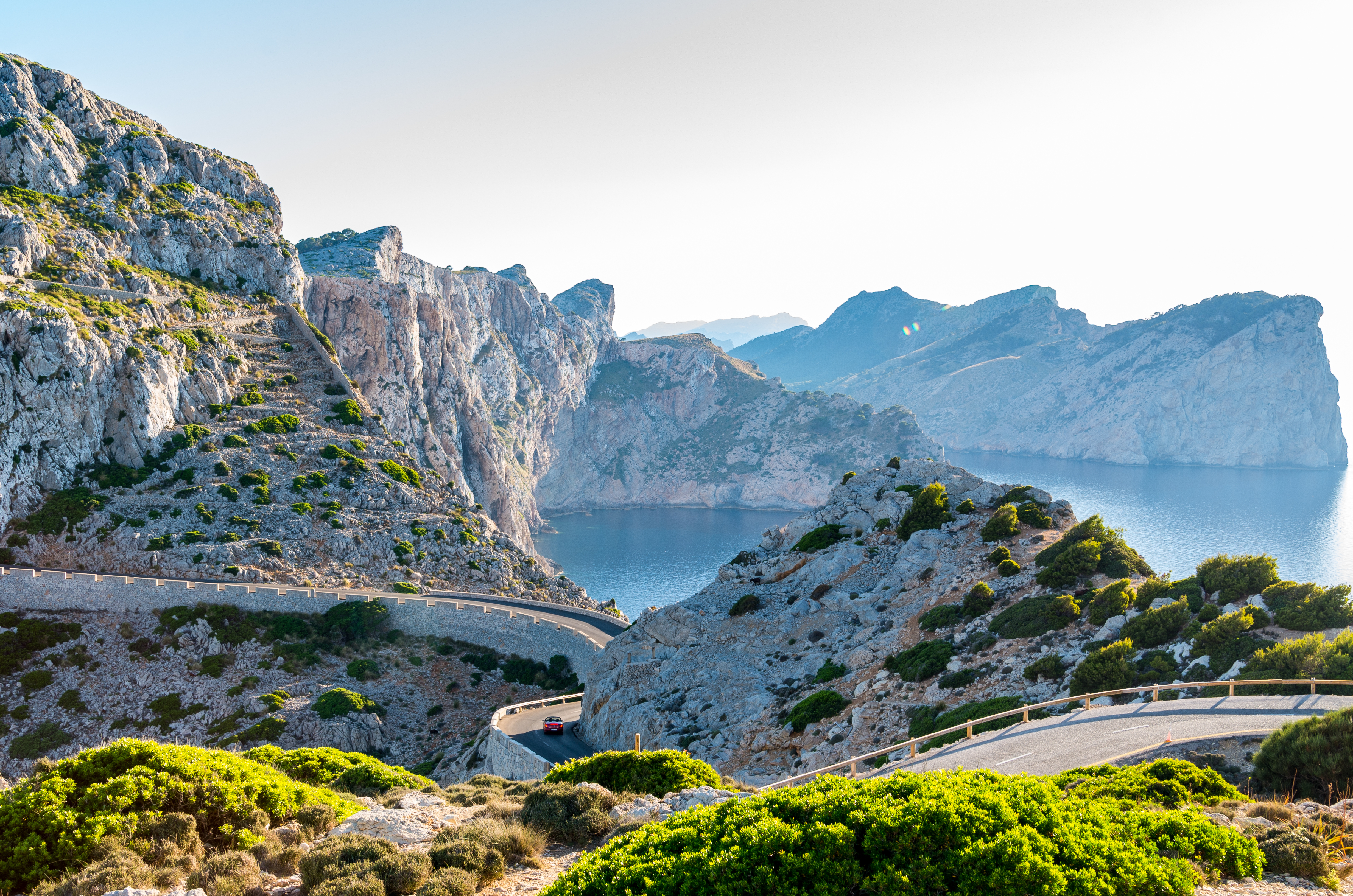
Winding roads through the Cap Formentor (on the northern coast of Mallorca)
The Terroir of Mallorca: As befits an island sitting on the 39th parallel (145 miles/230 km off the east coast of Spain), Mallorca enjoys a Mediterranean climate with sunny, warm-to-hot summers and mild winters. December and January can be quite rainy, especially on the northern coast.
The Serra de Tramuntana Mountain Range—including the Puig Major, topping out at 4,711 feet/1,436 meters above sea level and the highest point of the island— runs parallel to the northern edge of the island. The northern coastline is rugged, rocky, and punctuated by sweeping bays, caves, and sandy beaches.
The southern portion of Mallorca is covered by the Serra de Llevant mountains; these are not as tall nor as rugged as the mountains on the northern side of the island. The flat, fertile area in the middle—much of it covered with olive, almond, and citrus orchards in addition to vineyards—is the Es Pla (central plains).
 The Binissalem DO: The Binissalem DO is located on a plateau of rolling hills just south of the Tramuntana Mountains and otherwise surround by the island’s central plain (Es Pla). Elevation ranges between 820 and 990 feet/250 to 300 meters above sea level. The DO is named for the small town of Binissalem, which serves as the center of the area’s wine industry.
The Binissalem DO—while approved for several different types of wine—focuses on red wines produced on the Manto Negro (Mantonegro) variety. Manto Negro—known for producing lightly-colored red wines with flavors of red and black fruit alongside velvety tannins—is believed to be indigenous to the region; almost all of the 791 acres/320 ha known to be in existence are here on the island of Mallorca. Red wines of darker color, richer flavor, and extended longevity are also produced; these styles typically combine the legally required minimum 30% Manto Negro with Callet, Tempranillo, Monastrell (Mourvèdre), Cabernet Sauvignon, Merlot, Syrah, and/or Gorgollassa (another indigenous red variety).
 The white wines of the Binissalem DO —mostly dry but including off-dry and sweet styles—are produced using at least 50% Moll. Moll—also known as Prensal Blanc—is native to the Balearic Islands and grown all over Mallorca (albeit in small amounts; at last count, there are only about 160 acres/65 ha planted on the island). Moll tends to produce neutral-tasting, low-acid wine, but can contribute to a fruity, floral, and lively wine when blended with the island’s plentiful Moscatel Grano Menudo (Muscat Blanc à Petits Grains) and/or Moscatel de Alejandria (Muscat of Alexandria) grapes.
The Binissalem DO is also approved for the production of rosé and sparkling wine; details may be found in the pliego de condiciones (linked below).
 The Pla i Llevant DO: The Pla i Llevant DO covers a good portion of the center and southern half of the island. In this context, the name makes sense, as it includes the island’s central plains (Es Pla) and Llevant Mountain Range.
The focus here is on red wines, with approximately 66% of the region’s 475 hectares/1,200 acres of vines planted to red grapes. The leading grape varieties are Merlot and Cabernet Sauvignon, but traditional varieties—including Manto Negro, Fogoneu, Callet, and Gorgollassa—play an important role as well. Monastrell (Mourvèdre), Tempranillo, Syrah, and Pinot Noir are also present.
The red wines of the Pla I Llevant DO are typically blends, and there are no minimum or maximum standards for particular grapes—any single grape or blend of the approved varieties may be used. This makes for some interesting wines!
The white wines of the Pla i Llevant DO are also allowed to be crafted from any single grape and/or blend of the approved varieties. The most widely grown white grapes include Moll/Prensal Blanc, Chardonnay, and Moscatell (Muscat); these are followed by Giro Ros (a native pink-skinned variety), Viognier, Parellada, Macabeo and Riesling.
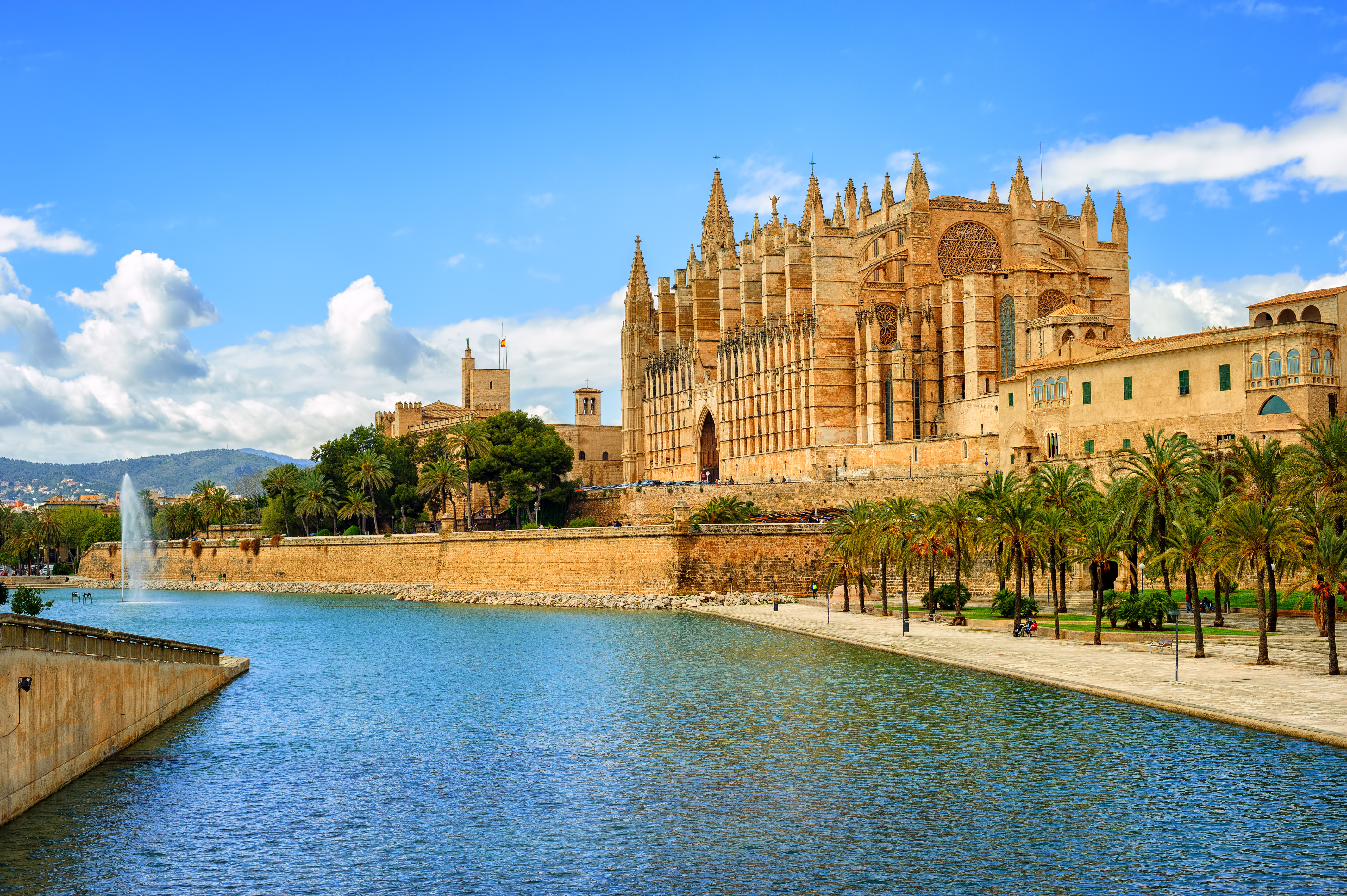
La Seu—the Cathedral of Palma de Mallorca
The Pla I Llevant DO is also approved for the production of rosé, fortified wine (vino de licor), sparkling wine, and semi-sparkling wine (vino de aguja); details may be found in the pliego de condiciones (linked below).
Vinos de la Tierra: Mallorca is also home to two Vinos del la Tierra (VdlT/geographical indications for wine): Vino de la Tierra Mallorca and Vino de la Tierra Serra de Tramuntana-Costa Nord. The Vino de la Tierra Serra de Tramuntana-Costa Nord covers the north coast of the island and the Tramuntana Mountains; the Vino de la Tierra Mallorca appellation covers the entirety of the island. Both Vino de la Tierra regions are approved for red, white, and rosé wines; a long list of grape varieties are allowed; however, the emphasis is on the indigenous varieties including Callet, Manto Negro, and Prensal Blanc/Moll.
Road trip, anyone?
References/for more information:
- Pliego de Condiciones-DO Binissalem
- Pliego de Condiciones-DO Pla i Llevant
- Robinson, Jancis, Julia Harding, and José Vouillamoz: Wine Grapes. New York, 2012: Harper Collins Publishers
- https://binissalemdo.com/en/home-en/?lang=en
- http://doplaillevant.com/?lang=en
- Illes Balears Qualitat – Autochthonous agrifoodstuffs, designations of origin and quality products – Balearic gastronomy and gastronomic routes – Oleotourism – Cooks and recipes
- https://www.decanter.com/wine-travel/mallorca-travel-guide-for-wine-lovers-452793/
- http://doplaillevant.com/
The Bubbly Professor is “Miss Jane” Nickles of Austin, Texas… missjane@prodigy.net



 The Bubbly Professor