Five Fast Facts about Jumilla
November 17, 2024 Leave a comment
 The Jumilla (pronounced who-ME-ah) Denominación de Origen (DO)—a wine region tucked between Murcia and Castille-La Mancha inland from the Mediterranean Coast of Spain—is sometimes called Spain’s best-kept secret. While secrets are fun, it might be high time to give this ancient and hard-working wine region its turn in the spotlight.
Read on to learn five fast facts about the Jumilla DO!
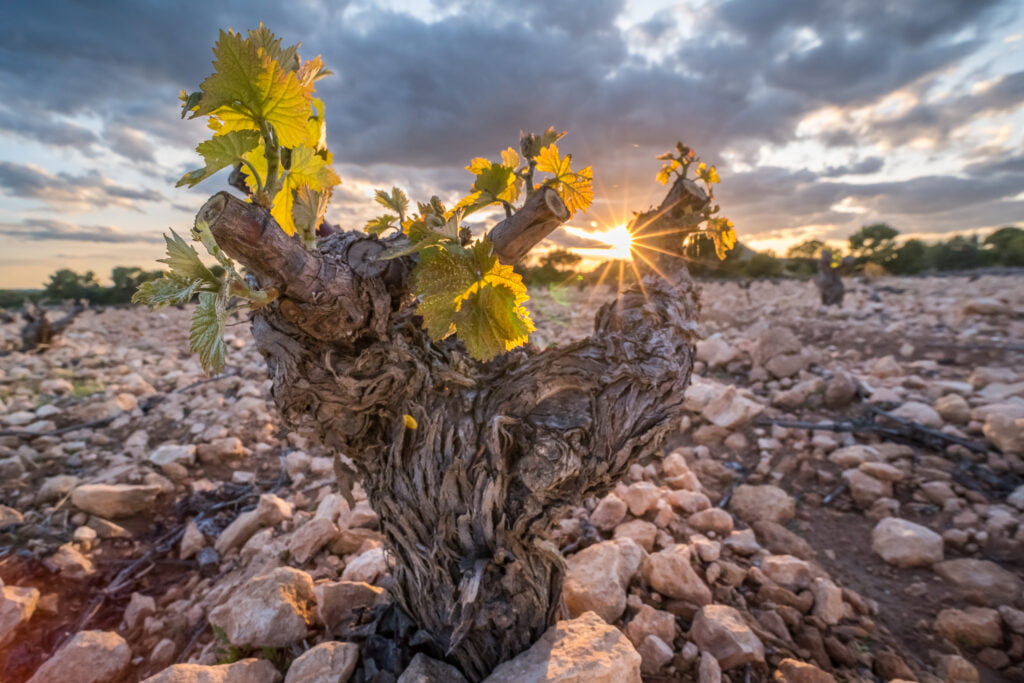
photo via: jumilla.wine/en/our-vines
#1: Gnarly Old Vines: Like its neighbors, the Jumilla DO is heavily focused on Monastrell. Monastrell—as the sturdy red Mourvèdre grape variety is known in Spain—accounts for over 80% of the vineyard plantings in the region.
Vines were established in the area over 2,500 years ago and due to the unique combination of soil and climate, the region is home to Europe’s largest collection of old-vine Monastrell…many vines are over 90 years old.
#2: Altitude High and Limestone Deep: The Jumilla DO has an arid but beautiful climate. It can be described as a rugged-and-hot Continental climate with some sunny Mediterranean influence closer to the coast. The area typically receives less than 12 inches of rainfall while enjoying over 3,000 hours of sunshine a year. Elevation also plays a role, with the majority of Jumilla’s vineyards planted at relatively high altitudes ranging from 1,150 feet to 2,625 feet asl. The mountainsides provide excellent drainage, fantastic capture of the sunlight (in the southern exposures), and a great diurnal temperature fluctuation. Underneath its high sky, the area’s soils are diverse but dominated by cool limestone bedrock topped with volcanic soils, gravel, sand and clay. These well-drained soils require the vines to dig deep in a search for water and help the vines to develop thick, structural roots—a key component in the long lifespan of many of these vines.

photo via: jumilla.wine/en/our-vines
#3: Rare Rootstock (Un-grafted Vines): Jumilla avoided Phylloxera (the dreaded pest that decimated the vineyards of Europe—and later the world—beginning in the late 19th century) for a long time. While the pest was (eventually) discovered in the area in 1989, by this time the world had learned a lot about how to handle it. As such, many of Jumilla’s ancient vines are un-grafted and remain planted on their original vinifera rootstock. This contributes to the unique character and authenticity of these wines and their rich, varietally-specific flavors.
#4: Focused on Red (but that’s not all): While the area is heavily focused on red wines and Monastrell, it produces small amounts of white wine (based on a range of grape varieties including Chardonnay, Sauvignon Blanc, Airén, Macabeo, and Malvasía) as well as some crisp rosé and late harvest/dessert wines. Rosé and red blends may contain Tempranillo, Garnacha, Cabernet Sauvignon, and Syrah in addition to Monastrell. In addition, a variety of aging regimes—from no aging at all to a quick nap in stainless steel to extended stays in oak—are used throughout the region. It’s a bountiful buffet of vinous goodness.

Map of the Jumilla DO by Té y Kriptonita via Wikimedia Commons
#5: Jumilla Monastrell—Rich, Rustic, Rambunctious Red: Jumilla Monastrell is the big, bold red wine of your dreams. Look for high aromatic intensity (the aromas jump out of the glass), lots of red and black fruit flavors (blackberry, cherry, strawberry, red currant, and black plum) supported by some florality (think dried wild flowers), minerality (sniff the air after a good soaking rain), and dried herbs. Flavors of coffee and cocoa/chocolate often show up on the mid-palate. Oak-aged wines may also have some underlying sweet spice aromatics (licorice, nutmeg, cinnamon, and clove). No matter what the aging regime, this should be a rich, complex, and tannic wine with a loooooooong finish.
Leading producers of Jumilla DO include Ramón Izquierdo, Egobodegas, and Bodegas Juan Gil.
References/for more information:
- The Consejo Regulador of the Jumilla DO
- Technical File – Jumilla DO
- https://jumilla.wine/en/soils-to-survive-the-key-for-jumillas-old-vines/
- Bodegas Juan Gil
- Egobodegas
The Bubbly Professor is “Miss Jane” Nickles of San Marocs, Texas… missjane@prodigy.net
 About bubblyprof
 The Bubbly Professor