All I Want for Christmas…is a decent wine pairing!

This time of year, everyone asks me for wine pairing suggestions for the holidays. It’s a great question, but difficult to answer, as Christmas dinner can be quite eclectic! At least with Thanksgiving, we can pretty much count on a turkey. But among my friends and family, Christmas dinner means different things to different folks! Some go for a fancy prime rib, others go traditional with turkey, some folks opt for glazed ham, and one family insists on lasagna! In the spirit of whatever floats your gravy boat, here are a few heartfelt suggestions.

Fancy Christmas—Roast Beef, Prime Rib, or Beef Wellington…of course, red wine with red meat is a mere cliché…certainly, one can pair beefy-beef with a sturdy white wine or a zingy rosé. However, in this case, the wine cliché rocks—and in my mind, prime rib, roast beef, and their ilk deserve to be served alongside a powerful red wine. You’ll want a wine that can survive a few rounds in a cage match with a fatty, roasted, seared, salt-pepper-and-rosemary-rubbed hunk of beef. If you are looking to splurge, grab your favorite Napa Cabernet (hopefully from 2020 or a few years earlier). If you are on a budget, seek out a good, round, twenty-dollar Malbec from Mendoza. Either way, you’ll have a winning match (and a good excuse to take a nap).

Hallmark Christmas—Maple Glazed Ham…here is your chance. Freak everybody out by serving an off-dry German Riesling. Relax and enjoy the show as your wanna-be-a-wine-snob friends turn their noses up at anything with residual sugar and serve them a young-and-gritty Napa Meritage that obliterates 10 percent of their taste buds. (Whoops. So sorry.) For everyone else, demonstrate the sheer pairing perfection of the Riesling…the way the sweetness in the ham’s glaze—as well as those marshmallowy sweet potatoes—makes the wine taste dry and perfectly balanced. It is the best of both worlds…serve a sweet wine, taste a dry wine. It’s like magic.

Traditional Christmas—Roast Turkey and all the trimmings…this is the most schizophrenic meal of the year, combining sweet, savory, salty, and acidic dishes with abandon. I have gone into detail on the possible pairing computations here, but if you want a quick fix…go for Pinot Noir or Beaujolais Cru. Both wines have just enough flavor and power to pair nicely and please just about everyone—while they shouldn’t clash or overpower the bountiful (and eclectic) dishes.

Vegetarian Christmas…I refuse to comment on tofurkey (but if that’s your jam, you do you)! However, being a former Berkeley girl, I always have a few vegetarians in the close-knit friends group. For these folks, I make sure to have plenty of options on the table such as green bean casserole, roasted carrots with whipped feta and walnuts, and/or grilled asparagus. To pair with all these delectable veggies, I reach for Grüner Veltliner. Native to Austria, this grape—redolent with aromas of green fruit, herbs, and white pepper—produces light-to-medium bodied white wines rich in savory flavor. In my humble opinion, it is one of the best wines to pair with veggies of all kinds. It will work with the turkey and ham as well, just in case those so-called vegetarians sneak a chunk or two when they think no one is looking.

Dysfunctional Family Christmas…have no fear, the wine world has the perfect antidote for awkward families: rich, high-octane red Zinfandel from California. Lodi, Dry Creek Valley, and Paso Robles will be happy to serve you up a spicy, fruity, bold Zinfandel that might just reach 15% alcohol by volume. It is perfect…you can take the edge off the “why aren’t you married” talk and just smile…release your best “evil laugh” and do the “crazy eyes.” Hopefully, the wine will have turned your teeth purple, and you will look like a true lunatic. Your relatives will flee, and you will be blessed by a peaceful evening and the truth that red Zinfandel will never let you down.

Of course, when it comes to food, wine, and holidays: eat what you like, drink what you like, celebrate how you like, and share your time with those you love! Happy holidays to all!

The Bubbly Professor is “Miss Jane” Nickles of San Marcos, Texas… missjane@prodigy.net

Pertaining to Petrichor

.

Wine and spirits aficionados have a unique vocabulary. Consider these terms, and admit to yourself how often you have used them: foxy, malo, stemmy, corked, brett. Dig a bit deeper and we find hogo, rancio, lanolin, graphite, and iodine.

And then there is petrichor, often used to describe an earthy, sometimes mineral-like aroma defined as “the scent that arises from the earth after it rains.” To be specific, it refers to the scent of the air after a light rain falls on dry earth—the breaking of a dry spell, as it were. Scientists will tell us that we humans find the aroma pleasant due to the fact that in an evolutionary sense, humans relied on the rain for survival and the aroma represents life-sustaining rainfall (a fact which remains true today).

The term itself was invented in 1964 by two Australian scientists—Isabel Joy Bear and Richard G. Thomas—who were working for Australia’s Commonwealth Scientific and Industrial Research Organisation (CSIRO). Their work was published in the March 1964 edition of Nature magazine, under the title The Nature of Argillaceous Odour (the word “argillaceous” referring to rocks or sediment containing clay).  Bear and Thomas explained the source of the petrichor aroma as remnants of the oils emitted by plants and bacteria trapped in the soil.

The word itself is derived from the Greek petra (stone) and ichor (the blood that flowed in the veins of the gods, according to Greek mythology). In terms of etymology, it is the stuff of legends: blood from a stone. 

.

In 2015, scientists at MIT figured out—and captured using high-speed cameras—the mechanism of petrichor. Put simply, as a raindrop hits the ground (a porous surface), tiny air bubbles are trapped just below the surface. The bubbles then shoot upward, creating a tiny explosion of aromatic compounds as they escape the surly bonds of earth.

Pop culture alert: the word petrichor had its moment of fame in the Doctor Who TV series. In the episode titled “The Doctor’s Wife,” characters played by Karen Gillna, Matt Smith, and Suranne Jones used the word as part of a password (Crimson…Eleven…Delight…Petrichor). They defined petrichor as “the smell of dust after rain.” It’s an impressively accurate definition. Check out a video here.

There is also a winery known as Petrichor Vineyards, located in Sonoma’s Fountaingrove District AVA. According to the winery website, the term “petrichor” represents a passion for terroir—and a good choice it is.

References/for more information:

The Bubbly Professor is “Miss Jane” Nickles of San Marcos, Texas… missjane@prodigy.net

It’s Baffling…Bonarda (and Friends)

Bonarda is baffling. One grape—Bonarda Piemontese—may be considered the Original Bonarda or the True Bonarda…and yet there are quite a few other distinctly different grapes that (at least sometimes) go by the same name. These include Croatina, Douce Noir, and Uva Rara. Let’s take a closer look and try to unravel the mystery of Bonarda.

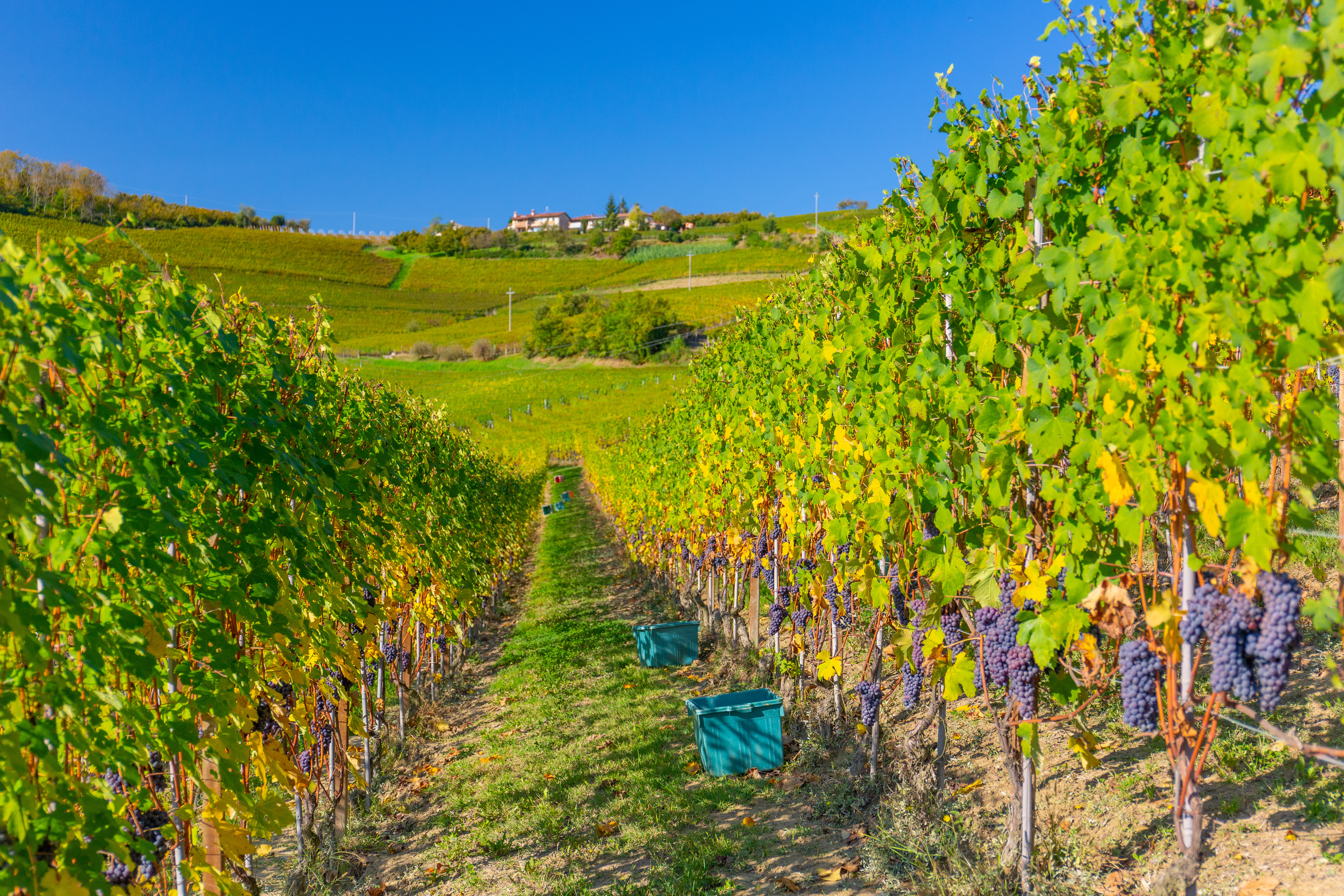
Bonarda Piemontese: Native to Italy’s Piedmont region, Bonarda Piemontese has been linked with the area around Turin since the 1790s. This heritage suggests that Bonarda Piemontese is the Original Bonarda and most likely the first grape to use the moniker.

Bonarda Piemontese is very sparsely planted—the latest statistics count just 540 acres/218 ha planted in Piedmont. The grape—typically used in red blends—is specifically mentioned and allowed for use in a few of the appellations of northwest Piedmont, including Colli Tortonesi DOC and Pinerolese DOC. (Several other Piedmont appellations allow for the use of Bonarda; but the regulations are unclear as to which specific version of Bonarda is intended.)

According to the Vitis International Variety Catalogue (VIVC), Bonarda Piemontese has up to 14 synonyms; of these, the ones that make the most sense include Bonarda di Asti, Bonarda di Chieri, and Bonarda Nero. In red blends, it is appreciated for its color, freshness, and ability to add a bit of softness to a wine otherwise full of edgy (often Nebbiolo-derived) tannin. If you ever happen to stumble across a varietal Bonarda Piemontese, you could expect to find a smooth, soft-tasting wine with floral aromas and fresh, fruity flavors.

Croatina (Bonarda Rovescala): Croatina is a dark-skinned red grape believed to be native to the Oltrepò Pavese area of Lombardy. It is here—in this area named after the town of Pavia across the Po—that the Croatina grape is often referred to as Bonarda Rovescala (after the tiny town of Rovescala), or simply Bonarda.

The name Croatina means Croatian Girl, and for many years it was assumed that the grape was native to the Primorska Hrvatska (Coastal Region) of Croatia. While it would have been a short trip indeed from Croatia to Northern Italy, it is now considered doubtful that the grape originated in Croatia.

What is known is that there are currently close to 8,100 acres/3,300 ha of Croatina grown throughout Northern Italy, where it is known to produce richly hued (purple/blue), mildly tannic wines with aromas of red cherry, blackberry, raspberry, and sweet spices.

Croatina is allowed for use in more than a dozen AOCs across Piedmont, Lombardy, Emilia-Romagna, and Veneto. These include Oltrepò Pavese DOC, Colli Tortonesi DOC, and Colline Novaresi DOC (among others). It is also used in the Bonarda dell’Oltrepò Pavese DOC, which is required to contain a minimum of 85% Croatina.

Douce Noire (Bonarda Argentina): Douce Noire is a minor French grape, believed to be native to the Savoie Region and still planted in small amounts in this mountainous area of eastern France. In other parts of France, it is more commonly referred to as Corbeau (meaning crow, and likely referring to its dark black color).

Douce Noire is also planted—under the name Charbono—in some parts of California, particularly in Napa where it was once a specialty of the Inglenook Winery. It is believed that the grape was originally brought to California by Italian immigrants who may have introduced it as Charbonneau (a name once used in eastern France).

It is, however, Argentina where Douce Noire really shines; at last count there were over 46,000 acres/19,000 ha of Douce Noire planted in Argentina—mainly in Mendoza and San Juan. In Argentina— where it is known as (you guessed it) Bonarda—Douce Noire is used to produce red blends and fruity, easy-to-drink reds and rosés typically available at a good (value) price. It is unclear how the name Bonarda came to be used in Argentina, but it is likely that when it first arrived, the grape was thought to be of Italian origin. It has been suggested that the grape be referred to as Bonarda Argentina to avoid (further) confusion.

Uva Rara (Bonarda Novarese): Uva Rara is thought to be native to northern Italy (Piedmont and Lombardy), where it currently accounts for 1,500 acres/600 ha of vines. The name translates to rare grape and is believed to refer to the small number of grapes in each bunch rather than rarity in use.

Uva Rara is typically used in red wine blends; it can soften the tannic edge of Nebbiolo and add color and depth to wines based on Barbera or Croatina. You may find a splash of Uva Rara in the wines of the Ghemme DOCG, Gattinara DOCG, Lessona DOC, or Oltrepò Pavese DOC (among others). In addition, it is allowed for use as a varietal wine in the Colline Novaresi DOC

While you are on the lookout of these wines, be alert…you may experience a sighting of Bonarda. If you’ve read this far, you should be not at all surprised to learn that in these parts, Uva Rara is sometimes referred to as Bonarda; specifically, Bonarda Novarese.

TL/DR: Croatina, Douce Noir, and Uva Rara are sometimes referred to as Bonarda; however, they are all distinct grape varieties and not identical to nor related to Bonarda Piemontese.

References/for more information:

The Bubbly Professor is “Miss Jane” Nickles of Austin, Texas… missjane@prodigy.net

Can She Pair a Pumpkin Pie?

It is that time of year once again and everyone is talking about wine and Thanksgiving. For those of you who follow along, you know that the wine world has gone a bit crazy lately on the subject of food and wine. Some folks say there is just no such thing as food and wine pairing, and you should just serve what people like. Who can argue with that?

And then there is the crowd that insists that certain wines pair with certain foods and other pairings are just a disaster. Well, there’s something to be said for that as well.

So here is my latest take on the matter. I recently had the pleasure of presenting this information to several classes full of bright-eyed and interested wine students. As such, what follows is basically my outline for my 2024 Thanksgiving Wine and Food Pairing Class, that I call “Can She Pair a Pumpkin Pie”?

For starters, here are some basic concepts concerning food and wine pairing, and how they relate to our very American, very complex Thanksgiving Day feast.

#1: Never forget: Turkey is like Switzerland! What I mean by this is that turkey is about as neutral in taste and flavor as it gets, so in theory…. turkey should pair well with just about any wine.

#2: If you have bubbles, you’ll have no troubles. In other words, if you’d rather just not deal with any of these concepts or (what we used to call) rules, just serve bubbly and you’ll be fine. Bubbles just do not hit the palate as hard as other wines and simplify the entire match-up/meet-up between food and wine.

#3: You don’t pair to protein—you pair to preparation. This is where we start to get serious. Remember how we said turkey is neutral? Well, most proteins are…. before you cook them. So, the turkey (or chicken or cod) is not so important in the food and wine dance, but the way you cook them might make a huge difference. Think of the difference between grilled chicken, poached chicken, barbequed chicken, chicken piccata, and chicken with apricot sauce. In all of these instances, it is the preparation (particularly the sauce) that matters more than the protein.

#4: Consider weight, intensity, and complexity. I am going to be a bit contradictory here and say that the overall weight of the meal (basically based on the protein) should be taken into account when pairing your wine. Fish is typically light, so it pairs well with lighter wines. Red meat is typically heavy, so it pairs well with full-bodied wines. Turkey is typically considered medium weight, so most meals wrapped around turkey will pair well with medium-bodied wines (but can do just fine with lighter wines as well). And then there’s complexity…Thanksgiving meals with sauces and gravies and cranberries and marshmallows and green bean casseroles have a lot going on. They are the very definition of complex. This will be explained soon. Just hold on.

 #5: You don’t pair to flavor—you pair to taste. Here’s the deal. Taste components in food (salt, sweet, bitter, acid, etc.) will change the way you perceive the wine. This is consistent and predictable. Whether or not it is “good” (if you like it or not) is up to you. Flavors—such as cherry, berry, veggie, cocoa, and herbal—are pretty forgiving. You can mix and match flavors to your heart’s content. Tastes are where it’s at, so let’s dive into the taste components that are likely to show up at our table on Thanksgiving and see just how they will impact our perception of the wine we serve.

What tastes do we have here?

  • Salty foods at Thanksgiving:
    • Gravy, Stuffing, Green Bean Casserole
    • Potatoes au Gratin, Mashed Potatoes
    • Why this matters?
      • Saltiness is food is very forgiving…it will change wine, but it is almost always for the best.
      • The Food and Wine Truth: Salty food goes with just about any type of wine. Yeah! No worries.
  •  Sweet foods at Thanksgiving:
    • Cranberry Sauce, Sweet Potatoes, Glazed Carrots
    • Creamed Corn, Roasted Butternut Squash with Maple Syrup
    • Dessert! Pumpkin Pie, Pecan Pie
    • Why this matters?
      • Sweetness in food makes wine taste less sweet.
      • The Food and Wine Truth: Sweet food requires sweetness or fruitiness in wine; it will make the wine taste less sweet, less fruity, and more acidic. This is why earthy, dry, and tannic wines are (shall we say) challenging in the Thanksgiving line-up.
  • Acidic foods at Thanksgiving:
    • Cranberry Sauce, Salad/Salad Dressing
    • Relish tray (pickles, olives, tomatoes)
    • Why this matters?
      • Acidity in food makes wine taste less acidic.
      • The Food and Wine Truth: Acidic food requires acidic wine; acidity in food will make the wine taste less acidic. This can make the wine seem “flat” or “dull” if the wine is not super-zingy to begin with.

My ideal Thanksgiving wines? What does all this mean? Well….what we are looking for is a wine that is high in acid with lots of fruity flavors, dry (if red), dry-to-off-dry if white or pink, moderate in tannin (if red), with little or no oak influence. Or just serve bubbles. Need some examples? Of course you do! As such, here is my no-nonsense guide to Thanksgiving Day wine.

  • Bubbles or Rosé:
    • Just about anything goes!
  • White Wine:
    • Off-dry or fruit forward
    • Lively acidity, little or no oak
    • Any weight will work—from light-to medium- and full-bodied
    • Examples:
      • Riesling (dry to off-dry; Washington State, Germany, Austria)
      • Chenin Blanc (dry to off-dry; Vouvray is great!)
      • Gewurztraminer (dry to off-dry)
      • Unoaked Chardonnay
      • Viognier
      • White Rhône-style blends
      • Muscat (dry to off-dry or even sweet!)
  •  Red Wine:
    • (Light to) medium or medium-plus in body
    • Fruit forward, good acidity
    • (Light to) moderate in tannin and bitterness
    • Restrained oak
    • Examples:
      • Beaujolais (or other Gamay-based wine)
      • New World Pinot Noir (Oregon, Sonoma)
      • Old World Pinot Noir (Burgundy, Loire Valley, Germany)
      • Fruit-forward Zinfandel, Malbec, or Merlot
      • Grenache-based Rhône (or Rhône-style) blends
      • Barbera (unoaked)
      • Bonarda (from Argentina)
  • For dessert: something sweet!

 Whatever you choose, make sure it is something you enjoy and have a Happy Thanksgiving!

The Bubbly Professor is “Miss Jane” Nickles of San Marcos, Texas… missjane@prodigy.net

Christmas (Wine) in the Roussillon

Muscat de Rivesaltes AOC—an appellation dedicated to vin doux naturel (sweet, fortified wines) based on white Muscat grapes—is also known for a wine dedicated to Christmas: Muscat de Noël.

The Muscat de Noël of Rivesaltes—produced using Muscat Blanc à Petits Grains and/or Muscat of Alexandria grapes—is allowed to be released on the third Thursday of November (and required to be estate bottled before December 1) of the year of the harvest, making it something of a nouveau wine (but let’s not say that in Beaujolais).

Muscat-based wines have been produced in the area for thousands of years and are well-documented throughout the Middle Ages and beyond. The tradition of Muscat de Noël can be traced back to time when the Roussillon was part of the Principality of Catalonia and ruled by the Crown of Aragon (and later by the Monarchy of Spain). The luscious, sweet, wines were sent to the rulers of the area—known as Comte de Barcelona (Counts of Barcelona)—to be served throughout the 12 days of Christmas—from Christmas Day through the Feast of the Epiphany (traditionally January 6). The light, sweet, and fruity flavors of Muscat de Noël provide an excellent accompaniment to Christmas feasts and celebratory foods of all kinds—from rich roasts to sharp cheeses and sweets.

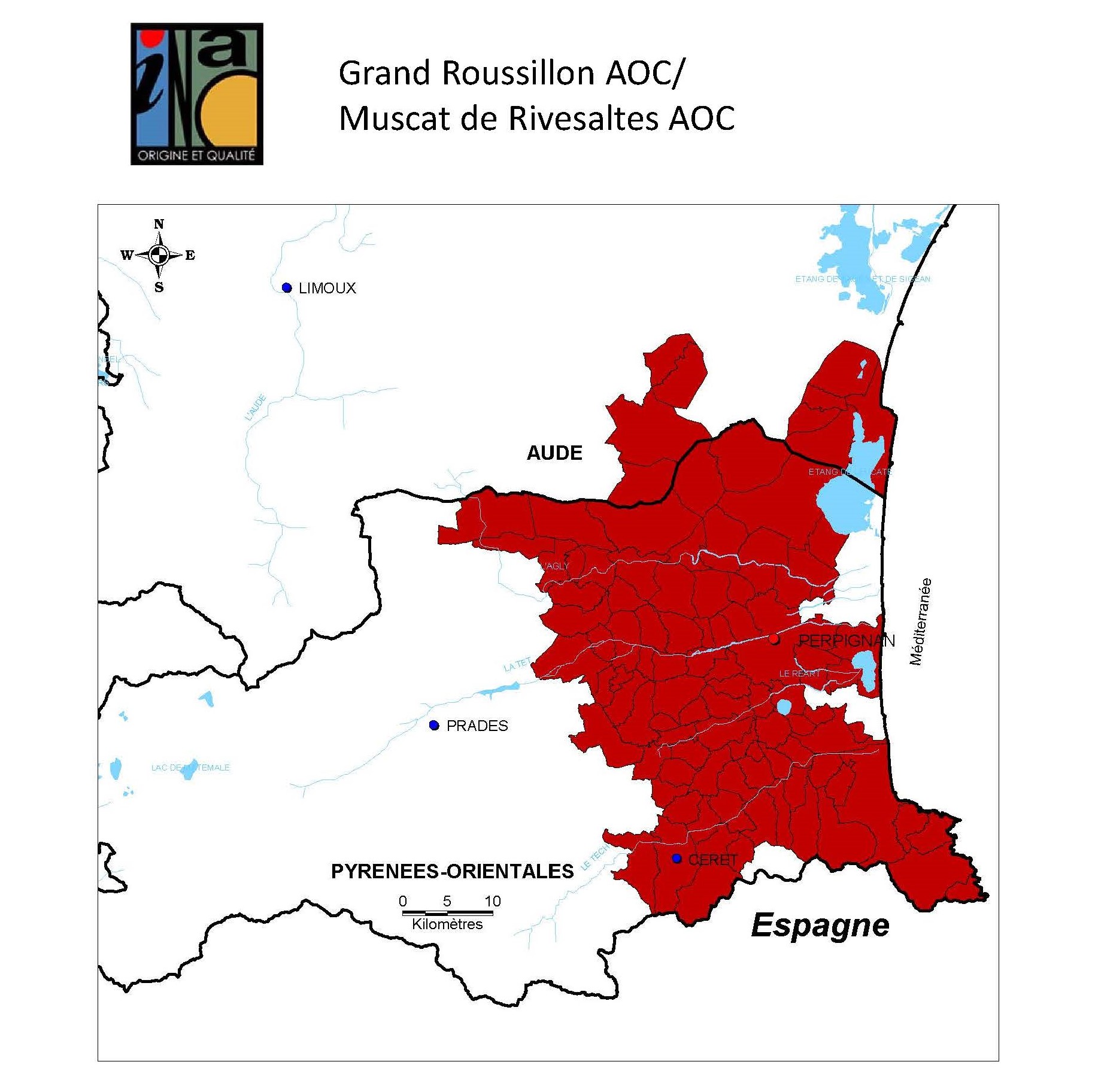
Map via the INAO

Here are a few fast facts about Muscat de Rivesaltes and Muscat de Noël—perfect for wine students nerdy enough to be studying on Christmas Day (myself included):

  • All versions of Muscat de Rivesaltes must contain a minimum of 15% abv and 10% residual sugar.
  • The Muscat de Rivesaltes AOC is by far the largest sweet-wine appellation in France in terms of total geographic size.
  • The area within the Muscat de Rivesaltes AOC covers the entirety of the Rivesaltes AOC as well as the Banyuls AOC (both approved for vin doux naturel only) and occupies the exact same area as the Grand Roussillon AOC (see the accompanying map).
  • The Muscat de Rivesaltes AOC/Grand Roussillon AOC extends across the entire eastern third of the Pyrénées-Orientales Départment and a small portion of the Aude (to the north). Dominated by limestone-based scrubland, the region stretches for over 50 miles/82 km along the Mediterranean Coast from L’étang de La Palme (the La Palme Lagoon) to the border with Spain.
  • In addition to the Rivesaltes AOC and the Banyuls AOC, the area within the Muscat de Rivesaltes AOC/Grand Roussillon AOC also encompasses the entirety of the Fitou, Maury, and Collioure AOCs.
  • The town of Rivesaltes is named for a Catalan term meaning high banks. The topography of the area—consisting of hills and terraces alongside several significant rivers, ponds, and lagoons—easily lives up to the name.
  • Sweet, Muscat-based wines produced in the Roussillon were acknowledged—as far back as 1936—with some of the first AOCs of France. Five separate appellations—Muscat de Banyuls, Muscat de Maury, Muscat des Côtes d’Agly, Muscat des Côtes du Haut-Roussillon, and Muscat de Rivesaltes—were originally approved. However, in 1956, all five were consolidated under one single designation:  the Muscat de Rivesaltes AOC. Muscat de Noël was added in 1997.
  • Muscat de Noël is produced in tiny amounts—it may represent as little as 5% of the total production of the Muscat de Rivesaltes AOC.
  • The Roussillon was ceded to France in 1635 with the signing of the Treaty of the Pyrenees/Traité des Pyrénées that ended the Franco-Spanish War of that year. Traces of Catalan culture are still apparent in the area (including the name of one of the most important IGPs of the region, the Côtes Catalanes.)

.

Not to be forgotten—Christmas (wine) in the Languedoc: The Languedoc also gets in the Christmas wine spirit, with two appellations—Muscat de Lunel AOC and Muscat de Saint-Jean-de-Minervois AOC—also known for Muscat de Noël. Just like their cheery counterparts in the Roussillon, these wines are bottled by December 1 of the year of the harvest and meant to be enjoyed as a sweet, fruity complement to the holiday season.

References/for more information:

The Bubbly Professor is “Miss Jane” Nickles of Austin, Texas… missjane@prodigy.net
Wine and Thanksgiving DESSERT!

In my experience, the typical accompaniment for T-day dessert has been the dregs of whatever wine was served with the meal.  Nothing wrong with that, but Thanksgiving is a special day, so why not offer up a specially chosen Pumpkin Pie Pairing to cap off the day?

In terms of food-and-wine pairings, one of the most important concepts is to pair to taste, not to flavor.  This makes a pumpkin pie pairing really simple:  you need a sweet wine, lest the food dull out the wine. It does not need to be a tooth-zapper, uber-sweet, sugar coma-inducing type of wine—just a hint of sweetness will do. (This is, however, one of those pairings where super-sweet wine works.)

Here are a few of my favorites…perhaps you will enjoy them as well!

Sauternes:  Sauternes and its luscious sweetness is a match made in heaven for pumpkin pie.  The wine is a good “big and rich meets big and rich and they live happily ever after” type of match in terms of texture, and the subtle dried apricot-vanilla-nutmeg-dried leaves kind of aromas and flavors of Sauternes make this a fall fest in a glass.  Sauternes can be expensive; my personal favorite, Chateau Guiraud, is a cool one hundred bucks, however, there are many inexpensive (around $20.00 a bottle) versions on the market these days, and they are worth a try as well.

Tawny Port: In my personal opinion, this is one of the finest choices to pair with pumpkin pie. Over the years, as I’ve hosted (or attended) big Thanksgiving gatherings, I’ve typically been in charge of dessert wine. Without exception— no matter how big or impressive a spread I provide—the first bottle to be emptied is the Tawny Port.  So there.  First emptied = great match.  Not a scientific experiment, but a darn good one.  My go-to Tawny Port is Taylor-Fladgate 10-Year-Old Age Indicated Tawny Porto, which runs about $30.00 a bottle.

Moscato d’Asti:  Moscato d’Asti, besides being just plain hands-down delicious, is a great match for pumpkin pie. It’s light, fizzy, and sweet—but not too sweet—and when paired with pumpkin pie, the wine will transform and taste just slightly off dry.  It’s a cool trick to play with people who claim to be too sophisticated for sweet wine.  Moscato’s popularity of late has spawned a host of cheap imitations, but you can’t go wrong with a true Italian; Michele Chiarello makes a wonderful version (should retail for around $20.00).

Vin Santo:  Tuscany’s famous wine for meditation is another great match for pumpkin pie.  The wine’s just-barely-there sweetness will allow it to pair with the pumpkin pie well; after a bite of pie, you won’t taste the wine’s sweet side anymore, but it will still taste rich, woodsy, spicy, and delightful.  If you try, you might even find a scent of pumpkin pie spice lingering in your glass.  Just about any Vin Santo will delight you, but my personal favorite is from Borgo Scopeto.

Sweet wine from California: If you are looking to provide an All-American slate for your wine pairings, look to Napa Valley for some impressive sweet wines. They aren’t made in huge amounts, by Dolce (by Far Niente) is an amazing sweet white wine, as is Violeta from Grgich Hills Estate.

Brandy:  If you enjoy a long evening of conversation, Brandy is a great choice to serve with your pumpkin pie.  I personally don’t buy into the “spirits dull the palate” argument and think that Brandy with its warmth and calm makes a perfect pie pairing partner.  I fell in love with Torres Brandy on my last trip to Spain (sipped on Christmas Eve just as the neighborhood tapas bar was closing down for the night, with Christmas lights twinkling all around)—but I am equally enamored with Christian Brothers Brandy from the San Joaquin Valley in California.  The Christian Brothers Wineries and Distillery played an impressive role in the history of California Wine, as any visitor to Napa knows…perhaps that’s a story for a future blog post!

Coffee:  If you are in need of a wake-up (or sober-up) session before continuing on to the rest of your day, nothing beats a good cup of coffee with your pumpkin pie.  Coffee and pumpkin pie also makes a great day-after-Thanksgiving breakfast…just don’t tell  your fitness trainer.

Happy Holidays, Everyone!

The Bubbly Professor is “Miss Jane” Nickles of Austin, Texas… missjane@prodigy.net

Confusion Corner: Ciron, Cérons, Créon

.

Welcome to Confusion Corner, where we take on the befuddlements that lurk around the world of wine and spirits. Here’s a good one—Ciron, Cérons, and Créon: what are they, what do they mean, and why should we care?

To put it briefly, we are talking about a river, an appellation, and a town…all located within a few miles of one another in the southwestern reaches of Bordeaux. Let’s take a closer look!

Ciron—the River: The Ciron river arises at the edge of the Landes Plateau—close to the town of Lubbon—at an elevation of about 500 feet/152 m. From its source, the Ciron flows mainly north/northwest for 60 miles/97 km—across the vineyards of the Sauternes and Barsac AOCs—until it joins the Garonne River near the town of Langon.

.

For most of its course, the river flows through a deeply forested, humid area and the tall trees lining its banks keep the waters of the Ciron cool—even in the summer.

The mingling of the cool waters of the Ciron with the warm waters of the Garonne creates the region’s famous morning mists. This fog meanders into the areas surrounding the two rivers, enveloping entire vineyards and becoming trapped in the lower-lying spots. This mist helps to create the ideal microclimate for the development of Botrytis cinerea—the “noble rot” that helps to concentrate the area’s grapes into the super-sweet, highly flavorful fruit used in the famous dessert wines of the area.

Cérons—the Appellation: The Cérons AOC—located along the Garonne River just to the north of Barsac—is approved for the production of sweet white wines. The wine is typically based on Sémillon and Sauvignon Blanc grapes, although Sauvignon Gris and Muscadelle are allowed. The wine’s inherent sweetness (4.5% residual sugar minimum) is derived from the grapes themselves due to the mist-enhanced presence of botrytis and/or passerillage (allowing the grapes to over-ripen and partially dry out on the vine).

The Cérons appellation is named for the Ciron River—source of the botrytis-inducing mists of the region. The Ciron used to flow alongside the region’s southern border—however, over the centuries, the Ciron changed its course to the point that these days, the river flows to the south of Barsac.

The wines of the Cérons AOC tend to be lighter in flavor intensity—and perhaps less sweet—as compared to those of the adjacent Barsac and Sauternes AOCs. This is due—in part—to the specifics of the local terroir. The Cérons AOC is rather flat, meaning there are fewer low-lying areas to trap the mists rising off the river. In addition, the soils of Cérons are heavier in clay (with less gravel) than the areas to the south; this keeps the soil temperatures a bit higher and more stable, which speeds the dissipation of the morning fog.

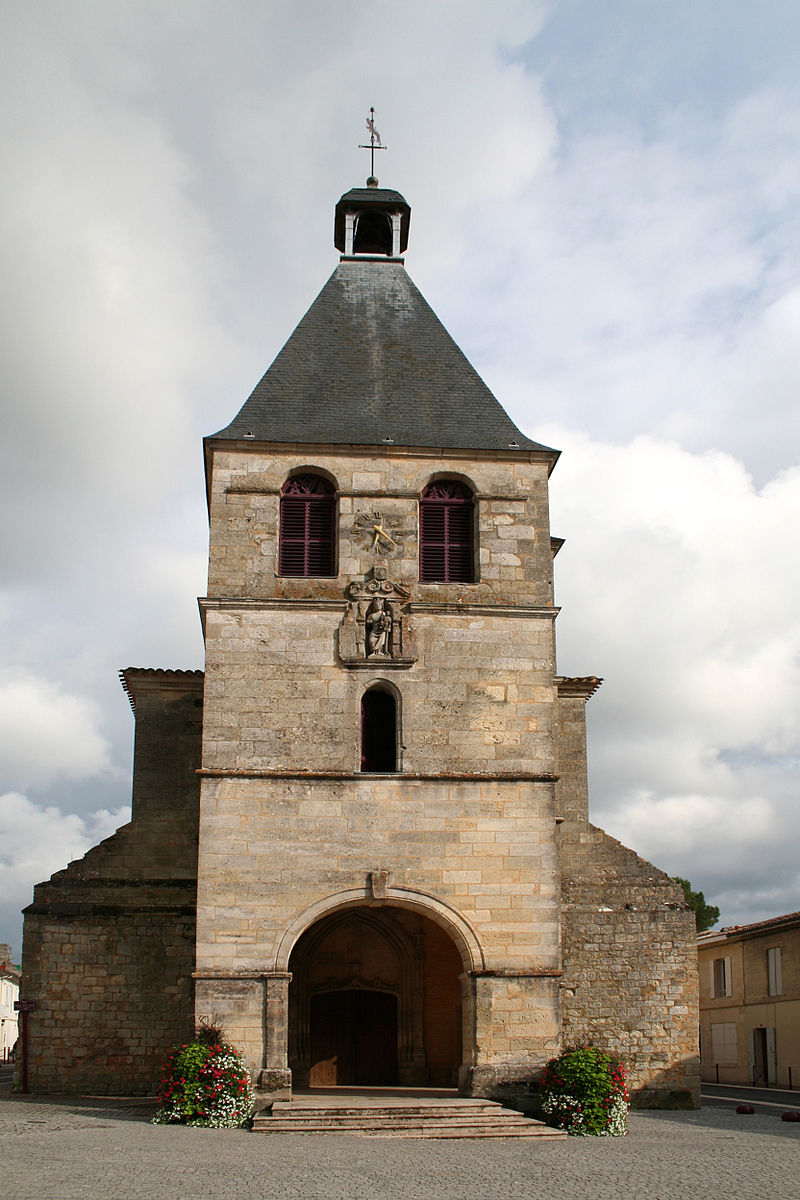
Photo of the Eglise Notre-Dame de Créon by Ophelia2 via Wikimedia Commons

Créon—the Town: Créon is a small town (technically, a commune) located within the Entre-Deux-Mers AOC, just a few miles away from where the Ciron joins the Garonne. The commune is currently home to about 5,000 people as well as several wine producing estates and vineyards, including Château Baudac and Vignobles Quinney. After a few samples of the local white wine, visitors might want to check out the Eglise Notre-Dame de Créon—originally built in the 15th century and an official Monument Historique (national heritage site) of the Republic of France.

References/for more information:

The Bubbly Professor is “Miss Jane” Nickles of Austin, Texas… missjane@prodigy.net

(French) Wine from a Tropical Island: La Réunion

.

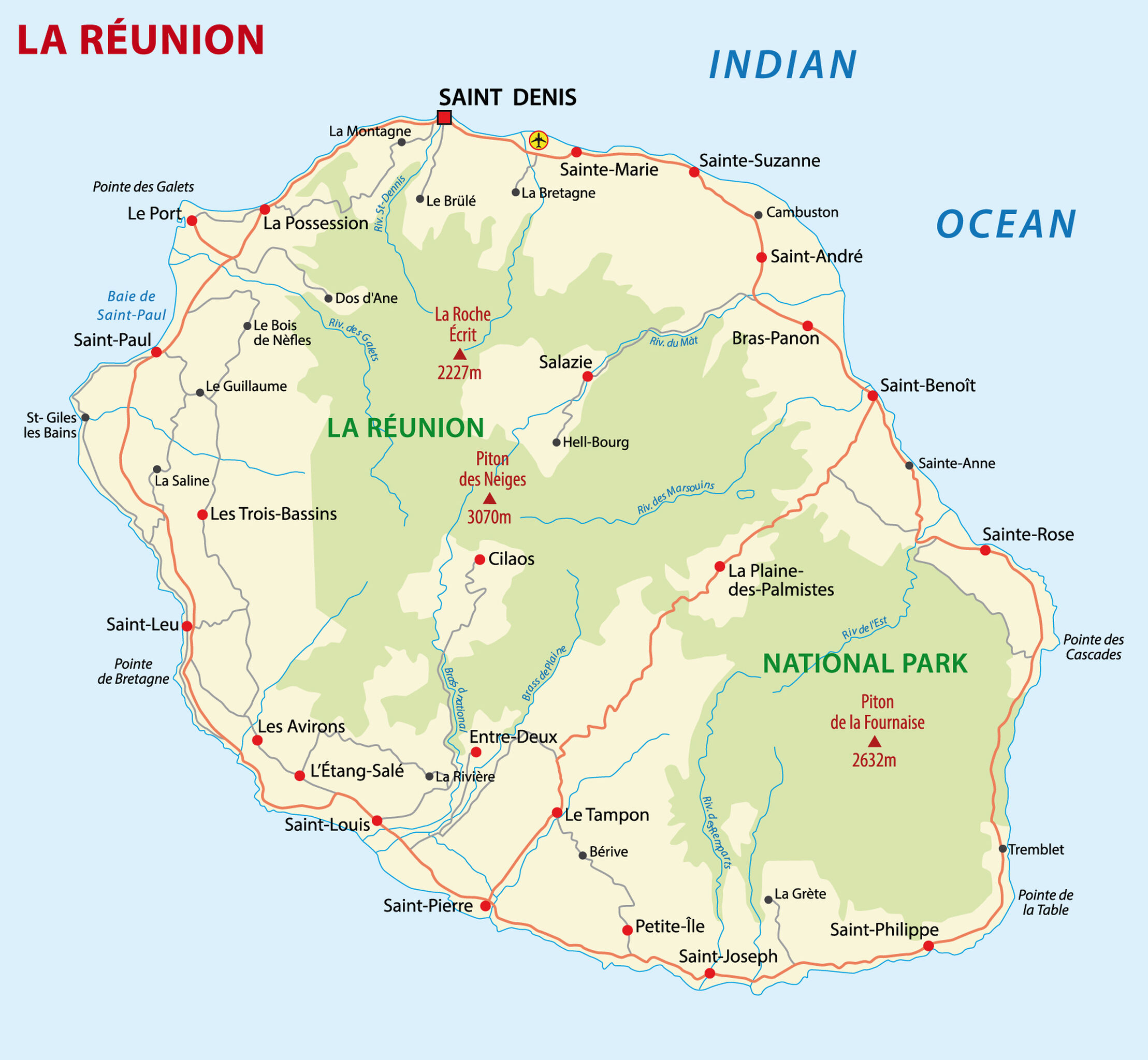
La Réunion (Reunion Island)—one of the five Départements d’Outre-Mer (Overseas Departments) of France—is located about 340 miles/550 km east of Madagascar and surrounded by the Indian Ocean. Considering its tropical-island vibe (as well as its position at 21°S latitude), it is easy to understand the fame of its locally-produced rum—which has been protected as a geographical indication—Rhum de la Réunion IGP—since 1989.

What is a bit more surprising is Vin de Cilaos—an esteemed wine produced from island-grown noble grape varieties such as Chenin Blanc, Pinot Noir, and Malbec.  Cilaos—located somewhat in the center of the island and home to 6,000 people—is one of the larger villages on La Réunion.

Vin de Cilaos can truthfully call itself a mountain wine, a high-elevation wine, and a volcanic wine. The village and its vineyards are situated in a volcanic caldera (crater) known as the Cirque de Cilaos at an elevation of 1,200 meters/3,940 feet above sea level.

Not surprisingly, Vin de Cilaos is—along with the wines from the Tahitian vineyards—one of the only French wines produced in the Southern Hemisphere. Vinifera grapes are believed to have been brought to the island in the year 1655, but most were wiped out by Phylloxera. In 1992, the Chai de Cilaos Cooperative was founded and planted over 6,000 vinifera vines—including Chenin Blanc, Pinot Noir, and Malbec—in the region. The first wine produced by the cooperative (in 1996) was a dry Chenin Blanc. Since then, other wines—including a red blend of Pinot Noir and Malbec—have followed suit. Alas, these wines are made in highly limited quantities, so if you want to try Vin de Cilaos…you’ll need to visit the island (not such a bad idea).

In addition to its fame as (French) wine-producing region, Cirque de Cilaos is a thermal spa retreat area renowned for its lentils, wildflowers, naturally sparkling water, hiking trails, and meticulous white linen embroidery—as carried on by the Maison de la Broderie de Cilaos (Cilaos Embroidery House).

Cirque de Cilaos

Grapes are grown in other parts of La Réunion as well, and a light red wine produced from Isabella grapes (a Vitis labrusca variety) is enjoyed locally. The Isabella grape variety was once-upon-a-time banned from the island, as it was believed that the wine—known as vin qui rend fou (‘wine that sends you mad’) drove people crazy. The ban was lifted in 2004.

Note: Wines from Cilaos were sometimes labeled as “Vin de Pays de Cilaos” up until 2009, when the EU disallowed the use of the title. The wines of Cilaos have never been awarded a French geographical indication, although there are rumors that an application is in process.

The Outer Limits is my series of appreciative posts about small, oddball, obscure, or out-of-the-way wine regions.

References/for more information:

The Bubbly Professor is “Miss Jane” Nickles of Austin, Texas… missjane@prodigy.net

Getting to Know Grolleau

You have  probably already met Grolleau, but you just don’t know it yet.

The Grolleau grape variety—more precisely known as Grolleau Noir, to differentiate it from its siblings/color mutations Grolleau Blanc and Grolleau Gris—is the third most widely planted red grape variety in France’s Loire Valley (after Cabernet Franc and Gamay). It has most likely made its way into your glass via a snappy rosé or creamy sparkling wine (either white or rosé) produced somewhere around Anjou, Saumur, or Touraine.

Grolleau—believed to one of the many descendants of Gouais Blanc—was first recognized as “Grolleau de Cinq-Mars” (in reference to the Central Loire Valley town of Cinq-Mars-le-Pile) in the early 1800s. It is also known to have been cultivated in the Charente Department of Southwest France around this same time, but it is assumed to be native to the Loire. The name may derive from the Old French grolle—meaning black crow—referencing the dark skin of the grapes.

Grolleau is appreciated for its reliable high yield, but this rampant fertility can pose a challenge. If left unchecked, the plant can produce huge crops of uninspiring grapes somewhat lacking in flavor and tannin—despite the lovely dark-skinned appearance of the grapes. Due to this tendency—coupled with the variety’s susceptibility to certain vine diseases—plantings of Grolleau have been declining over the last fifty years. In the 1950s, there were over 28,000 acres/11,000 ha of Grolleau planted in the Loire Valley; as of the last decade, there are just over 5,800 acres/2,350 ha (although the decline seems to have stabilized).

Nevertheless, Grolleau is widely used in the sparkling wines of the Loire Valley and persists as one of the leading grapes of region’s rosé. It is often the majority grape in the much beloved and slightly sweet wines of the Rosé d’Anjou AOC. Alas…this could be because Rosé d’Anjou is one of the few AOC wines of the region—and even the country—that allows for its use.

Grolleau-based wines tend to be high in acid, moderate in alcohol, and may show aromas/flavors of red fruit (strawberry, raspberry, cherry),  watermelon, citrus (lemon, tangerine), rose petals, and (some say) red candy.

Despite its dark reddish-black hue, the grape’s thin skins mean that Grolleau is rarely used to produce red wines. If you find one, it is likely to be labeled under an IGP—such as the Vin de Pays du Val de Loire— or a Vin de France designation. It might also be produced via carbonic maceration. (Fun fact: Grolleau is only allowed to be used in the red wines of ONE single AOC—the Anjou AOC—and even here it is limited to no more than 10% of the total blend.)

In the world of wine, one can always find the exception to the rule—and despite its penchant for bubbles and rosé, there are some serious red wines produced with Grolleau. Domaine Clau de Nel—located in Anjou—cultivates two hectares (about five acres) of 60-to-90-year-old Grolleau vines trained in gnarly, gobelet style and farmed biodynamically (Demeter Certification and all). The grapes are hand harvested, sorted in the field, and fermented with native yeasts. The resulting wine is placed in used French oak barrels and aged for at least 12 months in “ancient troglodyte cellars cut into the limestone hillside on the property.” The wine is then bottled—unfined and unfiltered. Jancis Robinson described this wine as having a “mid garnet color, a certain wildness on the nose” and as “possibly the most serious Grolleau I have ever tasted.”

Loire Valley AOCs that allow for Grolleau include the following:

  • Anjou AOC (allowed in sparkling wines; red wines may include a max. 10% Grolleau)
  • Coteaux du Loir AOC (allowed in rosé only, limited to a max of 30%)
  • Crémant de Loire AOC (no limits, but this is a bubbly-only appellation)
  • Rosé d’Anjou AOC (Grolleau is typically the majority grape, but Cabernet Sauvignon, Cabernet Franc, Malbec, Gamay, and Pineau d’Aunis/Chenin Noir are allowed as well)
  • Touraine AOC (allowed in sparkling wines and rosé only)
  • Saumur AOC (allowed in sparkling wines and rosé only)

References/for more information:

The Bubbly Professor is “Miss Jane” Nickles of Austin, Texas… missjane@prodigy.net

The Bubbly Professor’s third annual “I don’t Wanna Study on Christmas Eve” Wine Quiz

I know you probably don’t want to study today, tonight, or tomorrow…but you also don’t want to lose your study rhythm! How about a nice compromise….the Bubbly Professor’s third annual “I don’t wanna study on Christmas Eve” quiz!

It’s so dang hard to study on Christmas…

If you want to go for it, click here.

Happy Holidays to those that are celebrating, and best wishes to all!

The Bubbly Professor is “Miss Jane” Nickles of Austin, Texas… missjane@prodigy.net