Fuzzy Wuzzy was a Vine

.

.

One of the first things that a serious wine student will learn about Priorat is that it is one of the two DOCa regions in Spain, and that (its red version) is a hearty wine based around the Garnacha Tinta and Mazuelo (Carignan/Cariñena) grape varieties. Next, one might note the list of accessory varieties, which include some well-known international varieties (including Cabernet Franc, Cabernet Sauvignon, Pinot Noir, Syrah, and Tempranillo) as well as a grape known as Garnacha Peluda.

There it is: Garnacha Peluda; otherwise known as Hairy Grenache. The name peluda seems to come from the French pelut and means furry.  How cute is that? The “hairy” part of the name refers to the small white hairs covering the underside of the leaf. Other terms used to describe this hirsutulous (botanical term for slightly hairy) characteristic include downy, wooly, fluffy, fleecy, and fuzzy. But they all mean the same thing: this leaf is hairy.

Garnacha Peluda, a mutation of Garnacha Tinta (aka Grenache Noir), is considered a unique variety and is often referred to as a downy-leafed variant of Grenache—which may make the inquiring mind wonder why a certain grapevine would mutate into such a form. The answer is that growing furry leaves is a biological adaptation. Biological adaptations are changes—structural (either morphological [able to be observed] or anatomical [internal]), physiological, or behavioral—that occur over many generations of plant or animal life in order to make the organism better suited to its environment and to improve its chances of survival.
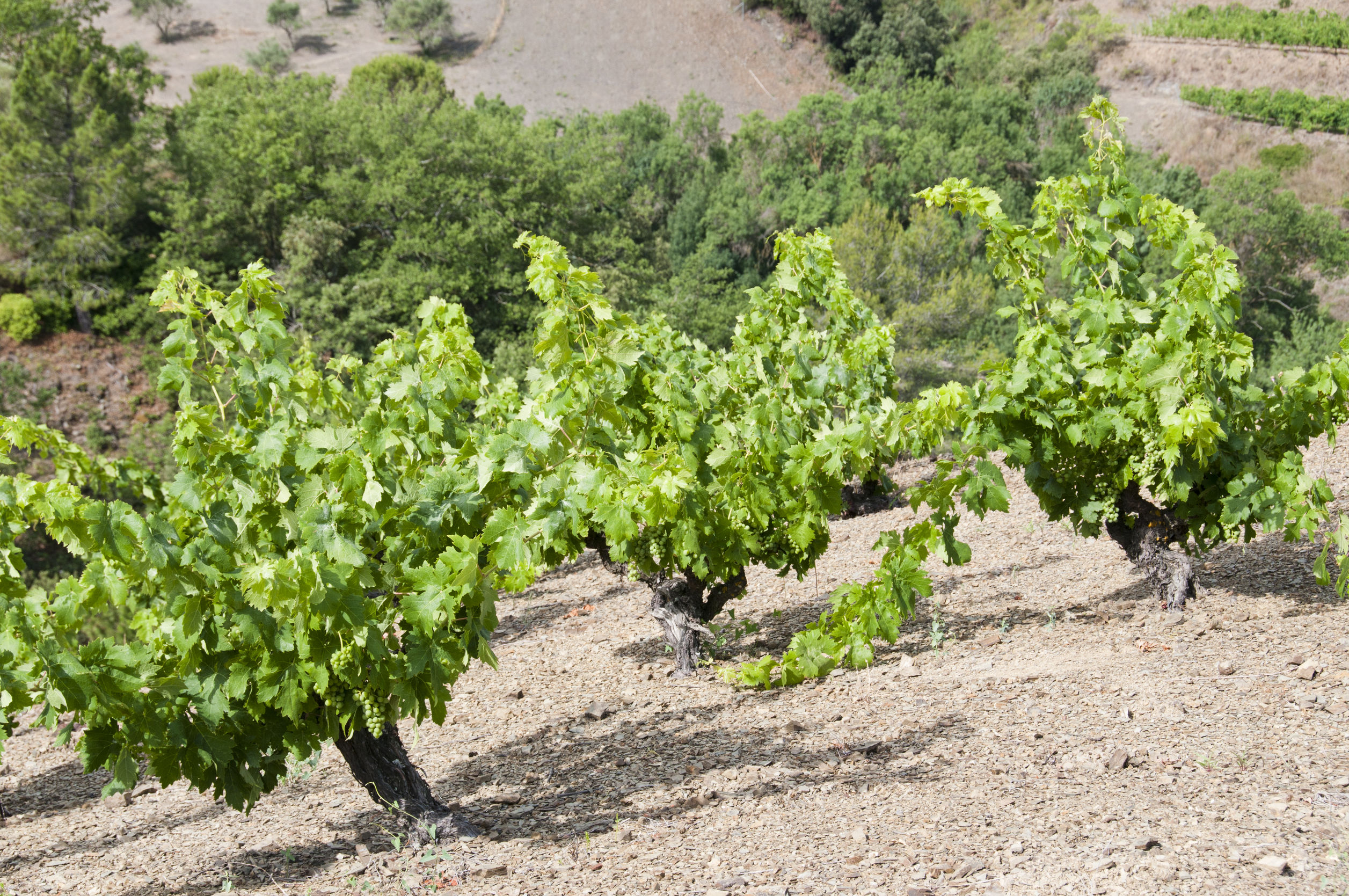
Garnacha Pelut vineyards in Priorat

Garnacha Peluda vineyards in Priorat

The hairy-leafed variation of Grenache is a result of a morphological adaptation to hot, dry environments such as found in Priorat, as well as the Roussillon and Languedoc areas of southern France. (Note: in southern France, the grape is often called Lledoner [or Lladoner] Pelut.) The fuzzy layer protects the vine from water loss due to transpiration, helps shade the leaves, and reflects sunlight to help keep the plant cool. The hairy-leaf solution is one of several ways plants adapt to hot, dry environments. Others include small leaves, curled-up leaves, wax-coated leaves, woodsy stems, and green stems but no leaves.

Compared to its non-hairy cousin, Garnacha Peluda tends to produce wines that are lower in alcohol, lighter in color, and higher in acidity. The Garnacha Peluda grape is authorized for use in the following wines:

  • Recommended/Principle variety in: Terra Alta DO, Languedoc AOC (as Lledoner Pelut)
  • Accessory grape variety in: Empordà DO, Priorat DOCa, Terrasses du Larzac AOC (as Lledoner Pelut), Côtes du Roussillon and Côtes du Roussillon-Villages AOCs (also as Lledoner Pelut)

Vitis aestivalis varieties and native North American grapes native to the southwest, such as Mustang and Muscadine, are also likely to demonstrate the hairy-leafed adaptation. Many other plants have adopted this downy-leafed adaptation as well, including rosemary, sagebrush, oleander, buckthorn, magnolia, sycamore, potato, petunia, and lamb’s-ear.
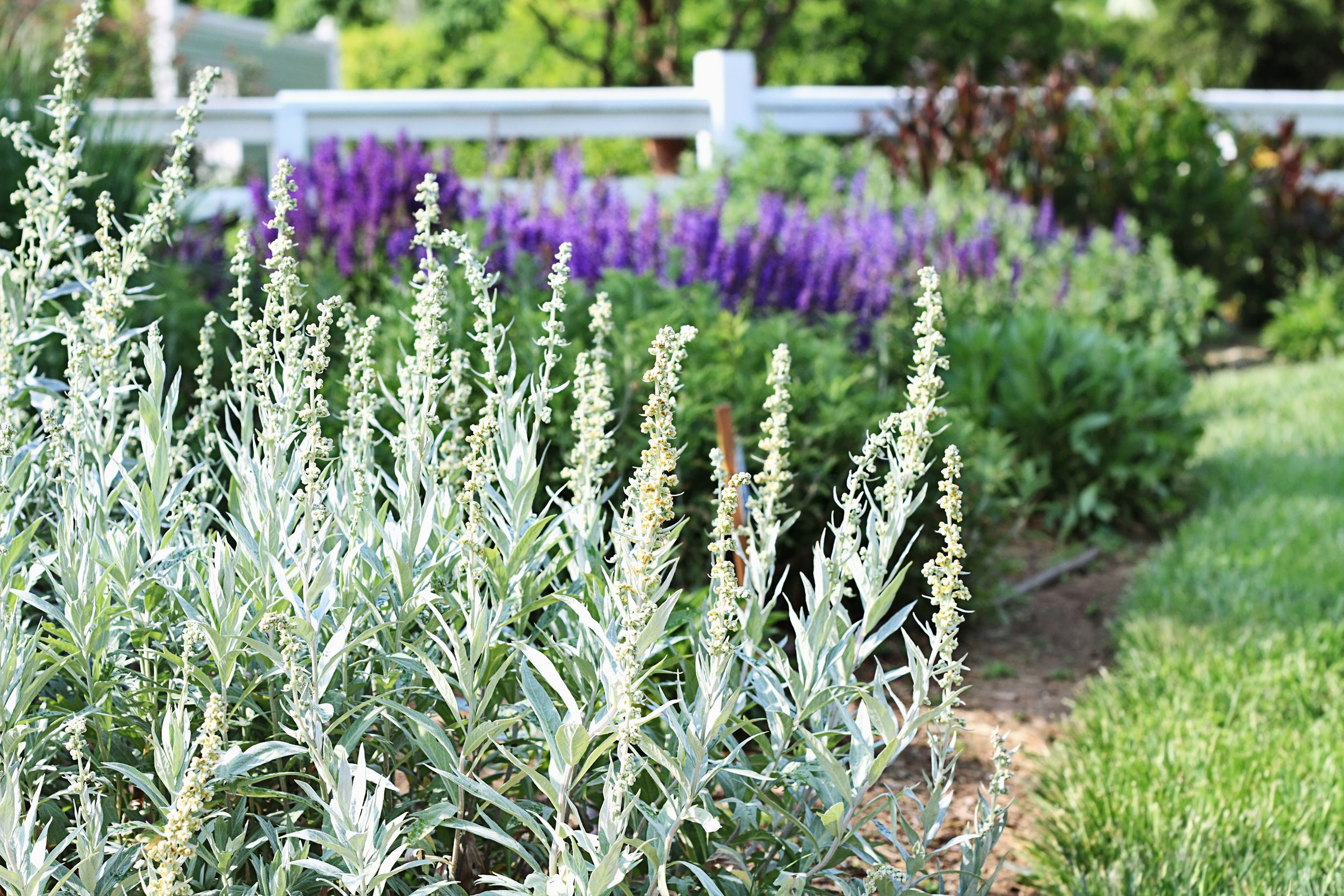
Fuzzy-leafed lamb's ears

Fuzzy-leafed lamb’s ears

Another famous hairy-leafed vinifera grape is Pinot Meunier. As meunier means “miller” in French, the grape is so-named for the layer of white, downy hairs on the underside of the leaves, said to resemble grains of flour (as produced by the town miller at the local flour mill). But as we now know, it is all about that morphological plant adaptation.

References/for further information

The Bubbly Professor is “Miss Jane” Nickles of Austin, Texas… missjane@prodigy.net
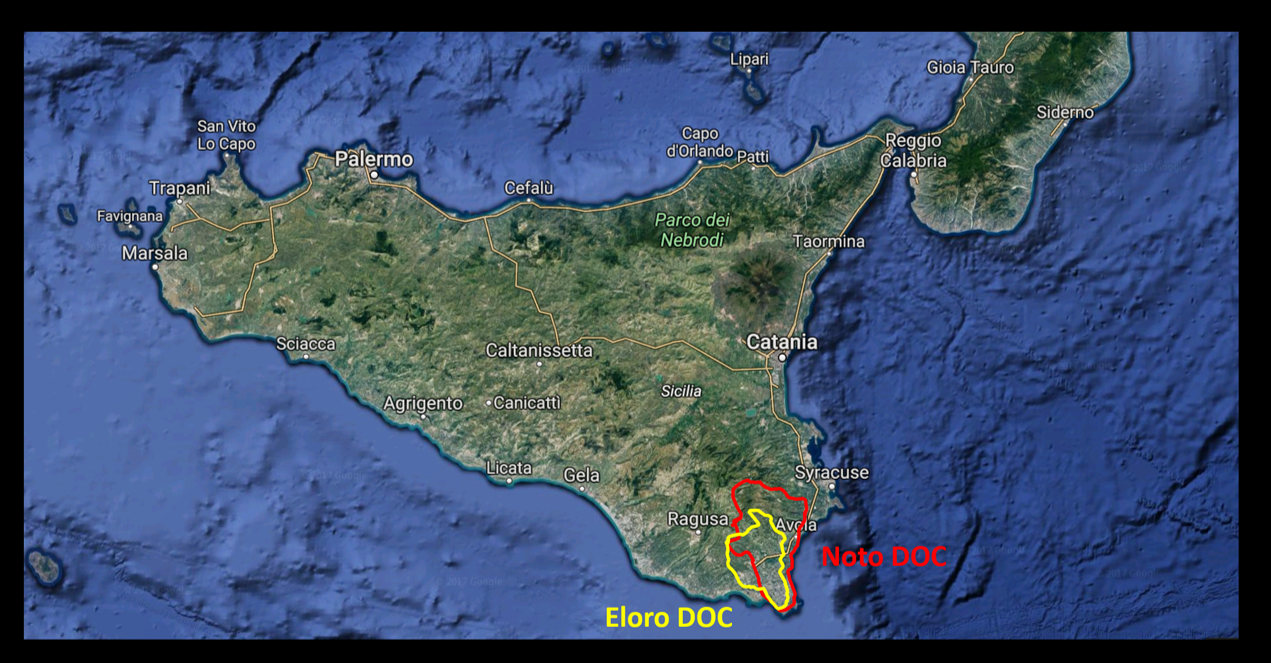
The Outer Limits: Italy’s Southernmost DOCs

Map of Sicily via Google Maps

Map of Sicily via Google Maps

The island of Sicily, located just to the west of Calabria (the “tip” of Italy’s boot) might not be the southernmost point in Italy (that award goes to the island of Lampedusa), but it’s pretty far south, and it is home to the two southernmost DOCs of Italy (they overlap, and it’s a tie): the Eloro DOC and the Noto DOC.

First things first: about that “southernmost” claim: the southernmost town (commune) I could find (via Google maps) located within the Eloro DOC and Noto DOCs is Portopalo di Capo Passero (which is itself located within the Province of Syracuse). Its latitude is 36° 41′N. For the record, that’s just a little bit farther south than the DOC of Pantelleria, which is often quoted as Italy’s southernmost DOC, yet sits at 36° 50′.

The land around these two DOCs is mostly a flat, coastal plain so the area can become quite warm. Only the northernmost reaches of the Noto DOC has any hills to speak of, but the breezes off the Mediterranean Sea provide a necessary cooling influence.

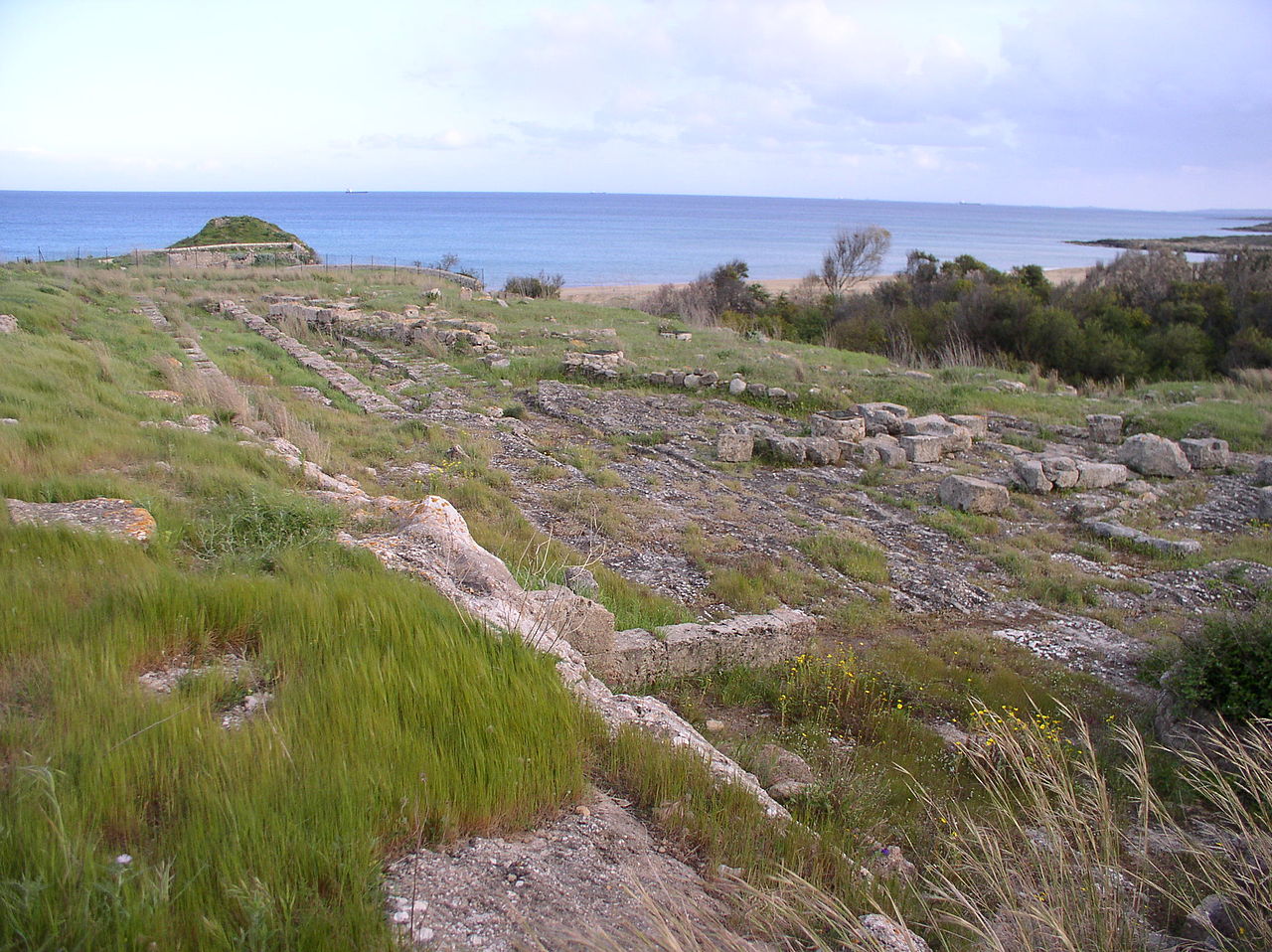
The archeological site of Helorus (photo in the public domain)

The archeological site of Helorus

The Eloro DOC is named after Helorus (Italian: Eloro), an archeological site located in the modern-day commune of Noto. Helorus was an ancient Greek (then Roman) city dating from late 8th century BC. Helorus was mentioned by Thucydides in his recounting the retreat of the Athenians “on the road leading to Helorus from Syracuse.” The once-fortified city had a theater (called the colisseo) and many buildings. Today, parts of the city’s foundations, some portions of the outer walls, and a single column atop a square pedestal are still intact.

Red and rosé wines are produced under the Eloro DOC. Both styles are produced using a minimum of 90% Nero d’Avola, Frappato, and Pignatello grapes; the other 10% is allowed to include any red grape approved for Sicily. Red wines only are produced in the subzone of Pachino, and must be a minimum of 80% Nero d’Avola, with the other 20% being % Frappato and/or Pignatello. The emphasis on Nero d’Avola makes sense as likely native home of the grape–the commune of Avola–is just a few miles away. The Eloro DOC was established in 1994.

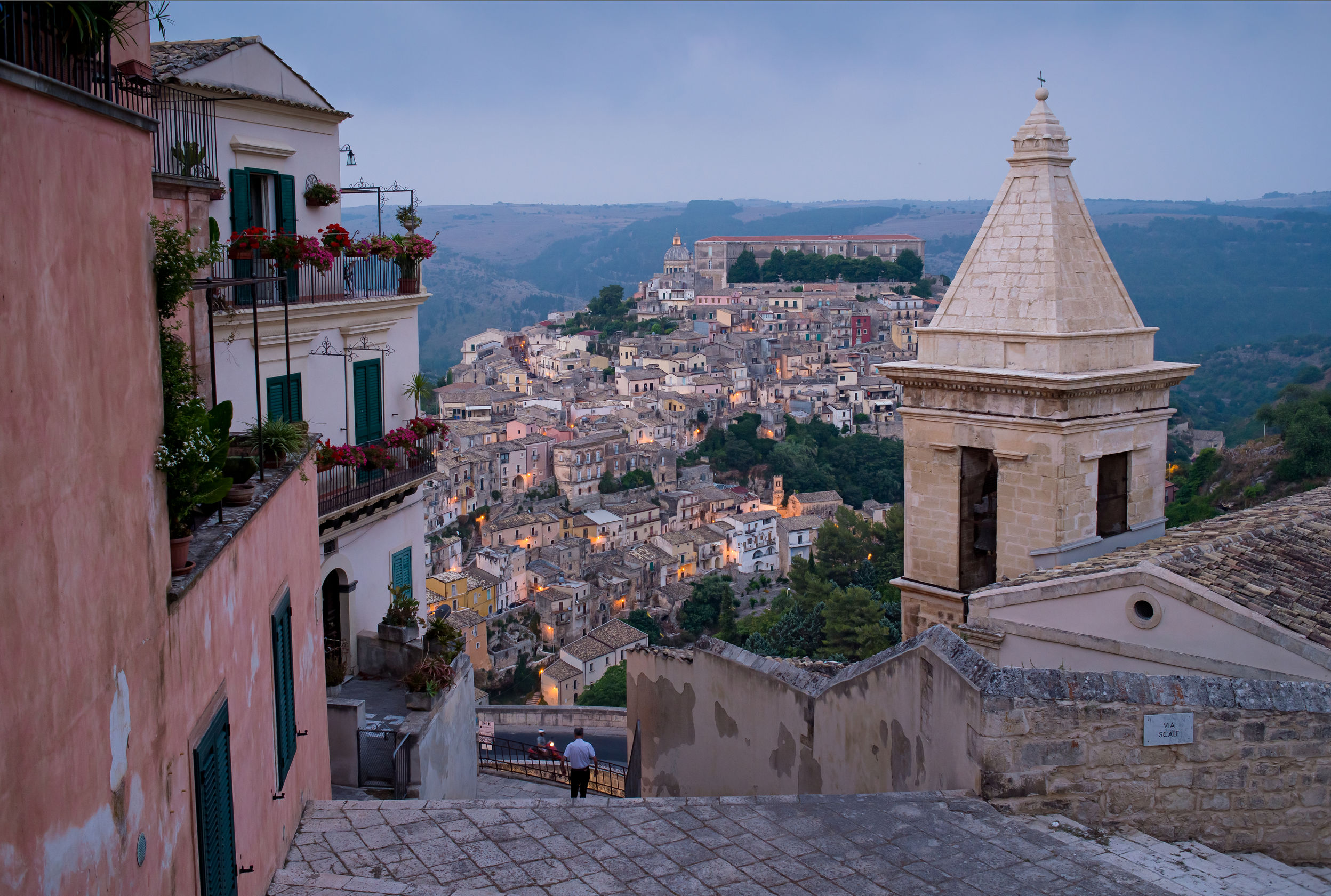
The town of Noto at sunset

The town of Noto at sunset

Noto DOC is a new name for the area formerly known as the Moscato di Noto DOC, and a good deal of Moscato-based wine is still produced here. However, under the new title, red wines are produced as well. Among the many styles of Moscato di Noto (all made with 100% Moscato Bianco) are a varietal Moscato, a spumante, a liquoroso (fortified), and a dried-grape version known as Passito di Noto. The Moscato di Noto spumante is required to have at least 5% residual sugar and a minimum of 4 atm of pressure. The liquoroso (fortified) must be fermented to at least 6.5% abv before fortification takes place.

The Noto DOC also produces a rosso made with a required minimum of 65% Nero d’Avloa, as well as a varietal Nero d’Avola (with the typical 85% minimum requirement).

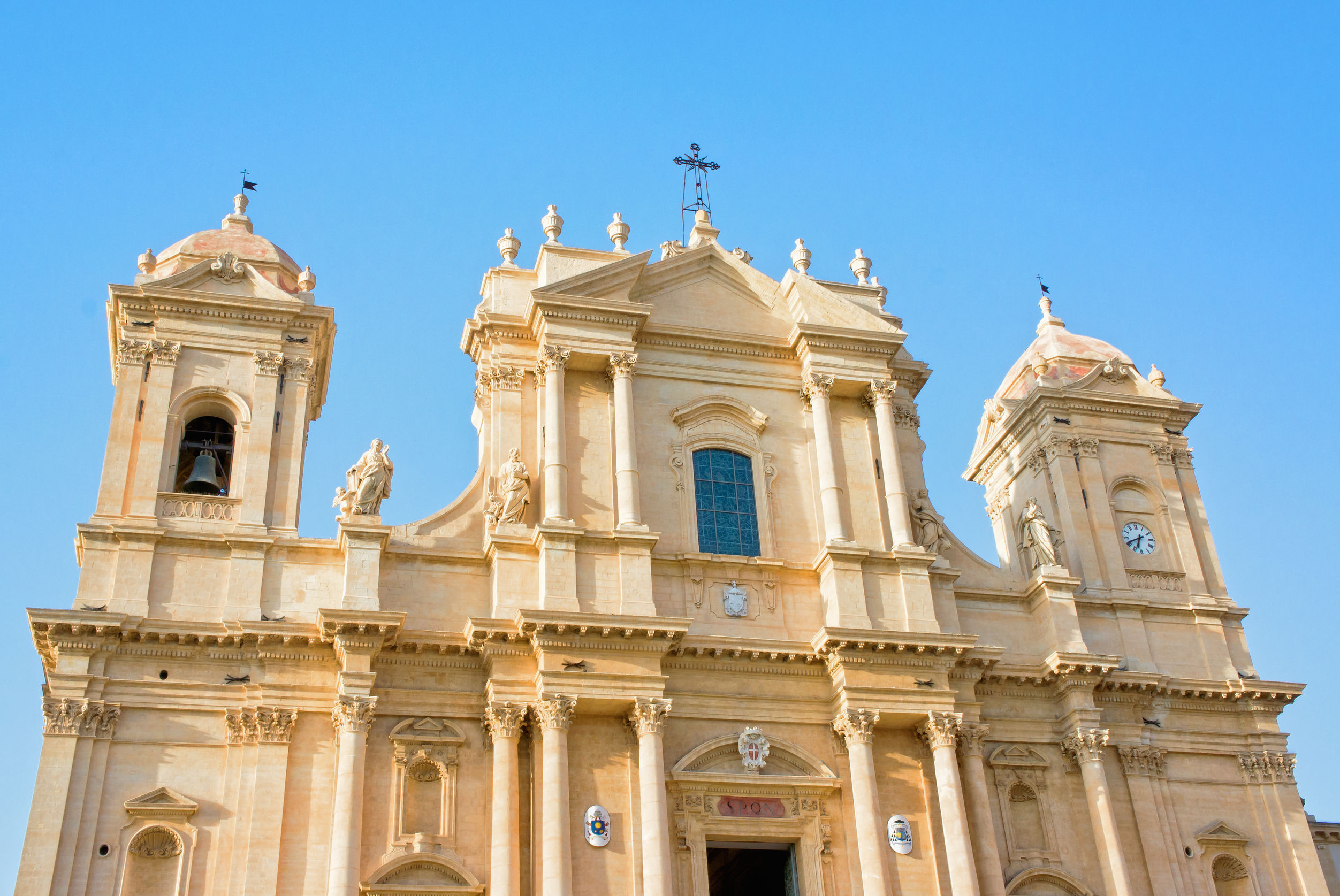
The area around the town of Noto was destroyed in an earthquake in 1693, so the town that one may visit today dates to the early 18th century. Many of the churches, walkways and buildings were designed by the Sicilian architect Rosario Gagliardi (1698–1762) who worked in what is now known as the Sicilian Baroque style. Among the most amazing sites of the town are Corso Vittorio Emanuele, a street which includes the Church of San Domenico, and the Fountain of Hercules. Noto is a UNESCO World Heritage Site.

Baroque Church of San Francesco in Noto

Baroque Church of San Francesco in Noto

As for the other extreme, it looks like the northernmost DOC in Italy is the Alto Adige DOC, which just barely nudges out the DOC of Valdadige – both are reaching up to 46° 40′N latitude. More on that later!

References/for more information:

The Bubbly Professor is “Miss Jane” Nickles of Austin, Texas… missjane@prodigy.net
The Outer Limits is my series of appreciative posts about small, obscure, or out-of-the-way wine regions.


Confusion Corner: Rully and Reuilly

.

.

As I am sure most of my readers are well aware, there is a lot of confusion inherent to the study of wine. A lot of this has to do with the fact that it is just a huge amount of material, and that it covers so many disciplines from geography and botany to culture, chemistry, and cuisine.

But then there are those times when it just seems like the world is stacked against the serious student of wine. How, for instance, is one supposed to differentiate between Listrac and Lirac?  Ciron and Cérons? Shanxi and Shaanxi (are you kidding me)?

Today’s post will try to unravel just one tiny confusion corner of the wine world—in this case, Rully and Reuilly. For starters, Rully is in Burgundy, and Reuilly is in the Loire Valley. Let’s see what other stories these two regions have to tell.

Our Burgundian, Rully (pronounced ryoo-YEE) is one of the five villages in the Côte Chalonnaise that has AOC status (the others are Bouzeron, Givry, Mercurey, and Montagny). Rully AOC wines are produced in the commune of Rully as well as Chagny, its neighbor-to-the-north. The Rully AOC is located just southeast of Bouzeron and just northwest of Mercurey.

Château de Rully in the Côte Chalonnaise

Château de Rully in the Côte Chalonnaise

The Rully AOC produces both red and white wines and includes 23 premier cru vineyards. White wines are permitted to be made using either Chardonnay or Pinot Gris, but in practice they are almost exclusively Chardonnay. Red wines are produced from Pinot Noir, and may contain up to 15% Chardonnay or Pinot Gris (combined). The AOC currently has 558 acres (226 ha) planted to white grapes including 173 acres [70 ha] premier cru. Red grapevines cover acres 292 acres (118 ha) including 72 acres (29 ha) premier cru.

The commune of Rully is located just below the eastern side of a low-lying limestone ridge named La Montagne de la Folie. It comforts me a bit to learn that this name translates to “Mountain of Madness,” although apparently the name is not due to mental illness (caused by wine study) but refers to a very old legend telling that the villagers in the valley would often see flickering lights coming from high in the hills. They nicknamed these lights la folia (dance of the fairies).

The Montagne de la Folie is an extension of the limestone escarpment of the Côte de Beaune. It runs from north to south, in between the communes of Rully and Bouzeron. The best vineyards of the Rully AOC (and most of the premiers crus) are located on the eastern slopes of La Montagne de la Folie.

.

.

Did I mention that the commune of Rully is located in the département of Saône-et-Loire? Is that confusing? (I think so.) Here’s some fun information to hopefully clear things up. The département of Saône-et-Loire is located in the region of Bourgogne-Franche-Comté (formerly known as simply Bourgogne). It lies between the two rivers after which it is named—the Saône and the Loire. The two rivers flow through the area in opposite directions, as the Loire flows north from its source in the Massif Central, and the Saône flows south from its source in the Vosges Mountains, until it joins the Rhône in the city of Lyon.

Reuilly (pronounced reuh-YEE), on the other hand, is an AOC located in the Eastern (or Upper) Loire Valley. Reuilly is located (along with the Quincy AOC) near the Cher River (a Loire tributary) in an area often called the Central Vineyards—which is a bit confusing in itself, as it refers not to the Central Loire (which would apply to Anjou, Touraine, and Samur) but the center of France. A bit further to the east (closer to the Loire itself), one finds the better-known areas of Sancerre, Pouilly-Fumé, and Menetou-Salon (also considered part of the Central Vineyards of France).

The Reuilly AOC produces red, white, and rosé wines but is perhaps best-known for its crisp, dry, white wines made from 100% Sauvignon Blanc grapes. These wines are often described as having herbal, grassy, and citrus flavors and as such are inevitably often compared to the more famous wines produced in neighboring Sancerre and Pouilly-Fumé.

The River Cher

The River Cher

The red wines of the Reuilly AOC are 100% Pinot Noir and tend to be light-bodied with aromas of cherries, raspberries, and dried flowers. Rosé wines are produced using Pinot Noir or Pinot Gris.

The Reuilly AOC is located quite a bit further inland than the majority of the other wine regions of the Loire, and as such experiences a much more continental-style climate. As a matter of fact, Reuilly is one of the driest and hottest areas in the Loire (even considering its neighbors in the Central Vineyards), so much so that this is quite often the first appellation in the Loire Valley to begin its harvest.

Hopefully, this clears up at least some of the confusion between Rully and Reuilly. However, if you happen to find yourself stuck in another wine confusion corner, let me know and I’ll try to straighten it out!

References/for further information:

The Bubbly Professor is “Miss Jane” Nickles of Austin, Texas… missjane@prodigy.net
The pH of it all

.

.

When we talk about wine, we talk about acidity, and when describing wines, one of the typical ways to discuss acidity in wine is to use the pH scale. Dedicated students of wine can easily quote 2.9 to 3.9 as the typical range of pH in wine.

I personally love the zip and zest of highly acidic wines and adore Mosel Riesling (the drier the better), New Zealand Sauvignon Blanc, and even 100% Sicilian Grillo. I’ll take the tongue-curling antics of a wine with a pH of 2.9 any day.

But what exactly is pH? You probably already know that it is a scale runs from 0 to 14 and measures how acidic or basic (alkaline) a substance is. But what does that mean? To answer this question we need to dive into some science…we can start with chemistry and biology, and might just have to visit the physics department (and if we are going there, it better be worth it). So here we go!

About the p and the H: First things first—the term “pH” stands for “power of hydrogen.” The term was invented in 1909 by the Danish biochemist Søren Peter Lauritz Sørensen, so originally the “p” stood for potenz (the German word for power). The “H” (for us absolute beginners) is the element symbol for hydrogen, and the pH scale reflects the concentration and type of the hydrogen-based atoms in a solution. (Note: some references define the “p” in pH as “parts” or “potential.”)

What’s hydrogen got to do with it: Hydrogen is the common element to all acids. What determines whether a solution is acidic or basic is the form and degree of saturation of hydrogen ions.

.

.

Define ions, please: To put it as simply as possible—ions are atoms or molecules that have lost or gained an electron over the course of their travels. In the case of hydrogen, this can occur when water splits apart.  If a hydrogen atom loses an electron, it becomes positively charged and is known as a hydrogen ion (H+). If a hydrogen atom gains an electron, it becomes negatively charged and is known as a hydroxide ion (OH).

Hydrogen ions: An acid is a molecule that can split apart in water and release hydrogen ions (thus, acidic solutions have measurable concentrations of hydrogen atoms). Bases are stronger in hydroxide ions. In neutral solutions, the two are roughly equal and they cancel each other out (neutralize each other).  The way that these hydrogen molecules react in water is the basis for the pH scale.

Deliver me from logarithms: The pH scale is logarithmic. Logarithms are multiples of ten; that means that for every full integer on the pH scale, the strength of the acid or base increases tenfold. Thus a pH of 2 is ten times more acidic than a pH of 3—and a pH of 2 is 100 times more acidic than a pH of 4. If this seems confusing, consider another logarithmic scale, the Richter Scale, where an earthquake measuring 7 is ten times stronger than a 6.

Liquid required: A substance has to be water-based in order to have a pH. Powders and oils (such as vegetable oil or olive oil) cannot be measured on the pH scale. There are, however, several other ways of measuring acidity.

The neutrality zone: A 7 on the pH scale is neither acidic nor basic, and considered neutral. Distilled water is generally neutral, but other types of water are not. An interesting (kind of gross) fact is that  human blood is very close to neutral (just slightly basic) and often has a pH of 7.35 to 7.45. Any deviation from this ideal blood pH can have devastating effects on one’s health.

.

.

Just the basics: In the wine world we deal with levels of acidity, but it is interesting to understand the types of substances on the other end of the scale.  Here are a few common items and their basic pH levels:

  • 8: Baking soda, sea water
  • 9: Toothpaste
  • 10: Milk of Magnesia
  • 11: Ammonia
  • 12: Soapy water
  • 13: Oven cleaner
  • 14: Drain cleaner

The equation for pH: Never mind. If you are interested (and have a logarithmic calculator and know how to use it) click here.

References/for more information:

The Bubbly Professor (who has not formally studied chemistry or physics since college) is “Miss Jane” Nickles of Austin, Texas… missjane@prodigy.net
The First-Ever AOC Goes to…

.

.

The first-ever AOC goes to…Roquefort Cheese!  As a matter of fact, Roquefort Cheese was protected by a Parliamentary Decree in the year 1411 and as such, may be credited with starting the entire idea of terroir-based certification for agricultural products. Several centuries later, once the French government created the bureau of the Institut National des Appellations d’Origine (later called the Institut National de l’Origine et de la Qualité [INAO]), Roquefort Cheese was awarded the first-ever AOC in 1925.

I can hear you saying to yourselves, “but I thought this was a wine blog!” And indeed it is. But it’s always best to start with first things first, and it appears that  the concept of the AOC was first introduced for cheese—which seems apropos, as cheese is an icon of French gastronomy (and thus agriculture). There are now (by most counts) 36 AOC-designated French cheeses, and in the 1950s the concept was opened up to other types of products, which now include Le Puy green lentils, chicken from Bresse, and lavender essential oil from Haute-Provence.

Which leads us to another issue: What was the first French wine to be granted AOC status? Most people will say it was Châteauneuf-du-Pape. This is at least partially true; however, if we look at the rest of the story, it is more accurate to state that Châteauneuf-du-Pape was one of the first.

.

.

Here are the true facts and figures about the first time an AOC was granted for wine: In 1935, the Comite’ National des Appellations d’Origin (CNAO) for wine and spirits was created (recall that a similar group had been created in the 1920s for cheese).

By early 1936, the CNAO had received and approved six applications for protected designations of origin for French wine. On May 15, 1936, French President Albert Lebrun signed the first six decrees for wine AOCs into law. The designations, published in the Official Journal on May 17, were (in order of their appearance in the journal) Arbois, Tavel, Cognac, Cassis, Monbazillac, and Châteauneuf-du-Pape.

As for the rest of the story concerning Châteauneuf-du-Pape, it goes back to 1894 when there was rampant fraud concerning the wines of the area. In response, the winegrowers of Châteauneuf-du-Pape formed a Syndicat Viticole presided over by the mayor of the town. The Syndicat worked for years and in 1919 managed to pass a law that defined the geographic boundaries of the Châteauneuf-du-Pape wine-producing region. This was one of the earliest geographical designations in France.

While it helped, the 1919 wine appellation law in Châteauneuf-du-Pape did not put a stop to the ongoing fraud,  and it was soon seen as too general and essentially limited to the question of geographical boundaries.

.

.

By 1923, the winegrowers decided it was time to enforce more specific legislation in order to protect their appellation. A delegation of wine growers went to Château Fortia and asked its owner, Baron Le Roy (a lawyer and winegrower), to help. Soon thereafter, on October 4th, 1923, the first meeting of the Winegrowers Union of Châteauneuf-du-Pape took place, and Baron Le Roy was elected President.

The newly-formed Winegrowers Union met many times to codify and define all the conditions necessary to entitle wines to the use of the name of Châteauneuf-du-Pape.  After presenting their case to the court in the Commune of Orange, the court found that there was no precedent for the legal definition of a wine, and assigned the case to a panel of experts. This panel was tasked with establishing the legal foundation for the “conditions of territorial origin and faithful, constant, and local traditions concerning the Châteauneuf-du-Pape appellation.” After four years of deliberations, the panel of experts published their report, and on November 21, 1933 a law was passed by the Cour de Cassation (French court of last resort) that defined the geographic boundaries and production requirements of the wine known as Châteauneuf-du-Pape. It is believed that this was the first set of laws in all of France concerning not just geographic boundaries but also production parameters for a specific wine.

.

.

So…was Châteauneuf-du-Pape the first AOC? Well, not exactly. There were five other AOCs established on the same day, and Arbois—with the first listing in the Journal—might want to claim the first spot for their own. However, Baron le Roy always insisted that his application on behalf of Châteauneuf-du-Pape was the first to be presented to the CNAO and the first to be accepted—so why not give it to him? What do you think?

References/for more information:

Cahier des Charges for the “first six” AOCs – note the date on each:

The Bubbly Professor is “Miss Jane” Nickles of Austin, Texas… missjane@prodigy.net


Wine Icon: The Crumbling Castle of Châteauneuf-du-Pape

.

.

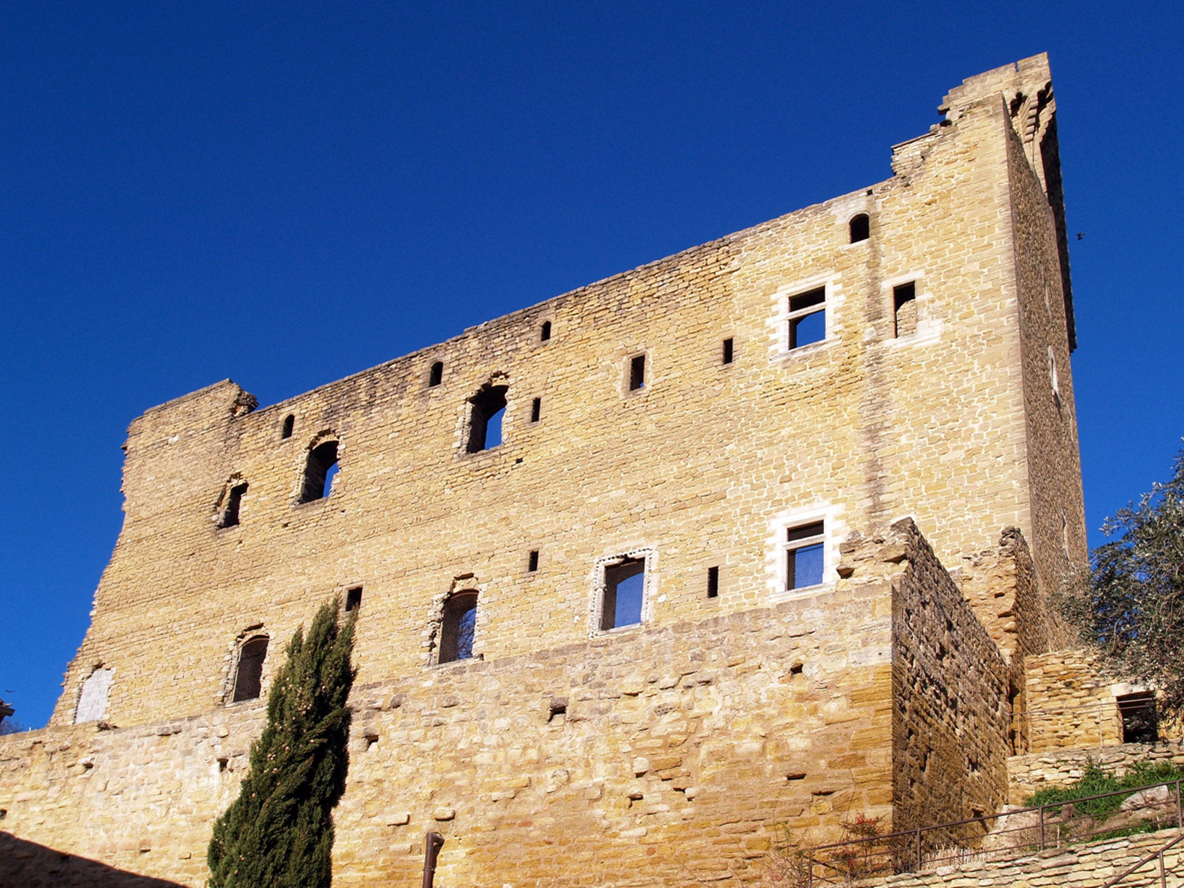
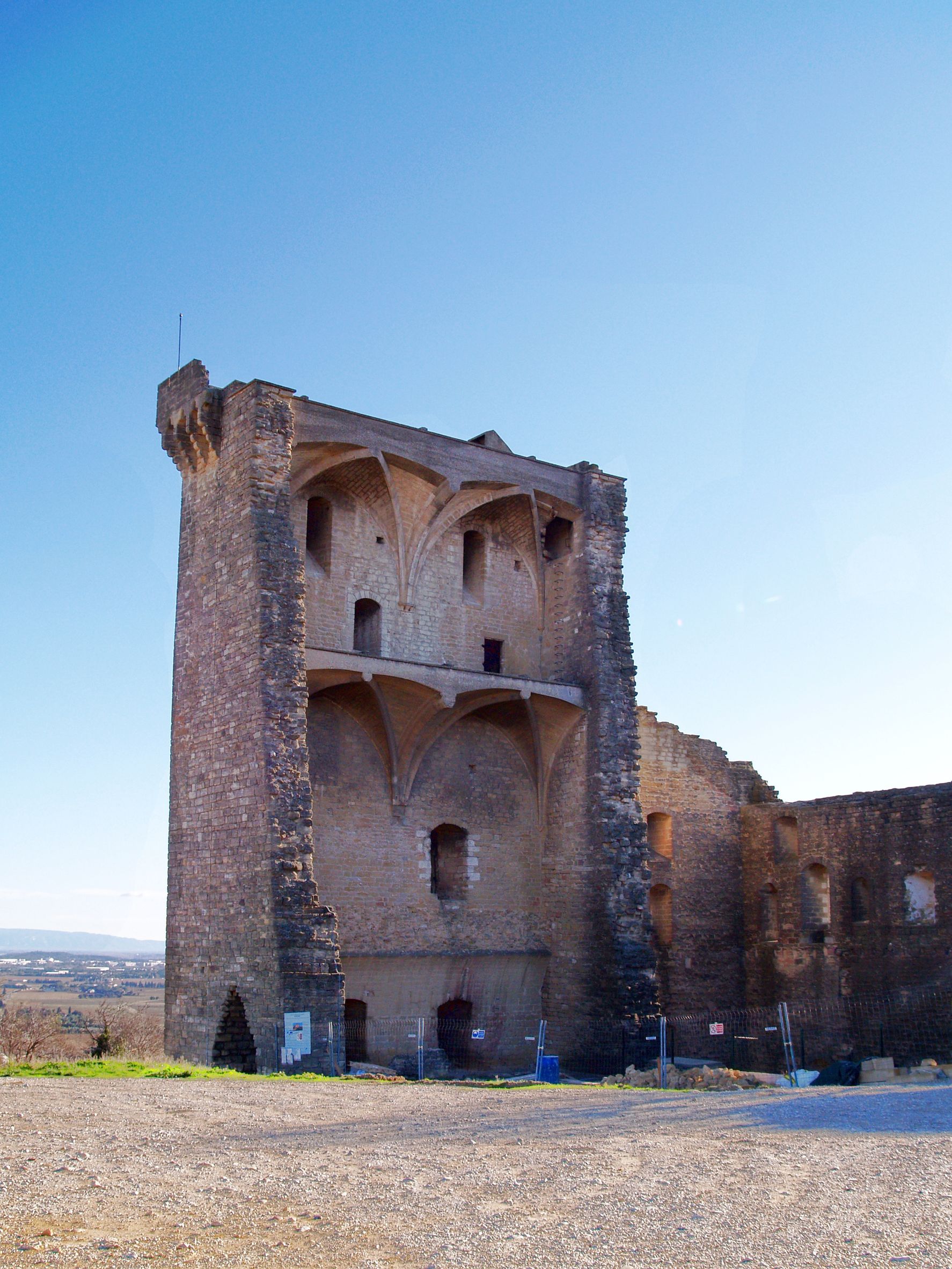
It is one of the most enduring symbols of wine that I can think of…the crumbling castle on the hill in the middle of the commune (and the vineyards) of Châteauneuf-du-Pape. You see it on labels and in textbooks, and I use the picture to symbolize the Old World of wine in my CSW classes. (The Sydney Opera House symbolizes the New World.)

The first written reference to the commune of Châteauneuf-du-Pape is in a document dated 1094, from the records of an estate belonging to the Bishop of Avignon known as Castrum Novum. “Castrum” actually means “fortified town” rather than “castle,” however, the two meanings bounced around quite a bit over the centuries.

The next mention of the village is dated 1213, in documents of the Bishop of Avignon that refer to the town as “Castronovo Calceranrium” and “Châteauneuf Calcernier.” The word calcernier was most likely added to the name of the town to distinguish it from others of the same name, and refers to the limestone quarry located nearby. It’s also known that in keeping with local traditions, there were vineyards established in the area by this time.

The fates changed for the sleepy town of Châteauneuf Calcernier and its wines in the early fourteenth century, when a series of seven Popes took up residence in Avignon rather than Rome due to the volatile political situation in Rome (and between Rome and the King of France).

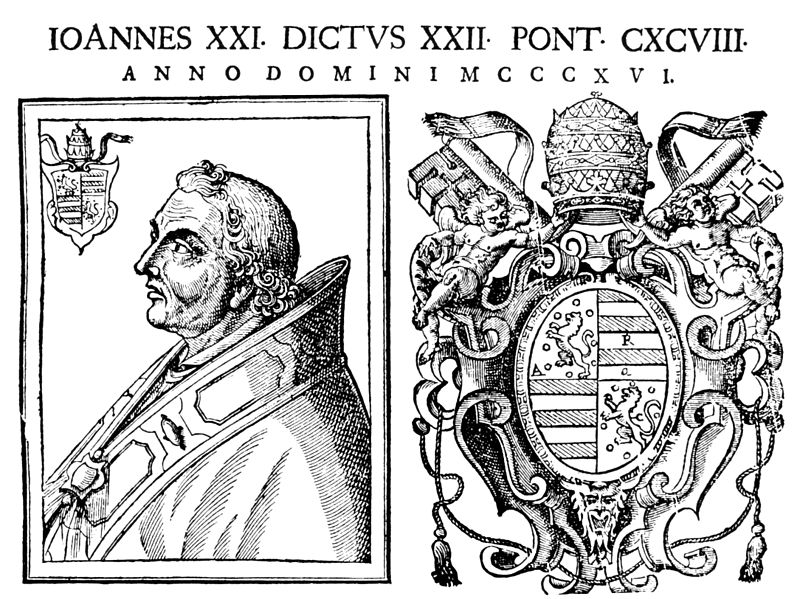
1th Century Engraving of Pope John XXII (public domain)

1th Century Engraving of Pope John XXII (public domain)

The first of the Avignon Popes was Clement V. Clement V, a Frenchman, served as the Pope from 1305 until 1314. In 1309 he moved to Avignon, where he stayed as a guest at the Dominican Monastery. You can pay homage to Clement V by drinking a glass of Château Pape Clément, a property in Pessac-Léognan whose vineyards were originally planted in 1300; Pope Clement V was one of the property’s first owners.

The successor of Clement V was John XXII. Pope John XXII began the expansion of the now-massive Papal Palace in Avignon and built the Pope’s summer residence in Châteauneuf Calcernier. It is said that John XXII chose Châteauneuf Calcernier for the summer residence because he wanted a spot far enough away from Avignon to “discourage courtiers, sycophants, and scroungers,” yet close enough so that a courier could make a round-trip between the two spots in a single day.

John XXII oversaw the total construction of the immense summer castle that began in 1317 and was completed in 1333. Grapevines and olives trees were also planted on the estate, and according to the records of the Apostolic Chamber, the area had over 3 million grapevines by 1334. John XXII had a great appreciation for the wines of the area, and granted them the rank of “Vin du Pape.” As such they were served to foreign courts and dignitaries, and soon began to be shipped in barrels to areas far and wide.

After John XXII, none of the succeeding Avignon Popes used the enormous summer residence. However, during the time of the Great Schism (1378-1417) when there were two competing Popes (one in Rome and one in Avignon), Clement VII stayed in the castle for security reasons.

..

..

After the departure of the Popes, the great castle passed to the ownership of the Archbishop of Avignon. However, the building proved too large and too expensive to maintain, so the building was slowly dismantled and its stones and hardware were used for building projects in the town. At the time of the French Revolution, the name of the town changed again, first to Châteauneuf d’Avignon, and later to Châteauneuf-du-Pape. At this time, the remaining buildings of the Pope’s once-magnificent summer estate were sold and dismantled, and only the fortified tower remained.

During World War II, an attempt was made to demolish the tower with dynamite, but only the northern half of the tower was destroyed. Today, the southern half survives, looming over the village, keeping a watch on the vineyards, and remaining as one of the most enduring symbols in the world of wine.

Click here to read the amazing-but-true story of the flying cigars of Châteauneuf-du-Pape.

References/for further information:

The Bubbly Professor is “Miss Jane” Nickles of Austin, Texas… missjane@prodigy.net

What’s in a Blend? Terret Noir

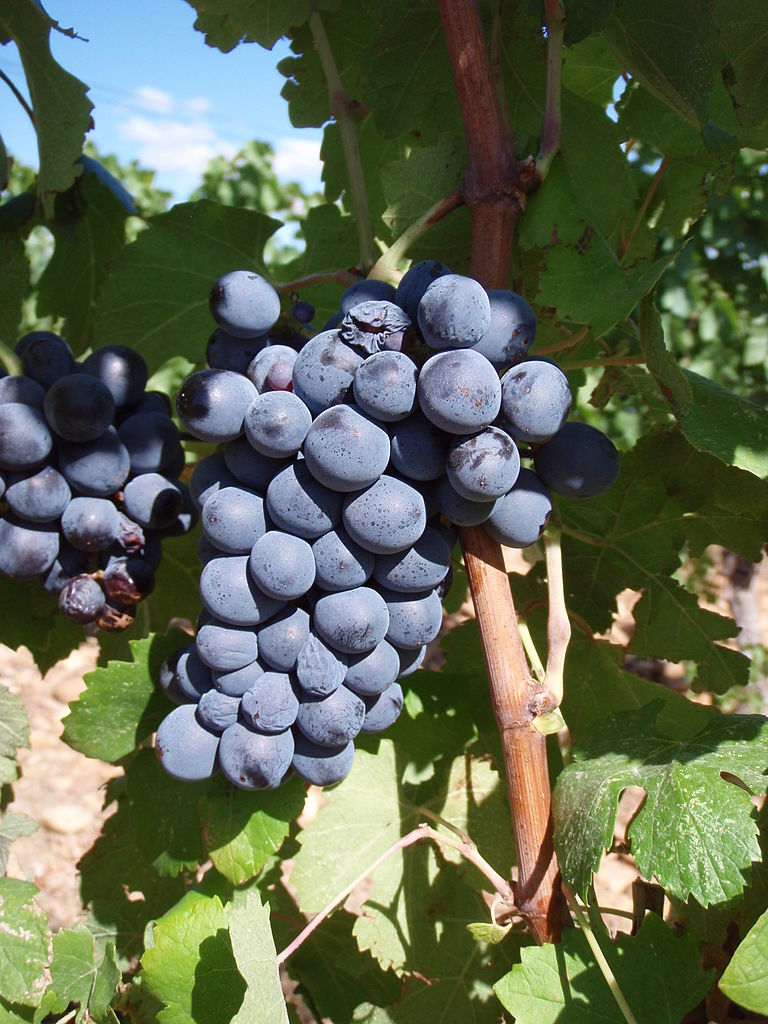
Photo of Terret Noir by Vbecart, via Wikimedia Commons

Photo of Terret Noir by Vbecart, via Wikimedia Commons

The Terret variety is actually three grapes in one. Just as is the case with Pinot and Grenache, there are three color mutations (Noir, Gris, and Blanc) that are genetically identical and all go by the name “Terret.” The Terret varieties are sometimes called by the name Bourret, Tarret, Terret Chernyl, Terret du Pays, or Terret Bourret (say that three times fast).

Terret is believed to have originated in the Languedoc’s Hérault département (which now, administratively at least, belongs to the Occitanie Region of France). The grape has been referred in writing since as early as 1619, so its been around a while.

All three Terrets used to be quite widely planted throughout Southwest France, and for a while (beginning in the 1950s), Terret Gris was the most widely planted variety in the Languedoc. However, while some was used in the wines of the region, more of it was used in the production of vermouth and eau-de-vie. It’s popularity was also somewhat short-lived; from a high of just over 20,000 acres (8,100 ha) planted throughout France, there are now only around 250 acres (101 ha) of Terret Gris in France.

These days, Terret Blanc leads the trio in terms of acreage, with just over 3,500 acres (1,415 ha) in France (most of it sticking close to home in the Hérault département).  Terret Noir fares just a tad better than Terret Gris, with just over 460 acres (185 ha) in France these days.

It was Terret Noir that first drew my attention to the trio, as I am just beginning to research a seminar on the grapes from the list of 13 or 18 (depends-on-how-you-count-them) allowed in the famous wines of Châteauneuf-du-Pape.  Terret Noir (but not its Blanc or Gris incarnations) is on the list. It does, however, appear near the bottom of list of allowed wines if they are listed alphabetically, and it is most likely near the bottom of the list in terms of actual usage as well.

...

In addition to Châteauneuf-du-Pape, Terret Noir is allowed—in teeny-tiny proportions—in a number of AOCs scattered throughout the Rhône Valley and Languedoc. When stated, its allowance is typically limited to 10%. Likewise, you might find the name Terret Noir stuck in a long-list of stand-ins that are allowed to form a combined maximum of 20 or 25% of a particular wine. Nevertheless, one may find Terret Noir in a glass of Cassis Rouge, Rasteau (both the vin doux naturel and the unfortified red), Minervois, Beaumes-de-Venise, Terrasses du Larzac, Gingondas, Vinsobres, Côtes du Rhône and—perhaps most famously—Châteauneuf-du-Pape.

All three members of the Terret trio are quite vigorous, prone to mutation (duh) and known for high acidity. As Terret Noir is almost always used as a minor part of a blend, it is very difficult to find information on the specific organoleptic characteristics that it might bring to a wine. However, as I have said many a time when asked about an outlandish wine-related scheme (such as would you ever dry the grapes, destem them, re-stem them, re-hydrate them and then attempt carbonic maceration), I can only say “well, there is probably somebody in California that has tried it.”

As it turns out, there is somebody in California growing Terret Noir! This one lone winery—Tablas Creek Vineyard in Paso Robles—has about one-half of an acre of Terret Noir and has, for two years now,  produced a varietally-labeled Terret Noir. This project is very much in line with Tablas Creek’s close connection to Châteauneuf-du-Pape and Rhône Valley culture. Tablas Creek was the first estate in California to plant the grape. They have just released their second vintage—a 2014 Terret Noir.

.

.

The winery (as stated on their website) intends to eventually use their Terret Noir grapes in their Rhône-style blends, but for now their varietal wine has much to teach us about the character of the grape.  We know that the grape is thin-skinned, and therefore it is no surprise that the varietal wine is pale in color, with a slight garnet hue. To quote the tasting notes provided by the winery, the wine has a “spicy, lifted nose of dried herbs and wild strawberries.”  The notes go on to say that it has persistence on the palate, with flavors of “crunchy red fruit like pomegranates and red currants, complex notes of black tea and dried roses.”

It sounds like Terret Noir would blend quite nicely in with the Grenaches, Syrahs, and Mourvèdres (as well as the over-a-dozen other grapes) of Châteauneuf-du-Pape.

References/for further information:

The Bubbly Professor is “Miss Jane” Nickles of Austin, Texas… missjane@prodigy.net


The (Lucky) French Thirteen

Administrative map of the 13 (new as of 2016) regions of France

Administrative map of the 13 (new as of 2016) regions of France

It’s called territorial reform.

As a citizen of the world, you have no doubt heard by now that in January of this year (2016), after years of debate, the French government reduced the number of the administrative regions in Metropolitan France from 22 to 13. This “simplification” has been dubbed le big bang des régions by the French media.

Despite their original intent (and hopefully, eventual success) such changes tend to complicate things in the short term. In this regard, we wish the French well.

On a more selfish note, as a lifelong student of wine this means I need to re-do some of my flashcards. I’m in the process of doing just that, but for now I felt the need to make a quick survey of how these new administrative regions affect the study of French wines!

First, some quick good news: A lot of wine study deals in departments, and these have not changed. There are still 101 departments in France, which include: 94 on the mainland, 2 in Corsica, and 5 overseas territories (Guadeloupe, Martinique, French Guiana, Réunion, and Mayotte). Your studies of the Haut-Rhin, Gironde, and Lot-et-Garonne have not been in vain.

And for some more good news, the following administrative regions of France have not changed:

  • Bretagne (Brittany)
  • Centre (although the name has changed to Centre-Val de Loire)
  • Île-de-France
  • Pays de la Loire
  • Provence-Alpes-Côte d’Azur
The departments - thankfully, there have been no recent changes

The departments – thankfully, there have been no recent changes

That leaves seven newly-defined regions. Here goes:

Grand Est: The newly-formed Grand Est region comprises the former regions of Alsace, Champagne-Ardenne, and Lorraine. The capital city is Strasbourg. That’s right—the Alsace region (technically) is no more. However, the wine region is still referred to as Alsace, and if you look Alsace up in a (non-wine centric) dictionary or encyclopedia, it will define it along the lines of something like “a historic and cultural area of France.” Main wine areas in the Grand Est region include Champagne (parts of which cross over into the new Hauts-de-France region to the northwest), Alsace, Moselle AOC, and Côtes de Toul AOC.

Bourgogne-Franche Comté: This new region encompasses the former regions of Bourgogne (Burgundy) and Franche Comté. The capital city is Dijon. There is nothing too complicated about this region, it is merely the coupling of two former administrative areas into one, with a hyphenated name. Wine regions affected include Burgundy (even Chablis, Irancy, and Saint-Bris made the cut) and Jura. The vineyards of Beaujolais and the Savoie AOC are now partially in the region of Bourgogne-French Comté and partially in the new region to the south (Auvergne-Rhône-Alpes). The good news: the ideal pairing of white Burgundy and Comté cheese now consists of two sister products from the same region.

Auvergne-Rhône-Alpes: Like Bourgogne-Franche Comté, this newly-formed administrative region seems to be merely a late marriage (complete with hyphenated name) between two longtime neighbors. The capital city is Lyon. The main wine regions within the new region include all of the Northern Rhône Valley (from Côte Rotie in the north to Saint-Péray at the southern tip) and Grignan-les-Adhémar (of the Southern Rhône), parts of Beaujolais, and parts of the Savoie AOC.

Occitanie: This new region is made up of the former regions of Languedoc-Roussillon and Midi-Pyrénées.  The capital city is Toulouse. Just like long, lost Alsace, we will read things like “Languedoc is a former province of France. Its territory is now contained in the modern-day region of Occitanie in the south of France.” (Thank you, Wikipedia.) The Occitanie region contains all of the vineyards areas of Languedoc and Roussillon as well as some of the AOCs of Southwest France, including Cahors, Floc de Gasconge, and Fronton. Note: the terms “Languedoc” and “Roussillon” will still be used to refer to wine regions/appellations.

...

Nouvelle Aquitaine: This new region is comprised of the former regions of Aquitaine, Limousin, and Poitou-Charentes. The capital city is Bordeaux. This new area includes all of the vineyards and AOCs of Bordeaux (thank goodness), all of the Cognac-producing region and most of the Armagnac-producing areas (a portion of which stretches into Occitanie). Nouvelle Aquitaine also includes some AOCs of Southwest France, including Bergerac, Buzet, Côtes de Duras, and Monbazillac.

Normandie (Normandy): This area hasn’t changed too much; it just combines the former regions of Upper Normandy and Lower Normandy. This totally makes sense to me and seems like an actual simplification. The new capital city is Rouen. Wine production is not really a thing here, but the apple brandy (with its three Calvados AOCs) and the Camembert cheese is quite good.

Hauts-de-France: Named for this area’s location at the “top” (haut) of France, this new area comprises the two former regions of Nord-Pas-de-Calais and Picardy. The capital city is Lille. Not much wine production goes on in this northerly spot, aside from the fact that the official boundaries of the Champagne region extend ever-so-slightly into the Hauts-de-France’s Aisne department.

Click here for a pdf of the maps-of-france-used-in-this-post, including a blank map of the “New France.”

References/for more information:

The Bubbly Professor is “Miss Jane” Nickles of Austin, Texas… missjane@prodigy.net

A Little bit about the Lot

The town of Estaing on the Lot River

The town of Estaing on the Lot River

The Lot River has its source in south-central France, in a small mountain range known as the Cévennes. The Cévennes Range is part of, and sits alongside, the eastern edge of the much-larger Massif Central.

The highest mountain in the Cévennes is Mont Lozère, rising to 5,575 feet (1,700 m) above sea level.  It is here, on the side of Mont Lozère, that the Lot River begins its 300-mile (482 km) journey as a “winding blue ribbon” through the departments of Lozère, Aveyron, Cantal, Lot, and Lot-et-Garonne. Along this path, the Lot River flows through the AOC wine regions of Estaing, Entraygues-Le Fel, and Cahors before joining the Garonne for the final trip to the sea.

From its beginning in the Cévennes, the Lot River flows for about 60 miles alongside a plain known as L’Aubrac—named for the small town of Aubrac located on its western side. This high plateau extends almost 1,000 square miles, and was created by a series of volcanic eruptions that occurred over 6 million years ago. The plateau of L’Aubrac is somewhat defined by the Lot River; the Lot River itself forms the southern boundary, while the Truyère River defines the northern border.

On its journey across the Aubrac Plateau, the Lot River flows through the town of Estaing. Estaing is considered to be one of the most picturesque towns in all of France. Estaing is also the recipient of a rather new AOC, awarded in 2011. The wines of the Estaing AOC are red, white, or rosé, and typically dry (although off-dry styles are permitted).

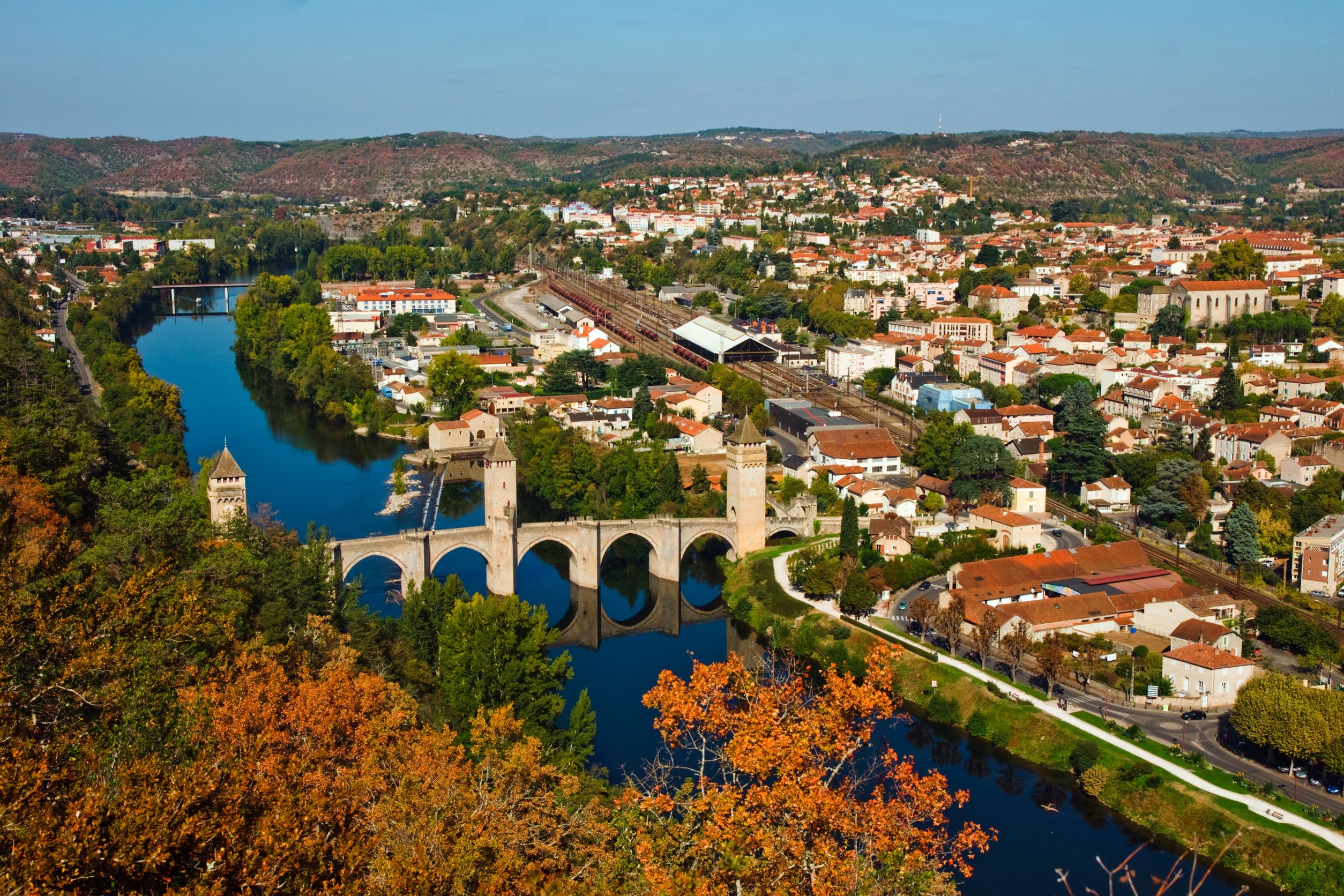
The Valentre Bridge over the Lot River (Cahors)

The Valentre Bridge over the Lot River (Cahors)

The white wines of the Estaing AOC are based on a minimum of 50% Chenin Blanc and a minimum of 10% Mauzac; the remainder may include up to 25% Saint-Côme (a local grape also known as Rousselou). The red and rosé wines are based on Gamay, with Fer (Fer Servadou) required in the reds, and two accessory varieties (chosen from a long list of allowed, obscure varieties) required in the rosés.

The western boundary of the Aubrac Plateau is about ten miles upriver from Estaing, at the town of Entraygues-sur-Truyère.  Entraygues-sur-Truyère was founded where the Truyère River (a right tributary of the Lot) flows into the Lot River as it continues its journey down the eastern foothills of the Massif Central.

From Entraygues-sur-Truyère, the Lot River twists and turns for about 4 more miles before it reaches the town of Le Fel. Between these two towns you will find the terraced vineyards of the obscure yet delightful Entraygues-Le Fel AOC. This is a tiny AOC, consisting of about 50 acres in total.

Red, white, and rosé wines are produced here; they are mostly dry but off-dry styles are allowed as well. The white wines of the Entraygues-Le Fel AOC are based on a minimum of 90% Chenin Blanc; the remaining 10% may comprise either Mauzac or Saint-Côme. The red and rosé wines are blends, based on Fer, Cabernet Franc, and Cabernet Sauvignon, plus small allowed amounts of Mouyssaguès and Négret de Banhars. No single grape may be more than 60% of the blend.

Panoramic view of Cahors, surrounded by the Lot River

Panoramic view of Cahors, surrounded by the Lot River

After leaving the town of Le Fel, the Lot River twists and turns through the hills, limestone plateaus, and valleys for about 70 more miles until it reaches the town of Cahors. Here, the Malbec-dominated vineyards of the Cahors AOC follow the twists and turns of the Lot River for over 25 miles. Cahors is a red wine-only AOC, producing the deep, dark, spicy wines known as the “Black Wine of Cahors.” Cahors AOC is produced using a minimum of 70% Malbec, with Tannat and Merlot allowed for the remainder.

The vineyards of Cahors are planted on two distinct soils; those closest to the river are planted on gravelly slopes, while those farther from the river are planted on the area’s limestone plateaus (known as the Causses). Wines produced using grapes planted on the limestone plateaus are known to be more tannic and austere, while grapes planted closer to the river produce wines that are fruitier and more approachable while young.

After the Lot River leaves the vineyards of Cahors behind, it continues to wind its way for another 60 miles before it reaches the town of Aiguillon. At Aiguillon (a commune of the aptly-named Lot-et-Garonne Department), the Lot River joins the Garonne River for its final journey through the vineyards of Bordeaux, into the Gironde Estuary, and finally out to sea.

Map of the Lot River by Lemen, via Wikimedia Commons

Map of the Lot River by Lemen, via Wikimedia Commons

References/for more information:

The Bubbly Professor is “Miss Jane” Nickles of Austin, Texas… missjane@prodigy.net

 

The Spirits of Galicia

...

If you visit Galicia (and you really should), you’ll probably want to stay in Santiago de Compostela. While you are there, you can backtrack along the final kilometers of the Camino de Santiago, and feel the amazement as the Cathedral—the final spot for so many who have traveled so far—comes into view.

You’ll definitely want to attend the mid-day Pilgrim’s Mass (where hopefully they will swing the botafumeiro—a gigantic incense burner, from the ceiling). After Mass, you might want to visit the Museum of the Galician People and the Galicia Contemporary Art Centre.

For dinner, wander around the old town and take your pick of the tapas bars. Be sure and sample the Caldo Galego, a traditional soup of potatoes, cabbage, and ham; and the Empanadas Galegas, which are typically baked into a large pie and cut into wedges. Treats for seafood lovers abound, but a plate of Pulpo Galego a la Ferira (octopus cooked whole and cut into bite-sized pieces) is the local favorite.

The next day, try to wake up early and take the train to Pontevedra. Once there, you’ll be in the heart of the Rías Baixas wine region and can easily visit several wineries with just a short drive, including my favorites Bodegas Martín Códax, Mar de Frades, and Bodegas Paco & Lola (where they make the famous “Polka Dot” Albariño).

...

One more thing: don’t miss out on the unique spirits of Galicia, most of which are based on the left-overs (pomace) of the outstanding wine production in the area. The pomace brandy of the area is known Orujo. Orujo (named after the Spanish word for pomace) is actually produced all over Spain, but has a special significance in the north of Spain.

Orujo de Galicia PGI: A regional version of orujo—Orujo de Galicia, produced in almost all of the wine areas of Galicia—has been awarded PGI status. Production methods for Orujo de Galicia vary, but the use of copper pot stills is traditional. Orujo, similar to Italy’s famous and popular grappa, may be produced in households, but there are over 85 commercial producers of the spirit.

Like most pomace brandies, Orujo is typically made as a somewhat fiery, raw, and unaged spirit. However, an aged version, known  as Orujo envejecido (aged Orujo), is oak-aged for at least one year in barrels of 500-liter capacity or smaller (or two years in larger barrels).

Three other PGI spirits—Aguardiente de Hierbas de Galicia, Licor Café de Galicia, and Licor de Hierbas de Galicia—are also produced in the area.

...

Aguardiente de Hierbas de Galicia PGI:  de Hierbas de Galicia PGI is a flavored spirit produced using Orujo de Galicia as the base spirit. It is created by soaking (macerating) a variety of herbs in the Orujo, by the re-distillation of the Orujo in the presence of herbs, or a combination of these procedures. According to the PGI regulations, Aguardiente de Hierbas de Galicia PGI must be produced using at least three different herbs or botanicals. Any herbs that are suitable for food may be used, but peppermint, chamomile, lemon verbena, rosemary, oregano, thyme, coriander, saffron, orange blossom, fennel, licorice, walnut, nutmeg and cinnamon are among the most widely used. Aguardiente de Hierbas de Galicia PGI usually has a clear, light-green color and must have no more than 100 g/L of sugar.

Licor de Hierbas de Galicia PGI: Licor de hierbas de Galicia is produced using a base of Orujo de Galicia, although neutral spirits are allowed as well. It must be bottled at a minimum of 20% abv and contain at least 100 g/L of sugar (making it technically a liqueur). The color ranges from straw yellow to light yellow-green. Licor de hierbas de Galicia must be flavored using at least three types of herbs, although many versions contain a dozen or more more.

Licor Café de Galicia PGI: Café de Galicia PGI is produced using Orujo de Galicia as its spirit base, but neutral spirits are also allowed. This is a sweetened spirit (liqueur) flavored with roasted coffee beans. Licor Café de Galicia may be produced via maceration, re-distillation, or a combination of methods, and must contain a minimum of 100 g/L of sugar.

...

When in Galicia: In addition to being served straight, on the rocks, or in a variety of cocktails, Orujo de Galicia is used in a regional beverage known as queimada.  Queimada is made with orujo, sugar, lemon peel, cinnamon, and coffee beans. The ingredients are poured into a clay pot, set aflame, stirred until the blue flames die out, then ladled into ceramic cups. The sharing of queimada is accompanied by the recitation of an incantation (which is often described as a “spell” of protection against witches and things that go bump in the night). The sharing of the queimada is based on Celtic lore and considered a part of Galician tradition.

References/for more information:

The Bubbly Professor is “Miss Jane” Nickles of Austin, Texas… missjane@prodigy.net