Tales of the Vine: The King with the Grizzly Beard

Behind every bottle, there’s a story…

Born in 742 and rising to power as the Holy Roman Emperor and ruler of much of the Western World, it was Emperor Charlemagne who commanded the planting of the Pinot Noir vines that produce the excellent red Burgundy of Le Corton.  It is well-known that Emperor Charlemagne adored the precious red wine of Le Corton, and drank some every day.

However, as the years past and the king became an older man, his hand was no longer as steady as it once was.  From time to time, while enjoying his precious red Burgundy, he would spill some wine onto his flowing white beard.  The resulting red stains annoyed his wife to such an extent that she demanded that he stop drinking wine.

Emperor Charlemagne was a legendary lover of the company of women, but was determined nonetheless to not give in to his wife’s demands.  Charlemagne craftily decided to become a white wine aficionado in order to be able to drink to his heart’s content without compromising his regal appearance or arousing the wrath of his last and reportedly favorite wife.

Thus, Emperor Charlemagne demanded that part of the hill of Le Corton be replanted with white grapes, and the famous white wine vineyard now known as Corton-Charlemagne came to be.  With white wine in hand, Charlemagne was able to drink his beloved wine again, shaky hands, grizzly white beard, and all.
 

Tales of the Vine: Est! Est!! Est!!!

Legend has it that in 1107, under the order of The Holy Roman Emperor Henry V, a German Bishop named Johan Fugger was sent to Rome. He was journeying there to visit the Pope in hope of being elevated to Cardinal.

Fugger was a rotund man known for being very fond of food, wine, and the other good things in life.  So fond of good wine was he, that on his travels he customarily sent his faithful servant, Martin, one day ahead of the rest of his group in order to seek out the best local wine in the towns along the way. When he found an inn serving good wine he was to mark the door with the word “Est”, being short for the Latin Phrase “Vinum Est Bonum” – the wine is good.

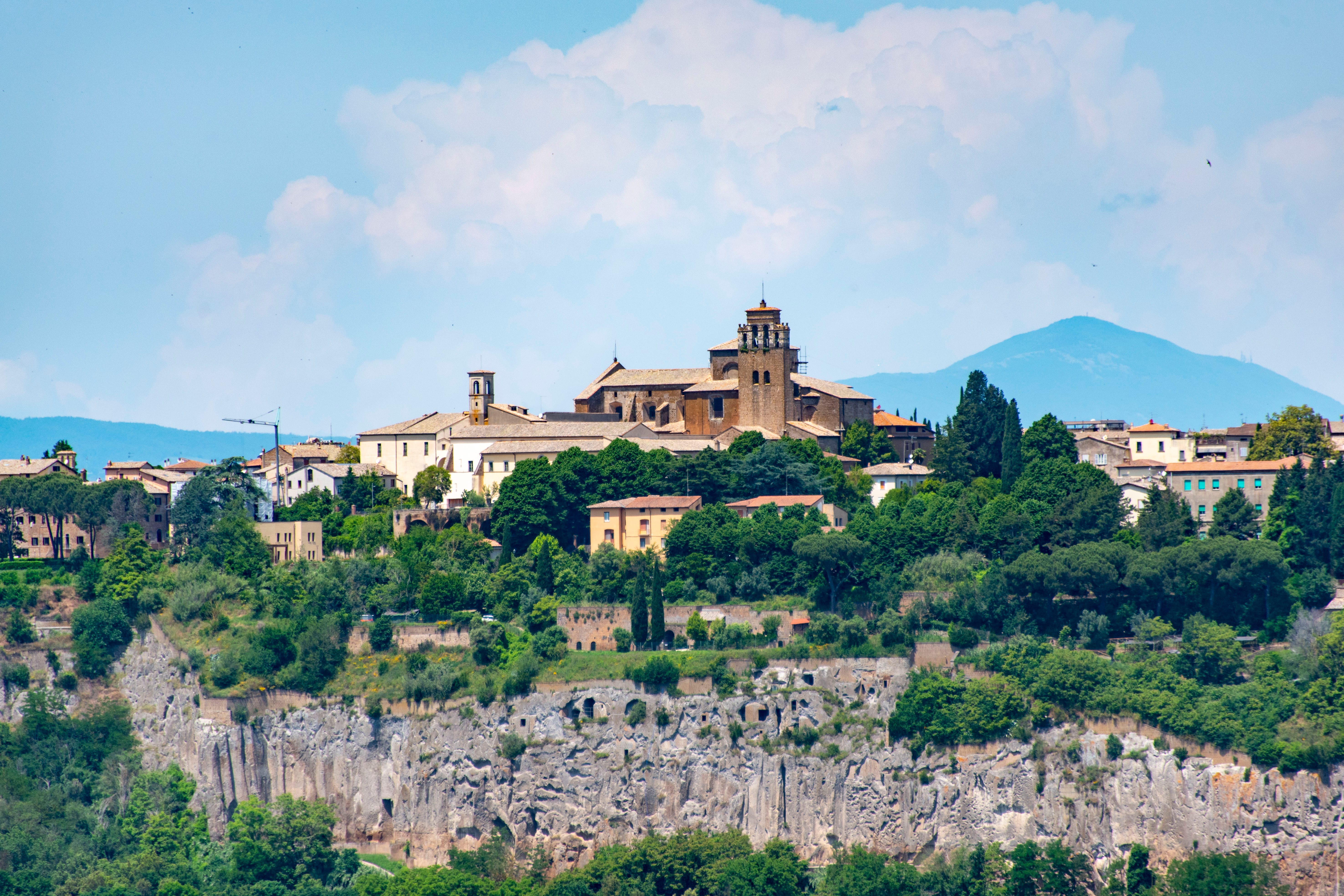
When he got to the town of Montefiascone in northern Lazio, Martin was so impressed by the quality of the wines being served at one tavern that he excitedly scribbled “Est! Est!! Est!!!” on the door. When the Bishop arrived the next day, he agreed so heartedly with Martin’s opinion of the wine that he cancelled the rest of his trip and lived the rest of his life in Montefiascone, enjoying the good things in life and eventually dying from the overconsumption of his beloved Est! Est!! Est!!!

Bishop John Fugger is buried in Montefiascano in the Church of San Flaviano, where his inscription reads, “Est, Est, Est et propter nimium est, dominus meus, mortuus est!” which translates (loosely) as: ‘Est Est Est. He Died from too much Est.”

The legend of Bishop Fugger and his faithful manservant Martin is celebrated every August in Montefiascone with the town’s “Festival of Wine” known as the “Fiero del Vino”.  During this festival, hundreds of people in traditional costumes retrace the story of Est!  Est!! Est!!!, from Martin’s arrival at the tavern door until Bishop Fugger’s death from too much wine.  The festival ends with the dousing of his Bishop Fugger’s tombstone with a barrel of his beloved Est! Est!! Est!!!.