The More the Meritage
February 7, 2011 2 Comments
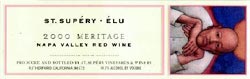 Take the word “merit” and combine it with the word “heritage.” Put in the hands of a master wine maker and blend well. What you have is Meritage, a relatively recent addition to the wine lexicon, coined in 1988 to describe New World wines made with the grape varieties and in the blended style of the noble wines of Bordeaux.
The name “Meritage” was originally intended to give the wines of California a little much-needed marketing moxie at just about the time that California wines were beginning to be gain international acceptance. Since the inception, winemakers in California, Australia, Israel, and Argentina have embraced the name, and wine makers all over the world craft some of their finest wines with the Meritage blend.
The story of Meritage begins in the 1980’s. Wines from California had stunned the wine world at the Paris Tasting of 1976, and the eyes of the world had begun to be opened to the fact that some darn good wine was coming from the New World. The American public had started to embrace wine, and wine lovers from Oregon to New Jersey were happily slurping the Cabernet Sauvignon, Merlot, and Sauvignon Blanc coming out of Napa and Sonoma.
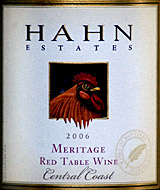 Here is where the plot thickens: due to labeling laws set forth by the Trade and Tobacco Tax Bureau (TTB), wine from the U.S. must be at least 75% the named grape variety in order to be labeled using the name of the grape, such as Cabernet Sauvignon. If a wine did not contain this minimum amount of a single grape, it had to be labeled with a proprietary name or use the generic term Table Wine.
This proved vexing for a very good reason—at the time, Americans equated generic wines or proprietary wines with poor-quality wine, and there was plenty of it to go around in those days. Many of the first wines out of California post-prohibition—mystery blends of grapes grown in the warm Central Valley—were distributed in big, round bottles reminiscent of a bootlegger’s stash. These wines were labeled with the generic Table Wine moniker or a proprietary name. Who can forget Gallo Hearty Burgundy, Carlo Rossi Paisano or Italian Swiss Colony Red Table Wine? The 75% rule was—and still is—the labeling law in the U.S. Thus, if a winemaker was making a top-flight blend in the style of the finest blended wines of Europe, no matter how expensive or delicious it may be, it had to be labeled like a jug wine.
The truth is that the ability to blend grape varieties gives a winemaker an added tool with which to create wines of complexity and balance. Some of the finest wines in the world—such Bordeaux, Chianti, and Châteauneuf-du-Pape—are blends of many different grape varieties. As such, American wines were at a competitive disadvantage compared to the wines of Europe. In order to be labeled using the accepted vernacular, an American wine has to contain a minimum 75% of one grape variety; while many European wines are blends of several different grape varieties and may be produced using any proportion the winemaker chooses.
 As such, a group of California winemakers were determined to come up with a solution and—beginning in 1988—sought to create a recognizable name associated with high-quality blended wines. In a stroke of genius, they hosted a contest to create a catchy name. The contest received over 6,000 submissions. Neil Edgar of Newark, California won by suggesting “Meritage” – a combination of the words merit and heritage.
So, the Meritage Association (now known as the Meritage Alliance) was born, and the requirements for Meritage were set forth: A red Meritage wine must be made from a blend of Cabernet Sauvignon, Cabernet Franc, Merlot, Malbec, Carmenère, and/or Petit Verdot (the classic Bordeaux Grape Varieties). Gros Verdot and St. Macaire may also be used, in homage to the grapes that were grown in Bordeaux pre-phylloxera. The proportions may vary, but at least two of the grape varieties must be used, with a maximum of 90% of any single variety. For white Meritage, only Sauvignon Blanc, Semillon, and Muscadelle du Bordelais, the white grapes of Bordeaux, are permitted.
A wine meeting the requirements for a Meritage does not need to use the term on the label—and many wineries prefer to use proprietary names (such as Joseph Phelps’ Insignia and the well-known “Opus One”). Others just stick to “red table wine!” However, if you read the wine’s tasting notes or technical sheets you may find the term “Meritage blend” or “Bordeaux blend” used.
Today, there are over 120 winery members of The Meritage Alliance, and the style of wines (both red and white) made with the grape varieties of—and in the blended style of—the noble wines of Bordeaux continue to be some of the world’s most cherished wines.
By the way, most of the wine enthusiasts I know use the pronunciation “meh-ri-TAHJ”, as if the wine rhymed with the French wine “Hermitage.” However, according to The Meritage Alliance, the word should really be pronounced like heritage-with-an-m. Don’t sweat the pronunciation too much, though…either way you pronounce it, wine people will know what you’re talking about.
Reference/for more information:
The Bubbly Professor is “Miss Jane” Nickles of Austin, Texas… missjane@prodigy.net
 About bubblyprof
 The Bubbly Professor
“Thanks, Miss Jane. I’ve always wondered how to pronounce “Meritage” and what it really meant!
I recently had a wonderful meritage from Lyeth Estate in Sonoma. A great wine, just give it a chance to open up!! And for $15.00, a bargain.