Cassis: the Town, the Wine, the Liqueur

...

What do you mean by cassis?

It’s a question I have heard quite often—usually at wine tastings, when someone with a nose in a glass of Cabernet claims it as one of the wine’s aromas. Several others in the group may nod in approval at the spotting of a black currant jam- or Cassis liqueur-like aroma in the glass. Others have never heard of it—and thus, the question at hand.

Cassis is actually many things—a seaside resort town in Provence, a French AOC wine-producing region dominated by white wine, and a black currant-flavored liqueur produced in many parts of the world, but particularly famous in Dijon. Read on for a bit more information on the many faces of Cassis!

Cassis—the Town: If you happen to find yourself on the Mediterranean Coast, perhaps in the Provencal town of Marseille, and if you drive south on coastal route highway 559 for about 15 miles, you’ll end up in the seaside resort of Cassis.  The waterfront of Cassis is a picturesque fishing port lined with cafes and restaurants, making it both a wonderful place to stroll as well as one of the most popular tourist destinations in Provence. While there, you can take the petit train touristique around the town, walk along the waterfront, or grab a boat tour to the impressive calanques (narrow, very steep rocky inlets found along the Mediterranean coast).
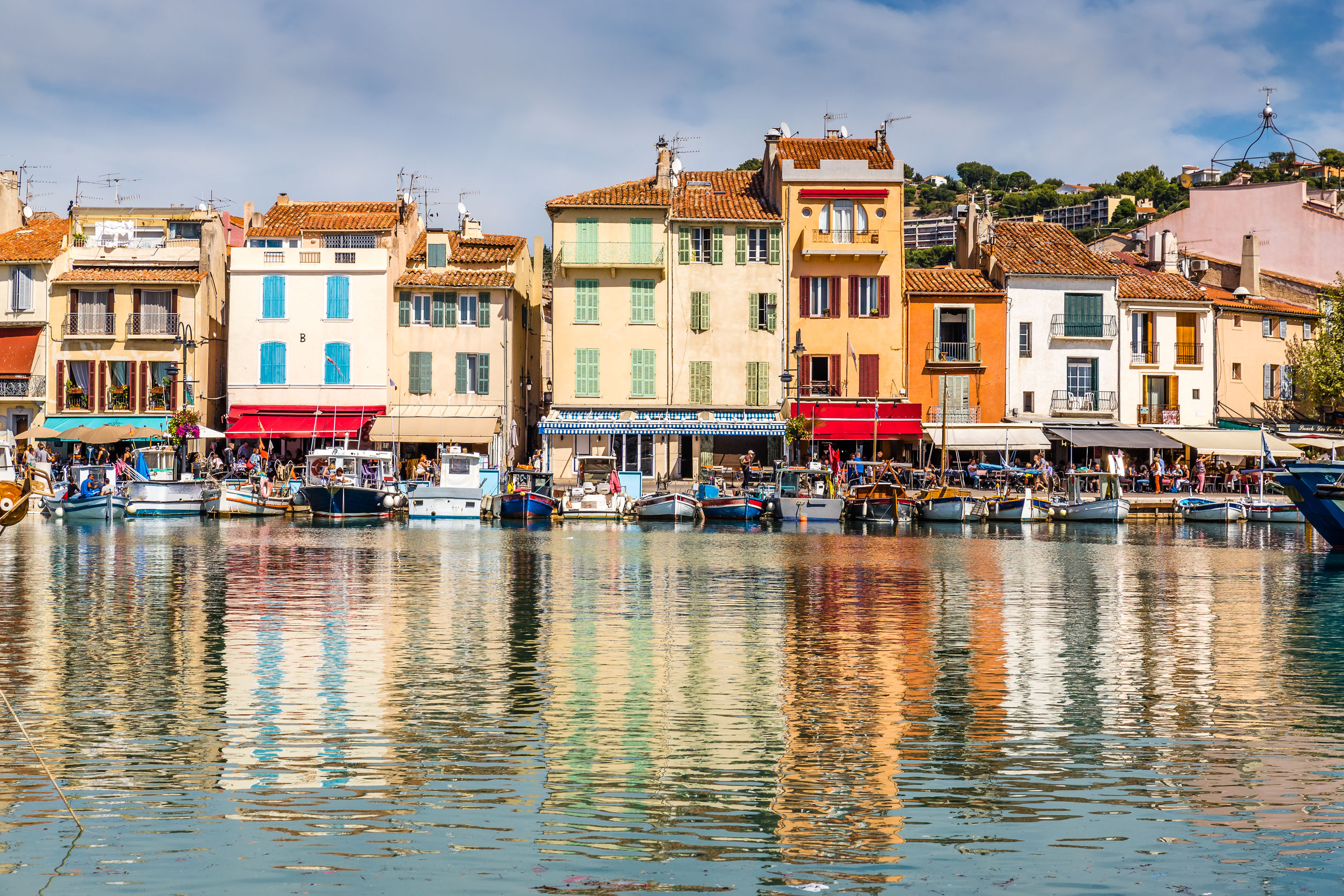
The town of Cassis

The town of Cassis

The town is snuggled at the foot of Cap Canaille–a 1,293-foot (394 m) high seaside cliff (the highest in France).  The very picturesque Route de Crêtes (Corniche des Crêtes) runs over the top of the cliff, linking Cassis with the nearby towns while offering stunning views of the cliffs, the sea, and the towns in between.

If you’d like to find the sunniest part of the town, follow the signs to La Cheminee du Roi Rene (King Rene’s Fireplace)—a sun-drenched area at the junction of the two water-side walkways known a s the  Quai Jean-Jacques Barthélémy and the Quai des Baux.

Cassis—the Wine: Red, white, and rosé wines are produced in the Cassis AOC. The reds and rosés, typical for the area, are based on Grenache, Cinsault, and Mourvèdre with a smattering of other red grapes allowed in the mix. The white wines, of which the area is rightfully quite proud, are based on Marsanne (30–80%) and Clairette. Other allowed white grape varieties include Bourboulenc, Sauvignon Blanc, Pascal Blanc, Ugni Blanc, and Terret Blanc.

The Cassis AOC is unique in rosé-heavy Provence in that white wines dominate its production; in fact, three out of every four bottles of Cassis AOC is a white wine. These wines are known for their aromas of citrus, white flowers, pears, and honey along with a touch of minerality. Generally fresh, dry, and medium-bodied, these wines are delightful when young, but may also improve in the bottle for 2 to 5 years. Not surprisingly, they pair perfectly with Mediterranean fish dishes as well as dishes made with tomatoes, olives, and herbs.

Cassis—the Liqueur:  Cassis (sometimes known as Crème de Cassis is a sweet, dark red liqueur flavored with black currants (sometimes known as cassis fruit). It is quite famous as an ingredient in the Kir cocktail—white wine (ideally Burgundy Aligoté) and crème de cassis—as well as its fancier cousin, the Kir Royale (ideally made with champagne). As with many things in life, you can get an inexpensive version of generic cassis at just about any corner liquor store and be done with it (try it on ice cream or in a Pompier cocktail [3 parts dry white vermouth, 1 part cassis, served tall over ice with soda]).

On the other hand, there is the good stuff: France has several PGI versions of cassis, including those that hail from Bourgogne, Dijon, and Saintonge. Of these, the original—and most say the best—is the Cassis de Dijon.

Sweet, fruit-flavored beverages were made in many places around Europe in the eighteenth century. These were often referred to ratafias and generally made with fortified wine or unfermented grape juice flavored with a variety of berries (and sometimes produced with a spirit base as well).

True cassis began to be produced in Dijon in 1841 by a gentleman name Auguste-Denis Lagoute. Lagoute was a fan of the sweet ratafias but wanted to produce a beverage of a higher quality using local fruit. He began by soaking black currants, which grew in abundance around Dijon, in oak barrels along with high-proof spirits and beet sugar. Soon the family’s brand of cassis, Lejay (named after the son-in-law), was wildly popular, particularly when served over ice with a splash of vermouth de Chambery, and later, when served as a Kir along with the white wine of the region. Lejay is still produced, and is one of the few producers approved to use the PGI of Cassis de Dijon.

...

The PGI for Cassis de Dijon was first approved in 1923. The regulations specify that the finished product contain at least 400 grams of beet sugar per liter (cane sugar is not permitted).The specific type of black currant is not defined, but in general there are two varieties of high-quality black currants: Noir de Bourgogne (known for its aromatics) and Black Down (considered to be a rounder, smoother, and sweeter variety).

The finest Cassis is described as having aromas of black currants, cherries, and plums; a rich, velvety texture; intense, fruity flavor; and a sweet taste balanced with a bit of an acidic “snap.” Sounds good to me!

References/for further information:

 The Bubbly Professor is “Miss Jane” Nickles of Austin, Texas… missjane@prodigy.net
 

On Screech and Screechers

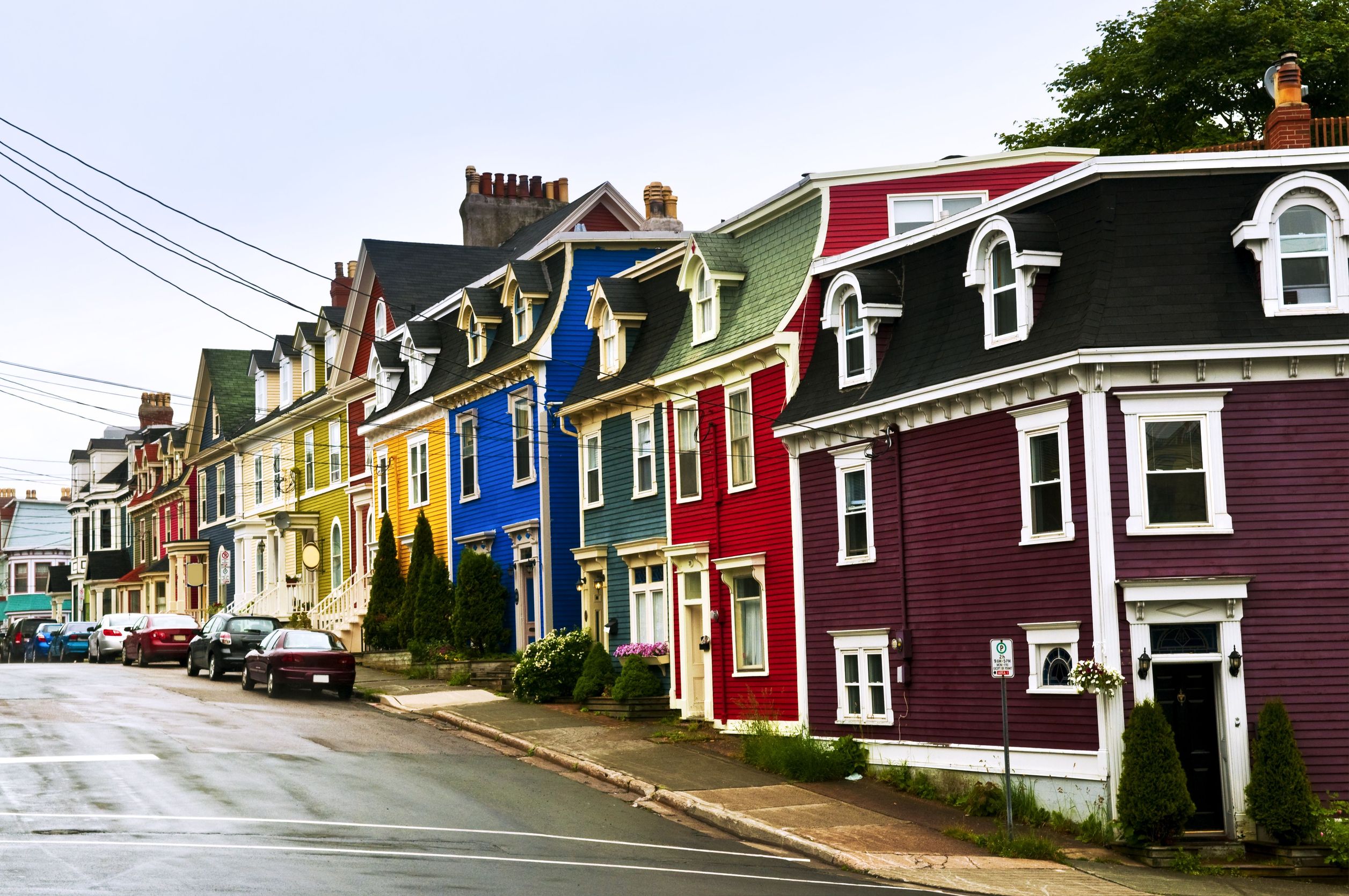
St. John's, Newfoundland

St. John’s, Newfoundland

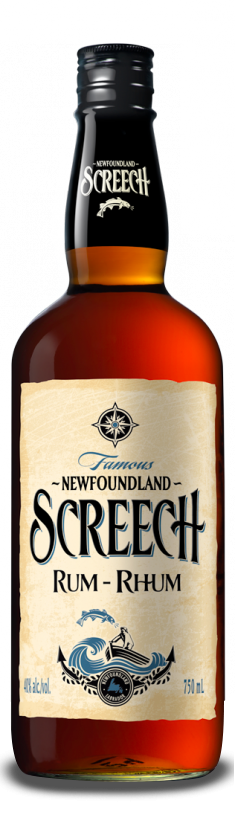
There’s always some history there. In the case of Newfoundland’s favorite rum—locally known as screech—the history goes back to the 1700s when English colonies were first settled in the area we now know as Newfoundland, Canada.

By the 1800s, colonists in Newfoundland were engaged in the British Empire Trading System, shipping salt cod to the West Indies (primarily Jamaica) in exchange for rum. This dark, aged rum became the drink of choice for the settlers living in the cold, isolated area.

Fast forward to the twentieth century, and Canada is an independent country with a not-so-independent liquor industry. The individual provinces of Canada all have their own complicated relationships with the sale, distribution, and consumption of alcoholic beverages, with all the provinces except Alberta controlling the retail liquor sales.

In the province of Newfoundland and Labrador, the state has long since taken control of the wine-and-spirits trade. This includes the long-held traditions of importing, bottling, and distributing Caribbean rum.

...

On the island of Newfoundland, on Canada’s cold Atlantic coast, the locally-bottled Caribbean rum continues to be a favorite drink of the locals. When American servicemen were stationed in Newfoundland during World War II, they took a liking to it, and this led to a part of the rum’s legendary (local) history…and its present incarnation as the product known as Newfoundland Screech. 

This bit of history comes to us via the Newfoundland Screech website: “As the story goes, a visiting American WWII serviceman downed the rum in one quick toss. His howls of distress caused a bystander to rush to his aid, roaring “What the cripes was that ungodly screech?” The taciturn Newf simply replied, “The screech?” ‘Tis the rum, me son.” As word of the incident spread more soldiers began trying this mysterious rum, adopting it as their favorite. Thus a legend was born.”

Screech is such a part of the Newfoundland culture that visitors can opt to become an “honorary Newfoundlander” through a ceremony known as a “screech-in.” Details on what constitutes a screech-in are sketchy and may vary by location, but in general, it proceeds like this: The ceremony must be officiated by a true resident of

Photo via screechrum.com

Photo via screechrum.com

Newfoundland, but it seems that any and all residents are qualified as such. Participants (outsiders who want to become honorary Newfoundlanders) are asked to stand and introduce themselves (and may–or may not be required to stand in a bucket of salt water while doing so). After the introduction, they are asked if they would like to become an honorary Newfoundlander, to which they must respond with a heart “Yes”! Then, holding a shot of screech, they are asked, “Are ye a screecher?” to which they respond “’Deed I is, me ol’ cock! And long may yer big jib draw!” (Translation: “Yes I am, my old friend, and may your sails always catch wind.”) In some instances, the ceremony ends with the newly-anointed Screech kissing a cod (or whatnot). All in good fun.

These days, Newfoundland Screech is popular all across Canada; it’s also available on the east coast of the United States. The Newfoundland and Labrador Liquor Corporation bottles three types of Screech–Screech Honey, Screech Spiced 100, and Screech Spiced–in addition to the original, labeled as “Famous Newfoundland Screech Rum.”

Newfoundland seems like a great place to visit, especially the capital city, St. John’s. George Street is the place to go if you’d like to participate in your own Screech-in. If you’d like to visit some wineries while you are there, according to the Wines of Canada website, there are four wineries on Newfoundland Island (one of which produces grape-based wines).

Rodrigues Markland Cottage Winery and Auk Island Winery produce fruit wines and brandies from local products such as plums, pears, raspberries, and cloudberries. SapWorld Winery makes fruit wines as well in addition to as well as a beverage produced from fermented birch sap (or nectar) locally known as “Spring Wine.”

I’m not sure how Newfoundland puppies feel about Newfoundland screech

I’m not sure how Newfoundland puppies feel about Newfoundland screech

The Duck Cover Cottage Winery has a true vineyard with over 1,800 vines. Seeing as Newfoundland sits between the 49th and 58th parallel on the shores of the Atlantic Ocean, the challenges for viticulture are obvious. However, since 1992 the owners have been experimenting with a variety of cold-hardy vinifera and hybrid varieties, finding the most success with Pinot Noir, Gewürztraminer, Frontenac, and Delisle.

References/for more information:

The Bubbly Professor is “Miss Jane” Nickles of Austin, Texas… missjane@prodigy.net

Greywacke (and Greywacke Jones)

Greywacke stones along the Haast River in New Zealand Greywacke stones along the Haast River in New Zealand

Greywacke (pronounced “grey-wacky”) is a drab, grey stone—technically, a sedimentary rock–made up of layers of very hard, clay-based, muddy grey sandstone criss-crossed through with layers of argillite (a type of mudstone) and grains of quartz, feldspar, and other small rock and mineral fragments. The term Greywacke can refer to the entire rock (or boulder), the sandstone base of the rock, or—especially in the case of wine enthusiasts, a type of soil derived from the stone.

In case you are wondering how such a plain looking rock acquired such a crazy-sounding name, “wacke” is the German word for sandstone, and the term (Grauwacke) was first used to describe rocks located in the Harz Mountains of northern Germany.

Greywacke soils do well with viticulture. The clay-derived portion of the stone weathers into clay-based soil, which is appreciated for its abilities to remain cool, retain vine nutrients, and retain water. The rock and mineral fragments remain behind in Greywacke soil to counter the clay with coarse-grained gravel, providing aeration and drainage. And, of course, some of the rocks stay behind on the top of the soil, absorbing and releasing heat.

Greywacke boulders on Te Mata Peak (Hawke's Bay, New Zealand) Greywacke boulders on Te Mata Peak (Hawke’s Bay, New Zealand)

This gravelly soil is most notably found in the vineyards of New Zealand; which makes sense as hard greywacke stone makes up a large part of the Southern Alps as well as the smaller mountain ranges of New Zealand’s North Island. The famous “Gimblett’s Gravels” soils of Hawkes Bay, as well as large swaths of Marlborough, Gisborne, Canterbury, and Nelson are all Greywacke-based. Greywacke is almost considered the “national stone” of New Zealand (or would be, if New Zealand ever decided to have a national rock, according to The Encyclopedia of New Zealand.) Click here for a map of Greywacke in New Zealand.

Fans of New Zealand Sauvignon Blanc (which I certainly am) will no doubt recognize the name Greywacke in terms of a New Zealand wine brand, produced by none other than Kevin Judd – the beloved original winemaker at Cloudy Bay. Kevin continues his string of winemaking successes at Greywacke, producing a range of wine including a delicious albeit typical “zesty” Marlborough Sauvignon Blanc as well as a native yeast-fermented, lees-aged, oak-influenced Sauvignon Blanc (“Wild Sauvignon”) that has become a staple at both my Sunday night dinners and my Intro to Wine Classes. Other Greywacke wines include Chardonnay, Pinot Gris, Riesling, Pinot Noir, and even a late-harvest Riesling—all delicious.

Detail of greywacke soil in Algarve, Portugal Detail of greywacke soil in Algarve, Portugal

Greywacke bedrock and soils are found in many parts of the wine world, including the Algarve region of Portugal; Germany’s Mosel, Ahr, and Mittelrhein; the Western Cape of South Africa; California’s Russian River Valley; and the Barossa. The term “Greywacke” is used often in the context of wines and vineyards from all over the world, as well. Cosa Obra Wines in the Russian River Valley has a “Greywacke Vineyard” located within the Russian River Valley AVA, about where the Russian River makes it westward turn towards the Pacific Ocean. In Australia’s Barossa, Thorn-Clarke Winery, very much into the soils, produces a Shiraz labeled as “Shiraz on Cambrian Greywacke Soil.”

About that subtitle: There is a character named Greywacke Jones in “Slinky Malinki,” a children’s book by New Zealand author Lynley Dodd. Greywacke Jones is a mischievous grey kitten who hangs out with her pals Slinky Malinki, Hairy Maclary, Butterball Brown, and the rest of the gang. So now you know.

References/for more information:

The Bubbly Professor is “Miss Jane” Nickles of Austin, Texas… missjane@prodigy.net
Bacchus and Bacchus

Photo Credit: Dr. Joachim Schmidt, via Wikimedia Commons

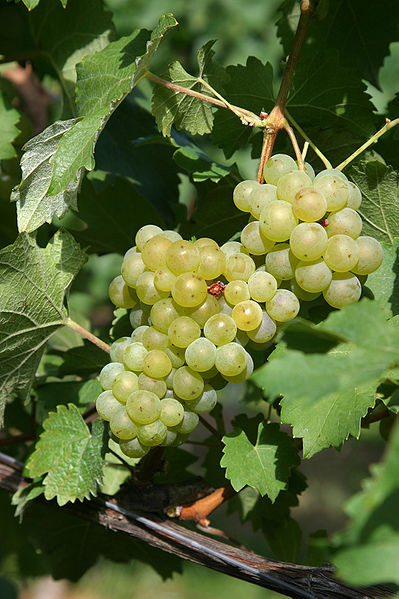
Bacchus grapes on the vine: Photo Credit: Dr. Joachim Schmidt, via Wikimedia Commons

The name “Bacchus” means a lot to wine folk. First and foremost, Bacchus is the Roman god of wine and as such, he is the subject of a good deal of famous artwork produced from antiquity to modern times. Bacchus is also a grape variety of the vinifera species, a double-Riesling cross that thrives in  cold climates, but doesn’t do nearly as well at retaining acidity as its parent(s).

There’s also a Bacchus Wine Bar in Houston, a Krewe of Bacchus in New Orleans, and a European Research Initiative pertaining to clouds known as BACCHUS.  But for today, let’s focus on the god and the grape.

Bacchus: the god

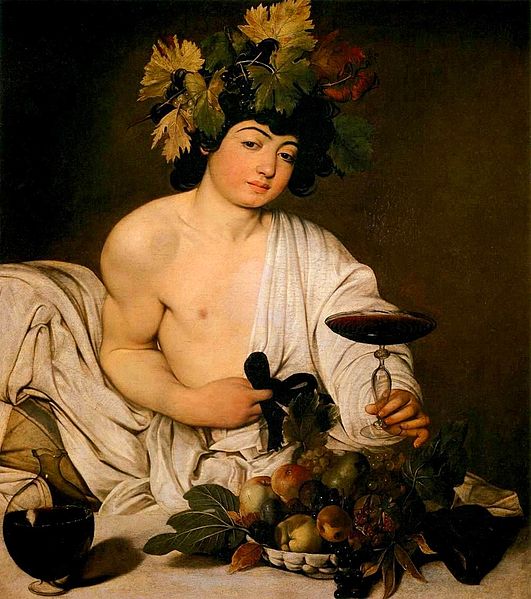
Bacchus (or, as he was known in Greek mythology, Dionysus) is known as the god of wine and viticulture, and is often credited with the “invention” of wine. He is also–understandably so–the god of drunkenness (or, as the Greeks referred to it, “ritual madness”) and fertility. In later mythology, he was seen as a great patron of the arts and the god of the theater.

In the Greek myth, Dionysus is the son of Zeus (king of the gods) and Semele, a princess of Thebes. Thus, he is the only Greek god with a human parent. When Hera, the wife of Zeus, found out about her husband’s out-of-wedlock son Dionysus, she became enraged and ordered Dionysus to be killed. She succeeded, and the baby was murdered. Dionysus was next miraculously brought back to life, and Zeus conferred him with immortality. Zeus gave the baby to the mountain nymphs to be raised. In artwork, Dionysus is often depicted during this pampered stage of his life, as a fat, happy (and often naked) baby surrounded by wine, fruit, and luscious furnishings.

Bacchus by Caravaggio (c. 1595–Uffizi Gallery, Florence)

Bacchus by Caravaggio (c. 1595–Uffizi Gallery, Florence)

Dionysus is one of the few characters in Greek mythology credited with both being brought back from the dead himself and bringing someone back from the dead (he once rescued Semele [his mother] from the underworld). It is said that this cycle of birth and death is reflected in the annual cycle of viticulture, where the vines go dormant each year and must be pruned back before spring in order to ensure a good crop the following harvest.

Dionysus became one of the most important figures in the Greek and Roman mythology, but unlike the other gods, his followers did not always meet in temples dedicated to his worship. Instead, his followers held their worship services in the woods. In this way, Dionysus became “one” with his followers and during religious events his followers would become like gods themselves; first experiencing joy and ecstasy but often devolving into anger and rage. This represents not only “Greek god-like behavior” but also the dual nature of wine.

The festival for Dionysus was held in the spring in order to coincide with bud break. This festival became one of the most important religious holidays in the Greek calendar, and many Greek plays were originally written to be performed at the festival of Dionysus (beginning the tie between Dionysus and theater).

From its Greek beginnings, the cult of Bacchus became important to the Romans around 200 BCE. The Roman festival of Bacchus, the Bacchanalia, became well-known (and well documented) as a frenzied, sexual, scandalous, and extremely volatile rite that included both genders as well as people of all ages and social classes. Not surprisingly, the Roman Senate tried to shut down the cult of Bacchus. However, instead of being trampled, the cult of Bacchus merely moved “underground” and became a secret society. Decades later, the Senate approved a sanitized version of the worship of Bacchus and Bacchanalia became legal and outwardly popular once again.

Bacchanal before a Statue of Pan by Nicolas Poussin (c. 1633, National Gallery London)

Bacchanal before a Statue of Pan by Nicolas Poussin (c. 1633, National Gallery London)

This adoration of Bacchus continues, in a way at least–even in modern times.

Bacchus: the grape

The Bacchus grape variety is a white vinifera cross created by German agronomist Peter Morio in 1933. Morio, working for the Geilwilerof Research Center (now the Julius Kühn Institut) located in Germany’s Pfalz region, also created the Domina, Optima, and Morio Muskat grape varieties.

Bacchus is the offspring of an unnamed Silvaner X Riesling cross with Müller-Thurgau (a Riesling X Madeleine Royale cross).  So we’ll say that Bacchus is a double-offspring of Riesling instead of saying that its parents were siblings (enough said).

Like Riesling, Bacchus thrives in cold climates and can be quite expressive with fruity and floral aromas and flavors. That, however, is where the comparisons with Riesling should probably end, as Bacchus is not known for elegance–which Riesling exudes. Bacchus is also an early, high-sugar-ripener akin to Müller-Thurgau, and tends to be low acid. For these reasons, particularly in Germany, Bacchus is typically appreciated as a blending partner rather than a stand-alone variety.

Bacchus is grown in small amounts throughout Germany, including plantings in Rheinhessen, Franken, Mosel, the Nahe and the Pfalz. The total acreage in Germany is about 5,000 acres (2,010 ha).

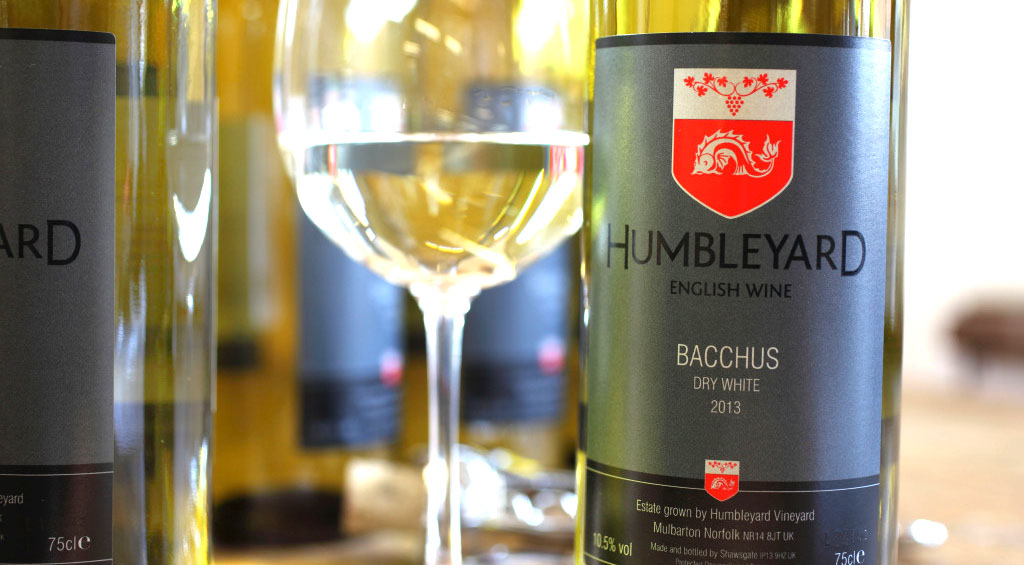
These days, Bacchus might have found its place in the sun in England, where it is the second most widely cultivated white grape variety behind Chardonnay. Bacchus is made into varietal wines in both England and Wales, where the cooler climates help the grape hold on to its acidity and produce fresh, aromatic white wines. In the vineyards of the English countryside, Bacchus is noted to produce grapes that show a green-grassy character, leading to its nickname as “the Sauvignon Blanc of England.”

Small plantings are also found in Switzerland, Canada, and Japan. Bacchus (the god) would be proud.

Sources/for further information:

The Bubbly Professor is “Miss Jane” Nickles of Austin, Texas… missjane@prodigy.net