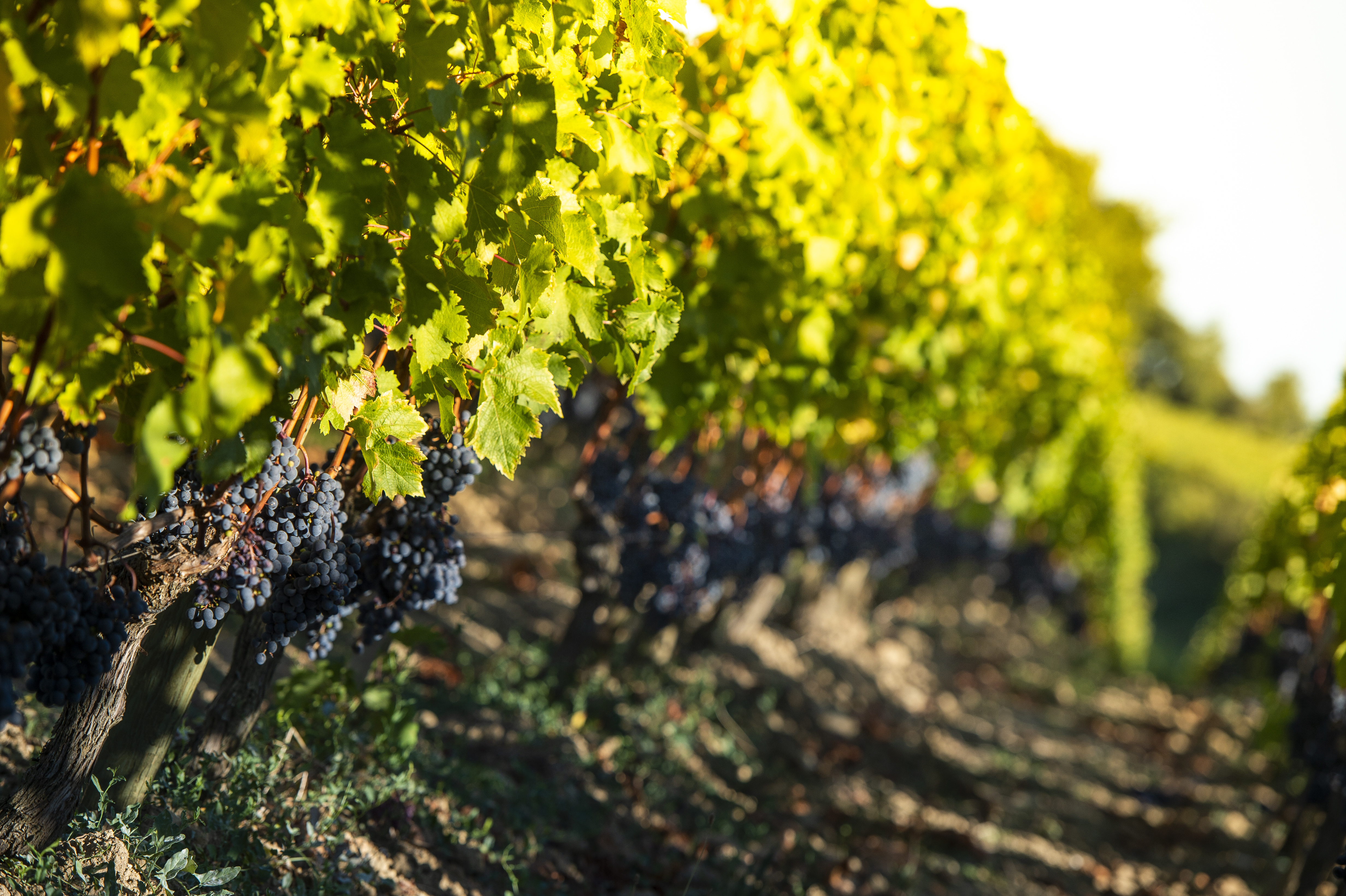
The Toughest Wine Theory Question in the World? (les Notres Dames)

Notre-Dame de Paris (2015)

I think I may just have stumbled upon one of the toughest wine theory questions in the world. Here goes: Name all the French wines that have a “Notre Dame” sub-appellation.

How many did you get? If asked this question yesterday, I am quite sure I would have only come up with one: Bourgogne-La Chapelle Notre-Dame AOC.

However, for some reason I became intrigued with the name, and after some research I discovered two more (and I may have missed some; if so, let me know in the comments below).

So, with a tip of the hat to the great cathedrals, chapels, and universities of the world that take the name of Our Lady, here are the three wines of Notre Dame. 

Bourgogne-La Chapelle Notre-Dame AOC: The Burgundy Region is known for its web-like system of overlapping, scattered, and nested appellations. Critics call this system confusing; proponents prefer to call it complex…like the wines.

Even at its most basic, generic level of geographical indication—the area-wide Bourgogne AOC—the region is complex. Theoretically, a Bourgogne AOC wine may contain grapes grown anywhere within the region—and this includes Chablis, the Côte d’Or, the Côte Chalonnaise, the Mâconnais, and Beaujolais. Allowed in red, white, and rosé, Bourgogne AOC wines may be produced as still (non-sparkling) wines based on Chardonnay, Pinot Blanc, or Pinot Noir, with other grapes—Pinot Gris, Gamay, and César—allowed in limited amounts, but only if grown in certain places.

In addition, the Bourgogne AOC has no less than 14 geographically defined subzones, many of which carry their own specific standards (as to yield, density, and minimum must weights, for example). The most interesting of the 14 subzones, for our question du jour, is Bourgogne–La Chapelle Notre-Dame AOC.

The tiny (5 acre/2 ha) La Chapelle Notre-Dame subzone is located in the commune of Ladoix-Serrigny (near the northern edge of the Côte de Beaune). The region sits at the bottom of the hill of Corton, just below the vines of the Corton Grand Cru (and overlapping the single-vineyard Ladoix Premier Cru (there’s that mash-up again). The vineyard overlooks the town of Ladoix-Serrigny and takes its name from the nearby Chapelle Notre Dame du Chemin. 
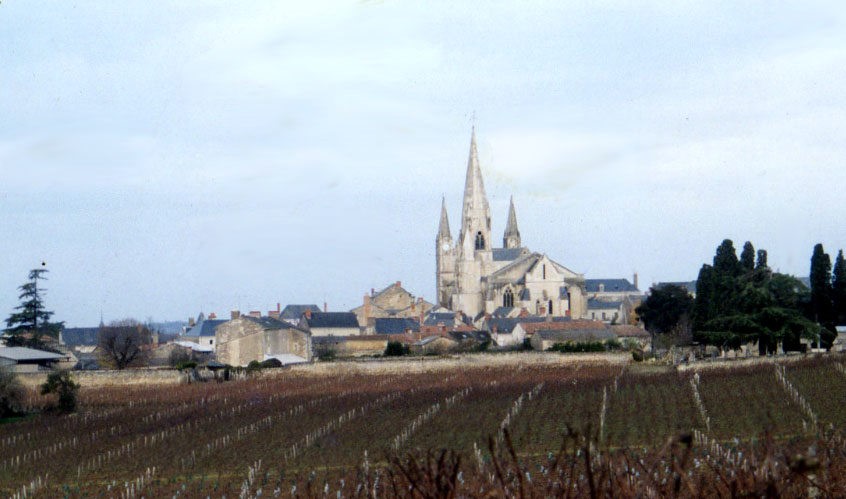
Puy Notre-Dame: photo by AnnyB via Wikimedia Commons

Saumur-Puy Notre-Dame AOC: The Saumur AOC—covering a sizable area in the central Loire Valley—is approved for a range of wine types and styles, including Chenin Blanc-based whites and Cabernet Franc-based reds. However, a significant amount of the appellation’s production (and lots of the attention) is focused on the region’s high-quality, traditional-method sparkling wines—Saumur Mousseux. The area is also home to some renowned red wines, such as the Cabernet-Franc based wines of the Saumur-Champigny AOC (tucked into the northwest corner of the larger Saumur AOC, just south of the Loire River).

The Puy Notre-Dame sub-appellation covers most of the larger region, save for the area designated as the Saumur-Champigny AOC and a few other outposts. The Saumur-Puy Notre-Dame AOC is named for the commune of Puy Notre-Dame (sometimes referred to as Le Puy; and built around the hill of Puy. The Saumur-Puy Notre-Dame AOC is approved for Cabernet France-based red wines only, and has stricter standards (as for yield, viticultural practices, and aging) than those for the red wines produced under the larger Saumur AOC.

The village church of Puy Notre Dame purportedly houses a wristband once worn by the Virgin Mary and has served as a way station for pilgrims traveling to Santiago de Compostela on the Camino Francés.

Photo of Sanctuaire Notre-Dame des Anges by Christian Pinatel de Salvator, via Wikimedia Commons

Côtes de Provence-Notre-Dame des Anges AOC: The Côtes de Provence AOC is ground zero for Provençal rosé. Although red and white wines are approved for production, nearly 90% of production is rosé.

Rosé made in the Côtes de Provence AOC must contain at least two grape varieties—typically Cinsault, Grenache, Mourvèdre, Syrah, and/or Tibouren. 

Covering close to 50,000 acres/20,000 ha—and encompassing almost the entire eastern half of the region—the Côtes de Provence AOC is the largest appellation in Provence. The terrain is understandably varied, ranging from the rolling hills in the north, limestone ridges, low coastal mountains, and the coastal plain. In 2019, an area located somewhat in the center of the Var Département—known as Notre-Dame des Anges—was approved as the fifth sub-appellation of the Côtes de Provence AOC.

The Côtes de Provence-Notre-Dame des Anges AOC surrounds the Massif des Maures—a low mountain range that cuts (west to east) across the center of the Var department. The AOC is named for the Sanctuaire Notre-Dame des Anges—a catholic church and pilgrimage site at the top of one of the Massif’s highest peaks.

Bonus Points—French cider also has a Notre-Dame connection: Within the Pays d’Auge AOC—centered around the Calvados department and approved to produce dry-to-off-dry, frizzante apple cider—there are 22 sub-appellations. Two of these—Notre-Dame-deLivaye and Notre-Dame-d’Estrées—are communes named for Our Lady. 

References/for more information:

The Bubbly Professor is “Miss Jane” Nickles of Austin, Texas… missjane@prodigy.net

Wine Grape Cheat Sheets – Pinot Gris

Pinot Gris—the Soundbyte: Pinot Gris, known to most of the world as the delightful Italian Wine called Pinot Grigio, is renowned for its crisp, fruity, and vaguely floral wines from Northern Italy.  The variety known as Pinot Grigio is the “same grape-different name” as the grape variety Pinot Gris and goes by many other aliases as well.  Pinot Gris (aka Grigio) is successfully grown in France, Germany, Austria, Switzerland, Hungary, Oregon, and California. Its popularity is every-expanding and new plantings seem to know no bounds. The grape acquired the name Pinot Gris (Grey Pinot) in France due to its grayish-white fruit. It is believed to be a natural mutation of Pinot Noir.

Typical Attributes of a Pinot Gris/Pinot Grigio-Based Wine:

  • Light to medium bodied
  • Almost always fruity—lemon-lime-citrus aromas are common in those from Italy, while Alsace, California, Oregon (and several other spots) tend to produce wines with slightly richer, tropical fruit-tree fruit aromas (such as apricot and pear).
  • Very often stainless steel cold fermented.
  • Generally crisp, acidic, and refreshing.
  • Italian Pinot Grigio is often described as Sauvignon Blanc without the grassy overtones.
  • Pinot Gris from Alsace and Oregon tends to have a bit more body and be a tad smoother than those produced in the Italian style. Such wines are often compared to unoaked Chardonnay. (The Bubbly Professor agrees with this comparison, but thinks that Pinot Gris has a “waxier, creamier and smoother” style than some Chardonnay.)
  • A late harvest (potentially sweet) wine called “Vendage Tardive” is made from Pinot Gris in the French Region of Alsace. Sweet Pinot Gris-based wines are also produced in Oregon and California; these might be labeled as late harvest and or vin de glacerie.

Typical Aromas of a Pinot Gris/Pinot Grigio-Based Wine:

  • Fruity: Citrus (Lemon, Lime, Tangerine), Peach, Dried Peach, Apricot, Fresh-cut Pears, Green Apple, Melon, Tropical Fruit, Kiwi, Mango
  • Floral: Wildflowers, Blossoms, Honey
  • Herbal: Thyme, Oregano, Lemongrass
  • Mineral: Wet Stones, Wet Sand
  • Nutty

Where The Best Pinot Gris/Pinot Grigio is Grown:

  • Italy, especially in the Northern Regions of Veneto, Friuli-Venezia Giulia, and Trentino-Alto Adige
  • Alsace
  • The cooler wine growing regions of Europe such as Germany, Austria, and Switzerland.
  • California, especially Napa and Santa Barbara
  • Oregon, where it shines!

Food Affinities – Base Ingredients:

  • Seafood, Smoked Seafood, Seafood Salads
  • Poultry
  • Veal
  • Vegetarian Dishes
  • Fried Foods such as fried calamari, fried clams, and fried zucchini

Food Affinities – Bridge Ingredients:

  • Tomatoes, Mushrooms, Zucchini, Hors d’oeurves
  • Cream Sauces, Sour Cream
  • Citrus, Subtle Vinaigrettes, Capers, Green Olives
  • Basil, Tarragon, and just about all Herbs
  • Bell Peppers, Roasted Fennel, Garlic, Onions, Shallots
  • Toasted Pine Nuts
  • Ricotta Cheese, Mozzarella Cheese

Note: when it comes to food pairings, by all means, drink what you like!

The Bubbly Professor is “Miss Jane” Nickles of Austin, Texas

Who ya gonna call? Those bastards!

.

Who are all these bastards? The Vitis International Variety Catalogue (VIVC) lists no less than 38 wine grape variety names that begin with some form of the term bastardo. These include Bastardo Branca, Bastaro do Douro, Bastardo dos Frades de Bolinio, Bastardos Saperavi, and Bastardo Castico. They are mostly red varieties (32/38 are red), and hail from many different countries—Spain, Portugal, France, Georgia, Ukraine, and South Africa.

Some of these 38 bastardos are synonyms for other, better-known grape varieties—such as Bastardo Espanhol = Tinta de Lisboa, Bastardo Negro = Alfrochiero, and Bastardo Nero = Graciano.

No less than five of our Bastardos—including Bastardo do Castello, Bastardo do Douro, and Bastardo Preto—are listed in the VIVC catalog as synonyms for Trousseau. Trousseau is also the name cross-referenced with the entry for Bastardo in Wine Grapes by Jancis Robinson, Julia Harding, and José Vouillamoz. So, with that ultra-impressive source, I am going to find out a bit more about this bastard by learning about the grape variety otherwise known as Trousseau.

Trousseau is a red grape variety and one of the two grapes indigenous to the Jura region of eastern France—the other is Poulsard, also a red variety.  Trousseau only occupies about 5% of the vineyard land in the Jura, but is authorized as a principal grape variety in many Jura appellations, including the Arbois, Crémant du Jura, Macvin du Jura, and Côtes du Jura AOCs.

.

Trousseau is planted in several regions across Spain, including Galicia and Asturias (where it may be known as Verdejo Negro). It is approved for use in the Ribeira Sacra and Valdeorras DOs (under the name Merenzao), and is grown in other regions throughout the north of Spain as well.

Portugal has more than 3,000 acres/1,200 ha of Trousseau/Bastardo and as such is the leading country in terms of plantings. Much of Portugal’s Trousseau is grown in the Douro, where it is often found in field blends (mixed vineyards) and winds up being used in the production of Port. Plantings are also found in the Dão, Beiras, and on the island of Madeira. Bastardo is the typical name used for the grape in Portugal, and appears to be the birthplace of the colorful name.

Trousseau is early-budding, early-ripening, somewhat disease-prone, and susceptible to botrytis. It needs a lot of sunshine to fully ripen and can lack color intensity if under-ripe or over-cropped. As such, it’s a bit difficult in the vineyard.

When its good, Trousseau produces delightful wines with aromas of dark, red-and-black berries, orange peel, black pepper, fresh herbs, a hint of earthiness, and a distinct minerality. The grape can potentially reach high levels of sugar while retaining a crisp acidity and has been known to produce a flavorful rosé.

We may never know who the original bastardo was. According to Jancis Robinson, et al, in Wine Grapes, the name was first recorded long ago—in 1531, to be exact,—in a treatise entitled Description of the Terroir Around Lamego written by Portuguese a writer named Rui Fernandes.

.

Fun facts about Trousseau:

  • The name Trousseau may be a reference to the Old French word trusse, meaning “a bundle;” it could be said that the grapes appear “bundled up.” Or…it may be a reference to the French word troussé, meaning “trussed;” this could be a reference to the shape of the bunches.
  • Trousseau is not the same grape as Tressot—a red grape from France’s Yonne department—even though they are often confused (and despite the similarity of the names).
  • A white (pink-skinned) mutation of Trousseau known as Trousseau Gris is grown in a few areas—mostly in the Jura region of France—and was known, once-upon-a-time in California, as Gray Riesling.
  • In the New World, Trousseau has recently been identified in an old vineyard in Sonoma’s Russian River Valley AVA. Several wine growers in Oregon—in the Umpqua and Willamette Valley AVAs—have begun planting it as well.

References/for more information: 

The Bubbly Professor is “Miss Jane” Nickles of Austin, Texas… missjane@prodigy.net

Five Fast Facts about the Vosges Mountains

.

Famous for framing the vineyards of Alsace, the Vosges Mountains are a range of low mountains located in eastern France. The Vosges run parallel to the Rhine River for about 70 miles along a swath loosely defined as the area between the German border (to the north) and town of Belfort (to the south/southwest). The Vosges are defined as being wholly in France; the rolling hills and uplands that continue north of the German border are referred to as the Haardt Hills (Hardt Mountains/part of the Palatinate Forest).

Here are five wine-centric fast facts about the Vosges:

#1: Plateaus to the west, plains to the east—On its eastern edge (particularly in the south), the mountains of the Vosges form steep slopes over the Rhine Valley. Beyond the slopes—between the mountains and the Rhine River—lies an area of flood-prone meadows that are referred to as the Plaine d’Alsace (Alsatian Plains) or the Grand Ried. Across the Rhine (in Germany), the Black Forest—which is both a forest and a mountain range, despite the name—marks the eastern edge of the Rhine Valley.

On the western edge of the mountain range, the forested slopes of the Vosges descend more gently into the Lorraine Plateau.

Grand Ballon

#2: The highest mountains are ballons—No, not balloons filled with helium and red ribbons, but ballons. The French word ballon means a “round-topped mountain” implying a mountain with a dome-shaped—rather than a jagged—summit. The highest mountain in the Vosges—located in the Haut-Rhin about 16 miles/25 km northwest of Mulhouse—is Grand Ballon. Grand Ballon rises to 4,671 feet/1,423 m above sea level, and is sometimes referred to as Ballon de Guebwiller, due to its location (just 5 miles/8 km west of the town of the same name).

#3 Haute, Central, and Lower—The Vosges are considered low mountains—the peaks here do not rise nearly as high at those found in the Alps (hello Mount Blanc, at 15,774 feet/4,808 m) or the Pyrenees (topping out on Mount Aneto at 11,168 feet/3,404 m).

The highest section of the Vosges—known as the Hautes Vosges—is in the southernmost portion of the mountain range (roughly defined as the region to the south of Saint-Dié-des-Vosges). Here we find the highest mountains, including Grand Ballon and 15 others higher than 4,000 feet/1,200 m. This portion of the Vosges is based on gneiss and granite bedrock.

The Village of Riquewihr

The section in the center—known as the Middle Vosges—has summits as high as 3,300 feet/1,000; but north of the Col de Saverne (Saverne Pass), the highest peaks top out at 2,000 feet/610 m. Further north, closer to the German border is a section referred to as the Lower Vosges. Here, the mountains level off into a plateau of reddish-pink sandstone (known as grès des Vosges) with elevations averaging between 1,000 feet/300 m and 1,850 feet/560 m above sea level.

#4: A most effective rain shadow—The Vosges Mountains (particularly in the south, where the mountains are at their highest) provide a very efficient rain shadow for the vineyards of Alsace. At approximately 500 mm (less than 20 inches) of rain per year on average, the town of Mulhouse is one of the driest spots in France. The rain shadow helps to create a long, dry, sunny growing season for the vineyards of Alsace, helping the grapes to achieve high sugar levels, maintain their acidity, and consistently reach a high degree of phenolic ripeness.

Alsace does get some snow in the winter; skiing and other winter sports are popular—and half-timber houses look beautiful in the snow. Alsace is land-locked and thus experiences some aspects of a continental climate; however, the northerly latitude keeps it from getting too hot. As such, all four seasons can be experienced—and enjoyed—in Alsace.

Map of the Vosges Mountains by Boldair via Wikimedia Commons

#5: The source of some viticulturally significant rivers—The Moselle River (Germany’s Mosel) has its source in the Hautes Vosges on the western slopes of the Ballon d’Alsace (by my count, the 17th highest mountain in the Vosges, at 3,842 feet/1,171 meters high). The Moselle flows through the Lorraine Region west of the Vosges, exits France and forms the short border between Germany and Luxembourg before entering Germany and joining the Rhine. The Saar, a tributary of the Moselle, has its source at Mount Donan (in the Central Vosges). The Saar flows through Lorraine and into the Palatinate (Pflaz) region of Germany before joining the Mosel near the town of Konz. The Saône (that I like to call Burgundy’s River) has its source about 40 miles/130 km west of Grand Ballon on the western edge of the Vosges.

And finally—many of the finest vineyards of Alsace are planted on the sun-grabbing east- and southeast-facing slopes of the Vosges at elevations up to around 1,300 feet/400 meters. The majority (34 out of 51) of the area’s Grand Cru sites are situated in the Bas-Rhin tucked into (and to the east of) the Hautes Vosges.

References/for more information:

The Bubbly Professor is “Miss Jane” Nickles of Austin, Texas… missjane@prodigy.net