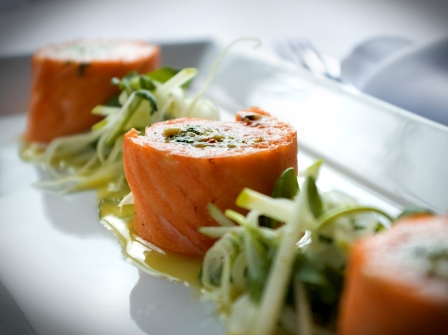
Wine Grape Cheat Sheets: Pinot Noir

The Soundbyte:  The Pinot Noir grape has been grown in the Burgundy region of France for centuries, and is used to craft the region’s world-famous red wines.  Pinot Noir is also grown in Champagne, where it makes its way into many “house blend” Champagnes as well as Blanc de Noirs and Rosé Champagne.  Elsewhere in France, Pinot Noir is grown in the Loire Valley—several red wines of the Central Loire, including Sancerre (when its red), are based around Pinot Noir!

Pinot Noir has also found a home in the Willamette Valley Region of Oregon—so much so that the region is often referred to as Burgundy West.  The finicky grape thrives in the cooler growing regions of California, the warmer spots of New Zealand, and the coastal appellations of Australia (think Tasmania, Yarra Valley, and the Mornington Peninsula).

Despite its fame and fortune, Pinot Noir is known for being incredibly finicky in the vineyard. It is often called the heartbreak grape, and can be just as difficult in the winery as it is in the vineyard. Pinot Noir can indeed be the best of wines…or the worst of wines. Let’s talk about the best!

Typical Attributes of a Pinot Noir-based Wine:

  • Light garnet to dark ruby in color…sometimes the lightness of the color belies the flavor intensity of the wine!
  • Medium body, medium in tannin
  • The finest Pinot Noir wines combine juicy fruit flavors with earthy complexity and zingy, balanced acidity.
  • Pinot Noir is potentially one of the most delicate, complex, and food-friendly red wines.
  • Pinot Noir has a signature aromatic profile (imho) of floral notes at the top of the glass and cherry-berry scents at the bottom, both circling a core of “earthy-floral-garden dirt” aromas.
  • Save Pinot Noir for an occasion when you have at least 25 dollars to spend…bad Pinot Noir can be disappointing indeed. (The “New World Hope” exception to this rule just might be Pinot Noir from Tasmania…time will tell.)
  • Pinot Noir makes fantastic sparkling wines and is the most widely planted grape in Champagne.  If you are drinking a Blanc de Noir, chances are, you are drinking Pinot.
  • Rosé of Pinot Noir is a beautiful thing.

Typical Aromas of a Pinot Noir-Based Wine:

Fruity:  Black cherry, dried cherry, raspberry, strawberry, cranberry, blueberry, plum, dried plum, pomegranate

Earthy:  Mushroom, wet dirt, wet leaves, dry leaves, barnyard, dried herbs

Floral:  Rose, violet, dried flowers

Wood-Derived:  Vanilla, smoke, oak, cinnamon, nutmeg, clove (hints of spice from barrel aging)

Crazy but true: Cola, Dr. Pepper, prune, cocoa, Earl Grey Tea

Where The Best Pinot Noir is Grown:

  • The Burgundy Region of France
  • Champagne
  • France’s Loire Valley…Sancerre Rouge is actually Pinot Noir
  • Oregon…sometimes called “Burgundy West”!
  • California, particularly in and around the Central Coast, Sonoma, and the cooler portions of Napa
  • New Zealand
  • Australia grows Pinot Noir in its cooler regions such as Tasmania, Yarra Valley, and the Mornington Peninsula.

Food Affinities – Base Ingredients:

  • Beef, Lamb, Veal, Poultry, Pork
  • Heavier seafood such as Salmon and Tuna…this is truly a wine that can pair with both red and white meat (depending on the preparation, of course)
  • This is an ideal wine for the typical American Thanksgiving menu, as well as most other “everybody brings a dish” type of holiday meals.  

Food Affinities – Bridge Ingredients:

  • Mushrooms, Truffles, Black Olives
  • Earthy Flavored Cheeses, Blue Cheese, Soft Cheeses
  • Tomatoes, Garlic, Shallots, Onions
  • Basil Pesto, Fresh Herbs
  • Eggplant, Beets, Roasted Red Bell Peppers
  • Cherries, Cranberry, Plum – as with most dry wines, careful with the sweetness level.

Note: When it comes to food pairings, by all means—drink what you like!

The Bubbly Professor is “Miss Jane” Nickles of Austin, Texas


Wine Grape Cheat Sheets: Riesling

The Soundbyte: Often misunderstood due to those overly sweet, bright blue-and-pink bottles resting on the bottom shelf at the supermarket, Riesling is one of the leading white wine grapes in the world.  Riesling produces some of the finest, most complex, and longest-lasting white wines in the world.  It is considered to be native to Germany, where its cultivation can be traced back thousands of years.

The Riesling grape is renowned for its ability to walk a tight rope balancing act in its combination of sugar and acid, resulting in wines that somehow manage to be both delicate and complex.  As for the pronunciation of the name, in order to say it correctly—REE-sling—you have to smile!

Typical Attributes of a Riesling Based Wine:

  • Riesling has the amazing ability to be both very fruity and very acidic at the same time.
  • Riesling’s acidic backbone and complex, balanced flavors give it the ability to age (when produced in an age-worthy style).
  • The greatest Riesling vines in the world are grown in cool growing regions and often made into dry white wines renowned for their bracing acidity. Terms like steely, nervy, racy, tongue-curling, zingy, and precise come to mind as good ways to describe the potential acidity of a Riesling in all its glory.
  • Despite my devotion to the dry Rieslings of the world, it is true that much of the Riesling you may find on the shelf does indeed have a degree of residual sugar. This sweetness may or may not be detectable due to the balancing acidity in the wine.

In a German or Austrian wine, the term Kabinett on the label indicates a low level of ripeness at harvest. The terms Auslese and Spätlese refer to grapes with a higher level of sugar at harvest—these wines may be dry, or they may contain a small degree of residual sugar (this depends on the winemaking process).

Dessert wines made from Riesling have their place among the best dessert wines in the world.  Such wines may be labeled as Late Harvest Riesling, Botrytis-affected Riesling, and Riesling Ice Wine.  German-speaking regions may refer to these wines using terms such as Beerenauslese,  Trockenbeerenauslese, or Eiswein.

Typical Aromas of a Riesling Based Wine:

Fruity:  Peach, Dried Peaches, Apricot, Apple, Green Apple, Baked Apple, Pear, Orange, Orange Peel, Lime

Floral:  Jasmine, Rose, Orchid, Juniper, Honey, Perfume, Wildflowers, Orange Blossom, Lime Blossom

Mineral:  Flinty, Steely, Wet Stones, Chalk, Ozone (the scent of the air after a rainstorm)

Chemical:  Petrol, Gasoline, Rubber Bands, Varnish, Wet Paint, Paint Remover

Late Harvest Riesling and Riesling Ice Wine (Eiswein) can take these aromas to the extreme…I’ve found that the lime aromas transform into a quick scent of pickle juice or green olives (sounds weird, I know, but give it a try). Sweet Riesling may evoke the aromas of dried peaches rubbed on a wet stone.  Just try it for yourself!

Where the Best Riesling is Grown:

  • Riesling is native to Germany and grown throughout Germany’s wine regions.
  • Austria
  • The Alsace Region of France.
  • California, Oregon, Washington State (Bubbly Prof really likes the Washington State Rieslings)
  • New York State’s Finger Lake Region
  • Canada, especially the Niagara Peninsula
  • The cooler regions of Australia such as the Eden Valley and the Clare Valley

Food Affinities – Base Ingredients:

  • Sushi…it’s the best match in town so I had to list it first.  It’s crave-worthy.
  • Seafood of all kinds
  • Smoked Seafood – Smoked Salmon and Riesling would be my “last meal” request.
  • Chicken (and poultry of any kind)
  • Ham, Pork, Prosciutto, Sausages
  • Asian Flavors, Indian Flavors—Riesling loves the salt, the spice, and even the heat.

 Bridge Ingredients:

  • Jalapeno Peppers, Wasabi – Bubbly Prof says any type of “green heat” is fabulous with Riesling.
  • Cilantro, Lemon Grass, Fresh herbs of any kind
  • Orange, Orange Zest, Lemon, Lime
  • Avocado, Corn, Leeks, Sweet Onions, Tomatoes, Sun-dried Tomatoes
  • Bacon, Pancetta, Green Olives, Capers
  • Ginger, Curry, Cinnamon, Nutmeg, Allspice, Soy Sauce, Salty condiments

Note: When it comes to food pairings, by all means—drink what you like!

The Bubbly Professor is “Miss Jane” Nickles of Austin, Texas


Five Fast Facts about the Anderson Valley AVA

Photo via the Anderson Valley Winegrowers Association

The Anderson Valley—located in California’s Mendocino County—was established as an American Viticultural Area (AVA) in 1983. This was back when there were only about 30 regions so designated in the United States, as compared to the 250-plus AVAs that exist now.

Here are five fast facts about this tiny but fascinating stretch of California wine country.

The valley and the vines: The Anderson Valley AVA stretches for just over 15 miles/24 km along a narrow valley formed by Anderson Creek and the Navarro River. From north-to-south, it measures about one mile/1.6 km wide. As such, it forms a neat rectangle (with a bit of fluff on the western edge) tucked between the Mendocino Ridge AVA to the south and the Yorkville Highlands AVA to the southeast. The Anderson Valley AVA is one of the sub-regions of the larger Mendocino AVA.

The Anderson Valley AVA covers a total of 57,600 acres/23,310 ha; of these, 2,457 acres/994 ha are under vine. There are currently just over 90 commercial vineyards and 30 bonded wineries within its boundaries. Many wineries located nearby in Napa and Sonoma Counties produce wine using Anderson Valley fruit.

Base map via USGS: https://apps.nationalmap.gov

Rivers, ridges, and rolling hills: In the Anderson Valley, the relatively flat (and fertile) valley floor occupies a fairly narrow path through the region. Beyond the valley, the area consists of rolling hills—interspersed with forests of Douglas Fir, California Laurel, and California Redwood Trees—and mountain ridges (topping out at about 2,500 feet/762 m above sea level) outlining the California Coast Range. The mountains and hills form a series of south-facing slopes, many of which are considered prime spots for viticulture.

No doubt about it, it’s a cool climate: The western edge of the Anderson Valley AVA—known to locals as the deep end—is located a mere 10 miles/16 km from the Pacific coast. From here, the low-lying, narrow valley is perfectly poised to capture the cool ocean breezes and funnel the early morning fog inland and upriver. Rain is often plentiful, although it can vary from year to year. The entire area can experience a diurnal temperature fluctuation of more than 50°F, and while daytime temperatures do sometimes reach as high as 100°F (38 °C) for a few days in the summertime, the average temperature for a given year is typically 53°F (12°C). As such, the Anderson Valley is one of the coolest of the cool-climate wine regions of California.

Map via the TTB AVA Explorer

Pinot Noir rules: According to a vineyards census published by the Anderson Valley Winegrowers Association (AVWA), as of 2018 nearly 69% of the vineyards in the region are planted to Pinot Noir. The second most widely planted grape—at 21%—is Chardonnay, much of which makes its way into the area’s sparkling wines. Other leading grapes include Gewürztraminer (4%), Merlot (3%, mostly grown in the eastern, warmer part of the region), Pinot Gris (2%), and Riesling (1%).

Pinot Noir arrived in the region in 1971, when Husch Vineyards planted 2.5 acres of the heartbreak grape in a small hilltop vineyard now known as “the Knoll.” Other estates—including Navarro Vineyards, Lazy Creek Vineyards, and Greenwood Ridge Vineyards soon followed suit. Plantings of Pinot Noir have increased more than five-fold since the mid-1990s as the undeniable affinity between the terroir of the Anderson Valley and Pinot Noir was affirmed.

Anderson Valley Pinot Noir is known for its vibrant acidity and elegance as well as aromas and flavors of red and black fruit (raspberry, black cherry, cranberry, plum) backed up by herbal, savory, earthy, and floral notes. Leading producers of Anderson Valley Pinot Noir located within the AVA include Navarro Vineyards, Baxter Winery, and Domaine Anderson. Wineries located outside of the valley—including Williams Selyem, Littorai, Cakebread, and Siduri—are also producing outstanding Pinot Noir using Anderson Valley fruit.

Specialists in sparkling wine: The Anderson Valley’s first sparkling wine—produced by Scharffenberger Cellars—was released in 1981. Handley Cellars (1983) and Navarro Vineyards (1988) soon followed with sparklers of their own. However, with the 1982 arrival of Roederer Estate—the California outpost of the Champagne Louis Roederer—and the 1988 release of Roederer Estate MV Brut Cuvée, the region’s reputation as a world-class producer of traditional method sparkling wines was sealed.

References/for more information:

The Bubbly Professor is “Miss Jane” Nickles of Austin, Texas… missjane@prodigy.net

Wine Geo: the Navarro River

Base map via USGS: https://apps.nationalmap.gov

The Navarro River flows for just a short distance—about 28 miles/45 km in total—across Mendocino County. The beginning point, located in the foothills of California’s Coast Range, about one mile south of the town of Philo, is defined as the point where two creeks—Anderson Creek and Rancheria Creek—join to form the main stem of the Navarro River.

On its short journey to the Pacific Ocean, the Navarro River winds its way through the Anderson Valley, named by Walter Anderson, who settled near (what is now) the town of Boonville with his family in 1851. The Anderson Valley is a rich, cool-climate agricultural valley planted to vineyards—featuring Pinot Noir, Chardonnay, Gewürztraminer, Pinot Gris, and Riesling—as well as over thirty bonded wineries. The Anderson Valley is also home to apple orchards, cideries, dairy farms, grazing land for sheep and goats, and breweries. California State Highway 128 cuts through the Anderson Valley—never too far from the river itself—from the town of Philo all the way to the river’s mouth at the Pacific Ocean.

Photo of Redwood Trees in the Navarro River Redwoods State Park by David Eppstein, via Wikimedia Commons

Just a few miles from its source, the Navarro River flows through Hendy Woods State Park. In this small area—tucked between vineyards, tasting rooms, and farms—you will find two small groves of old-growth coast redwoods. Named Big Hendy (covering 80 acres) and Little Hendy (covering 20 acres), and thanks to Joshua Hendy—a previous owner who stipulated that the property must always be protected from logging—these areas are known to contain some trees that are over 300 feet (91 m) tall and are estimated to be 1,000 years old.

If you continue your trek along the river, soon you will drive past the town of Navarro and leave the rolling fields of agriculture behind. At this point you will have entered the Navarro River Redwoods State Park. Here, you will be whisked into a narrow, 11-mile stretch of redwood forests known as the “Redwood Tunnel.”  Here, you can enjoy hiking, picnicking, swimming, kayaking, and canoeing (and even camping if you are so inclined).

Once you travel though the Redwood Tunnel you are just two miles from the coast. As you meet the Pacific Ocean, you have reached the end of Highway 128. At this point, if you are in the mood for a road trip, you’ve come to the right place—the end point of Highway 128 runs intersects with California Highway 1—portions of which are known as the Pacific Coast Highway (PCH)—and which can carry you across the Golden Gate Bridge, through Los Angeles and Santa Barbara, and all the way to Dana Point in Orange County.

Base map via the USGS

Prior to the arrival of European Settlers, the area around the Navarro River was inhabited by the Pomo people, who occupied nineteen known village sites. The Pomo people had a estimated population of 600 in 1855. European settlement in the area began in 1851; Walter Anderson (and family) as well as his two step-brothers, Issac and Henry Beeson, were among the first wave.

Wine students will no doubt know that the Navarro River flows through the Anderson Valley AVA—famous for cool-climate Pinot Noir and world class sparkling wine. Click here for a closer look at the Anderson Valley AVA and the vineyards planted in the watershed of the Navarro River.

References/for more information:

The Bubbly Professor is “Miss Jane” Nickles of Austin, Texas… missjane@prodigy.net