The Outer Limits: The Moselle Luxembourgeoise AOP

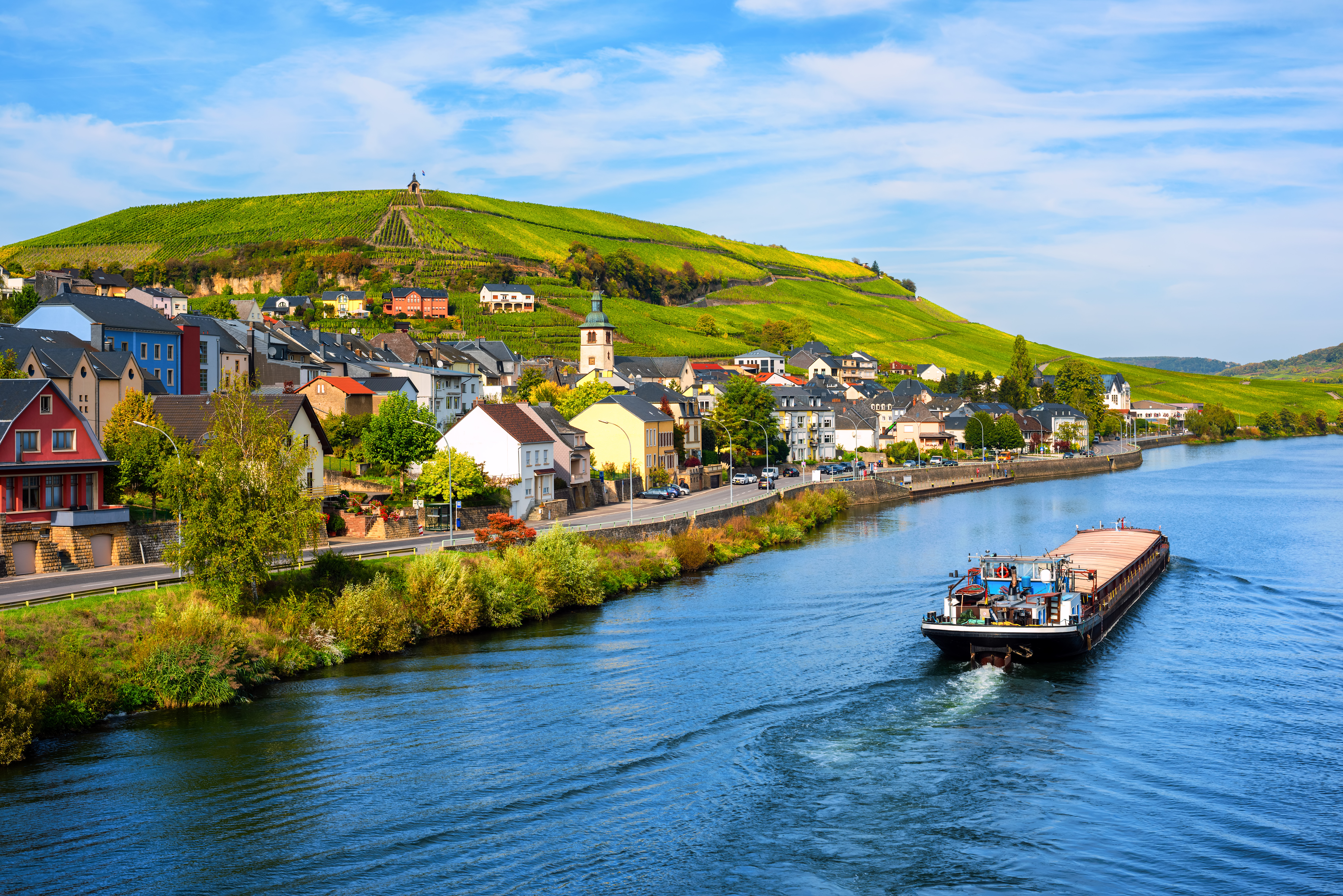
Vineyards near Wormeldange

Luxembourg: It is one of Europe’s smallest countries, yet it is among the wealthiest—by most accounts, it has one of the highest gross domestic products (GDP) at purchasing power parity (PPP) per capita in the world.  It is the world’s one-and-only remaining sovereign grand duchy, and yet its capital city—also known as Luxembourg—is one of the four institutional seats of the European Union.

The leading industries of Luxembourg include banking and finance, high-tech start-ups, chemicals, rubber, and steel. Agriculture employs only about 2% of the population, with an emphasis on dairy cattle, barley, oats, and potatoes.

And then there is the wine. While less than 1% of the arable land is planted to vines, it makes sense that this tiny country tucked between Germany and France—two vinous powerhouses—could make some mighty fine wine (and they do)!

L.

The eastern edge of Luxembourg is defined by the Moselle (Mosel) River. The southern portion of Germany’s Mosel Region—one of its best and most famous quality wine areas—lies just across the border.  Luxembourg’s one-and-only protected designation of origin—the Moselle Luxembourgeoise AOP—is located on this international border, stretching along the winding Moselle River for just over 26 miles/42 km.

This is a tiny production area, with less than 1,300 hectares (/3,200 acres) of vines. Of these, the great majority–90%—are planted to white grapes. Dry white wines are the leading product (by far), but the appellation also allows for red, rosé, Crémant de Luxembourg (quality sparkling wine), Vin de Paille (dried-grape wine), Vendage Tardive (late harvest wine), and Vin de Glace (icewine).

The Luxembourg side of the Mosel has more rolling hills than steep slopes, so Riesling often has a difficult time ripening here. As such, the #1 spot in terms of vineyard acreage goes to Rivaner (the local name for Müller-Thurgau), which accounts for as much as 25% of the region’s total. Pinot Gris takes the number two spot, being planted in 15% of the area’s vineyards.

Photo via: Caves Bernard Massard

The white wines of the Moselle Luxembourgeoise AOP are typically produced as varietal wines using Rivaner/Müller-Thurgau, Pinot Gris, Auxerrois, Riesling, Pinot Blanc, or Elbling grapes. White blends are allowed as well. Reds and rosés may be produced using Pinot Noir, Pinot Noir Précoce, St. Laurent, and/or Gamay. Chardonnay is often used in crémant, and sweet wines (though rare) may include Gewürztraminer.

  • The country of Luxembourg uses the EU-approved label term Marque Nationale to refer to a wine that is made from 100% Luxembourg grapes. (Like many other cool-climate countries, wine is sometimes made with imported grapes). To qualify for Marque Nationale status, a wine must be awarded a minimum of 12 (out of a possible 20) points, as determined by a panel of expert tasters. This score may be reflected on a wine label via the following terms:
    • Marque Nationale Vin Classé: for a minimum of 12 points
    • Marque Nationale Premier Cru: for a minimum of 14 points
    • Marque Nationale Grand Premier Cru: for a minimum of 16 points

Map of the Moselle Luxembourgeoise AOP via: visitmoselle.lu

Most of the wine in the Moselle Luxembourgeoise AOP is produced at cooperatives, but family-run wineries abound as well.  Good choices for a visit include Domaine Kox, Caves Bernard-Massard, and Domaines Vinsmoselle/Caves de Wormeldange.

One thing to note: compared to most European wine regions, the Moselle Luxembourgeoise AOP is tiny in area and tiny in production. Most of the wines are consumed in Luxembourg; those that are exported find their way mainly to Germany or Belgium. While it may be possible to find a Luxembourgeoise wine outside of Europe, your best bet is a wine-fueled road trip to Luxembourg.

References/for more information:

The Bubbly Professor is “Miss Jane” Nickles of Austin, Texas… missjane@prodigy.net

Wine Grape Cheat Sheets: Grenache

The Soundbyte:  Grenache is coming into its own as a single-variety wine, and wonderful examples can be found from Australia, California, Washington State, Texas, Spain, France, and Italy. At their best, these wines are fruity, earthy, and flavorful while not being too tightly wound. What’s not to love?

However, when discussing Grenache, we cannot forget its roles as (what I like to term) the world of wine’s most in-demand wing man. This refers to the fact that—while Grenache is certainly capable of starring in varietal wines—it is undoubtedly an in-demand partner in some of the world’s most famous red wine blends.

In Spain, Grenache is often blended with Tempranillo, Cinsault, and a host of other grapes; this is particularly apparent in the DOCa wines of Priorat/Priorato.  In France, Grenache is one of the three amigos (Grenache-Syrah-Mourvèdre) of the Rhône Blend (otherwise known as G-S-M), while also playing a part in some of the more complex (13-grapes-or-even-more) wines of the Southern Rhône. Grenache is also made into dessert and fortified wines and makes a world-class rosé.

Typical Attributes of a Grenache-based Wine:

  • A typical varietal wine made with Grenache might be described as relatively high in alcohol with aromas and flavors red fruit, black fruit, and spice.
  • The texture of Grenache has been described as rustic due to its rich flavors yet moderate structure.
  • The grape tends to be thin-skinned and low in both color and tannin, however, these factors can vary depending on vineyard conditions and winemaking; Grenache can sometimes pack a tannic punch.
  • Grenache is used in fortified wines, dessert wines, and delightful rosés; but its most common incarnation is as the backbone of hearty red blends.

Typical Aromas of a Grenache Based Wine:

grenache grapesFruity:  Cherry, Raspberry, Blackberry, Blueberry, Strawberry, Cranberry, Currant, Raisin, Plum, Fig

Spicy:  Black Pepper, White Pepper, Menthol, Licorice/Anise, Clove, Cinnamon, Juniper

Earthy:  Mineral, Stony, Baked Earth, Wet Earth, Leather, Forest Floor, Bramble, Tobacco, Smoke, Leather

Floral:  Roses, Dried Rose Petals, Violet

Herbal/Vegetable: Herbs de Provence, Garrigue (Shrubland), Rosemary, Dried Herbs (Savory), Mint, Menthol, Eucalyptus

Oak-Derived:  Chocolate, Mocha, Cocoa, Vanilla, Sweet Wood

Where The Best Grenache is Grown:

  • In France’s Rhône Valley, especially the Southern Rhône, where it is the super star grape of Châteauneuf-du-Pape, Gigondas, and Rasteau. Typically, it plays a leading role—along with Syrah and Mourvèdre—in the blended red wines of the Southern Rhône
  • The grape is part of the blend that is used to produce many delightful rosés throughout the Southern Rhône, including Lirac and Tavel
  • Also in France, Grenache is grown in Provence, Rouissillon, Languedoc, Minervois, Fitou, and Corbières. It is also the leading variety of certain fortified wines in produced in Banyuls and Maury
  • In Spain, where it is among the most widely planted red grapes in the country, the grape is called “Garnacha”
  • Garnacha is main variety in Priorat and Campo de Borja; and plays a role in the wines of Rioja, Navarra,  Somontano, Catalonia, and La Mancha
  • In Italy where—known as Cannonau—it stars in the Sardinian wine known as Cannonau di Sardegna
  • Australia, where it makes some awesome varietals, including my favorite, d’Arenberg’s McLaren Vale “The Custodian” Grenache
  • California, where it has historically been grown in San Joaquin Valley and is now produced in many other regions such as Santa Barbara and Paso Robles.
  • Washington State is also getting into Grenache

NOTE: Across the wine world, there are many names for Grenache, including the following: Garnacha, Garnatxa, Lladoner, Uva di Spagna, Cannonau, or Tinto Aragonés. As Grenache has several color mutations, sometimes the grape is identified as Grenache Noir or Garnacha Tinta. 

grenache foodFood Affinities – Base Ingredients:

  • Beef, Lamb, Veal, Venison, Pork, Hard Cheeses

Food Affinities – Bridge Ingredients:

  • Simple, rustic dishes, Grilled Foods
  • Tomatoes, Sun-dried Tomatoes, Tomato Sauces
  • Onions, Garlic, Mushrooms, Eggplant, Fennel, Roasted Bell Peppers
  • Green Olives, Black Olives, Capers, Green Peppercorns, Black Pepper
  • Rosemary, Thyme, Bay Leaf

Note: When it comes to food pairings, by all means—drink what you like!

The Bubbly Professor is “Miss Jane” Nickles of San Marcos, Texas…


Christmas (Wine) in the Roussillon

Muscat de Rivesaltes AOC—an appellation dedicated to vin doux naturel (sweet, fortified wines) based on white Muscat grapes—is also known for a wine dedicated to Christmas: Muscat de Noël.

The Muscat de Noël of Rivesaltes—produced using Muscat Blanc à Petits Grains and/or Muscat of Alexandria grapes—is allowed to be released on the third Thursday of November (and required to be estate bottled before December 1) of the year of the harvest, making it something of a nouveau wine (but let’s not say that in Beaujolais).

Muscat-based wines have been produced in the area for thousands of years and are well-documented throughout the Middle Ages and beyond. The tradition of Muscat de Noël can be traced back to time when the Roussillon was part of the Principality of Catalonia and ruled by the Crown of Aragon (and later by the Monarchy of Spain). The luscious, sweet, wines were sent to the rulers of the area—known as Comte de Barcelona (Counts of Barcelona)—to be served throughout the 12 days of Christmas—from Christmas Day through the Feast of the Epiphany (traditionally January 6). The light, sweet, and fruity flavors of Muscat de Noël provide an excellent accompaniment to Christmas feasts and celebratory foods of all kinds—from rich roasts to sharp cheeses and sweets.

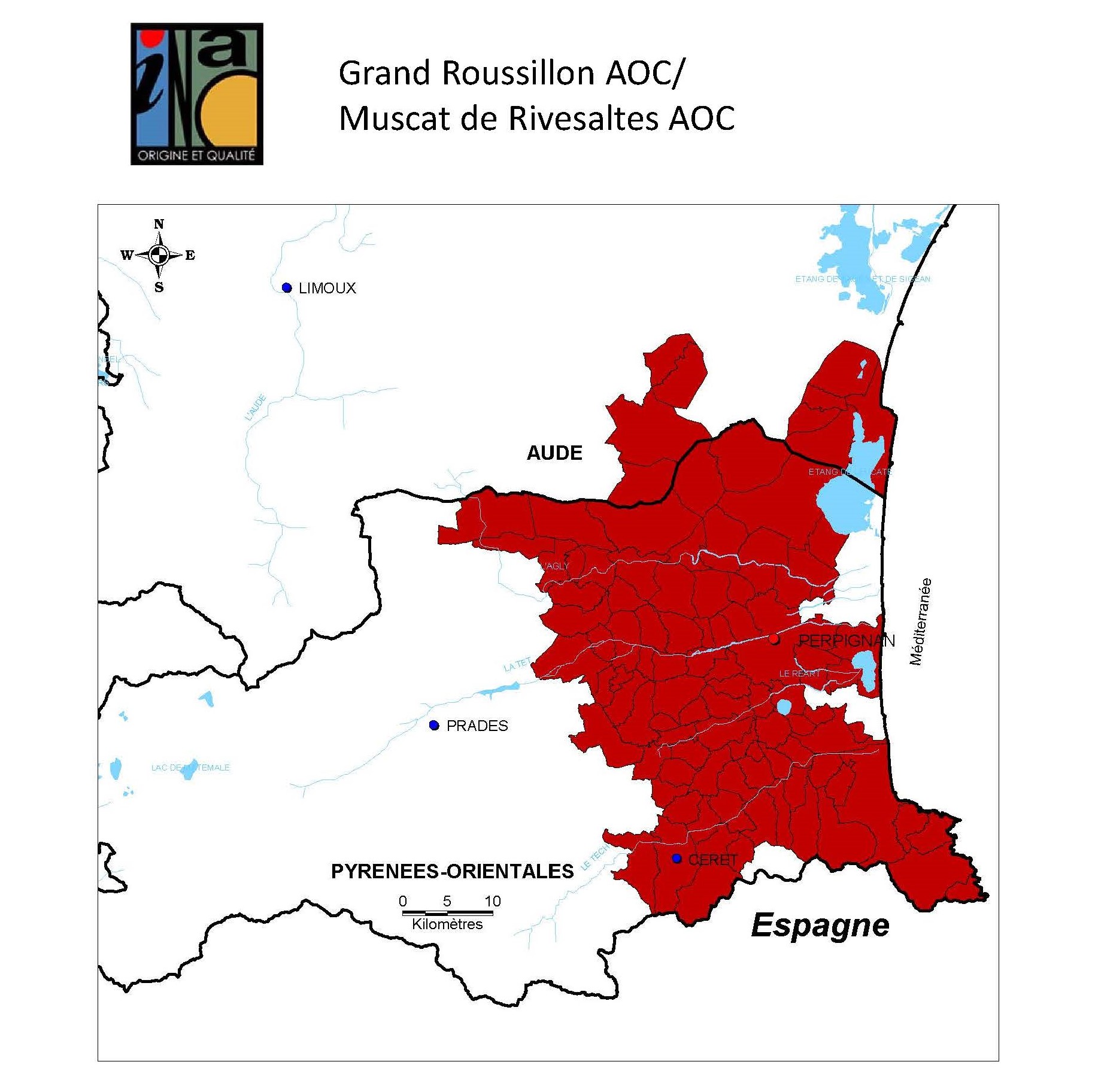
Map via the INAO

Here are a few fast facts about Muscat de Rivesaltes and Muscat de Noël—perfect for wine students nerdy enough to be studying on Christmas Day (myself included):

  • All versions of Muscat de Rivesaltes must contain a minimum of 15% abv and 10% residual sugar.
  • The Muscat de Rivesaltes AOC is by far the largest sweet-wine appellation in France in terms of total geographic size.
  • The area within the Muscat de Rivesaltes AOC covers the entirety of the Rivesaltes AOC as well as the Banyuls AOC (both approved for vin doux naturel only) and occupies the exact same area as the Grand Roussillon AOC (see the accompanying map).
  • The Muscat de Rivesaltes AOC/Grand Roussillon AOC extends across the entire eastern third of the Pyrénées-Orientales Départment and a small portion of the Aude (to the north). Dominated by limestone-based scrubland, the region stretches for over 50 miles/82 km along the Mediterranean Coast from L’étang de La Palme (the La Palme Lagoon) to the border with Spain.
  • In addition to the Rivesaltes AOC and the Banyuls AOC, the area within the Muscat de Rivesaltes AOC/Grand Roussillon AOC also encompasses the entirety of the Fitou, Maury, and Collioure AOCs.
  • The town of Rivesaltes is named for a Catalan term meaning high banks. The topography of the area—consisting of hills and terraces alongside several significant rivers, ponds, and lagoons—easily lives up to the name.
  • Sweet, Muscat-based wines produced in the Roussillon were acknowledged—as far back as 1936—with some of the first AOCs of France. Five separate appellations—Muscat de Banyuls, Muscat de Maury, Muscat des Côtes d’Agly, Muscat des Côtes du Haut-Roussillon, and Muscat de Rivesaltes—were originally approved. However, in 1956, all five were consolidated under one single designation:  the Muscat de Rivesaltes AOC. Muscat de Noël was added in 1997.
  • Muscat de Noël is produced in tiny amounts—it may represent as little as 5% of the total production of the Muscat de Rivesaltes AOC.
  • The Roussillon was ceded to France in 1635 with the signing of the Treaty of the Pyrenees/Traité des Pyrénées that ended the Franco-Spanish War of that year. Traces of Catalan culture are still apparent in the area (including the name of one of the most important IGPs of the region, the Côtes Catalanes.)

.

Not to be forgotten—Christmas (wine) in the Languedoc: The Languedoc also gets in the Christmas wine spirit, with two appellations—Muscat de Lunel AOC and Muscat de Saint-Jean-de-Minervois AOC—also known for Muscat de Noël. Just like their cheery counterparts in the Roussillon, these wines are bottled by December 1 of the year of the harvest and meant to be enjoyed as a sweet, fruity complement to the holiday season.

References/for more information:

The Bubbly Professor is “Miss Jane” Nickles of Austin, Texas… missjane@prodigy.net

Five Fast Facts about Strohwein

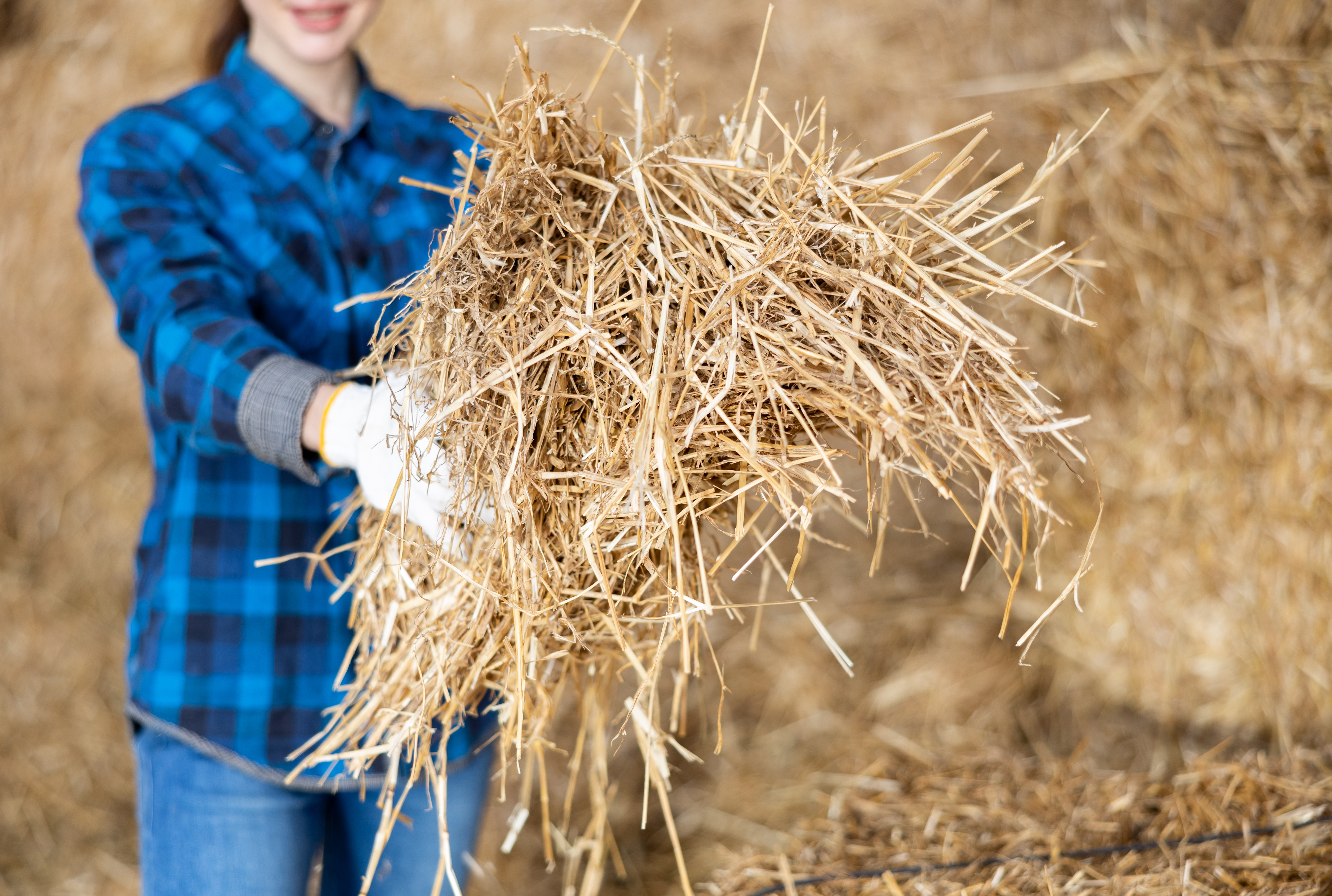
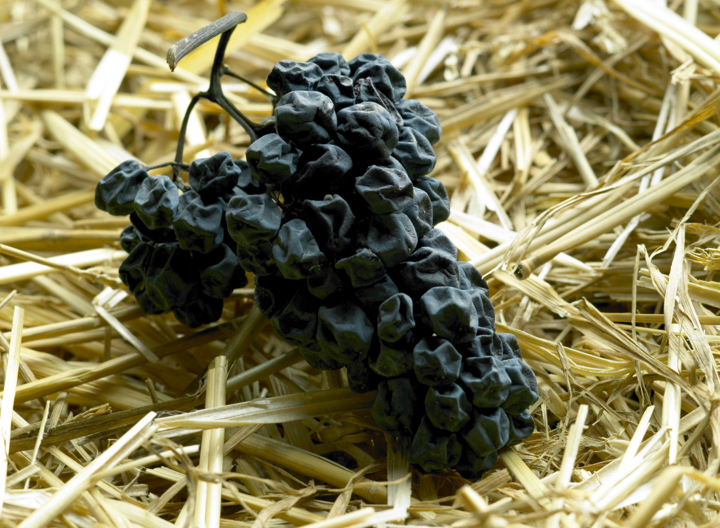
Sweet wine made from grapes dried on straw mats, often referred to as straw wine—has a long history in Europe. The first such examples were likely produced in Greece, and the drying technique eventually made its way to Italy (where a more general term—passito—is typically used to refer to dried-grape wines of many types).

Students of wine will undoubtedly recognize Strohwein as a specific type of dried-grape wine produced in Austria—and in doing so they would be almost correct! Read on to read five fast (and fascinating) facts about Strohwein.

#1: In Austria: Strohwein is indeed a type of sweet, dried-grape wine produced in Austria. The country obtained EU protection for the term as representing it as a distinctive product of Austria in 1999. Schilfwein (reed wine)—also registered as a distinctive product of Austria in 1999—is synonymous with Strohwein. In Austria, the term Strohwein can only be used on a PDO wine, with Burgenland as a leading region. There is a minimum of 5% abv, but no minimum sugar is mandated.

#2: Specifications for Austrian Strohwein: Grapes are to be stored (dried) on straw or reed mats for at least three months. Sugar content before pressing must be minimum of 25°KMW (about 29.6° brix). The white grapes of Austria—including local favorites Grüner Veltliner, Muscat, and Riesling—are often used for Strohwein, but red grapes such as Zweigelt and Blaufränkisch are used as well.

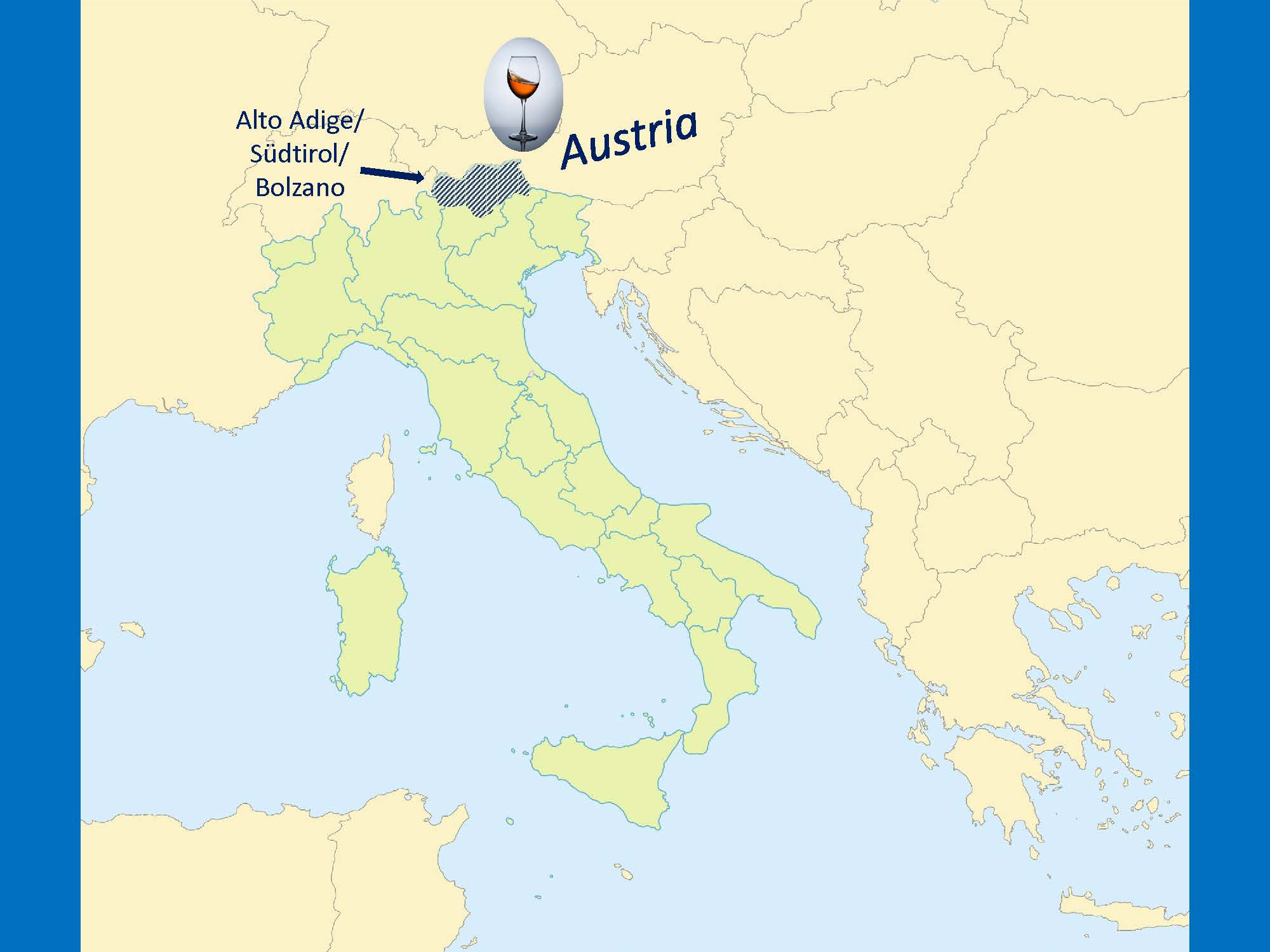
#3: In Italy: Italy is also allowed to use the term Strohwein for certain products produced in the province of Bolzano (also known as South Tyrol, Südtirol, or Alto Adige). Bolzano is located in the far north of Italy, just south of (and adjacent to) the Austrian state of Tyrol. Italian Strohwein may be labeled with a PDO or a PGI designation. As such, it may be produced under any of the following appellations: Alto Adige/Südtirol DOC, Mitterberg IGT, or Vigneti delle Dolomiti IGT.

#4: Specifications for Italian Strohwein: The Italian definition of Strohwein requires that the grapes be dried, after harvest, over a straw trellis. According to the requirements of the Alto Adige DOC, passito wines may be produced using Chardonnay, Pinot Bianco, Pinot Grigio, Müller Thurgau, Sauvignon, Riesling, Silvaner, Gewürztraminer, Kerner, and/or Moscato Giallo grapes, and may not be sold until June 1 of the year following the harvest.

#5: Straw wine from Germany (or not): Despite its penchant for sweet wines, dried-grape wines of any type were— along with the major re-writing of the German wine law—disallowed for use in the PDO wines of Germany in 1971. The reasoning was (so it seems) that dried-grape wines were not “fresh” and that the drying process roughly equated to chaptalization. However, in the early 2000s, the Ulrich Stein Estate lobbied the ministry of viticulture and eventually succeeded in getting the ban on straw wine overturned. However, by the time this was accomplished—in 2009—Austria and Italy had already protected the term. Eventually, Ulrich Stein was able to get a new term—Striehween (based on a local dialect)—trademarked for use with certain wines. (It is not, however, part of any appellation rules.)

Switzerland produces dried grape wines sometimes labeled with the term Strohwein—but keep in mind, they are not a member of the EU—and like much of the world beyond Europe—they are not entirely beholden to EU rules.

France has a small but interesting tradition of straw wine—known as Vin de Paille—and we will tackle that topic in the near future! Keep in mind that straw wine—no matter what you call it—is typically produced in exceedingly small amounts and will likely be difficult to procure outside of the region of production.

References/for more information:

The Bubbly Professor is “Miss Jane” Nickles of Austin, Texas… missjane@prodigy.net
 

Wine Grape Cheat Sheets: Sangiovese

Sangiovese ChiantiThe Soundbyte:  It is widely accepted that Sangiovese was well-known to the winemakers of Ancient Rome, and it is suspected that the grape was known in Tuscany as far back as the time of the Etruscans. These days, Sangiovese is widely grown throughout Central Italy—from Romagna to Lazio—and throughout Italy down to Campania and Sicily.

Outside of Italy, Sangiovese is mainly known as the lead grape of Chianti (in all its variations), but lovers of Italian wine know that it also stars in the majority of the Tuscany’s other red wines—to include Carmignano, Vino Nobile di Montepulciano, Morellino di Scansano, Brunello di Montalcino, Rosso di Montalcino, and Sangiovese di Romagna, among others. In a country growing hundreds (if not thousands) of different grapes, Sangiovese reigns as the number one grape variety in Italy, where it accounts for nearly 10% of the entire wine grape crop.

While increasingly seen as a stand-alone varietal, Sangiovese is often used in blends. In Tuscany it is likely to be blended with small amounts of Canaiolo, Colorino, Trebbiano, or even international varieties such as Cabernet Sauvignon, Cabernet Franc, or Merlot.

Typical Attributes of a Sangiovese Based Wine:

  • The flavor profile is complex, with earthy aromas often overtaking the scent of fruit, spice, flowers, and oak.
  • Sangiovese has a moderate to high level of natural acidity.
  • Medium to full-bodied, with descriptors ranging from supple-and-elegant to assertive-and-robust.
  • The finish tends to have a little bite of bitterness.  I often describe it as “bitter cherry.”
  • Medium to medium-plus tannins, often assisted with a bit of oak contact.
  • Sangiovese can be used to produce a lighter style of red wine, and this approachability has made it a consumer favorite.  Sangiovese also makes a wonderful, spicy rosé, and stars in many an Italian rosato.

Typical Aromas of a Sangiovese Based Wine:

  • Fruity:  Plum, Cherry, Blackberry, Raspberry, Strawberry, Blueberry, Mulberry, Orange Peel
  • Spicy:  Tea, Clove, Cinnamon, Thyme, Anise
  • Floral:  Violet, Dried Flowers
  • Wood-derived:  Cedar, Oak, Vanilla, Sweet Wood, Smoke, Toast, Tar
  • Earthy:  Wet Leaves, Wet Dirt, Forest, Tobacco, Tea, Dusty, Herbal

Where The Best Sangiovese is Grown:

  • Italy—its native home—where it is the most widely-grown red grape variety.
  • Sangiovese BrunelloIt especially thrives in Tuscany, where it forms the base of the wines of Chianti, Chianti Classico, Vino Nobile de Montepulciano, and Brunello di Montalcino as well as many other wines. It is sometimes part of the blend—often alongside Cabernet Sauvignon or other grape invaders—in the wines known as the Super Tuscans.
  • Beyond Tuscany, it is found throughout Italy and is a main grape in Umbria, Marche, Lombardy, Emilia-Romagna, and as far south as Campania and Sicily.
  • Italian immigrants brought Sangiovese to California.  The earliest recorded Sangiovese vineyard in California is the Seghesio Family’s Chianti Station Vineyard, planted near Geyserville in 1910. However, Sangiovese never really took off in California until the Super Tuscan movement of the 1980’s.  Since then, Sangiovese has been gaining popularity in the United States and is now grown in Napa, Sonoma, and The Sierra Foothills.
  • Flat Creek Estate in Marble Falls, Texas (once-upon-a-time in 2005) created a Sangiovese-Cabernet Sauvignon blend they called a Super Texan. The wine immediately commanded world wine attention when it won the coveted Double Gold Medal at the San Francisco International Wine Competition that year.  Sangiovese continues to thrive in Texas.
  • Oregon, Washington State, Virginia, and The Niagara Peninsula now have Sangiovese plantings, as do Australia, Argentina, Romania, Corsica, South Africa, and Chile.

 Food Affinities – Base Ingredients: 

  • Beef, Lamb, Pork, Chicken, Turkey, Duck, Hard Cheeses
    sangiovese steak

Food Affinities – Bridge Ingredients:

  • Simple, rustic dishes, Grilled Foods, Fresh Herbs
  • Tomatoes, Sun-dried Tomatoes, Tomato Sauces
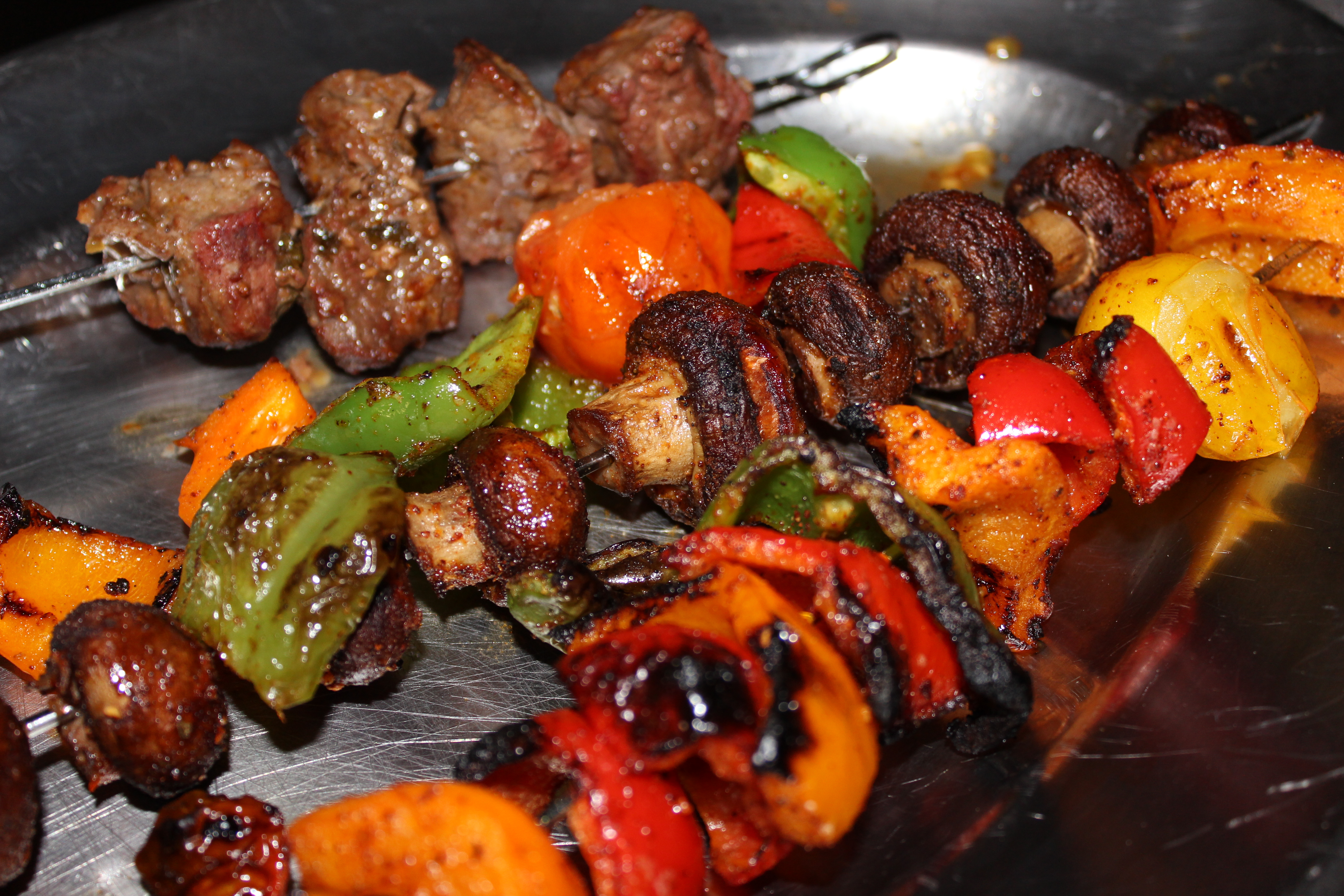
  • Onions, Garlic, Mushrooms, Eggplant, Fennel, Roasted Bell Peppers
  • Green Olives, Black Olives, Capers
  • Pecans, Walnuts
  • Pasta Dishes, Risotto Dishes
  • Prosciutto, Pancetta, Bacon

Note: When it comes to food pairings, by all means—drink what you like!

The Bubbly Professor is “Miss Jane” Nickles of Austin, Texas….