Wine Geo: The Camargue
January 15, 2023 Leave a comment
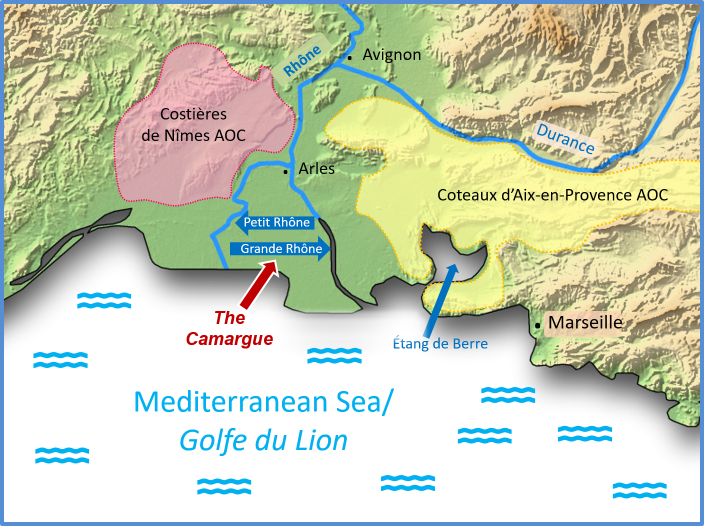
 The largest river delta in Europe—the Rhône River Delta—lies just south of the town of Arles, France. Known as the Camargue, this area—located within the aptly named Bouches-du-Rhône (Mouths of the Rhône) Department—is a vast plain dotted with brine lagoons (étangs), sandbars, and marshlands surrounded by a large area of rich agricultural cultivation.
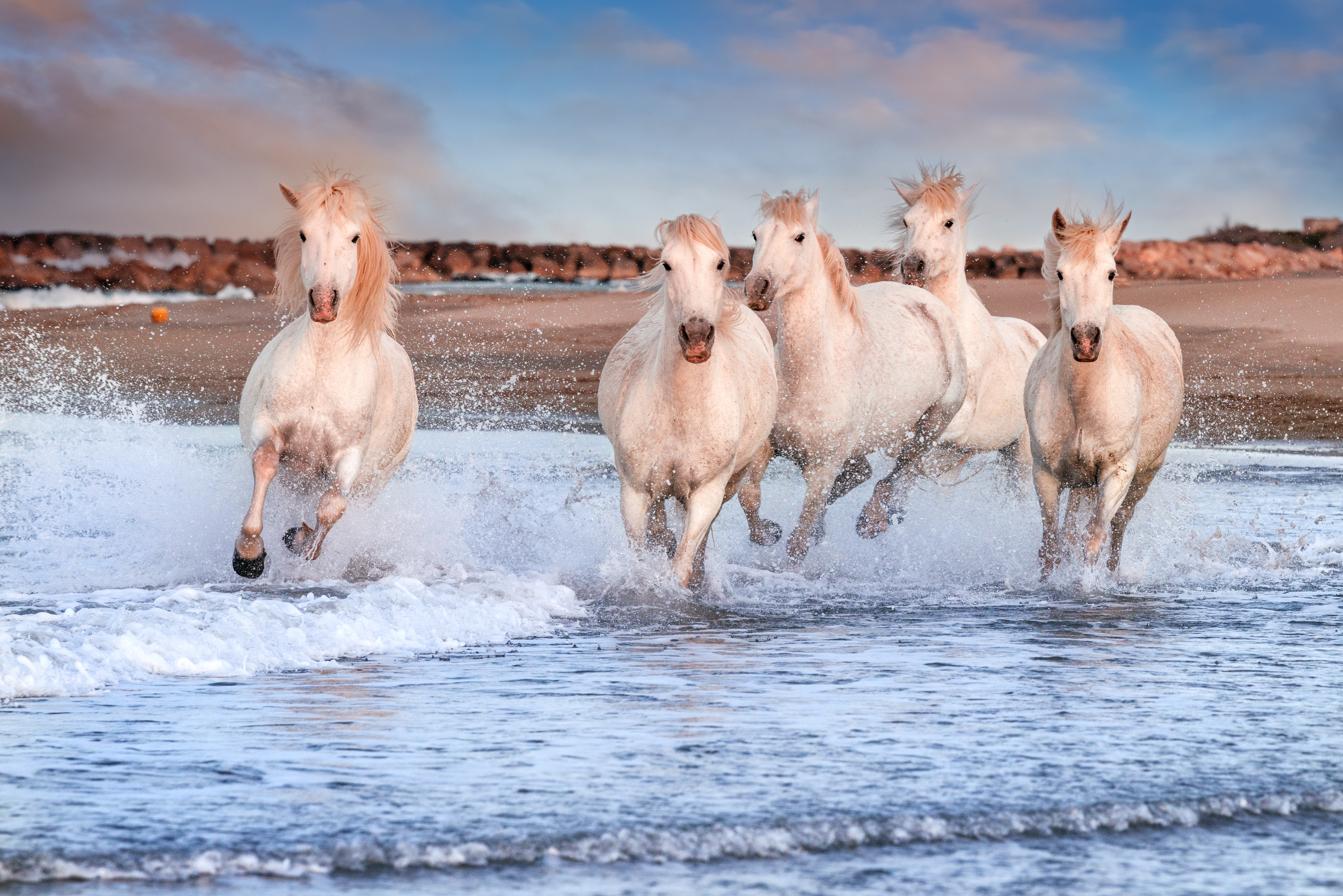
The Camargue is tucked between the two arms of the Rhône River Delta—the Grande Rhône (on the eastern edge), and the smaller Petite Rhône (along the west). A large portion (as much as a third of the total area) is a protected nature reserve and part of the Parc Naturel Régional de Camargue. The area is one of the few European habitats for the Greater Flamingo and home to hundreds of species of unique flora and fauna, including the beautiful, white-grey, semi-wild breed of Camargue Horses.
 Aside from the protected areas, ranching and agriculture rule the Camargue. The region is one of the largest producers of rice in Europe and has achieved a protected geographical indication (PGI/IGP) for Riz de Camargue, cultivated since the 1600s. The rice fields in the area provide most of the rice consumed in France and also allow for the other main crops of the Camargue—including cereal gains and grapevines—by desalinating the water and soil.
The wine specialties of the region are vin gris (a very pale pink style of rosé produced via direct press followed by little-to-no maceration time on the grape skins) and gris de gris (an ultra-pale vin gris made from lighter/thinner-skinned grapes) are regional specialties. The wines are meant to be delicate, fresh, and reflective of the ethereal landscape and sable (sand)-based soils of the area.
The Camargue is also known for its fleur de sel (salt). Salt has been harvested in the marshlands since the Middle Ages, when several religious orders (including the Benedictines and the Cistercians) settled in the area and established several “salt abbeys,” made wealthy through the extraction of salt. The remains of one—the Benedictine Abbey of Psalmody—was declared a Monument Historique in 1984.
The black cattle of the area—Raço di Biòu—are spread over dozens of ranches and tended to by the gardians (herders). The bulls are the stars of the Course Camarguaise—a type of bloodless bullfight where the object of the raseteur is to grab a rosette from between the horns of the bull. The cattle are also bred for beef and the meat of the young bull—a protected product known as Taureau du Camargue AOC—is bright red, ultra-lean, tender, and meant to be consumed extra-rare.
References/for more information:
- Sable de Camargue IGP
- Map of the Sable de Camargue IGP via the INAO
- http://www.parc-camargue.fr/
- Riz de Camargue IGP
- Taureau de Camargue AOC
- https://www.frenchentree.com/living-in-france/local-life/food-recipes/camargue-rice/
- https://www.france-voyage.com/cities-towns/saint-laurent-d-aigouze-9828/abbey-psalmodie-14078.htm
The Bubbly Professor is “Miss Jane” Nickles of Austin, Texas… missjane@prodigy.net
 About bubblyprof
 The Bubbly Professor