The grape, the place, the wine, the rooster (???): CHIANTI!
February 2, 2026 Leave a comment
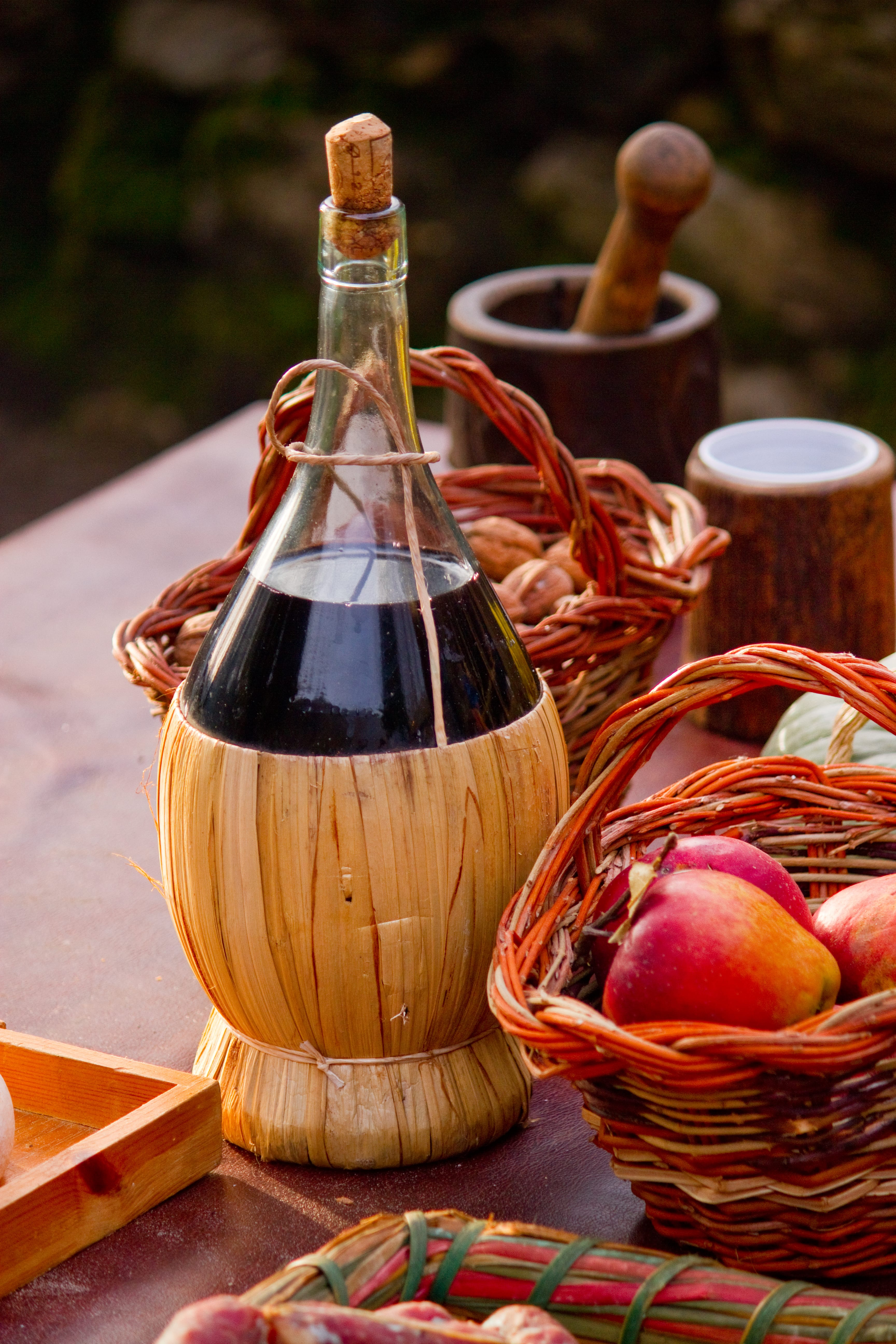 When teaching my intro classes (particularly the How to Read a Wine Label section), I always use Chianti as a case-in-point. It works perfectly as it is a wine named for the appellation (not the grape), and well…it is delicious. Most people (even the absolute beginners among us) have heard of Chianti—although they might just be remembering the candle-dripped, wicker-wrapper bottles of their youthful indiscretions.
So, for those absolute beginners in my class (side note: you’re my favorites) and anyone else who can use a primer on Chianti…here are the basic facts of this not-so-basic wine.
For starters: Chianti is a dry red wine produced in Tuscany (central Italy). Tuscany is a powerhouse producer of red wine and the home of many famous wines—including Brunello di Montalcino, Sassicaia, and Carmignano—but there is no doubt…Chianti is the most famous of all. The Chianti Classico DOCG (Denominazione di Origine Controllata e Garantita) is also one of the oldest designated wine regions in the world; the historic center of the Chianti production zone—Chianti Classico—was first delineated (by none other than the Grand Duke of Tuscany, Cosimo de Medici III) in 1716.
 Chianti may be produced using several grape varieties, but the leading grape is Sangiovese. Repeat after me: Sangiovese. You can read all about Sangiovese here…using the Bubbly Prof’s Wine Grape Cheat Sheet for Sangiovese.
However, to keep it simple, here is what you can expect from Chianti, or any other Sangiovese-based red wine: dry, medium-to-full bodied, medium-to-full tannic structure, bright acidity and flavors of red fruit (cherry, strawberry, blueberry), flowers (dried roses), some baking spices (cinnamon), herbs, sometimes leather, and a good whiff of earthy goodness (dry leaves, wet dirt, Sunday-in-the-park-as-soon-as-the-ground-dries-after-a-good-soaking-rain).
Here’s where it gets a bit (just a bit) more complicated: there are two separate appellations (DOCGs) for Chianti. They are nested (one is located inside the other), but they are separate (they do not overlap).
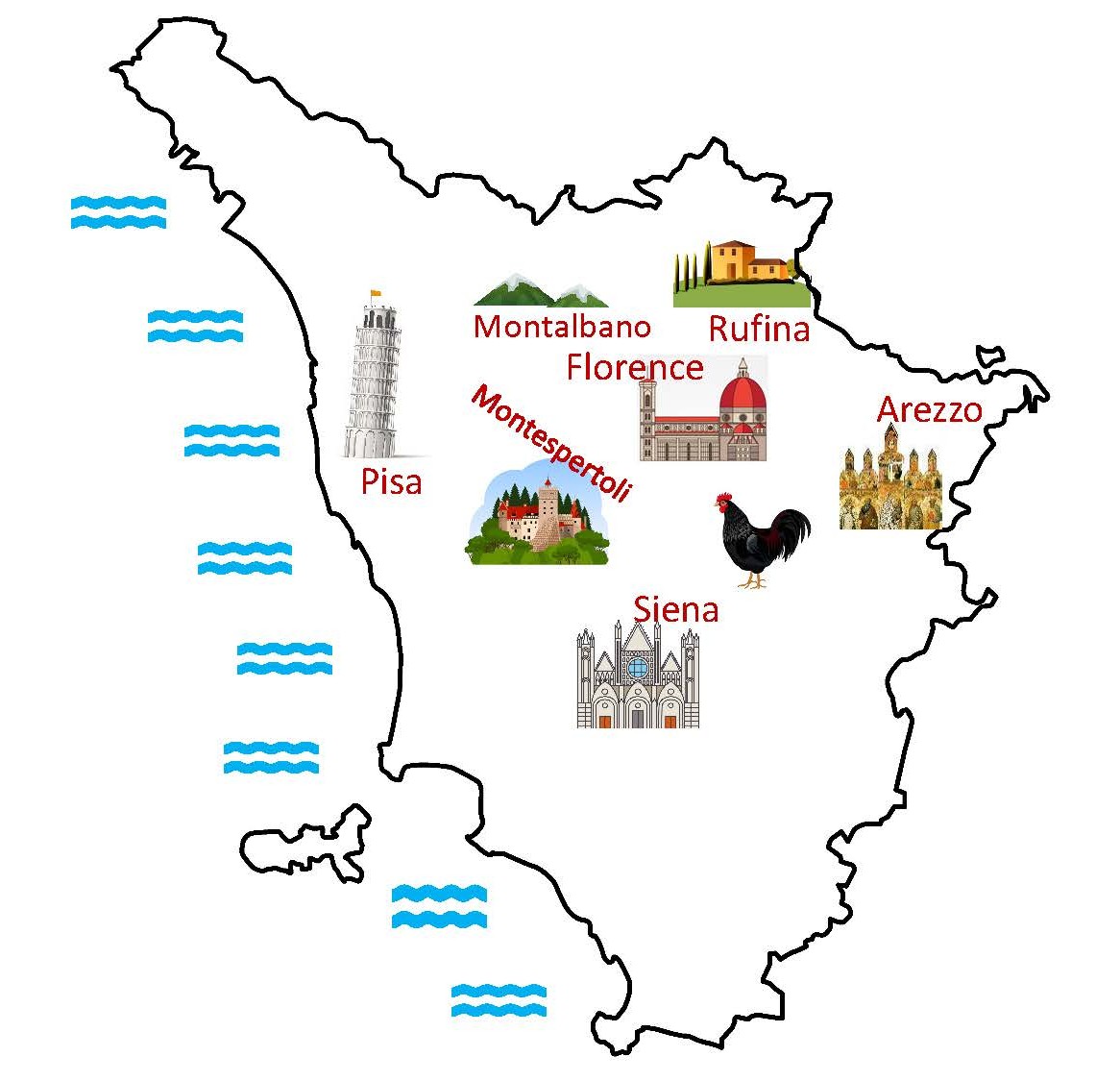
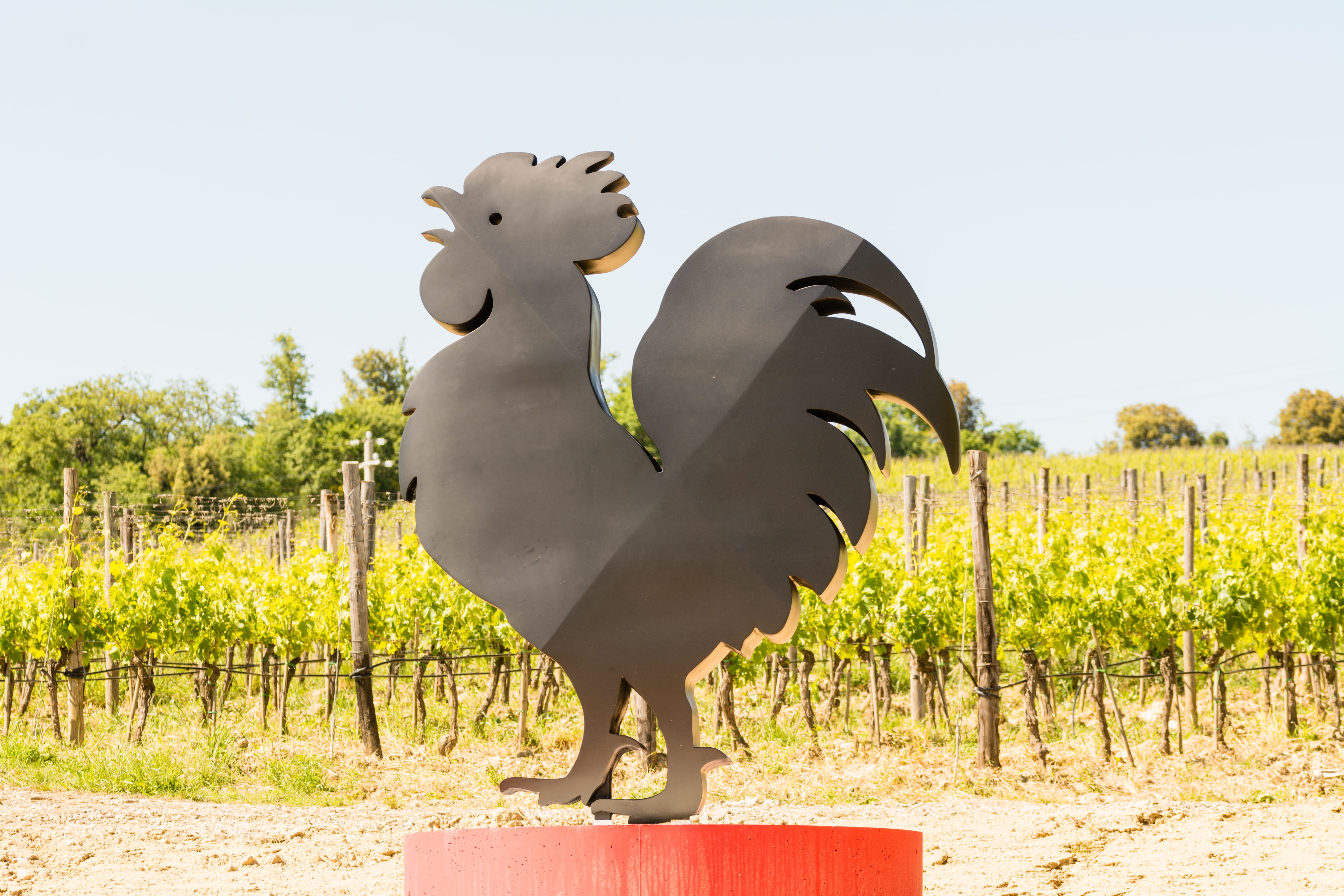 The central and most historic appellation is the Chianti Classico DOCG. This is the heartland of Chianti…located inland from the Tuscan coast and surrounding the “original communes” of the Chianti region: Greve, Castellina, Gaiole, and Radda. The gallo nero (Black Rooster) is the symbol of Chianti Classico, and you’ll see his picture on every bottle. If you’d like to know the story behind the black rooster of Chianti Classico (and trust me, you do) just click here.
The Chianti DOCG is larger and more diverse than the centralized Chianti Classico DOCG. The Chianti DOCG covers a large part of central Tuscany, extending from Florence in the north all the way down to Sienna in the south. The Chianti DOCG contains within it seven sub-appellations, and you can read all about them here.
Chianti is a food pairing dreamboat. With complex flavors and enough acidity to stand up to the squirt of fresh tomatoes, Chianti can play well with just about any tomato-based Italian dish. Bring on the manicotti, lasagna, and spaghetti…and don’t you dare forget the pizza. It can also stand up to bigger-and-bolder dishes such as grilled steak or roast pork loin. And, what a joy, Chianti is equally comfortable with lighter, greener food and will not hesitate to support your pesto pasta, Caprese salad, or crunchy crudités (but please have lots of salami and cheese on that platter/just a personal request).
 A few rules and regulations (for the die-hards)
- Chianti DOCG must contain a minimum of 70 % Sangiovese. Other allowed grapes include Cabernet Sauvignon, Cabernet Franc, “any red grape allowed for use in Tuscany,” and a maximum of 10% white grapes (allowed for use in Tuscany). The wine is always fermented to dryness and must contain a minimum of 11.5 % abv.
- Chianti Classico DOCG must contain a minimum of 80% Sangiovese. Other allowed grapes include Colorino, Canaiolo Nero, Cabernet Sauvignon, and Merlot (defined as “other red grapes authorized by Siena and Firenze”). White grapes are not allowed in Chianti Classico. The wine is always fermented to dryness and must contain a minimum of 12% abv.
The Bubbly Professor is “Miss Jane” Nickles of San Marcos, Texas… missjane@prodigy.net
 About bubblyprof
