Five Fast Facts about Vinho Verde
May 16, 2026 Leave a comment
Along with Port, fado, olive oil, and cork…Vinho Verde is one of Portugal’s most popular exports. Read on for five fast facts about Vinho Verde!
.
#1: Verde means green, and (in this case) green means young! Vinho Verde is a huge wine region (more on that later) that literally translates to green wine. If you thought green referred to the color of the wine; the color of the bottle; the pyrazine-laced, green bell pepper flavor of the wine; or the lovely hue of the rolling hills surrounding the vineyards…you wouldn’t be blamed for believing any of it, but you’d be mistaken. In the case of Vinho Verde…the term verde (translated as green), refers to the fact that the grapes are harvested early (while still unripe and on the green side rather than the ripe side), and the fact that the wine is meant to be consumed young…while you can appreciate it in all its fruity, lively, zingy, and tongue-curling glory. With very few exceptions, this is not a wine meant to improve in the bottle. Open that bottle now!
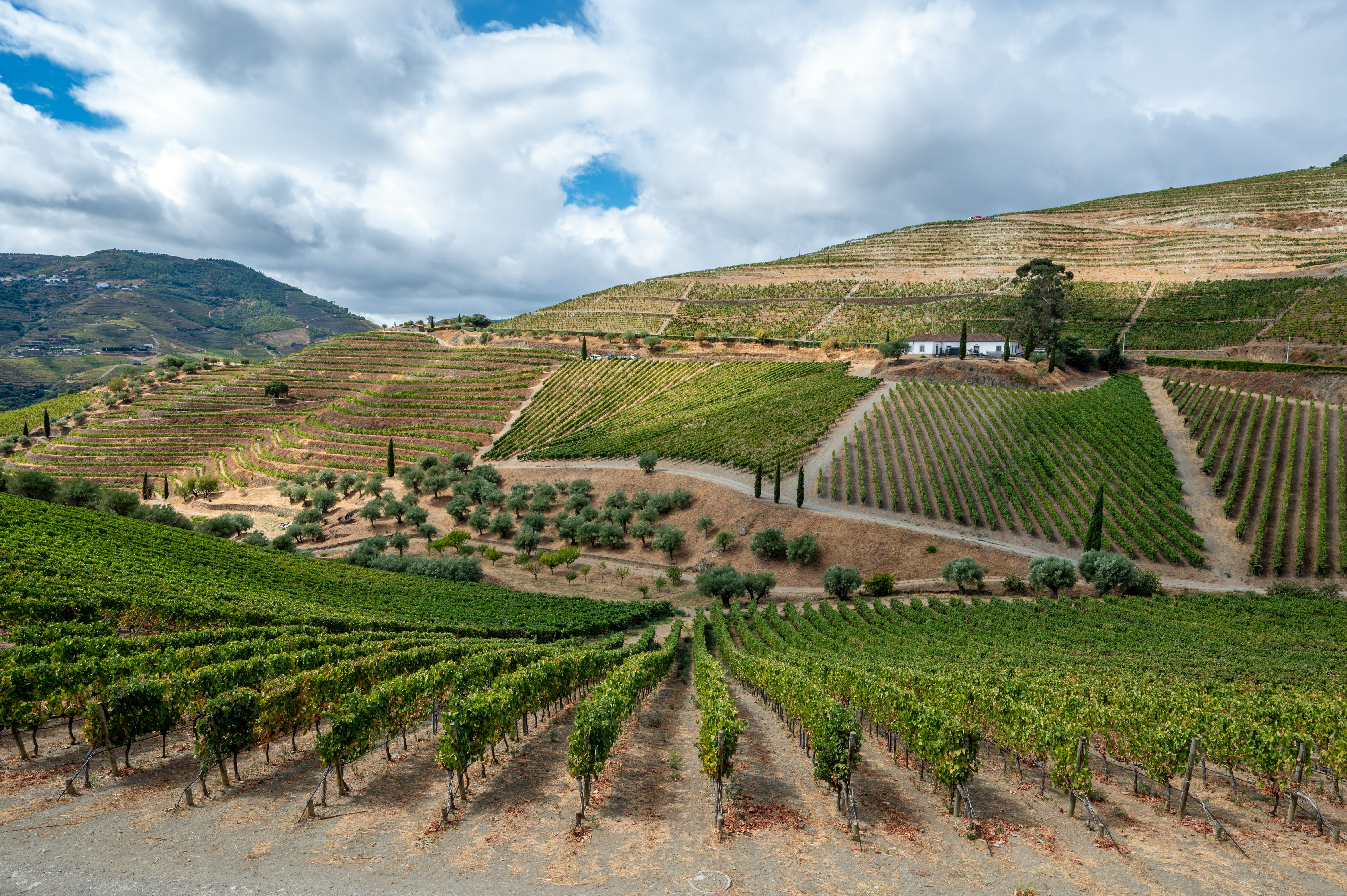
#2: It is Portugal’s largest DOC (in terms of vineyard acreage)! The Vinho Verde DOC (denominação de origem controlada) demarcated area is huge…taking up most of the northwest corner of Portugal (the area on the coast just south of Spain). It is also huge in terms of vineyard acreage, and at about 52,000 acres, it contains more vines than any other wine region in Portugal. As for production, Vinho Verde cranks out an impressive 85 million liters of wine a year, accounting for about 14% of the country’s total production. While other regions—including the Douro Valley (home of Port), Lisboa, and Alentejo—produce more wine by volume some years…Vinho Verde remains impressive.
.
#3: It is very likely the least expensive PDO wine at your local wine store! While I am sure you local go-to liquor mart has several bottles (or boxes or cans) of wine priced at six dollars or lower…they are all bound to be branded, mass-market wines with little or no character. I won’t name any names (at least not in writing), and if you enjoy these types of wine, carry on…no judgement here! On the other hand, my local, medium-sized liquor emporium also has several Vinho Verde DOC on offer at the following 2026 prices: $7.36, $8.62, $9.46—and this is a wine with a pedigree.
#4: It is sometimes a bit spritzy (whoops, I mean petilant)! Petilant is the cutest word ever. It is derived from the French verb pétiller, meaning to effervesce or to sparkle with a crackling sound. The term is often used to describe beverages with a tiny bit of spritz—in the wine word, this would be not-quite-spumante and not-quite-frizzante, but with just a touch of fizz. Traditionally, this spritz was the result of in-bottle malolactic fermentation…but these days, the spritz (when it is there) is typically borne of a bit of carbonation.
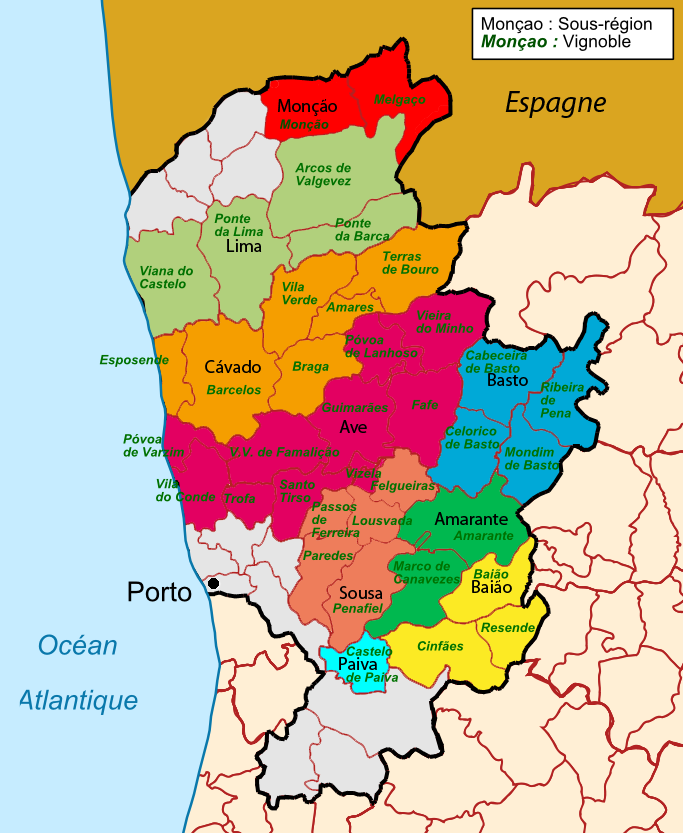
Map of the Vinho Verde DOC and subregions by Cyril5555 via Wikimedia Commons
#5: Like most wine, it can be simple…or it can be complicated! Here is the simple version: Vinho Verde is a Portuguese DOC wine, usually white but sometimes red or rosé, made with slightly underripe grapes and meant to be enjoyed as a fun-and-crisp, thirst-quenching, young wine.
Here is the more complicated version: Vinho Verde can be made in three colors (tinto/red, branco/white, and rosado/rosé) as well as several styles (still/non-sparkling, traditional method sparkling, tank method sparkling, lightly sparkling/carbonated, varietal, vindima tardia/late harvest, and in any one of seven sub-regions). The best-known, most recognized, and most widely distributed style is typically the still or spritzy, dry white version produced using Alvarinho (Albariño) grapes or a blend of Alvarinho and Loureiro. However, the list of approved grapes is long, un-pronounceable, and includes the white varieties Alvarinho, Avesso, Azal, Batoca, Loureiro, Arinto (Pederña), and Trajadura as well as the red varieties Amaral, Borraçal, Alvarelhão (Brancelho), Espadeiro, Padeiro, Pedral, Rabo-de-Anho, and Vinhão.
TL/DR: Vinho Verde might just be the freshest, fizziest, most fun you’ll ever have for seven dollars! If you are reaching for a white version, look for crisp acidity, a bit of spritz, and aromas and flavors of green apple, citrus and perfumey flowers along with a hint of minerality.
References/for more information:
- Wines of Portugal
- EU Product Specification Vinho Verde DOC
- Map of the Vinho Verde DOC and subregions by Cyril5555 via Wikimedia Commons
The Bubbly Professor is “Miss Jane” Nickles of San Marcos, Texas… missjane@prodigy.net
 About bubblyprof
