Five Fast Facts about Zweigelt

Zerigelt 1A quick read about Fritz Zweigelt and the grape he created.

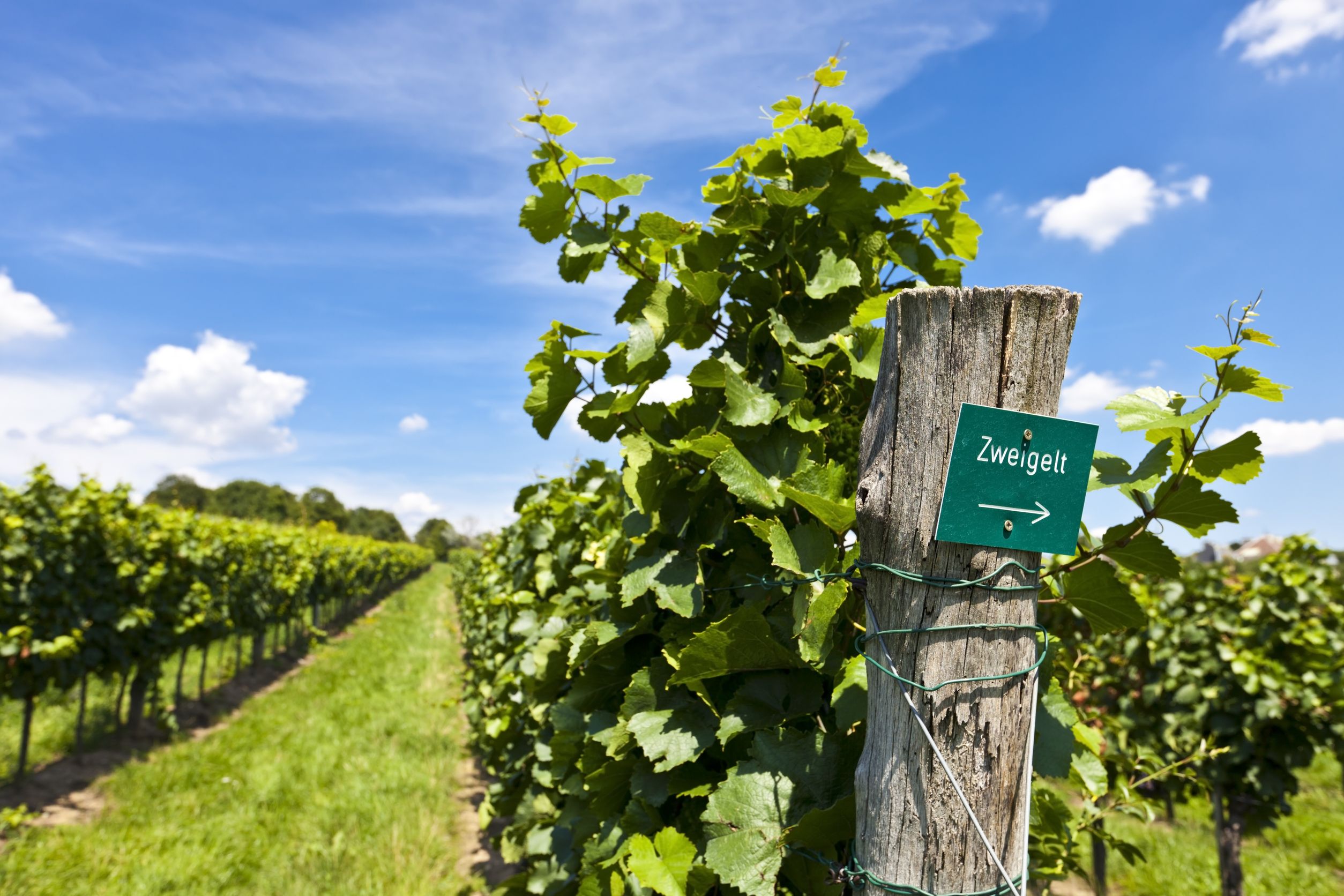
#1 – Zweigelt is the leading red grape of Austria. It is also planted in small amounts in Canada, in both Ontario and British Columbia. Zweigelt is the third most-planted grape of the Czech Republic, where is goes by the name Zweigeltrebe. A few wineries – including Wilridge Winery and Perennial Vintners – have some small plantings (a few acres or so) in Washington State.

#2 – Zweigelt is a cross of St. Laurent and Blaufränkisch/Lemberger created by Fritz Zweigelt in 1922. Fritz was working the Federal Institute for Viticulture and Pomology at Klosterneuburg, Austria at the time, which makes the Zweigelt grape a true native Austrian. It was made with the purpose of creating a red grape unique to Austria that could thrive in the cool climate, be disease-resistant, and create a red wine of medium to full body and flavor.

#3 – Dr. Zweigelt did a good job – the grape that bears his name is indeed cold-hardy, drought-resistant, and thrives in a variety of soils. It is fairly disease-resistant, but is susceptible to powdery mildew (that’s Oidium to you CSW students) and berry shrivel/grape wilt.

Zweigelt 2#4 – The name of the grape is pronounced “TSVYE-gelt” – and if you think that’s difficult to say, consider yourself lucky. The original name of the grape was Rotburger (the name of a town close to where the grape was created) but was later changed to honor its creator.  Zweigelt also goes by the name Blauer Zweigelt. By the way, don’t confuse the original name of Zweigelt – Rotburger – with the grape that goes by the name of Rotberger (who would – ha!). For the record – Rotberger (“berger with an e!”) is a white grape cross of Riesling X Trollinger.

5 – As with all wines, the characteristics of a good Zweigelt vary according to vineyard conditions and wine-making techniques. Cool-climate, unoaked versions from Austria’s northern reaches are typically violet-red in color, medium-bodied, and moderate in tannins with fruit-forward flavors favoring red and black cherry. As such, it is the most widely consumed red wine in the pubs, bars, and casual restaurants in and around Vienna. The warmer growing regions in the areas of Lower Austria (Niederösterreich) – particularly  Neusiedlersee – produce full-bodied, richer wines with firm tannins. Such wines are often oak-aged, resulting in flavors of red cherry, red plum, cinnamon, and black pepper.

References:

The Bubbly Professor is “Miss Jane” Nickles of Austin, Texas… missjane@prodigy.net

Five Fascinating Facets of Flor

Bodegas Hidalgo La Gitana (producers of La Gitana Manzanilla) in Sanlúcar de Barrameda – photo by Caleteron via Wikimedia Commons

Bodegas Hidalgo La Gitana (producers of La Gitana Manzanilla) in Sanlúcar de Barrameda – photo by Caleteron via Wikimedia Commons

Ok, I apologize for the gratuitous alliteration, but you have to admit…flor – the indigenous yeast cells that form a “veil” on the surface of certain types of Sherry as it ages – is fascinating. Flor (meaning “flower” in Spanish) is a subject that just seems to get more interesting the closer you look. As a matter of fact, I had a hard time limiting the information I found to just five facets!

#1: Flor is what separates the Finos from the Olorosos. Flor is a film-forming yeast (actually, several related strains of yeast) that is indigenous to the region around the Jerez-Xérès-Sherry DO. Flor is the main factor that causes the myriad types and styles of Sherry to divide roughly into three camps – Fino, Hybrid, and Oloroso – based on the extent of flor influence. Fino Sherries (such as those labeled as Fino or Manzanilla) are aged under the somewhat constant influence of flor. Oloroso Sherries (labeled as Oloroso or sometimes as Cream Sherry) are aged entirely without flor; while hybrids (such as Amontillado and Palo Cortado) are aged partially with flor and partially without.

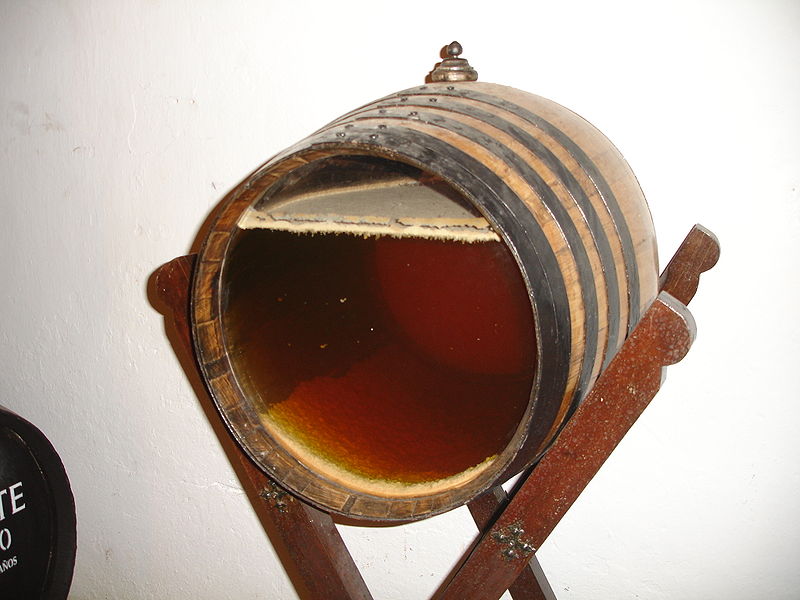
#2: Flor is that “something in the air” in Jerez. Flor imparts its magic by finding its way from the air to the young base wines being prepared each year. The flor starts to develop in the base wines, and, after the wine is fortified – as long as the maximum level of alcohol remains around 15% by volume or less – and placed in a barrel, the yeast will reproduce and start to form a veil (velo in Spanish) that covers the surface of the wine in the barrel like a blanket.  The veil has been described as a waxy foam, about two centimeters thick; or as a light “cottony” film. The “blanket” formed by flor is sturdiest and palest in spring and autumn and turns rather thin and grey in summer and winter. Talia Baiocchi, in her new book “Sherry: The Wine Industry’s Best-Kept Secret” describes a thick film of flor as resembling a “1970s popcorn ceiling.”

Sherry barrel with transparent front to demonstrate the natural development of flor - Photo by El Pantera via Wikimedia Commons

Sherry barrel with transparent front to demonstrate the natural development of flor – Photo by El Pantera via Wikimedia Commons

#3: Flor protects the wine from oxidation in a variety of ways. The veil that is created via the action of flor protects the wine resting beneath it in a myriad of ways. For one, it simply forms a protective barrier between the wine in the barrel and the oxygen above it. In addition, the flor actually consumes some of the oxygen around it, as well as some of the alcohol, glycerol, and (if present) sugar. Thus, Fino Sherries tend to be pale in color, light in body, and bone-dry.

#4 – The collective effects of flor – referred to as “biological aging” – are amazing. The main benchmark for biological aging is considered to be the wine’s aroma. Simply put, contact with flor (both while it is alive, and after it expires and sinks to the bottom of the barrel as lees) may create up to 1,000 milligrams per liter of acetaldehyde in the wine. That is, according to Ruben Luyten of the blog Sherry Notes, more than twenty times the amount of acetaldehyde found in most table wines.  Acetaldehyde’s aromas have been described, variously, as rancid apple, apple cider, almond, hazelnut, and even straw or hay. The presence of flor will also lead to an increase of in other highly aromatic compounds, such as lactones and terpenes, which may add an array of aromas – from dried herbs to green walnuts, mushrooms, and baking spices – to the wine.

#5: Flor has some definitive preferences as to climate and conditions.  Flor can only survive in wine that has an alcohol level of somewhere below 15% abv – but that’s just the beginning of its ways. Flor also needs a good deal of humidity in the air, which explains why Fino Sherries thrive in certain areas, such as the cooler, coastal areas around Sanlúcar de Barrameda and El Puerto de Santa María, while Oloroso Sherries (which are aged without flor) thrive in the hotter, drier, more inland areas around Jerez. It is well-known that solera systems (and the buildings that surround them) are often at ground level (as opposed to an underground cellar) and built with high ceilings or even left partially open to the elements, so as to encourage air flow. It’s also rumored that bungs are left gently in place in Fino Soleras to encourage the movement of the humid air inside the barrels.

Flight of Fino Sherries at London’s Bar Pepito – Photo by Ewan Munro via Wikimedia Commons

Flight of Fino Sherries at London’s Bar Pepito – Photo by Ewan Munro via Wikimedia Commons

While wines produced “under a veil” are somewhat uncommon around the world, there are a few shining examples besides Fino Sherries. These include the Vin Jaune of France’s Côtes du Jura AOC, certain types of Tokaji, a “Vin de Voile” produced by Domaine Plageoles in France’s Gaillac region, and the “Condado Pálido” produced in Spain’s Condado de Huelva DO, among others.  While these wines undergo a similar style of biological aging, it is not certain that they use the same strain(s) of yeast as are found in Jerez-Xérès-Sherry, and, of course, each of these wines is made in its own conditions of climate-atmosphere-terroir. Thus, we can safely say that there’s nothing in the world quite like the flor of Jerez, the protective foam-blanket it creates, and the resulting Fino Sherry.

References:

Five Cognac Curiosities

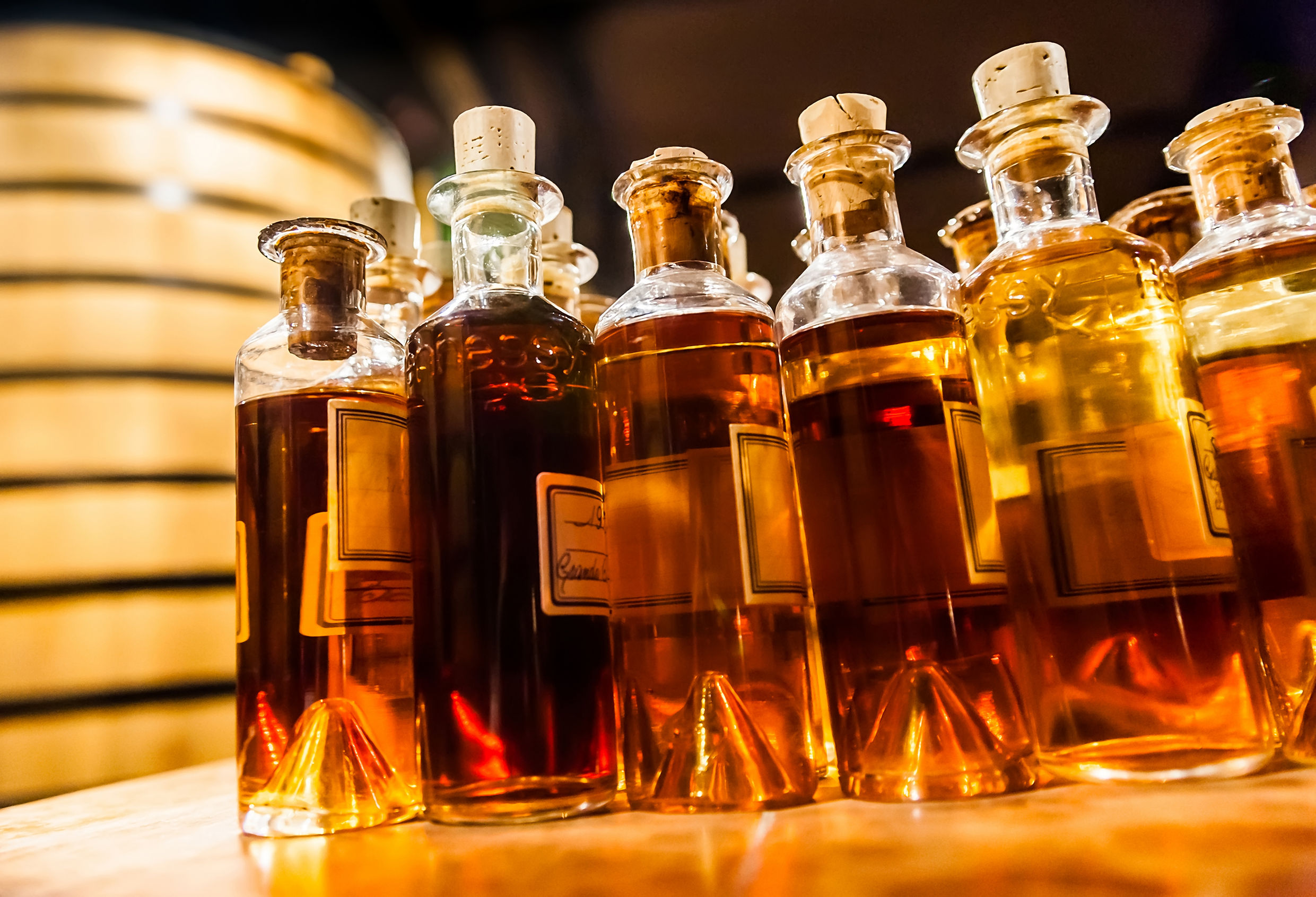
Cognac CuriositiesAll good wine and spirits students know that Cognac is a high-quality French Brandy, made from grapes grown in the delineated Cognac region, located just north of Bordeaux. There are several grape varieties allowed, of which Ugni Blanc (aka Trebbiano) is the preferred; the ferment goes through a double distillation in an Alembic still, followed by a minimum of two years’ aging in oak. Good! We’ve covered the basics. But did you know…

#1: The product of a third distillation is known as “Espirit de Cognac.” Espirit de Cognac was awarded an AOC in 1936, and is an unaged product that—after hours and hours of distillation—comes off the still at 80% to 85% abv. Brandy lovers of the world, don’t feel bad if you think you’ve never had Espirit de Cognac—it is not allowed to be sold as a spirit. Instead, it is used in the production of sparkling wines, and may comprises a portion of the liqueur d’expedition used in your favorite Champagne.

#2: Don’t confuse the unaged, bound-for-bubbly Espirit de Cognac AOC with a product labeled as L’Espirit de Cognac. Many Cognac producers use the term L’Espirit to designate their top-tier bottles. For instance, L’Espirit de Courvoisier is an assemblage of old cognacs – the oldest is rumored to be from the 1802 vintage (“the few precious drops that escaped Napoleon’s lips”), and the youngest from 1930.  Bottled in a numbered, hand-crafted Lalique crystal decanter, L’Espirit de Courvoisier sells for upwards of $5,000 per bottle – if you can find one.

Cognac grapes#3: Cognac is distilled from a white wine base, which is typically based on Ugni Blanc with some Colombard, Folle Blanche, Montils, and Sémillon sprinkled in. In practice, Ugni Blanc is by far the dominant grape, accounting for up to 90% of the total vineyards. Folignan, a Folle Blanche X Ugni Blanc cross may be used up to a maximum of 10%.

#4: Three other grapes are currently allowed to be used in the base wine as well. These are Jurançon Blanc, Meslier-St-François, and Sélect. Most of these grapes fall into the “uninteresting” category; however Meslier-St-François is (according to Jancis Robinson, et al, in Wine Grapes) a historic French variety that once grew in Champagne, the Yonne department of Burgundy, and the Loire Valley. As a matter of fact, in 1990, Charles Jumert of Cave de la Berthelotière “saved” the last surviving Meslier-St-François grapes of the Loire Valley by taking cuttings off of a vineyard as it was bulldozed under. He planted the grapes in Villiers-sur-Loir (north of Tours) and has been making a varietal Vin de France from them since 2003.

Cognac curiosities 2#5: 97% of all Cognac produced each year is exported. That’s right—only 3% of the Cognac produced, on average, is consumed at home. As a matter of fact, the French consume as much Scotch whisky as they do Cognac. This means that an average of 130 million bottles of Cognac are exported each year, which is enough to make grape brandy one of France’s most valuable exports. (As for France’s other valuable exports, #1 is airplanes [as in Airbus], #2 is medications, #6 is wine, #9 is make-up and sun-tan preparations, and #13 is perfume. Number 18 is brandy, Cognac included – not bad. You can see the rest of the data on French exports here.

The Bubbly Professor is “Miss Jane” Nickles of Austin, Texas… missjane@prodigy.net
Creature Feature: The Glassy-winged Sharpshooter

This is NOT a picture of the glass winged sharpshooter. Glassy winged sharpshooters are NOT cute. There is a link to a picture of a real glassy winged sharpshooter at the end of this post.

This is NOT a picture of the glassy winged sharpshooter. Glassy winged sharpshooters are NOT cute. There is a link to a picture of a real glassy winged sharpshooter at the end of this post.

Every good wine student knows this: The glassy winged sharpshooter is a vector responsible for spreading Pierce’s Disease, and as such, is a known threat to commercial viticulture.

I’m right, aren’t I? You knew that? You have probably answered that question correctly on an exam, or even discussed the little guy fairly intelligently amongst your wine-loving friends.

But do you even understand what a vector is? (Hint: a vector is an insect that spreads disease.) And how well do you really know our friend with the glassy wings? Read on for a little insect insight!

The glassy winged sharpshooter is a common type of insect known as a leafhopper. There are over 20,000 different species of leafhopper, and they reach all over the world. Leafhoppers are closely related to, and share their insect family name – Cicadellidae – with cicadas and treehoppers, but are only distantly related to grasshoppers.

All members of the leafhopper family – who go by the nickname of “hoppers” – are plant feeders that feast on the sap of grass, shrubs, or trees. Their hind legs are built for jumping and they do just that – hopping from leaf to leaf, blade to blade, or tree to tree, inserting their needle-like mouths into the plants to lap up the juice. Hoppers are considered pests in many places as they can dehydrate the plants they feed on, causing havoc not just to grapes but to over 100 different plants all over the world, including oak trees, citrus trees, apple trees, and even coffee plants.

The name “sharpshooter” is used to refer to a group of large leafhoppers in the Proconiini branch of the family tree. In order to get enough nutrients, these insects filter a large volume of liquid sap through their digestive systems. Much of the excess water is then “squirted” forcibly away from the insect’s body in a fine stream – thus, the nickname “sharpshooter.” (I was hoping it was something a bit less gross, but there you have it.)

The glassy-winged sharpshooter is about ½ inch (12mm) long and has large, translucent (“glassy”) smoky-brown wings with red veins.  They are native to the South America, and migrated to California from the southeastern United States. They were not always considered a serious pest in the past; but once introduced to Southern California it became a serious threat to viticulture due to the ease and rapidity with which it can spread the bacteria that causes Pierce’s disease. Once the sharpshooter has acquired the bacteria, it will remain infectious for the rest of its life.

There are NO glassy winged sharpshooters in the pictures. These bugs are cute. Glassy winged sharpshooters are NOT.

There are NO glassy winged sharpshooters in this picture. These bugs are cute. Glassy winged sharpshooters are NOT CUTE.

The glassy winged sharpshooter remains a serious threat to viticulture in California and beyond. Due to its coloration, it is difficult to see in nature, despite its size. “Bug spotting” programs are underway in parts of California to help identify and prevent further infestations. Plant nurseries must confirm that their plants are “sharpshooter-free” and everyone is on the lookout. School children are taught to spot “sharpshooter rain” and many Californians are encouraged to have yellow sticky traps in their yards. Anyone who thinks they spot a sharpshooter is encouraged to call a hotline.

In the case of minor infestations, biological controls are used, including the introduction of various bugs – such as small wasps, spiders, and the praying mantis – that feed on the eggs. Chemicals (pesticides) are used in more extreme cases, but some of the more effective chemicals are also damaging to the wasps that help control the sharpshooters.

In other parts of the world, the glassy winged sharpshooter causes havoc by spreading phoney peach disease, oleander leaf scorch, and citrus X disease. The danged little glassy winged sharpshooter, it seems, remains a serious pest.

To learn more, and to see a picture of the glassy winged sharpshooter, visit the website of the Applied Biological Control Research Department at UC Riverside.

The Bubbly Professor is “Miss Jane” Nickles of Austin, Texas… missjane@prodigy.net

In Praise of the Juniper Berry

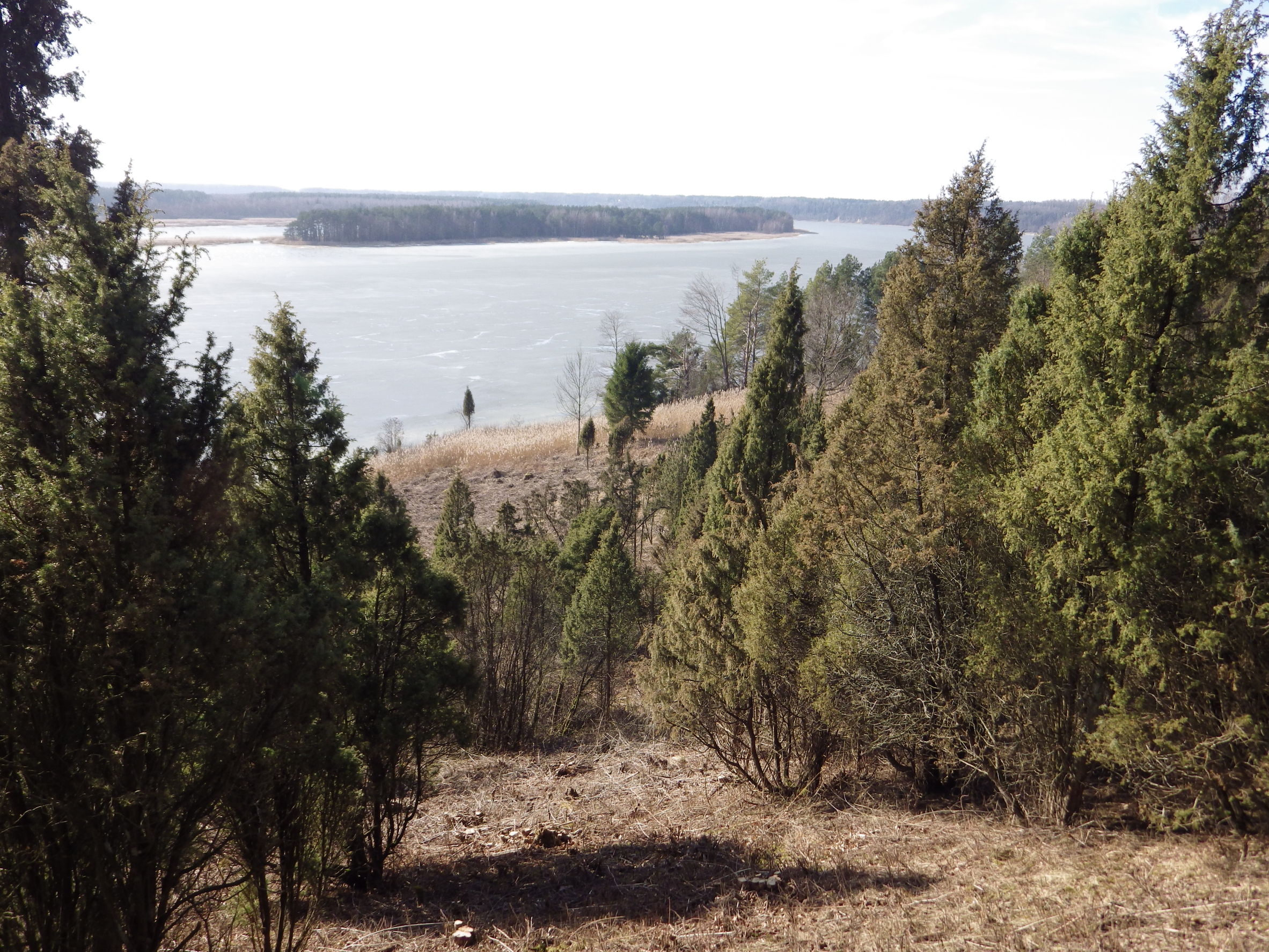
Fig 4-2 Juniper BerriesThe hero of gin lovers everywhere, the juniper berry is not really a berry at all but the seed cone of the juniper plant. Juniperus communis—the common juniper—is a shrub or small evergreen tree with needle-like leaves that grow in whorls of three. Juniper often grows as a low-spreading shrub, but juniper trees can grow to over 32 feet (10m) tall. The juniper plant has over 50 varieties and the largest range of any woody plant in the Northern Hemisphere, thriving throughout the temperate zone across North America, Europe, and Asia.

Many cultures consider the leaves of the juniper to be a symbol of protection against disease and evil spirits. In Tuscany, a sprig of juniper is often placed in front of the door to offer spiritual protection to the house and its inhabitants. Juniper can also ward off snakes—according to the ancient Greek pharmacologist Pedanius Dioscorides—who claimed that the smoke from a fire of burning juniper could keep the slithering reptiles far, far away.

The “berries” of the juniper plant begin life a grey-green color. They ripen in 18 months to a deep purple-black hue with a blue waxy coating. Juniper berries are also revered for their medicinal purposes, particularly as a diuretic and for conditions of the kidney, bladder, and stomach.

Of course, to students of wine and spirits, the juniper berry is known primarily as the predominant flavoring in gin and other spirits such as Genever, Steinhäger, and Wacholder. The flavor profile of juniper berries is often described a pine-like, resin-like, intensely herbal and with bitter citrus notes. Noted author Harold McGee, in his book On Food and Cooking defines the flavor of juniper as “green-fresh.”

The Juniper Forest ("The Valley of Juniper) in Ziarat, Pakistan

The Juniper Forest (“The Valley of Juniper”) in Ziarat, Pakistan

Juniper berries also play a role in culinary arts, particularly throughout Scandinavia and Central Europe. As such, juniper berries are often used to impart a sharp, clean flavor to meat dishes—particularly game, with its often distinct and robust flavor profile—as well as cabbage and sauerkraut dishes. Juniper has a natural affinity for pork and is found in many recipes for roast or braised pork, as seen in the recipe for choucroute garnie, a classic Alsatian dish of sauerkraut braised with mixed meats and sausages.

One more thing: on Easter Monday, according to tradition, the young men in Kashubia (Northern Poland) chase the young ladies around the town square, brushing (sometimes referred to as “gently whipping”) their legs with juniper sprigs. This custom is believed to ensure good fortune in love to the participants. I can only assume that after watching this annual tradition unfold, the parents would need a shot (or two) of gin.

The Bubbly Professor is “Miss Jane” Nickles of Austin, Texas: missjane@prodigy.net

Ten Tidbits on Tasmania

Tasmania VineyardTen Tidbits on Tasmania – Tasmanian Wine, that is!

#1 – The island of Tasmania is the southernmost state of Australia and lies about 150 miles south of the coast of Victoria, across the Bass Strait. Tasmania lies directly in the path of the fierce trade winds known as the “Roaring Forties” and as such, its west coast has a cold, wet climate.

#2 – Tasmania is Australia’s most mountainous state. The highest point is Mount Ossa in the northwest. Mount Ossa reaches peaks of 5,350 feet (1,620 meters) above sea level. The temperature climate necessary for viticulture in Tasmania is made possible by the multiple mountain ranges that criss-cross the center of the island. Most Tasmanian vineyards are located on lower slopes and valleys of these mountains, or in the rain shadow to the east.

#3 – As is to be expected considering its location, Tasmania has a maritime climate. Mild spring and summer temperatures, warm autumn days, and cool nights allow for the region’s grapes to enjoy a long, slow ripening with minimal loses of natural acidity.

#4 – Cool climate grapes dominate the viticultural landscape and include 44% Pinot Noir, 23% Chardonnay, 12% Sauvignon Blanc, 11% Pinot Gris and 5% Riesling. Other varieties include Cabernet Sauvignon, Merlot, and Gewürztraminer.  Tasmania’s cool climate makes it a natural for sparkling wines, and many of the sparkling wines produced in Australia are sourced with grapes grown in Tasmania.

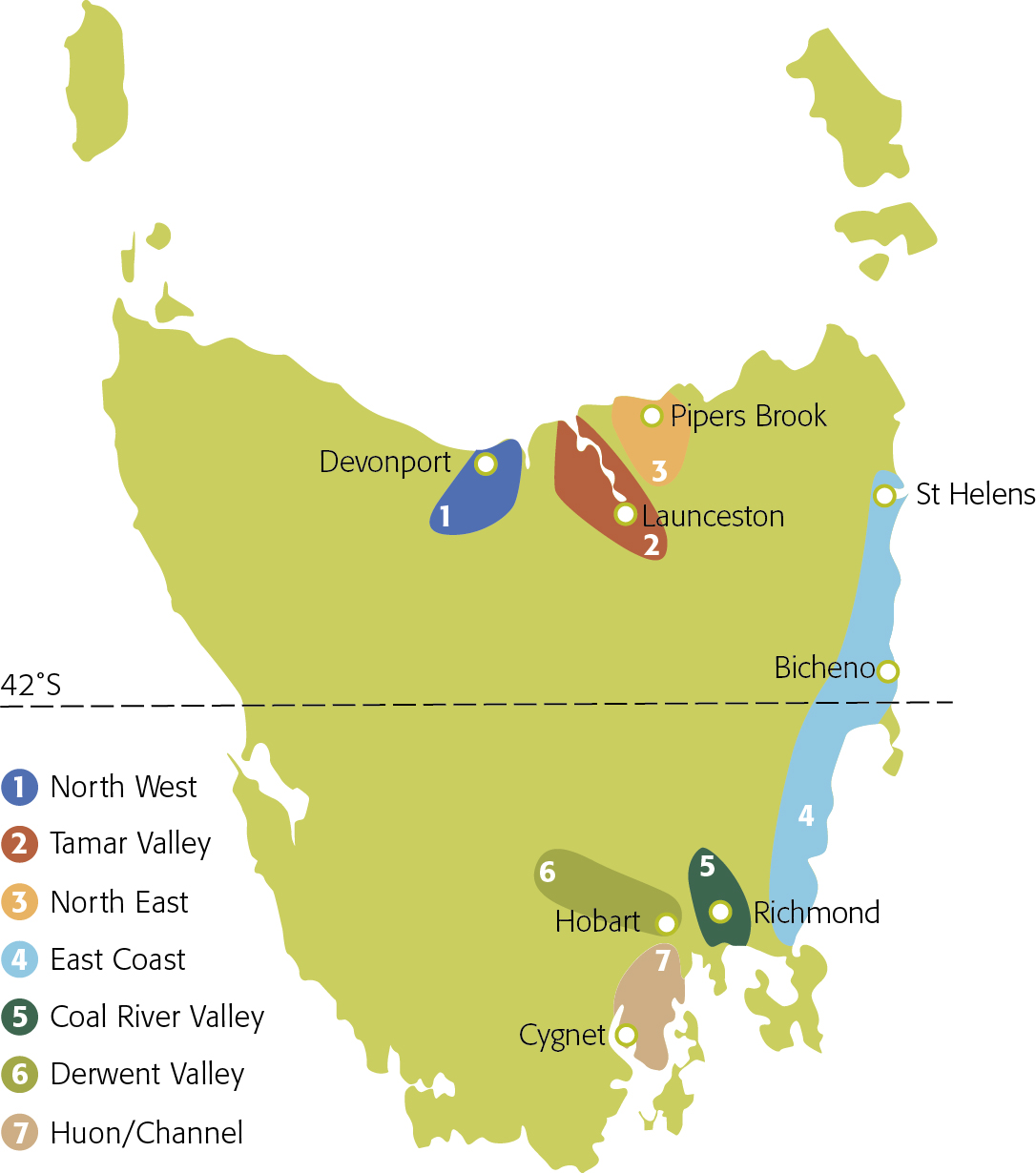
Tasmania map#5 – Tasmania’s output is tiny. At last count, the state had just over 3,700 acres (1,500 hectares) of vineyards, and accounted for approximately 0.5% of Australia’s output. They even say that “more wine is spilled on the main land than is produced in Tasmania.” However – Tasmania’s wine production rose by more than 300% over the last decade, and quality is regarded as quite high.

#6 – According to winetasmania.com, 100% of bottled Tasmanian wine retails for $15.00 or more – as compared to only 7% of Australian wines overall.

#7 – Tasmania’s first vineyard, planted in 1788, was a failure. The vines were planted by William Blight at Adventure Bay (on Bruny Island), but when he returned four years later they were gone. Vines were planted again in the early 1800s, and wine was made and sold commercially in Tasmania from 1800 through the 1860s. However, vine disease and the gold rush in Victoria (1851-1870) caused wine production in Tasmania to collapse by the 1870s.

#8 – In the 1830s, wines from Tasmania were brought to Victoria by William Henty. Henty sailed from Launceston in Tasmania to Portland in Victoria on the Schooner Thistle. Among his belongings were “one cask of grape cuttings and one box of plants.” These cuttings became the first vines planted in Victoria. At about the same time, vines from Tasmania were also among the first grapes planted in South Australia; John Hack (in 1837), and John Reynell (in 1837) both planted Tasmanian vines in South Australia.  Some say, based on these facts, that vines from Tasmania founded the wine industries of both Victoria and South Australia.

Map via winetasmania.com.au

Map via winetasmania.com.au

#9 – The beginnings of the modern era of Tasmanian wines can be traced back to the 1950s, when two Europeans, Jean Miguet and Claudio Alcorso arrived in Tasmania and, without knowing each other or what the other was doing, began planting vines and making wine.

#10 – While Tasmania does not have any officially designated wine regions or sub-regions within it, the following “unofficial” areas are generally used to describe those areas rich with vines:

  • In Northern Tasmania: The Northwest Coast, Tamar Valley, and Northeast/Pipers River
  • In Southern Tasmania: Coal River Valley, Derwent Valley, and Huon/Channel Valley
  • Straddling the Two: The East Coast

The Bubbly Professor is “Miss Jane” Nickles of Austin, Texas: missjane@prodigy.net
A Side Note on the Sidecar

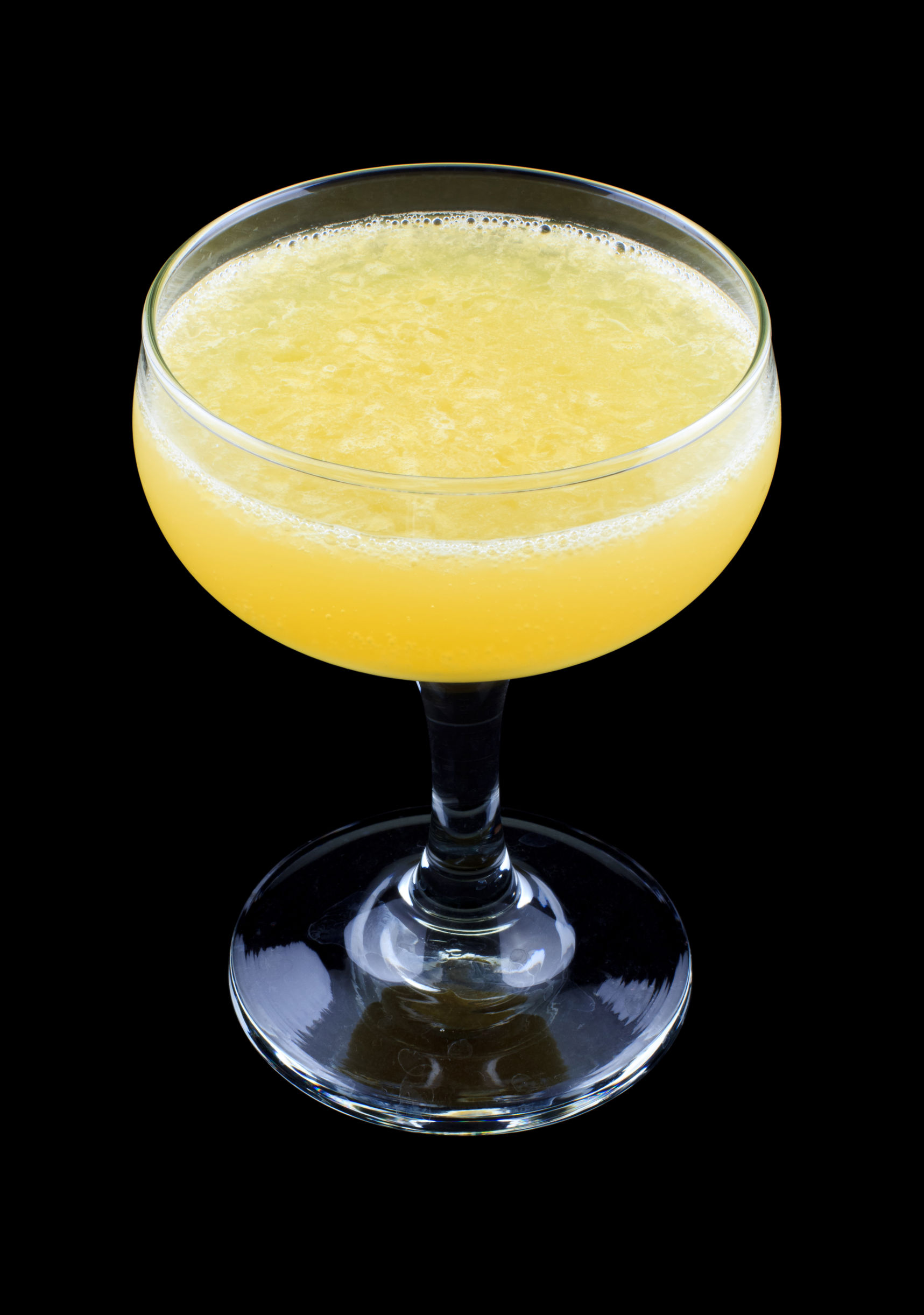
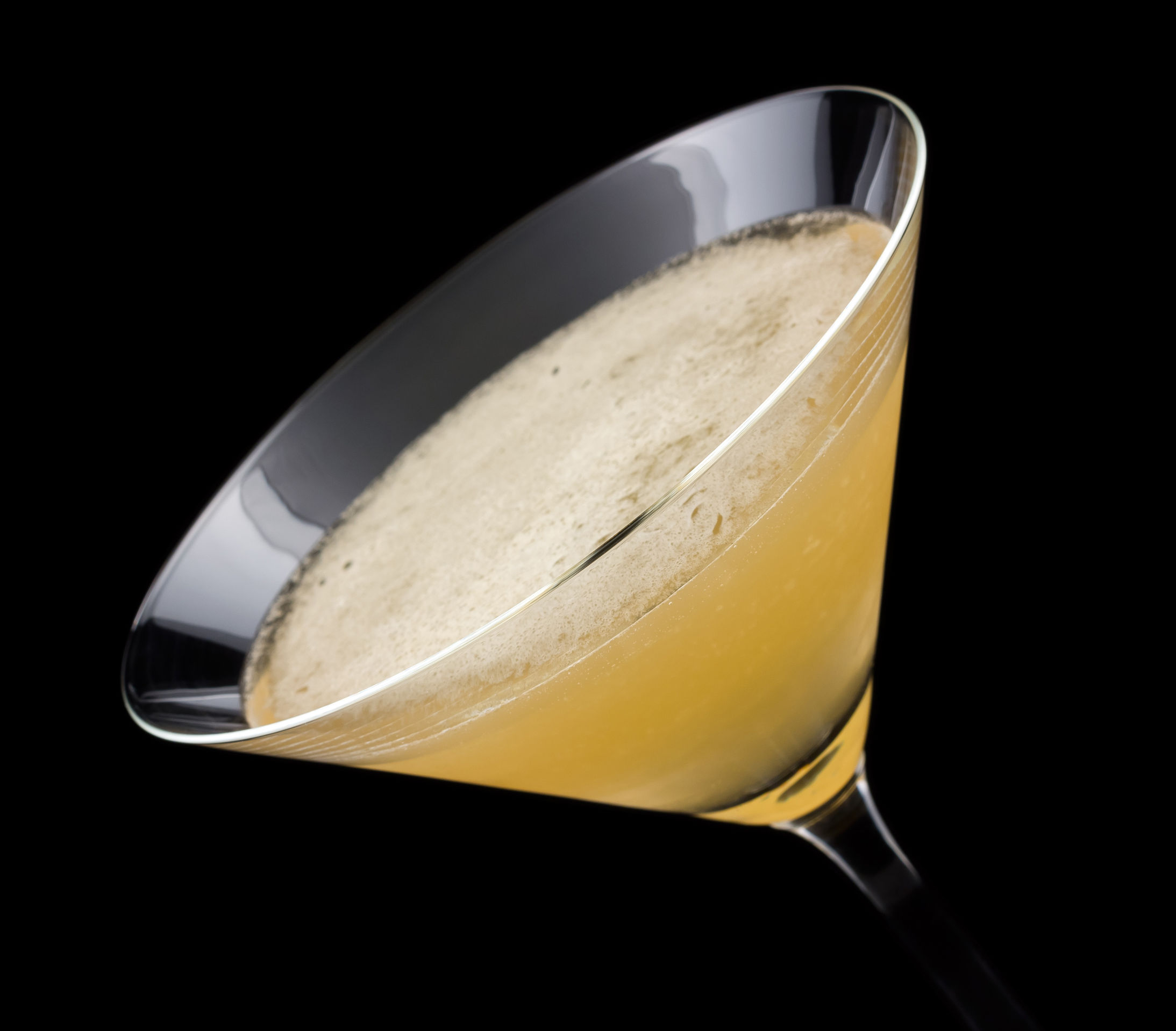
sidecar 1This blog post about the classic cocktail – the Sidecar – was borne of last Friday night’s dinner.

The anh (adorable new husband) and I went to our favorite local swingin’ hot spot. It’s a pretty fancy restaurant, maybe even special-occasion style, but we always snag a couple of seats at the bar and order casual. We have never been disappointed. Great, simple, classic food; excellent cocktails, professional, white-apron service – we love it every time.

One of my favorite things about the restaurant is the short-and-simple list of craft cocktails they offer. I usually order something cha-cha like the Bartlett Pear Martini (garnished with a house-made slice of dried pear) or the absolutely fabulous Blood and Sand, but this evening I really fancied a Sidecar. Interestingly enough, our lively bartender remarked that no one had ordered a Sidecar in years and he had to look it up. He quickly consulted his handy Mr. Boston Guide and made me a delightful cocktail (well, actually there were two cocktails by the end of the evening). Just perfect.

But it set me to thinking…if a working bartender in a busy, upscale restaurant has to remind himself how to make a Sidecar – what gives? A Sidecar is a classic, 1920’s-style  cocktail, and as such should be enjoying a resurgence of popularity along with other crafty cocktails – so let’s help it along!

As is true of many cocktails, there are many versions of the origin of the drink and the meaning of the name. One legend dates back to Harry’s Bar in Paris, near the end of the First World War. It seems there was a certain American Army Captain who sidecar 2would often arrive at the bar in the sidecar of his friend’s motorbike. The Captain drank Cognac, but as Cognac is considered more of an after-dinner drink in France, the bartender sweetened it with a bit of Cointreau and sharpened it with a squeeze of lemon juice. Named after the Captain’s preferred method of transportation, the Sidecar was born.

England also claims to be the land of the Sidecar’s invention. In London the star of the story is the legendary Pat MacGarry, bartender at the Buck’s Club in London, famous for inventing the Buck’s Fizz cocktail. The details of the story are the same – a Cognac-loving gentleman pulled up to the club in his friend’s sidecar – only the names have been changed!

A totally different version of the story harkens back to pre-prohibition New Orleans, where it is said that the Sidecar evolved from the Brandy Crusta. Here, the word “sidecar” was used for that little bit of a drink that is sometimes leftover after a drink is strained into the glass. The bartender would serve the excess in a shot glass on the side – which came to be known as a sidecar. In time, the story goes, the recipe for the Brandy Crusta (Cognac, Curacao, bitters, lemon juice, sugar) evolved, with Cointreau replacing the Curacao, and the new drink became known as a Sidecar.

sidecar 3There are also many versions of the recipe. While it is commonly agreed that the drink is composed of Cognac, Cointreau, and lemon juice—after that, all bets are off. Some recipes call for a sugared rim, some call for a lemon zest garnish, some call for a non-sugared rim, and some call for an orange wedge garnish. Some list the proportions of the drinks as 1:1:1 Cognac-Cointreau-lemon juice, some 2:1:1 for the same ingredients. I used to make mine in the 2:1:1 recipe – until I watched this beautifully made video by The Cocktail Spirit with Robert Hess. Robert recommends 4:2:1 Cognac-Cointreau-Lemon, and after listening to him (and trying it out) – I agree!

You need to watch Robert’s video! It will take six minutes of your life, but I promise it will be well worth it! You’ll learn a lot about the Sidecar, cocktail ingredients, cocktail techniques, and perhaps even life in general. And you will definitely be left craving a Sidecar. Enjoy in moderation and good health!

The Bubbly Professor is “Miss Jane” Nickles of Austin, Texas: missjane@prodigy.net

Five Fast Facts about Brouilly

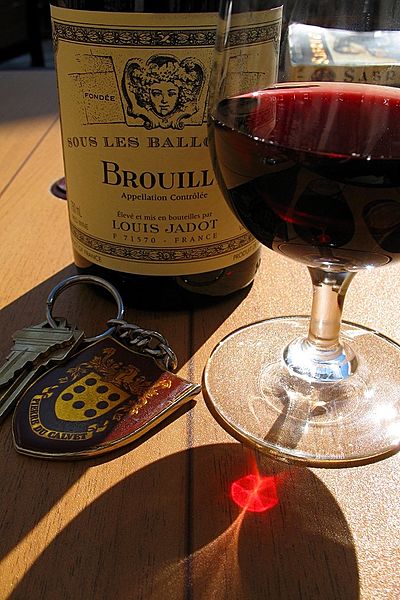
Photo of Louis Jadot Brouilly by Rob Ireton, via Wikimedia Commons

Photo of Louis Jadot Brouilly by Rob Ireton, via Wikimedia Commons

Five Fast Facts about Brouilly

#1 – Brouilly is one of the ten Crus of Beaujolais. It is the largest and most southerly of the ten Beaujolais Crus,  Although this large area contains a wide range of microclimates and soil types, most of the vineyards face roughly east and capture the bright morning sunshine as it rises over the Saone River Valley. The hills to the west shelter the region from some of the colder influences coming in from western France, while warm sunshine throughout the growing season means that the vines of Brouilly are among the first to be harvest in Beaujolais every year.

#2 – Brouilly is one of the few AOCs of Beaujolais not to be named after a local village; instead, it is named for Mount Brouilly. The vineyard area of Brouilly surrounds the mountain, and covers land in the following six communes: Cercié, Charentay, Odenas, Quincié-en-Beaujolais, Saint-Etienne-la-Varenne, and Saint-Lager.

#3 – The mountain itself, set somewhat apart from the hills to the west of Beaujolais, was named after a Roman soldier named Brulius, who is credited with planting the first vines here over 2,000 years ago. There is a small chapel at the top of the hill, built in 1857 in order to place the vineyards under the protection of the Virgin Mary.  A smaller, separate AOC, Côte de Brouilly, covers vineyards on the higher slopes of the mountain, and is completely surrounded by the larger Brouilly AOC.

#4 – The Brouilly AOC is approved only for dry, red  wines based on the Gamay grape variety. Interestingly enough, the décret for the appellation also allows for white grapes to be grown in the region, and up to 15% of the wine may be based on Chardonnay, Aligoté, or Melon de Bourgogne.

Mount Brouilly

Mount Brouilly

#5 – There’s a legend for that: Brouilly is home to a Lieu-dit (small vineyard area bearing a traditional name) named Pisse-Vielle. Pisse-Vielle which pretty much sounds like what it means, which is for lack of a better way of saying it, “Piss, old woman.’

The  legend behind the name goes like this: A pious old woman, who regularly goes to confession, had her first meeting with the town’s new priest. The woman had very little to actually confess, so at the end of their meeting, the priest gave her his typical salutation of “Go, and sin no more!” Unfortunately, in the local dialect of the town, the word for to sin (pécher) and (for lack of a gentler way of saying it) to pee (pisser) sounded quite the same – and she thought the priest had commanded her to “Go and pee no more.” (Poor thing!) She tried her best to comply, but her husband didn’t quite understand the command, and went to see to Priest. The husband and the priest quickly cleared up the confusion, and in his rush to convey the news, the husband yelled down the street towards his wife – “Pisse Vielle!” (“Piss, Old Woman!”) – “the priest said it’s alright!”  As these things usually go, the neighbors heard his cry, and have not since forgotten!

Five Fast Facts about Entre-Deux-Mers

Map of Bordeaux via The Society of Wine Educators

Map of Bordeaux via The Society of Wine Educators

Five Fast Facts about Entre-Deux-Mers

#1 – Entre-Deux-Mers is named after its geographical location (“between two seas,” sometimes translated as “rivers” or “tides”), which refers to its situation in the lands between the Garonne and the Dordogne Rivers. These rivers provide the location with a mild, maritime climate and soils made up mainly of  a mix of clay and limestone. The area closest to the eastern shore of the Garonne River has a good deal of humidity – enough for the production of botrytis-affected wines.

#2 – The Entre-Deux-Mers AOC appellation is only approved for white wines. 70% of the grapes must be the “principal varieties” of Sauvignon Blanc, Sémillon, Muscadelle, or Sauvignon Gris.  The other 30% may include Merlot Blanc (maximum 30%), and a combined maximum of 10% of Mauzac, Colombard, and Ugni Blanc. Entre-Deaux-Mers AOC must contain a minimum of two grape varieties.

#3 – The Entre-Deux-Mers area contains within it 7 different AOCs. These appellations are approved for a variety of different types of wine. They are:

  • The aforementioned Entre-Deux-Mers AOC (for dry white wines), which includes the sub-zone of Entre-Deux-Mers Haut-Benauge
  • Cadillac (botrytis-affected sweet white wines)
  • Graves de Vayres AOC (for dry wines, both red and white)
  • Loupiac AOC (sweet white wines, may be affected by botrytis)
  • Côtes de Bordeaux-Saint-Macaire AOC (white wines – dry [sec], off-dry [moelleux]) and sweet/botrytis affected [liquoreux])
  • Ste-Croix-du-Mont AOC (sweet, botrytis-affected white wines)
  • Premières Côtes de Bordeaux AOC (white wines, off-dry to sweet)

#4 – The area produces a lot of good-to-very good red wine, with the majority of the red grapevines planted to Merlot. Much of this is bottled under the Bordeaux AOC; the best of these wines are sold under the Bordeaux Supérieur AOC.

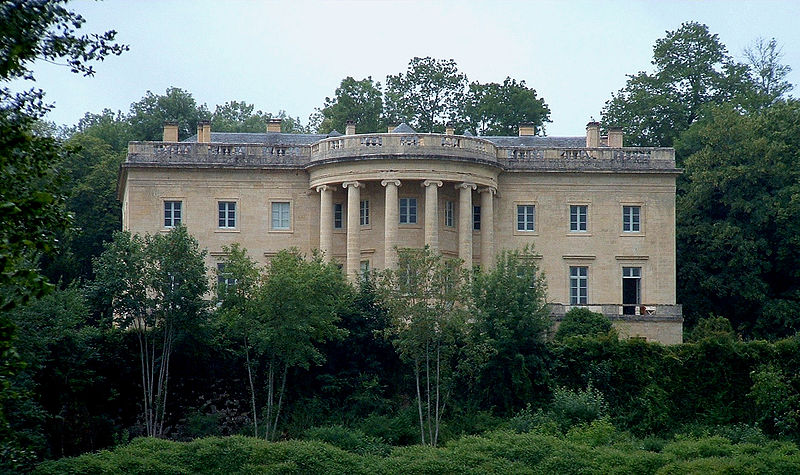
Photo of Château de Rastignac by MOSSOT, via Wikimedia Commons

Photo of Château de Rastignac by MOSSOT, via Wikimedia Commons

#5 – Just-for-fun fact: A house (now sub-divided into apartments) in the area, known as Château de Rastignac, was designed to look like the US White House. While the architect, Mathurin Salat, never visited the United States, it is known that our wine-loving third President, Thomas Jefferson -who had reviewed the original architectural plans of the White House – did visit the area and meet Salat during Jefferson’s service as the US Ambassador to France.

The Bubbly Professor is “Miss Jane” Nickles of Austin, Texas – missjane@prodigy.net
Now on the Wine Travel Bucket List: Moldova

moldova mapQuick! Tell me everything you know about Moldova!

If you can’t come up with anything, don’t feel bad. As of yesterday, I knew a grand total of about three things about Moldova: one-it was part of the former Soviet Union; two-they make wine there (but I couldn’t tell you anything about it); and three-it is the home of the “Epic Sax Guy.”

Today, though, I can tell you quite a bit more about Moldova. For instance, Moldova is located between Romania and Ukraine, just north of the Black Sea. As part of the breakup of the Soviet Union, Moldova declared itself an independent state – the Republic of Moldova – in 1991. The transition has not been easy and there has been civil unrest and economic woes. But there has also been progress, and in 2013 Moldova entered into an “Association Agreement” with the European Union, meaning that they can work towards aligning their practices with EU standards in the hopes of becoming a member in the future. It should be interesting to see how that unfolds.

This also means that wines of Moldova may soon fall under EU standards, and perhaps that means that more wine lovers may soon become a bit more familiar with Moldovan wines. For starters, here are a few fascinating facts about the wines of Moldova:

It’s ancient: Moldova has one of the oldest wine cultures in the world; there is evidence of wine production in the area as far back as 3,000 BC.

It’s growing: Moldova currently has over 275,000 acres of vines. Of the vinifera grapes planted, about 70% of them are international varieties of the Cabernet-Merlot-Chardonnay type. About 20% are grapes sometimes called “Caucasian grapes” and are widely grown throughout eastern Europe – Rkatsiteli and Saperavi, for example.

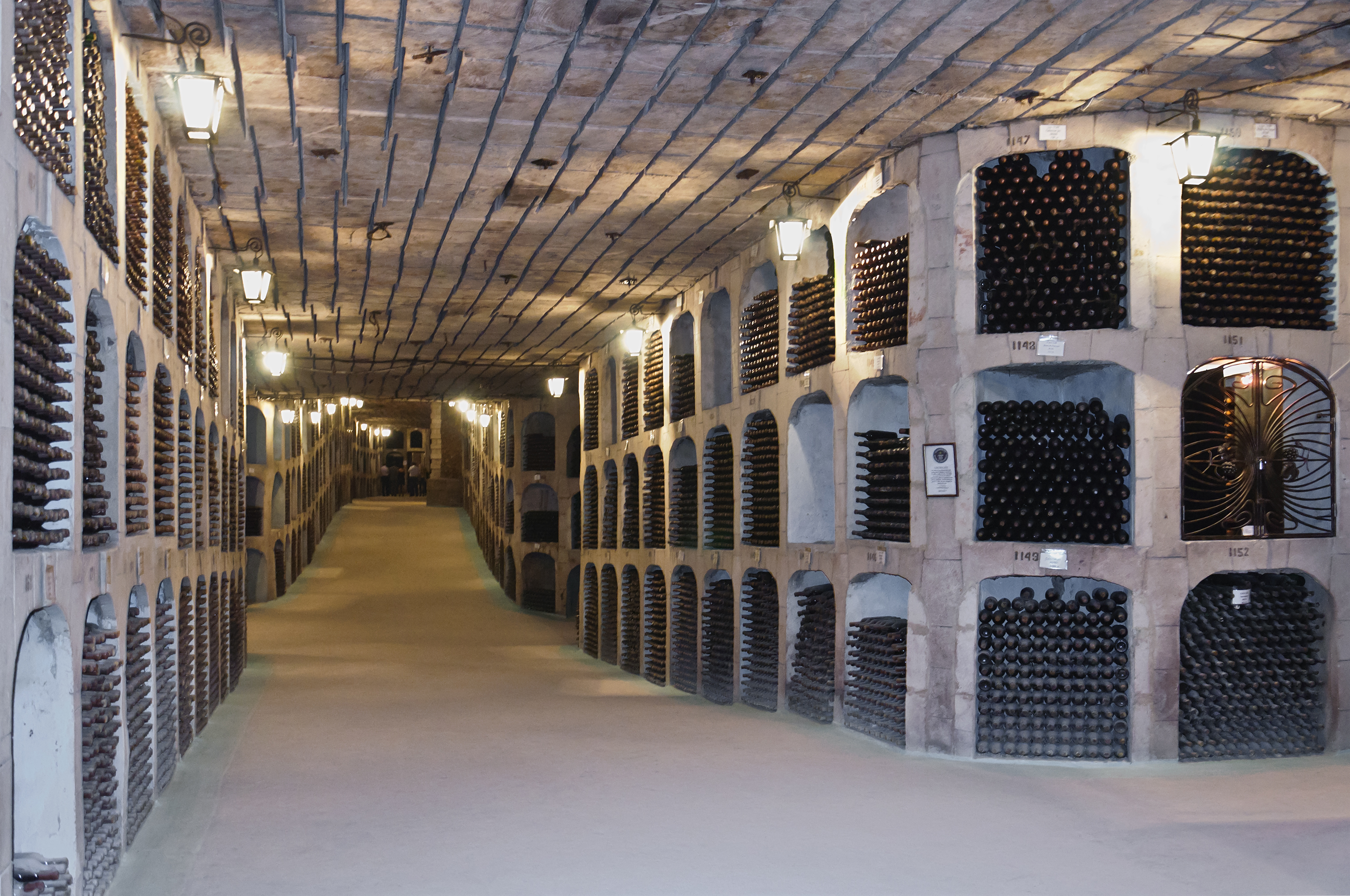
"Caves Milestii Mici Moldavie" by Photo: Myrabella / Wikimedia Commons.

“Caves Milestii Mici Moldavie” by Photo: Myrabella / Wikimedia Commons.

It’s indigenous: About 10% of Moldova’s vineyards are planted to the indigenous varieties of the region. Some of these include Feteasca Alba (white), Feteasca Regala (white), Feteasca Neagra (red), Rara Neagra (red), and Viorica (white). These are surely some of the most historic and unique wines of the region.

It’s deep: Moldova is well-known for its historic and extensive wine tunnels. The cellars of Mileștii Mici Winery stretch on for over 135 miles, at an average depth of 250 feet. The cellar, built in the style of a feudal fortress, is understandably one of Moldova’s most popular tourist attractions. With over 1.5 million bottles of wine from all over the world – some dating back to the 1960’s – Mileștii Mici Winery’s “Golden Collection” holds the Guinness World Record for the world’s largest wine cellar and wine collection.

It sparkles: During the time of the Soviet Union, Moldova was a large producer of the sparkling wine known at the time as Sovetskoye Shampanskoye (“Soviet Champagne”). The Cricova Winery, the largest producer of Moldovan sparklers, makes its wines using the “Traditional Method” and ages its wine in its underground cellars. The underground cellars of the Cricova Winery –  stretching on for 45 miles and housing a large wine collection known as the “National Vinotheque” – are almost as impressive as the cellar at Mileștii Mici.

Map via the Wine of Moldova site: http://wineofmoldova.com/en/

Map via the Wine of Moldova site: http://wineofmoldova.com/en/

It has 4 designated regions, including 3 PGIs:

  • The historic region of Balti is the smallest, northernmost and coolest region. The Balti region produces mainly white wines as well as a high-quality brandy known as Divin.
  • The Codru PGI is the largest area, producing over 60% of the country’s wine.  This cool-to-warm-climate region, surrounded by forests, is known for white wines.
  • The Valul lui Traian PGI, located in the southeast of the country, is the leading producer of red wine.
  • The Ștefan-Vodă PGI, located in the basin of the Nistru River, includes the famous Purcari region. It produces both red and white wines. Purcari wines have been renowned throughout Europe since 1878, when Negru de Purcari (a red wine made with Cabernet Sauvignon, Rara Neagră and Saperavi grapes) was awarded a gold medal at the World Exhibition.

For more information, visit the Wine of Moldova website!