Misfits of the Loire

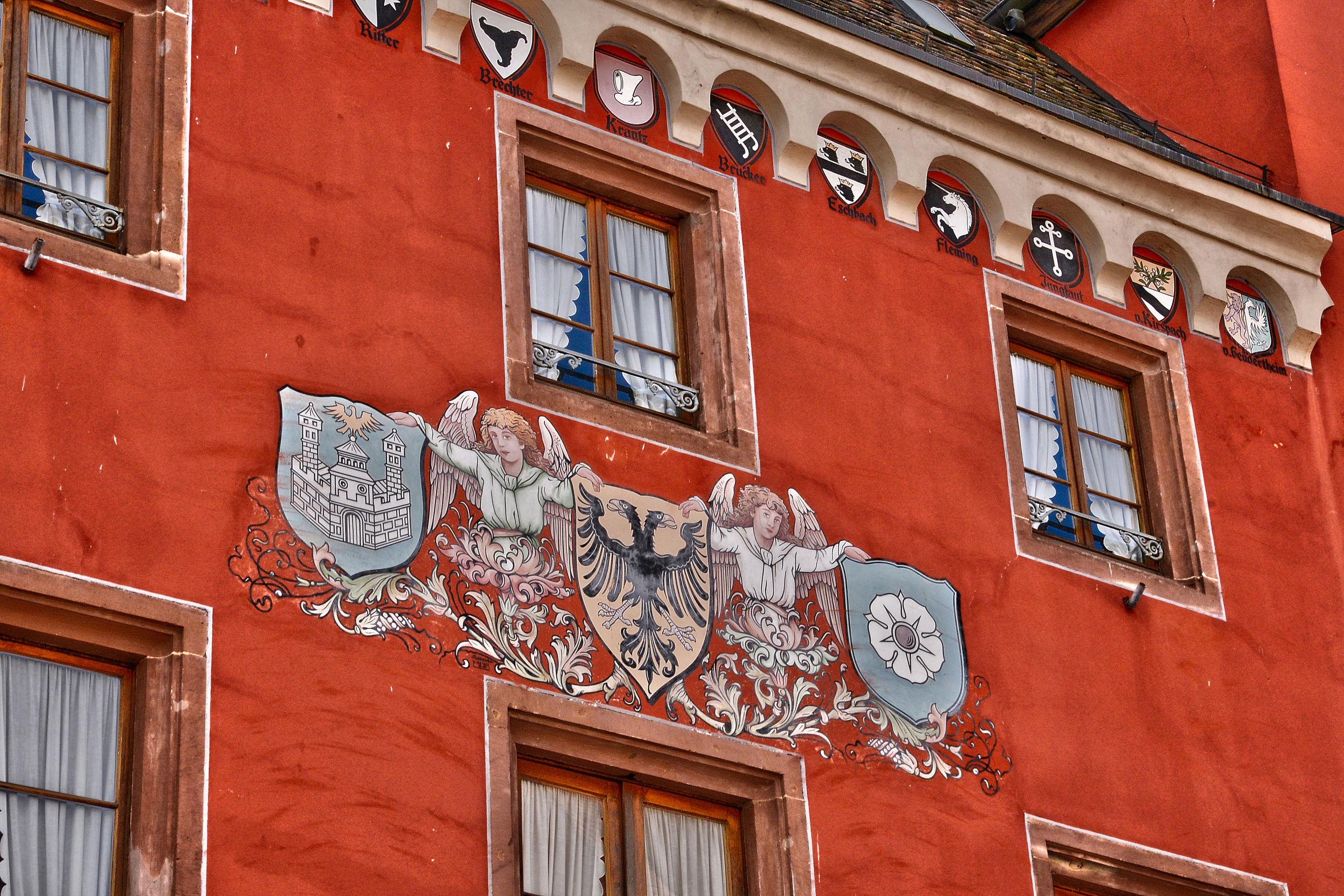
Close-up of a window in Château de Chaumont (Chaumont-sur-Loire)

Close-up of a window in Château de Chaumont     (Chaumont-sur-Loire)

A good wine student can most likely give you an excellent overview of the wines of the Loire. Perhaps it would go something like this:

The Pays Nantais is the westernmost region of the Loire Valley. It is adjacent to the Atlantic Ocean and overall the coolest area of the Loire, focusing on dry white wines produced using the Melon de Bourgogne grape variety. The majority of the wine here is produced in one of the four AOCs bearing the name “Muscadet.”

Moving inland, the Anjou-Saumur region focuses on white wines, both still and sparkling and in various levels of sweetness, produced from Chenin Blanc. Still reds, still rosés, and some sparkling wines are also produced in Anjou-Saumur, primarily using the main red grapes of the area–Cabernet Franc, Pinot Noir, Gamay and Côt (Malbec). Moving further east, the region of Touraine produces white wines using Chenin Blanc, but further inland as the soils and climate evolve, the focus moves to Sauvignon Blanc. Red wine and rosé is produced here as well. The easternmost region of the Loire, referred to as the Eastern Loire or Upper Loire, focuses on crisp whites made using Sauvignon Blanc; a few Pinot-Noir and Cabernet Franc-based reds are produced in the Eastern Loire as well.

Kitchen garden at the Château de Villandry

Kitchen garden at the Château de Villandry

So how did our wine student do? Pretty well, I would say. That’s a nice overview of the Loire!

However…if we want to dig a bit deeper, we will learn that the 300 mile-long Loire Valley wine region actually contains close to 50 AOCs and 5 IGPs, and among them over two dozen grape varieties are grown and made into Loire Valley wines.

Here are a few that I found that produce unique wines using grapes that are (somewhat) unusual for the Loire Valley. I like to call these wines “Misfits of the Loire” (in the most endearing use of the term, of course).

Cour-Cheverny AOC: The Cheverny AOC is tucked into the easternmost part of Touraine, just south of the Loire River. The subregion of Cour-Cheverny (named for a tiny commune with around 2,000 inhabitants) is, in turn, tucked into the southeast part of the Cheverny AOC. Here you’ll find the only Loire Valley plantings of the Romorantin grape variety (and, perhaps the only Romorantin vines left in France). The Cour-Cheverny AOC produces dry to off-dry wines.

Romorantin is a white grape variety closely related to Chardonnay–its parentage appears to the be same as Chardonnay (Pinot X Gouis Blanc) however, the “Pinot” in the case of Romorantin is not Pinot Noir (thought to be the parent of Chardonnay), but rather a rare Pinot mutation known as Pinot Fin Teinturier—making Romorantin and Chardonnay something akin to step-sisters whose fathers were fraternal twins (thank goodness we’re talking about grapes).
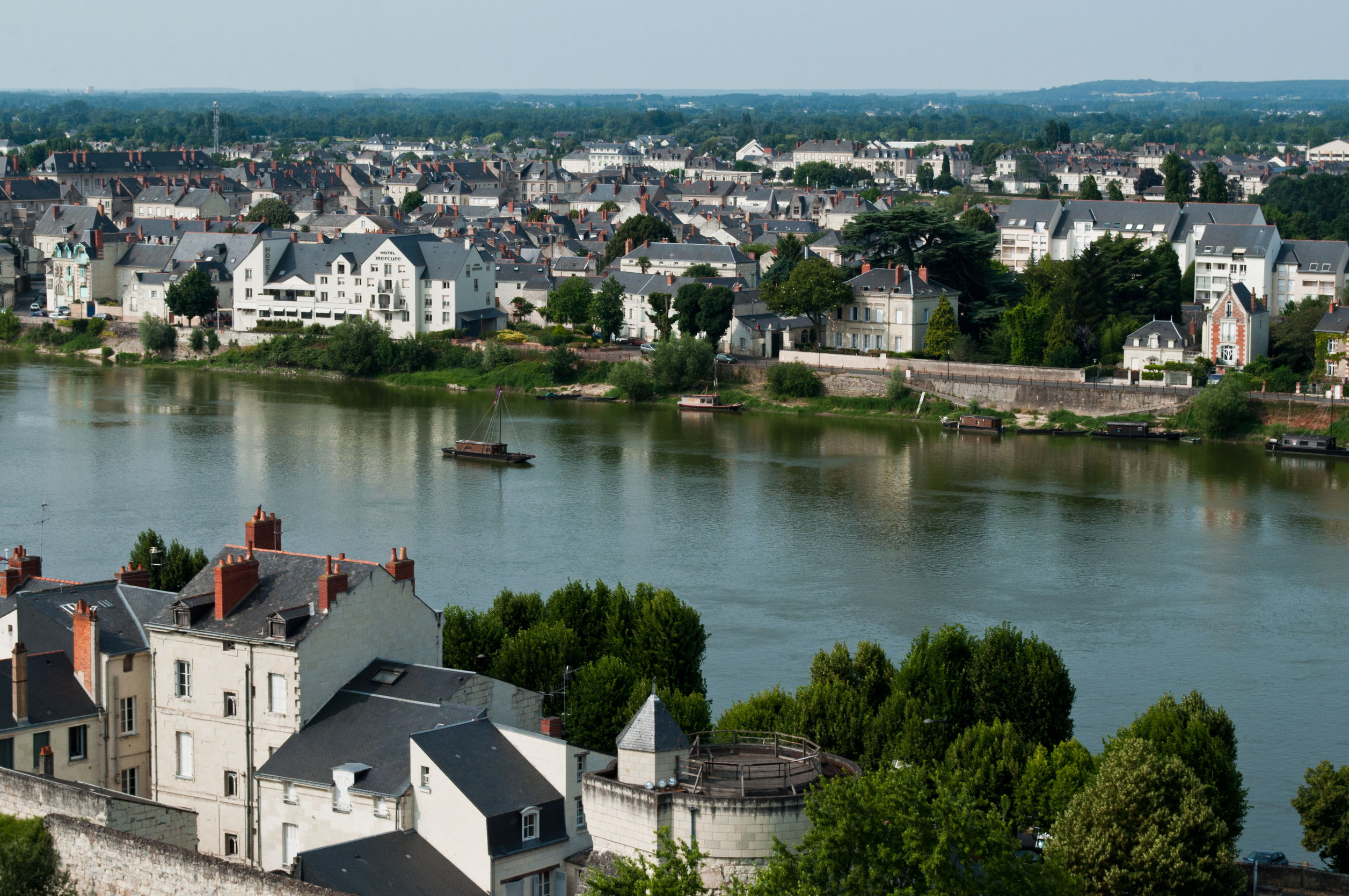
Panorama of Saumur

Panorama of Saumur

Cour-Cheverny was promoted to an AOC (from its former VDQS status) in 1993. It currently has just under 180 acres (73 ha) of vines, all planted to Romorantin. Dry wines produced in the Cour-Cheverny AOC tend to be light-bodied, crisply acidic, and lightly aromatic with aromas and flavors of citrus, green apple, and peach. Richer, off-dry wines–some of them lightly affected by botrytis–can have a waxy texture along with flavors of tropical fruit and honey.

Pouilly-sur-Loire AOC: The Pouilly-sur-Loire AOC actually occupies the same location as Pouilly-Fumé (which might be called its “much-more-famous brother”). As all good wine students know, Pouilly-Fumé produces crisp, dry, white wines from 100% Sauvignon Blanc grapes. The Pouilly-sur-Loire AOC, in contrast, produces dry white wines using 100% Chasselas–a grape mostly known for its (likely) origin near Lake Geneva as well as its widespread use in the wines of Switzerland. Chasselas is currently grown throughout France, although it is usually used for table grapes or grape juice. It is, however, an allowed grape in the Alsace AOC (albeit typically used in blends) and Vin de Savoie AOC. Known as Gutedel, it is also grown in small amounts in Germany and Austria.
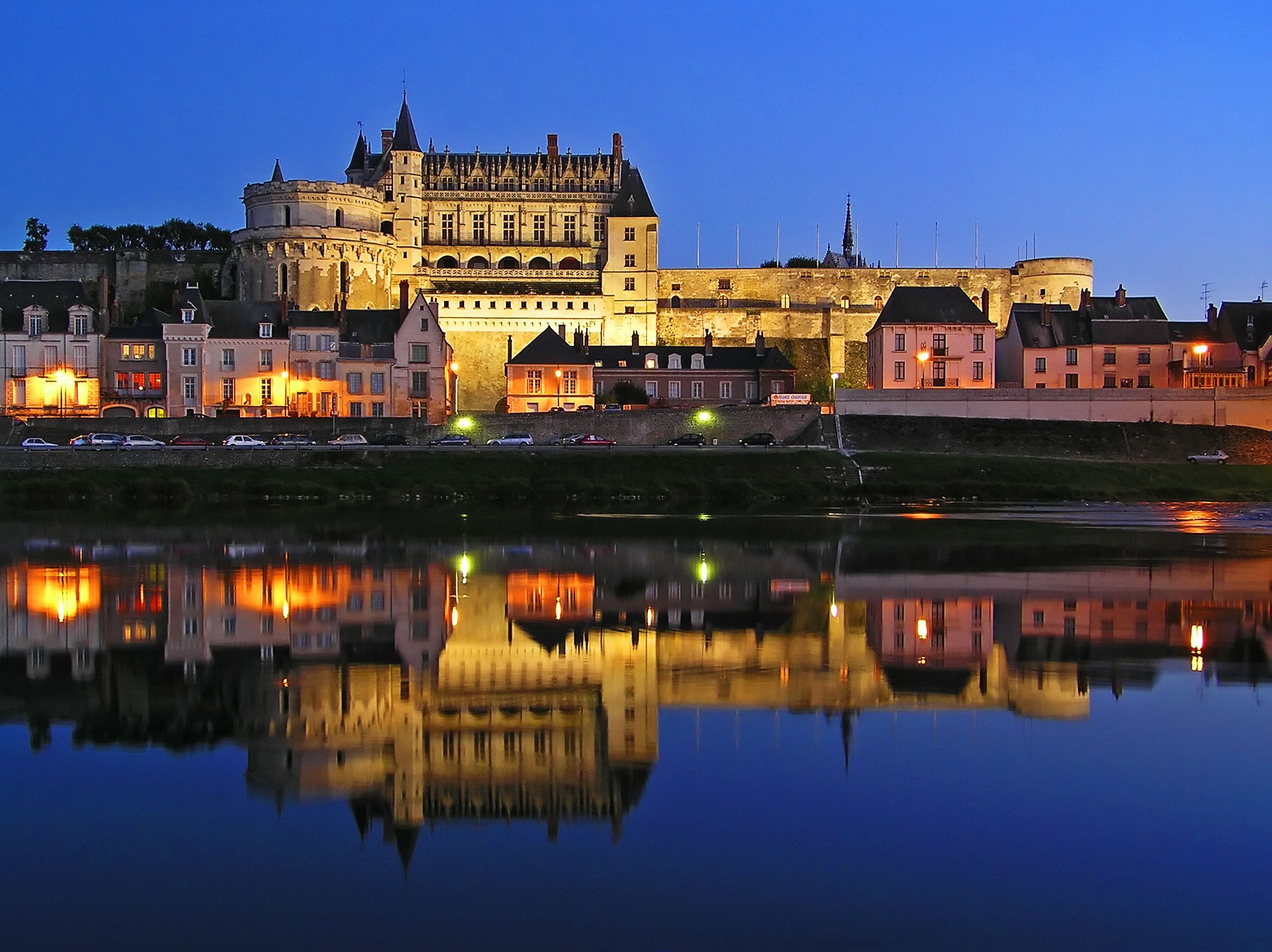
Château d’Amboise (Indre-et-Loire)

Château d’Amboise (Indre-et-Loire)

The wines of Pouilly-sur-Loire AOC are the only AOC wines in the Loire allowed to use the Chasselas grape variety.  Pouilly-sur-Loire wines are somewhat rare, but Domaine Saget makes a version described on their website as “pale gold with hints of yellow, aromas of white fruit, plum, and almond; pure and crisp with mineral notes.”

Touraine Noble-Joué AOC: The Touraine Noble-Joué is a rosé-only AOC tucked in between two tributaries of the Loire River—the Cher and the Indre–just south of the town of Tours. Rosé-only AOCs are not uncommon in the Loire Valley–others include the AOCs of Rosé d’Anjou, Cabernet d’Anjou, Cabernet de Saumur and Rosé de Loire. However, the Touraine Noble-Joué AOC in unique in that it requires the wines to be produced using a blend of the “three Pinots” – and one of them is white.

The required blend for Touraine Noble-Joué AOC is as follows: a minimum of 40% Pinot Meunier, a minimum of 20% Pinot Gris, and at least 10% Pinot Noir. No other grapes are allowed.
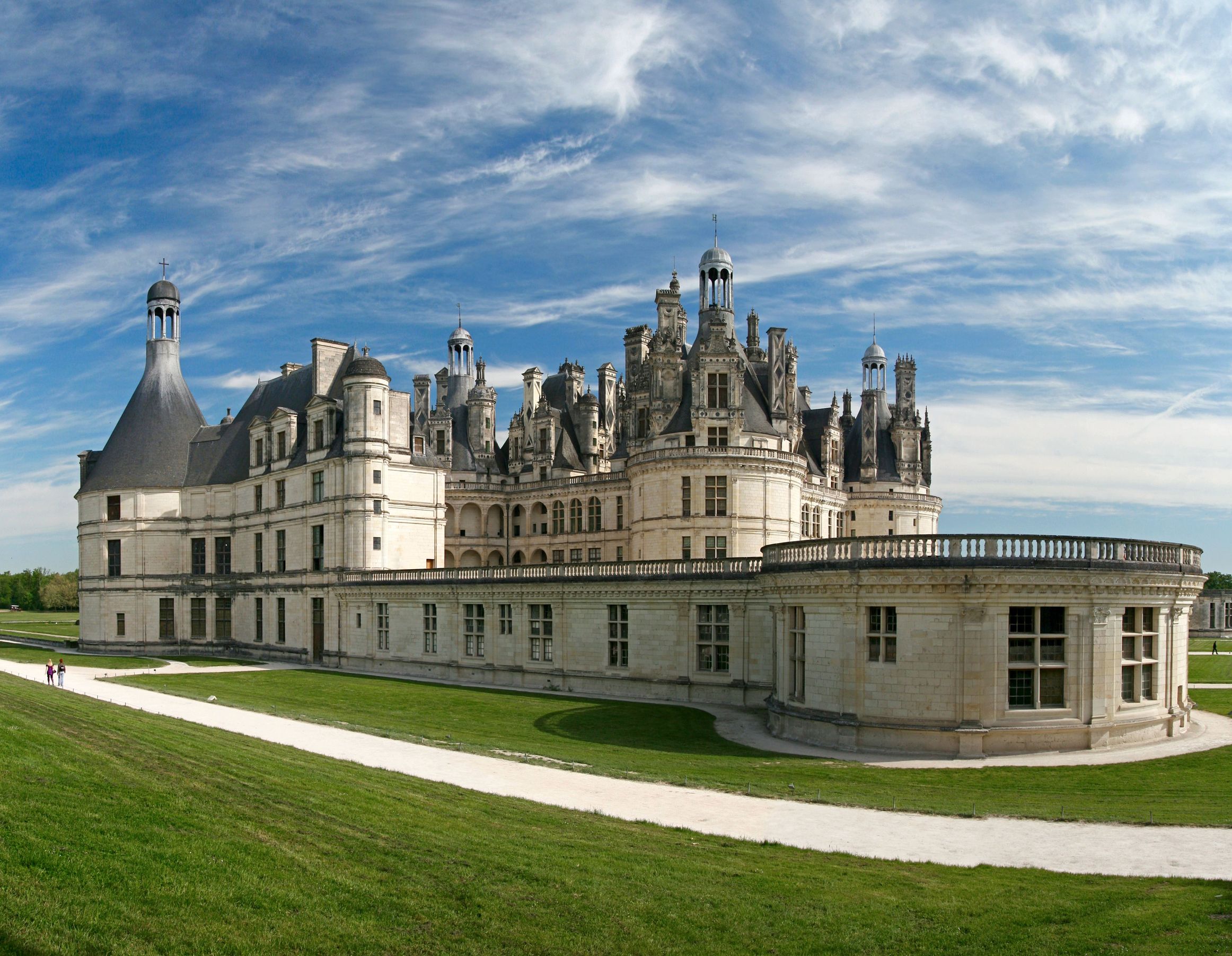
Château de Chambord (Loir-et-Cher)

Château de Chambord (Loir-et-Cher)

The wines of the area also have a long and interesting history. It was a favorite of King Louis XI of the House of Valois, who ruled France from 1461 to 1483. However, as the town of Tours began to grow and spread into suburbs, the vineyards gave over to housing, roads, stores, and cafés. In 1975, primarily through the efforts of vigneron Jean-Jaques Pierru (of Jean-Jacques Sard Jérémie Pierru), the remaining 30 ha of vineyards in and around the town were saved, and the wine brought back into style.  Touraine Noble-Joué was awarded its AOC status in 2001.

Technically considered a vin gris (per the Cahier des Charges), Touraine Noble-Joué AOC has been described as pale, pinkish-grey in appearance with aromas of cherry and strawberry. The wine tends to be light-bodied and crisp with flavors of cherries, red plum, flowers, and berries; followed by a hint of minerality on the finish.

References:

The Bubbly Professor is “Miss Jane” Nickles of Austin, Texas… missjane@prodigy.net

Cape Kidnappers and the Farewell Spit

This post, along with my last post on Poverty Bay and the Bay of Plenty, is a result of my wandering mind while studying wine…I tend to wonder how “Poverty Bay” acquired such a name, and why Nelson (on New Zealand’s South Island) has a land feature known as the “Farewell Spit.” If these kinds of things inquire your mind as well…read on!

Farewell Spit: Nasa Satellite Image

Farewell Spit: Nasa Satellite Image

Sunny Nelson and the Farewell Spit

Nelson—a region on the South Island of New Zealand and a wine-producing area as well—enjoys one of the sunniest climates in the country, due to the rain shadow of the West Nelson Mountains.  Tucked behind an area known as Golden Bay, the region seems to be a wonderland for natural beauty and tourism (and it is). So why…does it include a feature known as the “Farewell Spit?” Just sounds nasty.

A spit doesn’t sound as weird when one uses the full  terminology: sandspit.  A sandspit is a type of coastal landform found along the coast where the direction of the shore changes, causing the ocean current to spread out and deposit sand. The longest spit in the world—at 68 miles long— is the Arabat Spit in the Sea of Azov (Crimea).

Nelson’s Farewell Spit (known to the Maori as Onetuhuna) on New Zealand’s South Island is approximately 20 miles long. It is made up primarily of sand eroded from the Southern Alps and deposited into Golden Bay. The name “Farewell Spit” was derived from the name given to the area by Captain James Cook as he departed NZ NelsonNew Zealand for Australia in 1770. The Cape was the last landform the crew was able to see as they sailed away, and the maps produced from his visit showed the area as the “Farewell Cape.”  The name stuck among English speakers and today the sandspit is known as the “Farewell Spit.” The New Zealand Department of Conservation administers the area as a sea bird and wild life reserve.

  • From the wine department: Nelson is one of the smaller regions in terms of wine production; with just 2,700 acres (1,120 ha) of vines, this region produces a mere 2.4% of New Zealand’s wine. The region, known for being the only wine growing area on New Zealand’s South Island that is located to the west of the Southern Alps, still enjoys its “sunny Nelson” reputation due to the presence of smaller mountain ranges that protect its west and south sides from excessive rainfall, while the Southern Alps cradle it to the east. Nelson grows a little bit of Pinot Noir, but focuses on Chardonnay and Sauvignon Blanc as well as a spattering of aromatic whites such as Gewurztraminer, Riesling, and Pinot Gris.

Hawke’s Bay and Cape Kidnappers

Cape Kidnappers

Cape Kidnappers

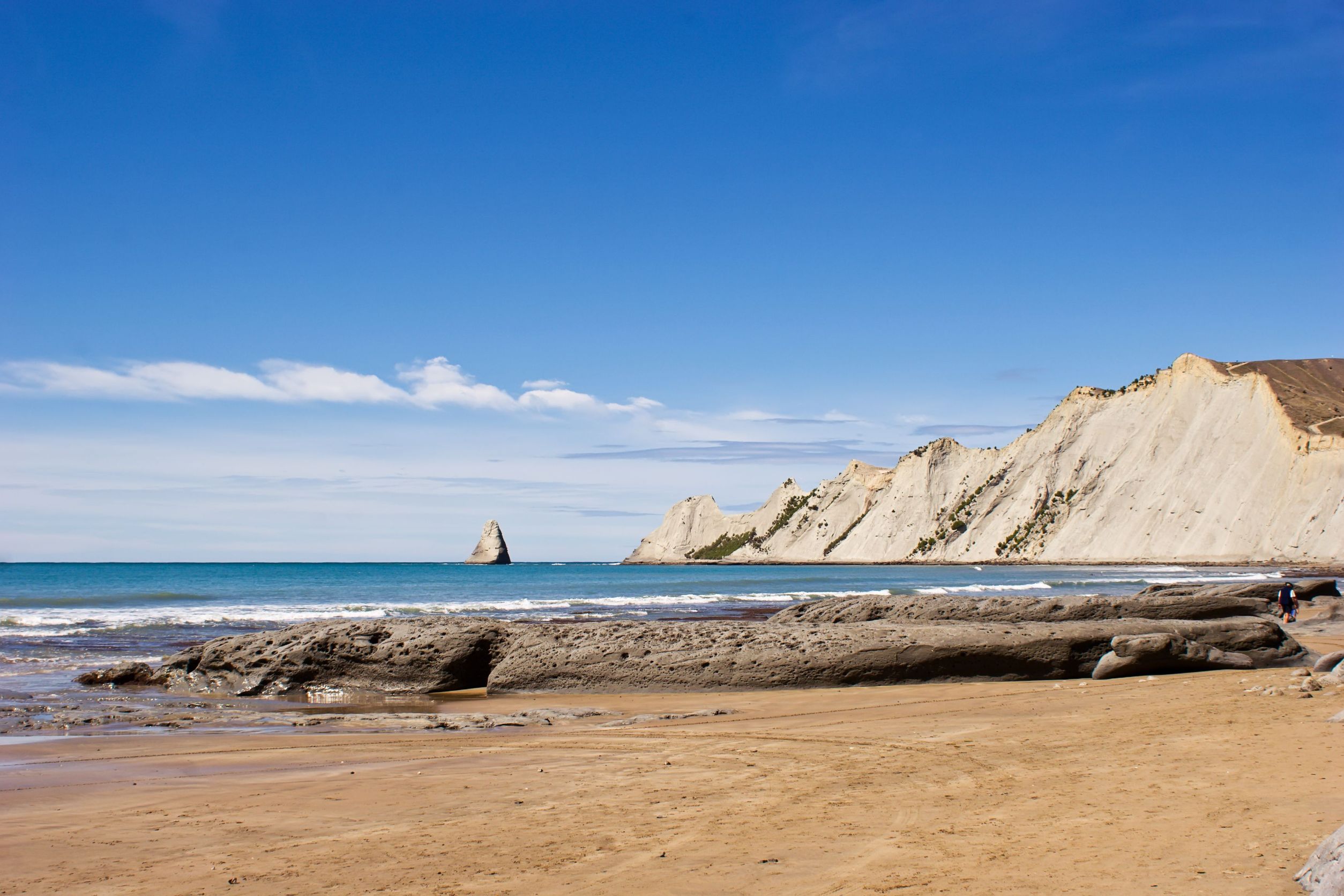
Cape Kidnappers is a headland located in the south-east extreme of the Hawke’s Bay region on New Zealand’s North Island. A headland is a narrow piece of land that projects from a coastline into the sea; sometimes otherwise known as a cape, bluff, or promontory. Cape Kidnappers extends from Clifton–a small beach town and camping area–into the Pacific Ocean.

Cape Kidnappers takes its English-language name from Captain James Cook’s 1769 voyage to–and around–New Zealand aboard the ship Endeavor. With the caveat that this may be only one side of the story, it was named after an attempted kidnapping. As the story goes, when the Endeavor was anchored off-shore, a crewmember named Tiata was in the water beside the ship when a Māori fishing boat pulled alongside and attempted to drag him aboard. Sailors from the Endeavour opened fire on the fishing boat, killing and injuring several of the Māori. The surviving Māori sped off, and Tiata returned to the Endeavour. Cook, who described the region as having steep white cliffs on either side, thus named the area “Cape Kidnappers.”

NZ Hawkes BayCape Kidnappers is now a protected area and home to several colonies of the Australasian Gannet. The bird reserves are closed to the public, but may be viewed from the beach which is which is accessible by foot, off-road vehicle, or kayak.

The Māori name for Cape Kidnappers is Mataupo Maui, meaning “the fish hook of Maui.” Another name, used less often, is Tapuwaeroa, which refers to “long footsteps” left behind by the giant Rongokako.

  • From the wine department: Hawke’s Bay is one of New Zealand’s  largest wine-producing regions in term of production. The region enjoys an overall maritime climate, but its location in the wider portion of the country means that it is, in spots, quite a bit sunnier and warmer than other parts of the country. For this reason, along with its now-famous gravelly, well-drained soils (particularly in the Gimblett Gravels area), Hawke’s Bay has a reputation for red-Bordeaux blends featuring Cabernet Sauvignon and Merlot, as well as Syrah–mainly grown in the areas further inland. The areas closer to the coast produce Chardonnay and Pinot Gris as well as plenty of wine using NZ’s signature grape–Sauvignon Blanc.

Bonus question: Why is part of the ultra-cute town of Westport known as Cape Foulwind? Cape Foulwind is a headland on the New Zealand’s South Island, located close to the art-deco town of Westport (itself located on New Zealand’s west coast overlooking the Tasman Sea). The headland was previously named Rocky Cape, but was christened Cape Foulwind by Captain James Cook after a strong wind off the cape blew the Endeavour quite a distance out to sea.

References:

 The Bubbly Professor is…”Miss Jane” Nickles of Austin, Texas

Poverty Bay and the Bay of Plenty

Vineyards in New Zealand's Gisborne/Poverty Bay area (photo via http://www.nzwine.com/)

Vineyards in New Zealand’s Gisborne/Poverty Bay area (photo via http://www.nzwine.com/)

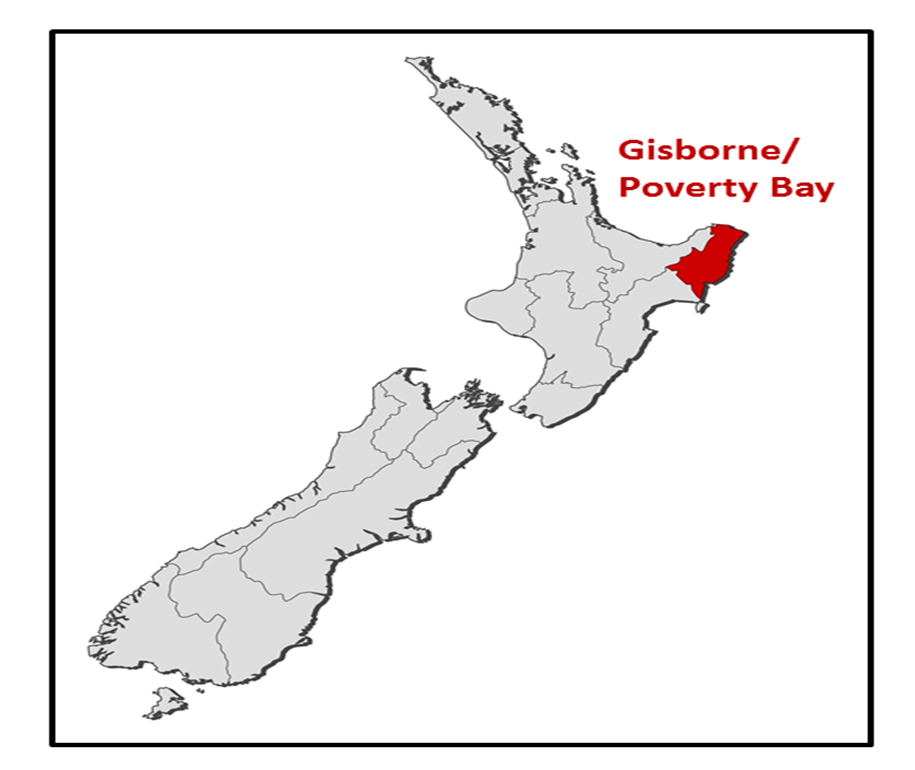
This post is totally based on my own curiosity about geography—which pops up at random times during wine studies—such as last night while I was reviewing the wine map of New Zealand. I noticed that Gisborne is also known as Poverty Bay. What place on earth would want to be known as Poverty Bay?

To me, this is a burning question, in need of well-researched answers—and some wine-related context as well! There’s a fine line, it seems, between a wine geek and a geography geek; and we might as well throw history geek in there as well, because the name Poverty Bay, and its (perhaps) better half up the road a bit, the Bay of Plenty, relate back to Captain James Cook (1728-1779), a captain in the British Royal Navy who made three voyages to the Pacific Ocean, and is believed to be the first European to reach Australia and the Hawaiian Islands and to circumnavigate New Zealand.

Poverty Bay

...

There is a lovely series of bays where the city of Gisborne, on New Zealand’s North Island, meets the South Pacific Ocean.  The largest of these is known as Poverty Bay, which stretches for about 6 miles south to a place called Young Nick’s Head. (This too must be explained…it seems that the area, a headland, was the first land sighted by the crew of Captain Cook’s ship, The Endeavour, on October 7, 1769. A reward of a barrel of rum and the right to name the landmass had been offered to the first crewman to sight land; the reward was claimed by 12-year-old Nicholas Young.)

Later that day, the ship’s crew went ashore.  They encountered the residents of the land, the Maori, and it did not go well. The first meeting led to the death of 6 Maori, and the crew, quite battered themselves, returned to their ship without any of the provisions they had hoped to acquire. For this reason, Captain Cook gave the area the name “Poverty Bay.” Perhaps they should have stayed with Maori name, which at the time was Teoneroa; today it is Te Kuri o Paoa.

From the department of I thought this was a wine blog: These days, Gisborne/Poverty Bay is the third largest producer of wine (in terms of volume) in New Zealand, and yet it seems to be somewhat obscure. Perhaps it’s the out-of-the way location. The area currently has 4,735 acres (1,915 ha) of vines. Chardonnay is the most widely planted variety, at about 2,312 acres (936 ha). Pinot Gris is next, with 950 acres (381 ha). Gewurztraminer, Merlot, and Viognier are widely planted as well. New Zealand’s super-star grape, Sauvignon Blanc, actually comes in around sixth place in Gisborne, with about 138 acres (56 ha) planted.

Vineyards in the Waikato/Bay of Plenty area (photo via http://www.nzwine.com/)

Vineyards in the Waikato/Bay of Plenty area (photo via http://www.nzwine.com/)

Being part of the widest part of the North Island, Gisborne records some of the most sunlight hours and warmest overall temperatures in New Zealand, so much so that the grapes here are often the first in the country to be ready for harvest. Gisborne is also the easternmost part of New Zealand, meaning the vineyards here are the first vineyards in the world to greet each new day.

The Bay of Plenty

After the unfortunate encounter at Gisborne, Captain Cook’s crew sailed north to what is now known as the Bay of Plenty. Here he was able to get the provisions he needed, and noted that it was an area “full of plantations and villages” that was “a bay of plenty.” Bay of Plenty is still a lush area, with orchards of kiwi fruit, avocadoes, and citrus, not to mention the vineyards and abundant seafood nearby. The Māori name for the Bay of Plenty is Te Moana-a-Toi (“the sea of Toi”), in honor of the Maori explorer Toi-te-Huatahi.

In the interest of the “wine” part of this blog: The regions of Bay of Plenty and its neighbor-to-the-west, Waikato, are generally lumped together when discussing the wine of the area. These regions, located just south of Auckland, currently have a tiny but growing wine industry—mainly small vineyards tucked between fruit orchards and dairy farms. Chardonnay is the leading grape variety here, followed by Cabernet Sauvignon and Sauvignon Blanc.

...

The area is one of the warmer regions in New Zealand, owing to its more northerly location (remember this is the Southern Hemisphere),  the width of the land mass, and the protection of the Hakarimata Mountain Range  The soils are quite fertile, due to the wide floodplain of the Waikato River and several other rivers.  Some areas around Waikato/Bay of Plenty were previously swampland, made accessible for agriculture via large drainage programs implemented by European settlers.

Stay tuned for more on New Zealand’s landmarks—such as Cape Foulwind, the Farewell Spit, and Cape Kidnappers (complete with wine information from the regions of “Sunny Nelson” and Hawke’s Bay).

 The Bubbly Professor is “Miss Jane” Nickles of Austin, Texas… missjane@prodigy.net

The Icy Benguela

...

I’ve been curious about the Benguela Current for a while. My original curiosity about the Benguela Current was about the name —how did it get that very cool name? It seems it all begins with Portuguese sailors in the 1500s.

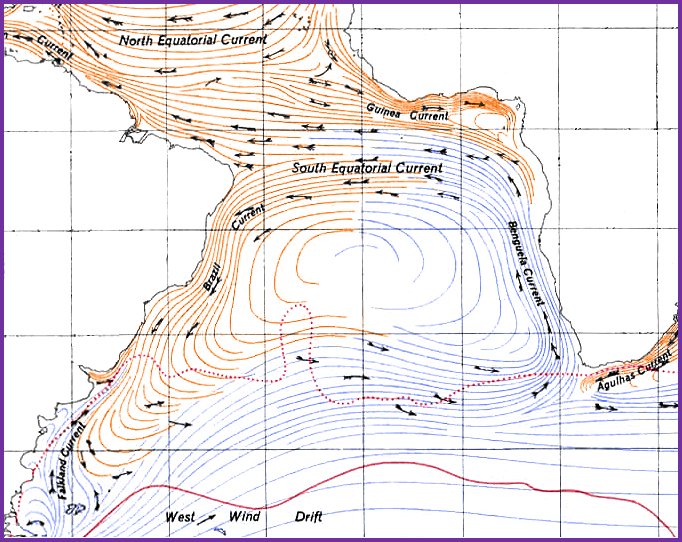
In the Age of Discovery, Portuguese Sailors—known for skill and courage in ocean navigation —often sailed the long and arduous ocean journey around the continent of Africa to Asia. During such voyages, they had to fight against two mighty ocean currents: the icy Benguela current that flowed northward along the coast of Africa while they were trying to sail south; then, after they rounded the Cape of Good Hope, they sailed north while fighting the warm and southward-flowing Agulhas Current. If the journey was successful, they reached Asia and accessed the famed Indian Spice Routes. Such accomplishments helped the Portuguese form their empire, which at various times included parts of Africa, the Middle East, India, South America, and South Asia.

...

The namesake of the Benguela Current (as it is now known) is a city in present-day Angola.  The area surrounding Benguela, due to its location near the coast and a well-traversed deep bay, has been a center of commercial trade since ancient times.  While there is no written record of the history of the area before the arrival of the Portuguese in 1546, it is believed that the area was formerly known as ombaka, which means, literally, “commercial (or ‘market’) port.” When the Portuguese colonized the area, a town was founded and named São Felipe de Benguela (Saint Philip of Benguela) after King Philip II of Spain and Portugal.

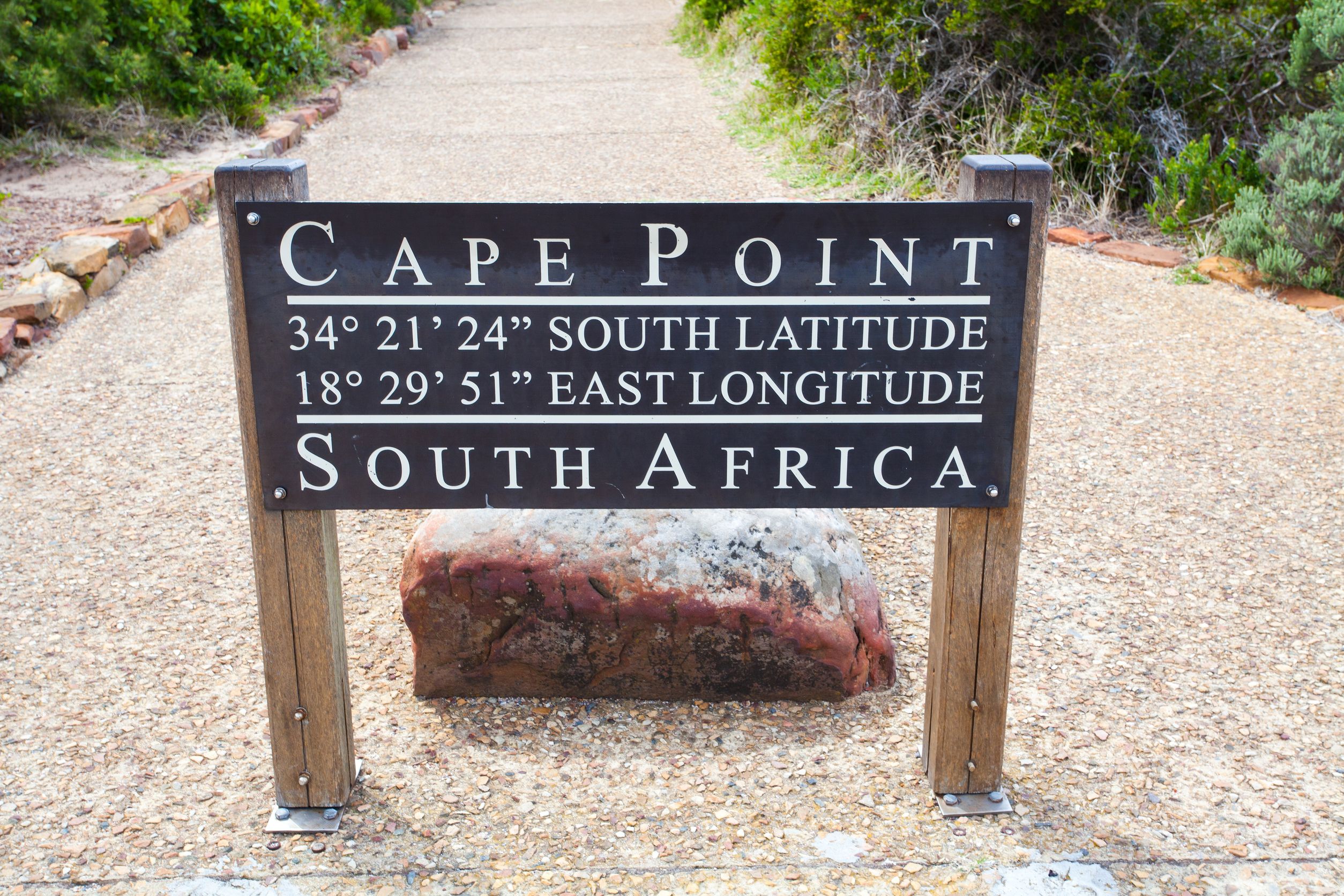
So back to ocean current: the icy Benguela Current flows from the Southern Ocean near Antarctica and moves north along the west coast of Africa. It reaches as far north as Angola (close to the city of Benguela, in case you missed that point) before it turns west and heads to South America. The Benguela Current is part of a large circulating ocean current known as the South Atlantic Ocean gyre. The western edge of the gyre is known as the Brazil Current; the Brazil current flows southward down the coast of Brazil, then turns east and flows across the ocean until it reaches Antarctica. From Cape Point in South Africa (at about 33°), the cold portion of the current known as the Benguela current flows northward along the west coast of Africa to the area around Angola/Benguela (about 16°S).

...

            Cape Agulhas…pick your ocean!

Near Cape Point, where a portion of the cold Benguela Current of the Atlantic meets the warm south- and west-flowing Agulhas Current of the Southern Pacific Ocean, the waters become wild and turbulent. It’s a common practice while on vacation in Cape Town to journey down to Cape Point, take a short hike, get your picture taken by the sign, and stare out to sea at the “place where two oceans meet.” (Hey, I did it.) However, the truth is that the ocean currents actually intermingle for hundreds of miles in either direction—both east and west of Cape Point—and that the “point where two oceans meet” is likely to be anywhere between Cape Point and about 100 miles west at Cape Agulhas (which is actually the southernmost point on the African continent and worth a visit as well).

From the department of I thought this was a wine blog:  Good point. All I can say is that my curiosity concerning Benguela Current peaked while studying the wines of South Africa. The winelands of South Africa’s Western Cape are cooled by the moist fog and gentle breezes generated by the Benguela Current, which also generates the not-so-gentle south-easterly wind known as the “Cape Doctor.”

...

Super-sharp students of wine might also have perked up with the mention of Cape Point, which is the former name of the Cape Peninsula wine district; and Cape Agulhas, a wine district located in the Cape South Coast. Cape Peninsula is a small area located on a narrow, rugged area just south of Cape Town and east of Constantia (both wine regions are easily accessed via taxi or tour bus from Cape Town). Cape Peninsula produces snappy, cool-climate white wines and is particularly adept at Sauvignon Blanc. The terroir of Cape Agulhas, about 100 miles down the coast, is also markedly maritime—distinctly cool and breezy—and known for a crisp, snappy style of Sauvignon Blanc, apricot-and-lemon laced Semillon, and a unique cool-climate style of Shiraz.

References:

The Bubbly Professor is “Miss Jane” Nickles of Austin, Texas… missjane@prodigy.net


Whole Lotta Ancellotta

...

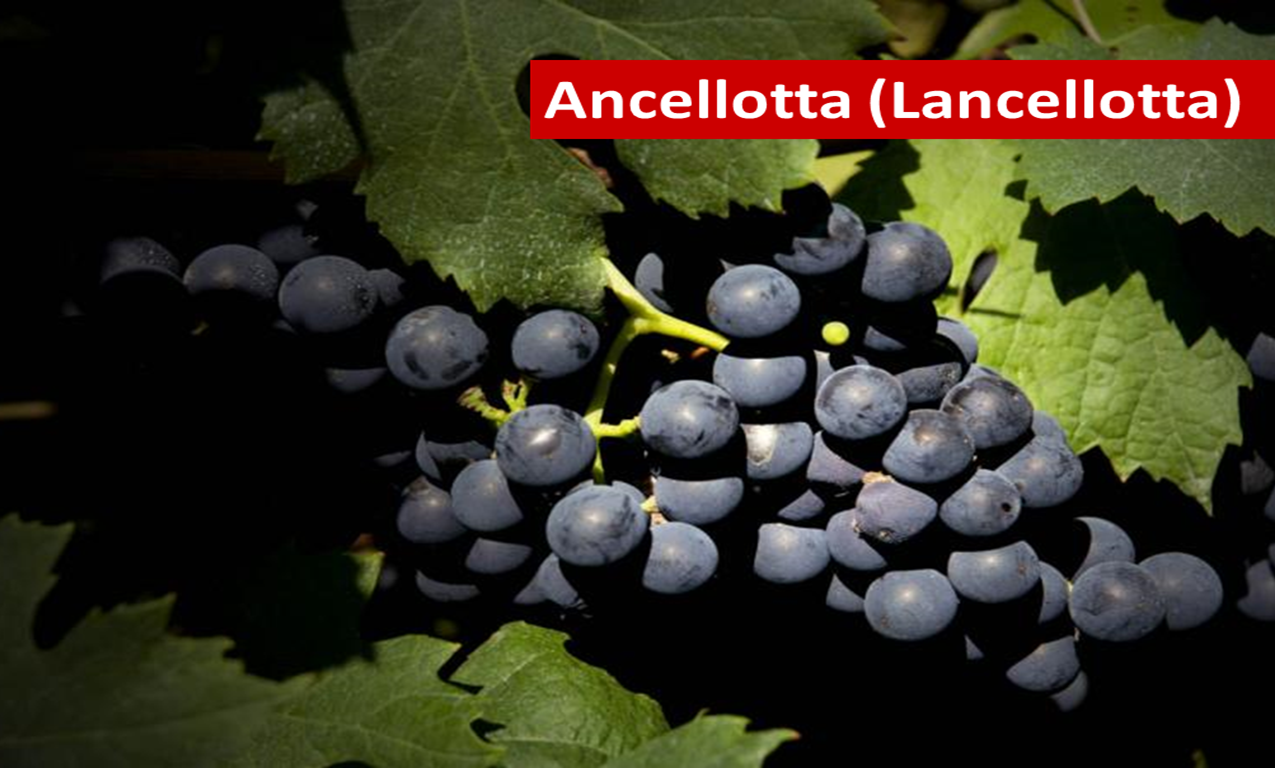
The Ancellotta grape is native to Italy’s Emilia-Romagna area and used in small amounts in some styles of Lambrusco. When I read that, I thought to myself, “Now there’s an obscure grape variety”!

As first impressions often are, I was wrong! Italy has over 11,000 acres of Ancellotta, and while that can’t compare to Sangiovese’s 200,000 acres, it certainly doesn’t place it at the bottom of the very long list of grapes grown in Italy.

The Ancellota grape is a vigorous red grape known for small, very dark berries. The high level of anthocyanins in the skins mean that this grape is often used, in small amounts, to add a punch of color to otherwise lightly hued red wines. This feature also means that the grape is sometimes used in concentrated musts used for coloration. Besides its color and structure, Ancellotta grapes are known for ripe red fruit flavors and aromas, such as plum, blackberry, and blueberry; as well as a spiciness characterized as “sweet spice” or “baking spices.”

...

Ancellotta is perhaps best known as a minor allowed component of several styles of Lambrusco. It is allowed to be used up to 15% in the blend of Lambrusco Salamino di Santa Croce DOC and Lambrusco Mantovano DOC. It’s also allowed, up to 15% in Lambrusco di Modena DOC and Lambrusco di Reggiano DOC. In Colli di Scandiano e di Canossa DOC, it may be used in Lambrusco—but only those produced with a minimum of 85% of either the Lambrusco Montericco or Lambrusco Grasparossa variety.

But here’s where it gets interesting: did you know that Ancellotta is required to be at least 30% of the blend of Reggiano Rosso DOC? True fact! Plus, it is allowed to be up to 60% of the blend. So that’s where the 11,000 acres of Ancellotta are headed! The rest (40—70%) of the Reggiano Rosso DOC blend may be Cabernet Sauvignon, Fogarina, Malbo Gentile, Marzemino, Merlot, Sangiovese, or various members of the Lambrusco grape variety.

...

The Ancellotta grape variety is also planted in Brazil where it is believed to cover at least 1,000 acres, mainly in the Serra Gaúcha area.  At the Don Guerino Winery in Alto Feliz, it is used in “Top Blend,” a gran reserva blended red wine, alongside Merlot, Teroldego, Tannat, and Cabernet Sauvignon. Don Guerino also produces a 100% varietal Ancellotta that has been described as having a deep intense color, aromas and flavors of plum, blackberry and spice; great structure, and ripe tannins.

Ancellotta is also grown in Switzerland. It is often used, in small amounts, for its color-enhancing quality in the Pinot Noir of the Valais region. It is also used in the blended wine known as Dôle. Dôle, which must contain a combined minimum of 85% Pinot Noir and/or Gamay, is considered to be among the finest wines of Switzerland. Other grapes used in Dôle may include Carminoir (a recent Cabernet Sauvignon X Pinot Noir cross), Merlot, Syrah, and—you guessed it—Ancellotta.

References:

The Bubbly Professor is “Miss Jane” Nickles of Austin, Texas… missjane@prodigy.net

Marselan from Marseillan

Photo of Marselan Grapes by Vbecart Photography, via Wikimedia Commons

Photo of Marselan Grapes by Vbecart Photography, via Wikimedia Commons

I first heard of the grape variety Marselan while studying – for the first time – the wines of China. China, as you may have heard, recently became the world’s second-place country in terms of vineyard holdings – coming in on the list right after Spain, and before France. While many of China’s vineyards are dedicated to table grapes, wine grapes, including vinifera varieties, now account for at least 10% of the vines. Of the vinifera varieties grown, Cabernet Sauvignon dominates, followed by Carmenère, Merlot, Chardonnay, Cabernet Franc, Shiraz, Gamay, Grenache, and Marselan.

There it was: Marselan – a grape variety I had never heard of before – so of course I had to investigate…

Marselan is a vinifera cross (Cabernet Sauvignon X Grenache) created in 1961 by French ampelographer Paul Truel. Truel was working in Montpellier, France at the Institut National de la Recherché Agronomique (INRA). His goal was to create a high yielding grape with large berries of at least moderate quality. Marselan produces grape berries of small-to-medium size, so the variety was shelved and not expected to have a future in commercial wine production.

However…by the 1990’s viticultural priorities had shifted, and disease resistance, particularly to threats such as powdery mildew and coulure, brought Marselan out of cold storage. The grape was approved by the French as a commercial variety in 1990 and in 2007 was approved by the TTB (United States) as a varietal wine name.

At its best, Marselan is said to combine the finesse and quality of Cabernet Sauvignon with the heat tolerance and high yield of Grenache. According to Jancis Robinson’s book “Wine Grapes,” varietal Marselan “tends to produce deeply colored and highly aromatic wines that have supple tannins and the potential to age.”

In addition to its plantings in China, Marselan is planted – albeit in small amounts – throughout the south of France. It is allowed to be up to 10% of the blend in the wines of the Côtes du Rhône AOC, and is produced as a varietal wine in the Languedoc. Small plantings may also be found in California, Argentina, Arizona, Spain, Uruguay, and Brazil.

The grape was named “Marselan” by its creator, in homage to the town of Marseillan, France. Marseillan is the home of the phylloxera-free vine collection of Domaine de Vassal, operated by the INRA. Domaine de Vassal provided the parent Cabernet Sauvignon and Grenache vines from which the original Marselan was bred.

References:

  • Robinson, Jancis (et al): Wine Grapes. New York, 2012: Harper Collins Publishers
  • Robinson, Jancis and Harding, Julia: The Oxford Companion to Wine, 4rd Edition. Oxford, 2015: The Oxford University Press
  •  http://www.winechina.com/en/

The Land of the Landes

Maritime Pines in the Landes Forest

Maritime Pines in the Landes Forest

All good wine students know about the Landes Forest—that region of tall pines bordering the Bay of Biscay to the south and west of the Bordeaux wine region. The Landes—now the most extensive forest in France at 5,400 square miles (14,000 square km)—helps to somewhat moderate the Atlantic Ocean’s cold, maritime influence on the vineyards of Bordeaux.

However, even the sharpest wine student might not know the history of the region, including how local sheep-herders used to wear stilts to navigate the land, and the fact that the forest is largely man-made.

The area we now know as the Landes forest was once covered by moors and marshlands.  The area, basically a swamp surrounded by shifting sand dunes, was sometimes known as the “Moor of Bordeaux.” Not surprisingly, the area was sparsely populated. Another nickname given to the region was “the Sahara of France” due to the fact that it was notoriously difficult to travel across—as many pilgrims making their way from the north down to the Camino of Saint James needed to do.

Beginning in 1801, the marshes were drained via a vast system of canals, the land was cleared, and pine tree plantations were established. This stabilized the sand dunes and created arable land suitable for farming. The local economy benefited through farming (mainly corn) as well as new opportunities in the timber, pine resin, and paper industries.

Jean Louis Gintrac - Inhabitants of the Landes (circa 1808)

Jean Louis Gintrac –
Inhabitants of the Landes (circa 1808)

The benefits of the man-made Landes Forest went beyond the area’s new industrial prowess, as it was soon discovered that the near-by wine region of Bordeaux also benefited. This is due to the area of the Landes forest closest to the Médoc that shelters the vineyard regions from the bracing cold and howling breezes that blow in from the Atlantic. Thus, the vineyards of the Médoc are now able to fully ripen the Cabernet Sauvignon and Merlot that form the basis of the region’s red wines.

The Landes forest is one of the largest man-made forests in all of Europe, as well as a unique example of a man-made landscape that continues to benefit its region and the surrounding areas. The timber, pine resin, and other related industries are still active in the area, although a good portion of the region is now given over to tourism.

The area is also home to a large protected area of forests and coastlines that includes the Landes de Gascogne Regional Natural Park (Parc Naturel Régional des Landes de Gascogne). The park provides ample opportunities for hiking, cycling, and picnicking, and contains a bird sanctuary and a museum. The museum, L’Écomusée de la Grande Lande, focuses on the history as well as the architectural and cultural heritage of the region including, of course, the vineyards and wines of Bordeaux.

The Bubbly Professor is “Miss Jane” Nickles of Austin, Texas… missjane@prodigy.net

References:

Map of the Landes de Gascogne by Cabaussel, via Wikimedia Commons

Map of the Landes de Gascogne by Cabaussel, via Wikimedia Commons

Misfits of Alsace

.

.

The wines of Alsace are a bit of an enigma. They are truly French, and yet certain aspects of their style, culture, and tradition are strongly Germanic. They are the only AOC-level French wine to have labeled their top-tier wines with the name of the grape variety for the last 40 years. They are also unique in that they have 51 Grand Cru vineyards, and yet not every producer or even every Grand Cru is thrilled about the fact.

Despite its long history of wine production, Alsace was one of the last of France’s major wine regions to be granted AOC status. The AOC was first created in 1962; the delightful sparkling wines of the region – Crémant d’Alsace – were awarded a separate AOC in 1976.

In 1975, Alsace awarded its first Grand Cru to Schlossberg, with more designated in 1983. Another 24 vineyards were promoted in 1992, and one more – Kaefferkopf, the 51st – in 2007. As of 2011, each of Alsace’s 51 Grand Cru Vineyards were awarded their own separate AOC.

With few exceptions – which we’ll discuss below – Alsace Grand Cru must be a white wine produced 100% from a single variety of the four “Noble” grapes of Alsace – Riesling,  Muscat, Gewurztraminer, or Pinot Gris. (Wines labeled as “Muscat” may be made with Muscat’s Ottonel, Blanc à Petits Grains, and/or Rosé à Petits Grains variations.) Alsace Grand Cru wines must be vintage dated, cannot be released until June 1 of the year following harvest, and must be bottled in a traditional, tall bottle – the Flûte d’Alsace. They are typically considered to be dry, although in some years a tickle of sugar can be detected; they may be produced in sweet styles as well. Vendage Tardive (late harvest) and Sélection de Grains Nobles (botrytis-affected) versions must be hand harvested and require an additional year of aging.

.

.

Which leads me to the “misfits” of Alsace – meaning those Grands Crus that are delightfully unique and/or unusual.  With 51 Grands Crus, there is a lot of information to corral. (If you’d like to do just that, I suggest this link.) So here are a few of the outliers – the biggest, the smallest, and the three that have exceptions to the “noble grapes only and no blends” rule.

The First and the Biggest: Schlossberg – The Grand Cru of Schlossberg, located on the slopes above the communes of Kayserberg and Kientzheim in the Haut-Rhin, is the largest Alsace Grand Cru – clocking in at 197 acres (80 hectares). Schlossberg also happens to be the oldest of Alsace’s 51 Grands Crus – being the first vineyard to be so designated when the classification first began in 1975. The name “Schlossberg” comes from the 800-year-old castle (“Schloss” in German) located on the western edge of the vineyard.

The vineyard itself is comprised of two parcels, the majority of the area being one large plot of terraced vineyards on the south-facing slope of a large hillside; as well as a smaller parcel across the way. Riesling is the super-star here, with some excellent examples made by Domaine Weinbach, Albert Mann, and Paul Blanck.

The Smallest: Kanzlerberg – The Grand Cru of Kanzlerberg, at 7.5 acres (3 hectares), is the smallest of the Alsace Grands Crus. It also happens to be the most southerly, located in the commune of Bergheim in the Haut-Rhin Département. Kanzlerberg is located at an elevation of 820 feet (250 meters) with a due-south southern exposure, giving the vines wonderful, full sunshine and resulting in richly flavored, complex wines. Kanzlerberg is sometimes overlooked, being located just down the hill from the much larger – and very prestigious -Grand Cru of Altenberg de Bergheim. Tiny Kanzlerberg currently only has two producers – Sylvie Speilmann and Gustav Lorenz – both of whom also produce wines from Altenberg de Bergheim.

.

.

Notable for Noir: Altenberg de Bergheim – Altenberg de Bergheim, located in the hills above the commune of Bergheim in the Haut-Rhin, produces typical Alsace Grand Cru wines from 100% Riesling, Gewurztraminer, and Pinot Gris. However, it is unique for two reasons: it is allowed to make Grand Cru blends, and it is the only Alsace Grand Cru wine allowed to contain red grapes (Pinot Noir).  Blends must be 50-70% Riesling, 10-25% Pinot Gris, 10-25% Gewurztraminer, and may contain up to 10% (combined) Chasselas, Muscat (à Petits Grains or Muscat Ottonel), Pinot Noir, and/or Pinot Blanc. Chasselas, either of the Muscats, Pinot Noir, and Pinot Blanc may only be used in the blend if planted before 2005. The Altenberg vineyard has been known for its outstanding wines since the end of the 13th century.

The Latest, the Contentious, and the King of Cuvée: Kaefferkopf – The Kaefferkopf Grand Cru is located in the village of Ammerschwihr in the Haut-Rhin Département. It is the most recently promoted of the Alsace Grands Crus, having just been promoted in 2007. This promotion  was not without its own controversy – producers in the area had declined Grand Cru status when it was first offered to them in 1990, and many once again contested the decision in 2007. The contentious issue was a certain plot of land – 37 acres worth – that was part of the Kaefferkopf Title awarded in 1932, but that was specifically excluded from the Grand Cru. Producers using the grapes from this plot thus lost the right to use the name “Kaefferkopf” on their wines – and have since used the more generic Alsace AOC.

That’s a crazy story on its own, but Kaefferkopf is also unique in that it is (along with Altenberg de Bergheim) allowed to produce Grand Cru blends. The blends of Kaefferkopf must be made using 60-80% Gewurztraminer and 10-40% Riesling; they may also include up to 30% Pinot Gris and up to 10% Muscat.

.

.

The Sylvaner Specialist: Zotzenberg – Zotzenberg, located on a series of gently rising hillside slopes above the commune of Mittelbergheim in the Bas-Rhin, produces typical Alsace Grand Cru wines of 100% Pinot Gris, Riesling, and Gewurztraminer. However, this 90-acre (36.5-hectare) vineyard is a traditional growing site for Sylvaner – an also-ran grape of Alsace if ever there was one. The laws of the AOC were revised in January of 2001 to allow Zotzenberg to produce a Grand Cru wine made using 100% Sylvaner. Excellent examples are produced by Domaine Haegi and Domaine Lucas & André Rieffel. Zotzenberg is the only Grand Cru in Alsace allowed to use Sylvaner in a Grand Cru wine.

For more information:

The Bubbly Professor is “Miss Jane” Nickles of Austin, Texas – missjane@prodigy.net

Keeping Santa Cruz Weird

Santa Cruz

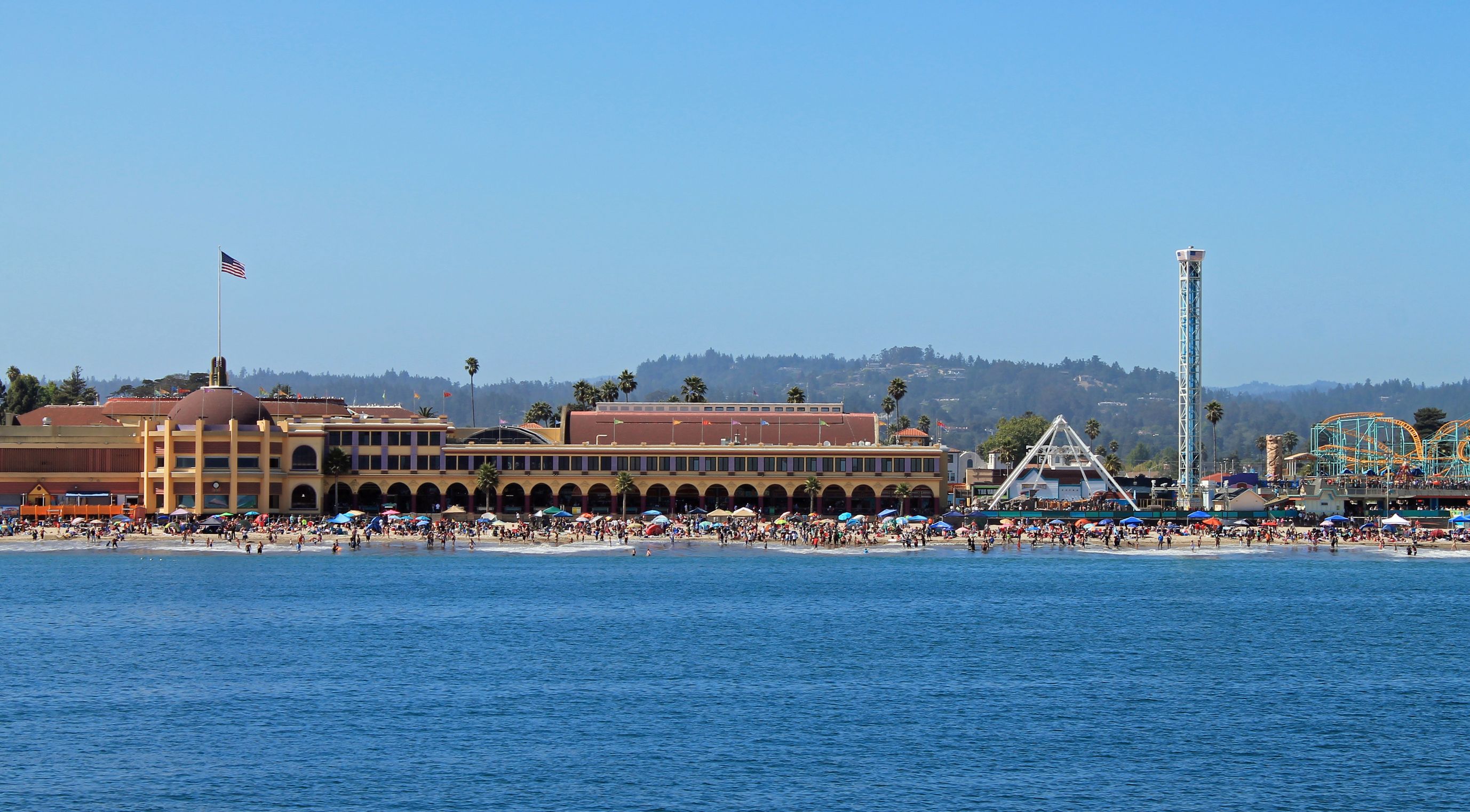
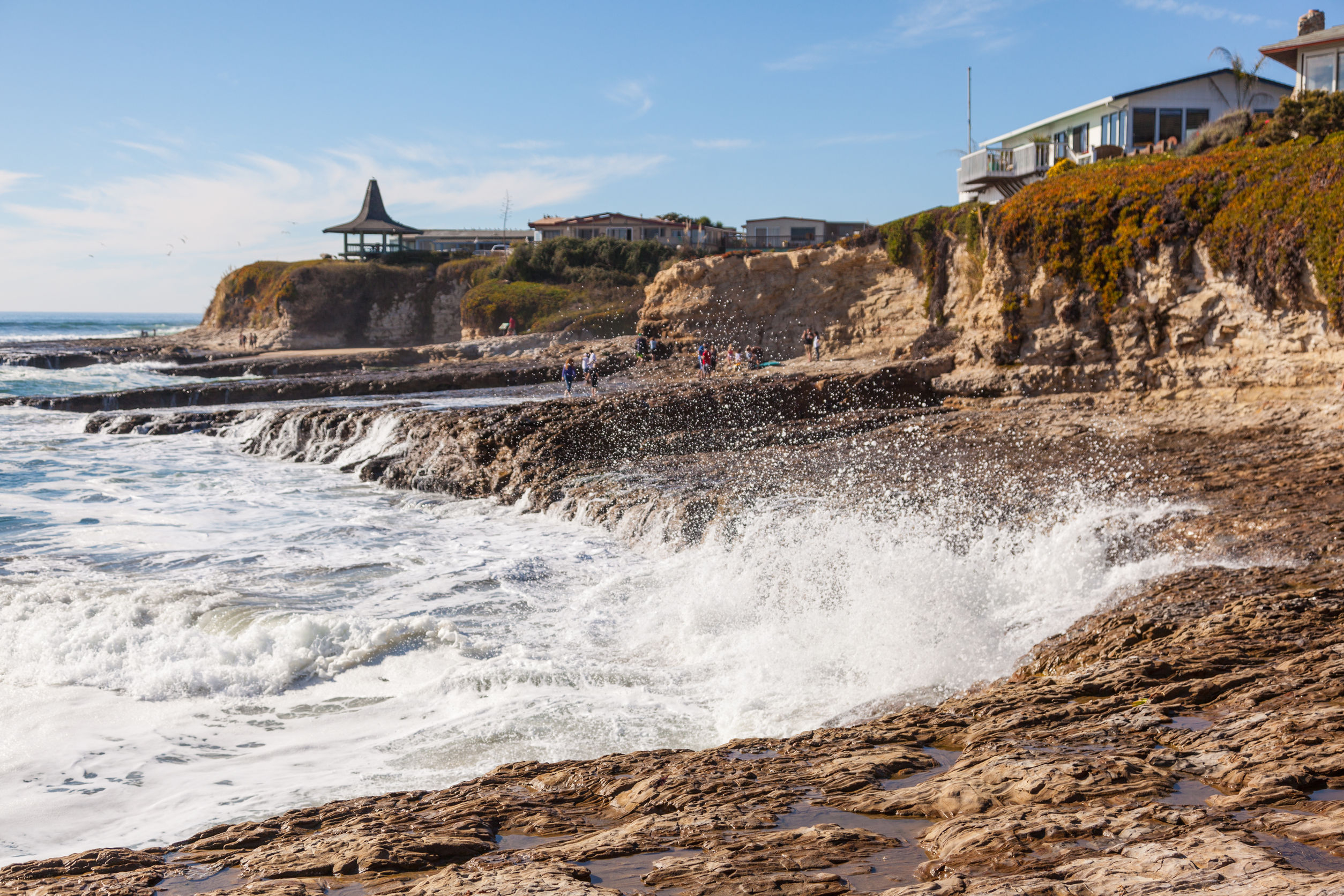
Visitors and residents alike (both of which I have been, at various points in my life) agree: Santa Cruz is unique. Witness the surfing santas, omnipresent drum circles, kooky politics, and even the tag line “Keep Santa Cruz Weird” (borrowed from Austin, Texas, which can also boast all of the above). Combine this with incredible natural beauty, a moderate climate, 29 miles of coastline, the University of California at Santa Cruz, the historic Santa Cruz Beach Boardwalk with its Giant Dipper wooden roller coaster – and you have a heck of a place.

Viticulture as well has a unique place in this inspired environment. The area has been home to famous winemakers in the past—including Paul Masson, Martin Ray, Randal Grahm, and David Bruce—and it remains a vibrant center of wine production as well as a leader in organic and sustainable winemaking.

The Santa Cruz Mountains AVA was established in 1981. It was one of the first AVAs to be established according to elevation, and largely follows – and sits above – the fog line along the coast. The boundaries of the region encircle the ridge tops of the Santa Cruz Mountain range—which reach over 3,000 (920 m) in elevation. The eastern boundary of the AVA rests at 800 feet (240 m), while the western edge, located close to the Pacific Ocean, extends down to 400 feet (120 m).

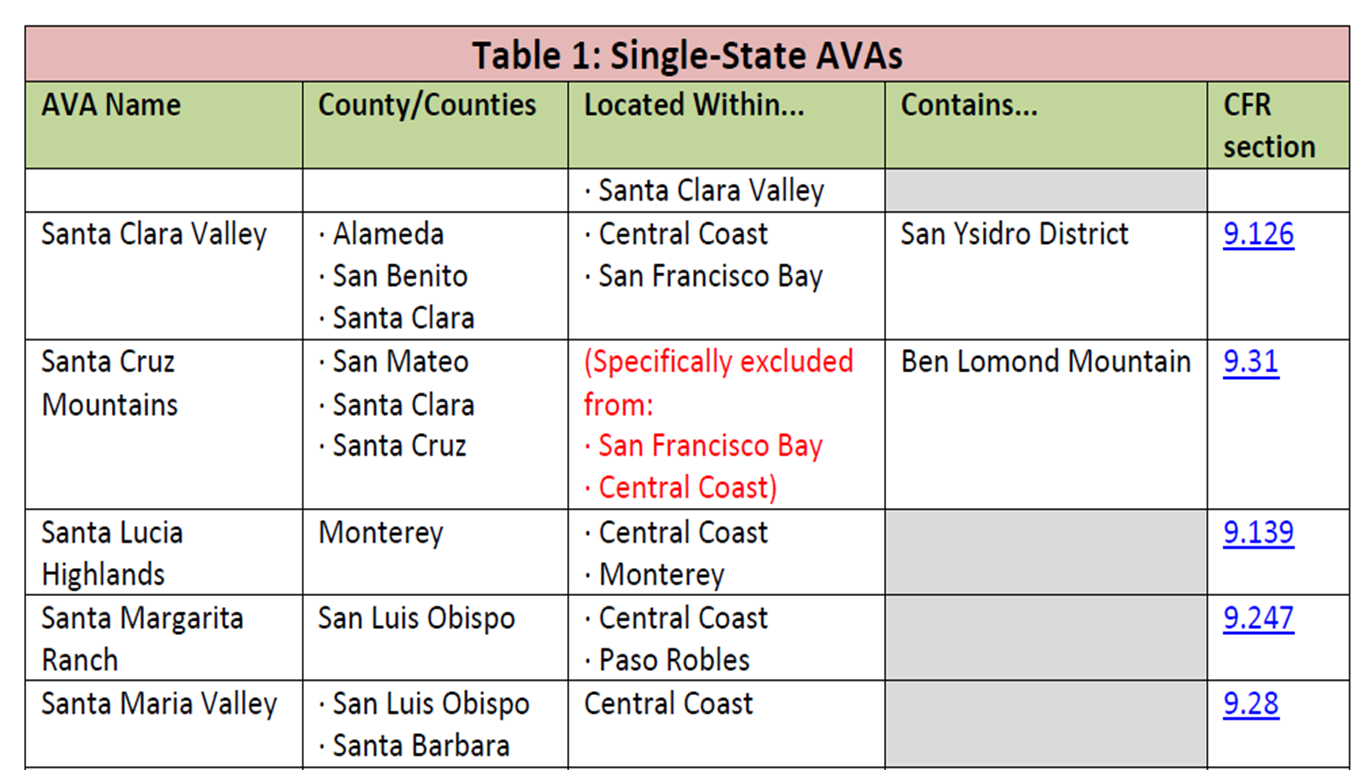
Santa Cruz 3However, the area within the Santa Cruz Mountains AVA—which is tucked in betwixt and between several other AVAs—is the only section of the coastal region from Santa Barbara to the San Francisco bay that is NOT part of the larger Central Coast AVA. As a matter of fact, it is “specifically excluded” from both the Central Coast AVA and the overlapping San Francisco Bay AVA.  Sounds a bit tough, doesn’t it?

The story goes as such: When the Central Coast AVA was first created in 1985 (four years after the Santa Cruz Mountains AVA was born), it was much smaller than it is today, and, due to differences in topography and climate, did not include or extend above Santa Cruz. The southern boundary of the Santa Cruz Mountains AVA was (at the time) contiguous with the northern border of the Central Coast AVA.

However, 1n 1999, a petition was made for a new AVA, to be known as the San Francisco Bay AVA. It was proposed that this new AVA would include the counties of San Francisco, San Mateo, Santa Clara, Alameda (which includes Livermore), and Contra Costa, as well as parts of Santa Cruz and San Benito Counties—including the Santa Cruz Mountains AVA. At the same time, it was petitioned that the Central Coast AVA be expanded to include the new San Francisco Bay AVA. The Central Coast AVA would—if all was approved—contain virtually all of the California coastline from the North Coast AVA on down to Santa Barbara.

santa cruz 2However, when the proposal was open to public comment, the TTB received almost 50 comments. Thirty-three of these were opposed to combining the Santa Cruz Mountains AVA with either the new San Francisco Bay AVA and/or the expanded version of the Central Coast AVA.

One comment claimed that combining the established Santa Cruz Mountains AVA—where so many farmers and vintners had worked diligently build the the quality, reputation, and distinction of the area—with the Central Coast AVA would cause “incalculable damage.”

Others stated that combining the areas of the Santa Cruz Mountains with such far-flung regions as Livermore and metropolitan San Francisco would “undermine the meaning of American viticultural areas.” Another respondent made the point that, culturally, people that reside in Santa Cruz do not consider themselves residents of the San Francisco Bay area, and that if Santa Cruz could be called part of the “San Francisco Bay Area,” then the North Coast AVA could be called the “Napa Area,” and the Central Valley could be called the  “Yosemite Area.” It was a vinous version of “hell no, we won’t go.”

Screen shot via http://www.ttb.gov/appellation/us_by_ava.pdf

Screen shot via http://www.ttb.gov/appellation/us_by_ava.pdf retrieved on September 26, 2015

The San Francisco Bay AVA was approved in 1999, along with an expansion of the Central Coast AVA (both were expanded again in 2006).

However, the boundaries of the new and expanded AVAs “specifically excluded” the Santa Cruz Mountains AVA, as well as its sub-region, the Ben Lomond Mountain AVA.  And it remains so – keeping Santa Cruz weird.

Click here to read the official documents relating to the petition and public comments of the: Central Coast Expansion -Federal Register Jan 20 1999

The Bubbly Professor is “Miss Jane” Nickles of Austin, Texas – missjane@prodigy.net

The Diurnal Difference

diurnal 3Simply put, an area’s diurnal temperature variation is the difference between the high temperature and the low temperature of a single day.  That’s easy enough to understand…but as a perpetual wine student, I hear (and use) this term all the time – and wanted to know a bit more about this “diurnal swing” and the factors behind it. Thus began another wild internet search for information!

Here are some of the more interesting things I discovered:

1: Diurnal temperature variation throughout the world varies from a low of approximately 7°F/4°C (experienced in Hong Kong in July) to 100°F/56 °C (the Guinness World Record, set in Browning, Montana in January of 1916). On average, most locations experience a diurnal temperature swing of 20-30°F/12-17°C.

2: To understand the diurnal temperature variation, we need to understand how the portion of the earth that we inhabit warms up and cools down. Basically, there are two sources of heat: the sun (solar radiation) and the ground, which slowly absorbs the sun’s heat over the course of the day. After the sun sets, the ground begins to radiate its stored heat back out, heating the air until it is depleted, which on a hot, humid day usually occurs right around dawn.

3: Diurnal swing generally decreases with proximity to the sea and other large bodies of water, and increases with the impact and amount of solar radiation. Other factors include elevation, humidity, day length, and clouds; as described below.

  • diurnal 4Elevation: High-elevation vineyard regions brag about their large diurnal swings for good reason: as mountain areas are located further from the large expanse of sun-heated ground surface, they receive less heat-radiation energy as the ground cools at night – meaning they cool off faster than do the surrounding valleys.
  • Humidity: Water vapor in the air very efficiently absorbs radiation – both solar radiation and radiation that is released from the ground.  This reduces the amount of heat reaching the ground, keeping daytime temperatures low (although we humans may not always appreciate this), and also reduces the amount of heat released from the ground – keeping the ground warm and nighttime temperatures high. The lack of humidity is one of the main factors that desert areas are known for large diurnal temperature swings.
  • Day length: Longer days understandably make for more heating, which can equate to larger diurnal variations. Day length in terms of daylight hours is determined by season as well as geographic location – high-latitude areas closest to the poles have longer days in summer, and shorter days in winter than those closest to the equator. In locations close to – or on – the equator, day length may vary by a mere 7 minutes over the course of a year!
  • Clouds: The presence of clouds decreases the diurnal swing. During the day, clouds absorb and release sunlight, reflecting heat radiation back out into space – making for less heat overall. On cloudy nights, heat is trapped near the ground, making for warmer nights – and less day-to-night variation.
  • Wind: Winds can cause the warm air radiating off the ground to mix with the cooler air a few feet above; thus mixing the warmer and cooler air and resulting in a decrease in diurnal swing.

We all know that diurnal temperature swings can be conducive to viticulture, by allowing the grapes to develop their sugary ripeness during the warm days, while still allowing the grapes to hold onto high levels of acidity when photosynthesis shuts down at night. Hopefully now – we also know why and how these fluctuations can occur!

References: