The Land of the Landes

Maritime Pines in the Landes Forest

Maritime Pines in the Landes Forest

All good wine students know about the Landes Forest—that region of tall pines bordering the Bay of Biscay to the south and west of the Bordeaux wine region. The Landes—now the most extensive forest in France at 5,400 square miles (14,000 square km)—helps to somewhat moderate the Atlantic Ocean’s cold, maritime influence on the vineyards of Bordeaux.

However, even the sharpest wine student might not know the history of the region, including how local sheep-herders used to wear stilts to navigate the land, and the fact that the forest is largely man-made.

The area we now know as the Landes forest was once covered by moors and marshlands.  The area, basically a swamp surrounded by shifting sand dunes, was sometimes known as the “Moor of Bordeaux.” Not surprisingly, the area was sparsely populated. Another nickname given to the region was “the Sahara of France” due to the fact that it was notoriously difficult to travel across—as many pilgrims making their way from the north down to the Camino of Saint James needed to do.

Beginning in 1801, the marshes were drained via a vast system of canals, the land was cleared, and pine tree plantations were established. This stabilized the sand dunes and created arable land suitable for farming. The local economy benefited through farming (mainly corn) as well as new opportunities in the timber, pine resin, and paper industries.

Jean Louis Gintrac - Inhabitants of the Landes (circa 1808)

Jean Louis Gintrac –
Inhabitants of the Landes (circa 1808)

The benefits of the man-made Landes Forest went beyond the area’s new industrial prowess, as it was soon discovered that the near-by wine region of Bordeaux also benefited. This is due to the area of the Landes forest closest to the Médoc that shelters the vineyard regions from the bracing cold and howling breezes that blow in from the Atlantic. Thus, the vineyards of the Médoc are now able to fully ripen the Cabernet Sauvignon and Merlot that form the basis of the region’s red wines.

The Landes forest is one of the largest man-made forests in all of Europe, as well as a unique example of a man-made landscape that continues to benefit its region and the surrounding areas. The timber, pine resin, and other related industries are still active in the area, although a good portion of the region is now given over to tourism.

The area is also home to a large protected area of forests and coastlines that includes the Landes de Gascogne Regional Natural Park (Parc Naturel Régional des Landes de Gascogne). The park provides ample opportunities for hiking, cycling, and picnicking, and contains a bird sanctuary and a museum. The museum, L’Écomusée de la Grande Lande, focuses on the history as well as the architectural and cultural heritage of the region including, of course, the vineyards and wines of Bordeaux.

The Bubbly Professor is “Miss Jane” Nickles of Austin, Texas… missjane@prodigy.net

References:

Map of the Landes de Gascogne by Cabaussel, via Wikimedia Commons

Map of the Landes de Gascogne by Cabaussel, via Wikimedia Commons

The Diurnal Difference

diurnal 3Simply put, an area’s diurnal temperature variation is the difference between the high temperature and the low temperature of a single day.  That’s easy enough to understand…but as a perpetual wine student, I hear (and use) this term all the time – and wanted to know a bit more about this “diurnal swing” and the factors behind it. Thus began another wild internet search for information!

Here are some of the more interesting things I discovered:

1: Diurnal temperature variation throughout the world varies from a low of approximately 7°F/4°C (experienced in Hong Kong in July) to 100°F/56 °C (the Guinness World Record, set in Browning, Montana in January of 1916). On average, most locations experience a diurnal temperature swing of 20-30°F/12-17°C.

2: To understand the diurnal temperature variation, we need to understand how the portion of the earth that we inhabit warms up and cools down. Basically, there are two sources of heat: the sun (solar radiation) and the ground, which slowly absorbs the sun’s heat over the course of the day. After the sun sets, the ground begins to radiate its stored heat back out, heating the air until it is depleted, which on a hot, humid day usually occurs right around dawn.

3: Diurnal swing generally decreases with proximity to the sea and other large bodies of water, and increases with the impact and amount of solar radiation. Other factors include elevation, humidity, day length, and clouds; as described below.

  • diurnal 4Elevation: High-elevation vineyard regions brag about their large diurnal swings for good reason: as mountain areas are located further from the large expanse of sun-heated ground surface, they receive less heat-radiation energy as the ground cools at night – meaning they cool off faster than do the surrounding valleys.
  • Humidity: Water vapor in the air very efficiently absorbs radiation – both solar radiation and radiation that is released from the ground.  This reduces the amount of heat reaching the ground, keeping daytime temperatures low (although we humans may not always appreciate this), and also reduces the amount of heat released from the ground – keeping the ground warm and nighttime temperatures high. The lack of humidity is one of the main factors that desert areas are known for large diurnal temperature swings.
  • Day length: Longer days understandably make for more heating, which can equate to larger diurnal variations. Day length in terms of daylight hours is determined by season as well as geographic location – high-latitude areas closest to the poles have longer days in summer, and shorter days in winter than those closest to the equator. In locations close to – or on – the equator, day length may vary by a mere 7 minutes over the course of a year!
  • Clouds: The presence of clouds decreases the diurnal swing. During the day, clouds absorb and release sunlight, reflecting heat radiation back out into space – making for less heat overall. On cloudy nights, heat is trapped near the ground, making for warmer nights – and less day-to-night variation.
  • Wind: Winds can cause the warm air radiating off the ground to mix with the cooler air a few feet above; thus mixing the warmer and cooler air and resulting in a decrease in diurnal swing.

We all know that diurnal temperature swings can be conducive to viticulture, by allowing the grapes to develop their sugary ripeness during the warm days, while still allowing the grapes to hold onto high levels of acidity when photosynthesis shuts down at night. Hopefully now – we also know why and how these fluctuations can occur!

References:

Five Fascinating Facets of Flor

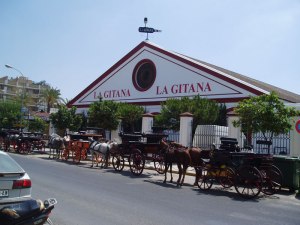
Bodegas Hidalgo La Gitana (producers of La Gitana Manzanilla) in Sanlúcar de Barrameda – photo by Caleteron via Wikimedia Commons

Bodegas Hidalgo La Gitana (producers of La Gitana Manzanilla) in Sanlúcar de Barrameda – photo by Caleteron via Wikimedia Commons

Ok, I apologize for the gratuitous alliteration, but you have to admit…flor – the indigenous yeast cells that form a “veil” on the surface of certain types of Sherry as it ages – is fascinating. Flor (meaning “flower” in Spanish) is a subject that just seems to get more interesting the closer you look. As a matter of fact, I had a hard time limiting the information I found to just five facets!

#1: Flor is what separates the Finos from the Olorosos. Flor is a film-forming yeast (actually, several related strains of yeast) that is indigenous to the region around the Jerez-Xérès-Sherry DO. Flor is the main factor that causes the myriad types and styles of Sherry to divide roughly into three camps – Fino, Hybrid, and Oloroso – based on the extent of flor influence. Fino Sherries (such as those labeled as Fino or Manzanilla) are aged under the somewhat constant influence of flor. Oloroso Sherries (labeled as Oloroso or sometimes as Cream Sherry) are aged entirely without flor; while hybrids (such as Amontillado and Palo Cortado) are aged partially with flor and partially without.

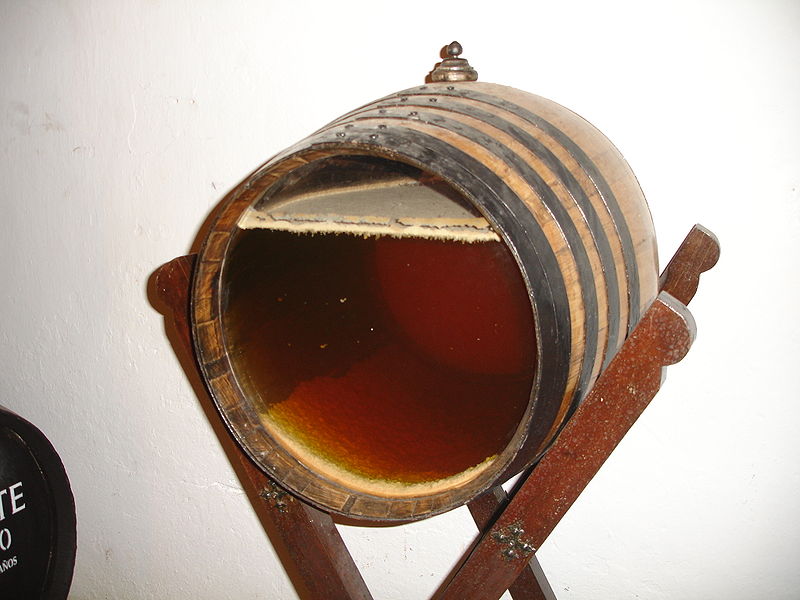
#2: Flor is that “something in the air” in Jerez. Flor imparts its magic by finding its way from the air to the young base wines being prepared each year. The flor starts to develop in the base wines, and, after the wine is fortified – as long as the maximum level of alcohol remains around 15% by volume or less – and placed in a barrel, the yeast will reproduce and start to form a veil (velo in Spanish) that covers the surface of the wine in the barrel like a blanket.  The veil has been described as a waxy foam, about two centimeters thick; or as a light “cottony” film. The “blanket” formed by flor is sturdiest and palest in spring and autumn and turns rather thin and grey in summer and winter. Talia Baiocchi, in her new book “Sherry: The Wine Industry’s Best-Kept Secret” describes a thick film of flor as resembling a “1970s popcorn ceiling.”

Sherry barrel with transparent front to demonstrate the natural development of flor - Photo by El Pantera via Wikimedia Commons

Sherry barrel with transparent front to demonstrate the natural development of flor – Photo by El Pantera via Wikimedia Commons

#3: Flor protects the wine from oxidation in a variety of ways. The veil that is created via the action of flor protects the wine resting beneath it in a myriad of ways. For one, it simply forms a protective barrier between the wine in the barrel and the oxygen above it. In addition, the flor actually consumes some of the oxygen around it, as well as some of the alcohol, glycerol, and (if present) sugar. Thus, Fino Sherries tend to be pale in color, light in body, and bone-dry.

#4 – The collective effects of flor – referred to as “biological aging” – are amazing. The main benchmark for biological aging is considered to be the wine’s aroma. Simply put, contact with flor (both while it is alive, and after it expires and sinks to the bottom of the barrel as lees) may create up to 1,000 milligrams per liter of acetaldehyde in the wine. That is, according to Ruben Luyten of the blog Sherry Notes, more than twenty times the amount of acetaldehyde found in most table wines.  Acetaldehyde’s aromas have been described, variously, as rancid apple, apple cider, almond, hazelnut, and even straw or hay. The presence of flor will also lead to an increase of in other highly aromatic compounds, such as lactones and terpenes, which may add an array of aromas – from dried herbs to green walnuts, mushrooms, and baking spices – to the wine.

#5: Flor has some definitive preferences as to climate and conditions.  Flor can only survive in wine that has an alcohol level of somewhere below 15% abv – but that’s just the beginning of its ways. Flor also needs a good deal of humidity in the air, which explains why Fino Sherries thrive in certain areas, such as the cooler, coastal areas around Sanlúcar de Barrameda and El Puerto de Santa María, while Oloroso Sherries (which are aged without flor) thrive in the hotter, drier, more inland areas around Jerez. It is well-known that solera systems (and the buildings that surround them) are often at ground level (as opposed to an underground cellar) and built with high ceilings or even left partially open to the elements, so as to encourage air flow. It’s also rumored that bungs are left gently in place in Fino Soleras to encourage the movement of the humid air inside the barrels.
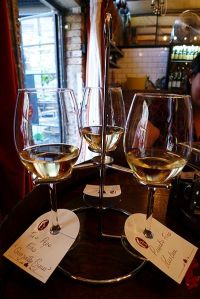
Flight of Fino Sherries at London’s Bar Pepito – Photo by Ewan Munro via Wikimedia Commons

Flight of Fino Sherries at London’s Bar Pepito – Photo by Ewan Munro via Wikimedia Commons

While wines produced “under a veil” are somewhat uncommon around the world, there are a few shining examples besides Fino Sherries. These include the Vin Jaune of France’s Côtes du Jura AOC, certain types of Tokaji, a “Vin de Voile” produced by Domaine Plageoles in France’s Gaillac region, and the “Condado Pálido” produced in Spain’s Condado de Huelva DO, among others.  While these wines undergo a similar style of biological aging, it is not certain that they use the same strain(s) of yeast as are found in Jerez-Xérès-Sherry, and, of course, each of these wines is made in its own conditions of climate-atmosphere-terroir. Thus, we can safely say that there’s nothing in the world quite like the flor of Jerez, the protective foam-blanket it creates, and the resulting Fino Sherry.

References:

Five Cognac Curiosities

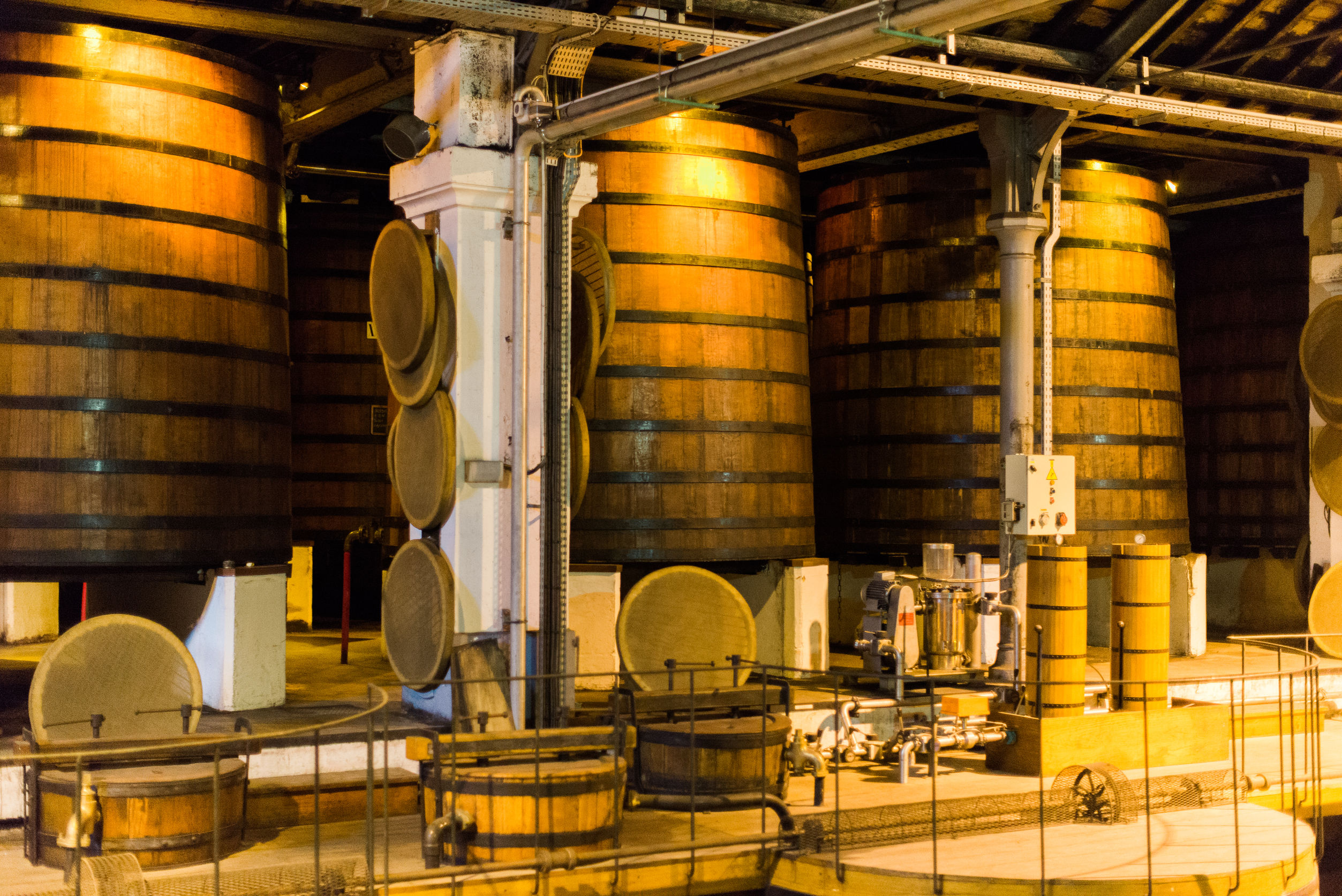
Cognac CuriositiesAll good wine and spirits students know that Cognac is a high-quality French Brandy, made from grapes grown in the delineated Cognac region, located just north of Bordeaux. There are several grape varieties allowed, of which Ugni Blanc (aka Trebbiano) is the preferred; the ferment goes through a double distillation in an Alembic still, followed by a minimum of two years’ aging in oak. Good! We’ve covered the basics. But did you know…

#1: The product of a third distillation is known as “Espirit de Cognac.” Espirit de Cognac was awarded an AOC in 1936, and is an unaged product that—after hours and hours of distillation—comes off the still at 80% to 85% abv. Brandy lovers of the world, don’t feel bad if you think you’ve never had Espirit de Cognac—it is not allowed to be sold as a spirit. Instead, it is used in the production of sparkling wines, and may comprises a portion of the liqueur d’expedition used in your favorite Champagne.

#2: Don’t confuse the unaged, bound-for-bubbly Espirit de Cognac AOC with a product labeled as L’Espirit de Cognac. Many Cognac producers use the term L’Espirit to designate their top-tier bottles. For instance, L’Espirit de Courvoisier is an assemblage of old cognacs – the oldest is rumored to be from the 1802 vintage (“the few precious drops that escaped Napoleon’s lips”), and the youngest from 1930.  Bottled in a numbered, hand-crafted Lalique crystal decanter, L’Espirit de Courvoisier sells for upwards of $5,000 per bottle – if you can find one.

Cognac grapes#3: Cognac is distilled from a white wine base, which is typically based on Ugni Blanc with some Colombard, Folle Blanche, Montils, and Sémillon sprinkled in. In practice, Ugni Blanc is by far the dominant grape, accounting for up to 90% of the total vineyards. Folignan, a Folle Blanche X Ugni Blanc cross may be used up to a maximum of 10%.

#4: Three other grapes are currently allowed to be used in the base wine as well. These are Jurançon Blanc, Meslier-St-François, and Sélect. Most of these grapes fall into the “uninteresting” category; however Meslier-St-François is (according to Jancis Robinson, et al, in Wine Grapes) a historic French variety that once grew in Champagne, the Yonne department of Burgundy, and the Loire Valley. As a matter of fact, in 1990, Charles Jumert of Cave de la Berthelotière “saved” the last surviving Meslier-St-François grapes of the Loire Valley by taking cuttings off of a vineyard as it was bulldozed under. He planted the grapes in Villiers-sur-Loir (north of Tours) and has been making a varietal Vin de France from them since 2003.

Cognac curiosities 2#5: 97% of all Cognac produced each year is exported. That’s right—only 3% of the Cognac produced, on average, is consumed at home. As a matter of fact, the French consume as much Scotch whisky as they do Cognac. This means that an average of 130 million bottles of Cognac are exported each year, which is enough to make grape brandy one of France’s most valuable exports. (As for France’s other valuable exports, #1 is airplanes [as in Airbus], #2 is medications, #6 is wine, #9 is make-up and sun-tan preparations, and #13 is perfume. Number 18 is brandy, Cognac included – not bad. You can see the rest of the data on French exports here.

The Bubbly Professor is “Miss Jane” Nickles of Austin, Texas… missjane@prodigy.net

In Praise of the Juniper Berry

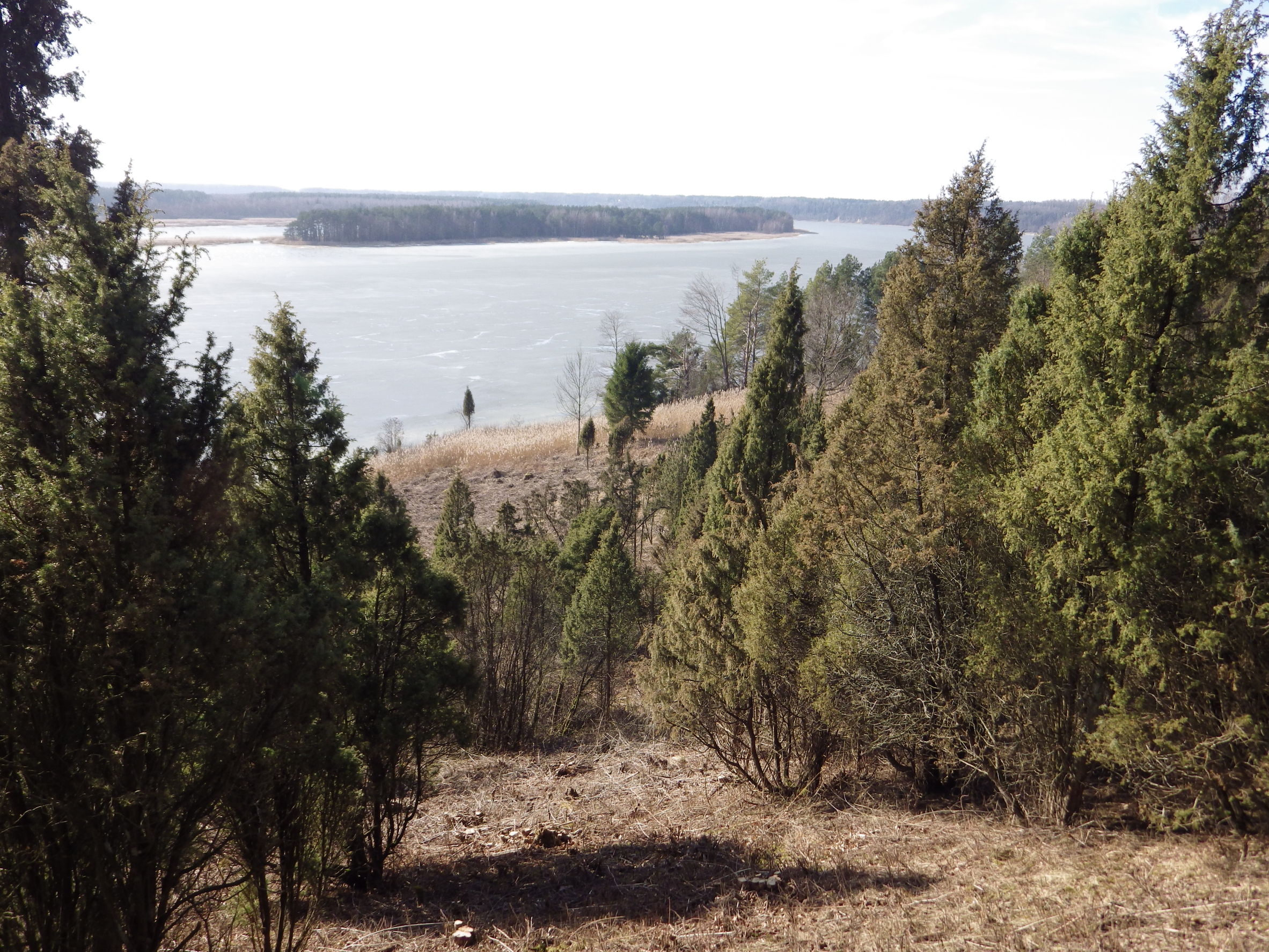
Fig 4-2 Juniper BerriesThe hero of gin lovers everywhere, the juniper berry is not really a berry at all but the seed cone of the juniper plant. Juniperus communis—the common juniper—is a shrub or small evergreen tree with needle-like leaves that grow in whorls of three. Juniper often grows as a low-spreading shrub, but juniper trees can grow to over 32 feet (10m) tall. The juniper plant has over 50 varieties and the largest range of any woody plant in the Northern Hemisphere, thriving throughout the temperate zone across North America, Europe, and Asia.

Many cultures consider the leaves of the juniper to be a symbol of protection against disease and evil spirits. In Tuscany, a sprig of juniper is often placed in front of the door to offer spiritual protection to the house and its inhabitants. Juniper can also ward off snakes—according to the ancient Greek pharmacologist Pedanius Dioscorides—who claimed that the smoke from a fire of burning juniper could keep the slithering reptiles far, far away.

The “berries” of the juniper plant begin life a grey-green color. They ripen in 18 months to a deep purple-black hue with a blue waxy coating. Juniper berries are also revered for their medicinal purposes, particularly as a diuretic and for conditions of the kidney, bladder, and stomach.

Of course, to students of wine and spirits, the juniper berry is known primarily as the predominant flavoring in gin and other spirits such as Genever, Steinhäger, and Wacholder. The flavor profile of juniper berries is often described a pine-like, resin-like, intensely herbal and with bitter citrus notes. Noted author Harold McGee, in his book On Food and Cooking defines the flavor of juniper as “green-fresh.”

The Juniper Forest ("The Valley of Juniper) in Ziarat, Pakistan

The Juniper Forest (“The Valley of Juniper”) in Ziarat, Pakistan

Juniper berries also play a role in culinary arts, particularly throughout Scandinavia and Central Europe. As such, juniper berries are often used to impart a sharp, clean flavor to meat dishes—particularly game, with its often distinct and robust flavor profile—as well as cabbage and sauerkraut dishes. Juniper has a natural affinity for pork and is found in many recipes for roast or braised pork, as seen in the recipe for choucroute garnie, a classic Alsatian dish of sauerkraut braised with mixed meats and sausages.

One more thing: on Easter Monday, according to tradition, the young men in Kashubia (Northern Poland) chase the young ladies around the town square, brushing (sometimes referred to as “gently whipping”) their legs with juniper sprigs. This custom is believed to ensure good fortune in love to the participants. I can only assume that after watching this annual tradition unfold, the parents would need a shot (or two) of gin.

The Bubbly Professor is “Miss Jane” Nickles of Austin, Texas: missjane@prodigy.net

Five Fast Facts about Brouilly

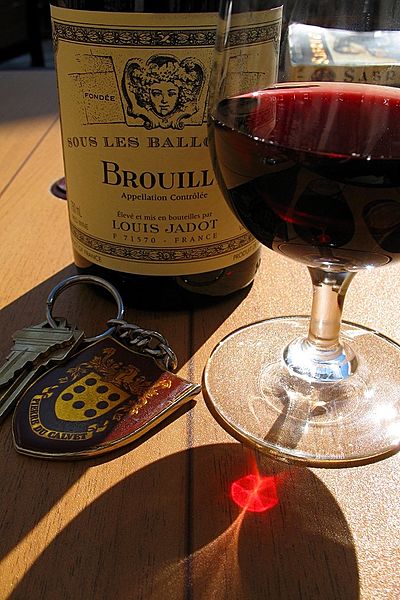
Photo of Louis Jadot Brouilly by Rob Ireton, via Wikimedia Commons

Photo of Louis Jadot Brouilly by Rob Ireton, via Wikimedia Commons

Five Fast Facts about Brouilly

#1 – Brouilly is one of the ten Crus of Beaujolais. It is the largest and most southerly of the ten Beaujolais Crus,  Although this large area contains a wide range of microclimates and soil types, most of the vineyards face roughly east and capture the bright morning sunshine as it rises over the Saone River Valley. The hills to the west shelter the region from some of the colder influences coming in from western France, while warm sunshine throughout the growing season means that the vines of Brouilly are among the first to be harvest in Beaujolais every year.

#2 – Brouilly is one of the few AOCs of Beaujolais not to be named after a local village; instead, it is named for Mount Brouilly. The vineyard area of Brouilly surrounds the mountain, and covers land in the following six communes: Cercié, Charentay, Odenas, Quincié-en-Beaujolais, Saint-Etienne-la-Varenne, and Saint-Lager.

#3 – The mountain itself, set somewhat apart from the hills to the west of Beaujolais, was named after a Roman soldier named Brulius, who is credited with planting the first vines here over 2,000 years ago. There is a small chapel at the top of the hill, built in 1857 in order to place the vineyards under the protection of the Virgin Mary.  A smaller, separate AOC, Côte de Brouilly, covers vineyards on the higher slopes of the mountain, and is completely surrounded by the larger Brouilly AOC.

#4 – The Brouilly AOC is approved only for dry, red  wines based on the Gamay grape variety. Interestingly enough, the décret for the appellation also allows for white grapes to be grown in the region, and up to 15% of the wine may be based on Chardonnay, Aligoté, or Melon de Bourgogne.

Mount Brouilly

Mount Brouilly

#5 – There’s a legend for that: Brouilly is home to a Lieu-dit (small vineyard area bearing a traditional name) named Pisse-Vielle. Pisse-Vielle which pretty much sounds like what it means, which is for lack of a better way of saying it, “Piss, old woman.’

The  legend behind the name goes like this: A pious old woman, who regularly goes to confession, had her first meeting with the town’s new priest. The woman had very little to actually confess, so at the end of their meeting, the priest gave her his typical salutation of “Go, and sin no more!” Unfortunately, in the local dialect of the town, the word for to sin (pécher) and (for lack of a gentler way of saying it) to pee (pisser) sounded quite the same – and she thought the priest had commanded her to “Go and pee no more.” (Poor thing!) She tried her best to comply, but her husband didn’t quite understand the command, and went to see to Priest. The husband and the priest quickly cleared up the confusion, and in his rush to convey the news, the husband yelled down the street towards his wife – “Pisse Vielle!” (“Piss, Old Woman!”) – “the priest said it’s alright!”  As these things usually go, the neighbors heard his cry, and have not since forgotten!

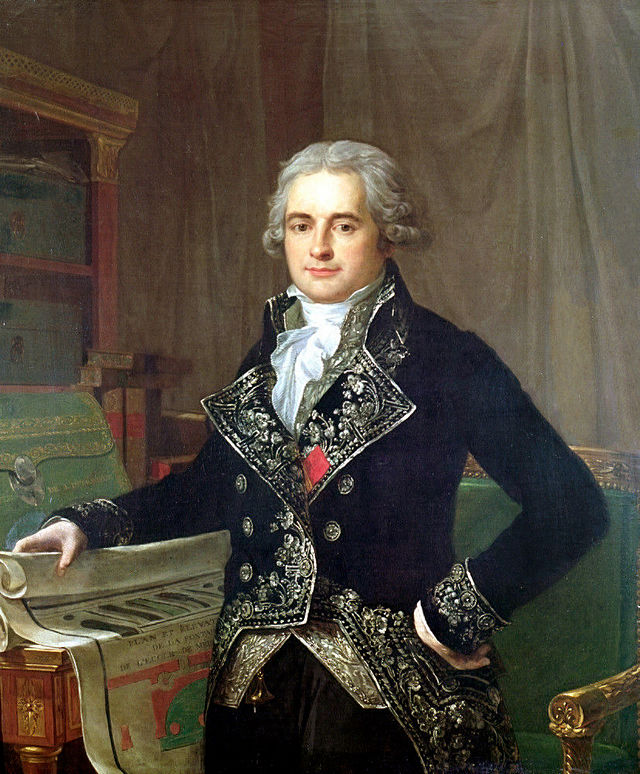
Jean-Antoine Claude Chaptal, Comte de Chanteloup

Portrait of Jean-Antoine Chaptal (1815)  by Anicet Charles Gabriel Lemonnier

Portrait of Jean-Antoine Chaptal (1815) by Anicet Charles Gabriel Lemonnier

Winemakers all over the world consider him a friend, but in public, they might pretend they don’t know him. No, he isn’t a fuzzy underworld-figure selling steroids; nor is he an embarrassing relative, nor a wine writer with a price. He is Jean-Antoine Claude Chaptal, Comte de de Chanteloup!

Perhaps we should refer to him by the name and moniker by which he is best-known (to wine lovers, that is), simply Jean-Antoine Chaptal. Jean-Antoine, a scientist, professor, and industrialist, perfected the process of adding sugar to grape must before fermentation in order to increase the final level of alcohol in the wine. That process, now known as chaptalization, is still in use today.

Jean-Antoine was actually a fascinating man. Born on June 4, 1756, he died in 1832, having lived until age 76. He was a both a chemist and a medical doctor. He chaired the chemistry department of the medical school at the University of Montpellier, and is credited with coining the term “nitrogen” (fr. nitrogène) for a gas produced via nitric acid, previously referred to as “mephitic air.”

A learned, confident, and outspoken man, Chaptal was arrested and imprisoned during the French Revolution. Despite this, after the revolution Dr. Chaptal became a statesman, succeeding Lucien Bonaparte as Minister of the Interior of the First French Empire. During his time as Minister of the Interior, Dr. Chaptal established the Paris Hospital, built a chemical manufactory near Paris, founded a school of arts, and instituted the metric system in France.

Dr. Chaptal, a decorated man of science, was conferred the title of Comte de Chanteloup by Napoleon himself.  In 1816, he was nominated a member of the French Academy of Sciences by Louis XVIII. He was awarded the Grand Cross of the Legion of Honor, the cordon of the Ordre de Saint-Michel, and his name is one of the 72 names inscribed on the Eiffel Tower. Rue Chaptal in Paris’ Montmarte neighborhood is named after him.

Perhaps, however, his greatest legacy is that silky Pinot Noir, that bracing Riesling, or that lighter-than-air Champagne that you are enjoying right now. As we know, it just might have been produced with a little help from chemistry, as seen by the mind of Jean-Antoine Claude Chaptal, Comte de Chanteloup.

The Bubbly Professor is “Miss Jane” Nickles of Austin, Texas – missjane@prodigy.net