Flip Your Meetings!

The other day I was playing around online while waiting to board a plane.  I was finger-surfing on my iPad for articles on “flipping the classroom.” There’s been a lot of buzz about flipping the classroom, including here on The Bubbly Professor and lots of other blogs. The flipped classroom is such a great concept for teaching that it’s become my newest endeavor to read everything I can on the subject.

About ten minutes into my web surfing session I read a statement that literally changed my life. How often does that happen?

The statement was part of the introduction to what appeared to be a great article on flipping the classroom.  I say “appeared to be a great article” because I never read it.  This one sentence was so powerful I turned off the iPad, pulled out one of my handy-dandy yellow pads that I do all my “real” work on, and started writing.  My work life was forever changed!

Here is what I read, as close as I can remember:  “Do you leave meetings with more work to do than when the meeting began?”  Oh yes I do! Not only do I leave meetings with an elongated list of things to do, so does every poor soul who has ever attended a meeting that I was in charge of.

One simple sentence was to become my personal life-changing moment.  If you are the author of this sentence, please contact me.  I want to read the rest of your article.  I want to give you credit for this idea.  Most importantly, I want to worship at your feet for the rest of my life.

My True Story of Meeting-Flipping 

About two months ago, I had a faculty meeting.  My ten or so extremely dedicated  faculty members and I gathered around a round table and I led what I thought was a productive meeting.  The agenda had been distributed in advance, we had a lot of things to go over, and we had a lively discussion. Success (or so I thought)!

In my old (pre life-changing moment) way of leading meetings, it was a success. But in my new way of thinking….it was a waste of time!!!  Here’s why:  one of the items on my agenda was this:  Annual Faculty Development plans due by April 1!

What had actually happened during my “successful” meeting?  I distributed some information that could have been done just as easily (and much faster) via email, and everyone present left my meeting with “one more thing do.” And for the record, how many faculty development plans were turned in by April 1?  Zero!!!

The New Meeting World Order

So here’s how I led the next faculty meeting.  I sent out a meeting invitation that read as follows: “We will complete your annual faculty development plan at this meeting.  Please start thinking about what you would like to do this coming year in order to improve your teaching ability.  This can include conferences, seminars, courses you’d like to take, professional certifications you’d like to achieve or anything else you can think of.  See you next Friday!”

Faculty Development Friday

When the meeting came around, we met in the same conference room around the same table as we always had before.  But this time, when our hour was up, no one left the room groaning that they had one more thing to accomplish in an already busy schedule.  Instead,  everyone had a completed Annual Faculty Devlopment Plan.  It was fun, and it was easy. 

To start the meeting, I gave everyone a blank copy of our faculty development plan template.  I had everyone fill in their name, anniversary dates, employee Id numbers, all that stuff.  Then, we went down the list of items to fill out.

First item – Professional Certification:  “What professional certifications are you interested in pursing this year?  Who wants to work towards their CEC? Great, what are the steps.  Study, take the practice tests, take the written test, take the practical exam, complete the final application packet and mail off. If you are interested in the CEC write these steps down in section one and fill in the completion dates that will work for you.  Who would like to pursue a CSW?  Great, what are the steps?  Get a study guide, study, take the  practice tests, review with your mentor, take the written exam.  If you would like to pursue a CSW, write all that down in section one and fill in the dates that work for you.”  And so on, and so on…in about 15 minutes we had all finished section one.

Next section – Training offered Internally:  “Everyone write these down…Sticky Teaching on May 15, Brain Rules for Teachers on June 12, Bloom’s Taxonomy on July 25 (etc, etc.). These are the faculty development sessions that I will conduct in house.  You need to try to attend at least six of these and when you do, make sure to note on your faculty development form three take-aways from each session that you plan to use in your teaching in the coming year.”  Ten minutes later…section two done!

Next section – Training Obtained Externally: “Here’s a list of classes and workshops offered on-line.  Two have already been budgeted for each of you.  Pick the two that most interest you and write them on your form. If you have a conference or convention in mind that you’d like to attend, write it down and I will let you know if we can budget for it by the end of the month.” Twelve minutes later, section three done.!

Final section – Classroom Observations:  “Everyone write down the name of the class you are teaching this semester that you would like me to visit in order to conduct a classroom observation.  Same thing for next semester.  When the Fall and Winter schedule comes out, be sure and update your plan and let me know which class you’d like me to visit.”  Ten minutes later, we’re done.

One hour from start to finish and everyone has their faculty development plan done.  Everyone had the opportunity to benefit from the ideas and challenges of their colleagues.  Everyone is excited about the opportunity to improve their teaching skills. Everyone has a new professional certification goal in mind. Best of all, everyone – including me – gets to check one big giant thing off of their big giant “to do” list.

What else can I say? I’m a meeting flipper for life.  And if this was your idea….make yourself known!

Flipping the College Classroom

Flipping the College Classroom

For the past century, and probably for centuries before that, the typical classroom learning experience on just about every college campus in the world has remained the same. Oh sure, we’ve got PowerBooks and Power Point and lots of technological gizmos these days, but in most classrooms it’s the same as it ever was.  The faculty member – the Sage on the Stage – lectures while the students listen and take notes.

But oh how things have changed.  When I first started teaching my biggest problem was keeping an eye on students who were passing notes back and forth.  Now, it’s “Teacher vs. Twitter” as I am competing with Facebook, Google+, iPhones, iPads, Angry Birds and more.  The distraction factor is not even the worst part; it’s a true fact that just about everything I have to say in a three-hour lecture can be found via a three-second search on every student’s personal favorite electronic gizmo, sitting right there in their hand.   

Perhaps it is time for the classroom to change.

Lesson Plans in the Lurch.

To explain how the classroom can change, we first need to understand the learning process. To put it quite simply, there are two parts to the learning process:  transmission and assimilation. In a typical college classroom, transmission takes place as a professor lectures and students take notes.  Transmission also occurs during reading, although getting the students to actually read the textbook  is a challenge unto itself, and one that perhaps I should address at another time.

The second part of learning, assimilation, generally occurs outside a typical classroom as the student does homework, lab work, studies his notes, or takes part in a cooperative learning project.

Back to Bloom

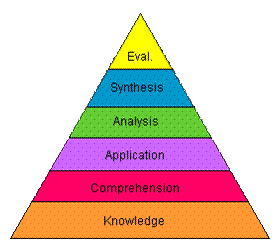
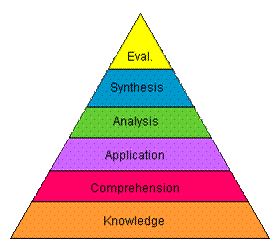
If we refer back to the Learning Taxonomy of Benjamin Bloom, we can see that “transmission” involves the lower order level thinking skills of knowledge and understanding, while “assimilation” involves the higher order thinking skills of application, analysis, creation (synthesis) and evaluation.  In layman’s terms, “real” learning occurs outside the traditional classroom.

The big issue with this traditional model is that as the student’s cognitive load increases, the availability of help, in the form of the professor, decreases.  This model is reversed in a flipped classroom, where (to put it very, very simply) transmission occurs before class, and assimilation takes place during class, with the aid and help of the instructor.

Transmission…Before Class

The very technology that is causing widespread student distraction during class in the first place can be put to use in asking students to view a video of a lecture before class. Students can be assigned lectures to view via Youtube, iTunes or other media, and may be required to be involved in online chats or forum discussions. At its most basic, transmission before class can take the form of a good, old-fashioned text book reading assignment. 

Obviously, an excellent text book, a series of recorded lectures, and a reliable delivery system are pre-requisites for flipping the classroom. In addition, guided practice for basic knowledge and skills such as take-home or online quizzes or other types of homework should also be included and required as a “ticket for entry” into class.  Flipping a classroom just doesn’t work if the students don’t read, view, or do their assignments before class.

Assimilation…During Class

Instead of a lecture, the flipped classroom is used to reinforce, practice, and analyze the subject matter at hand through the use of a bank of interesting, challenging in-class assignments intended to assist in the assimilation phase of learning. In other words, you do your homework in class, where the teacher can watch over and guide you. Class time can also be used for debate, demonstration, discussion, and review of specific concepts.

Any instructor who has ever overseen a learning lab or a group project knows that directing activity in a classroom can be far more demanding than lecturing. Careful management and acute attention is demanded on a minute-by-minute basis in a flipped classroom, lest your well thought-out learning session turn into a group nap, a gossip session, or a brawl. (You professors know exactly what I mean.)

The Challenge for Educators

No one is saying that this type of teaching is easy. You are very likely to encounter student resistance, at least at first.  As a matter of fact, you should count on the fact that classes taught in this manner will be fraught with skeptical students for the first few weeks. Even students that say they play on Facebook all throughout class because the professor is boring are still likely to resist this alternative format as they are used to a class that requires very little in terms of effort, participation, and engagement.  Unfortunately, the ubiquitousness of the lecture format of teaching has bred a generation of students that are content to “zone out” for a few hours a day during class.

Student accountability is another issue. I’ve been in plenty of classrooms where it’s obvious the students didn’t do any of the assigned readings. I even had one student explain that he didn’t bother opening the book because “I did such a good job of teaching it.” (What do you say to that?) Accountability, such as readiness assessments done individually or in teams should be woven into the curriculum. However, the overriding hope for this method is that students will actually be better prepared for class because the materials are more engaging and they know that the class will be structured around the information assigned in advance.

Finally, this idea is not ideal for all disciplines, all subject matters, or even all the days in one particular course. I’ve found it works very well on about half of the days of my classes, and students need to know exactly what days to expect a flipped class.

What do you think…can you flip your college classroom?


The Bubbly Professor is “Miss Jane” Nickles of Austin, Texas


Flower Power

One of the most rewarding (and labor-intensive) classes I have ever taught is called “Flower Power”.  I came up with the concept for my college-based wine club, “The Grapeheads,” after leading monthly wine events for basically the same group of people for four years…in other words, I was running out of ideas!

This was one of those times when I just wasn’t sure how it would go; it could either be a brilliant success or a dismal failure. The day before the event I almost gave up on the idea and was about to swap it out for a generic white wine class disguised as a  tasting of obscure grape varieties.  I even had a name…”Let your mind go blanc!”  In retrospect, it’s a good thing I didn’t go with the alternative, and whether through pure dumb luck or lots of effort in the preparation phase (I’ll never know), the Flower Power class turned out to be of my all-time best classes in both attendance and execution.

The point of the class is that floral descriptors are among the most misunderstood of all wine aromas. Not too many people, beyond the modest appeal of edible flowers, fancy drinking something that smells like a flower.  Plus, while floral aromas are exotic and pleasant, in the day and age of the concrete city most people’s closest interaction with floral aromas is shampoos, dish detergents, and perfumes.

Another issue with floral aromas is people just don’t recognize them beyond the basic “floral, wildflower, garden after the rain, or perfume” descriptors.  My opinion is most people just don’t interact with the real thing very often, and when they do it is far from an academic affair.  In other words, most people have not had the opportunity to really sniff the actual flowers and make a real effort learn to identify the aromas.  Most people I know wouldn’t know even be able to tell a gardenia from an orchid in any situation!

To introduce the session, I began with a brief lecture accompanied by some beautiful pictures of flowers via Power Point. I discussed the different floral aromas found in wines, described what wines are likely to show floral aromas, and introduced the “WineSpeak” often used to describe floral aromas in wine.

Next, (this was the labor-intensive part), we had a flower-sniffing session.  I had 12 different types of flowers, labeled and arranged ever-so-cutely in wine glasses for a walk-around sniffing. Next to each flower, I had a sample glass in which I placed a few flower petals over which I poured a small splash of wine.

On another table, I had some well-labeled floral essential oils; these were presented via a cute little cotton ball in an even-cuter wine glass.  I also used—I must admit—some candles (yeah Yankee Candle Store). All told we had 25 different floral aromas represented.

Finally, to round out the day, we did a blind tasting of some exotically scented wines that exhibited floral aromas.  Taking a chance on this oddball of a class turned out to be worth it, and I was amazed at the ability of my students to recognize and identify those floral aromas! Of course, the wine was delicious as well.
Here’s a copy of the handout I presented that day:

Flower Power:  Wines and Floral Aromas

Don’t worry or leave:  Using a floral descriptor for a wine does not mean that you wine is about to taste like flowers, perfume or shampoo. Floral is style descriptor that applies mainly to a wine’s scent.  That being said, many wines have an intoxicating floral aroma.

It”s normal if find this hard to grasp:  since most floral aromas are somewhat exotic, you are not likely to come into contact with such scents everyday.  Keep an open mind and practice! You can experience floral aromas at the flower shop, a candle store, an herb shop (as in dried flowers or essential oils)…and you may find that you develop an appreciation for floral characteristics in wine.

Common floral aromas that reveal themselves in wine:

  • Acacia
  • Gardenia
  • Hibiscus
  • Honeysuckle
  • Hyacinth
  • Jasmine
  • Lavender
  • Lily
  • Orange Blossom
  • Rose
  • Violet

Other terminology  you may use to recognize or describe floral aromas are:

  • Wildflowers, Dried flowers, Dried roses
  • Rose perfume, Perfume
  • Old lady perfume (my personal favorite, and one that everyone understood)
  • Wedding bouquet
  • Walking through the Garden (as if WineSpeak wasn’t wacky enough)
  • Nivea Cream (this one you have to experience to believe)
  • Linalool, Honey

Grapes (and Wines) that Lend Themselves to Floral Aromas Include:

  • Albariño
  • Beaujolais
  • Bordeaux
  • Chenin Blanc
  • Gamay
  • Gewürztraminer
  • Malbec
  • Merlot
  • Muscat/Moscato
  • Pinot Gris
  • Pinot Noir
  • Riesling
  • Syrah/Shiraz
  • Torrontes
  • Viognier

The Bubbly Professor is:  “Miss Jane” Nickles of Austin, Texas – missjane@prodigy.net

Mad Libs for Wine!

It never fails…the first time I stand in front of a new wine class and describe a white wine as having aromas of “lemon, lime, green apple, and apricot” I get either a sea of blank stares or an uncomfortable laugh track.  A few weeks into the class, however, my students are begging me to teach them how to “impress their friends and annoy their enemies” by crafting an impressive sounding wine description.

My response:  “You mean one like this?”

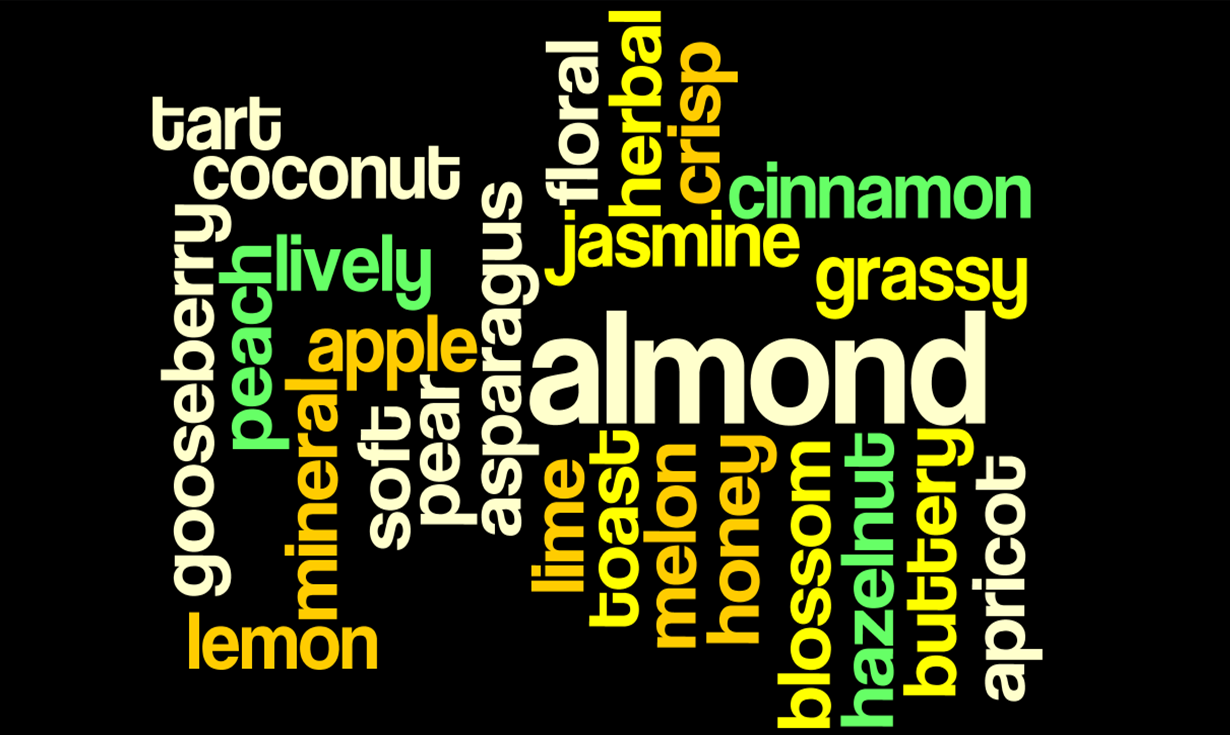
“Craggy Range Sauvignon Blanc 2010 is a dry, medium-bodied white wine.  The nose reveals the fruity, floral, and  mineral aromas of lemon, lime, green apple, gooseberry, orange blossom and wet stones.  This wine is herbal and fruity on the palate, with lively acidity; followed by a refreshing, slightly bitter lemon-peel finish.”

And then, in the course of an hour, I teach them to use “Mad Libs for Wine” – in other words, a fill-in-the blank template (based on my book “WineSpeak 101”) that allows even beginners to create an accurate (and yes, impressive sounding, if you’re into that) description of any wine.  We just take ten simple facts about the wine and string them together into a few sentences.

Try it for yourself!

The WineSpeak 101 Description Template:

To write your own wine description, use the WineSpeak 101 descriptor crib to fill in the blanks on this template.  Your completed description will characterize the wine using the following basic facts:

  • Name of the Wine 
  • Level of Sweetness
  • Mouthfeel – aka “Body”
  • Type of wine (the easiest, but your customer needs to know!)
  • Aroma   Categories
  • Specific  Aromas
  • Flavor  
  • Acidity for white wines, tannin level for reds 
  • Finish  – length 
  • Finish  – description 

 ___________________________________ (Name of the wine) is a _______________ (Sweetness),

 __________________________________ (Mouthfeel) ,   _______________________ (Type of) wine. 

 The Nose reveals the ____________________________________________ (Aroma Categories) aromas 

 of ____________________________________________________________ (Specific Aromas) .

This wine is ___________________________________________________________ (Flavors) and 

____________________________________________ (Acidity or Tannin, or both) on the palate, followed by a  

_____________________ (Finish – Length) , __________________________ (Finish – Description)  finish.

As you can see, it’s not exactly a party trick, but if you know your way around the typical wine vocabulary, it’s easy to put together a meaningful wine description.  My students are amazed at how well they can discuss their impressions of a wine after just a few practice sessions.  This technique works so well that I wrote an entire textbook on “WineSpeak 101” a few years ago, and still use it today in my teaching.

Please…try it for yourself and enjoy your studies!

The Bubbly Professor is “Miss Jane” Nickles of Austin, Texas…missjane@prodigy.net

Train the Trainer: Taxonomy of a Wine Class

In a previous blog post we learned all about Bloom’s Taxonomy of Learning Objectives, and how using this concept in the design and implementation of your classes (even your wine classes) can lead to improved student learning (and engagement and retention.)

If you didn’t catch the first post in this series, you can read it here:

https://bubblyprofessor.com/2012/02/25/train-the-trainer-blooms-taxonomy-of-learning-objectives/

As promised, here are some sample learning objectives for a class on food and wine pairing, for each  each level of the hierarchy. You can read the source material here

Additionally, as faculty often find it a challenge to develop effective test questions above the level of “knowledge” or “memory”(particularly multiple choice questions), I offer sample MCQ’s at each level.

Level 1: – Knowledge – Remembering

  • Learning Objective: List the three most important concepts to consider when pairing food and wine.
  • At this level, one simply requires the recall of information.  Warning!  A test at this level can be passed by a night of drunken “cramming” before a test, and the information forgotten by the next night of drinking!!
  • Please do not: Use this level for more than 50% of your test questions.

 Sample MCQ:  Which of the following represent the three most important concepts to consider when pairing food and wine?

  • A . Fruit, Flavor, and Tannin
  • B.  Taste, Flavor, Texture
  • C.  Fruit, Flavor, and Texture
  • D.  Taste, Flavor, and Tannin

Level 2:  Comprehension – Understanding

  • Learning Objective:  Identify what components of the food and wine equation  are almost always the most important consideration in a food and wine pairing and explain why.
  • At this level, knowledge of the three components is assumed and one tests for understanding of this knowledge.

Sample MCQ:  What components in a food are almost always the most important consideration in a food and wine pairing?

  • A.  Taste components, because specific tastes in foods will change the way wine is perceived in a predictable manner.
  • B.  Taste components, because they can be either matched or contrasted.
  • C.  Flavors, because tastes can only be matched while flavors can be matched or contrasted.
  • D.  Flavors, because “natural affinities” are among the best food and wine pairings.  

Level 3:  Application – Applying

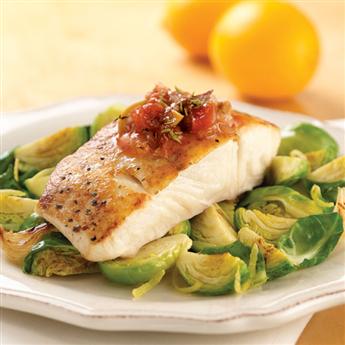
  • Learning Objective:  Determine what is the most important element to consider when pairing wine with a specific dish, demonstrated by the following dish:  Grilled Halibut with Lemon-Caper sauce served on a bed of Asparagus Risotto. 
  • Note that at this level, knowledge of the background to the question is assumed to be both known and understood, and students are expected to apply this knowledge and understanding.  In this case, we are looking for the student to apply a known set of food and wine pairing principles.

 Sample MCQ:  When choosing a wine pairing for Grilled Halibut with Lemon-Caper sauce, what is the most important element to consider?

  • A. The lemon flavor of the sauce.
  • B. The flavor intensity of the grill marks.
  • C. The saltiness of the fish.
  • D. The acidity of the lemon sauce.

Level 4:  Analysis –Analyzing

  • Learning Objective:  Break down the various components of a dish or menu and determine what components are dominant and the effect each would have on a wine pairing. For instance, what impact would the acidity in a dish have on a white wine?
  • Note that the student is assumed to know and understand the information and to apply the information.  This objective stresses the ability to break down the food and wine in question into their component parts and assume an outcome.  Note that this question does not require the student to create a pairing (level five) or evaluate whether or not this is a good pairing (level six).

 Sample MCQ:  What effect would the Grilled Halibut with Lemon-Caper sauce produce when paired with Sauvignon Blanc?

  • A. It would make the acidity in the wine more pronounced.
  • B. It would make the acidity in the wine less pronounced.
  • C. It would bring out the bitterness in the wine.
  • D. It would make the fruity flavors of the wine pop.


Level 5:  Synthesis (Creation) – Creating

  • Learning Objective: Design a wine pairing of three different wines to complement the grilled halibut dish.
  • At this level, the student needs to have the knowledge and the comprehension of the principles of food and wine pairing, be able to apply it to a real-world example, and be able to analyze the components of both the food and the wines before he or she can create the pairing.

 Sample MCQ: Which of the following wine flights would make the best pairing for Grilled Halibut with Lemon-Caper Sauce, based on the proper taste components and a potential flavor bridge?

  • A.  Oaked Chardonnay, Sauvignon Blanc, and Gewurztraminer
  • B.  Unoaked Chardonnay, Sauvignon Blanc, and Gewurztraminer
  • C.  Unoaked Chardonnay, Sauvignon Blanc, and Viognier
  • D.  Unoaked Chardonnay, Sauvignon Blanc, and Riesling

Level 6:  Evaluation – Evaluating

  • Learning Objective:  Evaluate specific wine choices for a specific dish, and give your opinion on the quality of the pairings.  For instance, evaluate whether an oaked chardonnay a good choice for the grilled halibut dish in the previous question, and discuss why or why not. 
  • At this level, the student is expected to know, comprehend, apply and analyze the principles of food and wine pairing, and, describe the outcome of the pairing, and form an opinion on whether or not this is a good match.

Sample MCQ:  Is oaked chardonnay a good choice for Grilled Halibut with Lemon-Caper Sauce?  Why or why not?

  • A.  Yes, because the acidity is a good match and the saltiness of the capers will work well with the oak.
  • B.  No, because while the acidity is a good match, the saltiness of the capers will potentially clash with the oak.
  • C.  Yes, because the flavors of the lemon in the sauce will work well with the lemony flavors of the wine.
  • D.  No, because the flavors of lemon in the sauce will clash with the tropical flavors of the wine.

I hope this post gives you some guidance and encouragement to teach to all levels of the learning taxonomy.  I also hope it shows teachers that effective exam questions, even Multiple Choice Questions, can be written at all levels of the learning taxonomy and that we stop giving exams that are basically “wine trivia contests”. 

I realize that this method of teaching and writing tests is not simple, but it does get easier with practice.  However, keep in mind that teaching and testing to the higher levels of the learning hierarchy will enhance the quality of your teaching and the  validity of your exams – guaranteed! 

Cheers! 

Train the Trainer: Bloom’s Taxonomy of Learning Objectives

Benjamin Bloom  (1913 – 1999) was an interesting gentleman indeed.  Back in the 1940’s and 50’s he held several impressive roles in higher education, including 16 years as the “University Examiner” at the University of Chicago.  In this position, he analyzed and approved the university’s tests to determine if undergraduates had mastered the material necessary for them to receive their bachelor’s degrees. He also wrote or co-authored 18 books on education, all of them with the goal of “enhancing student learning”.

During his time as University Examiner, he discovered that over 95% of the test questions students encountered required them to think at only the lowest possible level…the recall of information.  In other words, most tests – even at the University level – resembled nothing more than a “memory trick.” 

I have to admit, I agree.  In my opinion, this is one of the biggest issues in education, including wine education, today.  A  while back, I was asked to look over a took a wine test written by a friend of mine.  It was intended to be the final exam in a semester-long “Professional Wine Studies”  course she was teaching at a 2-year college as part of a hospitality management program. Much to my chagrin, the test amounted to nothing more than a really long wine trivia contest. She could have sold it to Hasbro as “Trivial Pursuit – Vinous Version“!

The issue I had with the test is that all it really assessed was memorization. Very few, if any, of the questions required even the slightest bit of comprehension, application or evaluation.  Sorry to say, my friend was a member of the dreaded “lazy test writer club.”  The test she was about to give could have been passed by anyone who locked themselves in a closet with a copy of The Wine Bible for two days before the test.  Of course, the day after the test they wouldn’t remember a thing.  (We fixed the test before it went out to the examinees – global wine education crisis averted!)


Back to Benjamin Bloom and his solution for all this. 

In 1954, after a series of educational conferences, Bloom was tasked with leading a committee with the goal of improving  the quality of  teaching practices, curriculum development, and the validity of university exams. The result was a classification of learning objectives – the goals that educators set for learners – built around a hierarchy of levels of understanding.  In an ideal learning situation, students would master the lowest levels of learning, such as knowledge and memorization, and then move up to learning at the “higher order thinking skills” such as application, evaluation, and synthesis. If applied properly, this idea should influence or even change the way you teach, and equally importantly, how you design your tests. 

Here is a very quick overview of the six levels of learning, paraphrased in my own words. I hope they meet with Mr. Bloom’s approval.

Level 1:  Knowledge – Remembering

  • Definition:  Student recalls or recognizes information, ideas, or principles in the approximate form in which they were learned.
  • Good for:  Dates, Events, Places, Vocabulary, Key Ideas, Facts, Figures.
  • Please don’t: Write all your test questions at this level.   

 Level 2:  Comprehension – Understanding

  • Definition:  Student translates, comprehends, or interprets information based on prior learning.
  • Good for: Finding meaning, Interpreting facts, Giving examples.

 Level 3:  Application – Applying

  • Definition:  Student uses the information to solve a problem or complete a task.
  • Good for: Use of information in new situations, solving problems, case studies.

 Level 4:  Analysis –Analyzing

  • Definition: Student breaks down information into simpler parts and understands patterns and organization. 
  • Good for:  Recognizing and explaining patterns and meaning, seeing the “parts and the whole”, breaking things down, critical thinking.

Level 5:  Synthesis (Creation) – Creating

  • Definition:  Student originates, integrates and combines ideas into a product, plan, or proposal that is new to him/her.
  • Good for: Building things up, putting concepts together, creating new ideas, plans, or products.

 Level 6:  Evaluation – Evaluating

  • Definition:  Student appraises, assesses, or critiques on a basis of specific standards and criteria.
  • Good for:  Making recommendations and choices, assessing value, critiquing ideas, predicting outcomes.  

Due to its long history and popularity,  the actual wording and order of the “hierarchy” has been  revised, condensed, expanded, modernized, and re-interpreted in a variety of ways over the past 60 years.  However, Bloom’s Taxonomy has clearly stood the test of time.  Every teacher should use this material. 

It’s the year 2012, and a seminar on Bloom’s Taxonomy of Learning Objectives is included in my annual faculty development plan this year, as it is every year.  It’s one of the most important concepts I want my faculty to know..and comprehend, and apply, and analyze and evaluate.

Stay tuned later this week when I’ll provide some examples of “Bloom’s Taxonomy in Action” in wine education and testing.

Train the Trainer: The Power of Schema

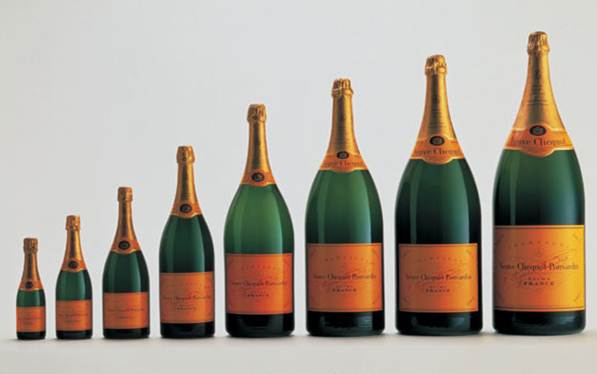
Do you remember what it was like when you were trying to memorize the names of the different Champagne bottle sizes for your CSW exam?  You studied and studied, only to forget the terms by the next day.  Finally, you dreamed up a silly mnemonic device such as “Mary Jackson makes small boys nervous.”

Brilliant!!  Now you can remember M-J-M-S-B-N…in other words, the perfect sequence of:

  • Magnum
  • Jeroboam
  • Methuselah
  • Salmanazar
  • Balthazar
  • Nebuchadnezzer

Congratulations! What you did was trick your brain, and while it may have helped you pass your CSW exam, it did nothing to help you really know and understand the relevance of the different sizes of the bottles. In order to do that, you would really have to experience them.  I suggest buying one of each bottle size of your favorite Champagne, and on subsequent nights, consume the entire thing while both taking pictures and keeping an on-line journal of your thoughts. (What do you mean, that’s not practical?)  Never fear, there is an easier way.

As the Bubbly Professor, I am not here to criticize your study habits, but I am interested in just why it is so much easier to remember a sentence than it is to memorize a string of seemingly unconnected data, and how we might use such information to make our teaching and learning more effective.

It boils down to one word:  Schema.  Schema is a powerful learning concept which has been discussed in the context of educational psychology since Dr. Frederic Bartlett coined the term in the 1800’s – although if you study the educational practices of the Ancient Greeks you can clearly see that they were wise to it as well.

Schema is one of the factors of the educational process that can determine – in the first few seconds of learning – whether or not something that is being perceived will actually be remembered, and more importantly, understood.  A schema is a type of mental framework – a way of organizing thoughts around some aspect of the world. Schema involves prior knowledge, the structure of that knowledge, and the way we fit new knowledge into our “world.” 

Simply put, the brain is just not wired to remember random words, numbers, or details out of context. One of the best methods for getting students to remember details is to tell them the meaning, context, or conclusion of the material before you present the details – in other words, introduce a schema.  

According to research, (thank you, Dr. R.C. Anderson),  triggering a schema around a moment of learning can increase retention and comprehension of the salient details by between 50 and 100%.

So, how do we harness this knowledge and turn it into teaching power? 

Here are three tips:

Teach meaning before details.

As we have experienced, the brain is just not wired to remember random words, numbers, or details out of context.  To help your students remember details,   tell them the meaning, context, or conclusion of the material before you present the details.

In 2005, I did a little classroom experiment in my “Wines of France” class concerning the “facts and figures” of Beaujolais. Over the course of a year, 500 students were taught the details of the wine before the historical story of the wine, and another group of 500 were taught the story before the details.  In other words, the second group of 500 was provided with a schema. 

The results:  students who were taught the details of the wine before the telling of the story got a total of 68% of the questions on a pop quiz given the following day correct.  The students who were told the story before being told the details of the wine got a total of 91% of the answers correct.  While both figures could demonstrate the effectiveness of narrative as a teaching device, the students who were taught the meaning before the details did significantly better.

Use the power of three.

One of the easiest ways to set up a schema is to use pattern recognition using the “power of three.”  Three is the minimum number of items the brain needs to see before it recognizes a pattern,in other words, invokes a schema.  In addition, three details or “chunks” of information sit well within the limits of working memory.

It’s easy to think of dozens of examples of this concept in use in popular culture, literature, and oration.  For example:

  • Lions, and tigers, and bears (oh my!)
  • Sex, Lies, and Videotape
  • Location, Location, Location
  • Friends, Romans, Countrymen…
  • Three bears, three wishes, three graces.  Now you know why there are three!

A great tip to put this power to use is to start a session off with the statement: “Today, I want you to remember three things.”  Everyone can remember three things, it doesn’t sound too hard.  Then, it’s your job to “chunk” all your “facts and figures” into three meaningful chunks – now known as “schemata.” 

DIY Schema

Since prior knowledge is essential for the comprehension of new information, teachers either need to help students build the prerequisite knowledge, or remind them of what they already know before introducing new material. 

You might have to get creative with this, but with the subject of food and wine it is often possible to find references to our subject matter in pop culture, movies, television, and even songs. 

Another great teaching tip is to create your own set of schema by purposely “injecting” your classes or sessions with references to future material.  It takes some deliberate effort, but your students will appreciate your efforts – whether they are aware of them or not!

Train the Trainer: Storytelling as Teaching

Storytelling as Teaching

It is a proven fact that the use of storytelling – called “the narrative approach” in teaching lingo – is one of the most effective ways to add interest and engagement to a presentation.  Storytelling works in just about any educational platform from lecture to discussion to on-line, and can help you reach your audience on both an intellectual and emotional level.  A well-placed story can make theories or abstract ideas concrete and accessible, can spark interest in new material, and can help students memorize facts.

To put it simply, properly used, storytelling is a great teaching method.   I’ve used storytelling as a teaching method for decades, and would love to share with you all some of the specific ways I use stories.  Hopefully, some of them will make sense to you and you’ll be able to use them in your teaching as well.

 Use stories to spark interest when introducing a new concept.

Familiar stories, especially those from literature, movies, or popular culture, can be useful to ease the transition into a totally new subject matter. I use the familiar Edgar Allen Poe story “The Cask of Amontillado” as an introduction to the subject of Sherry. Despite its status as one of the world’s leading wines, Sherry is a very foreign subject to most of my culinary school students, and Amontillado is the only real Sherry they have ever heard of, even if they do not yet know what that means or why it matters! 

 Use stories to “sum up” the subject matter at the end of a presentation.

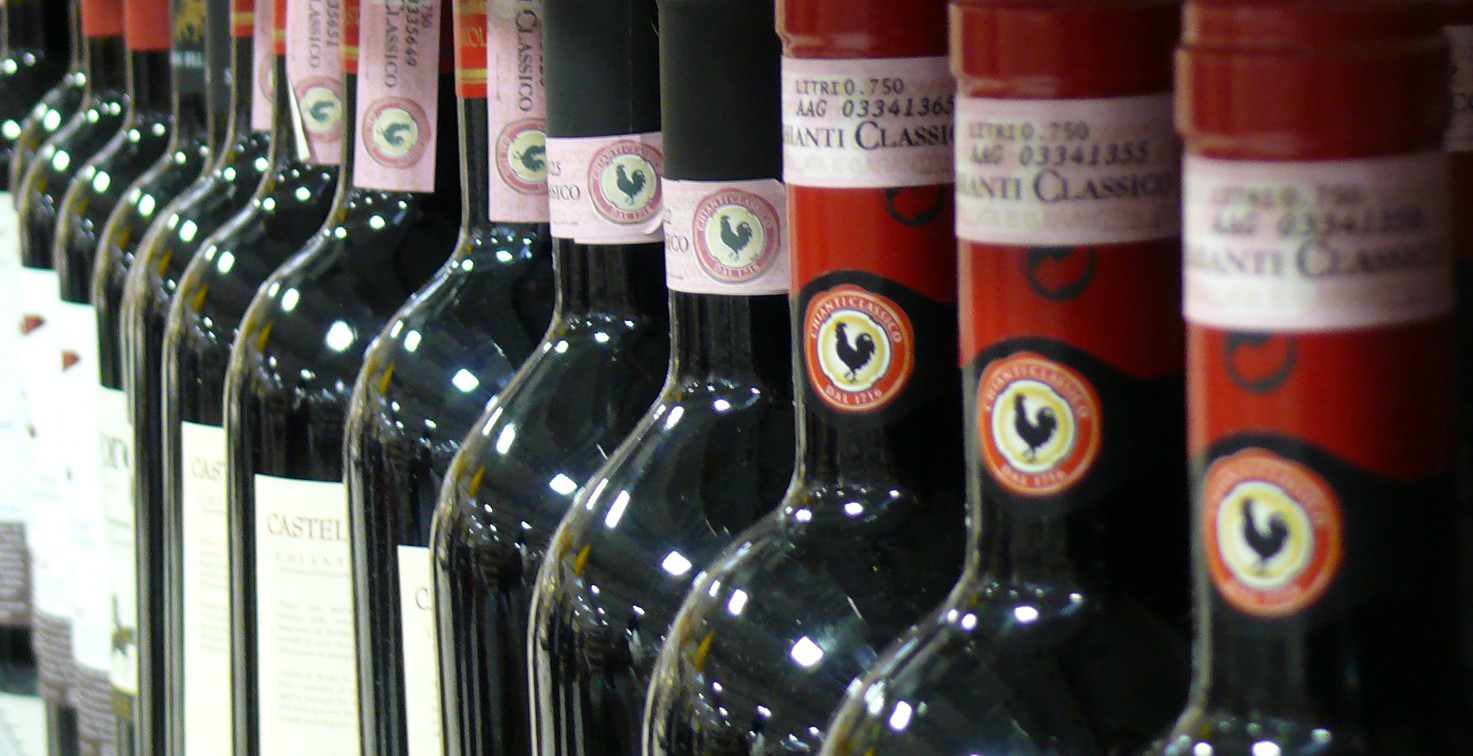
After a long, information-packed class, I like to tell a story to tie all the  information together and re-energize the students about the subject matter  before I conclude the class.  Some of my favorite stories and topics to use include Chianti and the Story of “The Hungry Black Rooster,” Charles Heidsieck and “Champagne Charlie,” and The History of Hungarian Wine and “Bull’s Blood.”  All of these wine stories can be found on this blog…just look  under the category “Tales of the Vine.”

Use stories as a “repetition” of important facts or concepts.

After I tell a  lecture or assign a reading that involves certain basic facts that are very important for students to remember (in other words, just about every class), I try to “weave” those facts into a historical or fictional story.  I find this to be one of my most effective methods for “pouring facts” into  my students. 

I often use the story of Emperor Charlemagne and the Vineyard of Corton-Charlemagne to prompt memory of the basic facts of Burgundy Wine, such as the type of grapes permitted, the many different vineyard names and the vineyard classifications.  Another cool trick is to tell the story at the beginnng of class – including all the pertinent facts, and re-tell the story at the end of class, but this time have the student “fill in” the facts for you. It’s a kind of “story-based quiz.”  

Use stories to tie new concepts to something students already know.

It’s a proven educational fact that all new knowledge if built off of information already in long-term memory. (Check back for a post on Constructivism as a paradigm for teaching and learning – if you dare!) Thus, tying new information to something students already know will increase their interest, engagement, and memory potential immensly.  If you can find  something in popular culture that your audience enjoys (such as a song, television show, or movie) that involves your subject matter, you have hit the jackpot, educationally speaking!

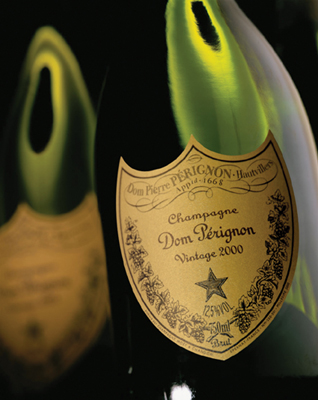
You can use the familiarity (dare I say popularity?) of Dom Perignon, Veuve Cliquot, or Cristal to interest your audience in the story of Champagne. Use the stories to spark interest in grapes, production method, and aging underground. It wil make terms like “sur lie aging” and “assemblage” much more interesting.  I have even used scenes from “James Bond” movies that feature Champagne to peak my audience’s interest in the science of the wine.  There are some awesome James Bond movie posters featuring Champagne out there you can use as visuals as well.

Use stories to engage or “wake up” your audience at any time.

Before you begin a course, seminar, or sales pitch, be armed with at least a few stories that relate to your subject.  Then, if you ever sense your audience losing interest, hit them with a story.  It’s bound to re-invigorate your talk! 

 Remember, storytelling is one of the oldest forms of teaching. 

With all our brain-based science, educational psychology, and cognitive philosophies, one thing we have learned is Aristotle was right – stories are a great way to engage, inspire, and teach our students and our selves!

For more great ideas about stories to use in teaching wine, check under the “Tales of the Vine” category on this blog.

The Bubbly Professor is “Miss Jane” Nickles of Austin, Texas…  missjane@prodigy.net


Train the Trainer: Teaching to the Whole Brain

I always find it amusing when I get bored in a wine seminar.  After all, there is nothing I am more fascinated by than wine.  I have spent my entire adult life learning about and enjoying wine.  I teach wine for a living, and then in my free time go to wineries, wine tastings and wine stores.  And yet, I find myself falling asleep at a wine seminar!

What gives?  I am extremely interested in the subject at hand, and yet the speaker can lull me to sleep.  Most likely, I am being subject to a speaker that is only engaging a a mere segment  of my mind.  Most seminars include speaking (zzzzzz……………) which only engages a little area on the left side of my brain called “Wernicke’s Area.”  If you have ever heard the (not quite true) cliché that we only use 10% of our brain power, this is one situation where it makes sense.  Anyone sitting and listening to a speaker is only about 10% engaged, and the other 90% is probably either falling asleep or writing a grocery list.

To approach maximum engagement, we need to teach to the whole brain.  Luckily, modern science has given us the tools to do so.  We know now that we can teach to six separate-yet-connected parts of the brain, each controlling a different aspect of attention, cognitive processing and memory.  We also know the specific teaching techniques to use to keep all six of these areas of the brain firing on all cylinders. 

To be a practitioner of Whole Brain Teaching, work on including these six elements in your teaching:

Listening –This one is easy, as just about all teaching involves a speaker, which forces our audience to listen.  Listening is controlled by Wernicke’s area on the left side of the brain. This one is a given…however, to be a whole brain teacher, you need to move well beyond listening.

Visual – The visual cortex uses over half of the brain’s energy and is a powerful tool for both learning and engagement.  Most teachers and speakers these days use what they consider visual elements in their teaching with power point slides, white boards, and handouts.  However…words on a screen or a written handout are not true visuals!  Words on a screen or written documents are not “processed” by the brain in the same way a picture is.  When you see words on a screen you read them to yourself, and the data is processed by the verbal (listening) side of the brain.   To enhance learning and not distract the learner, make sure your visuals are true visuals – meaning pictures or graphs.  

Critical Thinking – Our brains are kind enough to give us a pleasurable “rush” of dopamine when we solve a problem.  It’s the reason that so many people like to do crossword puzzles and play Sudoku. It’s also the reason why you feel so good when your figure out how to stop the faucet from leaking or change the battery in your car.  The real rush comes from not just getting it done but the fact that you figured it out.  To put this in an educational context, remember that just sitting and listening can get very boring…but you can keep your students in the flow of what scientists call “reward-driven learning” by stimulating their pre-frontal cortex…that part of the brain that handles thought processes that involve decision making, compare and contrast, explanations, examples, and schema.  The point is to allow your students to solve a “mental puzzle” related to the subject at hand.

Movement – You can stimulate the very powerful motor cortex by adding gestures and movement to your teaching.  It may seem a bit silly, but kinetic memories are among the strongest memories.  You never really forget how to walk or ride a bike!

Speaking – Let your students talk! Adding active speech to your classes, whether from discussion or recitation, spark’s the brain region known as “Broca’s area” and is an excellent tool for engagement.  Breaking the students into small groups or even teams of two and having them relate back key points of the class, quiz each other or even “teach” each other for one or two minutes is an excellent way to bring speaking into class as a directed activity.

Emotions – The limbic system, at the center of the brain, controls emotions and emotional memories.  If you leave out the emotions, you have “hollow brain teaching”!  Use emotionally competent stimuli to invoke humor, curiosity, outrage, awe, nostalgia…any emotion will do!

Remember, the more you can use these six activities…the more you will be teaching to the whole brain…and the more your students will enjoy and remember your class.  Good Luck!


Train the Trainer: There’s More to Class than just the Glass

There’s More to Class than Just the Glass

As a full-time wine educator, I have found myself teaching classes and leading wine tastings in some unusual spots.  Many of my classes are held in my super-comfy, perfectly designed, high-tech enhanced wine lab college classroom.  This setting is as conducive to learning as a setting can be. Wine and food conferences, and in my case mostly wine and food education conferences are also good situations for teaching and learning…at least people are sitting down, facing the speaker, and we can assume the audience wants to listen and learn.

However, part of a wine educator’s life is spent on the road, and I have also taught classes in winery barrel rooms, in restaurants during the dinner rush, and at wine bars in the midst of happy hour.  Add to the list the seminars I have led outdoors at wine festivals, trade tastings, womens’ retreats and rock concerts. (You will note I did not include private homes…Miss Jane does not do private homes.)

Let’s face it:  it can be hard to engage and actually teach students about wine when they are outside, at a rock concert, or even at a wine bar; and my educational philosophy and practice is all about engagement.  I want my students to be not just at attention but fully engaged.  Attention is great – you need to have a full repertoire of attention grabbers.  Once you have gotten your audience’s attention they should be listening, observant, and interested in what you are about to present.  Attention is valuable but it only lasts for a few minutes until minds start to wander.

Engagement, on the other hand, goes deeper than attention.  When your class is fully engaged, they are physically energized, emotionally connected, and mentally focused on the subject at hand.  Engagement in the material at hand should be one of the main goals of instruction, and “points of engagement” should be pre-scripted into your lesson plan just as carefully as your course objectives and class material.

Obviously, a wine class has a few built-in advantages when it comes to student engagement.  First of all, it’s about wine (a fascinating subject and one with broad appeal.)  Secondly, we usually have a built-in activity (also very appealing) when we lead a tasting.

The challenge for me, I have found, in leading a tasting class is not in just keeping the audience engaged, but keeping them focused on learning and not merely engaged in the tasting itself – in other words, enjoying the wine more than the class.  As we all know, this type of “tasting” can devolve into “drinking” quickly if not managed.

I am sure that we have all found that during an instructor-led tasting, students tend to get excited and chatty.  Left unmonitored, it gets louder and louder – which is great if you are at a party, or maybe if you are leading one of those tastings at a wine bar or rock concert.  However, if you want to balance fun with serious learning, this can be a challenge.

Over the years, I’ve developed my own system for walking this fine line.  When leading a tasting activity,  I generally let the students taste and talk amongst themselves for a few minutes – after all, talking is the ultimate engagement – and then try bring them gently back to attention for further instruction. To do this effectively, you need an abrupt attention grabber.  Most teachers whistle or scream or bang a spoon on a glass. There’s nothing really wrong with this technique -it certainly does work – but it can also leave students unfocused, annoyed, or even angry.  (Note:  nothing halts learning quicker than anger.)

What I do to avoid this backlash is this:  I introduce the wine, tell the class I am going to give them five minutes to taste and talk amongst themselves and will then bring them back to attention for group discussion and further instructor-led content.  Then I play some background music appropriate to the theme and setting.  When the time for tasting and talking is over and I want to turn their attention back to my presentation, I turn up the volume briefly and then turn it off.  Works everytime, and no one shoots me a dirty look or complains!

Here’s my advice to you:  try to develop a your own signature style of focusing the class after a tasting break or other group activity.  You might use a call and response, flick the lights, have everyone stand up, or use music like I do.  In a pinch, you can always bang a spoon on a glass.