The Southern Alps, Mount Cook, and the Nor’westers

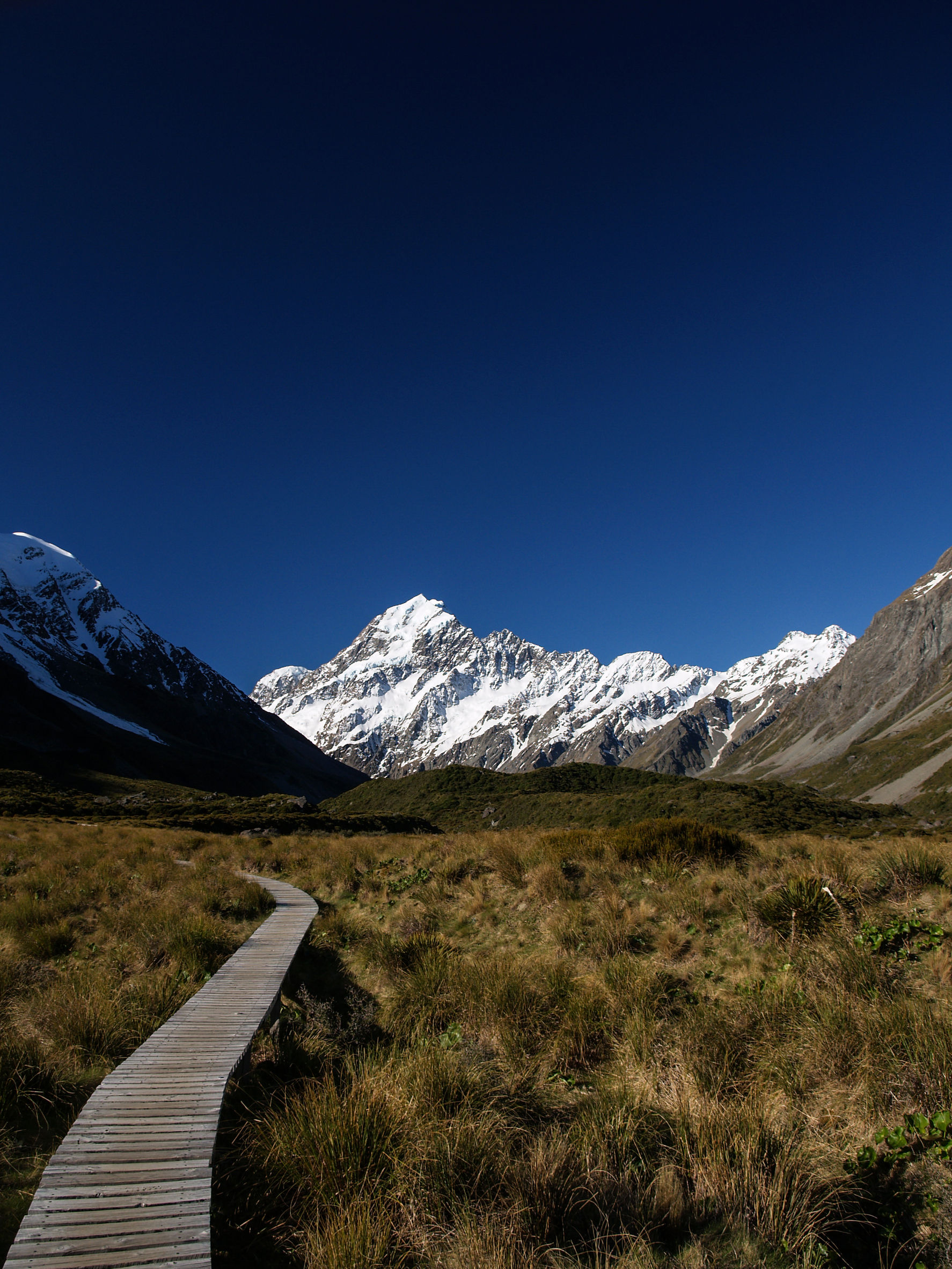
Mount Hood Hiking Path

Mount Hood Hiking Path

Students of New Zealand wine are familiar with the mountain range known as The Southern Alps. They can probably tell you that the mountain range extends along much of the length of New Zealand’s South Island, forming a rain shadow that keeps a good portion of the eastern side of the island warm and dry. For this reason, the wine regions of Marlborough, Canterbury, and Central Otago are able to grow some of the finest Sauvignon Blanc, Chardonnay, and Pinot Noir in the world.

The Southern Alps run for about 275 miles, forming a natural dividing range along the entire length of the South Island. New Zealanders often refer to the range as the Main Divide, as it separates the more heavily populated eastern side of the island from the somewhat wilder west coast. A large portion of the mountain range, which includes glaciers, glacial valleys, and lakes, is inaccessible except to the heartiest of mountaineers, and enjoys the protection of the National Park Service.

The highest peak in New Zealand, Mount Cook (also known by the Maori name “Aoraki,” said to mean “Cloud-Piercer”) is part of the Southern Alps.  At 12,218 feet high, Mount Cook is a dangerous but popular challenge for mountain climbers.  Aoraki/Mount Cook consists of three summits – the Low Peak, the Middle Peak, and the High Peak – surrounded by the Tasman Glacier to the east and the Hooker Glacier to the west.  The settlement of Mount Cook Village is a tourist center and serves as a base camp for climbers. For the adventurous, the area offers a wealth of hiking and skiing as well as star-gazing at Mount John Observatory in the Aoraki Mackenzie International Dark Sky Reserve – the largest dark sky reserve area in the world.
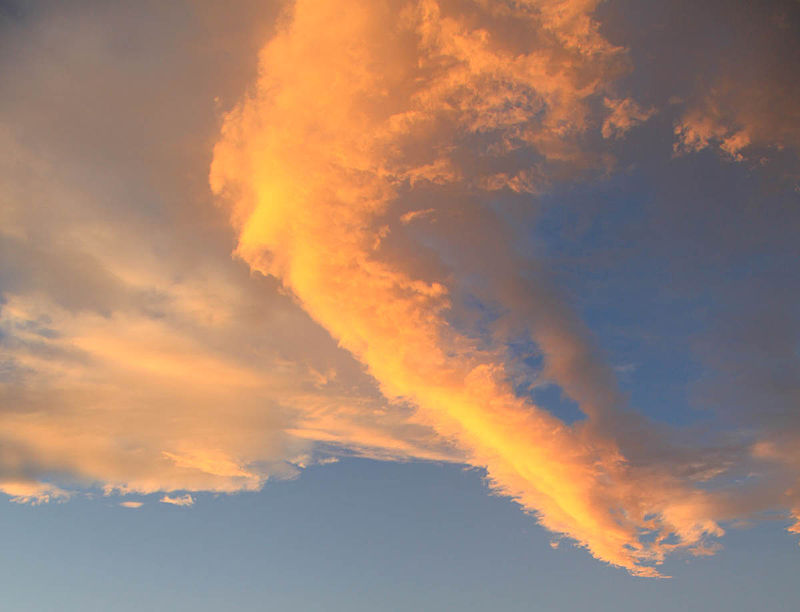
Nor'west Arch over Canterbury Photo by Jman Matthews

Nor’west Arch over Canterbury Photo by Jman Matthews

The prevailing westerly winds known as the “roaring forties” push in from across the Southern Ocean and the Tasman Sea, bringing along with them a host of moist air, much of it aimed directly at the west coast of New Zealand. When the winds bump up against the mountains of the Southern Alps, they are forced upward, and this force cools the air, and condenses the moisture to rain. The cold air and precipitation are kept on the west side of the island, thus creating the warmer, drier conditions on the eastern side of the island where the majority of the population (and vineyards) live.

The prevailing west winds also create a weather pattern known as the nor’wester. As the ocean breezes rise up the west side of the mountains and drop their rain, the wind turns warm and dry as it descends down the eastern side of the mountains, similar to the Zonda often experienced in Mendoza. These warm, dry winds play a major role in the intermittent droughts experienced by Canterbury and other regions on New Zealand’s eastern coasts.

A more pleasant side effect of the nor’wester winds is a cloud formation unique to the South Island of New Zealand known as a “nor’west arch.” A nor’west arch appears in the sky as an arch of cloud in an otherwise blue sky, and is frequently visible in the summer across Canterbury and North Otago.

The Bubbly Professor is “Miss Jane” Nickles of Austin, Texas

Context is Queen: I know this post seems a bit far-fetched for a wine post…but…I’ve found in teaching or studying a subject as complex as wine, it helps to know the context. While a wine student may memorize the fact that the Southern Alps form a rain shadow for parts of New Zealand, taken out of context, that bit of information will remain what students (not so kindly) call a “factoid” and others may call “trivia.” Such things are hard to remember, and even more difficult to understand. However, with a bit of context, especially at the human level (“what can you do there, do I want to go there, that looks cool/scary/weird…”) these facts become much easier to remember, use, and understand. So that’s what this post is all about – content is king, and context is queen!

 

The Majestic Cascades

Map of the Cascade range by Shannon, via Wikimedia Commons.

Map of the Cascade range by Shannon, via Wikimedia Commons.

CSW Students might know a bit about the Cascade Mountain Range. They certainly know that the majority of Washington State’s vineyards are planted to the east of and in the rain shadow of the Cascades.

They also know that one of the main differences between the geography of Washington State’s wine industry and Oregon’s wine industry is that in contrast, the majority of Oregon’s vineyards are located to the west of the Cascades, sheltered from the effects of the Pacific Ocean by the much tamer mountains of the 200 mile-long Oregon Coast Range.  And they have probably heard of the Columbia Gorge, as it’s a tiny AVA that straddles the Oregon and Washington State lines.

And that’s a pretty good start, but there is so much more to know…

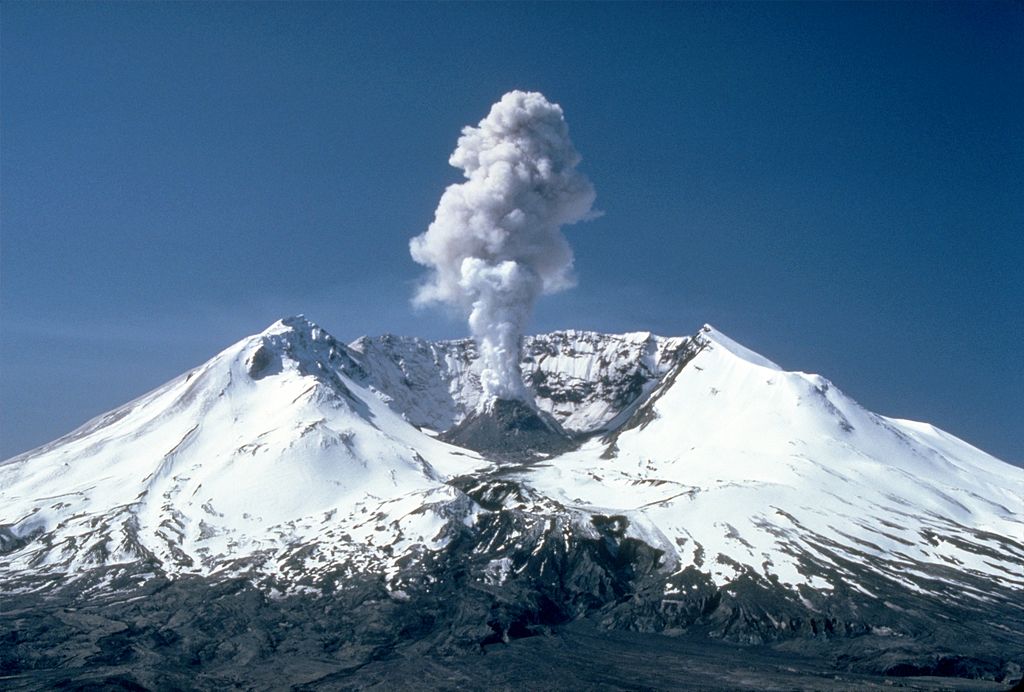
The Cascade Range is impressive, stretching for over 800 miles from Mount Lytton in British Columbia, through Cascades National Park in Washington State, past Mount Hood in Oregon, and ending just south of Mount Lassen in Northern California’s Shasta County. The highest peak in the Cascades is Washington State’s Mount Rainier, which rises to 14,411 feet above sea level and dominates the surroundings for miles around. Mount Saint Helens, whose 1980 eruption transformed a mountain with a 9,677 foot tall summit into an 8,365 foot high mountain with a 1 mile-wide horseshoe-shaped crater, is also part of the Cascade Range.

The range, particularly in the area north of Mount Rainier, is extremely rugged. Many of the smaller mountains in this area are steep and glaciated, looming over the low valleys below. The topography settles down a bit as the range winds southward, but even its southernmost peak, Mount Lassen, rises 5,229 feet above its surroundings to an elevation of 10,457 feet above sea level.

Mount Saint Helens, post her 1980 eruption

Mount Saint Helens, post her 1980 eruption

Due to its proximity to the Pacific Ocean and its westerly winds, the Cascades form a rain shadow for much of the inland Pacific Northwest. The areas to the west of the mountains are known for rainy conditions, and as the elevation climbs, for year-round snow and ice. The western slopes of the Northern Cascades can have annual snow accumulations of up to 500 inches, and with accumulation of over 1,000 inches in exceptional years.

In comparison, on the arid plateau located to the east of the mountains, annual rainfall averages 9 inches. This area, now known as the Columbia River Plateau, was formed over 16 million years ago as the lava flows from Cascade volcanoes coalesced, and covers a 200,000 square mile region in eastern Washington, Oregon, Northern California and Idaho. As all good wine students know, this is the area where almost all of Washington State’s commercial vineyards are planted.

The Columbia Gorge, located where the Columbia River forms the border between Oregon and Washington State, is the only major break in the American section of the Cascade Mountains. The Gorge was formed over the millennia as the Columbia River eroded its way through the burgeoning mountains on its way to the Pacific off of the Columbia Plateau. Lewis and Clark, in 1805, were able to reach the Pacific through the impressive Cascades via the Columbia Gorge, which for many years was considered the only practical passage through the surrounding mountains.

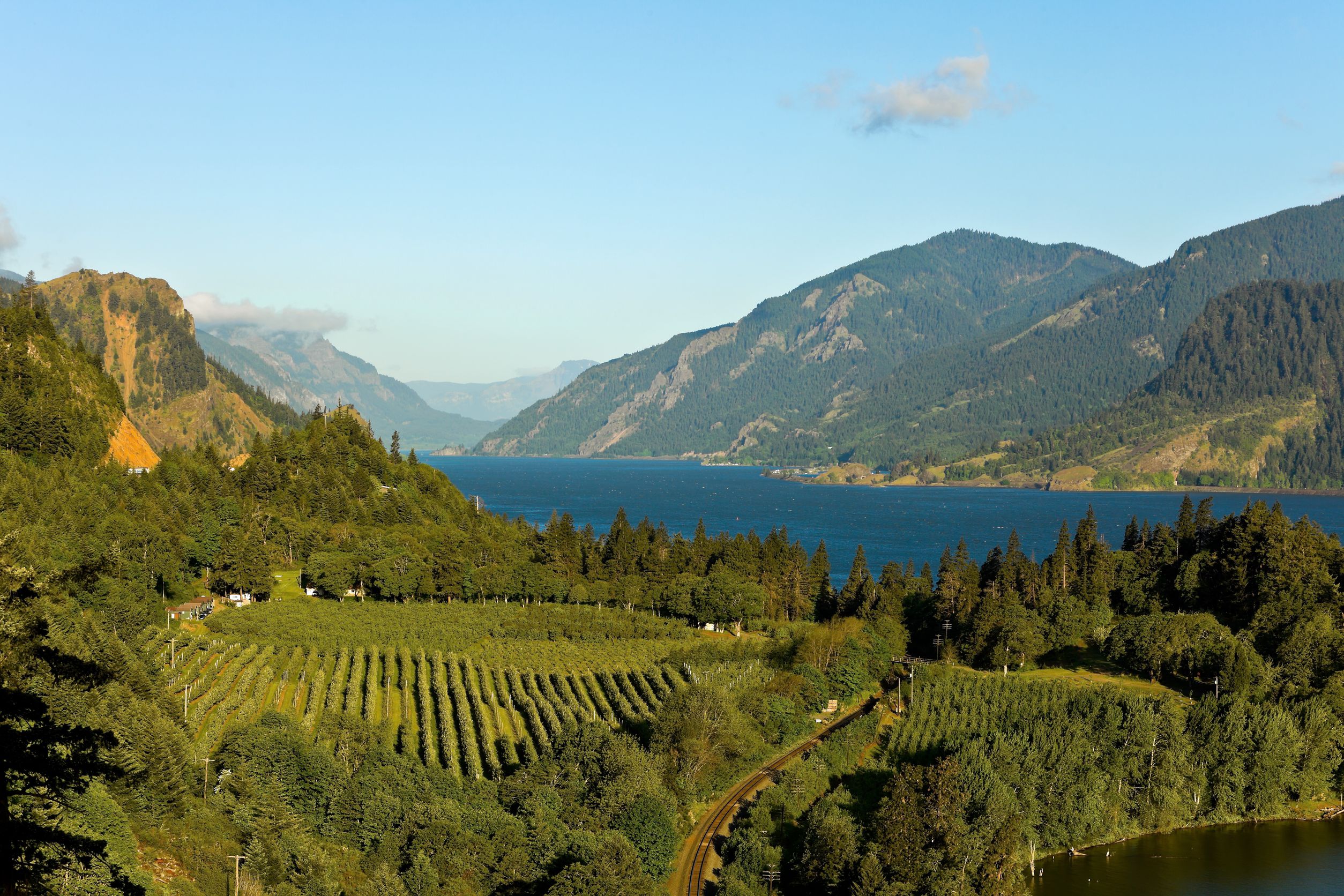
Vineyards in the Columbia River Gorge

Vineyards in the Columbia River Gorge

In Canada, the country’s second largest wine region, The Okanagan, is also located in the rain shadow of the Cascade Range. The region, which stretches for 100 miles north of the US border with Washington State, shares many of the same geographical/geological features that define viticulture in Washington State, such as a continental climate (somewhat moderated by Lake Okanagan), long daylight hours in the growing season (due to the northerly latitudes), an average of 9 inches of rain per year (requiring irrigation), and the risk of frost damage to the vines over the cold winters.

Other people may note that the majestic Cascades are known for ski resorts, hydro-electric power, strong westward rivers, Douglas Fir trees, important water reserves, Klamath Falls, alpine elk, glaciers, grizzly bears, blueberries, and some of the few remaining wild wolf packs in North America… but for some of us, it’s all about the wine!

The Bubbly Professor is “Miss Jane” Nickles of Austin, Texas: missjane@prodigy.net

This post was inspired by week ten of my Online CSW Prep Class! 


The Chocolate Block, Cape Cobras, and Braai

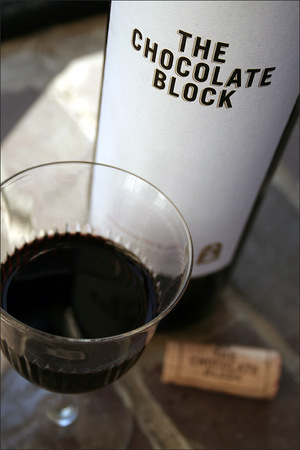
The Chocolate Block 2Here’s a hint for you folks out there that are not in the wine business:  People in the wine industry HATE to be asked about their favorite wine.  And we get asked all the time!! Just yesterday, at Kinko’s of all places….I am minding my own business, making copies of tasting mats, and someone who  just can’t help themselves forces me to admit that I am prepping to lead a wine tasting and the next thing out of their mouth is “So, what’s your favorite wine?”

There are many reasons we don’t care for this question.  First of all, my “favorite” wine is usually the one I am with.  Second, it changes all the time! Third, I really don’t want to offend anyone –and you never know who is listening! Finally, people usually only ask you that question because they want to tell you about their favorite wine, which is sometimes just painful to listen to….

Ok, thanks for listening to my rant. While I stand by the idea that “what’s your favorite wine” is a question wine professionals would rather not answer, over the years I have developed a pat answer that, while getting me out of many a squirmish situation, is also based in truth.

My standard answer to the question is: The Chocolate Block, a South African red blend produced  by the Boekenhoutskloof Winery in Franschoek.  Now, I will admit that my uncanny (and much-rehearsed) ability to pronounce “Boekenhoutskloof” may be part of the package, however, this is also an amazing wine, delicious and seductive, and like all good things…it comes with a great story.

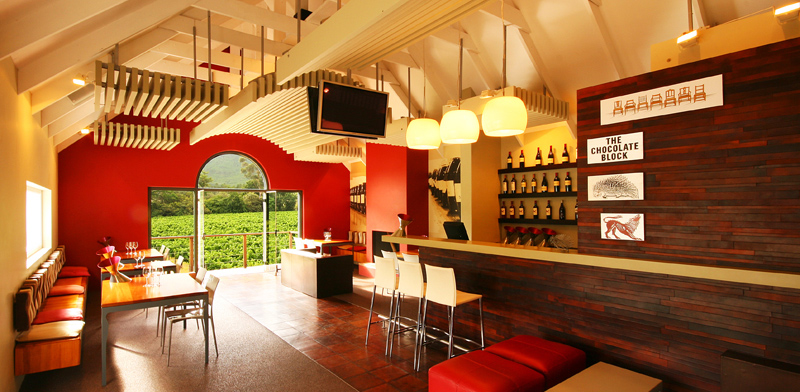
Boekenhoutskloof Tasting RoomThe wine itself has a great story attached to it, which you can read on the Boekenhoutskloof Website. Suffice it to say the wine “has secrets to keep” and “inspired a graphic novel.” But as this wine is my personal favorite, you know there is a personal side to the story of the wine. It’s actually quite simple:  a few years ago, I was on an amazing, WOSA-sponsored trip through the wine producing regions of South Africa, having won a wine-related essay contest. One morning towards the end of our trip, our driver dropped me and my best friend/travel buddy off at the Boekenhoutskloof Winery in Franschoek for a tour and tasting.

The sheer beauty of the region, the technical ingenuity of the winery, and the amazing modern architecture of the tasting room built out over the vines were enough to make us swoon. We tasted through the winery’s range of wines, including Porcupine Ridge, The Wolftrap, and their iconic Boekenhoutskloof Syrah. They were all amazing.  Then our host brought out the big dog…The Chocolate Block, and we entered one of those rare yet coveted, zen-like trances accompanied by a feeling like, “this is so  good I have to just shut up and let this wine wash over me and just allow myself to feeeeeeeeeel it.”

Our host was smart enough to just let us zone out for a while…he was surely used to such things.  When the conversation started up again, he told us a bit about the scenery.  We were located on the edge of a vineyard, just a few hundred yards away from a stream. The stream was lined with Coast Silver Oak trees – a tree native to South Africa, we learned. My friend saw a group of people riding horses along the stream, sauntering under the beautiful trees, dreaming of African skies, and our host told us that horseback riding was an easy activity to sign up for. Perhaps we would like to ride some horses that afternoon?

Boekenghoutskloug WineryWe were about to say yes, but before we could, he told us a “humorous” story of how, just the week prior, a group of tourists had been riding by – just like the group we had seen, when a nest of Cape Cobras had fallen down out of the trees, onto the tourists, wrapped themselves around the riders, and spooked the horses.

Cape Cobras? There is such a thing as Cape Cobras? Turns out there is such a thing as Cape Cobras, and before anyone works the vineyard in the morning, they send brave people running down the rows of vines, banging pots and kettles together to make a joyful noise and send the cobras scurrying off. Ok. We feel better now.

Of course, we spent the last few days of our trip scaring each other with phony “Cape Cobra” sightings – even on the plane home- “Cape Cobras on a plane!”

So that’s my personal Chocolate Block story.  But the wine itself, based on a varying blend of Syrah, Cabernet Sauvignon, Grenache, Cinsault, and Viognier, is delicious. It’s the wine I invented the tasting phrase “slips down your throat like the good Lord himself in velvet trousers” for. You can seek and find aromas and flavors of cherry, blackberry, cocoa (of course), coriander, cedar, red currant, marzipan, black plum, and raisin. The wine currently sells for about $22.00 in Texas.

The Bubbly Professor is “Miss Jane” Nickles of Austin, Texas… missjane@prodigy.net

WineGeo: Escarpment and Bench

Niagara on the lakeJust yesterday, following a lovely trip to Toronto and the Ontario Wine Country, I was doing a bit of research in order to write up a blog post about the four sub-appellations of the Niagara-on-the-Lake VQA.  For the record, they are:  Niagara River, Niagara Lakeshore, Four Mile Creek and St. David’s Bench. According to the website for the Wineries of Niagara-on-the-Lake, these four areas are differentiated by soil types, weather, elevation and proximity to “three unique geographical features: the Niagara Escarpment, Lake Ontario and the Niagara River.”

I have to stop right there and promise to write the blog post on the sub-appellations (they are quite lovely) at a later date, because I just realized that in that one short paragraph I spouted off two words that I have no earthly idea how to really define.  And you, dear wine student, if you honest with yourself, must admit that you have done the same thing; you use the words all the time (chatting about wine is so-much-fun) but can you tell me, in your own words, just what exactly is an “escarpment” and what, geologically speaking, is a “bench?” 

Well, neither could I. So, I did some early morning research and am going to try to define those geological terms in simple, regular person’s language, with just a teeny bit of wine geek thrown in.

Escarpment:  An escarpment is basically an area of the Earth where the elevation changes suddenly. An escarpment is often found along the ocean shore, such as the Devil’s Slide area of California Highway 1.  An escarpment can also refer to an area on dry land that separates two level land surfaces, such as Africa’s Great Rift Valley and the Niagara Escarpment (only a small portion of which hosts the famous falls.)

A tiny piece of the Niagara Escarpment

A tiny piece of the Niagara Escarpment

An escarpment usually indicates two different types of land, such as the area of a beach where tall cliffs surround a lower area of sand.  Escarpments between two areas of level land are usually composed of different types of rock or rocks from different geologic eras, one of which erodes much faster than the other. Escarpments can also be formed by seismic action; such as when a fault displaces the ground surface so that one side is higher than the other (scary).

Significant Wine-Related Escarpments include the Niagara Escarpment, the Côte d’Or, the Balcones Fault in Central Texas, and the Darling Scarp in Western Australia. The term “scarp” technically refers to just the the cliff-face of an escarpment, but the two terms are generally interchangable.

Bench: Admit it, you’ve talked in hushed tones about the amazing flavor of Cabernet Sauvignon from the Rutherford Bench….but do you know what is meant, geologically, by the term bench?  Neither did I.  Tchnically, a bench or a “benchland” is a long, narrow strip of relatively level land that is bounded by distinctly steeper slopes above and below it. Benches can be formed by many different geological processes, such as a river (as in a river’s flood plain, or an “abandoned” river bed), waves (if alongside an ocean), or the varying levels of erosion of different types of rock.

Cross Section of Different Types of "Bences"

Cross Section of Different Types of “Benches”

Thanks to Wikimedia Commons for the diagram of “Bench Structure.” The diagram shows the different ways benches can form, such as structural benches formed by the  erosion of shale beds overlying limestone beds and the more common “river terraces.”

The famous “Rutherford Bench” is a stretch of the Napa Valley, about three miles long, starting in Oakville and heading north to Rutherford.  The bench sits in the middle of the valley floor, surrounded on two sides by small hills. The famous soil of the Rutherford Bench consists of gravel, loam, and sand, much of which was deposited there by earlier advances and retreats of San Pablo Bay.

The term “bench” appears in the discussion of wine regions (though not necessarily AVAs or appellations) frequently:  the Rutherford Bench and the Oakville Bench were both at one time or another considered for AVAs of their own, but to date have not been designated as such. There are however, five “official” wine regions that I could find that use the term:  Kelsey Bench-Lake County AVA, and four VQAs in Ontario: Short Hills Bench, St. David’s Bench, Beamsville Bench, and Twenty-Mile Bench.

References/for more information:

Travels in Wine World: The Pinhão Train Station

136If you find yourself in the city of Porto—once you have taken your fill of the gorgeous waterfront, the amazing tours of the Port Wine Lodges, and the walking back-and-forth across the bridges—you should get yourself a train ticket.

Arrange to leave early in the morning, when the São Bento Railway Station is a world unto itself, and be sure and hit the snack bar for some coffee (café com leite) for the road.  Pick up a few custard tarts—Pasteis de Nata—as well, because one should never pass up the opportunity for Pasteis de Nata, and you can only get the real deal in Portugal.

Make sure your ticket is for Pinhão, and grab yourself a window seat.  137Prepare yourself for a journey of about three hours. Don’t be concerned that there might be some error in the schedule. This is not the high-speed train that whisked you 200 miles from Lisbon to Porto in 140 minutes, but one that will wind you along the banks of the Douro River, pull you through dark tunnels, and rattle you along cliff-hanging tracks.  It will indeed take three full hours to cover 70 miles.

Your train journey will land you at the Pinhão train station.  You’ll be smack in the middle of the Cima Corgo, the geographic center of the Douro DOC and the core of the Port Wine production region.  You’ll be able to check into a rustic little hotel or take a suite at The Vintage House (a somewhat incongruous yet delightfully glistening resort just a short walk away).  You’ll be able to wander the steep riverside streets in search of lunch or take a death-defying taxi ride straight up the side of the mountain to Fonseca’s Quinta do Panascal Vineyards.

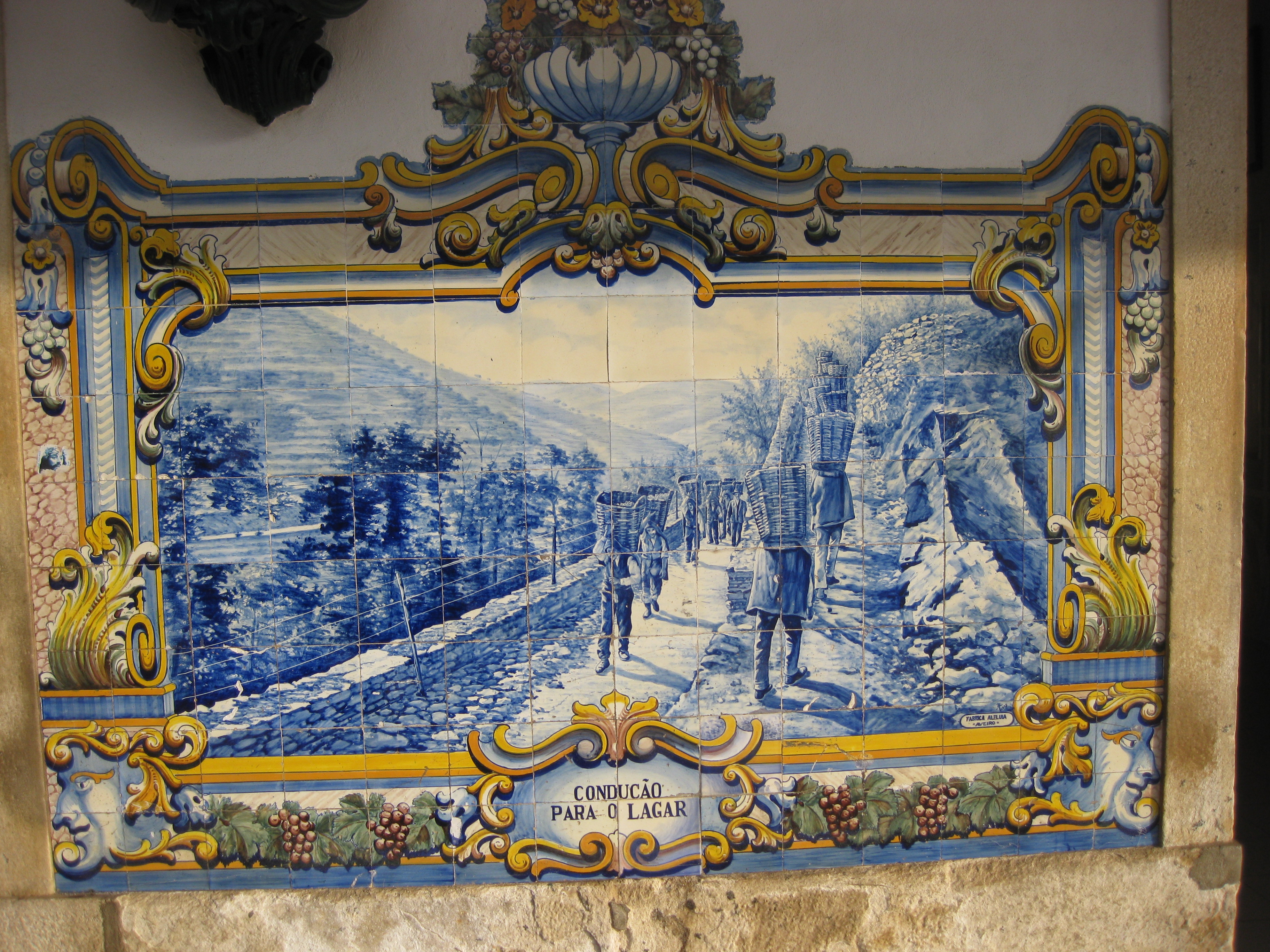
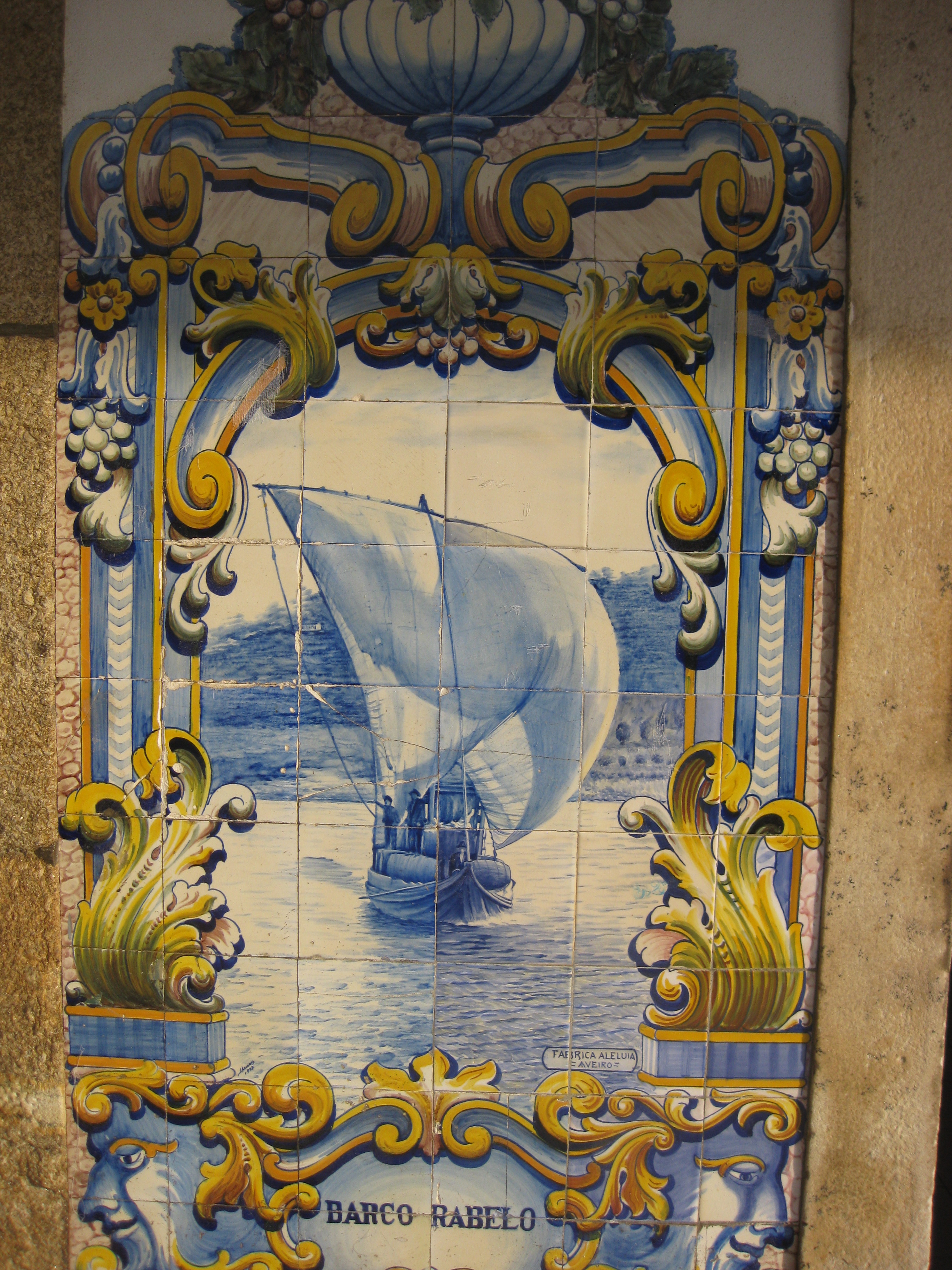
140But before you can check into the hotel, wander the streets, or tour the vineyard, you will have to tear yourself away from the train station itself.  It’s just a tiny station and only one room.  It is so rustic that you have to hustle down and across the tracks themselves to catch your train—there’s no fancy pedestrian overpass or glass elevator here.  But you’ll find it hard to tear yourself away once you notice the blue tile mosaics—a local specialty known as azulejo—that line the walls of the station.

Azulejo is a form of Portuguese ceramic tile that is painted and tin-glazed. As a central aspect of Portuguese culture, Azulejo has been produced without interruption for five centuries. There is even a national Azulejo gallery in Lisbon—although you can see Azulejos everywhere in Portugal.  Azulejos are found on the interior and exterior of churches, palaces, ordinary homes, department stores, and—as you can tell from my story—railway stations.

These beautiful Azulejos have been a part of the Pinhão train station since 1937.  They chronicle the history of the town and the vineyards, the wineries, and life along the Douro River.

The Bubbly Professor is “Miss Jane” Nickles of San Marocs, Texas

Pictures of Pinhão from the Portugal leg of our Iberian Peninsula honeymoon, 2010.  That’s Shields T. up there, guarding the luggage while his wife takes pictures of the walls.

145138


Burgundy West


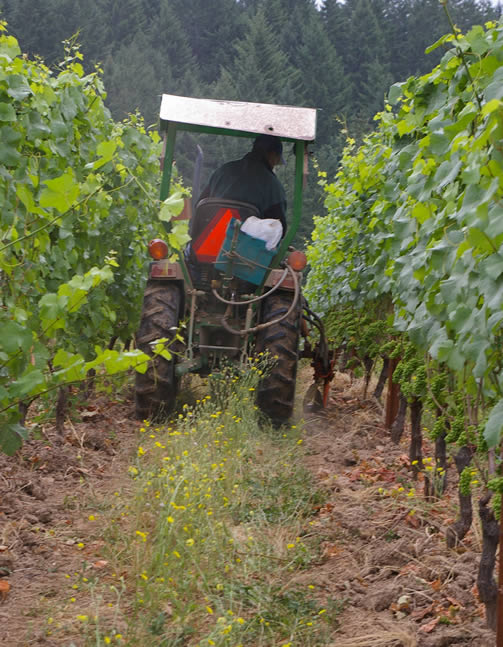
Driving along a 100-mile long valley, I am surrounded on all sides by vineyards planted mainly to Pinot Noir and Chardonnay. I drive by gently rolling hills and lush green valleys dotted with quaint country towns. Stopping in at a small winery, the winemaker’s talk centers around “grape angst” and the cool, marginal climate that most years barely gets his grapes past the finish line for ripeness. I sample his wines and am dazzled by red cherry, rose petal, and subtle spice flavors frolicking around a core of luscious, almost sensual, earthiness. 

 
Do you think I am in Burgundy? I well could be, except for the fact that baseball caps outnumber berets, and the hillsides are dotted with 50-year old grain towers instead of 500-year old bell towers. I am in Oregon’s Willamette Valley, one of the world’s premier Pinot Noir growing regions and the land that has earned the nickname “Burgundy West”.
 
Forty years ago Oregon’s Willamette Valley was a verdant farmland producing Christmas Trees, hazelnuts, peppermint and loganberries. Five hundred miles to the south, Napa was busting out all over with new wineries on the verge of vinous greatness, and Sonoma was quietly producing boutique wines like it had been for decades. The Davis campus of the University of California was churning out dozens of energetic Enology and Viticulture graduates, and they had all sat through the same lecture that stated, emphatically, “Oregon is too cold and too wet for commercial-scale viticulture.” 
 
In 1961, one of those fresh-faced graduates was named David Lett. David had enrolled at U.C. Davis after a vacation in Northern California had left him enamored with wine. At U.C. Davis, Lett experienced French Wines for the first time, and was particularly taken the red wines of Burgundy, which were at the time the “world standard” for Pinot Noir. After graduation, he spent a year traveling and studying in France. During this trip he became convinced that the way to make sublime wine was to match the grape varietal to the terroir, and that a slow, late ripening grape made for the very finest of wines. 
 
Upon his return to the States, David Lett returned to California to purchase his first vines and set about to find land for his own winery. He had a theory that Pinot Noir could do very well in Oregon. His theory was built on painstakingly detailed research on the climates and soil types of the world’s wine regions and the similarities he had found between Oregon’s Willamette Valley and Burgundy. The climate of the two regions, he discovered, are surprisingly alike…from temperature fluctuations, to elevations, rainfall, and winds. Despite the statistical proof, his former professors at U.C. Davis advised him against it…they strongly believed Oregon was too cool, too wet, and the climate too variable to consistently ripen the persnickety Pinot Noir grape. 
 
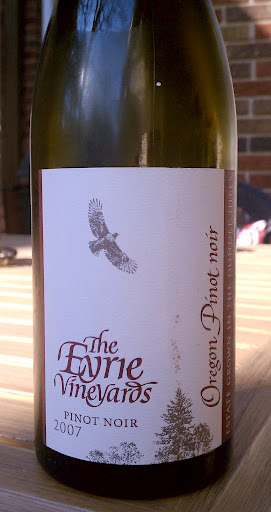
Despite the warnings and criticism, Lett took his “3,000 grape cuttings and a theory” up to Oregon. He rented a plot in a rye grass field outside Corvallis and planted the cuttings “nursery style” for safe keeping while he set off to find their future home. In 1966 David – by this time married to Diana – found what he was looking for: a 15-acre former date farm in the Dundee Hills region of Oregon’s Willamette Valley. David and Diana set about clearing the land and planting the vines. The farm was christened, with a bottle of Burgundy, “Eyrie Vineyards”, in honor of a family of Eyrie Hawks that still thrive in the Fir Trees surrounding the original vineyard plot.
 
The Eyrie Winery, built in nearby McMinnville in a converted turkey processing plant, was bonded in 1970. By 1975, almost unknown outside of Oregon, the Letts were quietly turning out world-class Pinot Noir. However, as these things go…the world was about to find out.    
 
It happened in a Paris suburb in 1979. It was called “Les Olympiads Gault/Milau du Vin”…The Gault/Milau Wine Olympics. The event was intended to showcase the international superiority of French Burgundy and was sponsored by Le Nouveau Guide of Gault/Milau, then a relatively new French magazine and restaurant guide that was attempting to challenge the “Guide Michelin.” There were 586 entries from 33 wine producing regions of the world, including some of the finest Burgundy ever made. In the final competitions of international Pinot Noir bottlings, with a panel of “Grand Connoisseurs” blind tasting blind, the unknown Eyrie Vineyards 1975 Reserve Pinot Noir shocked the house by placing third, ahead of many of Burgundy’s most prestigious wines. 
 
There was a good deal of consternation – and awe- about the number of foreign wines that had outscored the French at this “wine Olympics”. Six of these winners were challenged to a rematch, and Gault/Millau was invited to publish the results. 
 
The rematch took place in January of 1980 in Beaune. Twenty reputable French, English, and American wine judges assembled in the Hall of the Justice of Dukes of Burgundy. There were 12 wines total this time; six of Burgundy’s finest, and the six top non-French contenders from the 1979 wine Olympics. Once again, the Eyrie Vineyards wine gathered impressive scores…this time placing second only to the uber-expensive Maison Drouhin 1959 Chambolle-Musigny, and by only two-tenths of a point! 
 
Those results turned heads around the world, including that of Robert Drouhin, the winemaker at Maison Drouhin. Robert seemed to be more impressed that perturbed with these results, so much so that he sent his daughter, Veronique, to intern at the Eyrie Vineyards during the 1986 Harvest. In 1987, the Drouhin family purchased property in the Dundee Hills and planted over 200 acres of Pinot Noir and Chardonnay, becoming the first European family to invest in Oregon Wine. Domaine Drouhin Oregon released its first wines in 1991, and continues to produce high-quality wines year after year.
 
Oregon now boasts over 240 mostly family-run wineries, and is considered one of the finest areas on the globe to grow and make Pinot Noir, Chardonnay, Pinot Gris, and Sparkling Wines. Other prominent Oregon producers and pioneers include Dick and Nancy Ponzi, David and Sylvia Adelsheim, Chehalem Winery and Archery Summit. David Lett’s seminal role in the founding of Oregon’s Wine industry has been recognized by a nickname of affection and respect, “Papa Pinot”. 
 
Every year the Oregon wine industry hosts “The International Pinot Noir Celebration” on the campus of Linfield College. Tickets for the event sell out within days of their release. Top Pinot Noir producers from Burgundy, New Zealand, California and Oregon are invited to pour their delicious red wines to the delight of throngs of Pinot Noir lovers from all over the world. The culmination of the festival is a gourmet’s dream of a cookout, starring wild Oregon Salmon and Pinot Noir from Oregon’s Willamette Valley.    
 
It seems, after all, that Papa was right.