The Toughest Wine Theory Question in the World? (les Notres Dames)

Notre-Dame de Paris (2015)

I think I may just have stumbled upon one of the toughest wine theory questions in the world. Here goes: Name all the French wines that have a “Notre Dame” sub-appellation.

How many did you get? If asked this question yesterday, I am quite sure I would have only come up with one: Bourgogne-La Chapelle Notre-Dame AOC.

However, for some reason I became intrigued with the name, and after some research I discovered two more (and I may have missed some; if so, let me know in the comments below).

So, with a tip of the hat to the great cathedrals, chapels, and universities of the world that take the name of Our Lady, here are the three wines of Notre Dame. 

Bourgogne-La Chapelle Notre-Dame AOC: The Burgundy Region is known for its web-like system of overlapping, scattered, and nested appellations. Critics call this system confusing; proponents prefer to call it complex…like the wines.

Even at its most basic, generic level of geographical indication—the area-wide Bourgogne AOC—the region is complex. Theoretically, a Bourgogne AOC wine may contain grapes grown anywhere within the region—and this includes Chablis, the Côte d’Or, the Côte Chalonnaise, the Mâconnais, and Beaujolais. Allowed in red, white, and rosé, Bourgogne AOC wines may be produced as still (non-sparkling) wines based on Chardonnay, Pinot Blanc, or Pinot Noir, with other grapes—Pinot Gris, Gamay, and César—allowed in limited amounts, but only if grown in certain places.

In addition, the Bourgogne AOC has no less than 14 geographically defined subzones, many of which carry their own specific standards (as to yield, density, and minimum must weights, for example). The most interesting of the 14 subzones, for our question du jour, is Bourgogne–La Chapelle Notre-Dame AOC.

The tiny (5 acre/2 ha) La Chapelle Notre-Dame subzone is located in the commune of Ladoix-Serrigny (near the northern edge of the Côte de Beaune). The region sits at the bottom of the hill of Corton, just below the vines of the Corton Grand Cru (and overlapping the single-vineyard Ladoix Premier Cru (there’s that mash-up again). The vineyard overlooks the town of Ladoix-Serrigny and takes its name from the nearby Chapelle Notre Dame du Chemin. 
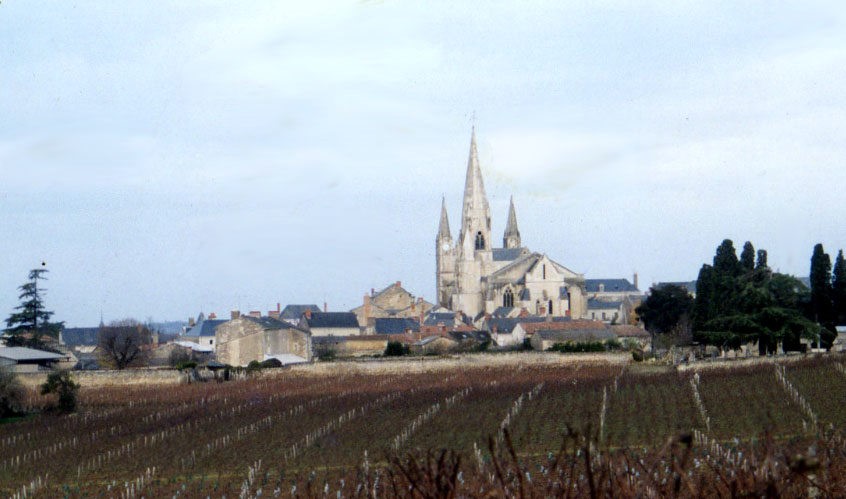
Puy Notre-Dame: photo by AnnyB via Wikimedia Commons

Saumur-Puy Notre-Dame AOC: The Saumur AOC—covering a sizable area in the central Loire Valley—is approved for a range of wine types and styles, including Chenin Blanc-based whites and Cabernet Franc-based reds. However, a significant amount of the appellation’s production (and lots of the attention) is focused on the region’s high-quality, traditional-method sparkling wines—Saumur Mousseux. The area is also home to some renowned red wines, such as the Cabernet-Franc based wines of the Saumur-Champigny AOC (tucked into the northwest corner of the larger Saumur AOC, just south of the Loire River).

The Puy Notre-Dame sub-appellation covers most of the larger region, save for the area designated as the Saumur-Champigny AOC and a few other outposts. The Saumur-Puy Notre-Dame AOC is named for the commune of Puy Notre-Dame (sometimes referred to as Le Puy; and built around the hill of Puy. The Saumur-Puy Notre-Dame AOC is approved for Cabernet France-based red wines only, and has stricter standards (as for yield, viticultural practices, and aging) than those for the red wines produced under the larger Saumur AOC.

The village church of Puy Notre Dame purportedly houses a wristband once worn by the Virgin Mary and has served as a way station for pilgrims traveling to Santiago de Compostela on the Camino Francés.
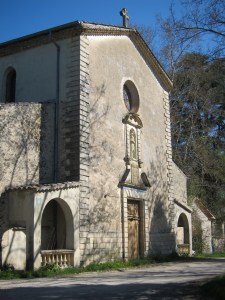
Photo of Sanctuaire Notre-Dame des Anges by Christian Pinatel de Salvator, via Wikimedia Commons

Côtes de Provence-Notre-Dame des Anges AOC: The Côtes de Provence AOC is ground zero for Provençal rosé. Although red and white wines are approved for production, nearly 90% of production is rosé.

Rosé made in the Côtes de Provence AOC must contain at least two grape varieties—typically Cinsault, Grenache, Mourvèdre, Syrah, and/or Tibouren. 

Covering close to 50,000 acres/20,000 ha—and encompassing almost the entire eastern half of the region—the Côtes de Provence AOC is the largest appellation in Provence. The terrain is understandably varied, ranging from the rolling hills in the north, limestone ridges, low coastal mountains, and the coastal plain. In 2019, an area located somewhat in the center of the Var Département—known as Notre-Dame des Anges—was approved as the fifth sub-appellation of the Côtes de Provence AOC.

The Côtes de Provence-Notre-Dame des Anges AOC surrounds the Massif des Maures—a low mountain range that cuts (west to east) across the center of the Var department. The AOC is named for the Sanctuaire Notre-Dame des Anges—a catholic church and pilgrimage site at the top of one of the Massif’s highest peaks.

Bonus Points—French cider also has a Notre-Dame connection: Within the Pays d’Auge AOC—centered around the Calvados department and approved to produce dry-to-off-dry, frizzante apple cider—there are 22 sub-appellations. Two of these—Notre-Dame-deLivaye and Notre-Dame-d’Estrées—are communes named for Our Lady. 

References/for more information:

The Bubbly Professor is “Miss Jane” Nickles of Austin, Texas… missjane@prodigy.net

One Small Step for the EU, a Giant Leap for German Wine?

.

All good wine students know that Germany famously has 13 Anbaugebiete (quality wine regions); each of which can produce Qualitätswein and Prädikatswein.  In theory, these are wines of the highest quality—with multiple layers of regulation and protection—classified in the EU as wines with a protected designation of origin (PDO). The 13 Anbaugebiete are all permitted to produce a wide range of wines, and each region’s product specification contains a long list of allowed grape varieties, wine styles, and wine-making techniques.

Well, good wine students of the world, hold on—because things are changing. Germany now has five PDOs defining small, specific areas within the larger Anbaugebiete. In addition, their rules dictate a list of approved grape varieties, limits on yield, and required/allowed/disallowed methods of production—just like a French-style AOC or an Italian DOCG. Welcome to the world, German PDOs.

.

Here are some details concerning Germany’s new region-grape-and-style-specific PDOs:

Monzinger Niederberg (Nahe): This vineyard was registered as a PDO by the EU on December 13, 2018. Monzinger Niederberg PDO is approved for the Riesling grape only; specifically for wines with “fine apple and citrus fruit notes in their aroma and a distinct minerality.” The region specializes in dry wine (defined as having less than 25 g/L residual sugar/less than 18 g/L if total tartaric acid is below 7.2 g/L), but sweet wines are produced as well. PDO regulations specify that the wines must be produced using taste-neutral containers, but allows for the use of oak containers if the oak character in the finished wine is “discreet” or not discernible. The use of small, new oak barrels is specifically prohibited.

Bürgstädter Berg (Franken): Bürgstädter Berg PDO was registered by the EU on May 17, 2017. It allows for the production of white wine, rosé/weissherbst, red wine, and sparkling wine. The wines may be produced in a range of styles, including the “traditional but very rarely produced sweet wines—Beerenauslese, Trockenbeerenauslese, and Eiswein.” The Bürgstadter Berg PDO is located on a predominantly south-facing slope alongside the River Main. According to the documentation, the area within the Bürgstädter Berg PDO differs from the surrounding region by way of its variegated sandstone soils that contain “lower soil cohesion and the lower pH value than is usual in Franconian soils.” The preferred grape varieties for white wines are Riesling and Silvaner; other allowed grape varieties include Zweigelt, Frühburgunder, Weissburgunder, Silvaner, Spätburgunder, Müller Thurgau, Riesling, and Chardonnay.


Map of the Uhlen Roth Lay, Uhlen Laubach, and Uhlen Blaufüsser Lay PDOs via https://www.ble.de/DE

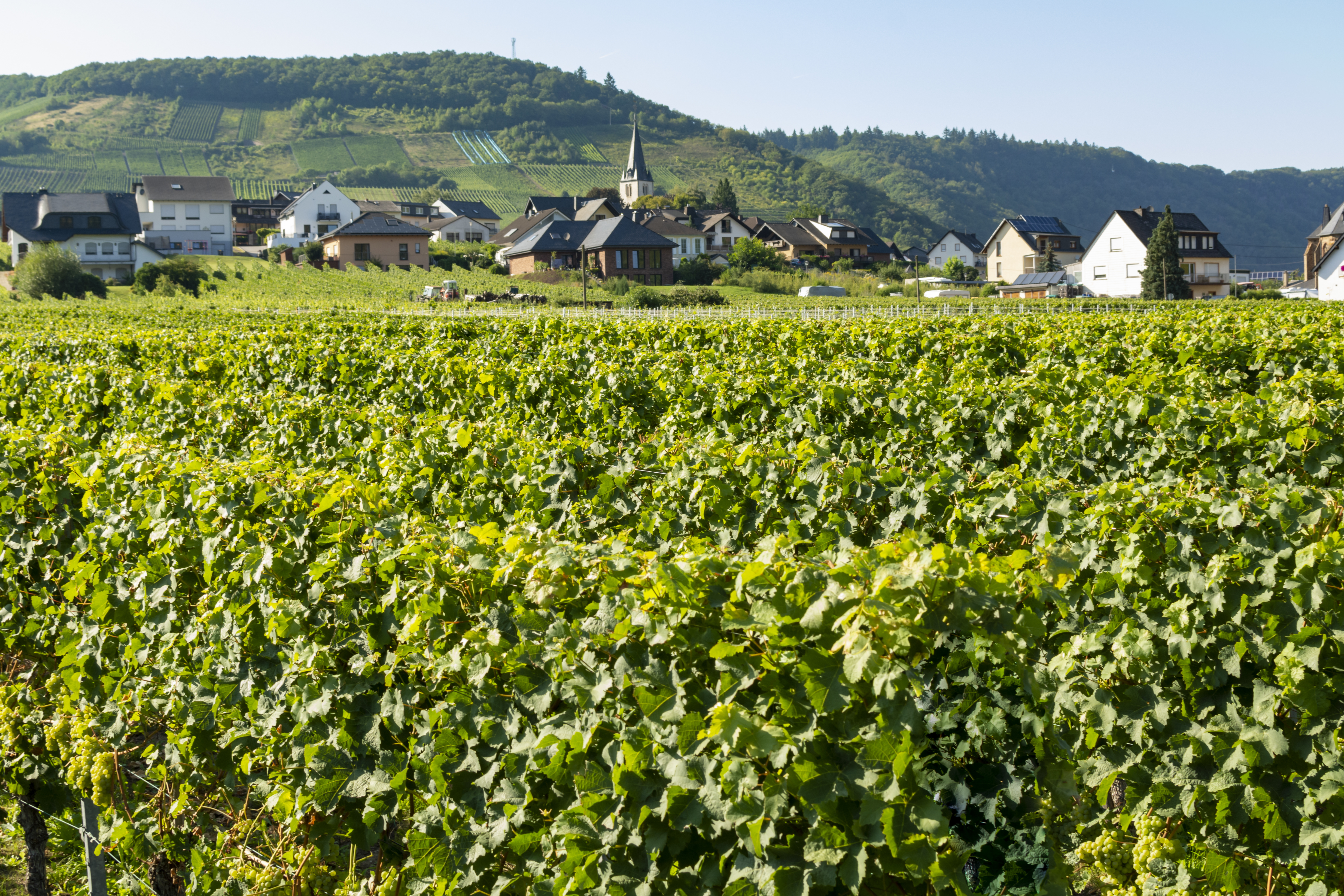
The following three PDOs—Uhlen Blaufüsser Lay, Uhlen Laubach, and Ulen Roth Lay—are all part of the larger Winninger Uhlen vineyard. Located in the Lower Mosel—just 5 miles/8 km from where the Mosel meets the Rhine—they are positioned next to each other (intertwined in some spots), on a series of south-facing terraces along the Mosel River. All three of these PDOs were registered on December 13, 2108:

Uhlen Blaufüsser Lay (Mosel): This region is approved for white wines, both still and sparkling. Riesling is the only grape variety permitted. The wines are described as having fruity notes (ripe autumn apples) as well as notes of violets and licorice—but it is the “slate minerals” and “cool metallic” aromas that the wine is best known for.  Some wine making practices (including the use of potassium sorbate, de-alcoholization, concentration via centrifuge or osmosis, sweetening with grape must, and the use of oak chips) are specifically prohibited.

Uhlen Laubach (Mosel): This PDO is approved for the same styles of wine (Riesling only, still and sparkling) as its neighbors. It also shares the same list of prohibited wine making practices. However, in addition to fruity aromas and the character of clean slate, the wines of the Uhlen Laubach PDO are described as smelling of “cool smoke and hazelnuts,” and as “generally fuller, softer, and with great depth of flavor.”

.

Uhlen Roth Lay (Mosel): Like its neighbors, the Uhlen Roth Lay PDO is approved for Riesling only, which may be still or sparkling. The wines of the area are known to demonstrate fruity and aromas and notes of minerality. The region is unique for its sparse rainfall and climate, which features slightly higher temperatures than the surrounding areas.

Wait, there’s one more: A sixth appellation—Würzburger Stein-Berg, located in Franken—is at the “publication” stage of the EU approval process. The Würzburger Stein-Berg PDO application was accepted earlier this year and published in the Journal of the EU on April 17, 2020; it still needs that final step of EU registration. Update: the Würzburger Stein-Berg PDO was approved on November 24, 2020. 

Pictures or it didn’t happen: If you are finding all this a bit hard to believe, I feel you. As proof-positive, you can read the documentation—straight from the Official Journal of the EU—in the reference section below.

References/for more information:

The Bubbly Professor is “Miss Jane” Nickles of Austin, Texas… missjane@prodigy.net
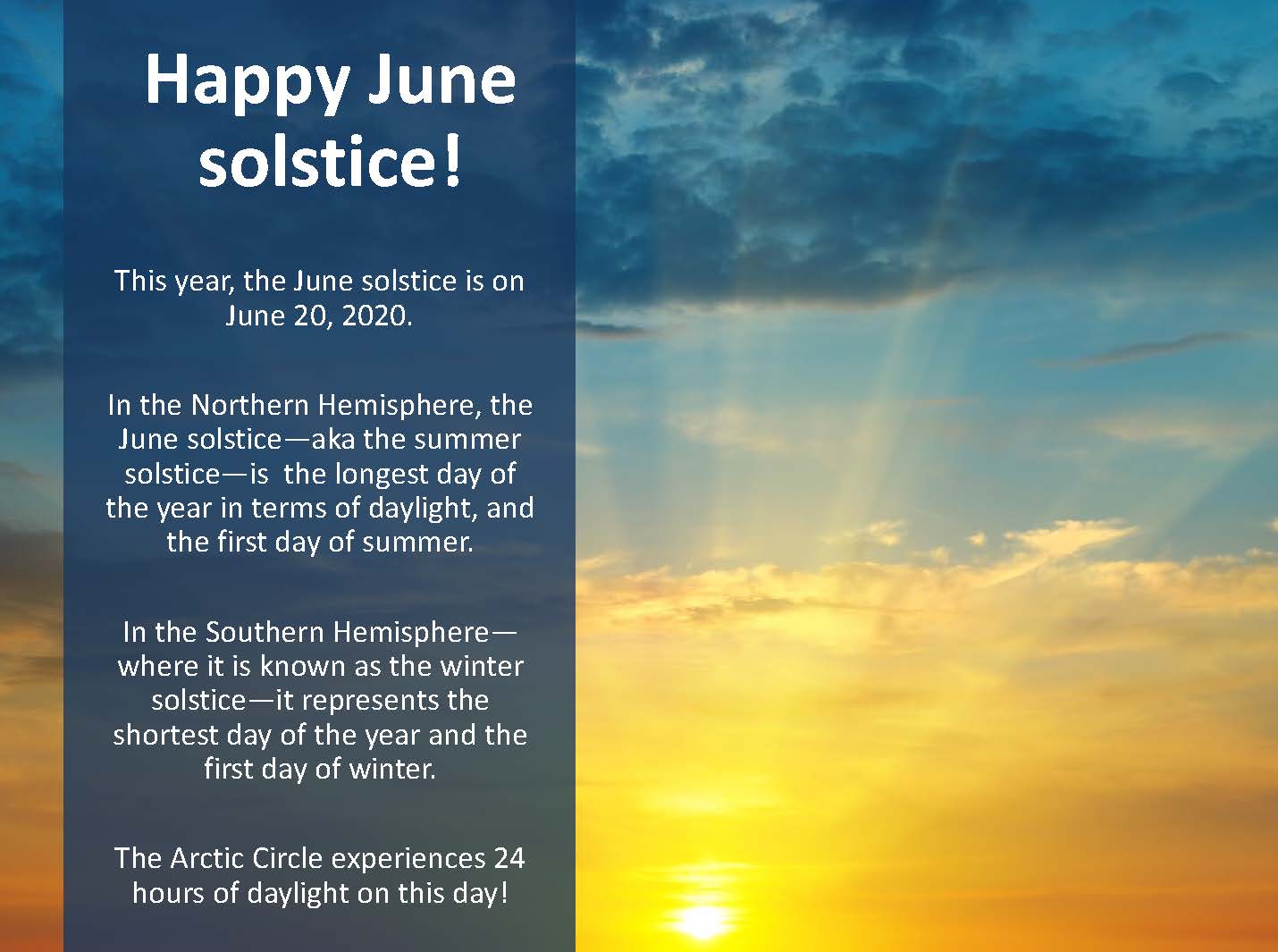
Happy June Solstice 2020!

Perfect Pairings: Wine with Holiday Ham

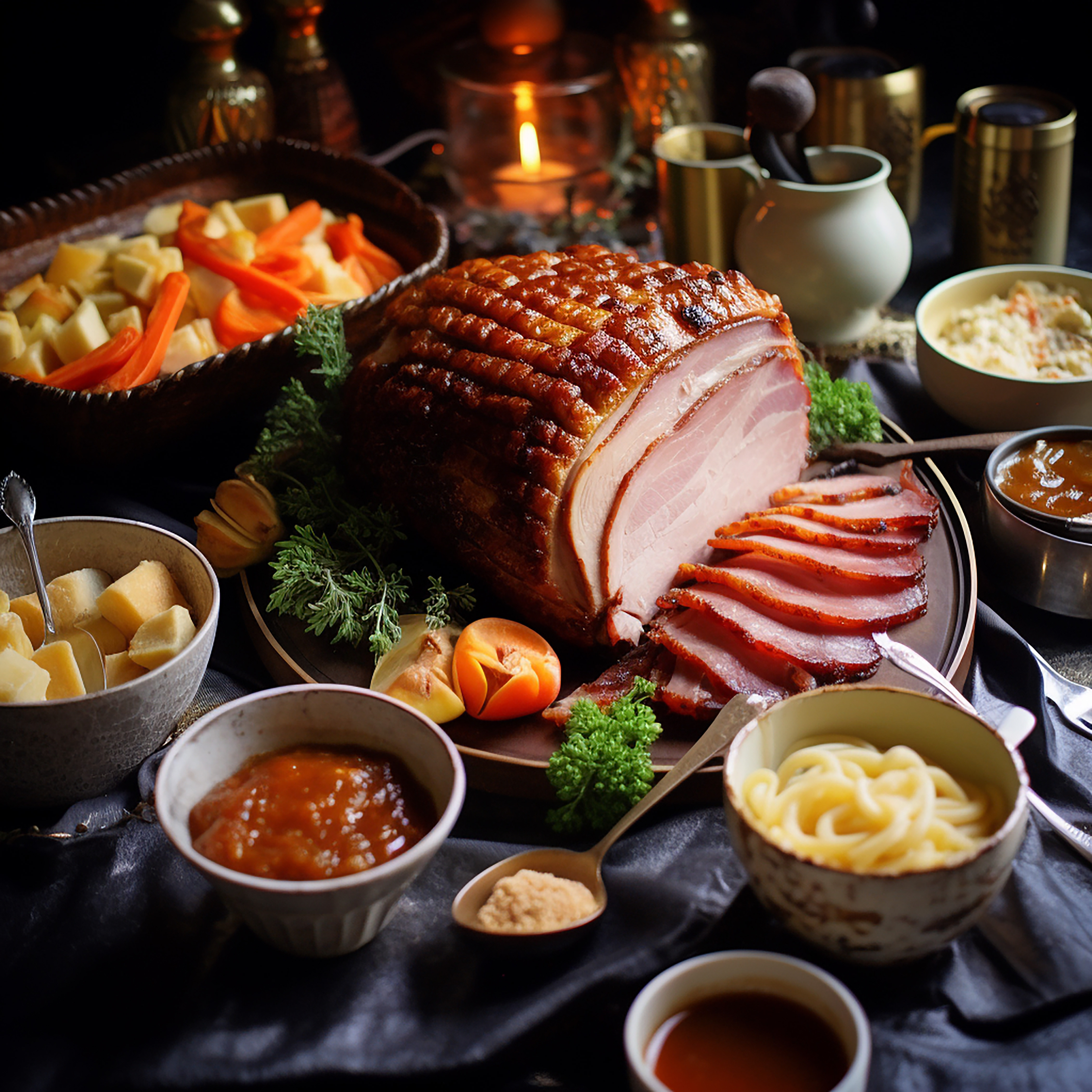
If your next big, crazy holiday gathering is going to feature a holiday ham (yum), the centerpiece of your meal will probably be glazed with maple or pierced with cloves. On the side, you are likely to find the standard line-up of holiday buffet dishes, including scalloped potatoes, sweet potatoes, brandied peaches, and green beans.

Your first wine pairing guideline for such a feast is center your wine choices around white wines, rosés, or lighter styles of red. This is to avoid a clash with the inevitable sweetness on your plate and to avoid overpowering the entrée.  In addition—as is typical of holiday feasts—the array of side dishes on the table will offer up a wide variety of tastes and flavors, so our challenge is to find a wine that doesn’t wrestle with the rest of the meal.

Here are a few guidelines to help you find a great wine to pair with a meal centered around a holiday ham:

Look for something light-to-medium:  A light-to-medium bodied wine—with a corresponding light-to-medium level of flavor intensity—is unlikely to overpower the main course in terms of both weight and flavor.  For best results choose a sparkling wine, a white wine, or a rosé.  There are also plenty of options for red wines lovers; just keep to the lighter styles of red. Wines based on Pinot Noir, Mencía, Gamay, or (sometimes) Sangiovese are great choices.  This can be a great day for lovers of French wine and a great day to bring out the Burgundy and Beaujolais. For lovers of Italian wines, Chianti, Chianti Classico, or Valpolicella can be good choices (however, be advised that depending on the producer, these wines can be light-and-lovely or big-and-brawny).

Fruit-forward wines will shine: A dinner based on ham will most likely contain a side dish based on peaches, raisins, or sweet potatoes.  While it is very hard to predict flavor-based reactions in wine and food pairings (as opposed to taste-based, which can be predicted quite accurately), fruity flavors in food will typically cause the wine to seem less fruity, drier, and more astringent. In order to avoid a fruit-on-fruit wrestling match and ending up with insipid-tasting wine, make sure the wine has fruity flavors to begin with.

A touch of sweetness will make a great match: If your ham is honey-baked, maple-drenched, or brown sugar-glazed, this is important. While it seems counter-intuitive, sweetness in food makes wine taste less sweet (and therefore more acidic).  If the idea of sweet wines on the dinner table scares you, don’t forget that your open-door policy on holidays most likely means that your guests have a broad range of preferences in wine, and this is one case where the Moscato drinkers and the sweet wine lovers may just have an edge. In order to abide by this rule, you don’t need a super-sweet dessert wine, just a wine with a hint of sweetness. After all, a few bottles of Moscato d’Asti, Brachetto d’Acqui, or off-dry Vouvray never hurt anybody!

The Bubbly Professor’s Suggestions for wine to pair with Holiday Ham

  • Riesling from Alsace, Germany, or Washington State is a great choice. For the wine adventurer, try finding a single winery that offers wines in varying levels of sweetness.  Tasting them along with the meal will make for an interesting feast!
  • Vouvray, either sparkling or still, or any other Chenin Blanc-based wine from the Loire or elsewhere (South Africa makes some wonderful Chenin). Vouvray sometimes has a bit of residual sugar, so this wine checks a lot of boxes.
  • Rosé…just about any rosé would be lovely, and this is a time where Rosé d’Anjou with its slight hint of sweetness will absolutely shine.  A rosé made from Sangiovese—which to me always seems to have a charming little hint of baking spice in the flavor—would also work.  If you have a rich uncle, tell him to bring Domaine Tempier Bandol Rosé (from Provence) and save a bottle for me!
  • Pinot Gris from Alsace or Oregon—this is an under-appreciated wine if ever there was one.  For less than $30.00 a bottle, grab a bottle of Pinot Gris from Oregon’s Willamette Valley.  It’s a bit more expensive, but if that doesn’t bother you, try a Pinot Gris from Alsace.
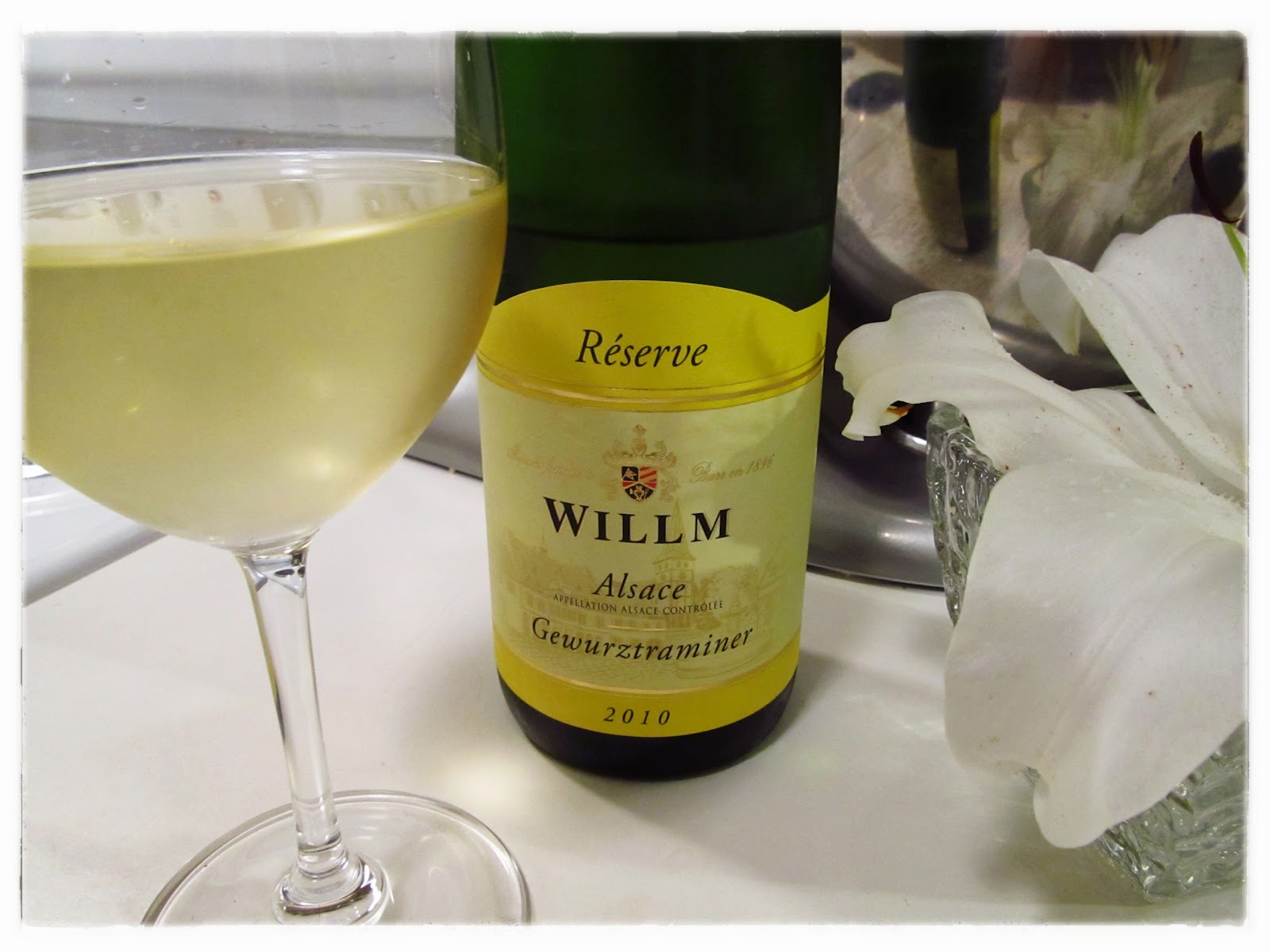
  • Gewürztraminer…my favorite “love it or hate it” wine will really shine with the flavors of a holiday ham feast.  Germany and Alsace make terrific dry varieties, and some of the versions from California have a slight hint of sweetness. Either version will do.
  • Rosé Champagne might just be the perfect choice.  Go for broke and load up the table with Laurent Perrier Brut Rosé, or spend a bit less and find a Brut Rosé Cava from Spain. (Pro tip: buy the Cava for your guests and keep a secret stash of Laurent Perrier in the bedroom mini fridge just for you and your bestie.)
  • Prosecco is a good choice, but then it just about always is!
  • For the wine adventurous…try a Cabernet-Franc based red wine from the Loire, such as Chinon or Bourgueil. California is also making interesting Cabernet Franc these days.
  • Red Burgundy, Cru Beaujolais or Oregon Pinot Noir.  You just can’t go wrong with these food-loving wines.
  • Chianti, Chianti Classico, or Valpolicella—sure to please the lovers of earthy red Italian wines.
  • For the sweet wine aficionados in the crowd, grab a few bottles of Moscato d’Asti and Brachetto d’Acqui.  These slightly sweet wines will work for the whole meal from spiced cashews to pecan pie!

Remember to relax and enjoy the holidays, and don’t stress over the wine choices.  Choose something you love and something that your guests will be comfortable with, whether they be wine newbies or wine adventurers!

The Bubbly Professor is “Miss Jane” Nickles of Austin, Texas…

The Bubbly Professor’s Second Annual “I don’t Wanna Study on Christmas Eve” Wine Quiz

Study tonight? Who, me?

I know you probably don’t want to study today, tonight, or tomorrow…but you also don’t want to lose your study rhythm! How about a nice compromise….the Bubbly Professor’s second annual “I don’t wanna study on Christmas Eve” quiz!

If you want to go for it, click here.

Happy Holidays to those that are celebrating, and best wishes to all!

The Bubbly Professor is “Miss Jane” Nickles of Austin, Texas… missjane@prodigy.net

Click here if you want to try last year’s “I don’t wanna study on Christmas” quiz.

Texas Tempranillo and the Legend of El Guapo

Texas Tempranillo

Here’s a riddle for the wanna-be-a-connoisseur crowd:  As Cabernet is to France, and Sangiovese is to Italy, what grape fills the bill for Spain?

The answer—of course—is Tempranillo. Tempranillo certainly puts the grit into some of the most highly regarded red wines of Spain.

Tempranillo has been revered for centuries as the main grape of Spanish Reds.  Tempranillo is the true hero of Spain’s legendary Rioja wines and the mainstay of the cultishly popular wines of Ribera del Duero.  This highly tannic, heavy-handed, heat-seeking grape even dares to follow in Don Quixote’s legendary footsteps on the sun-drenched plains of La Mancha.

At its best, Tempranillo produces wines with subtle, beguiling aromas of strawberry, cherry, vanilla, leather, and spice; tannins that purr like velvet, and flavors of “ripe fruit laid on a bed of earth and spice”.

Until quite recently, Tempranillo really hadn’t been cultivated much outside of Spain.  It shows up in a smattering of vines in the Midi and had a short-lived “nice try” in the Mendoza region of Argentina a few decades ago.  Until now, the most success the grape has had outside of Spain has been a long-standing, undercover double-life in Portugal’s Douro Valley where it goes by the alias “Tinta Roriz” and gets rolled, namelessly, into the multi-grape Porto blend.  Alas, despite being a hometown hero, Tempranillo never dreamed of international superstardom.

At least not until 1998 in a little town named Bend, Texas.  It was here that Jim and Karen Johnson, the Alamosa Wine Cellars, first planted Tempranillo in Texas.  Jim felt that Tempranillo would be well suited to the climate and soil conditions of his Texas Hill Country Vineyard, and the quality of the very ripe, broodishly dark, and highly tannic grapes from their first harvest in 1999 proved him correct.

Karen and Jim, with help from Anthony King (who moved on to make Pinot Noir at Lemelson Winery in Oregon) made a small batch of the 1999 Tempranillo and laid it down for a nice oak barrel nap.  A few months later, stopping by Alamosa on his way out to study enology at U.C. Davis, Anthony tasted the rock-solid wine and said to Jim, “This is going to be a big handsome wine!”  Thus, the name “El Guapo” was born, meaning “a handsome man” but with a wink and a nod to the Steve Martin movie “The Three Amigos” and its ugly bandito.  This “handsome-yet-ugly” motif is the charming reason behind the picture of the horned lizard – no one’s idea of a natural beauty – on the label of wine called “El Guapo”.

Following the Johnson’s trailblazing lead, several other Texas Wineries are now making Tempranillo.  Dan and Rose Mary Gatlin of the Inwood Estates Winery in the Texas High Plains have been producing Tempranillo Blends (Tempranillo/Cabernet) since 2003. Dan Gatlin’s history in the Texas Wine Industry takes him back several generations, including the establishment of one of the first vineyards in the state in Denton County in 1981.  This experimental vineyard sampled 22 all-vinifera varieties and brought the Gatlins to the same conclusion:  Tempranillo does well in Texas!  The Gatlins currently produce an Inwood Estates Tempranillo/Cabernet Blend that sells out almost before it is released, and a 100% Tempranillo named “Cornelious” in honor of Cornelious “Neal” Newsom who grows the grapes in his vineyard on the Texas High Plains.

Another fan of Tempranillo in Texas, Gary McKibben of Red Caboose Winery and Vineyards in Meridian says he first tasted Tempranillo about ten years ago at a Mexican Restaurant in Dallas and fell instantly in love.  Seven years ago, when he started his first vineyard, he planted Tempranillo as an experiment. Gary found it grew exceptionally well in his rocky vineyard, producing large clusters of dark, rich, highly tannic grapes. Gary first made a 100% Tempranillo wine in 2007 and reports his Tempranillo wines are very popular and he will be planting more vines, and producing more of his Tempranillo-based wine, in the future.

According to Dr. Ed Hellman, Viticulture Specialist with the Texas Cooperative Extension and the man who might as well be called the authority on all things viticultural in Texas, Tempranillo is a good fit for the state with its vigorous vines, thick-skins, dark color and good tannins.  The variety, while it doesn’t have much history here, has been performing well in three distinct Texas growing regions – Texas Hill Country, Texas High Plains, and North Texas.  Dr. Hellman says that “Thus far, the variety looks to be a real winner for us.  I believe Tempranillo has great potential to be one of our leading varietals.”

Dr. Hellman goes on to state that his only concern about the future of Tempranillo in Texas is consumer acceptance of an unfamiliar variety.  I can relate to this, as I know from experience that many consumers tend to stick to their Cabernet-Chardonnay-Merlot.  So, here is the rallying cry:  Come on, world, try a Tempranillo.  The future of this noble grape is in your hands.  Visit your local wine store and beg for Texas Tempranillo to appear on the shelves.

Drink up, world, it’s Time for Tempranillo!

Peculiarities of Perception

.

Time flies when you’re having fun (or better put: time flies when you’re having rum).

A watched pot never boils.

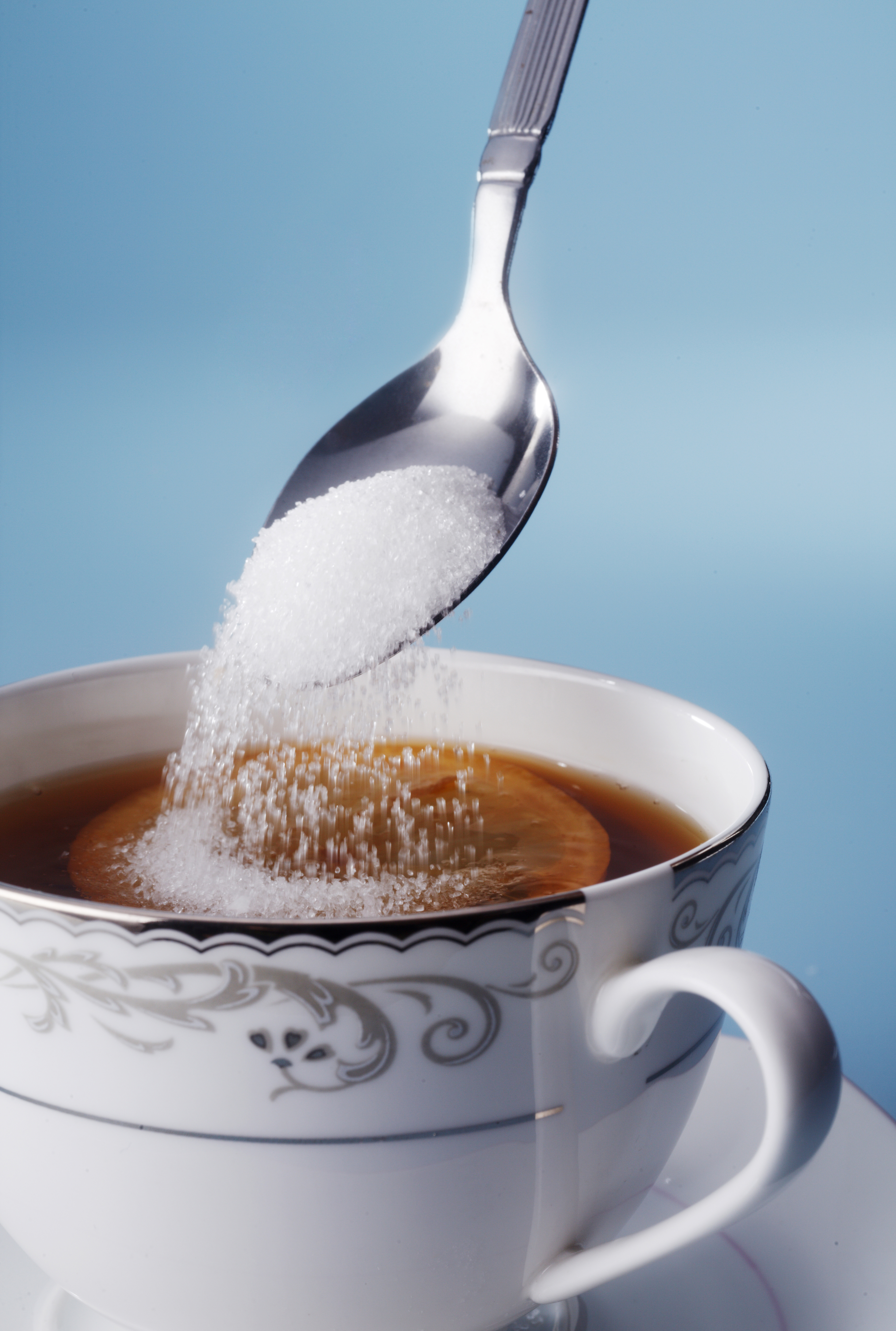
A spoonful of sugar makes the medicine go down.

It seems—at least from the platitudes we often use—that we all understand that perception is relative. Time does seem to fly by when you’re having fun, but every  second spent while stuck in traffic drags by endlessly.

This vagary of perception is equally easy to understand when applied to taste. For instance, I love coffee, but when served black it’s too bitter for me. Once I add a shot of milk, I don’t notice the bitterness as much (and I drink at least three cups every morning). I also like Earl Grey tea, but only if there is a spoonful of sugar and a squeeze of lemon involved, making it taste less tannic and (in my opinion) richer and smoother.

Wine enthusiasts experience these peculiarities of perception with just about every taste – despite the fact that we don’t always know or recognize it. First-time sippers of Sauternes often have an immediate reaction to the sweetness of the wine (some even recoil from it). However, Sauternes is typically quite acidic in addition to its more obvious sweetness. We just don’t notice it (unless we are truly focused on finding it), as our perception of the acidity is masked by the sweetness – especially on the attack (the first few seconds of the tasting experience).

.

Sweetness (residual sugar) in a wine really does a number on our overall perception of that same wine, and can be credited with the following peculiarities on the palate:

  • Suppresses the perception of acidity
  • Suppresses the perception of bitterness
  • May suppress the perception of astringency (tactile dryness)
  • May enhance the perception of viscosity

And then there are those factors that cause a quirk in our ability to perceive true sweetness (residual sugar) in a wine:

  • Acidity, tannin, and/or bitterness may suppress the perception of sweetness
  • High(ish) levels of alcohol enhance the perception of sweetness
  • Bubbles in sparkling wine tend to suppress the perception of sweetness
  • Aromas of oak and/or vanilla mimic sweetness
  • Oak-derived lactones: mimic sweetness
  • Fruity aromas tend to mimic sweetness
  • Cold temperatures suppress the perception of sweetness
  • Glycerol (glycerin) has a sweet taste (but is not sugar)

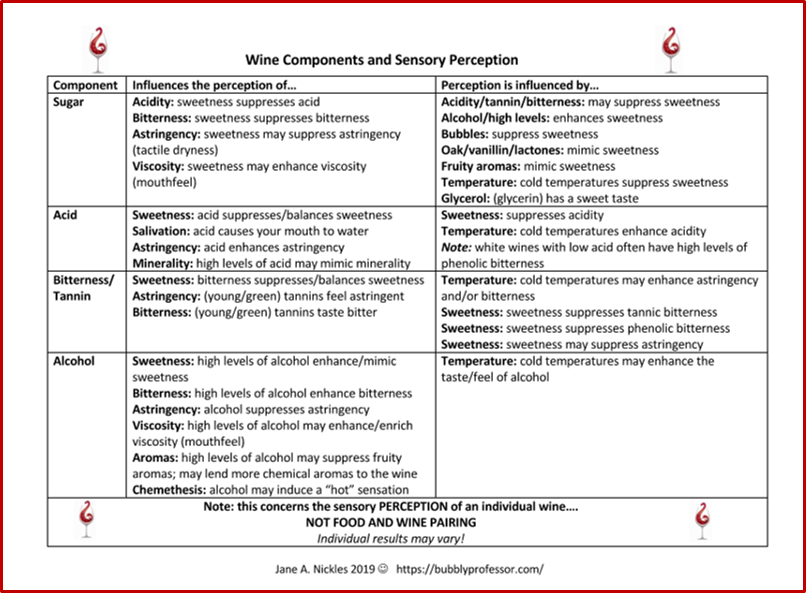
Most of this only really matters if you are trying to analyze a wine (as in a blind tasting or when writing a tasting note), or when you are trying to develop your palate and improve your wine tasting ability. If this happens to be one of your idiosyncrasies, perhaps you’d like to check out the attached chart (see below) that lists the peculiarities of the perception of sweetness in wine, as well as some for bitterness, tannin, and acidity.

I hope it makes the time fly!

Check out the chart here: The Peculiarities of Wine Perception – the Bubbly Professor

The Bubbly Professor is “Miss Jane” Nickles of Austin, Texas… missjane@prodigy.net


Un-study techniques: A Christmas Wine Quiz

.

I know you probably don’t want to study tonight, but you also don’t want to lose your study rhythm! How about a nice compromise….just a short little quiz on wine for Christmas.

If you want to go for it, click here.

Happy Holidays to those that are celebrating, and best wishes to all!

The Bubbly Professor is “Miss Jane” Nickles of Austin, Texas… missjane@prodigy.net

Rotling Revival

.

This week I happened upon a few examples of Rotling—served at the home of a friend fresh off a Paris-to-Switzerland river cruise. I don’t know much about Rotling, besides the fact that it is type of German rosé, and I can’t remember the last time I tasted (or even thought about) Rotling. It is obviously time for a Rotling revival!

The basics: according to the Wines of Germany website, Rotling is a German rosé made by blending red and white grapes (or red and white must) together prior to fermentation. Rotling must be pale pink to light red in color, but it may be produced in various levels of sweetness, varying levels of spritz (from still to Perlwein or Sekt), and from a range of grape varieties.

Throughout the course of a very long morning, I googled down many a wine-website-rabbit hole trying to find Rotling for sale in the US. I wasn’t successful in finding a bottle available in Texas, however, I did learn that Rotling is widely enjoyed throughout Germany and Central Europe, often served as a “wine by the glass or carafe” or packaged as a bulk wine. There is also a good deal of bottled Rotling available in Europe at a good, quaffable price—sometimes as low as five euros for a liter bottle.

.

The details: There are a few specifically-defined types of Rotling:

  • Schillerwein is a Rotling produced in the Württemberg wine region; it must be at least Qualitätswein-level quality. According to Dr. Christian Schiller, writing on the i-winereview.com blog, the wine’s name is derived from the verb “schillern,” meaning “to scintillate”—a reference to the wine’s brilliant (scintillating) color.
  • Badisch Rotgold is a Rotling produced in the Baden wine region; it also must be at least Qualitätswein-level quality. Badisch Rotgold must be produced using Grauburgunder (Pinot Gris) and Spätburgunder (Pinot Noir), with Grauburgunder as the majority grape, and the grape varieties must be declared on the label.
  • Schieler is a Rotling from the Sachsen wine region; it too must be at least Qualitätswein-level quality.

The wines: here is a bit of information about the wines I was lucky enough to sample:

  • Castel-Castell Rotling Trocken 2016: This wine was a beautiful, bright-but-light watermelon hue. This wine is produced in the Franken wine region from a blend of Müller-Thurgau and Acolon (a Blaufränkisch X Dornfelder cross) grapes. This is a crisp, fruity, delightful wine with aromas and flavors of ripe berries (raspberries, strawberries), a whiff of baking spice and a floral note.
  • Weingut Heinrich Basten Rotling Feinherb 2016: This wine was slightly lighter in color, but still had a delightful “light-reddish” color and crystal-clear-clarity. Nicely crisp but slightly sweet, this wine had aromas and flavors of raspberry, cherry, and tangerine, with a slight hint of nutmeg and (yum) marshmallow. This wine is a blend of Müller Thurgau und Spätburgunder (Pinot Noir).

In Germany, from what my friend tells me, they have no problem drinking Rotling in December—or any other time of year…so now is as good a time as any to reach for a Rotling!

References/for more information:

The Bubbly Professor is “Miss Jane” Nickles of Austin, Texas… missjane@prodigy.net
Indiana Jones and the Grapes of Olmo

Photo of Dr. Harold Olmo via the Archives of UC Davis: http://news.ucdavis.edu/search/news_detail.lasso?id=8037

The other day I was doing some quick research on Ruby Cabernet. The first result (via Wikipedia, no less) introduced the grape as such: “Ruby Cabernet is a red Olmo grape variety…” As these things go, my interest quickly changed from the parentage of Ruby Cabernet to the Olmo grapes. It sounded familiar, yet only vaguely familiar.

The Olmo grapes it seems, are the creation of Dr. Harold Olmo, a former UC Davis professor with a long list of viticultural (and other) accomplishments. In total, Dr. Olmo served on the faculty of UC Davis for over 60 years, including 29 years as a Professor Emeritus.

Dr. Olmo began his studies and research at the University of California at Berkeley (he had a PhD in genetics), but moved to the Davis campus along with the rest of the University’s wine research program in the 1930’s. There he embarked on his grape breeding program, attempting to create grapes of great flavor and structure that could be grown in the warm, dry climate of California’s Central Valley.

Of the dozens of grapes he created, Dr. Olmo’s best-known grapes include the following:

  • Ruby Cabernet—a Cabernet Sauvignon X Carignan cross, often used for blends but also made into varietal wines, grown throughout Central California, Australia, South America, and South Africa
  • Emerald Riesling—a Riesling X Muscaelle cross bred for use in warm climates; it is grown in some parts of California and South Africa and is used quite extensively in Israel
  • Symphony—a Muscat of Alexandria X Grenache Gris cross, grown in some parts of California and used to produce slightly spicy white wines with citrus–peach–apricot aromas
  • Rubired—a hybrid of Tinto Cão (vinifera) and Alicante Ganzin (a vinifera X Vitis rupestris hybrid), Rubired is a teinturier with deeply-colored red juice used primarily in blends and fortified wines in California and Australia

.

Dr. Olmo was known not only for his grape breeding program, but his swashbuckling adventures in pursuit of wild grapes, grape archaeology, and viticultural consultation.  These adventures included (as reported by his daughter, Jeanne-Marie Olmo, via an interview on Uncorked: The Blog), being arrested and jailed in a chicken coop (as a result of the death of a donkey), harvesting ancient vine seeds on the Iranian border, and attempting to deliver grape cuttings to the  ambassador of Afghanistan. These escapades earned him the nickname of “the Indiana Jones of Viticulture.”

Dr. Olmo created the first grape quarantine facility in California, allowing hundreds of European varieties to be imported into and planted securely in the United States—many people consider this his greatest contribution to California wine. Dr. Olmo also created an in-depth study of Chardonnay in California that resulted in an increase in California Chardonnay from less than 300 acres in the 1970’s to the powerhouse grape that it is today.

Dr. Olmo was a Guggenheim Fellow, a Fulbright Scholar, and received the Medal for Outstanding Contributions to World Viticulture by the Office of International de la Vigne et du Vin in 1965. He was a consultant to the United Nations for over twenty years and was named, in 2007, as an “Icon” in the Culinary Institute of America’s Vintners Hall of Fame. These are just a few of the dozens of national and international awards and recognition he received over his career. Dr. Olmo passed away in the middle of an afternoon nap on June 30, 2006. He was 96 years old, and the world of wine will never forget him.

References/for more information:

The Bubbly Professor is “Miss Jane” Nickles of Austin, Texas… missjane@prodigy.net