Rotling Revival

.

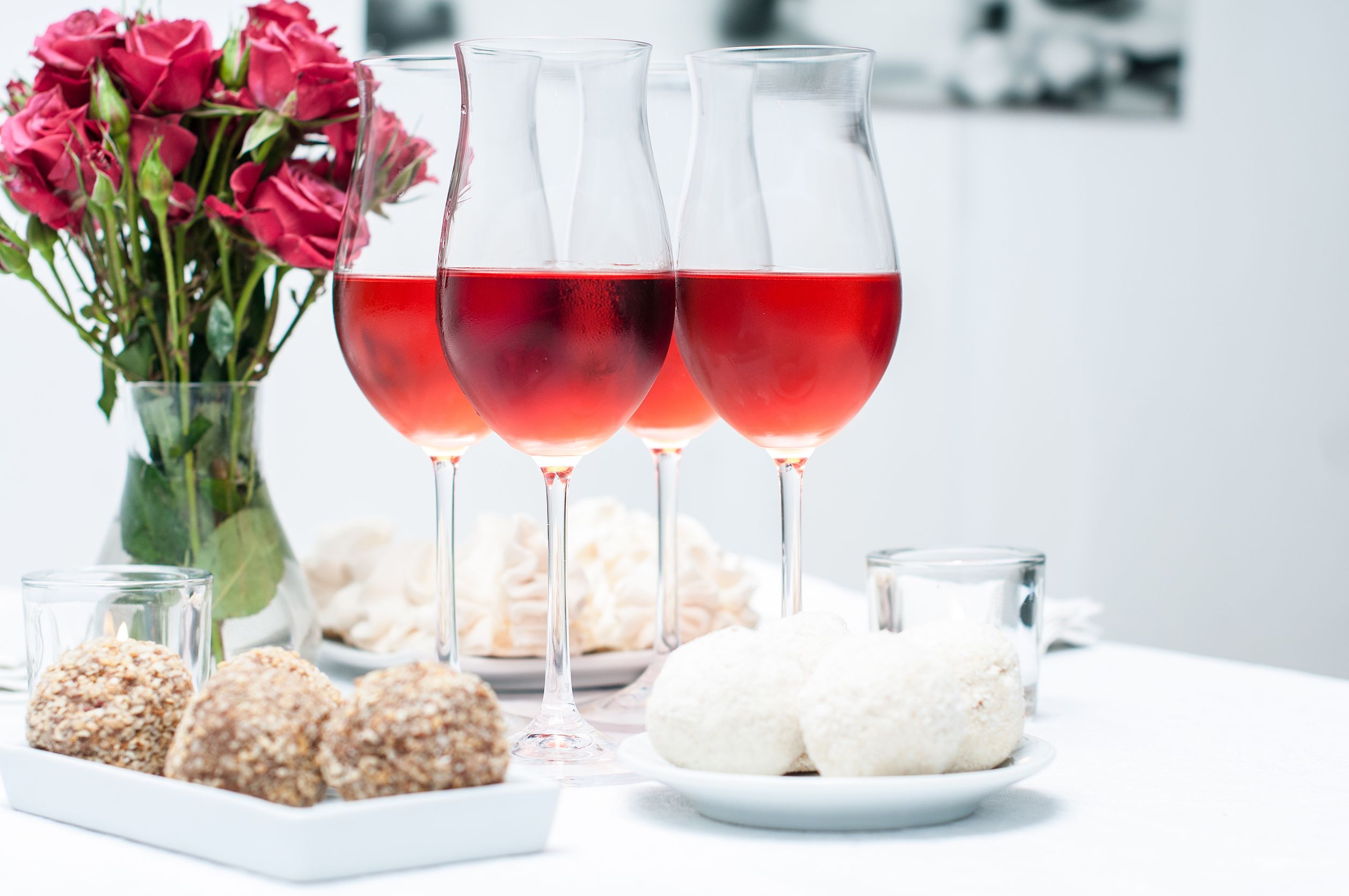
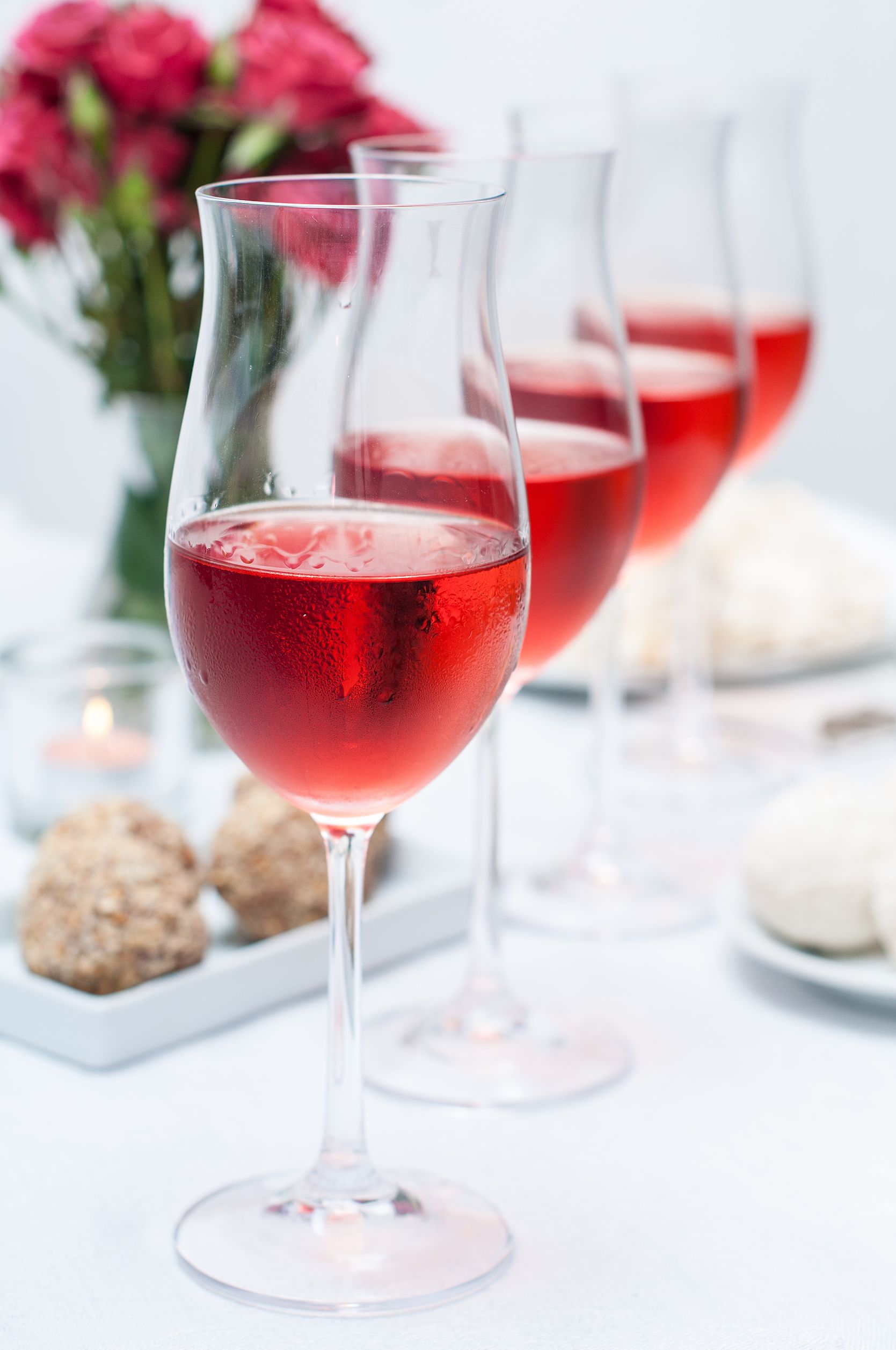
This week I happened upon a few examples of Rotling—served at the home of a friend fresh off a Paris-to-Switzerland river cruise. I don’t know much about Rotling, besides the fact that it is type of German rosé, and I can’t remember the last time I tasted (or even thought about) Rotling. It is obviously time for a Rotling revival!

The basics: according to the Wines of Germany website, Rotling is a German rosé made by blending red and white grapes (or red and white must) together prior to fermentation. Rotling must be pale pink to light red in color, but it may be produced in various levels of sweetness, varying levels of spritz (from still to Perlwein or Sekt), and from a range of grape varieties.

Throughout the course of a very long morning, I googled down many a wine-website-rabbit hole trying to find Rotling for sale in the US. I wasn’t successful in finding a bottle available in Texas, however, I did learn that Rotling is widely enjoyed throughout Germany and Central Europe, often served as a “wine by the glass or carafe” or packaged as a bulk wine. There is also a good deal of bottled Rotling available in Europe at a good, quaffable price—sometimes as low as five euros for a liter bottle.

.

The details: There are a few specifically-defined types of Rotling:

  • Schillerwein is a Rotling produced in the Württemberg wine region; it must be at least Qualitätswein-level quality. According to Dr. Christian Schiller, writing on the i-winereview.com blog, the wine’s name is derived from the verb “schillern,” meaning “to scintillate”—a reference to the wine’s brilliant (scintillating) color.
  • Badisch Rotgold is a Rotling produced in the Baden wine region; it also must be at least Qualitätswein-level quality. Badisch Rotgold must be produced using Grauburgunder (Pinot Gris) and Spätburgunder (Pinot Noir), with Grauburgunder as the majority grape, and the grape varieties must be declared on the label.
  • Schieler is a Rotling from the Sachsen wine region; it too must be at least Qualitätswein-level quality.

The wines: here is a bit of information about the wines I was lucky enough to sample:

  • Castel-Castell Rotling Trocken 2016: This wine was a beautiful, bright-but-light watermelon hue. This wine is produced in the Franken wine region from a blend of Müller-Thurgau and Acolon (a Blaufränkisch X Dornfelder cross) grapes. This is a crisp, fruity, delightful wine with aromas and flavors of ripe berries (raspberries, strawberries), a whiff of baking spice and a floral note.
  • Weingut Heinrich Basten Rotling Feinherb 2016: This wine was slightly lighter in color, but still had a delightful “light-reddish” color and crystal-clear-clarity. Nicely crisp but slightly sweet, this wine had aromas and flavors of raspberry, cherry, and tangerine, with a slight hint of nutmeg and (yum) marshmallow. This wine is a blend of Müller Thurgau und Spätburgunder (Pinot Noir).

In Germany, from what my friend tells me, they have no problem drinking Rotling in December—or any other time of year…so now is as good a time as any to reach for a Rotling!

References/for more information:

The Bubbly Professor is “Miss Jane” Nickles of Austin, Texas… missjane@prodigy.net

Indiana Jones and the Grapes of Olmo

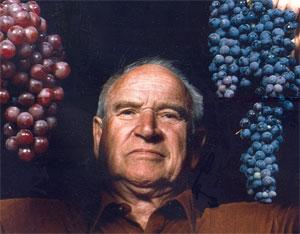
Photo of Dr. Harold Olmo via the Archives of UC Davis: http://news.ucdavis.edu/search/news_detail.lasso?id=8037

The other day I was doing some quick research on Ruby Cabernet. The first result (via Wikipedia, no less) introduced the grape as such: “Ruby Cabernet is a red Olmo grape variety…” As these things go, my interest quickly changed from the parentage of Ruby Cabernet to the Olmo grapes. It sounded familiar, yet only vaguely familiar.

The Olmo grapes it seems, are the creation of Dr. Harold Olmo, a former UC Davis professor with a long list of viticultural (and other) accomplishments. In total, Dr. Olmo served on the faculty of UC Davis for over 60 years, including 29 years as a Professor Emeritus.

Dr. Olmo began his studies and research at the University of California at Berkeley (he had a PhD in genetics), but moved to the Davis campus along with the rest of the University’s wine research program in the 1930’s. There he embarked on his grape breeding program, attempting to create grapes of great flavor and structure that could be grown in the warm, dry climate of California’s Central Valley.

Of the dozens of grapes he created, Dr. Olmo’s best-known grapes include the following:

  • Ruby Cabernet—a Cabernet Sauvignon X Carignan cross, often used for blends but also made into varietal wines, grown throughout Central California, Australia, South America, and South Africa
  • Emerald Riesling—a Riesling X Muscaelle cross bred for use in warm climates; it is grown in some parts of California and South Africa and is used quite extensively in Israel
  • Symphony—a Muscat of Alexandria X Grenache Gris cross, grown in some parts of California and used to produce slightly spicy white wines with citrus–peach–apricot aromas
  • Rubired—a hybrid of Tinto Cão (vinifera) and Alicante Ganzin (a vinifera X Vitis rupestris hybrid), Rubired is a teinturier with deeply-colored red juice used primarily in blends and fortified wines in California and Australia

.

Dr. Olmo was known not only for his grape breeding program, but his swashbuckling adventures in pursuit of wild grapes, grape archaeology, and viticultural consultation.  These adventures included (as reported by his daughter, Jeanne-Marie Olmo, via an interview on Uncorked: The Blog), being arrested and jailed in a chicken coop (as a result of the death of a donkey), harvesting ancient vine seeds on the Iranian border, and attempting to deliver grape cuttings to the  ambassador of Afghanistan. These escapades earned him the nickname of “the Indiana Jones of Viticulture.”

Dr. Olmo created the first grape quarantine facility in California, allowing hundreds of European varieties to be imported into and planted securely in the United States—many people consider this his greatest contribution to California wine. Dr. Olmo also created an in-depth study of Chardonnay in California that resulted in an increase in California Chardonnay from less than 300 acres in the 1970’s to the powerhouse grape that it is today.

Dr. Olmo was a Guggenheim Fellow, a Fulbright Scholar, and received the Medal for Outstanding Contributions to World Viticulture by the Office of International de la Vigne et du Vin in 1965. He was a consultant to the United Nations for over twenty years and was named, in 2007, as an “Icon” in the Culinary Institute of America’s Vintners Hall of Fame. These are just a few of the dozens of national and international awards and recognition he received over his career. Dr. Olmo passed away in the middle of an afternoon nap on June 30, 2006. He was 96 years old, and the world of wine will never forget him.

References/for more information:

The Bubbly Professor is “Miss Jane” Nickles of Austin, Texas… missjane@prodigy.net
March of the Hybrids

Hybrid grape varieties—they are loved in Canada (Vidal) for icewine, in New York State (Cayuga) for sparkling wine, and in Texas (Blanc de Bois) for deflecting Pierce’s Disease.

In the European Union? Not so much. The EU has very little love for hybrid grapes, and only a handful of them are approved for use in quality wines—meaning they have made it onto the all-important Register of Approved Varieties. Ouch.

However….hybrid grapes are not entirely shunned in the vineyards of the EU. Here are three examples of hybrid grapes that marched right into the European Union where they were greeted with (somewhat) open arms.

.

Baco Blanc: Baco Blanc is a hybrid of Folle Blanche (vinifera) X Noah (a seedling of Tyler—a natural riparia X labrusca hybrid discovered in Henry County, Kentucky—that for some spooky reason has a DNA profile identical to the Basque grape Hondarribi  Zuri). Baco Blanc was created in 1898 by François Baco, working in the Landes in southwest France, in response to the fact that Folle Blanche was not taking well to grafted rootstock.  The inventor actually named the grape Maurice Baco in honor of his late son, but the name Piquepoul du Gers was widely used in and around southwest France, leading to some confusion about the progeny of the grape. Baco Blanc is a light-skinned white grape with fairly neutral flavors and just a hint of the “foxy” shining through.

Baco Blanc’s claim to fame: Baco Blanc is one of the ten grapes authorized in the production of Armagnac, and is listed as an approved variety on all four of the decrets concerning the great brandy: Armagnac AOC, Armagnac-Ténarèze AOC, Bas Armagnac AOC, and Blanche Armagnac AOC. This makes Baco Blanc the only hybrid grape used in a French appellation d’origine controlee (AOC/PDO) product. Not bad.

.

Regent: Regent (a red grape) was created in 1967 in Pfalz, Germany by a scientist named Gerhardt Alleweldt. Bred to be resistant to diseases of the fungus/rot/mildew variety, it is a hybrid of Diana (vinifera—Silvaner X Müller-Thurgau) X Chambourcin (itself already a complex French-American hybrid).  The grape was named after a famous diamond that once embellished the Crown of Louis XV (and now resides in the Louvre).

Regent’s claim to fame: Regent makes darn good wine. It ripens to high sugar levels, and can produce full-bodied wines with velvety tannins and aromas of red fruit (cherry, red currant, red plum). It’s so good that it often is described—in complimentary terms—as “vinifera-like” and “you can’t even tell it’s a hybrid.” Germany even managed to get it listed in the Register of Approved Varieties as a vinifera variety. There are currently over 5,000 acres (2,020 ha) planted in Germany, with additional plantings in Switzerland and England. In Belgium, it is an approved variety in the Côtes de Sambre et Meuse, Hageland, Haspengouw, and Heuvelland AOCs.

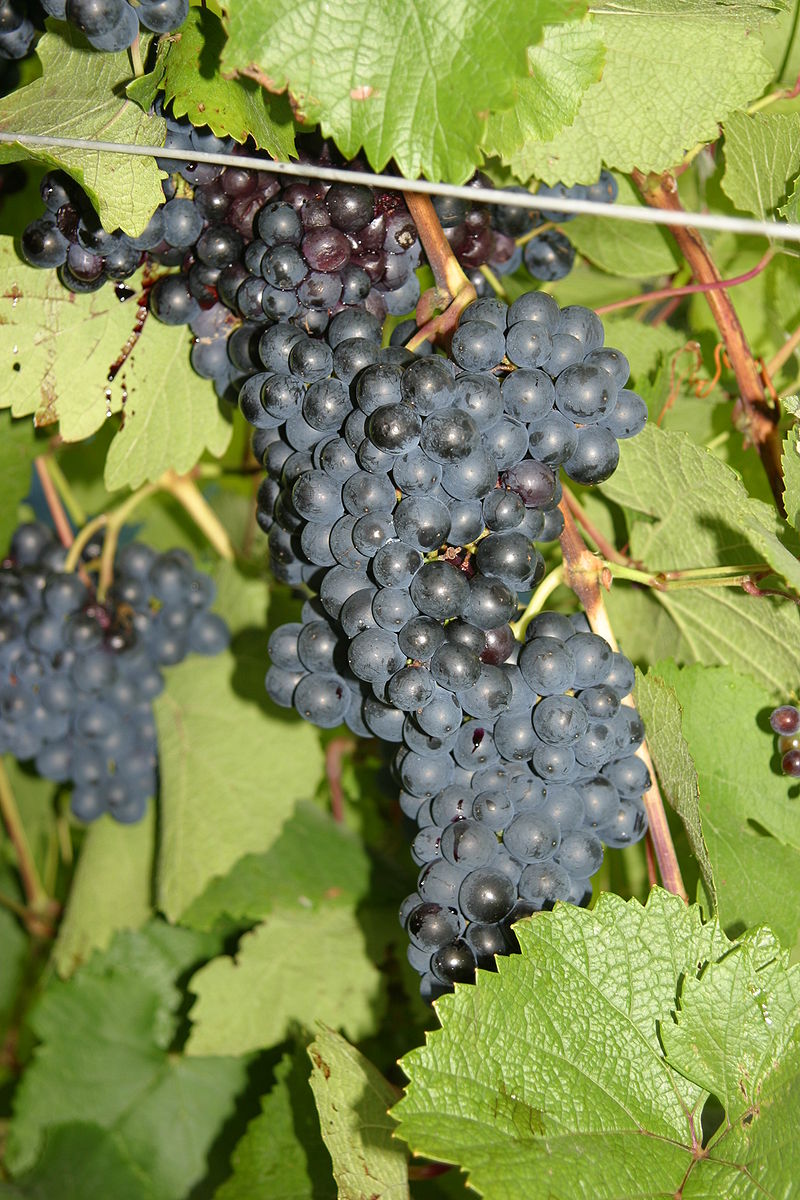
Rondo grapes photo credit: Dr. Joachim Schmid (Geisenheim University) via Wikimedia Commons

Rondo: Rondo, a red grape, is a hybrid of St. Laurent (vinifera) X Zarya Sevra (a Seyants Malengra X Vitis amurensis hybrid). Rumor has it that it was originally created in 1964 by Czech Professor Vilém Kraus, who later offered the grape to Dr. Helmut Becker of the Geisenheim Grape Breeding Institute—which explains why the grape is known as a German hybrid.

Rondo’s claim to fame: Rondo has been listed in the EU’s Register of Approved Varieties since 1997—interestingly enough, with the entry for “species” left blank (cue the theme to The Twilight Zone…) But all conspiracy theories aside, it seems that Rondo is a vigorous vine with excellent disease resistant, and as a bonus the grapes have red-colored flesh—making it a good blending partner for many cold-weather red grapes. It seems that despite its amurensis-linked heritage, the wines it produces are vinifera-enough in style to give it a spot on the roster.  Rondo is currently the number 4 red grape (by vineyard plantings) in England, and is planted in Germany (particularly in Baden and other areas near the southern portion of the country).

References/for more information

The Bubbly Professor is “Miss Jane” Nickles of Austin, Texas… missjane@prodigy.net
Whole Lotta Ancellotta

...

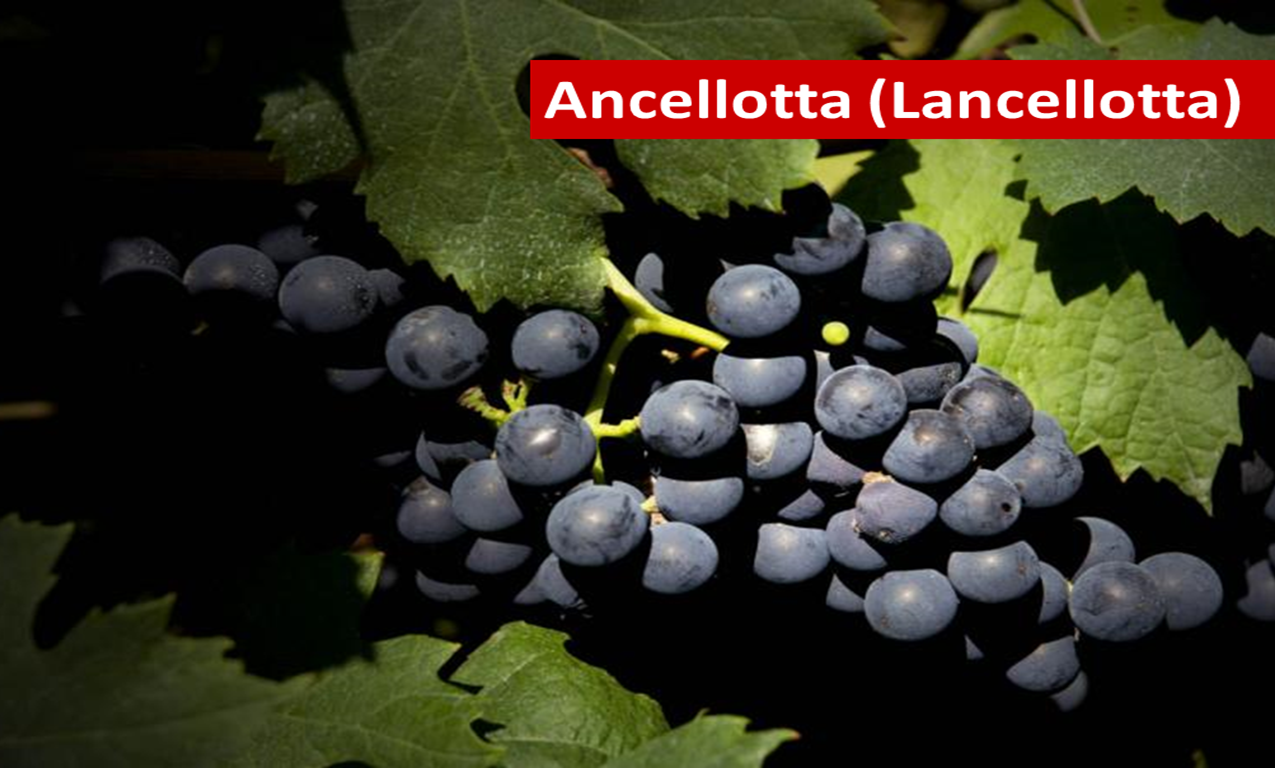
The Ancellotta grape is native to Italy’s Emilia-Romagna area and used in small amounts in some styles of Lambrusco. When I read that, I thought to myself, “Now there’s an obscure grape variety”!

As first impressions often are, I was wrong! Italy has over 11,000 acres of Ancellotta, and while that can’t compare to Sangiovese’s 200,000 acres, it certainly doesn’t place it at the bottom of the very long list of grapes grown in Italy.

The Ancellota grape is a vigorous red grape known for small, very dark berries. The high level of anthocyanins in the skins mean that this grape is often used, in small amounts, to add a punch of color to otherwise lightly hued red wines. This feature also means that the grape is sometimes used in concentrated musts used for coloration. Besides its color and structure, Ancellotta grapes are known for ripe red fruit flavors and aromas, such as plum, blackberry, and blueberry; as well as a spiciness characterized as “sweet spice” or “baking spices.”

...

Ancellotta is perhaps best known as a minor allowed component of several styles of Lambrusco. It is allowed to be used up to 15% in the blend of Lambrusco Salamino di Santa Croce DOC and Lambrusco Mantovano DOC. It’s also allowed, up to 15% in Lambrusco di Modena DOC and Lambrusco di Reggiano DOC. In Colli di Scandiano e di Canossa DOC, it may be used in Lambrusco—but only those produced with a minimum of 85% of either the Lambrusco Montericco or Lambrusco Grasparossa variety.

But here’s where it gets interesting: did you know that Ancellotta is required to be at least 30% of the blend of Reggiano Rosso DOC? True fact! Plus, it is allowed to be up to 60% of the blend. So that’s where the 11,000 acres of Ancellotta are headed! The rest (40—70%) of the Reggiano Rosso DOC blend may be Cabernet Sauvignon, Fogarina, Malbo Gentile, Marzemino, Merlot, Sangiovese, or various members of the Lambrusco grape variety.

...

The Ancellotta grape variety is also planted in Brazil where it is believed to cover at least 1,000 acres, mainly in the Serra Gaúcha area.  At the Don Guerino Winery in Alto Feliz, it is used in “Top Blend,” a gran reserva blended red wine, alongside Merlot, Teroldego, Tannat, and Cabernet Sauvignon. Don Guerino also produces a 100% varietal Ancellotta that has been described as having a deep intense color, aromas and flavors of plum, blackberry and spice; great structure, and ripe tannins.

Ancellotta is also grown in Switzerland. It is often used, in small amounts, for its color-enhancing quality in the Pinot Noir of the Valais region. It is also used in the blended wine known as Dôle. Dôle, which must contain a combined minimum of 85% Pinot Noir and/or Gamay, is considered to be among the finest wines of Switzerland. Other grapes used in Dôle may include Carminoir (a recent Cabernet Sauvignon X Pinot Noir cross), Merlot, Syrah, and—you guessed it—Ancellotta.

References:

The Bubbly Professor is “Miss Jane” Nickles of Austin, Texas… missjane@prodigy.net

Marselan from Marseillan

Photo of Marselan Grapes by Vbecart Photography, via Wikimedia Commons

Photo of Marselan Grapes by Vbecart Photography, via Wikimedia Commons

I first heard of the grape variety Marselan while studying – for the first time – the wines of China. China, as you may have heard, recently became the world’s second-place country in terms of vineyard holdings – coming in on the list right after Spain, and before France. While many of China’s vineyards are dedicated to table grapes, wine grapes, including vinifera varieties, now account for at least 10% of the vines. Of the vinifera varieties grown, Cabernet Sauvignon dominates, followed by Carmenère, Merlot, Chardonnay, Cabernet Franc, Shiraz, Gamay, Grenache, and Marselan.

There it was: Marselan – a grape variety I had never heard of before – so of course I had to investigate…

Marselan is a vinifera cross (Cabernet Sauvignon X Grenache) created in 1961 by French ampelographer Paul Truel. Truel was working in Montpellier, France at the Institut National de la Recherché Agronomique (INRA). His goal was to create a high yielding grape with large berries of at least moderate quality. Marselan produces grape berries of small-to-medium size, so the variety was shelved and not expected to have a future in commercial wine production.

However…by the 1990’s viticultural priorities had shifted, and disease resistance, particularly to threats such as powdery mildew and coulure, brought Marselan out of cold storage. The grape was approved by the French as a commercial variety in 1990 and in 2007 was approved by the TTB (United States) as a varietal wine name.

At its best, Marselan is said to combine the finesse and quality of Cabernet Sauvignon with the heat tolerance and high yield of Grenache. According to Jancis Robinson’s book “Wine Grapes,” varietal Marselan “tends to produce deeply colored and highly aromatic wines that have supple tannins and the potential to age.”

In addition to its plantings in China, Marselan is planted – albeit in small amounts – throughout the south of France. It is allowed to be up to 10% of the blend in the wines of the Côtes du Rhône AOC, and is produced as a varietal wine in the Languedoc. Small plantings may also be found in California, Argentina, Arizona, Spain, Uruguay, and Brazil.

The grape was named “Marselan” by its creator, in homage to the town of Marseillan, France. Marseillan is the home of the phylloxera-free vine collection of Domaine de Vassal, operated by the INRA. Domaine de Vassal provided the parent Cabernet Sauvignon and Grenache vines from which the original Marselan was bred.

References:

  • Robinson, Jancis (et al): Wine Grapes. New York, 2012: Harper Collins Publishers
  • Robinson, Jancis and Harding, Julia: The Oxford Companion to Wine, 4rd Edition. Oxford, 2015: The Oxford University Press
  •  http://www.winechina.com/en/

Five Fast Facts about Zweigelt

Zerigelt 1A quick read about Fritz Zweigelt and the grape he created.

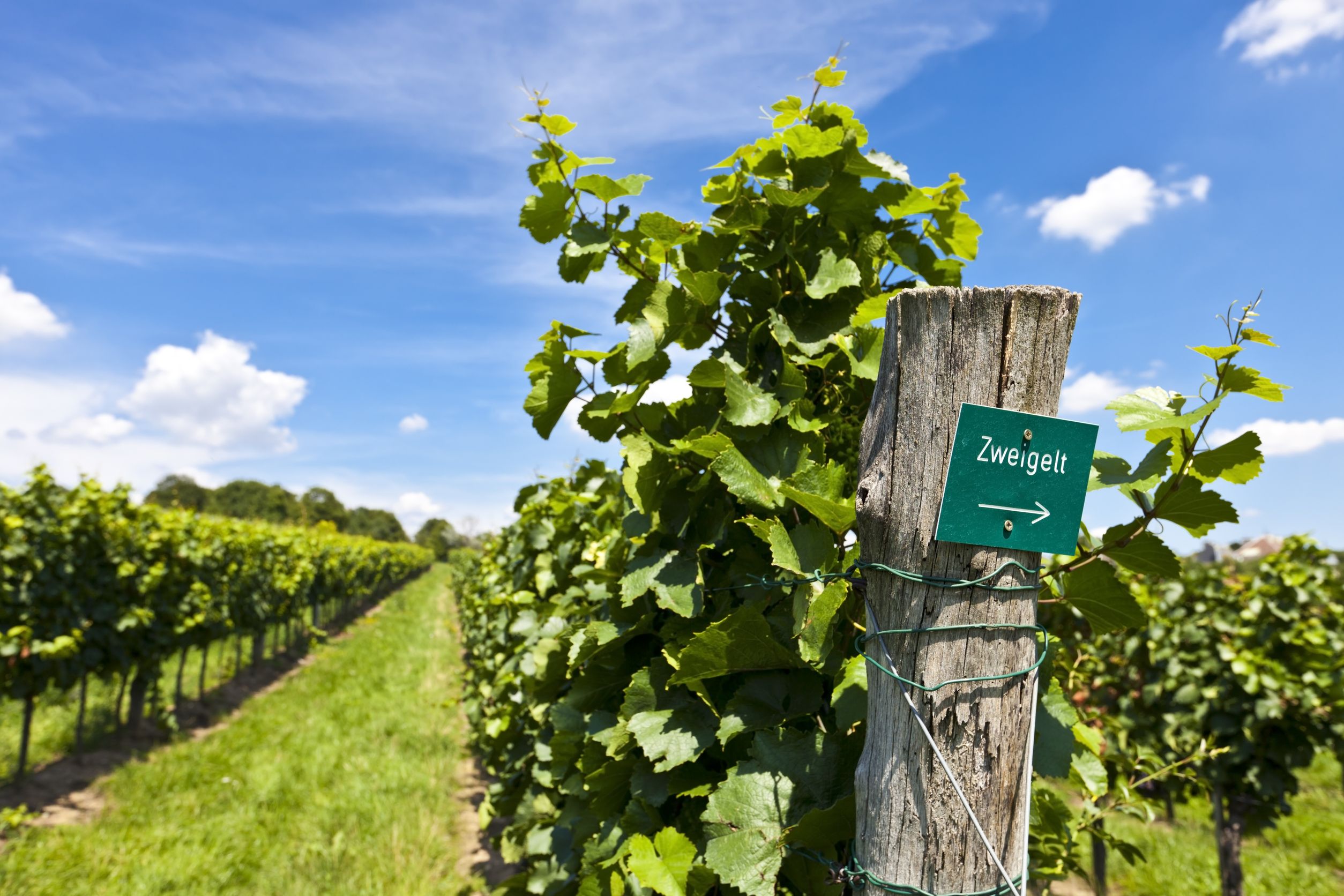
#1 – Zweigelt is the leading red grape of Austria. It is also planted in small amounts in Canada, in both Ontario and British Columbia. Zweigelt is the third most-planted grape of the Czech Republic, where is goes by the name Zweigeltrebe. A few wineries – including Wilridge Winery and Perennial Vintners – have some small plantings (a few acres or so) in Washington State.

#2 – Zweigelt is a cross of St. Laurent and Blaufränkisch/Lemberger created by Fritz Zweigelt in 1922. Fritz was working the Federal Institute for Viticulture and Pomology at Klosterneuburg, Austria at the time, which makes the Zweigelt grape a true native Austrian. It was made with the purpose of creating a red grape unique to Austria that could thrive in the cool climate, be disease-resistant, and create a red wine of medium to full body and flavor.

#3 – Dr. Zweigelt did a good job – the grape that bears his name is indeed cold-hardy, drought-resistant, and thrives in a variety of soils. It is fairly disease-resistant, but is susceptible to powdery mildew (that’s Oidium to you CSW students) and berry shrivel/grape wilt.

Zweigelt 2#4 – The name of the grape is pronounced “TSVYE-gelt” – and if you think that’s difficult to say, consider yourself lucky. The original name of the grape was Rotburger (the name of a town close to where the grape was created) but was later changed to honor its creator.  Zweigelt also goes by the name Blauer Zweigelt. By the way, don’t confuse the original name of Zweigelt – Rotburger – with the grape that goes by the name of Rotberger (who would – ha!). For the record – Rotberger (“berger with an e!”) is a white grape cross of Riesling X Trollinger.

5 – As with all wines, the characteristics of a good Zweigelt vary according to vineyard conditions and wine-making techniques. Cool-climate, unoaked versions from Austria’s northern reaches are typically violet-red in color, medium-bodied, and moderate in tannins with fruit-forward flavors favoring red and black cherry. As such, it is the most widely consumed red wine in the pubs, bars, and casual restaurants in and around Vienna. The warmer growing regions in the areas of Lower Austria (Niederösterreich) – particularly  Neusiedlersee – produce full-bodied, richer wines with firm tannins. Such wines are often oak-aged, resulting in flavors of red cherry, red plum, cinnamon, and black pepper.

References:

The Bubbly Professor is “Miss Jane” Nickles of Austin, Texas… missjane@prodigy.net
Five Fascinating Facets of Flor

Bodegas Hidalgo La Gitana (producers of La Gitana Manzanilla) in Sanlúcar de Barrameda – photo by Caleteron via Wikimedia Commons

Bodegas Hidalgo La Gitana (producers of La Gitana Manzanilla) in Sanlúcar de Barrameda – photo by Caleteron via Wikimedia Commons

Ok, I apologize for the gratuitous alliteration, but you have to admit…flor – the indigenous yeast cells that form a “veil” on the surface of certain types of Sherry as it ages – is fascinating. Flor (meaning “flower” in Spanish) is a subject that just seems to get more interesting the closer you look. As a matter of fact, I had a hard time limiting the information I found to just five facets!

#1: Flor is what separates the Finos from the Olorosos. Flor is a film-forming yeast (actually, several related strains of yeast) that is indigenous to the region around the Jerez-Xérès-Sherry DO. Flor is the main factor that causes the myriad types and styles of Sherry to divide roughly into three camps – Fino, Hybrid, and Oloroso – based on the extent of flor influence. Fino Sherries (such as those labeled as Fino or Manzanilla) are aged under the somewhat constant influence of flor. Oloroso Sherries (labeled as Oloroso or sometimes as Cream Sherry) are aged entirely without flor; while hybrids (such as Amontillado and Palo Cortado) are aged partially with flor and partially without.

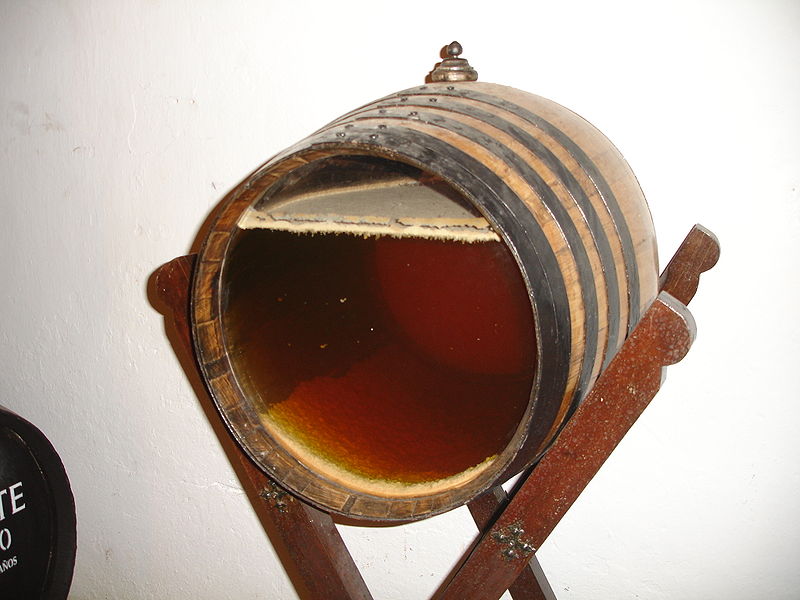
#2: Flor is that “something in the air” in Jerez. Flor imparts its magic by finding its way from the air to the young base wines being prepared each year. The flor starts to develop in the base wines, and, after the wine is fortified – as long as the maximum level of alcohol remains around 15% by volume or less – and placed in a barrel, the yeast will reproduce and start to form a veil (velo in Spanish) that covers the surface of the wine in the barrel like a blanket.  The veil has been described as a waxy foam, about two centimeters thick; or as a light “cottony” film. The “blanket” formed by flor is sturdiest and palest in spring and autumn and turns rather thin and grey in summer and winter. Talia Baiocchi, in her new book “Sherry: The Wine Industry’s Best-Kept Secret” describes a thick film of flor as resembling a “1970s popcorn ceiling.”

Sherry barrel with transparent front to demonstrate the natural development of flor - Photo by El Pantera via Wikimedia Commons

Sherry barrel with transparent front to demonstrate the natural development of flor – Photo by El Pantera via Wikimedia Commons

#3: Flor protects the wine from oxidation in a variety of ways. The veil that is created via the action of flor protects the wine resting beneath it in a myriad of ways. For one, it simply forms a protective barrier between the wine in the barrel and the oxygen above it. In addition, the flor actually consumes some of the oxygen around it, as well as some of the alcohol, glycerol, and (if present) sugar. Thus, Fino Sherries tend to be pale in color, light in body, and bone-dry.

#4 – The collective effects of flor – referred to as “biological aging” – are amazing. The main benchmark for biological aging is considered to be the wine’s aroma. Simply put, contact with flor (both while it is alive, and after it expires and sinks to the bottom of the barrel as lees) may create up to 1,000 milligrams per liter of acetaldehyde in the wine. That is, according to Ruben Luyten of the blog Sherry Notes, more than twenty times the amount of acetaldehyde found in most table wines.  Acetaldehyde’s aromas have been described, variously, as rancid apple, apple cider, almond, hazelnut, and even straw or hay. The presence of flor will also lead to an increase of in other highly aromatic compounds, such as lactones and terpenes, which may add an array of aromas – from dried herbs to green walnuts, mushrooms, and baking spices – to the wine.

#5: Flor has some definitive preferences as to climate and conditions.  Flor can only survive in wine that has an alcohol level of somewhere below 15% abv – but that’s just the beginning of its ways. Flor also needs a good deal of humidity in the air, which explains why Fino Sherries thrive in certain areas, such as the cooler, coastal areas around Sanlúcar de Barrameda and El Puerto de Santa María, while Oloroso Sherries (which are aged without flor) thrive in the hotter, drier, more inland areas around Jerez. It is well-known that solera systems (and the buildings that surround them) are often at ground level (as opposed to an underground cellar) and built with high ceilings or even left partially open to the elements, so as to encourage air flow. It’s also rumored that bungs are left gently in place in Fino Soleras to encourage the movement of the humid air inside the barrels.

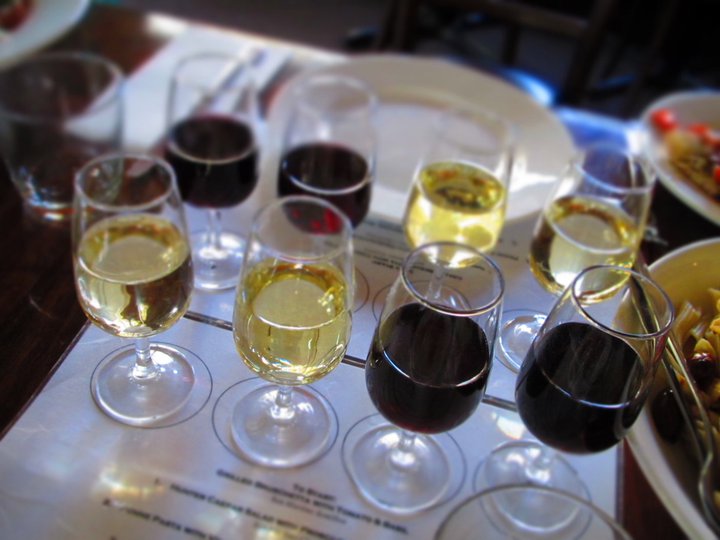
Flight of Fino Sherries at London’s Bar Pepito – Photo by Ewan Munro via Wikimedia Commons

Flight of Fino Sherries at London’s Bar Pepito – Photo by Ewan Munro via Wikimedia Commons

While wines produced “under a veil” are somewhat uncommon around the world, there are a few shining examples besides Fino Sherries. These include the Vin Jaune of France’s Côtes du Jura AOC, certain types of Tokaji, a “Vin de Voile” produced by Domaine Plageoles in France’s Gaillac region, and the “Condado Pálido” produced in Spain’s Condado de Huelva DO, among others.  While these wines undergo a similar style of biological aging, it is not certain that they use the same strain(s) of yeast as are found in Jerez-Xérès-Sherry, and, of course, each of these wines is made in its own conditions of climate-atmosphere-terroir. Thus, we can safely say that there’s nothing in the world quite like the flor of Jerez, the protective foam-blanket it creates, and the resulting Fino Sherry.

References:

Street Cred

Day One Week One Wine ClassIf I just must, here it is:  My name is Jane A. Nickles and I have been a full-time wine educator/culinary educator/academic director for culinary colleges for over 15 years.  Previously, I was a food and beverage director and executive chef  for a large hotel chain.

I am/have/like to talk about my/am embarrassed by my:

M.B.A., California State University

B.A., University of California at Berkeley

Certified Spirits Educator (Society of Wine Educators)

Certified Wine Educator (Society of Wine Educators)

2012 Banfi Award Winner – Society of Wine Educators

2009 Winner – Professional Wine Writers Competition – WOSA (Wines of South Africa)

Currently the Director of Education for the Society of Wine Educators

14 Years Full-time Chef Instructor and Wine Educator at Le Cordon Bleu College – Austin

6 Years Food and Beverage Director (Bristol Hotels and Resorts)

Published Author (Textbooks, Journals, Web)

Educator of the Year – Career Education Corporation – 2007

Educator of the Year –  Career Education Corporation -2009

The “Ultimate Culinary Educator” – Food Educator’s Learning Conference – 2009

Number One Rated Conference Speaker – 35th Annual Conference of the Society of Wine Educators (Washington, DC)

Conference Sessions led, Classes given – literally too many to count!

Bored Yet?

It’s a living…

Breakfast of Champions...aka 9:30 am Class

Welcome to the Bubbly Professor…a new blog about the life of a wine educator.

Wine tastings, wine classes, and wine dinners are part of being a full-time wine educator, but it’s a package deal that includes grading finals, reading papers, and schlepping boxes as well.   It’s a glamorous job, for sure, if you only count the 5% of the day that includes the flashy fun.

As for me, I have the expected credentials (see  “street cred” ) and the experience:  I am a chef instructor and wine educator for an accredited culinary college in Texas, have taught wine classes full time for over 15 years, and in my former life served stints as executive chef, sommelier, and food and beverage director.  Known to friends, family, and students as “Miss Jane” of Austin, Texas.