WineGeo: The Massif Central

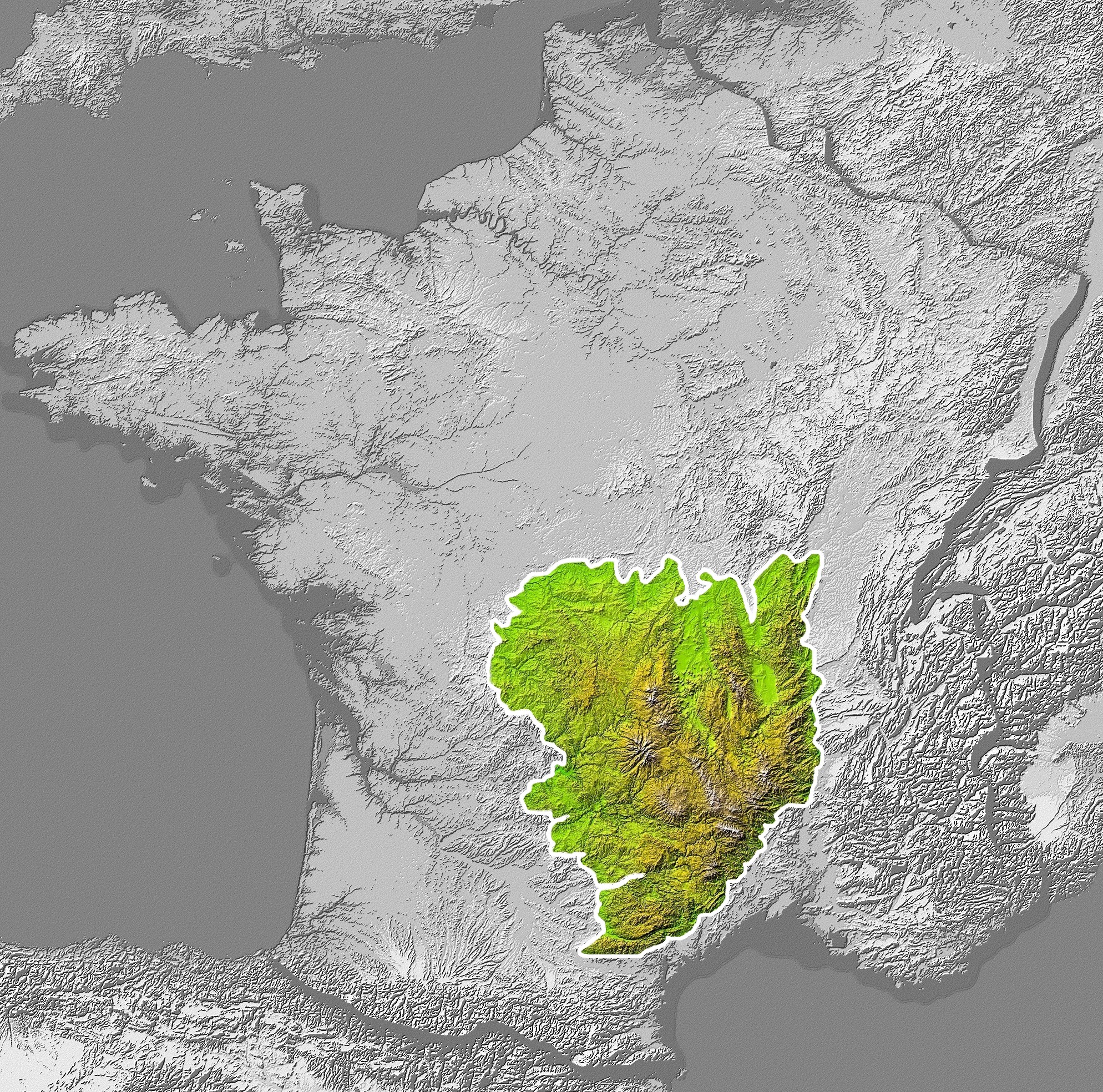
Map of the Massif Central by Technob105, via Wikimedia Commons

Map of the Massif Central by Technob105, via Wikimedia Commons

As a wine lover, surely you have heard of the Massif Central. It’s that big uplift in the middle of France. Except that’s not exactly true…

The Massif Central is actually located in the south of France; but fairly well centered on the east-west axis—just take a look at the cool map. Its boundaries sound familiar to wine lovers: it fills the area between the Loire River Basin to its north, the Mediterranean coastal plains of Languedoc to its south, the lowlands of Aquitaine to the west, and the Rhône-Saône River valley to the east.

Most of the area within the Massif Central consists of rugged mountains, fertile valleys, and forests—about 35% of the area is forests. The rest of the land is open countryside and farmland, much of which supports three brands of cattle (Limousins, Aubracs, and Salers) as well as Lacaune Sheep—famous for producing the milk that will become Roquefort Cheese. A few small towns dot the middle of the area, and three cities—Saint Etienne, Clermont Ferrand, and Limoges—are located near the edges.

The outline of the area, which does not conform to any political or regional boundaries, is considered to be demarcated by the contour line of 1,000 feet (300 m) above sea level. Most of the land sits at an altitude of about 1,640 feet (500 m). The Massif Central stretches over 200 miles from north to south, and about 175 miles (at its widest point) from east to west. This is a large area—all told; it covers about 15% of France. It is also the third highest mountain range in France, thanks to the 6,190-foot (1,885-m) summit of Puy de Sancy.

The town of Navacelles, in the Massif Central

The town of Navacelles, in the Massif Central

Many famous wine-related rivers have their source in the Massif Central. These include the Lot and the Tarn—both tributaries of the Garonne; as well as the Dordogne, the Cher, and the Loire.

Some vineyards are tucked around into the valleys and the outskirts of the uplift. One of these, the Côtes de Millau AOC, is the easternmost of the South West France AOCs. It is located in the south of the Massif Central in and around an area known as Causse du Larzac—a limestone karst plateau situated between the towns of Millau and Lodève. Karst is a landscape formed from the dissolution of soluble rocks, such as limestone, and the deep valleys and gorges here were created over the millennia as the Tarn River cut a series of paths through the limestone. Most of the Côtes de Millau vineyards are planted on steep, terraced slopes in the deep valleys of the Tarn.

The Côtes de Millau AOC produces red wines (dry), white wines (dry and off-dry), and rosé (dry and off-dry). The reds are blends, based on a minimum of 30% Syrah and 30% Gamay, 10% to 30% Cabernet Sauvignon and an allowed splash (max 20% each) of Fer and Duras. Rosés are based on a minimum of 50% Gamay; Cabernet Sauvignon, Duras, Fer, and Syrah are also allowed. White wines are made with a minimum of 50% Chenin Blanc and a minimum of 10% Mauzac.

The Millau Viaduct

The Millau Viaduct

If you’d like to visit the wineries of the Côtes de Millau, you’ll need to transverse the Tran River Gorge. Have no fear, you can drive across via the A75 highway on the cable-stayed Millau Viaduct bridge, and when you do, you’ll be on the tallest bridge in the world. The height of the tallest mast is 1,125 feet (343 m) and the bridge deck is 890 feet (270 m) high. If you are bothered by heights, it might be best not to look down.

References/for more information:

 The Bubbly Professor is “Miss Jane” Nickles of Austin, Texas… missjane@prodigy.net
 

The Outer Limits: The Garonne before Bordeaux

The beginnings of the Garonne in Spain's Aran Valley

The beginnings of the Garonne in Spain’s Aran Valley

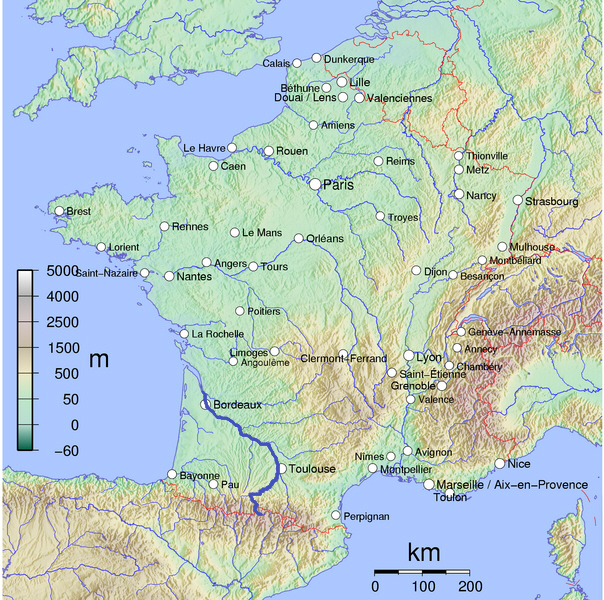
The Garonne River is well-known to wine lovers as one of the three major waterways of Bordeaux—as well it should be. But The Garonne’s journey through Bordeaux and into the Atlantic Ocean is just a part of the full story of the river, which actually flows for over 370 miles beginning in Spain. From its source in the Pyrenees Mountains of Spain, the river flows through the fourth largest city in France and touches the wine regions of Fronton, Saint-Sardos, Brulhois, Buzet, Côtes de Marmandais, and Bordeaux (among others). It’s quite the river.

The actual source of the Garonne is somewhat up for debate—depending upon how one defines the actual source of a river and even upon the season of the year. However, experts can agree that the source of the Garonne can be found in the Aran Valley (Val d’Aran) of Spain. The Aran Valley is located in the corner of Catalonia that borders Aragon. The source of the Garonne is located on the northern side of the Pyrenees, about 25 miles from the border of France.

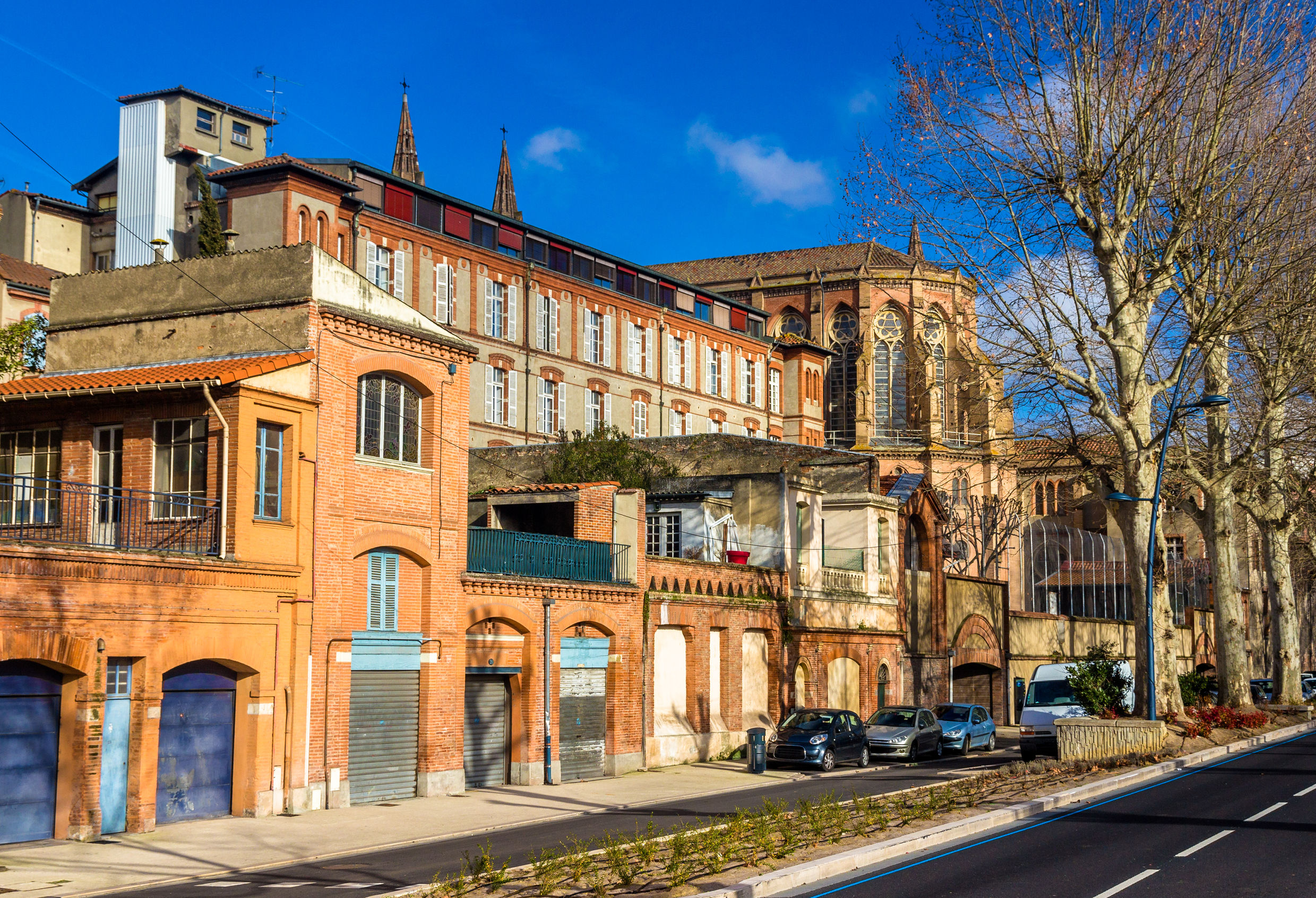
As we follow the Garonne from its source in the Spanish Pyrenees Mountains, after about 125 miles it flows into Toulouse—famed for its unique architecture of pinkish terracotta buildings, earning it the nickname of la Ville Rose (“the Pink City”), as well as being the fourth-largest city in France (after Paris, Lyon, and Marseille). Toulouse might well be worth a stop. For those interested in science and industry, Toulouse is the center of the European aerospace industry, the headquarters of Airbus, and the home of the Galileo positioning system. Those more interested in tourism can visit two UNESCO World Heritage Sites: the Canal du Midi and the Basilica of St. Sernin—the latter being the largest remaining Romanesque building in Europe, and a historic stop on the Santiago de Compostela pilgrimage route.

View of the Church of Gesu in Toulouse

View of the Church of Gesu in Toulouse

Following the river for about 20 more miles, we arrive at the Fronton AOC. Fronton is one of the oldest wine-producing regions in France; vines were first planted here by the Romans. However, for a good part of modern history the wines of Fronton were at a distinct disadvantage when it came to trade; as they were heavily taxed as they passed through the port of Bordeaux. These days, the Fronton AOC produces hearty and rustic reds and rosés based on the Négrette grape variety. In both styles of wine, Négrette must be at least 40% of the blend (and is permitted to be the sole grape variety); the remainder of the blend may be made up of various red grapes allowed in various proportions, including Syrah, Malbec, Gamay, Cabernet Sauvignon, Cabernet Franc, Cinsault and an interesting little red grape known as Fer. Fer, according to Jancis Robinson, is a somewhat “untamed” grape native to Southwest France that was domesticated from locally-growing wild vines. It is known as a highly tannic red grape, richly hued and aromatic that is widely grown throughout Southwest France. (Side note: the grape was likely named from the Latin word ferus meaning “wild” or “savage.”)

If we drive (or swim) across the Garonne River starting in Fronton, we will end up in the Saint-Sardos AOC. The Garonne skirts the eastern section of the boundaries of the AOC, and the sunny terraces along the river are rich in alluvial soil. The AOC produces reds and rosés. Both styles of wine must contain a minimum of 40% Syrah and 20% Tannat. Other allowed grapes include Cabernet Franc and Merlot.

Map of the Garonne by Boerkevit, via Wikimedia Commons

Map of the Garonne by Boerkevit, via Wikimedia Commons

If we follow the Garonne another 42 miles of so, we will arrive at the Brulhois AOC. Brulhois, whose name is derived from an old Gascon word meaning “wooded slopes,” is home to many types of agriculture and is thus a very small producer of wine (despite the excellent quality of the land). The Brulhois AOC produces both red and rosé wines based on red grape blends. Principal varieties are Cabernet Franc, Merlot and Tannat and must make up a (combined) minimum of 70% of the blend. Other allowed varieties include Cabernet Sauvignon, Malbec, and Fer-Servadou (the local name for Fer). Red wines must contain at least two varieties; rosé must contain at least three.

Another 20 miles upriver we arrive at the Buzet AOC. It is easy to see the influence of Bordeaux in the wines and grapes of Buzet; the area produces white, red, and rosé wines—all based on a range of grapes that include the Bordeaux varieties in with the grapes native to Southwest France. The white wines of the Buzet AOC allow for the use of Muscadelle, Sauvignon Blanc, Sauvignon Gris, or Sémillon as principal grapes; the accessory varieties of Colombard, Petit Manseng and Gros Manseng may combine in a maximum of 10% of the blend.  The reds and rosés of the region are based on Cabernet Franc, Cabernet Sauvignon, Malbec or Merlot; a maximum of 10% may include Petit Verdot and Abouriou (combined). Abouriou is a red grape native to Southwest France, grown in very small amounts, and which tends to be low in acidity, highly tannic, deeply hued and somewhat spicy in flavor.

Next, after a drive of about 70 miles, we arrive at the city of Marmande and the Côtes de Marmandais AOC. The Côtes du Marmandais AOC, in my opinion, wins the prize as “most obscure” wine region in this trip along the Garonne. The Côtes du Marmandais, like Buzet, shares its palate of grape varieties with both Southwest France and Bordeaux. The AOC produces white, red, and rosé wines. The whites are based on Sauvignon Blanc and Sauvignon Gris, and may contain a maximum (combined) 30% Sémillon and Muscadelle. Reds and rosés must contain a maximum combined 85% Cabernet Sauvignon, Cabernet Franc, and Merlot; up to 50% may comprise Abouriou, Malbec, Fer, Gamay, and Syrah.

The Pont de Pierre (Stone Bridge) over the Garonne in the city of Bordeaux

The Pont de Pierre (Stone Bridge) over the Garonne in the city of Bordeaux

About ten miles outside of Marmande, the Garonne crosses into the Gironde department and officially flows into the Bordeaux Wine Region. About 40 miles later, just beyond the city of Bordeaux, the Garonne River meets the Dordogne River at a spot known as the Bec d’Ambès. As most wine lovers know, the Garonne and the Dordogne flow together to the Gironde estuary which separates Bordeaux’s Left Bank from its Right Bank as it flows past some of the most revered vineyards in the world. After transversing about 62 miles of prime vineyard land the Gironde Estuary empties into the Atlantic Ocean at the Bay of Biscay; thus ending the journey of the Garonne.

References/for more information:

The Bubbly Professor is “Miss Jane” Nickles of Austin, Texas… missjane@prodigy.net

Greywacke (and Greywacke Jones)

Greywacke stones along the Haast River in New Zealand Greywacke stones along the Haast River in New Zealand

Greywacke (pronounced “grey-wacky”) is a drab, grey stone—technically, a sedimentary rock–made up of layers of very hard, clay-based, muddy grey sandstone criss-crossed through with layers of argillite (a type of mudstone) and grains of quartz, feldspar, and other small rock and mineral fragments. The term Greywacke can refer to the entire rock (or boulder), the sandstone base of the rock, or—especially in the case of wine enthusiasts, a type of soil derived from the stone.

In case you are wondering how such a plain looking rock acquired such a crazy-sounding name, “wacke” is the German word for sandstone, and the term (Grauwacke) was first used to describe rocks located in the Harz Mountains of northern Germany.

Greywacke soils do well with viticulture. The clay-derived portion of the stone weathers into clay-based soil, which is appreciated for its abilities to remain cool, retain vine nutrients, and retain water. The rock and mineral fragments remain behind in Greywacke soil to counter the clay with coarse-grained gravel, providing aeration and drainage. And, of course, some of the rocks stay behind on the top of the soil, absorbing and releasing heat.

Greywacke boulders on Te Mata Peak (Hawke's Bay, New Zealand) Greywacke boulders on Te Mata Peak (Hawke’s Bay, New Zealand)

This gravelly soil is most notably found in the vineyards of New Zealand; which makes sense as hard greywacke stone makes up a large part of the Southern Alps as well as the smaller mountain ranges of New Zealand’s North Island. The famous “Gimblett’s Gravels” soils of Hawkes Bay, as well as large swaths of Marlborough, Gisborne, Canterbury, and Nelson are all Greywacke-based. Greywacke is almost considered the “national stone” of New Zealand (or would be, if New Zealand ever decided to have a national rock, according to The Encyclopedia of New Zealand.) Click here for a map of Greywacke in New Zealand.

Fans of New Zealand Sauvignon Blanc (which I certainly am) will no doubt recognize the name Greywacke in terms of a New Zealand wine brand, produced by none other than Kevin Judd – the beloved original winemaker at Cloudy Bay. Kevin continues his string of winemaking successes at Greywacke, producing a range of wine including a delicious albeit typical “zesty” Marlborough Sauvignon Blanc as well as a native yeast-fermented, lees-aged, oak-influenced Sauvignon Blanc (“Wild Sauvignon”) that has become a staple at both my Sunday night dinners and my Intro to Wine Classes. Other Greywacke wines include Chardonnay, Pinot Gris, Riesling, Pinot Noir, and even a late-harvest Riesling—all delicious.

Detail of greywacke soil in Algarve, Portugal Detail of greywacke soil in Algarve, Portugal

Greywacke bedrock and soils are found in many parts of the wine world, including the Algarve region of Portugal; Germany’s Mosel, Ahr, and Mittelrhein; the Western Cape of South Africa; California’s Russian River Valley; and the Barossa. The term “Greywacke” is used often in the context of wines and vineyards from all over the world, as well. Cosa Obra Wines in the Russian River Valley has a “Greywacke Vineyard” located within the Russian River Valley AVA, about where the Russian River makes it westward turn towards the Pacific Ocean. In Australia’s Barossa, Thorn-Clarke Winery, very much into the soils, produces a Shiraz labeled as “Shiraz on Cambrian Greywacke Soil.”

About that subtitle: There is a character named Greywacke Jones in “Slinky Malinki,” a children’s book by New Zealand author Lynley Dodd. Greywacke Jones is a mischievous grey kitten who hangs out with her pals Slinky Malinki, Hairy Maclary, Butterball Brown, and the rest of the gang. So now you know.

References/for more information:

The Bubbly Professor is “Miss Jane” Nickles of Austin, Texas… missjane@prodigy.net

Lake Garda and her Wines

The waterfront of the town of Torbole

The waterfront of the town of Torbole

It’s the lake of dreams. Lake Garda (Lago di Garda) is the largest lake in Italy, and a popular destination for travelers searching for deep blue transparent waters, wind-in-your-hair yachting, and la dolce vida the area is known for.

The rich and famous may head for the northern resorts towns of Riva del Garda and Torbole, while families and backpackers head for the farmhouses of Bardolino, Castelnuovo del Garda, or the fortified town of Sirmione in the south.

Formed by the movement of glaciers thousands of years ago, Lake Garda is tucked between the regions of Veneto, Trentino, and Lombardy. Its upper half, shaped somewhat like the handle of an axe, reaches into the Italian Alps, while the southern section, shaped like the blade of the axe, stretches down into an undulating plain. Such a shape is typical of a moraine (glacier-formed) valley.

Lake Garda from space - via NASA

Lake Garda from space – via NASA

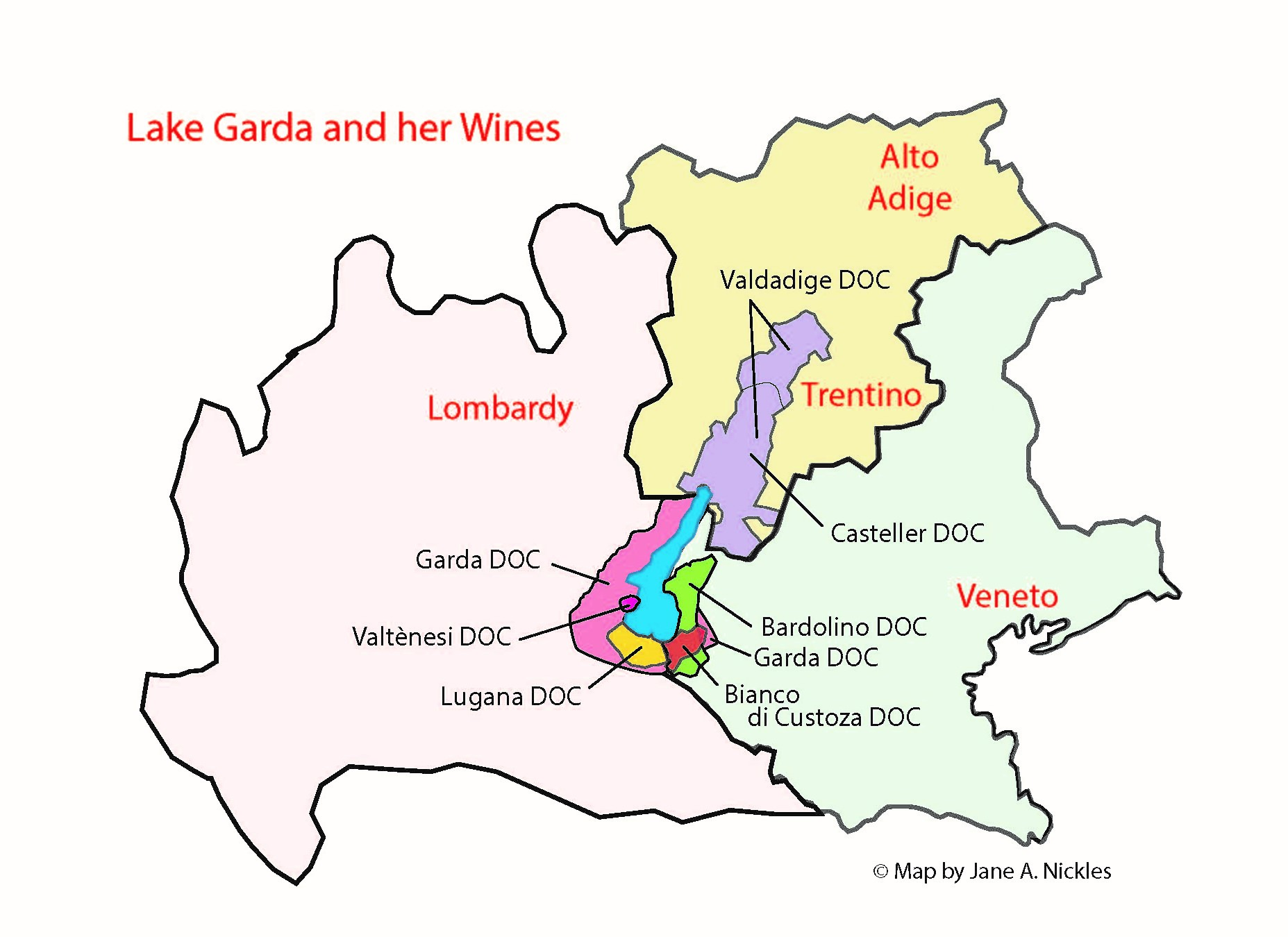
The lake is 32 miles (51 km) long from north to south, and about 10 miles wide at its widest point.  In addition to lovely towns, ferry boats, orange orchards, and olive groves, the shores of Lake Garda are host to a variety of vineyards, which including several DOCs and one DOCG. These wines of Lake Garda are briefly discussed below, beginning in the northern end of the lake (tucked into Trentino), and following around the lake clockwise through Vento and ending up in Lombardy. These regions are overwhelmingly overlapping, interlocking, discontiguous, and straddling the boundary lines of cities, towns and regions–and this little article is but an overview. It might be a good time to book a trip to any (or all) of these lovely wine regions.

Valdadige DOC: The Valdadige DOC (also known as Etschtaler, particularly among the German-speaking denizens of the area) is the only DOC that stretches across parts of both the Trentino and Alto-Adige provinces. The DOC covers a wide range of wines—including white, red, rosé, still, semi-sparkling, varietal, and blend. A typical Valdadige Bianco DOC will be based on Pinot Bianco, Pinot Grigio, Riesling Italico, Muller Thurgau, or Chardonnay, with a range of other typical white grapes of the region also allowed. Valdadige Rosso or Rosato DOC is produced using a minimum of 50% Lambrusco a Foglia Frastagliata (Enantio) and/or Schiava (plus a plethora of allowed red varieties). Varietal versions of Pinot Grigio, Pinot Bianco, Chardonnay, and Schiava may also be produced. Frizzante wines may be either dry or semi-sweet, and may be produced from Pinot Bianco or Chardonnay.

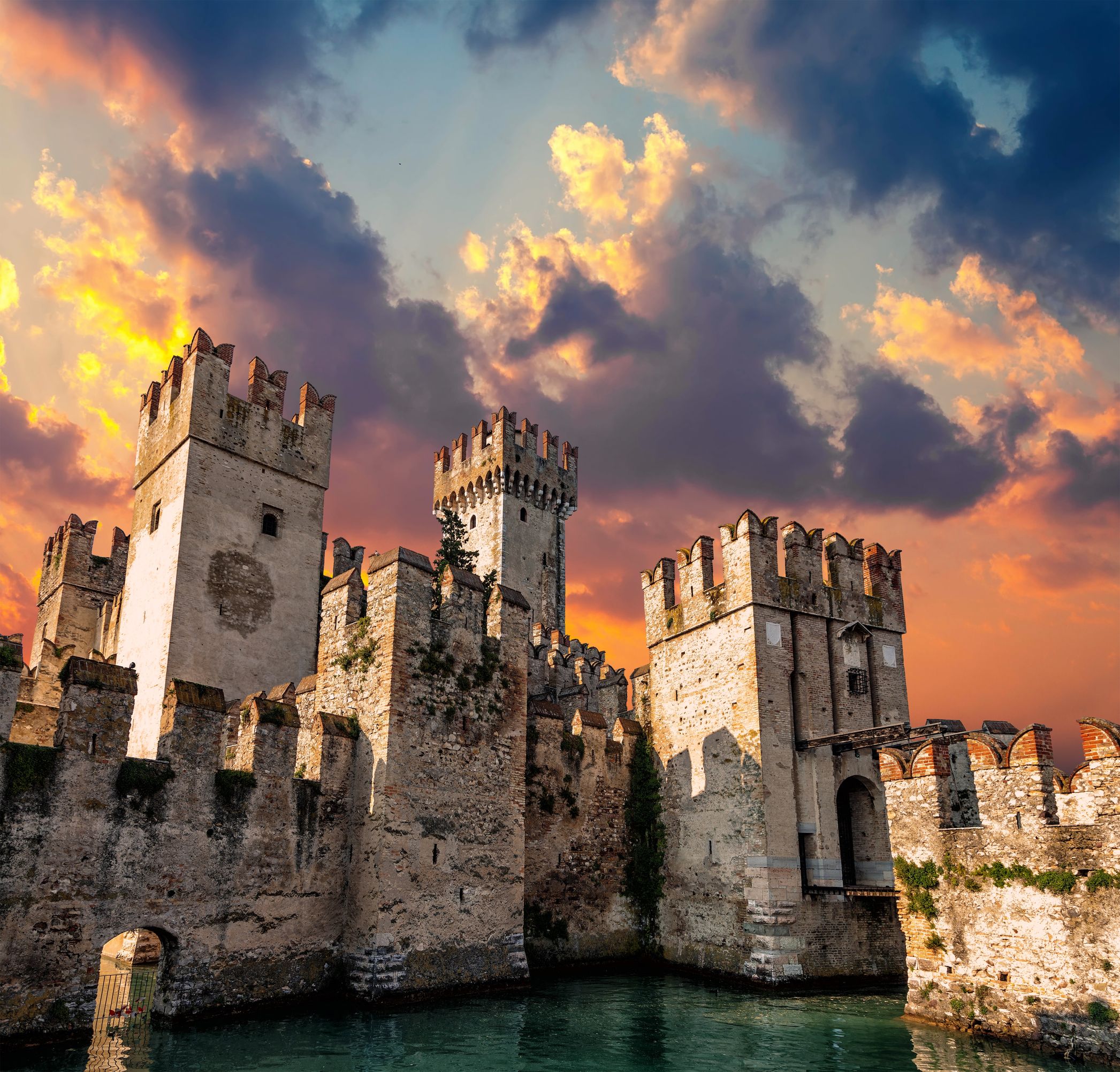
Scaliger Castle in the town of Sirmione

Scaliger Castle in the town of Sirmione

Casteller DOC: The Casteller DOC covers a large area across the middle of the Trentino province and overlaps a portion of the larger Valdadige DOC at the north end of Lake Garda. Casteller is a red wine-only region known for soft red wines based on a minimum of 50% Merlot; the remainder may be filled in with Schiava (Grossa or Gentile), Lambrusco a Foglia Frastagliata (Enantio), Lagrein, or Teroldego.

Bardolino DOC (and her sisters): Veneto’s Bardolino is undoubtedly the most famous of the Lake Garda lakeside DOCs (and even includes a DOCG, the Bardolino Superiore DOCG). Bardolino produces mainly red wines and some rosé (a much-beloved Chiaretto) from a blend based on 35–80% Corvina Veronese grapes (a portion of which may be replaced by Corvinone). Small amounts of Rondinella are required, and small amounts of Molinara, Rossignola (Gropello), Barbera, Sangiovese, and Garganega are allowed. The Bardolino DOC allows for the production of many versions. Reds may be produced as a classico, novello, or classico novello in addition to the normale versions, and the chiaretto (rosé) may be released as normale, classico, or sparkling. Bardolino is known to be a medium-bodied, fresh-tasting red wine. The Crovina base lends delightful sour-cherry aromas and flavors in addition to floral, herbal, and ripe berry notes.  Novello versions have been compared to Beaujolais Nouveau and rosé versions are fresh, fruity, crisp and lively. I like to describe Bardolino Chiaretto like “red Bardolino with its shirt off.” I’ve never had the spumante version, but I’m on the lookout now.

.

Bianco di Custoza DOC: The Bianco di Custoza DOC, tucked below Lake Garda on her southwest side, is located within the Veneto region. The DOC overlaps with the Bardolino DOC quite a bit, but also extends past the boundaries of Bardolino a bit as well. Bianco di Custoza, sometimes simply called “Custoza,” is a white-wine only DOC, but does allow for sparkling wine, sweet wines made via the passito method, and a superiore version, in addition to the normale dry, still wines.

All of these versions of Bianco di Custoza may be made using the same palette of grape varieties–but from there things get a bit complicated. The basis of the wine starts out with at least 20% (and a maximum of 40%) Garganega. Next, it includes a minimum of 10% (and a maximum of 40%) Trebbiano Toscana (otherwise known as Ugni Blanc). Another 5% to 30% is an interesting grape known as Trebbianello, which is a local clone of the grape alternatively known as Tai or Friulano. Other grapes that are allowed in varying amounts include Bianca Fernanda (a local clone of Cortese), Malvasia, Riesling Italico, Pinot Bianco, Chardonnay, and Manzoni Bianco.

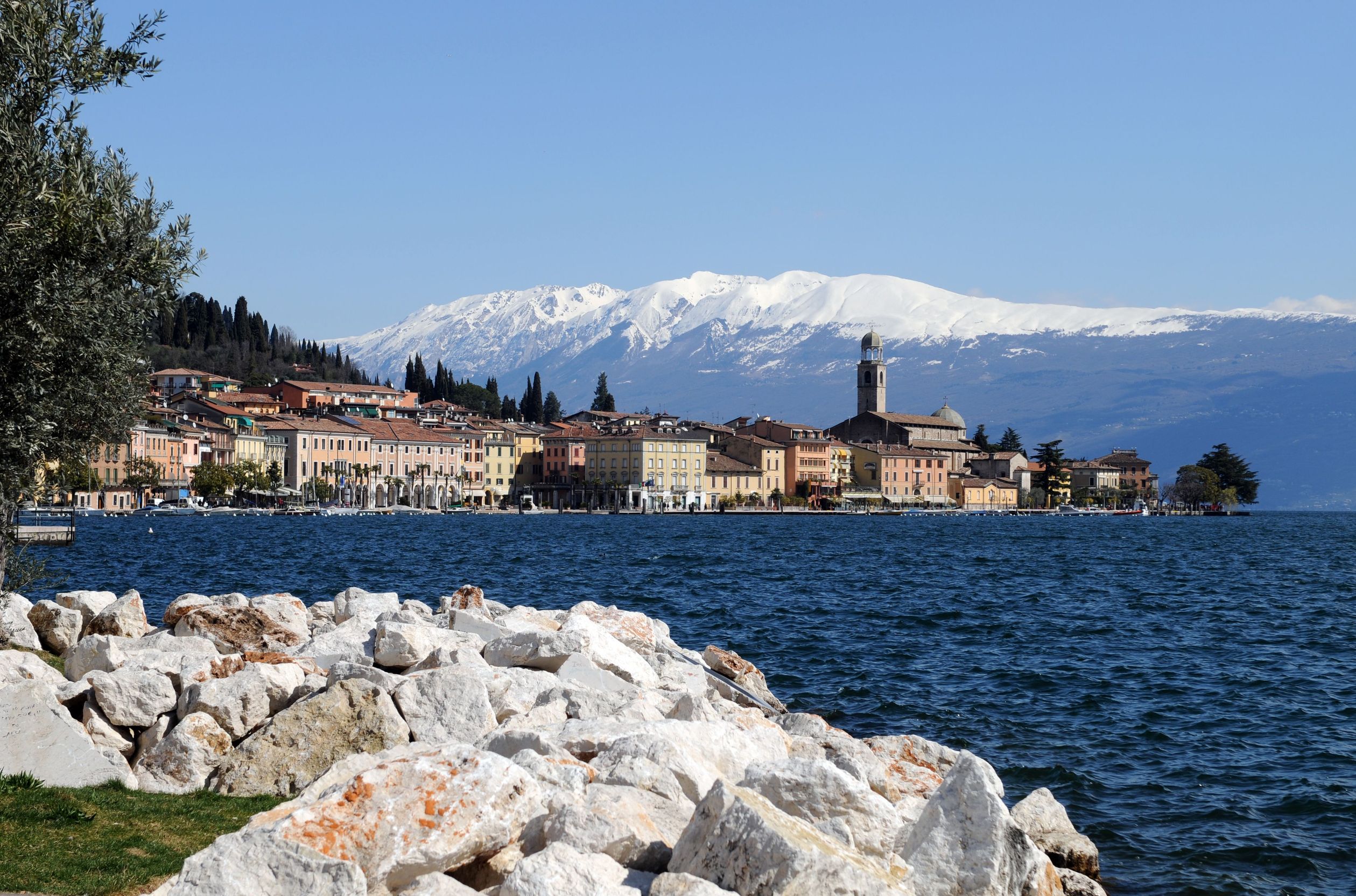
The waterfront of Salò, a town on the banks of Lake Garda in Lombardy

The waterfront of Salò, a town on the banks of Lake Garda in Lombardy

Lugana DOC: The Lugana DOC straddles the Lombardy–Veneto border at the southern edge of Lake Garda. The name Lugana is as picturesque as its surroundings; the word is derived from the Latin for “Lake in the Woods,” reflecting the dense woodlands that existed here not-so-long ago.  Lugana is a white wine-only DOC, producing wines in a range of styles from a minimum of 90% Trebbiano di Lugana grapes. The Trebbiano di Lugana variety is also known as Trebbiano di Soave, Turbiana, or Verdicchio Bianco. The DOC produces mainly fragrant, dry white wines (often compared to Soave in style), and also allows for superiore, riserva, late-harvest, and sparling versions.

Valtènesi DOC: Located in Lombardy’s Brescia province, the Valtènesi DOC produces both red and rosé (chiaretto) wines based on a minimum of 50% Groppello (Gentile and/or Mocasina). The remainder of the blend may include any of the red wines approved for use in Lombardy, with Sangiovese, Marzemino, and Barbera most often used. The Groppello grape is native to this area of northern Italy, and is grown in very small amounts, mainly in Lombardy and Veneto (where it may be known as Rossignola).

Garda DOC (and the rest of the Garda family): The Garda DOC extends along the western shore of Lake Garda (in Lombardy), and continues on to the Veneto side, overlapping portions of the Lugana, Bardolino, and Bianco di Custoza DOCs along the way. Two small portions on the Lombardy side overlap with smaller Garda DOCs: Garda Colli Mantovani DOC overlaps a small section at the southern end of the lake, and a small section near the northern edge overlaps with the Garda Bresciano DOC. All of these regions produce a wide range of wines, including red, white, rosé, sparkling and novello versions, from a range of grapes representing the typical varieties of the area.

References/for further information:

The Bubbly Professor is “Miss Jane” Nickles of Austin, Texas… missjane@prodigy.net

The Murray, the Darling, and the Alps of Australia

...

Murray Darling (as serious wine students certainly will know) is a wine region in Australia. Known primarily for Chardonnay but also widely planted with Shiraz and Cabernet Sauvignon, it is a big region–the second largest (by geographical area) in the country.

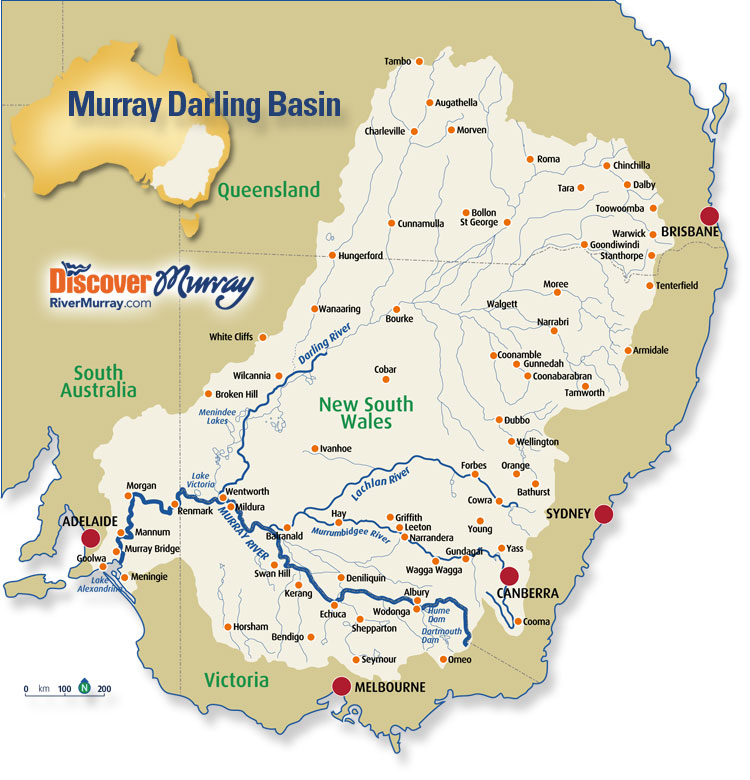
The Murray Darling wine region transcends political boundaries to an extent, as it straddles the borders of two states–Victoria and New South Wales. The New South Wales portion of the region is considered to be part of the Big Rivers viticultural zone–which makes total sense as it is named for the longest and the third longest rivers in Australia.

The longer of the two rivers–the Murray–is the longest river in Australia, clocking in at 1,558 miles (2,508 km) long. The source of the Murray is in the Australian Alps, and from there it flows down the western side of the mountains, twisting and turning across the inland plains and forming part of the border between the states of New South Wales and Victoria before it reaches the state of South Australia. From there, the Murray heads southward for almost 200 miles (315 km) before it joins the Southern Ocean (also known as the South Pacific Ocean) at Lake Alexandria.

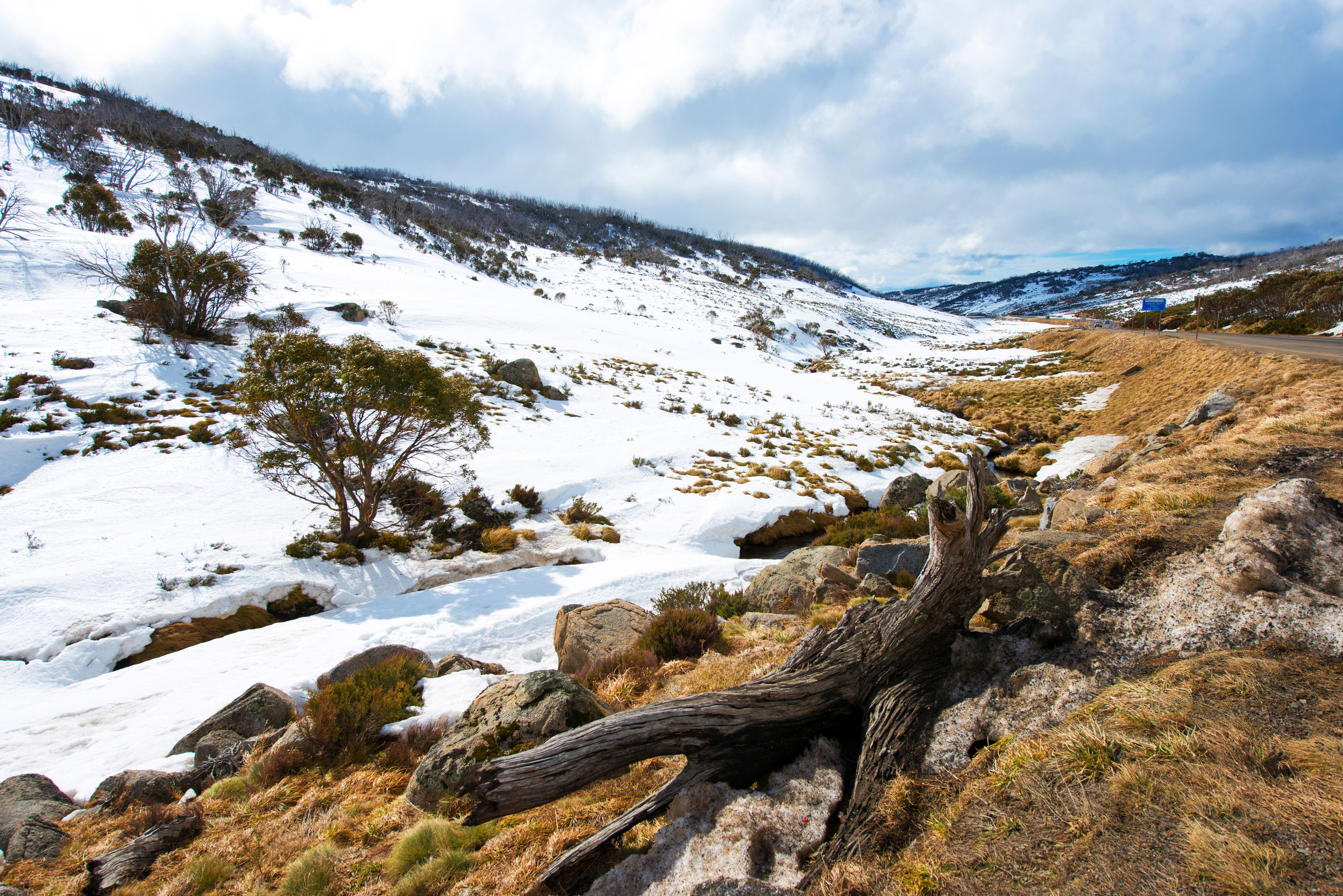
Kosciuszko National Park, Australia

Kosciuszko National Park, Australia

Wait a minute–did she just say the Australian Alps? Yes, she did–and that’s the thing that led to this post. Before doing a bit of digging into the background of the Murray Darling region I had no idea that Australia had its own Alps.

The Australian Alps, it turns out, are part of the Great Dividing Range (now it starts to make sense). The Alps are the highest mountain range in Australia, and the only place in Australia that receives deep snow fall every year. Mount Kosciuszko, the highest point in Australia (7,310 feet/2,228 meters above sea level) is part of the Alps system. There is even a system of Alpine National Parks, understandably  a center for skiing and other mountain sports in Australia.

So–back to our rivers. The source of the Darling River is also in the Great Dividing Range, yet far to the north of the Murray in the northern portion of New South Wales. The Darling River, the third longest river in Australia, flows south-southwest across New South Wales to the border of the state of Victoria, where it joins the Murray.

The combined Murray-Darling catchment system provides irrigation for one seventh of Australia’s total landmass, including most of Victoria, New South Wales, southern Queensland, and parts of South Australia. This area is of great agricultural significance and has even earned the nickname of the “food bowl” of the nation. The agriculture output of the Murray-Darling Basin includes dairy, citrus, stone fruit, livestock, cotton, almonds, and over half of Australia’s cereal crops.

Of course, of great interest to me are the grapes, as a great majority of the wine regions of New South Wales and Victoria–as well as a portion of South Australia–fall under the water catchment of the Murray-Darling. The importance of these rivers (as well as the other rivers in the basin, which include the Lachlan and the Murrumbidgee) really cannot be overstated. We can thank these rivers for Hunter Valley Semillon, Mudgee Cabernet, Rutherglen Muscat, Heathcote Shiraz, and Murray Darling Chardonnay. Thank you!

References/For more information:

The Bubbly Professor is “Miss Jane” Nickles of Austin, Texas… missjane@prodigy.net
 

The Icy Benguela

...

I’ve been curious about the Benguela Current for a while. My original curiosity about the Benguela Current was about the name —how did it get that very cool name? It seems it all begins with Portuguese sailors in the 1500s.

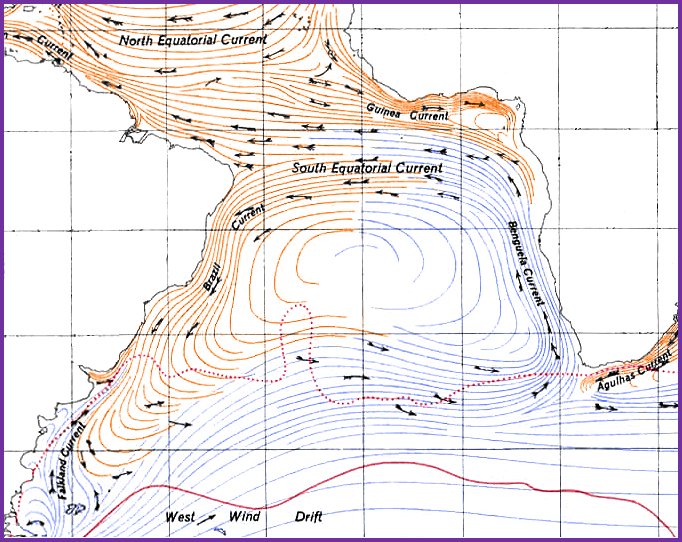
In the Age of Discovery, Portuguese Sailors—known for skill and courage in ocean navigation —often sailed the long and arduous ocean journey around the continent of Africa to Asia. During such voyages, they had to fight against two mighty ocean currents: the icy Benguela current that flowed northward along the coast of Africa while they were trying to sail south; then, after they rounded the Cape of Good Hope, they sailed north while fighting the warm and southward-flowing Agulhas Current. If the journey was successful, they reached Asia and accessed the famed Indian Spice Routes. Such accomplishments helped the Portuguese form their empire, which at various times included parts of Africa, the Middle East, India, South America, and South Asia.

...

The namesake of the Benguela Current (as it is now known) is a city in present-day Angola.  The area surrounding Benguela, due to its location near the coast and a well-traversed deep bay, has been a center of commercial trade since ancient times.  While there is no written record of the history of the area before the arrival of the Portuguese in 1546, it is believed that the area was formerly known as ombaka, which means, literally, “commercial (or ‘market’) port.” When the Portuguese colonized the area, a town was founded and named São Felipe de Benguela (Saint Philip of Benguela) after King Philip II of Spain and Portugal.

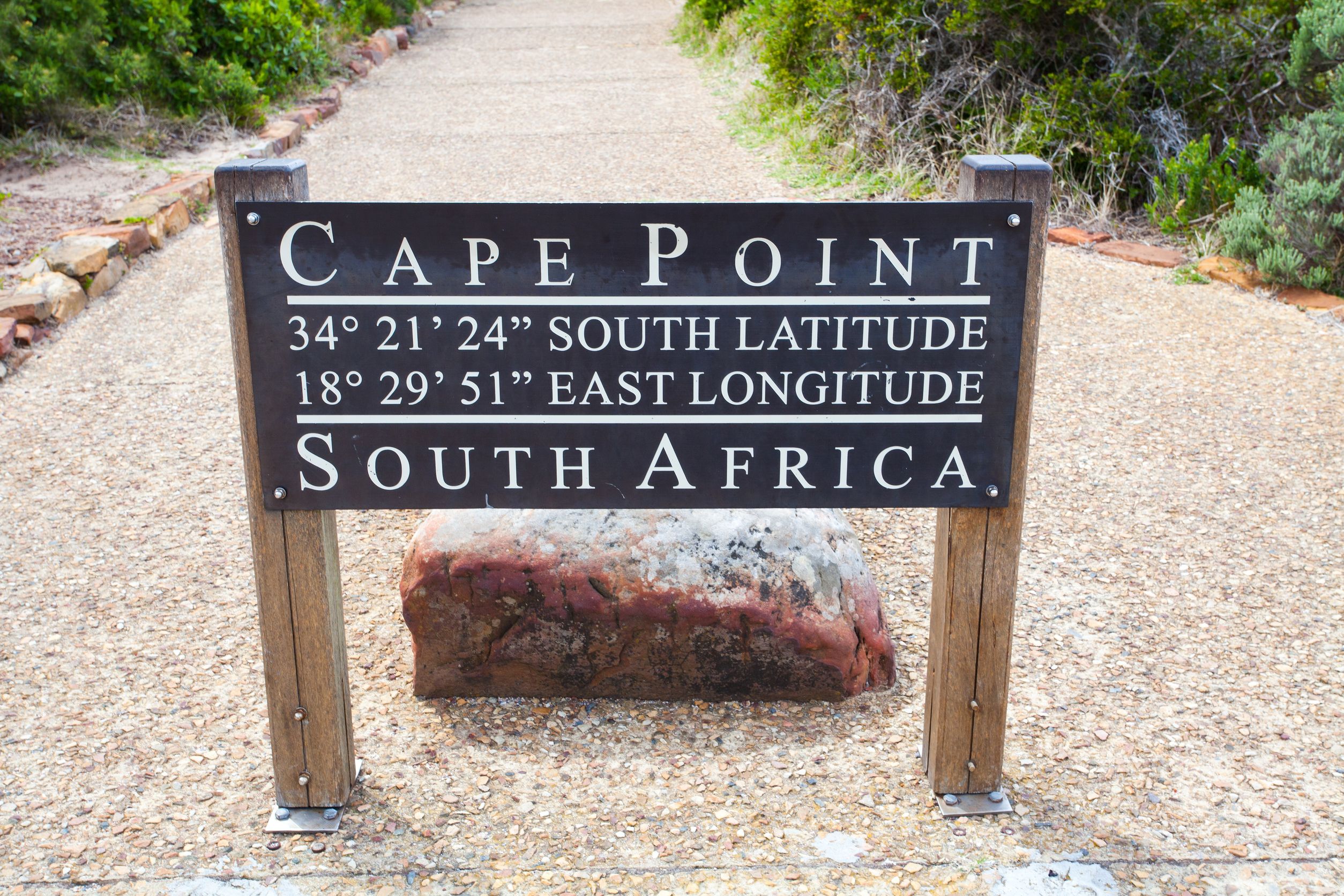
So back to ocean current: the icy Benguela Current flows from the Southern Ocean near Antarctica and moves north along the west coast of Africa. It reaches as far north as Angola (close to the city of Benguela, in case you missed that point) before it turns west and heads to South America. The Benguela Current is part of a large circulating ocean current known as the South Atlantic Ocean gyre. The western edge of the gyre is known as the Brazil Current; the Brazil current flows southward down the coast of Brazil, then turns east and flows across the ocean until it reaches Antarctica. From Cape Point in South Africa (at about 33°), the cold portion of the current known as the Benguela current flows northward along the west coast of Africa to the area around Angola/Benguela (about 16°S).

...

            Cape Agulhas…pick your ocean!

Near Cape Point, where a portion of the cold Benguela Current of the Atlantic meets the warm south- and west-flowing Agulhas Current of the Southern Pacific Ocean, the waters become wild and turbulent. It’s a common practice while on vacation in Cape Town to journey down to Cape Point, take a short hike, get your picture taken by the sign, and stare out to sea at the “place where two oceans meet.” (Hey, I did it.) However, the truth is that the ocean currents actually intermingle for hundreds of miles in either direction—both east and west of Cape Point—and that the “point where two oceans meet” is likely to be anywhere between Cape Point and about 100 miles west at Cape Agulhas (which is actually the southernmost point on the African continent and worth a visit as well).

From the department of I thought this was a wine blog:  Good point. All I can say is that my curiosity concerning Benguela Current peaked while studying the wines of South Africa. The winelands of South Africa’s Western Cape are cooled by the moist fog and gentle breezes generated by the Benguela Current, which also generates the not-so-gentle south-easterly wind known as the “Cape Doctor.”

...

Super-sharp students of wine might also have perked up with the mention of Cape Point, which is the former name of the Cape Peninsula wine district; and Cape Agulhas, a wine district located in the Cape South Coast. Cape Peninsula is a small area located on a narrow, rugged area just south of Cape Town and east of Constantia (both wine regions are easily accessed via taxi or tour bus from Cape Town). Cape Peninsula produces snappy, cool-climate white wines and is particularly adept at Sauvignon Blanc. The terroir of Cape Agulhas, about 100 miles down the coast, is also markedly maritime—distinctly cool and breezy—and known for a crisp, snappy style of Sauvignon Blanc, apricot-and-lemon laced Semillon, and a unique cool-climate style of Shiraz.

References:

The Bubbly Professor is “Miss Jane” Nickles of Austin, Texas… missjane@prodigy.net


The Land of the Landes

Maritime Pines in the Landes Forest

Maritime Pines in the Landes Forest

All good wine students know about the Landes Forest—that region of tall pines bordering the Bay of Biscay to the south and west of the Bordeaux wine region. The Landes—now the most extensive forest in France at 5,400 square miles (14,000 square km)—helps to somewhat moderate the Atlantic Ocean’s cold, maritime influence on the vineyards of Bordeaux.

However, even the sharpest wine student might not know the history of the region, including how local sheep-herders used to wear stilts to navigate the land, and the fact that the forest is largely man-made.

The area we now know as the Landes forest was once covered by moors and marshlands.  The area, basically a swamp surrounded by shifting sand dunes, was sometimes known as the “Moor of Bordeaux.” Not surprisingly, the area was sparsely populated. Another nickname given to the region was “the Sahara of France” due to the fact that it was notoriously difficult to travel across—as many pilgrims making their way from the north down to the Camino of Saint James needed to do.

Beginning in 1801, the marshes were drained via a vast system of canals, the land was cleared, and pine tree plantations were established. This stabilized the sand dunes and created arable land suitable for farming. The local economy benefited through farming (mainly corn) as well as new opportunities in the timber, pine resin, and paper industries.

Jean Louis Gintrac - Inhabitants of the Landes (circa 1808)

Jean Louis Gintrac –
Inhabitants of the Landes (circa 1808)

The benefits of the man-made Landes Forest went beyond the area’s new industrial prowess, as it was soon discovered that the near-by wine region of Bordeaux also benefited. This is due to the area of the Landes forest closest to the Médoc that shelters the vineyard regions from the bracing cold and howling breezes that blow in from the Atlantic. Thus, the vineyards of the Médoc are now able to fully ripen the Cabernet Sauvignon and Merlot that form the basis of the region’s red wines.

The Landes forest is one of the largest man-made forests in all of Europe, as well as a unique example of a man-made landscape that continues to benefit its region and the surrounding areas. The timber, pine resin, and other related industries are still active in the area, although a good portion of the region is now given over to tourism.

The area is also home to a large protected area of forests and coastlines that includes the Landes de Gascogne Regional Natural Park (Parc Naturel Régional des Landes de Gascogne). The park provides ample opportunities for hiking, cycling, and picnicking, and contains a bird sanctuary and a museum. The museum, L’Écomusée de la Grande Lande, focuses on the history as well as the architectural and cultural heritage of the region including, of course, the vineyards and wines of Bordeaux.

The Bubbly Professor is “Miss Jane” Nickles of Austin, Texas… missjane@prodigy.net

References:

Map of the Landes de Gascogne by Cabaussel, via Wikimedia Commons

Map of the Landes de Gascogne by Cabaussel, via Wikimedia Commons