Confusion Corner: Fleurie and Fleurieu

.

Fleurie and Fleurieu…for years I thought they referred to the same place…you know—that delightful little hillside hamlet also known as “the Queen of Beaujolais.”

Right? Wrong. Even though the two words are differentiated by nothing but a tiny, final vowel…they could not be further apart. As in 9,975 miles (16,050 km) apart; like from France to Australia.

To clarify: Fleurie and Fleurieu are totally different spots, literally half-way across the world from each other. As they are both wine-producing regions, and official appellations in their respective countries, we find them smack in the middle of the confusion corner.

Let’s take a closer look at Fleurie (floo–ree) and Fleurieu (floo–ree–ah)…perhaps this will clear up the confusion!

Chapelle de la Madone, Fleurie, France

Fleurie: Fleurie AOC is one of the ten Crus of Beaujolais (France). It is located near the northern edge of the Beaujolais region, tucked between Moulin-à-Vent and Chiroubles. The area is nestled into a zone of steep hills, and the highest peak (at 1,400 feet/425 m) is home to the Chapelle of La Madone. The hillsides around the chapel—particularly those with a southeast-facing aspect—are home to the appellation’s finest vineyards. Fleruie is known for its pink granite soils, unique even in the granite-rich region of northern Beaujolais.

Like all Beaujolais Cru, the Fleurie AOC produces red wines based on the Gamay grape variety. Fleurie is considered one of the most delicate and elegant of the Crus—and is often described in floral terms such as iris, violet, and rose. Other typical descriptors include red fruit (strawberry, cranberry, red cherry, kirsch), blue fruit (blueberry, plum) and savory (mineral, black pepper).

Despite the fact that fleurie translates to flowery, the area is not named after the wine’s famously floral aromas. Rather, the area is named for a Roman legionnaire named Florus (sometimes written as Floricum) who, at one time, made his home among these hills. 

Vineyards in Fleurieu (McLaren Vale)

Fleurieu: The Fleurieu Zone is located on the coast of South Australia (south of the city of Adelaide). It is centered on the Fleurieu Peninsula—a bit of land that extends into the Great Australian Bight and defines the southern side of St. Vincent Gulf. The Fleurieu Zone (as a geographical indication) also includes Kangaroo Island, located about 11 miles/18 km west of the mainland.

The Fleurieu Zone is positioned at the 35th latitude, however, its location directly on the coast of the Indian Ocean means that the area enjoys a much cooler climate—typically defined as Mediterranean—as compared to South Australia’s more inland locations.  Shiraz is the leading grape variety here (as it is in much of South Australia), along with Cabernet Sauvignon, Chardonnay, and Sauvignon Blanc.

Map of the Fleurieu Zone via WineAustralia and Google Maps

In terms of geographical indications, the Fleurieu Zone includes the following five regions: Currency Creek, McLaren Vale, Kangaroo Island, Langhorne Creek, and Southern Fleurie. Of these, McLaren Vale—located about 22 miles/35 km south of the city of Adelaide and known for Cabernet Sauvignon—is perhaps the best known.

TL/DR: Fleurie = Beaujolais Cru, Fleurieu = South Australia (Shiraz, Cab Sauv)

References/for more information:

The Bubbly Professor is “Miss Jane” Nickles of Austin, Texas… missjane@prodigy.net

Fishbowl or Rabbit Hole? (How to Study for an Essay Exam)

I tend to dive deep down the rabbit hole while studying. A “quick search” for a definitive definition of llicorella once led me along a path leading from slate to metamorphic rock to sedimentary rock to clay to volcanic ask to foliated rocks and—finally, at the bottom of the tunnel—to quartz and (phew!) my desired definition of llicorella.

Jumping down the rabbit hole—studying a series of interrelated topics in minute detail—is all well and good, and I have benefited from my in-depth understanding of llicorella.

However, it is my opinion that if you have an essay test in your future, you should also include another form of study in your routine. I call this the “fishbowl” routine. Think of it this way: to the fish, the water in the bowl is the whole world. An observer knows that it is a tiny part of the world, but to the fish, it’s everything. When studying for an essay test, my advice is to look at a singular topic—whether it is white wines of Tuscany, Chardonnay across the world, or sugarcane juice-based rum—and study the whole topic. Don’t’ be distracted by anything else (anything outside of the fishbowl); but try to cover the length and breadth of the fishbowl topic.

Keep in mind that essays test you on the big picture. In addition to specific details, you will need to demonstrate your grasp of themes, relationships, and major concepts. You might be called on to use critical thinking, offer up an opinion, make a prediction, provide an analysis, or compare-and-contrast.

Here are some specific study techniques to use while studying for an essay test.

Study with the purpose of teaching. Strive to get to the point where you can comfortably speak about the topic—without looking at your notes—anticipating any questions that future students might ask. (Creating teaching materials, whether you will ever use them or not, is a great study technique for any type of test).

Review the material frequently to maintain a good grasp of the content—used spaced repetition.

Create an outline for an entire chapter or section in a book. Using the CSW Study Guide, the CSS Study Guide—or your reference material of choice—outline an entire chapter (Italy, Spain, Franc, Rum) or section (Tuscany, Rioja, Alsace, Rhum Agricole). Focus on the entirety of the material to envision the “big picture.”

Review your notes for recurring themes. Long time readers of this blog might recall that I like to approach the study of any wine or wine region along the following lines: location > terroir > grapes > style > terminology (in that order, as there could be causation/effect). Or, you can use “viti, vini, style” (viticulture, vinification, style) for wines; for spirits I use base ingredient > production techniques > style.

Make-your-own charts to represent differences/similarities. For instance, a good wine student knows that there are three main white grapes in the Loire Valley (Chenin Blanc, Melon, and Sauvignon Blanc). Make a chart with the three grape names across the top; list the wines/appellations known for each in the columns underneath. Here are a few other ideas: brands of whiskey (Bourbon vs. Tennessee Whiskey; Scotch distilleries by geographical indication), sparkling wines across the world, Muscat-based wines across the world, leading orange liqueurs, gravel soil across the wine-making world.

Visual mapping/concept maps: Make some free-form graphs or doodles to visually represent the relationships between themes or ideas and patterns that recur on a regular basis. You could create a concept map with Chardonnay in the center, surrounded by the concepts you believe to be important. These might include varietal Chard, Chard in blends, Chard in sparkling wine, Chard in dessert wine, low-intervention Chard, high-intervention Chard, reductive Chard, oxidative Chard, cool climate Chard, warm climate Chard…and so on (and on and on and on).

Practice your critical thinking and analytical skills as you go. This is so much easier that it sounds. All you need to do is ask yourself why? Why is New Zealand Sauvignon blanc so zingy? Why is Burgundy Grand Cru expensive? Why is fino Sherry an acquired taste? Why is Cabernet Sauvignon the most widely planted vinifera grape in the world? Why is Caribbean rum distinctive?

Create summary notes: If you have used more than one reference (CSW Study Guide, Oxford Companion, World Atlas, Guild Somm, Wine Bible), grab your various stacks of notes and compile them all into one outline.

These suggested study techniques will help you prepare for any type of exam, whether it be verbal, short-answer, multiple choice or the dreaded essay exam—and can also prepare you to use your new-found knowledge in real life (which is the ultimate, end-game goal).

Always remember to enjoy your studies!  Click here to see more of our tips and tricks for the study of wine and spirits.

The Bubbly Professor is “Miss Jane” Nickles of Austin, Texas… missjane@prodigy.net
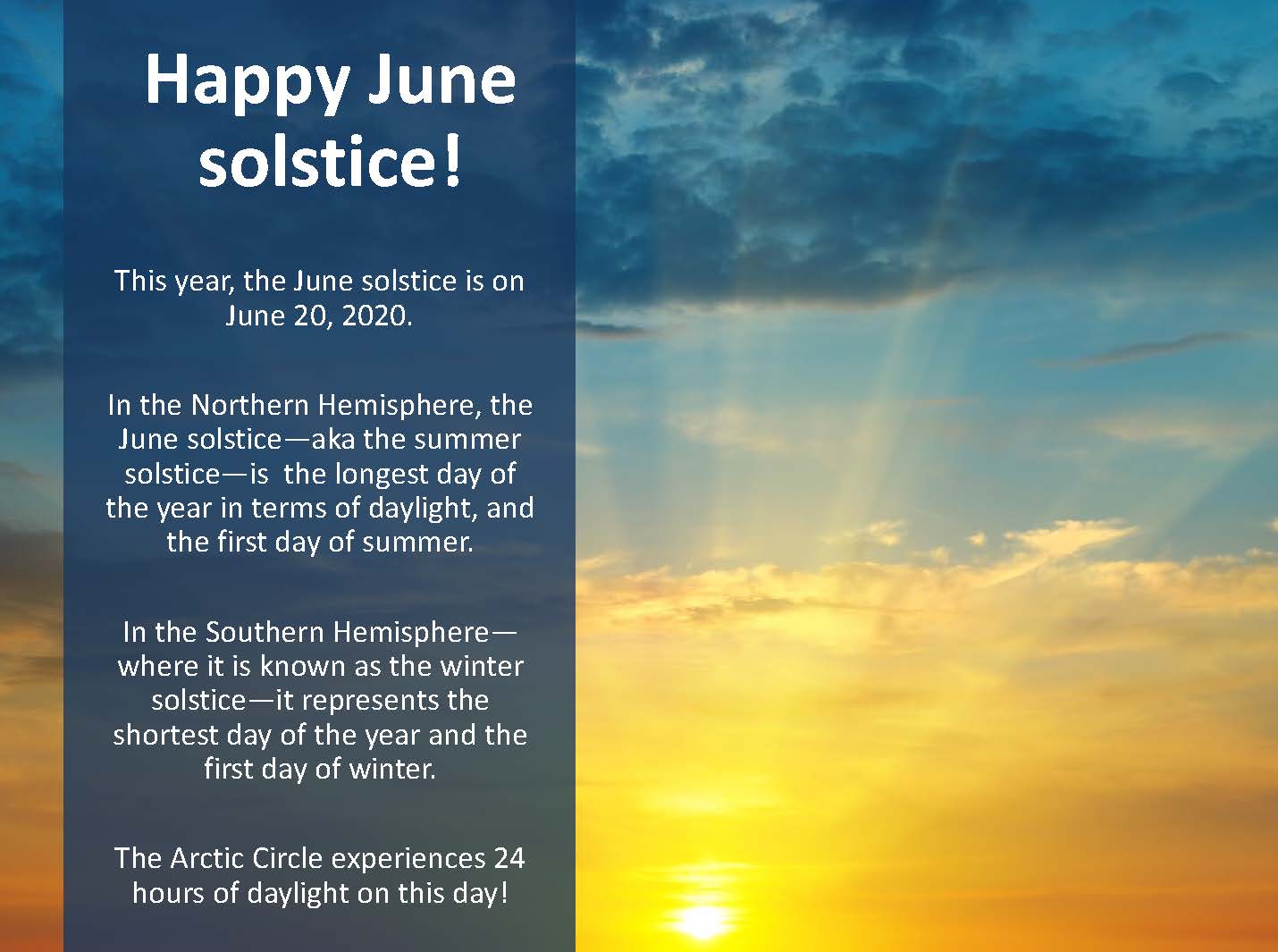
Happy June Solstice 2020!

Five Fast Facts about Muscadelle

.

The Muscadelle grape is often mis-pronounced and mis-understood. (For the record, the English pronunciation sounds like this: muhs-kuh-del.)

Muscadelle has been the victim of multiple cases of mistaken identity. It  is NOT synonymous with Muscadet, it is NOT a close relative of Muscat (despite the indisputable similarities in grapey, floral aromas), and it is not another name for Muskateller. Once upon a time, it was believed that Muscadelle was another name for Hárslevelű, one of the leading grapes in the famous wines of Hungary’s Tokaj region. This led to the grape being known in some areas as Tokay. However—you guessed it—we now know that Muscadelle is NOT Hárslevelű.

Muscadelle is not, in fact Muscat, nor Muscadet, nor Hárslevelű. But it is a fascinating grape, and here are five fast facts to prove it!

Fast Fact #1: Muscadelle is believed to be native to the area around Bordeaux and the Dordogne in south-western France. It is the offspring of Gouis Blanc and as-yet-unknown variety. This means that Muscadelle is part of the extended Pinot Family and some sort of a half-sister to Chardonnay.

Fast Fact #2: As befits its native status, some of the largest plantings of Muscadelle are in Bordeaux. Here, Muscadelle plays what might be its most famous role—as the number three grape (after Sémillon and Sauvignon Blanc) in the white wines (both dry and sweet) of Bordeaux. However, even here it is grown in limited amounts, amounting to just over 2,000 acres (885 ha) and—when used—typically amounts to no more than 3% of the total blend. One exception is Château Palmer, a Troisième Cru located in Margaux, that often produces a white wine—Blanc de Palmer—with as much as 50% Muscadelle in the mix

Fast Fact #3: Muscadelle is a bit more highly appreciated in Bergerac, a region about 50 miles (83 km) inland (and down the Dordogne River) from Bordeaux. The grape is used in varying amounts in the dry white wines of the area, including those of the Gaillac AOC and the Bergerac AOC. Many people believe that Muscadelle shows best in a sweet wine that allows its rich, floral aromas to shine. The wines of the sweet-wine-only Monbazillac AOC (located just up the river from Bergerac) are among the finest to showcase the Muscadelle grape variety in this way.

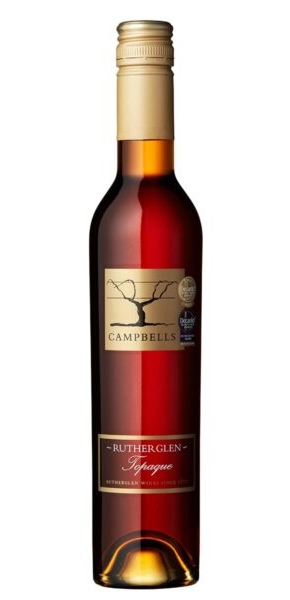
Photo via Campbells of Rutherglen

Fast Fact #4: Australia’s Rutherglen GI has produced unique, fortified-and-oxidized wines since the 1850s. These wines, made in a range of styles, are primarily produced from Muscat and Muscadelle grape varieties. Rutherglen is one of the regions where—in days past—Muscadelle was known as “Tokay” and as such, some of these wines were known as “Liqueur Tokay.” The name of the wine has since been changed to “Topaque” (as part of an agreement between the EU and Australia). Campbells of Rutherglen describes their Topaque as follows: “Deep, brilliant old gold. Lifted toffee, honey and cold tea characters combine to produce the unique character of Rutherglen Topaque.”

Fast Fact #5: Muscadelle has some fun nicknames, including the following: Vesparo, White Angelica, Marseillais, Guilan Musque, Raisinote, and Musquette. In part of California it is known as Sauvignon Vert, but this should not be confused with that other, more famous grape (also) known as Sauvignon Vert (aka Sauvignonasse or Friulano).

References/for more information:

The Bubbly Professor is “Miss Jane” Nickles of Austin, Texas… missjane@prodigy.net

Eight Good Reasons to Tangle with the Text (before Class)

.

If you are taking a wine or spirits class—or just about any academic-style class for that matter—you most likely have a textbook or other written content to accompany the class. In all likelihood, this material defines the structure of your class, and each individual class session is built upon a specific chunk of that content.

News flash: you will be a far better student, a far better colleague, and a more successful exam candidate if you read the assigned content BEFORE the scheduled class, webinar, or lecture.

Here is why:

1.You set yourself up to learn during class: If your webinar, class, or lecture is your first exposure to the material, it will be a series of “a-ha” moments, and you’ll have lots of basic, background questions running through your head. On the other hand, if the class is your second (or subsequent) exposure to the material, you will have already worked through the basics and will set yourself for deeper understanding and engagement with the material.

2. You build your all-important bank of background knowledge: By reading the content before class, you are expanding your background knowledge about the topic, and you have created more and more neurological pathways and connections between the bits of subject matter. In other words, you’ve created more “hooks” on which to hang the “facts” that you want to understand and remember.

3. You won’t injure your hand by maniacal scribbling: If you do not read the material beforehand, you’ll be tempted to write down almost everything the instructor says. While taking notes during a lecture is a great way to learn, the ideal ratio of note taking-to-listening is somewhere around 20%/80%. That means you are taking notes 20% of the time and listening the other 80% of the time. If you are writing most of the time, you will miss a lot of what is going on in the class or lecture.

.6. 

4. You are better able to focus during class: If you read the content before class, you will have a road map of sorts for the class; you have at least an idea of what to expect. As such, you will be able to follow along with ease.

5. You can dig deeper: If you show up for class with an understanding of the basics, you can use the class time to concentrate on the more challenging (or detailed) material. In addition, you can take advantage of the availability of the instructor to get your more complex questions answered.

7. You can jump-start your spaced repetition: If you read the material the day before class, the class itself can serve as your second exposure to the material. With a bit of pre-planning, your class can be a ready-made part of your program of spaced repetition.

8. You can un-learn what you need to: I can’t tell you how many times I’ve been teaching a class when someone asks a question that begins with the words but I thought (as in but I thought all Super Tuscans were 100% Cabernet Sauvignon).  If you always thought that all Super Tuscans were 100% Cabernet Sauvignon, a quick reading of chapter 10 in the Certified Specialist of Wine Study Guide will set your straight. If the subject is still confusing, you can bring it up during class, but the least you can to is come prepared.

And finally—we know (but we love you anyway): Here is a super-secret-teacher-truth: your teacher can easily tell if you have—or have not—read the material ahead of time based on your interactions during class. Just sayin’.

The Bubbly Professor is “Miss Jane” Nickles of Austin, Texas… missjane@prodigy.net
Shades of Schistosity

Shale

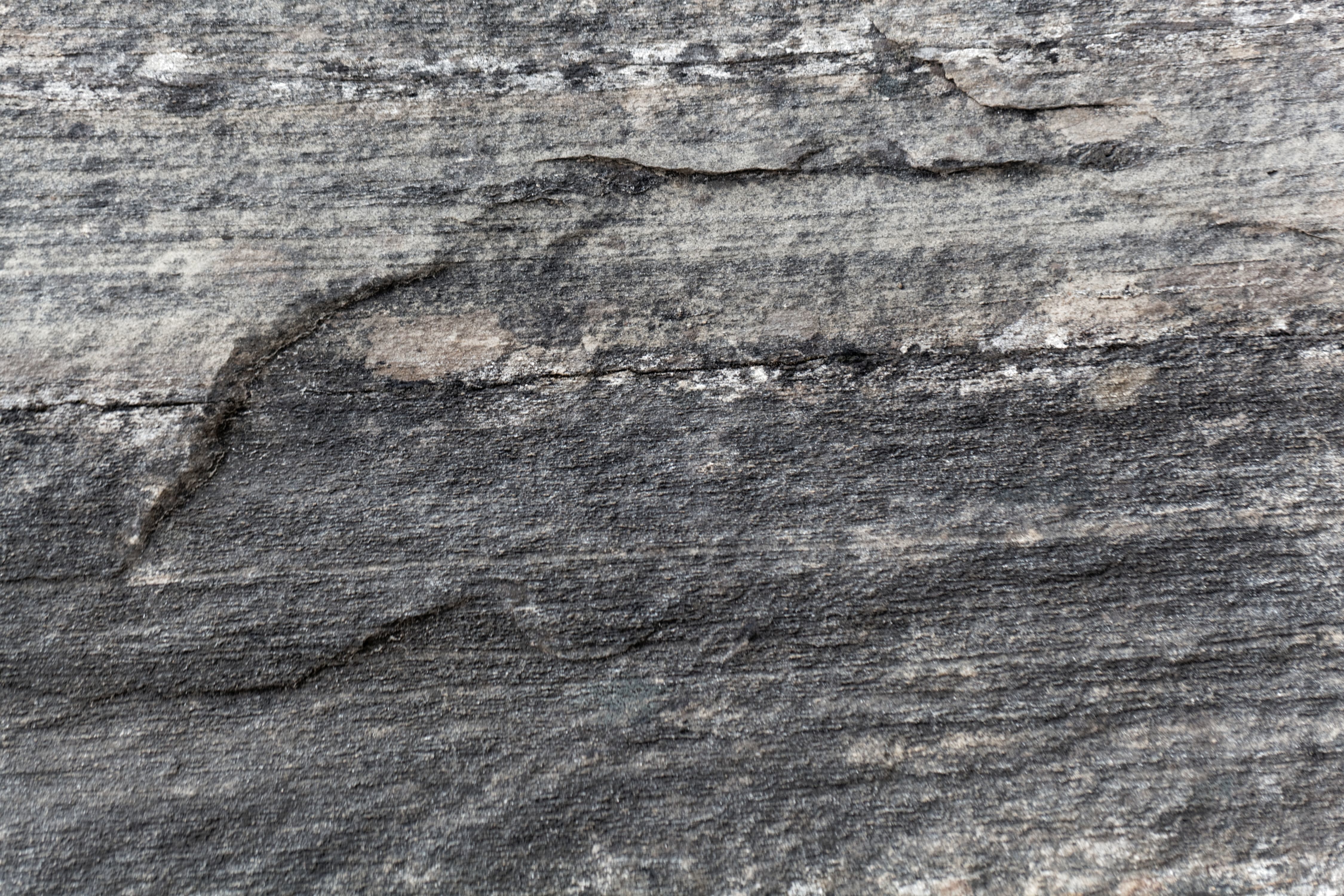
As a truly committed student of wine, you probably know that shale is a type of soft, foliated sedimentary rock composed (at least in part) of clay minerals and (sometimes) volcanic ash. Shale has visible stratification and a tendency to break or split along “layers” (known as “planes of weakness” or “rock cleavage” in geo-speak). This tendency to split along planes is known as fissility (which is just such a fun word).

You might also know that shale is well-represented in the vineyards of the world, including the Finger Lakes AVA (in New York State) and the Santa Cruz Mountains AVA (in California). Other wine areas known for shale-influenced soils include the western side of Paso Robles, the Mayacamas Mountains (between Napa and Sonoma), Heiligenstein (Alsace), and Austria’s Wachau region.

Shale is fascinating on its own but there’s more to the story, as shale can be transformed into slate, schist, or gneiss. These three types of rock are produced via varying degrees of metamorphism—changes resulting from heat, pressure, and deformation—and they all have different appearances and characteristics. Some of these differences are discussed below:

Slate

Slate: Slate, formed from shale, is a finely grained rock that may be formed under relatively low temperature and pressure conditions (low-grade metamorphism). Slate tends to be one solid color in addition to being very hard and brittle; when broken, it will form flat, smooth surfaces. Germany has several vineyards areas celebrated for their slate soils; these include the Mosel and the Rheingau—both of which also have significant outcroppings of shale (now we know why). Other wine areas rich in slate include the Clare Valley, the Cebreros VCIG (in Castilla y León), and Chile’s Aconcagua Valley.

Schist: Schist is formed (from slate or mudstone) under moderate levels of heat and pressure (metamorphic forces). Schist is identifiable by its visible “grains” (in layered formation), dull luster, and schistosity—the layer-like foliation that is found in certain coarse-grained metamorphic rocks. Despite the fact that it reminds me of a wine-geeky, made-up word (like matchsticky or porch-pounder), schistosity is a real thing.

Schist

Several vineyard regions are regarded as rich in both slate and schist; these include Priorat (Spain) and the Douro Valley (of Portugal). Parts of Tuscany are known for galestro—a soil rich in both clay and schist. Other areas known to be rich in schist include Corbières, Côte-Rôtie, Kastelberg (Alsace), the Valais (Switzerland), Ribeira Sacra, and Savennières. These areas are often described as having schistous soils—although schistous is definitely a made-up/wine geek word and does not appear in the geological lexicon (Maltman: Vineyards, Rocks, and Soils, p. 103). Schistes, however, is a real word (in French)—there is even a wine association to prove it: L’Association des Terroirs de Schistes.

Gneiss

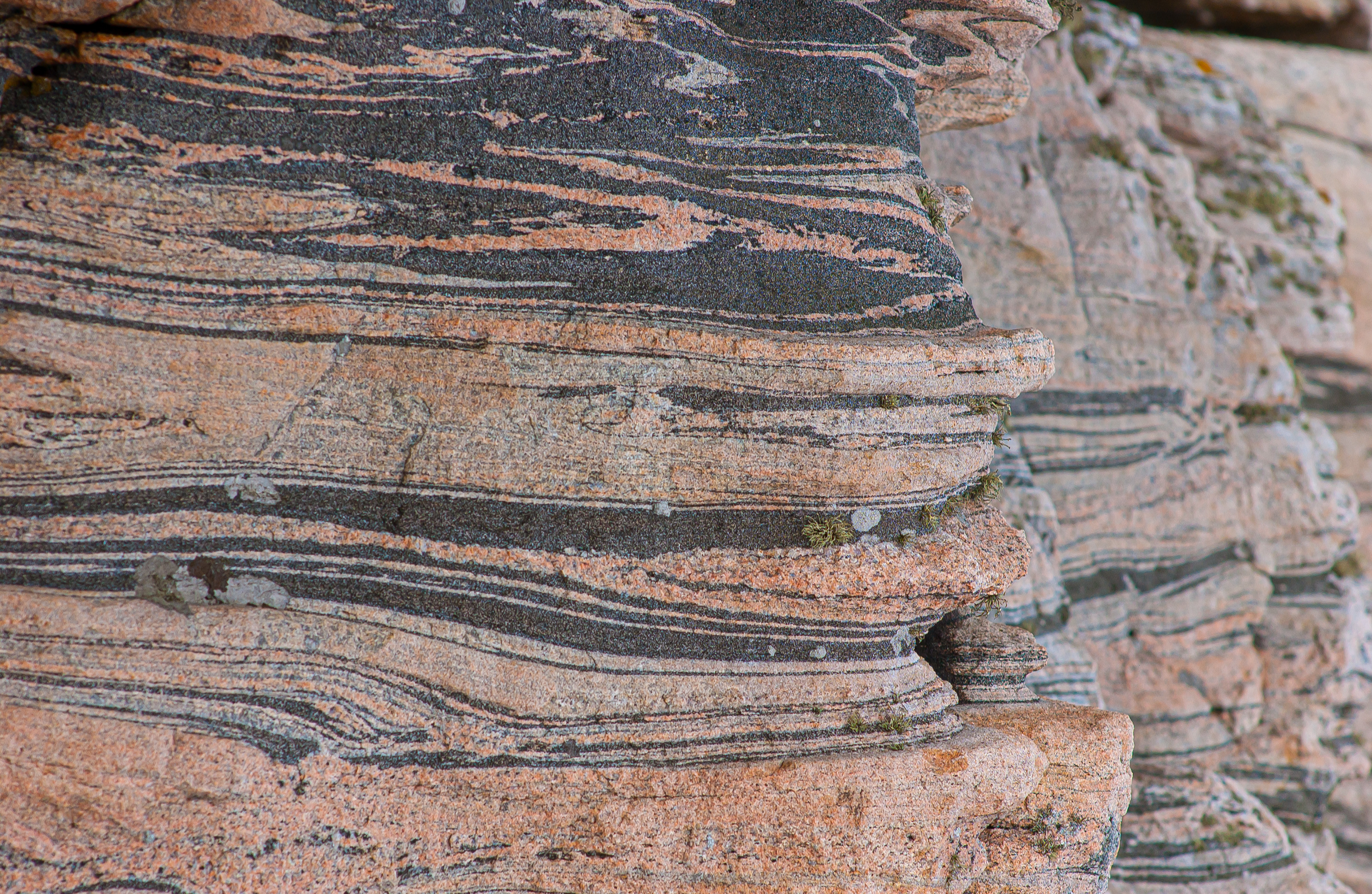
Gneiss: Given the right combination of intense heat, pressure, and (perhaps) chemical activity, schist can transform into gneiss. Gneiss has visible “bands” of various colors composed of various minerals (gneissose banding). Having been formed under intense metamorphic pressures, gneiss is much heavier and harder than slate and schist and does not typically break along its foliation planes.

Vineyard regions known for gneiss include the Pays Nantais, Margaret River, Wachau, Kamptal, and the Middleburg AVA in Virginia (USA).

  • References/for more information:
  • Feiring, Alice (2017). The Dirty Guide to Wine. New York: The Countryman Press.
  • Franzmeier, Donald, William McFee, John Graveel, and Helmut Kohnke (2016). Soil Science Simplified, 5th edition. Long Grove, Illinois: Waveland Press.
  • Maltman, Alex (2018). Vineyards, Rocks, & Soils: The Wine Lover’s Guide to Geology. New York, New York: Oxford University Press.
  • Robinson, Jancis and Julia Harding: The Oxford Companion to Wine, 4th Edition. Oxford, 2015: The Oxford University Press.
  • White, Robert (2009). Understanding Vineyard Soils. Oxford University Press.
  • http://www.terroirsdeschistes.com/
  • https://geology.com/rocks

The Bubbly Professor is “Miss Jane” Nickles of Austin, Texas… missjane@prodigy.net


Perfect Pairings: Wine with Holiday Ham

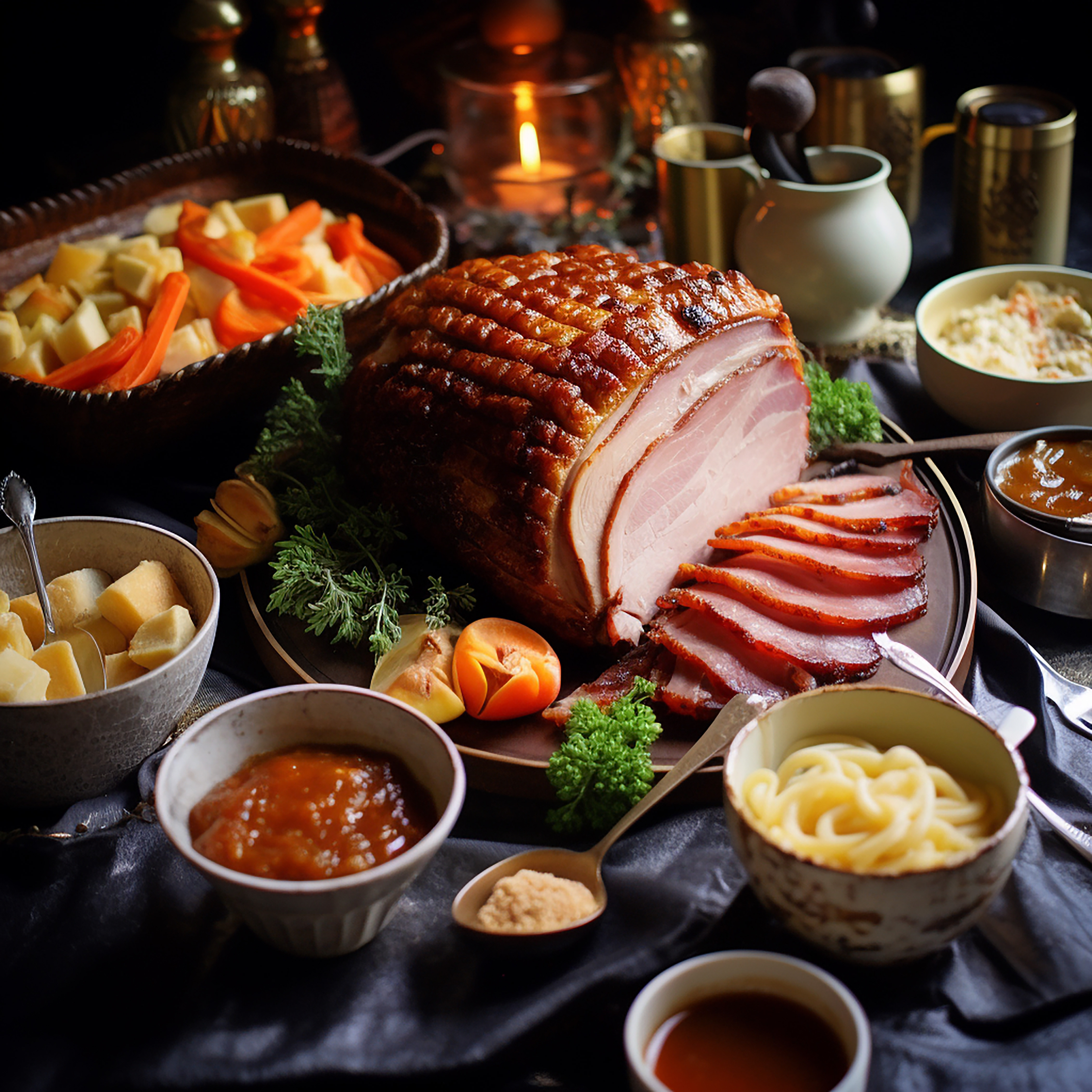
If your next big, crazy holiday gathering is going to feature a holiday ham (yum), the centerpiece of your meal will probably be glazed with maple or pierced with cloves. On the side, you are likely to find the standard line-up of holiday buffet dishes, including scalloped potatoes, sweet potatoes, brandied peaches, and green beans.

Your first wine pairing guideline for such a feast is center your wine choices around white wines, rosés, or lighter styles of red. This is to avoid a clash with the inevitable sweetness on your plate and to avoid overpowering the entrée.  In addition—as is typical of holiday feasts—the array of side dishes on the table will offer up a wide variety of tastes and flavors, so our challenge is to find a wine that doesn’t wrestle with the rest of the meal.

Here are a few guidelines to help you find a great wine to pair with a meal centered around a holiday ham:

Look for something light-to-medium:  A light-to-medium bodied wine—with a corresponding light-to-medium level of flavor intensity—is unlikely to overpower the main course in terms of both weight and flavor.  For best results choose a sparkling wine, a white wine, or a rosé.  There are also plenty of options for red wines lovers; just keep to the lighter styles of red. Wines based on Pinot Noir, Mencía, Gamay, or (sometimes) Sangiovese are great choices.  This can be a great day for lovers of French wine and a great day to bring out the Burgundy and Beaujolais. For lovers of Italian wines, Chianti, Chianti Classico, or Valpolicella can be good choices (however, be advised that depending on the producer, these wines can be light-and-lovely or big-and-brawny).

Fruit-forward wines will shine: A dinner based on ham will most likely contain a side dish based on peaches, raisins, or sweet potatoes.  While it is very hard to predict flavor-based reactions in wine and food pairings (as opposed to taste-based, which can be predicted quite accurately), fruity flavors in food will typically cause the wine to seem less fruity, drier, and more astringent. In order to avoid a fruit-on-fruit wrestling match and ending up with insipid-tasting wine, make sure the wine has fruity flavors to begin with.

A touch of sweetness will make a great match: If your ham is honey-baked, maple-drenched, or brown sugar-glazed, this is important. While it seems counter-intuitive, sweetness in food makes wine taste less sweet (and therefore more acidic).  If the idea of sweet wines on the dinner table scares you, don’t forget that your open-door policy on holidays most likely means that your guests have a broad range of preferences in wine, and this is one case where the Moscato drinkers and the sweet wine lovers may just have an edge. In order to abide by this rule, you don’t need a super-sweet dessert wine, just a wine with a hint of sweetness. After all, a few bottles of Moscato d’Asti, Brachetto d’Acqui, or off-dry Vouvray never hurt anybody!

The Bubbly Professor’s Suggestions for wine to pair with Holiday Ham

  • Riesling from Alsace, Germany, or Washington State is a great choice. For the wine adventurer, try finding a single winery that offers wines in varying levels of sweetness.  Tasting them along with the meal will make for an interesting feast!
  • Vouvray, either sparkling or still, or any other Chenin Blanc-based wine from the Loire or elsewhere (South Africa makes some wonderful Chenin). Vouvray sometimes has a bit of residual sugar, so this wine checks a lot of boxes.
  • Rosé…just about any rosé would be lovely, and this is a time where Rosé d’Anjou with its slight hint of sweetness will absolutely shine.  A rosé made from Sangiovese—which to me always seems to have a charming little hint of baking spice in the flavor—would also work.  If you have a rich uncle, tell him to bring Domaine Tempier Bandol Rosé (from Provence) and save a bottle for me!
  • Pinot Gris from Alsace or Oregon—this is an under-appreciated wine if ever there was one.  For less than $30.00 a bottle, grab a bottle of Pinot Gris from Oregon’s Willamette Valley.  It’s a bit more expensive, but if that doesn’t bother you, try a Pinot Gris from Alsace.
  • Gewürztraminer…my favorite “love it or hate it” wine will really shine with the flavors of a holiday ham feast.  Germany and Alsace make terrific dry varieties, and some of the versions from California have a slight hint of sweetness. Either version will do.
  • Rosé Champagne might just be the perfect choice.  Go for broke and load up the table with Laurent Perrier Brut Rosé, or spend a bit less and find a Brut Rosé Cava from Spain. (Pro tip: buy the Cava for your guests and keep a secret stash of Laurent Perrier in the bedroom mini fridge just for you and your bestie.)
  • Prosecco is a good choice, but then it just about always is!
  • For the wine adventurous…try a Cabernet-Franc based red wine from the Loire, such as Chinon or Bourgueil. California is also making interesting Cabernet Franc these days.
  • Red Burgundy, Cru Beaujolais or Oregon Pinot Noir.  You just can’t go wrong with these food-loving wines.
  • Chianti, Chianti Classico, or Valpolicella—sure to please the lovers of earthy red Italian wines.
  • For the sweet wine aficionados in the crowd, grab a few bottles of Moscato d’Asti and Brachetto d’Acqui.  These slightly sweet wines will work for the whole meal from spiced cashews to pecan pie!

Remember to relax and enjoy the holidays, and don’t stress over the wine choices.  Choose something you love and something that your guests will be comfortable with, whether they be wine newbies or wine adventurers!

The Bubbly Professor is “Miss Jane” Nickles of Austin, Texas…

Confusion Corner: Slovenia, Slavonia, Slovakia

.

As a wine student, you’ve heard the terms…Slovenian Sivi Pinot and Slavonian Oak. You may also have heard that a tiny portion of the Tokaj region crosses the border of Hungary, extending into Slovakia.

You may have thought that these three terms—Slovenia, Slavonia, Slovakia—are so similar in spelling and pronunciation that they represent the exact same thing expressed in three similar languages. (I thought that for a very long time.) However, here’s the truth: these are three separate places in three distinct countries, and they each have their own fascinating story when it comes to wine.

So here goes:

Slovenia: Slovenia is one of the countries to emerge from the Kingdom of Yugoslavia (1918–1941)—later known as the Socialist Federal Republic of Yugoslavia (1945–1992). Others include Croatia (more on that later), Montenegro, Bosnia–Herzegovina, and Serbia. Slovenia is a mountainous country located just to the east of Italy’s Friuli Venezia Giulia region.  Slovenia has been a member of the European Union since 2004.

.

Slovenia’s wine connection: Slovenia—located between Italy, Austria, Croatia, and Hungary—has a long history of viticulture and wine production. Many of Slovenia’s wine regions are located along the border with Italy, and could almost be considered “extensions” of the Italian areas; these include Slovenia’s Goriška Brda region that rests alongside Italy’s Collio Goriziano DOC, as well as Slovenia’s Kras region/Italy’s Carso DOC. Slovenia has close to 22,300 ha/55,100 acres of vineyards. Approximately 75% of the country’s output is white wine; leading white grapes include Riesling, Gewürztraminer (Traminec), Müller-Thurgau (Rizvanec), Pinot Gris (Sivi Pinot), Sauvignon Blanc, and Ribolla Gialla.

Slavonia: Slavonia is—along with Istria, Central Croatia, and Dalmatia—one of the four historical regions of Croatia. Croatia—one of the countries to emerge from the Kingdom of Yugoslavia (along with Slovenia)—became a member of the EU in 2013. The Slavonian region is located in the eastern (inland) section of Croatia; it borders Hungary (to the north), Serbia (to the east), and Bosnia–Herzegovina (to the south).

.

Slavonia’s wine connection: Croatia has a long and well-documented history of wine production as well as international fame as the native home of the Crljenak Kaštelanski grape variety and its lineage (including Primitivo and Zinfandel). Croatia’s vineyards are divided roughly into two sections—Kontinentalna Hrvatska (inland, or continental Croatia) and Primorska Hrvatska (coastal Croatia)—and contain several EU-designated geographical indications.

However…the region of Slavonia is particularly famous for its oak. The next time you hear of a wine being aged in Slavonian oak barrels, please direct your thoughts to the lightly forested, inland area of northern Croatia. Slavonian oak—known for its compact fibers, tight grain, and sweet aromas—allows wine to undergo a long, slow oxidation in the barrel. Large barrels made from Slavonian oak are all the rage in Tuscany, Veneto, and Piedmont. The next time you enjoy Amarone, Chianti Classico, or Barolo, check the winemaker’s notes—it might have spent some time in Slavonian oak.

Slovakia: Along with the Czech Republic, Slovakia is one of the two countries to emerge from the sovereign state of Czechoslovakia, which lasted from 1918 (upon the dissolution of the Austro-Hungarian Empire) to 1993 (when it peacefully dissolved into the two countries). Slovakia is a landlocked country tucked between Poland, Ukraine, Hungary (to the south), Austria, and the Czech Republic. Slovakia has been a member of the EU since 2004.

.

Slovakia’s wine connection: Slovakia has over 20,000 ha/49,000 acres of vineyards. The country has 400 wineries and nine EU-designated protected (PDO) regions. The majority of the vineyards are located along the country’s western border (alongside Austria) and southern border (alongside Hungary).  Leading white grapes include Grüner Veltliner, Welschriesling, Müller-Thurgau, Riesling, and Pinot Gris; leading red grapes include Blaufränkisch, St. Laurent, Cabernet Sauvignon, and Pinot Noir. Outside of Europe, the wines of Slovakia are not (yet) very well-known; however, the area is famous for its production of Tokajská—a small portion of  Hungary’s famous (and historic) Tokaj-producing region extends northward into Slovak territory. When Hungary and Slovakia joined the European Union in the early 2000s, both countries agreed to abide by the same standards in viticulture, wine production and labeling for the wines labeled as Tokaji or Tokajská.

References/for more information:

The Bubbly Professor is “Miss Jane” Nickles of Austin, Texas… missjane@prodigy.net

eBook—The Bubbly Professor’s Guide: How to Study for a Wine or Spirits Theory Exam

.

We’re pleased to announce the publication and release (for FREE) an eBook entitled :The Bubbly Professor’s Guide: How to Study for a Wine or Spirits Theory Exam.

This material, based on extended research as well as my personal experience as a lifelong learner and 25+ years as a professional educator, was originally published—bit by bit—as a series of blog posts on here on the Bubbly Professor.

I began to post learning-and education-based articles on the blog many years ago. I had noticed, over the decades, that my students—whether they be young or old, based in the United States or China, college students or middle-aged career-changers—all shared the same common concerns about how best to tackle the overwhelming task of studying wine and spirits. Eventually, I ended up with a series of articles directed at adult learners that were scattered throughout the blog and as such, not conducive to ease-of-use.

For that reason, I have put together this booklet that brings all the information together in one place. It is currently offered free-of-charge and available to all interested parties.

Keep in mind that it is likely that not everything in this booklet with resonate with you; people certainly learn in different ways and at their own pace. However, for those that take the time to read it over, I hope it helps you with your study plans and goals.

To download the ebook (in pdf form), just click here: The Bubbly Professor on How to Study for a Wine or Spirits Theory Exam

I welcome your comments and questions, and may be reached at: missjane@prodigy.net

Happy Studies!

Jane A. Nickles

How NOT to Take Notes

.

It happens at least once a week. I get a frantic email from a student—typically someone who is studying for the CSW or CSS—who is feeling overwhelmed, confused, and hopeless. I ask if they are reading the text and taking notes, using the workbook, making and/or using flashcards, and studying their maps. A typical response is, “I use the workbook and the flashcards—for hours!” Or, “I watched all the videos five times each!” Or, “I’m very visual, so reading just doesn’t work for me.” To which I respond, “Just reading doesn’t work for anybody. What you need to do is read (actively) and take (meaningful) notes.”

I get that reading and taking notes from a textbook is not the most hilarious way to spend a Friday night or Sunday morning—but when it comes to learning, it works. Simply put, proper note-taking is essential to learning success, and provides two basic benefits::

  1. The act of note-taking (when done properly) involves processing, summarizing, and writing down information. This is an active learning activity that (by itself) will help you understand and retain what you read.
  2. Your notes are a living document and you will continue to learn when adding to, reciting, and studying your notes.

When it comes to taking notes—efficiently and effectively—my first piece of advice is to use active reading techniques before you even start. This means previewing the material before diving right in; and reading a small segment of the material from start to finish before you take notes. You are ready to begin your notes once you understand the main topic of the section and you recognize what you don’t already know as well as what is important to remember.

If we’re all agreed on this first step, let’s investigate how to take notes efficiently and effectively. This section is built around some of the more common missteps I’ve observed, along with some alternative techniques that work.

Don’t do this: Copy the textbook or speaker word-for-word. Instead, prioritize and paraphrase. Take notes after you’ve read the section through at least once, and note down just the key words, phrases and bits of information IN YOUR OWN WORDS. Copying something verbatim does very little to engage your mind and memory. If you don’t believe me, copy a sentence from a French textbook (assuming you don’t speak French) and see how much you understand. The most important step in effective note taking is deciding what information is important, where that information fits into the “big picture,” and paraphrasing the information (putting it in your own words). It is not exactly quick, but its effective. Remember, reading and taking notes verbatim might be quick…but it is a waste of time.

Some exceptions to this rule include dates, definitions, formulas, and quotations. (Don’t be a creative accountant.)

Don’t do this: Ignore the structure provided by the book. Instead, follow the visual cues from the text. The author(s) of your textbook developed a system of chapters, headings, and sections for a reason—to provide a framework for the information presented and a visual hierarchy of the main concept. This is good news for the note-taking students of the world; there’s no need to make up your own framework or to create an amorphous, impossible-to-understand blob of notes. Just follow the author. While doing so, pay close attention to the material written in bold or italics—these are often key concepts or vocabulary words.

Don’t do this: Fill the entire page from top to bottom. Instead, leave some space on the page.  Your learning and understanding is going to evolve over the course of your studies, and you might want to add additional notes or clarify some information. It can also be very helpful to add drawings, diagrams, charts, and summaries to your notes—and you’ll need space to do this.

One other little tip—mark the page number of the text (or more thorough bibliographical information if studying from a variety of sources such as articles and websites) at the top of each page of notes. It will help you if you need to go back and clarify some information.

Don’t do this: Highlight everything. Instead, highlight sparingly—if at all. I see it all. the. time. A student emails me a question (good study technique, by the way) and they’ve included a photo of their textbook showing the passage they can’t understand. The picture shows a sea of pretty colors—the student has highlighted the entire page (or close to it). What this tells me is that the student highlighted the textbook on their first read-through and marked almost every sentence as they (predictably) encountered a whole raft of new information.

If you do use a highlighter, be sure and keep it locked away during the preview stage and your first reading of the material. Use it on a subsequent read to highlight key words, cues, or definitions. In most circumstances, its best to aim to use your highlighter on no more than 20% to 30% of the total material.

Personally, I prefer to take notes rather than highlight, and I don’t specifically recommend highlighting as a study technique. The main reason for this is that highlighting is passive—it is NOT an active study method. If asked for study advice I do not dissuade folks from highlighting if they feel it works for them…but in reality, there are better ways to spend your study time (IMHO). One caveat: I do think that highlighting your notes can be an effective part of revision.

Don’t do this: After you’ve taken your notes, ignore them. Instead, re-write and view your notes on a regular basis. An ideal practice is to review your notes the next day by answering your own questions, reading them aloud, or reciting definitions of your key words or cues (using your own words).

P.S. A lot has been written about the different styles of notetaking, such as the Cornell method, the outline method, or visual/web/mind mapping. My best advice is to find the one that works for you and stick with it. You can read a nice, succinct article about the three methods here.

One more thing: I think if you are taking notes, whether it be by hand, on a laptop, or into a note-taking app, you are on the right tract. However, there are those that believe handwritten is the way to go. For more information on this subject, click here.

Duly noted!

Click here to check out the rest of our posts on “How to Study Wine and Spirits”

The Bubbly Professor is “Miss Jane” Nickles of Austin, Texas… missjane@prodigy.net