Blast from the Past: Appellation d’Origine Réglementée par Decret

If you google-search images of old-timey French spirits such as eau-de-vie, various forms of Marc, and old bottles of Cognac, you are likely to come across the label term “Appellation d’Origine Réglementée par Decret.” I have always wondered about this term, but not quite enough to embark on a search for its true meaning. I assumed it was yet another archaic term used sometime and somewhere in the long and ever-evolving history wine and spirits. So be it.

Until…I started coming across the term used on contemporary bottles. For example, while trying to find a bottle of Marc de Bourgogne for sale in my area, I came across dozens of pictures of bottles labeled, as I would expect, with the term Appellation d’origine Contrôlée (AOC). However, I found an equal amount labeled with the term Appellation d’Origine Réglementée par Decret (AOR). Dozens of google-searches and late-night perusals of reference books later, I still was not quite sure what the Appellation d’Origine Réglementée par Decret stood for.

Lately, I have been able to—at least—put a dent in the mystery. Here’s the story, as well as I can tell it:

As we all know, the regulation of certain wines, foods, and spirits were written into the laws and regulations of France by the early 1900’s. According to a 146-page document published by the Comité National des Appellations d’Origine des Vins et Eaux-de-Vie (1946), by the 1940’s a slew of appellations were in effect, including a long list of wine regions that were classified as Appellation d’origine Contrôlée (AOC).

This same document confirms classified status for several dozen distilled spirits as Appellation d’Origine Réglementée par Decret (AOR)—“appellation regulated by decree.”  These spirits include Cognac, eight different versions of Calvados, several versions of Marc, and a long list of regional Eaux-de-vie.

According to another dug-up document—this one authored by the Commission Nationale des Boissons Spiritueuses and titled Abrogation des Appellations d’Origine réglementées et simples—by the early 2000’s, many of the AOR decrees had been repealed, and some had been replaced by AOCs.

However, many of the original AOR designations remain “on the books” and are still in use. These include (at last count) 27 versions of eaux-de-vie, Marc d’Auvergne, Marc de Lorraine, and Mirabelle de Lorraine.

The moral of this story is: you may indeed stumble across a bottle of French brandy that bears the label term AOR—don’t freak out…its not a typo, and its not a fake. It’s a piece of history.

References/for more information:

The Bubbly Professor is “Miss Jane” Nickles of Austin, Texas… missjane@prodigy.net

The Spirits of Burgundy: Marc de Bourgogne AOC

.

Mention the word “Burgundy” to any wine lover and you will most likely be greeted by a dreamy gaze, a loving sigh, and a soliloquy on the joys of satiny Pinot Noir and refined Chardonnay.

It remains a solid truth the Burgundy produces some of the finest, swoon-worthy and fan-obsessed wines on the planet. No argument. However, on a recent trip through Burgundy I was lucky enough to come across some of the brandy, eaux-de-vie (including pear, Mirabelle, and raspberry), and liqueurs (made from currants, raspberries, cherries, and herbs) produced in the region. Many of these products are obscure and many are only available locally (le sigh); if you’d like to window shop, I suggest the website of Distillerie A. Méan.

Another thing I learned is that some of the Burgundy-based spirits are well-known and widely distributed—famous enough in their own right, despite the super-fame of their fermented grape cousins. One of these spirits is the unique pomace brandy of the region, Marc de Bourgogne AOC.

Burgundy is one of the three wine-producing regions of France (the other two are Alsace and Jura) that has earned AOC status for its pomace brandy, known as marc (in French, it rhymes with the English word “car”). As defined in the first line of the cahier des charges for Marc de Bourgogne, it is may also be referred to as an eau-de-vie (Eau-de-Vie Marc de Bourgogne).

Like any pomace brandy, Marc de Bourgogne is produced from the “leftovers” (grape skins, seeds, and stems) of wine production. Marc de Bourgogne may be made anywhere in the Burgundy region, from the remains of any of the grape varieties allowed to be grown in Burgundy (even the obscurities such as Aligoté, Sacy, César, and Tressot) that were previously used to produce wine with a Burgundy appellation. The marc is allowed to be distilled via copper pot stills or short-column copper stills. The spirit must come off the still at a maximum of 72% alcohol by volume.

One thing that makes Marc de Bourgogne unique is the aging requirement. Many of the world’s famous pomace brandies—including grappa—are bottled in unaged expressions, but Marc de Bourgogne must be aged for a minimum of two years in wood containers. Both new and unaged wood is used. As with many French brandies, there is also a list of allowed label designations based on additional age; these include the following:

  • Vieille: minimum 4 years
  • Très Vieille: minimum 6 years
  • Hors d’Âge: minimum 10 years

Marc de Bourgogne AOC must be bottled at a minimum of 40% alcohol by volume.

.

According to the Cahier de Charges, about 200 wine growers/producers in Burgundy prepare pomace (marc) for distillation. Of these, about 50 produce their own brandy, while the others sell their pomace to larger distilleries—where it may be used in the production of eau-de-vie marc, liqueurs, or fortified wines. Of the dozen-or-so large distilleries currently working in Burgundy, four of them (at last count) still operate “mobile” distilleries that go from vineyard to vineyard producing spirits. Most of the stills in use are over 100 years old, having been passed down through generations of farmers and distillers.

Marc has been produced in Burgundy (as far as we know) since the 1600’s. The earliest known mention of the product is to be found in a memo (letter) sent to the Duke of Burgundy in 1698. In this letter, known as the Mémoire su l’état de sa généralité, the Duke is informed that the area produces on tire un assez bon grand produit d’une chose qui n’était bonne qu’à brûle—google translated as “a fairly good product is produced from a thing which was good only to burn.”

Suffice it to say that in the reputation of Marc de Bourgogne has since improved dramatically. Most experts will agree that the Marc produced in Burgundy is among the highest-quality in all of France. It seems that consumers agree, as some ultra-aged and high-quality expressions of Marc de Bourgogne can fetch prices as high as those seen for Cognac.

The aroma of well-aged versions of Marc de Bourgogne have been described in terms of freshly roasted almonds, honeysuckle, dried roses, raisins, maple, dried leaves, and oak; typical flavors include dried plum, smoke, raisin, and wood.

The AOC for Marc de Bourgogne was approved in 1942. Marc de Bourgogne is difficult, but not impossible, to find in North America.

References/for more information:

The Bubbly Professor is “Miss Jane” Nickles of Austin, Texas… missjane@prodigy.net

 

Tales of the Vine: The Hungry Black Rooster

The wine region we know as Chianti—stretching across Tuscany from Florence in the north to the medieval town of Siena in the south—is one of the oldest geographically defined wine regions on earth.  Winemaking in this region can be documented as far back as the 13th Century, and the first defined boundaries of the Chianti Wine Region were set in place in 1716 by The Grand Duke Cosimo III de Medici.

Within the Chianti district, a smaller area known as the Chianti Classico DOCG represents the original, historic center of the region.  The wines of Chianti Classico are considered to be the traditional wines of Chianti and (most would agree), the best.  Winemakers in Chianti Classico guard the vineyards, the wine, and their region’s reputation fiercely.

In 1924, a group of grape growers and winemakers formed a group to promote and protect the image of the wines of Chianti Classico and took as their symbol the Gallo Nero, or Black Rooster.  In 2003 the Italian government gave the group—now known as the Consortium (Consorzio) of Chianti Classico—regulatory control of the entire production of Chianti Classico, and all the wines of the region now bear the symbol of the Black Rooster.

The story of how this famous wine region became to be represented by a black rooster is one of the best legends of the wine world, and goes like this:

The legend of the Black Rooster dates back to a 14th century boundary dispute between Florence and Siena.   After a long and drawn-out battle, the two Republics decided to settle the issue with a race between two knights on horseback.  According to the rules of the match, each knight would set off from their respective hometowns upon the crow of the rooster. In other words, the race was to commence—you would think—at dawn.  The knights would travel along the road between the two Republics, and the point where they met in the middle would be the official boundary line between Florence and Siena.

The townspeople of Siena chose as their representative a white rooster.  In order to make him a happy, strong singer, they fed him well and pampered their rooster until the appointed day.

The people of Florence chose a black rooster to represent them, but they fed him sparingly. Some say they flat-out neglected him—so much that in fact, on the morning of the contest he was so hungry that he woke up several hours before dawn, and crowed and crowed and crowed until he was fed.  Thus, the knight from Florence began his part of the race in what was basically the middle of the night. Not surprisingly, he covered most of the road between the two Republics before he met up with the Knight from Siena.

As a result, almost the whole of the land of Chianti was annexed to the Republic of Florence and the Black Rooster, or Gallo Nero became the symbol of the newly-expanded area.  Later, the Gallo Nero became the symbol of the original Lega di Chianti in the 16th century. When the Consorzio of Chianti Classico was created in 1924, they chose the black rooster as their symbol as well.

Look closely at any bottle of Chianti Classico….you’ll find the black rooster on the label, proudly representing centuries of tradition.

The Bubbly Professor is “Miss Jane” Nickles of Austin, Texas… missjane@prodigy.net

References/for more information:

Mustard and Vine

.

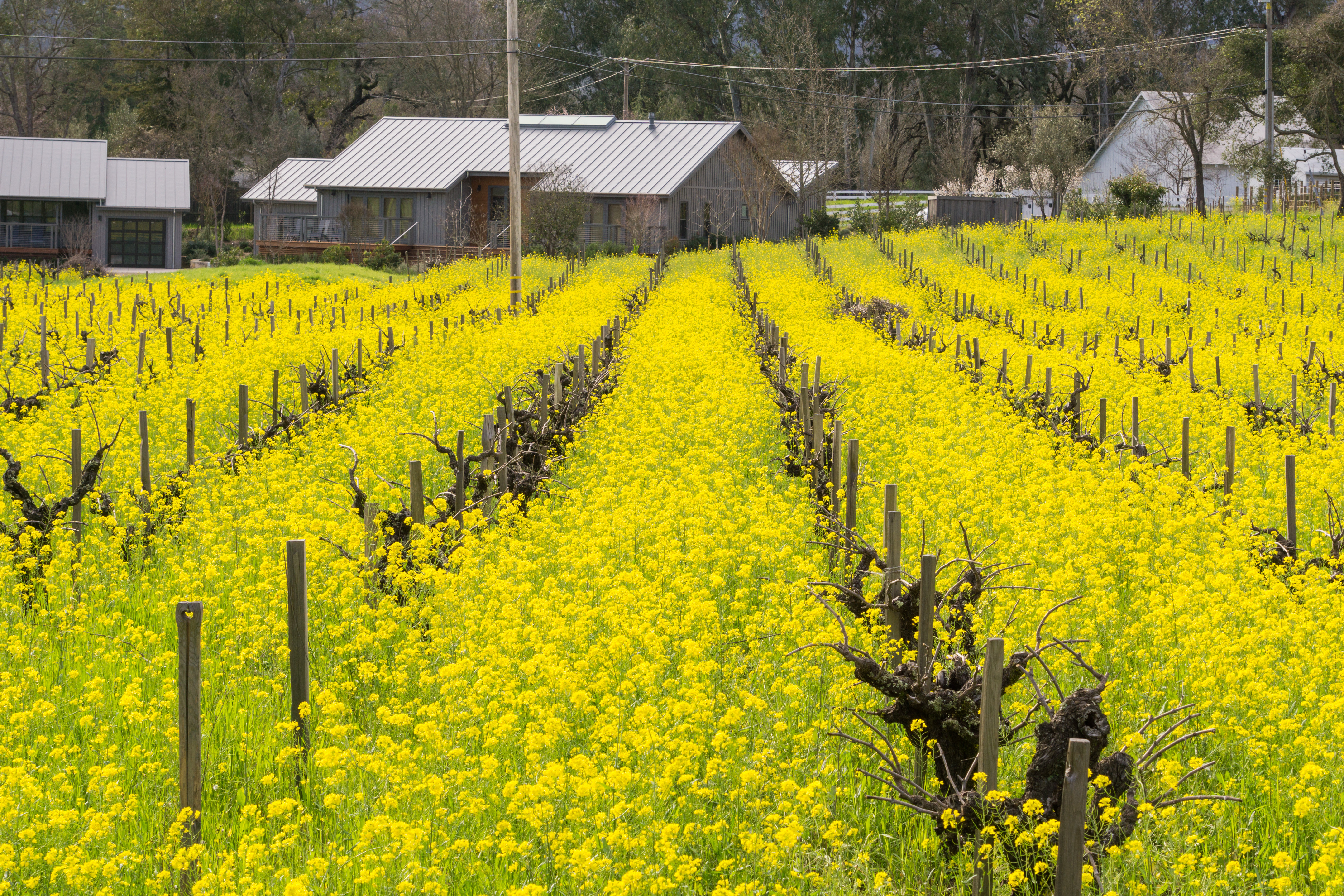
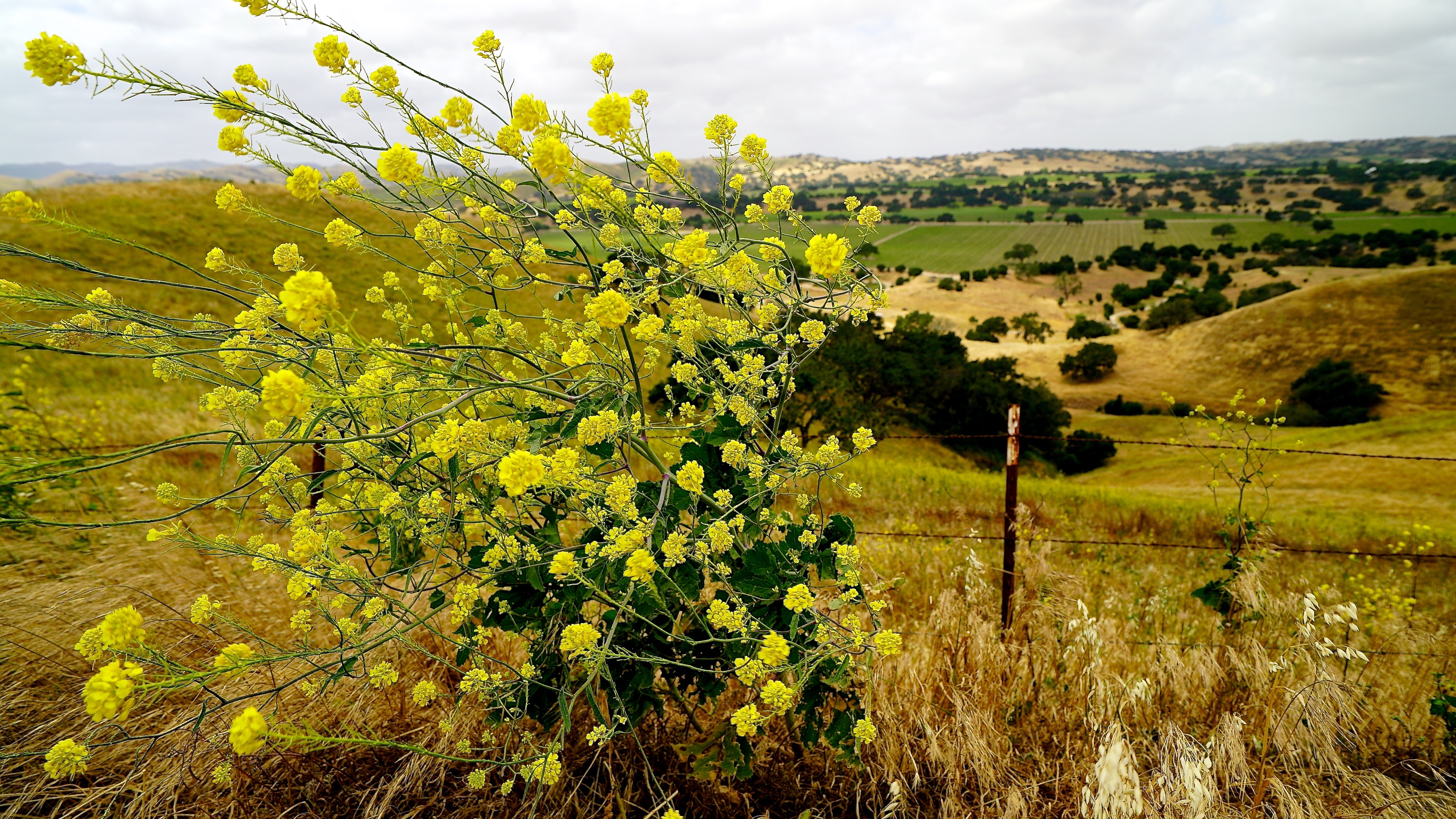
Winter can be a dull time to visit a vineyard, especially if you have visions of leafy canopies heavy with fruit dancing in your head. However, in many parts of the wine making world—including the well-trod regions of Napa, Sonoma, and Burgundy—winter brings its own measure of delight in the form of a waving sea of yellow-gold blossoms: the dance of the mustard flowers.

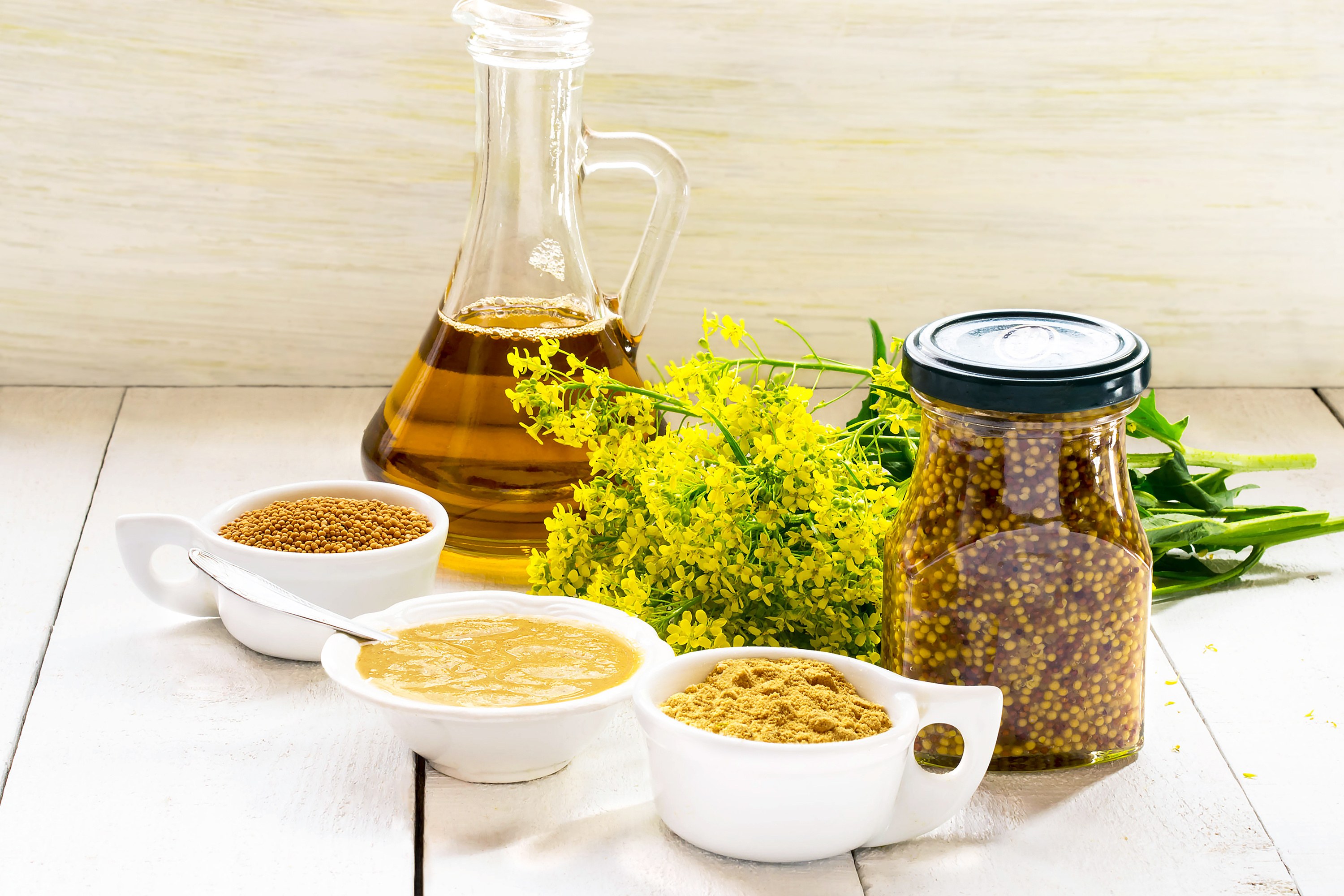
Mustard and wine share an affinity on many levels—there is the delight of grilled chicken in mustard cream sauce paired with a crisp Chardonnay, for example—and the flagship of all mustards (Dijon, of course) is made with wine. The plants themselves—the mustard flowers and the grapevines—get along famously as well.

The vine: When used as a cover crop between rows of vines, mustard plants can provide the benefits of any cover crop such as protecting the soil from erosion, improving the ability of water to penetrate the soil, attracting beneficial insects, and increasing the organic matter in the soil.

.

Mustard plants have a few specific benefits as well. For one, they are very hardy—the seeds of the mustard plant can survive in the soil for up to 40 years, and spring to life after a late fall rain. Mustard plants also produce biofumigants (natural chemical agents) that suppress nematode (nasty little roundworm) populations. The plant also recycles and redistributes nitrogen in the soil, making it more accessible to the vines.

The mustard: About that famous mustard from Dijon…I was fascinated to learn that “Dijon Mustard” is not a legally protected name, nor an approved designation of origin. It seems that mustard from Dijon had been so widely used—and imitated, in the highest form of flattery—that by the time a geographical indication for Dijon was suggested (in 1937), it was determined that the term was being used for products made in Dijon as well as products made in the style of mustard made in Dijon. As such, the term had already entered into the lexicon as a generic term, and therefore there could be no protection for “Dijon Mustard.” This makes sense currently, as the last of the Dijon mustard manufacturers left the city of Dijon about ten years ago—and even then they were using some mustard seeds from Canada alongside those that were locally-grown.

However…there are plenty of mustard plants and lots of mustard production in the region of Burgundy surrounding the city of Dijon. There is even a Protected Geographical Indication (PGI) for Moutarde de Bourgogne (Burgundy Mustard). The PGI was granted in 2008, but the Brotherhood of the Moutardiers-Vinaigriers of Bourgogne (Héritière de la Confrérie des Moutardiers-Vinaigriers), originally founded in Dijon, dates back to 1600.

The following regulations are included in the documents of the Moutarde de Bourgogne PGI:

  • The mustard seeds must be grown, harvested, and stored within the boundaries of the Burgundy region (most of it is grown in the eastern part of the Côte-d’Or department, with additional plantings in the far north of the area [around Yonne])
  • Two specific species of mustard are allowed: Brassica juncea, and Brassica nigra
  • The wine used to produce the mustard must be a Chardonnay or Aligoté from a Burgundy or Beaujolais PDO
  • It is descried as (via Google translate) “a strong or extra-strong mustard with white wine, light yellow in color with a thick, homogeneous and unctuous texture. It is characterized by a strong and typical smell of Burgundy white wine, an intense spiciness and a pronounced taste of Burgundy white wine.”
  • In addition to mustard seeds and wine, the mustard may contain sugar and spices, but it is not allowed to contain artificial colorings, thickeners, or mustard extracts

.

If you’d like to try the legendary Burgundy mustard and Burgundy white wine pairing for yourself, I suggest this delectable Mustard Roasted Chicken recipe from the Barefoot Contessa, which I would pair with a nice, casual white Burgundy such as a Saint-Véran, Pouilly-Fuissé, or white Beaujolais. I do recommend you sub-out the suggested Grey Poupon for an authentic Moutarde de Bourgogne (shhhh….don’t tell Ina).

References/for more information:

The Bubbly Professor is “Miss Jane” Nickles of Austin, Texas… missjane@prodigy.net

Wine Travel Bucket List: Piedmont Color

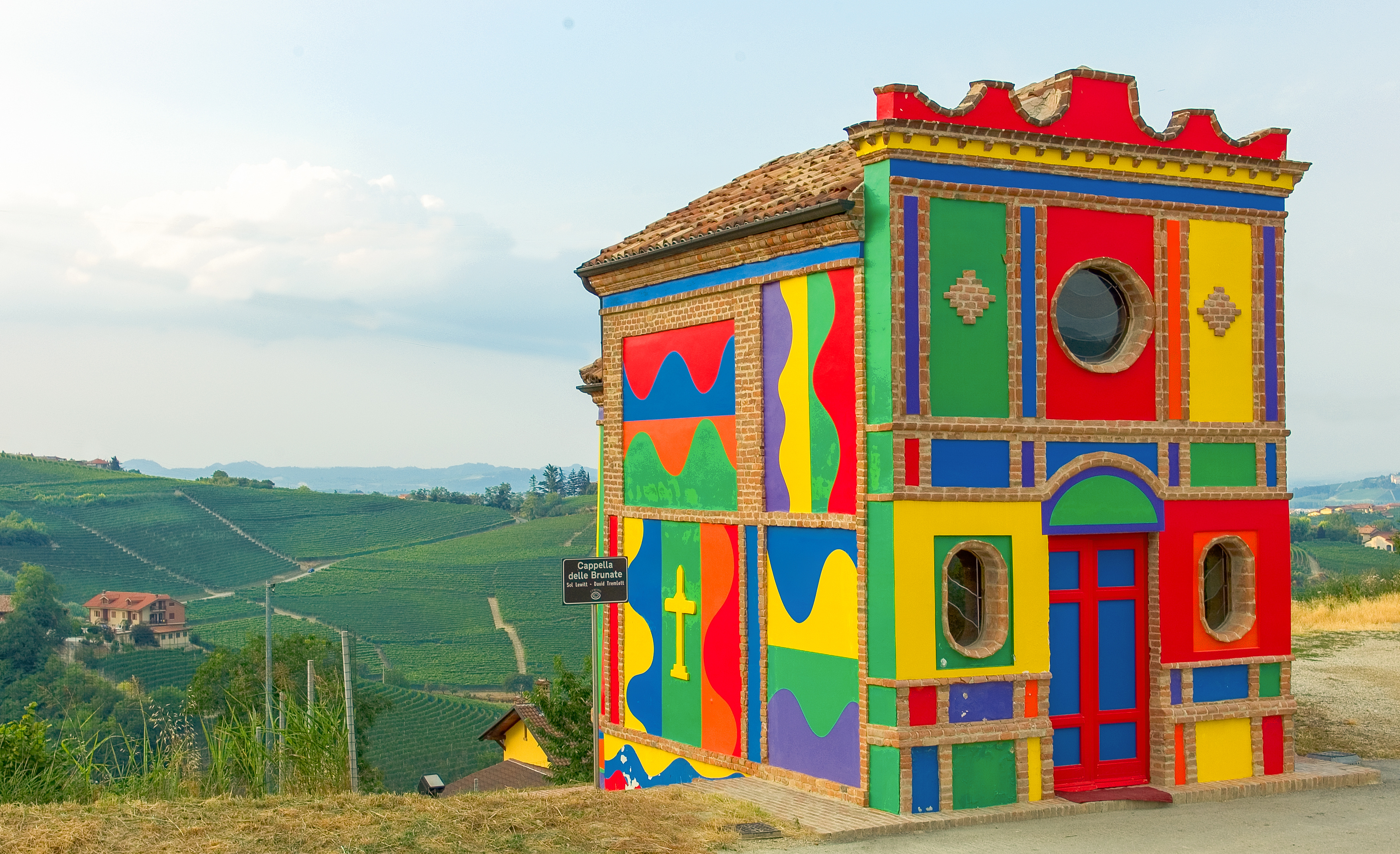
Brunate Chapel

Wine lovers that travel to Piedmont looking for the colors are typically chasing the deep, brooding red of a glass of Barolo, or perhaps the red-and-gold leaves of a vineyard in autumn. While these are certainly worth traveling for, Piedmont also has some unique—albeit tiny—architectural gems that scream with character and color, and should make for a good side trip in the midst of any serious wine tasting tour!

Barolo’s Brunate Chapel: The Chapel of the Madonna delle Grazie (often referred to as the Capella della Brunate [Brunate Chapel] or the Capella del Barolo [Barolo Chapel]) was built in 1914 as a shelter for vineyard workers in case of heavy rain or hail. The chapel was originally frescoed by Giovanni Savio (1863–1950), who hailed from the nearly town of La Morra.

B.

The chapel, which is located in Le Brunate—one of the most important crus of the Barolo DOCG—was purchased by the Ceretto family in the early 1970s, along with the 6 hectares of the surrounding vineyards. When it was purchased, the chapel was nearly in ruins, showing the signs of years of neglect.

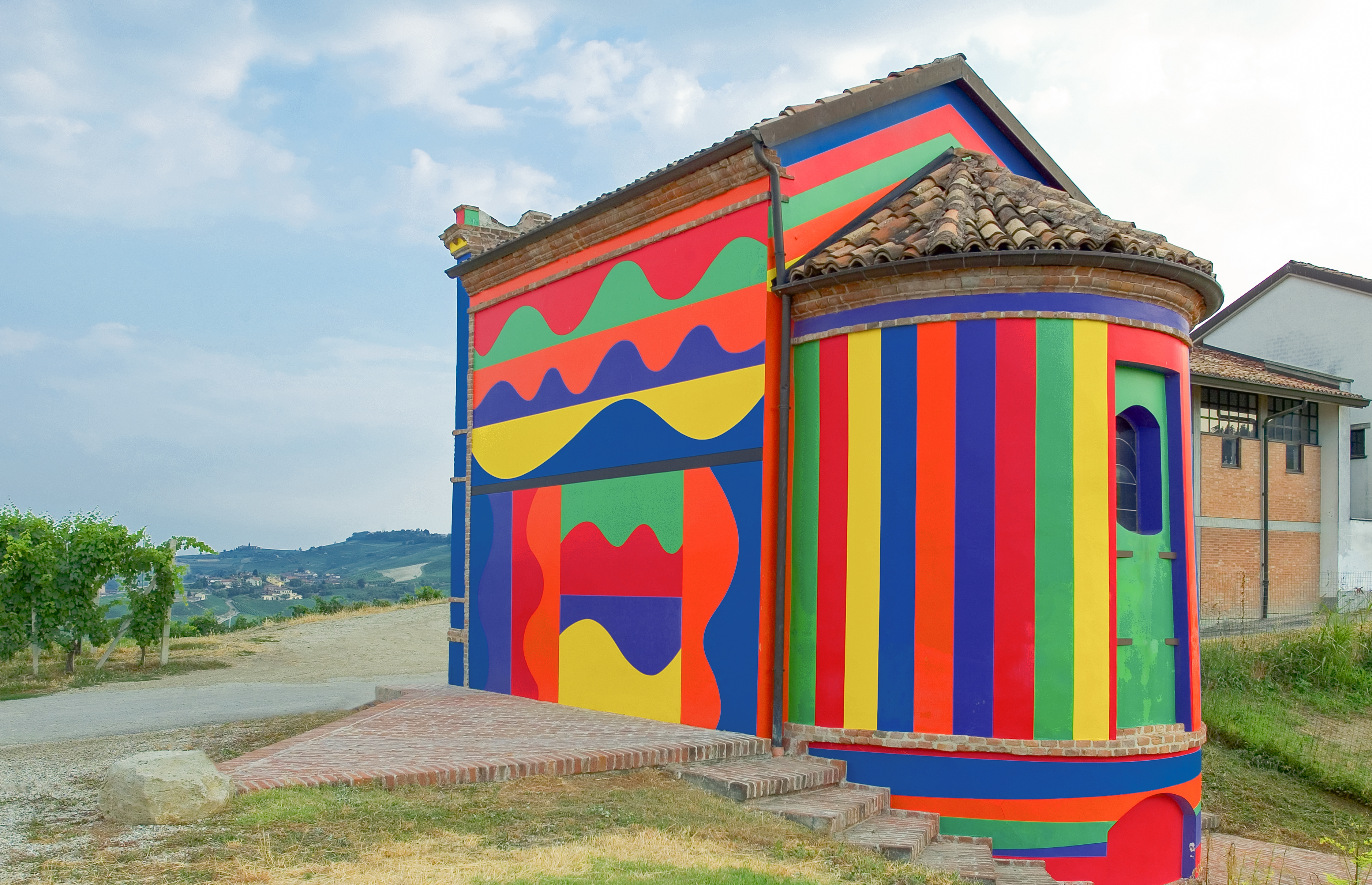
In 1997, the Ceretto family approached David Tremlett, an acclaimed English artist with a reputation for installation art and site-specific works (in addition to painting and sculpture) with the idea of renovating the structure. Tremlett loved the idea and chose to collaborate with his friend Sol LeWitt on the project. Sol LeWitt (1928–2007) was an American artist well-known for wall drawings, large-scale installations and conceptualism. For the Brunate Chapel, Tremlett worked on the warm, serene interior and LeWitt created the lively, colorful exterior.

As is easy to imagine from the appealing colors and scale of the building, the Brunate Chapel is one of the most recognized and visited spots in Barolo.

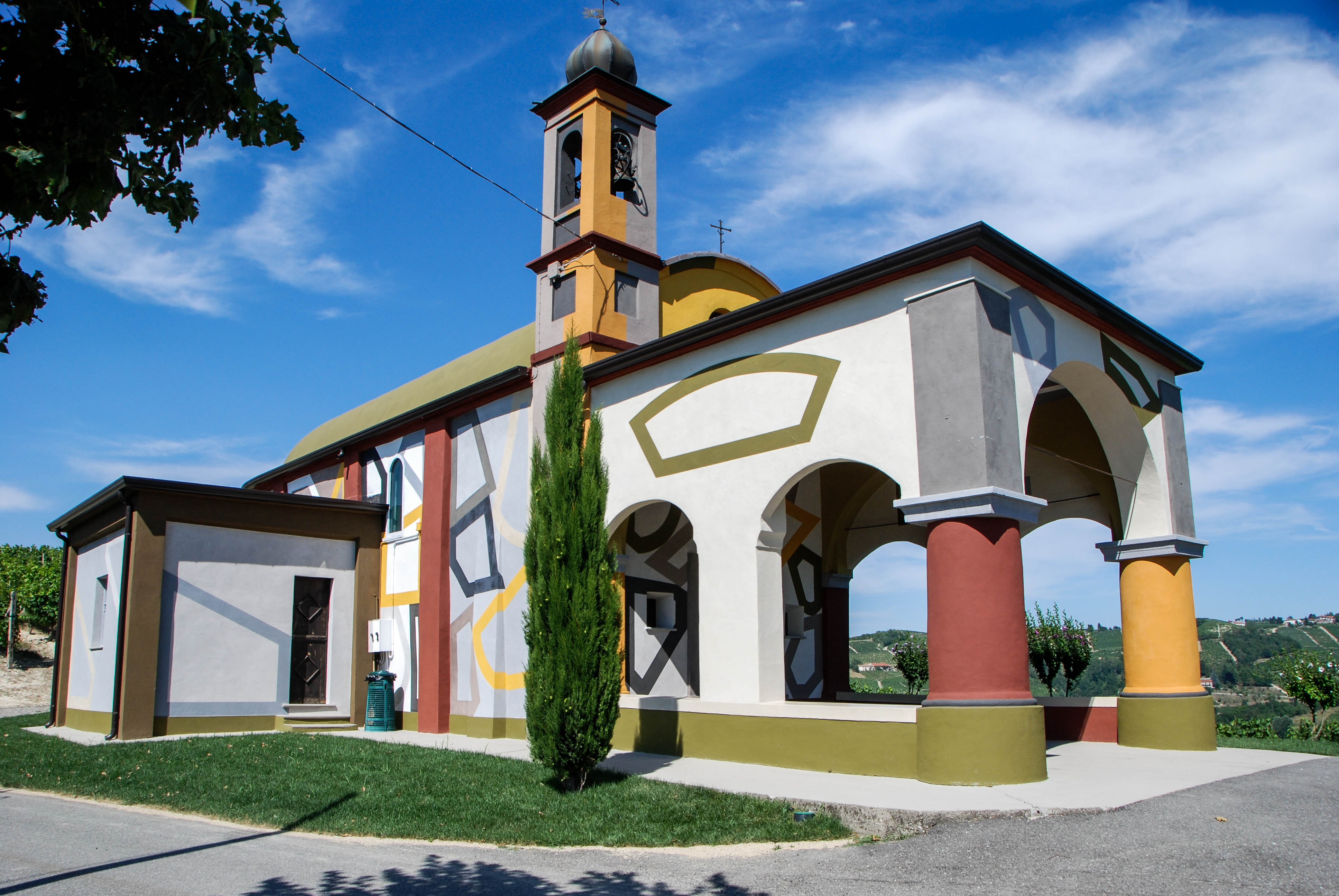
Chiesetta di Coazzolo

Asti’s Chiesetta di Coazzolo: La Chiesetta della Beata Maria Vergine del Carmine, affectionately known as the Chiesetta (little church) of Coazzolo, is located in the Asti DOCG area.

Nearly 20 years after completing the renovations of the Brunate Chapel, David Tremlett returned to Piedmont to repaint and rejuvenate the little church using wall drawings and acrylic paints. The colors of the Chiesetta—which include sienna, yellow, and olive green—are more natural in style and subtle than the bright bursts that decorate the Brunate Chapel. The restoration of the Chiesetta is the result of a joint venture between London’s Genillard gallery and Silvano Stella, the owner of the Coazzolo Castle.

References/for more information:

The Bubbly Professor is “Miss Jane” Nickles of Austin, Texas… missjane@prodigy.net

Everybody in the (Pyrazine) Pool!

.

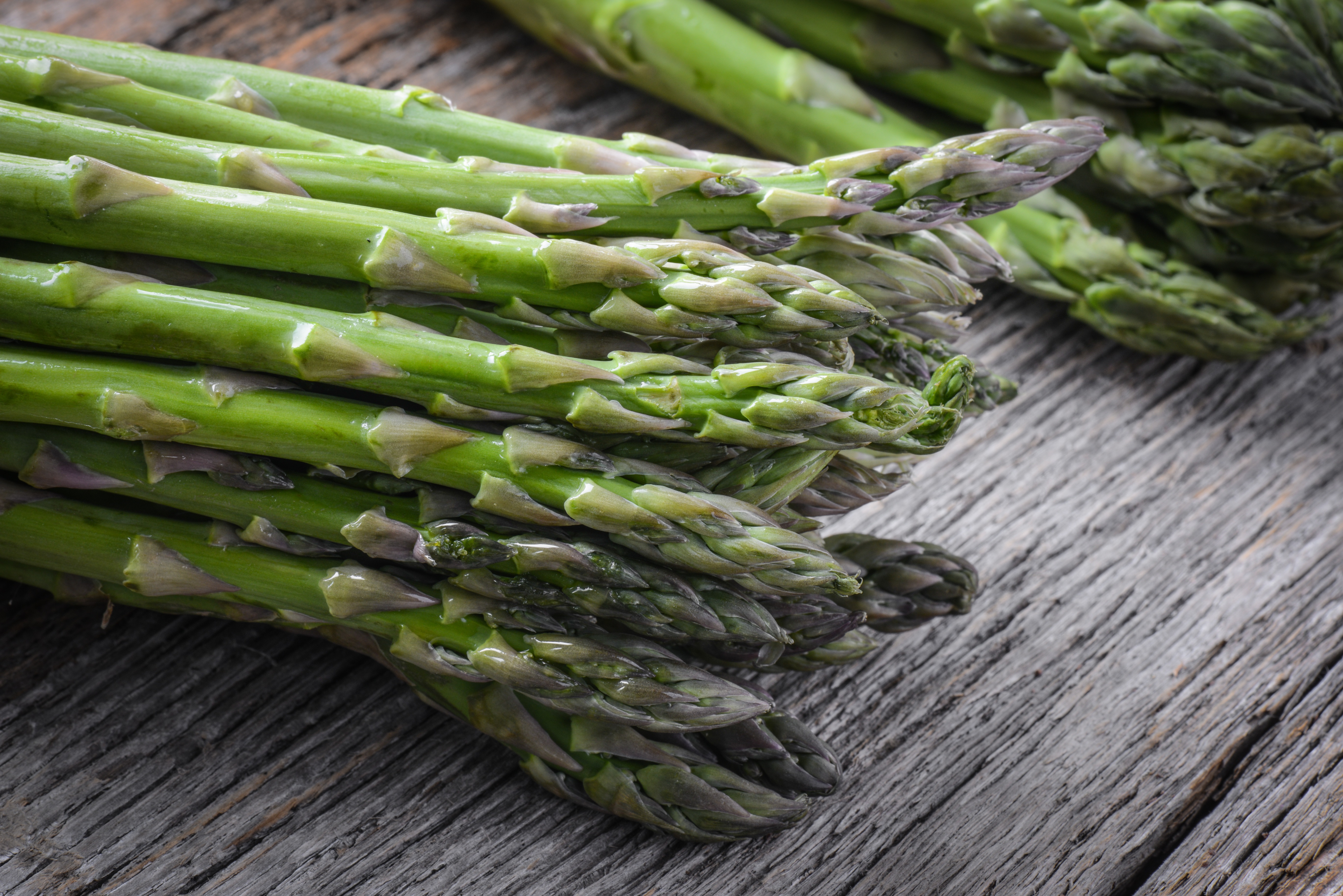
Most wine students have heard of pyrazine—methoxypyrazine to be exact—as the chemical partially responsible for the “freshly cut green grass” aroma found in Sauvignon Blanc, as well as a range of other herbaceous aromas—from green bell pepper to gooseberries to asparagus—sometimes noted in various wines including Cabernet Sauvignon, Cabernet Franc, and Carmenère.

Pyrazines are legendary. The narrative—which has been repeated countless times—goes something like this: “The scent of pyrazine is so strong; it can be detected at concentrations equal to five drops in an Olympic-sized swimming pool.”

I’ve heard this so many times, I decided to check it out. After all, so many oft-repeated facts about wine turn out to be just oft-repeated myths, as I am sure you know!

For starters, according to Jancis Robinson, et al in The Oxford Companion to Wine (third edition), the sensory threshold for the strongest form of methoxyprazine is 215 ng/L in white wine. The ng refers to nanograms, which equate to one billionth of a gram.

.

As it turns out, after a bit of rudimentary calculations,* the sensory threshold for pyrazines is not exactly five drops in an Olympic sized swimming pool, it is closer to 11 drops—still a legendary amount.

Which leads us back to where we started: this stuff is sturdy.

In reality, what we refer to as pyrazines in wine are technically nitrogen-containing (organic) aroma compounds produced as a secondary by-product of amino acid metabolism. There are three main types, as applies to wine: Isobutyl-methoxypyrazine (IBMP), Secbutyl-methoxypyrazine (SBMP), and Isopropyl- methoxypyrazine (IPMP). IPMP appears to be the most abundant of the three, and is most-often implicated in the “asparagus” range of aromas. IBMP—which accounts for the 215 ng/L threshold— appears to be the strongest and is often detected as green bell pepper or gooseberry aromas.

.

Pyrazines are, for the most part, created in the vineyard. They are initially produced during the early stage of fruit set as a defense/survival mechanism for the baby grapes (a mouthful of raw herb flavor is perhaps none too delectable to baby goats and wild boars). The level of pyrazines in the grapes can run amuck in cases of excess water or overly-dense canopies—particularly if the baby grapes spend too much time in the shade.

I happen to love herbaceous character in my wines, so as far as I am concerned, bring on the pyrazines! However, most wine lovers prefer their wines to be balanced, as opposed to the green-meanie style of wine that I adore.

Luckily, Mother Nature has her own ways of controlling pyrazines. For one, the level of pyrazine in grape berries typically drops as grapes approach ripeness. For another, increased sun exposure will sort of “burn them off.” On the other hand, cloudy days, cool climates, dense canopies, over-watering, and less-than-ripe grapes are a pyrazine’s best friend.

.

Everybody in the (pyrazine) pool!

.*If we do the math—which in this case is admittedly non-scientific and making use of generalizations such as standardized water volume vs. weight—it might go as such:

  • For starters, there are 2,500,000 liters (2.5 mega-liters [2.5 million liters]) of water in an Olympic size swimming pool.
  • If we multiply 215 nanograms times 2.5 million, we see that 215 X 2,500,000 = 537,500,000 nanograms, or 0.537 grams.
  • If one teaspoon of water equals 4.93 grams, then 0.537 grams = 0.11 of a teaspoon.
  • If we use a typical culinary calculation of 98 drops in a teaspoon, 0.11 of a teaspoon = 10.78 drops.
  • Conclusion: It’s not exactly five drops in an Olympic sized swimming pool, but at just shy of 11 drops, it is still a legendary amount.

References/for more information:

The Bubbly Professor is “Miss Jane” Nickles of Austin, Texas… missjane@prodigy.net

Confusion Corner: Palate, Palette, Pallet, AOC Palette

Wooden Pallets

An artist might paint with a color palette, you might order a pallet of wine, and your palate might enjoy the wines of AOC Palette.

Sound fanciful? Well, all of the above could be true!

For starters—yes, this post is going to be a bit of a whine about word usage—but I hope my readers will realize that I do not present this information with a sneer. I need this post as much as anyone. So here goes:

If you finish an impressive project at work and are rewarded with a bonus, you might decide to purchase a pallet of wine. That’s a lot of wine. According to the Grocery Manufacturers Association (GMA), the standard size of a wooden pallet is 48 inches by 40 inches. This standard wood pallet (theoretically) can hold 4,600 pounds—in other words, over 100 cases of wine or one adult male rhinoceros.

Artist’s Palette

If you are a painter and you paint with all the colors of the wind, or even just those on the board that you use to blend and hold your paints, you are painting with a certain color palette—blobs of which you are holding on the palette in your hands as you paint.

Those parts of your mouth that allow you to taste wine—including your tongue, taste buds, the roof of your mouth and the surrounding soft tissue —so precious to us wine lovers—collectively make up your palate. As you test and improve your wine-tasting skills, you are building your palate. If you get really good at blinding wines, you might become known—far and wide—for your impressive palate. You can also describe a wine in terms of its attack (first impressions), mid-palate (what registers as you hold the wine in your mouth), and the finish (what lingers after swallowing or spitting).

Building the Palate

As a wine lover, you might appreciate the wines of the Palette AOC. Palette is a small AOC tucked into the area south of the large Aix-en-Provence AOC, and along the northern edge of the Sainte-Victoire AOC (itself a sub-zone of the Côtes de Provence appellation). Two plots of vineyards—one on each side of the Arc River—make up the region. Palette is the smallest appellation in Provence, and is named after the tiny town of Palette.

The Palette AOC is approved for red, white, and rosé wines. The white wines must be dry (max 0.4% residual sugar) and contain at least 11.5% abv. The appellation boasts a long list of allowed grape varieties. For the white wines, the following principal varieties must comprise (singularly or combined) a minimum of 55% of the wine: Picardin, Clairette (Blanc or Rose), and Bourboulenc. Other allowed varieties include Colombard, Furmint, Grenache Blanc, Muscat Blanc à Petits Grains, Piquepoul Blanc, Ugni Blanc, Ugni Rosé, and Terret Gris. This list of allowed grapes also includes a few obscurities, including  Panse Muscade, Panse du Roy René, and Pascal Blanc.

Photo of Château Simone Palette AOC rosé by Michal Osmenda via Wikimedia Commons

For the rosés of the AOC Palette, there is a mandatory minimum of 10% Mourvèdre. Another regulation states that between 50% and 80% of the wine be comprised of the region’s principal varieties that include Grenache and Cinsaut in addition to Mourvèdre. The remaining 20% may include any of the AOC’s accessory varieties, which include Brun Fourca, Cabernet Sauvignon, Carignan, Castet, Durif, Muscat Blanc à Petits Grains, Muscat Hamburg, Petit Brun, Syrah, Téoulier, Terret Gris, and Tibouren. The white grapes may be present only to a maximum of 15% of the blend.  The rosé wines of Palette may contain up to 0.4% residual sugar, and are required to contain at least 11.5% abv.

The red wines are produced using the same slate of allowed grape varieties as the rosés; however, the white grapes are not approved for use in the red wines. The minimum abv for Palette Rogue is 11.5%, and the maximum allowed residual sugar is 0.3%. For the red wines, there is a mandatory minimum aging requirement of 18 months in wood.

The Palette AOC contains only about 100 acres (40 ha) of vines and just a few producers, including Château Simone and Château Henri Bonnaud.

References/for more information:

The Bubbly Professor is “Miss Jane” Nickles of Austin, Texas… missjane@prodigy.net


Confusion Corner: Claret, Clairet, Clairette

.

It happens every time I teach a class on the wines of France. I mention that the term “claret” is an old-fashioned name, used by the British back-in-the-day to refer to red Bordeaux. Typically, I immediately get the following questions:

  • Is that the same as the grape used in the sparkling wines of the Rhône?
  • Isn’t that a rosé?
  • Shouldn’t that be pronounced “klar-AH”???

I like these questions, as they may indicate that:

  • The group is paying attention
  • The group has read the entire chapter on France, as they were requested to do (yeah!)
  • The group has a few sassy members

In the best of all possible words, all of the above are true (I appreciate sassy students).

In light of all this, I think that the clairet-claret-clairette topic is an excellent one for my “Confusion Corner” series. So here goes, let’s clarify this cluster!

.

Claret: Claret (pronounced KLAR-eht in French and klerət in English) is an old-timey English term used to refer to the red wines of Bordeaux. Over time, it also morphed into use for a particular style of red wine defined loosely as higher-in-tannin or “drier” than red Burgundy. It is believed that the use of the term claret, based on the terms vin clar or vin clarum—meaning something akin to pale wine or clear wine— came about due to fact that in the early days of the wine trade, Bordeaux red was a much lighter wine than the deep reds of today’s Bordeaux.  These early Bordeaux reds were quite pale in color (similar in appearance to a “dark rosé” produced today).

In the official documents for the Bordeaux AOC—the Cahier des charges de l’appellation d’origine contrôlée Bordeaux—the term is mentioned in the following manner:  La mention “claret” est réservée aux vins rouges (google-translated as “The word ‘claret’ is reserved for red wines”). Note that the term “claret” is listed as a descriptive term, and that the official name of the wine is some variation of “Bordeaux AOC” (or one of the many other AOCs used for the red wines of Bordeaux).

The term claret is sometimes used, as a sort of proprietary name, on New World wines based on the red grapes of Bordeaux, as seen here on Becker Vineyards Texas Claret (a classic Bordeaux-style blend of Cabernet Sauvignon, Merlot, Cabernet Franc, Malbec and Petit Verdot).

Clairet: The term “clairet” is also considered a historical term, but in modern times it has a distinct definition as being a defined style of “dark rosé” Bordeaux AOC wine. The Cahier des Charges for the Bordeaux AOC even lists specific standards for Bordeaux Clairet for such particularities as residual sugar, volatile acidity, and total sulfur dioxide—and in some aspects they are clearly distinct from those required for those wines defined as “rosé” as well as “rouge.”  Bordeaux Clairet is typically fermented on the skins for anywhere from 24 to 48 hours.

On the official documents for the Bordeaux AOC— the Cahier des charges de l’appellation d’origine contrôlée Bordeaux— the term is mentioned in the following manner:  La mention “clairet” est réservée aux vins rosés foncés (google-translated as “The word ‘clairet’ is reserved for dark rosé wines”).

Clairette: If you guessed this thing is not like the others, you are absolutely right! Clairette (pronounced somewhat universally as KL-ERRehT) is a white vinifera grape, native to the south of France and used in a variety of wines throughout the Languedoc, Rhône, and Provence. Its most famous incarnation is quite possibly as the star of the sparkling wines of the Clairette de Die AOC, as well as (along with Muscat à Petits Grains) the slightly sweet, slightly fizzy Clairette de Die Méthode Dioise Ancestrale.  

Clairette is also one of the13 or 18 (depending on how you count them) grapes allowed in the Châteauneuf-du-Pape AOC blend—which allows for both the typical Clairette Blanc version as well as its color-mutation-cousin, Clairette Rose.

Bonus clarification: Clarete (pronounced cla-re-te) is a Spanish term (also somewhat old-timey) used to describe dark rosé or light red wines (something between a rosado and a tinto). It has no “official” definition or appellation, but is a useful descriptive term.

References/for more information:

The Bubbly Professor is “Miss Jane” Nickles of Austin, Texas… missjane@prodigy.net


Dolomite and the Dolomites

.

Dolomite (which sounds to my ear like “dynamite”) is a loaded word with several meanings. The term may be used to refer to a mineral, a rock, a mountain range, a UNESCO World Heritage Site, or a region (loosely defined as an area stretching across the northern reaches of Trentino/Alto Adige, Veneto, Friuli (perhaps), and a small part of Austria as well).

Starting with the most basic use of the term—the mineral—dolomite is largely composed of calcium carbonate and magnesium. Dolomite (the mineral) is often found in long-buried sedimentary stones and bedrock. These stones are often known as dolostone or simply dolomite.

Sharp students of wine and/or geology may have recognized the previous mention of calcium carbonate and considered that dolomite (the stone) might be similar to limestone. This is true: dolomite and limestone are very similar, and form in the same manner—that is, via sedimentation in warm, calcium carbonate-rich, shallow waters. The main difference between the formation of limestone and dolomite is that dolomite contains more magnesium. Dolomite is sometimes even formed from limestone, as limestone is modified by magnesium-rich limewater. The resulting rock may be termed dolomite or dolomitc limestone.

.

Dolomite (the stone) is famously found in several specific portions of the Italian Alps, and one such range—made up of 18 peaks reaching high above the surrounding valleys—is known as the Dolomites.

The Dolomites (the mountains) stretch across 350,000 acres (140,000 ha) and form a series of sheer walls, steep valleys, pinnacles, steeples, and cliffs. Fifteen of the Dolomite Mountain peaks are more than 10,000 feet (3,300 m) high and some of the sheer rock cliffs tower as much as 4,425 feet (1,500 m) higher than the surrounding countryside. The sheer rocks reflect the sunlight and glimmer in a range of pink, gold, and coral hues—contrasted by the forests and meadows below. This stunning natural beauty is part of the reason the area was declared a UNESCO World Heritage Site in 2009.

The Vigneti delle Dolomit IGT: Wine enthusiasts may remember seeing the term “dolomite” on a wine label hailing from Trentino, Alto Adige, or the northern reaches of Veneto (sometimes a portion of Friuli is included in the loop as well)—calling attention to the well-drained, alkaline, and mineral-rich soils of the area. There is even an geographical indication—Vigneti delle Dolomiti IGT (Indicazione Geografica Tipica)—named for the dolomites, covering the area and including parts of Trentino-Alto Adige and Veneto. As the German language is also widely spoken in this area, the Vignetti delle Dolomiti IGT is also known as the Weinberg Dolomiten.

.

Wines produced under the Vigneti delle Dolomit IGT are made in many styles—including still and sparkling wines of red, white, and rosé—as well as passito (dried grape) and dessert wines (also of red, white, and rosé). A long list of grape varieties are allowed, including international superstars Chardonnay, Sauvignon Blanc, Cabernet Sauvignon, Merlot, and Pinot Nero (Pinot Noir). However, some of the more interesting and indigenous grapes of the area are cultivated here as well. These include Marzemino, Nosiola, and Teroldego, as described below:

  • Marzemino: Marzemino is a red grape, native to northern Italy. It is known for producing light-to-medium bodied wines with crisp acidity, dark color, and flavors of sour cherry, violets, plums, and herbs. It is often used in red blends, and may be used to produce a dried-grape, passito-style sweet wine. However, its leading claim to fame is that it was beloved by Mozart, and mentioned in his opera Don Giovanni: “Versa il vino! Eccellente Marzimino!” (Pour the wine, the excellent Marzemino)!
  • Teroldego: A darkly-hued red grape native to Trentino, Teroldego produces medium-to-full bodied red wines with intense color, moderate tannins, crisp acidity, and a hint of bitterness. Studies show it is related to Syrah, which helps to explain the typical flavors of sour cherry, licorice, hints of tar, almond and herbs. Oak-aged versions can be spicy and redolent of pine. The Teroldego Rotaliano DOC, located in the northern section of the Trentino province, is approved for the production of 100% Teroldego-based red or rosato (rosé) wines.
  • Nosiola: Nosiola is a golden-skinned white grape variety native to Trentino used to produce crisp, clean, and easy-drinking table wines as well as sweet (late-harvest, botrytis-affected, or passito) sweet wines (including Vin Santo). Dry wines tends to be fruity, floral, and herbal in tone, while sweet wines tend to show a nutty hazelnut character. This makes sense, as the name of the grape—Nosiola—is based on an Italian term for hazelnut: nocciola.

The vineyards of Trentino/Alto Adige, northern Veneto and Friuli contain abundant fragments of dolomite as well as the weathered remnants of the Alps, carried down to the vineyards via gravity, water, and other forces. So, while a springtime trip to the Dolomites sounds delightful, and nice glass of Marzemino or vino bianco from Trentino might be a good substitute (for now).

A shout-out to science: The Dolomites are named in honor of Dieudonné Dolomieu, an 18th-century French geologist who made the first scientific study of the geology of the region.

References/for more information:

The Bubbly Professor is “Miss Jane” Nickles of Austin, Texas… missjane@prodigy.net

What’s it all about, Bergland?

.

The wine regions of Austria have always seemed a bit confusing to me. Actually, that’s an understatement—but the issue is with me, not with Austria. I just need to focus. So here goes—I’m diving straight into the area that has (in the past) confused me the most, and am determined to develop a crystal-clear understanding of Bergland.

For starters: Austria has four main Weinbaugebiete (we’d call them “quality wine regions”). They are: Burgenland, Niederösterreich (Lower Austria, referring to being down-river on the Danube from the region they call “Upper Austria), Wien (Vienna), and Steiermark (Styria). These four regions are also states (or, in the case of Vienna, a capital city that serves as its own state, much like Washington DC here in the US) and can therefore serve as a PDO designation of origin—and—these regions may also contain more specific subregions (which may or may not be a Districtus Austriae Controllatus [DAC]). Did someone say confusing???

What’s Bergland got to do with it: Austria also has three large Weinbaugregionen (Landwein regions), or regions that are approved for PGI (protected geographical indication) wine. Two of these—Weinland Österreich and Steierland—neatly overlap with the PDO regions and are simple enough. However…there’s Bergland (not to be confused with Burgenland)…with no subregions and no overlap with the Quality Wine Regions of Austria.

If you check out my handy-dandy map, you’ll see that all of Bergland lies in the western section of the country which has typically been thought of as too cold, too mountainous, and too alpine for high-quality wine production (but a fantastic place for schnapps and beer—keep in mind that a good portion of the area is just south of Germany’s Bavaria). However, as we’ll see, there are some nooks and crannies of this rugged area that make for decent vineyard land, and wine is produced here.

Here is a closer look at the Bergland PGI, divided up by the five federal states that comprise the region:

Hochosterwitz Castle

Kärnten (Carinthia): Carinthia is the southernmost state of Austria, is entirely situated within the Eastern Alps, and is home to the eastern edge of the Grossglockner—the highest peak in the country. Viticulture in this area centers around the area near Hochosterwitz Castle as well as the valleys of the Lavant and Drava Rivers. The area currently has 170 hectares (421 acres) of vines, and the wines of the region have proven popular with tourists and locals alike, showing “promising potential.”

Oberösterreich (Upper Austria): It makes sense that the region upriver on the Danube would be a fine region for viticulture; after all, after the Danube crosses the political boundary separating “Upper” from “Lower” Austria, it flows through the famous wine regions of Wachau, Kremstal, Traisental, and Vienna. The area of Upper Austria did (historically) have quite a dynamic wine industry, and after several decades of decline, is back in business. Upper Austria currently has about 112 acres (45 ha) of vines, both in the Danube River Valley and the hilly regions closer to the center of the state.

Salzburg, with Mönchsberg Mountain in the background

Salzburg: Apparently there is more to Salzburg than the Sound of Music. However, if you are familiar with the classic musical (movie version), you no doubt noticed the soaring Alps surrounding the city, and indeed, the city of Salzburg is known for its five mountains, one of which—Mönchsberg—is home to vineyard overlooking the city. While apparently a new phenomenon, it seems there are now several vineyards in the state of Salzburg (totaling about 18 acres [7 ha]), and even a few within the city limits. This version of what they call “Mönchsberg Sparkling Wine” looks fascinating!

Voralberg: Voralberg is the westernmost state of Austria, bordering Switzerland, Germany, and the tiny country of Lichtenstein. Voralberg touches on Lake Bodensee and the Rhine River, and is close to a few outlying portions of the Württemberg and Baden wine regions of Germany. As such, it makes sense that there was once a thriving wine industry here; by some accounts the area had over 500 hectares planted to vines once upon a time. However, phylloxera reared its ugly head, and the industry has been slow to bounce back. Currently, Voralberg has 25 acres (10 ha) of vines, including one located in the town of Röthis, just a few miles east of where the Rhine River forms the border between Austria and Switzerland.

Photo of Zirl by Svíčková via Wikimedia Commons

Tirol (Tyrol): If you are familiar with Italy’s South Tyrol (Südtirol, aka Alto Adige) wine region, you may have wondered if there is a “North Tyrol.” Well, there is—and it is just north of Italy, in Austria. The state of Tyrol is discontinuous, divided by a 4.3-mile- (7 km-) wide strip; the larger area, straddling the area between Italy’s South Tyrol and Germany’s Bavaria, is known as North Tyrol; the smaller portion is East Tyrol. There is some historic connection to wine production here, including a (no longer cultivated) 14th-century vineyard located in Zirl—the products of which were greatly appreciated by Emperor Maximilian I (1459-1519). Modern winemaking is springing to life as well, and Tyrol currently has 12 acres (5 ha) of vines and over two dozen wineries; check out the website of the Weinbau Verband Tiroler here.

Grapes and wines produced in Bergland are similar in variety and style to the overarching wines of Austria. White grapes prevail—particularly Grüner Veltliner, Riesling, Pinot Gris, Pinot Blanc, Chardonnay, Sauvignon Blanc, and Müeller-Thurgau. The main red grapes are Zweigelt and Blauer Burgunder (Pinot Noir).

References/for more information:

The Bubbly Professor is “Miss Jane” Nickles of Austin, Texas… missjane@prodigy.net