WineGeo: The Massif Central

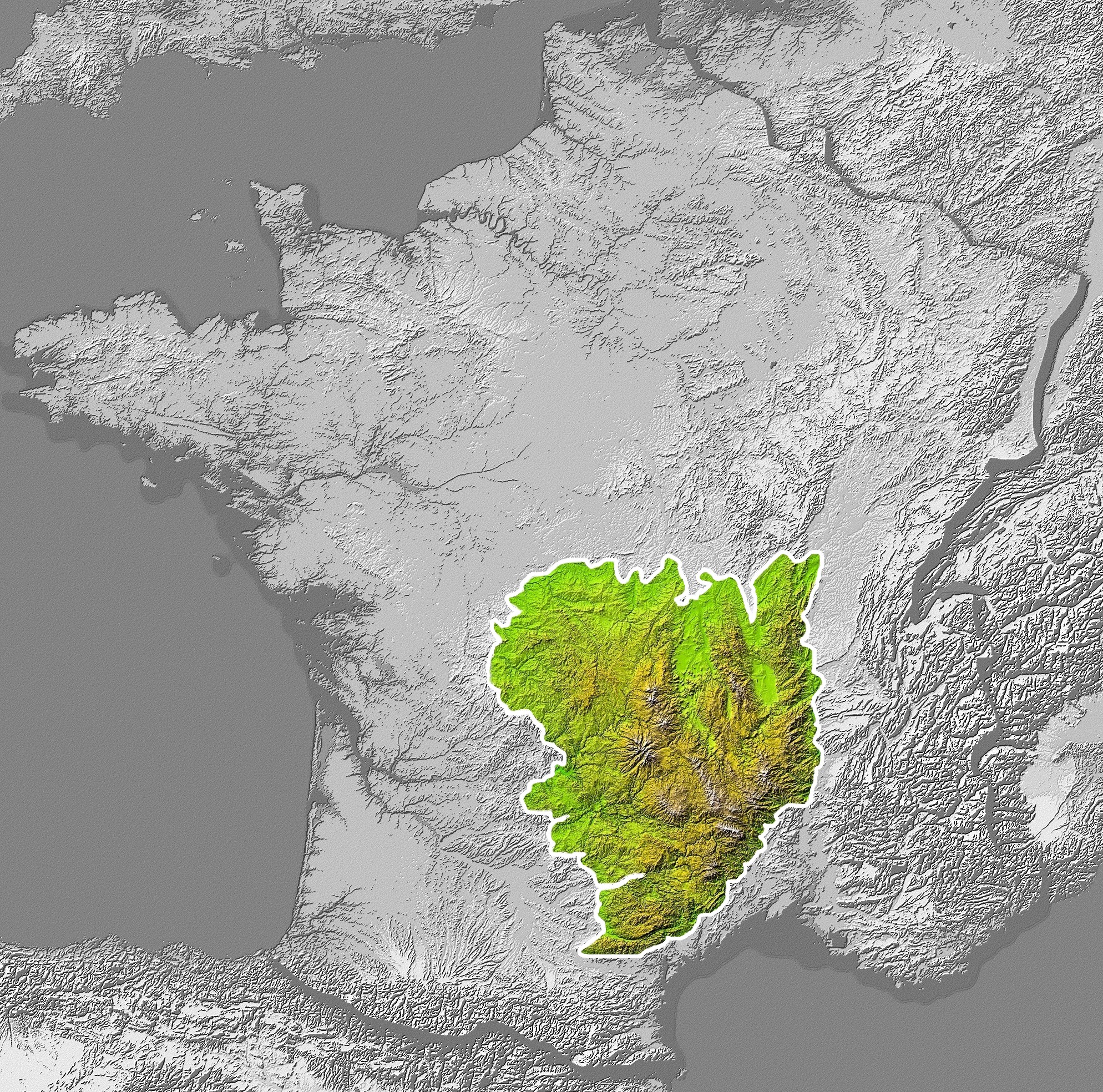
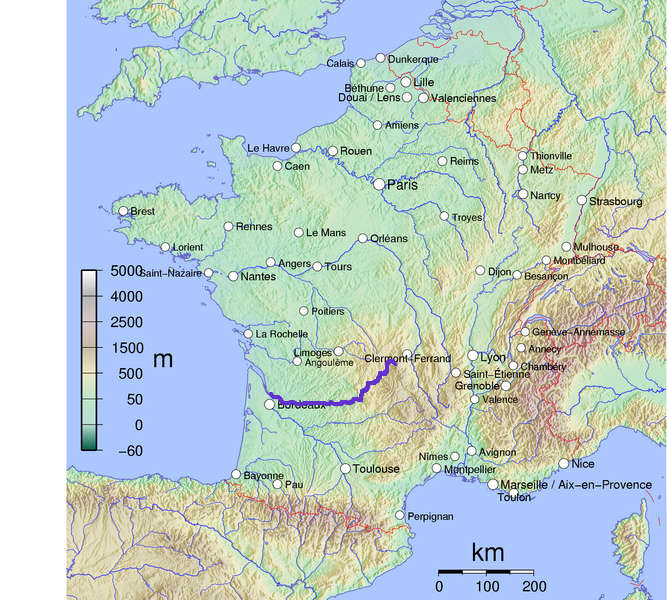
Map of the Massif Central by Technob105, via Wikimedia Commons

Map of the Massif Central by Technob105, via Wikimedia Commons

As a wine lover, surely you have heard of the Massif Central. It’s that big uplift in the middle of France. Except that’s not exactly true…

The Massif Central is actually located in the south of France; but fairly well centered on the east-west axis—just take a look at the cool map. Its boundaries sound familiar to wine lovers: it fills the area between the Loire River Basin to its north, the Mediterranean coastal plains of Languedoc to its south, the lowlands of Aquitaine to the west, and the Rhône-Saône River valley to the east.

Most of the area within the Massif Central consists of rugged mountains, fertile valleys, and forests—about 35% of the area is forests. The rest of the land is open countryside and farmland, much of which supports three brands of cattle (Limousins, Aubracs, and Salers) as well as Lacaune Sheep—famous for producing the milk that will become Roquefort Cheese. A few small towns dot the middle of the area, and three cities—Saint Etienne, Clermont Ferrand, and Limoges—are located near the edges.

The outline of the area, which does not conform to any political or regional boundaries, is considered to be demarcated by the contour line of 1,000 feet (300 m) above sea level. Most of the land sits at an altitude of about 1,640 feet (500 m). The Massif Central stretches over 200 miles from north to south, and about 175 miles (at its widest point) from east to west. This is a large area—all told; it covers about 15% of France. It is also the third highest mountain range in France, thanks to the 6,190-foot (1,885-m) summit of Puy de Sancy.

The town of Navacelles, in the Massif Central

The town of Navacelles, in the Massif Central

Many famous wine-related rivers have their source in the Massif Central. These include the Lot and the Tarn—both tributaries of the Garonne; as well as the Dordogne, the Cher, and the Loire.

Some vineyards are tucked around into the valleys and the outskirts of the uplift. One of these, the Côtes de Millau AOC, is the easternmost of the South West France AOCs. It is located in the south of the Massif Central in and around an area known as Causse du Larzac—a limestone karst plateau situated between the towns of Millau and Lodève. Karst is a landscape formed from the dissolution of soluble rocks, such as limestone, and the deep valleys and gorges here were created over the millennia as the Tarn River cut a series of paths through the limestone. Most of the Côtes de Millau vineyards are planted on steep, terraced slopes in the deep valleys of the Tarn.

The Côtes de Millau AOC produces red wines (dry), white wines (dry and off-dry), and rosé (dry and off-dry). The reds are blends, based on a minimum of 30% Syrah and 30% Gamay, 10% to 30% Cabernet Sauvignon and an allowed splash (max 20% each) of Fer and Duras. Rosés are based on a minimum of 50% Gamay; Cabernet Sauvignon, Duras, Fer, and Syrah are also allowed. White wines are made with a minimum of 50% Chenin Blanc and a minimum of 10% Mauzac.

The Millau Viaduct

The Millau Viaduct

If you’d like to visit the wineries of the Côtes de Millau, you’ll need to transverse the Tran River Gorge. Have no fear, you can drive across via the A75 highway on the cable-stayed Millau Viaduct bridge, and when you do, you’ll be on the tallest bridge in the world. The height of the tallest mast is 1,125 feet (343 m) and the bridge deck is 890 feet (270 m) high. If you are bothered by heights, it might be best not to look down.

References/for more information:

 The Bubbly Professor is “Miss Jane” Nickles of Austin, Texas… missjane@prodigy.net
 

The Outer Limits: The Dordogne before Bordeaux

..

..

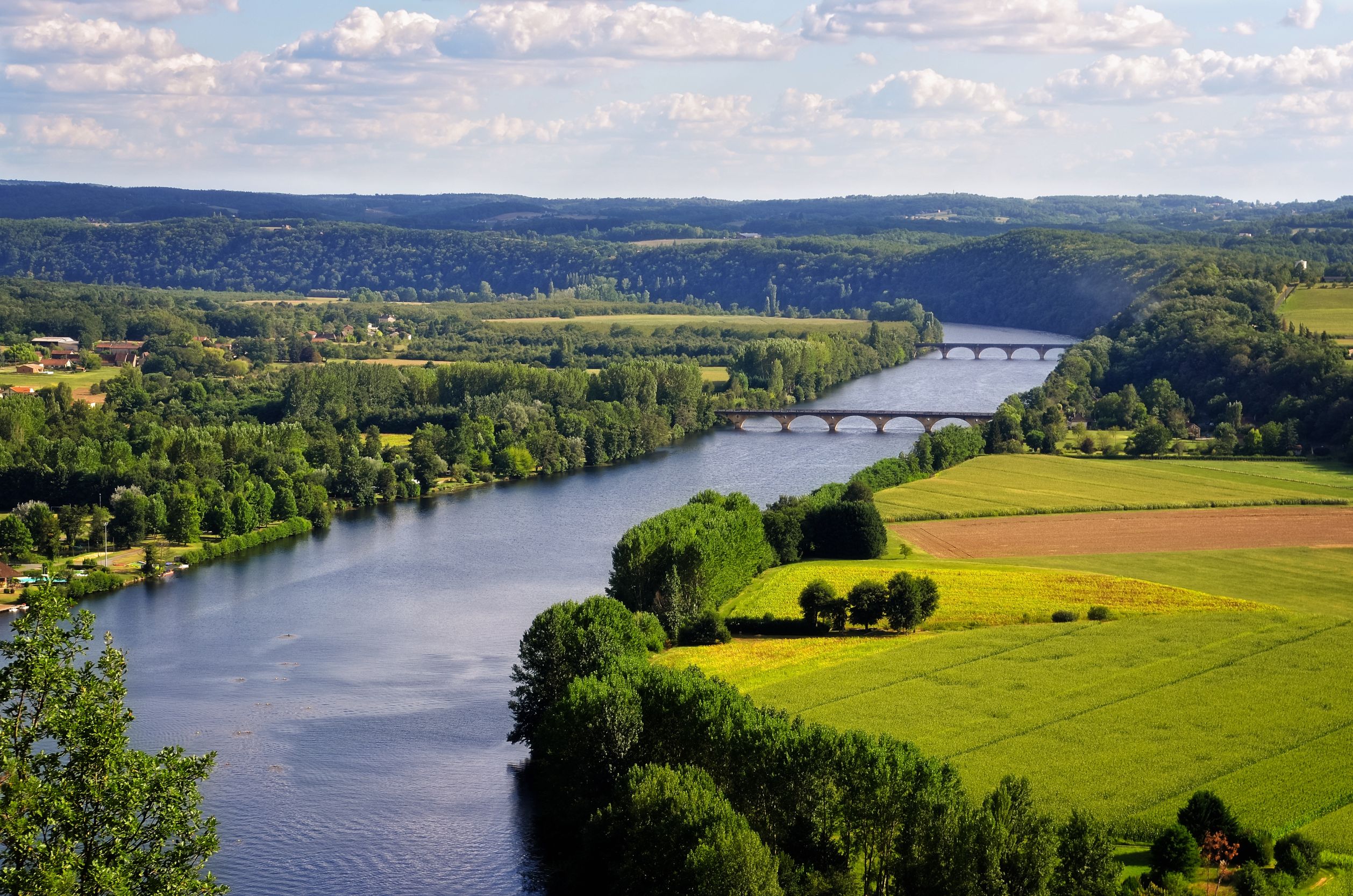
The Dordogne River is well-known as one of the three main waterways that flow through and handily divide the Bordeaux AOC into the areas of the Right Bank, Left Bank, and Entre-Deux-Mers. However, Bordeaux is only part of the story of the Dordogne River.

The sources of the Dordogne is found almost in the center of France—it’s just a bit too far south to call it the true center. In the mountains of the Massif Central, two small streams—the Dore and the Dogne—arise on the side of Puy de Sancy (Mount of the Cross), which at 6,184 feet (1,885 m) high is the highest mountain in the range. After a bit of meandering around, these two streams flow together and form the Dordogne River.

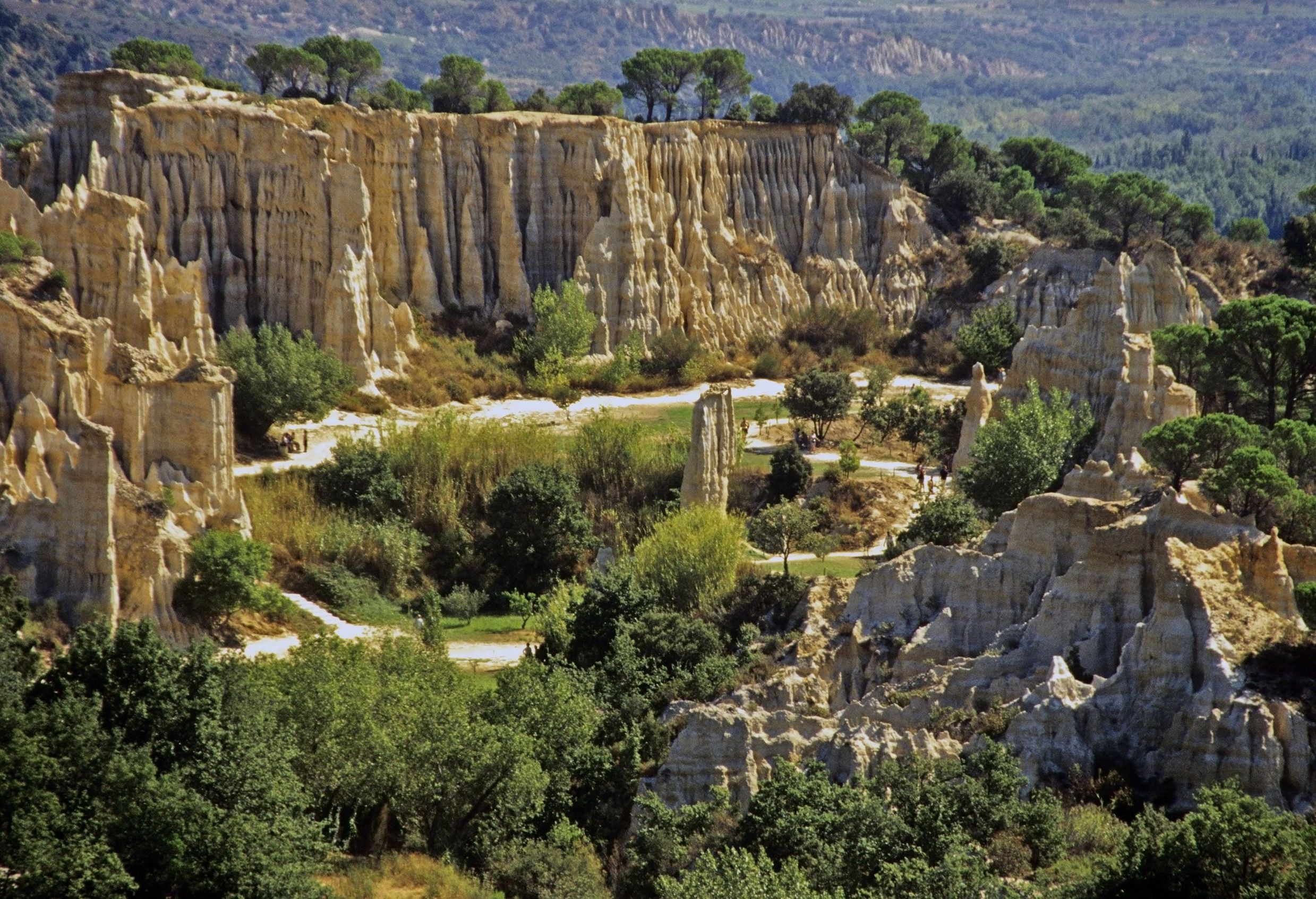
The upper valley of the Dordogne River is a series of deep gorges, cliffs, and lakes. The river then flows through the neighboring countryside, occasionally meeting small towns such as Lanobre (where you can visit the Château de Val [not a wine-producing Château but a well-preserved Gothic Castle]) and Bort-les-Orgues, where you can view the “Les Orgues” volcanic rock formation—which stretches over half a mile and resembles a series of 300 foot-high organ pipes, the result of cracks formed in cooling, prehistoric lava flows.

..

..

About 50 miles later the river flows through the city of Argentat, a lovely town where medieval houses line the streets along the river. From Argentat, the river twists and turns for about another 100 miles, and just before the town of Lalinde, the Dordogne flows into the Bergerac/Cotes de Bergerac AOC.

The Bergerac AOC produces red, white, and rosé wines. Bergerac reds and rosés center on Cabernet Sauvignon, Cabernet Franc, Malbec, and Merlot; also allowing for small amounts of Fer Servadou and Mérille. White wines are based on Sémillon, Sauvignon Blanc, Sauvignon Gris, and Muscadelle; varying small amounts of Ugni Blanc, Chenin Blanc and Ondenc are also allowed. The Cotes de Bergerac AOC occupies the same area as the Bergerac AOC, and produces the same range of wines but with stricter standards for yield and must weight at harvest. The Cotes de Bergerac AOC also allows for a sweet white wine; whites in the Bergerac AOC must be dry.

.

.

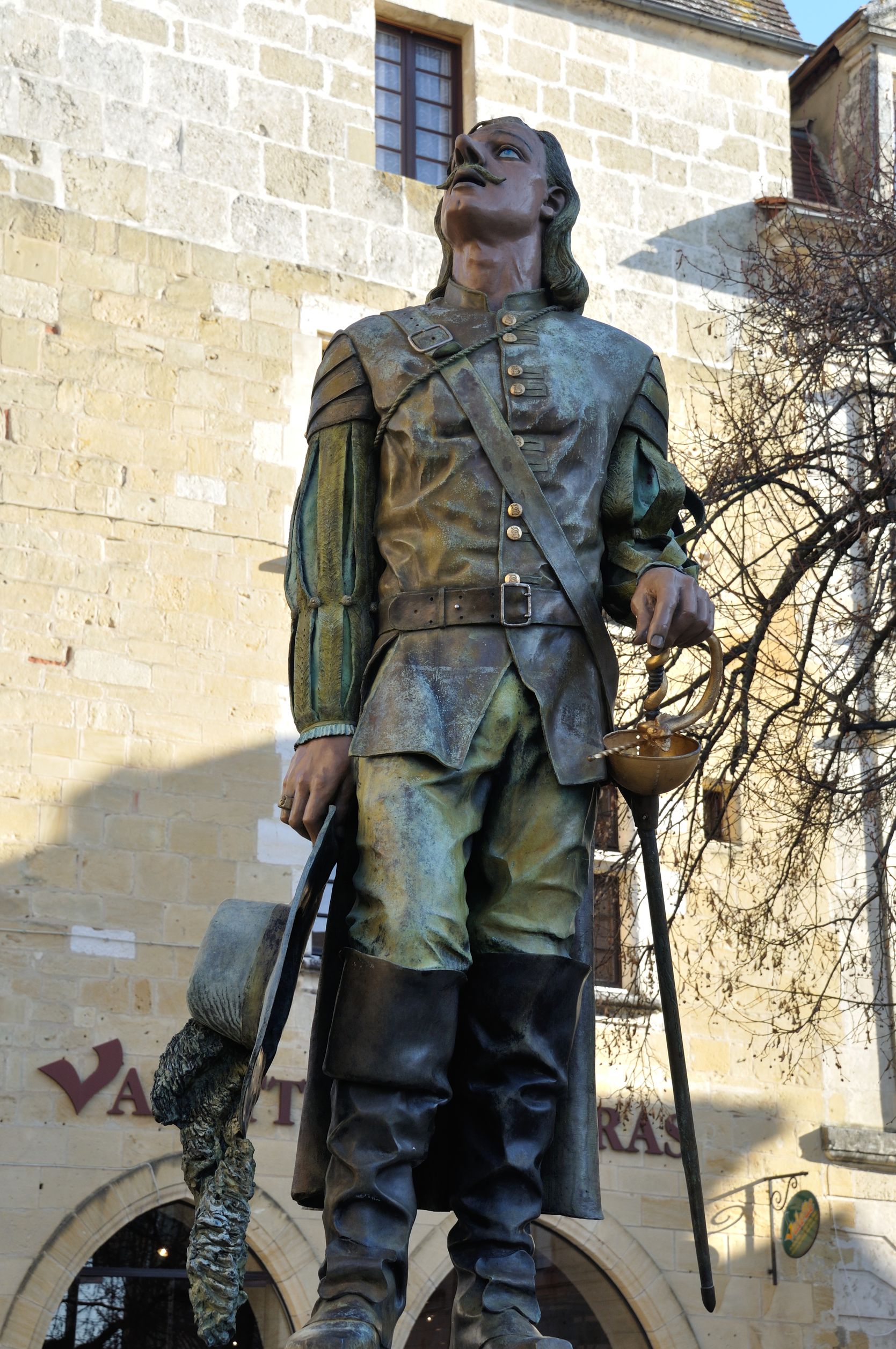
Tucked into the Bergerac AOC, and surrounding the actual town of Bergerac (and its famous statue of Cyrano), we find the Pécharmant AOC. The Pécharmant AOC produces dry red wines only, based on Cabernet Franc, Cabernet Sauvignon, Merlot, and Malbec. Pécharmant is required to contain at least three varieties, and no one variety can exceed 65% of the blend.

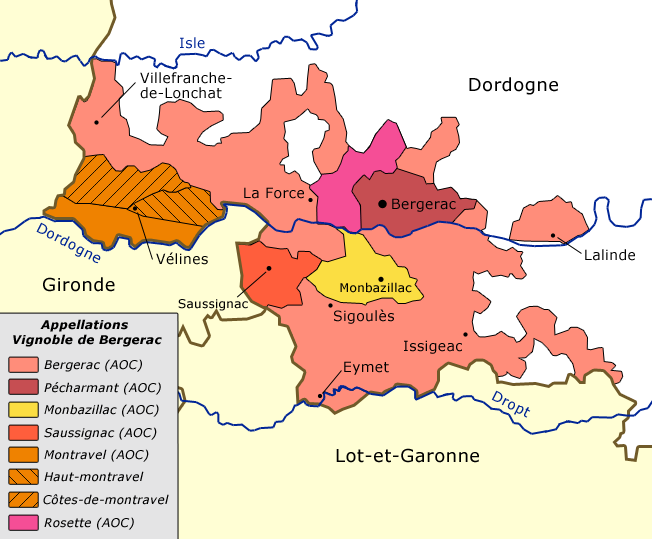
Following the river just to the west of the Pécharmant AOC, we find two wine regions: Rosette to the north of the river, and Monbazillac to the south—both produce off-dry and sweet white wines. Rosette AOC must contain 2.5%–5.1% residual sugar and is a blend of at least two of the following grapes: Sauvignon Blanc, Sauvignon Gris, Sémillon, and Muscadelle.

The Monbazillac AOC is famous for its sweet white wines that are often touted as something of a less expensive “version” of Sauternes. The grapes of the Monbazillac AOC include the principal varieties Sauvignon Blanc, Sauvignon Gris, Sémillon, and Muscadelle; other allowed varieties include Chenin Blanc, Ondenc, and Ugni Blanc. There are few restrictions on the content of the blend, provided that at least 80% of the contents consist of the principal varieties. Monbazillac blanc must contain at least 4.5% residual sugar, and the most famous wine of the appellation—Monbazillac Sélection de Grains Nobles—must contain at least 8.5% residual sugar. Grapes used in Monbazillac AOC wines must be selectively hand-harvested and may be affected by botrytis, but this is not required.  While in Monbazillac, be sure and visit the Château Monbazillac which is a historic castle, a modern winery, and a contemporary arts center!

Map of the Dordogne River by Boerkevitz, via Wikimedia Commons

Map of the Dordogne River by Boerkevitz, via Wikimedia Commons

To the north of the Dordogne, about 15 miles west of the Rosette AOC (and onward through the surrounding Bergerac AOC), we find the Montravel AOC. The Montravel AOC produces both red and white wines that closely mirror the wines of nearby Bordeaux. White wines are based on a minimum of 25% Sémillon plus a minimum of 25% (combined) Sauvignon Blanc and Sauvignon Gris; other allowed varieties include Muscadelle and Ondenc. The Haut-Montravel AOC produces sweet white wines (minimum 8.5% residual sugar) from the same blend. Red Montravel AOC is based on a required minimum of 50% Merlot and must include at least one other grape variety; allowed red grapes include Cabernet Sauvignon, Cabernet Franc, and Malbec.

For about 15 miles, the Dordogne River forms the border between the wine regions of Bergerac and Montravel (on the north bank of the river) and Saint-Foy-de-Bordeaux (on the south bank). Just past Saint-Foy-de-Bordeaux, the Dordogne dips inside the Bordeaux AOC and creates the boundary line between Bordeaux’s Right Bank and Entre-Deux-Mers. Somewhere between the AOCs of Fronsac and Margaux, the Dordogne River joins the Garonne and together, as the Gironde Estuary, they make their way into the Atlantic Ocean.

Map credit: Cyril555, via Wikimedia Commons

Map credit: Cyril555, via Wikimedia Commons

References/for more information:

The Bubbly Professor is “Miss Jane” Nickles of Austin, Texas… missjane@prodigy.net
The Outer Limits: The Garonne before Bordeaux

The beginnings of the Garonne in Spain's Aran Valley

The beginnings of the Garonne in Spain’s Aran Valley

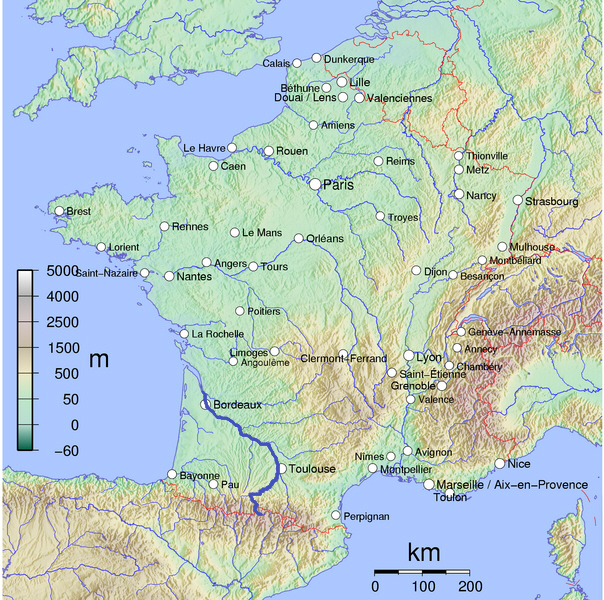
The Garonne River is well-known to wine lovers as one of the three major waterways of Bordeaux—as well it should be. But The Garonne’s journey through Bordeaux and into the Atlantic Ocean is just a part of the full story of the river, which actually flows for over 370 miles beginning in Spain. From its source in the Pyrenees Mountains of Spain, the river flows through the fourth largest city in France and touches the wine regions of Fronton, Saint-Sardos, Brulhois, Buzet, Côtes de Marmandais, and Bordeaux (among others). It’s quite the river.

The actual source of the Garonne is somewhat up for debate—depending upon how one defines the actual source of a river and even upon the season of the year. However, experts can agree that the source of the Garonne can be found in the Aran Valley (Val d’Aran) of Spain. The Aran Valley is located in the corner of Catalonia that borders Aragon. The source of the Garonne is located on the northern side of the Pyrenees, about 25 miles from the border of France.

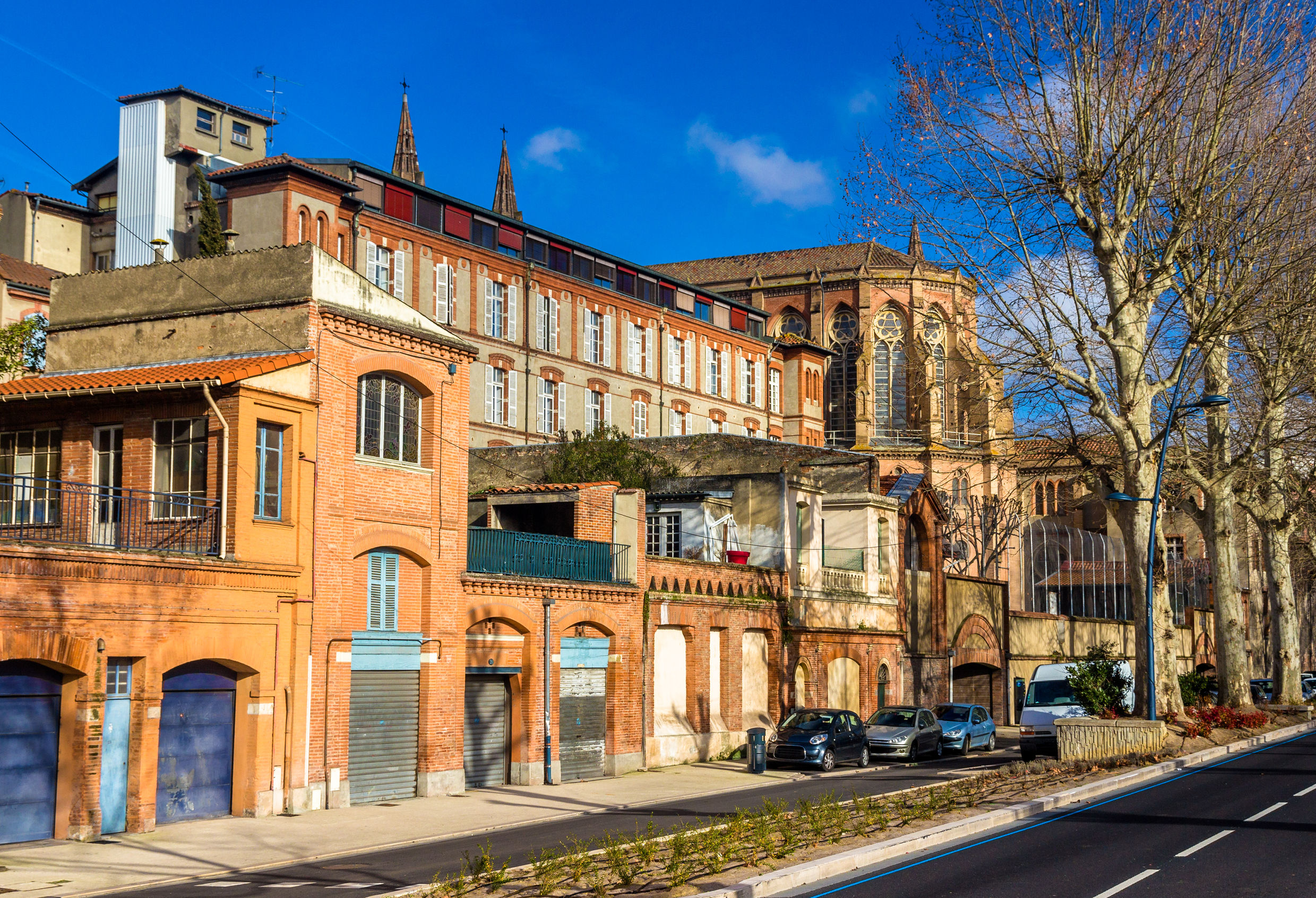
As we follow the Garonne from its source in the Spanish Pyrenees Mountains, after about 125 miles it flows into Toulouse—famed for its unique architecture of pinkish terracotta buildings, earning it the nickname of la Ville Rose (“the Pink City”), as well as being the fourth-largest city in France (after Paris, Lyon, and Marseille). Toulouse might well be worth a stop. For those interested in science and industry, Toulouse is the center of the European aerospace industry, the headquarters of Airbus, and the home of the Galileo positioning system. Those more interested in tourism can visit two UNESCO World Heritage Sites: the Canal du Midi and the Basilica of St. Sernin—the latter being the largest remaining Romanesque building in Europe, and a historic stop on the Santiago de Compostela pilgrimage route.

View of the Church of Gesu in Toulouse

View of the Church of Gesu in Toulouse

Following the river for about 20 more miles, we arrive at the Fronton AOC. Fronton is one of the oldest wine-producing regions in France; vines were first planted here by the Romans. However, for a good part of modern history the wines of Fronton were at a distinct disadvantage when it came to trade; as they were heavily taxed as they passed through the port of Bordeaux. These days, the Fronton AOC produces hearty and rustic reds and rosés based on the Négrette grape variety. In both styles of wine, Négrette must be at least 40% of the blend (and is permitted to be the sole grape variety); the remainder of the blend may be made up of various red grapes allowed in various proportions, including Syrah, Malbec, Gamay, Cabernet Sauvignon, Cabernet Franc, Cinsault and an interesting little red grape known as Fer. Fer, according to Jancis Robinson, is a somewhat “untamed” grape native to Southwest France that was domesticated from locally-growing wild vines. It is known as a highly tannic red grape, richly hued and aromatic that is widely grown throughout Southwest France. (Side note: the grape was likely named from the Latin word ferus meaning “wild” or “savage.”)

If we drive (or swim) across the Garonne River starting in Fronton, we will end up in the Saint-Sardos AOC. The Garonne skirts the eastern section of the boundaries of the AOC, and the sunny terraces along the river are rich in alluvial soil. The AOC produces reds and rosés. Both styles of wine must contain a minimum of 40% Syrah and 20% Tannat. Other allowed grapes include Cabernet Franc and Merlot.

Map of the Garonne by Boerkevit, via Wikimedia Commons

Map of the Garonne by Boerkevit, via Wikimedia Commons

If we follow the Garonne another 42 miles of so, we will arrive at the Brulhois AOC. Brulhois, whose name is derived from an old Gascon word meaning “wooded slopes,” is home to many types of agriculture and is thus a very small producer of wine (despite the excellent quality of the land). The Brulhois AOC produces both red and rosé wines based on red grape blends. Principal varieties are Cabernet Franc, Merlot and Tannat and must make up a (combined) minimum of 70% of the blend. Other allowed varieties include Cabernet Sauvignon, Malbec, and Fer-Servadou (the local name for Fer). Red wines must contain at least two varieties; rosé must contain at least three.

Another 20 miles upriver we arrive at the Buzet AOC. It is easy to see the influence of Bordeaux in the wines and grapes of Buzet; the area produces white, red, and rosé wines—all based on a range of grapes that include the Bordeaux varieties in with the grapes native to Southwest France. The white wines of the Buzet AOC allow for the use of Muscadelle, Sauvignon Blanc, Sauvignon Gris, or Sémillon as principal grapes; the accessory varieties of Colombard, Petit Manseng and Gros Manseng may combine in a maximum of 10% of the blend.  The reds and rosés of the region are based on Cabernet Franc, Cabernet Sauvignon, Malbec or Merlot; a maximum of 10% may include Petit Verdot and Abouriou (combined). Abouriou is a red grape native to Southwest France, grown in very small amounts, and which tends to be low in acidity, highly tannic, deeply hued and somewhat spicy in flavor.

Next, after a drive of about 70 miles, we arrive at the city of Marmande and the Côtes de Marmandais AOC. The Côtes du Marmandais AOC, in my opinion, wins the prize as “most obscure” wine region in this trip along the Garonne. The Côtes du Marmandais, like Buzet, shares its palate of grape varieties with both Southwest France and Bordeaux. The AOC produces white, red, and rosé wines. The whites are based on Sauvignon Blanc and Sauvignon Gris, and may contain a maximum (combined) 30% Sémillon and Muscadelle. Reds and rosés must contain a maximum combined 85% Cabernet Sauvignon, Cabernet Franc, and Merlot; up to 50% may comprise Abouriou, Malbec, Fer, Gamay, and Syrah.

The Pont de Pierre (Stone Bridge) over the Garonne in the city of Bordeaux

The Pont de Pierre (Stone Bridge) over the Garonne in the city of Bordeaux

About ten miles outside of Marmande, the Garonne crosses into the Gironde department and officially flows into the Bordeaux Wine Region. About 40 miles later, just beyond the city of Bordeaux, the Garonne River meets the Dordogne River at a spot known as the Bec d’Ambès. As most wine lovers know, the Garonne and the Dordogne flow together to the Gironde estuary which separates Bordeaux’s Left Bank from its Right Bank as it flows past some of the most revered vineyards in the world. After transversing about 62 miles of prime vineyard land the Gironde Estuary empties into the Atlantic Ocean at the Bay of Biscay; thus ending the journey of the Garonne.

References/for more information:

The Bubbly Professor is “Miss Jane” Nickles of Austin, Texas… missjane@prodigy.net
The Outer Limits: Broke Fordwich

...

Broke Fordwich. I don’t even know what to ask. Is it an animal, a vegetable, or a mineral? Is it a person, a place or a thing? God forbid it should ever show up on a wine exam, and yet there it is, staring at me from page 243 of the CSW Study Guide. Damn.

Before we go any further, here is the truth: Broke Fordwich is a place. It’s a wine region in Australia; actually, it is a subregion of the Hunter Valley Zone (and the Hunter Region) in New South Wales. The name is derived from two small towns: Broke (population 636) and Fordwich (just to the north of Broke, and apparently with an even smaller population).

Despite its homespun name, Broke Fordwich is not to be shunned as a wine region. It is a bit off-the-beaten-path, but in Winespeak we often refer to that as “authentic” or “less touristy.” The area itself uses the phrase “the tranquil side of the Hunter Valley.”

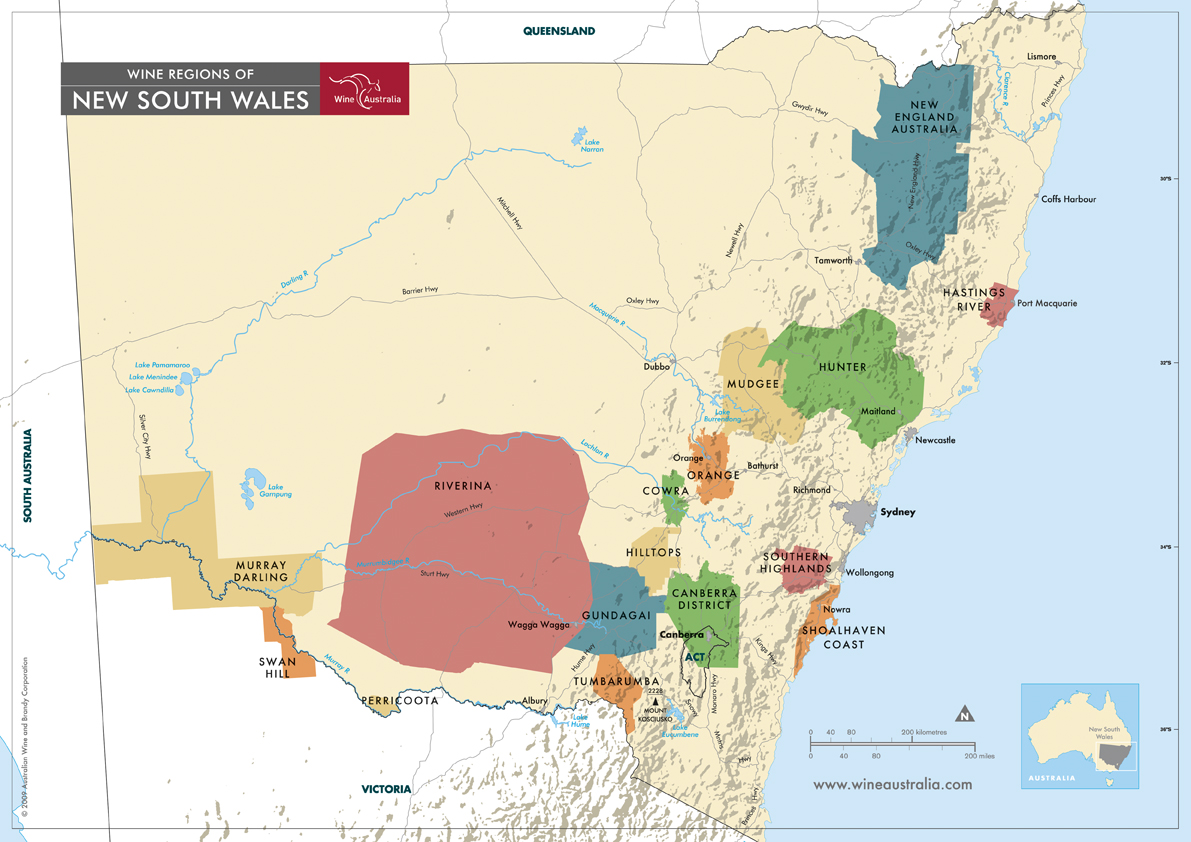
As for the location, it is important to first remember that Australian Geographical Indications range from largest to smallest as follows: State > Zone > Region > Subregion. Following along, we can find the Broke Fordwich Subregion within the State of New South Wales, the Hunter Valley Zone, and the Hunter Region (simplified as such: New South Wales > Hunter Valley > Hunter > Broke Fordwich.) The Hunter Region has two other Subregions, Pokolbin and the Upper Hunter Valley.

Photo of the Yellow Rock Escarpment by Sardaka, via Wikimedia Commons

Photo of the Yellow Rock Escarpment by Sardaka, via Wikimedia Commons

The website of Broke Fordwich (which is quite nice, and will make you want to plan a visit right now) describes the area’s location as “in the southwest corner of the mid Hunter Valley”. The area is quite beautiful, surrounded as it is by the Brokenback Mountain Range (part of the Great Dividing Range and NOT to be confused with Brokeback Mountain, which was supposedly in Wyoming). Local scenery includes views of Yellow Rock (a gorgeous escarpment) and the Wollemi Foothills.

The Broke Fordwich Subregion is tucked between the Upper Hunter Valley to the northwest and Pokolbin to the east. It geographic boundaries follow the catchment of Wollombi Brook (a tributary of the Hunter River), which flows from its source in the Brokenback Mountains/Great Dividing Range north through the towns of Broke and Fordwich.

Broke Fordwich became an official Geographical Indication in 1997. The basis for the boundaries include its unique soil, the climate-calming effects of the Wollombi Brook, and the rain shadow provided by the Brokenback Mountain Range which hugs (and partially encircles) the area to the west and south.

The Fordwich Sill, a stretch of red weathered volcanic clay running through the area, is one of the unique soil features of Broke Fordwich. This basalt- and iron-rich soil absorbs moisture quickly and releases it slowly; an excellent feature for this dry area that sits at a balmy 32.5 degrees south latitude. The red soils of the Fordwich Sill are ideal for Cabernet Sauvignon and Merlot, and tend to produce grapes that are made into rich, soft-style wines. Other soils in the area include free-draining alluvial soils (heavy on the sand), which is widely planted to the area’s well-known Semillon and other white grapes.

Map of New South Wales via Wine Australia

Map of New South Wales via Wine Australia

Broke Fordwich is responsible for about 14% of the total wine production of the Hunter Valley Zone. Not surprisingly, the most widely planted grape of the area – responsible for at least 30% of vineyard acreage – is Semillon. Semillon is followed by Shiraz, Verdelho, Chardonnay, and Merlot. A smattering of other grapes, including Cabernet Sauvignon, Barbera, Sangiovese, Tempranillo, and Pinot Noir, among others, are also grown.

About that name: The town of Broke was founded in 1830 by Major Thomas Mitchell. Mitchell named the town in honor of his fellow Napoleonic War Veteran, Sir Charles Broke-Vere.

Confusion Corner: The terms “Hunter” and “Hunter Valley” are often used somewhat interchangeably, although technically the Hunter Valley is the larger zone which encompasses the Hunter Region. No one quite knows why the original decision was made to refer to the zone as “Hunter Valley” and the smaller region as “Hunter,” and it might not really matter: there’s very little difference between the outline of the Hunter Region and the only slightly larger Hunter Valley Zone. The region just shaves a little bit off of the edges on the western and northern boundaries, and excludes the area around the city of Newcastle on the coast.

References/for further information:

The Bubbly Professor is “Miss Jane” Nickles of Austin, Texas… missjane@prodigy.net
The Outer Limits is my series of appreciative posts about small, obscure, or out-of-the-way wine regions.

The Playboy and the Electric Car

.

.

The playboy and the electric car…it’s an odd title, I’m aware. And kudos to you for even clicking on it, as it admittedly tells you very little about the story which is to follow, which is actually about Cynar.

Cynar—pronounced CHEE-nar—is an Italian amari (bitter liqueur) that is probably only known to true cocktail aficionados and CSS students. For you liquor store archeologists, it’s the big green bottle with an artichoke on the label. (Yes, an artichoke.)

Before we get into the actual story I’m burning to tell you, let’s get this out of the way: Cynar is an acquired taste. It’s not the prettiest bottle on the shelf—and it’s competing with beautiful bottles bearing pictures of rose petals, wild raspberries, and baskets of wildflowers from Provence. Also, if you glance at the bottle quickly, you might think that the C-y-n-a stands for cyanide. I’d understand if you would prefer to walk on by.

Then there’s the flavor. It has a short burst of sweetness and quickly becomes intensely bitter and very, very herbal—this followed by a vegetal flavor that you might recognize as asparagus, but will describe as artichoke because you saw the picture on the bottle. You might think that you’ve never tasted anything like it before, but then you remember the Dr. Brown’s celery soda you once bought by mistake.

Keep in mind, however, that an acquired taste is just that—it must be acquired. Remember your first taste of hoppy beer, Stilton cheese, or octopus-on-a-stick? You might not have adored it at first, but you got used to it until you started to crave it. Trust me, Cynar will be the same, and its legendary ability to calm your stomach (like many digestives) is a real thing.

The story of Cynar (and the playboy and the electric car) begins in 1952. About that time, a Venetian entrepreneur named Angelo Dalle Molle created and began to distribute Cynar, his artichoke-flavored liqueur. Rumor has it that he chose the artichoke due to its aphrodisiac properties. The story continues (with a wink and a nod) that the love-potion formulation must have worked pretty well, as the creator was a well-known and successful man-about-town, fathering six children with six different women and—at the age of 80—marrying his secretary who was 40 years younger than he.

Numerous references point to the veracity of this story, and as far as I am concerned, that’s a pretty good story. I love a good tale of love, lust, and longevity. And there’s a happy ending as well: Cynar became popular very quickly, and in 1976 Dalle Molle sold the formula to Bols (a Dutch brand famous for many spirits and liqueurs) and became a wealthy man. Many years later, well into his 90’s, he passed away peacefully—and left his young bride a fortune of over 30 million euros.

But there’s another side to the Venetian playboy of Cynar. In addition to being a businessman, he is remembered for being a patron of the arts and a utopian philanthropist. Let me explain: utopian—in the  sense that he believed in the possibility of an ideal (or, at least, better) world and philanthropist—meaning he was generous with his time and money, using both in the service of mankind.

He also had a technological/scientific side—he’s been called a true “Renaissance Man,” and in his case, it’s believable. Dalle Molle was an early adopter of information technology and believed that technology should be used to improve the quality of human life. In order to accomplish this goal, he established the Fondation Dalle Molle pour la Qualité de la Vie (Dalle Molle Foundation for the Quality of Life). The foundation is still awarding grants and prizes for projects that “encourage and promote research which allows people to benefit from science and technology and to improve quality of life.”

Through this foundation he created and funded several research institutes, including the Istituto Dalle Molle di Studi Semantici e Cognitivi (Dalle Molle Institute for Semantic and Cognitive Studies), which was established for the purpose of conducting research into languages, linguistics, and automated translation. Another project is the Istituto Dalle Molle di Studi sull’Intelligenza Artificiale (Dalle Molle Institute for Artificial Intelligence Research), founded with the goal of applying artificial intelligence to the quality of life.

Dalle Molle was very concerned about pollution, and at yet another project, the Centro Studi della Barbariga, he oversaw the design and production of over 200 electric cars. These cars were put to use as taxi cabs, vans, and as an ambulance. Seven of these cars are now in the collection of the Museo dell’automobile in the city of Vicenza.

Angelo Dalle Molle’s work lives on, and you can learn more about about his life—as both a playboy and a creator of electric cars—on the website of the Dalle Molle Foundation for the Quality of Life.

References/for more information:

The Bubbly Professor is “Miss Jane” Nickles of Austin, Texas… missjane@prodigy.net
Meet the Bombinos

..

..

It’s hard to not perk up when you hear the word Bombino. It’s just so cute, and you’re just not sure what you just heard. Did someone just call you a bimbo? A bambino? Or, better yet, a bombshell?

If the conversation revolved around wine, it’s likely that the word was used in reference to a rather obscure grape—or set of grapes—grown around southern Italy and most likely native to Puglia.

There are two Bombino grapes—Bombino Bianco and Bombino Nero—and they are apparently not twins, clones, or even that closely related. As with many things ampelographical, it is not yet certain how, or if, they are related. It is, however, possible that Bombino Bianco and Trebbiano Arbuzzese are either closely related or the same grape. Yet we do know (or think we know) where the name derives from—Bombino means “little bomb” and may refer to the roundish shape of the grape clusters.

Bombino Bianco is grown in moderate amounts throughout southern Italy, and also shows up in some of the regional  wines of central and northern Italy. In Puglia, Bombino Bianco is the star of the white wines of the San Severo DOC, where it is required to be between 40% and 60% of the blend (the other portion may be Trebbiano Bianco with a maximum of 15% other approved white varieties). In Abruzzo, it can be interchanged with Trebbiano Abruzzese or Trebbiano Toscano in the Trebbiano d’Abruzzo DOC.  (If you made it through that sentence with your cognition still intact you are a genius.)

In Lazio, Bombino Bianco goes by the name of Ottonese. In the wines of the Frascati DOC, it is allowed to make up a maximum of 35% in the Malvasia-based blend.  It may also be produced as a varietal wine under the Marino DOC.

.

.

Farther north, in Emilia-Romagna, Bombino Bianco is required to be a minimum of 40–50% of the blend in the white wines of the Chardonnay-heavy (50–60%) Colli Romagna Centrale DOC, and may be produced as a varietal wine—under the name Pagadebit—under the Romagna DOC. (For the serious wine student growing wearing of this name-calling, a good fact-of-the-day is that the Romagna DOC was created in 2011 out of the now-defunct DOCs of Cagnina di Romagna, Pagadebit di Romagna, Romagna Albana Spumante, Sangiovese di Romagna, and Trebbiano di Romagna.)

Pagadebit (or Pagadebito) is another synonym for Bombino Bianco, and just might mean “debt-payer.” However, just to keep things interesting, some of the grapes known as Pagadebito in Emilia-Romagna might actually be a related variety known as Mostosa. And to keep things even more interesting, “debt-payer” is a common nick-name for a handful of high-yield, juicy grapes.

At last count, there were approximately 7,400 acres (3,000 ha) of Bombino Bianco grown in Italy. Some of it makes its way into vino (EU table wine) and IGT wines in addition to the DOCs discussed above. Germany also grows some Bombino Bianco, much of it used in the production of Sekt (German sparkling wine). While high-yield grapes are known to produce neutral-tasting wines, given a measure of care, Bombino Bianco can produced wines with aromas of citrus and tropical fruit, herbal notes, and even a hint of minerality.

Bombino Nero is far less complicated, and far less planted; at present Italy grows about 2,890 acres (1,700 ha) of Bombino Nero. Most of this is accounted for in Puglia, but some plantings are also found in Basilicata, Lazio, and on the island of Sardinia. While Bombino Nero seems to be native to Puglia, remember, it’s not exactly Bianco’s dark-skinned twin but is (maybe) an indeterminate relative of sorts.

Bombino Nero is allowed to be a maximum of 40% of the blend in the reds and rosés of Puglia’s Lizzano DOC. It’s also allowed to make up any amount of the blend in the rosato (rosé) and rosato spumante produced under the Castel del Monte DOC. Being a vigorous, late-ripening grape with excellent color and a strong slug of anthocyanins, it makes sense that it would be an excellent choice for rosé. Which leads me to the biggest bombshell to drop from the dark-skinned Bombino: it’s the majority grape variety (minimum 90%) allowed in a DOCG that is dedicated solely to rosé—the Castel del Monte Bombino Nero DOCG. This is a tiny DOCG, with just 40 acres (16 ha) of vineyards.

Castel del Monte Bombino Nero DOCG is the only DOCG dedicated solely to rosato in Italy. Boom.

References/for further information:

The Bubbly Professor is “Miss Jane” Nickles of Austin, Texas… missjane@prodigy.net

The Outer Limits: AOC Châteaumeillant

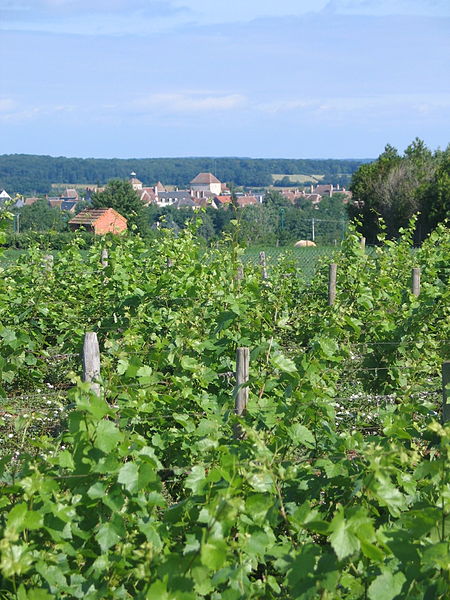
Vineyards in Châteaumeillant - Photo by Ameliris, via Wikimedia

Vineyards in Châteaumeillant – Photo by Ameliris, via Wikimedia

Tucked away into the southwestern corner of France’s Cher département, the Châteaumeillant AOC is located quite literally in the outer limits of the Loire Valley wine region. About 45 miles south of Quincy, it’s the last Loire Valley AOC on the road out of town.

The Châteaumeillant AOC is named after the town it surrounds  in the foothills of the Massif Central. The town of Châteaumeillant has about 2,000 residents. The AOC of the same name somewhat straddles the line between the Indre and Cher départments. It has been called the most central vineyard in France—and it does appear to rest firmly in the middle of the country.

Wine has been part of the local economy here since the fifth century BC, as proven by the discovery of over 300 amphora that were unearthed during a construction dig.

In the fifth century, the area was a Roman town named Mediolanum. Due to its location, Mediolanum was an important part of the wine trade and something of a way-station for Italian wines being sent to troops stationed in (what was then) western Gaul. Some time later, the area began growing grapes and producing wine.

The Châteaumeillant AOC is a small producer. There are currently just 173 acres (70 ha) dedicated to red wines and another 49 acres (20 ha) for rosé (vin gris). Red wines are made from a minimum of 40% Gamay with Pinot Noir allowed to fill in the rest. The pale vin gris (rosé) is made from the same basic formula, but also allows for a maximum of 15% Pinot Gris in the blend. Rumor has it that the appellation is going to steadily increase the minimum portion of Gamay until it reaches 60% sometime after the year 2027. White wines made primarily from Chardonnay and Sauvignon Blanc are also produced in the region, but are labeled with Val de Loire IGP status.

Culan Castle

Culan Castle

Châteaumeillant became a vin délimité de qualité supérieure (the now-defunct VDQS category) in 1965 and was promoted to AOC status in 2010. There seem to be only around 10 wine estates in the area; noted producers include Domaine Roux, Domaine Goyer, and Domaine du Chaillot.

If you would like to visit Châteaumeillant, it’s about a two-and-a-half hour drive from Paris. Once there, you can see the ancient amphora of the region at the Archeological Museum of Chateaumeillant, tour Culan Castle (built in the 13th century), and visit the Chapitre d’Albret (dating from the 1500s). The region also has a variety of farms that produce some of the Loire Valley’s famous goat cheeses, which should be a great match with the vin gris of the AOC Châteaumeillant.

It sounds like a trip to the outer limits that you might enjoy!

References/for further information:

The Bubbly Professor is “Miss Jane” Nickles of Austin, Texas… missjane@prodigy.net
The Outer Limits is my series of appreciative posts about small, obscure, or out-of-the-way wine regions.

Au Revoir, Rosé

.

.

Au revoir, rosé—see you next summer. I’m hoping that by adding some heavier wines to my evening tasting line-up that I can conjure some cooler temperatures for central Texas.

But before saying my last goodbye for the summer, I thought I’d take one more stroll through my local wine store and see if I could find any interesting pink wines. I think I told my husband I was searching for something weird (I received the shade eye in return). I did not return home with any weird wine, but I was nevertheless quite happy with my haul: two French rosés, and each of them from an Indication Géographique Protégée (IGP/PGI) aka Vin de Pay region.  Score!

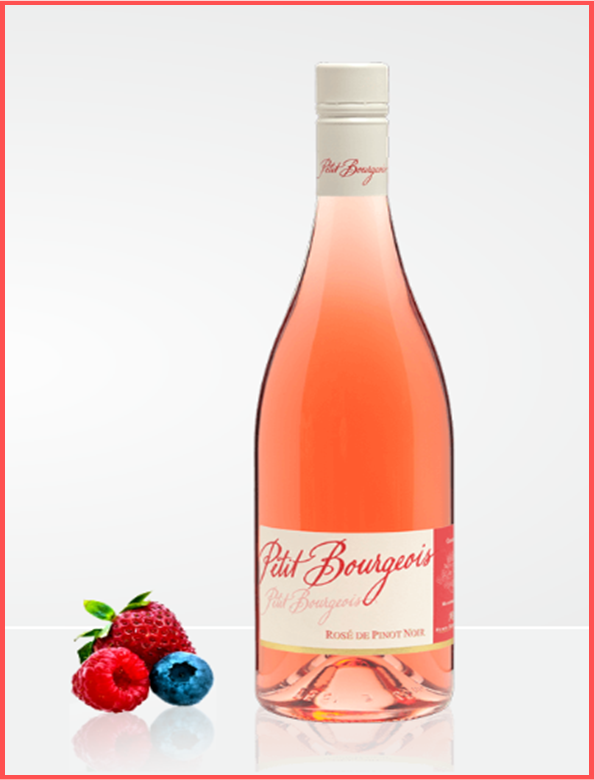
The first wine—Petit Bourgeois Rosé of Pinot Noir 2015, Vin de Pays de Val de Loire

The bottle reads Mis en bouteille par Henri Bourgeois – Chavignol. The Henri Bourgeois estate was founded 50 years ago and produces a range of wines in the Upper Loire. Assisted by his sons Rémi and Jean-Marie, Henri grew the estate to a total of 72 hectares of vines, consisting of 120 individual parcels. Many of the estate’s wines are made from these individual vineyards, such as their Sancerre d’Antan and Sancerre Jadis.  (For enquiring minds: Chavignol is a small town in Sancerre, famous for a goat cheese known as Crottin de Chavignol as well as its wine.)

The Henri Bourgeois Estate’s Loire Valley wines includes Sancerre (white, red, and rosé versions), two versions of Pouilly-Fumé, Quincy, and Menetou-Salon (red and white). Sharp wine students will recognize these areas as prime Sauvignon Blanc country sprinkled with a bit of Pinot Noir, Gamay, and Cabernet Franc (among others). Their line of “Petit bourgeois” wines, labeled under the Vin de Pays de Val de Loire includes a varietally-labeled Cabernet Franc, a varietally-labeled Sauvignon Blanc, and my rosé of Pinot Noir.

The Vin de Pays du Val de Loire region covers roughly the same area as the entirety of the Loire Valley’s AOCs and covers 14 French departments—each of which is considered a subregion of the IGP. It follows the Loire River for over 350 miles from the Atlantic coast to the Auvergne Hills (which are practically in the center of the country). As stands to reason, the Vin du Pays de Val de Loire is one of the largest and most diverse wine regions of France in terms of geographic area.

This wine was a lovely salmon-pink color—a hue I used to call “San Diego sunset” – which you’ll really understand if you’ve ever lived there. I learned from the tech sheet that the juice was fermented on the skin for 48 hours, followed by a slow, cool fermentation at 60°F. The subsequent wine was quite aromatic, and ripe with the scents of rose petals, strawberries, watermelon, cherries, and peaches. It was fermented dry and had a good squirt of cherry-like acidity. All in all, this was a wonderful wine for about $15.00 (and the Wine Enthusiast liked it to the tune of 87 points). We served it up with some grilled shrimp accompanied by roasted red bell peppers, yellow tomatoes and goat cheese—a good match.

The Henri Bourgeois Estate also has some vineyard acreage in New Zealand’s Wairau River Valley (a subregion of Marlborough). The New Zealand property is a result of their search for new areas to “tame” in the pursuit of the world’s finest Sauvignon Blanc and Pinot Noir. The property, known as the Clos Henri Vineyard, is planted along the Waihopai River as its runs down a hillside into the sea. The latest generation of the Bourgeois family, Arnaud, Jean-Christopher, and Lionel, named the vineyard in honor of their grandfather.

The second wine: La Galope Rosé, Comté Tolosan IGP:

La Galope is a second label created by the Domaine de l’Herre winery, located in the heart of Gascony in Southwest France. The winery also produces a Sauvignon Blanc from the Côtes de Gascogne IGP under the La Galope label, as well as varietal Sauvignon Blanc, Chardonnay, and Petit Manseng under the winery’s main label.  The Domaine de l’Herre winery was founded in 1974 and currently cultivates over 320 acres (130 ha) of vines, mainly on south-facing slopes in the foothills of the Pyrenees.

The Comté Tolosan IGP (Vin de Pays de Comté Tolosan) covers a large region of Southwest France—including 12 French departments—in the area commonly referred to as Gascony. This region is part of the Aquitaine Basin that occupies the plains between the Pyrenees and the Massif Central.  The IGP is bordered by Bordeaux to the northwest, Spain to the south, the Languedoc-Roussillon region to the east, and the Atlantic Ocean to the west.  The Garonne River cuts through the heart of the area, and to an extent separates the white wine-dominant vineyards to the west (nearest the coast) from the red wine-dominant vineyards to the east (further inland).

Several well-known AOCs are included within the catchment of the Comté Tolosan region—including Cahors, Jurançon, Madiran, and Irouléguy —but the IGP designation is typically used for wines grown or produced outside of the boundaries of these more prestigious sections.

Some research on the company website informs me that my rosé is produced from a blend of Cabernet Sauvignon and Merlot. The grapes are harvested in the early morning hours, and rushed to the crush pad where they are pressed with a high-tech inert gas press that crushes the grapes and immediately blankets them with nitrogen in order to avoid oxygen contact (and oxidation.) Following the press, the juice is macerated on the skins for a period of time before being pressed and fermented at about 60°F.

This wine is a nice light pink color. It’s fairly aromatic, with aromas of white flowers (I’m thinking cherry blossoms), strawberries, red peaches and red apples. All of those aromas are mirrored as flavors, accompanied by a nice zing of citrusy acidity. A hint of mineral on the finish is a nice surprise. All in all, an excellent value for $12.00, and a perfect wine for the bbq sliders we pulled from the grill.

Now, if only it would cool down a bit…

Note for all of us wine students: The Val du Loire IGP and the Comté Tolosan IGP are two of the six regional IGPs of France. The other four are the Atlantique IGP (covers Bordeaux, Cognac, and Dordogne), the Comtés Rhodaniens IGP (covers the Northern Rhône and Savoie), the Méditerranée IGP (covers the Southern Rhône and Provence), and the very well-known Pays d’Oc IGP (covers the Languedoc and Roussillon).

References/for further information:

The Bubbly Professor is “Miss Jane” Nickles of Austin, Texas… missjane@prodigy.net
Lorraine: Quiche, Plums, and a bit of Wine

.

.

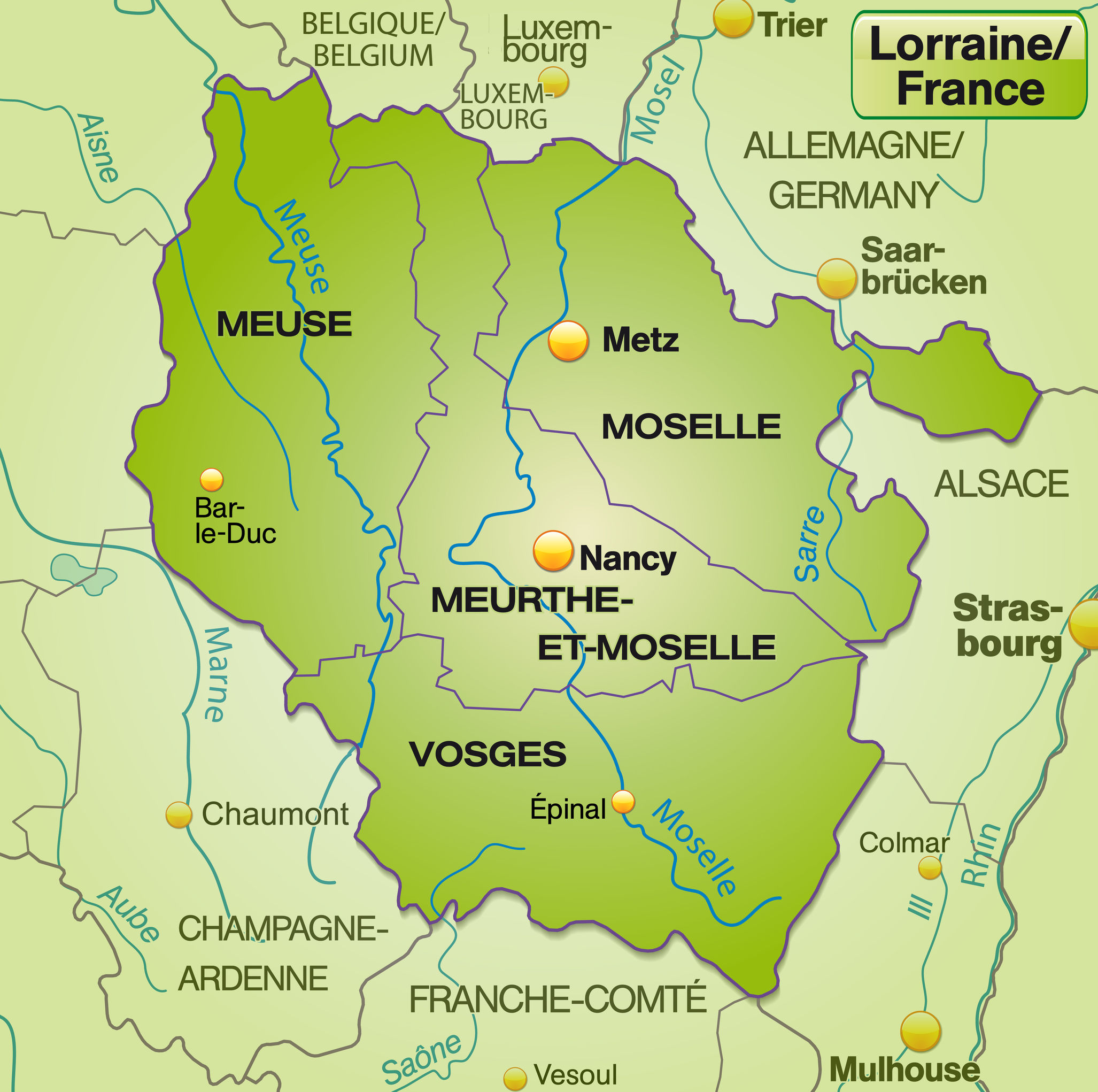
Lorraine—home of the famous quiche, a particular plum, and just a little bit of wine—is located in northeast France, just west of Alsace. Lorraine was an administrative region of France from 1982 until January 2016; since that time it has been part of the region known as Alsace-Champagne-Ardenne-Lorraine. Lorraine makes up over half of the French border with Germany, and is also the only French (historical) region to border three countries (Germany, Belgium, and Luxembourg).

Lorraine has never really caught my attention in a big way, as most of my knowledge of French geography (and to be honest, world geography) is based on my wine studies. As the Lorraine area is home of only two AOCs (Côtes de Toul and Moselle) in addition to the Côtes de Meuse IGP, I kind of overlooked the area. I have, however, always been a fan of Quiche Lorraine—and I am quite embarrassed to admit I always thought that the “Lorraine” referred to the Loire. Time to remedy this—read on to learn about three of the leading products of the Loire: Quiche Lorraine, Mirabelle plums, and the wine!

.

.

Quiche Lorraine: Definitely one of the best-known dishes in French cuisine, Quiche Lorraine is part of the Lorraine area’s German heritage. Quiche actually originated in Germany, and the word “quiche” is derived by “kuchen” (cake). While the original (German) version of the dish was baked in a brioche shell, the French version is a cream-and-egg pie baked in a savory pie-style pastry shell. True Quiche Lorraine is made with eggs, cream, and lardons—and no cheese! Most modern recipes include eggs, cream, bacon or chopped ham, and a good measure of cheese such Gruyère or Emmentaler.

Also good to know: Two of France’s most famous cookies—the Madeleine and the Macaron—also have ties to the Lorraine area. The Madeleine, a shell-shaped, cake-like cookie, is believed to have originated in the town of Commercy and named after the cook for Stanislas Leczinski, Duke of Lorraine. The cookies are often referred to as Madeleines de Commercy.

The Macaron, aka Macarons de Nancy—the delightful almond and meringue sandwich cookies that are currently enjoying quite a popular run—originated in the town of Nancy. Legend holds that they were first produced by the Sisters of Les Dames du Saint Sacrement who were expert bakers due to the fact that meat was prohibited in their Convent!

Mirabelle Plums: The yellow plum of the area, the Mirabelle, actually has PGI status as the Mirabelle de Lorraine. (There is also a PGI for the eau-de-vie made from the plums—more on that later.) Mirabelle plums have been appreciated world-wide since the famous French food critic Jean-Pierre Coffe (who was born in Lorraine) stated “Happiness exists. I’ve met it. It weighs 14.3 grams and it comes from Lorraine.”

Lorraine actually produces over 70% of the world’s Mirabelle plums. While they certainly can be enjoyed on their own, the plums are often made into tarts, jams and the famous clafoutis of the area in addition to being used in savory dishes such as honey-glazed duck with mirabelle plums.

Two specific types of the plum, Mirabelle de Nancy and Mirabelle de Metz, are used to produce a local brandy known as Eau-de-Vie de Mirabelle or simply “Mirabelle.” Eau-de-Vie de Mirabelle has PGI (protected geographic indication) status as well as being classified as an AOR (appellation d’origine réglementée—a specific classification used for certain eaux-de-vie and marcs that are produced outside the larger areas such as Bordeaux and Burgundy).

Eau-de-vie de Mirabelle has been described as aromatic with intense flavors of plums and baking spices with a bit of sweetness on the palate. Versions of Mirabelle (and other types of plum brandy) are made in many areas of the world, but the Mirabelle de Lorraine PGI/AOR product is special. The best I have ever tasted was from the Distillerie Maucourt located in Marieulles, just a few miles south of Metz.

The city of Metz, along the Moselle River

The city of Metz, along the Moselle River

A Little Bit of Wine:  Lorraine is a small producer as far as French regions go, and only contains two AOCs. The Moselle AOC is named after the French department of the same name as well as the Moselle River (better known to wine lovers as the famous Mosel River of Germany). The source of the Moselle is in France’s Vosges Mountains near the border of Alsace and Lorraine. The Moselle flows (mostly north) through Lorraine for 195 miles (315 km), then forms the border between Germany and Luxembourg for 25 miles (40 km) before it becomes the famous river of Germany’s Mosel Valley (at least until if flows into the Rhine).

The Moselle AOC is located in the northern portion of Lorraine, along the Moselle River, very near the city of Metz, and close to the border with Luxembourg and Germany. The AOC produces a small amount of wine, mainly dry and off-dry, in red, white, and rosé. White wines are produced using at least 50% Auxerrois; the remainder may be Müller-Thurgau, Pinot Gris, Pinot Blanc, or Riesling. A maximum of 10% Gewurztraminer may also be used, and varietally-labeled Pinot Gris and Müller-Thurgau is also produced.  The red wines of the Moselle AOC are 100% Pinot Noir, and the rosés are a blend of Pinot Noir (minimum 70%) and Gamay.

.

.

The Côtes de Toul AOC is located a bit further to the south, closer to the town of Nancy. The Côtes de Toul AOC also produces red, white, and rosé wines, with its specialty begin vin gris (very pale rosé made using the direct press method). These rosés are made from a blend of Pinot Noir and Gamay (both are required), and may also include Pinot Meunier, Aubin, and Auxerrois. The white wines of the Côtes de Toul AOC are produced from Auxerrois or Aubin, and the red wines are Pinot Noir.

Note: Interestingly enough, in Pre-AOC days, grapes grown in Lorraine were shipped to Champagne to be made into the world’s favorite sparkling wine. This worked out well for a while, as Lorraine stayed phylloxera-free much longer than many other regions in France, including Champagne. Eventually grape growers in the actual Champagne region put a stop to the grape invaders, as AOC laws were passed (then revised, then ignored, then passed again). After phylloxera (eventually) devastated the vineyards of Lorraine, they never recovered to their former levels.

References/for more information:

The Bubbly Professor is “Miss Jane” Nickles of Austin, Texas… missjane@prodigy.net

Folle Blanche and the Baco Brothers

Photo of Folle Blanche, Conservatoire du Vignoble Charentais by Pancrat, via Wikimedia Commons

Photo of Folle Blanche, Conservatoire du Vignoble Charentais by Pancrat, via Wikimedia Commons

I taught the “Brandy” chapter of the CSS class yesterday, which is always a fun day; after all, the class includes a drink-along suggestion of Cognac VSOP—which works well even for the morning session.

Brandy is a huge subject—there’s Cognac, Armagnac, Calvados, Applejack, Pisco, Kirschwasser, Slivovitz, Pálinka, Grappa, Poire William…the list goes on and on. As such, in this class I need to focus on one or two representative products and just “drill down.” Yesterday I chose the classic French (grape-based) brandies of Cognac and Armagnac—and discussed the finer points of the regions, the grapes, the production processes, and the aging of the brandies.

As for the grapes, Ugni Blanc (aka Trebbiano Toscano, aka Saint Émilion) is the leading variety used in both Cognac and Armagnac. It seems a good use for this grape, which is both widely grown and a prolific producer despite the fact that it produces wines that are sometimes described as “bland.”

Also common to both brandies, there is a secondary grape lurking in the background in both regions: Folle Blanche.

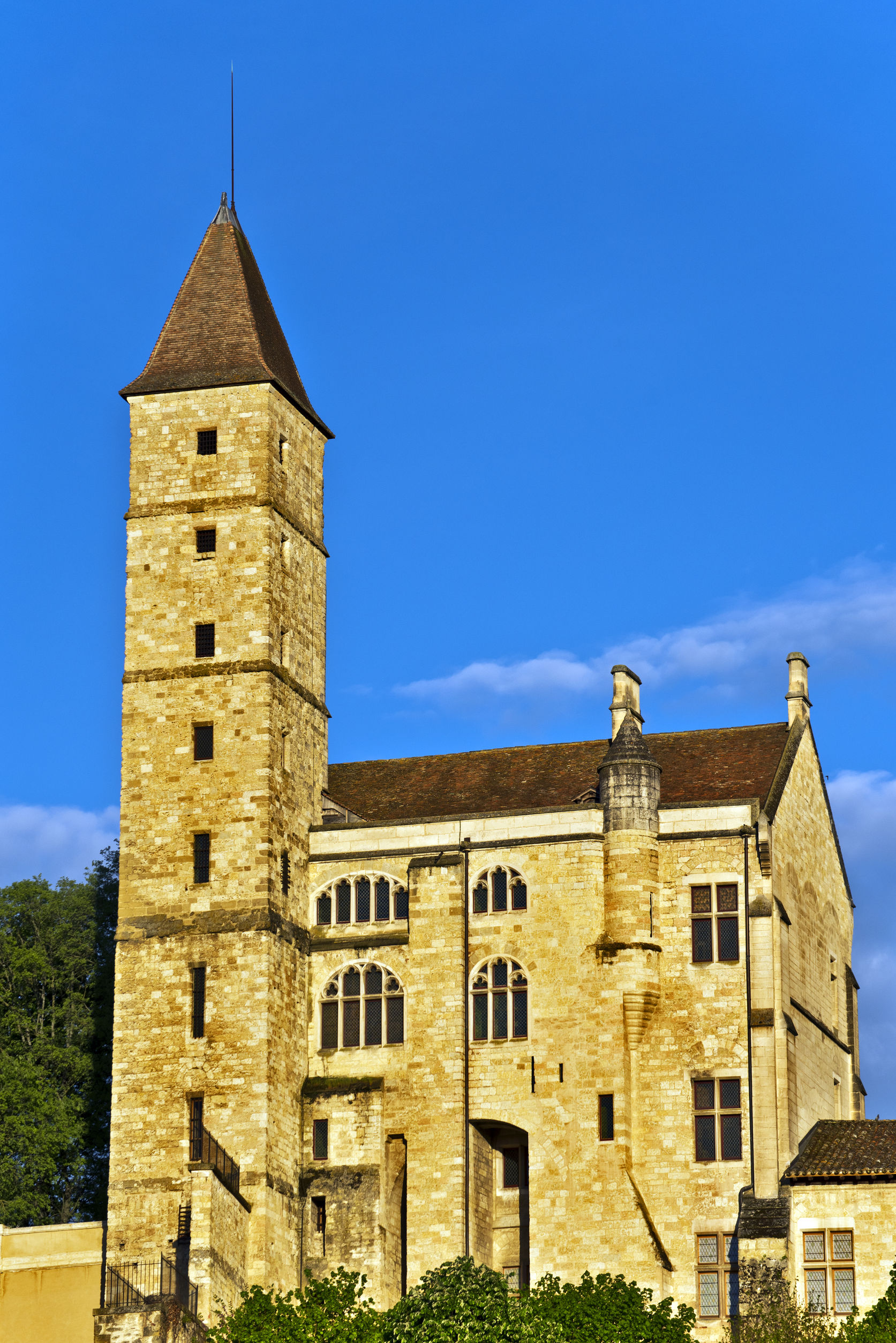
Armagnac Tower in the city of Auch

Armagnac Tower in the city of Auch

Folle Blanche is considered by many to be the “original” (pre-phylloxera) grape of the Cognac and Armagnac regions and was documented in the area as early as 1696 via a list of grapes growing in the Charente-Maritime department. It is believed that the name Folle was derived from the French word Feu—meaning “mad” and perhaps referring to the grape’s maddening tendency to grow with unreserved vegetative vigor wherever it was planted. Other synonyms for the grape seem to back up this tale; the grape is sometimes known as Enrageat (from the French enragé—which needs no translation) and is known as Gros Plant (Big Vine) in parts of the Loire Valley.

Besides its stand-in role in the great brandies of France, Folle Blanche (under its synonym) is the star in the dry white wines of the Gros Plant du Pays Nantais AOC. This sur lie-aged wine is produced in the same area as the far more famous Muscadet and tends to produce wines with fruity-mineral character and high levels of acidity. Most Gros Plant du Pays Nantais AOC is consumed locally so it is rare to encounter it outside of France.

According to DNA analysis, Folle Blanche is an offspring (along with sister Chardonnay) of Gouis Blanc; the other parent is an unknown. It also appears to be genetically close to Petit Meslier and Meslier Saint-Francois, which makes it fairly certain that the grape originated in Southwest France, from whence it spread north to Charente and eventually all the way up to the Loire Valley.

While Folle Blanche may never achieve grape variety superstar status, it has a lasting legacy nonetheless as the parent of Baco Blanc, Baco Noir, and Folignan. All of these grapes have a small but fascinating role to play in viticulture, and all are the result of the long arm of science stretching its way to the vine.

...

Folignan, an Ugni Blanc X Folle Blanche cross, was created by the Institut National de la Recherché Agronomique/INRA (National Institute of Agricultural Research) in Bordeaux in 1965. Forty years later, in 2005, it was approved for use in the Cognac AOC (although its contribution is capped at 10% of the total blend). This move made Folignan the first INRA cross to be approved for use in an AOC.

The Baco Brothers (as I am referring to Baco Blanc and Baco Noir) were both created under the watchful eye of François Baco, a French nurseryman, back in the late 1890s/early 1900s. Baco was attempting to create a grape with resistance to black rot.

Baco Blanc (sometimes known as Baco 22A) is a hybrid of Folle Blanche crossed with the Noah grape variety (itself already a complicated labrusca X riparia hybrid). It was created in 1898 and for a time, was planted in a variety of areas across France—in its heyday there were over 2,000 acres (825 ha) planted in France. These days, there exists just a smattering of Baco Blanc vines in the Armagnac region of France and a tiny bit in New Zealand. However, it enjoys some significant notoriety in Armagnac, where it is approved as one of the ten grape varieties allowed for use in the brandies of the Armagnac AOC. This makes Baco Blanc the only hybrid grape variety allowed for use in a French AOC (PDO) product. Not bad, Baco, not bad.

Baco Noir was created in 1902 as a hybrid of Folle Blanche with Grand Glabre—a highly obscure grape of the Vitis riparia species. Baco Noir was once widely planted in France, however, these days its appearance in Europe seems to be limited to about 2.5 acres (about 1 ha) in Switzerland. However, Baco Noir does not seem to be saddled with the “foxy” aromas found in many hybrid grapes, so it is enjoying some limited success in the colder wine growing regions of the New World. As such, it may be found in New York State (particularly in the Finger Lakes and Hudson River AVAs), and Canada (particularly in Ontario, Nova Scotia, and Quebec).

Sources/for further information:

The Bubbly Professor is “Miss Jane” Nickles of Austin, Texas… missjane@prodigy.net