Greywacke (and Greywacke Jones)

Greywacke stones along the Haast River in New Zealand Greywacke stones along the Haast River in New Zealand

Greywacke (pronounced “grey-wacky”) is a drab, grey stone—technically, a sedimentary rock–made up of layers of very hard, clay-based, muddy grey sandstone criss-crossed through with layers of argillite (a type of mudstone) and grains of quartz, feldspar, and other small rock and mineral fragments. The term Greywacke can refer to the entire rock (or boulder), the sandstone base of the rock, or—especially in the case of wine enthusiasts, a type of soil derived from the stone.

In case you are wondering how such a plain looking rock acquired such a crazy-sounding name, “wacke” is the German word for sandstone, and the term (Grauwacke) was first used to describe rocks located in the Harz Mountains of northern Germany.

Greywacke soils do well with viticulture. The clay-derived portion of the stone weathers into clay-based soil, which is appreciated for its abilities to remain cool, retain vine nutrients, and retain water. The rock and mineral fragments remain behind in Greywacke soil to counter the clay with coarse-grained gravel, providing aeration and drainage. And, of course, some of the rocks stay behind on the top of the soil, absorbing and releasing heat.

Greywacke boulders on Te Mata Peak (Hawke's Bay, New Zealand) Greywacke boulders on Te Mata Peak (Hawke’s Bay, New Zealand)

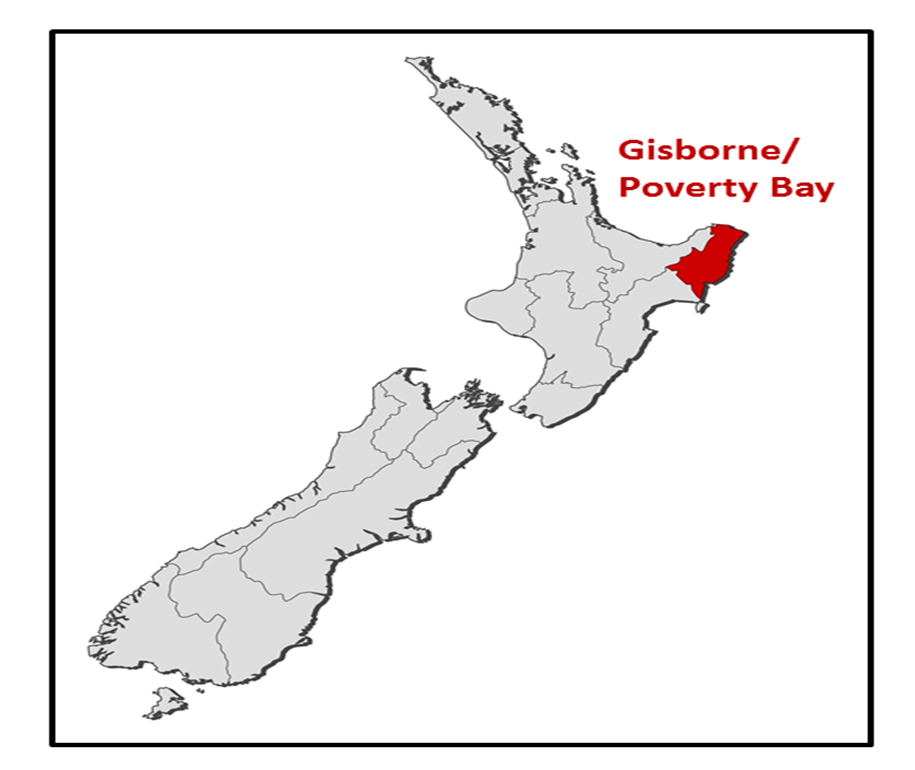
This gravelly soil is most notably found in the vineyards of New Zealand; which makes sense as hard greywacke stone makes up a large part of the Southern Alps as well as the smaller mountain ranges of New Zealand’s North Island. The famous “Gimblett’s Gravels” soils of Hawkes Bay, as well as large swaths of Marlborough, Gisborne, Canterbury, and Nelson are all Greywacke-based. Greywacke is almost considered the “national stone” of New Zealand (or would be, if New Zealand ever decided to have a national rock, according to The Encyclopedia of New Zealand.) Click here for a map of Greywacke in New Zealand.

Fans of New Zealand Sauvignon Blanc (which I certainly am) will no doubt recognize the name Greywacke in terms of a New Zealand wine brand, produced by none other than Kevin Judd – the beloved original winemaker at Cloudy Bay. Kevin continues his string of winemaking successes at Greywacke, producing a range of wine including a delicious albeit typical “zesty” Marlborough Sauvignon Blanc as well as a native yeast-fermented, lees-aged, oak-influenced Sauvignon Blanc (“Wild Sauvignon”) that has become a staple at both my Sunday night dinners and my Intro to Wine Classes. Other Greywacke wines include Chardonnay, Pinot Gris, Riesling, Pinot Noir, and even a late-harvest Riesling—all delicious.

Detail of greywacke soil in Algarve, Portugal Detail of greywacke soil in Algarve, Portugal

Greywacke bedrock and soils are found in many parts of the wine world, including the Algarve region of Portugal; Germany’s Mosel, Ahr, and Mittelrhein; the Western Cape of South Africa; California’s Russian River Valley; and the Barossa. The term “Greywacke” is used often in the context of wines and vineyards from all over the world, as well. Cosa Obra Wines in the Russian River Valley has a “Greywacke Vineyard” located within the Russian River Valley AVA, about where the Russian River makes it westward turn towards the Pacific Ocean. In Australia’s Barossa, Thorn-Clarke Winery, very much into the soils, produces a Shiraz labeled as “Shiraz on Cambrian Greywacke Soil.”

About that subtitle: There is a character named Greywacke Jones in “Slinky Malinki,” a children’s book by New Zealand author Lynley Dodd. Greywacke Jones is a mischievous grey kitten who hangs out with her pals Slinky Malinki, Hairy Maclary, Butterball Brown, and the rest of the gang. So now you know.

References/for more information:

The Bubbly Professor is “Miss Jane” Nickles of Austin, Texas… missjane@prodigy.net

Bacchus and Bacchus

Photo Credit: Dr. Joachim Schmidt, via Wikimedia Commons

Bacchus grapes on the vine: Photo Credit: Dr. Joachim Schmidt, via Wikimedia Commons

The name “Bacchus” means a lot to wine folk. First and foremost, Bacchus is the Roman god of wine and as such, he is the subject of a good deal of famous artwork produced from antiquity to modern times. Bacchus is also a grape variety of the vinifera species, a double-Riesling cross that thrives in  cold climates, but doesn’t do nearly as well at retaining acidity as its parent(s).

There’s also a Bacchus Wine Bar in Houston, a Krewe of Bacchus in New Orleans, and a European Research Initiative pertaining to clouds known as BACCHUS.  But for today, let’s focus on the god and the grape.

Bacchus: the god

Bacchus (or, as he was known in Greek mythology, Dionysus) is known as the god of wine and viticulture, and is often credited with the “invention” of wine. He is also–understandably so–the god of drunkenness (or, as the Greeks referred to it, “ritual madness”) and fertility. In later mythology, he was seen as a great patron of the arts and the god of the theater.

In the Greek myth, Dionysus is the son of Zeus (king of the gods) and Semele, a princess of Thebes. Thus, he is the only Greek god with a human parent. When Hera, the wife of Zeus, found out about her husband’s out-of-wedlock son Dionysus, she became enraged and ordered Dionysus to be killed. She succeeded, and the baby was murdered. Dionysus was next miraculously brought back to life, and Zeus conferred him with immortality. Zeus gave the baby to the mountain nymphs to be raised. In artwork, Dionysus is often depicted during this pampered stage of his life, as a fat, happy (and often naked) baby surrounded by wine, fruit, and luscious furnishings.

Bacchus by Caravaggio (c. 1595–Uffizi Gallery, Florence)

Bacchus by Caravaggio (c. 1595–Uffizi Gallery, Florence)

Dionysus is one of the few characters in Greek mythology credited with both being brought back from the dead himself and bringing someone back from the dead (he once rescued Semele [his mother] from the underworld). It is said that this cycle of birth and death is reflected in the annual cycle of viticulture, where the vines go dormant each year and must be pruned back before spring in order to ensure a good crop the following harvest.

Dionysus became one of the most important figures in the Greek and Roman mythology, but unlike the other gods, his followers did not always meet in temples dedicated to his worship. Instead, his followers held their worship services in the woods. In this way, Dionysus became “one” with his followers and during religious events his followers would become like gods themselves; first experiencing joy and ecstasy but often devolving into anger and rage. This represents not only “Greek god-like behavior” but also the dual nature of wine.

The festival for Dionysus was held in the spring in order to coincide with bud break. This festival became one of the most important religious holidays in the Greek calendar, and many Greek plays were originally written to be performed at the festival of Dionysus (beginning the tie between Dionysus and theater).

From its Greek beginnings, the cult of Bacchus became important to the Romans around 200 BCE. The Roman festival of Bacchus, the Bacchanalia, became well-known (and well documented) as a frenzied, sexual, scandalous, and extremely volatile rite that included both genders as well as people of all ages and social classes. Not surprisingly, the Roman Senate tried to shut down the cult of Bacchus. However, instead of being trampled, the cult of Bacchus merely moved “underground” and became a secret society. Decades later, the Senate approved a sanitized version of the worship of Bacchus and Bacchanalia became legal and outwardly popular once again.

Bacchanal before a Statue of Pan by Nicolas Poussin (c. 1633, National Gallery London)

Bacchanal before a Statue of Pan by Nicolas Poussin (c. 1633, National Gallery London)

This adoration of Bacchus continues, in a way at least–even in modern times.

Bacchus: the grape

The Bacchus grape variety is a white vinifera cross created by German agronomist Peter Morio in 1933. Morio, working for the Geilwilerof Research Center (now the Julius Kühn Institut) located in Germany’s Pfalz region, also created the Domina, Optima, and Morio Muskat grape varieties.

Bacchus is the offspring of an unnamed Silvaner X Riesling cross with Müller-Thurgau (a Riesling X Madeleine Royale cross).  So we’ll say that Bacchus is a double-offspring of Riesling instead of saying that its parents were siblings (enough said).

Like Riesling, Bacchus thrives in cold climates and can be quite expressive with fruity and floral aromas and flavors. That, however, is where the comparisons with Riesling should probably end, as Bacchus is not known for elegance–which Riesling exudes. Bacchus is also an early, high-sugar-ripener akin to Müller-Thurgau, and tends to be low acid. For these reasons, particularly in Germany, Bacchus is typically appreciated as a blending partner rather than a stand-alone variety.

Bacchus is grown in small amounts throughout Germany, including plantings in Rheinhessen, Franken, Mosel, the Nahe and the Pfalz. The total acreage in Germany is about 5,000 acres (2,010 ha).

These days, Bacchus might have found its place in the sun in England, where it is the second most widely cultivated white grape variety behind Chardonnay. Bacchus is made into varietal wines in both England and Wales, where the cooler climates help the grape hold on to its acidity and produce fresh, aromatic white wines. In the vineyards of the English countryside, Bacchus is noted to produce grapes that show a green-grassy character, leading to its nickname as “the Sauvignon Blanc of England.”

Small plantings are also found in Switzerland, Canada, and Japan. Bacchus (the god) would be proud.

Sources/for further information:

The Bubbly Professor is “Miss Jane” Nickles of Austin, Texas… missjane@prodigy.net

Lake Garda and her Wines

The waterfront of the town of Torbole

The waterfront of the town of Torbole

It’s the lake of dreams. Lake Garda (Lago di Garda) is the largest lake in Italy, and a popular destination for travelers searching for deep blue transparent waters, wind-in-your-hair yachting, and la dolce vida the area is known for.

The rich and famous may head for the northern resorts towns of Riva del Garda and Torbole, while families and backpackers head for the farmhouses of Bardolino, Castelnuovo del Garda, or the fortified town of Sirmione in the south.

Formed by the movement of glaciers thousands of years ago, Lake Garda is tucked between the regions of Veneto, Trentino, and Lombardy. Its upper half, shaped somewhat like the handle of an axe, reaches into the Italian Alps, while the southern section, shaped like the blade of the axe, stretches down into an undulating plain. Such a shape is typical of a moraine (glacier-formed) valley.

Lake Garda from space - via NASA

Lake Garda from space – via NASA

The lake is 32 miles (51 km) long from north to south, and about 10 miles wide at its widest point.  In addition to lovely towns, ferry boats, orange orchards, and olive groves, the shores of Lake Garda are host to a variety of vineyards, which including several DOCs and one DOCG. These wines of Lake Garda are briefly discussed below, beginning in the northern end of the lake (tucked into Trentino), and following around the lake clockwise through Vento and ending up in Lombardy. These regions are overwhelmingly overlapping, interlocking, discontiguous, and straddling the boundary lines of cities, towns and regions–and this little article is but an overview. It might be a good time to book a trip to any (or all) of these lovely wine regions.

Valdadige DOC: The Valdadige DOC (also known as Etschtaler, particularly among the German-speaking denizens of the area) is the only DOC that stretches across parts of both the Trentino and Alto-Adige provinces. The DOC covers a wide range of wines—including white, red, rosé, still, semi-sparkling, varietal, and blend. A typical Valdadige Bianco DOC will be based on Pinot Bianco, Pinot Grigio, Riesling Italico, Muller Thurgau, or Chardonnay, with a range of other typical white grapes of the region also allowed. Valdadige Rosso or Rosato DOC is produced using a minimum of 50% Lambrusco a Foglia Frastagliata (Enantio) and/or Schiava (plus a plethora of allowed red varieties). Varietal versions of Pinot Grigio, Pinot Bianco, Chardonnay, and Schiava may also be produced. Frizzante wines may be either dry or semi-sweet, and may be produced from Pinot Bianco or Chardonnay.

Scaliger Castle in the town of Sirmione

Scaliger Castle in the town of Sirmione

Casteller DOC: The Casteller DOC covers a large area across the middle of the Trentino province and overlaps a portion of the larger Valdadige DOC at the north end of Lake Garda. Casteller is a red wine-only region known for soft red wines based on a minimum of 50% Merlot; the remainder may be filled in with Schiava (Grossa or Gentile), Lambrusco a Foglia Frastagliata (Enantio), Lagrein, or Teroldego.

Bardolino DOC (and her sisters): Veneto’s Bardolino is undoubtedly the most famous of the Lake Garda lakeside DOCs (and even includes a DOCG, the Bardolino Superiore DOCG). Bardolino produces mainly red wines and some rosé (a much-beloved Chiaretto) from a blend based on 35–80% Corvina Veronese grapes (a portion of which may be replaced by Corvinone). Small amounts of Rondinella are required, and small amounts of Molinara, Rossignola (Gropello), Barbera, Sangiovese, and Garganega are allowed. The Bardolino DOC allows for the production of many versions. Reds may be produced as a classico, novello, or classico novello in addition to the normale versions, and the chiaretto (rosé) may be released as normale, classico, or sparkling. Bardolino is known to be a medium-bodied, fresh-tasting red wine. The Crovina base lends delightful sour-cherry aromas and flavors in addition to floral, herbal, and ripe berry notes.  Novello versions have been compared to Beaujolais Nouveau and rosé versions are fresh, fruity, crisp and lively. I like to describe Bardolino Chiaretto like “red Bardolino with its shirt off.” I’ve never had the spumante version, but I’m on the lookout now.

.

Bianco di Custoza DOC: The Bianco di Custoza DOC, tucked below Lake Garda on her southwest side, is located within the Veneto region. The DOC overlaps with the Bardolino DOC quite a bit, but also extends past the boundaries of Bardolino a bit as well. Bianco di Custoza, sometimes simply called “Custoza,” is a white-wine only DOC, but does allow for sparkling wine, sweet wines made via the passito method, and a superiore version, in addition to the normale dry, still wines.

All of these versions of Bianco di Custoza may be made using the same palette of grape varieties–but from there things get a bit complicated. The basis of the wine starts out with at least 20% (and a maximum of 40%) Garganega. Next, it includes a minimum of 10% (and a maximum of 40%) Trebbiano Toscana (otherwise known as Ugni Blanc). Another 5% to 30% is an interesting grape known as Trebbianello, which is a local clone of the grape alternatively known as Tai or Friulano. Other grapes that are allowed in varying amounts include Bianca Fernanda (a local clone of Cortese), Malvasia, Riesling Italico, Pinot Bianco, Chardonnay, and Manzoni Bianco.

The waterfront of Salò, a town on the banks of Lake Garda in Lombardy

The waterfront of Salò, a town on the banks of Lake Garda in Lombardy

Lugana DOC: The Lugana DOC straddles the Lombardy–Veneto border at the southern edge of Lake Garda. The name Lugana is as picturesque as its surroundings; the word is derived from the Latin for “Lake in the Woods,” reflecting the dense woodlands that existed here not-so-long ago.  Lugana is a white wine-only DOC, producing wines in a range of styles from a minimum of 90% Trebbiano di Lugana grapes. The Trebbiano di Lugana variety is also known as Trebbiano di Soave, Turbiana, or Verdicchio Bianco. The DOC produces mainly fragrant, dry white wines (often compared to Soave in style), and also allows for superiore, riserva, late-harvest, and sparling versions.

Valtènesi DOC: Located in Lombardy’s Brescia province, the Valtènesi DOC produces both red and rosé (chiaretto) wines based on a minimum of 50% Groppello (Gentile and/or Mocasina). The remainder of the blend may include any of the red wines approved for use in Lombardy, with Sangiovese, Marzemino, and Barbera most often used. The Groppello grape is native to this area of northern Italy, and is grown in very small amounts, mainly in Lombardy and Veneto (where it may be known as Rossignola).

Garda DOC (and the rest of the Garda family): The Garda DOC extends along the western shore of Lake Garda (in Lombardy), and continues on to the Veneto side, overlapping portions of the Lugana, Bardolino, and Bianco di Custoza DOCs along the way. Two small portions on the Lombardy side overlap with smaller Garda DOCs: Garda Colli Mantovani DOC overlaps a small section at the southern end of the lake, and a small section near the northern edge overlaps with the Garda Bresciano DOC. All of these regions produce a wide range of wines, including red, white, rosé, sparkling and novello versions, from a range of grapes representing the typical varieties of the area.

References/for further information:

The Bubbly Professor is “Miss Jane” Nickles of Austin, Texas… missjane@prodigy.net

Merritt, Saint George, and Long: the Island AVAs

...

Mountain, valley, gorge, coast, creek, district, ridge, hills, and lake. Do these words sound familiar? If you are a student of wine, they should, as together they help form the names of hundreds of AVAs. There are also a few oddball terms in the AVA mix–knob, neck, and kiln come to mind–but what about island AVAs?

As it turns out, there are exactly five AVAs with the term “island” in the name (including one “isle”). The winemaking world has some famous wines made on islands–Sicily, Sardinia, and all those Greek islands come to mind–but in the US, we’re not so much about island winemaking. Perhaps that 3,000 mile-wide solid mass of continent that makes up the majority of the country has something to do with it.

Three of the five island AVAs are quite familiar to students of wine: the Long Island AVA plus its subregions, the Hamptons–Long Island AVA and the North Fork of Long Island AVA.

The two other island AVAs– Merritt Island AVA and Isle Saint George AVA–are undoubtedly two of the most obscure wine regions in the United States. Read on to learn a little bit more about these fascinating obscurities: the little-known island AVAs of the USA.

Map of the Bass Islands by Norman Einstein, via Wikimedia Commons

Map of the Bass Islands by Norman Einstein, via Wikimedia Commons

Isle Saint George AVA: The Isle Saint George AVA is located in the state of Ohio on North Bass Island. North Bass Island is the northernmost of the three Bass islands, which are located in Lake Erie near the of the town of Sandusky, Ohio. North Bass Island measures about a mile and a half long and not quite that wide, for a total of about 688 acres in size. The entire island is within the boundaries of the Isle Saint George AVA, and about half of the island is covered with vines. The AVA is named after the town of Isle Saint George–the only town on the island–which at last count had about 20 residents. Most of the land on the island is owned by the state, including the vineyards, which are leased out to farmers.

The island enjoys a somewhat moderate, maritime climate. Due to the influence of a system of underground limestone caves, the island actually stays a bit warmer than the surrounding areas, and ground frost is delayed in the fall. Vineyards on the island are planted mainly to Riesling, Gewurztraminer, Chardonnay, and a handful of American hybrids such as Catawba and Delaware. The island has a long history of winemaking beginning with German settlers who arrived in the 1800s.

Firelands Winery, located on the Ohio mainland, sources grapes from the Isle Saint George AVA as well as other islands in the Bass Island archipelago. Many of the wines produced by Firelands Winery are bottled under the Isle Saint George AVA.  The Isle Saint George AVA was approved in 1982.

The Sacramento River

The Sacramento River

Merritt Island AVA: Merritt Island is located in California’s Sacramento River Delta. It is surrounded on two sides by the Sacramento River, and on the other two by the Elk Slough and the Sutter Slough. (A “slough” is sometimes defined as a “stream,” but in many cases the word “swamp” is more descriptive.) Merritt Island AVA was approved as AVA in 1983; and later (in 1987) became a subregion of the larger Clarksville AVA.

The island is rather long and skinny, and shaped somewhat like a 6-mile by 1.5-mile oval. The island covers close to 5,000 acres, with about 435 planted to vines. As would be expected of a delta island, the land is very flat–the highest point reaches 14 feet above sea level–and very fertile with alluvial soils. There are currently four commercial vineyards on the island, planted mainly to Petite Sirah, Cabernet Sauvignon, and Chardonnay. Most of the grapes grown on Merritt Island make their way into California Blends, including (so we are told) the delectable Bogle Phantom.

Speaking of islands: The state of Hawaii contains what must be the most famous islands in the United States. Wine is produced in Hawaii, as it is in all 50 of the United States; however, there are no AVAs in Hawaii. As makes sense for a tropical island located in the middle of the Pacific Ocean at around 20° north latitude, most Hawaiian wineries produce wine from tropical fruit such as pineapple, mango, and guava. However, there are some high-elevation vineyards in Hawaii that grow the Symphony grape variety (a vinifera cross of Muscat of Alexandria and Grenache Gris).  Hawaiian wine has not yet made a splash on the mainland, but when in Hawaii, you might want to do as Hawaiians do and try some Hawaiian Symphony!

References/for more information:

The Bubbly Professor is “Miss Jane” Nickles of Austin, Texas… missjane@prodigy.net

Misfits of Burgundy

Semur-en-Auxois

Semur-en-Auxois

Burgundy…for many novice wine enthusiasts, it is among the most complicated and confusing of French wines. When teaching intro classes on Burgundy, I try to de-mystify the region by admitting that while Burgundy is one of the most complicated wine regions in terms of the ground (100 AOCs and a diversity of soils), when it comes to the grapes it is fairly simple: Pinot Noir and Chardonnay.

Of course, that pronouncement needs to be followed-up by a bit more explanation, to wit: Chardonnay and Pinot Noir are by far the most widely planted grapes in Burgundy and you can expect, for the most part, that your glass of white Burgundy is 100% Chardonnay–although in fact a bit of Pinot Gris, Pinot Blanc or Aligoté may have crept in. Your red Burgundy is in all likelihood 100% Pinot Noir–although most AOCs allow for up to 15% (combined) Chardonnay, Pinot Blanc, and Pinot Gris. A few oddball AOCs even allow for a splash of Gamay. Perhaps the grapes of Burgundy are not quite so simple after all–but it certainly can be stated that for the most part, your white Burgundy is Chardonnay and your red Burgundy is Pinot Noir.

However, in the world of wine there are always exceptions, and if you’ve been reading our Misfit Series, you know that we’ll stop at nothing to uncover those oddballs–even those hidden deep within Burgundy. Read on to get to know some of the loveable misfits of Burgundy.

Auxerre Cathedral

Auxerre Cathedral

Bouzeron: Bouzeron, a small village in the Côte Chalonnaise is the only commune-level appellation of Burgundy approved for white wines made from 100% Aligoté. Bouzeron, along with the neighboring village of Chassey-le-Camp, has produced Aligoté-based wines for generations under the regional Bourgogne Aligoté AOC, but were granted a separate AOC in 1998. There are currently approximately 250 acres (100 ha) of vines planted to Aligoté within the boundaries of the AOC.

Bouzeron AOC wines have been described as light- to medium-bodied with pear, apple, vanilla, and floral aromas. These wines are typically stainless-steel fermented and produced in the crisp, dry, and refreshing style, but barrel-fermented and barrel-aged versions are produced as well.

Morey-Saint-Denis Premier Cru Monts Luisants: Speaking of Aligoté, here is an obscurity if ever there was one: The commune of Morey-Saint-Denis, in the Côte de Nuits, is famous for many things, including five Grands Crus (Clos de Tart, Clos des Lambrays, Clos Saint-Denis, Clos de la Roche and part of Bonnes Mares), and 20 Premiers Crus. One of the Premier Cru vineyards, Monts Luisants, is approved for white wines produced using 100% Aligoté. As far as I can tell, this is the only Burgundy Premier Cru approved to produce 100% Aligoté wines. It is, of course, also approved for Chardonnay.

Bronze statue by Paul Beckrich, Clos Marey-Monge

Bronze statue by Paul Beckrich, Clos Marey-Monge

Marsannay: Marsannay is a village in the Côte de Nuits (the northernmost wine-producing village at that), and while it might not be among the most exalted (we’ll leave those awards to Gevrey-Chambertin and Vosne-Romanée) it is unique in that it is one of the 5 villages in the Côte de Nuits that produces AOC white wine in addition to red, and it is the only village-level AOC in all of Burgundy that is approved to produce white, red, and rosé wines all at the AOC level. The only other appellations in Burgundy granted this particular dispensation are the regional AOCs of Bourgogne, Bourgogne Passe-Tout-Grains, Coteaux Bourguignons, and Crémant de Bourgogne.

The red wines of Marsannay tend to the light and fruity style, and the whites are crisp and medium-bodied with aromas of citrus, acacia and pear. The rosés are permitted to be produced using the Pinot Noir and Pinot Gris grape varieties and may include a maximum of 15% (combined) Pinot Blanc and Chardonnay. I’ve found Marsannay rosé to be fairly widely distributed in the US. Outstanding producers include Domaine Bruno Clair, Regis Bouvier, and Domaine de Coillot. I’ve had Marsannay rosés in a wide range of colors from pale pink to rosy salmon. Typical aromas and flavors include strawberry, peaches, and orange peel with a good zing of lemony acidity. A good choice for hot summer nights.

Saint Bris: The Saint-Bris AOC, located in the in the far northwest corner of Burgundy (in the Yonne Department), is a white wine-only appellation approved for Sauvignon Blanc and Sauvignon Gris–a true misfit in the land of Chardonnay and Pinot Noir. However, it makes a bit more sense if you look at a political map of France (leave the wine maps alone just this once)–you’ll see that the commune of Saint-Bris-le-Vineux is only about 60 miles to the west of Sancerre, while it is at least 90 miles away from either Dijon or Beaune.  In other words, the commune itself is closer to the vineyards of the Loire Valley than it is to Burgundy (in terms of sheer geography, at least). The wines of Saint-Bris AOC tend to be crisply acidic and light- to medium-bodied with aromas of grapefruit, tangerine, lime, green plum, and peach; with a hint of the green grass/freshly-picked herb scent so beloved of Sauvignon Blanc.

Photo via: eldenwines-uat.ewinerysolutions.com

Photo via: eldenwines-uat.ewinerysolutions.com

César Noir: The César grape variety is truly a Burgundy misfit if ever there was one. It is only allowed in a few AOCs–which include the regional Bourgogne, Bourgogne Mousseux, Coteaux Bourguignon, and Irancy AOCs. Even in these AOCs there are limitations. It may only be 10% of the blend in Irancy AOC. In the regional AOCs of “basic” Bourgogne and Coteaux Bourguignon, it is also limited to a maximum of 10% of the blend AND may only be grown in the Yonne Département. Only in the Bourgogne Mousseux AOC is it considered a principal variety–but only if it is grown in the Yonne Département. By any standards, that is a LOT of limitation.

The César grape variety (technically, César Noir) is an ancient red grape, thought to be a natural cross of Pinot Noir with Argant. Argant, sometimes known as Gänsfüsser (“goose feet,” in reference to the shape of the leaves) is a small, thick-skinned red grape variety that might be native to Rheinland-Pfalz in Germany. There are those that believe that Argant is native to Spain, so perhaps the genesis of Argant will remain a viticultural mystery.

However, it is a proven fact that Argant begat César, in a natural cross with Pinot Noir. It is thought that this first occurred somewhere between the Yonne Département of France and Germany in north/northeast France, which dispels the legend (which led to the name) that the grape was introduced to France by Julius Cesar.

Louhans, Saone-et-Loire, Burgundy, France

Louhans, Saone-et-Loire, Burgundy, France

César is a highly productive grape variety that tends to produce dark and tannic wines. If this strikes you as odd due to the fact that one-half of its parentage is Pinot Noir, I urge you to consider Pinotage–another well-known grape produced via a cross of Pinot Noir and a robust red variety. This might help make sense of the fact that the César grape is most often used, in small amounts, to add deep red color and flavors of red and black fruit to wines that might be otherwise lighter in color and flavor. When produced in a varietal wine, it is often fermented (at least partially) using carbonic maceration.

According to the book “Wine Grapes” (Robinson, et al), there are only about 10 acres (25 ha) of César left in France, most of these in the Yonne. You may, if you look extremely hard and are extremely lucky, find a Yonne-grown, varietal César bottled under the Bourgogne AOC. César’s downfall in Burgundy is its tendency to early-budding, which makes it vulnerable to the cool temperatures and frequent spring frosts of the region.

As for the rest of the world, there are smatterings of plantings in Chile, but few other regions claim César. Such is the life of a loveable misfit.

References/for further information:

The Bubbly Professor is “Miss Jane” Nickles of Austin, Texas… missjane@prodigy.net

Lübecker Rotspon: French Red Wine from…Germany?

The Holstentor

The Holstentor

The city of Lübeck, built along the Trave River, is one of Germany’s major ports. Located in the northern state of Schleswig-Holstein, it borders the Baltic Sea. Beginning in the 1400s, it was a commercial center of the Hanseatic League, home to the confederation of merchant guilds, and a dominant force in Baltic maritime trade. Due to its history and its extensive collection of well-preserved examples of brick Gothic architecture, Lübeck is now a UNESCO World Heritage Site.

A large brick building known as the Holstentor (Holstein Gate) is the symbol of the city. Built in 1464, the Holstentor was one of the four gates to the city, and is one of the relics of the original fortifications of the city that has survived from medieval times. Also of note are the Salzspeicher (salt storehouses)–six brick buildings on the Trave River that were built in the sixteenth century. The salt stored in the Salzpeicher, at the time a relatively rare commodity, was shipped from Lübeck to many ports in the Baltic region.

The city is full of quaint attractions including antique sailing vessels, puppet theaters, Lübeck Cathedral, the Lübecker Rathaus (town hall), and the home of Günter Wilhelm Grass. The town is particularly well-known for its marzipan, for which it holds a PGI (protected geographical indication) from the EU. The PGI for Lübecker Marzipan was awarded in 1996.

The Salzpeicher

The Salzpeicher

The town is also known for French wine. However, the French wine that Lübeck is known for is not just imported French wine that has made its way onto the wine lists of the better restaurants in town or into the cellars of the most well-to-do citizens. Lübeck has a very unique, quite historic, and undoubtedly obscure tradition of importing young red wines from Bordeaux by the barrel, aging them in the cellars of the city, bottling them, and branding them as “Lübecker Rotspon.”

The story of Lübecker Rotspon goes back to the thirteenth century, when the port city was a center of commercial trade under the Hanseatic League. The large wooden ships typical of the time were known as “Koggen,” many of which sailed to the west coast of France in order to purchase the red wines of Bordeaux. This trade took on a particular significance in 1530 when a merchant named Thomas Bugenhage imported a large quantity of Bordeaux red. Bugenhage gave the wines to his cellar master for storage and aging. It is said that he hoped that with age and maturity, the wine would cause people to be happy and sociable, instead of loud and boisterous.

It seems that the cool cellars and the northern climate of Lübeck was good for the wine, and by the 1800s the Bordeaux wine aged in the cellars of Lübeck had a reputation of its own. By this time, large quantities of red wine from Bordeaux were shipped to Lübeck for the sole purpose of being “refined and cultivated.” The fame of the wine was spread by a group of French Army officers in 1806, who (according to legend) claimed that the wines matured in the cellars of Lübeck were better than the wines cellared in Bordeaux.

The reputation of the red wine of Lübeck was helped a great bit by the writings of the poet and humorist Fritz Reuter (1810-1874). Reuter wrote popular stories of provincial German life, and was a great fan of the locally-aged red wine. It is believed that he came up with the name “rotspon,” coined from the local word “rot,” meaning red, and the word “spon,” meaning wooden chip. Put together the term “rotspon” referred to a red wine that had been stored in wood. Reuter’s stories and poems sang the praises of Lübecker Rotspon and soon the wine was known throughout Germany.

Several wine merchants in Lübeck still store, age, and bottle French wines as Lübecker Rotspon. These days, many different kinds of red wine are used to produce Rotspon, including wines from Burgundy, Bordeaux, and other areas of France.

If you happen to find yourself in Lübeck, don’t miss a tour of the Holstentor, and be sure to stop by the warehouses of the local wine merchants H.F. von Melle, Johannes Kemnitz, or Carl Tesdorpf to try a glass–or buy a case of two.

...

*The term Lübecker Rotspon is considered a local trademark in Lübeck, but the name “rotspon” is sometimes used on other products as well. The name Lübecker Rotspon does not currently have official recognition as a PGI (protected geographic indication) or TSG (traditional speciality guaranteed) from the EU – but some folks are trying to change that.

References/for further information:

The Bubbly Professor is “Miss Jane” Nickles of Austin, Texas… missjane@prodigy.net

Of Saints and Satellites

333

333

Saints and satellites help paint the story of Saint-Émilion

The Saint:

History tells of a Benedictine Monk named Émilion who lived in Brittany during the eighth century. He swore his loyalty to a count in southwest France and agreed to go with him and work in his household. Émilion was a baker and would often give some of his master’s bread to the poor. When the count found this out, he fired Émilion from his service and threw him out of his house.

Upon his ousting, Émilion vowed to spend the rest of his life in worship and solitude. He journeyed a ways up the Dordogne River and settled near an enormous piece of limestone rock. Émilion spent the next several years carving an underground cave out of the limestone, complete with a stone bed and chair carved into the wall. With time, it was said that Émilion was able to perform miracles, and people began to visit the hermit monk for healing. Faithful people soon developed into a following who lived with him, helping him carve out his cave. Émilion lived the rest of his days in the cave with his followers. He died in 787.

The Monolithic Church of Saint-Émilion

The Monolithic Church of Saint-Émilion

After his death successive generations of monks carried on with Émilion’s project and carved a vast network of underground caves and catacombs. The fame of the area, now known as the town of Saint-Émilion, grew and it became a major religious center. Many faithful passed through on the pilgrimage route to Santiago de Compostela. Some of these faithful remained and these followers are credited with the planting of vineyards and the growth of the region’s wine industry. With time, the tiny town of Saint-Émilion became a center of religious importance with a reputation for its excellent wine.

The Monolithic Church of Saint-Émilion was originally constructed in the early twelfth century from the same limestone rock where Émilion first dug his cave. The now-famous church stands watch over the 2,000 inhabitants of Saint-Émilion as well as the world-renowned vineyards that surround the town. Deep below the church–with its three naves, its gothic windows, and its 175-foot high bell tower–lies the original cave of Émilion, the hermit monk.

The Satellites:

Today the town of Saint-Émilion is a UNESCO World Heritage site with Romanesque ruins, religious monuments, and a maze of medieval streets. It is also one of the leading wine regions of the world, renowned for its red wines based on the Right Bank version of the Bordeaux blend–heavy on the Merlot, a good dose of Cabernet Franc, a sprinkle of Cabernet Sauvignon and filled out (perhaps) with tiny touches of Malbec, Petit Verdot, and Carmenère.
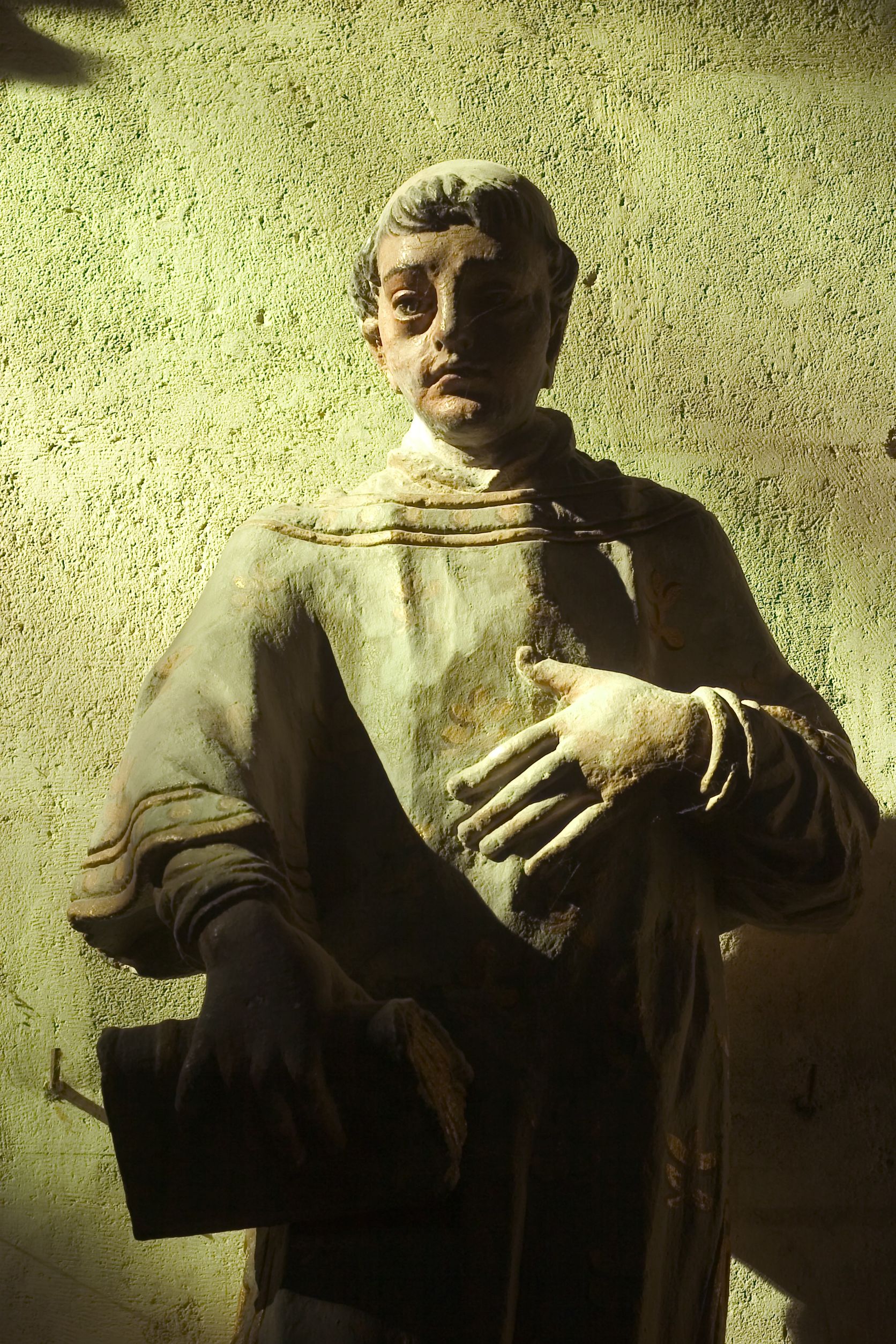
Statue of Saint-Émilion

Statue of Saint-Émilion

The four leading properties of the region–the Premier Grand Cru Classé A châteaux of Cheval Blanc, Angélus, Ausone, and Pavie–are known to wine students and wine lovers alike. (You may even be able to recite the 14 châteaux of the Grand Cru Classé-Classé B, and if you are really good, take a stab at the other 64 properties of the Grand Cru Classé.)

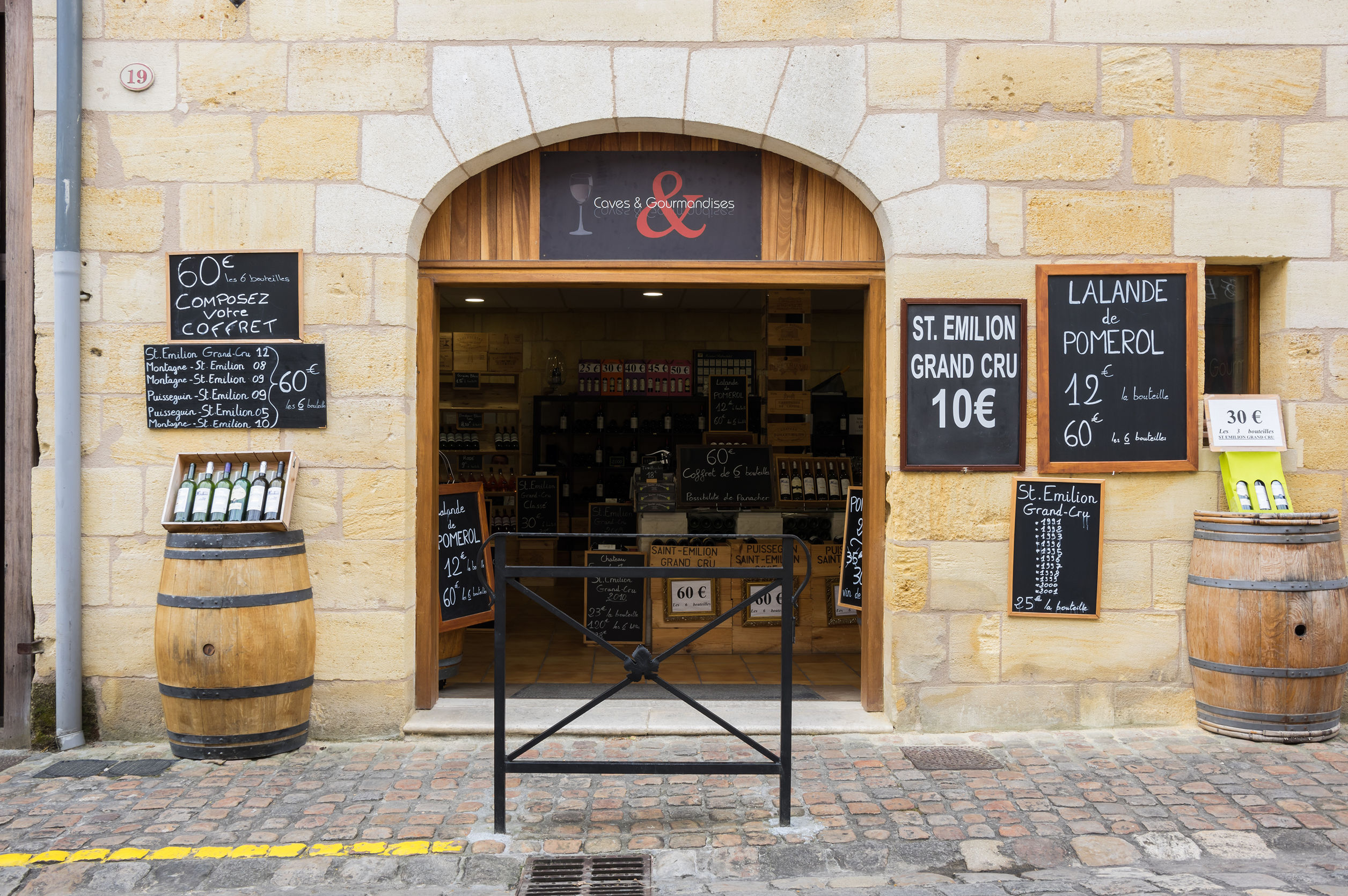
Surrounding this luscious region are several villages that produce deep, flavorful red wine similar in style and standards to those of Saint-Émilion itself. Four of these have earned the right to append the name of Saint-Émilion onto the name of their village in the labeling of their wines and are thus considered to the satellites of Saint-Émilion. These four satellites are the villages of Saint-Georges, Montagne, Puisseguin, and Lussac.

Saint-Georges-Saint-Émilion: Located directly to the north of Saint-Émilion, the Saint-Georges-Saint-Émilion AOC is the smallest of the four satellites and occupies a tiny spot along the edge of the Saint-Émilion region itself. The vineyards are planted to approximately 75% Merlot, 20% Cabernet Franc, and 5% Cabernet Sauvignon. The village of Saint-Georges (often referred to as a hamlet) has a population of around 500 people and is part of the Montagne Commune. The wines produced from the vineyards of Saint-Georges are allowed to use either name (Saint-Georges or Montagne).

Montagne-Saint-Émilion: The Montagne-Saint-Émilion AOC literally surrounds the Saint-Georges region and lies along the remainder of the northern boundary of the Saint-Émilion AOC, which is itself–for the most part–defined by the path of the Barbanne River (La Barbanne). Montagne is the largest of the satellites of Saint-Émilion. The Montagne (the Butte de Calon) itself is the highest point on the Right Bank. The soils range from sand and clay in the north, to a central plateau of clay and limestone and limestone slopes in the south. Vineyards are believed to be planted to 75% Merlot, 20% Cabernet Franc, and 5% Cabernet Sauvignon. The wines of Montagne-Saint-Émilion are known to be full-bodied and rich with supple tannins.

...

Puisseguin-Saint-Émilion: The Puisseguin-Saint-Émilion AOC is located north of the border with Montage and east of Lussac. The town of Puisseguin (population: 861) is filled with ruins from Roman times, and takes its name from two words, “Puy” and “Seguin.” Puy is an old Celtic term for “the hill of powerful wine.” Seguin is the name of a Roman officer who served under Charlemagne and settled in the region around 800 AD. The terroir of Puisseguin is similar to that of the surrounding regions and contains a mix limestone, clay, alluvial gravel, and sandstone soils. The vineyards are reported to be planted to 80% Merlot, with the remainder mainly Cabernet Franc (and a bit of Cabernet Sauvignon). The wines of the region have been described a quite fruit-forward while young, with aromas and flavors of licorice, mint, and other herbs evolving as the wines reach 6 to 8 years of age.

Lussac-Saint-Émilion: The appellation of Lussac-Saint-Émilion is the northernmost of the satellites. The village of Lussac, named for a gentleman called Lucius or Lucaniacus who is credited with introducing viticulture to the area during Roman times, is so low-key that the tourist bureau lists a visit to the town of Saint-Émilion (5 miles away) as the top tourist activity. The topography of Lussac- Saint-Émilion is diverse; the south-east covered with slopes of clay and limestone, the north a mix of gravel, clay, and sand; while the west, a slightly elevated plateau, is mostly sandy gravel. Vineyards are reportedly planted 70% to Merlot and 20% Cabernet Franc, leaving just 10% planted to Cabernet Sauvignon (with a rare sprinkling–perhaps–of Malbec, Carmenère, and Petit Verdot). The wines of Lussac-Saint-Émilion tend to be elegant, velvety, and generous and are often compared to those of Montage-Saint-Émilion–its neighbor to the south.
...

The Lost Satellites: Between 1936 (when the AOCs for Saint-Émilion and its satellites were approved) and the 1970s, two other regions–Parsac and Sables–were allowed to append their names to that of the Saint-Émilion AOC. However, they are no more. Sometime in the 1970s, Parsac merged with Montagne, and Sables was annexed into the Saint-Émilion AOC.

Click here for an excellent handbook of the regions of Saint-Émilion (and the rest of the Right Bank as well), provided by the Union des Maisons de Bordeaux.

References/for further information:

The Bubbly Professor is “Miss Jane” Nickles of Austin, Texas… missjane@prodigy.net

The Murray, the Darling, and the Alps of Australia

...

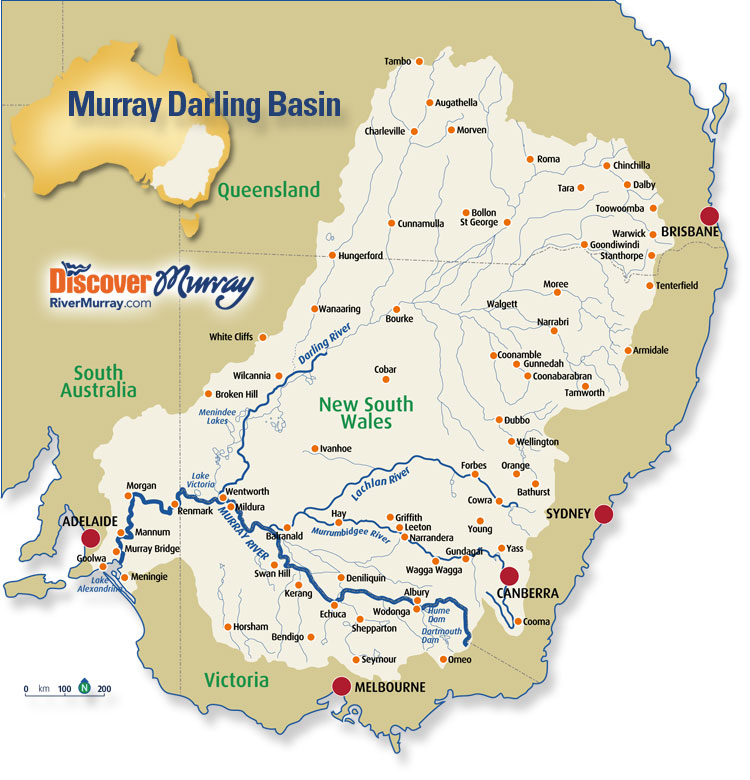
Murray Darling (as serious wine students certainly will know) is a wine region in Australia. Known primarily for Chardonnay but also widely planted with Shiraz and Cabernet Sauvignon, it is a big region–the second largest (by geographical area) in the country.

The Murray Darling wine region transcends political boundaries to an extent, as it straddles the borders of two states–Victoria and New South Wales. The New South Wales portion of the region is considered to be part of the Big Rivers viticultural zone–which makes total sense as it is named for the longest and the third longest rivers in Australia.

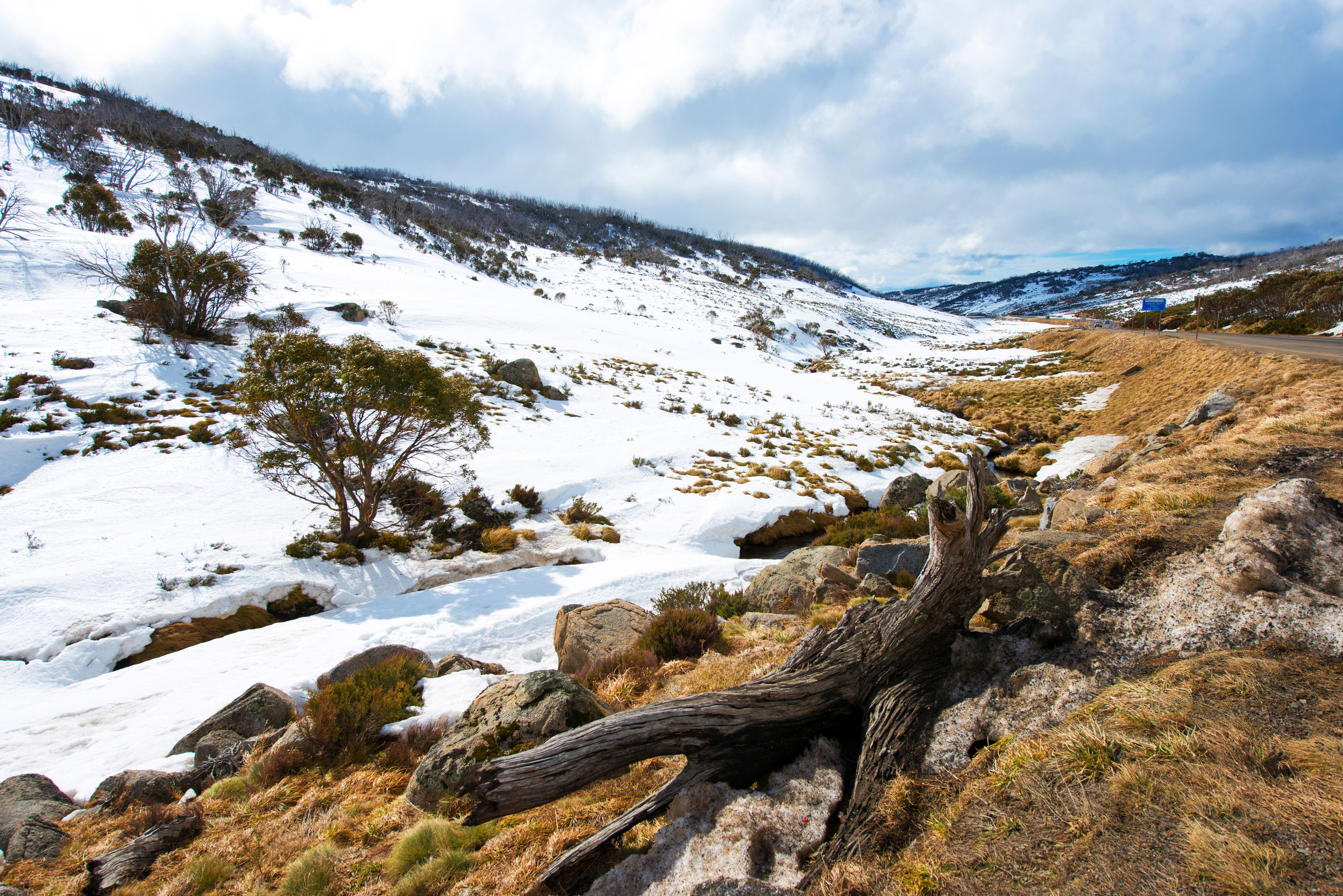
The longer of the two rivers–the Murray–is the longest river in Australia, clocking in at 1,558 miles (2,508 km) long. The source of the Murray is in the Australian Alps, and from there it flows down the western side of the mountains, twisting and turning across the inland plains and forming part of the border between the states of New South Wales and Victoria before it reaches the state of South Australia. From there, the Murray heads southward for almost 200 miles (315 km) before it joins the Southern Ocean (also known as the South Pacific Ocean) at Lake Alexandria.

Kosciuszko National Park, Australia

Kosciuszko National Park, Australia

Wait a minute–did she just say the Australian Alps? Yes, she did–and that’s the thing that led to this post. Before doing a bit of digging into the background of the Murray Darling region I had no idea that Australia had its own Alps.

The Australian Alps, it turns out, are part of the Great Dividing Range (now it starts to make sense). The Alps are the highest mountain range in Australia, and the only place in Australia that receives deep snow fall every year. Mount Kosciuszko, the highest point in Australia (7,310 feet/2,228 meters above sea level) is part of the Alps system. There is even a system of Alpine National Parks, understandably  a center for skiing and other mountain sports in Australia.

So–back to our rivers. The source of the Darling River is also in the Great Dividing Range, yet far to the north of the Murray in the northern portion of New South Wales. The Darling River, the third longest river in Australia, flows south-southwest across New South Wales to the border of the state of Victoria, where it joins the Murray.

The combined Murray-Darling catchment system provides irrigation for one seventh of Australia’s total landmass, including most of Victoria, New South Wales, southern Queensland, and parts of South Australia. This area is of great agricultural significance and has even earned the nickname of the “food bowl” of the nation. The agriculture output of the Murray-Darling Basin includes dairy, citrus, stone fruit, livestock, cotton, almonds, and over half of Australia’s cereal crops.

Of course, of great interest to me are the grapes, as a great majority of the wine regions of New South Wales and Victoria–as well as a portion of South Australia–fall under the water catchment of the Murray-Darling. The importance of these rivers (as well as the other rivers in the basin, which include the Lachlan and the Murrumbidgee) really cannot be overstated. We can thank these rivers for Hunter Valley Semillon, Mudgee Cabernet, Rutherglen Muscat, Heathcote Shiraz, and Murray Darling Chardonnay. Thank you!

References/For more information:

The Bubbly Professor is “Miss Jane” Nickles of Austin, Texas… missjane@prodigy.net
 

Misfits of Tuscany

...

Tuscany is red wine country. By last count, nearly 85% of her vineyards were dedicated to red grapes, led by Tuscan super-star Sangiovese. We all recognize the famous Sangiovese-based reds of Tuscany–the Chiantis, the Brunellos, and the Rossos. We also admire the deep red wines that invited international grapes to the party–Bolgheri Sassicaia and the rest of the Super Tuscans, Carmignano, and a host of lesser-known wines such as Cortona, Suvereto, and Val di Cornia.

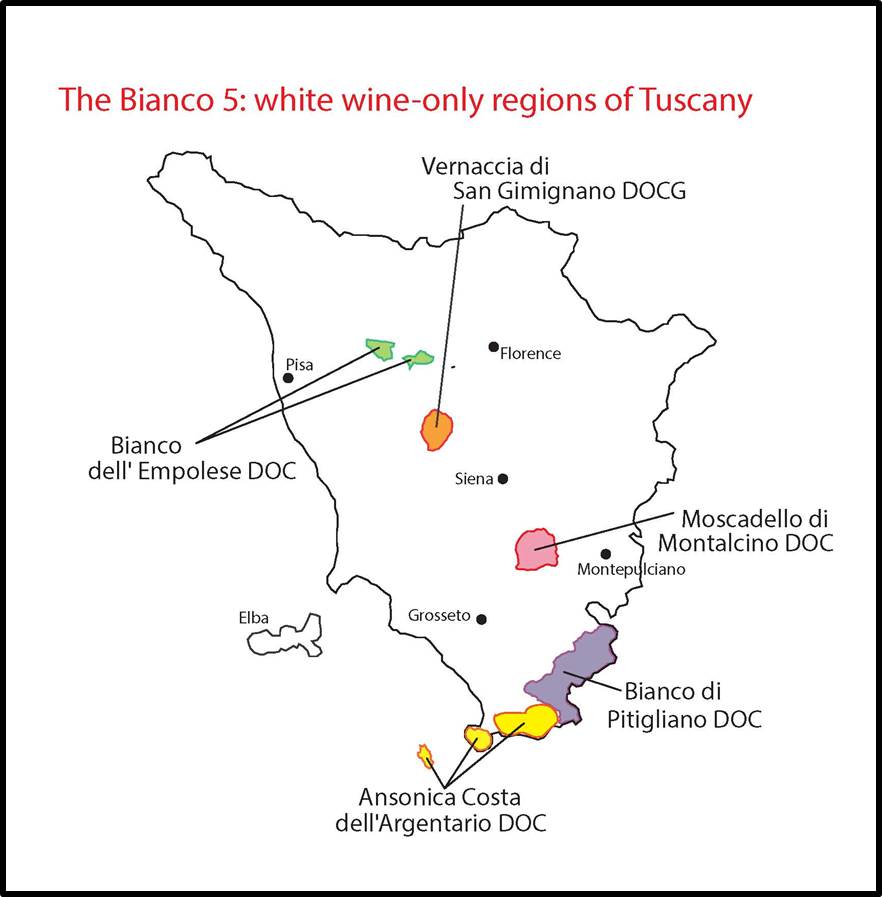
That’s a lot of red wine. However, white wine has—both traditionally and in modern times—played a role in the wines and wine culture of Tuscany, but you may just have to hunt for it. Out of Tuscany’s 53 DOPs (at last count, 41 DOCs plus 12 DOCGs), only five of them are approved for white wines only. I like to call these 5 wines—four DOCs plus the rightfully famous DOCG of Vernaccia di San Gimignano— the “misfits of Tuscany” (misfit used in the kindest, gentlest of fashions, of course).

Read on to read about these brave outliers, the white-wine only DOCs—and lone DOCG—of Tuscany:

Ansonica Costa dell’Argentario: The Ansonica Costa dell’Argentario DOC is located in the far southwest corner of Tuscany, on (and named for) the Monte Argentario Peninsula. This fascinating place is a former island that is now connected to the Tuscan coast by three narrow strips of land. The DOC also includes the small island of Giglio, located 10 miles (16 km) from the mainland.

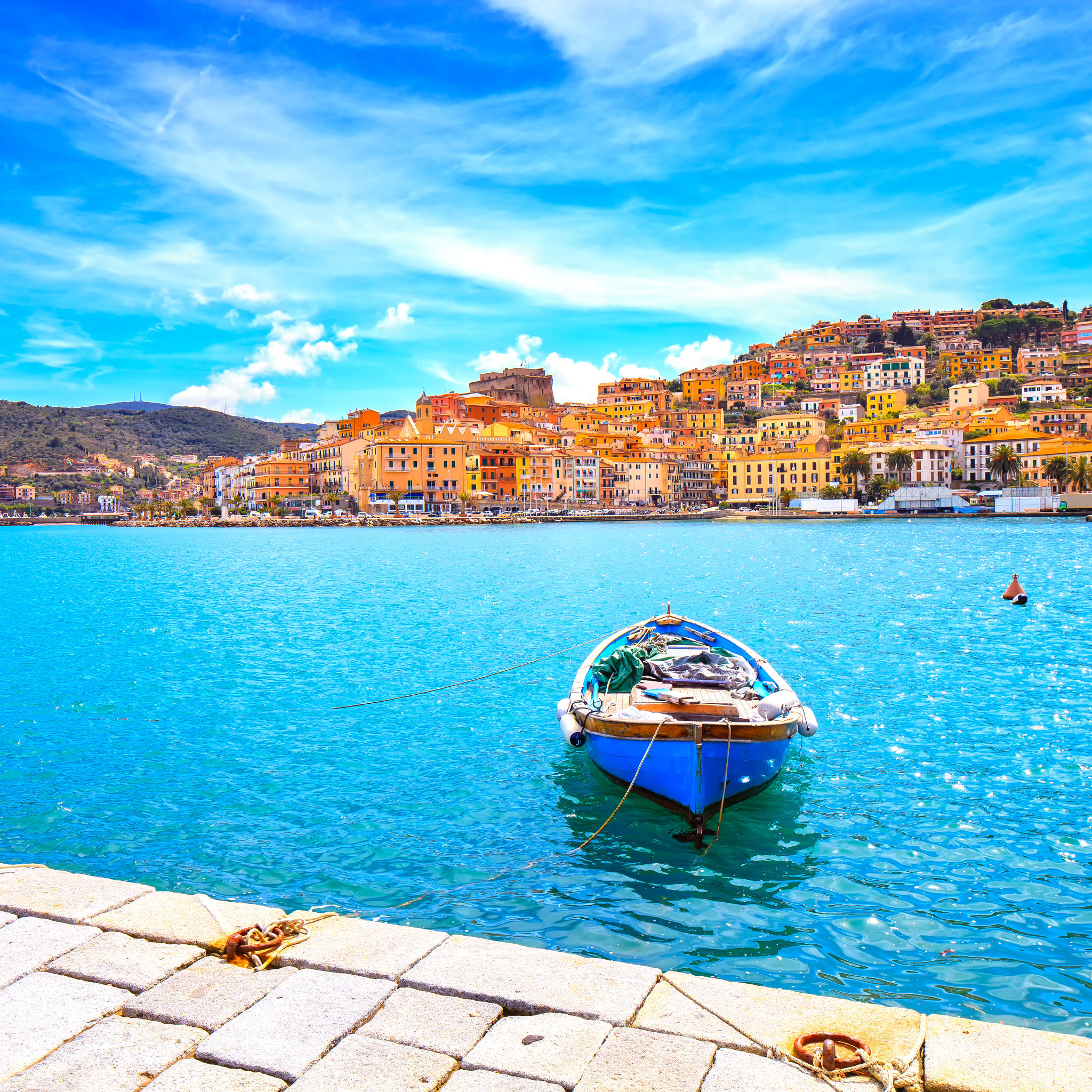
The Porto Santo Stefano waterfront (Monte Argentario)

The Porto Santo Stefano waterfront (Monte Argentario)

Ansonica Costa dell’Argentario is a white wine-only DOC approved for dry wines produced from the Ansonica grape variety (minimum 85%). Ansonica is believed to be native to Sicily and spread from there to Sardinia as well as Elba, Giglio, and other islands of the Tuscan archipelago. It is grown in small amounts on the Tuscan coast and inland, but mainly in the southern section of the region. The grape is a mainstay in the wines of Sicily, where it is known as Inzolia, and stars in many of the islands DOCs, including Marsala.

The Ansonica Costa dell’Argentario is the only Tuscan DOC to produce a wine required to be based on a majority of the Ansonica grape variety. Ansonica is considered to be a late-ripening grape. Oak aging and sur lie contact are sometimes used in its production. Excellent versions of Ansonica Costa dell’Argentario are described as medium-bodied with medium acidity as well as aromas and flavors of tropical fruit, ripe pear, green plum, hazelnuts, herbs, and minerals.

Bianco dell’Empolese:  The Bianco dell’Empolese DOC is located in the western portion of the province of Firenze near the town of Empoli, for which it is named.  The region rests in a rather cozy valley, surrounded on three sides by hills and mountains of the Montealbano range. The mountains block some of the colder winds and moisture coming down from the north and in from the west, and grapes here enjoy warm temperatures and sunshine.

...

The Bianco dell’Empolese DOC produces dry white wines and vin santo, both based on a minimum of 60% Trebbiano Toscano. The vin santo may be either secco or amabile and must be aged for three years in caratelli (small wood barrels of approximately 100 liters [26.4 gallons]). Bianco dell’Empolese DOC white wines are refreshingly acidic and light-bodied with aromas of pear, peach, apricot, citrus and flowers.

  • A note on Trebbiano: The name Trebbiano is actually used for a variety of grape varieties, some related and some not. Trebbiano di Lugana and Trebbiano di Soave are actually not-exactly-Trebbiano and should otherwise be known as Verdicchio. Trebbiano d’Abruzzo is considered to be the highest-quality of the True Trebbianos, and is related to Trebbiano di Spoletino, a variety grown mostly in and around Umbria. Trebbiano Toscano is, alas, not related to any of the above but is the same grape known in many parts of the world as Ugni Blanc.

Bianco di Pitigliano DOC:  Located in the far south of Tuscany, almost to the border with Lazio, the Bianco di Pitigliano DOC is named for the town of Pitigliano; itself located about 50 miles (80 km) southeast of Grosseto.  This is a mountainous area, famous for its cliffs, caves, and picturesque cliff-side houses.  The northwest portion of the region overlaps with the Morellino di Scansano DOCG, so red wines are produced in this area as well.

Cliff-side houses of Pitigliano

Cliff-side houses of Pitigliano

The Bianco di Pitigliano DOC produces dry white wines (normale and superiore), sparkling white wines, and vin santo, all based on a minimum of 40% Trebbiano Toscana (100% Trebbiano may also be used). A variety of grapes including Greco, Verdello, Grechetto, Ansonica, Chardonnay, Viognier, Pinot Bianco, and Riesling Italico–among others–are allowed for use as the remainder (some in varying amounts). Dry Bianco di Pitigliano DOC can be described as crisp, light- to medium-bodied with fruity, floral, and mineral notes with a touch of lemon-peel bitterness on the finish; Superiore versions have a bit more complexity and, perhaps, an added spicy or nutty flavor.

Moscadello di Montalcino DOC: Don’t be too surprised that a sweet, sometimes fizzy white wine is made in the shadows of big, bold Brunello (after all, it works pretty well for Moscato d’Asti)! The Moscadello di Montalcino DOC area overlaps in terms of geographic area with its big brothers Brunello and Rosso (di Montalcino), but produces sweet/semi-sweet white wines with a minimum of 3.5% residual sugar. Moscadello di Montalcino is produced in still (tranquillo),fizzy (frizzante), and late-harvest (vendemmia tardiva) versions, all based on a minimum of 85% Moscato Bianco (aka Muscat Blanc à Petits Grains).

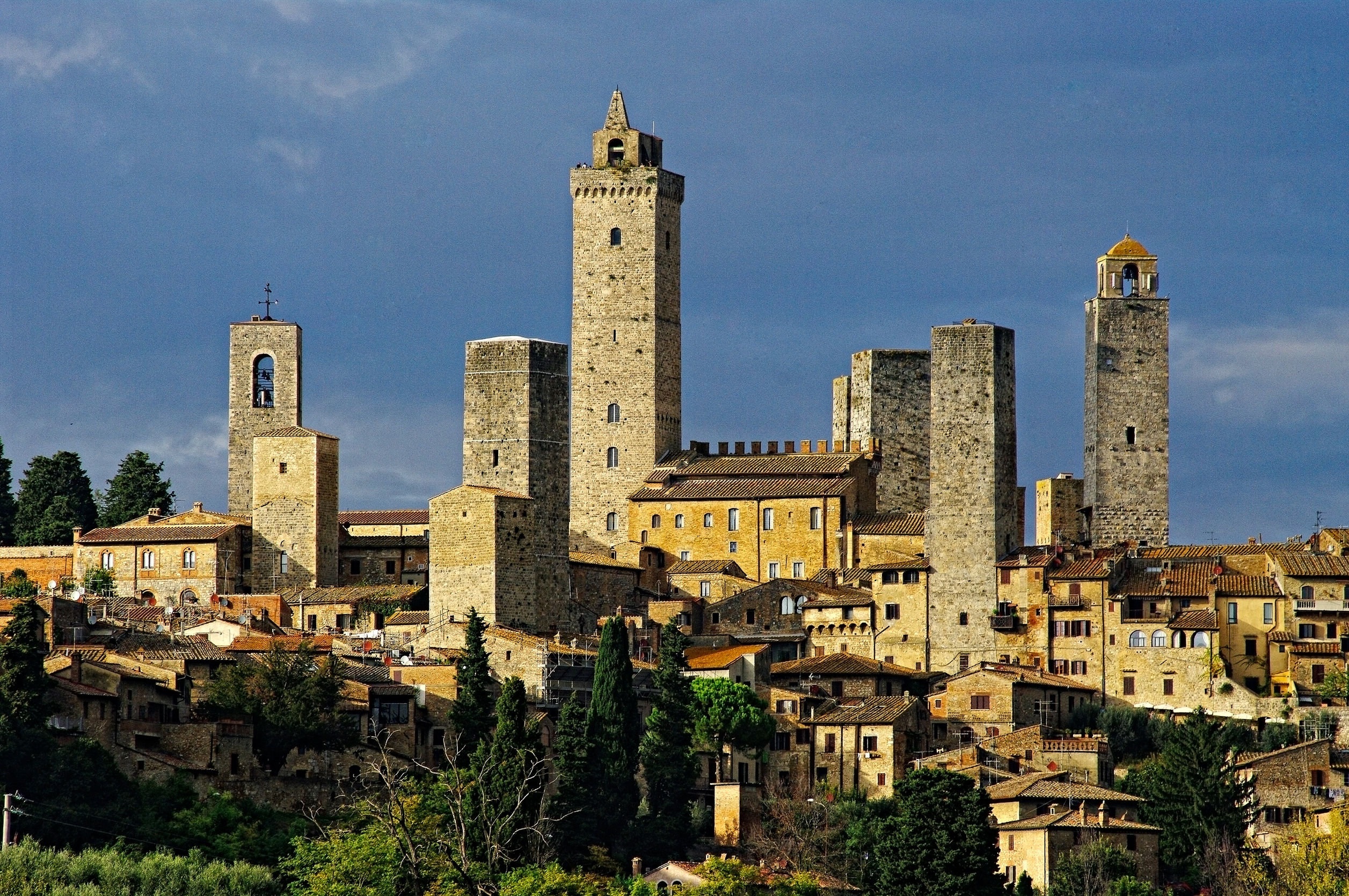
San Gimignano - the "Medieval Manhattan"

San Gimignano – the “Medieval Manhattan”

Vernaccia di San Gimignano DOCG: Almost as famous as its red wine-producing brethren, Vernaccia di San Gimignano has been a white wine-only DOCG since 1993 (and was among the first of Italy’s DOCs, back in 1966). This wine, produced from a minimum of 85% Vernaccia grapes, is widely distributed throughout Europe and the US. Unless you live in or are a regular visitor to Tuscany, it might just be the only wine on this list of lovable misfits that you have actually had!

Produced in and around the lovely hilltop town of San Gimignano, expect Vernaccia di San Gimignano DOCG to be dry, crisp, light- to medium-bodied with aromas and flavors of lemon, green plum, peach, apricots, flowers, and (perhaps) a bit of almond, with a slight hint of green apple skin-like bitterness on the finish.

References:

The Bubbly Professor is “Miss Jane” Nickles of Austin, Texas… missjane@prodigy.net


Misfits of the Loire

Close-up of a window in Château de Chaumont (Chaumont-sur-Loire)

Close-up of a window in Château de Chaumont     (Chaumont-sur-Loire)

A good wine student can most likely give you an excellent overview of the wines of the Loire. Perhaps it would go something like this:

The Pays Nantais is the westernmost region of the Loire Valley. It is adjacent to the Atlantic Ocean and overall the coolest area of the Loire, focusing on dry white wines produced using the Melon de Bourgogne grape variety. The majority of the wine here is produced in one of the four AOCs bearing the name “Muscadet.”

Moving inland, the Anjou-Saumur region focuses on white wines, both still and sparkling and in various levels of sweetness, produced from Chenin Blanc. Still reds, still rosés, and some sparkling wines are also produced in Anjou-Saumur, primarily using the main red grapes of the area–Cabernet Franc, Pinot Noir, Gamay and Côt (Malbec). Moving further east, the region of Touraine produces white wines using Chenin Blanc, but further inland as the soils and climate evolve, the focus moves to Sauvignon Blanc. Red wine and rosé is produced here as well. The easternmost region of the Loire, referred to as the Eastern Loire or Upper Loire, focuses on crisp whites made using Sauvignon Blanc; a few Pinot-Noir and Cabernet Franc-based reds are produced in the Eastern Loire as well.

Kitchen garden at the Château de Villandry

Kitchen garden at the Château de Villandry

So how did our wine student do? Pretty well, I would say. That’s a nice overview of the Loire!

However…if we want to dig a bit deeper, we will learn that the 300 mile-long Loire Valley wine region actually contains close to 50 AOCs and 5 IGPs, and among them over two dozen grape varieties are grown and made into Loire Valley wines.

Here are a few that I found that produce unique wines using grapes that are (somewhat) unusual for the Loire Valley. I like to call these wines “Misfits of the Loire” (in the most endearing use of the term, of course).

Cour-Cheverny AOC: The Cheverny AOC is tucked into the easternmost part of Touraine, just south of the Loire River. The subregion of Cour-Cheverny (named for a tiny commune with around 2,000 inhabitants) is, in turn, tucked into the southeast part of the Cheverny AOC. Here you’ll find the only Loire Valley plantings of the Romorantin grape variety (and, perhaps the only Romorantin vines left in France). The Cour-Cheverny AOC produces dry to off-dry wines.

Romorantin is a white grape variety closely related to Chardonnay–its parentage appears to the be same as Chardonnay (Pinot X Gouis Blanc) however, the “Pinot” in the case of Romorantin is not Pinot Noir (thought to be the parent of Chardonnay), but rather a rare Pinot mutation known as Pinot Fin Teinturier—making Romorantin and Chardonnay something akin to step-sisters whose fathers were fraternal twins (thank goodness we’re talking about grapes).

Panorama of Saumur

Panorama of Saumur

Cour-Cheverny was promoted to an AOC (from its former VDQS status) in 1993. It currently has just under 180 acres (73 ha) of vines, all planted to Romorantin. Dry wines produced in the Cour-Cheverny AOC tend to be light-bodied, crisply acidic, and lightly aromatic with aromas and flavors of citrus, green apple, and peach. Richer, off-dry wines–some of them lightly affected by botrytis–can have a waxy texture along with flavors of tropical fruit and honey.

Pouilly-sur-Loire AOC: The Pouilly-sur-Loire AOC actually occupies the same location as Pouilly-Fumé (which might be called its “much-more-famous brother”). As all good wine students know, Pouilly-Fumé produces crisp, dry, white wines from 100% Sauvignon Blanc grapes. The Pouilly-sur-Loire AOC, in contrast, produces dry white wines using 100% Chasselas–a grape mostly known for its (likely) origin near Lake Geneva as well as its widespread use in the wines of Switzerland. Chasselas is currently grown throughout France, although it is usually used for table grapes or grape juice. It is, however, an allowed grape in the Alsace AOC (albeit typically used in blends) and Vin de Savoie AOC. Known as Gutedel, it is also grown in small amounts in Germany and Austria.

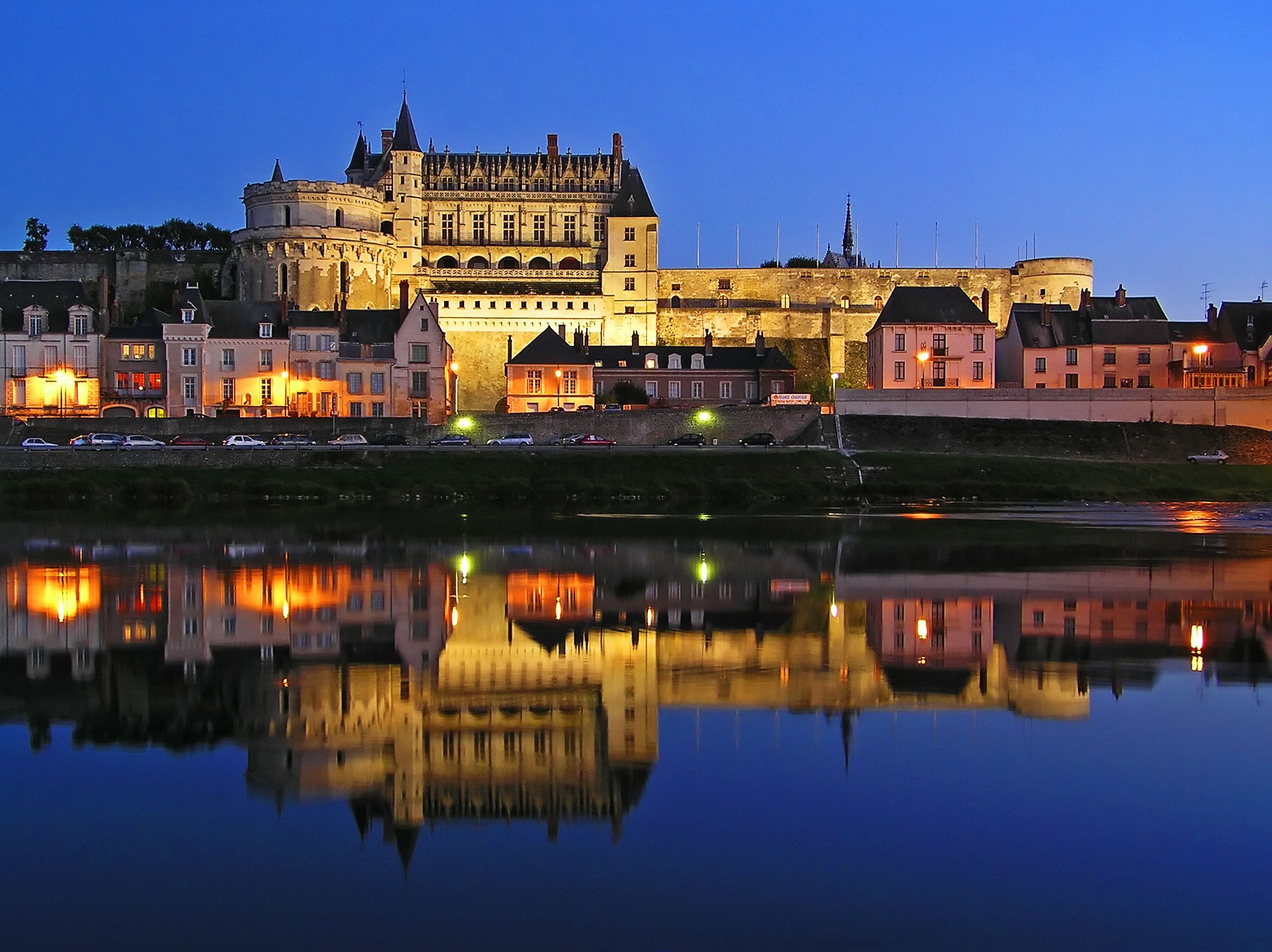
Château d’Amboise (Indre-et-Loire)

Château d’Amboise (Indre-et-Loire)

The wines of Pouilly-sur-Loire AOC are the only AOC wines in the Loire allowed to use the Chasselas grape variety.  Pouilly-sur-Loire wines are somewhat rare, but Domaine Saget makes a version described on their website as “pale gold with hints of yellow, aromas of white fruit, plum, and almond; pure and crisp with mineral notes.”

Touraine Noble-Joué AOC: The Touraine Noble-Joué is a rosé-only AOC tucked in between two tributaries of the Loire River—the Cher and the Indre–just south of the town of Tours. Rosé-only AOCs are not uncommon in the Loire Valley–others include the AOCs of Rosé d’Anjou, Cabernet d’Anjou, Cabernet de Saumur and Rosé de Loire. However, the Touraine Noble-Joué AOC in unique in that it requires the wines to be produced using a blend of the “three Pinots” – and one of them is white.

The required blend for Touraine Noble-Joué AOC is as follows: a minimum of 40% Pinot Meunier, a minimum of 20% Pinot Gris, and at least 10% Pinot Noir. No other grapes are allowed.

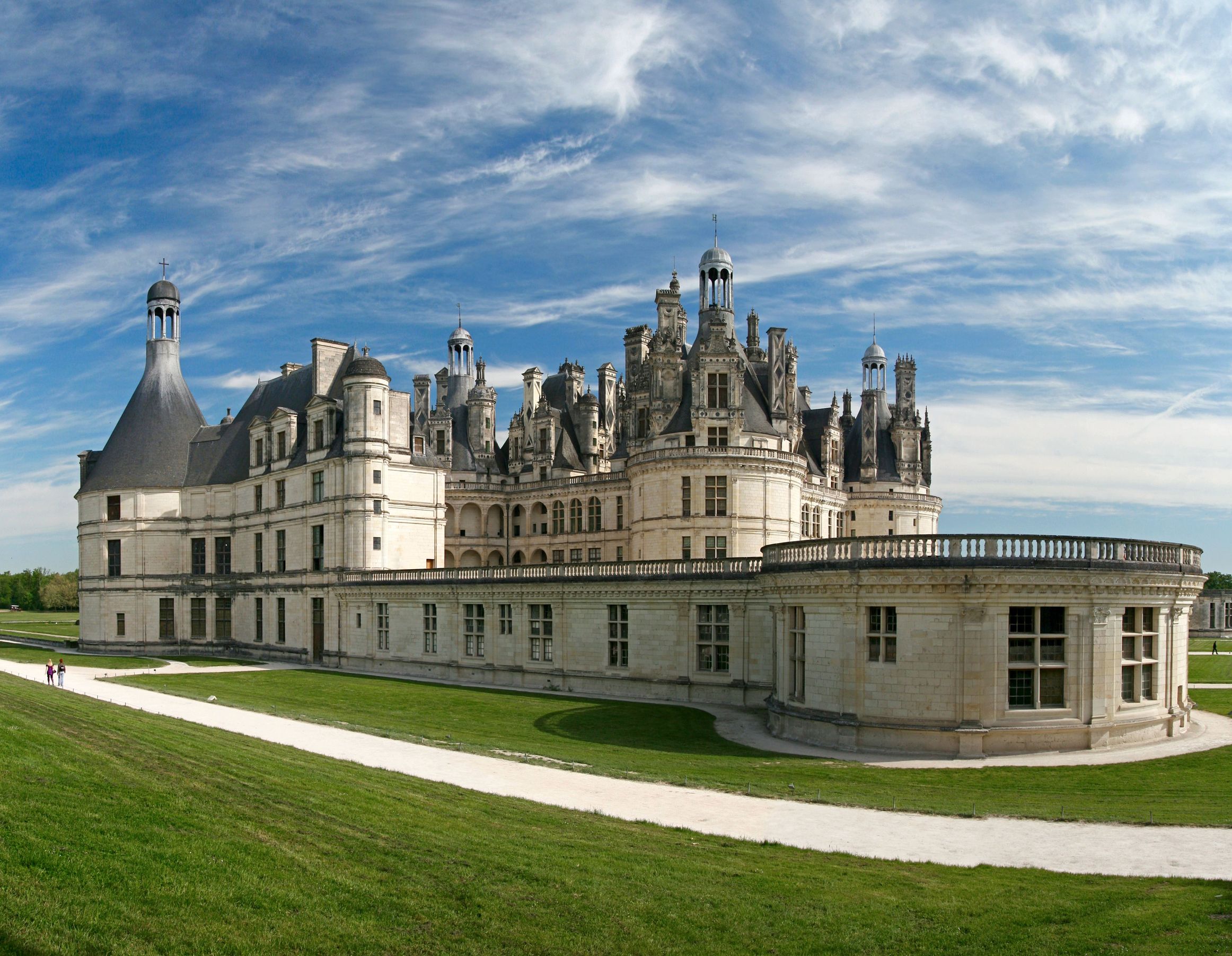
Château de Chambord (Loir-et-Cher)

Château de Chambord (Loir-et-Cher)

The wines of the area also have a long and interesting history. It was a favorite of King Louis XI of the House of Valois, who ruled France from 1461 to 1483. However, as the town of Tours began to grow and spread into suburbs, the vineyards gave over to housing, roads, stores, and cafés. In 1975, primarily through the efforts of vigneron Jean-Jaques Pierru (of Jean-Jacques Sard Jérémie Pierru), the remaining 30 ha of vineyards in and around the town were saved, and the wine brought back into style.  Touraine Noble-Joué was awarded its AOC status in 2001.

Technically considered a vin gris (per the Cahier des Charges), Touraine Noble-Joué AOC has been described as pale, pinkish-grey in appearance with aromas of cherry and strawberry. The wine tends to be light-bodied and crisp with flavors of cherries, red plum, flowers, and berries; followed by a hint of minerality on the finish.

References:

The Bubbly Professor is “Miss Jane” Nickles of Austin, Texas… missjane@prodigy.net