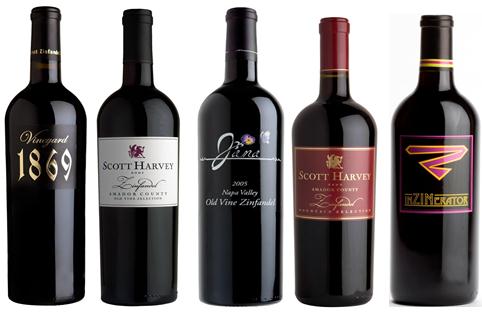
Wine Grape Cheat Sheets: Zinfandel

Zinfandel—The Soundbyte: Zinfandel used to be known as “California’s Mystery Grape,” as an old-timey legend says that Zinfandel vines of the vitis vinifera species were growing happily in California before European settlement of the New World.

This was fun to believe for a while, but today we know better. It is now known that Zinfandel traveled from Croatia to Vienna during the Habsburg Monarchy’s rule over Croatia, when some cuttings ended up in the Imperial Nursery in Vienna. From there, they were sent to a horticulturist in Long Island who sent some vines out to California. In California, Italian immigrants working the gold rush appreciated the grape’s sturdy, robust style and planted them with enthusiasm—only to abandon their vineyards when the gold rush fizzled out.  Those vineyards—and their (Zinfandel) mystery grapes—were rediscovered years later when California experienced a new wave of post-Prohibition winemakers. Quite a story, right?

DNA fingerprinting has revealed that today’s Zinfandel is identical (or near identical) to a grape known as Tribidrag or Crljenak Kaštelanski and native to the Dalmatian Coast of Croatia. Zinfandel is also either identical to—or very closely related to—a grape known as Primitivo, as grown in Puglia in Southern Italy.

Wherever it came from and whatever you call it, Zinfandel has proved itself as a hardworking, heat-seeking, robust grape.
Typical Attributes of a Zinfandel-based Wine:

    • Fruit-forward and often intensely fruity…the aromas and flavors of blackberry, cherry and plum are quite recognizable.
    • In my wine tastings I generally introduce Zin as having aromas of blackberry, black pepper, and black licorice.  It’s a pretty good Zin cliché.
    • Medium to high alcohol…sometimes 15% or more
    • Medium to full body; more likely towards the fuller side
    • Medium to high tannin combined with refreshing acidity.  Zinfandel grown in warm climates/warm vintages can show velvety (rather than grippy) tannins, but the medium to high tannin levels abide.
    • Yes…. the Zinfandel grape can be made into White Zinfandel (rosé).  This style of wine is produced by allowing the juice to ferment in contact with the intensely colored red grape skins for a day or two—just until the juice turns a light pink color.  At this point, the juice is pressed off the grape skins and fermentation is allowed to complete using just the (now pink-hued) juice. While it is true that your Mama’s White Zinfandel most likely had a touch of residual sugar and this style remains popular today, Zinfandel is also made into crisp, dry, serious rosé.
    • Late harvest Zinfandel is often made into a luscious, complex dessert wine. (which makes a great pairing for chocolate).

Typical Aromas of a Zinfandel-based Wine:

  • Black Fruit:
    • Blackberry (Blackberry Jam), Boysenberry, Plum, Raisin, Prune
  • Red Fruit:
    • Raspberry, Ripe Cherry, Pomegranate
  • Savory Spice:
    • Black Pepper, White Pepper
  • Baking Spice:
    • Cinnamon, Clove, Nutmeg, Allspice, Anise (Black Licorice)
  • Cocoa/Chocolate
  • Wood-derived:
    • Oak, Vanilla
  • Sometimes:
    • Maple, Mushroom, Mint, Mineral

Where the Best Zinfandel is Grown:

  • California—it grows all over the state; good choices include Sonoma County, Amador County/the Sierra Foothills, Paso Robles, Napa County, and Lodi
  • The south of Italy—where it is known as Primitivo
  • Croatia—the native home, where it is sometimes called Tribidrag or Crljenak Kaštelanski
  • In smaller amounts—South Africa, South America, and Australia

Food Affinities – Base Ingredients:

  • Beef, Lamb, Venison, Pork, Chicken, Turkey, Duck, Sausage

Food Affinities – Bridge Ingredients:

  • Any type of burgers (even turkey burgers)
    • Blue Cheese Bacon Cheeseburgers
    • Burgers with Caramelized Onions
  • Sausage and Peppers
  • Eggplant, Mushrooms, Black Beans
  • Tomatoes, Sun-dried Tomatoes
  • Mint, Rosemary, Oregano
  • Grilled Flavors, Smoky Flavors
  • Onions, Shallots
  • Walnuts, Pecans, Hazelnuts
  • Chocolate—which many people love, but most folks will recommend that you stick to the sweet versions of Zin for dessert.

Note: When it comes to food pairings, by all means—drink what you like!

Wine Grape Cheat Sheets: Carmenère

CarmenereThe Soundbyte: Carmenère is often called “the lost grape of Bordeaux” and was widely planted in Bordeaux in the years before phylloxera. However, in the 1880s as phylloxera ravaged the vineyards of Europe and all the vines needed to be re-planted, Carmenère resisted grafting and was essentially forgotten.

On the other side of the world, many of the original vinifera vines planted in Chile were brought from Bordeaux during the mid-1800s, as phylloxera was ravaging the vineyards of France. Carmenère—along with its better-known cousins such as Cabernet Sauvignon, Sauvignon Blanc, and Merlot—arrived in Chile at about this same time.

Carmenère thrived in Chile, where it was often mistaken for Merlot in the vineyard. In fact, much of what was bottled as a particularly spicy style of Chilean Merlot—Merlot Chileno—before 1994 quite possibly contained quite a bit of Carmenère. The mystery of the spicy Chilean Merlot was solved in 1994 when Professor John-Michel Boursiquot of the Montpellier School of Oenology noticed the distinctive character of the wine and confirmed that much of what was considered to be Chilean Merlot was actually Carmenère.

In the vineyard, Carmenère is often the last grape to be picked, and it requires a lengthy season to reach full maturity. Therefore, it is not well suited to many parts of Bordeaux—but in the right areas it can produce great wines. Chilean Carmenère is rich in color, redolent of red fruits, spice, and berries, and has softer tannins than Cabernet Sauvignon. While Cabernet Sauvignon occupies more Chilean vineyards (by acreage), many consider Carmenère to be the signature grape of Chile.

Typical Attributes of a Carmenère-based Wine:

  • Rich with dark fruit flavors (including ripe berries and plum)
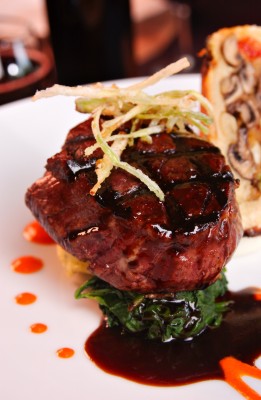
  • grilled steak for carmenre with tomatoesFirm structure, full body and heavy tannins; lush, velvety texture
  • Deep, dark color—this is a big red wine!
  • Carmenère is distinguished by fruitiness accompanied by the flavors of “spice and smok.e”
  • Underripe Carmenère, or grapes from a cool growing season, can have a vegetative “green bell pepper” aroma or flavor. Carmenère  takes longer to ripen than other red grapes, so be on the look-out for these flavors.

Typical Aromas of a Carmenère-based Wine:

  • Fruity: Blackberry, Blueberry, Raspberry, Currant, Dark Plum, Cherry
  • Spicy: Black Pepper, White Pepper, Dried Herb, Cinnamon, Anise, Vanilla, Licorice
  • Earthy:  Smoke, Wet Earth, Leather, Tobacco, Coffee
  • Oak-Derived:  Oak, Chocolate, Mocha, Cocoa
  • Vegetative:  Green Bell Pepper, Green Olive, Herbal, Lavender

Where The Best Carmenère is Grown:

  • Chile, where it is one of the leading red grapes (although Cabernet Sauvignon occupies more acreage)
  • A few wineries in California and Washington State grow Carmenère; it is often used in Meritage-style blends but can also be found as a varietal.
  • The Guenoc Winery in Lake Country brought the grape—which had to withstand a three-year quarantine before being planted—to the United States from Chile
  • The grape is grown a bit in Italy’s Eastern Veneto and Friuli-Venezia Giulia regions. This includes the Piave DOC allows for varietally-labeled Carmenère.
  • Bordeaux, France; where the grape is grown on a very limited basis but is still considered part of the Bordeaux Blend. Grande Vidure is a historical synonym sometimes used in Bordeaux. Château Clerc Milon has the largest plantings of Carmenère in the region, but there are still less than ten acres in all of Bordeaux
  • China, which grows a great deal of Carmenère, often under the name Cabernet Gernischt

Grilled spicy steakFood Affinities – Base Ingredients:

  • Beef, Lamb, Veal, Venison, Pork
  • Poultry when prepared in a rich, hearty manner such as grilled, smoked, or braised…
  • Grilled Foods, Smoked Foods

Food Affinities – Bridge Ingredients:

  • Garlic, Onions, Mushrooms
  • Walnuts, Pecans
  • Rosemary, Oregano, Basil, fresh Herbs of all kinds
  • Tomatoes, Sun-dried Tomatoes, Eggplant, Bell Peppers
  • Black Pepper, White Pepper, Green Peppercorns, Spicy flavors
  • Barbeque Flavors, Hearty, highly seasoned foods

Note: When it comes to food pairings, by all means—drink what you like!

The Bubbly Professor is “Miss Jane” Nickles of Austin, Texas   missjane@prodigy.net

Wine Grape Cheat Sheets: Malbec

The Soundbyte:  One of Malbec’s earliest claims to fame is the spot it holds as one of the classic grape varieties approved for making red wines in the Bordeaux region of France.  Malbec was fairly widely planted in Bordeaux before a particularly harsh winter in 1956 wiped out a good majority of the vines, moat of which were never to be re-planted.  Nevertheless, Malbec is still used in Bordeaux, albeit in small amounts. Malbec can bring spiciness, deep color, ample tannin, and a particular plum-like flavor to blended red wines. These days, Malbec is best-known as the superstar of the high-altitude red wines of Argentina.  The best Malbecs can be described as mouth-filling, fruity, and sumptuous.  Worldwide, Malbec is planted in small amounts, but its popularity and acreage is on the rise.

Typical Attributes of a Malbec-based Wine:

  • Medium to full-bodied.  Malbec-based reds are known for having medium-to-high tannin and (often) a high level of dissolved solids (extract).
  • In France, Malbec is primarily used as a minor grape in the blended wines of Bordeaux and Southwest France. Outside of Europe, however, Malbec is often used in into 100% varietal wines.
  • The tannins can be a conundrum. In younger wines (or those made from less-ripe grapes), the tannins are sometimes described as tight or tightly-wound. Wines from warmer regions or riper grapes—as well as those made using certain wine making techniques (such as PFM)—can have tannins that are described as plush or ripe.
  • Malbec tends to make earthy, rustic wines.
  • Malbec-based wines tend to be very deep red or purple—opaque or almost inky—in color.
  • Malbec also makes a delightful rosé wine and…I’m beginning to see some late harvest/sweet wines made using Malbec.

Typical Aromas of a Malbec-based Wine:

Fruity:  Plum, Dark Cherry, Cooked Berries, Blackberry, Boysenberry, Raspberry, Fig, Black Currant

Floral: Violet, Lavender, Perfume (especially in wines of high altitude) 

Herbal: Fresh Herbs, Eucalyptus

Spicy:  Anise, Vanilla, Cocoa, Chocolate, Espresso, Tobacco

Sometimes from the Grape, and sometimes from Oak:  Oak, Cedar, Fresh Lumber, Mocha, Toast, Coffee, Tar

Where The Best Malbec is Grown:

  • Argentina…it especially thrives in the province of Mendoza.  Malbec is the major red varietal grape planted in Argentina.
  • In the Bordeaux region of France, where it is blended in small amounts to add spice to the Bordeaux Blend.
  • Cahors, the region in Southwest France known for making Malbec-based wines sometimes called “The Black Wine of Cahors.”
  • There is small amount grown in the Central Loire Valley of France.
  • There are some plantings in California, Washington State, Oregon and Texas— where it is made into both varietal wines and as a part of the Meritage blend.
  • You may be drinking Malbec but don’t know it; the grape goes by many aliases including Auxerrois, Côt (sounds like coat), and Pressac.

Food Affinities – Base Ingredients:

  • Beef, Lamb, Veal, Venison, Pork, Hard Cheeses

Food Affinities – Bridge Ingredients:

  • Garlic, Roasted Garlic, Onions, Mushrooms
  • Walnuts, Pecans
  • Rosemary, Thyme, Mint, Bay Leaf
  • Tomatoes, Roasted Tomatoes, Sun-dried Tomatoes
  • Cocoa, Chocolate (easy on the sweetness!)
  • Eggplant, Fennel
  • Blackberries, Currants, Figs
  • Black Pepper, Creole Spices, Chili Spices, Barbeque Flavors

Note: When it comes to food pairings, by all means—drink what you like!

The Bubbly Professor is “Miss Jane” Nickles of Austin, Texas… missjane@prodigy.net

Wine Grape Cheat Sheets: Syrah

Syrah—The Soundbyte: The Syrah grape, also known as Shiraz, is believed to be native to the Auvergne-Rhône-Alpes region of southeastern France. It is the leading red grape variety of the Northern Rhône Valley, and a major player in the (mainly) blended red wines of the Southern Rhône.

There’s a lovely legend that tells of the grape as a native to the city of Shiraz in Iran, transported from its Middle Eastern home to the south of France by a knight returning from the crusades—but, alas, it has been proven untrue and will remain with us as just another good story.

Today, Syrah thrives in many areas across the winemaking world and is the superstar grape of Australia. It is most often made into dry reds of both the single-variety and blended-variety styles.  While it is sometimes used to produce bubbly wines, rosé, and dessert wines; Syrah is mainly known (and widely appreciated) as a powerhouse red.

 Typical Attributes of a Syrah-based Wine:

  • European-style Syrah-based wines tend to be medium-dark in color and concentrated in flavor. European Syrah is often blended with softer grapes to minimize or balance tannin and alcohol levels. These wines are often described as earthy, dense, smoky, and herbal. 
  • Outside of Europe, Syrah/Shiraz-based wines tend to be dark purple, opaque, and inky in appearance.  Other attributes of this style of Syrah include high alcohol, fruit-forwardness, and intense tannins. These tannins are sometimes considered “soft” or “velvety” because they are drinkable when the wines are still young (often a result of winemaking techniques).
  • Australian Shiraz is sometimes described as plush ripey. Who can resist that?
  • The Australians produce sparkling Shiraz.
  • Syrah also makes a lovely, dry rosé.

Typical Aromas of a Syrah-based Wine:

Fruity:  Blackberry, Plum, Ripe Cherry, Currant, Prune, Blueberry, (Dried) Orange Peel

Spicy:  Black Pepper, Cinnamon, Clove, Vanilla, Chocolate, Coffee, Espresso, “Burnt Coffee”

Chemical:  Leather, Burnt, Tar, Smoke, Burnt Rubber, Asphalt, Graphite

Earthy:  Gamey, Smoky, Minty, Barnyard, Garrigue

Floral:  Lavender, Wildflowers, Dried Flowers, Violets

Where The Best Syrah is Grown:

  • Australia.
  • The Rhône:  Syrah stars in the wines of the Rhône, as the dominant variety in the North (in famous wines such as  Cornas, Hermitage, and Côte Rôtie) and as part of the typical Rhône blend in the South (as in Châteauneuf-du-Pape and Côtes du Rhône). The red Rhône Blend is often referred to as GSM (Grenache-Syrah-Mourvèdre); these grapes typically make up the backbone of Rhône blends, but such wines may contain other grapes as well.
  • Syrah also does well in the south/southeast of France (Provence, Languedoc, Roussillon).
  • South Africa, especially the warmer regions such as Paarl and Franschhoek.  For a real treat, try a bottle of “The Chocolate Block” from Boekenhoutskloof Winery (extra credit if you can pronounce it).
  • California, especially Sonoma, Mendocino, Napa, and Santa Barbara.
  • Washington State—a trendy growing region for Syrah—is well-represented; particularly the Walla Walla Valley AVA (which actually extends south into Oregon). The Rocks District of Milton-Freewater AVA (located in the Walla Walla Valley but within the state of Oregon) is also a fantastic (albeit small) region for Syrah.

 Food Affinities – Base Ingredients:

  • Beef, Lamb, Veal, Venison, Pork, Hard Cheeses

Food Affinities – Bridge Ingredients:

  • Garlic, Onions, Mushrooms
  • Walnuts, Pecans
  • Rosemary, Thyme, Bay Leaf, Sage
  • Tomatoes, Eggplant, Fennel
  • Currants, Raisins, Prunes (but go easy on the sweetness)
  • Green Peppercorns, Black Pepper, Coarse Grained Mustard, Chili Spices, Barbeque Flavors

Note: When it comes to food pairings, by all means—drink what you like!

The Bubbly Professor is “Miss Jane” Nickles of Austin, Texas – missjane@prodigy.net .

Wine Grape Cheat Sheets: Merlot

Cabernet TopThe Soundbyte:  Thank goodness we are many years past the hysterical-but-unfair, Sideways movie-inspired decade of bashing Merlot. While I still find myself in defense of Merlot on occasion, most of the wine-loving world has come to realize that Merlot has a lot going for it.  Merlot is loved for its supple texture, fruit-forward juiciness, and moderate tannins. It’s a great wine to sip on its own and it pairs easily with food.

Merlot is often thought of as a blending partner for Cabernet Sauvignon—and indeed, these two grapes play well together (in some of world’s greatest red wines). Merlot does just fine on its own, however, and the very qualities that make it a great blending partner can also shing in a single-variety wine.

Typical Attributes of a Merlot-Based Wine:

  • Medium tannin (as compared to many red grapes).  This is due to the large size of the grape berries, which give it a high juice-to-skin ratio
  • Smooth, soft, and supple texture…many winemakers say it’s all about the texture when it comes to Merlot
  • Rich red color…often belying the smooth character of the wine
  • Moderate-to-lively acidity
  • Fruit-forward aromas and flavors, combined with some floral, spicy, or herbal complexity
  • Lighter than Syrah and heavier than Pinot, Merlot ranks just under Cabernet Sauvignon in the rankings-by-heft.
Well, hello my little vixen. You try to look so tough and edgy, yet I know you are velvety smooth...

Well, hello my little vixen. You try to look so tough and edgy, yet I know you are velvety smooth…

Typical Aromas of a Merlot-Based Wine:

  • Fruity:  Grapes—Merlot is one of the few red vinifera wines that (sometimes) tastes like grapes:  look for aromas of Grape Jelly or Grape Jam; Berries (Blackberry, Boysenberry, Strawberry, Raspberry, Cranberry), Plum, Ripe Cherry, Currant, Fig, Prune
  • Floral:  Rose, Violet
  • Oak-Derived: Cedar, Cocoa, Cigar, Tobacco, Vanilla, Smoky
  • Herbal:  Mint, Bay Leaf
  • Spicy:  Cinnamon, Clove, Licorice, Coffee
  • Sometimes: Candied Fruit, Fruitcake, Sandalwood, Truffles, Tobacco

Where The Best Merlot is Grown:

  • The Bordeaux region of France, where it is a large part of the blend of most wines, and the predominant variety in the wines of the Right Bank (as well as those bottled under the generic Bordeaux appellations)
  • The Languedoc, Roussillon, and throughout Southern France
  • Surprise, surprise…Merlot is the most widely planted red grape in all of France (who’s Merlot-bashing now?)
  • California, particularly the North Coast Regions
  • Washington State…where NO ONE has ever dared to bash Merlot
  • Italy, especially Trentino-Alto Adige, Tuscany, Veneto, and Fruili
  • Australia, Chile, and Argentina
I'll have what she's having.

I’ll have what she’s having.

Food Affinities – Base Ingredients:

  • Beef, Veal, Venison, Pork
  • Lamb – Merlot does especially well with Lamb.  Everywhere that Mary went, Merlot was sure to go…
  • Duck, Turkey
  • Cheddar Cheeses
  • Blue Cheeses

Food Affinities – Bridge Ingredients:

  • Mushrooms, Onions, Garlic
  • White Beans – weird but really really true
  • Rosemary, Mint, other fresh and dried herbs
  • Walnuts, Pecans
  • Tomatoes, Sun-dried Tomatoes
  • Eggplant, Fennel, Beets
  • Bacon, Pancetta
  • Dijon Mustard

Note: When it comes to food pairings, by all means—drink what you like!
Are you ready to stop bashing Merlot now?  Don’t make me get out the Petrus!

The Bubbly Professor is “Miss Jane” Nickles of San Marcos, Texas…missjane@prodigy.net