Train the Trainer: Taxonomy of a Wine Class

In a previous blog post we learned all about Bloom’s Taxonomy of Learning Objectives, and how using this concept in the design and implementation of your classes (even your wine classes) can lead to improved student learning (and engagement and retention.)

If you didn’t catch the first post in this series, you can read it here:

https://bubblyprofessor.com/2012/02/25/train-the-trainer-blooms-taxonomy-of-learning-objectives/

As promised, here are some sample learning objectives for a class on food and wine pairing, for each  each level of the hierarchy. You can read the source material here

Additionally, as faculty often find it a challenge to develop effective test questions above the level of “knowledge” or “memory”(particularly multiple choice questions), I offer sample MCQ’s at each level.

Level 1: – Knowledge – Remembering

  • Learning Objective: List the three most important concepts to consider when pairing food and wine.
  • At this level, one simply requires the recall of information.  Warning!  A test at this level can be passed by a night of drunken “cramming” before a test, and the information forgotten by the next night of drinking!!
  • Please do not: Use this level for more than 50% of your test questions.

 Sample MCQ:  Which of the following represent the three most important concepts to consider when pairing food and wine?

  • A . Fruit, Flavor, and Tannin
  • B.  Taste, Flavor, Texture
  • C.  Fruit, Flavor, and Texture
  • D.  Taste, Flavor, and Tannin

Level 2:  Comprehension – Understanding

  • Learning Objective:  Identify what components of the food and wine equation  are almost always the most important consideration in a food and wine pairing and explain why.
  • At this level, knowledge of the three components is assumed and one tests for understanding of this knowledge.

Sample MCQ:  What components in a food are almost always the most important consideration in a food and wine pairing?

  • A.  Taste components, because specific tastes in foods will change the way wine is perceived in a predictable manner.
  • B.  Taste components, because they can be either matched or contrasted.
  • C.  Flavors, because tastes can only be matched while flavors can be matched or contrasted.
  • D.  Flavors, because “natural affinities” are among the best food and wine pairings.  

Level 3:  Application – Applying

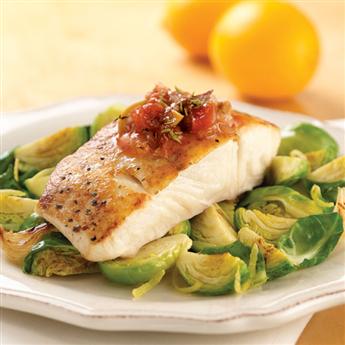
  • Learning Objective:  Determine what is the most important element to consider when pairing wine with a specific dish, demonstrated by the following dish:  Grilled Halibut with Lemon-Caper sauce served on a bed of Asparagus Risotto. 
  • Note that at this level, knowledge of the background to the question is assumed to be both known and understood, and students are expected to apply this knowledge and understanding.  In this case, we are looking for the student to apply a known set of food and wine pairing principles.

 Sample MCQ:  When choosing a wine pairing for Grilled Halibut with Lemon-Caper sauce, what is the most important element to consider?

  • A. The lemon flavor of the sauce.
  • B. The flavor intensity of the grill marks.
  • C. The saltiness of the fish.
  • D. The acidity of the lemon sauce.

Level 4:  Analysis –Analyzing

  • Learning Objective:  Break down the various components of a dish or menu and determine what components are dominant and the effect each would have on a wine pairing. For instance, what impact would the acidity in a dish have on a white wine?
  • Note that the student is assumed to know and understand the information and to apply the information.  This objective stresses the ability to break down the food and wine in question into their component parts and assume an outcome.  Note that this question does not require the student to create a pairing (level five) or evaluate whether or not this is a good pairing (level six).

 Sample MCQ:  What effect would the Grilled Halibut with Lemon-Caper sauce produce when paired with Sauvignon Blanc?

  • A. It would make the acidity in the wine more pronounced.
  • B. It would make the acidity in the wine less pronounced.
  • C. It would bring out the bitterness in the wine.
  • D. It would make the fruity flavors of the wine pop.
 

Level 5:  Synthesis (Creation) – Creating

  • Learning Objective: Design a wine pairing of three different wines to complement the grilled halibut dish.
  • At this level, the student needs to have the knowledge and the comprehension of the principles of food and wine pairing, be able to apply it to a real-world example, and be able to analyze the components of both the food and the wines before he or she can create the pairing.

 Sample MCQ: Which of the following wine flights would make the best pairing for Grilled Halibut with Lemon-Caper Sauce, based on the proper taste components and a potential flavor bridge?

  • A.  Oaked Chardonnay, Sauvignon Blanc, and Gewurztraminer
  • B.  Unoaked Chardonnay, Sauvignon Blanc, and Gewurztraminer
  • C.  Unoaked Chardonnay, Sauvignon Blanc, and Viognier
  • D.  Unoaked Chardonnay, Sauvignon Blanc, and Riesling
Level 6:  Evaluation – Evaluating

  • Learning Objective:  Evaluate specific wine choices for a specific dish, and give your opinion on the quality of the pairings.  For instance, evaluate whether an oaked chardonnay a good choice for the grilled halibut dish in the previous question, and discuss why or why not. 
  • At this level, the student is expected to know, comprehend, apply and analyze the principles of food and wine pairing, and, describe the outcome of the pairing, and form an opinion on whether or not this is a good match.

Sample MCQ:  Is oaked chardonnay a good choice for Grilled Halibut with Lemon-Caper Sauce?  Why or why not?

  • A.  Yes, because the acidity is a good match and the saltiness of the capers will work well with the oak.
  • B.  No, because while the acidity is a good match, the saltiness of the capers will potentially clash with the oak.
  • C.  Yes, because the flavors of the lemon in the sauce will work well with the lemony flavors of the wine.
  • D.  No, because the flavors of lemon in the sauce will clash with the tropical flavors of the wine.

I hope this post gives you some guidance and encouragement to teach to all levels of the learning taxonomy.  I also hope it shows teachers that effective exam questions, even Multiple Choice Questions, can be written at all levels of the learning taxonomy and that we stop giving exams that are basically “wine trivia contests”. 

I realize that this method of teaching and writing tests is not simple, but it does get easier with practice.  However, keep in mind that teaching and testing to the higher levels of the learning hierarchy will enhance the quality of your teaching and the  validity of your exams – guaranteed! 

Cheers! 
Train the Trainer: The Power of Schema

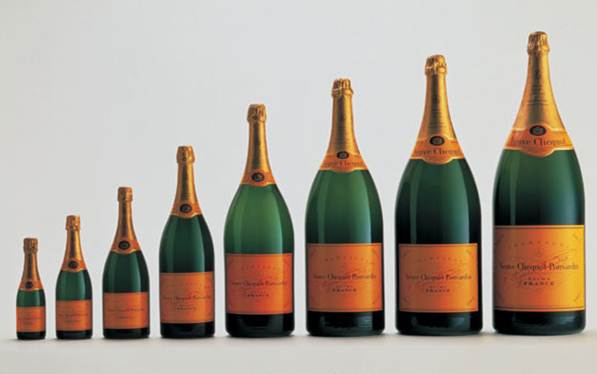
Do you remember what it was like when you were trying to memorize the names of the different Champagne bottle sizes for your CSW exam?  You studied and studied, only to forget the terms by the next day.  Finally, you dreamed up a silly mnemonic device such as “Mary Jackson makes small boys nervous.”

Brilliant!!  Now you can remember M-J-M-S-B-N…in other words, the perfect sequence of:

  • Magnum
  • Jeroboam
  • Methuselah
  • Salmanazar
  • Balthazar
  • Nebuchadnezzer

Congratulations! What you did was trick your brain, and while it may have helped you pass your CSW exam, it did nothing to help you really know and understand the relevance of the different sizes of the bottles. In order to do that, you would really have to experience them.  I suggest buying one of each bottle size of your favorite Champagne, and on subsequent nights, consume the entire thing while both taking pictures and keeping an on-line journal of your thoughts. (What do you mean, that’s not practical?)  Never fear, there is an easier way.

As the Bubbly Professor, I am not here to criticize your study habits, but I am interested in just why it is so much easier to remember a sentence than it is to memorize a string of seemingly unconnected data, and how we might use such information to make our teaching and learning more effective.

It boils down to one word:  Schema.  Schema is a powerful learning concept which has been discussed in the context of educational psychology since Dr. Frederic Bartlett coined the term in the 1800’s – although if you study the educational practices of the Ancient Greeks you can clearly see that they were wise to it as well.

Schema is one of the factors of the educational process that can determine – in the first few seconds of learning – whether or not something that is being perceived will actually be remembered, and more importantly, understood.  A schema is a type of mental framework – a way of organizing thoughts around some aspect of the world. Schema involves prior knowledge, the structure of that knowledge, and the way we fit new knowledge into our “world.” 

Simply put, the brain is just not wired to remember random words, numbers, or details out of context. One of the best methods for getting students to remember details is to tell them the meaning, context, or conclusion of the material before you present the details – in other words, introduce a schema.  

According to research, (thank you, Dr. R.C. Anderson),  triggering a schema around a moment of learning can increase retention and comprehension of the salient details by between 50 and 100%.

So, how do we harness this knowledge and turn it into teaching power? 

Here are three tips:

Teach meaning before details.

As we have experienced, the brain is just not wired to remember random words, numbers, or details out of context.  To help your students remember details,   tell them the meaning, context, or conclusion of the material before you present the details.

In 2005, I did a little classroom experiment in my “Wines of France” class concerning the “facts and figures” of Beaujolais. Over the course of a year, 500 students were taught the details of the wine before the historical story of the wine, and another group of 500 were taught the story before the details.  In other words, the second group of 500 was provided with a schema. 

The results:  students who were taught the details of the wine before the telling of the story got a total of 68% of the questions on a pop quiz given the following day correct.  The students who were told the story before being told the details of the wine got a total of 91% of the answers correct.  While both figures could demonstrate the effectiveness of narrative as a teaching device, the students who were taught the meaning before the details did significantly better.

Use the power of three.

One of the easiest ways to set up a schema is to use pattern recognition using the “power of three.”  Three is the minimum number of items the brain needs to see before it recognizes a pattern,in other words, invokes a schema.  In addition, three details or “chunks” of information sit well within the limits of working memory.

It’s easy to think of dozens of examples of this concept in use in popular culture, literature, and oration.  For example:

  • Lions, and tigers, and bears (oh my!)
  • Sex, Lies, and Videotape
  • Location, Location, Location
  • Friends, Romans, Countrymen…
  • Three bears, three wishes, three graces.  Now you know why there are three!

A great tip to put this power to use is to start a session off with the statement: “Today, I want you to remember three things.”  Everyone can remember three things, it doesn’t sound too hard.  Then, it’s your job to “chunk” all your “facts and figures” into three meaningful chunks – now known as “schemata.” 

DIY Schema

Since prior knowledge is essential for the comprehension of new information, teachers either need to help students build the prerequisite knowledge, or remind them of what they already know before introducing new material. 

You might have to get creative with this, but with the subject of food and wine it is often possible to find references to our subject matter in pop culture, movies, television, and even songs. 

Another great teaching tip is to create your own set of schema by purposely “injecting” your classes or sessions with references to future material.  It takes some deliberate effort, but your students will appreciate your efforts – whether they are aware of them or not!

Train the Trainer: There’s More to Class than just the Glass

There’s More to Class than Just the Glass

As a full-time wine educator, I have found myself teaching classes and leading wine tastings in some unusual spots.  Many of my classes are held in my super-comfy, perfectly designed, high-tech enhanced wine lab college classroom.  This setting is as conducive to learning as a setting can be. Wine and food conferences, and in my case mostly wine and food education conferences are also good situations for teaching and learning…at least people are sitting down, facing the speaker, and we can assume the audience wants to listen and learn.

However, part of a wine educator’s life is spent on the road, and I have also taught classes in winery barrel rooms, in restaurants during the dinner rush, and at wine bars in the midst of happy hour.  Add to the list the seminars I have led outdoors at wine festivals, trade tastings, womens’ retreats and rock concerts. (You will note I did not include private homes…Miss Jane does not do private homes.)

Let’s face it:  it can be hard to engage and actually teach students about wine when they are outside, at a rock concert, or even at a wine bar; and my educational philosophy and practice is all about engagement.  I want my students to be not just at attention but fully engaged.  Attention is great – you need to have a full repertoire of attention grabbers.  Once you have gotten your audience’s attention they should be listening, observant, and interested in what you are about to present.  Attention is valuable but it only lasts for a few minutes until minds start to wander.

Engagement, on the other hand, goes deeper than attention.  When your class is fully engaged, they are physically energized, emotionally connected, and mentally focused on the subject at hand.  Engagement in the material at hand should be one of the main goals of instruction, and “points of engagement” should be pre-scripted into your lesson plan just as carefully as your course objectives and class material.

Obviously, a wine class has a few built-in advantages when it comes to student engagement.  First of all, it’s about wine (a fascinating subject and one with broad appeal.)  Secondly, we usually have a built-in activity (also very appealing) when we lead a tasting.

The challenge for me, I have found, in leading a tasting class is not in just keeping the audience engaged, but keeping them focused on learning and not merely engaged in the tasting itself – in other words, enjoying the wine more than the class.  As we all know, this type of “tasting” can devolve into “drinking” quickly if not managed.

I am sure that we have all found that during an instructor-led tasting, students tend to get excited and chatty.  Left unmonitored, it gets louder and louder – which is great if you are at a party, or maybe if you are leading one of those tastings at a wine bar or rock concert.  However, if you want to balance fun with serious learning, this can be a challenge.

Over the years, I’ve developed my own system for walking this fine line.  When leading a tasting activity,  I generally let the students taste and talk amongst themselves for a few minutes – after all, talking is the ultimate engagement – and then try bring them gently back to attention for further instruction. To do this effectively, you need an abrupt attention grabber.  Most teachers whistle or scream or bang a spoon on a glass. There’s nothing really wrong with this technique -it certainly does work – but it can also leave students unfocused, annoyed, or even angry.  (Note:  nothing halts learning quicker than anger.)

What I do to avoid this backlash is this:  I introduce the wine, tell the class I am going to give them five minutes to taste and talk amongst themselves and will then bring them back to attention for group discussion and further instructor-led content.  Then I play some background music appropriate to the theme and setting.  When the time for tasting and talking is over and I want to turn their attention back to my presentation, I turn up the volume briefly and then turn it off.  Works everytime, and no one shoots me a dirty look or complains!

Here’s my advice to you:  try to develop a your own signature style of focusing the class after a tasting break or other group activity.  You might use a call and response, flick the lights, have everyone stand up, or use music like I do.  In a pinch, you can always bang a spoon on a glass.