The Outer Limits: Napa’s Neighbor

.

In the southeast corner of the North Coast American Viticultural Area (AVA), the boundary lines of area extend just a few miles beyond Napa County to include about 30,000 acres of Solano County. Here you will find two AVAs—the Solano County Green Valley AVA and the Suisun Valley AVA—literally feet away and across a political boundary from the esteemed Napa Valley AVA. That has to be a bit like being the awkward little sister of a beauty queen, or the geeky big brother of a star football player. However you want to describe it, it has to be tough being Napa’s neighbor.

In the interest of shining some light into this corner of the wine world, here is a bit of information on the AVAs of Solano County, California:

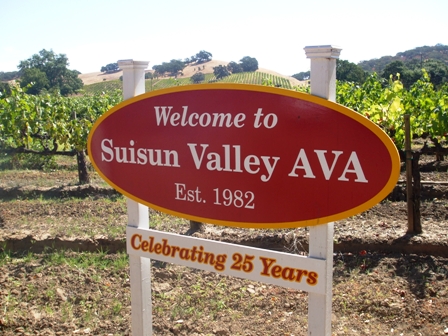
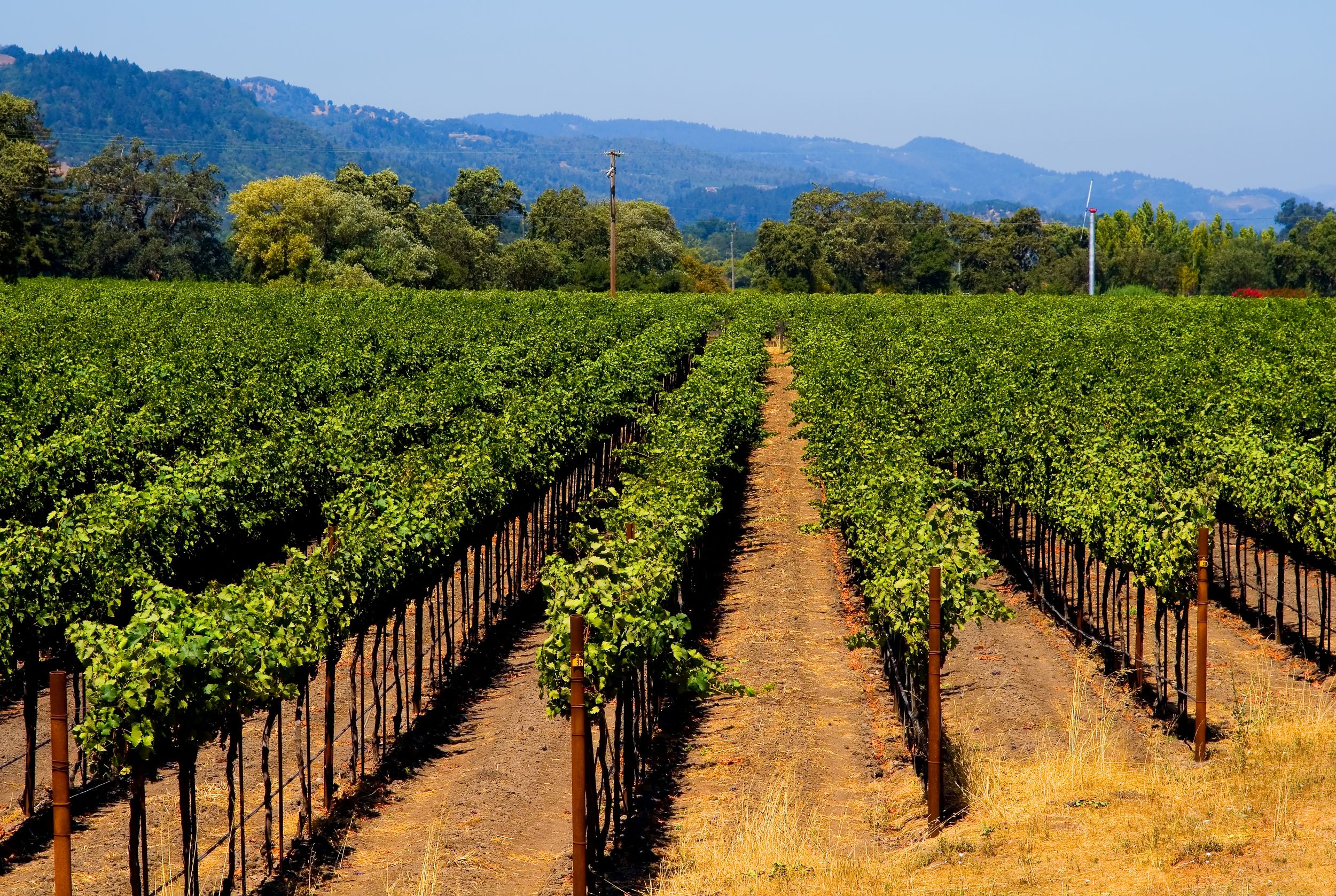
Suisun Valley AVA:  The Suisun Valley AVA, located just to the south of Napa County, lies between the southern edge of the Vaca Mountains (to the east) and the Howell Mountains (also known as the St. George Mountains [to the west]). The AVA is about 8 miles long and three miles wide, covering about 15,000 acres—of which about 3,000 acres are planted to vine.

The Suisun Valley enjoys a relatively cool climate (it is classified as “Region III” under the Winkler Scale), but is significantly warmer at its northern edge. The southern end of the valley, adjacent to Suisun Bay, can be cooler by as many as 14 degrees (F) during the heat of the day. Suisun Bay itself forms the beginning of the Sacramento-San Joaquin River Delta, and is connected via the Carquinez Strait to San Pablo Bay (to the west).
The Suisun Valley was first recognized for the quality of its red wines, particularly Cabernet Sauvignon and Petite Sirah (Durif). These grapes are still widely grown in the area, which is now planted to more than 20 other grapes as well. These include Chardonnay, Sauvignon Blanc, Zinfandel, Pinot Gris, Gamay, and Chenin Blanc.

There are just over a dozen wineries producing wine within the confines of the Suisun Valley AVA, and several dozen more that produce wine under the Suisun Valley appellation while located in adjacent counties. Sunset Cellars, the Vezér Family Vineyard, and Wooden Valley Winery are among the standouts.  The Vezér Family Vineyard calls the Suisun Valley “the Petite Sirah Capital of the World”— who can resist that?

Solano County Green Valley AVA: The Solano County Green Valley AVA (not to be confused with Sonoma’s Green Valley—the Green Valley of Russian River Valley AVA) is smaller and cooler than the Suisun Valley. Solano’s Green Valley AVA measures just about four miles long by one mile wide and has about 800 acres planted to vine.

Solano’s Green Valley AVA is located just to the south/south east of Napa, and enjoys a maritime climate due to its proximity to Suisun Bay. At last count, the area has just a few wineries—including GV Cellars and Rock Creek Vineyard—and just over a dozen independent grape growers.  The area is known for red varieties such as Cabernet Sauvignon, Sangiovese, Dolcetto, Zinfandel, and Petite Sirah, but a handful of other grapes (including Chenin Blanc and Pinot Gris) are grown here as well.
.

Wine production in Solano County has a well-documented history. We know that an Australian by the name of John Volypka planted vines in the area as early as 1858 and was making wine by 1863. Others followed—Harry Schultz soon had a large winery, and by 1879 S.F. Jones had 90 acres of vines and produced 50,000 gallons of wine a year.

In 1952, Ben Volkhardt Jr. bought 80 acres of land in Green Valley. He planted peaches, pears, and grapes, but soon the business focused on grapes and wine. His son—Ben Volkhardt III—joined the business in 1974 and the two formed the Chateau de Leu winery—which survives to this day as GV Cellars (under different ownership).

Based on petitions filed by the Volkhardts, both the Suisun Valley and Solano Green Valley were awarded their AVA status in 1982, making them among the first wave of AVAs approved in California. The first AVA declared in California—in January of 1981—was their neighbor-to-the-north, the Napa Valley. Perhaps you’ve heard of it?

References/for more information:

The Bubbly Professor is “Miss Jane” Nickles of Austin, Texas… missjane@prodigy.net

The Outer Limits is my series of appreciative posts about small, obscure, or out-of-the-way wine regions.
Waitaki World

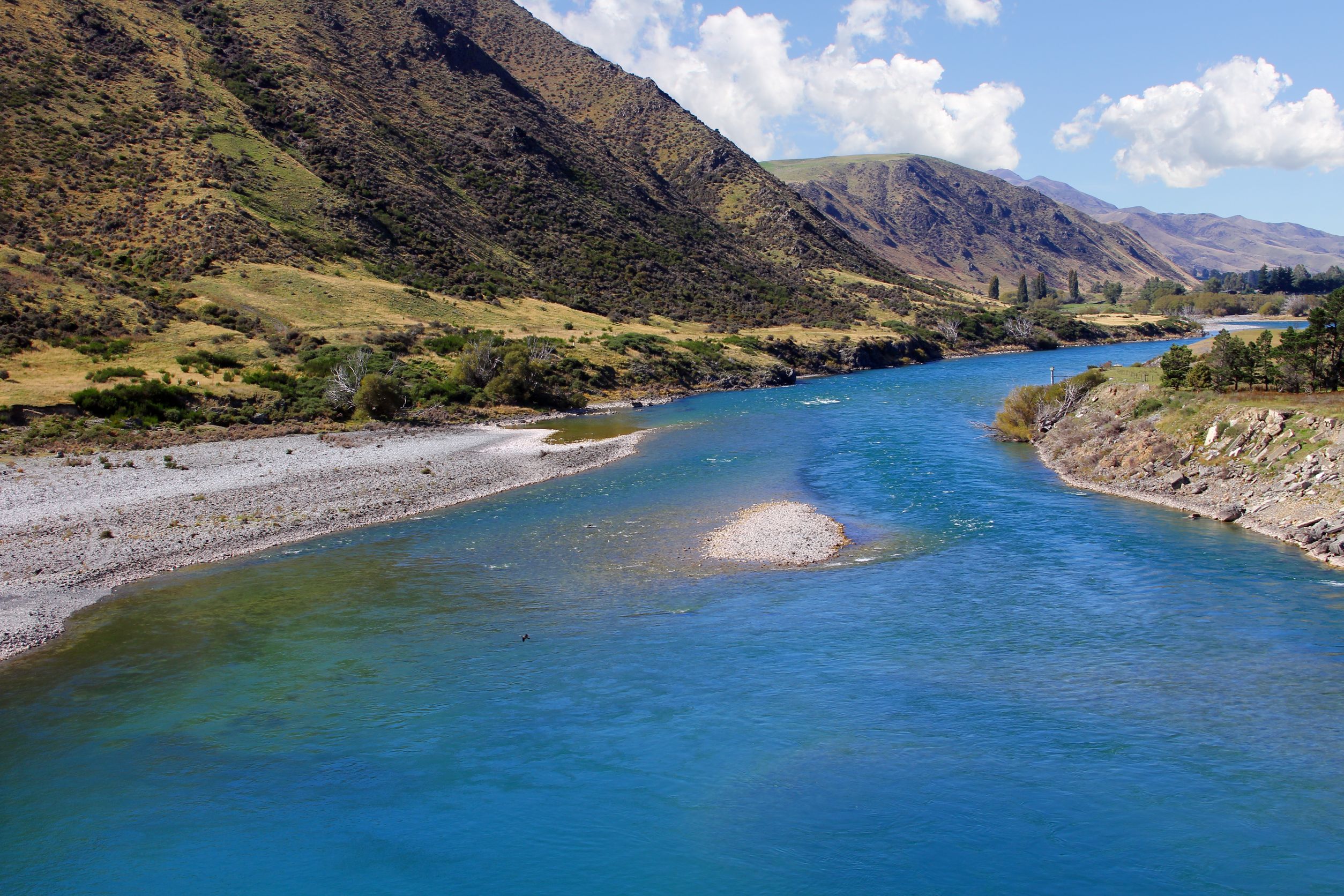
The Waitaki River near Kurow (in the Waitaki District)

Waitaki World—the river, the lake, the district, and two regions for wine

I am a huge fan of everything about New Zealand, in particular New Zealand wines. I’ve been a fan of New Zealand wines since the release of Cloudy Bay Vineyards’ first Marlborough Sauvignon Blanc back in the 1980s. I’ve grown to be an even bigger fan over the years as I’ve been able to experience the rise of Central Otago Pinot Noir, red blends from Hawke’s Bay, serious Méthode Marlborough sparkling wines, and even “carbonated” Sauvignon Brut (delicious).

As such a fan of New Zealand wines, it makes sense that I have been following—with something resembling giddy excitement—the long discussed but newly activated laws regarding the wine and spirit geographical indications of the country. For some background information on the ten-year legal process leading up to this point, click here.)

One thing I discovered during my almost daily check-ins of the website of the Intellectual Property Office of New Zealand/Geographical Indications is that there are two Waitaki Valleys. This was confusing enough, however, upon further research I discovered that there is an entire Waitaki World—including not just the two valleys, but a river, a lake, and a district.  Let’s start at the beginning:

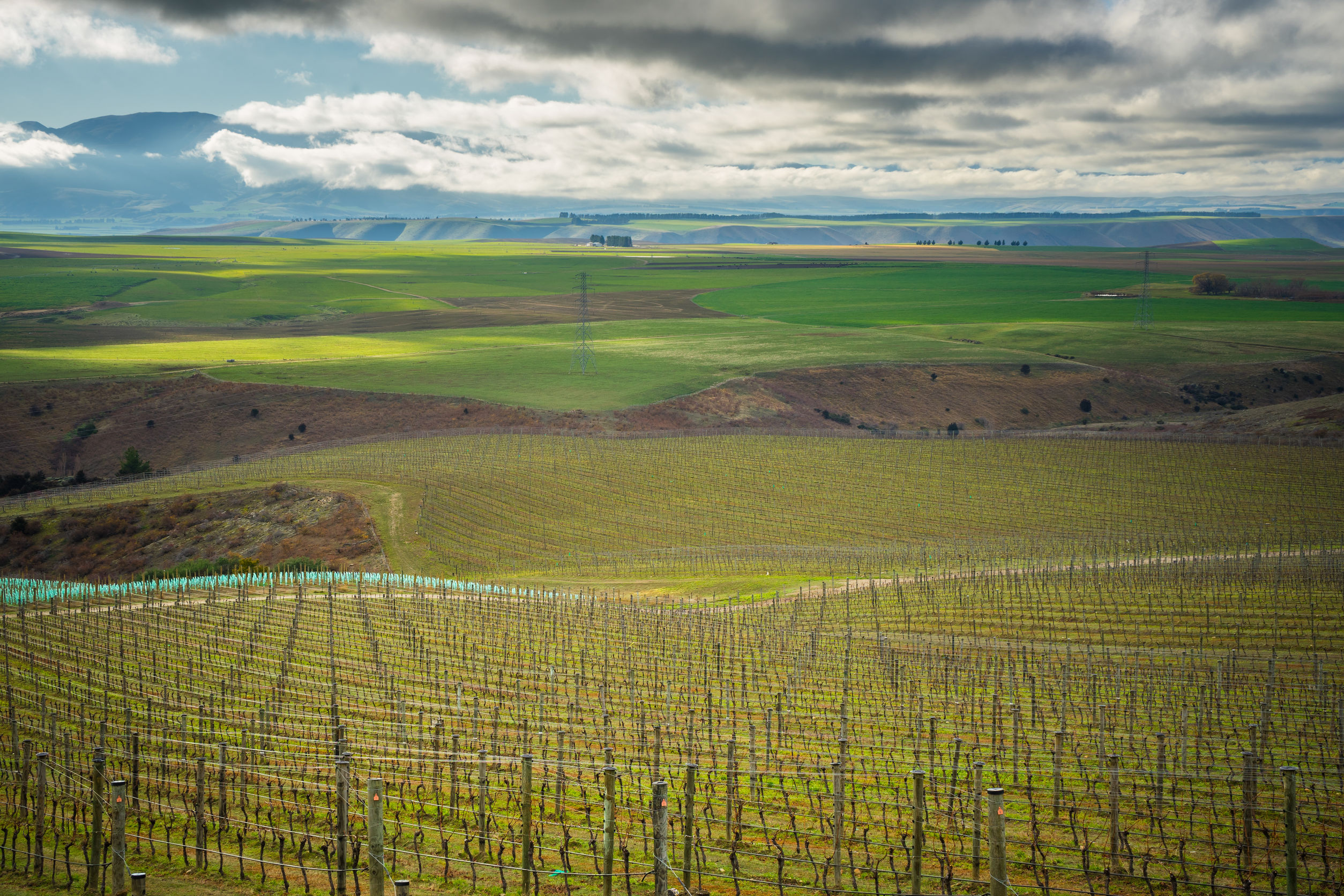
Vineyards in the Waitaki District

The Waitaki River: The Waitaki is a river that begins with several small streams that flow from the Southern Alps (somewhat in the central portion of New Zealand’s South Island) towards Lakes Ohau, Pukaki, and Tekapo. Once past the lakes, the streams weave together to form the Waitaki. The Waitaki River, named for the Maori term for “weeping waters,” then travels eastward for about 130 miles (210 km) until it meets the Pacific Ocean near the town of Glenavy on the island’s east coast. The Waitaki River is a braided river, meaning that it consists of a series of river channels connected and separated by small (and sometimes temporary) islands.

Lake Waitaki: The Waitaki River is also home to one of the largest hydroelectric power projects in New Zealand, and is home of several large dams that create several man-made lakes—such as Lake Benmore, Lake Aviemore and Lake Waitaki—along its path. Lake Waitaki is the smallest and the furthest downstream of the three lakes on the Waitaki River.

The Waitaki District: Here’s where it gets interesting—the Waitaki River served as a traditional—and now political—boundary between the large political regions of Canterbury (to the north) and Otago (to the south). With the hydroelectric plants and other developments along and on either side of the river, it was decided that it would be best to include the entire catchment of the river within one political district. The Waitaki District, with approximately 60% of its area in the Canterbury Region and 40% in the Otago Region, is the only district on New Zealand’s South Island that is split between two political regions.

More Waitaki Vineyards…

The two Waitaki Valley wine areaa:  Both sides of the Waitaki River include some prime (if remote) viticultural areas, and both political regions—Canterbury and Otago—can lay claim to some of them. So there are indeed two wine regions known as the Waitaki Valley. Here’s where it gets interesting:

  • Waitaki Valley/North Otago: The area to the south of the river (located in the Otago Region) is known as Waitaki Valley/North Otago. This area has applied to be an official geographical indication under the new scheme now taking form in New Zealand. (Central Otago, located just to the south of Waitaki Valley/North Otago has also applied to be a GI.)
  • The Waitaki Valley of Canterbury: This area is listed on the website of Wines of New Zealand as a sub-region of the Canterbury GI. (Canterbury has applied for official status as a new Geographical Indication.) However, the Waitaki Valley of Canterbury has not applied for GI status—as of today (November 4, 2017)—so for now it joins a long list of New Zealand wine areas that will be considered “unofficial.” As such, the Waitaki Valley area to the north of the river is considered to be an unofficial sub-region of the Canterbury GI.

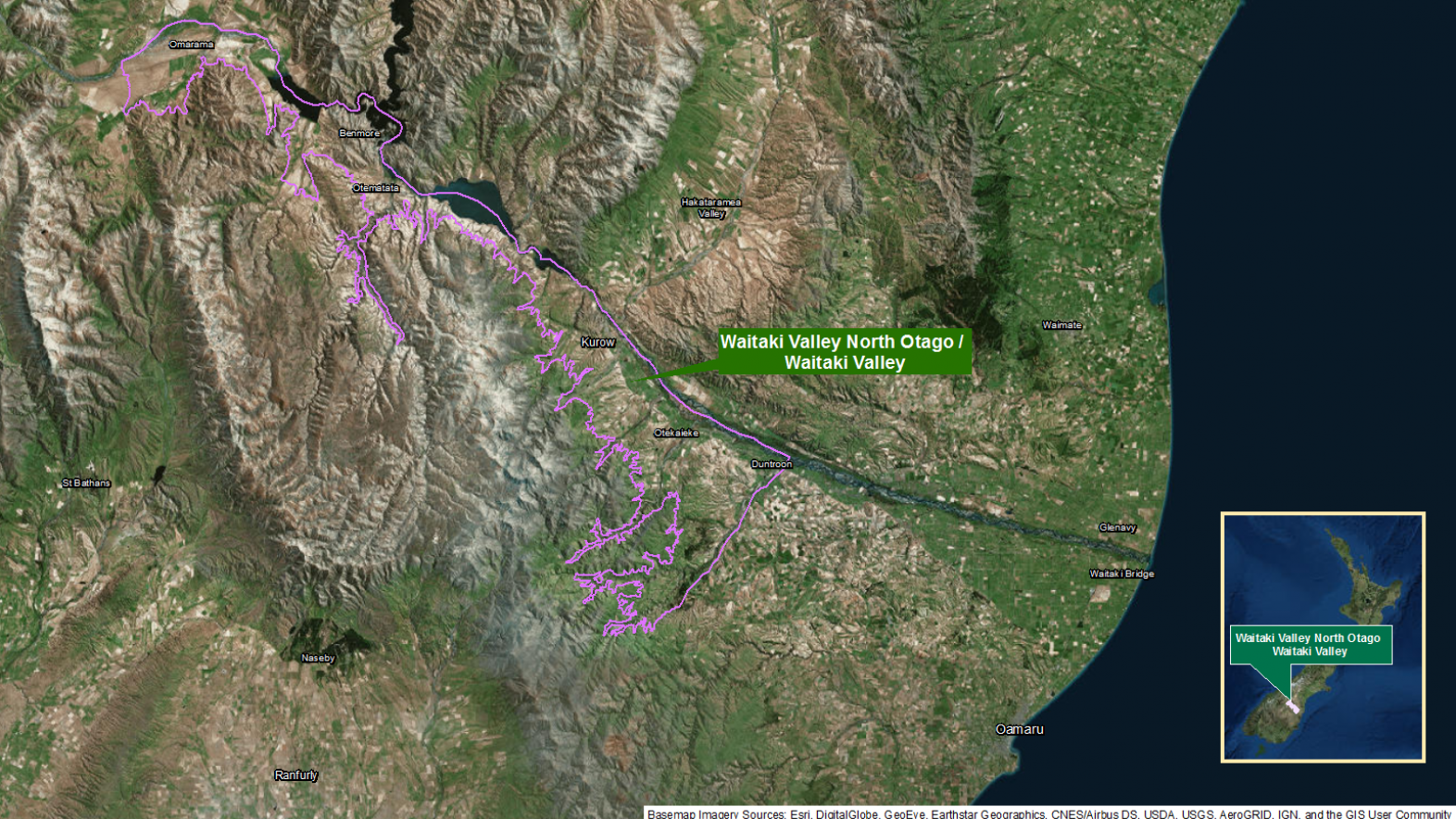
Map of the Waitaki Valley/North Otago Region via: https://www.iponz.govt.nz (click to enlarge)

The Waitaki Valley viticultural areas (on either side of the river) follow the course of the Waitaki River for 46 miles (75 km). The area has unique limestone-based soils—a reminder of its ancient past, when it was covered by the sea—as well as loess and alluvial deposits. The Waitaki Valley(s) are remote, cool-climate areas that are planted mainly to Pinot Noir, Riesling, Pinot Gris, and Chardonnay.

References/for more information:

The Bubbly Professor is “Miss Jane” Nickles of Austin, Texas… missjane@prodigy.net

Indiana Jones and the Grapes of Olmo

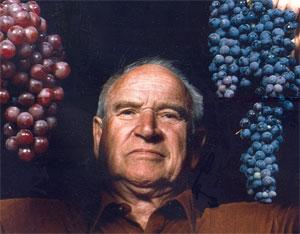
Photo of Dr. Harold Olmo via the Archives of UC Davis: http://news.ucdavis.edu/search/news_detail.lasso?id=8037

The other day I was doing some quick research on Ruby Cabernet. The first result (via Wikipedia, no less) introduced the grape as such: “Ruby Cabernet is a red Olmo grape variety…” As these things go, my interest quickly changed from the parentage of Ruby Cabernet to the Olmo grapes. It sounded familiar, yet only vaguely familiar.

The Olmo grapes it seems, are the creation of Dr. Harold Olmo, a former UC Davis professor with a long list of viticultural (and other) accomplishments. In total, Dr. Olmo served on the faculty of UC Davis for over 60 years, including 29 years as a Professor Emeritus.

Dr. Olmo began his studies and research at the University of California at Berkeley (he had a PhD in genetics), but moved to the Davis campus along with the rest of the University’s wine research program in the 1930’s. There he embarked on his grape breeding program, attempting to create grapes of great flavor and structure that could be grown in the warm, dry climate of California’s Central Valley.

Of the dozens of grapes he created, Dr. Olmo’s best-known grapes include the following:

  • Ruby Cabernet—a Cabernet Sauvignon X Carignan cross, often used for blends but also made into varietal wines, grown throughout Central California, Australia, South America, and South Africa
  • Emerald Riesling—a Riesling X Muscaelle cross bred for use in warm climates; it is grown in some parts of California and South Africa and is used quite extensively in Israel
  • Symphony—a Muscat of Alexandria X Grenache Gris cross, grown in some parts of California and used to produce slightly spicy white wines with citrus–peach–apricot aromas
  • Rubired—a hybrid of Tinto Cão (vinifera) and Alicante Ganzin (a vinifera X Vitis rupestris hybrid), Rubired is a teinturier with deeply-colored red juice used primarily in blends and fortified wines in California and Australia

.

Dr. Olmo was known not only for his grape breeding program, but his swashbuckling adventures in pursuit of wild grapes, grape archaeology, and viticultural consultation.  These adventures included (as reported by his daughter, Jeanne-Marie Olmo, via an interview on Uncorked: The Blog), being arrested and jailed in a chicken coop (as a result of the death of a donkey), harvesting ancient vine seeds on the Iranian border, and attempting to deliver grape cuttings to the  ambassador of Afghanistan. These escapades earned him the nickname of “the Indiana Jones of Viticulture.”

Dr. Olmo created the first grape quarantine facility in California, allowing hundreds of European varieties to be imported into and planted securely in the United States—many people consider this his greatest contribution to California wine. Dr. Olmo also created an in-depth study of Chardonnay in California that resulted in an increase in California Chardonnay from less than 300 acres in the 1970’s to the powerhouse grape that it is today.

Dr. Olmo was a Guggenheim Fellow, a Fulbright Scholar, and received the Medal for Outstanding Contributions to World Viticulture by the Office of International de la Vigne et du Vin in 1965. He was a consultant to the United Nations for over twenty years and was named, in 2007, as an “Icon” in the Culinary Institute of America’s Vintners Hall of Fame. These are just a few of the dozens of national and international awards and recognition he received over his career. Dr. Olmo passed away in the middle of an afternoon nap on June 30, 2006. He was 96 years old, and the world of wine will never forget him.

References/for more information:

The Bubbly Professor is “Miss Jane” Nickles of Austin, Texas… missjane@prodigy.net

In my Mind I’m Going to Porto Santo

.

Porto Santo is a Portuguese island located in the Atlantic Ocean, 27 miles (43 km) northeast of the island of Madeira. It forms the Madeira Archipelago along with the island of Madeira and a small string of islands known as las Ilhas Desertas (literally “the Deserted Islands”).  Porto Santo is a small island, measuring 9 miles (14 km) long and just 5 miles (7.7 km) across.

The earliest record of the history of Porto Santa dates from 1418, when a group of Portuguese ships were (accidently) blown into its sheltered harbor. The ships were in the service of Infante Henrique of Portugal, and had been blown off-course by an intense storm. They named the island Porto Santo (“Holy Harbor”), as their arrival in a sheltered bay during the storm was seen as the result of divine intervention. .

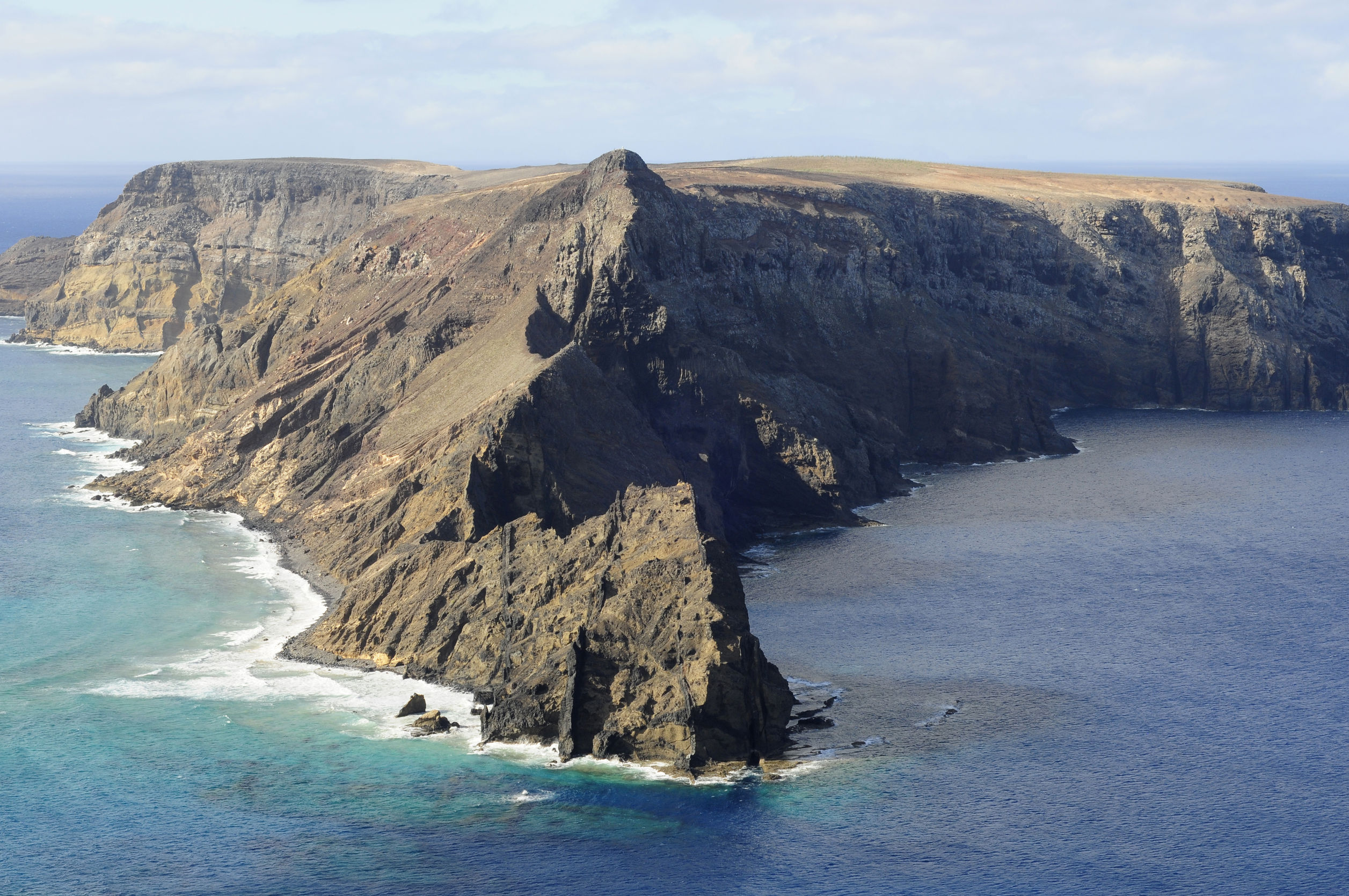
The Ilhéu de Baixo along the unpopulated northern coast

Geologically, the island is divided into two parts—the mountainous northeast, and a relatively flat coastal plain in the southwest, which includes a 4.5 mile-long (7 km) golden sand beach. Laid-back tourism is one of the main industries, and visitors can enjoy hiking, biking, motorbiking, off-roading, windmills, forts, or golf; and may choose to take a two-hour boat ride to Madeira aboard the ferry Lobo Marinh. Waterfront wining and dining may be found in Vila Baleira, the one and only “city” on the island.

History buffs can pay a visit to the Christopher Columbus House Museum and learn that Christopher Colombus was once married to a Portuguese woman and that they lived on Porto Santo for a period of time. Colombus’ wife, Filipa Moniz, unfortunately passed away during childbirth just a few years after their marriage.

Topographical map of the Madeira Archipelago by Bourrichon via Wikimedia Commons

In the 1420s, the Portuguese King sent a group under the command of Captain Bartolomeu Perestrelo to colonize the island. The group planted grapevines and sugar cane, and introduced rabbits to the island. The introduction of rabbits turned out to be not such a good idea, as they rampaged their way across the island and soon dominated the local environment. In a matter of a few (rabbit) generations, they basically ate everything else up.

Another not-so-smart move by these early settlers involved the local Dragon Trees. The valuable sap of the trees, known as “dragon’s blood” is a type of resin used for medicine and dyes. The colony chopped down the trees and literally bled the trees dry to the point that they became extinct on the island. As such, the island lost its original wind protection—and with the help of the ravaging wild rabbits—the area was left rather rugged, wind-blown, and barren. While it certainly has  its own style of natural beauty, the island has never recovered to its original lush state.

Despite the challenges, there is some viticulture on the island of Porto Santo. As Porto Santo is included in the geographic territory of the Madeira DOC, the Madeirense DOC and the VR Terras Madeirenses, these wines may be produced on the island of Porto Santo. Despite the limitations, grapes are a pretty big deal here—agriculture is limited on the island, making grapes, melons, and rabbit the three biggest commodities.

Grapes or wine from Porto Santo may also be sent to the island of Madeira for use in the wines bottled there. There are some obvious logistical challenges to such a project, however—it has been known to happen. For instance, the Madeira Vintners used Listrão and Caraco grapes from Porto Santo in their 2013 vintage. That same year, Porto Santo grower J. Santos produced a sweet white wine from locally grown Listrão as well as an off-dry white wine from the Porto Santo-grown Caracol grapes. You can read reviews of both of these wines on Niklas Jörgensen’s Mad about Madiera blog.

References/for further information:

The Bubbly Professor is “Miss Jane” Nickles of Austin, Texas… missjane@prodigy.net

Butterflies, Bubbles, and Birds: Christopher Merrett

.

Christopher Merrett (1614–1695) is something of a hero to wine lovers, as we know him to be the first person to figure out that you could add sugar to a bottle of wine, cause it to re-ferment, and make bubbles! Put in more technical terms, he is acknowledged as the first person to deliberately create a sparkling wine via the addition of sugar.

So, cheers to Christopher Merrett, on that merit alone! However, as is generally the case with these scientists of yore, he accomplished much more than just bottling bubbles: he was, in fact, a member of the Fellowship of the Royal Society and studied metallurgy, glass making, plants, birds, and butterflies.

Merret was born in Gloucestershire in the southwest of England, and earned his medical degree at Gloucester Hall (which later became Worcester College of the University of Oxford). He practiced medicine in London, becoming a Fellow of the Royal College of Physicians, and later became a founding Fellow of the Royal Society—the full name of which is officially “the Royal Society of London for Improving Natural Knowledge.”

In other words, Merret became a founding member of the oldest “learned society” in the world. The Royal Society views its role as “promoting science and its benefits, recognizing excellence in science, supporting outstanding science, and providing scientific advice for policy.”

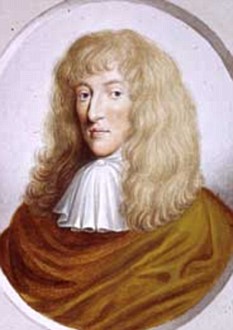
Christopher Merrett

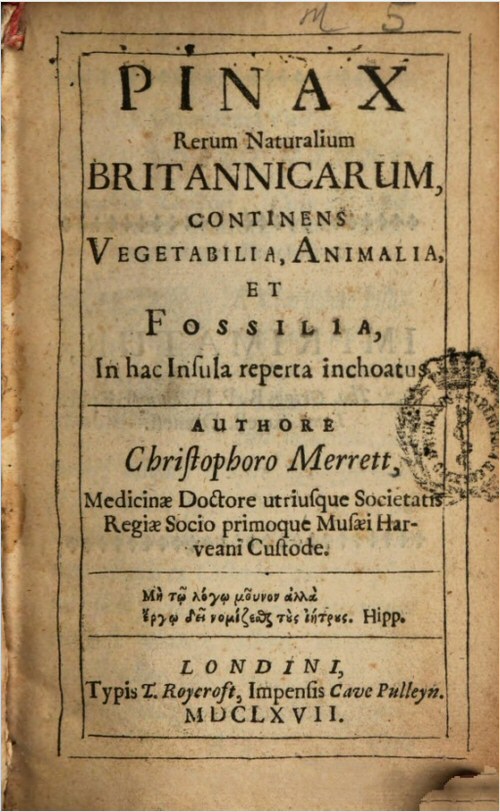
Merrett was a keen scientific observer of the natural world and became quite famous for publishing one of the earliest taxonomies of the plants, animals, and minerals of the British Isles. Published in 1666, this work—Pinax Rerum Naturalium Britannicarum—is now acknowledged as the earliest work to contain a complete list of the birds and butterflies of England. He also had an interest in glass making and translated Antonio Neri’s L’Arte Vetraria (“The Art of Glassmaking”—written in 1612) from Italian to English, while adding 147 pages of his own.

A few things going on in the scientific community as well as English society helped to lead Merrett to his discovery. For one, the English glass-making industry had become quite adept at producing hard, durable glass through the use of coal (which burns hotter) rather than wood for fires. English-produced bottled were thus sturdier—and less likely to burst—than French bottles. In addition, the English imported cork from Portugal to seal their bottles while the French were still using wooden stoppers and cloth. Finally, the English had already acquired a taste for apple cider, which was sweet and flavorful—more so than the wine imported from France.

As such, English people became accustomed to adding molasses and sugar to their imported French wines. Soon enough, Christopher Merrett—a keen observer of the natural world if ever there was one—noted that if you added sugar or molasses to French wine, and stored it in a sturdy, coal-fired English glass bottle stoppered with a tight-sealing Portuguese Cork, you ended up with a lively, flavorful, bubbly wine that was a tasty as English cider. That was an “a-ha” moment if ever there was one!

The title page of Merrett’s Pinax Rerum Naturalium Britannicarum

In 1662, Merrett delivered an eight-page paper to the Royal Society detailing the use of sugar or molasses to give wine or cider a bit of fizz. In the words of Merrett, this was “to make them brisk and sparkling.” Keep in mind that this paper was delivered in 1662, several decades before Dom Perignon’s famous “Come quickly, I am drinking stars!” moment, alleged to have occurred in 1697.

Merrett was only mildly interested in wine, and soon returned to his observations on the rest on the natural world. In addition to his studies of birds and butterflies, he went on to present several more papers on many topics to the Royal Society. These included papers on such diverse topics as fruit trees, tin mining, and coastal geography. His interests, it seems, knew no bounds.

Note: Much of the information about Christopher Merrett and sparkling wine came to light courtesy of the British wine writer Tom Stevenson.

References/for more information:

The Bubbly Professor is “Miss Jane” Nickles of Austin, Texas… missjane@prodigy.net

Five Fast Facts about Agave

.

Today is Cinco de Mayo, a day to celebrate all things Mexican, and more specifically, a day to commemorate the Mexican Army’s unlikely victory over French forces at the Battle of Puebla on May 5, 1862.

Here in the USA, we typically frame our annual celebration of Mexican culture in terms of food and beverage (well, especially the beverages) so it is likely that a great deal of tequila and mezcal will be consumed today and all through the night. As such, I thought I would take this opportunity to write a post all about Agave. Agave is (of course) the amazing plant that gave us tequila and mescal, but there is so much more to know about agave.

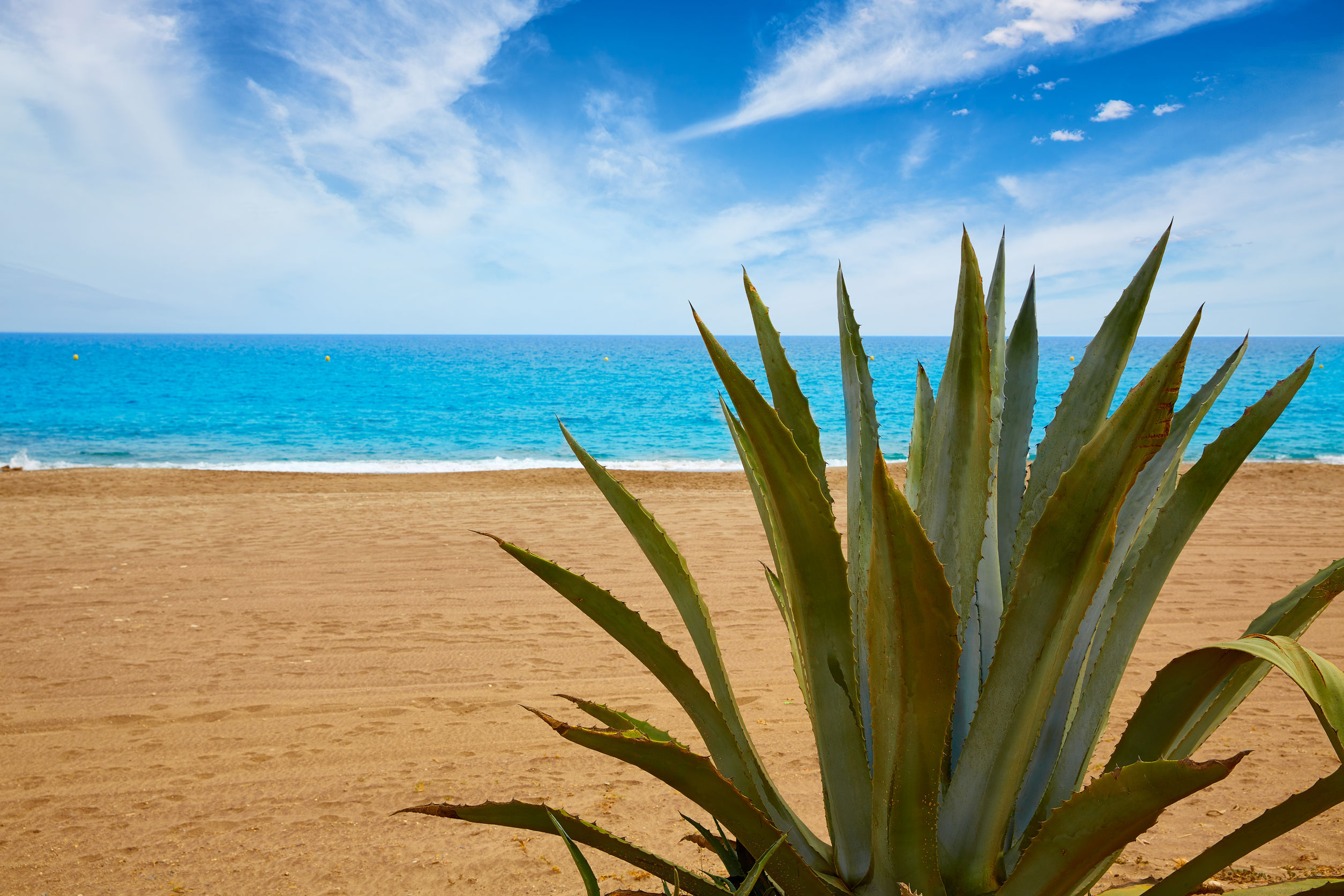
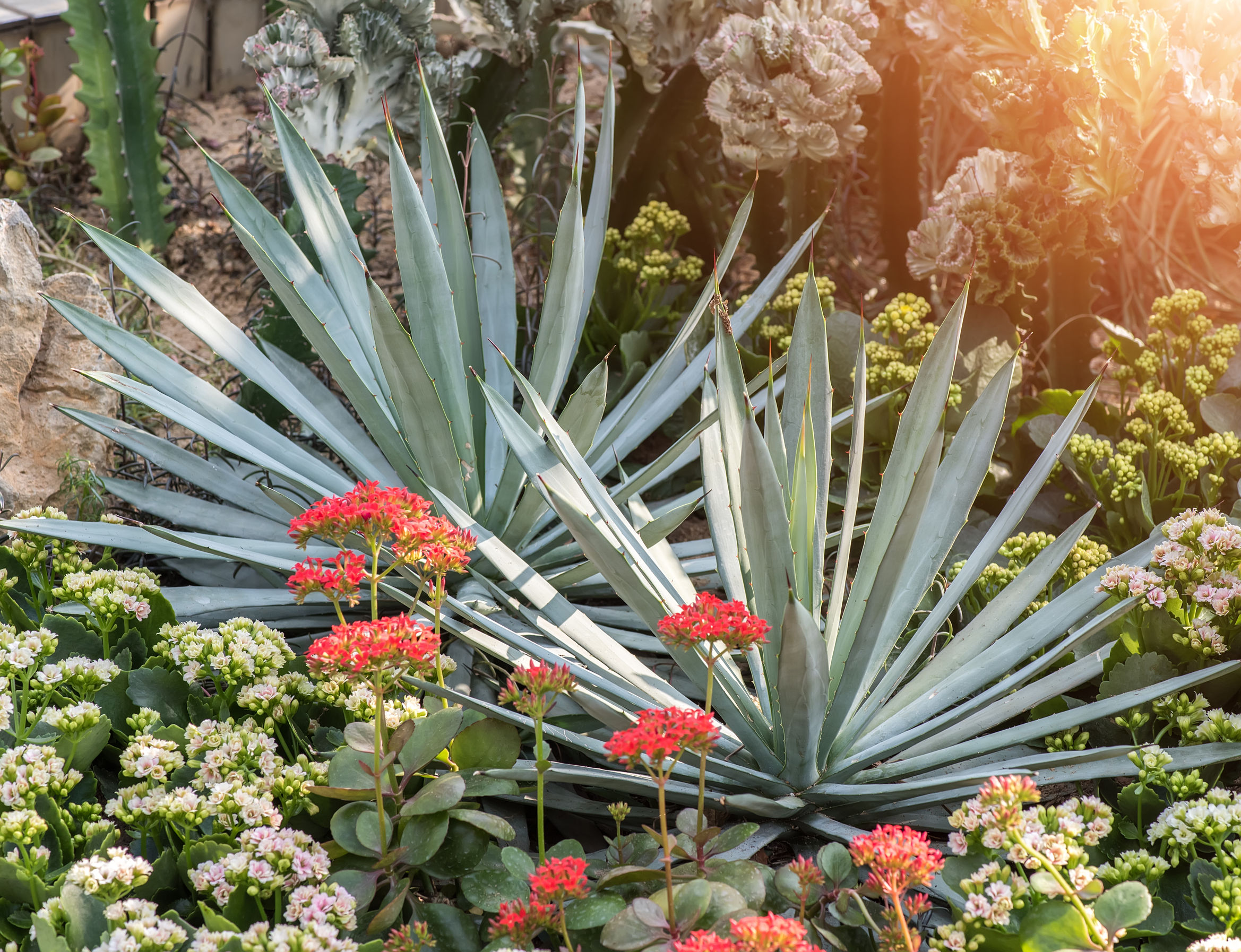
#1: Depending on how you break it down, there are somewhere between 130 and 208 species of Agave (it’s an unwieldy family that defies classification in some ways). Agave is a type of monocot (a group of flowering plants whose seeds typically contain only one embryonic leaf). Agave is native to Mexico and some parts of the American southwest, as well as parts of South America. Agave has been successfully introduced to Europe and South Africa.

.

#2: Contrary to popular belief, Agave is not a cactus, but rather it is a member of the Agavaceae family and closely related to both the lily family (amaryllis) and asparagus. Agave is, however, a succulent (loosely defined as a group of plants with thick, spongy leaves that store water). So, agave is a succulent, and cactus is a succulent, but agave is not a cactus.

#3: According to William H. Prescott (American historian and botanist, 1796–1859), agave was used by the population of Mexico for more than just beverages. A portion of his book, The History of the Conquest of Mexico, (1843) reads: “Its bruised leaves afforded a paste from which paper was manufactured…its leaves further supplied an impenetrable thatch for the more humble dwellings. Thread, of which coarse stuffs were made, and strong cords were drawn from its tough and twisted fibers; pins and needles were made from the thorns at the extremity of its leaves; and the root, when properly cooked, was converted into a palatable and nutritious food.”

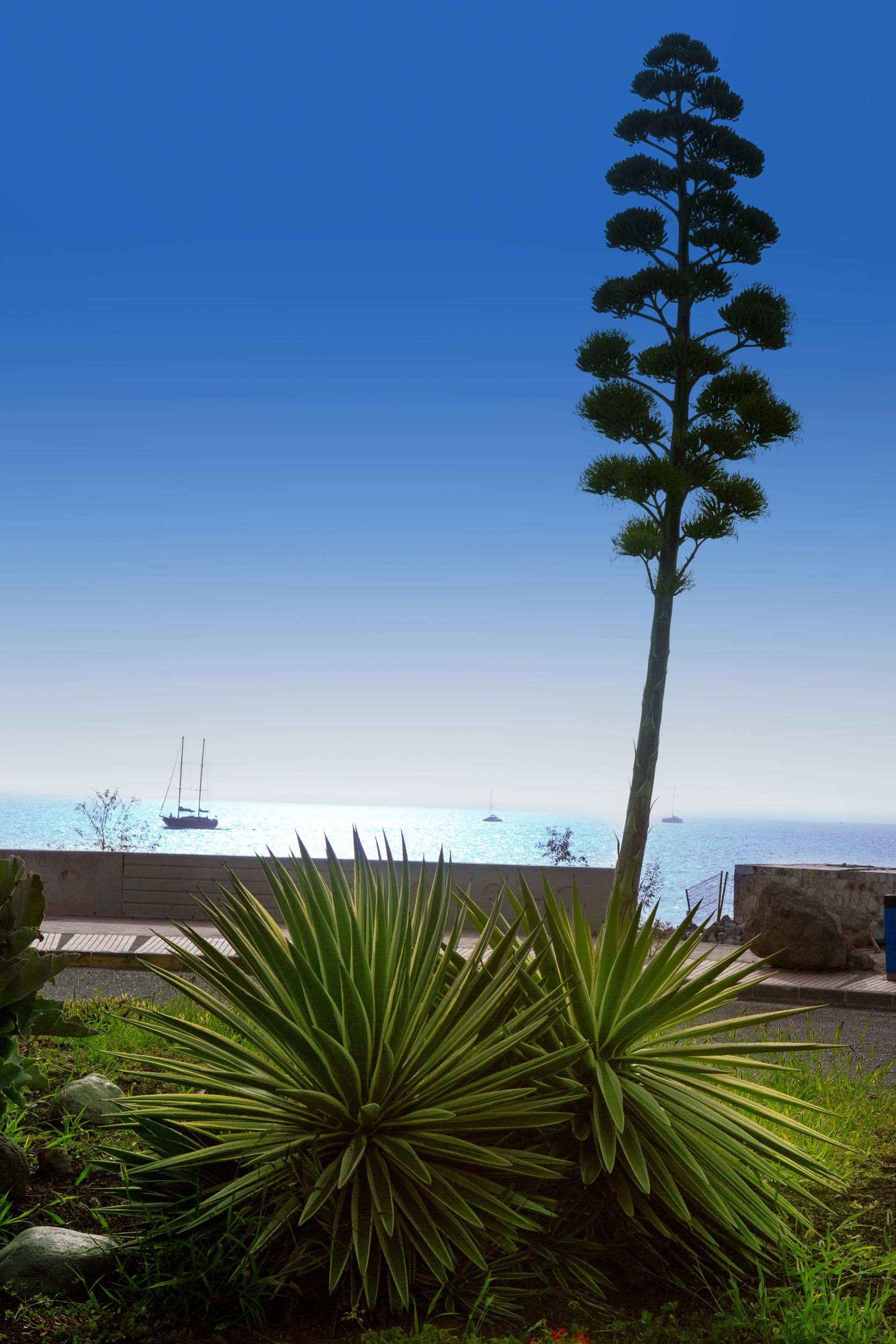
#4: Agave is monocarpic – meaning they die after flowering. So whether the plant is allowed to grow its flower stalk and spread its seeds, or if the flower stalk is removed to allow the stem to swell (as for use in tequila), the plant is still going to die after reaching sexual maturity. Luckily for the agave, most plants take six to eight years to reach this point, and some—such as Agave americana— take much longer. Agave americana is often referred to as the “century plant” because it supposedly takes a century to bloom, but in reality it is closer to 15 to 20 years.

.

#5: Agave nectar (more accurately called agave syrup) is a sweetener commercially produced from several species of agave, including Agave tequiliana and Agave salmiana. Agave syrup is sweeter than honey and tends to be less viscous. Most agave syrup comes from Mexico and South Africa. Agave syrup has been marketed as a “healthful” sweetener, but this fact has been the subject of criticism due to its very high fructose content. It is, however, a true vegan alternative to honey, and – because it dissolves quickly and is sweeter than pure sugar – it is useful in (you guessed it) cocktails!

One more note: If you plan on having a wee bit of tequila to celebrate Cinco de Mayo, why not step away from the sweet-and-sour-laced frozen Margarita and try a classy, classic Paloma! Click here for a recipe.

References/for more information:

The Bubbly Professor is “Miss Jane” Nickles of Austin, Texas… missjane@prodigy.net

Twenty Feet from Stardom: the Vinous Version

.

In 2013, an American documentary film was released by the name of “Twenty Feet from Stardom.” Directed by Morgan Neville, the film is a behind-the-scenes look at backup singers. These talented folks are a big part of the sound—and the success—of many the biggest stars of the music world, and yet most of us will never even know their names.

This post is my vinous version of the concept, meant to be an homage to some of those obscure, unknown wines that occupy the same stage—in terms of time and place—as some of the blockbuster, world-famous wines of the world…and yet they remain just out of the spotlight.

Curtefranca DOC: The Curtefanca DOC shares the stage with the sparkling wines of the Franciacorta DOCG. Franciacorta is Italy’s serious, traditional method sparkling wine produced from Pinot Nero (Pinot Noir), Chardonnay, and Pinot Bianco grapes. Starting with the 2017 vintage, you can add the Erbamat grape variety (a white grape) to that list as well. The Franciacorta DOC was originally established allowing for a range of allowed wines, including a sparkling wine known as Pinot di Franciacorta, in 1967. In 1995 the Franciacorta DOCG “broke away” as a sparkling wine-only designation, and at the same time the Terre di Franciacorta DOC was created as a separate classification for non-sparkling wines. Both designations occupy the exact same geographic area.

The Terre di Franciacorta DOC changed its name to the Curtefranca DOC in 2008. The name was changed, not surprisingly, as it was determined that there was too much confusion between the sparkling wines of the Franciacorta PDO and the still wines of the Terre di Franciacorta PDO.

.

Here are a few interesting factoids about the wines of the Curtefranca DOC:

  • The appellation allows for both red and white wines.
  • White wines are based on a minimum of 50% Chardonnay, with the remaining allowed to be Pinot Bianco or Pinot Nero (vinified as a white wine).
  • Red wines are blends, requiring a minimum of 25% Merlot, a minimum of 20% Cabernet Franc and/or Carmenère, and a minimum of 10% (up to a maximum of 35%) Cabernet Sauvignon. There’s a slush fund of sorts, allowing for (but not requiring) up to 15% “other aromatic red grapes” suitable for production in Lombardy.

The use of the name “Franzacurta” or “Franzia Curta” in the region can be traced back to 1277, appearing in the municipal statute of the commune of Brescia in reference to an area south of Lake Iseo. The name “Corte Franca” has been used for a commune in the area since 1928.

Collioure AOC: The Collioure AOC, perched high atop the cliffs of France’s Pyrénées-Orientales (Roussillon) region overlooking the Mediterranean Sea, occupies the same geographic area as the Banyuls AOC. The famous wines of the Banyuls AOC are fortified vin doux naturel with a minimum of 4.5% residual sugar. The most famous version of Banyuls are the red wines requiring a minimum of 50% Grenache Noir, but blanc, amber, and rosé versions are produced as well. There is even a separate Banyuls Grand Cru AOC for the highest-quality wines; Banyuls Grand Cru must be made from a minimum of 75% Grenache Noir and requires at least 30 months of barrel aging.

.

The Collioure AOC is approved for the non-fortified wines (red, white, and rosé) of the area. Here is some information on the wines:

  • Collioure whites are generally produced using Grenache Blanc or Grenache Gris, but are allowed to be produced using a range of grapes including Macabeu (Macabeo), Marsanne, Roussanne, Vermentino, Carignan Blanc and Malvoisie du Roussillon, as well as 15% (allowed maximum) Muscat.
  • Reds and rosés must include at least two grape varieties, which may include Grenache Noir, Mourvèdre, Syrah, Carignan, Cinsault, and Counoise. Rosé may also include a measure of Grenache Gris.
  • Collioure AOC wines must be dry, and have a maximum allowance of between 3 g/l and 4 g/l of residual sugar.

The Banyuls and Collioure AOCs are named after neighboring communes within the growing region.

There are more vineyards sitting twenty feet from stardom, including the Douro DOC (in the same place as the Porto DOC), the Coteaux Champenois AOC (sharing the stage with Champagne), and Moscadello di Montalcino (occupying the same space as Brunello di Montalcino). What are some of the others?

References/for more information:

The Bubbly Professor is “Miss Jane” Nickles of Austin, Texas… missjane@prodigy.net


Fuzzy Wuzzy was a Vine

.

.

One of the first things that a serious wine student will learn about Priorat is that it is one of the two DOCa regions in Spain, and that (its red version) is a hearty wine based around the Garnacha Tinta and Mazuelo (Carignan/Cariñena) grape varieties. Next, one might note the list of accessory varieties, which include some well-known international varieties (including Cabernet Franc, Cabernet Sauvignon, Pinot Noir, Syrah, and Tempranillo) as well as a grape known as Garnacha Peluda.

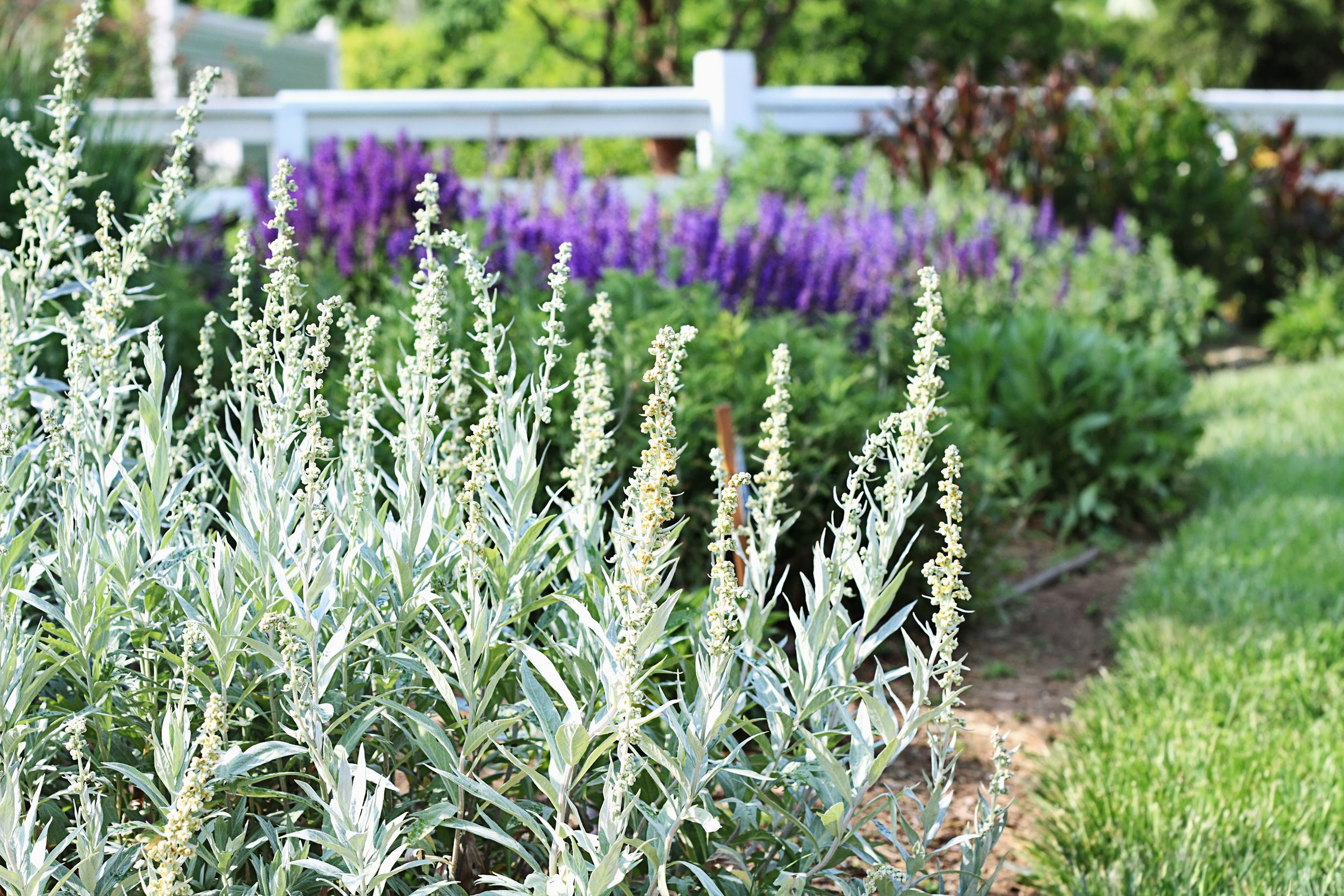
There it is: Garnacha Peluda; otherwise known as Hairy Grenache. The name peluda seems to come from the French pelut and means furry.  How cute is that? The “hairy” part of the name refers to the small white hairs covering the underside of the leaf. Other terms used to describe this hirsutulous (botanical term for slightly hairy) characteristic include downy, wooly, fluffy, fleecy, and fuzzy. But they all mean the same thing: this leaf is hairy.

Garnacha Peluda, a mutation of Garnacha Tinta (aka Grenache Noir), is considered a unique variety and is often referred to as a downy-leafed variant of Grenache—which may make the inquiring mind wonder why a certain grapevine would mutate into such a form. The answer is that growing furry leaves is a biological adaptation. Biological adaptations are changes—structural (either morphological [able to be observed] or anatomical [internal]), physiological, or behavioral—that occur over many generations of plant or animal life in order to make the organism better suited to its environment and to improve its chances of survival.

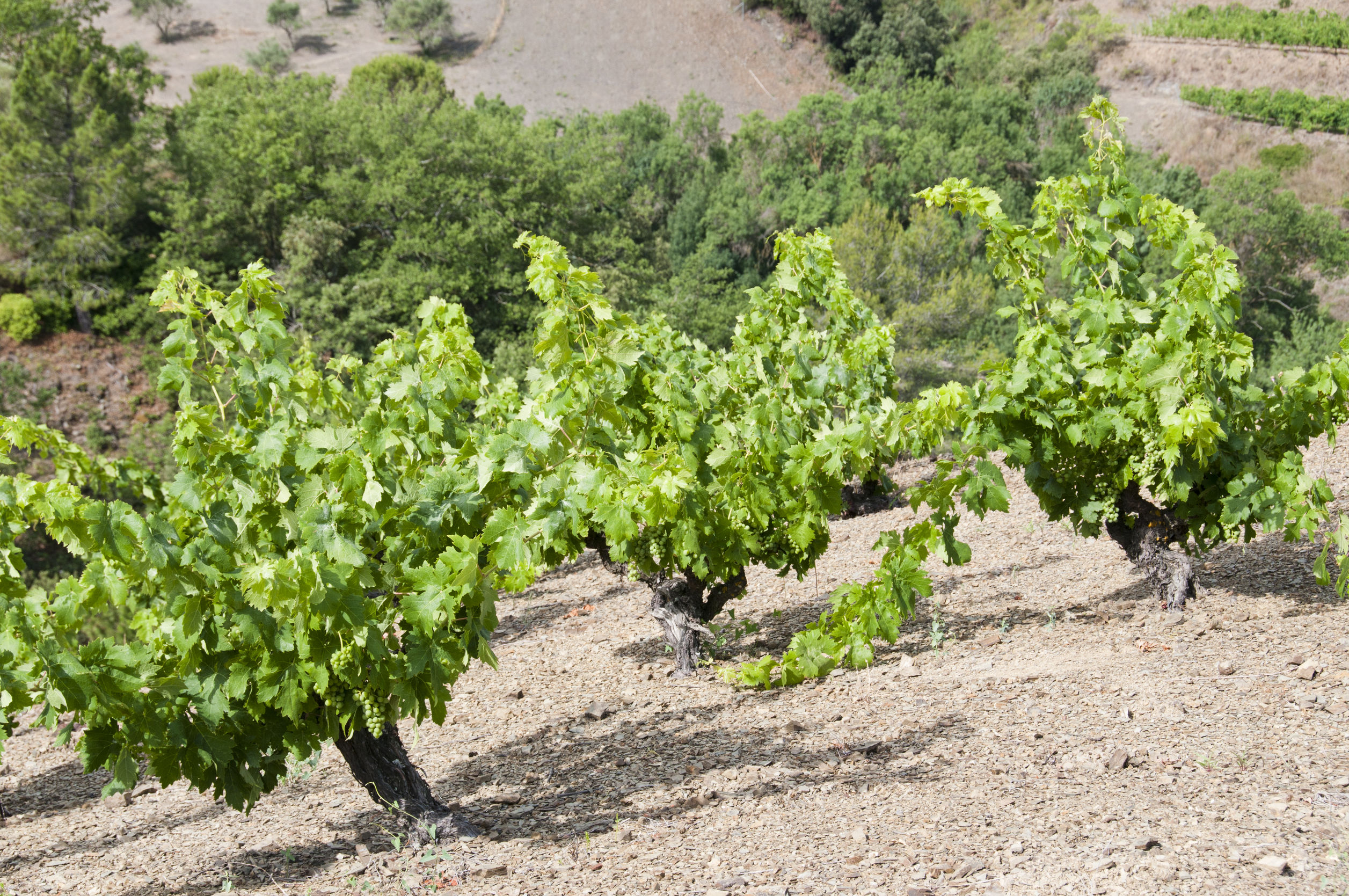
Garnacha Pelut vineyards in Priorat

Garnacha Peluda vineyards in Priorat

The hairy-leafed variation of Grenache is a result of a morphological adaptation to hot, dry environments such as found in Priorat, as well as the Roussillon and Languedoc areas of southern France. (Note: in southern France, the grape is often called Lledoner [or Lladoner] Pelut.) The fuzzy layer protects the vine from water loss due to transpiration, helps shade the leaves, and reflects sunlight to help keep the plant cool. The hairy-leaf solution is one of several ways plants adapt to hot, dry environments. Others include small leaves, curled-up leaves, wax-coated leaves, woodsy stems, and green stems but no leaves.

Compared to its non-hairy cousin, Garnacha Peluda tends to produce wines that are lower in alcohol, lighter in color, and higher in acidity. The Garnacha Peluda grape is authorized for use in the following wines:

  • Recommended/Principle variety in: Terra Alta DO, Languedoc AOC (as Lledoner Pelut)
  • Accessory grape variety in: Empordà DO, Priorat DOCa, Terrasses du Larzac AOC (as Lledoner Pelut), Côtes du Roussillon and Côtes du Roussillon-Villages AOCs (also as Lledoner Pelut)

Vitis aestivalis varieties and native North American grapes native to the southwest, such as Mustang and Muscadine, are also likely to demonstrate the hairy-leafed adaptation. Many other plants have adopted this downy-leafed adaptation as well, including rosemary, sagebrush, oleander, buckthorn, magnolia, sycamore, potato, petunia, and lamb’s-ear.

Fuzzy-leafed lamb's ears

Fuzzy-leafed lamb’s ears

Another famous hairy-leafed vinifera grape is Pinot Meunier. As meunier means “miller” in French, the grape is so-named for the layer of white, downy hairs on the underside of the leaves, said to resemble grains of flour (as produced by the town miller at the local flour mill). But as we now know, it is all about that morphological plant adaptation.

References/for further information

The Bubbly Professor is “Miss Jane” Nickles of Austin, Texas… missjane@prodigy.net

The Outer Limits: Italy’s Southernmost DOCs

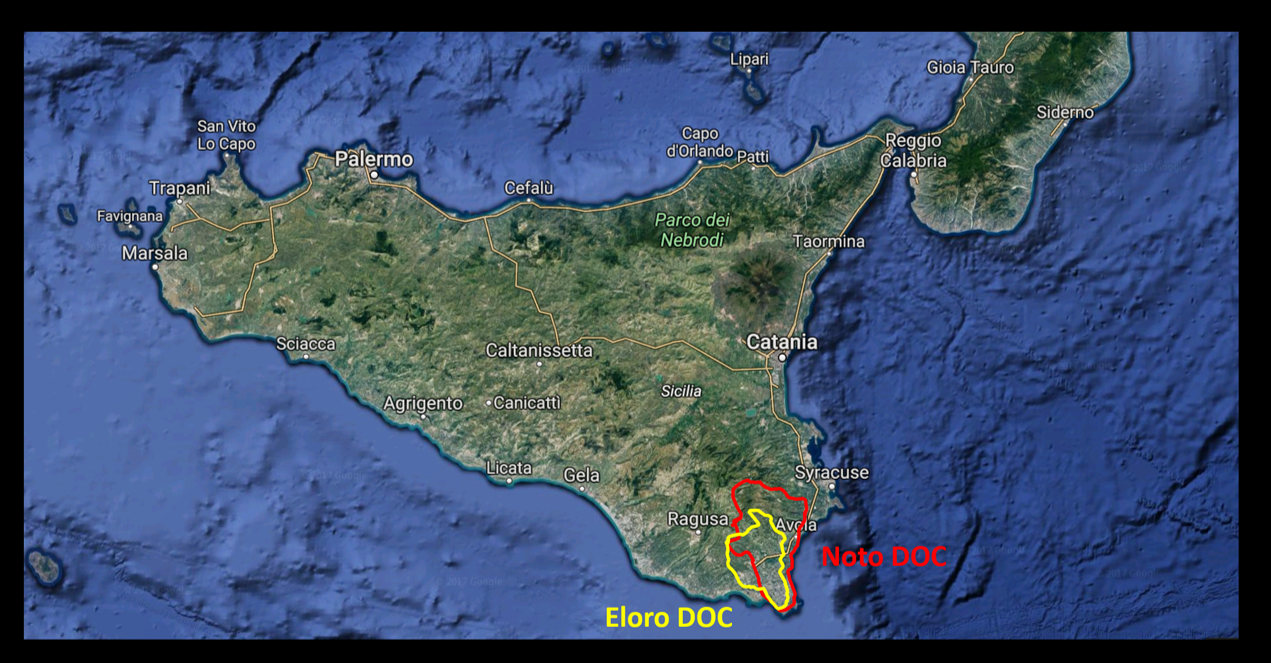
Map of Sicily via Google Maps

Map of Sicily via Google Maps

The island of Sicily, located just to the west of Calabria (the “tip” of Italy’s boot) might not be the southernmost point in Italy (that award goes to the island of Lampedusa), but it’s pretty far south, and it is home to the two southernmost DOCs of Italy (they overlap, and it’s a tie): the Eloro DOC and the Noto DOC.

First things first: about that “southernmost” claim: the southernmost town (commune) I could find (via Google maps) located within the Eloro DOC and Noto DOCs is Portopalo di Capo Passero (which is itself located within the Province of Syracuse). Its latitude is 36° 41′N. For the record, that’s just a little bit farther south than the DOC of Pantelleria, which is often quoted as Italy’s southernmost DOC, yet sits at 36° 50′.

The land around these two DOCs is mostly a flat, coastal plain so the area can become quite warm. Only the northernmost reaches of the Noto DOC has any hills to speak of, but the breezes off the Mediterranean Sea provide a necessary cooling influence.

The archeological site of Helorus (photo in the public domain)

The archeological site of Helorus

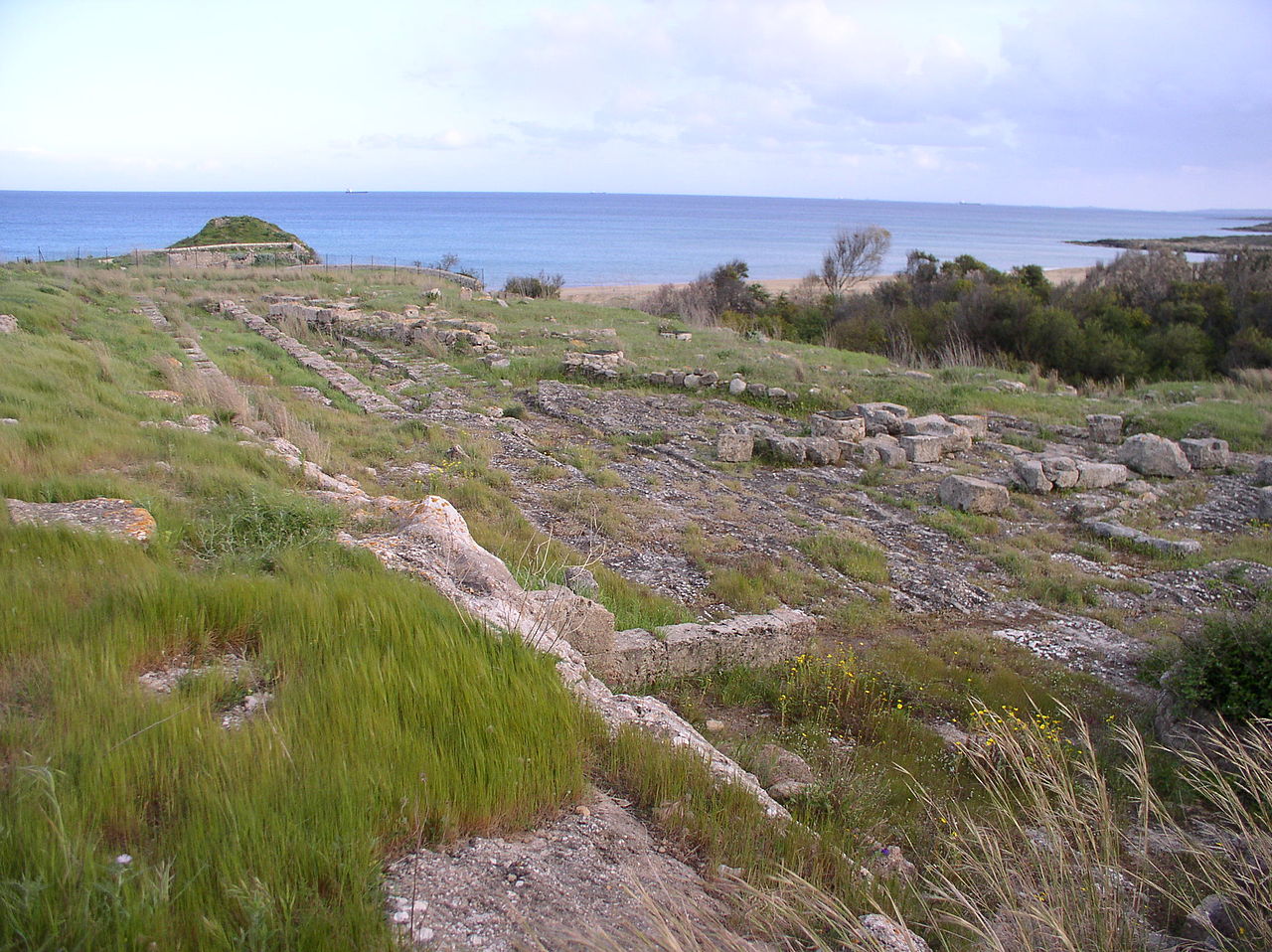
The Eloro DOC is named after Helorus (Italian: Eloro), an archeological site located in the modern-day commune of Noto. Helorus was an ancient Greek (then Roman) city dating from late 8th century BC. Helorus was mentioned by Thucydides in his recounting the retreat of the Athenians “on the road leading to Helorus from Syracuse.” The once-fortified city had a theater (called the colisseo) and many buildings. Today, parts of the city’s foundations, some portions of the outer walls, and a single column atop a square pedestal are still intact.

Red and rosé wines are produced under the Eloro DOC. Both styles are produced using a minimum of 90% Nero d’Avola, Frappato, and Pignatello grapes; the other 10% is allowed to include any red grape approved for Sicily. Red wines only are produced in the subzone of Pachino, and must be a minimum of 80% Nero d’Avola, with the other 20% being % Frappato and/or Pignatello. The emphasis on Nero d’Avola makes sense as likely native home of the grape–the commune of Avola–is just a few miles away. The Eloro DOC was established in 1994.

The town of Noto at sunset

The town of Noto at sunset

Noto DOC is a new name for the area formerly known as the Moscato di Noto DOC, and a good deal of Moscato-based wine is still produced here. However, under the new title, red wines are produced as well. Among the many styles of Moscato di Noto (all made with 100% Moscato Bianco) are a varietal Moscato, a spumante, a liquoroso (fortified), and a dried-grape version known as Passito di Noto. The Moscato di Noto spumante is required to have at least 5% residual sugar and a minimum of 4 atm of pressure. The liquoroso (fortified) must be fermented to at least 6.5% abv before fortification takes place.

The Noto DOC also produces a rosso made with a required minimum of 65% Nero d’Avloa, as well as a varietal Nero d’Avola (with the typical 85% minimum requirement).

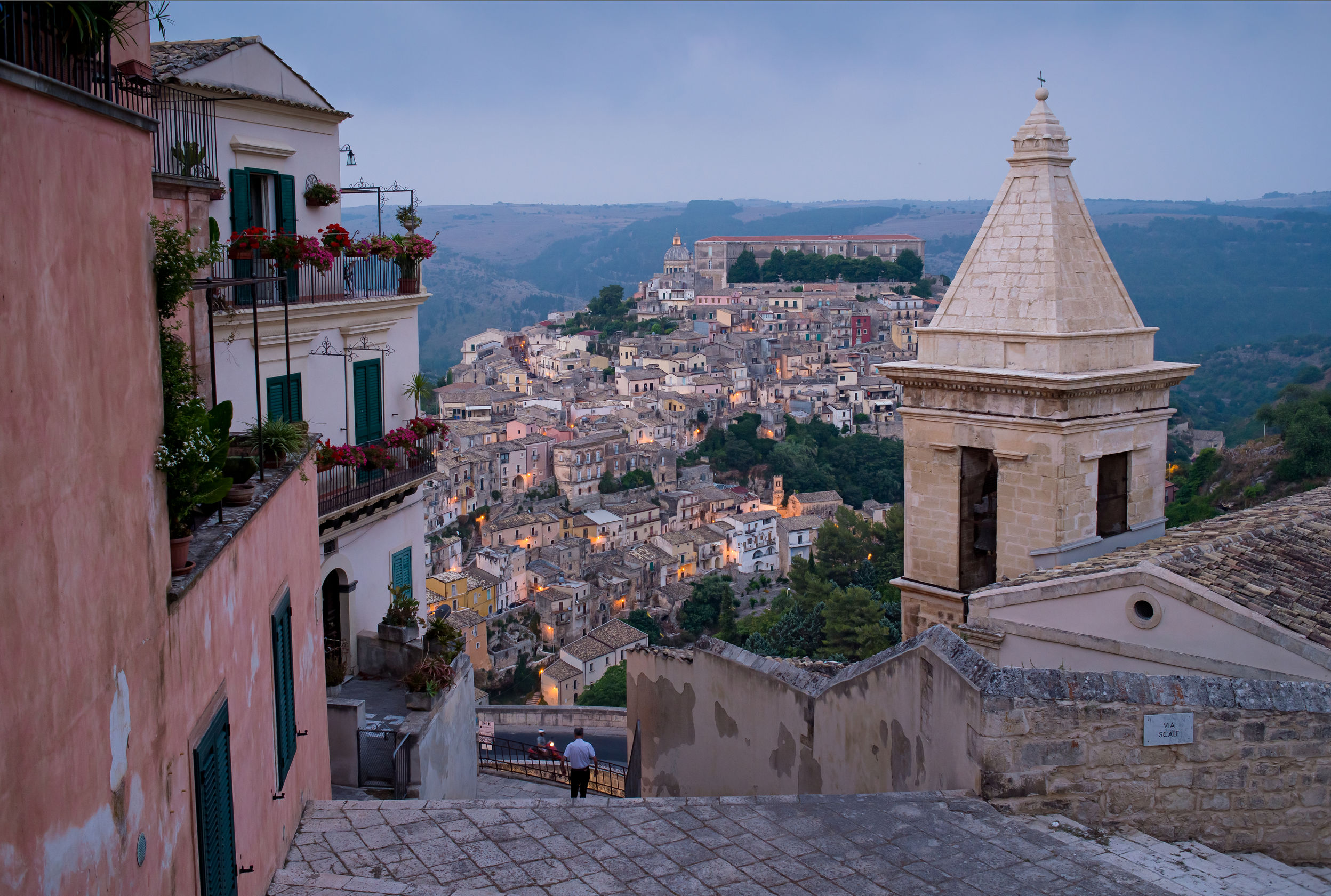
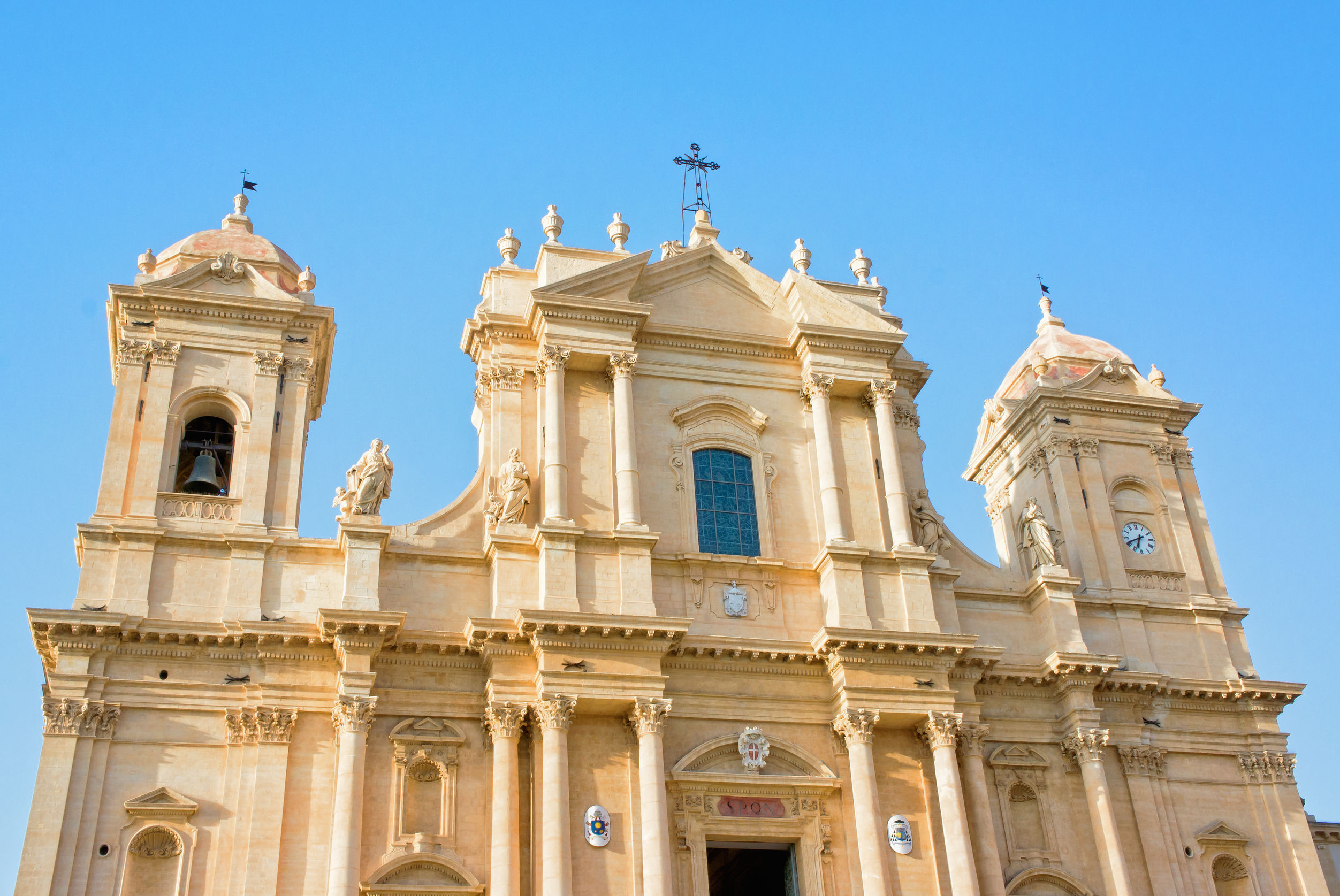
The area around the town of Noto was destroyed in an earthquake in 1693, so the town that one may visit today dates to the early 18th century. Many of the churches, walkways and buildings were designed by the Sicilian architect Rosario Gagliardi (1698–1762) who worked in what is now known as the Sicilian Baroque style. Among the most amazing sites of the town are Corso Vittorio Emanuele, a street which includes the Church of San Domenico, and the Fountain of Hercules. Noto is a UNESCO World Heritage Site.

Baroque Church of San Francesco in Noto

Baroque Church of San Francesco in Noto

As for the other extreme, it looks like the northernmost DOC in Italy is the Alto Adige DOC, which just barely nudges out the DOC of Valdadige – both are reaching up to 46° 40′N latitude. More on that later!

References/for more information:

The Bubbly Professor is “Miss Jane” Nickles of Austin, Texas… missjane@prodigy.net

The Outer Limits is my series of appreciative posts about small, obscure, or out-of-the-way wine regions.
 

The pH of it all

.

.

When we talk about wine, we talk about acidity, and when describing wines, one of the typical ways to discuss acidity in wine is to use the pH scale. Dedicated students of wine can easily quote 2.9 to 3.9 as the typical range of pH in wine.

I personally love the zip and zest of highly acidic wines and adore Mosel Riesling (the drier the better), New Zealand Sauvignon Blanc, and even 100% Sicilian Grillo. I’ll take the tongue-curling antics of a wine with a pH of 2.9 any day.

But what exactly is pH? You probably already know that it is a scale runs from 0 to 14 and measures how acidic or basic (alkaline) a substance is. But what does that mean? To answer this question we need to dive into some science…we can start with chemistry and biology, and might just have to visit the physics department (and if we are going there, it better be worth it). So here we go!

About the p and the H: First things first—the term “pH” stands for “power of hydrogen.” The term was invented in 1909 by the Danish biochemist Søren Peter Lauritz Sørensen, so originally the “p” stood for potenz (the German word for power). The “H” (for us absolute beginners) is the element symbol for hydrogen, and the pH scale reflects the concentration and type of the hydrogen-based atoms in a solution. (Note: some references define the “p” in pH as “parts” or “potential.”)

What’s hydrogen got to do with it: Hydrogen is the common element to all acids. What determines whether a solution is acidic or basic is the form and degree of saturation of hydrogen ions.

.

.

Define ions, please: To put it as simply as possible—ions are atoms or molecules that have lost or gained an electron over the course of their travels. In the case of hydrogen, this can occur when water splits apart.  If a hydrogen atom loses an electron, it becomes positively charged and is known as a hydrogen ion (H+). If a hydrogen atom gains an electron, it becomes negatively charged and is known as a hydroxide ion (OH).

Hydrogen ions: An acid is a molecule that can split apart in water and release hydrogen ions (thus, acidic solutions have measurable concentrations of hydrogen atoms). Bases are stronger in hydroxide ions. In neutral solutions, the two are roughly equal and they cancel each other out (neutralize each other).  The way that these hydrogen molecules react in water is the basis for the pH scale.

Deliver me from logarithms: The pH scale is logarithmic. Logarithms are multiples of ten; that means that for every full integer on the pH scale, the strength of the acid or base increases tenfold. Thus a pH of 2 is ten times more acidic than a pH of 3—and a pH of 2 is 100 times more acidic than a pH of 4. If this seems confusing, consider another logarithmic scale, the Richter Scale, where an earthquake measuring 7 is ten times stronger than a 6.

Liquid required: A substance has to be water-based in order to have a pH. Powders and oils (such as vegetable oil or olive oil) cannot be measured on the pH scale. There are, however, several other ways of measuring acidity.

The neutrality zone: A 7 on the pH scale is neither acidic nor basic, and considered neutral. Distilled water is generally neutral, but other types of water are not. An interesting (kind of gross) fact is that  human blood is very close to neutral (just slightly basic) and often has a pH of 7.35 to 7.45. Any deviation from this ideal blood pH can have devastating effects on one’s health.

.

.

Just the basics: In the wine world we deal with levels of acidity, but it is interesting to understand the types of substances on the other end of the scale.  Here are a few common items and their basic pH levels:

  • 8: Baking soda, sea water
  • 9: Toothpaste
  • 10: Milk of Magnesia
  • 11: Ammonia
  • 12: Soapy water
  • 13: Oven cleaner
  • 14: Drain cleaner

The equation for pH: Never mind. If you are interested (and have a logarithmic calculator and know how to use it) click here.

References/for more information:

The Bubbly Professor (who has not formally studied chemistry or physics since college) is “Miss Jane” Nickles of Austin, Texas… missjane@prodigy.net