The Murray, the Darling, and the Alps of Australia

...

Murray Darling (as serious wine students certainly will know) is a wine region in Australia. Known primarily for Chardonnay but also widely planted with Shiraz and Cabernet Sauvignon, it is a big region–the second largest (by geographical area) in the country.

The Murray Darling wine region transcends political boundaries to an extent, as it straddles the borders of two states–Victoria and New South Wales. The New South Wales portion of the region is considered to be part of the Big Rivers viticultural zone–which makes total sense as it is named for the longest and the third longest rivers in Australia.

The longer of the two rivers–the Murray–is the longest river in Australia, clocking in at 1,558 miles (2,508 km) long. The source of the Murray is in the Australian Alps, and from there it flows down the western side of the mountains, twisting and turning across the inland plains and forming part of the border between the states of New South Wales and Victoria before it reaches the state of South Australia. From there, the Murray heads southward for almost 200 miles (315 km) before it joins the Southern Ocean (also known as the South Pacific Ocean) at Lake Alexandria.
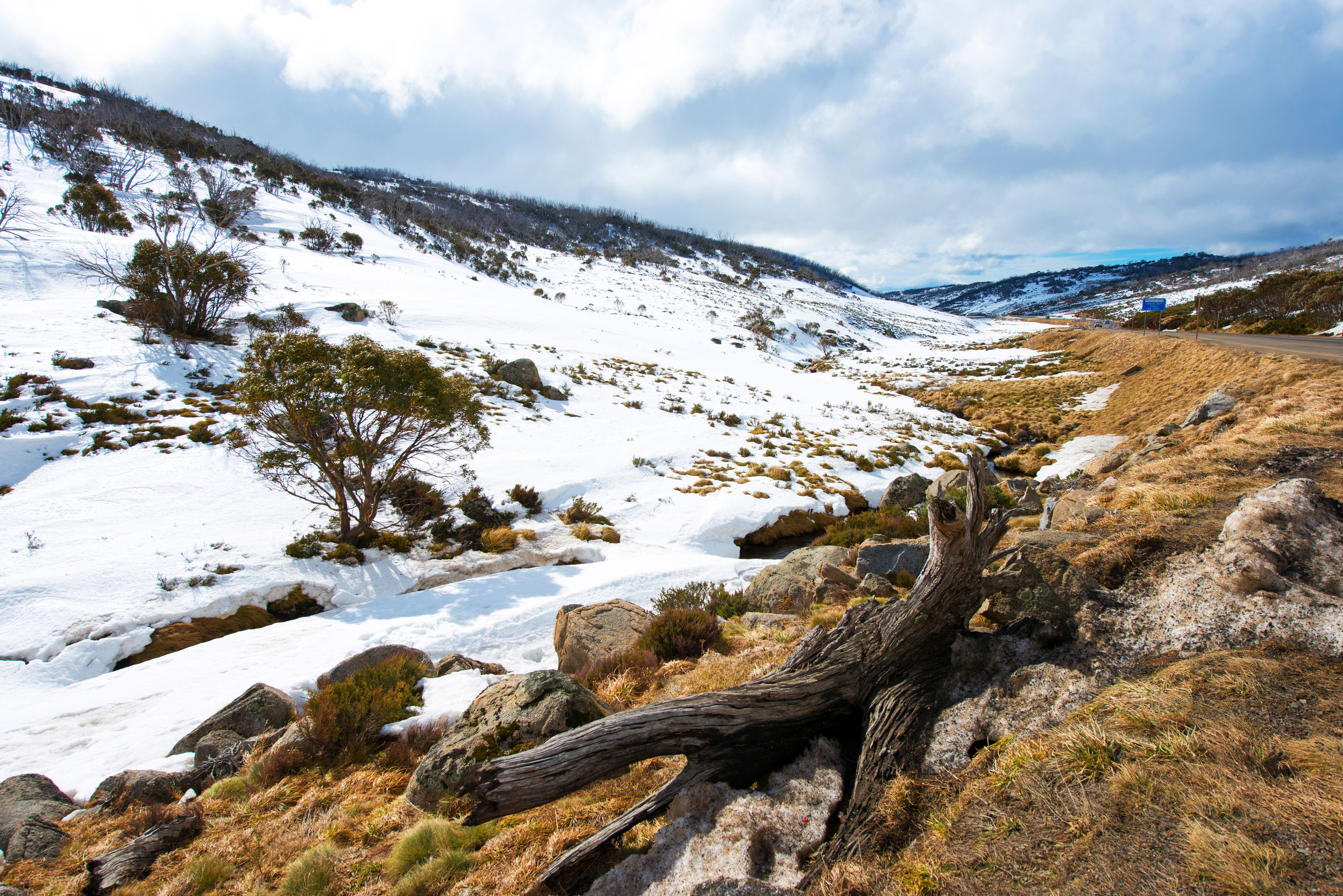
Kosciuszko National Park, Australia

Kosciuszko National Park, Australia

Wait a minute–did she just say the Australian Alps? Yes, she did–and that’s the thing that led to this post. Before doing a bit of digging into the background of the Murray Darling region I had no idea that Australia had its own Alps.

The Australian Alps, it turns out, are part of the Great Dividing Range (now it starts to make sense). The Alps are the highest mountain range in Australia, and the only place in Australia that receives deep snow fall every year. Mount Kosciuszko, the highest point in Australia (7,310 feet/2,228 meters above sea level) is part of the Alps system. There is even a system of Alpine National Parks, understandably  a center for skiing and other mountain sports in Australia.

So–back to our rivers. The source of the Darling River is also in the Great Dividing Range, yet far to the north of the Murray in the northern portion of New South Wales. The Darling River, the third longest river in Australia, flows south-southwest across New South Wales to the border of the state of Victoria, where it joins the Murray.
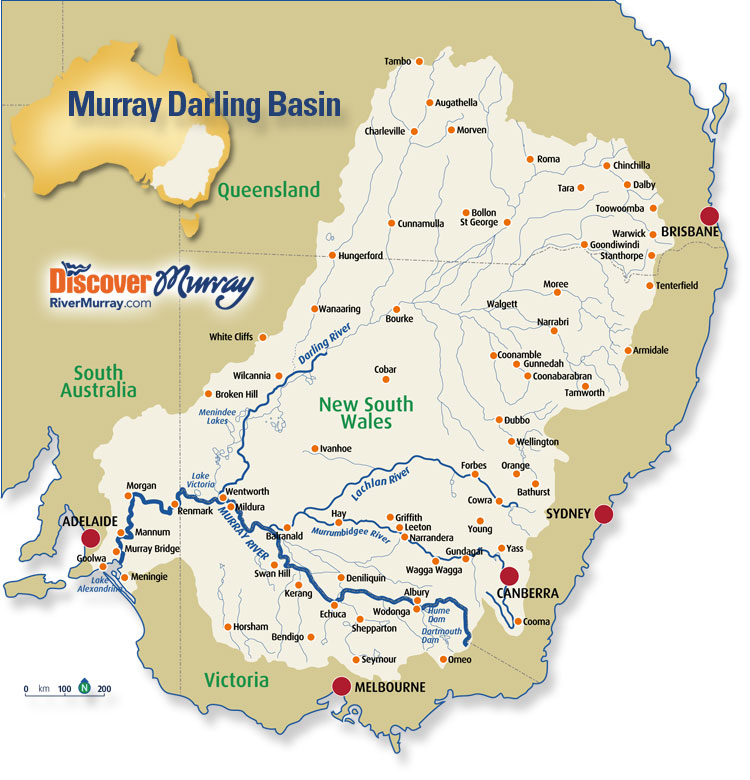
The combined Murray-Darling catchment system provides irrigation for one seventh of Australia’s total landmass, including most of Victoria, New South Wales, southern Queensland, and parts of South Australia. This area is of great agricultural significance and has even earned the nickname of the “food bowl” of the nation. The agriculture output of the Murray-Darling Basin includes dairy, citrus, stone fruit, livestock, cotton, almonds, and over half of Australia’s cereal crops.

Of course, of great interest to me are the grapes, as a great majority of the wine regions of New South Wales and Victoria–as well as a portion of South Australia–fall under the water catchment of the Murray-Darling. The importance of these rivers (as well as the other rivers in the basin, which include the Lachlan and the Murrumbidgee) really cannot be overstated. We can thank these rivers for Hunter Valley Semillon, Mudgee Cabernet, Rutherglen Muscat, Heathcote Shiraz, and Murray Darling Chardonnay. Thank you!

References/For more information:

The Bubbly Professor is “Miss Jane” Nickles of Austin, Texas… missjane@prodigy.net


Cape Kidnappers and the Farewell Spit

This post, along with my last post on Poverty Bay and the Bay of Plenty, is a result of my wandering mind while studying wine…I tend to wonder how “Poverty Bay” acquired such a name, and why Nelson (on New Zealand’s South Island) has a land feature known as the “Farewell Spit.” If these kinds of things inquire your mind as well…read on!

Farewell Spit: Nasa Satellite Image

Farewell Spit: Nasa Satellite Image

Sunny Nelson and the Farewell Spit

Nelson—a region on the South Island of New Zealand and a wine-producing area as well—enjoys one of the sunniest climates in the country, due to the rain shadow of the West Nelson Mountains.  Tucked behind an area known as Golden Bay, the region seems to be a wonderland for natural beauty and tourism (and it is). So why…does it include a feature known as the “Farewell Spit?” Just sounds nasty.

A spit doesn’t sound as weird when one uses the full  terminology: sandspit.  A sandspit is a type of coastal landform found along the coast where the direction of the shore changes, causing the ocean current to spread out and deposit sand. The longest spit in the world—at 68 miles long— is the Arabat Spit in the Sea of Azov (Crimea).

Nelson’s Farewell Spit (known to the Maori as Onetuhuna) on New Zealand’s South Island is approximately 20 miles long. It is made up primarily of sand eroded from the Southern Alps and deposited into Golden Bay. The name “Farewell Spit” was derived from the name given to the area by Captain James Cook as he departed NZ NelsonNew Zealand for Australia in 1770. The Cape was the last landform the crew was able to see as they sailed away, and the maps produced from his visit showed the area as the “Farewell Cape.”  The name stuck among English speakers and today the sandspit is known as the “Farewell Spit.” The New Zealand Department of Conservation administers the area as a sea bird and wild life reserve.

  • From the wine department: Nelson is one of the smaller regions in terms of wine production; with just 2,700 acres (1,120 ha) of vines, this region produces a mere 2.4% of New Zealand’s wine. The region, known for being the only wine growing area on New Zealand’s South Island that is located to the west of the Southern Alps, still enjoys its “sunny Nelson” reputation due to the presence of smaller mountain ranges that protect its west and south sides from excessive rainfall, while the Southern Alps cradle it to the east. Nelson grows a little bit of Pinot Noir, but focuses on Chardonnay and Sauvignon Blanc as well as a spattering of aromatic whites such as Gewurztraminer, Riesling, and Pinot Gris.

Hawke’s Bay and Cape Kidnappers

Cape Kidnappers

Cape Kidnappers

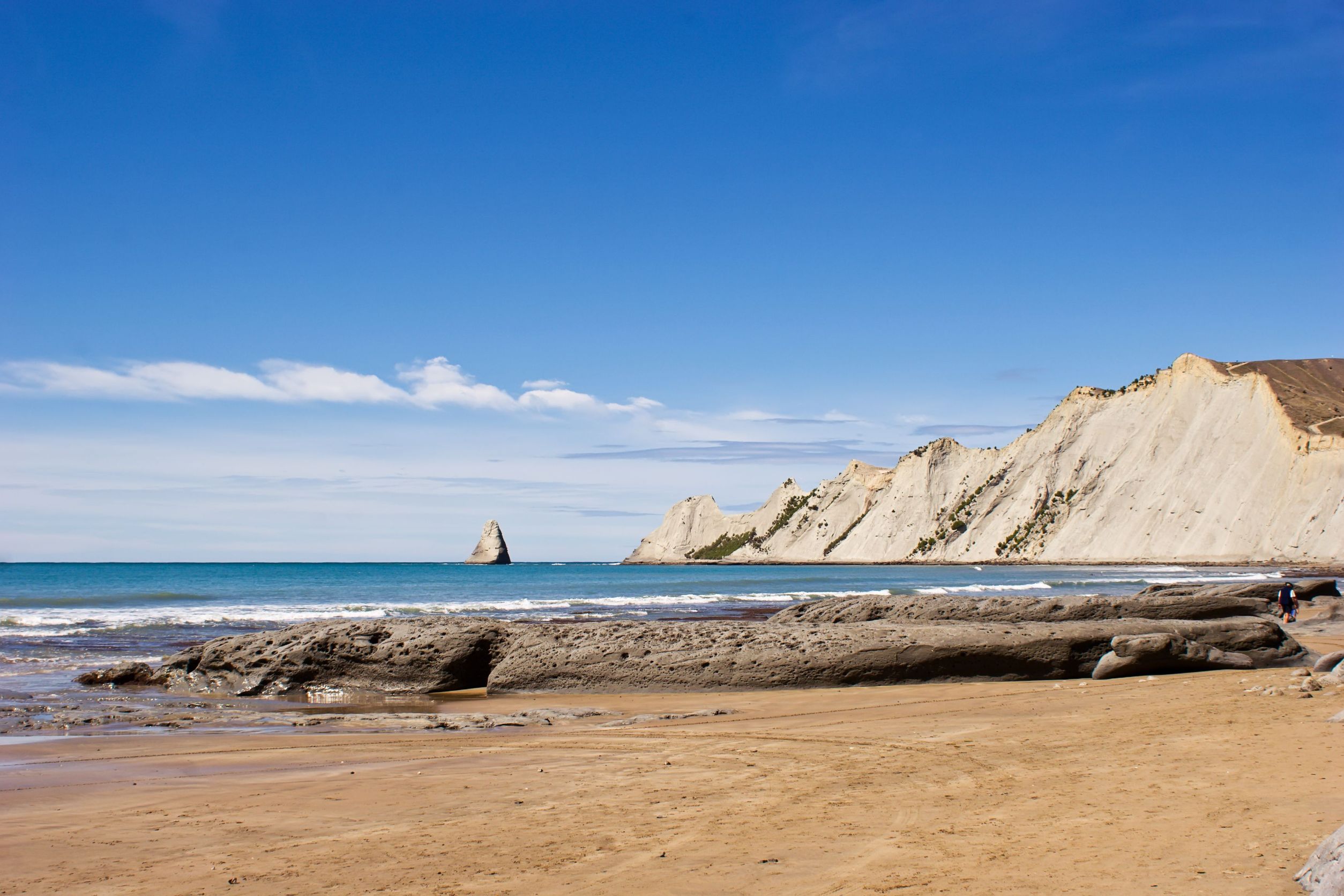
Cape Kidnappers is a headland located in the south-east extreme of the Hawke’s Bay region on New Zealand’s North Island. A headland is a narrow piece of land that projects from a coastline into the sea; sometimes otherwise known as a cape, bluff, or promontory. Cape Kidnappers extends from Clifton–a small beach town and camping area–into the Pacific Ocean.

Cape Kidnappers takes its English-language name from Captain James Cook’s 1769 voyage to–and around–New Zealand aboard the ship Endeavor. With the caveat that this may be only one side of the story, it was named after an attempted kidnapping. As the story goes, when the Endeavor was anchored off-shore, a crewmember named Tiata was in the water beside the ship when a Māori fishing boat pulled alongside and attempted to drag him aboard. Sailors from the Endeavour opened fire on the fishing boat, killing and injuring several of the Māori. The surviving Māori sped off, and Tiata returned to the Endeavour. Cook, who described the region as having steep white cliffs on either side, thus named the area “Cape Kidnappers.”

NZ Hawkes BayCape Kidnappers is now a protected area and home to several colonies of the Australasian Gannet. The bird reserves are closed to the public, but may be viewed from the beach which is which is accessible by foot, off-road vehicle, or kayak.

The Māori name for Cape Kidnappers is Mataupo Maui, meaning “the fish hook of Maui.” Another name, used less often, is Tapuwaeroa, which refers to “long footsteps” left behind by the giant Rongokako.

  • From the wine department: Hawke’s Bay is one of New Zealand’s  largest wine-producing regions in term of production. The region enjoys an overall maritime climate, but its location in the wider portion of the country means that it is, in spots, quite a bit sunnier and warmer than other parts of the country. For this reason, along with its now-famous gravelly, well-drained soils (particularly in the Gimblett Gravels area), Hawke’s Bay has a reputation for red-Bordeaux blends featuring Cabernet Sauvignon and Merlot, as well as Syrah–mainly grown in the areas further inland. The areas closer to the coast produce Chardonnay and Pinot Gris as well as plenty of wine using NZ’s signature grape–Sauvignon Blanc.

Bonus question: Why is part of the ultra-cute town of Westport known as Cape Foulwind? Cape Foulwind is a headland on the New Zealand’s South Island, located close to the art-deco town of Westport (itself located on New Zealand’s west coast overlooking the Tasman Sea). The headland was previously named Rocky Cape, but was christened Cape Foulwind by Captain James Cook after a strong wind off the cape blew the Endeavour quite a distance out to sea.

References:

 The Bubbly Professor is…”Miss Jane” Nickles of Austin, Texas

Poverty Bay and the Bay of Plenty

Vineyards in New Zealand's Gisborne/Poverty Bay area (photo via http://www.nzwine.com/)

Vineyards in New Zealand’s Gisborne/Poverty Bay area (photo via http://www.nzwine.com/)

This post is totally based on my own curiosity about geography—which pops up at random times during wine studies—such as last night while I was reviewing the wine map of New Zealand. I noticed that Gisborne is also known as Poverty Bay. What place on earth would want to be known as Poverty Bay?

To me, this is a burning question, in need of well-researched answers—and some wine-related context as well! There’s a fine line, it seems, between a wine geek and a geography geek; and we might as well throw history geek in there as well, because the name Poverty Bay, and its (perhaps) better half up the road a bit, the Bay of Plenty, relate back to Captain James Cook (1728-1779), a captain in the British Royal Navy who made three voyages to the Pacific Ocean, and is believed to be the first European to reach Australia and the Hawaiian Islands and to circumnavigate New Zealand.

Poverty Bay

...

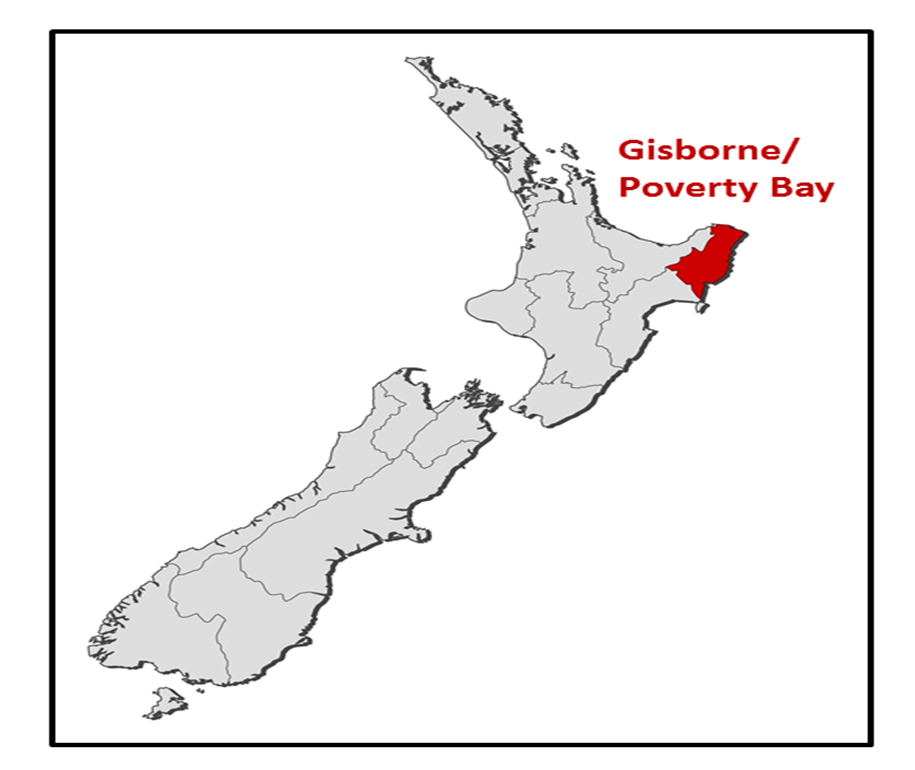
There is a lovely series of bays where the city of Gisborne, on New Zealand’s North Island, meets the South Pacific Ocean.  The largest of these is known as Poverty Bay, which stretches for about 6 miles south to a place called Young Nick’s Head. (This too must be explained…it seems that the area, a headland, was the first land sighted by the crew of Captain Cook’s ship, The Endeavour, on October 7, 1769. A reward of a barrel of rum and the right to name the landmass had been offered to the first crewman to sight land; the reward was claimed by 12-year-old Nicholas Young.)

Later that day, the ship’s crew went ashore.  They encountered the residents of the land, the Maori, and it did not go well. The first meeting led to the death of 6 Maori, and the crew, quite battered themselves, returned to their ship without any of the provisions they had hoped to acquire. For this reason, Captain Cook gave the area the name “Poverty Bay.” Perhaps they should have stayed with Maori name, which at the time was Teoneroa; today it is Te Kuri o Paoa.

From the department of I thought this was a wine blog: These days, Gisborne/Poverty Bay is the third largest producer of wine (in terms of volume) in New Zealand, and yet it seems to be somewhat obscure. Perhaps it’s the out-of-the way location. The area currently has 4,735 acres (1,915 ha) of vines. Chardonnay is the most widely planted variety, at about 2,312 acres (936 ha). Pinot Gris is next, with 950 acres (381 ha). Gewurztraminer, Merlot, and Viognier are widely planted as well. New Zealand’s super-star grape, Sauvignon Blanc, actually comes in around sixth place in Gisborne, with about 138 acres (56 ha) planted.

Vineyards in the Waikato/Bay of Plenty area (photo via http://www.nzwine.com/)

Vineyards in the Waikato/Bay of Plenty area (photo via http://www.nzwine.com/)

Being part of the widest part of the North Island, Gisborne records some of the most sunlight hours and warmest overall temperatures in New Zealand, so much so that the grapes here are often the first in the country to be ready for harvest. Gisborne is also the easternmost part of New Zealand, meaning the vineyards here are the first vineyards in the world to greet each new day.

The Bay of Plenty

After the unfortunate encounter at Gisborne, Captain Cook’s crew sailed north to what is now known as the Bay of Plenty. Here he was able to get the provisions he needed, and noted that it was an area “full of plantations and villages” that was “a bay of plenty.” Bay of Plenty is still a lush area, with orchards of kiwi fruit, avocadoes, and citrus, not to mention the vineyards and abundant seafood nearby. The Māori name for the Bay of Plenty is Te Moana-a-Toi (“the sea of Toi”), in honor of the Maori explorer Toi-te-Huatahi.

In the interest of the “wine” part of this blog: The regions of Bay of Plenty and its neighbor-to-the-west, Waikato, are generally lumped together when discussing the wine of the area. These regions, located just south of Auckland, currently have a tiny but growing wine industry—mainly small vineyards tucked between fruit orchards and dairy farms. Chardonnay is the leading grape variety here, followed by Cabernet Sauvignon and Sauvignon Blanc.

...

The area is one of the warmer regions in New Zealand, owing to its more northerly location (remember this is the Southern Hemisphere),  the width of the land mass, and the protection of the Hakarimata Mountain Range  The soils are quite fertile, due to the wide floodplain of the Waikato River and several other rivers.  Some areas around Waikato/Bay of Plenty were previously swampland, made accessible for agriculture via large drainage programs implemented by European settlers.

Stay tuned for more on New Zealand’s landmarks—such as Cape Foulwind, the Farewell Spit, and Cape Kidnappers (complete with wine information from the regions of “Sunny Nelson” and Hawke’s Bay).

 The Bubbly Professor is “Miss Jane” Nickles of Austin, Texas… missjane@prodigy.net

The Icy Benguela

...

I’ve been curious about the Benguela Current for a while. My original curiosity about the Benguela Current was about the name —how did it get that very cool name? It seems it all begins with Portuguese sailors in the 1500s.

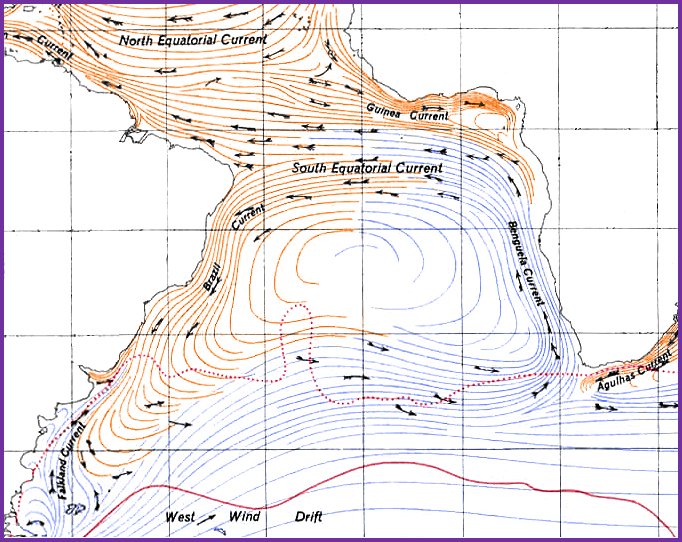
In the Age of Discovery, Portuguese Sailors—known for skill and courage in ocean navigation —often sailed the long and arduous ocean journey around the continent of Africa to Asia. During such voyages, they had to fight against two mighty ocean currents: the icy Benguela current that flowed northward along the coast of Africa while they were trying to sail south; then, after they rounded the Cape of Good Hope, they sailed north while fighting the warm and southward-flowing Agulhas Current. If the journey was successful, they reached Asia and accessed the famed Indian Spice Routes. Such accomplishments helped the Portuguese form their empire, which at various times included parts of Africa, the Middle East, India, South America, and South Asia.

...

The namesake of the Benguela Current (as it is now known) is a city in present-day Angola.  The area surrounding Benguela, due to its location near the coast and a well-traversed deep bay, has been a center of commercial trade since ancient times.  While there is no written record of the history of the area before the arrival of the Portuguese in 1546, it is believed that the area was formerly known as ombaka, which means, literally, “commercial (or ‘market’) port.” When the Portuguese colonized the area, a town was founded and named São Felipe de Benguela (Saint Philip of Benguela) after King Philip II of Spain and Portugal.

So back to ocean current: the icy Benguela Current flows from the Southern Ocean near Antarctica and moves north along the west coast of Africa. It reaches as far north as Angola (close to the city of Benguela, in case you missed that point) before it turns west and heads to South America. The Benguela Current is part of a large circulating ocean current known as the South Atlantic Ocean gyre. The western edge of the gyre is known as the Brazil Current; the Brazil current flows southward down the coast of Brazil, then turns east and flows across the ocean until it reaches Antarctica. From Cape Point in South Africa (at about 33°), the cold portion of the current known as the Benguela current flows northward along the west coast of Africa to the area around Angola/Benguela (about 16°S).

...

            Cape Agulhas…pick your ocean!

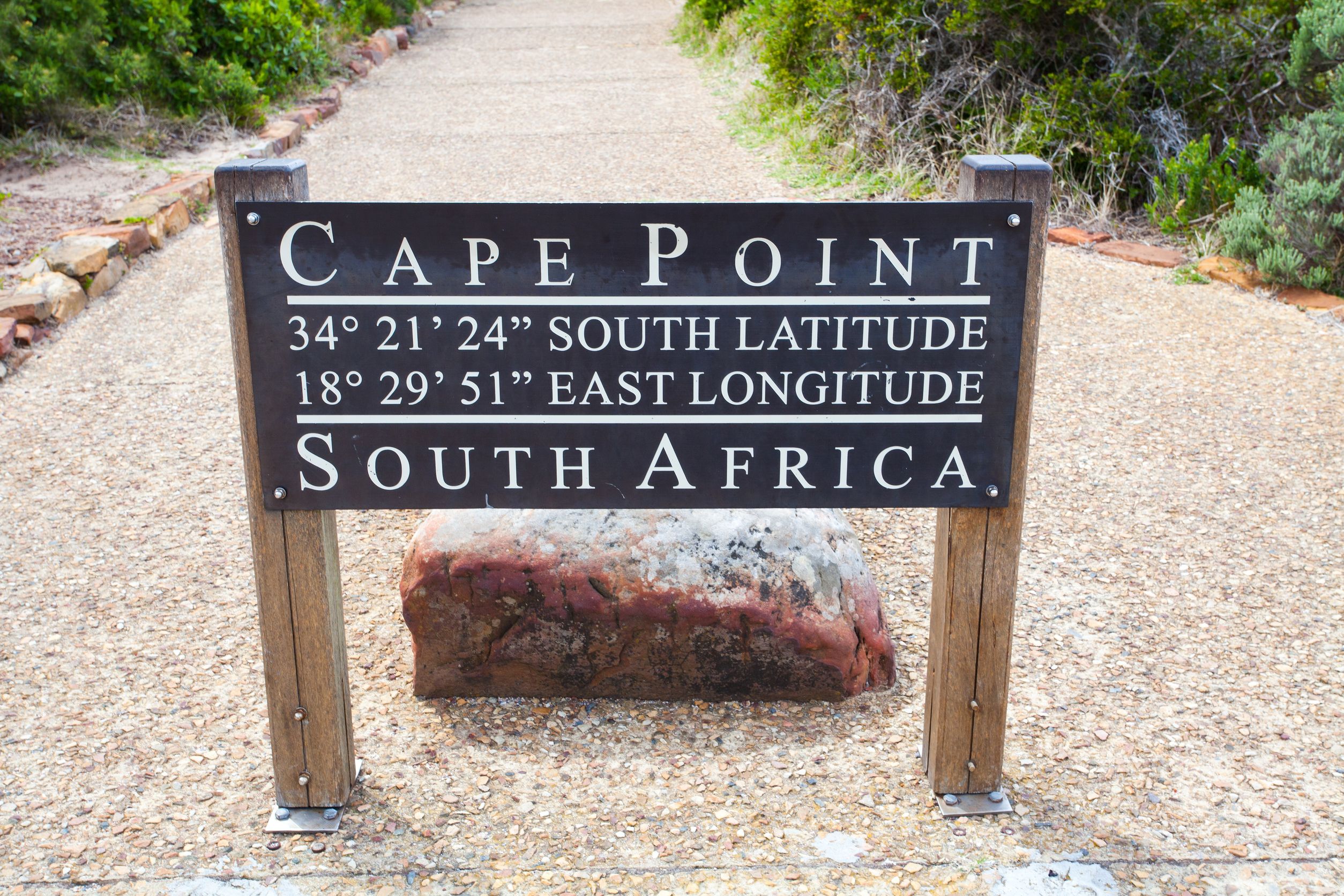
Near Cape Point, where a portion of the cold Benguela Current of the Atlantic meets the warm south- and west-flowing Agulhas Current of the Southern Pacific Ocean, the waters become wild and turbulent. It’s a common practice while on vacation in Cape Town to journey down to Cape Point, take a short hike, get your picture taken by the sign, and stare out to sea at the “place where two oceans meet.” (Hey, I did it.) However, the truth is that the ocean currents actually intermingle for hundreds of miles in either direction—both east and west of Cape Point—and that the “point where two oceans meet” is likely to be anywhere between Cape Point and about 100 miles west at Cape Agulhas (which is actually the southernmost point on the African continent and worth a visit as well).

From the department of I thought this was a wine blog:  Good point. All I can say is that my curiosity concerning Benguela Current peaked while studying the wines of South Africa. The winelands of South Africa’s Western Cape are cooled by the moist fog and gentle breezes generated by the Benguela Current, which also generates the not-so-gentle south-easterly wind known as the “Cape Doctor.”

...

Super-sharp students of wine might also have perked up with the mention of Cape Point, which is the former name of the Cape Peninsula wine district; and Cape Agulhas, a wine district located in the Cape South Coast. Cape Peninsula is a small area located on a narrow, rugged area just south of Cape Town and east of Constantia (both wine regions are easily accessed via taxi or tour bus from Cape Town). Cape Peninsula produces snappy, cool-climate white wines and is particularly adept at Sauvignon Blanc. The terroir of Cape Agulhas, about 100 miles down the coast, is also markedly maritime—distinctly cool and breezy—and known for a crisp, snappy style of Sauvignon Blanc, apricot-and-lemon laced Semillon, and a unique cool-climate style of Shiraz.

References:

The Bubbly Professor is “Miss Jane” Nickles of Austin, Texas… missjane@prodigy.net


Roll on, Columbia, Roll on!

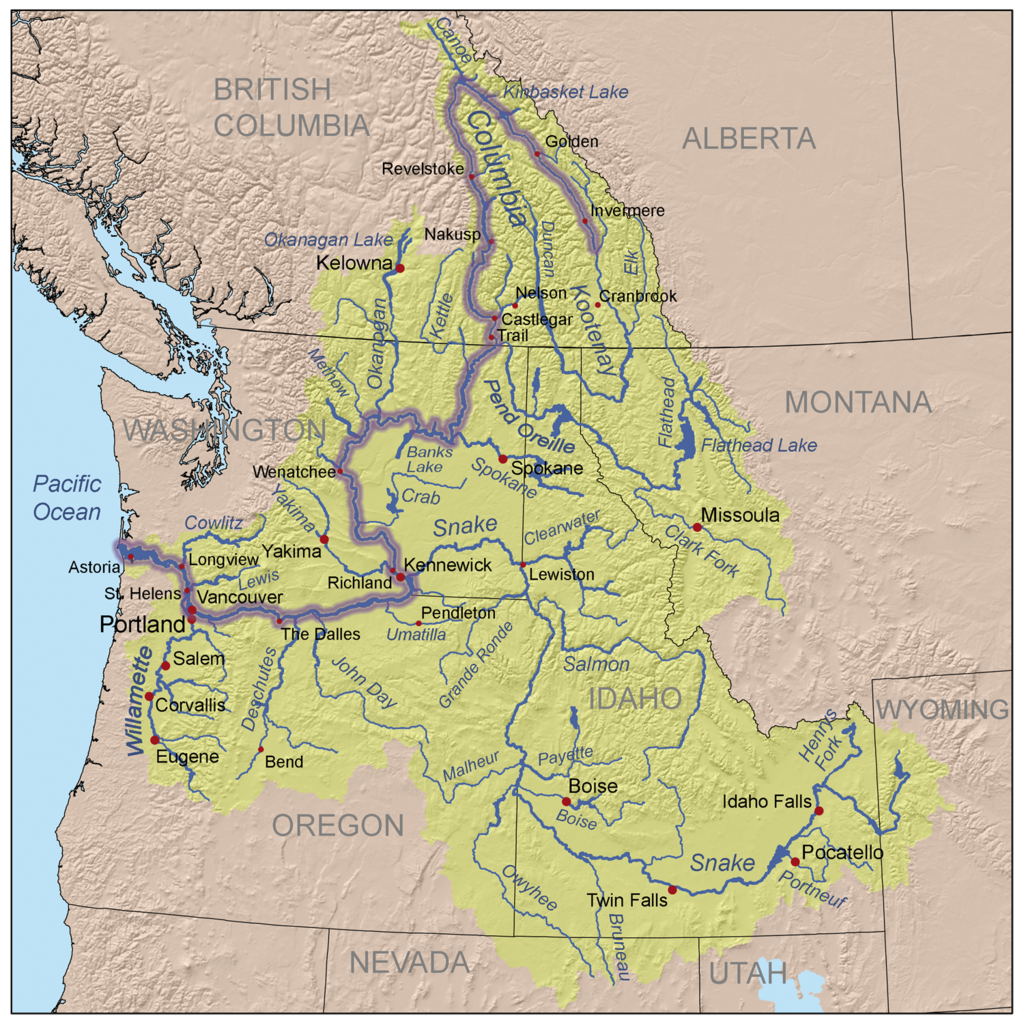
Map of the Columbia River watershed, with the Columbia River Highlighted. Map via the USGS, modified by Kmusser, via Wikimedia Commons

Map of the Columbia River watershed, with the Columbia River Highlighted. Map via the USGS, modified by Kmusser, via Wikimedia Commons

The Columbia River is well-known to wine lovers as the namesake of The Columbia Valley AVA. The Columbia Valley AVA is the largest AVA in Washington State, and a portion of the AVA dips down across the Oregon border as well. Another namesake, the Columbia  Gorge AVA – a tiny AVA located just to the east of Mount Hood – is also shared by the two neighboring states.

But the Columbia River extends well above and beyond its namesake wine regions, and is a treasure trove of interesting stories for geography geeks and travel buffs as well as the legions of wine lovers already familiar with the name.

The Columbia River flows for over 1,243 miles, beginning in the Rocky Mountains of British Columbia in Canada. From there it flows northwest through a glacial valley between the Canadian Rockies and the Columbia Mountains to a town named Canoe; here the Columbia takes a sharp turn to the south around the northern edge of the Selkirk Mountains and begins its 200-mile trek into eastern Washington State.

Once in Washington, the Columbia River flows south/southwest for about 100 miles to the town of Deer Meadows.  Just after the point of confluence with the Spokane River, the Columbia River takes a sharp turn to the west and forms a huge “C” formation covering much of interior Washington State. This section of the river, known as the “Big Bend” was formed during the Missoula floods. Before the floods, the river took a much straighter path towards the southwest.

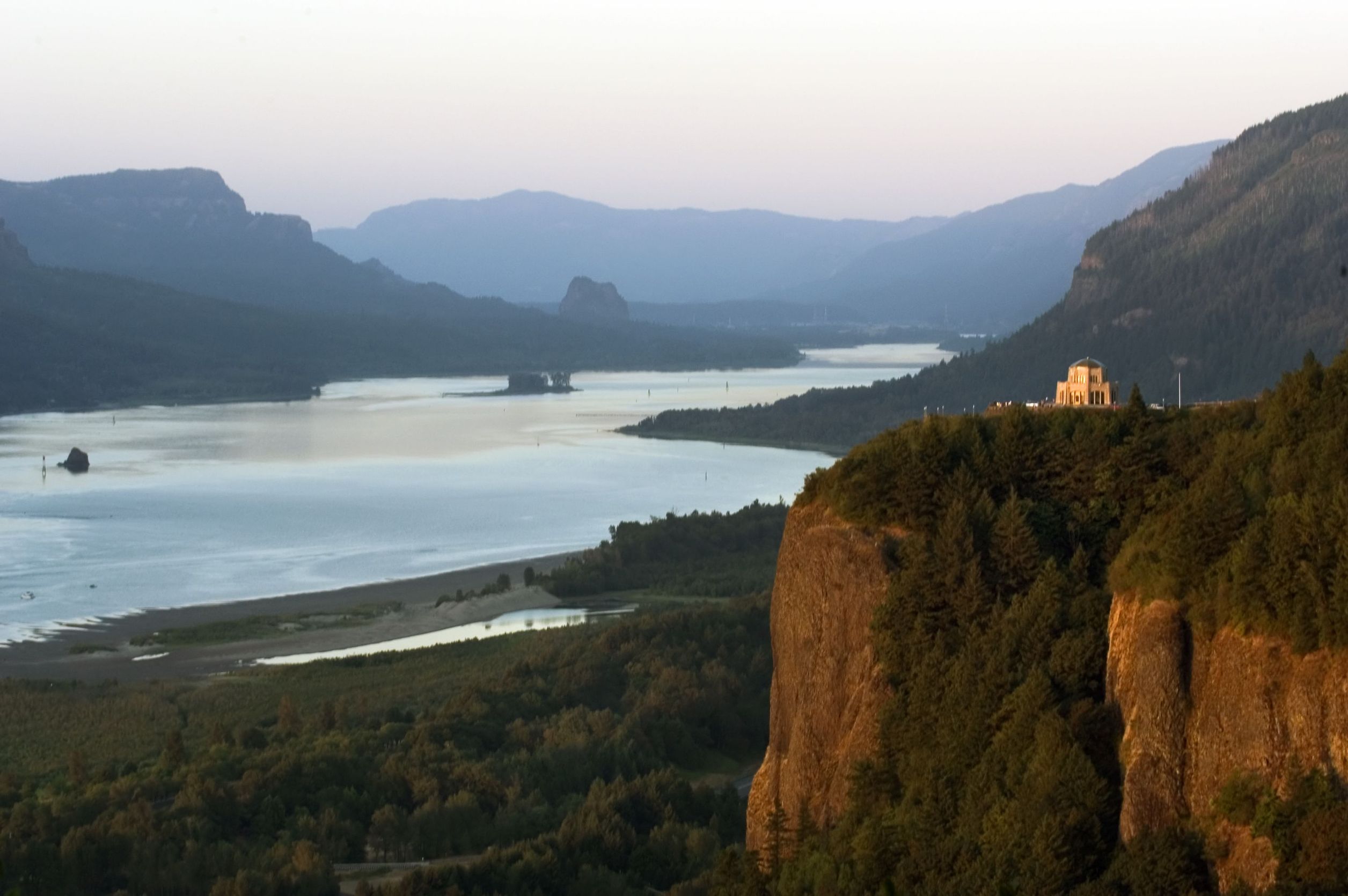
Crown Point, Columbia Gorge

Crown Point, Columbia Gorge

To the south of the “Big Bend,” in the wine country of eastern Washington State, the Columbia is joined by the Yakima River as the Yakima flows eastward down from the Cascades. The Yakima River catches the Columbia just after it rounds a small bend hugging the Horse Heaven Hills AVA. From here, the Columbia continues its trek to the Pacific Ocean, forming over 300 miles of the border between the states of Washington and Oregon from the Yakima Delta to the sea.

Near Washington’s Tri-Cities area, the Columbia River is joined by the Walla Walla River. Walla Walla is another name familiar to wine lovers, being the namesake of the Walla Walla River Valley AVA, a sub-region of the Columbia Valley AVA and one of the three AVAs shared between Washington State and Oregon.

The Walla Walla River is short in length – just 61 miles long – but of great importance to the wines of the area. The Walla Walla River begins in as two separate forks in the Blue Mountain range of northeastern Oregon. From there, the two forks run westward to Milton-Freewater, which was built along its banks. The Walla Walla River runs northwest and eventually meets the Columbia River for the journey westward towards the sea, but along the way it deposits the famous basalt stones – the rocks – which gave the newly-anointed “Rocks District of Milton-Freewater AVA” both its name and its famous terroir.

Shoshone Falls

Shoshone Falls

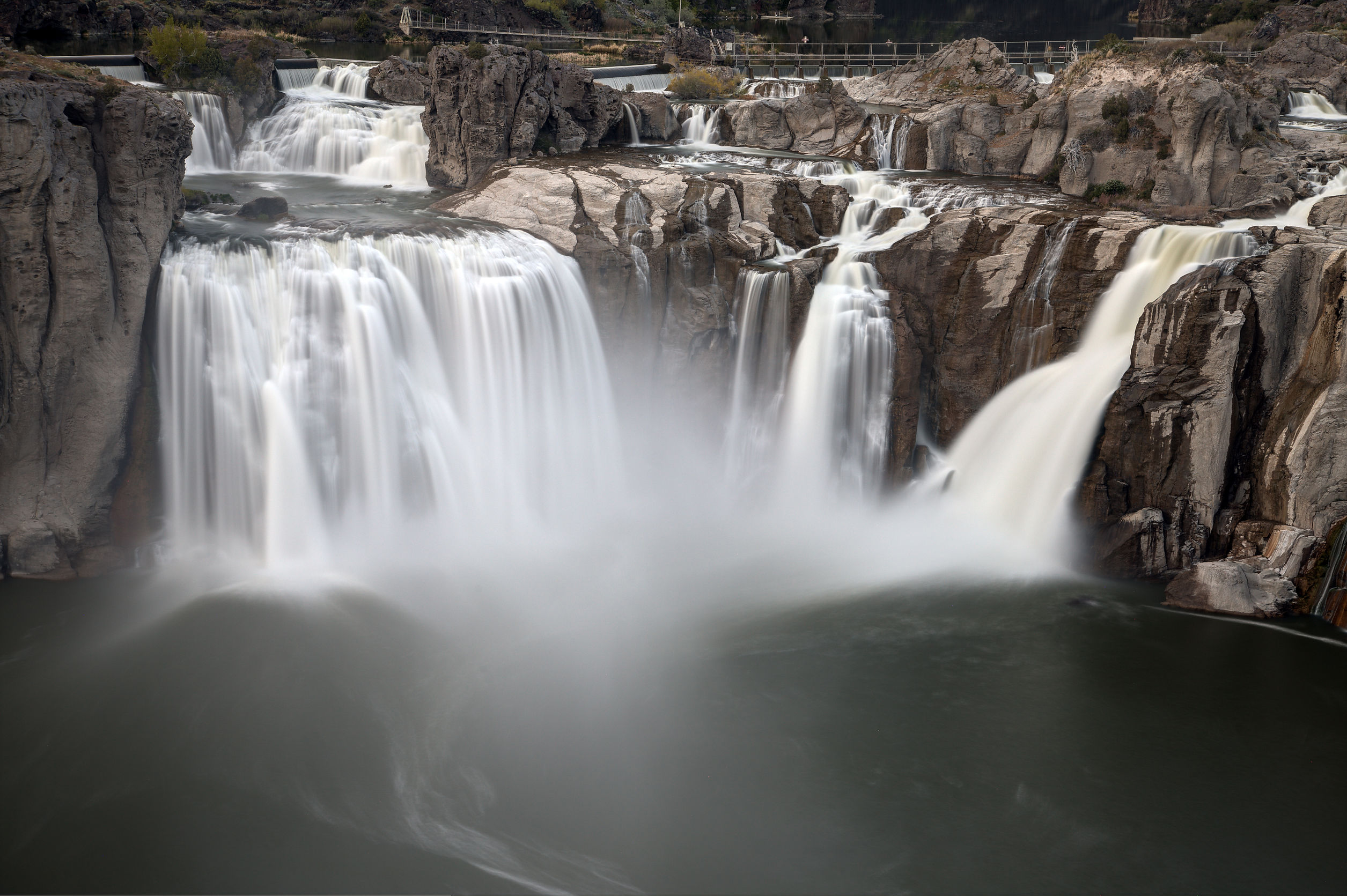
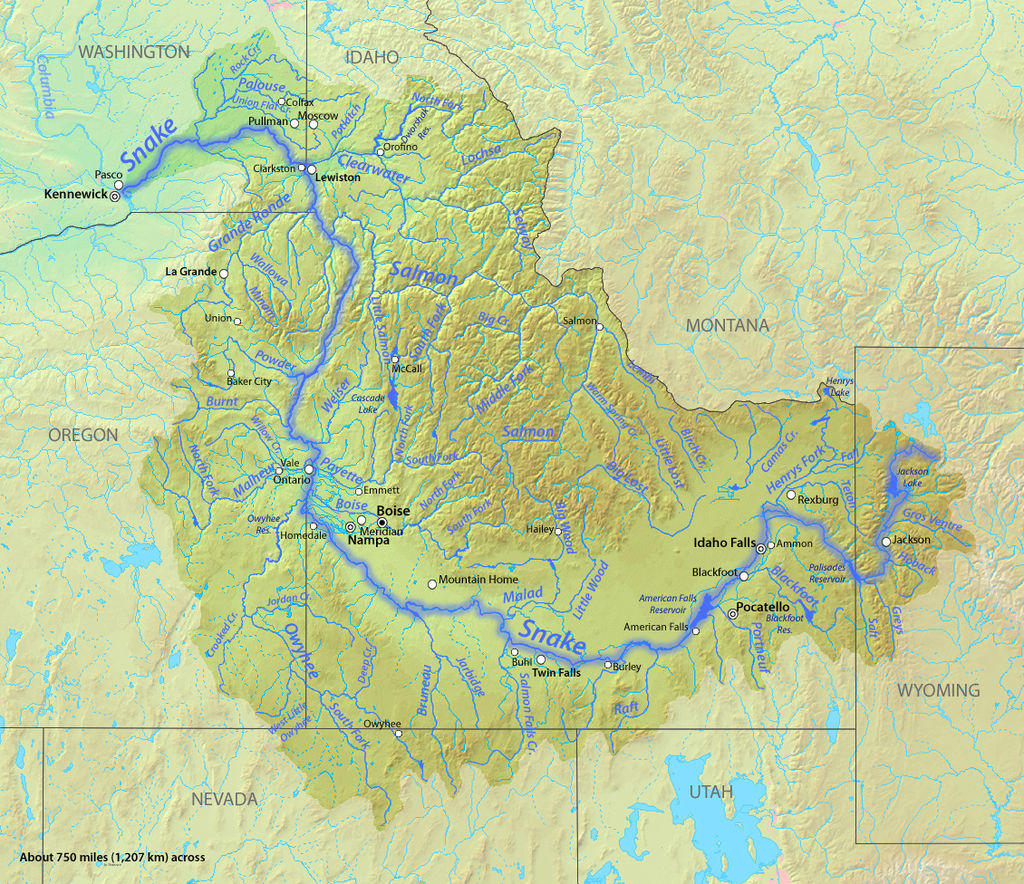
Another river familiar to wine lovers, the Snake River, joins the Columbia River near Washington State’s Tri-Cities area. The Snake River, at 1,078 miles long, is the Columbia River’s longest tributary. The Snake River actually begins several states over, in Wyoming’s Yellowstone Park. From Wyoming, the Snake flows across the width of Idaho. About mid-way through its trek across Idaho, the Snake River flows over Shoshone Falls – a waterfall that, at 212 feet high, is actually 45 feet higher than Niagara Falls. Shoshone Falls is often called “the Niagara Falls of the west” – although I am sure many citizens of Idaho wonder why Niagara Falls is not known as “The Shoshone Falls of the east.”

About 120 miles west of Shoshone Falls, the Snake River flows past Boise, and not too far after that,  takes a sharp turn north and forms the border between Idaho and Oregon. The Snake River Valley AVA is located along this border. The Snake River Valley is currently Idaho’s only AVA, although a second – Lewis-Clark Valley – has been proposed for northern Idaho/eastern Washington State. After leaving Oregon and forming a small portion of the Idaho/Washington State border, the Snake River turns west and joins the Columbia River.

Map of the Snake River watershed with the Snake River Highlighted. Map via the USGS, modified by Shannon1 via Wikimedia Commons.

Map of the Snake River watershed with the Snake River Highlighted. Map via the USGS, modified by Shannon1 via Wikimedia Commons.

The Columbia River, along with its tributaries the Walla Walla River, the Snake River, and the Yakima River (as well as many others not mentioned here) plays a huge roll in Pacific Northwest viticulture. Through their waters, they provide for the irrigation that makes viticulture even a possibility in much of the region. Over the centuries they have deposited alluvial soils, formed breathtaking waterfalls, sliced gorges through mountains and even delivered the namesake “rocks” to one of the area’s newest AVAs. Roll on, Columbia, Roll on.*

*Roll On, Columbia, Roll On is an American folk song written by Woody Guthrie in 1941. The popular song glamorized the building of a series of dams and the harnessing of hydroelectric power from the Columbia River under the American Public Works program of the New Deal.

The Bubbly Professor is “Miss Jane” Nickles of Austin, Texas… missjane@prodigy.net

The Land of the Landes

Maritime Pines in the Landes Forest

Maritime Pines in the Landes Forest

All good wine students know about the Landes Forest—that region of tall pines bordering the Bay of Biscay to the south and west of the Bordeaux wine region. The Landes—now the most extensive forest in France at 5,400 square miles (14,000 square km)—helps to somewhat moderate the Atlantic Ocean’s cold, maritime influence on the vineyards of Bordeaux.

However, even the sharpest wine student might not know the history of the region, including how local sheep-herders used to wear stilts to navigate the land, and the fact that the forest is largely man-made.

The area we now know as the Landes forest was once covered by moors and marshlands.  The area, basically a swamp surrounded by shifting sand dunes, was sometimes known as the “Moor of Bordeaux.” Not surprisingly, the area was sparsely populated. Another nickname given to the region was “the Sahara of France” due to the fact that it was notoriously difficult to travel across—as many pilgrims making their way from the north down to the Camino of Saint James needed to do.

Beginning in 1801, the marshes were drained via a vast system of canals, the land was cleared, and pine tree plantations were established. This stabilized the sand dunes and created arable land suitable for farming. The local economy benefited through farming (mainly corn) as well as new opportunities in the timber, pine resin, and paper industries.

Jean Louis Gintrac - Inhabitants of the Landes (circa 1808)

Jean Louis Gintrac –
Inhabitants of the Landes (circa 1808)

The benefits of the man-made Landes Forest went beyond the area’s new industrial prowess, as it was soon discovered that the near-by wine region of Bordeaux also benefited. This is due to the area of the Landes forest closest to the Médoc that shelters the vineyard regions from the bracing cold and howling breezes that blow in from the Atlantic. Thus, the vineyards of the Médoc are now able to fully ripen the Cabernet Sauvignon and Merlot that form the basis of the region’s red wines.

The Landes forest is one of the largest man-made forests in all of Europe, as well as a unique example of a man-made landscape that continues to benefit its region and the surrounding areas. The timber, pine resin, and other related industries are still active in the area, although a good portion of the region is now given over to tourism.

The area is also home to a large protected area of forests and coastlines that includes the Landes de Gascogne Regional Natural Park (Parc Naturel Régional des Landes de Gascogne). The park provides ample opportunities for hiking, cycling, and picnicking, and contains a bird sanctuary and a museum. The museum, L’Écomusée de la Grande Lande, focuses on the history as well as the architectural and cultural heritage of the region including, of course, the vineyards and wines of Bordeaux.

The Bubbly Professor is “Miss Jane” Nickles of Austin, Texas… missjane@prodigy.net

References:

Map of the Landes de Gascogne by Cabaussel, via Wikimedia Commons

Map of the Landes de Gascogne by Cabaussel, via Wikimedia Commons

White–ish: Albariza Soil

....

….

Albariza, the word: According to Miriam-Webster.com, the word “albariza” is “borrowed from Spanish, a noun derivative from the feminine form of albarizo meaning “white-ish, or off-white.” Derived from the word albar (“white”) plus the attenuating (limiting) suffix –izo.

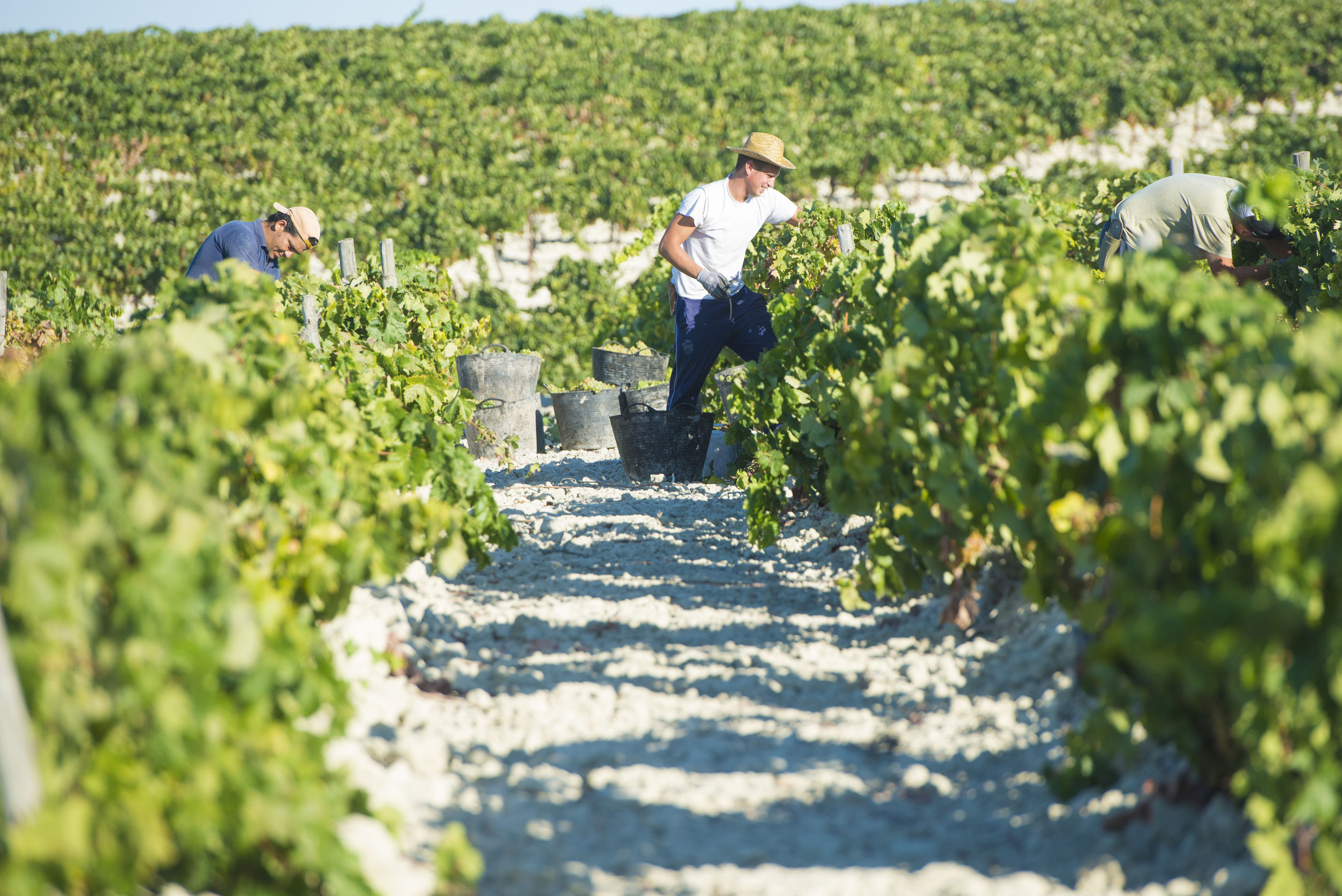
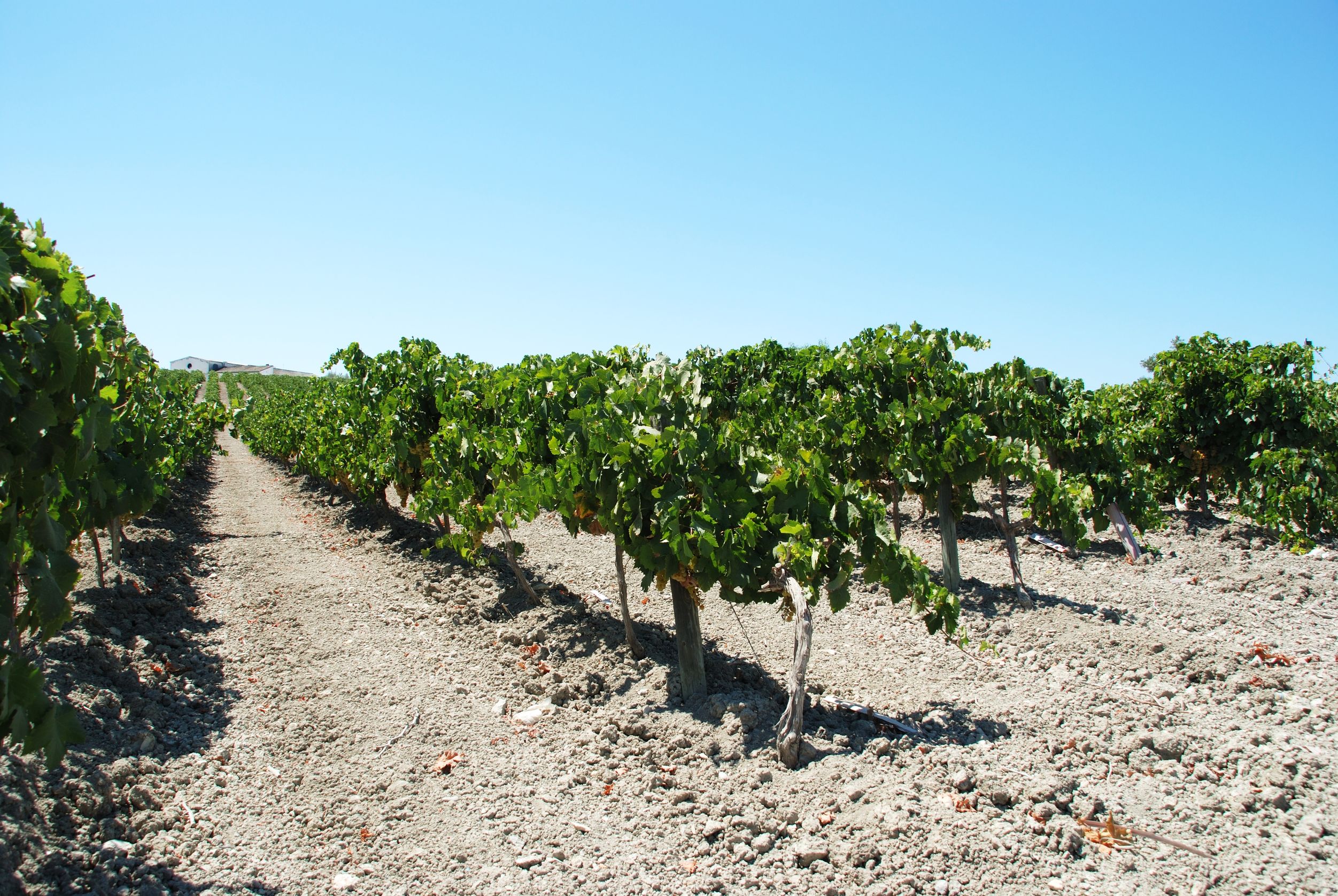
Albariza, the soil: According the Oxford Companion to Wine, albariza is “A local, Andalusian term for the white, chalky-looking soil typical of parts of the Jerez region of southern Spain. It appears dazzling white in summer, and has the characteristic of drying without caking, slowly releasing moisture to the vines during the growing season.”

Albariza, for wine lovers: If you are a wine lover, you probably already know a few things about albariza soil. Such as, it is a particularly fine conduit for the Palomino grape, and grows the grapes that will become some of the finest examples of Fino Sherry—and other types of Sherry as well.   It is the main soil type found in the Jerez-Xérès-Sherry DO, found in over 90% of the vineyards of the region.  This figure used to be much lower, but over the years inferior vineyards were replaced—either by other crops such as sunflowers or alternative uses such as the harvesting of solar energy—leaving behind the high quality, albariza-rich vineyards to rule the area.

.....

…..

Albariza is a unique soil, made up primarily of limestone rich in calcium carbonate that, according to geologists, is “almost chalk,” but it is still too young to be true chalk. Yet, to us mere mortals, calling it “chalk” is “close enough,” and you’ll find most people—even viticulturists—referring to albariza as a “chalky” soil. Clay and sand (silica) are found in smaller amounts; these components give its somewhat mottled “white-ish” appearance as opposed to pure, bright white.

The unique properties of the soil allow it to soak up rainfall—which typically occurs in Jerez in the winter—and absorb it like a sponge. Later, the upper levels of the soil “bake” into something of a hard crust or cap, trapping the water below. Over the long, hot, and dry Jerez summer, the trapped water is slowly released, nourishing the vines and making irrigation unnecessary.  The unique white-ish color of the soil also benefits the vines by reflecting sunlight back up to the vines, increasing the rate of photosynthesis.

All of the above might not be new information if you are already a wine enthusiast or dedicated student of wine—which is just fine because there is so much more to know about albariza. Read on for a few more fascinating facts about albariza:

  • The finished product...

    The finished product…

    Albariza soils are categorized according to the percentage of calcium carbonate-rich limestone/chalk in the soil. Alabarizone soil is mostly clay but contains about 10% limestone. Tosca soils have about 40% limestone/chalk, while lantejuela contains about 50%. Tajón has the most – up to 80% limestone/chalk, giving it the brightest white appearance. However, tajón soils are not ideal for vineyards, as the soil can become very hard, which can lead to chlorosis (a condition where leaves produce insufficient chlorophyll).

  • The ideal version of the soil for vineyards contains about 25% limestone/chalk at the surface, and 40-60% starting a few feet below the surface. Geologists, of course, have many more subsets and ways of looking at albariza, including the composition of the remainder of the soil components as well as specific minerals and nutrients.
  • The finest albariza soils are characteristically loose and easy to work; in geology speak this is described as being “friable.” This friability allows a vine’s root system to spread far and deep into the ground. Roots as long as 38 feet (12 meters) have been reported in layers of albariza soil which themselves reach a depth of 20 feet (6 meters).
  • To maximize the amount of rain water “captured” in the soil, the soil in albariza soils are often “banked up” to create reservoirs to capture rain. In spring, the soils are leveled out again.
  • Albariza soil can hold up to 34% of its weight in water.
  • Albariza is also found in parts of Penedès, where it produces grapes for exceptional Cava; and in Montilla-Moriles, where the vineyards are mostly planted to the Pedro Ximénez variety.

 References:

The Bubbly Professor is “Miss Jane” Nickles of Austin, Texas… missjane@prodigy.net
It’s Nice to be Needled

.....

…..

It’s nice to be needled….as long as the “needles” are found in wine – and not, perhaps, in the hands of a phlebotomist, or an errant sewing needle finding its way into your thumb.

“Vino de aguja” is a good way to be needled. This Spanish term for a slightly sparkling wine can be translated as “needle wine.” It’s a pretty obscure term – you won’t find it in the Oxford Companion or The Wine Lover’s Companion; even a Google search will only yield a few hits.  However, keep digging and you’ll be able to figure out that aguja means “needle” in Spanish, and in the case of vino de aguja, refers to the prickly effect of the tiny bubbles.

The best information I could gather came from the websites of the wines that self-identified as vinos de aguja. One producer, Bodegas Pinord, located in Penedès, makes a range of wines, including some still wines, some sparklers (Cavas), and even some organic wines. Interestingly enough, the Spanish language version of their website refers to their “La Nansa” and “Reynal” product lines – which includes La Nansa Rosado, La Nansa Blanco, and a red, rosé, and soft white version of Reynal – as “Vinos de Aguja,” yet the English language version refers to them as “pearl wines” – which might partially explain the challenge in finding reliable information on this style of wine.

Photo via http://www.pinord.com/

Photo via pinord.com

In 1942, Bodegas Pinord was the first winery in Spain to make wines in the style of vino de aguja. The production method, which results in a semi-sparkling wine with a maximum of 2.5 bars of atmospheric pressure, is somewhat of a two-step single fermentation.  The grapes are pressed and fermentation is allowed to begin. When there is just enough sugar left in the must to create the desired style (in terms of sweetness) of wine and 2.5 atm  of bubbles, the wine is transferred to a closed tank, where it continues fermentation in a temperature-controlled and pressurized environment. The wine is then bulk clarified and bottled under pressure.

Their Reynal red and rosé are both produced from Tempranillo, while their Reynal soft white is a blend of Macabeo, Parellada, Xarel-lo. All of the Reynal wines have just under 2% residual sugar. The La Nansa wines have 0.8% residual sugar and are, thus, technically dry. The La Nansa blanco is made from Macabeo and Chardonnay, while the La Nansa rosé is a blend of Garnacha and Merlot.

Blanc Pescador, one of Spain’s top selling white wines is also a vino de aguja. Blanc Pescador is also produced in the two-step single fermentation method, and is made in the Empordà region of northeast Catalonia. This is the type of wine that you’ll likely be served –by the tumbler – in a restaurant or bar along Spain’s Mediterranean Coast.

Blanc Pescador is a dry wine made from a blend of Macabeo, Parellada, Xarel-lo. The winery also produces a “Blanc Premium” from Macabeo, Chardonnay, Garnacha Blanca and/or Sauvignon Blanc; and a Pescador Rosé using Trepat, Garnacha, and Merlot. These wines are produced by the large Grupo Perelada that produces a wide range of Spanish wines – including some serious Cavas, red wines of Empordà, and even a Marc de Cava (pomace brandy).

The following DOs are authorized to produce vino de aguja in Spain. The DOs define vine do aguja as “semi-sparkling” or as having 1-2.5 atms of pressure, and some use the term “Vi d’agulla.” I make no claims that this is a complete list; however, these are the regions that I was able to confirm:

  • In Catalonia: Catalonia DO, Terra Alta DO, Tarragona DO, Penedès DO, Plá de Bagés DO, Alella DO, Conca de Barberá DO, Empordà DO, Costers del Segre DO
  • In the Canary Islands: La Palma DO, Valle de Güímar DO, Abona DO
  • In Castilla y León: VCIG Valles de Benavente
  • In Aragón: Cariñena DO, Calatayud DO
  • In Valencia: Utiel-Requena DO
  • In the Balearic Islands: Plà i Llevant DO
  • In Castilla-La Mancha: La Mancha DO

The Bubbly Professor is “Miss Jane” Nickles of Austin, Texas… missjane@prodigy.net

The Diurnal Difference

diurnal 3Simply put, an area’s diurnal temperature variation is the difference between the high temperature and the low temperature of a single day.  That’s easy enough to understand…but as a perpetual wine student, I hear (and use) this term all the time – and wanted to know a bit more about this “diurnal swing” and the factors behind it. Thus began another wild internet search for information!

Here are some of the more interesting things I discovered:

1: Diurnal temperature variation throughout the world varies from a low of approximately 7°F/4°C (experienced in Hong Kong in July) to 100°F/56 °C (the Guinness World Record, set in Browning, Montana in January of 1916). On average, most locations experience a diurnal temperature swing of 20-30°F/12-17°C.

2: To understand the diurnal temperature variation, we need to understand how the portion of the earth that we inhabit warms up and cools down. Basically, there are two sources of heat: the sun (solar radiation) and the ground, which slowly absorbs the sun’s heat over the course of the day. After the sun sets, the ground begins to radiate its stored heat back out, heating the air until it is depleted, which on a hot, humid day usually occurs right around dawn.

3: Diurnal swing generally decreases with proximity to the sea and other large bodies of water, and increases with the impact and amount of solar radiation. Other factors include elevation, humidity, day length, and clouds; as described below.

  • diurnal 4Elevation: High-elevation vineyard regions brag about their large diurnal swings for good reason: as mountain areas are located further from the large expanse of sun-heated ground surface, they receive less heat-radiation energy as the ground cools at night – meaning they cool off faster than do the surrounding valleys.
  • Humidity: Water vapor in the air very efficiently absorbs radiation – both solar radiation and radiation that is released from the ground.  This reduces the amount of heat reaching the ground, keeping daytime temperatures low (although we humans may not always appreciate this), and also reduces the amount of heat released from the ground – keeping the ground warm and nighttime temperatures high. The lack of humidity is one of the main factors that desert areas are known for large diurnal temperature swings.
  • Day length: Longer days understandably make for more heating, which can equate to larger diurnal variations. Day length in terms of daylight hours is determined by season as well as geographic location – high-latitude areas closest to the poles have longer days in summer, and shorter days in winter than those closest to the equator. In locations close to – or on – the equator, day length may vary by a mere 7 minutes over the course of a year!
  • Clouds: The presence of clouds decreases the diurnal swing. During the day, clouds absorb and release sunlight, reflecting heat radiation back out into space – making for less heat overall. On cloudy nights, heat is trapped near the ground, making for warmer nights – and less day-to-night variation.
  • Wind: Winds can cause the warm air radiating off the ground to mix with the cooler air a few feet above; thus mixing the warmer and cooler air and resulting in a decrease in diurnal swing.

We all know that diurnal temperature swings can be conducive to viticulture, by allowing the grapes to develop their sugary ripeness during the warm days, while still allowing the grapes to hold onto high levels of acidity when photosynthesis shuts down at night. Hopefully now – we also know why and how these fluctuations can occur!

References:

Five Fascinating Facets of Flor

Bodegas Hidalgo La Gitana (producers of La Gitana Manzanilla) in Sanlúcar de Barrameda – photo by Caleteron via Wikimedia Commons

Bodegas Hidalgo La Gitana (producers of La Gitana Manzanilla) in Sanlúcar de Barrameda – photo by Caleteron via Wikimedia Commons

Ok, I apologize for the gratuitous alliteration, but you have to admit…flor – the indigenous yeast cells that form a “veil” on the surface of certain types of Sherry as it ages – is fascinating. Flor (meaning “flower” in Spanish) is a subject that just seems to get more interesting the closer you look. As a matter of fact, I had a hard time limiting the information I found to just five facets!

#1: Flor is what separates the Finos from the Olorosos. Flor is a film-forming yeast (actually, several related strains of yeast) that is indigenous to the region around the Jerez-Xérès-Sherry DO. Flor is the main factor that causes the myriad types and styles of Sherry to divide roughly into three camps – Fino, Hybrid, and Oloroso – based on the extent of flor influence. Fino Sherries (such as those labeled as Fino or Manzanilla) are aged under the somewhat constant influence of flor. Oloroso Sherries (labeled as Oloroso or sometimes as Cream Sherry) are aged entirely without flor; while hybrids (such as Amontillado and Palo Cortado) are aged partially with flor and partially without.

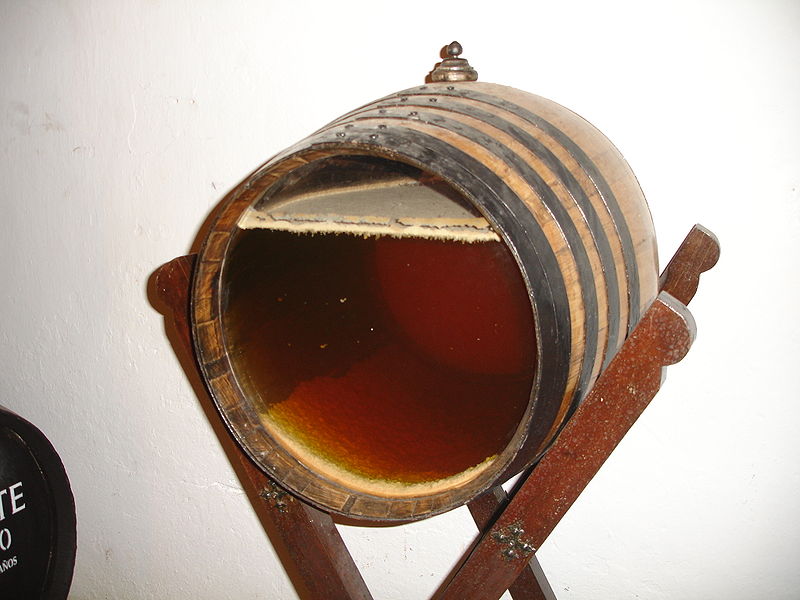
#2: Flor is that “something in the air” in Jerez. Flor imparts its magic by finding its way from the air to the young base wines being prepared each year. The flor starts to develop in the base wines, and, after the wine is fortified – as long as the maximum level of alcohol remains around 15% by volume or less – and placed in a barrel, the yeast will reproduce and start to form a veil (velo in Spanish) that covers the surface of the wine in the barrel like a blanket.  The veil has been described as a waxy foam, about two centimeters thick; or as a light “cottony” film. The “blanket” formed by flor is sturdiest and palest in spring and autumn and turns rather thin and grey in summer and winter. Talia Baiocchi, in her new book “Sherry: The Wine Industry’s Best-Kept Secret” describes a thick film of flor as resembling a “1970s popcorn ceiling.”

Sherry barrel with transparent front to demonstrate the natural development of flor - Photo by El Pantera via Wikimedia Commons

Sherry barrel with transparent front to demonstrate the natural development of flor – Photo by El Pantera via Wikimedia Commons

#3: Flor protects the wine from oxidation in a variety of ways. The veil that is created via the action of flor protects the wine resting beneath it in a myriad of ways. For one, it simply forms a protective barrier between the wine in the barrel and the oxygen above it. In addition, the flor actually consumes some of the oxygen around it, as well as some of the alcohol, glycerol, and (if present) sugar. Thus, Fino Sherries tend to be pale in color, light in body, and bone-dry.

#4 – The collective effects of flor – referred to as “biological aging” – are amazing. The main benchmark for biological aging is considered to be the wine’s aroma. Simply put, contact with flor (both while it is alive, and after it expires and sinks to the bottom of the barrel as lees) may create up to 1,000 milligrams per liter of acetaldehyde in the wine. That is, according to Ruben Luyten of the blog Sherry Notes, more than twenty times the amount of acetaldehyde found in most table wines.  Acetaldehyde’s aromas have been described, variously, as rancid apple, apple cider, almond, hazelnut, and even straw or hay. The presence of flor will also lead to an increase of in other highly aromatic compounds, such as lactones and terpenes, which may add an array of aromas – from dried herbs to green walnuts, mushrooms, and baking spices – to the wine.

#5: Flor has some definitive preferences as to climate and conditions.  Flor can only survive in wine that has an alcohol level of somewhere below 15% abv – but that’s just the beginning of its ways. Flor also needs a good deal of humidity in the air, which explains why Fino Sherries thrive in certain areas, such as the cooler, coastal areas around Sanlúcar de Barrameda and El Puerto de Santa María, while Oloroso Sherries (which are aged without flor) thrive in the hotter, drier, more inland areas around Jerez. It is well-known that solera systems (and the buildings that surround them) are often at ground level (as opposed to an underground cellar) and built with high ceilings or even left partially open to the elements, so as to encourage air flow. It’s also rumored that bungs are left gently in place in Fino Soleras to encourage the movement of the humid air inside the barrels.

Flight of Fino Sherries at London’s Bar Pepito – Photo by Ewan Munro via Wikimedia Commons

Flight of Fino Sherries at London’s Bar Pepito – Photo by Ewan Munro via Wikimedia Commons

While wines produced “under a veil” are somewhat uncommon around the world, there are a few shining examples besides Fino Sherries. These include the Vin Jaune of France’s Côtes du Jura AOC, certain types of Tokaji, a “Vin de Voile” produced by Domaine Plageoles in France’s Gaillac region, and the “Condado Pálido” produced in Spain’s Condado de Huelva DO, among others.  While these wines undergo a similar style of biological aging, it is not certain that they use the same strain(s) of yeast as are found in Jerez-Xérès-Sherry, and, of course, each of these wines is made in its own conditions of climate-atmosphere-terroir. Thus, we can safely say that there’s nothing in the world quite like the flor of Jerez, the protective foam-blanket it creates, and the resulting Fino Sherry.

References: