Five Fast Facts about Brouilly

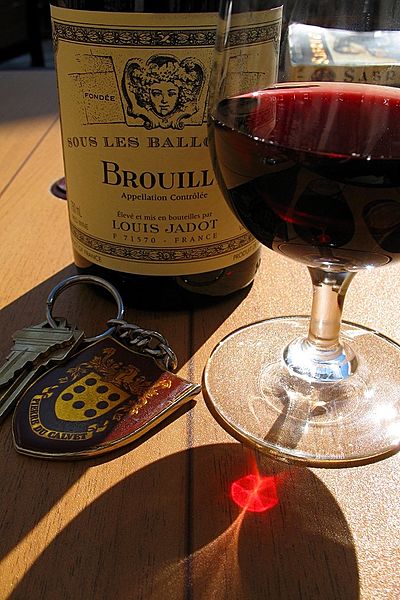
Photo of Louis Jadot Brouilly by Rob Ireton, via Wikimedia Commons

Photo of Louis Jadot Brouilly by Rob Ireton, via Wikimedia Commons

Five Fast Facts about Brouilly

#1 – Brouilly is one of the ten Crus of Beaujolais. It is the largest and most southerly of the ten Beaujolais Crus,  Although this large area contains a wide range of microclimates and soil types, most of the vineyards face roughly east and capture the bright morning sunshine as it rises over the Saone River Valley. The hills to the west shelter the region from some of the colder influences coming in from western France, while warm sunshine throughout the growing season means that the vines of Brouilly are among the first to be harvest in Beaujolais every year.

#2 – Brouilly is one of the few AOCs of Beaujolais not to be named after a local village; instead, it is named for Mount Brouilly. The vineyard area of Brouilly surrounds the mountain, and covers land in the following six communes: Cercié, Charentay, Odenas, Quincié-en-Beaujolais, Saint-Etienne-la-Varenne, and Saint-Lager.

#3 – The mountain itself, set somewhat apart from the hills to the west of Beaujolais, was named after a Roman soldier named Brulius, who is credited with planting the first vines here over 2,000 years ago. There is a small chapel at the top of the hill, built in 1857 in order to place the vineyards under the protection of the Virgin Mary.  A smaller, separate AOC, Côte de Brouilly, covers vineyards on the higher slopes of the mountain, and is completely surrounded by the larger Brouilly AOC.

#4 – The Brouilly AOC is approved only for dry, red  wines based on the Gamay grape variety. Interestingly enough, the décret for the appellation also allows for white grapes to be grown in the region, and up to 15% of the wine may be based on Chardonnay, Aligoté, or Melon de Bourgogne.

Mount Brouilly

Mount Brouilly

#5 – There’s a legend for that: Brouilly is home to a Lieu-dit (small vineyard area bearing a traditional name) named Pisse-Vielle. Pisse-Vielle which pretty much sounds like what it means, which is for lack of a better way of saying it, “Piss, old woman.’

The  legend behind the name goes like this: A pious old woman, who regularly goes to confession, had her first meeting with the town’s new priest. The woman had very little to actually confess, so at the end of their meeting, the priest gave her his typical salutation of “Go, and sin no more!” Unfortunately, in the local dialect of the town, the word for to sin (pécher) and (for lack of a gentler way of saying it) to pee (pisser) sounded quite the same – and she thought the priest had commanded her to “Go and pee no more.” (Poor thing!) She tried her best to comply, but her husband didn’t quite understand the command, and went to see to Priest. The husband and the priest quickly cleared up the confusion, and in his rush to convey the news, the husband yelled down the street towards his wife – “Pisse Vielle!” (“Piss, Old Woman!”) – “the priest said it’s alright!”  As these things usually go, the neighbors heard his cry, and have not since forgotten!

Five Fast Facts about Entre-Deux-Mers

Map of Bordeaux via The Society of Wine Educators

Map of Bordeaux via The Society of Wine Educators

Five Fast Facts about Entre-Deux-Mers

#1 – Entre-Deux-Mers is named after its geographical location (“between two seas,” sometimes translated as “rivers” or “tides”), which refers to its situation in the lands between the Garonne and the Dordogne Rivers. These rivers provide the location with a mild, maritime climate and soils made up mainly of  a mix of clay and limestone. The area closest to the eastern shore of the Garonne River has a good deal of humidity – enough for the production of botrytis-affected wines.

#2 – The Entre-Deux-Mers AOC appellation is only approved for white wines. 70% of the grapes must be the “principal varieties” of Sauvignon Blanc, Sémillon, Muscadelle, or Sauvignon Gris.  The other 30% may include Merlot Blanc (maximum 30%), and a combined maximum of 10% of Mauzac, Colombard, and Ugni Blanc. Entre-Deaux-Mers AOC must contain a minimum of two grape varieties.

#3 – The Entre-Deux-Mers area contains within it 7 different AOCs. These appellations are approved for a variety of different types of wine. They are:

  • The aforementioned Entre-Deux-Mers AOC (for dry white wines), which includes the sub-zone of Entre-Deux-Mers Haut-Benauge
  • Cadillac (botrytis-affected sweet white wines)
  • Graves de Vayres AOC (for dry wines, both red and white)
  • Loupiac AOC (sweet white wines, may be affected by botrytis)
  • Côtes de Bordeaux-Saint-Macaire AOC (white wines – dry [sec], off-dry [moelleux]) and sweet/botrytis affected [liquoreux])
  • Ste-Croix-du-Mont AOC (sweet, botrytis-affected white wines)
  • Premières Côtes de Bordeaux AOC (white wines, off-dry to sweet)

#4 – The area produces a lot of good-to-very good red wine, with the majority of the red grapevines planted to Merlot. Much of this is bottled under the Bordeaux AOC; the best of these wines are sold under the Bordeaux Supérieur AOC.

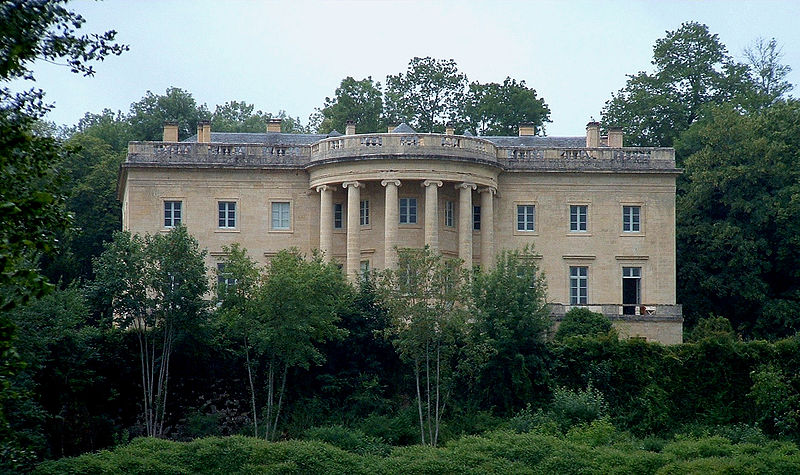
Photo of Château de Rastignac by MOSSOT, via Wikimedia Commons

Photo of Château de Rastignac by MOSSOT, via Wikimedia Commons

#5 – Just-for-fun fact: A house (now sub-divided into apartments) in the area, known as Château de Rastignac, was designed to look like the US White House. While the architect, Mathurin Salat, never visited the United States, it is known that our wine-loving third President, Thomas Jefferson -who had reviewed the original architectural plans of the White House – did visit the area and meet Salat during Jefferson’s service as the US Ambassador to France.

The Bubbly Professor is “Miss Jane” Nickles of Austin, Texas – missjane@prodigy.net

Mother Muscat

MuscatIt is often said that Muscat is an ancient grape, known to antiquity since perhaps 3,000 BC. It is just as often claimed that Muscat was one of the grapes described by Pliny the Elder and his contemporaries as Apiane, named due to the fact that they were so sweet as to attract bees (api in Latin). It has even been claimed that Muscat was the original vinifera grape from which all others sprang forth – heck, I’ve even mentioned that in some of my classes.

But all of this talk is, alas, just talk, and not backed up by any actual history or botanical facts. It may be true – but then again, it may just be the stuff of legends.

It cannot be denied, however, that Muscat is an old grape. With at least 200 grapes going by the name Muscat Something, and dozens more showing the grapey-musty aroma characteristic of the family, we know that Muscat has been swimming in the grape gene pool for at least 2,000 years.

A student of mine recently asked me to give her a list of the main members of the Muscat family. At first I thought such a task would take hours, but determined to “keep it simple” – I came up with the following descriptions of some of the leading members of the Muscat extended family:

muscatbeaumesdeveniseMuscat Blanc à Petits Grains: The main Muscat – that is, the grape that gets the prize for consistently producing the highest-quality wines and the one that is believed (by actual botanists) to be the Muscat from which the other Muscats sprung is Muscat Blanc à Petits Grains. This grape has a vast number of synonyms, most of which are really just translations, such as Muscatel, Moscatel, Frontignac, Muskateller, Moscato, Moshcato, and Muscat Canelli. This is the majority grape that is used in the vins doux naturels of southern France, including Muscat de Rivesaltes, Muscat de Beaumes-de-Venise, and the similar wines of Frontignan, Mireval, and Saint-Jean-de-Minervois. In Italy, this grape appears as the star of Asti and Moscato d’Asti. In Greece, she is known as Muscat of Patras, Samos, and many other, more-difficult-to-pronounce wines.

Muscat of Alexandria:  Another ancient variety, considered to be very close to the top of the Muscat food chain, as a likely cross between an Italian grape known as  Axina de Tres Bias and Mother Muscat (Muscat Blanc à Petits Grains). This grape is considered to be somewhat inferior to Muscat Blanc à Petits Grains, and is often used to produce very sweet wines with moscatel-de-setubal_1orange or orange-flower aromas. Muscat of Alexandria (which, by the way, has no proven connection to the ancient city of the same name) is used as a minor grape in the sweet Muscat-based wines of southern France. In Italy, the variety is far more likely to be used as table grapes as opposed to wine, except in on the island of Pantelleria, where it is much beloved as the star of Passito de Pantelleria. Much of Spain’s Moscatel is Muscat of Alexandria, where it is used in Sherry, Málaga, and the surrounding areas for many styles of wine, including the sweet and fortified wines of the region. Muscat of Alexandria is also the star of Portugal’s Moscatel de Setúbal, and, as Hanepoot, is used in the fortified wines and brandies of South Africa.

Muscat Fleur d’Oranger: Actually a cross between Chasselas and Muscat Blanc à Petits Grains; often known as Orange Muscat. California, particularly the warmer regions, grows a good deal of Orange Muscat, where it makes its way into sweet wines such as Quady’s brightly-packaged Essencia and Electra. Delightful Orange Muscats are made in Washington State, Canada, and Texas as well. In Italy, Moscato Fior d’Arancio in the Veneto’s Colli Euganei is made with Orange Muscat, and the grape makes its way into many of Australia’s sweet wines as well.

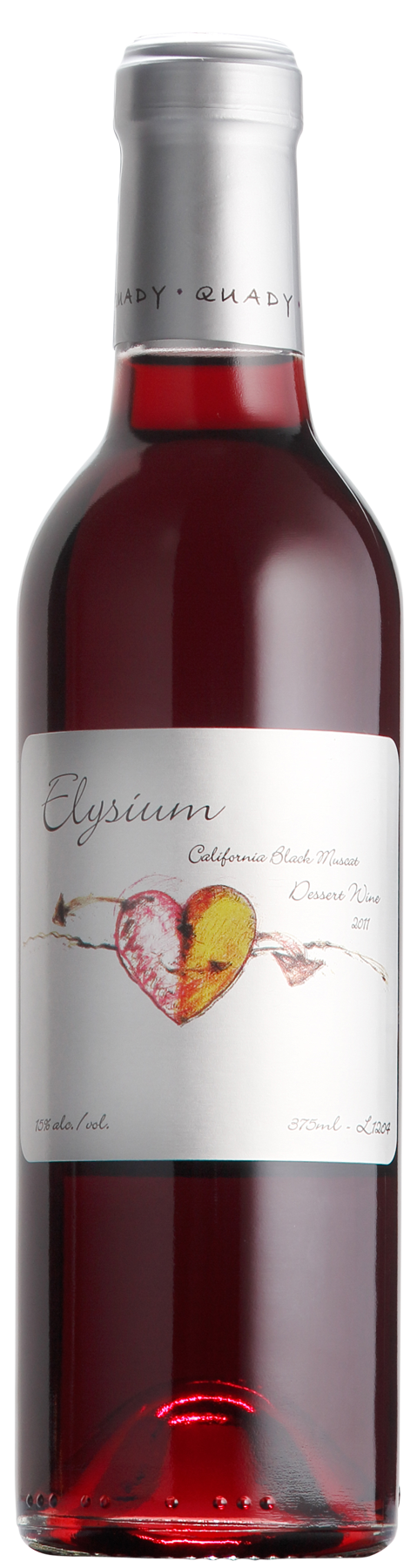
Photo of Elysium via Quady Winery

Photo of Elysium via Quady Winery

Muscat Ottonel: Thought to be a Chasselas X Muscat de Saumur cross, native to the Loire. Used for both dry and sweet wines, mainly in Alsace, where it may be bottled as Muscat d’Alsace. Austria’s Neusiedlersee and Neusiedlersee-Hügelland are known for sweet, botrytis-affected wines produced using Muscat Ottonel (here known as “Muskat Ottonel”). Hungary uses the grapes, mainly as blending partners, in both sweet and dry wines. Other plantings are found throughout eastern Europe, including in Romania, Bulgaria, Moldova, Russia, and the Czech Republic. 

Muscat of Hamburg: Also known as Black Muscat or Zibibbo Nero. The origin of the grape is unclear, although there is an excellent story about an Englishman named  Mr. Seward Snow who created the grape by crossing Black Hamburg (Schiava Grosso) grapes with Muscat of Alexandria, thus producing Muscat of Hamburg as a “grandchild” of Mother Muscat (Muscat Blanc à Petits Grains). Throughout the world, Muscat of Hamburg is used in a scattering of sweet red wines, and widely grown to be used as red table grapes. It is grown extensively in California’s Central Valley, where it is used to produce Quady’s sweet, dark dessert wine known as Elysium.

As previously mentioned, these are just the main branches of the 200+ members of the Muscat Family tree. Muscat is primarily known for sweet, dessert, and fortified wines, but we can’t forget the fact that Muscat is often made into dry wines (known for their hauntingly “funky” aromas of must, flowers, and fruit), as well as its widespread use in table grapes and raisins! For those of you practicing blind tasting, it is widely accepted that while all wine is made from grapes (well, at least the wines that might show up at a blind tasting), Muscat-based wines are among the few and far between that actually have “grapey” aromas in the finished wine. Try it and see!

The Bubbly Professor is “Miss Jane” Nickles of Austin, Texas…. missjane@prodigy.net


The Chocolate Block, Cape Cobras, and Braai

The Chocolate Block 2Here’s a hint for you folks out there that are not in the wine business:  People in the wine industry HATE to be asked about their favorite wine.  And we get asked all the time!! Just yesterday, at Kinko’s of all places….I am minding my own business, making copies of tasting mats, and someone who  just can’t help themselves forces me to admit that I am prepping to lead a wine tasting and the next thing out of their mouth is “So, what’s your favorite wine?”

There are many reasons we don’t care for this question.  First of all, my “favorite” wine is usually the one I am with.  Second, it changes all the time! Third, I really don’t want to offend anyone –and you never know who is listening! Finally, people usually only ask you that question because they want to tell you about their favorite wine, which is sometimes just painful to listen to….

Ok, thanks for listening to my rant. While I stand by the idea that “what’s your favorite wine” is a question wine professionals would rather not answer, over the years I have developed a pat answer that, while getting me out of many a squirmish situation, is also based in truth.

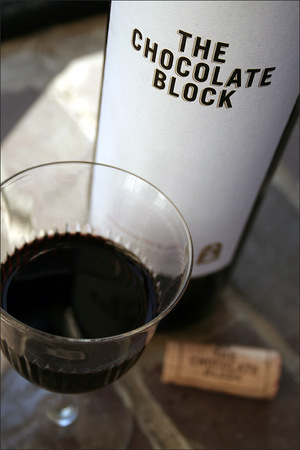
My standard answer to the question is: The Chocolate Block, a South African red blend produced  by the Boekenhoutskloof Winery in Franschoek.  Now, I will admit that my uncanny (and much-rehearsed) ability to pronounce “Boekenhoutskloof” may be part of the package, however, this is also an amazing wine, delicious and seductive, and like all good things…it comes with a great story.

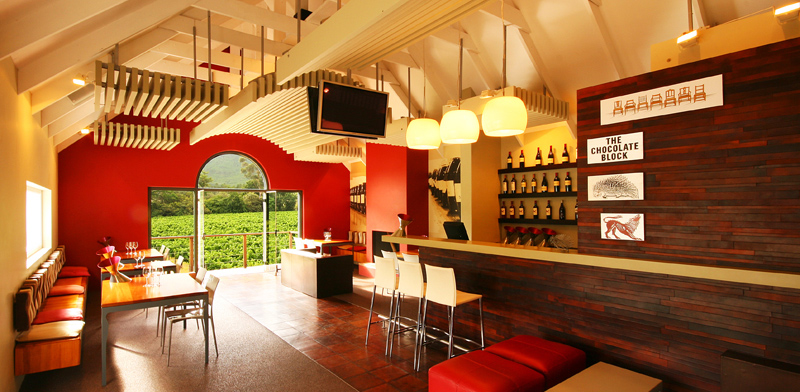
Boekenhoutskloof Tasting RoomThe wine itself has a great story attached to it, which you can read on the Boekenhoutskloof Website. Suffice it to say the wine “has secrets to keep” and “inspired a graphic novel.” But as this wine is my personal favorite, you know there is a personal side to the story of the wine. It’s actually quite simple:  a few years ago, I was on an amazing, WOSA-sponsored trip through the wine producing regions of South Africa, having won a wine-related essay contest. One morning towards the end of our trip, our driver dropped me and my best friend/travel buddy off at the Boekenhoutskloof Winery in Franschoek for a tour and tasting.

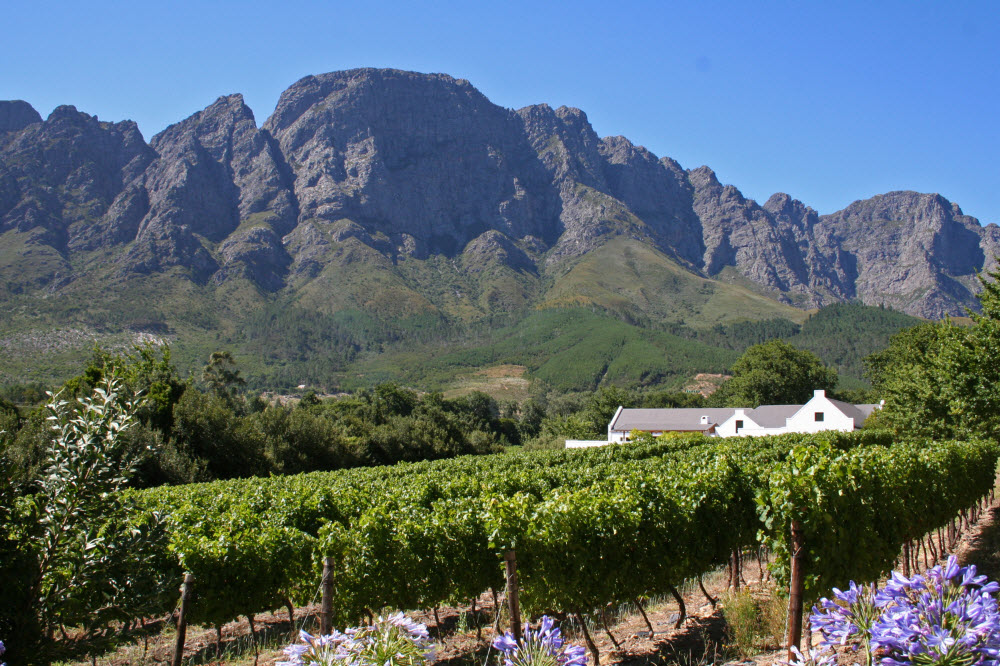
The sheer beauty of the region, the technical ingenuity of the winery, and the amazing modern architecture of the tasting room built out over the vines were enough to make us swoon. We tasted through the winery’s range of wines, including Porcupine Ridge, The Wolftrap, and their iconic Boekenhoutskloof Syrah. They were all amazing.  Then our host brought out the big dog…The Chocolate Block, and we entered one of those rare yet coveted, zen-like trances accompanied by a feeling like, “this is so  good I have to just shut up and let this wine wash over me and just allow myself to feeeeeeeeeel it.”

Our host was smart enough to just let us zone out for a while…he was surely used to such things.  When the conversation started up again, he told us a bit about the scenery.  We were located on the edge of a vineyard, just a few hundred yards away from a stream. The stream was lined with Coast Silver Oak trees – a tree native to South Africa, we learned. My friend saw a group of people riding horses along the stream, sauntering under the beautiful trees, dreaming of African skies, and our host told us that horseback riding was an easy activity to sign up for. Perhaps we would like to ride some horses that afternoon?

Boekenghoutskloug WineryWe were about to say yes, but before we could, he told us a “humorous” story of how, just the week prior, a group of tourists had been riding by – just like the group we had seen, when a nest of Cape Cobras had fallen down out of the trees, onto the tourists, wrapped themselves around the riders, and spooked the horses.

Cape Cobras? There is such a thing as Cape Cobras? Turns out there is such a thing as Cape Cobras, and before anyone works the vineyard in the morning, they send brave people running down the rows of vines, banging pots and kettles together to make a joyful noise and send the cobras scurrying off. Ok. We feel better now.

Of course, we spent the last few days of our trip scaring each other with phony “Cape Cobra” sightings – even on the plane home- “Cape Cobras on a plane!”

So that’s my personal Chocolate Block story.  But the wine itself, based on a varying blend of Syrah, Cabernet Sauvignon, Grenache, Cinsault, and Viognier, is delicious. It’s the wine I invented the tasting phrase “slips down your throat like the good Lord himself in velvet trousers” for. You can seek and find aromas and flavors of cherry, blackberry, cocoa (of course), coriander, cedar, red currant, marzipan, black plum, and raisin. The wine currently sells for about $22.00 in Texas.

The Bubbly Professor is “Miss Jane” Nickles of Austin, Texas… missjane@prodigy.net

Tales of the Vine: Sherry, Sir?

"Sherry, Sir?" by William Powell Firth, 1853

Most of the students in my beginning wine studies class have never tasted real sherry.  If they have encountered it at all, it was most likely the faux version-in-a-jug known around here as “cooking sherry” and used for deglazing sauté pans in their culinary lab classes (what a shame).

They also tend to be of the opinion, common in North America, that Sherry is a drink consumed by British old ladies who sit around sipping Sherry, pinky fingers extended, while nibbling on cucumber sandwiches and bonbons.  

While this might be a mere cliché, one cannot deny the British love for Sherry.  The British have long had a love for Sherry, and are the largest export market for wines from Jerez to this day.  But have you ever wondered why?

The story goes back to the days of Sir Francis Drake, Queen Elizabeth, the famous Spanish Armada, and Europe’s exploration of the new world. 

In the 1400’s, the great capitals of Europe began sending explorers such as Ferdinand Magellan and Christopher Columbus to find passage ways for trade and to discover what lie beyond the wide oceans.  Christopher Columbus, despite being of Italian birth, made his most famous deal with King Ferdinand and Queen Isabella of Spain and set sail from Palos de la Frontera, Cadiz, and Sanlucar – all regions well known for wine.

Wine was considered absolutely necessary for these journeys, as any water on board would quickly become unfit to drink due to long length of the journeys. The wines for the ships were fortified with alcohol to give them some preservative effect, beginning the tradition of many such fortified wines.

These voyages were spectacularly successful for Spain as explorers began to return in ships heavily laden with gold, silver, and other wealth from the new world. At the same time that Spain was profiting from the plunder of Mexico and Peru, young Queen Elizabeth of England was benefitting from the wealth brought in by her expanding colonies in North America.

However, it soon became clear that America could not begin to produce the immediate wealth arriving by the galleon load from Spain’s richer New World territories. Knowing that an island kingdom must be strong to survive, Elizabeth turned a blind eye as Sir Francis Drake and other English sea captains raided and seized the treasures from Spain’s heavily laden and slow-moving gold ships. It did not take long for the King of Spain, Philip II, to have had enough of England’s daring Queen and her “sea wolves” and he soon hatched a plan to invade England.   

Golden-hinde_400In 1580, King Philip ordered that a great Armada, or Navy, be built.  His plan was to invade England, remove Elizabeth from the throne, and crown himself king in Westminster Cathedral.  However, Elizabeth heard of the plan and made a bold preemptive strike, led by the skilled seaman Sir Francis Drake.

Drake was sent out from Plymouth, on April 12, 1587. He appeared before Cadiz on April 29th, and late in the afternoon of that day he sailed boldly into the harbor, completely surprising the defenders, and throwing the Spanish land and naval forces there into a panic.

All the remainder of the day, and all the next day, Drake plundered and burned. Thirty-seven naval and merchant vessels were destroyed with very small losses on the English side. During the raid, Drake managed to seize 2,900 casks of Sherry from the Spanish naval stores, which he soon delivered triumphantly to Queen Elizabeth.

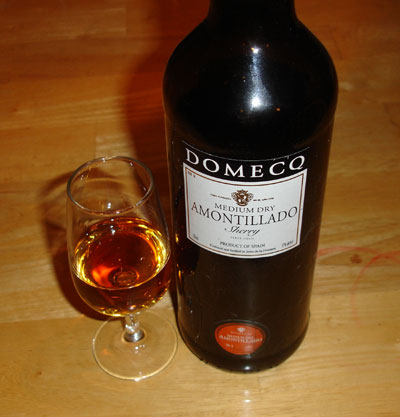
amontilladoAs you might guess, it became all the rage in England to drink the captured Sherry.  Spanish Sherry was suddenly the most popular drink in England.  Legend even tells us that the English loved to call it “sack” because, well, Drake had sacked the Spanish supply port. (There are other explanations for the term “sack” as well.)

In the ultimate show of British praise, Shakespeare praised Sherry, or “sack,” when he had Sir John Falstaff proudly declare in Henry IV, Part 2, “If I had a thousand sons, the first humane principle I would teach them should be, to forswear thin potations and to addict themselves to sack”.

At top –  “Sherry, Sir?” by William Powell Firth, 1853

Tales of the Vine: Champagne Charlie

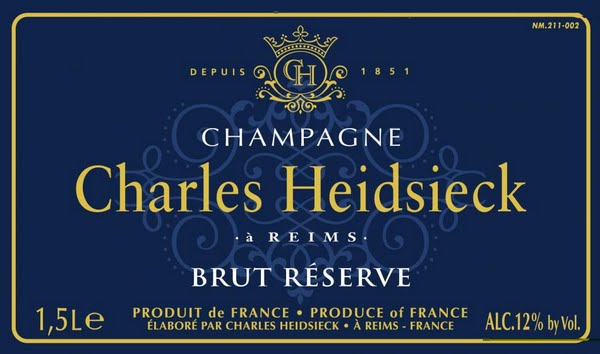
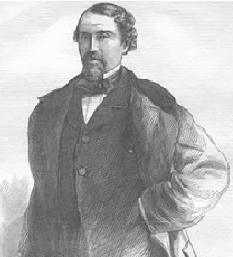
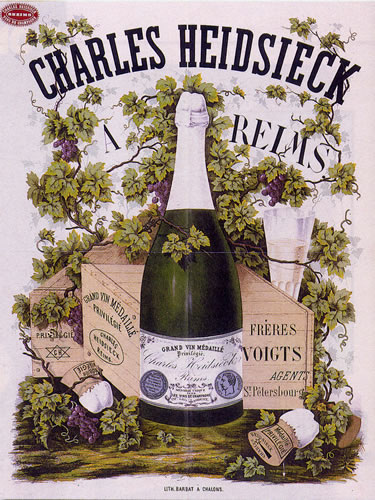
Charles Camile Heidsieck was a successful French merchant who founded the Champagne firm Charles Heidsieck in 1851.  Soon thereafter, he visited the United Statesfor the first time, and immediately saw the potential for the American market.  He retained an American agent to facilitate import sales, and in a matter of months the mass import of Champagne was a hit.  In no time, Charles became a fixture in New York high society and earned the nickname “Champagne Charlie”.

In 1861, Charles received news of the impending Civil War in theUnited States.  With over half of his company’s assets tied up in unpaid American accounts, Heidsieck made a hasty trip to try and collect the debts owed him.  Upon his arrival, his U.S.import agent told him a grandiose lie concerning a supposed new law passed by Congress which absolved Northerners from having to pay debts to the South.  This new law, the agent claimed, also absolved him from having to pay his debt to Heidsieck.

In a last-ditch attempt to seek repayment directly from the merchants that had received the Champagne, Charles set sail for New Orleans  With the war now in full-force, he had to travel in secrecy, going as far north as Kansas to avoid detection by the Union Army.  When he finally arrived in New Orleans in 1862, he found the city to be nearly bankrupt and his debtors penniless.

One merchant offered to give Heidsieck a warehouse full of cotton in exchange for payment.  The cotton was very valuable but would have to be smuggled out of Mobile,Alabama with the use of two blockade runners. Despite Heidsieck’s best efforts, both ships were intercepted and all the cargo destroyed.

By this time, all routes to the North were completely sealed, so in order to return to Europe, Heidsieck had to go back to New Orleans to charter a boat toMexico or Cuba.  To facilitate his passage, the French consul in Mobile gave him a diplomatic pouch with a request to deliver some documents to the consulate in New Orleans.  Arriving in New Orlean son May 5, 1862; he found that the city had fallen to Union forces.  As his diplomatic pouch contained documents from French textile manufacturers about supplying the Confederate army with uniforms, “Champagne Charlie” was immediately seized, charged with spying, and imprisoned.  His imprisonment sparked a diplomatic incident between France and the United States government which would later become known as The Heidsieck Affair.

By the time he was finally released from prison, he was in frail health and his business was bankrupt.  He returned to France in November of 1862, demoralized and broke.

In early 1863, Charles Heidsieck was approached by an American missionary with a letter from the United States.  The letter came from the brother of Heidseick’s former agent inNew York.  The man was ashamed of how his brother had swindled Heidsieck out of his obligations and offered him a stack of deeds to land in Colorado as means of repayment.

As it turned out, the deeds were for one-third of all the area of a small town known as Denver, Colorado.  Denver (as we all know) was soon to become one of the wealthiest and largest cities of the American West.

In a few years time, Heidsieck was able to sell the land, repay his debts, and re-launch his Champagne House, becoming the wealthy and debonair “Champagne Charlie” once again.


Tales of the Vine: Bull’s Blood

In the Northern Massif region of Hungary, the famous Egri Bikavér, or “Bull’s Blood Wine” is made in the area around Eger, a beautiful town about halfway between Budapest and Tokaj.

The name of the wine dates back to a Turkish invasion led by Suleiman the Magnificent around 1552.  During the invasion, Suleiman the Magnificent and his army of Turks attempted to siege of the Castle of Eger.  The defending Hungarians, led by Captain Istvan Dobo, were largely outnumbered by the invading army and the situation appeared dim. However, the Hungarian forces, fortified by days and nights of delicious food and large amounts of the local red wine, managed to successfully defend Eger. In doing so, the Turkish army was forced to withdraw, and Turkish westward expansion was delayed for forty years after this battle.

According to one legend, the enemy soldiers were frightened by the fierce fighting and red wine-stained beards of the soldiers.  Among the Turkish soldiers it was rumored that bull’s blood had been mixed into the wine, as otherwise the strength and firm resistance of the town and castle could not be explained.  Another legend states that the swords of the enemy could not cut through the Hungarian blood thickened by the wine.

The wine named for the legendary “bull’s blood” of the siege, Egri Bikavér, is still produced to this day, and is very popular on both the domestic and international markets.  Egri Bikavér is made up of a blend that has varied over the years, although the blend is anchored by the ancient Kardarka grape. Kadarka is a difficult grape to vinify, and has increasingly been replaced by Blaufränkisch, known locally as Kékfrankos.

In modern times, Egri Bikavér must contain at least three of the following 13 grapes: Kardarka, Kékfrankos (known as Blaufränkisch in German), Blauer Portugieser, Cabernet Sauvignon, Cabernet Franc, Merlot, Menoire, Pinot Noir, Syrah, Turán, Bíborkadarka, and the modern Austrian hybrids Blauberger and Zweigelt.

Tales of the Vine: The Evil and Disloyal Plant Gamay

...

The Story of Beaujolais…

Philip the Bold, Duke of Burgundy, was one of the most powerful men in France from 1388 until his death in 1404. Philip managed to keep Burgundy independent from France and doubled the size of his dukedom by marrying the Margaret III, Countess of Flanders. Philip was an excellent capitalist and under his rule the wines of Burgundy became quite fashionable and expensive. Philip the Bold is said to have selected the clone of Pinot Noir that became the mainstay of Burgundy’s red wines and is credited with having chosen the name “pineau noir”, meaning “black pine cone”, due to the shape and size of the grape clusters.

Enamored as he was with the red wines of Burgundy, Philip was infuriated when the wine growers of his region started to plant Gamay grapes in the vineyards of Burgundy. The Gamay vines were vigorous, easy to grow and high-yielding, and their rich, fruity wines were at their best while young, making Gamay a cash-flow wine the growers loved.
 
Philip the Not-so-Bold (anonymous 16th century painter) Currently displayed at Versailles

Philip the Not-so-Bold (anonymous 16th century painter)
Currently displayed at Versailles

Philip felt the presence of Gamay in the vineyards of Burgundy would harm the reputation of the fine wines he had worked so hard to promote, so he banished the grape from his kingdom. He declared Gamay “foul” and “harmful”, and in a royal decree denounced the “tres mauvais et tres desloyaus plant nomme gamay”, translated as, “the very evil and very disloyal plant called gamay”. Philip thus forbade the cultivation of Gamay in Burgundy and banished it from the Kingdom.

 
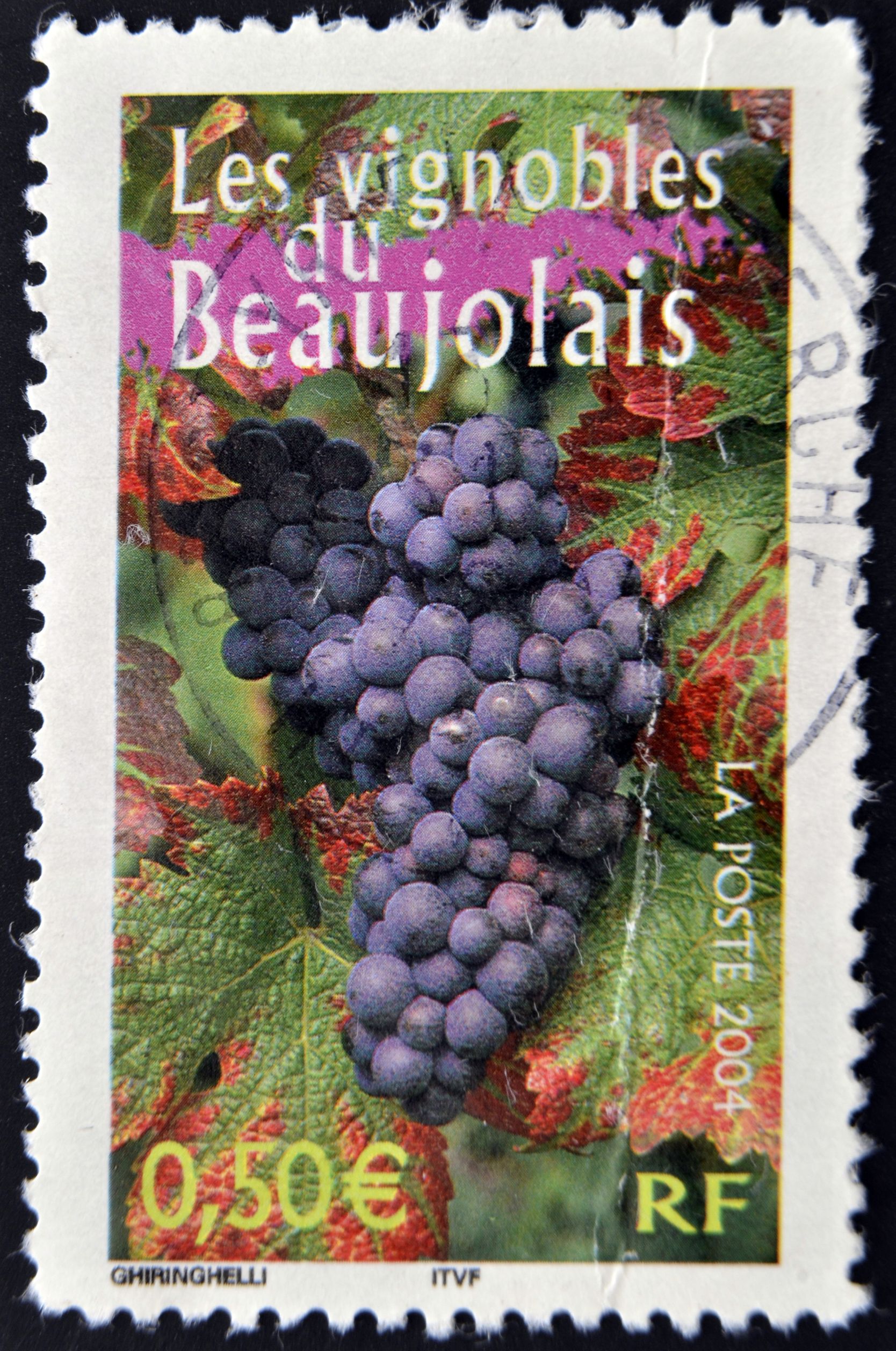
The despised Gamay was down but not out, for it soon began to thrive just beyond the Southern border of Burgundy in the region known as Beaujolais. Beaujolais, with its cold winters, hot summers, and decomposed granite soil is now known to be the one perfect spot on the face of the earth to grow Gamay. One of the wines of Beaujolais, Beaujolais Nouveau, is among the first French wines to be released with every year’s new vintage, and is one of the most popular of all French wines.
The Bubbly Professor is “Miss Jane” Nickles of Austin, Texas… missjane@prodigy.net
 

The More the Meritage

Take the word “merit” and combine it with the word “heritage.”   Put in the hands of a master wine maker and blend well.  What you have is Meritage, a relatively recent addition to the wine lexicon, coined in 1988 to describe New World wines made with the grape varieties and in the blended style of the noble wines of Bordeaux.

The name “Meritage” was originally intended to give the wines of California a little much-needed marketing moxie at just about the time that California wines were beginning to be gain international acceptance. Since the inception, winemakers in California, Australia, Israel, and Argentina have embraced the name, and wine makers all over the world craft some of their finest wines with the Meritage blend.

The story of Meritage begins in the 1980’s.  Wines from California had stunned the wine world at the Paris Tasting of 1976, and the eyes of the world had begun to be opened to the fact that some darn good wine was coming from the New World.  The American public had started to embrace wine, and wine lovers from Oregon to New Jersey were happily slurping the Cabernet Sauvignon, Merlot, and Sauvignon Blanc coming out of Napa and Sonoma.

Here is where the plot thickens: due to labeling laws set forth by the Trade and Tobacco Tax Bureau (TTB), wine from the U.S. must be at least 75% the named grape variety in order to be labeled using the name of the grape, such as Cabernet Sauvignon.  If a wine did not contain this minimum amount of a single grape, it had to be labeled with a proprietary name or use the generic term Table Wine.

This proved vexing for a very good reason—at the time, Americans equated generic wines or proprietary wines with poor-quality wine, and there was plenty of it to go around in those days.  Many of the first wines out of California post-prohibition—mystery blends of grapes grown in the warm Central Valley—were distributed in big, round bottles reminiscent of a bootlegger’s stash.  These wines were labeled with the generic Table Wine moniker or a proprietary name.  Who can forget Gallo Hearty Burgundy, Carlo Rossi Paisano or Italian Swiss Colony Red Table Wine?  The 75% rule was—and still is—the labeling law in the U.S. Thus, if a winemaker was making a top-flight blend in the style of the finest blended wines of Europe, no matter how expensive or delicious it may be, it had to be labeled like a jug wine.

The truth is that the ability to blend grape varieties gives a winemaker an added tool with which to create wines of complexity and balance.  Some of the finest wines in the world—such Bordeaux, Chianti, and Châteauneuf-du-Pape—are blends of many different grape varieties.  As such, American wines were at a competitive disadvantage compared to the wines of Europe.  In order to be labeled using the accepted vernacular, an American wine has to contain a minimum 75% of one grape variety; while many European wines are blends of several different grape varieties and may be produced using any proportion the winemaker chooses.

As such, a group of California winemakers were determined to come up with a solution and—beginning in 1988—sought to create a recognizable name associated with high-quality blended wines.  In a stroke of genius, they hosted a contest to create a catchy name.  The contest received over 6,000 submissions.  Neil Edgar of Newark, California won by suggesting “Meritage” – a combination of the words merit and heritage.

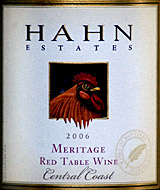
So, the Meritage Association (now known as the Meritage Alliance) was born, and the requirements for Meritage were set forth:  A red Meritage wine must be made from a blend of Cabernet Sauvignon, Cabernet Franc, Merlot, Malbec, Carmenère, and/or Petit Verdot (the classic Bordeaux Grape Varieties).  Gros Verdot and St. Macaire may also be used, in homage to the grapes that were grown in Bordeaux pre-phylloxera. The proportions may vary, but at least two of the grape varieties must be used, with a maximum of 90% of any single variety.  For white Meritage, only Sauvignon Blanc, Semillon, and Muscadelle du Bordelais, the white grapes of Bordeaux, are permitted.

A wine meeting the requirements for a Meritage does not need to use the term on the label—and many wineries prefer to use proprietary names (such as Joseph Phelps’ Insignia and the well-known “Opus One”). Others just stick to “red table wine!” However, if you read the wine’s tasting notes or technical sheets you may find the term “Meritage blend” or “Bordeaux blend” used.

Today, there are over 120 winery members of The Meritage Alliance, and the style of wines (both red and white) made with the grape varieties of—and in the blended style of—the noble wines of Bordeaux continue to be some of the world’s most cherished wines.

By the way, most of the wine enthusiasts I know use the pronunciation “meh-ri-TAHJ”, as if the wine rhymed with the French wine “Hermitage.”  However, according to The Meritage Alliance, the word should really be pronounced like heritage-with-an-m.  Don’t sweat the pronunciation too much, though…either way you pronounce it, wine people will know what you’re talking about.

Reference/for more information:

The Bubbly Professor is “Miss Jane” Nickles of Austin, Texas… missjane@prodigy.net

Tales of the Vine: The King with the Grizzly Beard

Behind every bottle, there’s a story…

Born in 742 and rising to power as the Holy Roman Emperor and ruler of much of the Western World, it was Emperor Charlemagne who commanded the planting of the Pinot Noir vines that produce the excellent red Burgundy of Le Corton.  It is well-known that Emperor Charlemagne adored the precious red wine of Le Corton, and drank some every day.

However, as the years past and the king became an older man, his hand was no longer as steady as it once was.  From time to time, while enjoying his precious red Burgundy, he would spill some wine onto his flowing white beard.  The resulting red stains annoyed his wife to such an extent that she demanded that he stop drinking wine.

Emperor Charlemagne was a legendary lover of the company of women, but was determined nonetheless to not give in to his wife’s demands.  Charlemagne craftily decided to become a white wine aficionado in order to be able to drink to his heart’s content without compromising his regal appearance or arousing the wrath of his last and reportedly favorite wife.

Thus, Emperor Charlemagne demanded that part of the hill of Le Corton be replanted with white grapes, and the famous white wine vineyard now known as Corton-Charlemagne came to be.  With white wine in hand, Charlemagne was able to drink his beloved wine again, shaky hands, grizzly white beard, and all.