WineGeo: Escarpment and Bench

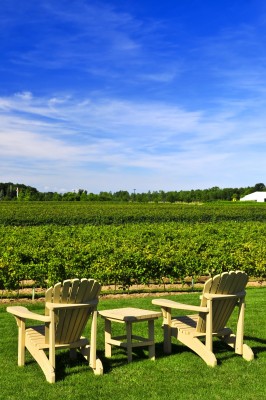
Niagara on the lakeJust yesterday, following a lovely trip to Toronto and the Ontario Wine Country, I was doing a bit of research in order to write up a blog post about the four sub-appellations of the Niagara-on-the-Lake VQA.  For the record, they are:  Niagara River, Niagara Lakeshore, Four Mile Creek and St. David’s Bench. According to the website for the Wineries of Niagara-on-the-Lake, these four areas are differentiated by soil types, weather, elevation and proximity to “three unique geographical features: the Niagara Escarpment, Lake Ontario and the Niagara River.”

I have to stop right there and promise to write the blog post on the sub-appellations (they are quite lovely) at a later date, because I just realized that in that one short paragraph I spouted off two words that I have no earthly idea how to really define.  And you, dear wine student, if you honest with yourself, must admit that you have done the same thing; you use the words all the time (chatting about wine is so-much-fun) but can you tell me, in your own words, just what exactly is an “escarpment” and what, geologically speaking, is a “bench?” 

Well, neither could I. So, I did some early morning research and am going to try to define those geological terms in simple, regular person’s language, with just a teeny bit of wine geek thrown in.

Escarpment:  An escarpment is basically an area of the Earth where the elevation changes suddenly. An escarpment is often found along the ocean shore, such as the Devil’s Slide area of California Highway 1.  An escarpment can also refer to an area on dry land that separates two level land surfaces, such as Africa’s Great Rift Valley and the Niagara Escarpment (only a small portion of which hosts the famous falls.)

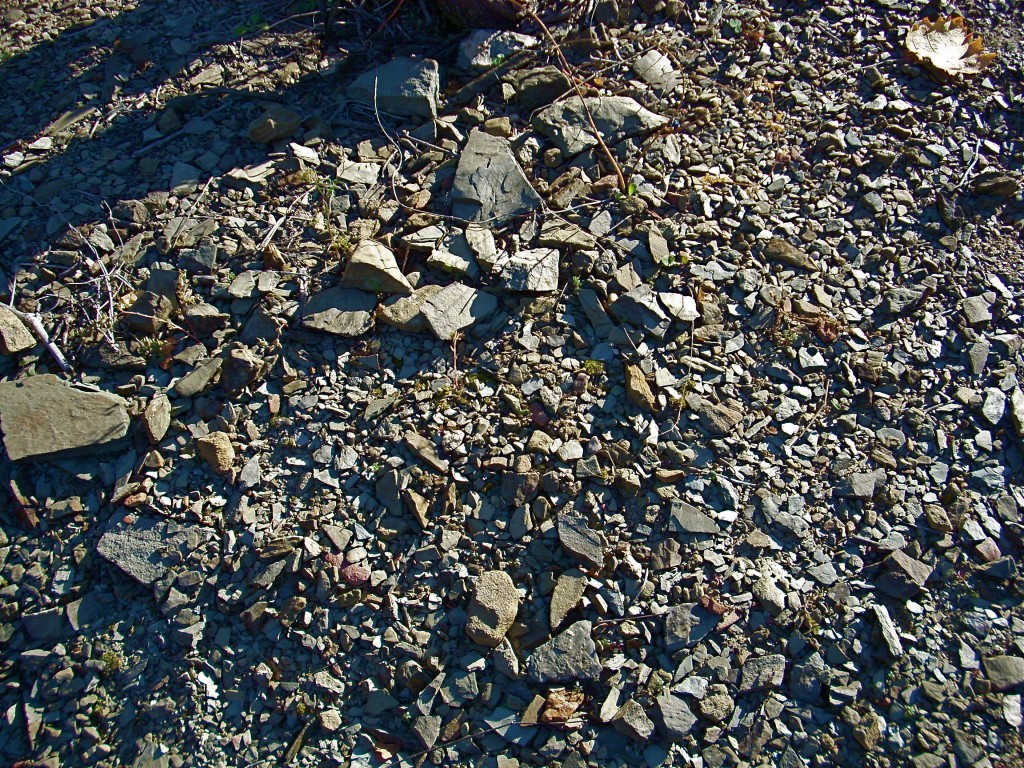
A tiny piece of the Niagara Escarpment

A tiny piece of the Niagara Escarpment

An escarpment usually indicates two different types of land, such as the area of a beach where tall cliffs surround a lower area of sand.  Escarpments between two areas of level land are usually composed of different types of rock or rocks from different geologic eras, one of which erodes much faster than the other. Escarpments can also be formed by seismic action; such as when a fault displaces the ground surface so that one side is higher than the other (scary).

Significant Wine-Related Escarpments include the Niagara Escarpment, the Côte d’Or, the Balcones Fault in Central Texas, and the Darling Scarp in Western Australia. The term “scarp” technically refers to just the the cliff-face of an escarpment, but the two terms are generally interchangable.

Bench: Admit it, you’ve talked in hushed tones about the amazing flavor of Cabernet Sauvignon from the Rutherford Bench….but do you know what is meant, geologically, by the term bench?  Neither did I.  Tchnically, a bench or a “benchland” is a long, narrow strip of relatively level land that is bounded by distinctly steeper slopes above and below it. Benches can be formed by many different geological processes, such as a river (as in a river’s flood plain, or an “abandoned” river bed), waves (if alongside an ocean), or the varying levels of erosion of different types of rock.

Cross Section of Different Types of "Bences"

Cross Section of Different Types of “Benches”

Thanks to Wikimedia Commons for the diagram of “Bench Structure.” The diagram shows the different ways benches can form, such as structural benches formed by the  erosion of shale beds overlying limestone beds and the more common “river terraces.”

The famous “Rutherford Bench” is a stretch of the Napa Valley, about three miles long, starting in Oakville and heading north to Rutherford.  The bench sits in the middle of the valley floor, surrounded on two sides by small hills. The famous soil of the Rutherford Bench consists of gravel, loam, and sand, much of which was deposited there by earlier advances and retreats of San Pablo Bay.

The term “bench” appears in the discussion of wine regions (though not necessarily AVAs or appellations) frequently:  the Rutherford Bench and the Oakville Bench were both at one time or another considered for AVAs of their own, but to date have not been designated as such. There are however, five “official” wine regions that I could find that use the term:  Kelsey Bench-Lake County AVA, and four VQAs in Ontario: Short Hills Bench, St. David’s Bench, Beamsville Bench, and Twenty-Mile Bench.

References/for more information:

Deconstructing Llicorella

PrioratThis morning I set about to research the wine region of Priorat for a blog post.  I already knew the basics of the region, such as the fact that it is one of Spain’s two DOCa wines, the main grape variety is Garnacha Tinta, and the area came to international attention in the 1990s.

Wikipedia (I know, not the best reference but in this case, just a starting point) also had this to say, “The area is characterized by its unique terroir of black slate and quartz soil known locally as Llicorella.” I already knew that the soil in Priorat is mainly Llicorella…at least I knew the word, and could have guessed it correctly on a multiple choice test.  But being in a Monday sort of contemplative mood, I wondered if I really understood Llicorella.  Of course, I didn’t. So I set about to deconstruct Llicorella.

First of all…just what exactly is slate? Slate is a fine-grained, foliated, homogeneous metamorphic rock derived from sedimentary rock composed of clay or volcanic ash. It is the finest grained foliated metamorphic rock.

Slate...a Metamorphic Rock

Slate…a Metamorphic Rock

Metamorphic Rock? Metamorphic rocks are created from the transformation of existing rock types.  Metamorphism means “change in form.” Rocks under the earth’s surface change form by being subjected to heat, generally temperatures from 300° – 400°F, which can cause both physical and chemical changes in the rock itself.

Sedimentary Rock? Sedimentary rocks are formed by the solution of mineral and organic particles within bodies of water. Sedimentation is the name for several different processes that cause mineral particles and organic particles to settle and accumulate first into a dissolved solution and later into sediment.  Sediment is then transported to dry land by water, wind, or glaciers, or is left behind when the bodies of water dry up.  With time, the slushy sediment hardens into rock. Sandstone is probably the most well-known sedimentary rock.

Clay? Clay is a very fine-grained soil type made up of very fine minerals such as aluminium phyllosilicates, iron, magnesium, and a bunch of other chemicals I have never heard of. The minerals that make up clay soil are the result of weathering…the breakdown of rocks, soils, and minerals through contact with air, water, and living creatures.

Licorella

Llicorella

Volcanic Ash? Volcanic ash is made up of pieces of pulverized rock, minerals, and volcanic glass that are created during volcanic eruptions. Pieces of ash must be less than 2 mm in diameter – larger fragments are referred to as cinders or blocks. At least this one I can understand!

Foliated? There are two types of metamorphic rocks:  foliated rocks and non-foliated rocks.  Foliated metamorphic rocks, such as schist and slate, have a “layered” appearance that has been produced by exposure to heat and directed pressure.  Non-foliated metamorphic rocks such as marble and quartz do not have the “layered” appearance.

And what is quartz? Quartz is the second most abundant mineral in the Earth’s continental crust, after feldspar. There are many different varieties of quartz, several of which are semi-precious gemstones. Quartz is the most common element of sand and sandstone and is used in glassmaking.  Quartz is almost immune to weathering and is a component of granite and other igneous rocks.

Aha- that’s why sand is coarse (quartz doesn’t “weather”) and clay is fine (its made up of materials that do weather or “breakdown”).

I think I’ll stop there. But for those of you who are curious, igneous rocks are rocks that are formed by the cooling and solidification of lava or magma. Granite and obsidian are igneous rocks.

So now, when someone says, “Llicorella is a unique soil made up of black slate and quartz,” what do you know?

Vineyard in PrioratSources (in addition to http://en.wikipedia.org/wiki/Priorat_(DOQ)):

http://geology.com/

http://www.quartzpage.de/index.html

http://www.mineralszone.com/

http://www.turismepriorat.org/en

http://www.in-spain.info/top20/spanish-white-wine-priorat.htm

The Bubbly Professor is “Miss Jane” Nickles of Austin, Texas  missjane@prodigy.net

Perfect Pairings: Wines for Thanksgiving

When pairing wines with a big turkey dinner, it’s time to take sides. 

By this—taking sides—I do not mean that you have to get involved in every family feud that comes up around the dinner table. (oh. please. no.) Rather, I mean that it is a good idea to choose your wines with a mind to the varied tastes and flavors of your side dishes.  Turkey—typically the main event on T-day—is actually quite neutral in flavor and can pair nicely with a variety of wines.  Side dishes for turkey, however, include the sweet (think yams topped with mini marshmallows), the spicy (sausage stuffing), the salty (gravy), and the tangy (pickles, olives, and cranberry sauce).

It takes a fruity, acidic wine with no chance of clashing flavors to match that schizo of a meal.   

I know this subject has been talked to death, that opinions on the matter run hot, and what the world needs now is hardly one more blog post on what wines to serve on Thanksgiving.  So, it is with humility and a bit of trepidation that I offer the following ideas on choosing wine for Thanksgiving.

#1—Choose a wine with lots of crisp, lively acidity:  Tangy foods, such as cranberry sauce, citrus, or anything from the relish tray, need to be paired with wines that can stand up to the challenge.  To be safe, serve a wine that has lively acidity to begin with and your wine will maintain its balanced flavor even in the presence of acidic foods.

#2—Choose a wine with fruit-forward flavors:  Cranberry sauce, sweet potatoes, creamed corn and yams…due to the fact that they have a degree of sweetness, these foods pair best with a wine that has a very fruit-forward style. A wine with a hint of sweetness is ideal, as any sweetness in a food will diminish the fruitiness or sweetness of a wine.  For these reasons, it is a good idea to start with a wine with a good deal of fruit flavors—and maybe even a touch of sweetness—in order to preserve the wine’s balance with these types of foods.

#3—Choose a wine that is low-to-moderate in tannin:  Tannin is an integral part of the taste, flavor, and structure of most red wines. It’s also the component that gives many wines their structure and grip while lending a velvety mouthfeel to others.  However, as beloved a high-tannin wines may be, it pays to go moderate with the tannin in the wines we serve on Thanksgiving. The reason—simply put—is that too much tannin can clash with spicy flavors; those sweet tastes can also be anproblem (as they can bring the bitterness and astringency of a tannic wine to the forefront).  To avoid a clash of the titans that might end up with a metallic or bitter taste in your mouth, keep those red wines low-to-moderate in tannin. You might look for a red wine described as smooth, ripe, or velvety.

#4—Choose a wine with low-or-no noticeable oak influence:  Oak is a beloved flavor enhancer of many wines, and lots of people love oak aromas and flavors.  However, highly oaked wines can clash with some food flavors; to avoid this clash, choose a wine (or wines) with no overt oak flavors (especially the bitterness that often can be sensed on the back of the palate). These oak-derived tastes can clash with foods that are slightly sweet, a bit fruity, or a tad spicy (and there will be plenty of all of these at a typical Thanksgiving feast)!

#5—Choose a wine that is moderate in alcohol:  Alcohol, while part of what makes wine so delightful, has a tendency to clash with certain tastes and flavors, and with all the flavor mingling going on at Thanksgiving, this cage match is likely to happen.  all possible, keep your wine choices in the moderate alcohol range (lower than 14%, dessert wines excepted). On the other hand, if you enjoy the sensation of throwing gasoline on a fire, go right ahead and serve a 15% abv Napa Cab.  And then there’s this…turkey already has enough drowsiness-inducing tryptophan to put you and your relatives to sleep before the first kick-off of the first football game of the day. We don’t need any help from excessive amounts of alcohol!

#6—Remember the reason for the season: American Thanksgiving is a US-centric holiday, a celebration of the bounty of the fall harvest, and a time to be grateful. As such, sometimes I like to choose my wines for Thanksgiving with these ideas in mind. As this is a US-centric holiday, it’s a great time to focus on the wines of the United States. To accomplish this, you could focus on the well-known American wines such as Monterey Chardonnay. Napa Cabernet, Paso Robles Zinfandel, Oregon Pinot Noir, or Washington State Riesling. You could also focus on the lesser-known but still fascinating wines of Idaho, New York State, Virginia, Texas, or any of our other wine-producing states. To add the aspect of celebrating the harvest, try a Beaujolais Nouveau from France. It might not be anyone’s idea of the finest wine on earth, but it represents a true celebration of the harvest, as signified by the early release of the just-made wine of each year.  As a way of expressing gratitude…choose a wine to appeal to those you are most thankful for….seek out your father’s favorite Burgundy, your granddaughter’s beloved white zinfandel, or your oldest friend’s favorite wine. You can’t go wrong.

Bubbly Professor’s Wine Suggestions for Your Turkey Dinner:

  • Riesling from Alsace, Germany, or Washington State
  • Viognier from Texas, California, or The Rhône Valley of France
  • Unoaked Chardonnay
  • Bubbly—any dry or semi-dry sparkling wine; pink versions pair well with a wide range of food, and Prosecco is always a good choice
  • For the adventurous…Sparkling Shiraz
  • For the less-than-adventurous…Moscato d’Asti
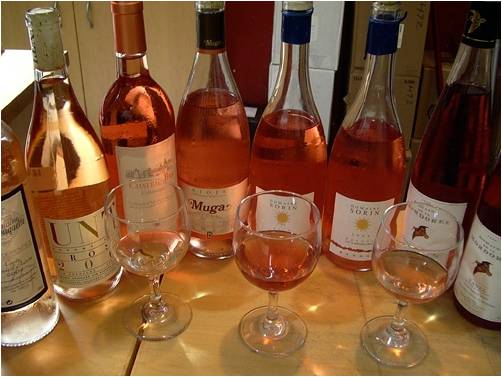
  • Dry rosé—an all-around great choice! Serious, French rosé—such as those made in Tavel or Lirac—is a great choice. American rosé of Pinot Noir will work as well.
  • Zinfandel from Lodi, Paso Robles, Sonoma, the Sierra Foothills (Amador or El Dorado County)
  • Pinot Noir from Burgundy, California’s Central Coast, or Oregon
  • Beaujolais
  • Or, of course, you can use this philosophy:  serve anything you like…it’s just one day out of life!

Happy Holidays, Everyone!! No matter what you serve, enjoy the day and give thanks for all the good things in your life! 

The Bubbly Professor is “Miss Jane” Nickles of Austin, Texas… missjane@prodigy.net

Finals Week in Wine Class

It’s Finals Week!

Final exam week in Miss Jane’s 12-week professional wine studies class has arrived!  To answer your question, NO…the wine final does not involve binge drinking, glasses clinking or happy hour. Like most college-level courses in hospitality management or culinary arts, we have both a practical and a written final exam.  Our written final exam is scheduled for this Friday; a 100 question multiple choice test followed by three essay questions.  

Please note that the title of this course is “Professional Wine Studies.”  While many of the wine classes taught around the world center on tasting, this course is centered on basic wine knowledge and how to use it within the context of a hospitality career.  I focus the class on learning about basic wine styles (white, red, sparkling, dessert…yes, that basic); how they are made, where they are made, and the world’s best known or most popular examples.  We learn how to taste wine so that we can talk about wine, and spend several class sessions role-playing the role of the server, sommelier, or salesperson.  We use my “mad libs for wine” to learn to write meaningful, concise wine descriptions. We learn about beverage costing as it applies to wines by the bottle and glass. We spend a good deal of time of food and wine pairing, which makes sense as most of my students see themselves as future chefs.  Finally, we spend a good deal of time discussing how to write a wine list and market wine in a restaurant or other setting.

So for my final practical exam this semester, I came up with the idea of an exercise in writing a wine list.  I started out by surfing the internet for nice, clear pictures of wine labels. This took a while as I wanted to use wine labels from wines we had studied and my students would be familiar with.  I also wanted a good mix of red, white, dessert wines and sparkling wines.  I came up with a word file full of about 30 wine labels that includes Bordeaux, Chianti, Rioja, Napa Meritage, Lodi Zin and Oregon Pinot for the reds.   For the whites I found Fumé Blanc, a nice German Riesling, an Aussie Chard…you get the idea.  I had six sparkling  wines including a few from California, a Cava, a Prosecco, and of course Champagne.  For the sweet wines I included Moscato d’Asti, Sauternes, Late Harvest Zin, Ruby Port and Muscat-Beaumes-de-Venise.  Remember, these are all wines that we had studied, and in most cases, tasted.

 I did a bit of cut and paste and gave every student a stack of 30 wine labels, and created a faux “wholesale price list”. Then, I gave the class two hours to write a wine list that was to include the following details:

  • Meaningful Categorization
  • Absolutely perfect listing of each wine to include producer, name of the wine, region of origin and vintage date (as applicable)
  • Progressive wine list format
  • A concise description of each wine (I like to use what I call a “five word description” such as “light, dry and crisp with fruity and floral flavors”.)
  • Two food pairing suggestions for each wine.
  • Pricing by the glass and bottle, as well as a spreadsheet detailing each item’s potential beverage cost and gross profit.

As they completed the project, I had every student bring their list up to me for a quick discussion and review.  Lots of learning can go in during that review period.  I had them describe how they chose to categorize their wines, how they arranged them in order and how the details of the list will be useful as a sales tool.

All in all, I have to say I think they all did a great job!  I was very impressed with the final projects, and think that it was a meaningful, active learning experience all around.  It was good exposure to the “nuts and bolts” of writing and designing a wine list.  Most importantly, we all had a great time and I feel it was a good example of active learning and a “flipped classroom”.

If you would like a copy of the materials I created for the class, click here: Bubbly Prof – Wine Labels for Wine List Project

The Bubbly Professor is “Miss Jane” Nickles of Austin, Texas – missjane@prodigy.net 


Miss Jane’s Top Ten Tips for Wine Lists

I was surprised to learn yesterday that “Miss Jane’s Top Ten Tip for Wine Lists,” posted back in January of 2011, is my “most viewed” post of the blog’s history.  So…just in case you missed it, I re-post it again for you today.  Enjoy!!

Miss Jane

One of the most important classes I teach in my professional wine classes is on how to write a wine list.  After a lecture (hopefully not too boring!) on my “Top Ten Tips for Wine Lists”, I divide the class into teams, and set them free to construct a wine list featuring a dozen wines that I provide to t hem. I am always amazed at how good a job they do!

Just in case you ever need to write a wine list of your own, here are my lecture notes.  Enjoy!

Miss Jane’s Top Ten Tips for Wine Lists!

1.  A good wine list should be easy to read and use.

  • No guest enjoys pulling out reading glasses and squinting in the dark, yet many wine lists squeeze too information and tiny print much onto each page.
  • Make certain wine lists can be read in low light. Choose legible fonts and reasonable type sizes.
  • Avoid italics, which run letters together.
  • Resist the temptation to fill negative space. Overly dense pages hurt the eyes and the brain. Leave enough space between lines for comfort, and start new sections on a new page.
  • Provide enough signposts on every page for diners to orient themselves quickly.
  • Title pages and sections clearly. Guests may be distracted and multitasking when using the list, so repeat headings and subheadings on every page and identify broad sections in the headers.
  • A good wine list should communicate well, make servers and customers comfortable, and sell a lot of wine!

2.  A good wine list assumes no prior wine knowledge.

  • Wine labels tend to speak of grape and region, but customers care more about flavor and style. Adding simple style indicators can boost sales and turn the wine list into a training tool for your service staff.
  • Whether or not you provide full-blown descriptions on the wine list itself is a matter of choice. However, indicating the primary grape or grape varieties will help create interest in and sell proprietary wines, blends and regionally labeled wines.
  • Indicating if a wine is sweet or dry, full-bodied or light, and other basic information will be greatly appreciated by the wine-loving novice.
  • Consider using my “5-word review” for a tiny bit of supporting information:
    • French Pinot Noir – Light and Dry.
    • Off-dry, fruity, great with sushi.
    • Light, delicate, fruity and crisp.
    • Pink bubbly, but don’t call it sweet.
    • PLEASE…even if your wine list style of choice is minimalistic, PLEASE provide detailed wine notes and descriptions to your staff, either in “wine class” style or in printed training materials! Nothing defeats the purpose of a perfectly designed wine list faster than an untrained service staff.

3.  A good wine list groups wines by style, weight, or flavor intensity…or some         other category that makes sense!

  • You can follow the tried-and-true “progressive wine list” philosophy and group your wines according to taste categories:  “Light and Delicate Whites”, followed by “Slightly Sweet Whites” followed by “Dry, Full-Bodied Whites”.  The progressive wine then lists the wines in each category from lightest to heaviest, driest to sweetest, or some other easy-to-follow variable.
  • Consider grouping your wines by food affinities, such as “Crisp, Dry Whites for Seafood” followed by “Full-bodied Whites for Roast Poultry” followed by “Big, full-bodied Reds for Steaks”…or something like that.
  • You can get creative and group wines by special interest, such as “Organic and Biodynamic Whites”, “Exotically Scented European Whites”, or (my favorite) “Cheap Thrills”. (Just be sure and see item #10, below.)

4.  A good wine list avoids “concept blur” by being appropriately priced.

  • There are many different versions of the following rule, and many organizations lay claim to the idea….but…it has been proven that wine sales increase if at least 50% of your wines-by-the-bottle are priced between 1 and 2 times the price of an average entrée.
  • For instance, if your average entrée is priced at $20.00, customers will not flinch at a bottle of wine priced between $20.00 and $40.00.  This technique keeps wine and food prices on an even keel…preventing “concept blur.” Nobody expects to drink a $200 wine with a blue cheese burger. And, for that matter, nobody wants to drink Yellowtail Shiraz with Foie Gras en croute!
  • As long as some (preferably at least 50%) of your wines fall within the “no more than twice the price of an average entrée” rule, it makes sense to offer something for person who really wants to spend more!  Customers celebrating a special occasion, trying to impress (think first dates) or on an expense account have money to burn, so you should help them burn it! Having two Pinot Noirs on the list – one at an “entry level” price point and one at a “splurge” price is a good idea.
    • For wines by the glass, it’s a good “rule of thumb” that one 4- or 5-ounce glass of wine covers the wholesale cost of the bottle.  Any additional glasses poured from the bottle are pure profit.
      • For instance, if a bottle of Kim Crawford Sauvignon Blanc has a wholesale price of $8.00, a good price for a glass is…you guessed it, $8.00.

5.  A good wine list offers customers variety, but not necessarily quantity.

  • A great wine list doesn’t have to be big, nor should it require a translator.
  • As a matter of fact, a wine list big enough to double as furniture will intimidate and confuse both servers and customers. Many customers are likely to lose interest after a page or two.
  • Confronted with a wine list the size of a phone book, most diners are going to limit their reading to a particular grape, style, or region.  Thus, it’s possible that simply having a few interesting, delightful, and well-priced wines in each category will accomplish the same sales – without the intimidation factor.
  • Balance is the key.  A good wine list should have delicious white, red, rosé, and sparkling wine as well as wines that are light and crisp or rich and heady and every style in between.
  • A good wine list should have wines that are imported and American and wines at every appropriate price point. Geography creates style, so a bit of regional diversity ensures a good balance of wines, from the flavor point of view.

 6.  A good wine list focuses on wines that enhance the food on the menu.

  • This sounds like such a no-brainer I almost left it off the list.  However, I am more convinced than ever it needs to be said, especially after my recent visit to a famous sushi restaurant (that will remain anonymous) that had five Chardonnays, ten Cabernets, and no Riesling on their wine list. What’s a girl to do when confronted with that choice? Drink Diet Coke?  (Yes.)
  • So, here goes…make sure every food item on your menu has at least two “perfect pairings” among the wines on your list.  Make sure that you either denote these on your list, train your staff to suggest them, or both.
  • Make sure you enhance your restaurant’s theme or concept by your choice of wines.  Certainly you can list a variety of wines, and not everything has to be a “cut-and-paste” thematic match, but the overall feel of your list should be the same as your overall concept and food style.

7.  A good wine list denotes four things about every wine:

            The name of the producer.

            The name of the wine itself (including any modifiers such as “Reserve”).       

            The region of origin (unless it’s a regional wine).       

            The vintage date.

  • Here’s a perfect example:  Robert Mondavi Winery Cabernet Sauvignon Reserve, Napa Valley; 2009
  • Or – Cabernet Sauvignon, Robert Mondavi Winery, Napa Valley, 2009.
  • It doesn’t really matter the order or the format….but to properly identify a wine, you need to list those four very important pieces of information!
  • Nothing will send me running for the hills faster than a wine list that just reads “Kendall-Jackson Chardonnay.”  Diet Coke, please!

8.  A good wine list visually distinguishes wine titles from supporting information.

  • Consider the following entry…from an actual wine list at an actual self-proclaimed temple of wine:
    • Cava Segura Viudas Brut Reserva Heredad, Cataluna, Spain; N/V
    • There’s nothing wrong with this entry….it follows rule #7 quite well, however, differentiating the name of the wine itself, followed by cascading hierarchies of typeface makes scanning the list faster and easier:
    • CAVA Segura Viudas “Brut Reserva Heredad”, Cataluna, Spain, N/V
    • Another good tip when listing your wines is to list the “easiest to understand” component of the wine first.  For instance:
      • CHIANTI CLASSICO Ruffino “Aziano,” Tuscany; 2007 Is easier for the customer to read and decipher than the following entry: AZIANO Ruffino Chianti Classico, Tuscany; 2007.

 9.  A good wine list differentiates your operation from the competition.

  • A good wine list should offer something different than every other restaurant, grocery store, and retail wine shop in town.
  • As a matter of fact, if a customer knows the very popular wine “7 Deadly Zins” can be purchased at the corner liquor store for $10.00, they are highly unlikely to pay $30.00 for that same wine, even in your fancy restaurant.  In the mind of the consumer, it’s a ten dollar value!
  • You can avoid this issue by offering unique wines, presenting them properly on your list, and training your staff to discuss and describe them.

10.  A good wine list should project your brand and a professional image.

  • Think of your wine list as “advertising,” and apply the same standards for presentation.
  • Use fonts, paper, and graphics consistent with your business identity. Wine lists should look similar to your other menus and restaurant promos and incorporate logos and branding.
  • Please don’t let your wine list look like an “afterthought” or a final resting place for your white-out collection.  With designer computers and fancy printers on every desk, there’s no excuse for a wine list that isn’t up-to-date and pristine every night.
  • Adopt a zero-tolerance policy for typos and errors. Learn where the symbols for umlauts (ü) and accents (é) are on your keyboard.  While wine names can be utterly confusing, nothing destroys your credibility faster than menu mistakes.
  • Proof each and every item against the label – not the website, not the invoice, not the salesman – before printing.

Escoffier, Ikeda, Umami…


Dr. Kikunae Ikeda, who is credited (and rightfully so) with the “discovery” of Umami.
Escoffier, Ikeda, Umami…

If you are one of my students (or an avid reader of this blog), you know that I think it is very important to differentiate between “taste” and “flavor” when discussing wine (or food, for that matter).   One of the reasons for this is that I teach future chefs and sommeliers, and as future professionals I think it is important that my students use the correct terminology.  Another reason is that “taste” and “flavor” are two totally different factors in the discussion of food and wine pairing.

So, one of the first questions I address in my Professional Wine Studies class is “What is a taste, and what is a flavor”?  It sometimes takes several weeks for my students to use the two terms in the proper context, so I begin with the simple fact that flavor is a combination of taste, aroma, and texture, and there are (depending on who you ask) five or six generally accepted “tastes”. 

A “taste” is defined as “a sensation that can be perceived using only the human tongue, or the taste buds”. Just a few years ago it was generally accepted that there were four basic tastes, each able to be sensed in all areas of the tongue but for many people perceived most dramatically in a particular region of the palate.  The first taste to be detected, and the one most universally enjoyed is sweetness.  The taste of sweetness evolved as a survival mechanism to point the way to energy-yielding carbohydrate.  The second taste to be perceived is generally acidity, which is sensed by most people most readily on the sides of the tongue.  Salt, generally senses in the middle of the tongue and bitterness, easily detected at the back of the tongue are the next two.

The sensation we now call the “fifth taste” is Umami.  Umami was first described in the early 1900’s by Dr. Kikunae Ikeda of Tokyo Imperial University.  Dr. Ikeda was determined to find the source of what the Japanese had long called the “deliciousness” or “savoriness” of food cooked in dashi, which is a sort of stock made from kombu (kelp).  Dr. Ikeda managed to discover the true nature of this flavor enhancer when he succeeded in extracting an amino acid, glutamate, from kombu.  Umami was referred to as “deliciousness, savoriness, or meatiness” until 2000, when a taste receptor for glutamate was discovered and  identified as an umami receptor by researchers at the University of Miami (Florida, United States) School of Medicine, confirming it as the official “fifth taste”. 

Auguste Escoffier…he may have never used the word, but he was nonetheless a great proponent of Umami.

Interestingly enough, culinary historians now argue that Auguste Escoffier, the great French Chef of the early 1900’s, is also one of the “discoverers” of umami, despite the fact that he did not know or use the word.  It seems that Escoffier was one of the first chefs to utilize reduced veal stock on a wide scale in professional kitchens.  Escoffier based many of his recipes, particularly his sauces, on reduced veal stock.  It was easily recognized that dishes cooked with veal stock were “delicious”! While Escoffier most likely did not realize it, this veal stock reduction created a liquid rich in the amino acid glutamate, which lent that “deliciousness”, in the form that we now recognize as umami, to many of his preparations – to the delight of his customers; and to the amazement of modern sensory science.

To make matters even more interesting, scientists have identified a substance named “kokumi” that is being touted as the “sixth taste”. Kokumi has been identified as a unique taste, complete with an identified sensory receptor in the taste buds, and is thought to be the taste component of the nutrient calcium.  The discovery of kokumi has opened up the possibility that there may be many more tastes identifiable by the human tongue; perhaps each nutrient has its own unique taste component.  If this is indeed the case, my “Basics of Sensory Evaluation” class just got a lot more interesting!


Mastering the Restaurant Wine Taste Test

You’ve ordered your wine, now what?  Your server is approaching the table with a bottle in his hand, and you are entering the zone of the taste test ritual.  Now is not the time for high anxiety…it is only a taste test, and you are not the one on trial. Relax and let me demystify this stage of restaurant wine service for you.

To begin with, a well-trained server will start the proceedings by standing to the right side of the host (code for whoever placed the wine order), and presenting the wine bottle to him or her, label side up.  Your server should verbalize the producer, wine variety, and vintage.  Something along the lines of, “Sir, the 2005 Brookswood Cabernet Sauvignon you ordered” would be ideal.

If this is indeed the correct wine, the server will remove the foil capsule from the neck of the bottle, and place it in his or her apron pocket.  After extracting the cork from the bottle, the server should place it on the table to the right side of the host.

A word to the wise: don’t smell the cork!  There’s not much to be gained by smelling (or squeezing, for that matter) the cork. If a server presents the cork to you, glance at it and set it aside. Some say sniffing the cork or feeling a cork for dryness can indicate whether excessive amounts of oxygen have crept into the bottle, but you’ll smell and taste that soon enough.

Next, your server will pour you a 1 ounce taste.  Then, the server stands aside and waits for your approval.  Don’t despair…you are not expected to come up with a brilliant bon mot or wax poetic about the wine.  All you have to do is determine whether or not the wine is flawed.  That’s right…this is not a Roger Ebert moment where you get to give a “thumbs up/thumbs down” judgment or award gold stars.  And trust me; you are probably not going to need to send that bottle back.

There are really only two ways a wine can be reject-worthy:  if it is oxidized, or it is corked.   An oxidized wine will have a spoiled, flat, prune juice-like smell.  It may also appear cloudy, have a chemical-like odor, or taste vinegary.  A wine with cork taint will show musty, funky, dirty-basement, wet-cardboard-like smells.  Don’t worry if you don’t know what oxidized wine or cork taint smells like…they make themselves known a mile away.

The polite thing to do if you suspect a flaw in your wine is to ask the server to sample the wine.  You might say something along the lines of, “I’m not sure about this wine…could you take a taste and tell me what you think?”  This is usually all it takes to have the bottle judged by the resident expert, and if there is any doubt, the bottle will be replaced.

But let’s not get bogged down with what to do with a bad wine.  Chances are very high indeed that the wine will be faultless, and you can offer your nod of approval.

Proper service begins with the guest to the left of the host and proceeds clockwise around the table.  Women should be served first and pouring should continue clockwise until all the women are served, and then the server should run another lap around the table to pour the men, ending with the host (male or female.)  This gives the host a chance to order more should the bottle be on the wane.

Now, all you have left to do is relax and enjoy your meal.  Notice the star-bright clarity and gorgeous color of your wine.  Swirl your glass and breathe in the aromas, take a sip and savor the flavor.  Note how the wine leaves impressions on your palate long after you have swallowed…this is the wine’s finish and aftertaste.  But mainly, just enjoy.  You have survived the wine ritual, from wine list to wine glass, and that in itself is worth a celebration.


Top Ten Rosé Myths

Top Ten Rosé Myths

I’m not ashamed to admit that rosé is one of my favorite types of wine.  Sure, there are occasions when I reach for Riesling, savor Sauvignon Blanc or crave Cabernet, but on many a casual evening, lazy afternoon, or drink before dinner, I choose rosé!  Now, I am not talking about your Mama’s White Zinfandel…I mean dry, crisp, serious rosé, which has always been made to perfection in France, Spain, and Italy.  New world wine makers are also perfecting this type of pink wine, much to the delight of wine lovers everywhere.

However….even in this ever-sophisticated world, I still get ugly stares when drinking pink, so obviously the “anti-pink wine bias” is still out there.  In order to do my part to wipe out pink prejudice, I offer up Miss Jane’s “Top Ten Rosé Myths – Debunked”!

Myth #1:  Rosé is just red and white wine mixed together. 

Truth:  So…some of us might have tried that particular technique at parties in the distant past…however, quality rosé, apart from a few atypical varieties, is made from red grapes.  The juice from the grapes, which is white, is allowed to ferment in contact with the grape skins, which contains all the red pigments, for a few hours or a few days, until the juice becomes a delightful pink color.  At this point, the juice is pressed off the grape skins, and further fermented into wine.

Myth #2:  All rosé is sweet.

Truth:  Rosés come in all grades of sweetness and dryness – there’s something to suit all palates and occasions.  But keep in mind…what I call a “serious” rosé is dry – making it a refreshing, food-loving, and complex wine.  You might find flavors of raspberry, strawberry, pink grapefruit and watermelon – but whether the wine is sweet or not depends on the winemaking technique…not the color!

Myth #3:  Rosé is cheap – therefore the quality  cannot be very high.

Truth:  Fair enough, there is plenty of cheap rosé out there.  But…there is plenty of cheap red and white wine as well!  However…take a visit to Spec’s, Twin Liquors, or Central Market and you’ll find plenty of Rosé at the pricier end of the middle range.  One of my favorite Rosés…Domaine Tempier Bandol Rosé…is on the shelf at Vino Vino for $39.99.  I don’t know anyone who would call that “cheap”!

Myth #4:  Rosé is only a glugging wine – it does not merit higher appreciation.

Truth:  It is certainly true that Rosé makes a good porch sipper.  Rosé wines do not generally include the “heaviness” of red wines nor the acidity of white wines – making them a perfect “easy drinker”.  However…there are plenty of rosé wines with complexity, layers of flavor, and powerful flavors…just right for serious appreciation.

Myth #5:  Rosé has a low alcohol content.

Truth:  Certain lighter (and many times sweeter) rosés contain an average alcohol content of 10% or lower.  (See myth #2, above.)  However, when fermented to dryness, the alcohol content of rosé wine can be similar to standard red wines…up to 14.5%.  For these wines…proceed with caution, and always drink in moderation!

Myth #6:  Rosé should always be consumed young, it does not merit aging.

Truth:  This is true of most rosés…however; it is not true of them all.  The French regions of Provence, Languedoc, and Bandol make age-worthy rosé.  For the ultimate special occasion, lay down a bottle of Vintage Rosé Champagne for a decade or more…you’ll be glad you did!

Myth #7:  Rosé lacks class…brought to a nice dinner party, it would be an embarrassment.

Truth:  This misconception arises from the out-dated, old-school idea that all rosé is cheap plonk.  Anyone still believing this idea is behind the times! As a matter of fact, due to its legendary food-friendliness and likeability, rosé might just be the perfect wine for your elegant dinner party, Holiday gathering, or Sunday Brunch – no matter who is on the guest list!

Myth #8:  Rosé is only good in warm weather.

Truth:  This myth is – in part – true.  Nothing can quench your thirst on a hot day like a nice rosé.  However, this doesn’t mean that rosé should be avoided in colder weather – just put on a sweater, light a fire, or turn up the heat…it’s always a good day to enjoy a good rosé!

Myth #9:  All rosé is fizzy.

Truth:  I call this myth the “Mateus Effect.”  For those of you too young to recall, one of the first really popular wines in the United States was a sweet, effervescent rosé from Portugal called Mateus Rosé.  It is a testament to the pervasive influence of Mateus that this impression persists.  So…while there are some fabulous rosé sparkling wines, some of the best rosés in the world are still wines – meaning no bubbles!

Myth #10:  Real men don’t drink rosé.

Truth:  In the Basque region of Spain, there is a “guys only” tradition called Poteo.  The male-bonding ritual of Poteo involves bar-hopping for an extended period of time, while indulging in glass of rosé at each establishment.  This is about as rough-and-tumble as it gets for beverages, and the star in Poteo is rosé. So…there’s your proof:  Real Men Drink Pink. 


Miss Jane’s Top Ten Tips for Wine Lists

One of the most important classes I teach in my professional wine classes is on how to write a wine list.  After a lecture (hopefully not too boring!) on my “Top Ten Tips for Wine Lists”, I divide the class into teams, and set them free to construct a wine list featuring a dozen wines that I provide to t hem. I am always amazed at how good a job they do!

Just in case you ever need to write a wine list of your own, here are my lecture notes.  Enjoy!

Miss Jane’s Top Ten Tips for Wine Lists!
1.  A good wine list should be easy to read and use.

  • No guest enjoys pulling out reading glasses and squinting in the dark, yet many wine lists squeeze too information and tiny print much onto each page.
  • Make certain wine lists can be read in low light. Choose legible fonts and reasonable type sizes.
  • Avoid italics, which run letters together.
  • Resist the temptation to fill negative space. Overly dense pages hurt the eyes and the brain. Leave enough space between lines for comfort, and start new sections on a new page.
  • Provide enough signposts on every page for diners to orient themselves quickly.
  • Title pages and sections clearly. Guests may be distracted and multitasking when using the list, so repeat headings and subheadings on every page and identify broad sections in the headers.
  • A good wine list should communicate well, make servers and customers comfortable, and sell a lot of wine!

2.  A good wine list assumes no prior wine knowledge.

  • Wine labels tend to speak of grape and region, but customers care more about flavor and style. Adding simple style indicators can boost sales and turn the wine list into a training tool for your service staff.
  • Whether or not you provide full-blown descriptions on the wine list itself is a matter of choice. However, indicating the primary grape or grape varieties will help create interest in and sell proprietary wines, blends and regionally labeled wines.
  • Indicating if a wine is sweet or dry, full-bodied or light, and other basic information will be greatly appreciated by the wine-loving novice.
  • Consider using my “5-word review” for a tiny bit of supporting information:
    • French Pinot Noir – Light and Dry.
    • Off-dry, fruity, great with sushi.
    • Light, delicate, fruity and crisp.
    • Pink bubbly, but don’t call it sweet.
    • PLEASE…even if your wine list style of choice is minimalistic, PLEASE provide detailed wine notes and descriptions to your staff, either in “wine class” style or in printed training materials! Nothing defeats the purpose of a perfectly designed wine list faster than an untrained service staff.

3.  A good wine list groups wines by style, weight, or flavor intensity…or some         other category that makes sense!

  • You can follow the tried-and-true “progressive wine list” philosophy and group your wines according to taste categories:  “Light and Delicate Whites”, followed by “Slightly Sweet Whites” followed by “Dry, Full-Bodied Whites”.  The progressive wine then lists the wines in each category from lightest to heaviest, driest to sweetest, or some other easy-to-follow variable.
  • Consider grouping your wines by food affinities, such as “Crisp, Dry Whites for Seafood” followed by “Full-bodied Whites for Roast Poultry” followed by “Big, full-bodied Reds for Steaks”…or something like that.
  • You can get creative and group wines by special interest, such as “Organic and Biodynamic Whites”, “Exotically Scented European Whites”, or (my favorite) “Cheap Thrills”. (Just be sure and see item #10, below.)

4.  A good wine list avoids “concept blur” by being appropriately priced.

  • There are many different versions of the following rule, and many organizations lay claim to the idea….but…it has been proven that wine sales increase if at least 50% of your wines-by-the-bottle are priced between 1 and 2 times the price of an average entrée.
  • For instance, if your average entrée is priced at $20.00, customers will not flinch at a bottle of wine priced between $20.00 and $40.00.  This technique keeps wine and food prices on an even keel…preventing “concept blur.” Nobody expects to drink a $200 wine with a blue cheese burger. And, for that matter, nobody wants to drink Yellowtail Shiraz with Foie Gras en croute!
  • As long as some (preferably at least 50%) of your wines fall within the “no more than twice the price of an average entrée” rule, it makes sense to offer something for person who really wants to spend more!  Customers celebrating a special occasion, trying to impress (think first dates) or on an expense account have money to burn, so you should help them burn it! Having two Pinot Noirs on the list – one at an “entry level” price point and one at a “splurge” price is a good idea.
    • For wines by the glass, it’s a good “rule of thumb” that one 4- or 5-ounce glass of wine covers the wholesale cost of the bottle.  Any additional glasses poured from the bottle are pure profit.
      • For instance, if a bottle of Kim Crawford Sauvignon Blanc has a wholesale price of $8.00, a good price for a glass is…you guessed it, $8.00.

5.  A good wine list offers customers variety, but not necessarily quantity.

  • A great wine list doesn’t have to be big, nor should it require a translator.
  • As a matter of fact, a wine list big enough to double as furniture will intimidate and confuse both servers and customers. Many customers are likely to lose interest after a page or two.
  • Confronted with a wine list the size of a phone book, most diners are going to limit their reading to a particular grape, style, or region.  Thus, it’s possible that simply having a few interesting, delightful, and well-priced wines in each category will accomplish the same sales – without the intimidation factor.
  • Balance is the key.  A good wine list should have delicious white, red, rosé, and sparkling wine as well as wines that are light and crisp or rich and heady and every style in between.
  • A good wine list should have wines that are imported and American and wines at every appropriate price point. Geography creates style, so a bit of regional diversity ensures a good balance of wines, from the flavor point of view.

 6.  A good wine list focuses on wines that enhance the food on the menu.

  • This sounds like such a no-brainer I almost left it off the list.  However, I am more convinced than ever it needs to be said, especially after my recent visit to a famous sushi restaurant (that will remain anonymous) that had five Chardonnays, ten Cabernets, and no Riesling on their wine list. What’s a girl to do when confronted with that choice? Drink Diet Coke?  (Yes.)
  • So, here goes…make sure every food item on your menu has at least two “perfect pairings” among the wines on your list.  Make sure that you either denote these on your list, train your staff to suggest them, or both.
  • Make sure you enhance your restaurant’s theme or concept by your choice of wines.  Certainly you can list a variety of wines, and not everything has to be a “cut-and-paste” thematic match, but the overall feel of your list should be the same as your overall concept and food style.

7.  A good wine list denotes four things about every wine:

            The name of the producer.

            The name of the wine itself (including any modifiers such as “Reserve”).       

            The region of origin (unless it’s a regional wine).       

            The vintage date.

  • Here’s a perfect example:  Robert Mondavi Winery Cabernet Sauvignon Reserve, Napa Valley; 2009
  • Or – Cabernet Sauvignon, Robert Mondavi Winery, Napa Valley, 2009.
  • It doesn’t really matter the order or the format….but to properly identify a wine, you need to list those four very important pieces of information!
  • Nothing will send me running for the hills faster than a wine list that just reads “Kendall-Jackson Chardonnay.”  Diet Coke, please!

8.  A good wine list visually distinguishes wine titles from supporting information.

  • Consider the following entry…from an actual wine list at an actual self-proclaimed temple of wine:
    • Cava Segura Viudas Brut Reserva Heredad, Cataluna, Spain; N/V
    • There’s nothing wrong with this entry….it follows rule #7 quite well, however, differentiating the name of the wine itself, followed by cascading hierarchies of typeface makes scanning the list faster and easier:
    • CAVA Segura Viudas “Brut Reserva Heredad”, Cataluna, Spain, N/V
    • Another good tip when listing your wines is to list the “easiest to understand” component of the wine first.  For instance:
      • CHIANTI CLASSICO Ruffino “Aziano,” Tuscany; 2007 Is easier for the customer to read and decipher than the following entry:
      • AZIANO Ruffino Chianti Classico, Tuscany; 2007.

 9.  A good wine list differentiates your operation from the competition.

  • A good wine list should offer something different than every other restaurant, grocery store, and retail wine shop in town.
  • As a matter of fact, if a customer knows the very popular wine “7 Deadly Zins” can be purchased at the corner liquor store for $10.00, they are highly unlikely to pay $30.00 for that same wine, even in your fancy restaurant.  In the mind of the consumer, it’s a ten dollar value!
  • You can avoid this issue by offering unique wines, presenting them properly on your list, and training your staff to discuss and describe them.

10.  A good wine list should project your brand and a professional image.

  • Think of your wine list as “advertising,” and apply the same standards for presentation.
  • Use fonts, paper, and graphics consistent with your business identity. Wine lists should look similar to your other menus and restaurant promos and incorporate logos and branding.
  • Please don’t let your wine list look like an “afterthought” or a final resting place for your white-out collection.  With designer computers and fancy printers on every desk, there’s no excuse for a wine list that isn’t up-to-date and pristine every night.
  • Adopt a zero-tolerance policy for typos and errors. Learn where the symbols for umlauts (ü) and accents (é) are on your keyboard.  While wine names can be utterly confusing, nothing destroys your credibility faster than menu mistakes.
  • Proof each and every item against the label – not the website, not the invoice, not the salesman – before printing.

Winter’s Gift to Wine Lovers

Winter’s Gift to Wine Lovers…Here’s a riddle:  What is hot and cold and new and old?  The answer is:  Ice Wine!  It’s hot because it is newly popular, and it’s cold because it requires freezing temperatures to produce.  Ice Wine is a new product for many North American Wineries, yet it has been made in Germany since 1794!

 Ice Wine, known as “Eiswein” in the old country, is an enchanting desert wine first made in Germany and Austria.  In the new world, while many regions are attempting to make Ice Wine, it seems that the best and most consistent are coming from New York State, Washington State, and Canada. 

 Ice wine is a very sweet dessert wine – the versions I have tried lately have a residual sugar content of anywhere from 18% to 24%.  When you think that vanilla ice cream, if melted, would have a sugar content of about 10%, you can see that these wines are sweet indeed – most likely among the sweetest wines you will ever taste.

The “secret” to a true Ice Wine is that the wine is made from grapes that are frozen solid when harvested.  The grapes for Ice Wine are allowed to remain in the vineyard well into the winter season, and if they freeze on the vine, they are harvested while frozen – often in the dead of night, and always literally in the “freezing cold.”  The frozen grapes are then rushed to the winery and pressed while still frozen.

Pressing the grapes while they are still in the frozen state causes much of the water in the grape to be driven out as shards of ice, which are then discarded.  This leaves a highly concentrated grape juice, very high in acids, sugars, and aromatics.  This grape nectar is then fermented rather slowly for several months.  At anywhere from about 13% to 24% residual sugar, the finished Ice Wine is intensely sweet and flavorful.  As with all sweet wines, the true measure of a quality Ice Wine is its balancing acidity, which gives the sweet wine a clean, crisp finish. 

Ice Wine shows best when it is served chilled and with dessert! While many people may balk at the idea of serving a sweet wine with a sweet dessert, it’s an ideal pairing.  Believe it or not, the sweetness in the food diminishes the perception of the sweetness of the wine.  Ice Wine made from white grapes such as Riesling, Semillon, or Vidal pairs very well with poached pears, nut tarts, apricot or peach desserts, custard desserts, vanilla ice cream, or shortbread.  Give it a try!