A Side Note on the Sidecar

sidecar 1This blog post about the classic cocktail – the Sidecar – was borne of last Friday night’s dinner.

The anh (adorable new husband) and I went to our favorite local swingin’ hot spot. It’s a pretty fancy restaurant, maybe even special-occasion style, but we always snag a couple of seats at the bar and order casual. We have never been disappointed. Great, simple, classic food; excellent cocktails, professional, white-apron service – we love it every time.

One of my favorite things about the restaurant is the short-and-simple list of craft cocktails they offer. I usually order something cha-cha like the Bartlett Pear Martini (garnished with a house-made slice of dried pear) or the absolutely fabulous Blood and Sand, but this evening I really fancied a Sidecar. Interestingly enough, our lively bartender remarked that no one had ordered a Sidecar in years and he had to look it up. He quickly consulted his handy Mr. Boston Guide and made me a delightful cocktail (well, actually there were two cocktails by the end of the evening). Just perfect.

But it set me to thinking…if a working bartender in a busy, upscale restaurant has to remind himself how to make a Sidecar – what gives? A Sidecar is a classic, 1920’s-style  cocktail, and as such should be enjoying a resurgence of popularity along with other crafty cocktails – so let’s help it along!

As is true of many cocktails, there are many versions of the origin of the drink and the meaning of the name. One legend dates back to Harry’s Bar in Paris, near the end of the First World War. It seems there was a certain American Army Captain who sidecar 2would often arrive at the bar in the sidecar of his friend’s motorbike. The Captain drank Cognac, but as Cognac is considered more of an after-dinner drink in France, the bartender sweetened it with a bit of Cointreau and sharpened it with a squeeze of lemon juice. Named after the Captain’s preferred method of transportation, the Sidecar was born.

England also claims to be the land of the Sidecar’s invention. In London the star of the story is the legendary Pat MacGarry, bartender at the Buck’s Club in London, famous for inventing the Buck’s Fizz cocktail. The details of the story are the same – a Cognac-loving gentleman pulled up to the club in his friend’s sidecar – only the names have been changed!

A totally different version of the story harkens back to pre-prohibition New Orleans, where it is said that the Sidecar evolved from the Brandy Crusta. Here, the word “sidecar” was used for that little bit of a drink that is sometimes leftover after a drink is strained into the glass. The bartender would serve the excess in a shot glass on the side – which came to be known as a sidecar. In time, the story goes, the recipe for the Brandy Crusta (Cognac, Curacao, bitters, lemon juice, sugar) evolved, with Cointreau replacing the Curacao, and the new drink became known as a Sidecar.

sidecar 3There are also many versions of the recipe. While it is commonly agreed that the drink is composed of Cognac, Cointreau, and lemon juice—after that, all bets are off. Some recipes call for a sugared rim, some call for a lemon zest garnish, some call for a non-sugared rim, and some call for an orange wedge garnish. Some list the proportions of the drinks as 1:1:1 Cognac-Cointreau-lemon juice, some 2:1:1 for the same ingredients. I used to make mine in the 2:1:1 recipe – until I watched this beautifully made video by The Cocktail Spirit with Robert Hess. Robert recommends 4:2:1 Cognac-Cointreau-Lemon, and after listening to him (and trying it out) – I agree!

You need to watch Robert’s video! It will take six minutes of your life, but I promise it will be well worth it! You’ll learn a lot about the Sidecar, cocktail ingredients, cocktail techniques, and perhaps even life in general. And you will definitely be left craving a Sidecar. Enjoy in moderation and good health!

The Bubbly Professor is “Miss Jane” Nickles of Austin, Texas: missjane@prodigy.net

Five Fast Facts about Brouilly

Photo of Louis Jadot Brouilly by Rob Ireton, via Wikimedia Commons

Photo of Louis Jadot Brouilly by Rob Ireton, via Wikimedia Commons

Five Fast Facts about Brouilly

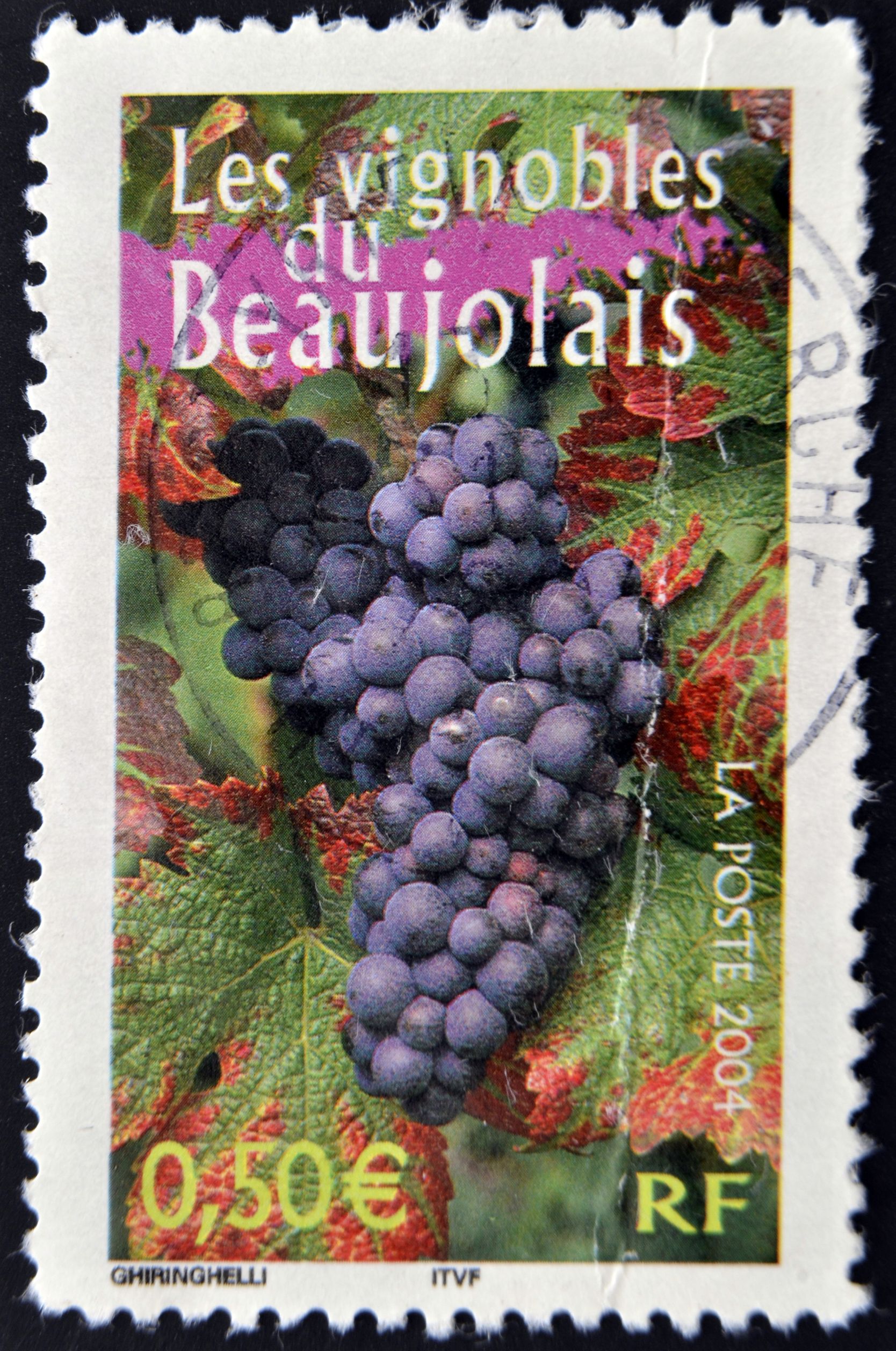
#1 – Brouilly is one of the ten Crus of Beaujolais. It is the largest and most southerly of the ten Beaujolais Crus,  Although this large area contains a wide range of microclimates and soil types, most of the vineyards face roughly east and capture the bright morning sunshine as it rises over the Saone River Valley. The hills to the west shelter the region from some of the colder influences coming in from western France, while warm sunshine throughout the growing season means that the vines of Brouilly are among the first to be harvest in Beaujolais every year.

#2 – Brouilly is one of the few AOCs of Beaujolais not to be named after a local village; instead, it is named for Mount Brouilly. The vineyard area of Brouilly surrounds the mountain, and covers land in the following six communes: Cercié, Charentay, Odenas, Quincié-en-Beaujolais, Saint-Etienne-la-Varenne, and Saint-Lager.

#3 – The mountain itself, set somewhat apart from the hills to the west of Beaujolais, was named after a Roman soldier named Brulius, who is credited with planting the first vines here over 2,000 years ago. There is a small chapel at the top of the hill, built in 1857 in order to place the vineyards under the protection of the Virgin Mary.  A smaller, separate AOC, Côte de Brouilly, covers vineyards on the higher slopes of the mountain, and is completely surrounded by the larger Brouilly AOC.

#4 – The Brouilly AOC is approved only for dry, red  wines based on the Gamay grape variety. Interestingly enough, the décret for the appellation also allows for white grapes to be grown in the region, and up to 15% of the wine may be based on Chardonnay, Aligoté, or Melon de Bourgogne.

Mount Brouilly

Mount Brouilly

#5 – There’s a legend for that: Brouilly is home to a Lieu-dit (small vineyard area bearing a traditional name) named Pisse-Vielle. Pisse-Vielle which pretty much sounds like what it means, which is for lack of a better way of saying it, “Piss, old woman.’

The  legend behind the name goes like this: A pious old woman, who regularly goes to confession, had her first meeting with the town’s new priest. The woman had very little to actually confess, so at the end of their meeting, the priest gave her his typical salutation of “Go, and sin no more!” Unfortunately, in the local dialect of the town, the word for to sin (pécher) and (for lack of a gentler way of saying it) to pee (pisser) sounded quite the same – and she thought the priest had commanded her to “Go and pee no more.” (Poor thing!) She tried her best to comply, but her husband didn’t quite understand the command, and went to see to Priest. The husband and the priest quickly cleared up the confusion, and in his rush to convey the news, the husband yelled down the street towards his wife – “Pisse Vielle!” (“Piss, Old Woman!”) – “the priest said it’s alright!”  As these things usually go, the neighbors heard his cry, and have not since forgotten!

Five Fast Facts about Entre-Deux-Mers

Map of Bordeaux via The Society of Wine Educators

Map of Bordeaux via The Society of Wine Educators

Five Fast Facts about Entre-Deux-Mers

#1 – Entre-Deux-Mers is named after its geographical location (“between two seas,” sometimes translated as “rivers” or “tides”), which refers to its situation in the lands between the Garonne and the Dordogne Rivers. These rivers provide the location with a mild, maritime climate and soils made up mainly of  a mix of clay and limestone. The area closest to the eastern shore of the Garonne River has a good deal of humidity – enough for the production of botrytis-affected wines.

#2 – The Entre-Deux-Mers AOC appellation is only approved for white wines. 70% of the grapes must be the “principal varieties” of Sauvignon Blanc, Sémillon, Muscadelle, or Sauvignon Gris.  The other 30% may include Merlot Blanc (maximum 30%), and a combined maximum of 10% of Mauzac, Colombard, and Ugni Blanc. Entre-Deaux-Mers AOC must contain a minimum of two grape varieties.

#3 – The Entre-Deux-Mers area contains within it 7 different AOCs. These appellations are approved for a variety of different types of wine. They are:

  • The aforementioned Entre-Deux-Mers AOC (for dry white wines), which includes the sub-zone of Entre-Deux-Mers Haut-Benauge
  • Cadillac (botrytis-affected sweet white wines)
  • Graves de Vayres AOC (for dry wines, both red and white)
  • Loupiac AOC (sweet white wines, may be affected by botrytis)
  • Côtes de Bordeaux-Saint-Macaire AOC (white wines – dry [sec], off-dry [moelleux]) and sweet/botrytis affected [liquoreux])
  • Ste-Croix-du-Mont AOC (sweet, botrytis-affected white wines)
  • Premières Côtes de Bordeaux AOC (white wines, off-dry to sweet)

#4 – The area produces a lot of good-to-very good red wine, with the majority of the red grapevines planted to Merlot. Much of this is bottled under the Bordeaux AOC; the best of these wines are sold under the Bordeaux Supérieur AOC.

Photo of Château de Rastignac by MOSSOT, via Wikimedia Commons

Photo of Château de Rastignac by MOSSOT, via Wikimedia Commons

#5 – Just-for-fun fact: A house (now sub-divided into apartments) in the area, known as Château de Rastignac, was designed to look like the US White House. While the architect, Mathurin Salat, never visited the United States, it is known that our wine-loving third President, Thomas Jefferson -who had reviewed the original architectural plans of the White House – did visit the area and meet Salat during Jefferson’s service as the US Ambassador to France.

The Bubbly Professor is “Miss Jane” Nickles of Austin, Texas – missjane@prodigy.net

Now on the Wine Travel Bucket List: Moldova

moldova mapQuick! Tell me everything you know about Moldova!

If you can’t come up with anything, don’t feel bad. As of yesterday, I knew a grand total of about three things about Moldova: one-it was part of the former Soviet Union; two-they make wine there (but I couldn’t tell you anything about it); and three-it is the home of the “Epic Sax Guy.”

Today, though, I can tell you quite a bit more about Moldova. For instance, Moldova is located between Romania and Ukraine, just north of the Black Sea. As part of the breakup of the Soviet Union, Moldova declared itself an independent state – the Republic of Moldova – in 1991. The transition has not been easy and there has been civil unrest and economic woes. But there has also been progress, and in 2013 Moldova entered into an “Association Agreement” with the European Union, meaning that they can work towards aligning their practices with EU standards in the hopes of becoming a member in the future. It should be interesting to see how that unfolds.

This also means that wines of Moldova may soon fall under EU standards, and perhaps that means that more wine lovers may soon become a bit more familiar with Moldovan wines. For starters, here are a few fascinating facts about the wines of Moldova:

It’s ancient: Moldova has one of the oldest wine cultures in the world; there is evidence of wine production in the area as far back as 3,000 BC.

It’s growing: Moldova currently has over 275,000 acres of vines. Of the vinifera grapes planted, about 70% of them are international varieties of the Cabernet-Merlot-Chardonnay type. About 20% are grapes sometimes called “Caucasian grapes” and are widely grown throughout eastern Europe – Rkatsiteli and Saperavi, for example.

"Caves Milestii Mici Moldavie" by Photo: Myrabella / Wikimedia Commons.

“Caves Milestii Mici Moldavie” by Photo: Myrabella / Wikimedia Commons.

It’s indigenous: About 10% of Moldova’s vineyards are planted to the indigenous varieties of the region. Some of these include Feteasca Alba (white), Feteasca Regala (white), Feteasca Neagra (red), Rara Neagra (red), and Viorica (white). These are surely some of the most historic and unique wines of the region.

It’s deep: Moldova is well-known for its historic and extensive wine tunnels. The cellars of Mileștii Mici Winery stretch on for over 135 miles, at an average depth of 250 feet. The cellar, built in the style of a feudal fortress, is understandably one of Moldova’s most popular tourist attractions. With over 1.5 million bottles of wine from all over the world – some dating back to the 1960’s – Mileștii Mici Winery’s “Golden Collection” holds the Guinness World Record for the world’s largest wine cellar and wine collection.

It sparkles: During the time of the Soviet Union, Moldova was a large producer of the sparkling wine known at the time as Sovetskoye Shampanskoye (“Soviet Champagne”). The Cricova Winery, the largest producer of Moldovan sparklers, makes its wines using the “Traditional Method” and ages its wine in its underground cellars. The underground cellars of the Cricova Winery –  stretching on for 45 miles and housing a large wine collection known as the “National Vinotheque” – are almost as impressive as the cellar at Mileștii Mici.

Map via the Wine of Moldova site: http://wineofmoldova.com/en/

Map via the Wine of Moldova site: http://wineofmoldova.com/en/

It has 4 designated regions, including 3 PGIs:

  • The historic region of Balti is the smallest, northernmost and coolest region. The Balti region produces mainly white wines as well as a high-quality brandy known as Divin.
  • The Codru PGI is the largest area, producing over 60% of the country’s wine.  This cool-to-warm-climate region, surrounded by forests, is known for white wines.
  • The Valul lui Traian PGI, located in the southeast of the country, is the leading producer of red wine.
  • The Ștefan-Vodă PGI, located in the basin of the Nistru River, includes the famous Purcari region. It produces both red and white wines. Purcari wines have been renowned throughout Europe since 1878, when Negru de Purcari (a red wine made with Cabernet Sauvignon, Rara Neagră and Saperavi grapes) was awarded a gold medal at the World Exhibition.

For more information, visit the Wine of Moldova website!


Jean-Antoine Claude Chaptal, Comte de Chanteloup

Portrait of Jean-Antoine Chaptal (1815)  by Anicet Charles Gabriel Lemonnier

Portrait of Jean-Antoine Chaptal (1815) by Anicet Charles Gabriel Lemonnier

Winemakers all over the world consider him a friend, but in public, they might pretend they don’t know him. No, he isn’t a fuzzy underworld-figure selling steroids; nor is he an embarrassing relative, nor a wine writer with a price. He is Jean-Antoine Claude Chaptal, Comte de de Chanteloup!

Perhaps we should refer to him by the name and moniker by which he is best-known (to wine lovers, that is), simply Jean-Antoine Chaptal. Jean-Antoine, a scientist, professor, and industrialist, perfected the process of adding sugar to grape must before fermentation in order to increase the final level of alcohol in the wine. That process, now known as chaptalization, is still in use today.

Jean-Antoine was actually a fascinating man. Born on June 4, 1756, he died in 1832, having lived until age 76. He was a both a chemist and a medical doctor. He chaired the chemistry department of the medical school at the University of Montpellier, and is credited with coining the term “nitrogen” (fr. nitrogène) for a gas produced via nitric acid, previously referred to as “mephitic air.”

A learned, confident, and outspoken man, Chaptal was arrested and imprisoned during the French Revolution. Despite this, after the revolution Dr. Chaptal became a statesman, succeeding Lucien Bonaparte as Minister of the Interior of the First French Empire. During his time as Minister of the Interior, Dr. Chaptal established the Paris Hospital, built a chemical manufactory near Paris, founded a school of arts, and instituted the metric system in France.

Dr. Chaptal, a decorated man of science, was conferred the title of Comte de Chanteloup by Napoleon himself.  In 1816, he was nominated a member of the French Academy of Sciences by Louis XVIII. He was awarded the Grand Cross of the Legion of Honor, the cordon of the Ordre de Saint-Michel, and his name is one of the 72 names inscribed on the Eiffel Tower. Rue Chaptal in Paris’ Montmarte neighborhood is named after him.

Perhaps, however, his greatest legacy is that silky Pinot Noir, that bracing Riesling, or that lighter-than-air Champagne that you are enjoying right now. As we know, it just might have been produced with a little help from chemistry, as seen by the mind of Jean-Antoine Claude Chaptal, Comte de Chanteloup.

The Bubbly Professor is “Miss Jane” Nickles of Austin, Texas – missjane@prodigy.net

Decoding the Amtliche Prüfungsnummer

AP rhineThis is a blog post borne of necessity…in teaching my online CSW Prep Classes, I always dread “Module 8.” Module 8, you see, covers the wines of Germany and Austria.

This does not in any way mean that I dread talking about – or partaking of – the wines of Germany and Austria. As a matter of fact, the Grosses Gewachs Mosel Riesling or Kremstal DAC Grüner Veltliner I am sipping alongside is most likely going to be the highlight of my day.

But it’s all about the words, the language, the umlauts and the eszetts. They are all a bit intimidating and confusing to me, being a native English speaker who never traveled to Europe until the 4th decade of her life.

So, in an attempt to dive straight to the heart (in das Herz) of the matter (von tge Sache) I set about to understand something that had always baffled me: Amtliche Prüfungsnummer. It turns out, the Amtliche Prüfungsnummer, while certainly appearing cryptic and complicated, contains a lot of useful information about a German wine, and absolutely reveals the seemingly complex tangle that is German wine to be a highly organized, useful system.

First of all, for the simple language (thank you, Google Translate).

Amtliche – “Official”

Prüfungsnummer – “Exam Number”

Thus, our Amtliche Prüfungsnummer, commonly referred to as the “A.P. Number,” translates as  “official exam number,” although most wine references will refer to it as the “official approval number.”  The A.P. Number identifies the wine as to producer, village of origin, and testing center where the wine was awarded its official approval. The process is required for all wines bottled under the classifications of QbA and Prädikatswein.

The actual number consists of several blocks of figures – surely you’ve seen one, looking quite complicated, such as this example:

AP wine glassA.P. NR. 2 606 319 011 07

Here is what those numbers mean:

2 606 319 011 07: 2 – The first number represents region where the wine was tested. The wine will be tested in the same general region where it was produced, however, there are only 9 testing centers as opposed to 13 quality wine regions (Anbaugebiete). This testing center – number 2 – handles wines from the Middle Mosel and Rheingau.

2 606 319 011 07: 606 – The second number, which may be two or three digits, represents the particular village within the larger testing region, where the wine was produced.

2 606 319 011 07: The third number represents the particular bottler (producer).

2 606 319 011 07: The fourth number represents the sequential order that the wine was submitted by that produce. In other words, this is the eleventh wine submitted for testing in this particular year by the producer.

2 606 319 011 07: The fifth number represents the last two digits of the year that the wine was submitted for testing, usually the year after the vintage.

Whew! Do you have information overload? It’s a lot of data, but remember, this is all to protect the quality and reputation of German wines, which is good for everyone – even us consumers. Producers are required to keep sample bottles of each wine for a certain number of years, and thus the system is such that, if a complaint were received or someone had reason to doubt a wine’s authenticity, a bottle of the specific wine could be located and tested.

Simple? No.

Effective? Yes.

I sleep better at night knowing my Pflaz Riesling (5 594 022 17 12) and my Rheingau Spätburgunder (4 383 675 01 11) is signed, sealed, and approved!

The Bubbly Professor is…”Miss Jane” Nickles of Austin, Texas – jnickles@prodigy.net


The Majestic Cascades

Map of the Cascade range by Shannon, via Wikimedia Commons.

Map of the Cascade range by Shannon, via Wikimedia Commons.

CSW Students might know a bit about the Cascade Mountain Range. They certainly know that the majority of Washington State’s vineyards are planted to the east of and in the rain shadow of the Cascades.

They also know that one of the main differences between the geography of Washington State’s wine industry and Oregon’s wine industry is that in contrast, the majority of Oregon’s vineyards are located to the west of the Cascades, sheltered from the effects of the Pacific Ocean by the much tamer mountains of the 200 mile-long Oregon Coast Range.  And they have probably heard of the Columbia Gorge, as it’s a tiny AVA that straddles the Oregon and Washington State lines.

And that’s a pretty good start, but there is so much more to know…

The Cascade Range is impressive, stretching for over 800 miles from Mount Lytton in British Columbia, through Cascades National Park in Washington State, past Mount Hood in Oregon, and ending just south of Mount Lassen in Northern California’s Shasta County. The highest peak in the Cascades is Washington State’s Mount Rainier, which rises to 14,411 feet above sea level and dominates the surroundings for miles around. Mount Saint Helens, whose 1980 eruption transformed a mountain with a 9,677 foot tall summit into an 8,365 foot high mountain with a 1 mile-wide horseshoe-shaped crater, is also part of the Cascade Range.

The range, particularly in the area north of Mount Rainier, is extremely rugged. Many of the smaller mountains in this area are steep and glaciated, looming over the low valleys below. The topography settles down a bit as the range winds southward, but even its southernmost peak, Mount Lassen, rises 5,229 feet above its surroundings to an elevation of 10,457 feet above sea level.

Mount Saint Helens, post her 1980 eruption

Mount Saint Helens, post her 1980 eruption

Due to its proximity to the Pacific Ocean and its westerly winds, the Cascades form a rain shadow for much of the inland Pacific Northwest. The areas to the west of the mountains are known for rainy conditions, and as the elevation climbs, for year-round snow and ice. The western slopes of the Northern Cascades can have annual snow accumulations of up to 500 inches, and with accumulation of over 1,000 inches in exceptional years.

In comparison, on the arid plateau located to the east of the mountains, annual rainfall averages 9 inches. This area, now known as the Columbia River Plateau, was formed over 16 million years ago as the lava flows from Cascade volcanoes coalesced, and covers a 200,000 square mile region in eastern Washington, Oregon, Northern California and Idaho. As all good wine students know, this is the area where almost all of Washington State’s commercial vineyards are planted.

The Columbia Gorge, located where the Columbia River forms the border between Oregon and Washington State, is the only major break in the American section of the Cascade Mountains. The Gorge was formed over the millennia as the Columbia River eroded its way through the burgeoning mountains on its way to the Pacific off of the Columbia Plateau. Lewis and Clark, in 1805, were able to reach the Pacific through the impressive Cascades via the Columbia Gorge, which for many years was considered the only practical passage through the surrounding mountains.

Vineyards in the Columbia River Gorge

Vineyards in the Columbia River Gorge

In Canada, the country’s second largest wine region, The Okanagan, is also located in the rain shadow of the Cascade Range. The region, which stretches for 100 miles north of the US border with Washington State, shares many of the same geographical/geological features that define viticulture in Washington State, such as a continental climate (somewhat moderated by Lake Okanagan), long daylight hours in the growing season (due to the northerly latitudes), an average of 9 inches of rain per year (requiring irrigation), and the risk of frost damage to the vines over the cold winters.

Other people may note that the majestic Cascades are known for ski resorts, hydro-electric power, strong westward rivers, Douglas Fir trees, important water reserves, Klamath Falls, alpine elk, glaciers, grizzly bears, blueberries, and some of the few remaining wild wolf packs in North America… but for some of us, it’s all about the wine!

The Bubbly Professor is “Miss Jane” Nickles of Austin, Texas: missjane@prodigy.net


Long Time Gonna Study This!

LTGSTLong time gonna study this!

No…this is not the Bubbly Professor slipping up and using poor grammar…rather, it is shorthand for the method I’ve been using for the past several decades to introduce and teach about (region by region) the wide world of wine!

Long Time Gonna Study This is a mnemonic device to help me remember the 5 most important things one needs to know about any wine region – in order to really understand (and not just “memorize”) the facts and figures, grapes and places, and other details about the area. The letters stand for: Location, Terroir, Grapes, Styles, and Terminology.

This is not the “easy way out” for studying. This is, however, a very effective study technique as it gives meaning and context to what you are studying. As I’ve said so many times before…your brain just does not like (and is not good at) fixing random words and numbers into long-term memory. What your brain is really good at remembering are things that are personal, contextual, spatial, surprising, physical, and humorous in nature.

So…how do we use this knowledge to make our wine studies more effective? We make our studies more contextual (the background story), spatial (how this location relates to other locations), physical (taste the wine, look at the label, pick up the bottle even if you can’t afford to buy it), personal (draw a map, say the words out loud, visit the region). If it can be made to be surprising or humorous along the way, so much the better!

Here is a more detailed explanation of the use of the LTGST study method:

LTGST terroir 2Location:

  • For starters, we need to know the basics: where is this area located?
  • Get specific – latitude, proximity to well-known cities and landmarks, and location in relation to other wine regions.
  • Research the topography – rivers, lakes, oceans, mountain ranges.
  • The best way to do this is trace a map, get to googling and draw in the cities, mountains, and rivers. By doing so you are making your studies more physical, which as we know will greatly improve your memory of the topic.
  • It’s important to study this first, as it sets the stage for the information to follow.

Terroir:

  • What is the local climate, soil, topography, etc and how does it affect the wine?
  • Knowing the details on the location (latitude, near-by mountains, rivers, and oceans) will translate into a better understanding of the terroir (see how that works)?

Grapes:

  • What grapes are grown there?
  • Are they blends, or single varietals?
  • Understanding the location, which leads to a better contextualization of the terroir, will lead to better understanding of what grapes grown in a certain location and why. There’s a good reason that Alsace grows mainly white grapes and Bordeaux can grow botrytis-affected Semillon so well – and it has everything to do with location and terroir!

LTGST terminologyStyles:

  • After we know the overall climate and the grape varieties that are grown in a certain region, we’re ready to study the types of wines made in a region.
  • What styles of wine do they produce? Dry, sweet, still, sparkling?
  • What unique production techniques create these wines?

Terminology:

  • What terms do you need to understand the wines and their labels?
  • Some regions, such as Bordeaux and Burgundy, have a vocabulary all of their own and this list can get very long indeed; others are much simpler.

So there you have it…the LTGST method of studying the wines of the world. Like I said earlier in this post, it is certainly not quick or easy, but I guarantee you it’s effective.

Click for more advice on how to study wine and spirits.

Good luck with your studies, and please let me know if you have any questions, comments, or success with this method!

The Bubbly Professor is “Miss Jane” Nickles of Austin, Texas   missjane@prodigy.net

Travels in Wine World: The Pinhão Train Station

136If you find yourself in the city of Porto—once you have taken your fill of the gorgeous waterfront, the amazing tours of the Port Wine Lodges, and the walking back-and-forth across the bridges—you should get yourself a train ticket.

Arrange to leave early in the morning, when the São Bento Railway Station is a world unto itself, and be sure and hit the snack bar for some coffee (café com leite) for the road.  Pick up a few custard tarts—Pasteis de Nata—as well, because one should never pass up the opportunity for Pasteis de Nata, and you can only get the real deal in Portugal.

Make sure your ticket is for Pinhão, and grab yourself a window seat.  137Prepare yourself for a journey of about three hours. Don’t be concerned that there might be some error in the schedule. This is not the high-speed train that whisked you 200 miles from Lisbon to Porto in 140 minutes, but one that will wind you along the banks of the Douro River, pull you through dark tunnels, and rattle you along cliff-hanging tracks.  It will indeed take three full hours to cover 70 miles.

Your train journey will land you at the Pinhão train station.  You’ll be smack in the middle of the Cima Corgo, the geographic center of the Douro DOC and the core of the Port Wine production region.  You’ll be able to check into a rustic little hotel or take a suite at The Vintage House (a somewhat incongruous yet delightfully glistening resort just a short walk away).  You’ll be able to wander the steep riverside streets in search of lunch or take a death-defying taxi ride straight up the side of the mountain to Fonseca’s Quinta do Panascal Vineyards.

140But before you can check into the hotel, wander the streets, or tour the vineyard, you will have to tear yourself away from the train station itself.  It’s just a tiny station and only one room.  It is so rustic that you have to hustle down and across the tracks themselves to catch your train—there’s no fancy pedestrian overpass or glass elevator here.  But you’ll find it hard to tear yourself away once you notice the blue tile mosaics—a local specialty known as azulejo—that line the walls of the station.

Azulejo is a form of Portuguese ceramic tile that is painted and tin-glazed. As a central aspect of Portuguese culture, Azulejo has been produced without interruption for five centuries. There is even a national Azulejo gallery in Lisbon—although you can see Azulejos everywhere in Portugal.  Azulejos are found on the interior and exterior of churches, palaces, ordinary homes, department stores, and—as you can tell from my story—railway stations.

These beautiful Azulejos have been a part of the Pinhão train station since 1937.  They chronicle the history of the town and the vineyards, the wineries, and life along the Douro River.

The Bubbly Professor is “Miss Jane” Nickles of San Marocs, Texas

Pictures of Pinhão from the Portugal leg of our Iberian Peninsula honeymoon, 2010.  That’s Shields T. up there, guarding the luggage while his wife takes pictures of the walls.

145138


Tales of the Vine: Sherry, Sir?

"Sherry, Sir?" by William Powell Firth, 1853

Most of the students in my beginning wine studies class have never tasted real sherry.  If they have encountered it at all, it was most likely the faux version-in-a-jug known around here as “cooking sherry” and used for deglazing sauté pans in their culinary lab classes (what a shame).

They also tend to be of the opinion, common in North America, that Sherry is a drink consumed by British old ladies who sit around sipping Sherry, pinky fingers extended, while nibbling on cucumber sandwiches and bonbons.  

While this might be a mere cliché, one cannot deny the British love for Sherry.  The British have long had a love for Sherry, and are the largest export market for wines from Jerez to this day.  But have you ever wondered why?

The story goes back to the days of Sir Francis Drake, Queen Elizabeth, the famous Spanish Armada, and Europe’s exploration of the new world. 

In the 1400’s, the great capitals of Europe began sending explorers such as Ferdinand Magellan and Christopher Columbus to find passage ways for trade and to discover what lie beyond the wide oceans.  Christopher Columbus, despite being of Italian birth, made his most famous deal with King Ferdinand and Queen Isabella of Spain and set sail from Palos de la Frontera, Cadiz, and Sanlucar – all regions well known for wine.

Wine was considered absolutely necessary for these journeys, as any water on board would quickly become unfit to drink due to long length of the journeys. The wines for the ships were fortified with alcohol to give them some preservative effect, beginning the tradition of many such fortified wines.

These voyages were spectacularly successful for Spain as explorers began to return in ships heavily laden with gold, silver, and other wealth from the new world. At the same time that Spain was profiting from the plunder of Mexico and Peru, young Queen Elizabeth of England was benefitting from the wealth brought in by her expanding colonies in North America.

However, it soon became clear that America could not begin to produce the immediate wealth arriving by the galleon load from Spain’s richer New World territories. Knowing that an island kingdom must be strong to survive, Elizabeth turned a blind eye as Sir Francis Drake and other English sea captains raided and seized the treasures from Spain’s heavily laden and slow-moving gold ships. It did not take long for the King of Spain, Philip II, to have had enough of England’s daring Queen and her “sea wolves” and he soon hatched a plan to invade England.   

Golden-hinde_400In 1580, King Philip ordered that a great Armada, or Navy, be built.  His plan was to invade England, remove Elizabeth from the throne, and crown himself king in Westminster Cathedral.  However, Elizabeth heard of the plan and made a bold preemptive strike, led by the skilled seaman Sir Francis Drake.

Drake was sent out from Plymouth, on April 12, 1587. He appeared before Cadiz on April 29th, and late in the afternoon of that day he sailed boldly into the harbor, completely surprising the defenders, and throwing the Spanish land and naval forces there into a panic.

All the remainder of the day, and all the next day, Drake plundered and burned. Thirty-seven naval and merchant vessels were destroyed with very small losses on the English side. During the raid, Drake managed to seize 2,900 casks of Sherry from the Spanish naval stores, which he soon delivered triumphantly to Queen Elizabeth.

amontilladoAs you might guess, it became all the rage in England to drink the captured Sherry.  Spanish Sherry was suddenly the most popular drink in England.  Legend even tells us that the English loved to call it “sack” because, well, Drake had sacked the Spanish supply port. (There are other explanations for the term “sack” as well.)

In the ultimate show of British praise, Shakespeare praised Sherry, or “sack,” when he had Sir John Falstaff proudly declare in Henry IV, Part 2, “If I had a thousand sons, the first humane principle I would teach them should be, to forswear thin potations and to addict themselves to sack”.

At top –  “Sherry, Sir?” by William Powell Firth, 1853