Five Fast Facts about Brouilly

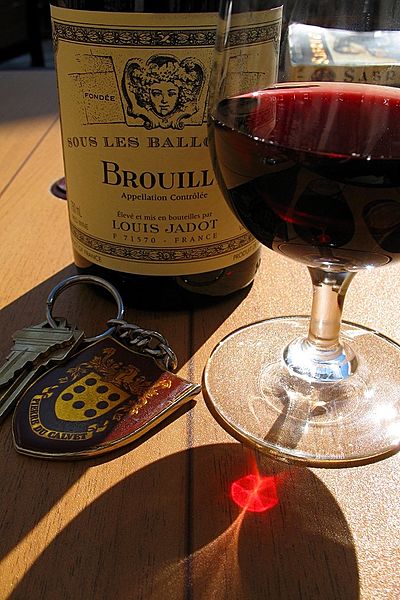
Photo of Louis Jadot Brouilly by Rob Ireton, via Wikimedia Commons

Photo of Louis Jadot Brouilly by Rob Ireton, via Wikimedia Commons

Five Fast Facts about Brouilly

#1 – Brouilly is one of the ten Crus of Beaujolais. It is the largest and most southerly of the ten Beaujolais Crus,  Although this large area contains a wide range of microclimates and soil types, most of the vineyards face roughly east and capture the bright morning sunshine as it rises over the Saone River Valley. The hills to the west shelter the region from some of the colder influences coming in from western France, while warm sunshine throughout the growing season means that the vines of Brouilly are among the first to be harvest in Beaujolais every year.

#2 – Brouilly is one of the few AOCs of Beaujolais not to be named after a local village; instead, it is named for Mount Brouilly. The vineyard area of Brouilly surrounds the mountain, and covers land in the following six communes: Cercié, Charentay, Odenas, Quincié-en-Beaujolais, Saint-Etienne-la-Varenne, and Saint-Lager.

#3 – The mountain itself, set somewhat apart from the hills to the west of Beaujolais, was named after a Roman soldier named Brulius, who is credited with planting the first vines here over 2,000 years ago. There is a small chapel at the top of the hill, built in 1857 in order to place the vineyards under the protection of the Virgin Mary.  A smaller, separate AOC, Côte de Brouilly, covers vineyards on the higher slopes of the mountain, and is completely surrounded by the larger Brouilly AOC.

#4 – The Brouilly AOC is approved only for dry, red  wines based on the Gamay grape variety. Interestingly enough, the décret for the appellation also allows for white grapes to be grown in the region, and up to 15% of the wine may be based on Chardonnay, Aligoté, or Melon de Bourgogne.

Mount Brouilly

Mount Brouilly

#5 – There’s a legend for that: Brouilly is home to a Lieu-dit (small vineyard area bearing a traditional name) named Pisse-Vielle. Pisse-Vielle which pretty much sounds like what it means, which is for lack of a better way of saying it, “Piss, old woman.’

The  legend behind the name goes like this: A pious old woman, who regularly goes to confession, had her first meeting with the town’s new priest. The woman had very little to actually confess, so at the end of their meeting, the priest gave her his typical salutation of “Go, and sin no more!” Unfortunately, in the local dialect of the town, the word for to sin (pécher) and (for lack of a gentler way of saying it) to pee (pisser) sounded quite the same – and she thought the priest had commanded her to “Go and pee no more.” (Poor thing!) She tried her best to comply, but her husband didn’t quite understand the command, and went to see to Priest. The husband and the priest quickly cleared up the confusion, and in his rush to convey the news, the husband yelled down the street towards his wife – “Pisse Vielle!” (“Piss, Old Woman!”) – “the priest said it’s alright!”  As these things usually go, the neighbors heard his cry, and have not since forgotten!

Five Fast Facts about Entre-Deux-Mers

Map of Bordeaux via The Society of Wine Educators

Map of Bordeaux via The Society of Wine Educators

Five Fast Facts about Entre-Deux-Mers

#1 – Entre-Deux-Mers is named after its geographical location (“between two seas,” sometimes translated as “rivers” or “tides”), which refers to its situation in the lands between the Garonne and the Dordogne Rivers. These rivers provide the location with a mild, maritime climate and soils made up mainly of  a mix of clay and limestone. The area closest to the eastern shore of the Garonne River has a good deal of humidity – enough for the production of botrytis-affected wines.

#2 – The Entre-Deux-Mers AOC appellation is only approved for white wines. 70% of the grapes must be the “principal varieties” of Sauvignon Blanc, Sémillon, Muscadelle, or Sauvignon Gris.  The other 30% may include Merlot Blanc (maximum 30%), and a combined maximum of 10% of Mauzac, Colombard, and Ugni Blanc. Entre-Deaux-Mers AOC must contain a minimum of two grape varieties.

#3 – The Entre-Deux-Mers area contains within it 7 different AOCs. These appellations are approved for a variety of different types of wine. They are:

  • The aforementioned Entre-Deux-Mers AOC (for dry white wines), which includes the sub-zone of Entre-Deux-Mers Haut-Benauge
  • Cadillac (botrytis-affected sweet white wines)
  • Graves de Vayres AOC (for dry wines, both red and white)
  • Loupiac AOC (sweet white wines, may be affected by botrytis)
  • Côtes de Bordeaux-Saint-Macaire AOC (white wines – dry [sec], off-dry [moelleux]) and sweet/botrytis affected [liquoreux])
  • Ste-Croix-du-Mont AOC (sweet, botrytis-affected white wines)
  • Premières Côtes de Bordeaux AOC (white wines, off-dry to sweet)

#4 – The area produces a lot of good-to-very good red wine, with the majority of the red grapevines planted to Merlot. Much of this is bottled under the Bordeaux AOC; the best of these wines are sold under the Bordeaux Supérieur AOC.

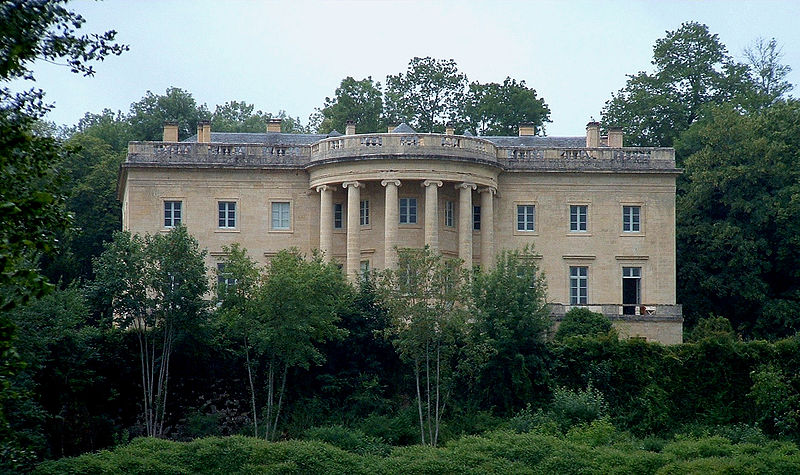
Photo of Château de Rastignac by MOSSOT, via Wikimedia Commons

Photo of Château de Rastignac by MOSSOT, via Wikimedia Commons

#5 – Just-for-fun fact: A house (now sub-divided into apartments) in the area, known as Château de Rastignac, was designed to look like the US White House. While the architect, Mathurin Salat, never visited the United States, it is known that our wine-loving third President, Thomas Jefferson -who had reviewed the original architectural plans of the White House – did visit the area and meet Salat during Jefferson’s service as the US Ambassador to France.

The Bubbly Professor is “Miss Jane” Nickles of Austin, Texas – missjane@prodigy.net

Now on the Wine Travel Bucket List: Moldova

moldova mapQuick! Tell me everything you know about Moldova!

If you can’t come up with anything, don’t feel bad. As of yesterday, I knew a grand total of about three things about Moldova: one-it was part of the former Soviet Union; two-they make wine there (but I couldn’t tell you anything about it); and three-it is the home of the “Epic Sax Guy.”

Today, though, I can tell you quite a bit more about Moldova. For instance, Moldova is located between Romania and Ukraine, just north of the Black Sea. As part of the breakup of the Soviet Union, Moldova declared itself an independent state – the Republic of Moldova – in 1991. The transition has not been easy and there has been civil unrest and economic woes. But there has also been progress, and in 2013 Moldova entered into an “Association Agreement” with the European Union, meaning that they can work towards aligning their practices with EU standards in the hopes of becoming a member in the future. It should be interesting to see how that unfolds.

This also means that wines of Moldova may soon fall under EU standards, and perhaps that means that more wine lovers may soon become a bit more familiar with Moldovan wines. For starters, here are a few fascinating facts about the wines of Moldova:

It’s ancient: Moldova has one of the oldest wine cultures in the world; there is evidence of wine production in the area as far back as 3,000 BC.

It’s growing: Moldova currently has over 275,000 acres of vines. Of the vinifera grapes planted, about 70% of them are international varieties of the Cabernet-Merlot-Chardonnay type. About 20% are grapes sometimes called “Caucasian grapes” and are widely grown throughout eastern Europe – Rkatsiteli and Saperavi, for example.

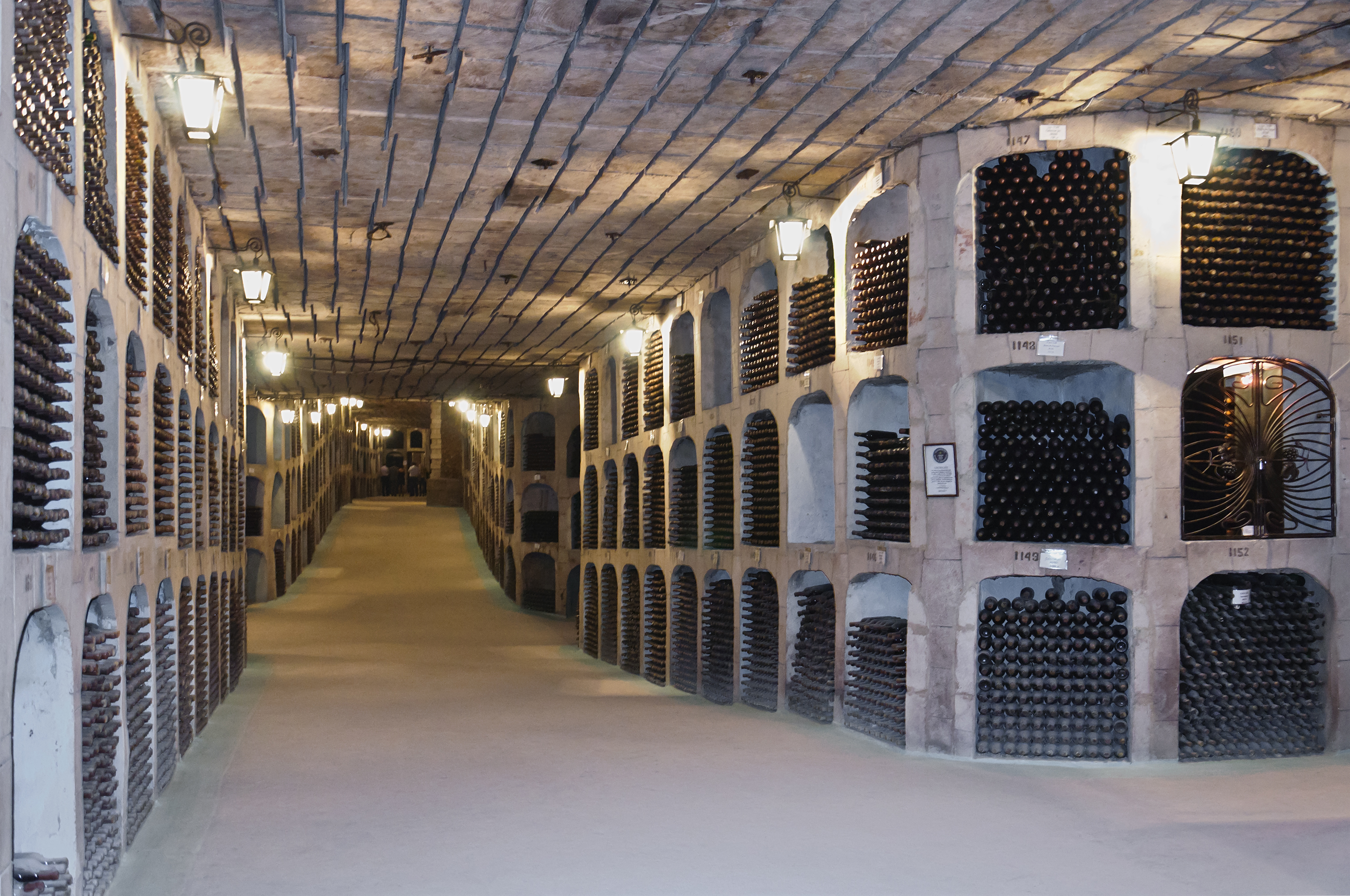
"Caves Milestii Mici Moldavie" by Photo: Myrabella / Wikimedia Commons.

“Caves Milestii Mici Moldavie” by Photo: Myrabella / Wikimedia Commons.

It’s indigenous: About 10% of Moldova’s vineyards are planted to the indigenous varieties of the region. Some of these include Feteasca Alba (white), Feteasca Regala (white), Feteasca Neagra (red), Rara Neagra (red), and Viorica (white). These are surely some of the most historic and unique wines of the region.

It’s deep: Moldova is well-known for its historic and extensive wine tunnels. The cellars of Mileștii Mici Winery stretch on for over 135 miles, at an average depth of 250 feet. The cellar, built in the style of a feudal fortress, is understandably one of Moldova’s most popular tourist attractions. With over 1.5 million bottles of wine from all over the world – some dating back to the 1960’s – Mileștii Mici Winery’s “Golden Collection” holds the Guinness World Record for the world’s largest wine cellar and wine collection.

It sparkles: During the time of the Soviet Union, Moldova was a large producer of the sparkling wine known at the time as Sovetskoye Shampanskoye (“Soviet Champagne”). The Cricova Winery, the largest producer of Moldovan sparklers, makes its wines using the “Traditional Method” and ages its wine in its underground cellars. The underground cellars of the Cricova Winery –  stretching on for 45 miles and housing a large wine collection known as the “National Vinotheque” – are almost as impressive as the cellar at Mileștii Mici.

Map via the Wine of Moldova site: http://wineofmoldova.com/en/

Map via the Wine of Moldova site: http://wineofmoldova.com/en/

It has 4 designated regions, including 3 PGIs:

  • The historic region of Balti is the smallest, northernmost and coolest region. The Balti region produces mainly white wines as well as a high-quality brandy known as Divin.
  • The Codru PGI is the largest area, producing over 60% of the country’s wine.  This cool-to-warm-climate region, surrounded by forests, is known for white wines.
  • The Valul lui Traian PGI, located in the southeast of the country, is the leading producer of red wine.
  • The Ștefan-Vodă PGI, located in the basin of the Nistru River, includes the famous Purcari region. It produces both red and white wines. Purcari wines have been renowned throughout Europe since 1878, when Negru de Purcari (a red wine made with Cabernet Sauvignon, Rara Neagră and Saperavi grapes) was awarded a gold medal at the World Exhibition.

For more information, visit the Wine of Moldova website!


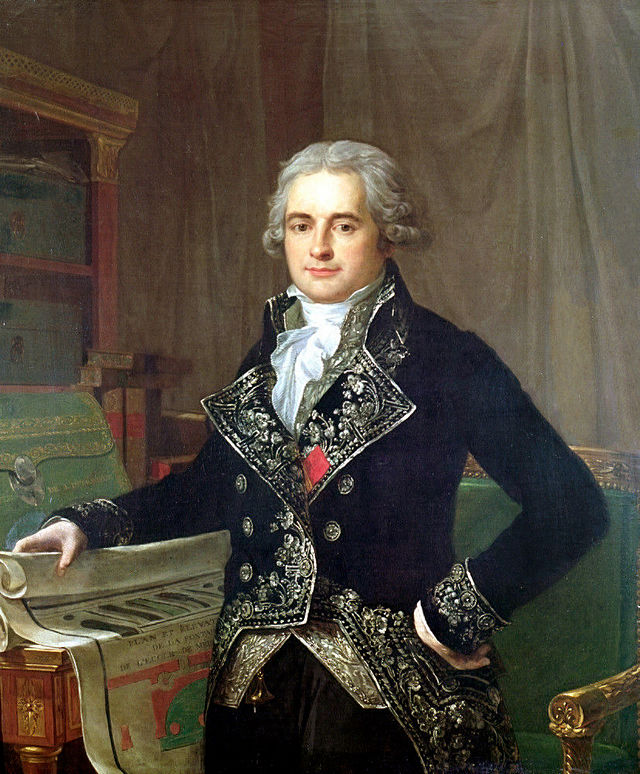
Jean-Antoine Claude Chaptal, Comte de Chanteloup

Portrait of Jean-Antoine Chaptal (1815)  by Anicet Charles Gabriel Lemonnier

Portrait of Jean-Antoine Chaptal (1815) by Anicet Charles Gabriel Lemonnier

Winemakers all over the world consider him a friend, but in public, they might pretend they don’t know him. No, he isn’t a fuzzy underworld-figure selling steroids; nor is he an embarrassing relative, nor a wine writer with a price. He is Jean-Antoine Claude Chaptal, Comte de de Chanteloup!

Perhaps we should refer to him by the name and moniker by which he is best-known (to wine lovers, that is), simply Jean-Antoine Chaptal. Jean-Antoine, a scientist, professor, and industrialist, perfected the process of adding sugar to grape must before fermentation in order to increase the final level of alcohol in the wine. That process, now known as chaptalization, is still in use today.

Jean-Antoine was actually a fascinating man. Born on June 4, 1756, he died in 1832, having lived until age 76. He was a both a chemist and a medical doctor. He chaired the chemistry department of the medical school at the University of Montpellier, and is credited with coining the term “nitrogen” (fr. nitrogène) for a gas produced via nitric acid, previously referred to as “mephitic air.”

A learned, confident, and outspoken man, Chaptal was arrested and imprisoned during the French Revolution. Despite this, after the revolution Dr. Chaptal became a statesman, succeeding Lucien Bonaparte as Minister of the Interior of the First French Empire. During his time as Minister of the Interior, Dr. Chaptal established the Paris Hospital, built a chemical manufactory near Paris, founded a school of arts, and instituted the metric system in France.

Dr. Chaptal, a decorated man of science, was conferred the title of Comte de Chanteloup by Napoleon himself.  In 1816, he was nominated a member of the French Academy of Sciences by Louis XVIII. He was awarded the Grand Cross of the Legion of Honor, the cordon of the Ordre de Saint-Michel, and his name is one of the 72 names inscribed on the Eiffel Tower. Rue Chaptal in Paris’ Montmarte neighborhood is named after him.

Perhaps, however, his greatest legacy is that silky Pinot Noir, that bracing Riesling, or that lighter-than-air Champagne that you are enjoying right now. As we know, it just might have been produced with a little help from chemistry, as seen by the mind of Jean-Antoine Claude Chaptal, Comte de Chanteloup.

The Bubbly Professor is “Miss Jane” Nickles of Austin, Texas – missjane@prodigy.net

Long Time Gonna Study This!

LTGSTLong time gonna study this!

No…this is not the Bubbly Professor slipping up and using poor grammar…rather, it is shorthand for the method I’ve been using for the past several decades to introduce and teach about (region by region) the wide world of wine!

Long Time Gonna Study This is a mnemonic device to help me remember the 5 most important things one needs to know about any wine region – in order to really understand (and not just “memorize”) the facts and figures, grapes and places, and other details about the area. The letters stand for: Location, Terroir, Grapes, Styles, and Terminology.

This is not the “easy way out” for studying. This is, however, a very effective study technique as it gives meaning and context to what you are studying. As I’ve said so many times before…your brain just does not like (and is not good at) fixing random words and numbers into long-term memory. What your brain is really good at remembering are things that are personal, contextual, spatial, surprising, physical, and humorous in nature.

So…how do we use this knowledge to make our wine studies more effective? We make our studies more contextual (the background story), spatial (how this location relates to other locations), physical (taste the wine, look at the label, pick up the bottle even if you can’t afford to buy it), personal (draw a map, say the words out loud, visit the region). If it can be made to be surprising or humorous along the way, so much the better!

Here is a more detailed explanation of the use of the LTGST study method:

LTGST terroir 2Location:

  • For starters, we need to know the basics: where is this area located?
  • Get specific – latitude, proximity to well-known cities and landmarks, and location in relation to other wine regions.
  • Research the topography – rivers, lakes, oceans, mountain ranges.
  • The best way to do this is trace a map, get to googling and draw in the cities, mountains, and rivers. By doing so you are making your studies more physical, which as we know will greatly improve your memory of the topic.
  • It’s important to study this first, as it sets the stage for the information to follow.

Terroir:

  • What is the local climate, soil, topography, etc and how does it affect the wine?
  • Knowing the details on the location (latitude, near-by mountains, rivers, and oceans) will translate into a better understanding of the terroir (see how that works)?

Grapes:

  • What grapes are grown there?
  • Are they blends, or single varietals?
  • Understanding the location, which leads to a better contextualization of the terroir, will lead to better understanding of what grapes grown in a certain location and why. There’s a good reason that Alsace grows mainly white grapes and Bordeaux can grow botrytis-affected Semillon so well – and it has everything to do with location and terroir!

LTGST terminologyStyles:

  • After we know the overall climate and the grape varieties that are grown in a certain region, we’re ready to study the types of wines made in a region.
  • What styles of wine do they produce? Dry, sweet, still, sparkling?
  • What unique production techniques create these wines?

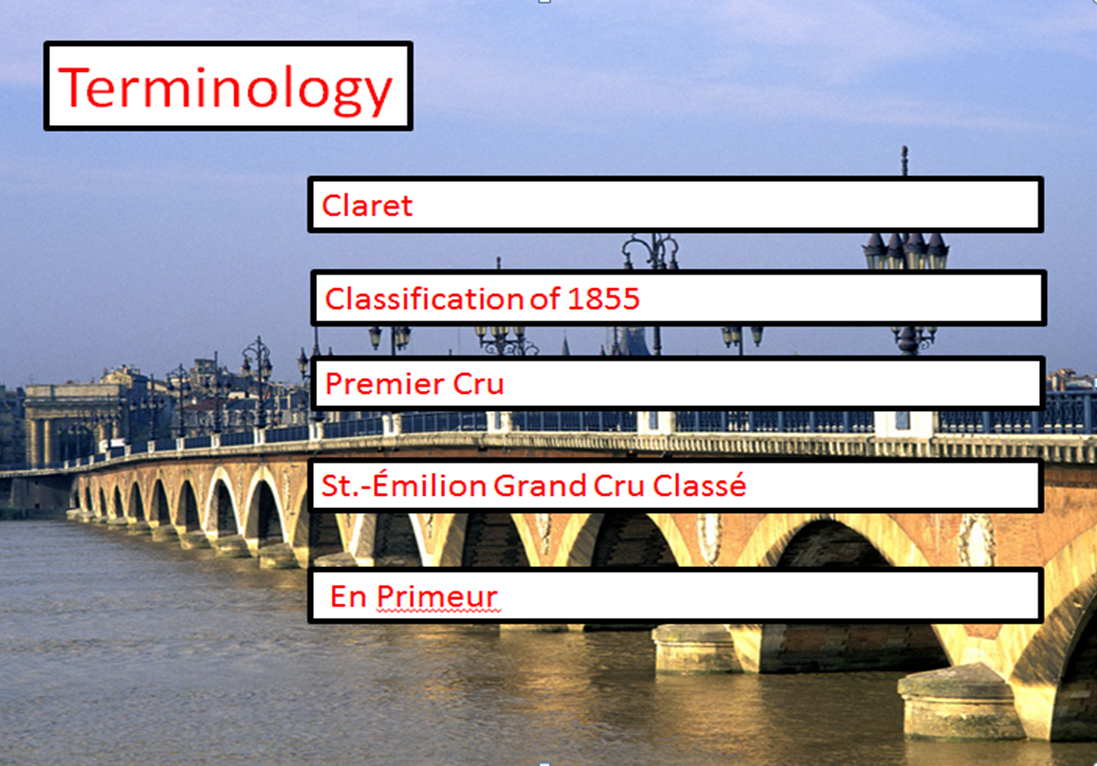
Terminology:

  • What terms do you need to understand the wines and their labels?
  • Some regions, such as Bordeaux and Burgundy, have a vocabulary all of their own and this list can get very long indeed; others are much simpler.

So there you have it…the LTGST method of studying the wines of the world. Like I said earlier in this post, it is certainly not quick or easy, but I guarantee you it’s effective.

Click for more advice on how to study wine and spirits.

Good luck with your studies, and please let me know if you have any questions, comments, or success with this method!

The Bubbly Professor is “Miss Jane” Nickles of Austin, Texas   missjane@prodigy.net

Travels in Wine World: The Pinhão Train Station

136If you find yourself in the city of Porto—once you have taken your fill of the gorgeous waterfront, the amazing tours of the Port Wine Lodges, and the walking back-and-forth across the bridges—you should get yourself a train ticket.

Arrange to leave early in the morning, when the São Bento Railway Station is a world unto itself, and be sure and hit the snack bar for some coffee (café com leite) for the road.  Pick up a few custard tarts—Pasteis de Nata—as well, because one should never pass up the opportunity for Pasteis de Nata, and you can only get the real deal in Portugal.

Make sure your ticket is for Pinhão, and grab yourself a window seat.  137Prepare yourself for a journey of about three hours. Don’t be concerned that there might be some error in the schedule. This is not the high-speed train that whisked you 200 miles from Lisbon to Porto in 140 minutes, but one that will wind you along the banks of the Douro River, pull you through dark tunnels, and rattle you along cliff-hanging tracks.  It will indeed take three full hours to cover 70 miles.

Your train journey will land you at the Pinhão train station.  You’ll be smack in the middle of the Cima Corgo, the geographic center of the Douro DOC and the core of the Port Wine production region.  You’ll be able to check into a rustic little hotel or take a suite at The Vintage House (a somewhat incongruous yet delightfully glistening resort just a short walk away).  You’ll be able to wander the steep riverside streets in search of lunch or take a death-defying taxi ride straight up the side of the mountain to Fonseca’s Quinta do Panascal Vineyards.

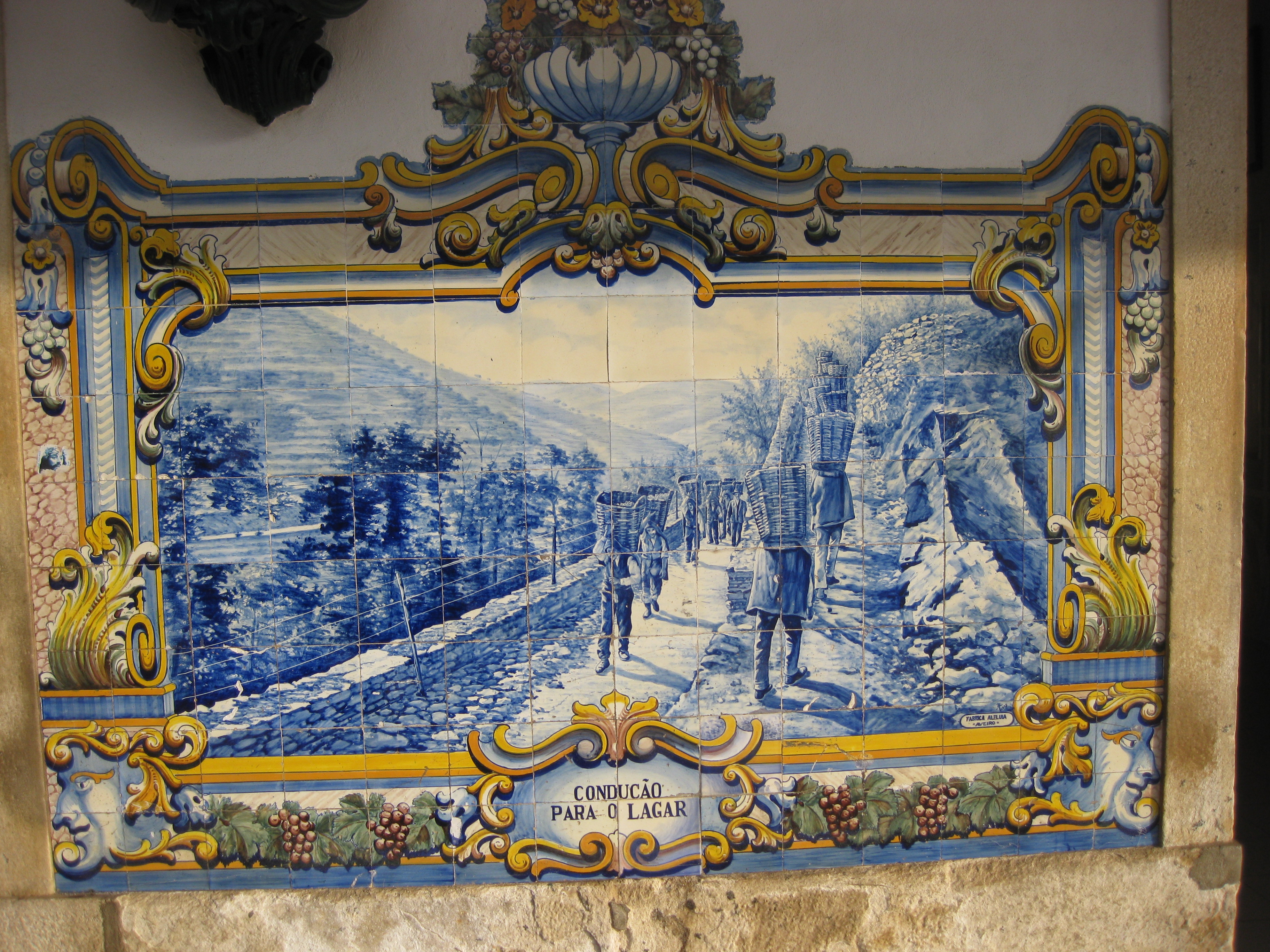
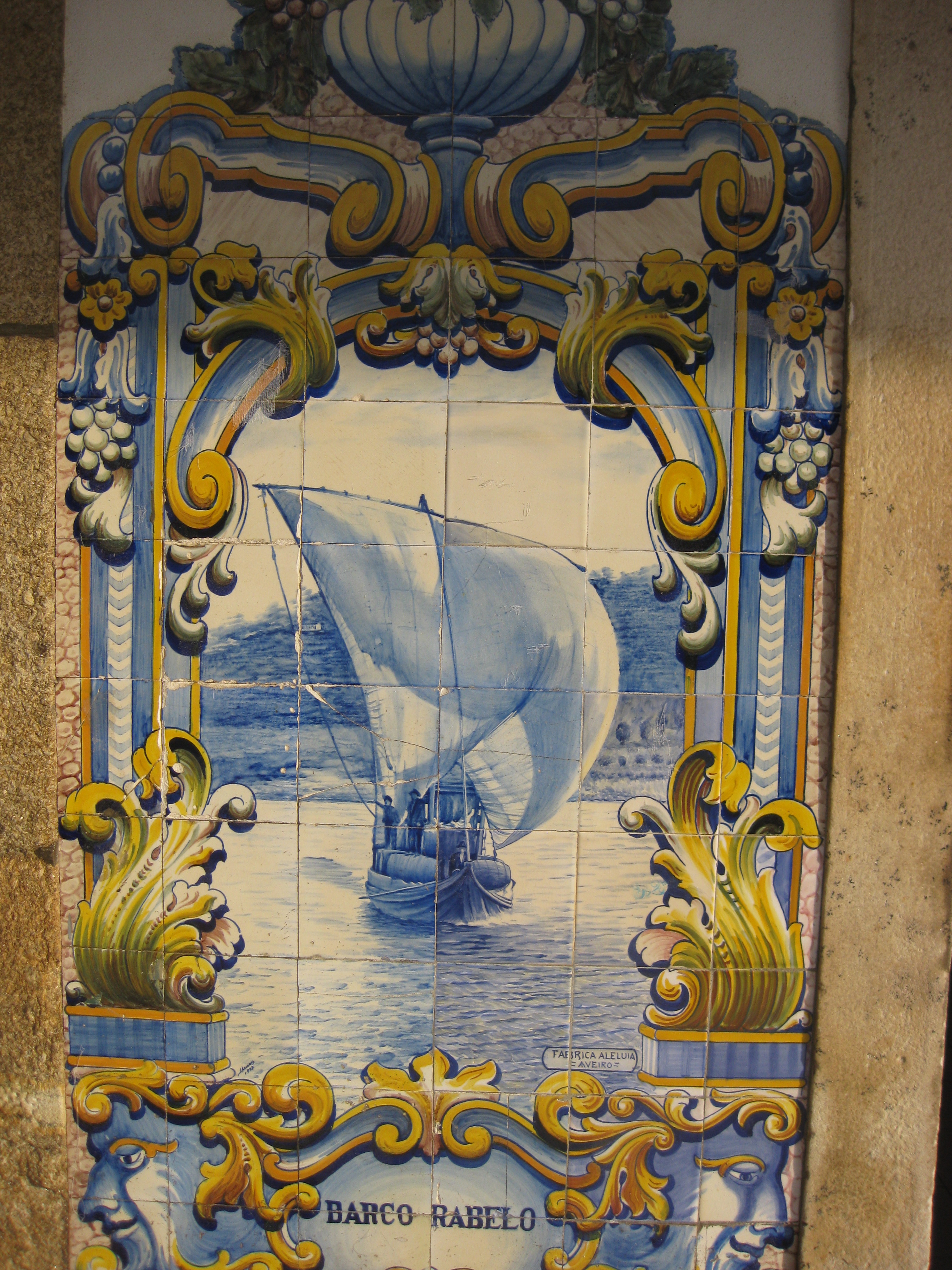
140But before you can check into the hotel, wander the streets, or tour the vineyard, you will have to tear yourself away from the train station itself.  It’s just a tiny station and only one room.  It is so rustic that you have to hustle down and across the tracks themselves to catch your train—there’s no fancy pedestrian overpass or glass elevator here.  But you’ll find it hard to tear yourself away once you notice the blue tile mosaics—a local specialty known as azulejo—that line the walls of the station.

Azulejo is a form of Portuguese ceramic tile that is painted and tin-glazed. As a central aspect of Portuguese culture, Azulejo has been produced without interruption for five centuries. There is even a national Azulejo gallery in Lisbon—although you can see Azulejos everywhere in Portugal.  Azulejos are found on the interior and exterior of churches, palaces, ordinary homes, department stores, and—as you can tell from my story—railway stations.

These beautiful Azulejos have been a part of the Pinhão train station since 1937.  They chronicle the history of the town and the vineyards, the wineries, and life along the Douro River.

The Bubbly Professor is “Miss Jane” Nickles of San Marocs, Texas

Pictures of Pinhão from the Portugal leg of our Iberian Peninsula honeymoon, 2010.  That’s Shields T. up there, guarding the luggage while his wife takes pictures of the walls.

145138


Tales of the Vine: Sherry, Sir?

"Sherry, Sir?" by William Powell Firth, 1853

Most of the students in my beginning wine studies class have never tasted real sherry.  If they have encountered it at all, it was most likely the faux version-in-a-jug known around here as “cooking sherry” and used for deglazing sauté pans in their culinary lab classes (what a shame).

They also tend to be of the opinion, common in North America, that Sherry is a drink consumed by British old ladies who sit around sipping Sherry, pinky fingers extended, while nibbling on cucumber sandwiches and bonbons.  

While this might be a mere cliché, one cannot deny the British love for Sherry.  The British have long had a love for Sherry, and are the largest export market for wines from Jerez to this day.  But have you ever wondered why?

The story goes back to the days of Sir Francis Drake, Queen Elizabeth, the famous Spanish Armada, and Europe’s exploration of the new world. 

In the 1400’s, the great capitals of Europe began sending explorers such as Ferdinand Magellan and Christopher Columbus to find passage ways for trade and to discover what lie beyond the wide oceans.  Christopher Columbus, despite being of Italian birth, made his most famous deal with King Ferdinand and Queen Isabella of Spain and set sail from Palos de la Frontera, Cadiz, and Sanlucar – all regions well known for wine.

Wine was considered absolutely necessary for these journeys, as any water on board would quickly become unfit to drink due to long length of the journeys. The wines for the ships were fortified with alcohol to give them some preservative effect, beginning the tradition of many such fortified wines.

These voyages were spectacularly successful for Spain as explorers began to return in ships heavily laden with gold, silver, and other wealth from the new world. At the same time that Spain was profiting from the plunder of Mexico and Peru, young Queen Elizabeth of England was benefitting from the wealth brought in by her expanding colonies in North America.

However, it soon became clear that America could not begin to produce the immediate wealth arriving by the galleon load from Spain’s richer New World territories. Knowing that an island kingdom must be strong to survive, Elizabeth turned a blind eye as Sir Francis Drake and other English sea captains raided and seized the treasures from Spain’s heavily laden and slow-moving gold ships. It did not take long for the King of Spain, Philip II, to have had enough of England’s daring Queen and her “sea wolves” and he soon hatched a plan to invade England.   

Golden-hinde_400In 1580, King Philip ordered that a great Armada, or Navy, be built.  His plan was to invade England, remove Elizabeth from the throne, and crown himself king in Westminster Cathedral.  However, Elizabeth heard of the plan and made a bold preemptive strike, led by the skilled seaman Sir Francis Drake.

Drake was sent out from Plymouth, on April 12, 1587. He appeared before Cadiz on April 29th, and late in the afternoon of that day he sailed boldly into the harbor, completely surprising the defenders, and throwing the Spanish land and naval forces there into a panic.

All the remainder of the day, and all the next day, Drake plundered and burned. Thirty-seven naval and merchant vessels were destroyed with very small losses on the English side. During the raid, Drake managed to seize 2,900 casks of Sherry from the Spanish naval stores, which he soon delivered triumphantly to Queen Elizabeth.

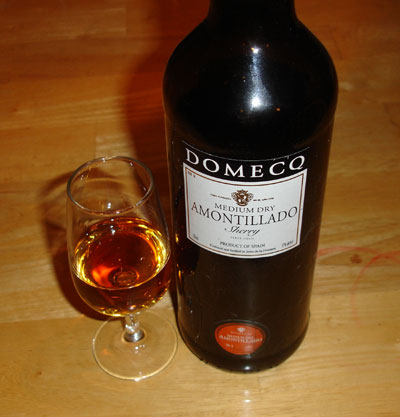
amontilladoAs you might guess, it became all the rage in England to drink the captured Sherry.  Spanish Sherry was suddenly the most popular drink in England.  Legend even tells us that the English loved to call it “sack” because, well, Drake had sacked the Spanish supply port. (There are other explanations for the term “sack” as well.)

In the ultimate show of British praise, Shakespeare praised Sherry, or “sack,” when he had Sir John Falstaff proudly declare in Henry IV, Part 2, “If I had a thousand sons, the first humane principle I would teach them should be, to forswear thin potations and to addict themselves to sack”.

At top –  “Sherry, Sir?” by William Powell Firth, 1853

Mad Libs for Wine!

It never fails…the first time I stand in front of a new wine class and describe a white wine as having aromas of “lemon, lime, green apple, and apricot” I get either a sea of blank stares or an uncomfortable laugh track.  A few weeks into the class, however, my students are begging me to teach them how to “impress their friends and annoy their enemies” by crafting an impressive sounding wine description.

My response:  “You mean one like this?”

“Craggy Range Sauvignon Blanc 2010 is a dry, medium-bodied white wine.  The nose reveals the fruity, floral, and  mineral aromas of lemon, lime, green apple, gooseberry, orange blossom and wet stones.  This wine is herbal and fruity on the palate, with lively acidity; followed by a refreshing, slightly bitter lemon-peel finish.”

And then, in the course of an hour, I teach them to use “Mad Libs for Wine” – in other words, a fill-in-the blank template (based on my book “WineSpeak 101”) that allows even beginners to create an accurate (and yes, impressive sounding, if you’re into that) description of any wine.  We just take ten simple facts about the wine and string them together into a few sentences.

Try it for yourself!

The WineSpeak 101 Description Template:

To write your own wine description, use the WineSpeak 101 descriptor crib to fill in the blanks on this template.  Your completed description will characterize the wine using the following basic facts:

  • Name of the Wine 
  • Level of Sweetness
  • Mouthfeel – aka “Body”
  • Type of wine (the easiest, but your customer needs to know!)
  • Aroma   Categories
  • Specific  Aromas
  • Flavor  
  • Acidity for white wines, tannin level for reds 
  • Finish  – length 
  • Finish  – description 

 ___________________________________ (Name of the wine) is a _______________ (Sweetness),

 __________________________________ (Mouthfeel) ,   _______________________ (Type of) wine. 

 The Nose reveals the ____________________________________________ (Aroma Categories) aromas 

 of ____________________________________________________________ (Specific Aromas) .

This wine is ___________________________________________________________ (Flavors) and 

____________________________________________ (Acidity or Tannin, or both) on the palate, followed by a  

_____________________ (Finish – Length) , __________________________ (Finish – Description)  finish.

As you can see, it’s not exactly a party trick, but if you know your way around the typical wine vocabulary, it’s easy to put together a meaningful wine description.  My students are amazed at how well they can discuss their impressions of a wine after just a few practice sessions.  This technique works so well that I wrote an entire textbook on “WineSpeak 101” a few years ago, and still use it today in my teaching.

Please…try it for yourself and enjoy your studies!

The Bubbly Professor is “Miss Jane” Nickles of Austin, Texas…missjane@prodigy.net

Tales of the Vine: Champagne Charlie

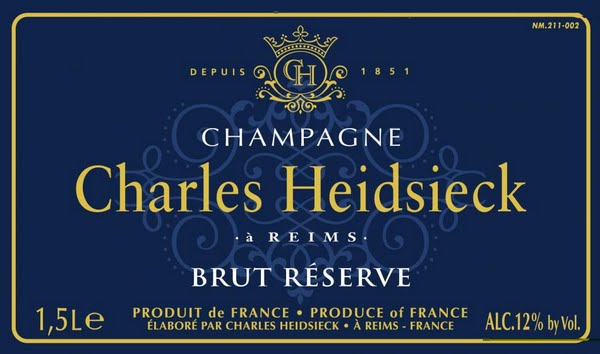
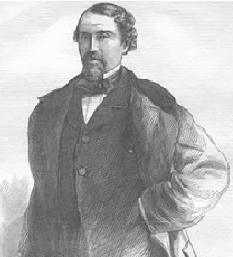
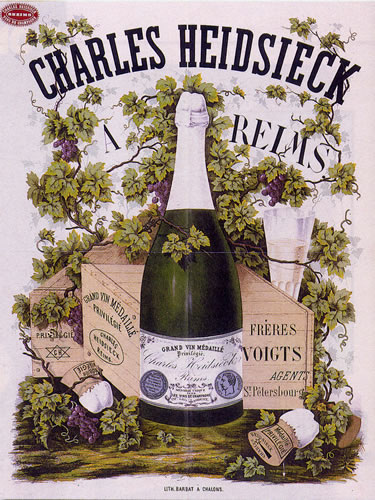
Charles Camile Heidsieck was a successful French merchant who founded the Champagne firm Charles Heidsieck in 1851.  Soon thereafter, he visited the United Statesfor the first time, and immediately saw the potential for the American market.  He retained an American agent to facilitate import sales, and in a matter of months the mass import of Champagne was a hit.  In no time, Charles became a fixture in New York high society and earned the nickname “Champagne Charlie”.

In 1861, Charles received news of the impending Civil War in theUnited States.  With over half of his company’s assets tied up in unpaid American accounts, Heidsieck made a hasty trip to try and collect the debts owed him.  Upon his arrival, his U.S.import agent told him a grandiose lie concerning a supposed new law passed by Congress which absolved Northerners from having to pay debts to the South.  This new law, the agent claimed, also absolved him from having to pay his debt to Heidsieck.

In a last-ditch attempt to seek repayment directly from the merchants that had received the Champagne, Charles set sail for New Orleans  With the war now in full-force, he had to travel in secrecy, going as far north as Kansas to avoid detection by the Union Army.  When he finally arrived in New Orleans in 1862, he found the city to be nearly bankrupt and his debtors penniless.

One merchant offered to give Heidsieck a warehouse full of cotton in exchange for payment.  The cotton was very valuable but would have to be smuggled out of Mobile,Alabama with the use of two blockade runners. Despite Heidsieck’s best efforts, both ships were intercepted and all the cargo destroyed.

By this time, all routes to the North were completely sealed, so in order to return to Europe, Heidsieck had to go back to New Orleans to charter a boat toMexico or Cuba.  To facilitate his passage, the French consul in Mobile gave him a diplomatic pouch with a request to deliver some documents to the consulate in New Orleans.  Arriving in New Orlean son May 5, 1862; he found that the city had fallen to Union forces.  As his diplomatic pouch contained documents from French textile manufacturers about supplying the Confederate army with uniforms, “Champagne Charlie” was immediately seized, charged with spying, and imprisoned.  His imprisonment sparked a diplomatic incident between France and the United States government which would later become known as The Heidsieck Affair.

By the time he was finally released from prison, he was in frail health and his business was bankrupt.  He returned to France in November of 1862, demoralized and broke.

In early 1863, Charles Heidsieck was approached by an American missionary with a letter from the United States.  The letter came from the brother of Heidseick’s former agent inNew York.  The man was ashamed of how his brother had swindled Heidsieck out of his obligations and offered him a stack of deeds to land in Colorado as means of repayment.

As it turned out, the deeds were for one-third of all the area of a small town known as Denver, Colorado.  Denver (as we all know) was soon to become one of the wealthiest and largest cities of the American West.

In a few years time, Heidsieck was able to sell the land, repay his debts, and re-launch his Champagne House, becoming the wealthy and debonair “Champagne Charlie” once again.


Wine Reviews: Kanu Vineyards Chenin Blanc 2009

My favorite Chenin Blanc for the last 5 years…


Kanu Vineyards Chenin Blanc 2009 – Wine of Origin Stellenbosch

Looking like pale yellow sunlight-in-a-glass, Kanu Vineyards Chenin Blanc 2009 reveals lifted aromas of lime, peach, apricot, and mineral met in mid-air by the pure, precise scent of lemon peel and sweet almond.  On the palate, a thunderstorm of lime precedes a fast grip of minerality and a drive-by shot of almond, followed by a soothing balm of peach and apricot.  Walking a fine, perfectly balanced line between fruitiness and acidity, this wine is as fresh and edgy as a blind date with your best friend’s ex.

Food Pairing Suggestions for Kanu Vineyards Chenin Blanc 2009 :

This crisp white wine, while is has suggestions of a plump full-bodiedness in the texture, shows delicacy of flavor and is taking a lingering walk on the lighter side of life…so I would suggest sticking to lighter foods as base ingredients – fish, shellfish, chicken, cream-based pastas, vegetarian dishes and cheeses. 

I would love to pair this wine with Pecan-Crusted Chicken glazed with Dijon Mustard-Cream Sauce and Gruyere Cheese.  This chicken and wine are a good fit on texture, the pecans will add a bridge flavor to the subtle nuttiness in the wine, and the crisp lemon-like acidity in the wine will cut through the richness of the creamy sauce and the cheese. 

I would also relish this wine served alongside Grilled Salmon with Jalapeno-Mango Mojo.  Once again, we have a texture match, but the flavors in this meet-up do a different kind of dance. The subtle sweetness in the wine would cool the zing of jalapeno heat in a hurry, and the sweet mango mojo will be matched by sweet fruit in the wine, bringing forward the fruit flavors of the wine while relaxing its sweetness.  

As a tip of the hat to the legendary cuisine of South Africa, I would match this wine with Grilled Shrimp with Chakalaka, a spicy, slow-cooked blend of tomatoes, chilies, onion, and garlic.  This wine has the fruit, the acidity, and the crisp, fresh coolness to cut through the heat of the chakalaka and the let sweet, savory saltiness of the shrimp shine through. 

On a different note, if today brings on a balmy afternoon, I might just sip this wine by itself; with my toes in the pool, a close eye on the kids, an even closer eye on my anh (adorable new husband)…that’s always a perfect match!

If you would like more information on Chenin Blanc, click here for my Chenin Blanc Cheat Sheet!