Mad Libs for Wine!

It never fails…the first time I stand in front of a new wine class and describe a white wine as having aromas of “lemon, lime, green apple, and apricot” I get either a sea of blank stares or an uncomfortable laugh track.  A few weeks into the class, however, my students are begging me to teach them how to “impress their friends and annoy their enemies” by crafting an impressive sounding wine description.

My response:  “You mean one like this?”

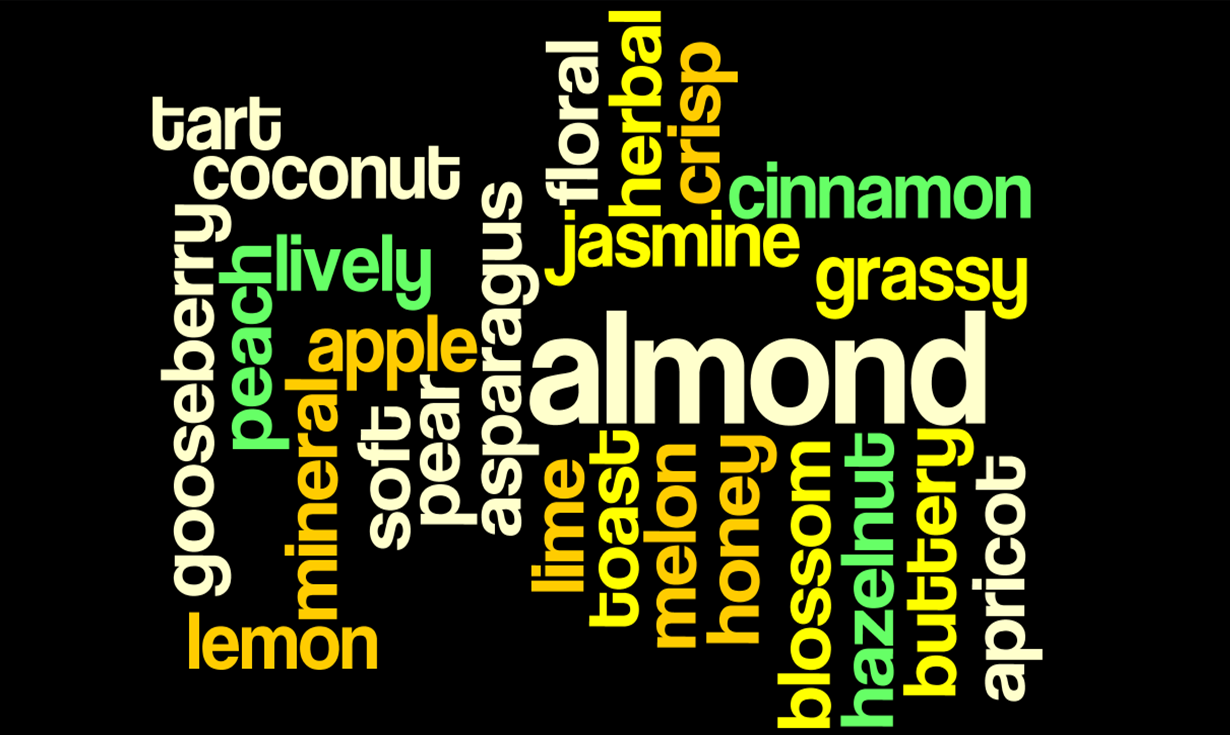
“Craggy Range Sauvignon Blanc 2010 is a dry, medium-bodied white wine.  The nose reveals the fruity, floral, and  mineral aromas of lemon, lime, green apple, gooseberry, orange blossom and wet stones.  This wine is herbal and fruity on the palate, with lively acidity; followed by a refreshing, slightly bitter lemon-peel finish.”

And then, in the course of an hour, I teach them to use “Mad Libs for Wine” – in other words, a fill-in-the blank template (based on my book “WineSpeak 101”) that allows even beginners to create an accurate (and yes, impressive sounding, if you’re into that) description of any wine.  We just take ten simple facts about the wine and string them together into a few sentences.

Try it for yourself!

The WineSpeak 101 Description Template:

To write your own wine description, use the WineSpeak 101 descriptor crib to fill in the blanks on this template.  Your completed description will characterize the wine using the following basic facts:

  • Name of the Wine 
  • Level of Sweetness
  • Mouthfeel – aka “Body”
  • Type of wine (the easiest, but your customer needs to know!)
  • Aroma   Categories
  • Specific  Aromas
  • Flavor  
  • Acidity for white wines, tannin level for reds 
  • Finish  – length 
  • Finish  – description 

 ___________________________________ (Name of the wine) is a _______________ (Sweetness),

 __________________________________ (Mouthfeel) ,   _______________________ (Type of) wine. 

 The Nose reveals the ____________________________________________ (Aroma Categories) aromas 

 of ____________________________________________________________ (Specific Aromas) .

This wine is ___________________________________________________________ (Flavors) and 

____________________________________________ (Acidity or Tannin, or both) on the palate, followed by a  

_____________________ (Finish – Length) , __________________________ (Finish – Description)  finish.

As you can see, it’s not exactly a party trick, but if you know your way around the typical wine vocabulary, it’s easy to put together a meaningful wine description.  My students are amazed at how well they can discuss their impressions of a wine after just a few practice sessions.  This technique works so well that I wrote an entire textbook on “WineSpeak 101” a few years ago, and still use it today in my teaching.

Please…try it for yourself and enjoy your studies!

The Bubbly Professor is “Miss Jane” Nickles of Austin, Texas…missjane@prodigy.net
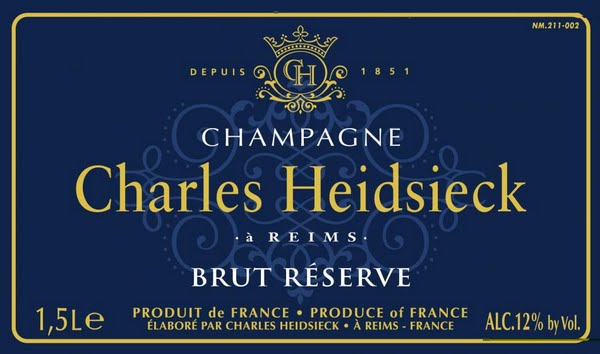
Tales of the Vine: Champagne Charlie

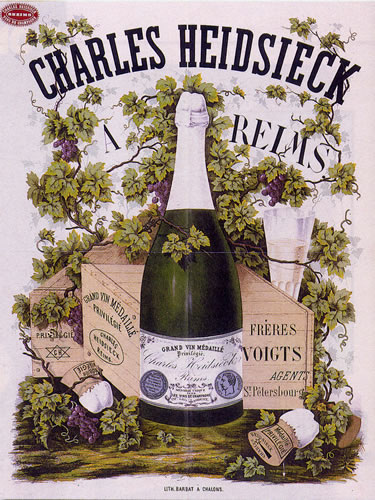
Charles Camile Heidsieck was a successful French merchant who founded the Champagne firm Charles Heidsieck in 1851.  Soon thereafter, he visited the United Statesfor the first time, and immediately saw the potential for the American market.  He retained an American agent to facilitate import sales, and in a matter of months the mass import of Champagne was a hit.  In no time, Charles became a fixture in New York high society and earned the nickname “Champagne Charlie”.

In 1861, Charles received news of the impending Civil War in theUnited States.  With over half of his company’s assets tied up in unpaid American accounts, Heidsieck made a hasty trip to try and collect the debts owed him.  Upon his arrival, his U.S.import agent told him a grandiose lie concerning a supposed new law passed by Congress which absolved Northerners from having to pay debts to the South.  This new law, the agent claimed, also absolved him from having to pay his debt to Heidsieck.

In a last-ditch attempt to seek repayment directly from the merchants that had received the Champagne, Charles set sail for New Orleans  With the war now in full-force, he had to travel in secrecy, going as far north as Kansas to avoid detection by the Union Army.  When he finally arrived in New Orleans in 1862, he found the city to be nearly bankrupt and his debtors penniless.

One merchant offered to give Heidsieck a warehouse full of cotton in exchange for payment.  The cotton was very valuable but would have to be smuggled out of Mobile,Alabama with the use of two blockade runners. Despite Heidsieck’s best efforts, both ships were intercepted and all the cargo destroyed.

By this time, all routes to the North were completely sealed, so in order to return to Europe, Heidsieck had to go back to New Orleans to charter a boat toMexico or Cuba.  To facilitate his passage, the French consul in Mobile gave him a diplomatic pouch with a request to deliver some documents to the consulate in New Orleans.  Arriving in New Orlean son May 5, 1862; he found that the city had fallen to Union forces.  As his diplomatic pouch contained documents from French textile manufacturers about supplying the Confederate army with uniforms, “Champagne Charlie” was immediately seized, charged with spying, and imprisoned.  His imprisonment sparked a diplomatic incident between France and the United States government which would later become known as The Heidsieck Affair.

By the time he was finally released from prison, he was in frail health and his business was bankrupt.  He returned to France in November of 1862, demoralized and broke.

In early 1863, Charles Heidsieck was approached by an American missionary with a letter from the United States.  The letter came from the brother of Heidseick’s former agent inNew York.  The man was ashamed of how his brother had swindled Heidsieck out of his obligations and offered him a stack of deeds to land in Colorado as means of repayment.

As it turned out, the deeds were for one-third of all the area of a small town known as Denver, Colorado.  Denver (as we all know) was soon to become one of the wealthiest and largest cities of the American West.

In a few years time, Heidsieck was able to sell the land, repay his debts, and re-launch his Champagne House, becoming the wealthy and debonair “Champagne Charlie” once again.


Wine Reviews: Kanu Vineyards Chenin Blanc 2009

My favorite Chenin Blanc for the last 5 years…


Kanu Vineyards Chenin Blanc 2009 – Wine of Origin Stellenbosch

Looking like pale yellow sunlight-in-a-glass, Kanu Vineyards Chenin Blanc 2009 reveals lifted aromas of lime, peach, apricot, and mineral met in mid-air by the pure, precise scent of lemon peel and sweet almond.  On the palate, a thunderstorm of lime precedes a fast grip of minerality and a drive-by shot of almond, followed by a soothing balm of peach and apricot.  Walking a fine, perfectly balanced line between fruitiness and acidity, this wine is as fresh and edgy as a blind date with your best friend’s ex.

Food Pairing Suggestions for Kanu Vineyards Chenin Blanc 2009 :

This crisp white wine, while is has suggestions of a plump full-bodiedness in the texture, shows delicacy of flavor and is taking a lingering walk on the lighter side of life…so I would suggest sticking to lighter foods as base ingredients – fish, shellfish, chicken, cream-based pastas, vegetarian dishes and cheeses. 

I would love to pair this wine with Pecan-Crusted Chicken glazed with Dijon Mustard-Cream Sauce and Gruyere Cheese.  This chicken and wine are a good fit on texture, the pecans will add a bridge flavor to the subtle nuttiness in the wine, and the crisp lemon-like acidity in the wine will cut through the richness of the creamy sauce and the cheese. 

I would also relish this wine served alongside Grilled Salmon with Jalapeno-Mango Mojo.  Once again, we have a texture match, but the flavors in this meet-up do a different kind of dance. The subtle sweetness in the wine would cool the zing of jalapeno heat in a hurry, and the sweet mango mojo will be matched by sweet fruit in the wine, bringing forward the fruit flavors of the wine while relaxing its sweetness.  

As a tip of the hat to the legendary cuisine of South Africa, I would match this wine with Grilled Shrimp with Chakalaka, a spicy, slow-cooked blend of tomatoes, chilies, onion, and garlic.  This wine has the fruit, the acidity, and the crisp, fresh coolness to cut through the heat of the chakalaka and the let sweet, savory saltiness of the shrimp shine through. 

On a different note, if today brings on a balmy afternoon, I might just sip this wine by itself; with my toes in the pool, a close eye on the kids, an even closer eye on my anh (adorable new husband)…that’s always a perfect match!

If you would like more information on Chenin Blanc, click here for my Chenin Blanc Cheat Sheet!

Tales of the Vine: Bull’s Blood

In the Northern Massif region of Hungary, the famous Egri Bikavér, or “Bull’s Blood Wine” is made in the area around Eger, a beautiful town about halfway between Budapest and Tokaj.

The name of the wine dates back to a Turkish invasion led by Suleiman the Magnificent around 1552.  During the invasion, Suleiman the Magnificent and his army of Turks attempted to siege of the Castle of Eger.  The defending Hungarians, led by Captain Istvan Dobo, were largely outnumbered by the invading army and the situation appeared dim. However, the Hungarian forces, fortified by days and nights of delicious food and large amounts of the local red wine, managed to successfully defend Eger. In doing so, the Turkish army was forced to withdraw, and Turkish westward expansion was delayed for forty years after this battle.

According to one legend, the enemy soldiers were frightened by the fierce fighting and red wine-stained beards of the soldiers.  Among the Turkish soldiers it was rumored that bull’s blood had been mixed into the wine, as otherwise the strength and firm resistance of the town and castle could not be explained.  Another legend states that the swords of the enemy could not cut through the Hungarian blood thickened by the wine.

The wine named for the legendary “bull’s blood” of the siege, Egri Bikavér, is still produced to this day, and is very popular on both the domestic and international markets.  Egri Bikavér is made up of a blend that has varied over the years, although the blend is anchored by the ancient Kardarka grape. Kadarka is a difficult grape to vinify, and has increasingly been replaced by Blaufränkisch, known locally as Kékfrankos.

In modern times, Egri Bikavér must contain at least three of the following 13 grapes: Kardarka, Kékfrankos (known as Blaufränkisch in German), Blauer Portugieser, Cabernet Sauvignon, Cabernet Franc, Merlot, Menoire, Pinot Noir, Syrah, Turán, Bíborkadarka, and the modern Austrian hybrids Blauberger and Zweigelt.

Tales of the Vine: The Evil and Disloyal Plant Gamay

...

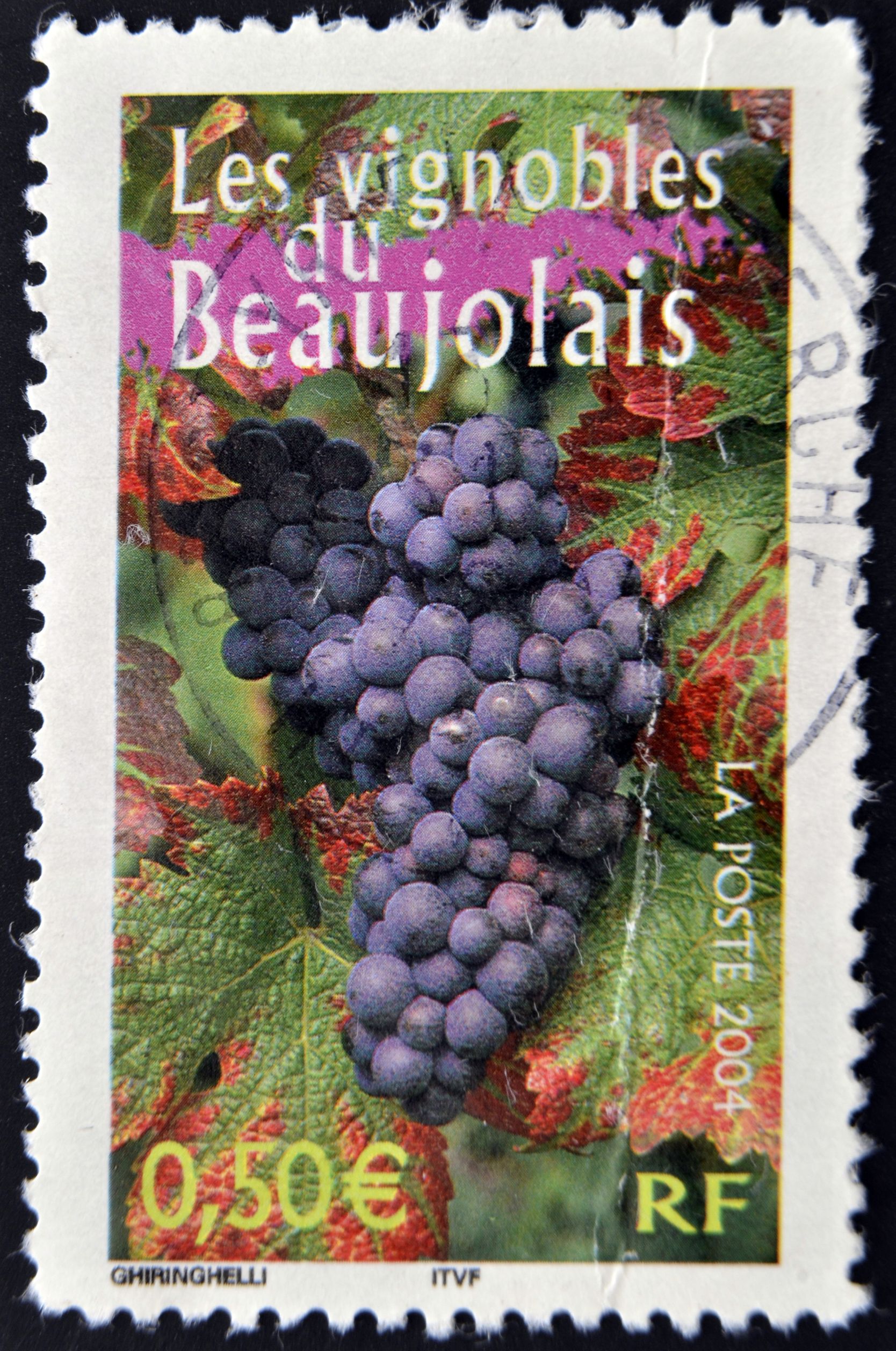
The Story of Beaujolais…

Philip the Bold, Duke of Burgundy, was one of the most powerful men in France from 1388 until his death in 1404. Philip managed to keep Burgundy independent from France and doubled the size of his dukedom by marrying the Margaret III, Countess of Flanders. Philip was an excellent capitalist and under his rule the wines of Burgundy became quite fashionable and expensive. Philip the Bold is said to have selected the clone of Pinot Noir that became the mainstay of Burgundy’s red wines and is credited with having chosen the name “pineau noir”, meaning “black pine cone”, due to the shape and size of the grape clusters.

Enamored as he was with the red wines of Burgundy, Philip was infuriated when the wine growers of his region started to plant Gamay grapes in the vineyards of Burgundy. The Gamay vines were vigorous, easy to grow and high-yielding, and their rich, fruity wines were at their best while young, making Gamay a cash-flow wine the growers loved.
 
Philip the Not-so-Bold (anonymous 16th century painter) Currently displayed at Versailles

Philip the Not-so-Bold (anonymous 16th century painter)
Currently displayed at Versailles

Philip felt the presence of Gamay in the vineyards of Burgundy would harm the reputation of the fine wines he had worked so hard to promote, so he banished the grape from his kingdom. He declared Gamay “foul” and “harmful”, and in a royal decree denounced the “tres mauvais et tres desloyaus plant nomme gamay”, translated as, “the very evil and very disloyal plant called gamay”. Philip thus forbade the cultivation of Gamay in Burgundy and banished it from the Kingdom.

 
The despised Gamay was down but not out, for it soon began to thrive just beyond the Southern border of Burgundy in the region known as Beaujolais. Beaujolais, with its cold winters, hot summers, and decomposed granite soil is now known to be the one perfect spot on the face of the earth to grow Gamay. One of the wines of Beaujolais, Beaujolais Nouveau, is among the first French wines to be released with every year’s new vintage, and is one of the most popular of all French wines.
The Bubbly Professor is “Miss Jane” Nickles of Austin, Texas… missjane@prodigy.net
 

Tales of the Vine: The King with the Grizzly Beard

Behind every bottle, there’s a story…

Born in 742 and rising to power as the Holy Roman Emperor and ruler of much of the Western World, it was Emperor Charlemagne who commanded the planting of the Pinot Noir vines that produce the excellent red Burgundy of Le Corton.  It is well-known that Emperor Charlemagne adored the precious red wine of Le Corton, and drank some every day.

However, as the years past and the king became an older man, his hand was no longer as steady as it once was.  From time to time, while enjoying his precious red Burgundy, he would spill some wine onto his flowing white beard.  The resulting red stains annoyed his wife to such an extent that she demanded that he stop drinking wine.

Emperor Charlemagne was a legendary lover of the company of women, but was determined nonetheless to not give in to his wife’s demands.  Charlemagne craftily decided to become a white wine aficionado in order to be able to drink to his heart’s content without compromising his regal appearance or arousing the wrath of his last and reportedly favorite wife.

Thus, Emperor Charlemagne demanded that part of the hill of Le Corton be replanted with white grapes, and the famous white wine vineyard now known as Corton-Charlemagne came to be.  With white wine in hand, Charlemagne was able to drink his beloved wine again, shaky hands, grizzly white beard, and all.


Tales of the Vine: Est! Est!! Est!!!

Legend has it that in 1107, under the order of The Holy Roman Emperor Henry V, a German Bishop named Johan Fugger was sent to Rome. He was journeying there to visit the Pope in hope of being elevated to Cardinal.

Fugger was a rotund man known for being very fond of food, wine, and the other good things in life.  So fond of good wine was he, that on his travels he customarily sent his faithful servant, Martin, one day ahead of the rest of his group in order to seek out the best local wine in the towns along the way. When he found an inn serving good wine he was to mark the door with the word “Est”, being short for the Latin Phrase “Vinum Est Bonum” – the wine is good.

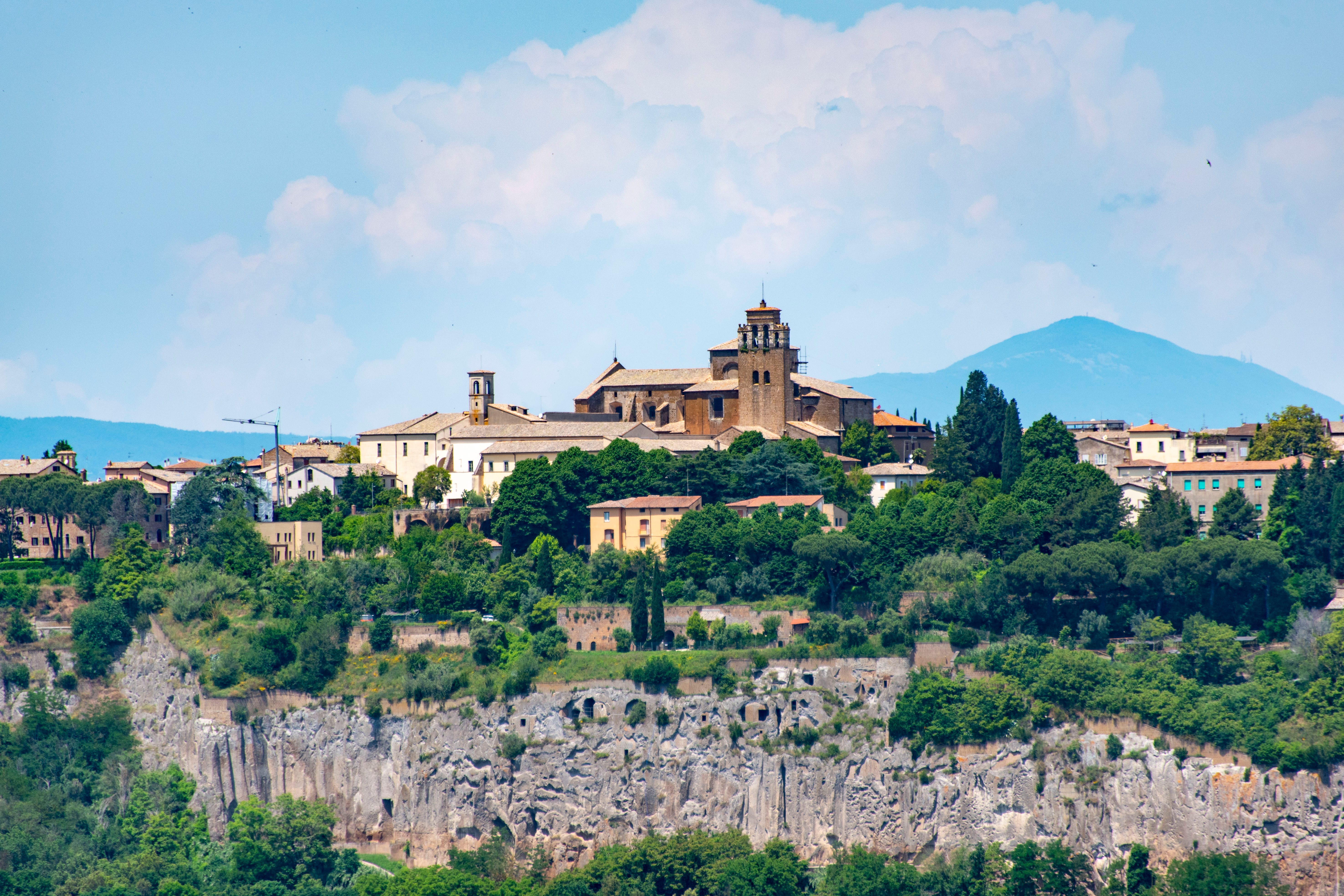
When he got to the town of Montefiascone in northern Lazio, Martin was so impressed by the quality of the wines being served at one tavern that he excitedly scribbled “Est! Est!! Est!!!” on the door. When the Bishop arrived the next day, he agreed so heartedly with Martin’s opinion of the wine that he cancelled the rest of his trip and lived the rest of his life in Montefiascone, enjoying the good things in life and eventually dying from the overconsumption of his beloved Est! Est!! Est!!!

Bishop John Fugger is buried in Montefiascano in the Church of San Flaviano, where his inscription reads, “Est, Est, Est et propter nimium est, dominus meus, mortuus est!” which translates (loosely) as: ‘Est Est Est. He Died from too much Est.”

The legend of Bishop Fugger and his faithful manservant Martin is celebrated every August in Montefiascone with the town’s “Festival of Wine” known as the “Fiero del Vino”.  During this festival, hundreds of people in traditional costumes retrace the story of Est!  Est!! Est!!!, from Martin’s arrival at the tavern door until Bishop Fugger’s death from too much wine.  The festival ends with the dousing of his Bishop Fugger’s tombstone with a barrel of his beloved Est! Est!! Est!!!.


Street Cred

Day One Week One Wine ClassIf I just must, here it is:  My name is Jane A. Nickles and I have been a full-time wine educator/culinary educator/academic director for culinary colleges for over 15 years.  Previously, I was a food and beverage director and executive chef  for a large hotel chain.

I am/have/like to talk about my/am embarrassed by my:

M.B.A., California State University

B.A., University of California at Berkeley

Certified Spirits Educator (Society of Wine Educators)

Certified Wine Educator (Society of Wine Educators)

2012 Banfi Award Winner – Society of Wine Educators

2009 Winner – Professional Wine Writers Competition – WOSA (Wines of South Africa)

Currently the Director of Education for the Society of Wine Educators

14 Years Full-time Chef Instructor and Wine Educator at Le Cordon Bleu College – Austin

6 Years Food and Beverage Director (Bristol Hotels and Resorts)

Published Author (Textbooks, Journals, Web)

Educator of the Year – Career Education Corporation – 2007

Educator of the Year –  Career Education Corporation -2009

The “Ultimate Culinary Educator” – Food Educator’s Learning Conference – 2009

Number One Rated Conference Speaker – 35th Annual Conference of the Society of Wine Educators (Washington, DC)

Conference Sessions led, Classes given – literally too many to count!

Bored Yet?

It’s a living…

Breakfast of Champions...aka 9:30 am Class

Welcome to the Bubbly Professor…a new blog about the life of a wine educator.

Wine tastings, wine classes, and wine dinners are part of being a full-time wine educator, but it’s a package deal that includes grading finals, reading papers, and schlepping boxes as well.   It’s a glamorous job, for sure, if you only count the 5% of the day that includes the flashy fun.

As for me, I have the expected credentials (see  “street cred” ) and the experience:  I am a chef instructor and wine educator for an accredited culinary college in Texas, have taught wine classes full time for over 15 years, and in my former life served stints as executive chef, sommelier, and food and beverage director.  Known to friends, family, and students as “Miss Jane” of Austin, Texas.