Mother Muscat

MuscatIt is often said that Muscat is an ancient grape, known to antiquity since perhaps 3,000 BC. It is just as often claimed that Muscat was one of the grapes described by Pliny the Elder and his contemporaries as Apiane, named due to the fact that they were so sweet as to attract bees (api in Latin). It has even been claimed that Muscat was the original vinifera grape from which all others sprang forth – heck, I’ve even mentioned that in some of my classes.

But all of this talk is, alas, just talk, and not backed up by any actual history or botanical facts. It may be true – but then again, it may just be the stuff of legends.

It cannot be denied, however, that Muscat is an old grape. With at least 200 grapes going by the name Muscat Something, and dozens more showing the grapey-musty aroma characteristic of the family, we know that Muscat has been swimming in the grape gene pool for at least 2,000 years.

A student of mine recently asked me to give her a list of the main members of the Muscat family. At first I thought such a task would take hours, but determined to “keep it simple” – I came up with the following descriptions of some of the leading members of the Muscat extended family:

muscatbeaumesdeveniseMuscat Blanc à Petits Grains: The main Muscat – that is, the grape that gets the prize for consistently producing the highest-quality wines and the one that is believed (by actual botanists) to be the Muscat from which the other Muscats sprung is Muscat Blanc à Petits Grains. This grape has a vast number of synonyms, most of which are really just translations, such as Muscatel, Moscatel, Frontignac, Muskateller, Moscato, Moshcato, and Muscat Canelli. This is the majority grape that is used in the vins doux naturels of southern France, including Muscat de Rivesaltes, Muscat de Beaumes-de-Venise, and the similar wines of Frontignan, Mireval, and Saint-Jean-de-Minervois. In Italy, this grape appears as the star of Asti and Moscato d’Asti. In Greece, she is known as Muscat of Patras, Samos, and many other, more-difficult-to-pronounce wines.

Muscat of Alexandria:  Another ancient variety, considered to be very close to the top of the Muscat food chain, as a likely cross between an Italian grape known as  Axina de Tres Bias and Mother Muscat (Muscat Blanc à Petits Grains). This grape is considered to be somewhat inferior to Muscat Blanc à Petits Grains, and is often used to produce very sweet wines with moscatel-de-setubal_1orange or orange-flower aromas. Muscat of Alexandria (which, by the way, has no proven connection to the ancient city of the same name) is used as a minor grape in the sweet Muscat-based wines of southern France. In Italy, the variety is far more likely to be used as table grapes as opposed to wine, except in on the island of Pantelleria, where it is much beloved as the star of Passito de Pantelleria. Much of Spain’s Moscatel is Muscat of Alexandria, where it is used in Sherry, Málaga, and the surrounding areas for many styles of wine, including the sweet and fortified wines of the region. Muscat of Alexandria is also the star of Portugal’s Moscatel de Setúbal, and, as Hanepoot, is used in the fortified wines and brandies of South Africa.

Muscat Fleur d’Oranger: Actually a cross between Chasselas and Muscat Blanc à Petits Grains; often known as Orange Muscat. California, particularly the warmer regions, grows a good deal of Orange Muscat, where it makes its way into sweet wines such as Quady’s brightly-packaged Essencia and Electra. Delightful Orange Muscats are made in Washington State, Canada, and Texas as well. In Italy, Moscato Fior d’Arancio in the Veneto’s Colli Euganei is made with Orange Muscat, and the grape makes its way into many of Australia’s sweet wines as well.
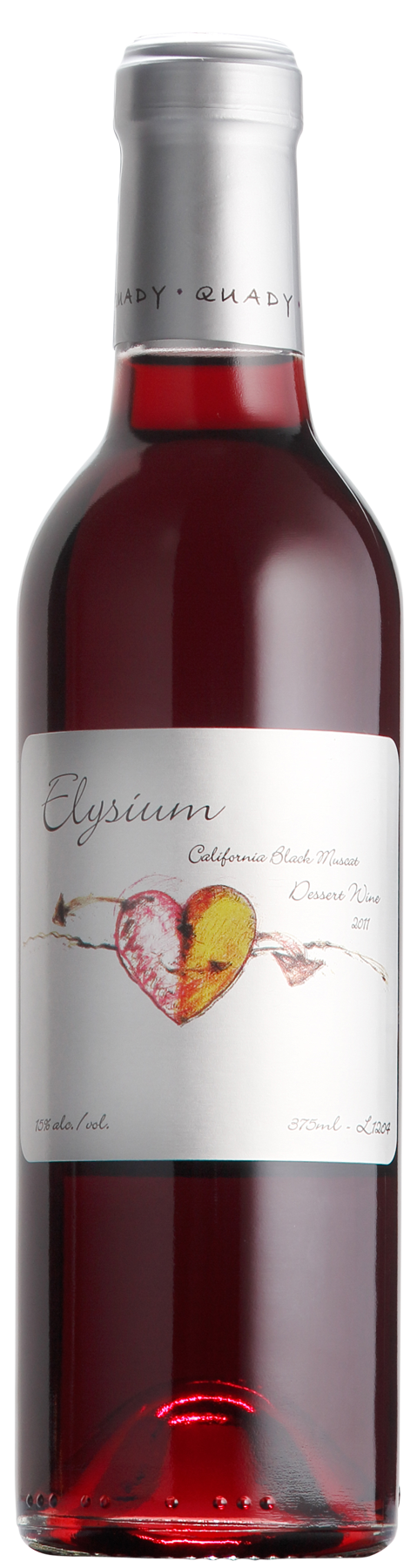
Photo of Elysium via Quady Winery

Photo of Elysium via Quady Winery

Muscat Ottonel: Thought to be a Chasselas X Muscat de Saumur cross, native to the Loire. Used for both dry and sweet wines, mainly in Alsace, where it may be bottled as Muscat d’Alsace. Austria’s Neusiedlersee and Neusiedlersee-Hügelland are known for sweet, botrytis-affected wines produced using Muscat Ottonel (here known as “Muskat Ottonel”). Hungary uses the grapes, mainly as blending partners, in both sweet and dry wines. Other plantings are found throughout eastern Europe, including in Romania, Bulgaria, Moldova, Russia, and the Czech Republic. 

Muscat of Hamburg: Also known as Black Muscat or Zibibbo Nero. The origin of the grape is unclear, although there is an excellent story about an Englishman named  Mr. Seward Snow who created the grape by crossing Black Hamburg (Schiava Grosso) grapes with Muscat of Alexandria, thus producing Muscat of Hamburg as a “grandchild” of Mother Muscat (Muscat Blanc à Petits Grains). Throughout the world, Muscat of Hamburg is used in a scattering of sweet red wines, and widely grown to be used as red table grapes. It is grown extensively in California’s Central Valley, where it is used to produce Quady’s sweet, dark dessert wine known as Elysium.

As previously mentioned, these are just the main branches of the 200+ members of the Muscat Family tree. Muscat is primarily known for sweet, dessert, and fortified wines, but we can’t forget the fact that Muscat is often made into dry wines (known for their hauntingly “funky” aromas of must, flowers, and fruit), as well as its widespread use in table grapes and raisins! For those of you practicing blind tasting, it is widely accepted that while all wine is made from grapes (well, at least the wines that might show up at a blind tasting), Muscat-based wines are among the few and far between that actually have “grapey” aromas in the finished wine. Try it and see!

The Bubbly Professor is “Miss Jane” Nickles of Austin, Texas…. missjane@prodigy.net

 

Tree Fruit and Cognitive Bias

IdeaI received a question via email early  this morning, which led me to experience one of those “a-ha!” moments that are sometimes very dangerous in the early morning hours. (You know what I mean?  Can’t go back to sleep, don’t eat breakfast, skip the gym, phone calls go unanswered…all until you GET THIS DONE!)

The question, concerning the logical tasting rationale that is part of the CWE (Certified Wine Educator) exam,  was a good question, and went something like this: “What do you mean by tree fruit? How does tree fruit differ from citrus fruit? Don’t most citrus fruits grow on trees?”

The question was really quite brilliant in its simplicity, and demonstrates to perfection the issue that educators know as “The Curse of Knowledge.” The curse of knowledge is a cognitive bias that causes well-informed parties to find it almost impossible to think about topics from the perspective of lesser-informed parties.

Teachers often suffer from the curse of knowledge when – #1 – they know things their students don’t know (which better be true) and #2 – they have forgotten what it is like not to have this knowledge. That’s where a quick understanding of how to lift the curse of knowledge comes in.

The first step in lifting the curse of knowledge is to realize that it does indeed exist. However, like a person who is drunk but doesn’t realize it, the curse, by definition, means we don’t realize we are affected by it.  So here are a few tips to avoid this curse.

curse of knowledgeIt’s really quite simple: first of all, educators should review their lecture notes and other written materials such as handouts and course syllabi in order to ensure they aren’t confusing their students by their choice of words or by “diving into” the complicated parts of the topic. Hard as it may be, try to pretend you’re not an expert in the subject matter – would you understand what is being said?

Another good idea is to “try out” your handouts, power points, or lecture on an unsuspecting victim (hopefully a significant other or best friend who is NOT an expert in what you are the maven of.) If you’d rather not bother your loved ones in this way, you can also prepare your materials, wait a few days, and review them yourself. I can’t tell you how many times I’ve read over my work and – assuming I can read my own handwriting – wondered to myself what did I mean by that???

Perhaps the best way to break the curse of knowledge is to encourage and pay attention to feedback – written, verbal, even non-verbal. That’s what happened to me in the wee hours of this morning – so be sure and listen to and respond to the feedback your audience gives you. It sure worked for me – tree fruit and all!

If you are a wine educator who has been using terms like “dry, sweet, body, terroir, complexity, mouth-feel, balance, mineral, earthy, and – PERFECT EXAMPLE ALERT – tree fruit,” it might be a good idea once in a while to go back and create some clear, meaningful, and simplified definitions for such terms – and remember to use them when teaching beginners!

Idea TreeWith that in mind, here’s a breakdown of fruit aroma and flavor terms, as they are often used to describe wines:

Fruit Descriptors – Mostly Used for White Wines: 

Tree Fruit: Apple, Green Apple, Green Pear, Yellow Pear, Asian Pear, Peach, Apricot, Nectarine, Green Plum

Citrus Fruit: Lemon, Lime, Orange, Tangerine, Grapefruit, Pink Grapefruit, Lemon Peel, Orange Peel

Tropical Fruit: Pineapple, Mango, Papaya, Banana, Passion Fruit, Melon, Lychee

Other categories I’ve seen in use: Stone fruit, green fruit, dried fruit

Fruit Descriptors – Mostly Used for Red Wines: 

Black Fruit: Blackberry, Black Currant, Black Cherry, Blueberry, Black Plum, Prune, Fig, Raisin

Red Fruit: Strawberry, Red Cherry, Raspberry, Cranberry, Red Plum, Pomegranate, Red Current

Other categories I’ve seen used: Blue fruit, berries, dried berries, dried fruit

Note: The term “the curse of knowledge” is credited to Robin Hogarth, and the effect was first described in print by the economists Colin Camerer, George Loewenstein, and Martin Weber in The Journal of Political Economy, 1989. The term is discussed in the Heath Brothers’ 2007 book, Make it Stick.

The Bubbly Professor is “Miss Jane” Nickles of Austin, Texas – missjane@prodigy.net
Chile’s Southernmost – The Malleco Valley

Chile MallecoChile’s Malleco (pronounced mah-YAY-ko) Valley, located near the 38th parallel, is currently the southernmost “official” viticultural region of Chile. The terrain is rugged, and growing grapes here is challenging – but the area has potential, and since 1994, has been growing a small quantity of grapes that are made into crisp, refreshing wine.

This is an up-and-coming wine region if ever there was one: just shy of 30 acres in total are planted. It’s a bit out of the way – over 300 miles south of the Capital city of Santiago. The area’s main town, Traiguen, has less than 20,000 inhabitants. And, as if that weren’t enough, the climate is marginal, the rainfall is high, and the growing season is short.

The cool climate skirts the limits of what is suitable for viticulture, and defines the grape varieties to that can be cultivated here. The varieties currently under vine include Chardonnay (7 acres), Pinot Noir (10 acres), Sauvignon Blanc (7 acres) and Gewurztraminer (2 acres).

Being so far south, however, has its advantages, just as the northerly latitudes of Washington State and Germany work to their advantage. The southerly (remember, this is the southern hemisphere) locale means the vineyards enjoy more hours of daylight than those areas closer to the equator, and the nights cool down considerably, lending a good diurnal temperature fluctuation that slows down the ripening of the grapes.

The soil in the Malleco Valley is mainly volcanic in origin, and consists of red clay, sand, and alluvial matter. Such well-drained soils are essential in an area that sees so much rainfall, and as a result, the vines become somewhat stressed in the quest for water and nutrients, resulting in concentrated, flavorful grapes with great wine-making potential.

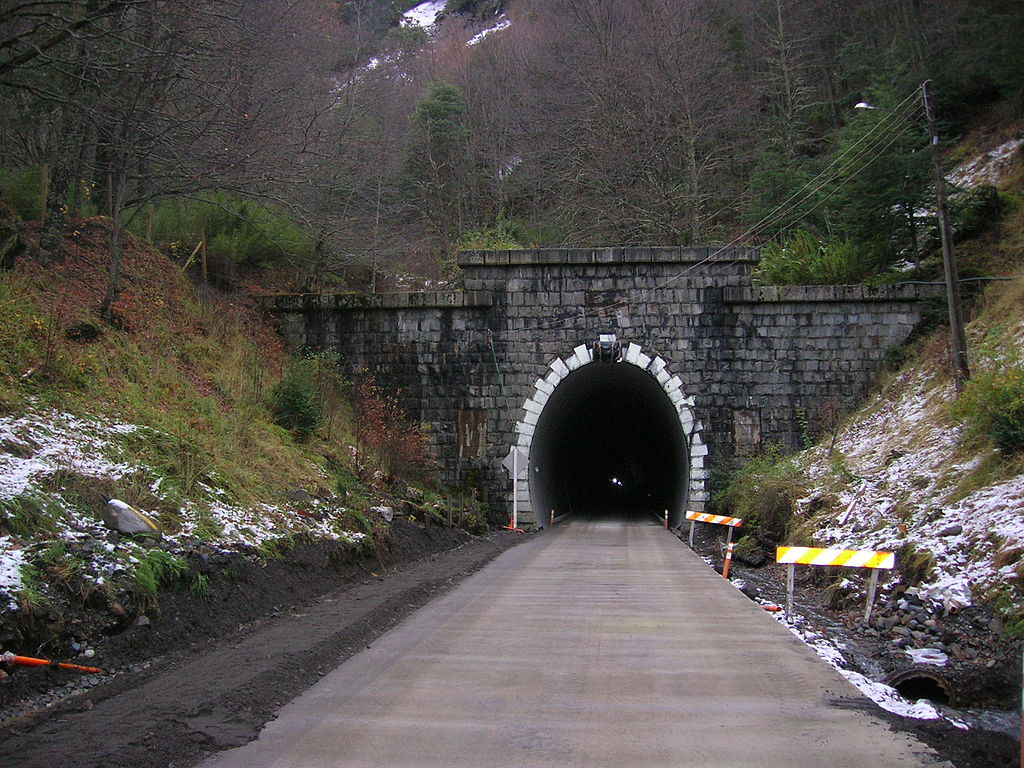
Las Raíces Tunnel - photo by Miguel Millan

Las Raíces Tunnel – photo by Miguel Millan

This is not, by any means, the semi-arid Maipo Valley, and the wines have a fresh, lively acidity to show for it. Most of the grapes grown in the Malleco Valley are currently owned by the Viña Aquitania Winery, which produces their Malleco Valley Chardonnay, Sauvignon Blanc, and Pinot Noir, under the brand name “Sol de Sol” at the winery in the Maipo Valley.

The area around the town of Traiguen is not without its charms, and a good deal of adventure-seeking travelers come to the area for hiking, skiing, and camping. One local attraction is the Las Raíces Tunnel (Túnel Las Raíces), the second longest tunnel in South America. At just shy of 3 miles long, the tunnel, built in 1939, was originally intended to be part of a highway linking the Pacific and Atlantic oceans, however, the rest of the highway was never finished. The tunnel does, however, link the Chilean city of Temuco with the Pino Hachado Pass, and the highway continues towards Argentina.

This tunnel allows only one-way traffic, and averages about 450 vehicles a day. Cyclists must take their chances at finding a kind-hearted truck driver to give them a lift through the tunnel.  Click here for a very cool youtube experience of riding through the tunnel!

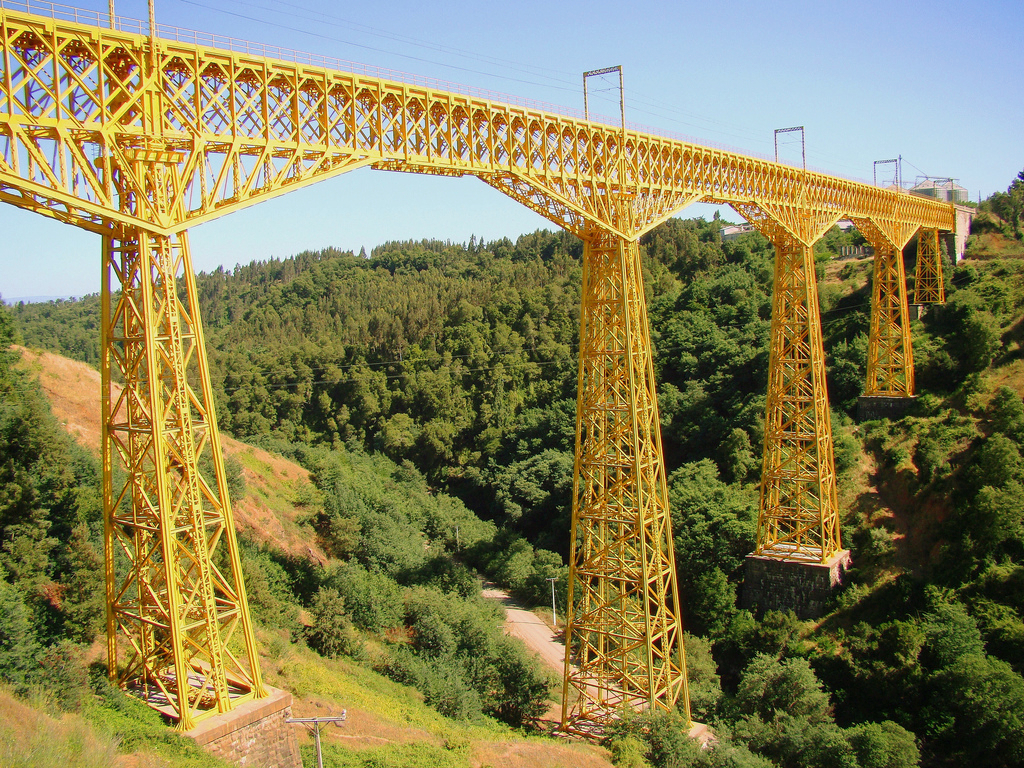
The Malleco Viaduct (Viaducto del Malleco), another local landmark, is currently on the tentative list to be named as a Unesco World Heritage Site.   The viaduct was opened by President José Manuel Balmaceda on October 26, 1890. At that time, it was the highest railroad bridge in the world and is still considered one of the largest works of metal engineering in Chile. The bridge was built in France, in the workshops of Schneider et Cie. Interestingly, the workshop of Gustave Eiffel also submitted a bid, but was not selected to complete the project.

The Malleco Viaduct - photo by Marcelo Reston

The Malleco Viaduct – photo by Marcelo Reston

The finished sections of the bridge were transported first by ship and then by railroad and assembled on site.  The bridge is 1,200 feet long and 250 feet high – that’s about as high as a 20-story building – pretty impressive for 1890!

Cool tunnels, towering bridges, beautiful country and (a little bit of) excellent wine – it sounds like the Malleco Valley is an interesting place!

Note: It was not easy finding information on the Malleco Valley – and, as such, I had to (gasp!) veer off the internet and go old-school and use books (remember those?) in addition to a few websites in order to find the information I wanted. As such, I’d like to acknowledge the following resources used to research this post:

The Bubbly Professor is…”Miss Jane” Nickles of Austin, Texas    missjane@prodigy.net
The Southern Alps, Mount Cook, and the Nor’westers

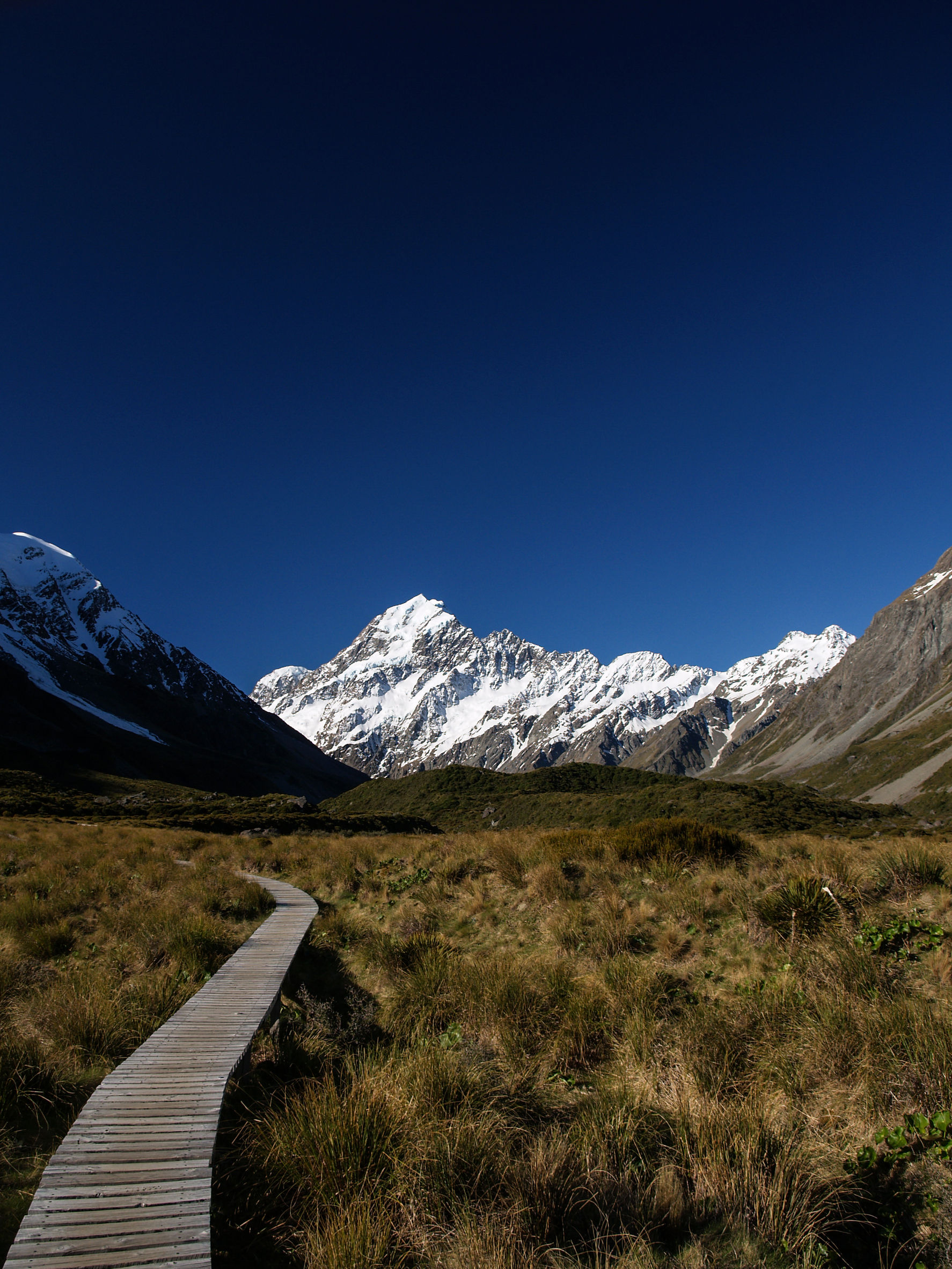
Mount Hood Hiking Path

Mount Hood Hiking Path

Students of New Zealand wine are familiar with the mountain range known as The Southern Alps. They can probably tell you that the mountain range extends along much of the length of New Zealand’s South Island, forming a rain shadow that keeps a good portion of the eastern side of the island warm and dry. For this reason, the wine regions of Marlborough, Canterbury, and Central Otago are able to grow some of the finest Sauvignon Blanc, Chardonnay, and Pinot Noir in the world.

The Southern Alps run for about 275 miles, forming a natural dividing range along the entire length of the South Island. New Zealanders often refer to the range as the Main Divide, as it separates the more heavily populated eastern side of the island from the somewhat wilder west coast. A large portion of the mountain range, which includes glaciers, glacial valleys, and lakes, is inaccessible except to the heartiest of mountaineers, and enjoys the protection of the National Park Service.

The highest peak in New Zealand, Mount Cook (also known by the Maori name “Aoraki,” said to mean “Cloud-Piercer”) is part of the Southern Alps.  At 12,218 feet high, Mount Cook is a dangerous but popular challenge for mountain climbers.  Aoraki/Mount Cook consists of three summits – the Low Peak, the Middle Peak, and the High Peak – surrounded by the Tasman Glacier to the east and the Hooker Glacier to the west.  The settlement of Mount Cook Village is a tourist center and serves as a base camp for climbers. For the adventurous, the area offers a wealth of hiking and skiing as well as star-gazing at Mount John Observatory in the Aoraki Mackenzie International Dark Sky Reserve – the largest dark sky reserve area in the world.

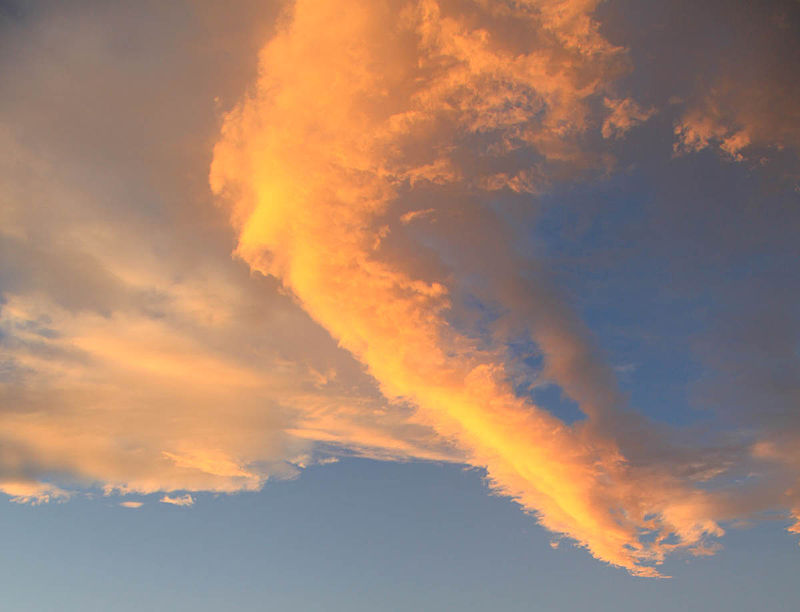
Nor'west Arch over Canterbury Photo by Jman Matthews

Nor’west Arch over Canterbury Photo by Jman Matthews

The prevailing westerly winds known as the “roaring forties” push in from across the Southern Ocean and the Tasman Sea, bringing along with them a host of moist air, much of it aimed directly at the west coast of New Zealand. When the winds bump up against the mountains of the Southern Alps, they are forced upward, and this force cools the air, and condenses the moisture to rain. The cold air and precipitation are kept on the west side of the island, thus creating the warmer, drier conditions on the eastern side of the island where the majority of the population (and vineyards) live.

The prevailing west winds also create a weather pattern known as the nor’wester. As the ocean breezes rise up the west side of the mountains and drop their rain, the wind turns warm and dry as it descends down the eastern side of the mountains, similar to the Zonda often experienced in Mendoza. These warm, dry winds play a major role in the intermittent droughts experienced by Canterbury and other regions on New Zealand’s eastern coasts.

A more pleasant side effect of the nor’wester winds is a cloud formation unique to the South Island of New Zealand known as a “nor’west arch.” A nor’west arch appears in the sky as an arch of cloud in an otherwise blue sky, and is frequently visible in the summer across Canterbury and North Otago.

The Bubbly Professor is “Miss Jane” Nickles of Austin, Texas

Context is Queen: I know this post seems a bit far-fetched for a wine post…but…I’ve found in teaching or studying a subject as complex as wine, it helps to know the context. While a wine student may memorize the fact that the Southern Alps form a rain shadow for parts of New Zealand, taken out of context, that bit of information will remain what students (not so kindly) call a “factoid” and others may call “trivia.” Such things are hard to remember, and even more difficult to understand. However, with a bit of context, especially at the human level (“what can you do there, do I want to go there, that looks cool/scary/weird…”) these facts become much easier to remember, use, and understand. So that’s what this post is all about – content is king, and context is queen!


The Majestic Cascades

Map of the Cascade range by Shannon, via Wikimedia Commons.

Map of the Cascade range by Shannon, via Wikimedia Commons.

CSW Students might know a bit about the Cascade Mountain Range. They certainly know that the majority of Washington State’s vineyards are planted to the east of and in the rain shadow of the Cascades.

They also know that one of the main differences between the geography of Washington State’s wine industry and Oregon’s wine industry is that in contrast, the majority of Oregon’s vineyards are located to the west of the Cascades, sheltered from the effects of the Pacific Ocean by the much tamer mountains of the 200 mile-long Oregon Coast Range.  And they have probably heard of the Columbia Gorge, as it’s a tiny AVA that straddles the Oregon and Washington State lines.

And that’s a pretty good start, but there is so much more to know…

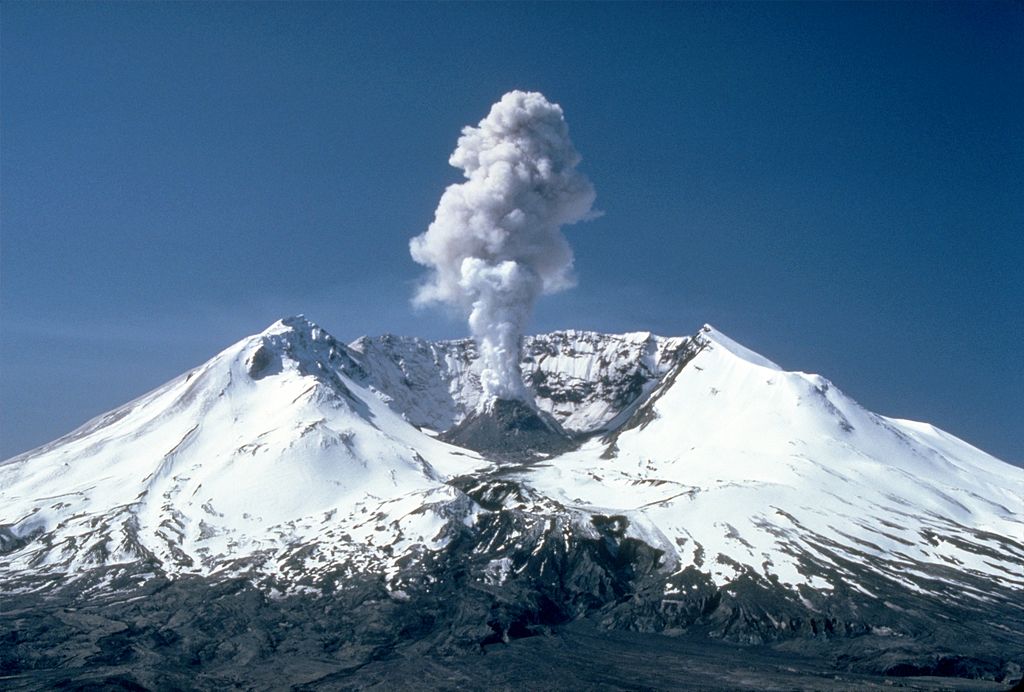
The Cascade Range is impressive, stretching for over 800 miles from Mount Lytton in British Columbia, through Cascades National Park in Washington State, past Mount Hood in Oregon, and ending just south of Mount Lassen in Northern California’s Shasta County. The highest peak in the Cascades is Washington State’s Mount Rainier, which rises to 14,411 feet above sea level and dominates the surroundings for miles around. Mount Saint Helens, whose 1980 eruption transformed a mountain with a 9,677 foot tall summit into an 8,365 foot high mountain with a 1 mile-wide horseshoe-shaped crater, is also part of the Cascade Range.

The range, particularly in the area north of Mount Rainier, is extremely rugged. Many of the smaller mountains in this area are steep and glaciated, looming over the low valleys below. The topography settles down a bit as the range winds southward, but even its southernmost peak, Mount Lassen, rises 5,229 feet above its surroundings to an elevation of 10,457 feet above sea level.

Mount Saint Helens, post her 1980 eruption

Mount Saint Helens, post her 1980 eruption

Due to its proximity to the Pacific Ocean and its westerly winds, the Cascades form a rain shadow for much of the inland Pacific Northwest. The areas to the west of the mountains are known for rainy conditions, and as the elevation climbs, for year-round snow and ice. The western slopes of the Northern Cascades can have annual snow accumulations of up to 500 inches, and with accumulation of over 1,000 inches in exceptional years.

In comparison, on the arid plateau located to the east of the mountains, annual rainfall averages 9 inches. This area, now known as the Columbia River Plateau, was formed over 16 million years ago as the lava flows from Cascade volcanoes coalesced, and covers a 200,000 square mile region in eastern Washington, Oregon, Northern California and Idaho. As all good wine students know, this is the area where almost all of Washington State’s commercial vineyards are planted.

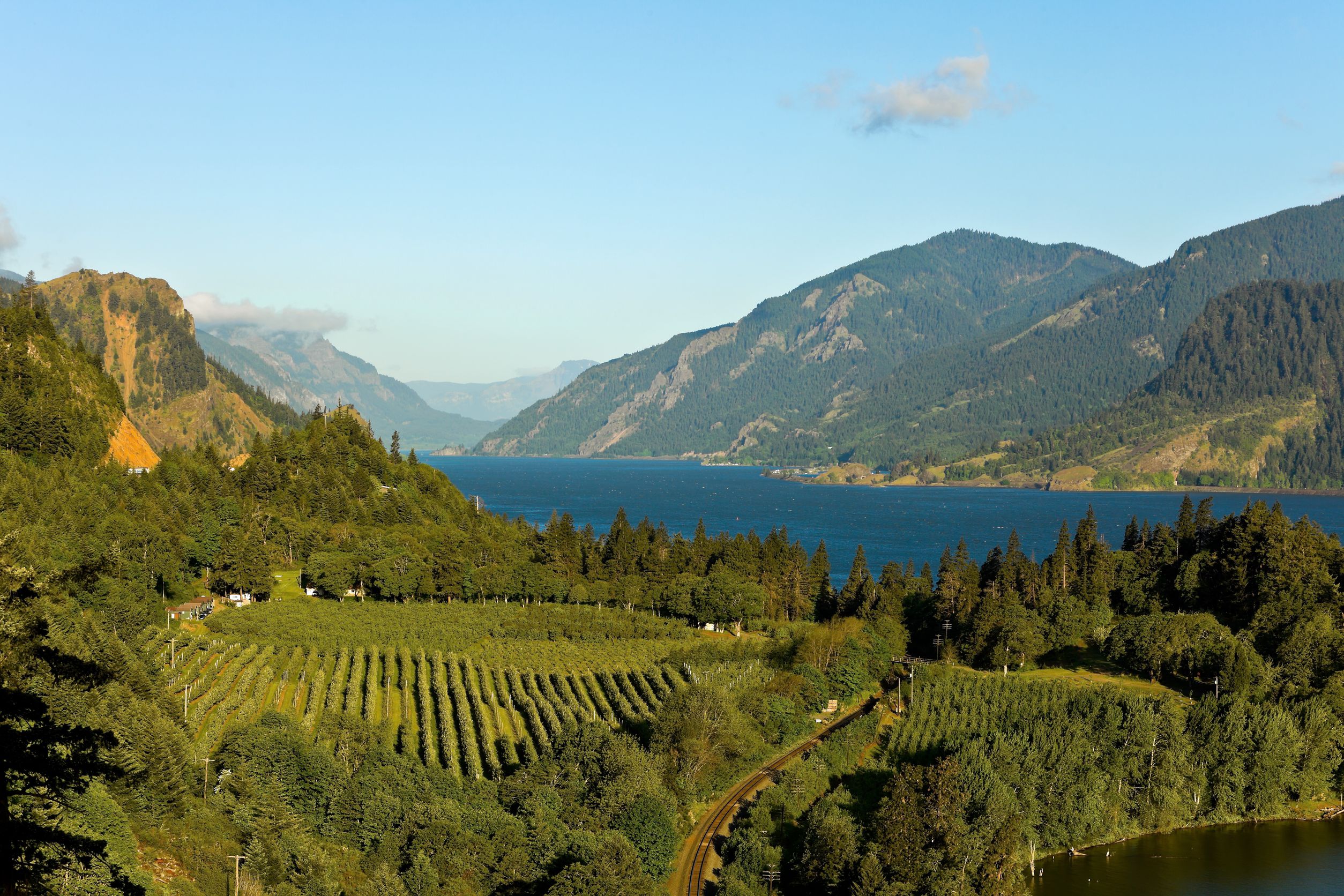
The Columbia Gorge, located where the Columbia River forms the border between Oregon and Washington State, is the only major break in the American section of the Cascade Mountains. The Gorge was formed over the millennia as the Columbia River eroded its way through the burgeoning mountains on its way to the Pacific off of the Columbia Plateau. Lewis and Clark, in 1805, were able to reach the Pacific through the impressive Cascades via the Columbia Gorge, which for many years was considered the only practical passage through the surrounding mountains.

Vineyards in the Columbia River Gorge

Vineyards in the Columbia River Gorge

In Canada, the country’s second largest wine region, The Okanagan, is also located in the rain shadow of the Cascade Range. The region, which stretches for 100 miles north of the US border with Washington State, shares many of the same geographical/geological features that define viticulture in Washington State, such as a continental climate (somewhat moderated by Lake Okanagan), long daylight hours in the growing season (due to the northerly latitudes), an average of 9 inches of rain per year (requiring irrigation), and the risk of frost damage to the vines over the cold winters.

Other people may note that the majestic Cascades are known for ski resorts, hydro-electric power, strong westward rivers, Douglas Fir trees, important water reserves, Klamath Falls, alpine elk, glaciers, grizzly bears, blueberries, and some of the few remaining wild wolf packs in North America… but for some of us, it’s all about the wine!

The Bubbly Professor is “Miss Jane” Nickles of Austin, Texas: missjane@prodigy.net

This post was inspired by week ten of my Online CSW Prep Class! 


Long Time Gonna Study This!

LTGSTLong time gonna study this!

No…this is not the Bubbly Professor slipping up and using poor grammar…rather, it is shorthand for the method I’ve been using for the past several decades to introduce and teach about (region by region) the wide world of wine!

Long Time Gonna Study This is a mnemonic device to help me remember the 5 most important things one needs to know about any wine region – in order to really understand (and not just “memorize”) the facts and figures, grapes and places, and other details about the area. The letters stand for: Location, Terroir, Grapes, Styles, and Terminology.

This is not the “easy way out” for studying. This is, however, a very effective study technique as it gives meaning and context to what you are studying. As I’ve said so many times before…your brain just does not like (and is not good at) fixing random words and numbers into long-term memory. What your brain is really good at remembering are things that are personal, contextual, spatial, surprising, physical, and humorous in nature.

So…how do we use this knowledge to make our wine studies more effective? We make our studies more contextual (the background story), spatial (how this location relates to other locations), physical (taste the wine, look at the label, pick up the bottle even if you can’t afford to buy it), personal (draw a map, say the words out loud, visit the region). If it can be made to be surprising or humorous along the way, so much the better!

Here is a more detailed explanation of the use of the LTGST study method:

LTGST terroir 2Location:

  • For starters, we need to know the basics: where is this area located?
  • Get specific – latitude, proximity to well-known cities and landmarks, and location in relation to other wine regions.
  • Research the topography – rivers, lakes, oceans, mountain ranges.
  • The best way to do this is trace a map, get to googling and draw in the cities, mountains, and rivers. By doing so you are making your studies more physical, which as we know will greatly improve your memory of the topic.
  • It’s important to study this first, as it sets the stage for the information to follow.

Terroir:

  • What is the local climate, soil, topography, etc and how does it affect the wine?
  • Knowing the details on the location (latitude, near-by mountains, rivers, and oceans) will translate into a better understanding of the terroir (see how that works)?

Grapes:

  • What grapes are grown there?
  • Are they blends, or single varietals?
  • Understanding the location, which leads to a better contextualization of the terroir, will lead to better understanding of what grapes grown in a certain location and why. There’s a good reason that Alsace grows mainly white grapes and Bordeaux can grow botrytis-affected Semillon so well – and it has everything to do with location and terroir!

LTGST terminologyStyles:

  • After we know the overall climate and the grape varieties that are grown in a certain region, we’re ready to study the types of wines made in a region.
  • What styles of wine do they produce? Dry, sweet, still, sparkling?
  • What unique production techniques create these wines?

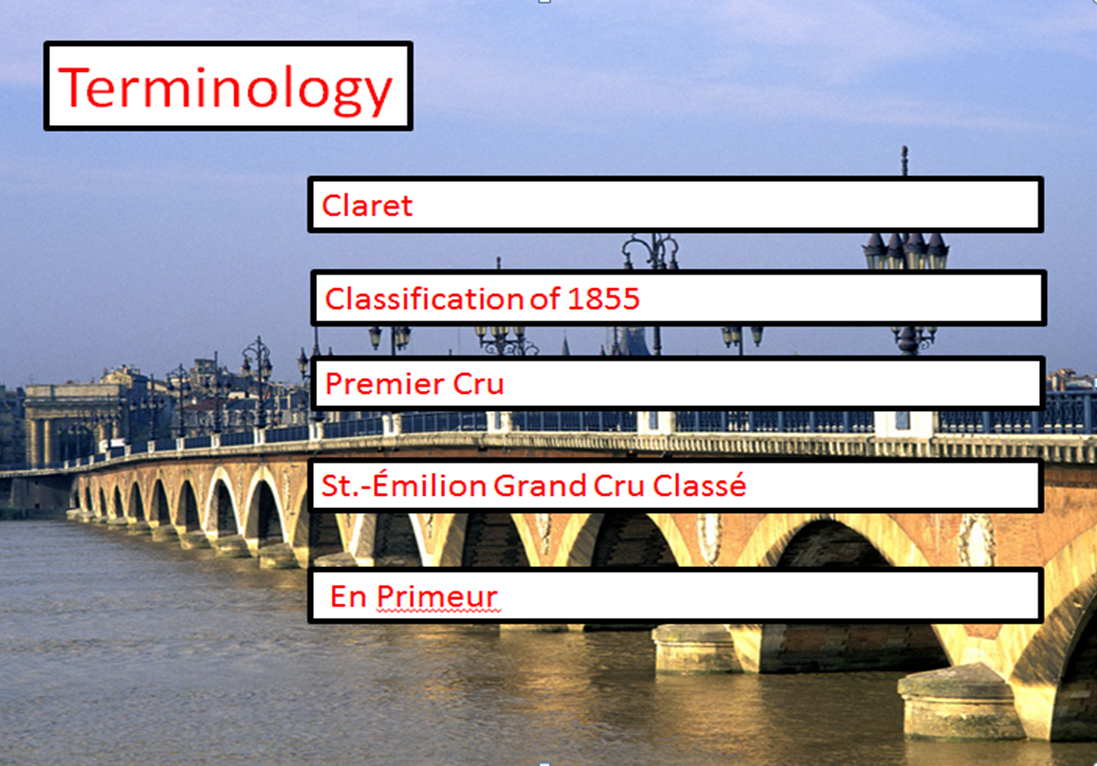
Terminology:

  • What terms do you need to understand the wines and their labels?
  • Some regions, such as Bordeaux and Burgundy, have a vocabulary all of their own and this list can get very long indeed; others are much simpler.

So there you have it…the LTGST method of studying the wines of the world. Like I said earlier in this post, it is certainly not quick or easy, but I guarantee you it’s effective.

Click for more advice on how to study wine and spirits.

Good luck with your studies, and please let me know if you have any questions, comments, or success with this method!

The Bubbly Professor is “Miss Jane” Nickles of Austin, Texas   missjane@prodigy.net
The Chocolate Block, Cape Cobras, and Braai

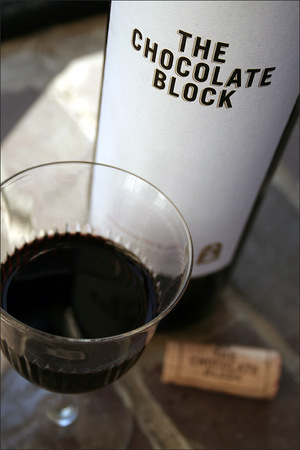
The Chocolate Block 2Here’s a hint for you folks out there that are not in the wine business:  People in the wine industry HATE to be asked about their favorite wine.  And we get asked all the time!! Just yesterday, at Kinko’s of all places….I am minding my own business, making copies of tasting mats, and someone who  just can’t help themselves forces me to admit that I am prepping to lead a wine tasting and the next thing out of their mouth is “So, what’s your favorite wine?”

There are many reasons we don’t care for this question.  First of all, my “favorite” wine is usually the one I am with.  Second, it changes all the time! Third, I really don’t want to offend anyone –and you never know who is listening! Finally, people usually only ask you that question because they want to tell you about their favorite wine, which is sometimes just painful to listen to….

Ok, thanks for listening to my rant. While I stand by the idea that “what’s your favorite wine” is a question wine professionals would rather not answer, over the years I have developed a pat answer that, while getting me out of many a squirmish situation, is also based in truth.

My standard answer to the question is: The Chocolate Block, a South African red blend produced  by the Boekenhoutskloof Winery in Franschoek.  Now, I will admit that my uncanny (and much-rehearsed) ability to pronounce “Boekenhoutskloof” may be part of the package, however, this is also an amazing wine, delicious and seductive, and like all good things…it comes with a great story.

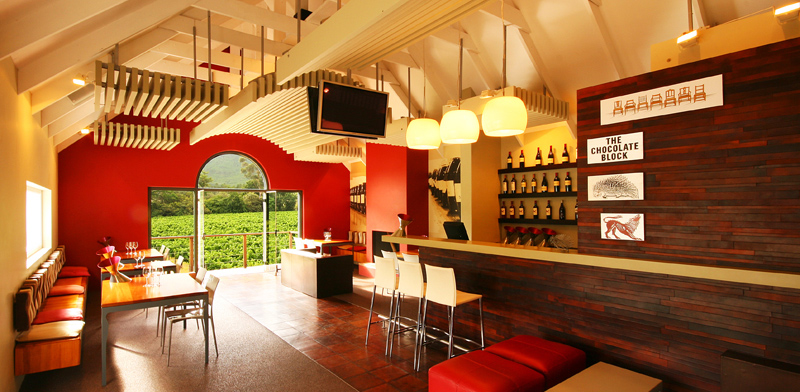
Boekenhoutskloof Tasting RoomThe wine itself has a great story attached to it, which you can read on the Boekenhoutskloof Website. Suffice it to say the wine “has secrets to keep” and “inspired a graphic novel.” But as this wine is my personal favorite, you know there is a personal side to the story of the wine. It’s actually quite simple:  a few years ago, I was on an amazing, WOSA-sponsored trip through the wine producing regions of South Africa, having won a wine-related essay contest. One morning towards the end of our trip, our driver dropped me and my best friend/travel buddy off at the Boekenhoutskloof Winery in Franschoek for a tour and tasting.

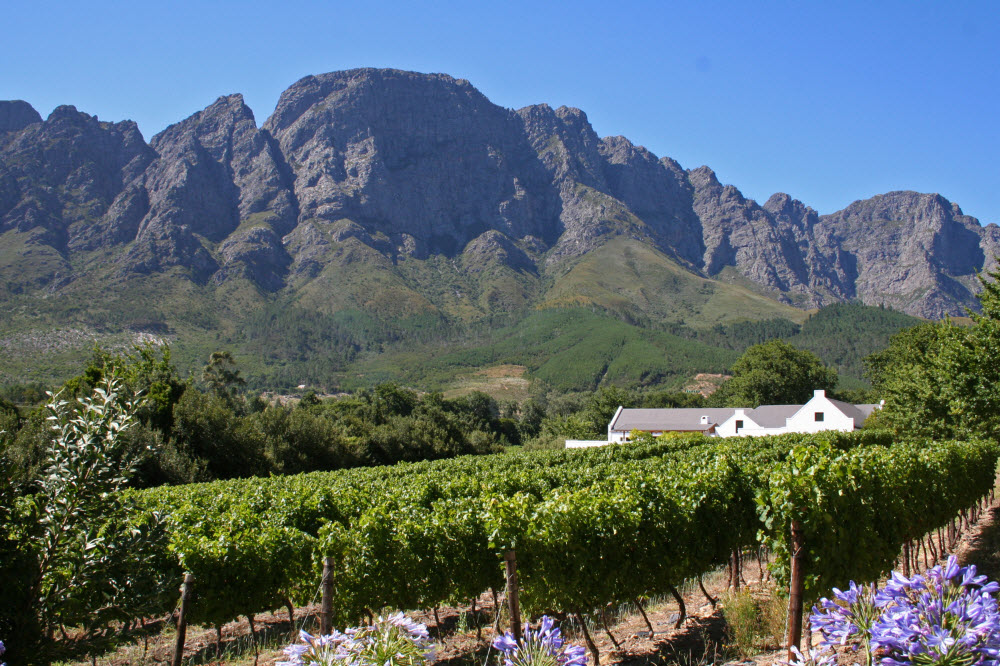
The sheer beauty of the region, the technical ingenuity of the winery, and the amazing modern architecture of the tasting room built out over the vines were enough to make us swoon. We tasted through the winery’s range of wines, including Porcupine Ridge, The Wolftrap, and their iconic Boekenhoutskloof Syrah. They were all amazing.  Then our host brought out the big dog…The Chocolate Block, and we entered one of those rare yet coveted, zen-like trances accompanied by a feeling like, “this is so  good I have to just shut up and let this wine wash over me and just allow myself to feeeeeeeeeel it.”

Our host was smart enough to just let us zone out for a while…he was surely used to such things.  When the conversation started up again, he told us a bit about the scenery.  We were located on the edge of a vineyard, just a few hundred yards away from a stream. The stream was lined with Coast Silver Oak trees – a tree native to South Africa, we learned. My friend saw a group of people riding horses along the stream, sauntering under the beautiful trees, dreaming of African skies, and our host told us that horseback riding was an easy activity to sign up for. Perhaps we would like to ride some horses that afternoon?

Boekenghoutskloug WineryWe were about to say yes, but before we could, he told us a “humorous” story of how, just the week prior, a group of tourists had been riding by – just like the group we had seen, when a nest of Cape Cobras had fallen down out of the trees, onto the tourists, wrapped themselves around the riders, and spooked the horses.

Cape Cobras? There is such a thing as Cape Cobras? Turns out there is such a thing as Cape Cobras, and before anyone works the vineyard in the morning, they send brave people running down the rows of vines, banging pots and kettles together to make a joyful noise and send the cobras scurrying off. Ok. We feel better now.

Of course, we spent the last few days of our trip scaring each other with phony “Cape Cobra” sightings – even on the plane home- “Cape Cobras on a plane!”

So that’s my personal Chocolate Block story.  But the wine itself, based on a varying blend of Syrah, Cabernet Sauvignon, Grenache, Cinsault, and Viognier, is delicious. It’s the wine I invented the tasting phrase “slips down your throat like the good Lord himself in velvet trousers” for. You can seek and find aromas and flavors of cherry, blackberry, cocoa (of course), coriander, cedar, red currant, marzipan, black plum, and raisin. The wine currently sells for about $22.00 in Texas.

The Bubbly Professor is “Miss Jane” Nickles of Austin, Texas… missjane@prodigy.net

The Electric Kool-Aid Acid Test*

A lot of the students in my introductory wine classes have a hard time coming to terms with acidity in wine.  It’s like the word “acidity” reminds them of battery acid, stomach acid, or Jerry Garcia’s long strange trip.

LemonsWhile its easy to understand how acidity does not sound appealing, its a very important flavor component in wine; perhaps even the most important. I can usually bring the class over to “my way of thinking” by comparing acidity in wine to acidity in food.  Everyone understands that a boring burger can benefit from a few slices of pickle or tomato, both of which add a wallop of acid.  Even the ketchup on that burger is highly acidic, although our tongues are much too interested in its sweetness to notice the zing.

Chemically speaking, acid is present in minute quantities in wine; it generally makes up only about 0.5% to 0.7% of the overall volume of a wine. However, its presence is one of the main flavor differences between fine wine and unfermented grape juice.  Acidity gives a wine “liveliness” or “bite”.  Without sufficient acidity, a wine would taste flat, neutral, boring, and bland. Who needs that?

When leading my students through their very first tasting, I have them direct their attention to the sides of their tongues where (despite the frequent bashings of the puedo-science of the “tongue map”) we have a unique set almost gill-like taste buds that are highly sensitive to acidity.

Directing them to pay attention to the “level of zing” and not any associated aromas or flavors, we try to agree on one of the following non-scientific descriptors to apply to the level of acidity in our wine:

Cream of Tomato soupFlat:  If the wine has no noticable “zing,” we call it flat.  I tell the students to compare the level of zing in the wine to the taste of butter.  Of course, butter has almost no acid; it tastes flat. That’s the point. Also, I would never serve my students a flat wine, but at this point in the class they don’t know that yet! A wine that is flat lacks acidity has no depth or complexity.  A “flat” wine is missing one of the basic building blocks of flavor.

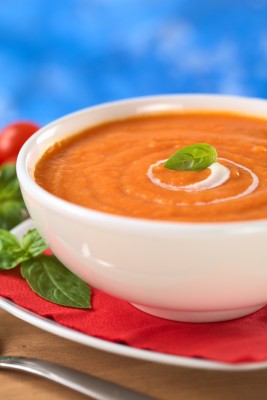
Soft: I ask my students if the wine has just a touch of acidity…like cream of tomato soup or blackberries. A soft wine has low acidity compared to many wines, but is still well-balanced, mellow, fruity, and pleasant.  A wine with soft acidity is generally easy to drink.  You may sense just a touch of acidity, and have a slight physiological reaction to a soft wine. (Fyi, both cream of tomato soup and blackberries clock in at about 3.9 pH….just about where the softest wines should land.)

Fresh or Refreshing:   A fresh, or refreshing, wine has enough acidity to balance the fruitiness and make the wine interesting and your mouth feel clean.  The main impression a fresh or refreshing wine leaves on your palate is one of refreshing the palate.  The term is used for a pleasant white wine that is perhaps not too complex – think Moscato d’Asti, Australian Viognier or warm-weather Chardonnay.  This term is also well-used for many red wines such as ripe Zinfandel or Mendoza Malbec, although beginning tasters generally don’t understand the difference between acidity and bitterness.  That’s a lesson for another day.

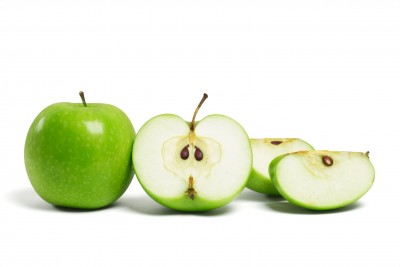
green applesCrisp:  Imagine biting into a ripe green apple.  The sides of your mouth pucker up, and yet it tastes great…good flavor accompanied by balanced acidity and fruit.  But maybe a bit too tart for those who would prefer a red apple or a nectarine.  A crisp wine’s acidity is easily recognizable but does not overwhelm the flavor of the wine.  You will feel a slight prickly sensation on the sides of your tongue.  You can taste the acidity, but the other flavors come shining through as well. Pinot Noir, Beaujolais, Chablis, White Bordeaux, many Italian White Wines, and other warm-weather white wines have a good chance of being well-described as “crisp.”

Lively:  Think of the vibrant acidity accompanied by a whoosh of flavor that you experience from a green apple Jolly Rancher candy. A lively wine that has a perfect balance of acidity, and is bursting with flavor.  This term is used for wines that have fuller flavor than wines described as “crisp,” such as many sparkling wines (the bubbles emphasize the acidity), California Sauvignon Blanc, or any other white wine that has avoided malo-lactic fermentation or was the result of a cool climate or year.

grapefruitTart:  Four words:  New Zealand Sauvignon Blanc.  One more word:  grapefruit. A tart wine is noticeably acidic.  If you are a ceviche-loving type of person who would rather have a dill pickle than a cookie for a snack, this might be your favorite type of wine. (It is mine, but then my mother once had to explain to me that peeled lemons were not an appropriate snack.) This is a high-acid wine that leaves sharp, almost hard impression on your tongue.  This wine will cause a physiological reaction in your salivary glands, but is not overwhelmingly acidic and not yet sour.

Sour:  If the wine reminds you just a bit too much of biting down on a freshly sliced lemon (or, worse yet, lime wedge), you have a wine that is out of balance with too much harsh acidity.  This is generally a negative term a might represent a defect in the wine (as would a “flat” wine).  A sour wine will remind you more of vinegar and may imply that the wine has spoiled. If you were served this wine in a restaurant, return it.  If you were served this wine at someone’s house, you might just have to sit there and cry.

Other terms I have used to describe acidity include:  sharp, vibrant, snappy, snap-crackle-pop, electric, intense, bright, precise, daggar-like, zing, tongue-curling, acidic spark, or a flavor such as “cherry-like acidity” or “a squirt of lemon”. Or my personal favorite…scandalous.

What’s your favorite?

The Bubbly Professor is…”Miss Jane” Nickles of Austin, Texas….missjane@prodigy.net

 *Kudos to any readers who caught the reference to Tom Wolfe’s famous book about Ken Kesey, “The Electric Kool-Aid Acid Test.” If you got the reference, you are probably my age (congrats on making it past your 40’s).  If you didn’t, you might recognize the brillant, white-suit wearing Mr. Wolfe as the author of “The Bonfire of the Vanities” and “The Right Stuff.”

WineGeo: Escarpment and Bench

Niagara on the lakeJust yesterday, following a lovely trip to Toronto and the Ontario Wine Country, I was doing a bit of research in order to write up a blog post about the four sub-appellations of the Niagara-on-the-Lake VQA.  For the record, they are:  Niagara River, Niagara Lakeshore, Four Mile Creek and St. David’s Bench. According to the website for the Wineries of Niagara-on-the-Lake, these four areas are differentiated by soil types, weather, elevation and proximity to “three unique geographical features: the Niagara Escarpment, Lake Ontario and the Niagara River.”

I have to stop right there and promise to write the blog post on the sub-appellations (they are quite lovely) at a later date, because I just realized that in that one short paragraph I spouted off two words that I have no earthly idea how to really define.  And you, dear wine student, if you honest with yourself, must admit that you have done the same thing; you use the words all the time (chatting about wine is so-much-fun) but can you tell me, in your own words, just what exactly is an “escarpment” and what, geologically speaking, is a “bench?” 

Well, neither could I. So, I did some early morning research and am going to try to define those geological terms in simple, regular person’s language, with just a teeny bit of wine geek thrown in.

Escarpment:  An escarpment is basically an area of the Earth where the elevation changes suddenly. An escarpment is often found along the ocean shore, such as the Devil’s Slide area of California Highway 1.  An escarpment can also refer to an area on dry land that separates two level land surfaces, such as Africa’s Great Rift Valley and the Niagara Escarpment (only a small portion of which hosts the famous falls.)

A tiny piece of the Niagara Escarpment

A tiny piece of the Niagara Escarpment

An escarpment usually indicates two different types of land, such as the area of a beach where tall cliffs surround a lower area of sand.  Escarpments between two areas of level land are usually composed of different types of rock or rocks from different geologic eras, one of which erodes much faster than the other. Escarpments can also be formed by seismic action; such as when a fault displaces the ground surface so that one side is higher than the other (scary).

Significant Wine-Related Escarpments include the Niagara Escarpment, the Côte d’Or, the Balcones Fault in Central Texas, and the Darling Scarp in Western Australia. The term “scarp” technically refers to just the the cliff-face of an escarpment, but the two terms are generally interchangable.

Bench: Admit it, you’ve talked in hushed tones about the amazing flavor of Cabernet Sauvignon from the Rutherford Bench….but do you know what is meant, geologically, by the term bench?  Neither did I.  Tchnically, a bench or a “benchland” is a long, narrow strip of relatively level land that is bounded by distinctly steeper slopes above and below it. Benches can be formed by many different geological processes, such as a river (as in a river’s flood plain, or an “abandoned” river bed), waves (if alongside an ocean), or the varying levels of erosion of different types of rock.

Cross Section of Different Types of "Bences"

Cross Section of Different Types of “Benches”

Thanks to Wikimedia Commons for the diagram of “Bench Structure.” The diagram shows the different ways benches can form, such as structural benches formed by the  erosion of shale beds overlying limestone beds and the more common “river terraces.”

The famous “Rutherford Bench” is a stretch of the Napa Valley, about three miles long, starting in Oakville and heading north to Rutherford.  The bench sits in the middle of the valley floor, surrounded on two sides by small hills. The famous soil of the Rutherford Bench consists of gravel, loam, and sand, much of which was deposited there by earlier advances and retreats of San Pablo Bay.

The term “bench” appears in the discussion of wine regions (though not necessarily AVAs or appellations) frequently:  the Rutherford Bench and the Oakville Bench were both at one time or another considered for AVAs of their own, but to date have not been designated as such. There are however, five “official” wine regions that I could find that use the term:  Kelsey Bench-Lake County AVA, and four VQAs in Ontario: Short Hills Bench, St. David’s Bench, Beamsville Bench, and Twenty-Mile Bench.

References/for more information:

Deconstructing Llicorella

PrioratThis morning I set about to research the wine region of Priorat for a blog post.  I already knew the basics of the region, such as the fact that it is one of Spain’s two DOCa wines, the main grape variety is Garnacha Tinta, and the area came to international attention in the 1990s.

Wikipedia (I know, not the best reference but in this case, just a starting point) also had this to say, “The area is characterized by its unique terroir of black slate and quartz soil known locally as Llicorella.” I already knew that the soil in Priorat is mainly Llicorella…at least I knew the word, and could have guessed it correctly on a multiple choice test.  But being in a Monday sort of contemplative mood, I wondered if I really understood Llicorella.  Of course, I didn’t. So I set about to deconstruct Llicorella.

First of all…just what exactly is slate? Slate is a fine-grained, foliated, homogeneous metamorphic rock derived from sedimentary rock composed of clay or volcanic ash. It is the finest grained foliated metamorphic rock.

Slate...a Metamorphic Rock

Slate…a Metamorphic Rock

Metamorphic Rock? Metamorphic rocks are created from the transformation of existing rock types.  Metamorphism means “change in form.” Rocks under the earth’s surface change form by being subjected to heat, generally temperatures from 300° – 400°F, which can cause both physical and chemical changes in the rock itself.

Sedimentary Rock? Sedimentary rocks are formed by the solution of mineral and organic particles within bodies of water. Sedimentation is the name for several different processes that cause mineral particles and organic particles to settle and accumulate first into a dissolved solution and later into sediment.  Sediment is then transported to dry land by water, wind, or glaciers, or is left behind when the bodies of water dry up.  With time, the slushy sediment hardens into rock. Sandstone is probably the most well-known sedimentary rock.

Clay? Clay is a very fine-grained soil type made up of very fine minerals such as aluminium phyllosilicates, iron, magnesium, and a bunch of other chemicals I have never heard of. The minerals that make up clay soil are the result of weathering…the breakdown of rocks, soils, and minerals through contact with air, water, and living creatures.

Licorella

Llicorella

Volcanic Ash? Volcanic ash is made up of pieces of pulverized rock, minerals, and volcanic glass that are created during volcanic eruptions. Pieces of ash must be less than 2 mm in diameter – larger fragments are referred to as cinders or blocks. At least this one I can understand!

Foliated? There are two types of metamorphic rocks:  foliated rocks and non-foliated rocks.  Foliated metamorphic rocks, such as schist and slate, have a “layered” appearance that has been produced by exposure to heat and directed pressure.  Non-foliated metamorphic rocks such as marble and quartz do not have the “layered” appearance.

And what is quartz? Quartz is the second most abundant mineral in the Earth’s continental crust, after feldspar. There are many different varieties of quartz, several of which are semi-precious gemstones. Quartz is the most common element of sand and sandstone and is used in glassmaking.  Quartz is almost immune to weathering and is a component of granite and other igneous rocks.

Aha- that’s why sand is coarse (quartz doesn’t “weather”) and clay is fine (its made up of materials that do weather or “breakdown”).

I think I’ll stop there. But for those of you who are curious, igneous rocks are rocks that are formed by the cooling and solidification of lava or magma. Granite and obsidian are igneous rocks.

So now, when someone says, “Llicorella is a unique soil made up of black slate and quartz,” what do you know?

Vineyard in PrioratSources (in addition to http://en.wikipedia.org/wiki/Priorat_(DOQ)):

http://geology.com/

http://www.quartzpage.de/index.html

http://www.mineralszone.com/

http://www.turismepriorat.org/en

http://www.in-spain.info/top20/spanish-white-wine-priorat.htm

The Bubbly Professor is “Miss Jane” Nickles of Austin, Texas  missjane@prodigy.net