Train the Trainer: There’s More to Class than just the Glass

There’s More to Class than Just the Glass

As a full-time wine educator, I have found myself teaching classes and leading wine tastings in some unusual spots.  Many of my classes are held in my super-comfy, perfectly designed, high-tech enhanced wine lab college classroom.  This setting is as conducive to learning as a setting can be. Wine and food conferences, and in my case mostly wine and food education conferences are also good situations for teaching and learning…at least people are sitting down, facing the speaker, and we can assume the audience wants to listen and learn.

However, part of a wine educator’s life is spent on the road, and I have also taught classes in winery barrel rooms, in restaurants during the dinner rush, and at wine bars in the midst of happy hour.  Add to the list the seminars I have led outdoors at wine festivals, trade tastings, womens’ retreats and rock concerts. (You will note I did not include private homes…Miss Jane does not do private homes.)

Let’s face it:  it can be hard to engage and actually teach students about wine when they are outside, at a rock concert, or even at a wine bar; and my educational philosophy and practice is all about engagement.  I want my students to be not just at attention but fully engaged.  Attention is great – you need to have a full repertoire of attention grabbers.  Once you have gotten your audience’s attention they should be listening, observant, and interested in what you are about to present.  Attention is valuable but it only lasts for a few minutes until minds start to wander.

Engagement, on the other hand, goes deeper than attention.  When your class is fully engaged, they are physically energized, emotionally connected, and mentally focused on the subject at hand.  Engagement in the material at hand should be one of the main goals of instruction, and “points of engagement” should be pre-scripted into your lesson plan just as carefully as your course objectives and class material.

Obviously, a wine class has a few built-in advantages when it comes to student engagement.  First of all, it’s about wine (a fascinating subject and one with broad appeal.)  Secondly, we usually have a built-in activity (also very appealing) when we lead a tasting.

The challenge for me, I have found, in leading a tasting class is not in just keeping the audience engaged, but keeping them focused on learning and not merely engaged in the tasting itself – in other words, enjoying the wine more than the class.  As we all know, this type of “tasting” can devolve into “drinking” quickly if not managed.

I am sure that we have all found that during an instructor-led tasting, students tend to get excited and chatty.  Left unmonitored, it gets louder and louder – which is great if you are at a party, or maybe if you are leading one of those tastings at a wine bar or rock concert.  However, if you want to balance fun with serious learning, this can be a challenge.
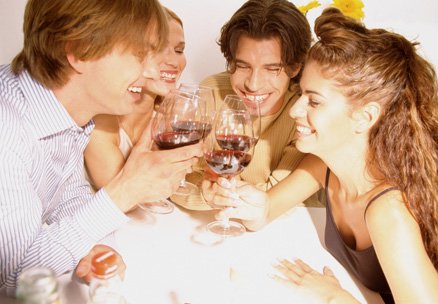
Over the years, I’ve developed my own system for walking this fine line.  When leading a tasting activity,  I generally let the students taste and talk amongst themselves for a few minutes – after all, talking is the ultimate engagement – and then try bring them gently back to attention for further instruction. To do this effectively, you need an abrupt attention grabber.  Most teachers whistle or scream or bang a spoon on a glass. There’s nothing really wrong with this technique -it certainly does work – but it can also leave students unfocused, annoyed, or even angry.  (Note:  nothing halts learning quicker than anger.)

What I do to avoid this backlash is this:  I introduce the wine, tell the class I am going to give them five minutes to taste and talk amongst themselves and will then bring them back to attention for group discussion and further instructor-led content.  Then I play some background music appropriate to the theme and setting.  When the time for tasting and talking is over and I want to turn their attention back to my presentation, I turn up the volume briefly and then turn it off.  Works everytime, and no one shoots me a dirty look or complains!

Here’s my advice to you:  try to develop a your own signature style of focusing the class after a tasting break or other group activity.  You might use a call and response, flick the lights, have everyone stand up, or use music like I do.  In a pinch, you can always bang a spoon on a glass.

Train the Trainer: Are you a visual or a verbal learner?

.

Are you a visual or a verbal learner? Do you tout the fact that there are four learning styles – and your classes engage each one of them? Do you make power point slides and handouts in an attempt to “engage visual learners”? Do you think your lecture and discussion is ideal for “engaging auditory learners”? If so, you are not alone…but many people will argue that you are wrong! Ouch!

Let’s give this side of the story a chance and consider that it might be high time to get over this antiquated idea of education.

For more than 30 years, the notion that teaching methods should match a student’s particular learning style has exerted a powerful influence on education. The wide appeal of the idea that some students will learn better when material is presented visually and others will learn better when the material is presented verbally (or kinesthetically, or logically) is evident in the vast number of learning-style tests and  teaching guides available, not to mention the reams of literature on the subject.  Just google “learning styles” and see what happens.  I got over 14 million results touting no less than 71 different “learning styles” – all in 1.3 seconds!

.

This is not to say that people do not differ in learning abilities.  A person with a high level of visual learning ability will be able to easily recall if an image was red or blue, and will have a high level of recall of people’s faces.  A person with a high level of auditory learning ability will have an uncanny ability to differentiate between different pitches, levels of volume, and the unique sound of a voice.  However, this does not imply higher levels of the construction of new knowledge, new meaning, new vocabulary, new concepts or new context based on the path of input.

Modern scientific research simply does NOT support the existence of different learning styles, nor the hypothesis that people learn better when taught in a way that matches their own unique style.  As a matter of fact, reams of literature have also been written on the subject that there are NOT four distinct learning styles. I got nearly as many google hits by using the terms “learning styles don’t exist” and “learning styles debunked” as I did on “learning styles” alone! If you don’t want to believe me (or google), perhaps you will believe a team of eminent researchers in learning psychology and their report published in December 2009 in Psychological Science in the Public Interest, a journal of the Association for Psychological Science. The report reviews the existing literature on learning styles and finds that although numerous studies have purported to show the existence of different kinds of learners such as “auditory learners” and “visual learners,” those studies have not used the type of randomized research designs that would make their findings credible.

.

Or perhaps you will believe a Harvard  Ph.D.  Dr. Daniel T. Willingham, a cognitive scientist and author of Why Don’t Students Like School, recently posted a short video on youtube entitled “Learning Styles Don’t Exist.” I highly recommend it, and his book for that matter. Dang. So, if it is just not as simple as “learning styles”, what’s an educator to do?  At the risk of oversimplification, I believe we should concentrate on what cognitive processes learners have in common rather than focusing on how they might be different. The latest research on learning, and something that has certainly changed the way I teach, is well reflected in something called “whole brain teaching.”

Whole brain teaching recognizes that maximum learning occurs when a learning activity involves visual, verbal, and emotional elements combined with activities requiring critical thinking, movement and speech.  Teaching in this way triggers action in the “whole brain”, in other words, six distinct regions of brain activity working in conjunction. And while we are at it, please forget the cliché that “we only use 10% of our brain capacity.”  The truth is actually closer to “we only engage 10% of the brain at a time when using outdated teaching techniques.”

References/for more information:

Tales of the Vine: Champagne Charlie

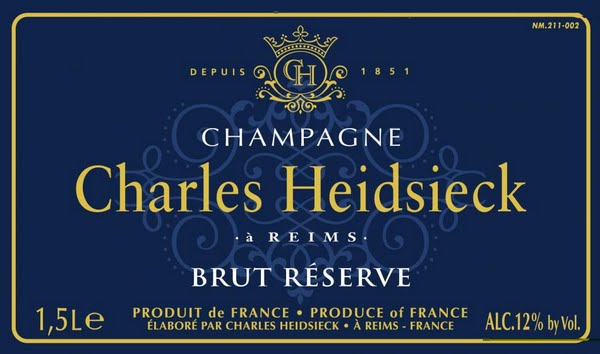
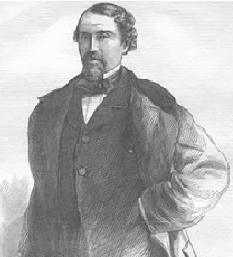
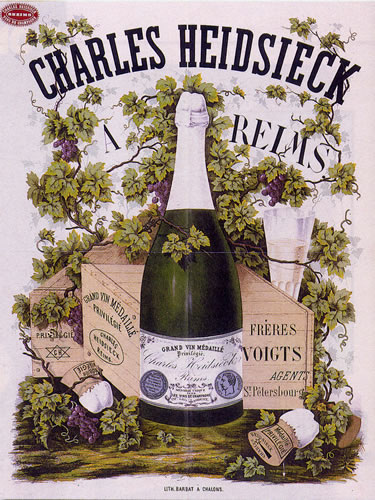
Charles Camile Heidsieck was a successful French merchant who founded the Champagne firm Charles Heidsieck in 1851.  Soon thereafter, he visited the United Statesfor the first time, and immediately saw the potential for the American market.  He retained an American agent to facilitate import sales, and in a matter of months the mass import of Champagne was a hit.  In no time, Charles became a fixture in New York high society and earned the nickname “Champagne Charlie”.

In 1861, Charles received news of the impending Civil War in theUnited States.  With over half of his company’s assets tied up in unpaid American accounts, Heidsieck made a hasty trip to try and collect the debts owed him.  Upon his arrival, his U.S.import agent told him a grandiose lie concerning a supposed new law passed by Congress which absolved Northerners from having to pay debts to the South.  This new law, the agent claimed, also absolved him from having to pay his debt to Heidsieck.

In a last-ditch attempt to seek repayment directly from the merchants that had received the Champagne, Charles set sail for New Orleans  With the war now in full-force, he had to travel in secrecy, going as far north as Kansas to avoid detection by the Union Army.  When he finally arrived in New Orleans in 1862, he found the city to be nearly bankrupt and his debtors penniless.

One merchant offered to give Heidsieck a warehouse full of cotton in exchange for payment.  The cotton was very valuable but would have to be smuggled out of Mobile,Alabama with the use of two blockade runners. Despite Heidsieck’s best efforts, both ships were intercepted and all the cargo destroyed.

By this time, all routes to the North were completely sealed, so in order to return to Europe, Heidsieck had to go back to New Orleans to charter a boat toMexico or Cuba.  To facilitate his passage, the French consul in Mobile gave him a diplomatic pouch with a request to deliver some documents to the consulate in New Orleans.  Arriving in New Orlean son May 5, 1862; he found that the city had fallen to Union forces.  As his diplomatic pouch contained documents from French textile manufacturers about supplying the Confederate army with uniforms, “Champagne Charlie” was immediately seized, charged with spying, and imprisoned.  His imprisonment sparked a diplomatic incident between France and the United States government which would later become known as The Heidsieck Affair.

By the time he was finally released from prison, he was in frail health and his business was bankrupt.  He returned to France in November of 1862, demoralized and broke.

In early 1863, Charles Heidsieck was approached by an American missionary with a letter from the United States.  The letter came from the brother of Heidseick’s former agent inNew York.  The man was ashamed of how his brother had swindled Heidsieck out of his obligations and offered him a stack of deeds to land in Colorado as means of repayment.

As it turned out, the deeds were for one-third of all the area of a small town known as Denver, Colorado.  Denver (as we all know) was soon to become one of the wealthiest and largest cities of the American West.

In a few years time, Heidsieck was able to sell the land, repay his debts, and re-launch his Champagne House, becoming the wealthy and debonair “Champagne Charlie” once again.


Wine Reviews: Kanu Vineyards Chenin Blanc 2009

My favorite Chenin Blanc for the last 5 years…


Kanu Vineyards Chenin Blanc 2009 – Wine of Origin Stellenbosch

Looking like pale yellow sunlight-in-a-glass, Kanu Vineyards Chenin Blanc 2009 reveals lifted aromas of lime, peach, apricot, and mineral met in mid-air by the pure, precise scent of lemon peel and sweet almond.  On the palate, a thunderstorm of lime precedes a fast grip of minerality and a drive-by shot of almond, followed by a soothing balm of peach and apricot.  Walking a fine, perfectly balanced line between fruitiness and acidity, this wine is as fresh and edgy as a blind date with your best friend’s ex.

Food Pairing Suggestions for Kanu Vineyards Chenin Blanc 2009 :

This crisp white wine, while is has suggestions of a plump full-bodiedness in the texture, shows delicacy of flavor and is taking a lingering walk on the lighter side of life…so I would suggest sticking to lighter foods as base ingredients – fish, shellfish, chicken, cream-based pastas, vegetarian dishes and cheeses. 

I would love to pair this wine with Pecan-Crusted Chicken glazed with Dijon Mustard-Cream Sauce and Gruyere Cheese.  This chicken and wine are a good fit on texture, the pecans will add a bridge flavor to the subtle nuttiness in the wine, and the crisp lemon-like acidity in the wine will cut through the richness of the creamy sauce and the cheese. 

I would also relish this wine served alongside Grilled Salmon with Jalapeno-Mango Mojo.  Once again, we have a texture match, but the flavors in this meet-up do a different kind of dance. The subtle sweetness in the wine would cool the zing of jalapeno heat in a hurry, and the sweet mango mojo will be matched by sweet fruit in the wine, bringing forward the fruit flavors of the wine while relaxing its sweetness.  

As a tip of the hat to the legendary cuisine of South Africa, I would match this wine with Grilled Shrimp with Chakalaka, a spicy, slow-cooked blend of tomatoes, chilies, onion, and garlic.  This wine has the fruit, the acidity, and the crisp, fresh coolness to cut through the heat of the chakalaka and the let sweet, savory saltiness of the shrimp shine through. 

On a different note, if today brings on a balmy afternoon, I might just sip this wine by itself; with my toes in the pool, a close eye on the kids, an even closer eye on my anh (adorable new husband)…that’s always a perfect match!

If you would like more information on Chenin Blanc, click here for my Chenin Blanc Cheat Sheet!

Tales of the Vine: Bull’s Blood

In the Northern Massif region of Hungary, the famous Egri Bikavér, or “Bull’s Blood Wine” is made in the area around Eger, a beautiful town about halfway between Budapest and Tokaj.

The name of the wine dates back to a Turkish invasion led by Suleiman the Magnificent around 1552.  During the invasion, Suleiman the Magnificent and his army of Turks attempted to siege of the Castle of Eger.  The defending Hungarians, led by Captain Istvan Dobo, were largely outnumbered by the invading army and the situation appeared dim. However, the Hungarian forces, fortified by days and nights of delicious food and large amounts of the local red wine, managed to successfully defend Eger. In doing so, the Turkish army was forced to withdraw, and Turkish westward expansion was delayed for forty years after this battle.

According to one legend, the enemy soldiers were frightened by the fierce fighting and red wine-stained beards of the soldiers.  Among the Turkish soldiers it was rumored that bull’s blood had been mixed into the wine, as otherwise the strength and firm resistance of the town and castle could not be explained.  Another legend states that the swords of the enemy could not cut through the Hungarian blood thickened by the wine.

The wine named for the legendary “bull’s blood” of the siege, Egri Bikavér, is still produced to this day, and is very popular on both the domestic and international markets.  Egri Bikavér is made up of a blend that has varied over the years, although the blend is anchored by the ancient Kardarka grape. Kadarka is a difficult grape to vinify, and has increasingly been replaced by Blaufränkisch, known locally as Kékfrankos.

In modern times, Egri Bikavér must contain at least three of the following 13 grapes: Kardarka, Kékfrankos (known as Blaufränkisch in German), Blauer Portugieser, Cabernet Sauvignon, Cabernet Franc, Merlot, Menoire, Pinot Noir, Syrah, Turán, Bíborkadarka, and the modern Austrian hybrids Blauberger and Zweigelt.

Escoffier, Ikeda, Umami…


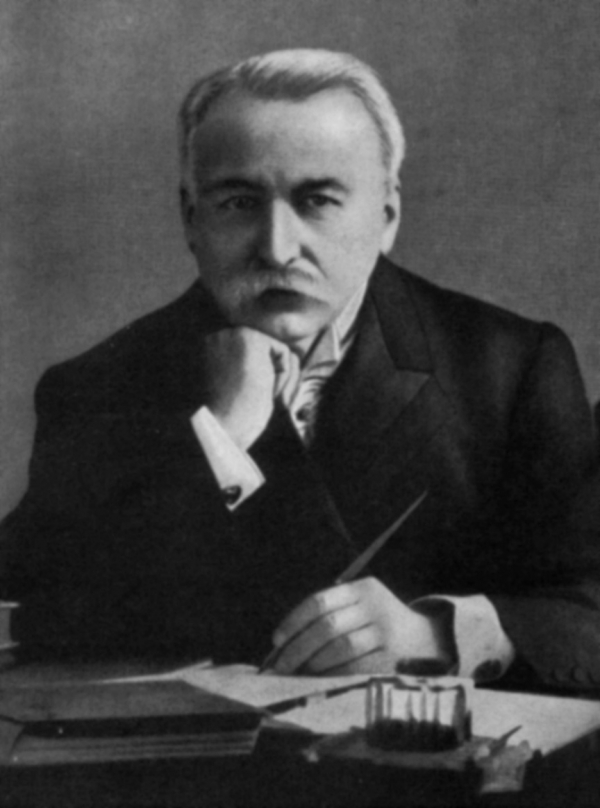
Dr. Kikunae Ikeda, who is credited (and rightfully so) with the “discovery” of Umami.
Escoffier, Ikeda, Umami…

If you are one of my students (or an avid reader of this blog), you know that I think it is very important to differentiate between “taste” and “flavor” when discussing wine (or food, for that matter).   One of the reasons for this is that I teach future chefs and sommeliers, and as future professionals I think it is important that my students use the correct terminology.  Another reason is that “taste” and “flavor” are two totally different factors in the discussion of food and wine pairing.

So, one of the first questions I address in my Professional Wine Studies class is “What is a taste, and what is a flavor”?  It sometimes takes several weeks for my students to use the two terms in the proper context, so I begin with the simple fact that flavor is a combination of taste, aroma, and texture, and there are (depending on who you ask) five or six generally accepted “tastes”. 

A “taste” is defined as “a sensation that can be perceived using only the human tongue, or the taste buds”. Just a few years ago it was generally accepted that there were four basic tastes, each able to be sensed in all areas of the tongue but for many people perceived most dramatically in a particular region of the palate.  The first taste to be detected, and the one most universally enjoyed is sweetness.  The taste of sweetness evolved as a survival mechanism to point the way to energy-yielding carbohydrate.  The second taste to be perceived is generally acidity, which is sensed by most people most readily on the sides of the tongue.  Salt, generally senses in the middle of the tongue and bitterness, easily detected at the back of the tongue are the next two.

The sensation we now call the “fifth taste” is Umami.  Umami was first described in the early 1900’s by Dr. Kikunae Ikeda of Tokyo Imperial University.  Dr. Ikeda was determined to find the source of what the Japanese had long called the “deliciousness” or “savoriness” of food cooked in dashi, which is a sort of stock made from kombu (kelp).  Dr. Ikeda managed to discover the true nature of this flavor enhancer when he succeeded in extracting an amino acid, glutamate, from kombu.  Umami was referred to as “deliciousness, savoriness, or meatiness” until 2000, when a taste receptor for glutamate was discovered and  identified as an umami receptor by researchers at the University of Miami (Florida, United States) School of Medicine, confirming it as the official “fifth taste”. 

Auguste Escoffier…he may have never used the word, but he was nonetheless a great proponent of Umami.

Interestingly enough, culinary historians now argue that Auguste Escoffier, the great French Chef of the early 1900’s, is also one of the “discoverers” of umami, despite the fact that he did not know or use the word.  It seems that Escoffier was one of the first chefs to utilize reduced veal stock on a wide scale in professional kitchens.  Escoffier based many of his recipes, particularly his sauces, on reduced veal stock.  It was easily recognized that dishes cooked with veal stock were “delicious”! While Escoffier most likely did not realize it, this veal stock reduction created a liquid rich in the amino acid glutamate, which lent that “deliciousness”, in the form that we now recognize as umami, to many of his preparations – to the delight of his customers; and to the amazement of modern sensory science.

To make matters even more interesting, scientists have identified a substance named “kokumi” that is being touted as the “sixth taste”. Kokumi has been identified as a unique taste, complete with an identified sensory receptor in the taste buds, and is thought to be the taste component of the nutrient calcium.  The discovery of kokumi has opened up the possibility that there may be many more tastes identifiable by the human tongue; perhaps each nutrient has its own unique taste component.  If this is indeed the case, my “Basics of Sensory Evaluation” class just got a lot more interesting!


Tales of the Vine: The Evil and Disloyal Plant Gamay

...

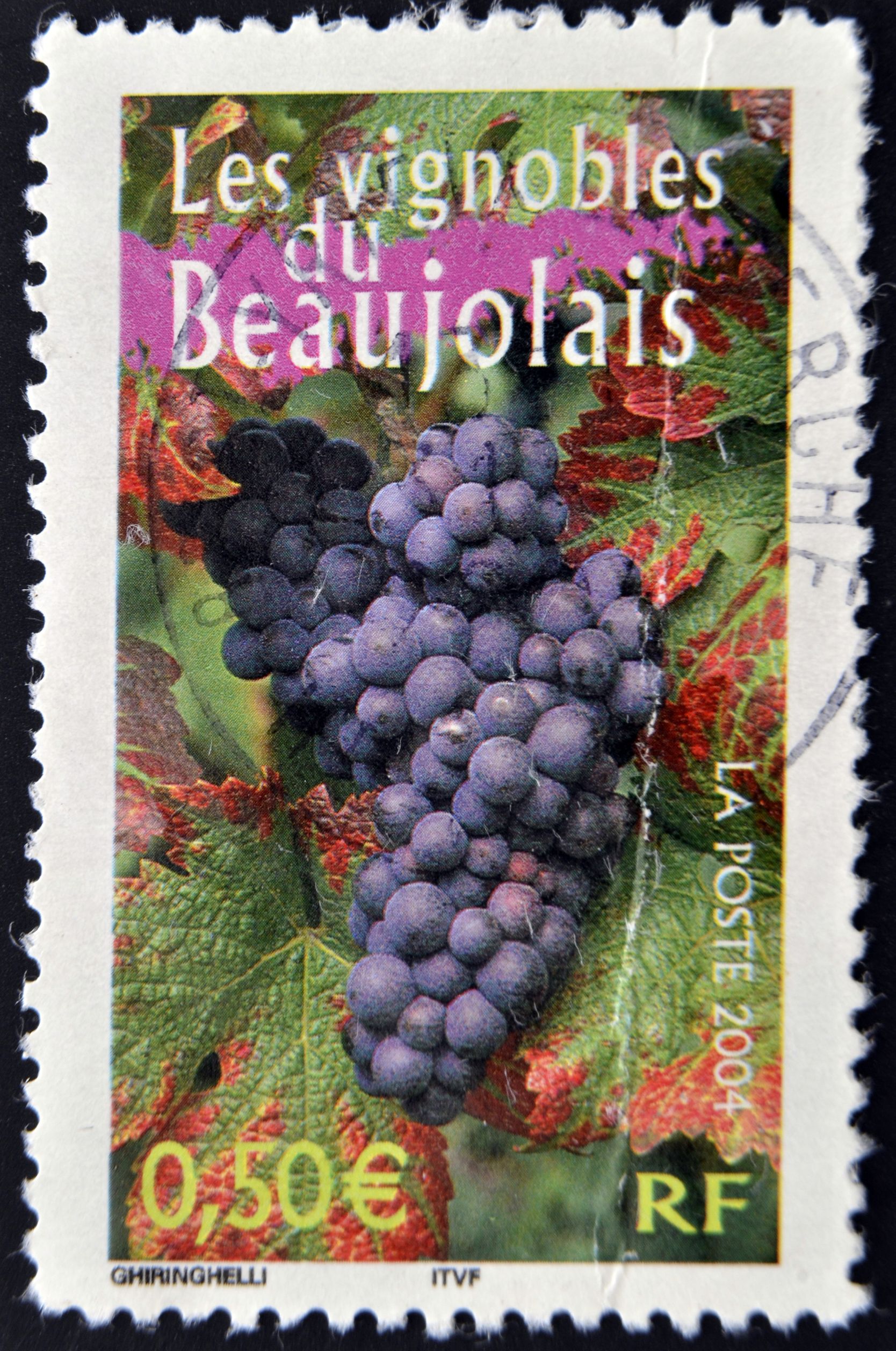
The Story of Beaujolais…

Philip the Bold, Duke of Burgundy, was one of the most powerful men in France from 1388 until his death in 1404. Philip managed to keep Burgundy independent from France and doubled the size of his dukedom by marrying the Margaret III, Countess of Flanders. Philip was an excellent capitalist and under his rule the wines of Burgundy became quite fashionable and expensive. Philip the Bold is said to have selected the clone of Pinot Noir that became the mainstay of Burgundy’s red wines and is credited with having chosen the name “pineau noir”, meaning “black pine cone”, due to the shape and size of the grape clusters.

Enamored as he was with the red wines of Burgundy, Philip was infuriated when the wine growers of his region started to plant Gamay grapes in the vineyards of Burgundy. The Gamay vines were vigorous, easy to grow and high-yielding, and their rich, fruity wines were at their best while young, making Gamay a cash-flow wine the growers loved.
 
Philip the Not-so-Bold (anonymous 16th century painter) Currently displayed at Versailles

Philip the Not-so-Bold (anonymous 16th century painter)
Currently displayed at Versailles

Philip felt the presence of Gamay in the vineyards of Burgundy would harm the reputation of the fine wines he had worked so hard to promote, so he banished the grape from his kingdom. He declared Gamay “foul” and “harmful”, and in a royal decree denounced the “tres mauvais et tres desloyaus plant nomme gamay”, translated as, “the very evil and very disloyal plant called gamay”. Philip thus forbade the cultivation of Gamay in Burgundy and banished it from the Kingdom.

 
The despised Gamay was down but not out, for it soon began to thrive just beyond the Southern border of Burgundy in the region known as Beaujolais. Beaujolais, with its cold winters, hot summers, and decomposed granite soil is now known to be the one perfect spot on the face of the earth to grow Gamay. One of the wines of Beaujolais, Beaujolais Nouveau, is among the first French wines to be released with every year’s new vintage, and is one of the most popular of all French wines.
The Bubbly Professor is “Miss Jane” Nickles of Austin, Texas… missjane@prodigy.net
 

Mastering the Restaurant Wine Taste Test

You’ve ordered your wine, now what?  Your server is approaching the table with a bottle in his hand, and you are entering the zone of the taste test ritual.  Now is not the time for high anxiety…it is only a taste test, and you are not the one on trial. Relax and let me demystify this stage of restaurant wine service for you.

To begin with, a well-trained server will start the proceedings by standing to the right side of the host (code for whoever placed the wine order), and presenting the wine bottle to him or her, label side up.  Your server should verbalize the producer, wine variety, and vintage.  Something along the lines of, “Sir, the 2005 Brookswood Cabernet Sauvignon you ordered” would be ideal.

If this is indeed the correct wine, the server will remove the foil capsule from the neck of the bottle, and place it in his or her apron pocket.  After extracting the cork from the bottle, the server should place it on the table to the right side of the host.

A word to the wise: don’t smell the cork!  There’s not much to be gained by smelling (or squeezing, for that matter) the cork. If a server presents the cork to you, glance at it and set it aside. Some say sniffing the cork or feeling a cork for dryness can indicate whether excessive amounts of oxygen have crept into the bottle, but you’ll smell and taste that soon enough.

Next, your server will pour you a 1 ounce taste.  Then, the server stands aside and waits for your approval.  Don’t despair…you are not expected to come up with a brilliant bon mot or wax poetic about the wine.  All you have to do is determine whether or not the wine is flawed.  That’s right…this is not a Roger Ebert moment where you get to give a “thumbs up/thumbs down” judgment or award gold stars.  And trust me; you are probably not going to need to send that bottle back.

There are really only two ways a wine can be reject-worthy:  if it is oxidized, or it is corked.   An oxidized wine will have a spoiled, flat, prune juice-like smell.  It may also appear cloudy, have a chemical-like odor, or taste vinegary.  A wine with cork taint will show musty, funky, dirty-basement, wet-cardboard-like smells.  Don’t worry if you don’t know what oxidized wine or cork taint smells like…they make themselves known a mile away.

The polite thing to do if you suspect a flaw in your wine is to ask the server to sample the wine.  You might say something along the lines of, “I’m not sure about this wine…could you take a taste and tell me what you think?”  This is usually all it takes to have the bottle judged by the resident expert, and if there is any doubt, the bottle will be replaced.

But let’s not get bogged down with what to do with a bad wine.  Chances are very high indeed that the wine will be faultless, and you can offer your nod of approval.

Proper service begins with the guest to the left of the host and proceeds clockwise around the table.  Women should be served first and pouring should continue clockwise until all the women are served, and then the server should run another lap around the table to pour the men, ending with the host (male or female.)  This gives the host a chance to order more should the bottle be on the wane.

Now, all you have left to do is relax and enjoy your meal.  Notice the star-bright clarity and gorgeous color of your wine.  Swirl your glass and breathe in the aromas, take a sip and savor the flavor.  Note how the wine leaves impressions on your palate long after you have swallowed…this is the wine’s finish and aftertaste.  But mainly, just enjoy.  You have survived the wine ritual, from wine list to wine glass, and that in itself is worth a celebration.


The More the Meritage

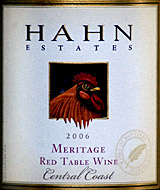
Take the word “merit” and combine it with the word “heritage.”   Put in the hands of a master wine maker and blend well.  What you have is Meritage, a relatively recent addition to the wine lexicon, coined in 1988 to describe New World wines made with the grape varieties and in the blended style of the noble wines of Bordeaux.

The name “Meritage” was originally intended to give the wines of California a little much-needed marketing moxie at just about the time that California wines were beginning to be gain international acceptance. Since the inception, winemakers in California, Australia, Israel, and Argentina have embraced the name, and wine makers all over the world craft some of their finest wines with the Meritage blend.

The story of Meritage begins in the 1980’s.  Wines from California had stunned the wine world at the Paris Tasting of 1976, and the eyes of the world had begun to be opened to the fact that some darn good wine was coming from the New World.  The American public had started to embrace wine, and wine lovers from Oregon to New Jersey were happily slurping the Cabernet Sauvignon, Merlot, and Sauvignon Blanc coming out of Napa and Sonoma.

Here is where the plot thickens: due to labeling laws set forth by the Trade and Tobacco Tax Bureau (TTB), wine from the U.S. must be at least 75% the named grape variety in order to be labeled using the name of the grape, such as Cabernet Sauvignon.  If a wine did not contain this minimum amount of a single grape, it had to be labeled with a proprietary name or use the generic term Table Wine.

This proved vexing for a very good reason—at the time, Americans equated generic wines or proprietary wines with poor-quality wine, and there was plenty of it to go around in those days.  Many of the first wines out of California post-prohibition—mystery blends of grapes grown in the warm Central Valley—were distributed in big, round bottles reminiscent of a bootlegger’s stash.  These wines were labeled with the generic Table Wine moniker or a proprietary name.  Who can forget Gallo Hearty Burgundy, Carlo Rossi Paisano or Italian Swiss Colony Red Table Wine?  The 75% rule was—and still is—the labeling law in the U.S. Thus, if a winemaker was making a top-flight blend in the style of the finest blended wines of Europe, no matter how expensive or delicious it may be, it had to be labeled like a jug wine.

The truth is that the ability to blend grape varieties gives a winemaker an added tool with which to create wines of complexity and balance.  Some of the finest wines in the world—such Bordeaux, Chianti, and Châteauneuf-du-Pape—are blends of many different grape varieties.  As such, American wines were at a competitive disadvantage compared to the wines of Europe.  In order to be labeled using the accepted vernacular, an American wine has to contain a minimum 75% of one grape variety; while many European wines are blends of several different grape varieties and may be produced using any proportion the winemaker chooses.

As such, a group of California winemakers were determined to come up with a solution and—beginning in 1988—sought to create a recognizable name associated with high-quality blended wines.  In a stroke of genius, they hosted a contest to create a catchy name.  The contest received over 6,000 submissions.  Neil Edgar of Newark, California won by suggesting “Meritage” – a combination of the words merit and heritage.

So, the Meritage Association (now known as the Meritage Alliance) was born, and the requirements for Meritage were set forth:  A red Meritage wine must be made from a blend of Cabernet Sauvignon, Cabernet Franc, Merlot, Malbec, Carmenère, and/or Petit Verdot (the classic Bordeaux Grape Varieties).  Gros Verdot and St. Macaire may also be used, in homage to the grapes that were grown in Bordeaux pre-phylloxera. The proportions may vary, but at least two of the grape varieties must be used, with a maximum of 90% of any single variety.  For white Meritage, only Sauvignon Blanc, Semillon, and Muscadelle du Bordelais, the white grapes of Bordeaux, are permitted.

A wine meeting the requirements for a Meritage does not need to use the term on the label—and many wineries prefer to use proprietary names (such as Joseph Phelps’ Insignia and the well-known “Opus One”). Others just stick to “red table wine!” However, if you read the wine’s tasting notes or technical sheets you may find the term “Meritage blend” or “Bordeaux blend” used.

Today, there are over 120 winery members of The Meritage Alliance, and the style of wines (both red and white) made with the grape varieties of—and in the blended style of—the noble wines of Bordeaux continue to be some of the world’s most cherished wines.

By the way, most of the wine enthusiasts I know use the pronunciation “meh-ri-TAHJ”, as if the wine rhymed with the French wine “Hermitage.”  However, according to The Meritage Alliance, the word should really be pronounced like heritage-with-an-m.  Don’t sweat the pronunciation too much, though…either way you pronounce it, wine people will know what you’re talking about.

Reference/for more information:

The Bubbly Professor is “Miss Jane” Nickles of Austin, Texas… missjane@prodigy.net

Top Ten Rosé Myths

Top Ten Rosé Myths

I’m not ashamed to admit that rosé is one of my favorite types of wine.  Sure, there are occasions when I reach for Riesling, savor Sauvignon Blanc or crave Cabernet, but on many a casual evening, lazy afternoon, or drink before dinner, I choose rosé!  Now, I am not talking about your Mama’s White Zinfandel…I mean dry, crisp, serious rosé, which has always been made to perfection in France, Spain, and Italy.  New world wine makers are also perfecting this type of pink wine, much to the delight of wine lovers everywhere.

However….even in this ever-sophisticated world, I still get ugly stares when drinking pink, so obviously the “anti-pink wine bias” is still out there.  In order to do my part to wipe out pink prejudice, I offer up Miss Jane’s “Top Ten Rosé Myths – Debunked”!

Myth #1:  Rosé is just red and white wine mixed together. 

Truth:  So…some of us might have tried that particular technique at parties in the distant past…however, quality rosé, apart from a few atypical varieties, is made from red grapes.  The juice from the grapes, which is white, is allowed to ferment in contact with the grape skins, which contains all the red pigments, for a few hours or a few days, until the juice becomes a delightful pink color.  At this point, the juice is pressed off the grape skins, and further fermented into wine.

Myth #2:  All rosé is sweet.

Truth:  Rosés come in all grades of sweetness and dryness – there’s something to suit all palates and occasions.  But keep in mind…what I call a “serious” rosé is dry – making it a refreshing, food-loving, and complex wine.  You might find flavors of raspberry, strawberry, pink grapefruit and watermelon – but whether the wine is sweet or not depends on the winemaking technique…not the color!

Myth #3:  Rosé is cheap – therefore the quality  cannot be very high.

Truth:  Fair enough, there is plenty of cheap rosé out there.  But…there is plenty of cheap red and white wine as well!  However…take a visit to Spec’s, Twin Liquors, or Central Market and you’ll find plenty of Rosé at the pricier end of the middle range.  One of my favorite Rosés…Domaine Tempier Bandol Rosé…is on the shelf at Vino Vino for $39.99.  I don’t know anyone who would call that “cheap”!

Myth #4:  Rosé is only a glugging wine – it does not merit higher appreciation.

Truth:  It is certainly true that Rosé makes a good porch sipper.  Rosé wines do not generally include the “heaviness” of red wines nor the acidity of white wines – making them a perfect “easy drinker”.  However…there are plenty of rosé wines with complexity, layers of flavor, and powerful flavors…just right for serious appreciation.

Myth #5:  Rosé has a low alcohol content.

Truth:  Certain lighter (and many times sweeter) rosés contain an average alcohol content of 10% or lower.  (See myth #2, above.)  However, when fermented to dryness, the alcohol content of rosé wine can be similar to standard red wines…up to 14.5%.  For these wines…proceed with caution, and always drink in moderation!

Myth #6:  Rosé should always be consumed young, it does not merit aging.

Truth:  This is true of most rosés…however; it is not true of them all.  The French regions of Provence, Languedoc, and Bandol make age-worthy rosé.  For the ultimate special occasion, lay down a bottle of Vintage Rosé Champagne for a decade or more…you’ll be glad you did!

Myth #7:  Rosé lacks class…brought to a nice dinner party, it would be an embarrassment.

Truth:  This misconception arises from the out-dated, old-school idea that all rosé is cheap plonk.  Anyone still believing this idea is behind the times! As a matter of fact, due to its legendary food-friendliness and likeability, rosé might just be the perfect wine for your elegant dinner party, Holiday gathering, or Sunday Brunch – no matter who is on the guest list!

Myth #8:  Rosé is only good in warm weather.

Truth:  This myth is – in part – true.  Nothing can quench your thirst on a hot day like a nice rosé.  However, this doesn’t mean that rosé should be avoided in colder weather – just put on a sweater, light a fire, or turn up the heat…it’s always a good day to enjoy a good rosé!

Myth #9:  All rosé is fizzy.

Truth:  I call this myth the “Mateus Effect.”  For those of you too young to recall, one of the first really popular wines in the United States was a sweet, effervescent rosé from Portugal called Mateus Rosé.  It is a testament to the pervasive influence of Mateus that this impression persists.  So…while there are some fabulous rosé sparkling wines, some of the best rosés in the world are still wines – meaning no bubbles!

Myth #10:  Real men don’t drink rosé.

Truth:  In the Basque region of Spain, there is a “guys only” tradition called Poteo.  The male-bonding ritual of Poteo involves bar-hopping for an extended period of time, while indulging in glass of rosé at each establishment.  This is about as rough-and-tumble as it gets for beverages, and the star in Poteo is rosé. So…there’s your proof:  Real Men Drink Pink.