Lessons in Teaching: Learned at TexSom

I am lucky enough to be attending the Texas Sommelier (“TexSom”) Conference this weekend at the lovely Four Seasons Resort in Las Colinas, Texas.  Being an educator and not a sommelier, I know that I attend conferences of this sort in a much different mind set than the typical attendee, but there is a plenty of valuable information and experience to be gleaned by sitting in the audience and watching someone else teach.  As a matter of fact, it’s my favorite type of vacation; all you fellow teachers out there will relate to the feeling of relief you get when someone else is on the teaching “hot seat” and you can lean back and watch.

So, it is with much gratitude for the conference leaders and presenters that I share with you a few great teaching lessons learned and reinforced by the seminars I’ve seen at TexSom this year!

Lesson in Teaching:  Tell a Story!

The Tomb of Eleanor of Aquitaine. Good wine story!

The first session presented on Sunday, led by Wayne Belding and Brett Zimmerman, both Master Sommeliers, was all about Bordeaux.  The presenters led us through the story of the history of Bordeaux, all the way back to the middle ages and the marriage of Henry Plantagenet to Eleanor of Aquitaine.  This marriage made the French region of Aquitaine an English terriority, which opened the wines of the Bordeaux region to the English market and eventually to the world stage.

The name Aquitaine itself means “the place of much water” and describes not only the main rivers of the area but then-marshly lands around the Medoc. Another fasciniating part of the story of the history of Bordeaux takes place in the seventeenth century, when English demand for the wines of Bordeaux increased to the point that Dutch traders began to drain the marshlands around the  Medoc and increase the land available to vineyards. This caused the vineyard area in Bordeaux to expand so much that no one could really tell what area their wine was from, which in turned led to the first delination of the vineyards of Bordeaux.  This classification was completed in 1725, with the collection of districts being known as the Vignoble de Bordeaux.  At this time, individual bottles began to be labeled with with both the region and the specific area from which they originated.  I was fascinated to learn this ancient history of Bordeaux and happy to add some more “tales of the vine” to my arsenal of teaching tools.

Why is storytelling a good lesson in teaching?  It is a proven fact that the use of storytelling – called “the narrative approach” in teaching lingo – is one of the most effective ways to add interest and engagement to a presentation.  Storytelling works in just about any educational platform from lecture to discussion to on-line, and can help you reach your audience on both an intellectual and emotional level.  A well-placed story can make theories or abstract ideas concrete and accessible, can spark interest in new material, and can help students memorize facts.

Lesson in Teaching:  Compare and Contrast 
Oregon Pinot: Did you prefer the Hippie or the Cowboy?

The last session I was able to attend on Sunday was all about Oregon Pinot Noir.  Presented by Fred Dame and Nate Ready, both Master Sommeliers, the session was subtitled “The Cowboy and The Hippie.”  Fred and Nate both presented some fabulously delicious Pinot Noirs, which would have made the session good enough, but what made the session even more interesting was the dichotomy in the way they both chose and presented their wines.  Fred represented the “Cowboy” approach and chose wines made in a “get ‘er done” style that produced a wine that was pure Pinot Noir – juicy, fruity, in some cases jammy – and showing lots of spice and floral aromas.  Nate represented the “Hippie” approach and chose wines that were done in a more “touch-feely” (some would say organic-biodynamic-light of the moon) style with lots of earthiness and subtlety.  The wines were presented two by two – with one wine is each set representing the hippie approach and one wine representing the cowboy style.  Presenting the wines this way enabled the audience to not just taste the wines but really think about them in terms of style; which by the way is the “language” most of our customers think in.

Interestingly enough, my favorite wine of the flight was the 2010 Penner-Ash “Dussin Vineyard” – pure Cowboy.

Why is “compare and contrast” a good lesson in teaching? One of the ultimate goals for any teacher is to guide his or her students to not just “know” (or worse yet, “memorize”) new information but to use that information in a meaningful context.  In this way we are teaching critical thinking skills and such teaching is considered a “higher level” teaching skill, as opposed to just teaching a page full of facts. One excellent technique to involve the use of critical thinking skills in a class is to have students compare and contrast items or ideas.  By ending the Oregon Pinot Noir sesion by asking the audience “which wines did you prefer, the cowboy or the hippie” the speakers were forcing us (in the nicest possible way) to use critical thinking.  

The Bubbly Professor is “Miss Jane” Nickles of Austin, Texas.

Week One, Day One: The Introduction to Wine Class

Next week starts a brand new semester and among the classes I’ll be teaching this block is my sentimental favorite – The Introduction to Wine Class.  I offer Professional Wine Studies, Wines and the Culinary Arts, and Wine and Food Pairing as well as semester-long looks at both Old World Wines and New World Wines, but the introductory class remains my favorite.

It’s great to see wine newbies go from “What is Wine” to “The Legend of Sassicaia” in just over 12 weeks.  I always like to start Week One/Day One simply enough with “Wine, Defined.”  I am sure that every wine educator out there has their preferred version of the answer to the question, “what is wine”?   My is quite simply, “Wine is a beverage produced by the fermentation of fruit, mainly grapes”.  Of course this answer leads to many questions and further disucssions…what is fermentation, why grapes, and “can you make wine from Welch’s Grape Juice”?  Of course, the answer is yes…it just won’t taste very good!

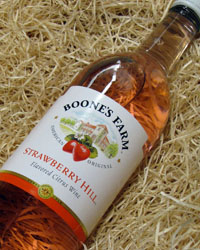
And it never fails, within the first ten minutes of class someone will mention the following subjects:  Boone’s Farm, Four Loko, Sangria, Hellow Kitty Wines, Prison Wine, Mad Dog 20/20, Saké, Arbor Mist Blackberry Merlot, Thunderbird, Mimosas, Cristal, and Ace of Spades.  Fellow wine educators, I bet you have your own list, I would love to hear about what your students ask on day one!

And somehow, we get through it all.  I like to have a basic “learn how to taste” session on Week One/Day One as well, both to get the class off to an engaging start and also to lay the ground work for the more detailed, directed tastings we will have as the class progresses.

My introduction to sensory evaluation class is admittedly quite technical.  I tell the students what the wines are, but I ask them not to focus on that one particular wine but rather to use the wine at hand to learn about the sensory evaluation of  “every wine or any wine.” 

I use just three wines; an unoaked, crisp Chardonnay (A Macon-Villages is ideal), followed by a simple yet sweet white wine (I’ve been using Flat Creek Estate Muscato D’Arancia), and finish with Sterling Vineyards Napa Valley Cabernet Sauvignon. 

The basics of sensory evaluation class that I teach on Week One/Day One does not follow the basic steps of wine tasting.  We will get to all the expected steps (sight, swirl, sniff, snort, whatever…) in the course of the session, but not exactly in that order.  I tell the students that we are going to do approach the wines in the proper order (dry before sweet, white before red, light before heavy) and that we will let each wine “reveal” its secrets to us – in other words, each wine has something special to teach us. I choose my flight of three to include a wine that perfectly shows acidity, one that has sweetness, one with bitterness and tannin, and make sure that within the set of three, each of the major aroma families is there in an easy-to-recognize manner.  I want the class to be chock-full of “a-ha moments.”

Then I launch right in, teaching what I call “The Nine Elements of Wine Flavor.”  The nine elements are: Acidity, Sweetness, Bitterness, Tannin, Umami, Aroma, Body, Balance, and Alcohol.  I told you it was technical!  It does start off quite scientific, with discussions of pH, IBU’s, R.S. and ABV, but by the time we add aroma to the mix I make sure the step off the path of “paralysis by analysis” and let the students just relax and enjoy the flavor of the wine.  And somehow, it all comes together in the end.

If you’d like a copy of my handout about “The Nine Elements of Wine Flavor” just send me an email request to”  missjane@prodigy.net .

The Bubbly Professor is “Miss Jane” of Austin, Texas.

Finals Week in Wine Class

It’s Finals Week!

Final exam week in Miss Jane’s 12-week professional wine studies class has arrived!  To answer your question, NO…the wine final does not involve binge drinking, glasses clinking or happy hour. Like most college-level courses in hospitality management or culinary arts, we have both a practical and a written final exam.  Our written final exam is scheduled for this Friday; a 100 question multiple choice test followed by three essay questions.  

Please note that the title of this course is “Professional Wine Studies.”  While many of the wine classes taught around the world center on tasting, this course is centered on basic wine knowledge and how to use it within the context of a hospitality career.  I focus the class on learning about basic wine styles (white, red, sparkling, dessert…yes, that basic); how they are made, where they are made, and the world’s best known or most popular examples.  We learn how to taste wine so that we can talk about wine, and spend several class sessions role-playing the role of the server, sommelier, or salesperson.  We use my “mad libs for wine” to learn to write meaningful, concise wine descriptions. We learn about beverage costing as it applies to wines by the bottle and glass. We spend a good deal of time of food and wine pairing, which makes sense as most of my students see themselves as future chefs.  Finally, we spend a good deal of time discussing how to write a wine list and market wine in a restaurant or other setting.

So for my final practical exam this semester, I came up with the idea of an exercise in writing a wine list.  I started out by surfing the internet for nice, clear pictures of wine labels. This took a while as I wanted to use wine labels from wines we had studied and my students would be familiar with.  I also wanted a good mix of red, white, dessert wines and sparkling wines.  I came up with a word file full of about 30 wine labels that includes Bordeaux, Chianti, Rioja, Napa Meritage, Lodi Zin and Oregon Pinot for the reds.   For the whites I found Fumé Blanc, a nice German Riesling, an Aussie Chard…you get the idea.  I had six sparkling  wines including a few from California, a Cava, a Prosecco, and of course Champagne.  For the sweet wines I included Moscato d’Asti, Sauternes, Late Harvest Zin, Ruby Port and Muscat-Beaumes-de-Venise.  Remember, these are all wines that we had studied, and in most cases, tasted.

 I did a bit of cut and paste and gave every student a stack of 30 wine labels, and created a faux “wholesale price list”. Then, I gave the class two hours to write a wine list that was to include the following details:

  • Meaningful Categorization
  • Absolutely perfect listing of each wine to include producer, name of the wine, region of origin and vintage date (as applicable)
  • Progressive wine list format
  • A concise description of each wine (I like to use what I call a “five word description” such as “light, dry and crisp with fruity and floral flavors”.)
  • Two food pairing suggestions for each wine.
  • Pricing by the glass and bottle, as well as a spreadsheet detailing each item’s potential beverage cost and gross profit.

As they completed the project, I had every student bring their list up to me for a quick discussion and review.  Lots of learning can go in during that review period.  I had them describe how they chose to categorize their wines, how they arranged them in order and how the details of the list will be useful as a sales tool.

All in all, I have to say I think they all did a great job!  I was very impressed with the final projects, and think that it was a meaningful, active learning experience all around.  It was good exposure to the “nuts and bolts” of writing and designing a wine list.  Most importantly, we all had a great time and I feel it was a good example of active learning and a “flipped classroom”.

If you would like a copy of the materials I created for the class, click here: Bubbly Prof – Wine Labels for Wine List Project

The Bubbly Professor is “Miss Jane” Nickles of Austin, Texas – missjane@prodigy.net 


Flower Power

One of the most rewarding (and labor-intensive) classes I have ever taught is called “Flower Power”.  I came up with the concept for my college-based wine club, “The Grapeheads,” after leading monthly wine events for basically the same group of people for four years…in other words, I was running out of ideas!

This was one of those times when I just wasn’t sure how it would go; it could either be a brilliant success or a dismal failure. The day before the event I almost gave up on the idea and was about to swap it out for a generic white wine class disguised as a  tasting of obscure grape varieties.  I even had a name…”Let your mind go blanc!”  In retrospect, it’s a good thing I didn’t go with the alternative, and whether through pure dumb luck or lots of effort in the preparation phase (I’ll never know), the Flower Power class turned out to be of my all-time best classes in both attendance and execution.

The point of the class is that floral descriptors are among the most misunderstood of all wine aromas. Not too many people, beyond the modest appeal of edible flowers, fancy drinking something that smells like a flower.  Plus, while floral aromas are exotic and pleasant, in the day and age of the concrete city most people’s closest interaction with floral aromas is shampoos, dish detergents, and perfumes.

Another issue with floral aromas is people just don’t recognize them beyond the basic “floral, wildflower, garden after the rain, or perfume” descriptors.  My opinion is most people just don’t interact with the real thing very often, and when they do it is far from an academic affair.  In other words, most people have not had the opportunity to really sniff the actual flowers and make a real effort learn to identify the aromas.  Most people I know wouldn’t know even be able to tell a gardenia from an orchid in any situation!

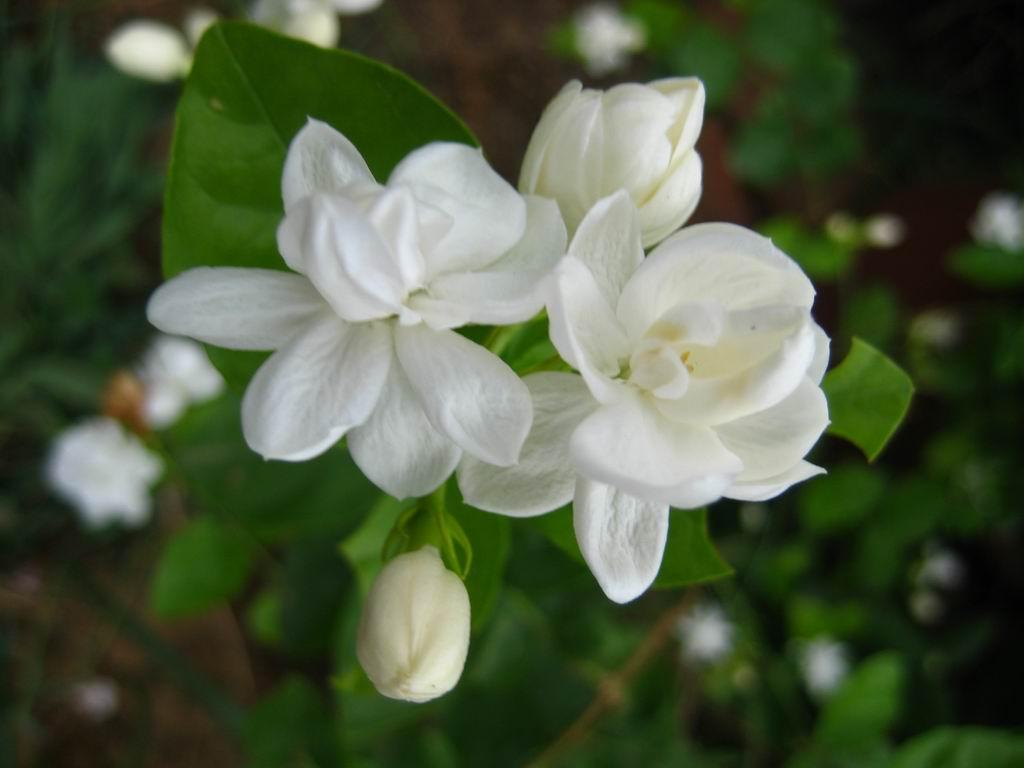
To introduce the session, I began with a brief lecture accompanied by some beautiful pictures of flowers via Power Point. I discussed the different floral aromas found in wines, described what wines are likely to show floral aromas, and introduced the “WineSpeak” often used to describe floral aromas in wine.

Next, (this was the labor-intensive part), we had a flower-sniffing session.  I had 12 different types of flowers, labeled and arranged ever-so-cutely in wine glasses for a walk-around sniffing. Next to each flower, I had a sample glass in which I placed a few flower petals over which I poured a small splash of wine.

On another table, I had some well-labeled floral essential oils; these were presented via a cute little cotton ball in an even-cuter wine glass.  I also used—I must admit—some candles (yeah Yankee Candle Store). All told we had 25 different floral aromas represented.

Finally, to round out the day, we did a blind tasting of some exotically scented wines that exhibited floral aromas.  Taking a chance on this oddball of a class turned out to be worth it, and I was amazed at the ability of my students to recognize and identify those floral aromas! Of course, the wine was delicious as well.

Here’s a copy of the handout I presented that day:

Flower Power:  Wines and Floral Aromas

Don’t worry or leave:  Using a floral descriptor for a wine does not mean that you wine is about to taste like flowers, perfume or shampoo. Floral is style descriptor that applies mainly to a wine’s scent.  That being said, many wines have an intoxicating floral aroma.

It”s normal if find this hard to grasp:  since most floral aromas are somewhat exotic, you are not likely to come into contact with such scents everyday.  Keep an open mind and practice! You can experience floral aromas at the flower shop, a candle store, an herb shop (as in dried flowers or essential oils)…and you may find that you develop an appreciation for floral characteristics in wine.

Common floral aromas that reveal themselves in wine:

  • Acacia
  • Gardenia
  • Hibiscus
  • Honeysuckle
  • Hyacinth
  • Jasmine
  • Lavender
  • Lily
  • Orange Blossom
  • Rose
  • Violet

Other terminology  you may use to recognize or describe floral aromas are:

  • Wildflowers, Dried flowers, Dried roses
  • Rose perfume, Perfume
  • Old lady perfume (my personal favorite, and one that everyone understood)
  • Wedding bouquet
  • Walking through the Garden (as if WineSpeak wasn’t wacky enough)
  • Nivea Cream (this one you have to experience to believe)
  • Linalool, Honey

Grapes (and Wines) that Lend Themselves to Floral Aromas Include:

  • Albariño
  • Beaujolais
  • Bordeaux
  • Chenin Blanc
  • Gamay
  • Gewürztraminer
  • Malbec
  • Merlot
  • Muscat/Moscato
  • Pinot Gris
  • Pinot Noir
  • Riesling
  • Syrah/Shiraz
  • Torrontes
  • Viognier

The Bubbly Professor is:  “Miss Jane” Nickles of Austin, Texas – missjane@prodigy.net

Mad Libs for Wine!

It never fails…the first time I stand in front of a new wine class and describe a white wine as having aromas of “lemon, lime, green apple, and apricot” I get either a sea of blank stares or an uncomfortable laugh track.  A few weeks into the class, however, my students are begging me to teach them how to “impress their friends and annoy their enemies” by crafting an impressive sounding wine description.

My response:  “You mean one like this?”

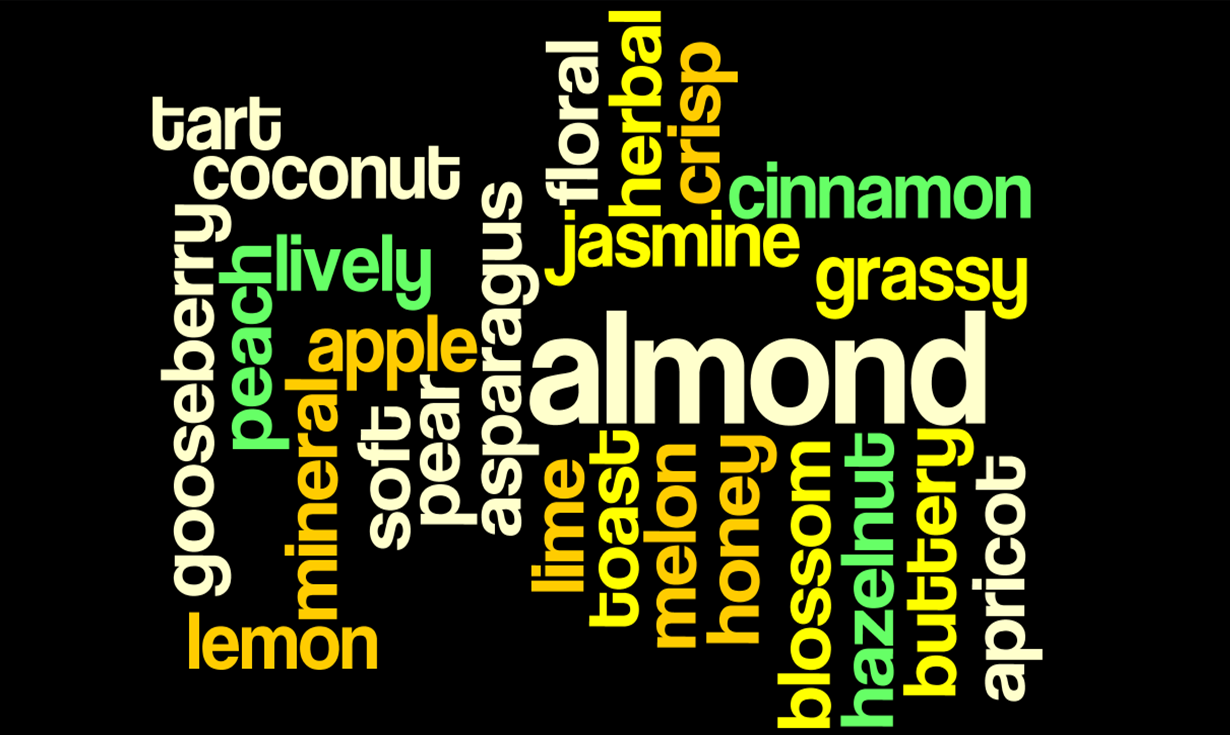
“Craggy Range Sauvignon Blanc 2010 is a dry, medium-bodied white wine.  The nose reveals the fruity, floral, and  mineral aromas of lemon, lime, green apple, gooseberry, orange blossom and wet stones.  This wine is herbal and fruity on the palate, with lively acidity; followed by a refreshing, slightly bitter lemon-peel finish.”

And then, in the course of an hour, I teach them to use “Mad Libs for Wine” – in other words, a fill-in-the blank template (based on my book “WineSpeak 101”) that allows even beginners to create an accurate (and yes, impressive sounding, if you’re into that) description of any wine.  We just take ten simple facts about the wine and string them together into a few sentences.

Try it for yourself!

The WineSpeak 101 Description Template:

To write your own wine description, use the WineSpeak 101 descriptor crib to fill in the blanks on this template.  Your completed description will characterize the wine using the following basic facts:

  • Name of the Wine 
  • Level of Sweetness
  • Mouthfeel – aka “Body”
  • Type of wine (the easiest, but your customer needs to know!)
  • Aroma   Categories
  • Specific  Aromas
  • Flavor  
  • Acidity for white wines, tannin level for reds 
  • Finish  – length 
  • Finish  – description 

 ___________________________________ (Name of the wine) is a _______________ (Sweetness),

 __________________________________ (Mouthfeel) ,   _______________________ (Type of) wine. 

 The Nose reveals the ____________________________________________ (Aroma Categories) aromas 

 of ____________________________________________________________ (Specific Aromas) .

This wine is ___________________________________________________________ (Flavors) and 

____________________________________________ (Acidity or Tannin, or both) on the palate, followed by a  

_____________________ (Finish – Length) , __________________________ (Finish – Description)  finish.

As you can see, it’s not exactly a party trick, but if you know your way around the typical wine vocabulary, it’s easy to put together a meaningful wine description.  My students are amazed at how well they can discuss their impressions of a wine after just a few practice sessions.  This technique works so well that I wrote an entire textbook on “WineSpeak 101” a few years ago, and still use it today in my teaching.

Please…try it for yourself and enjoy your studies!

The Bubbly Professor is “Miss Jane” Nickles of Austin, Texas…missjane@prodigy.net

Train the Trainer: Taxonomy of a Wine Class

In a previous blog post we learned all about Bloom’s Taxonomy of Learning Objectives, and how using this concept in the design and implementation of your classes (even your wine classes) can lead to improved student learning (and engagement and retention.)

If you didn’t catch the first post in this series, you can read it here:

https://bubblyprofessor.com/2012/02/25/train-the-trainer-blooms-taxonomy-of-learning-objectives/

As promised, here are some sample learning objectives for a class on food and wine pairing, for each  each level of the hierarchy. You can read the source material here

Additionally, as faculty often find it a challenge to develop effective test questions above the level of “knowledge” or “memory”(particularly multiple choice questions), I offer sample MCQ’s at each level.

Level 1: – Knowledge – Remembering

  • Learning Objective: List the three most important concepts to consider when pairing food and wine.
  • At this level, one simply requires the recall of information.  Warning!  A test at this level can be passed by a night of drunken “cramming” before a test, and the information forgotten by the next night of drinking!!
  • Please do not: Use this level for more than 50% of your test questions.

 Sample MCQ:  Which of the following represent the three most important concepts to consider when pairing food and wine?

  • A . Fruit, Flavor, and Tannin
  • B.  Taste, Flavor, Texture
  • C.  Fruit, Flavor, and Texture
  • D.  Taste, Flavor, and Tannin

Level 2:  Comprehension – Understanding

  • Learning Objective:  Identify what components of the food and wine equation  are almost always the most important consideration in a food and wine pairing and explain why.
  • At this level, knowledge of the three components is assumed and one tests for understanding of this knowledge.

Sample MCQ:  What components in a food are almost always the most important consideration in a food and wine pairing?

  • A.  Taste components, because specific tastes in foods will change the way wine is perceived in a predictable manner.
  • B.  Taste components, because they can be either matched or contrasted.
  • C.  Flavors, because tastes can only be matched while flavors can be matched or contrasted.
  • D.  Flavors, because “natural affinities” are among the best food and wine pairings.  

Level 3:  Application – Applying

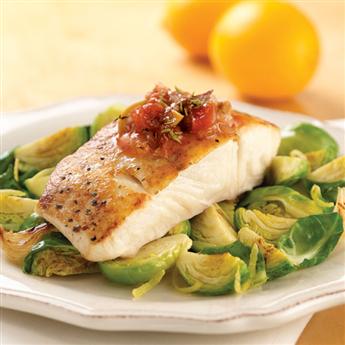
  • Learning Objective:  Determine what is the most important element to consider when pairing wine with a specific dish, demonstrated by the following dish:  Grilled Halibut with Lemon-Caper sauce served on a bed of Asparagus Risotto. 
  • Note that at this level, knowledge of the background to the question is assumed to be both known and understood, and students are expected to apply this knowledge and understanding.  In this case, we are looking for the student to apply a known set of food and wine pairing principles.

 Sample MCQ:  When choosing a wine pairing for Grilled Halibut with Lemon-Caper sauce, what is the most important element to consider?

  • A. The lemon flavor of the sauce.
  • B. The flavor intensity of the grill marks.
  • C. The saltiness of the fish.
  • D. The acidity of the lemon sauce.

Level 4:  Analysis –Analyzing

  • Learning Objective:  Break down the various components of a dish or menu and determine what components are dominant and the effect each would have on a wine pairing. For instance, what impact would the acidity in a dish have on a white wine?
  • Note that the student is assumed to know and understand the information and to apply the information.  This objective stresses the ability to break down the food and wine in question into their component parts and assume an outcome.  Note that this question does not require the student to create a pairing (level five) or evaluate whether or not this is a good pairing (level six).

 Sample MCQ:  What effect would the Grilled Halibut with Lemon-Caper sauce produce when paired with Sauvignon Blanc?

  • A. It would make the acidity in the wine more pronounced.
  • B. It would make the acidity in the wine less pronounced.
  • C. It would bring out the bitterness in the wine.
  • D. It would make the fruity flavors of the wine pop.


Level 5:  Synthesis (Creation) – Creating

  • Learning Objective: Design a wine pairing of three different wines to complement the grilled halibut dish.
  • At this level, the student needs to have the knowledge and the comprehension of the principles of food and wine pairing, be able to apply it to a real-world example, and be able to analyze the components of both the food and the wines before he or she can create the pairing.

 Sample MCQ: Which of the following wine flights would make the best pairing for Grilled Halibut with Lemon-Caper Sauce, based on the proper taste components and a potential flavor bridge?

  • A.  Oaked Chardonnay, Sauvignon Blanc, and Gewurztraminer
  • B.  Unoaked Chardonnay, Sauvignon Blanc, and Gewurztraminer
  • C.  Unoaked Chardonnay, Sauvignon Blanc, and Viognier
  • D.  Unoaked Chardonnay, Sauvignon Blanc, and Riesling

Level 6:  Evaluation – Evaluating

  • Learning Objective:  Evaluate specific wine choices for a specific dish, and give your opinion on the quality of the pairings.  For instance, evaluate whether an oaked chardonnay a good choice for the grilled halibut dish in the previous question, and discuss why or why not. 
  • At this level, the student is expected to know, comprehend, apply and analyze the principles of food and wine pairing, and, describe the outcome of the pairing, and form an opinion on whether or not this is a good match.

Sample MCQ:  Is oaked chardonnay a good choice for Grilled Halibut with Lemon-Caper Sauce?  Why or why not?

  • A.  Yes, because the acidity is a good match and the saltiness of the capers will work well with the oak.
  • B.  No, because while the acidity is a good match, the saltiness of the capers will potentially clash with the oak.
  • C.  Yes, because the flavors of the lemon in the sauce will work well with the lemony flavors of the wine.
  • D.  No, because the flavors of lemon in the sauce will clash with the tropical flavors of the wine.

I hope this post gives you some guidance and encouragement to teach to all levels of the learning taxonomy.  I also hope it shows teachers that effective exam questions, even Multiple Choice Questions, can be written at all levels of the learning taxonomy and that we stop giving exams that are basically “wine trivia contests”. 

I realize that this method of teaching and writing tests is not simple, but it does get easier with practice.  However, keep in mind that teaching and testing to the higher levels of the learning hierarchy will enhance the quality of your teaching and the  validity of your exams – guaranteed! 

Cheers! 

Train the Trainer: Bloom’s Taxonomy of Learning Objectives

Benjamin Bloom  (1913 – 1999) was an interesting gentleman indeed.  Back in the 1940’s and 50’s he held several impressive roles in higher education, including 16 years as the “University Examiner” at the University of Chicago.  In this position, he analyzed and approved the university’s tests to determine if undergraduates had mastered the material necessary for them to receive their bachelor’s degrees. He also wrote or co-authored 18 books on education, all of them with the goal of “enhancing student learning”.

During his time as University Examiner, he discovered that over 95% of the test questions students encountered required them to think at only the lowest possible level…the recall of information.  In other words, most tests – even at the University level – resembled nothing more than a “memory trick.” 

I have to admit, I agree.  In my opinion, this is one of the biggest issues in education, including wine education, today.  A  while back, I was asked to look over a took a wine test written by a friend of mine.  It was intended to be the final exam in a semester-long “Professional Wine Studies”  course she was teaching at a 2-year college as part of a hospitality management program. Much to my chagrin, the test amounted to nothing more than a really long wine trivia contest. She could have sold it to Hasbro as “Trivial Pursuit – Vinous Version“!

The issue I had with the test is that all it really assessed was memorization. Very few, if any, of the questions required even the slightest bit of comprehension, application or evaluation.  Sorry to say, my friend was a member of the dreaded “lazy test writer club.”  The test she was about to give could have been passed by anyone who locked themselves in a closet with a copy of The Wine Bible for two days before the test.  Of course, the day after the test they wouldn’t remember a thing.  (We fixed the test before it went out to the examinees – global wine education crisis averted!)


Back to Benjamin Bloom and his solution for all this. 

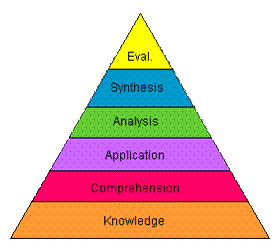
In 1954, after a series of educational conferences, Bloom was tasked with leading a committee with the goal of improving  the quality of  teaching practices, curriculum development, and the validity of university exams. The result was a classification of learning objectives – the goals that educators set for learners – built around a hierarchy of levels of understanding.  In an ideal learning situation, students would master the lowest levels of learning, such as knowledge and memorization, and then move up to learning at the “higher order thinking skills” such as application, evaluation, and synthesis. If applied properly, this idea should influence or even change the way you teach, and equally importantly, how you design your tests. 

Here is a very quick overview of the six levels of learning, paraphrased in my own words. I hope they meet with Mr. Bloom’s approval.

Level 1:  Knowledge – Remembering

  • Definition:  Student recalls or recognizes information, ideas, or principles in the approximate form in which they were learned.
  • Good for:  Dates, Events, Places, Vocabulary, Key Ideas, Facts, Figures.
  • Please don’t: Write all your test questions at this level.   

 Level 2:  Comprehension – Understanding

  • Definition:  Student translates, comprehends, or interprets information based on prior learning.
  • Good for: Finding meaning, Interpreting facts, Giving examples.

 Level 3:  Application – Applying

  • Definition:  Student uses the information to solve a problem or complete a task.
  • Good for: Use of information in new situations, solving problems, case studies.

 Level 4:  Analysis –Analyzing

  • Definition: Student breaks down information into simpler parts and understands patterns and organization. 
  • Good for:  Recognizing and explaining patterns and meaning, seeing the “parts and the whole”, breaking things down, critical thinking.

Level 5:  Synthesis (Creation) – Creating

  • Definition:  Student originates, integrates and combines ideas into a product, plan, or proposal that is new to him/her.
  • Good for: Building things up, putting concepts together, creating new ideas, plans, or products.

 Level 6:  Evaluation – Evaluating

  • Definition:  Student appraises, assesses, or critiques on a basis of specific standards and criteria.
  • Good for:  Making recommendations and choices, assessing value, critiquing ideas, predicting outcomes.  

Due to its long history and popularity,  the actual wording and order of the “hierarchy” has been  revised, condensed, expanded, modernized, and re-interpreted in a variety of ways over the past 60 years.  However, Bloom’s Taxonomy has clearly stood the test of time.  Every teacher should use this material. 

It’s the year 2012, and a seminar on Bloom’s Taxonomy of Learning Objectives is included in my annual faculty development plan this year, as it is every year.  It’s one of the most important concepts I want my faculty to know..and comprehend, and apply, and analyze and evaluate.

Stay tuned later this week when I’ll provide some examples of “Bloom’s Taxonomy in Action” in wine education and testing.

Train the Trainer: The Power of Schema

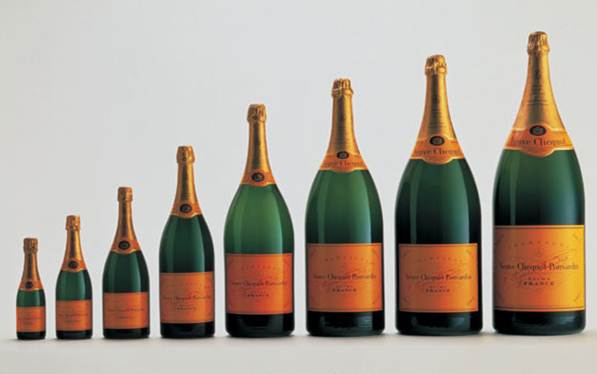
Do you remember what it was like when you were trying to memorize the names of the different Champagne bottle sizes for your CSW exam?  You studied and studied, only to forget the terms by the next day.  Finally, you dreamed up a silly mnemonic device such as “Mary Jackson makes small boys nervous.”

Brilliant!!  Now you can remember M-J-M-S-B-N…in other words, the perfect sequence of:

  • Magnum
  • Jeroboam
  • Methuselah
  • Salmanazar
  • Balthazar
  • Nebuchadnezzer

Congratulations! What you did was trick your brain, and while it may have helped you pass your CSW exam, it did nothing to help you really know and understand the relevance of the different sizes of the bottles. In order to do that, you would really have to experience them.  I suggest buying one of each bottle size of your favorite Champagne, and on subsequent nights, consume the entire thing while both taking pictures and keeping an on-line journal of your thoughts. (What do you mean, that’s not practical?)  Never fear, there is an easier way.

As the Bubbly Professor, I am not here to criticize your study habits, but I am interested in just why it is so much easier to remember a sentence than it is to memorize a string of seemingly unconnected data, and how we might use such information to make our teaching and learning more effective.

It boils down to one word:  Schema.  Schema is a powerful learning concept which has been discussed in the context of educational psychology since Dr. Frederic Bartlett coined the term in the 1800’s – although if you study the educational practices of the Ancient Greeks you can clearly see that they were wise to it as well.

Schema is one of the factors of the educational process that can determine – in the first few seconds of learning – whether or not something that is being perceived will actually be remembered, and more importantly, understood.  A schema is a type of mental framework – a way of organizing thoughts around some aspect of the world. Schema involves prior knowledge, the structure of that knowledge, and the way we fit new knowledge into our “world.” 

Simply put, the brain is just not wired to remember random words, numbers, or details out of context. One of the best methods for getting students to remember details is to tell them the meaning, context, or conclusion of the material before you present the details – in other words, introduce a schema.  

According to research, (thank you, Dr. R.C. Anderson),  triggering a schema around a moment of learning can increase retention and comprehension of the salient details by between 50 and 100%.

So, how do we harness this knowledge and turn it into teaching power? 

Here are three tips:

Teach meaning before details.

As we have experienced, the brain is just not wired to remember random words, numbers, or details out of context.  To help your students remember details,   tell them the meaning, context, or conclusion of the material before you present the details.

In 2005, I did a little classroom experiment in my “Wines of France” class concerning the “facts and figures” of Beaujolais. Over the course of a year, 500 students were taught the details of the wine before the historical story of the wine, and another group of 500 were taught the story before the details.  In other words, the second group of 500 was provided with a schema. 

The results:  students who were taught the details of the wine before the telling of the story got a total of 68% of the questions on a pop quiz given the following day correct.  The students who were told the story before being told the details of the wine got a total of 91% of the answers correct.  While both figures could demonstrate the effectiveness of narrative as a teaching device, the students who were taught the meaning before the details did significantly better.

Use the power of three.

One of the easiest ways to set up a schema is to use pattern recognition using the “power of three.”  Three is the minimum number of items the brain needs to see before it recognizes a pattern,in other words, invokes a schema.  In addition, three details or “chunks” of information sit well within the limits of working memory.

It’s easy to think of dozens of examples of this concept in use in popular culture, literature, and oration.  For example:

  • Lions, and tigers, and bears (oh my!)
  • Sex, Lies, and Videotape
  • Location, Location, Location
  • Friends, Romans, Countrymen…
  • Three bears, three wishes, three graces.  Now you know why there are three!

A great tip to put this power to use is to start a session off with the statement: “Today, I want you to remember three things.”  Everyone can remember three things, it doesn’t sound too hard.  Then, it’s your job to “chunk” all your “facts and figures” into three meaningful chunks – now known as “schemata.” 

DIY Schema

Since prior knowledge is essential for the comprehension of new information, teachers either need to help students build the prerequisite knowledge, or remind them of what they already know before introducing new material. 

You might have to get creative with this, but with the subject of food and wine it is often possible to find references to our subject matter in pop culture, movies, television, and even songs. 

Another great teaching tip is to create your own set of schema by purposely “injecting” your classes or sessions with references to future material.  It takes some deliberate effort, but your students will appreciate your efforts – whether they are aware of them or not!

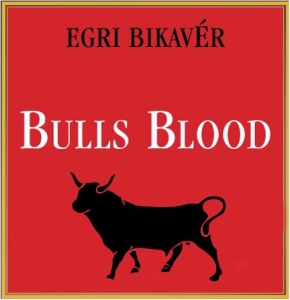
Tales of the Vine: Bull’s Blood

In the Northern Massif region of Hungary, the famous Egri Bikavér, or “Bull’s Blood Wine” is made in the area around Eger, a beautiful town about halfway between Budapest and Tokaj.

The name of the wine dates back to a Turkish invasion led by Suleiman the Magnificent around 1552.  During the invasion, Suleiman the Magnificent and his army of Turks attempted to siege of the Castle of Eger.  The defending Hungarians, led by Captain Istvan Dobo, were largely outnumbered by the invading army and the situation appeared dim. However, the Hungarian forces, fortified by days and nights of delicious food and large amounts of the local red wine, managed to successfully defend Eger. In doing so, the Turkish army was forced to withdraw, and Turkish westward expansion was delayed for forty years after this battle.

According to one legend, the enemy soldiers were frightened by the fierce fighting and red wine-stained beards of the soldiers.  Among the Turkish soldiers it was rumored that bull’s blood had been mixed into the wine, as otherwise the strength and firm resistance of the town and castle could not be explained.  Another legend states that the swords of the enemy could not cut through the Hungarian blood thickened by the wine.

The wine named for the legendary “bull’s blood” of the siege, Egri Bikavér, is still produced to this day, and is very popular on both the domestic and international markets.  Egri Bikavér is made up of a blend that has varied over the years, although the blend is anchored by the ancient Kardarka grape. Kadarka is a difficult grape to vinify, and has increasingly been replaced by Blaufränkisch, known locally as Kékfrankos.

In modern times, Egri Bikavér must contain at least three of the following 13 grapes: Kardarka, Kékfrankos (known as Blaufränkisch in German), Blauer Portugieser, Cabernet Sauvignon, Cabernet Franc, Merlot, Menoire, Pinot Noir, Syrah, Turán, Bíborkadarka, and the modern Austrian hybrids Blauberger and Zweigelt.

Escoffier, Ikeda, Umami…


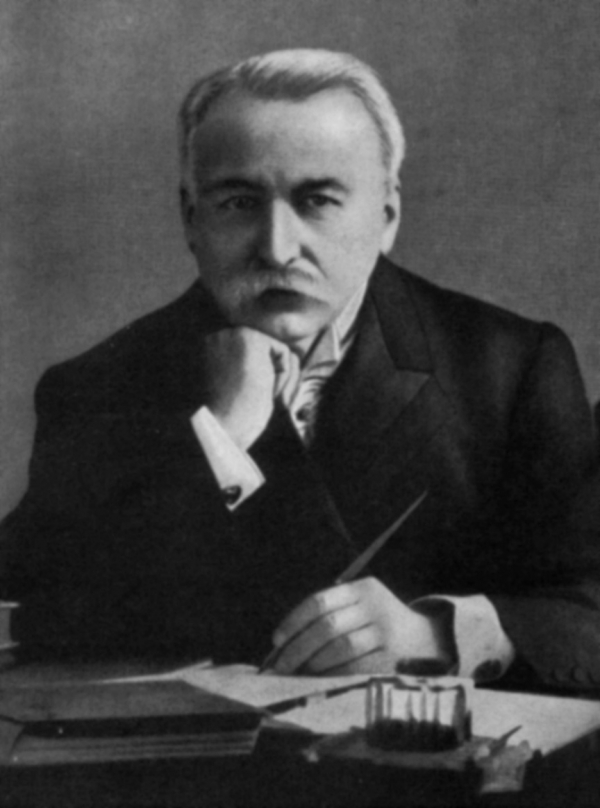
Dr. Kikunae Ikeda, who is credited (and rightfully so) with the “discovery” of Umami.
Escoffier, Ikeda, Umami…

If you are one of my students (or an avid reader of this blog), you know that I think it is very important to differentiate between “taste” and “flavor” when discussing wine (or food, for that matter).   One of the reasons for this is that I teach future chefs and sommeliers, and as future professionals I think it is important that my students use the correct terminology.  Another reason is that “taste” and “flavor” are two totally different factors in the discussion of food and wine pairing.

So, one of the first questions I address in my Professional Wine Studies class is “What is a taste, and what is a flavor”?  It sometimes takes several weeks for my students to use the two terms in the proper context, so I begin with the simple fact that flavor is a combination of taste, aroma, and texture, and there are (depending on who you ask) five or six generally accepted “tastes”. 

A “taste” is defined as “a sensation that can be perceived using only the human tongue, or the taste buds”. Just a few years ago it was generally accepted that there were four basic tastes, each able to be sensed in all areas of the tongue but for many people perceived most dramatically in a particular region of the palate.  The first taste to be detected, and the one most universally enjoyed is sweetness.  The taste of sweetness evolved as a survival mechanism to point the way to energy-yielding carbohydrate.  The second taste to be perceived is generally acidity, which is sensed by most people most readily on the sides of the tongue.  Salt, generally senses in the middle of the tongue and bitterness, easily detected at the back of the tongue are the next two.

The sensation we now call the “fifth taste” is Umami.  Umami was first described in the early 1900’s by Dr. Kikunae Ikeda of Tokyo Imperial University.  Dr. Ikeda was determined to find the source of what the Japanese had long called the “deliciousness” or “savoriness” of food cooked in dashi, which is a sort of stock made from kombu (kelp).  Dr. Ikeda managed to discover the true nature of this flavor enhancer when he succeeded in extracting an amino acid, glutamate, from kombu.  Umami was referred to as “deliciousness, savoriness, or meatiness” until 2000, when a taste receptor for glutamate was discovered and  identified as an umami receptor by researchers at the University of Miami (Florida, United States) School of Medicine, confirming it as the official “fifth taste”. 

Auguste Escoffier…he may have never used the word, but he was nonetheless a great proponent of Umami.

Interestingly enough, culinary historians now argue that Auguste Escoffier, the great French Chef of the early 1900’s, is also one of the “discoverers” of umami, despite the fact that he did not know or use the word.  It seems that Escoffier was one of the first chefs to utilize reduced veal stock on a wide scale in professional kitchens.  Escoffier based many of his recipes, particularly his sauces, on reduced veal stock.  It was easily recognized that dishes cooked with veal stock were “delicious”! While Escoffier most likely did not realize it, this veal stock reduction created a liquid rich in the amino acid glutamate, which lent that “deliciousness”, in the form that we now recognize as umami, to many of his preparations – to the delight of his customers; and to the amazement of modern sensory science.

To make matters even more interesting, scientists have identified a substance named “kokumi” that is being touted as the “sixth taste”. Kokumi has been identified as a unique taste, complete with an identified sensory receptor in the taste buds, and is thought to be the taste component of the nutrient calcium.  The discovery of kokumi has opened up the possibility that there may be many more tastes identifiable by the human tongue; perhaps each nutrient has its own unique taste component.  If this is indeed the case, my “Basics of Sensory Evaluation” class just got a lot more interesting!