Tales of the Vine: The Evil and Disloyal Plant Gamay

...

The Story of Beaujolais…

Philip the Bold, Duke of Burgundy, was one of the most powerful men in France from 1388 until his death in 1404. Philip managed to keep Burgundy independent from France and doubled the size of his dukedom by marrying the Margaret III, Countess of Flanders. Philip was an excellent capitalist and under his rule the wines of Burgundy became quite fashionable and expensive. Philip the Bold is said to have selected the clone of Pinot Noir that became the mainstay of Burgundy’s red wines and is credited with having chosen the name “pineau noir”, meaning “black pine cone”, due to the shape and size of the grape clusters.

Enamored as he was with the red wines of Burgundy, Philip was infuriated when the wine growers of his region started to plant Gamay grapes in the vineyards of Burgundy. The Gamay vines were vigorous, easy to grow and high-yielding, and their rich, fruity wines were at their best while young, making Gamay a cash-flow wine the growers loved.
 
Philip the Not-so-Bold (anonymous 16th century painter) Currently displayed at Versailles

Philip the Not-so-Bold (anonymous 16th century painter)
Currently displayed at Versailles

Philip felt the presence of Gamay in the vineyards of Burgundy would harm the reputation of the fine wines he had worked so hard to promote, so he banished the grape from his kingdom. He declared Gamay “foul” and “harmful”, and in a royal decree denounced the “tres mauvais et tres desloyaus plant nomme gamay”, translated as, “the very evil and very disloyal plant called gamay”. Philip thus forbade the cultivation of Gamay in Burgundy and banished it from the Kingdom.

 
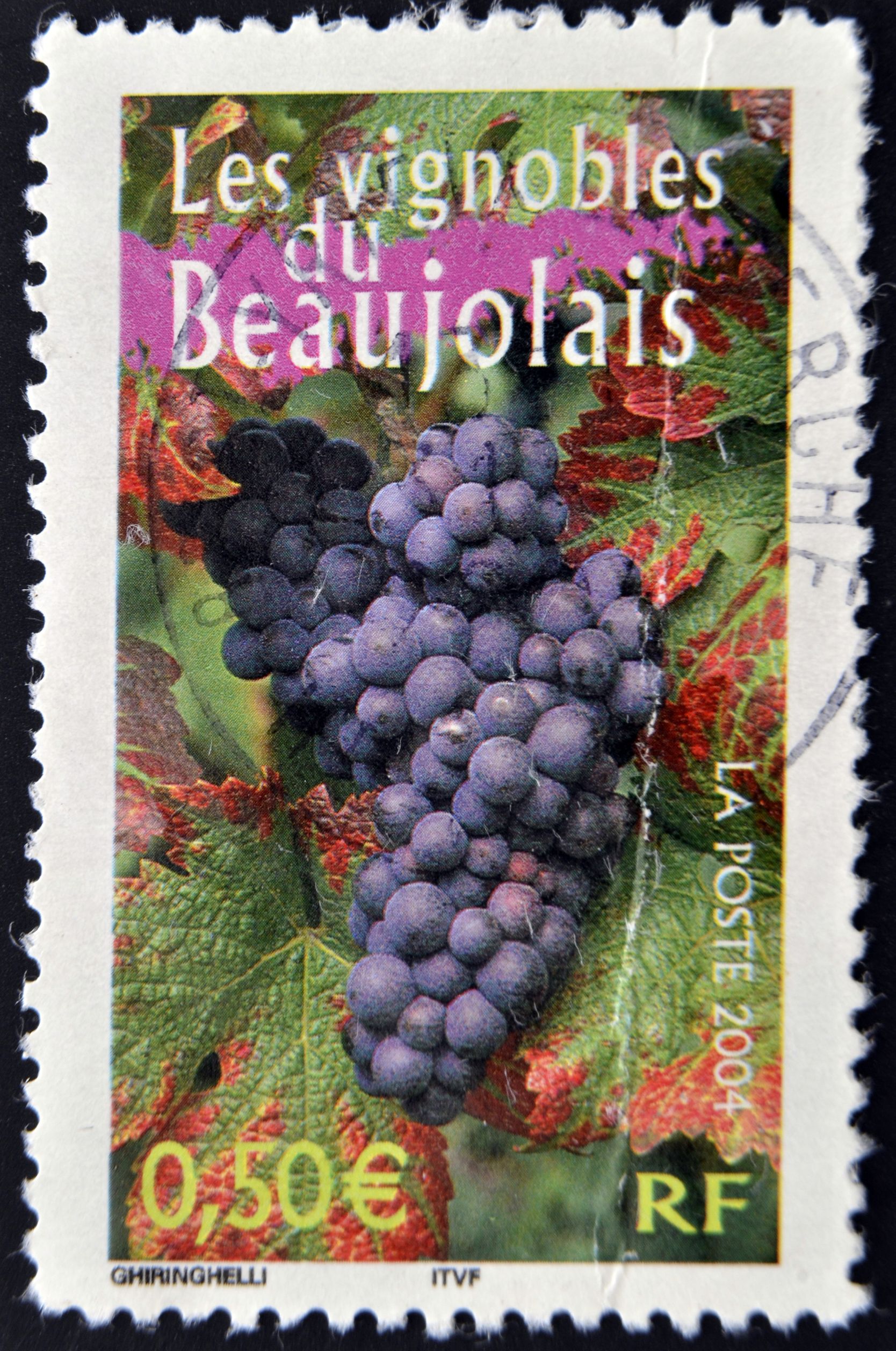
The despised Gamay was down but not out, for it soon began to thrive just beyond the Southern border of Burgundy in the region known as Beaujolais. Beaujolais, with its cold winters, hot summers, and decomposed granite soil is now known to be the one perfect spot on the face of the earth to grow Gamay. One of the wines of Beaujolais, Beaujolais Nouveau, is among the first French wines to be released with every year’s new vintage, and is one of the most popular of all French wines.
The Bubbly Professor is “Miss Jane” Nickles of Austin, Texas… missjane@prodigy.net
 

The More the Meritage

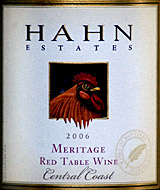
Take the word “merit” and combine it with the word “heritage.”   Put in the hands of a master wine maker and blend well.  What you have is Meritage, a relatively recent addition to the wine lexicon, coined in 1988 to describe New World wines made with the grape varieties and in the blended style of the noble wines of Bordeaux.

The name “Meritage” was originally intended to give the wines of California a little much-needed marketing moxie at just about the time that California wines were beginning to be gain international acceptance. Since the inception, winemakers in California, Australia, Israel, and Argentina have embraced the name, and wine makers all over the world craft some of their finest wines with the Meritage blend.

The story of Meritage begins in the 1980’s.  Wines from California had stunned the wine world at the Paris Tasting of 1976, and the eyes of the world had begun to be opened to the fact that some darn good wine was coming from the New World.  The American public had started to embrace wine, and wine lovers from Oregon to New Jersey were happily slurping the Cabernet Sauvignon, Merlot, and Sauvignon Blanc coming out of Napa and Sonoma.

Here is where the plot thickens: due to labeling laws set forth by the Trade and Tobacco Tax Bureau (TTB), wine from the U.S. must be at least 75% the named grape variety in order to be labeled using the name of the grape, such as Cabernet Sauvignon.  If a wine did not contain this minimum amount of a single grape, it had to be labeled with a proprietary name or use the generic term Table Wine.

This proved vexing for a very good reason—at the time, Americans equated generic wines or proprietary wines with poor-quality wine, and there was plenty of it to go around in those days.  Many of the first wines out of California post-prohibition—mystery blends of grapes grown in the warm Central Valley—were distributed in big, round bottles reminiscent of a bootlegger’s stash.  These wines were labeled with the generic Table Wine moniker or a proprietary name.  Who can forget Gallo Hearty Burgundy, Carlo Rossi Paisano or Italian Swiss Colony Red Table Wine?  The 75% rule was—and still is—the labeling law in the U.S. Thus, if a winemaker was making a top-flight blend in the style of the finest blended wines of Europe, no matter how expensive or delicious it may be, it had to be labeled like a jug wine.

The truth is that the ability to blend grape varieties gives a winemaker an added tool with which to create wines of complexity and balance.  Some of the finest wines in the world—such Bordeaux, Chianti, and Châteauneuf-du-Pape—are blends of many different grape varieties.  As such, American wines were at a competitive disadvantage compared to the wines of Europe.  In order to be labeled using the accepted vernacular, an American wine has to contain a minimum 75% of one grape variety; while many European wines are blends of several different grape varieties and may be produced using any proportion the winemaker chooses.

As such, a group of California winemakers were determined to come up with a solution and—beginning in 1988—sought to create a recognizable name associated with high-quality blended wines.  In a stroke of genius, they hosted a contest to create a catchy name.  The contest received over 6,000 submissions.  Neil Edgar of Newark, California won by suggesting “Meritage” – a combination of the words merit and heritage.

So, the Meritage Association (now known as the Meritage Alliance) was born, and the requirements for Meritage were set forth:  A red Meritage wine must be made from a blend of Cabernet Sauvignon, Cabernet Franc, Merlot, Malbec, Carmenère, and/or Petit Verdot (the classic Bordeaux Grape Varieties).  Gros Verdot and St. Macaire may also be used, in homage to the grapes that were grown in Bordeaux pre-phylloxera. The proportions may vary, but at least two of the grape varieties must be used, with a maximum of 90% of any single variety.  For white Meritage, only Sauvignon Blanc, Semillon, and Muscadelle du Bordelais, the white grapes of Bordeaux, are permitted.

A wine meeting the requirements for a Meritage does not need to use the term on the label—and many wineries prefer to use proprietary names (such as Joseph Phelps’ Insignia and the well-known “Opus One”). Others just stick to “red table wine!” However, if you read the wine’s tasting notes or technical sheets you may find the term “Meritage blend” or “Bordeaux blend” used.

Today, there are over 120 winery members of The Meritage Alliance, and the style of wines (both red and white) made with the grape varieties of—and in the blended style of—the noble wines of Bordeaux continue to be some of the world’s most cherished wines.

By the way, most of the wine enthusiasts I know use the pronunciation “meh-ri-TAHJ”, as if the wine rhymed with the French wine “Hermitage.”  However, according to The Meritage Alliance, the word should really be pronounced like heritage-with-an-m.  Don’t sweat the pronunciation too much, though…either way you pronounce it, wine people will know what you’re talking about.

Reference/for more information:

The Bubbly Professor is “Miss Jane” Nickles of Austin, Texas… missjane@prodigy.net
Burgundy West


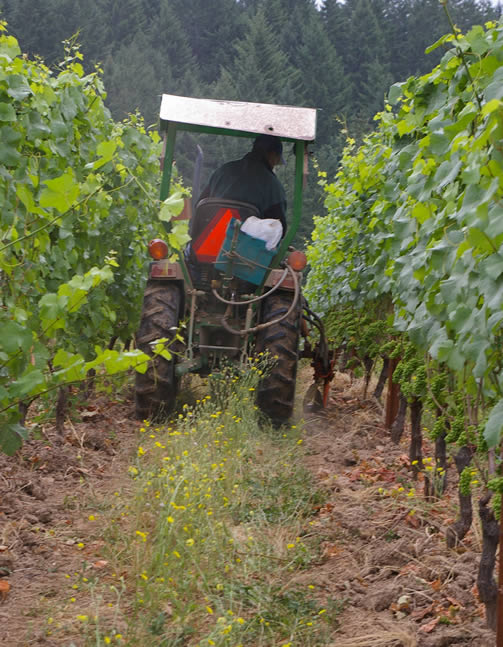
Driving along a 100-mile long valley, I am surrounded on all sides by vineyards planted mainly to Pinot Noir and Chardonnay. I drive by gently rolling hills and lush green valleys dotted with quaint country towns. Stopping in at a small winery, the winemaker’s talk centers around “grape angst” and the cool, marginal climate that most years barely gets his grapes past the finish line for ripeness. I sample his wines and am dazzled by red cherry, rose petal, and subtle spice flavors frolicking around a core of luscious, almost sensual, earthiness. 

 
Do you think I am in Burgundy? I well could be, except for the fact that baseball caps outnumber berets, and the hillsides are dotted with 50-year old grain towers instead of 500-year old bell towers. I am in Oregon’s Willamette Valley, one of the world’s premier Pinot Noir growing regions and the land that has earned the nickname “Burgundy West”.
 
Forty years ago Oregon’s Willamette Valley was a verdant farmland producing Christmas Trees, hazelnuts, peppermint and loganberries. Five hundred miles to the south, Napa was busting out all over with new wineries on the verge of vinous greatness, and Sonoma was quietly producing boutique wines like it had been for decades. The Davis campus of the University of California was churning out dozens of energetic Enology and Viticulture graduates, and they had all sat through the same lecture that stated, emphatically, “Oregon is too cold and too wet for commercial-scale viticulture.” 
 
In 1961, one of those fresh-faced graduates was named David Lett. David had enrolled at U.C. Davis after a vacation in Northern California had left him enamored with wine. At U.C. Davis, Lett experienced French Wines for the first time, and was particularly taken the red wines of Burgundy, which were at the time the “world standard” for Pinot Noir. After graduation, he spent a year traveling and studying in France. During this trip he became convinced that the way to make sublime wine was to match the grape varietal to the terroir, and that a slow, late ripening grape made for the very finest of wines. 
 
Upon his return to the States, David Lett returned to California to purchase his first vines and set about to find land for his own winery. He had a theory that Pinot Noir could do very well in Oregon. His theory was built on painstakingly detailed research on the climates and soil types of the world’s wine regions and the similarities he had found between Oregon’s Willamette Valley and Burgundy. The climate of the two regions, he discovered, are surprisingly alike…from temperature fluctuations, to elevations, rainfall, and winds. Despite the statistical proof, his former professors at U.C. Davis advised him against it…they strongly believed Oregon was too cool, too wet, and the climate too variable to consistently ripen the persnickety Pinot Noir grape. 
 
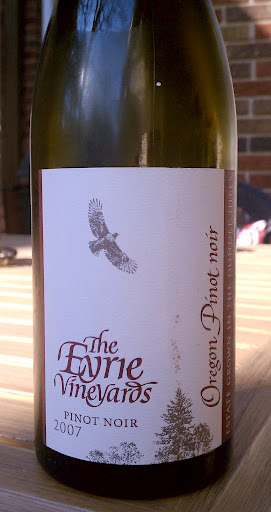
Despite the warnings and criticism, Lett took his “3,000 grape cuttings and a theory” up to Oregon. He rented a plot in a rye grass field outside Corvallis and planted the cuttings “nursery style” for safe keeping while he set off to find their future home. In 1966 David – by this time married to Diana – found what he was looking for: a 15-acre former date farm in the Dundee Hills region of Oregon’s Willamette Valley. David and Diana set about clearing the land and planting the vines. The farm was christened, with a bottle of Burgundy, “Eyrie Vineyards”, in honor of a family of Eyrie Hawks that still thrive in the Fir Trees surrounding the original vineyard plot.
 
The Eyrie Winery, built in nearby McMinnville in a converted turkey processing plant, was bonded in 1970. By 1975, almost unknown outside of Oregon, the Letts were quietly turning out world-class Pinot Noir. However, as these things go…the world was about to find out.    
 
It happened in a Paris suburb in 1979. It was called “Les Olympiads Gault/Milau du Vin”…The Gault/Milau Wine Olympics. The event was intended to showcase the international superiority of French Burgundy and was sponsored by Le Nouveau Guide of Gault/Milau, then a relatively new French magazine and restaurant guide that was attempting to challenge the “Guide Michelin.” There were 586 entries from 33 wine producing regions of the world, including some of the finest Burgundy ever made. In the final competitions of international Pinot Noir bottlings, with a panel of “Grand Connoisseurs” blind tasting blind, the unknown Eyrie Vineyards 1975 Reserve Pinot Noir shocked the house by placing third, ahead of many of Burgundy’s most prestigious wines. 
 
There was a good deal of consternation – and awe- about the number of foreign wines that had outscored the French at this “wine Olympics”. Six of these winners were challenged to a rematch, and Gault/Millau was invited to publish the results. 
 
The rematch took place in January of 1980 in Beaune. Twenty reputable French, English, and American wine judges assembled in the Hall of the Justice of Dukes of Burgundy. There were 12 wines total this time; six of Burgundy’s finest, and the six top non-French contenders from the 1979 wine Olympics. Once again, the Eyrie Vineyards wine gathered impressive scores…this time placing second only to the uber-expensive Maison Drouhin 1959 Chambolle-Musigny, and by only two-tenths of a point! 
 
Those results turned heads around the world, including that of Robert Drouhin, the winemaker at Maison Drouhin. Robert seemed to be more impressed that perturbed with these results, so much so that he sent his daughter, Veronique, to intern at the Eyrie Vineyards during the 1986 Harvest. In 1987, the Drouhin family purchased property in the Dundee Hills and planted over 200 acres of Pinot Noir and Chardonnay, becoming the first European family to invest in Oregon Wine. Domaine Drouhin Oregon released its first wines in 1991, and continues to produce high-quality wines year after year.
 
Oregon now boasts over 240 mostly family-run wineries, and is considered one of the finest areas on the globe to grow and make Pinot Noir, Chardonnay, Pinot Gris, and Sparkling Wines. Other prominent Oregon producers and pioneers include Dick and Nancy Ponzi, David and Sylvia Adelsheim, Chehalem Winery and Archery Summit. David Lett’s seminal role in the founding of Oregon’s Wine industry has been recognized by a nickname of affection and respect, “Papa Pinot”. 
 
Every year the Oregon wine industry hosts “The International Pinot Noir Celebration” on the campus of Linfield College. Tickets for the event sell out within days of their release. Top Pinot Noir producers from Burgundy, New Zealand, California and Oregon are invited to pour their delicious red wines to the delight of throngs of Pinot Noir lovers from all over the world. The culmination of the festival is a gourmet’s dream of a cookout, starring wild Oregon Salmon and Pinot Noir from Oregon’s Willamette Valley.    
 
It seems, after all, that Papa was right.