Wine Grape Cheat Sheets: Cabernet Franc

The Soundbyte:  Cabernet Franc has often been thought of as Cabernet Sauvignon’s more cerebral and refined little brother. However, it might be time to hang up the “Cabernet Sauvignon’s little brother” cliché, and the sooner the better:  recent DNA technology has confirmed that Cabernet Franc, with a little help from Sauvignon Blanc, is actually Cabernet Sauvignon’s father.

Cabernet Franc is appreciated in France—particularly in Bordeaux, where it holds fast as one of the red grapes of the Bordeaux blend, and in the Loire (around Saumur and Touraine). The grape’s cold weather-heartiness is also leading to increased plantings in the wine world outside of Europe, where its unique elegant-structured-spicy quality is inspiring new legions of fans.

Typical Attributes of a Cabernet Franc-based wine:

  • Medium tannins, sometimes referred to as silky, fine, or well-integrated tannins.  Whatever you call it, Cabernet Franc does indeed have a lower tannin profile and a smoother mouth feel than many red wines.
  • Elegance, finesse, and good structure: these are well-earned terms often used to describe Cabernet Franc’s moderate levels of tannin combined with its typical moderate acidity.
  • Typical flavors and aromas include red fruit, berries, perfume, and spice.
  • Bright, sometimes pale red in color, although the color and depth can be deeper in warm weather versions.
  • Though typically thought of as lighter wines, Cabernet Franc-based reds from strong vintages or warmer climates can be full bodied and well-structured for aging.
  • Cabernet Franc is used to make delightful rosés in the Loire and many other regions (such as California and New York State).
  • Cabernet Franc’s ability to thrive in cooler (even cold) climates makes it a natural for use in ice wines as well as late harvest dessert wines, as is done in Ontario and New York.

Typical Aromas of a Cabernet Franc-based wine:

  • Fruity: Raspberry, Blueberry, Strawberry, Cranberry, Red Cherry, Black Currant, Cassis, Plum, Pomegranate
  • Spicy:  Black Pepper, White Pepper, Dried Herbs, Black Licorice, Rosemary
  • Earthy/Herbal/Vegetal:  Tobacco, Cedar, Cigar Box, Green Bell Pepper, Green Olives, Graphite, Mushroom, Tea
  • Floral:  Violets, “Blue Flowers,” Perfume
  • Oak-derived:  Vanilla, Coconut, Sweet Wood, Smoke

Where the Best Cabernet Franc is Grown:

  • Bordeaux, where it generally plays third fiddle in the Cabernet Sauvignon/Merlot/Cabernet Franc/Malbec/Petit Verdot/Carmenère blend.
    • Cabernet Franc does, however, often get to be the star of the show in St. Émilion and in much of Bordeaux’s right bank, where some of the most prestigious wines of the region (and the world) give Cabernet Franc a starring role. The vineyards at Château Cheval Blanc—one of the world’s most renowned estates—are planted to about 57% Cabernet Franc, and the vineyards Château Ausone are reportedly 50% Cabernet Franc and 50% Merlot.
  • The Loire Valley, where the regions of Chinon, Bourgueil, and Saumur-Champigny make both red and rosé wines from a minimum of 90% Cabernet Franc.  Cab Franc is sometimes called Bouchy or Breton in the Loire.
  • Tuscany, of all places, where a brave soul at Tenuta di Trinoro makes a blended wine with varying levels of Cabernet Franc, feeling it is “under planted” in Bordeaux.
  • Northern Italy, particularly Friuli and Veneto, where it may be known as Bordo.
  • Hungary: Many people feel Cabernet Franc might have found a home in the vineyards of Hungary.  Cabernet Franc in Hungary gained lots of attention in the late 1990’s when it became apparent that some regions of Hungary were not optimal for Cabernet Sauvignon to reach its full ripeness. Cabernet Franc is now grown widely in the Hungarian regions of Villány, Szekszárd, and Eger.
  • Ontario, Canada, where it may be used for dry (table) wine, sparkling wine, or sweet wine/Icewine.
  • New York’s Finger Lakes and Long Island wine regions, as well as the states of Virginia, Michigan and Colorado.
  • California and Washington State, where the grape appears as part of the Meritage Blend as well as in varietal wines. In the warm Napa Valley, the plantings are small, but in some cases quite prestigious.
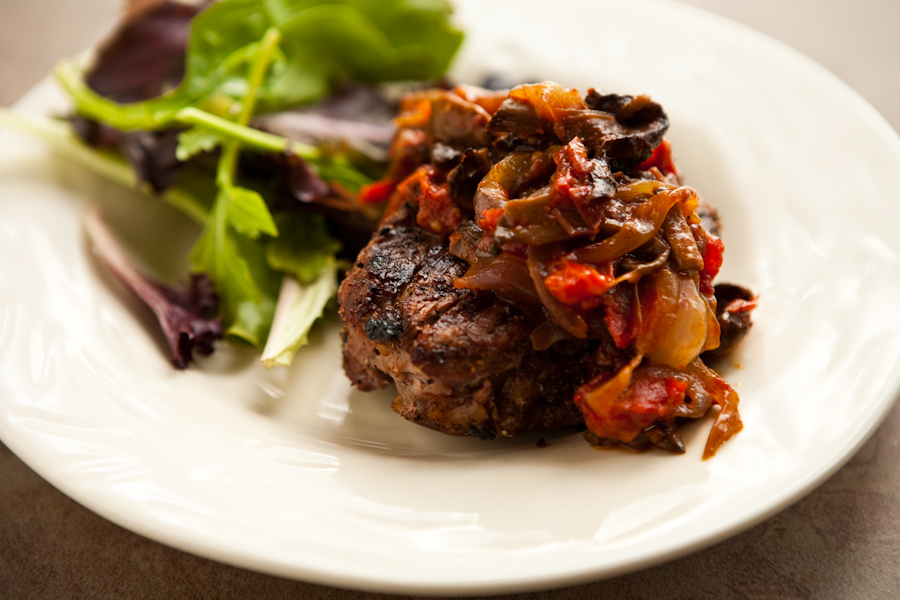
Food Affinities – Base Ingredients:

Beef, Veal, Pork

Chicken – just make sure you prepare it via a grill, sauté, bake, roast, broil or braise in order to add lots of flavor and complexity.  (Save the poached chicken on a bed of spinach salad for a Chenin Blanc day.)

Duck and just about any Poultry (see above.)

On the grill: meat, poultry, games, vegetables

Food Affinities – Bridge Ingredients:

Garlic, Roasted Garlic, Onions, Mushrooms

Bell Peppers, Cajun/Creole Spices

Rosemary, Thyme, Mint, Bay Leaf

Tomatoes, Roasted Tomatoes, Eggplant, Fennel

Barbeque Flavors, Grilled and Smoked Foods

Greek and Middle Eastern Flavors

Note: When it comes to food pairings, by all means—drink what you like!

The Bubbly Professor is “Miss Jane” Nickles of Austin, Texas.


Wine Grape Cheat Sheets: Gamay

The Soundbyte:  The Gamay grape—officially known as  Gamay Noir à Jus Blanc—can make uncomplicated, easily drinkable, light bodied, light-colored red wines.  It is also capable of producing richly hued, rather tannic, complex, and age-worthy wines.  It’s a vinifera chameleon.

One thing that we can be assured of, though, is that the grape is hearty in the vineyard.  The grape is so prolific and high-yield that long ago it was feared that Gamay would overwhelm the vineyards of Burgundy, and the prolific grapes would damage the reputation of the fine Pinot Noir the Burgundy region was (and is) known for. In order to avoid this messy complication, Philip the Bold—then the Duke of Burgundy—banished the grape from the Kingdom and declared it to be an evil, disloyal plant. In a wonderful twist of fate, grape growers in Burgundy who loved the high-yield, easy-drinking wine made from Gamay were nonplussed and set up their beloved Gamay vines just a bit to the south of the vineyards of Burgundy, where the grape still reigns today.

Typical Attributes of a Gamay Based Wine:

    • Light-to-medium bodied, although it can surprise you at times with a sturdy wine.
    • The tannins in a Gamay-based wine can be quite diverse—some versions are light-to-medium, while some versions have sturdy tannins.  The grapes themselves are considered high tannin, although wine-making traditions often ameliorate their impact.
    • Crisp, lively acidity.
    • Some versions can have a light, cranberry juice-like clear red color; others have a deeper red hue that resembles a dark version of Pinot Noir.
    • Fruit-forward aromas and flavors of ripe berries, red fruits of all kinds, even apples and pears—however, some versions can show more aromatic complexity. Such version may show aromas and flavors such as savory herb, earthiness, and minerality.
    • Many versions are considered picnic wines—uncomplicated and easy to drink.  The fact that Gamay can be served slightly chilled for a refreshing thirst quencher adds to the picnic appeal.
    • Beaujolais is sometimes produced via the fermentation technique known as carbonic maceration.  Because of this unique process, Beaujolais often displays aromas of banana, bubble gum, pear gummies and/or red candy.
    • Many Gamay-based wines are highly drinkable when young. However, Gamay is capable of producing age-worthy wines. The Beaujolais Crus are all good examples of age-worthy Gamay.
    • We can’t forget the very popular “nouveau” style wine made from Gamay that is intended to be consumed just a few months after harvest.  Look for Beaujolais Nouveau to be released every year on the Third Thursday of November, along with a good deal of publicity and many excellent parties.

Typical Aromas of a Gamay-based Wine:

  • Fruity:  strawberry, raspberry, cranberry, cherry, red plum, red currant, ripe pear, red apple
  • Floral:  lavender, wildflower, violet, rose 
  • Herbal: dried herbs, white pepper, crushed black pepper
  • Earthy/Mineral: wet stone, crushed rock, dried leaves, wet dirt
  • Oak-Derived: oak, cedar, vanilla, sweet spice, licorice, nutmeg
  • Sometimes found as a result of carbonic maceration: pink bubblegum, banana, pear drop, red candy

Where The Best Gamay is Grown:

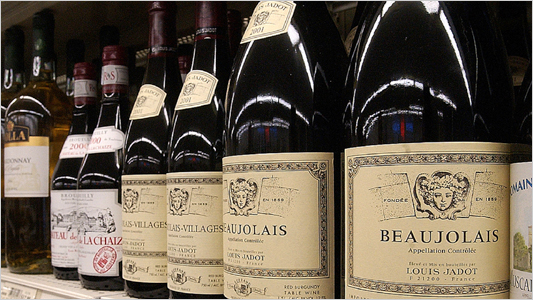
  • The Beaujolais Region of France, just south of (and somewhat overlapping) the Burgundy Region.  The wines of the Beaujolais Region include Beaujolais AOC Beaujolais-Villages AOC, and the highest quality wines—the ten Beaujolais Cru. Each of the ten Beaujolais Cru has its own AOC and will be labeled with the appellation name (such as Saint-Amour, Juliénas, Chénas, and Moulin-à-Vent.
  • We can’t forget the fun-and-fruity Beaujolais Nouveau, which accounts for almost 50% of the entire output of the region.
  • It’s kind of a well-known secret, but Gamay is still permitted to be used in in certain parts of Burgundy such as the Mâconnais, and just may be surreptitiously tucked in amongst the Pinot vines—even in some of Burgundy’s higher-ranking vineyards.
  • France’s Loire Valley, particularly Anjou, Touraine, and Cheverny, where the grape may turn up in red wines, rosé, or sparkling wines.
  • The Niagara Peninsula and other parts of Ontario (Canada).
  • California grows some Gamay, but there was confusion in the past about a wine called Napa Gamay or Gamay Beaujolais.  It is now known that these wines were made from a grape known as Valdiguié, which has its own history and style.  However, you can find true Gamay in California and Oregon these days.
  • Australia and New Zealand have a bit of Gamay.

Food Affinities – Base Ingredients:

Seafood of all kinds – try Mussels, Lobster Rolls, Crab Salads, Snapper Veracruz, or fried shrimp.  This might work best with the lighter versions, but if you are looking for a red wine with seafood match, Gamay will be among your best choices.

Chicken (hot or cold), Duck, Poultry of any kind.  Try duck with cherries.

Just about anything made from Pork:  Ham, Prosciutto, Sausages, Charcuterie, Roasted Pork Loin, Pork Chops

Picnic Food, Cold Food, Cheese Plates, Sandwiches (think Prosciutto on a Baguette with a slice of Brie…)

Food Affinities – Bridge Ingredients:

  • Tomatoes, Capers, Dijon Mustard
  • White Cheeses, Sharp Cheeses such as Feta
  • Salty Foods – maybe chips and dips, pretzels and hummus?
  • Onions, Garlic, Green Bell Peppers
  • Green Olives, Black Olives
  • Mixed flavors such as an array of appetizers or finger foods

The Bubbly Professor is “Miss Jane” Nickles of Austin, Texas…


Wine Grape Cheat Sheets: Malbec

The Soundbyte:  One of Malbec’s earliest claims to fame is the spot it holds as one of the classic grape varieties approved for making red wines in the Bordeaux region of France.  Malbec was fairly widely planted in Bordeaux before a particularly harsh winter in 1956 wiped out a good majority of the vines, moat of which were never to be re-planted.  Nevertheless, Malbec is still used in Bordeaux, albeit in small amounts. Malbec can bring spiciness, deep color, ample tannin, and a particular plum-like flavor to blended red wines. These days, Malbec is best-known as the superstar of the high-altitude red wines of Argentina.  The best Malbecs can be described as mouth-filling, fruity, and sumptuous.  Worldwide, Malbec is planted in small amounts, but its popularity and acreage is on the rise.

Typical Attributes of a Malbec-based Wine:

  • Medium to full-bodied.  Malbec-based reds are known for having medium-to-high tannin and (often) a high level of dissolved solids (extract).
  • In France, Malbec is primarily used as a minor grape in the blended wines of Bordeaux and Southwest France. Outside of Europe, however, Malbec is often used in into 100% varietal wines.
  • The tannins can be a conundrum. In younger wines (or those made from less-ripe grapes), the tannins are sometimes described as tight or tightly-wound. Wines from warmer regions or riper grapes—as well as those made using certain wine making techniques (such as PFM)—can have tannins that are described as plush or ripe.
  • Malbec tends to make earthy, rustic wines.
  • Malbec-based wines tend to be very deep red or purple—opaque or almost inky—in color.
  • Malbec also makes a delightful rosé wine and…I’m beginning to see some late harvest/sweet wines made using Malbec.

Typical Aromas of a Malbec-based Wine:

Fruity:  Plum, Dark Cherry, Cooked Berries, Blackberry, Boysenberry, Raspberry, Fig, Black Currant

Floral: Violet, Lavender, Perfume (especially in wines of high altitude) 

Herbal: Fresh Herbs, Eucalyptus

Spicy:  Anise, Vanilla, Cocoa, Chocolate, Espresso, Tobacco

Sometimes from the Grape, and sometimes from Oak:  Oak, Cedar, Fresh Lumber, Mocha, Toast, Coffee, Tar

Where The Best Malbec is Grown:

  • Argentina…it especially thrives in the province of Mendoza.  Malbec is the major red varietal grape planted in Argentina.
  • In the Bordeaux region of France, where it is blended in small amounts to add spice to the Bordeaux Blend.
  • Cahors, the region in Southwest France known for making Malbec-based wines sometimes called “The Black Wine of Cahors.”
  • There is small amount grown in the Central Loire Valley of France.
  • There are some plantings in California, Washington State, Oregon and Texas— where it is made into both varietal wines and as a part of the Meritage blend.
  • You may be drinking Malbec but don’t know it; the grape goes by many aliases including Auxerrois, Côt (sounds like coat), and Pressac.

Food Affinities – Base Ingredients:

  • Beef, Lamb, Veal, Venison, Pork, Hard Cheeses

Food Affinities – Bridge Ingredients:

  • Garlic, Roasted Garlic, Onions, Mushrooms
  • Walnuts, Pecans
  • Rosemary, Thyme, Mint, Bay Leaf
  • Tomatoes, Roasted Tomatoes, Sun-dried Tomatoes
  • Cocoa, Chocolate (easy on the sweetness!)
  • Eggplant, Fennel
  • Blackberries, Currants, Figs
  • Black Pepper, Creole Spices, Chili Spices, Barbeque Flavors

Note: When it comes to food pairings, by all means—drink what you like!

The Bubbly Professor is “Miss Jane” Nickles of Austin, Texas… missjane@prodigy.net

Wine Grape Cheat Sheets: Viognier

The Soundbyte:  Just a generation ago, Viognier was close to extinction. These days, this richly scented white grape has made a full recovery in terms of fame, popularity, and acreage. Viognier makes unique white wines that will bowl you over with their outrageous floral aromas and peach-pear-apricot fruit flavors. While Viognier will beguile you with its gorgeous scent and yellow-gold hue—make no mistake, this wine can pack a punch in terms of body, flavor, and alcohol. Proceed with caution!

Typical Attributes of a Viognier-Based Wine:

  • Intriguing floral scent combined with apricot, peach, and pear aromas
  • Rich fruit flavors (tree fruit, tropical fruit, ripe citrus) and a creamy mouthfeel
  • Even without oak aging, Viognier can be as full-bodied as an oaky Chardonnay
  • Deep golden color
  • Rich and over-the-top intense in flavor
  • Very often, this tips the scales for high alcohol (in the context of a white wine), although the overall richness of the wine often masks the perception of the heat of the alcohol content
  • Viognier is quite low in acid, but it may contain a bit of a bite of bitterness on the finish
  • The typical low acid often comes across as smooth and velvety on the palate
  • I have had a few late-harvest dessert wines made from Viognier, and they are delicious!

Typical Aromas of a Viognier-Based Wine:

Fruity:  Apricot, Over-ripe Apricot, Mango, Pineapple, Ripe Citrus (Tangerine, Mandarin Orange), Apple, Pear, Peach

Floral:  Honey, Acacia, Orange Blossom, Violet, Honeysuckle, Wildflowers

Spicy:  Anise, Clove, Cinnamon, Nutmeg, Vanilla

Herbal:  Mown Hay, Tobacco, Mint

Butter, Cream

Where the Best Viognier is Grown:

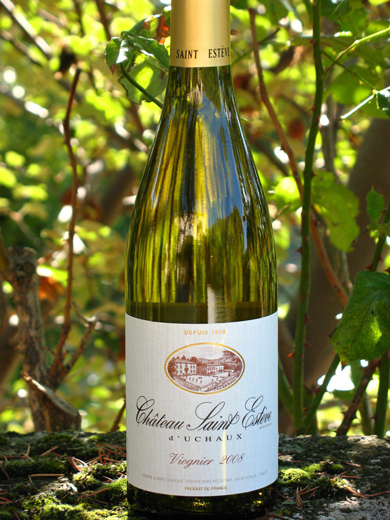
  • The Northern Rhône appellations of Condrieu and Chateau-Grillet produce amazing white wines from 100% Viognier.
  • In the Southern Rhône and throughout the south of France, Viognier may be produced as a single-variety wine or used in an eclectic “white Rhône blend” alongside Marsanne, Roussanne, Piquepoul, and/or Muscat (among others)
  • Also in the Southern Rhône (and elsewhere), Viognier is known to be used in teeny-tiny amounts to add fragrance and a soft side to the red G-S-M or Syrah-based wines of the Rhône.  Even if you wouldn’t know it from looking at the label, a red Southern Rhône blend may contain up to 10% Viognier in the mix.
  • California, particularly the warmer regions such as Lodi and the Sierra Foothills.
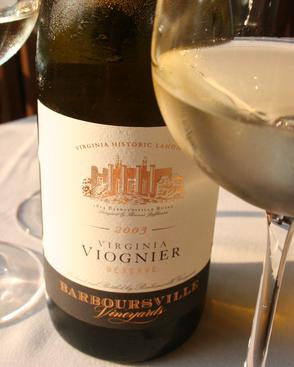
  • The State of Virginia is beginning to make some excellent Viognier, and Texas makes some nice versions as well!
  • Australia makes some excellent versions.
  • Plantings in France’s Languedoc, Roussillon, and Provence regions are expanding.

Food Affinities – Base Ingredients:

  • Pungent Cheeses
  • Crab, Mussels, Shrimp, Salmon, Smoked Salmon
  • Smoked Food, Poultry, Turkey, Pork

Food Affinities – Bridge Ingredients:

  • Curry, Ginger, Clove, Cinnamon
  • Sweet Onions, Garlic, Coconut, Honey
  • Herbs, Corn, Polenta, Walnuts, Hazelnuts
  • Butter, Cream, Fresh Cheeses

Note: When it comes to food pairings, by all means—drink what you like!