Wine Grape Cheat Sheets: Cabernet Sauvignon

Cabernet Sauvignon—the Soundbyte: Cabernet Sauvignon is indisputably the world’s most popular and well-known red grape variety.  Wine lovers in-the-know love to discuss the fascinating fact that Cabernet Sauvignon is the result of a natural cross between Sauvignon Blanc and Cabernet Franc. Just ask one!

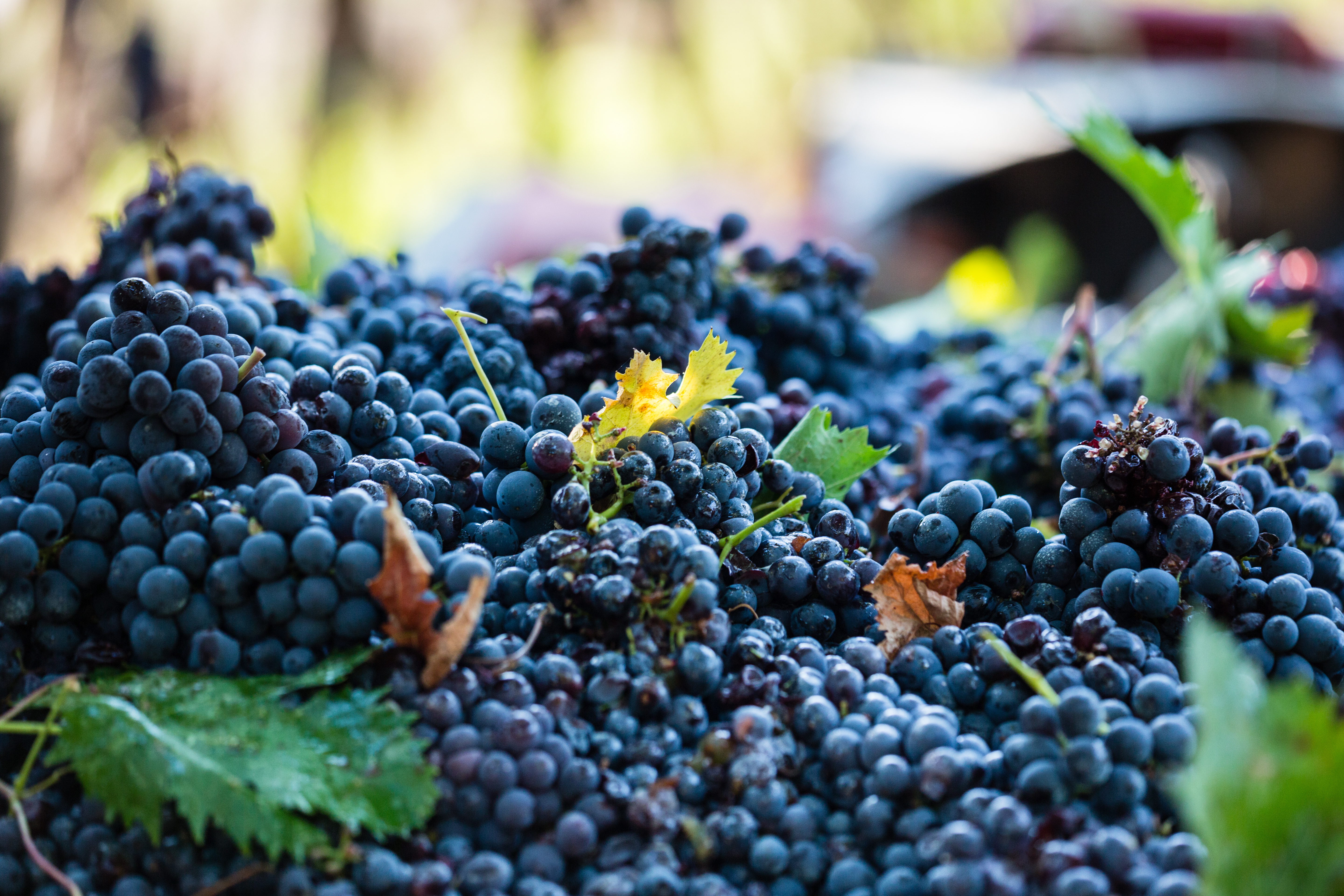
Cabernet Sauvignon is one of the main grapes in the world-famous Bordeaux blend and THE wine that made the Napa Valley famous.  The beauty of Cabernet is its thick skin, both literally and figuratively.  Literally, the grape’s thick skin and small berries give a wine deep color, complex flavors, and hearty tannins.  Figuratively, Cabernet Sauvignon shows it thick skin by being resilient and able to thrive in the vineyard under many circumstances (in terms of climate, soil, and other aspects of terroir).

In short, just about every country that has a climate warm enough to consistently ripen red grapes successfully grows Cabernet Sauvignon.

Typical Attributes of a Cabernet Sauvignon-based Wine:

  • Dark ruby red to purple; opaque and almost inky in appearance
  • Young Cabernet Sauvignon is ripe, powerful, and concentrated.
  • Highly tannic and, because of this, Cabernet Sauvignon is capable of producing age-worthy wine.
  • Complex with ever-evolving layers of interesting flavors and textures
  • When handled correctly, aged Cabernet can take on grace, finesse, and an earthy, complex bottle bouquet.

Typical Aromas of a Cabernet Sauvignon-based Wine:

  • Fruity
    • Blackberry, Blueberry, Ripe Cherry, Black Currant, Cassis, Plum, Prune, Raisin
  • Herbal/Vegetative
    • Vanilla, Mint, Eucalyptus, Bay Leaf, Green Bell Pepper, Green Olive, Rosemary, Dried Herb
  • Earthy
    • Cedar, Cigar Box, Cigar Smoke, Pencil Lead, Graphite, Tobacco, Wet Dog
  • Oak-Derived
    • Oak, Fresh Lumber, Cedar, Chocolate, Cocoa, Smoke

 Where The Best Cabernet Sauvignon is Grown:

  • The Bordeaux Region of France
  • California, Washington State, and parts of Southern and inland Oregon
  • Chile and Argentina
  • Australia
  • Italy—where it stars in some Super Tuscans and is used in small amounts in several wines (such as Carmignano DOCG)
  • Cabernet grows successfully in many regions throughout the wine making world…it adapts well to a variety of conditions.

Food Affinities – Base Ingredients:

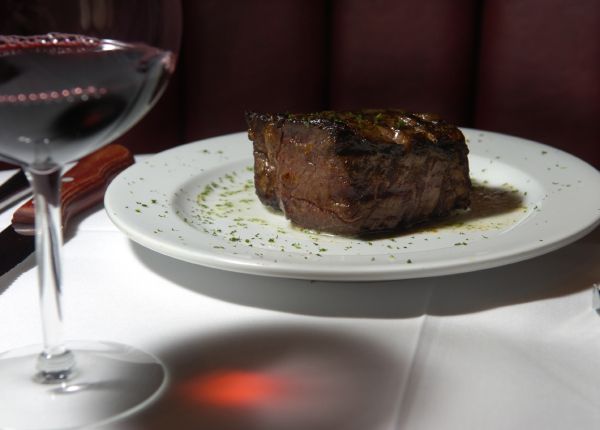
  • Beef—prime rib, grilled steaks…it’s all good!
  • Lamb—Bubbly Prof prefers Merlot here, but Cab works!
  • Veal
  • Venison
  • Pork

Food Affinities – Bridge Ingredients/Flavor Bridges:

  • Walnuts, pecans, pistachios…roast them up and bring on the salt!
  • Mushrooms, eggplant, tomatoes—especially if you roast those veggies and give them some rich flavors
  • Caramelized onions, roasted garlic
  • Mint, rosemary, thyme, oregano, basil, black pepper
  • Blue Cheese – but be careful with the bitterness! Try a mild blue cheese such as Gorgonzola melted over a filet.
  • Hard, aged cheeses such as aged Cheddar, Gouda, Comté, Gruyère, or Swiss
  • Currants, dates, prunes, raisins (go easy on the sweetness)

The Bubbly Professor is “Miss Jane” Nickles of Austin, Texas…


Wine Grape Cheat Sheets: Carmenère

CarmenereThe Soundbyte: Carmenère is often called “the lost grape of Bordeaux” and was widely planted in Bordeaux in the years before phylloxera. However, in the 1880s as phylloxera ravaged the vineyards of Europe and all the vines needed to be re-planted, Carmenère resisted grafting and was essentially forgotten.

On the other side of the world, many of the original vinifera vines planted in Chile were brought from Bordeaux during the mid-1800s, as phylloxera was ravaging the vineyards of France. Carmenère—along with its better-known cousins such as Cabernet Sauvignon, Sauvignon Blanc, and Merlot—arrived in Chile at about this same time.

Carmenère thrived in Chile, where it was often mistaken for Merlot in the vineyard. In fact, much of what was bottled as a particularly spicy style of Chilean Merlot—Merlot Chileno—before 1994 quite possibly contained quite a bit of Carmenère. The mystery of the spicy Chilean Merlot was solved in 1994 when Professor John-Michel Boursiquot of the Montpellier School of Oenology noticed the distinctive character of the wine and confirmed that much of what was considered to be Chilean Merlot was actually Carmenère.

In the vineyard, Carmenère is often the last grape to be picked, and it requires a lengthy season to reach full maturity. Therefore, it is not well suited to many parts of Bordeaux—but in the right areas it can produce great wines. Chilean Carmenère is rich in color, redolent of red fruits, spice, and berries, and has softer tannins than Cabernet Sauvignon. While Cabernet Sauvignon occupies more Chilean vineyards (by acreage), many consider Carmenère to be the signature grape of Chile.

Typical Attributes of a Carmenère-based Wine:

  • Rich with dark fruit flavors (including ripe berries and plum)
  • grilled steak for carmenre with tomatoesFirm structure, full body and heavy tannins; lush, velvety texture
  • Deep, dark color—this is a big red wine!
  • Carmenère is distinguished by fruitiness accompanied by the flavors of “spice and smok.e”
  • Underripe Carmenère, or grapes from a cool growing season, can have a vegetative “green bell pepper” aroma or flavor. Carmenère  takes longer to ripen than other red grapes, so be on the look-out for these flavors.

Typical Aromas of a Carmenère-based Wine:

  • Fruity: Blackberry, Blueberry, Raspberry, Currant, Dark Plum, Cherry
  • Spicy: Black Pepper, White Pepper, Dried Herb, Cinnamon, Anise, Vanilla, Licorice
  • Earthy:  Smoke, Wet Earth, Leather, Tobacco, Coffee
  • Oak-Derived:  Oak, Chocolate, Mocha, Cocoa
  • Vegetative:  Green Bell Pepper, Green Olive, Herbal, Lavender

Where The Best Carmenère is Grown:

  • Chile, where it is one of the leading red grapes (although Cabernet Sauvignon occupies more acreage)
  • A few wineries in California and Washington State grow Carmenère; it is often used in Meritage-style blends but can also be found as a varietal.
  • The Guenoc Winery in Lake Country brought the grape—which had to withstand a three-year quarantine before being planted—to the United States from Chile
  • The grape is grown a bit in Italy’s Eastern Veneto and Friuli-Venezia Giulia regions. This includes the Piave DOC allows for varietally-labeled Carmenère.
  • Bordeaux, France; where the grape is grown on a very limited basis but is still considered part of the Bordeaux Blend. Grande Vidure is a historical synonym sometimes used in Bordeaux. Château Clerc Milon has the largest plantings of Carmenère in the region, but there are still less than ten acres in all of Bordeaux
  • China, which grows a great deal of Carmenère, often under the name Cabernet Gernischt

Grilled spicy steakFood Affinities – Base Ingredients:

  • Beef, Lamb, Veal, Venison, Pork
  • Poultry when prepared in a rich, hearty manner such as grilled, smoked, or braised…
  • Grilled Foods, Smoked Foods

Food Affinities – Bridge Ingredients:

  • Garlic, Onions, Mushrooms
  • Walnuts, Pecans
  • Rosemary, Oregano, Basil, fresh Herbs of all kinds
  • Tomatoes, Sun-dried Tomatoes, Eggplant, Bell Peppers
  • Black Pepper, White Pepper, Green Peppercorns, Spicy flavors
  • Barbeque Flavors, Hearty, highly seasoned foods

Note: When it comes to food pairings, by all means—drink what you like!

The Bubbly Professor is “Miss Jane” Nickles of Austin, Texas   missjane@prodigy.net

Wine Grape Cheat Sheets: Chardonnay

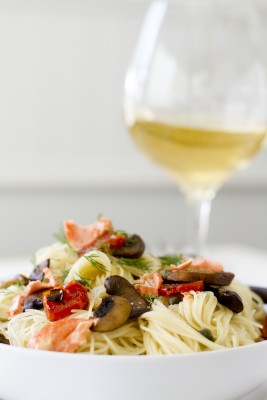
Chardonnay Salmon PastaThe Soundbyte:  Chardonnay may very well be the world’s most widely recognized white grape variety.  It was very likely the first wine you ever heard of, and what you will most likely be served if you order a glass of “white wine” at a cocktail party.  The grape itself is quite neutral, but can be transformed via wine making magic into an oak-infused butter bomb, a crisp, citrus-and-mineral balancing act, or even Champagne!  There’s a lot to be said about the chameleon-like grape known as Chardonnay!

Typical Attributes of a Chardonnay-Based Wine:

  • Creamy, complex, high alcohol and lush flavors.
  • The fruity aromas wary widely depending on the climate.
  • The grape itself can be called “delicate” in aroma and flavors, but Chardonnay is very susceptible to the influence of the winemaker. As such, this naturally neutral grape can be laden with aromas and flavors of oak, butter, cream, yeast, and vanilla—among others—during the processes of production and aging.
  • Typical attributes of a European (sometimes called Chablis Style) Chardonnay: crisp, medium-bodied, terroir-driven, fruity, and mineral
  • Typical attributes of a New World (sometimes called California Style) Chardonnay:  full-bodied, highly alcoholic, likely oak-aged, and (often) buttery
  • Chardonnay is also used in Sparkling wines, including Champagne, Franciacorta, and many sparkling wines from California, Oregon, Australia, and South Africa

Typical Aromas of a Chardonnay-Based Wine:

  • Fruity:  Green Apple, Red Apple, Baked Apple, Pear, Peach, Apricot, Pineapple and Other Tropical Fruits, Citrus:  Lemon, Lime, Orange
  • Caramel: Honey, Butterscotch, Caramel, Brown Sugar
  • Nutty: Hazelnut, Toasted Hazelnut, Walnut
  • Yeast-Derived: Toast, Baked Bread, Oatmeal, Popcorn
  • Butter (from malo-lactic fermentation…of course!)
  • Mineral: Flint, Wet Stone, Wet Sand
  • Oak-Derived: Vanilla, Coconut, Sweet Wood, Oak, Smoke, Toast, Tar

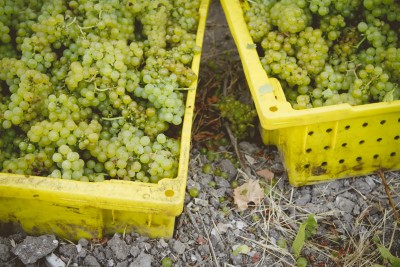
Chardonnay HarvestWhere Chardonnay is Grown:

  • The Burgundy Region of France, notably Côte de Beaune, Chablis, Côte Chalonnaise, and Mâconnais
  • The Champagne Region of France
  • Other regions of France such as Alsace (where it is only allowed to be used in sparkling wines) and the Languedoc-Roussillon
  • California, where it is grown in many diverse regions and produces a wide range of styles
  • Oregon, where it shines in both still wines and sparklers
  • Australia, where it is a leading white wine grape
  • New Zealand, where it is the #2 white wine grape after Sauvignon Blanc
  • The cooler regions of Chile
  • Franciacorta and other regions in Italy
  • Canada, including Ontario, Quebec, and British Columbia
  • And…almost anywhere wine is grown!

Food Affinities – Base Ingredients:

  • Seafood of all kinds
  • Crab Cakes, Lobster, Shrimp dripping with butter and garlic…
  • Chicken, Turkey, Game Hen, Duck
  • Roast Chicken…Roast Chicken…Roast Chicken
  • Veal, Pork…Beef.  (About that beef…be careful with the preparation. As certainly as the heavier bodied white wines, including Chardonnay, can pair with beef, that does not mean that it is a good substitute for red wine in every case.   Keep your dishes plain and simple, seasoned with herbs, mushrooms, or grilled onions.  Unless you want to hurt someone, avoid Texas Chainsaw Barbeque Sauce and other condiments that are over-the-top rich and heavy in flavor, texture, sweetness, or spiciness with Chardonnay. Trust me on this one.)

 Roasted Chicken for ChardonnayFood Affinities – Bridge Ingredients:

  • Corn, Pumpkin, Squash, Polenta
  • Tarragon, Basil, Thyme, Oregano and other fresh herbs
  • Soft cheeses such as Brie or Camembert (especially good with unoaked versions)
  • Semi-firm cheeses such as Havarti, Monterey Jack, Muenster and Gouda. Smoked versions of Gouda are especially good.
  • Firm cheese such as Swiss, Emmentaler, Gruyère, Manchego, and Jarlsberg
  • Nutmeg, Cinnamon, and Allspice (but resist the temptation to go sweet…think savory…savory…savory…)
  • Hazelnuts, Cashews, Walnuts, Pecans, Coconut (savory…savory…savory…)
  • Butter, Brown Butter, Cream, Sour Cream, Olive Oil
  • Bacon, Ham, and other cured pork products
  • Mushrooms, Onions, Garlic
  • Dijon Mustard (think about it…where is the town of Dijon?  hmmmm….)

Note: When it comes to food pairings, by all means—drink what you like!
The Bubbly Professor is…”Miss Jane” Nickles of Austin, Texas   missjane@prodigy.net

The Sweet White Wines of La Rioja (the Misfit Series)

One might not expect to find sweet, flowery white wines produced in Rioja—a region known for sturdy, Tempranillo-based red wines. However, if you look close enough, you’ll find them. Here they are—defined by the Valles de Sadacia Vino de la Tierra (VdlT/PGP) designation—sweet, floral-scented, golden-hued wines produced side-by-side with the robust red wines of the Rioja DOCa.

The Valles de Sadacia VdlT territory overlaps with the Rioja DOCa, covering the eastern portion of the area and including the Cidacos, Iregua, Leza, and Alhama River Valleys. All of these rivers are tributaries of the eastward-flowing Ebro River, famous for carving out the larger Ebro River Valley.

Fine wines have been produced in (the area now known as) La Rioja since the time of the Roman Empire. By 1635, the mayor of Logroño took it upon himself to protect the wines of the area by passing a law making it illegal to drive carriages past the storage warehouses, for fear that “the vibrations generated by its passage can harm the precious juice and its upbringing.” In 1787, the Real Sociedad Económica de Cosechero de Rioja was created in order to promote and protect the wines of the area and the rest, as they say, is history.

Throughout this long history of wine production, the leading grapes of the region included Tempranillo, Mazuelo, Graciano, Garnacha, Viura, and Malvasia—much as they do today. However, Moscatel—then known as Moscatel Común (Common Moscatel) or Moscatel de la Tierra—was also widely planted and used to produce a range of white wines, including sweet white wines and mistela (a type of sweet, fortified wine made by mixing unfermented or barely fermented grape must with distilled spirits).

Unfortunately, plantings of Moscatel did not fare well in the time following phylloxera, and when the Rioja DOC—later re-invented as the Rioja DOCa—was codified, Moscatel was not included as a permitted variety. The Valles de Sadacia Vino de la Tierra designation was approved in 2003, part of an effort to preserve the history and tradition of these once-famous sweet white wines. The name is based on the term Sadacia—the Roman name for the Cidacos River.

References/for more information:

The Bubbly Professor is “Miss Jane” Nickles of Austin, Texas… missjane@prodigy.net

Five Fast Facts about Sonoma Creek

Sonoma Creek is dwarfed—in length and volume as well as fame—by the nearby Napa River. However, this small-but-mighty creek makes its mark in the southwest corner of Sonoma County in a very big way. Read on to ponder five fast facts about Sonoma Creek!

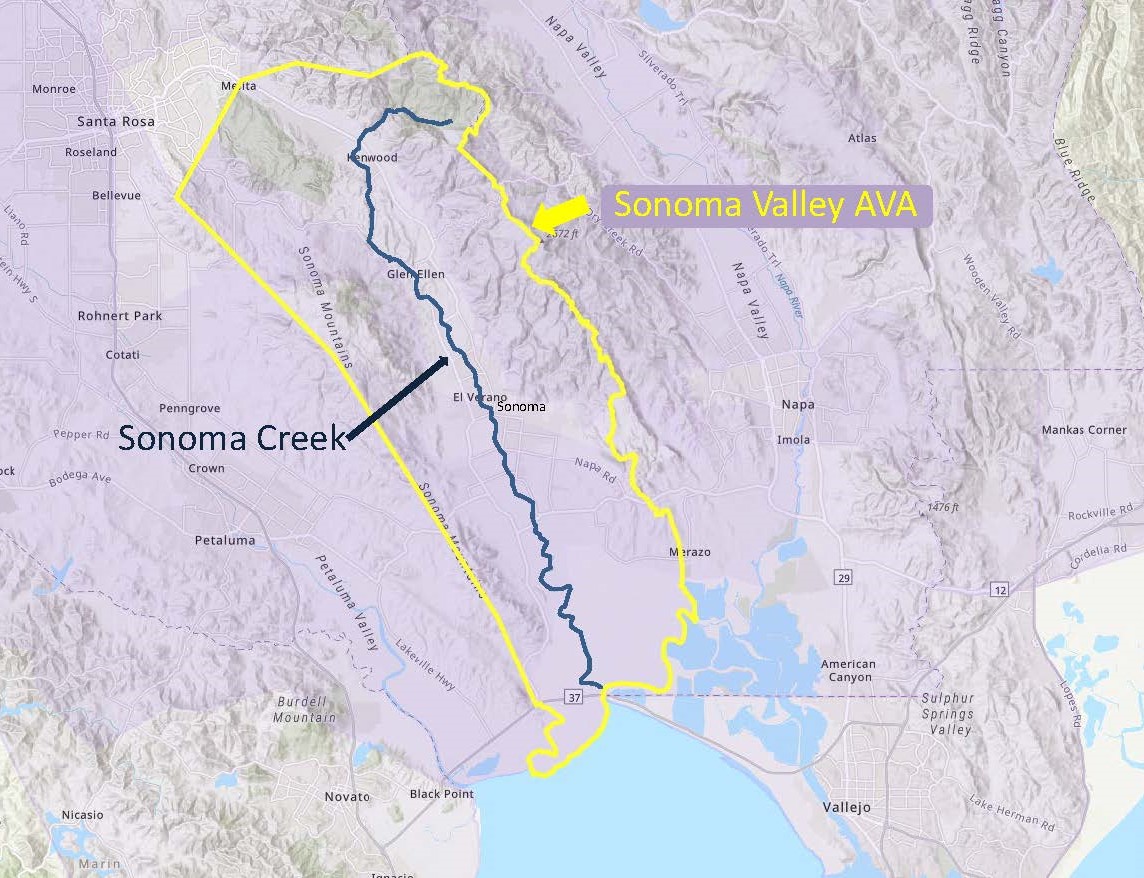
#1: From its source on the west side of the Mayacamas Mountains—Sugarloaf Ridge State Park to be exact—Sonoma Creek measures about 33 miles/54 km in total length. After running (mostly) west for about 3 miles/5 km, the creek takes a turn and flows to the south/southwest through Sonoma Valley before emptying into San Pablo Bay.

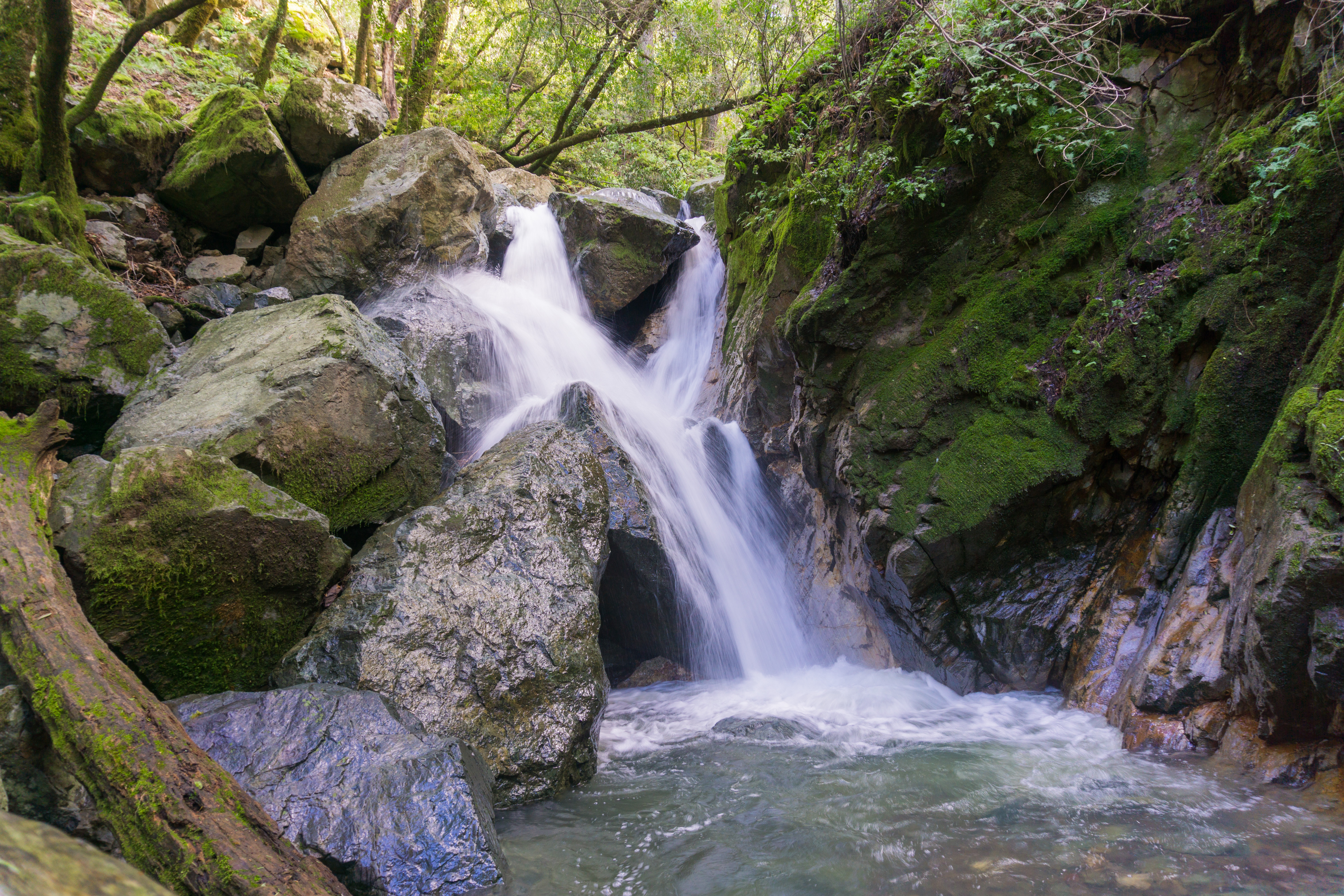
#2: There is a waterfall! Sonoma Falls is tucked into Sugarloaf Ridge State Park, near the source of the creek. The park is located a short (3-mile/5-kilometer) drive from Kenwood—just turn east off of Sonoma Highway onto Adobe Canyon Road. From the park’s visitor’s center, you can take any one of several short hikes to Sonoma Creek Falls. The falls are somewhat seasonal, but if you catch it during winter, spring, or after a storm, you are likely to be rewarded with the soothing sound of falling water. At its most lively, Sonoma Falls is multi-tiered and can cascade as much as 20 feet/6 meters.

Sonoma Falls (on a good day)

#3: Some of the best-known wine towns in the Sonoma Valley AVA are located directly on Sonoma Creek. The bucolic wine country towns of Kenwood, Glen Ellen, El Verano, and (the town of) Sonoma are located directly on the creek. Dozens of wineries are situated just a few miles from the creek (or even closer)—check out Buena Vista, Kunde Family Winery, Kenwood Vineyards, and Sangiacomo Family Wines.

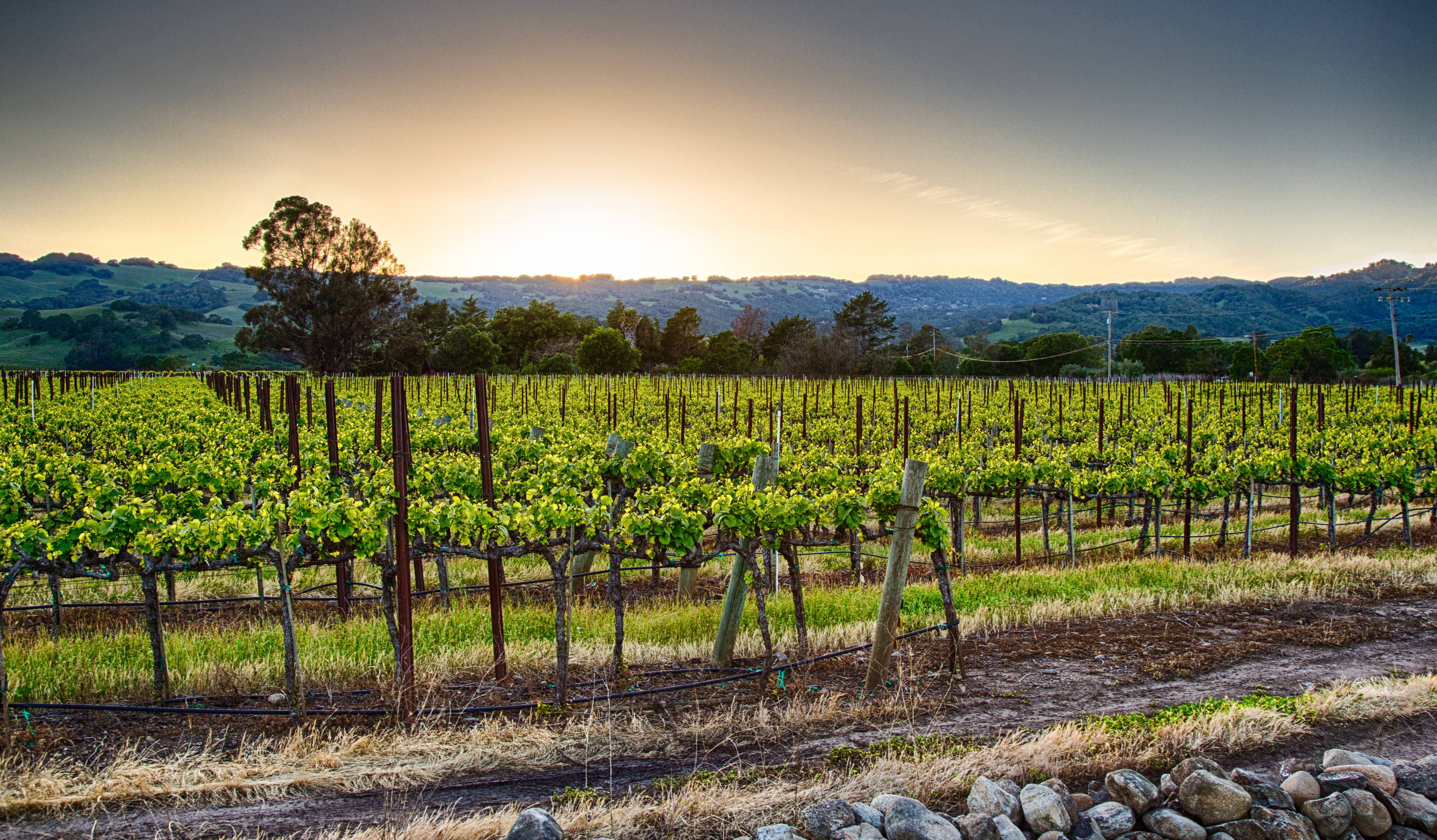
#4: The Sonoma Creek Watershed is located entirely within the Sonoma Valley AVA. Surrounded by the vineyards of the Sonoma Valley AVA, Sonoma Creek is fed by waters that flow from the very mountains that define the appellation’s boundaries. The Mayacamas—located along the appellation’s eastern boundary—give rise to the headwaters of the creek itself as well as several tributaries including Bear Creek and Calabazas Creek (just north of the town of Glen Ellen). The Sonoma Mountains—forming the northern and western edge of the region—give rise to Yulupa Creek (sourced along the eastern slope of Bennet Mountain), Graham Creek, and Fowler Creek.

#5: Sonoma Creek is one of the three main bodies of water that course through (and drain) the southern portion of Sonoma County. The southern section of Sonoma County is drained by Sonoma Creek, the Petaluma River, and Tolay Creek. The 18 mile-/29 km-long Petaluma River rises in a series of small hills located between the towns of Cotati and Petaluma. After flowing directly through the town of Petaluma, it forms part of the border between Sonoma and Marin County before emptying into San Pablo Bay. Tolay Creek—located between the watershed of Sonoma Creek and the Petaluma River—rises from Tolay Lake (itself located in a narrow ridge near the southern edge of Sonoma Mountains). Somewhat seasonal, Tolay Creek flows in a southerly direction for 12.5 miles/20 km towards San Pablo Bay.  For the last 2 miles/3 km of its run—after it passes underneath Highway 37—Tolay Creek marks the western boundary of the Sonoma Valley AVA.

References/for more information:

The Bubbly Professor is “Miss Jane” Nickles of Austin, Texas… missjane@prodigy.net

Confusion Corner: Corbières, Cabardès, Cabrières

The corner of France known as the Languedoc currently contains no less than 21 appellations (protected designations of origin for wine/AOCs). A few of these AOCs also include a long list of sub-appellations, including the Languedoc AOC, home to 11 sub-appellations (better known as “geographic designations” and often referred to as “crus”).

That’s already confusing for a wine lover. It gets even more mind-boggling when we consider that three of them are named as follows: Corbières, Cabardès, and Cabrières. Read those again: Corbières, Cabardès, and Cabrières. Although they may sound alike (at least to my ear), they are indeed three different regions, and while I have them grouped firmly together in the part of my brain I call confusion corner, they all deserve a flashcard (or two) all on their own. Let’s see what those flashcards might say:

Corbières: The Corbières AOC—one of the biggest and best-known appellations of the Languedoc—is a large, somewhat-squared shaped region stretching nearly 37 miles/59 km across, from the coastal plain just south of the town of Narbonne into the foothills of the Pyrenees. The eastern/coastal area tends the be the warmest section, made so by the moderating influences of the Mediterranean Sea and two large lagoons—the Étang de Bages and the Étang de L’Ayrolle. The hillier areas—along the area’s southern and western edges—are cooler due to altitude and benefit from the diurnal temperature variations often enjoyed on hillside vineyards.

The Corbières AOC is home to over 2,000 commercial vineyards, covering as much as 33,000 acres/13,500 ha. Red wine is the superstar here; about 85% of the total production is red wine; the remainder consists of rosé (about 12% of the total) and white (3% of the total).

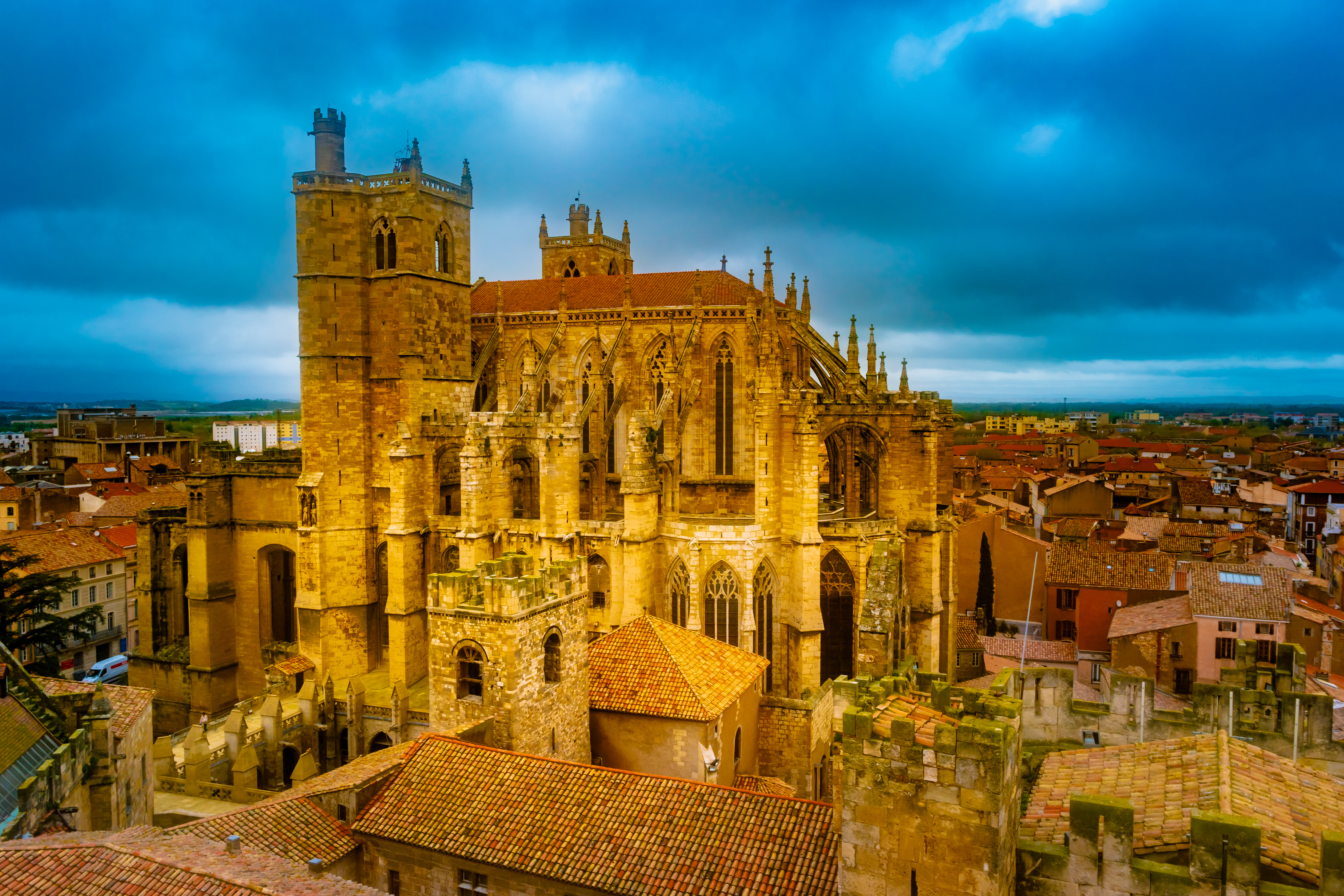
Cityscape of Narbonne

Red wines produced in the Corbières AOC are produced using the (somewhat) typical red grapes of the Languedoc, being based around Grenache, Mourvèdre, Syrah, Lladoner Pelut, and Carignan. Rosé is produced using the same base blend of grapes, but more often contains a bit of the accessory varieties (Piquepoul Noir, Grenache Gris, Terret Noir, and Cinsault) as well as a maximum 10% of the region’s white grapes. Both red wines and rosé must contain at least two grape varieties in the blend.

A long list of white grapes is allowed for use in the somewhat rare white wines of the Corbières AOC; these include Bourboulenc, Grenache Blanc, Marsanne, Macabeo, Roussanne, and Vermentino (among others).

Cabardès: The small-production Cabardès AOC is located just to the north of historic walled city of Carcassonne, just a few miles/kilometers to the northwest of Corbières.  Cabardès—situated to the north of the Aude River—is tucked into the foothills of the eastern edge of the Massif Central in a small mountain range known as the Montagne Noire (Black Mountains).

Carcassonne

The location of the Cabardès AOC places it somewhat at the crossroads of the Languedoc (to the east) and Southwestern France (to the west). These dueling influences are seen in the list of approved grapes available for use in the region’s wines. The wines—only red and rosé may be produced—required a minimum 40% (combined) Grenache and Syrah (typical Mediterranean varieties) as well as a minimum of 40% (combined) Cabernet Sauvignon, Cabernet Franc, and/or Merlot (typical Atlantic or Bordeaux varieties).

Cabrières: Cabrières is one of the eleven subregions of the Languedoc AOC; as such, wines from the region may be labeled as “Languedoc–Cabrières AOC.” The appellation coincides with the commune of the same name, located along Hérault River (in the Hérault Department) about 50 miles/90 km northeast from Carcassonne. This area is located about 20 miles/32 km inland from the Mediterranean Sea and the Étang de Thau (Thau Lagoon). The village of Cabrières is located in a hilly area on the southwestern edge of the Massif Central within a small mountain range known as the Montagne Noire (Black Mountains); many of the prime vineyards are planted to south- or southeast-facing slopes.

Vineyards surrounding Carcassonne

The Languedoc–Cabrières AOC is approved for red and rosé wines only. Both styles of wine are made from the “typical” red grapes of the Languedoc, and must contain a minimum of two grape varieties, with no one grape comprising more than 65% of the blend. Red wines must contain a minimum 50% of Grenache and/or Syrah with the remainder comprised of Mourvèdre, Cinsault, and/or Carignan. Rosé is a bit more complicated, requiring a minimum of 30% Cinsault, a minimum of 20% Grenache, and a maximum Mourvèdre and/or Syrah. A long list of accessory varieties (including some white grapes, capped at 10%) is also allowed for the rosé.

Note: Rumor has it that the wine makers of Cabrières are in the process of applying to become a separate appellation (AOC). This should come as no surprise as former sub-appellations of the Languedoc AOC have been declared separate appellations several times in the past decade. Examples include Pic-Saint-Loup, La Clape, and Terrasses du Larzac. We shall see what the future holds for Cabrières!

References/for more information:

The Bubbly Professor is “Miss Jane” Nickles of Austin, Texas… missjane@prodigy.net

(More) Travel Daydreams: The Wines of Mallorca

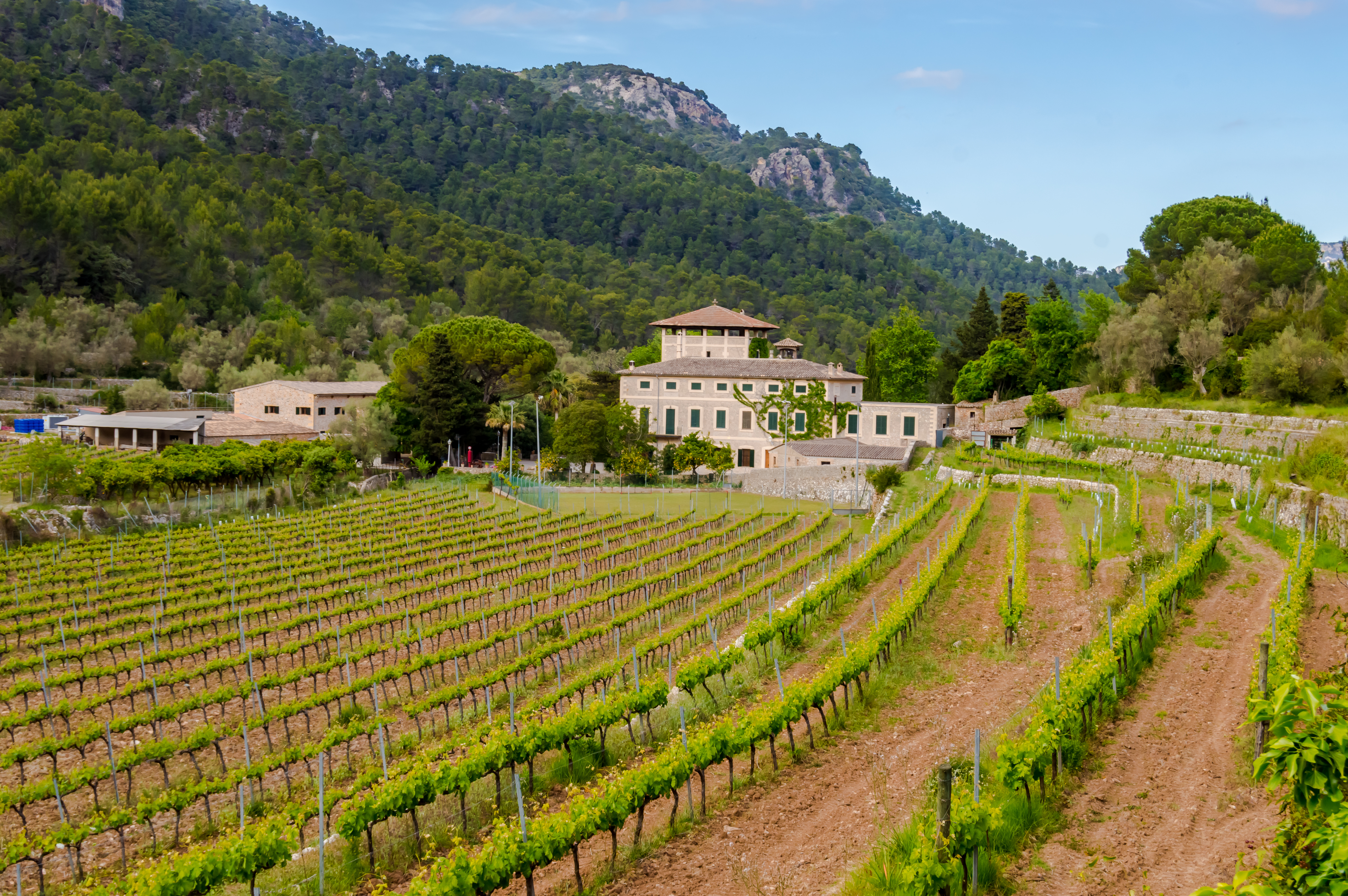
Vineyards in the Binnisallem DO

Lately, I have been indulging in a bit of travel daydreaming focused on the beautiful Spanish island of Mallorca. Last week, we published an article about the (distilled) spirits of the island. This week, I’d like to rhapsodize a bit about the island’s wines, despite the fact that they are not widely seen outside of Europe—remember, this is a travel daydream after all.

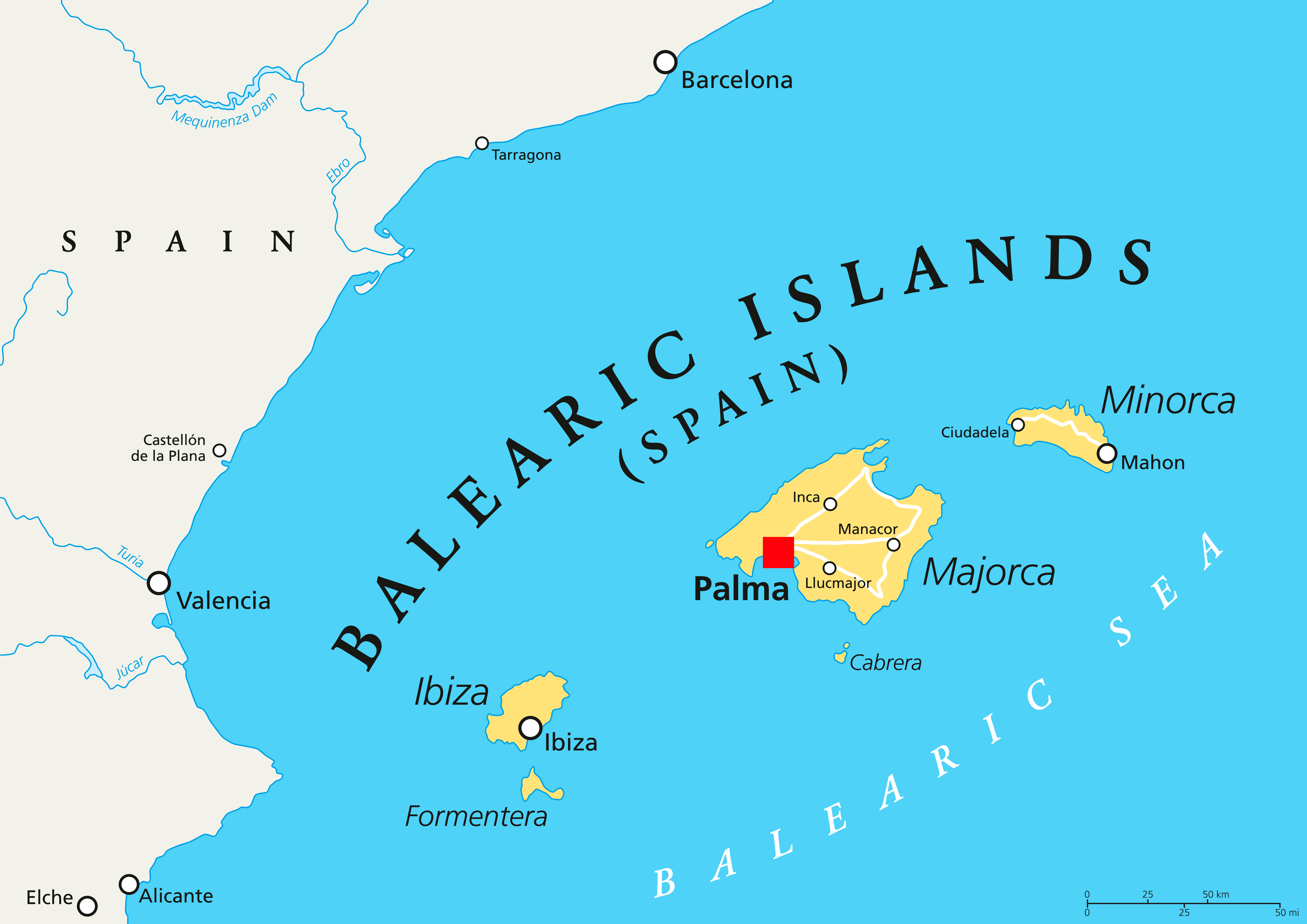
Mallorca is home to two PDO (protected designation of origin) wine regions, and two designated as VdlT (vino de la tierra/PGI/protected geographical indication). The island produces red, white, rosé, and sparkling wines from a range of grape varieties, including many that are indigenous to the Balearic Islands as well as some better-known Spanish and international varieties.

As the character of a wine truly begins with the land in which the grapes are grown, let’s start with the island’s terroir.

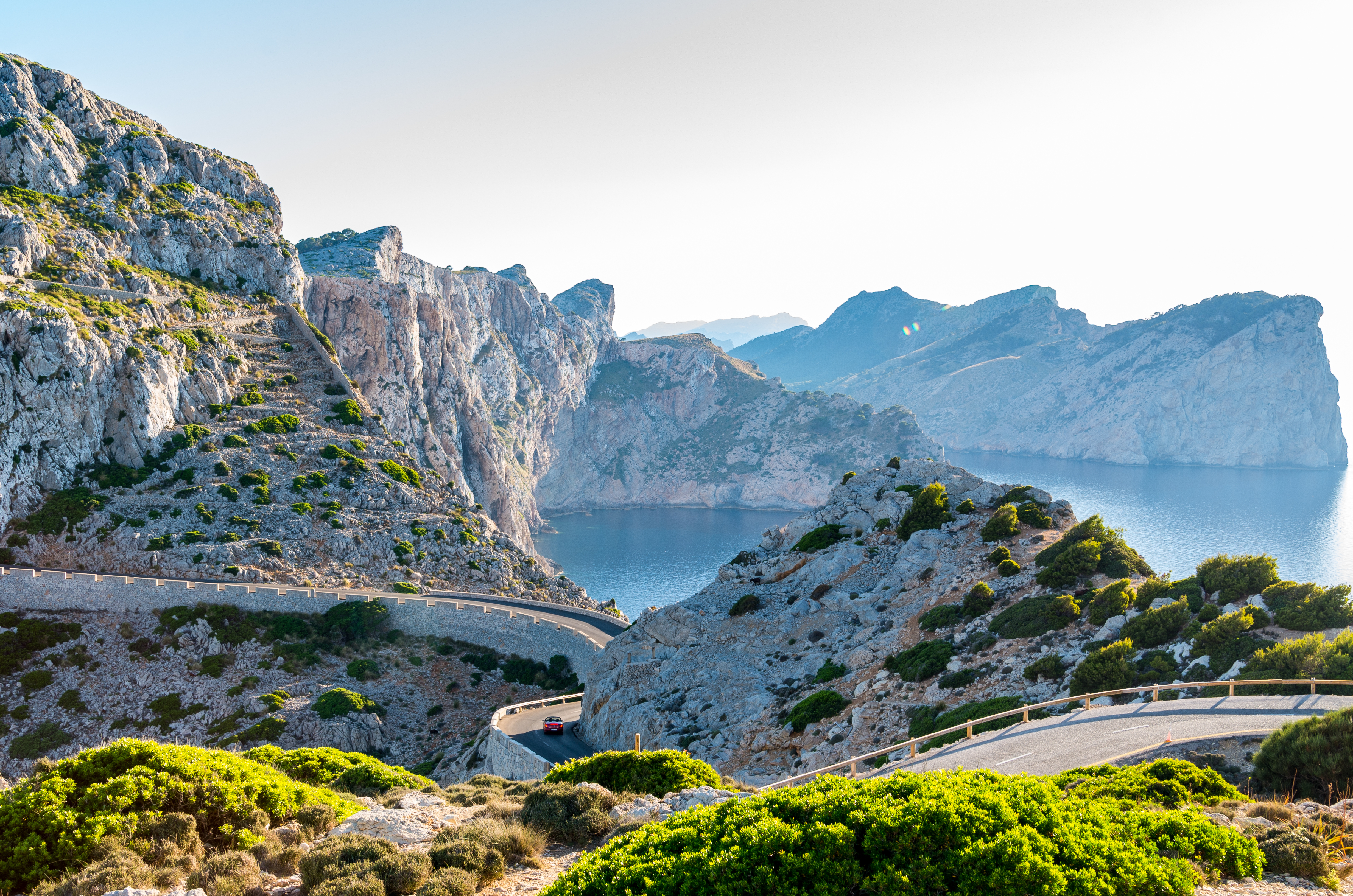
Winding roads through the Cap Formentor (on the northern coast of Mallorca)

The Terroir of Mallorca: As befits an island sitting on the 39th parallel (145 miles/230 km off the east coast of Spain), Mallorca enjoys a Mediterranean climate with sunny, warm-to-hot summers and mild winters. December and January can be quite rainy, especially on the northern coast.

The Serra de Tramuntana Mountain Range—including the Puig Major, topping out at 4,711 feet/1,436 meters above sea level and the highest point of the island— runs parallel to the northern edge of the island. The northern coastline is rugged, rocky, and punctuated by sweeping bays, caves, and sandy beaches.

The southern portion of Mallorca is covered by the Serra de Llevant mountains; these are not as tall nor as rugged as the mountains on the northern side of the island. The flat, fertile area in the middle—much of it covered with olive, almond, and citrus orchards in addition to vineyards—is the Es Pla (central plains).

The Binissalem DO: The Binissalem DO is located on a plateau of rolling hills just south of the Tramuntana Mountains and otherwise surround by the island’s central plain (Es Pla). Elevation ranges between 820 and 990 feet/250 to 300 meters above sea level. The DO is named for the small town of Binissalem, which serves as the center of the area’s wine industry.

The Binissalem DO—while approved for several different types of wine—focuses on red wines produced on the Manto Negro (Mantonegro) variety. Manto Negro—known for producing lightly-colored red wines with flavors of red and black fruit alongside velvety tannins—is believed to be indigenous to the region; almost all of the 791 acres/320 ha known to be in existence are here on the island of Mallorca. Red wines of darker color, richer flavor, and extended longevity are also produced; these styles typically combine the legally required minimum 30% Manto Negro with Callet, Tempranillo, Monastrell (Mourvèdre), Cabernet Sauvignon, Merlot, Syrah, and/or Gorgollassa (another indigenous red variety).

The white wines of the Binissalem DO —mostly dry but including off-dry and sweet styles—are produced using at least 50% Moll. Moll—also known as Prensal Blanc—is native to the Balearic Islands and grown all over Mallorca (albeit in small amounts; at last count, there are only about 160 acres/65 ha planted on the island). Moll tends to produce neutral-tasting, low-acid wine, but can contribute to a fruity, floral, and lively wine when blended with the island’s plentiful Moscatel Grano Menudo (Muscat Blanc à Petits Grains) and/or Moscatel de Alejandria (Muscat of Alexandria) grapes.

The Binissalem DO is also approved for the production of rosé and sparkling wine; details may be found in the pliego de condiciones (linked below).

The Pla i Llevant DO: The Pla i Llevant DO covers a good portion of the center and southern half of the island. In this context, the name makes sense, as it includes the island’s central plains (Es Pla) and Llevant Mountain Range.

The focus here is on red wines, with approximately 66% of the region’s 475 hectares/1,200 acres of vines planted to red grapes. The leading grape varieties are Merlot and Cabernet Sauvignon, but traditional varieties—including Manto Negro, Fogoneu, Callet, and Gorgollassa—play an important role as well. Monastrell (Mourvèdre), Tempranillo, Syrah, and Pinot Noir are also present.

The red wines of the Pla I Llevant DO are typically blends, and there are no minimum or maximum standards for particular grapes—any single grape or blend of the approved varieties may be used. This makes for some interesting wines!

The white wines of the Pla i Llevant DO are also allowed to be crafted from any single grape and/or blend of the approved varieties. The most widely grown white grapes include Moll/Prensal Blanc, Chardonnay, and Moscatell (Muscat); these are followed by Giro Ros (a native pink-skinned variety), Viognier, Parellada, Macabeo and Riesling.

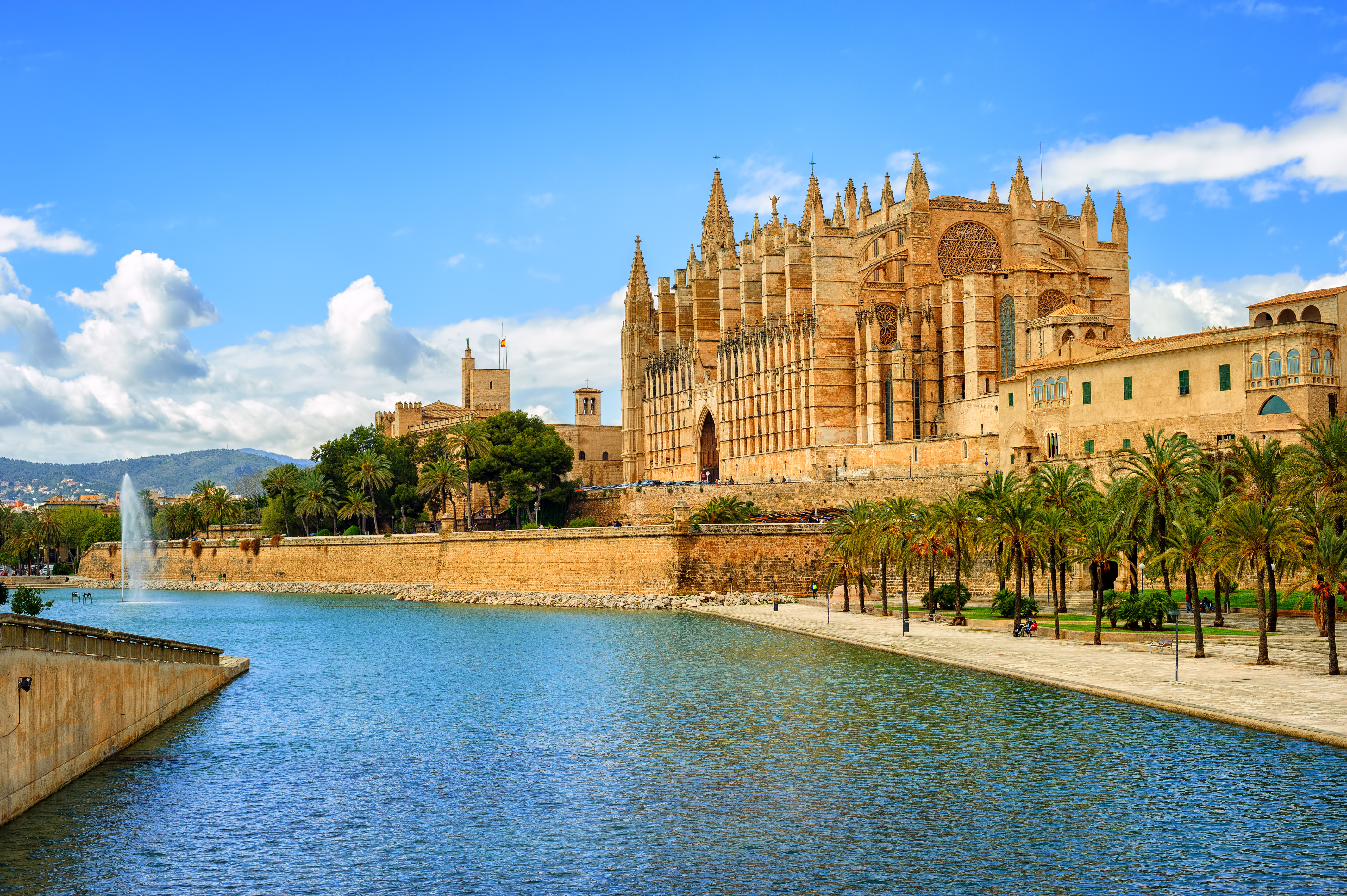
La Seu—the Cathedral of Palma de Mallorca

The Pla I Llevant DO is also approved for the production of rosé, fortified wine (vino de licor), sparkling wine, and semi-sparkling wine (vino de aguja); details may be found in the pliego de condiciones (linked below).

Vinos de la Tierra: Mallorca is also home to two Vinos del la Tierra (VdlT/geographical indications for wine): Vino de la Tierra Mallorca and Vino de la Tierra Serra de Tramuntana-Costa Nord. The Vino de la Tierra Serra de Tramuntana-Costa Nord covers the north coast of the island and the Tramuntana Mountains; the Vino de la Tierra Mallorca appellation covers the entirety of the island. Both Vino de la Tierra regions are approved for red, white, and rosé wines; a long list of grape varieties are allowed; however, the emphasis is on the indigenous varieties including Callet, Manto Negro, and Prensal Blanc/Moll.

Road trip, anyone?

References/for more information:

The Bubbly Professor is “Miss Jane” Nickles of Austin, Texas… missjane@prodigy.net

Travel Daydream: The Spirits of Mallorca

These days, I am doing most of my traveling in my mind, but when I am able, I will be on the next flight to the Spanish island of Mallorca (sometimes called “Majorca” in English). Mallorca and the other Balearic Islands are located about in the Mediterranean Sea, 150 miles/240 km of the coast of Spain.

In addition to the pristine beaches (check out Cala Agulla on the island’s east coast), the cities (check out the sophisticated capital—Palma de Mallorca—or the old town of Alcúdia), and a plethora of amazing activities (you can catch an underground concert in the Caves/Cuevas del Drach)—Mallorca has an amazing local food scene. You’ll want to try Sobrassada (spicy sausage), Trampó (a salad made with local tomatoes, green peppers, and olive oil), and Ensaimadas (a spiral-shaped sweet pastry enjoyed at breakfast or as a snack). The island is also known for several specialty spirits, including two that have been recognized as iconic products of the region.

Here are some details on the spirits of Mallorca:

Palo de Mallorca is a bitter liqueur with a protected geographical indication (GI) for Mallorca since 1989. It is typically served as an aperitif with a bit of soda water and ice. This popular tipple is known as Palo con Sifón, as in “palo with sparkling water spritzed from a siphon.”

Palo de Mallorca is made from an infusion of the quinine-containing bark of the Cinchona tree (quina) and gentian root. These botanicals are bitter-tasting and flavorful, and known to be a preventative and remedy for fevers, malaria, and other maladies. Like most bitters, Palo de Mallorca was first produced as a form of herbal medicine. Sweeteners and caramel coloring were added by later generations to make it more palatable and led to its popularity as an aperitif and for use in cocktails.

Palo de Mallorca is bottled at a minimum of 25% abv and is intended to have a bitter taste balanced by sweetness. It is dark brown-to-almost black in color and shows aromas and flavors of licorice, dried herbs, and caramel. At last count, there were eight brands of Palo de Mallorca in production. Of these, the best known include Tunel, Limsa, Dos Perellons, and Vidal. Alas, to purchase Palo from a store, you’ll most likely need to travel to Europe (but it should be available via online retailers).

The name—palo—translates to “stick,” but is based on palo quina—the island’s traditional name for quina bark.

Herbes de Mallorca is produced using a base of an anise-flavored spirit and infused with other aromatic plants grown on the island of Mallorca. Typical flavorings include lemon verbena, chamomile, rosemary, fennel, and lemon balm as well as local citrus fruit (lemon and orange). Herbes de Mallorca was awarded a protected geographical indication (GI) for Mallorca in 2008.

Herbes de Mallorca may be bottled unsweetened (dry), or with varying degrees of sugar (up to 300 g/L). Dry versions are bottled with a minimum of 35% alcohol by volume, while sweet versions require at least 20% abv.

Herbes de Mallorca has a clear appearance with colors ranging from amber to vivid green. Aromas and flavors are typically described as a combination of anise (licorice), green herbs—fresh and intense), citrus (lemon and orange), and mild floral undertones.

The production of spirits infused with herbs on Mallorca. It is believed that it can be traced back to the establishment of a series of Christian monasteries all around the island in the 13th century. The popularity of the drink soared in the 19th century, when just about every farmer—and many householders—produced their own versions of Herbes de Mallorca.

These days, Herbes de Mallorca is enjoyed as an aperitif or digestif—often on the rocks, with or without a shot of soda water—or as a shot (chupito). A popular cocktail known as Agua de Mallorca combines it together with kiwi fruit (grown on the island) and soda water. Figs—another specialty of Mallorca—are often dried and soaked in Herbes de Mallorca to make a well-preserved and tasty snack.

Herbes de Mallorca is available in the larger wine and spirits markets of the United States or via online retailers. Popular brands include Tunel, Morey, and Mezcladas de Mallorca.

Palma de Mallorca—the island’s capital city

Note: Herbes de Mallorca is the Catalan spelling; the Spanish verion—Hierbas de Mallorca—is also used.

While they are not widely seen outside of Europe, Mallorca also produces a good deal of wine. Check back next week for a post about the wines of Mallorca!

References/for more information:

The Bubbly Professor is “Miss Jane” Nickles of Austin, Texas… missjane@prodigy.net

Between Montalcino and Montepulciano: The Orcia DOC

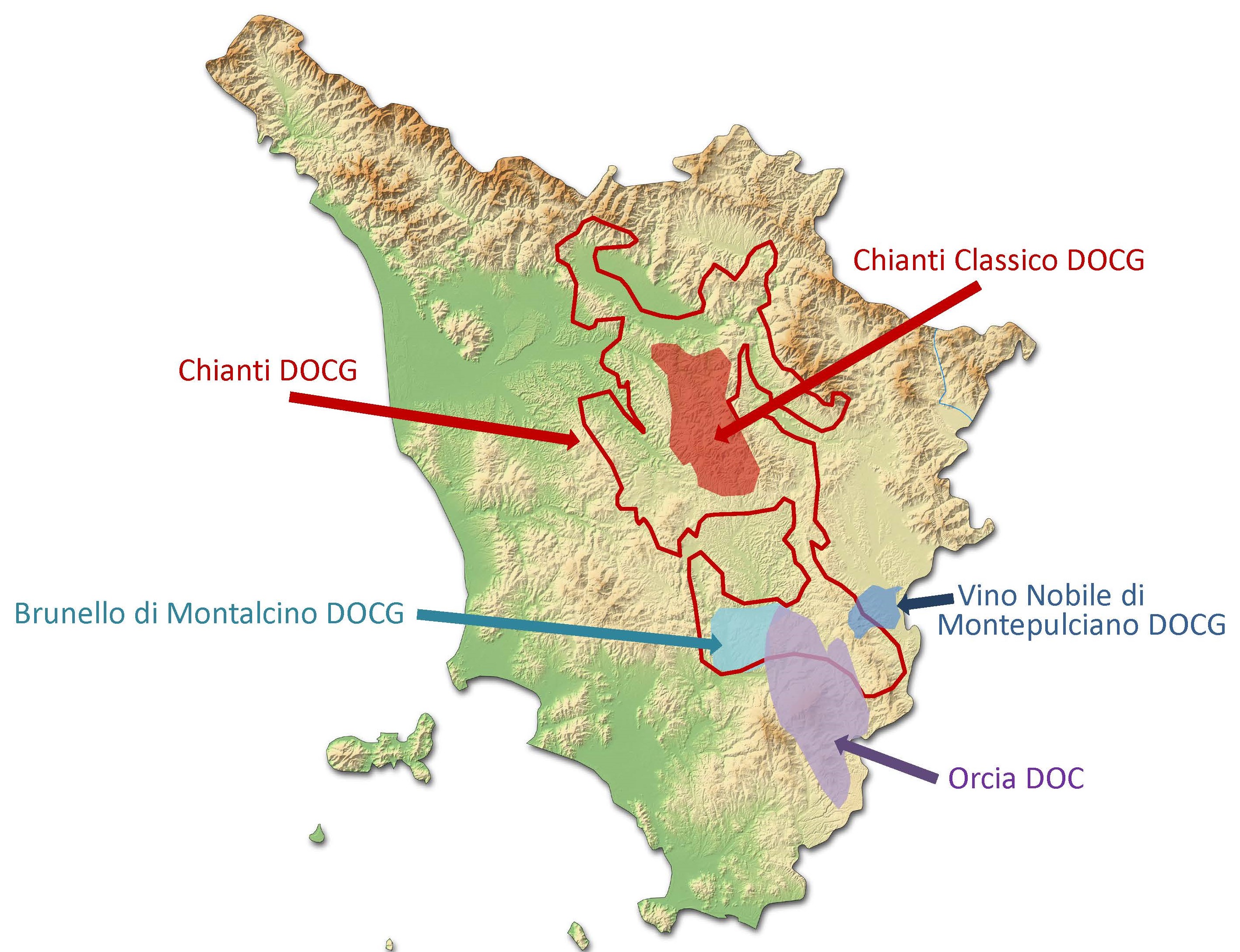
It shares a border with Brunello di Montalcino and overlaps a portion of the Chianti DOCG. It lies just a few miles to the west of the vineyards of Vino Nobile di Montepulciano and is one of Tuscany’s seven UNESCO heritage sites. Yet…you have probably barely heard of this region.

Any guesses?

It’s the rolling hills of the Val d’Orcia (Orcia Valley) and the wines of the Orcia DOC. Located in the rural southern reaches of Tuscany, the Val d’Orcia is dotted with oak forests, castles, wheat fields, olive orchards, and vines.  The road leading to one of its medieval towns—Montichello—is (literally) the picture-postcard view of a Tuscan winding road lined with Cypress trees (check out the photo and you’ll see what I mean).

The Val d’Orcia is tucked into the area south of the hills of the Colli Senesi (the hills of Siena) in the area between the appellations of Montalcino and Montepulciano. Its namesake—the Orcia River—flows through the center of the region and forms a portion of the southern border of the Brunello di Montalcino DOCG before it runs into the Ombrone River and makes its way into the Tyrrhenian Sea.

The Val d’Orcia is made up of picturesque small towns including Bagno Vignoni (and its famous hot springs), Radicofani (and its impenetrable 10th century fortress), and Pienza (the idealized City of Pious, built to the exacting standards of Pope Pious II in 1459). The region is a bit too rustic for normal state-sponsored train service, but locals and tourists alike are happy to ride the 19th century steam engine train connecting the town of Asciano with the Castle of Monte Antico.

In addition to its fascinating history and beautiful vistas, the area is known for its wine. Under the Orcia DOC, several styles of wine are produced, including the following: 

The Chapel of the Madonna di Vitaleta in San Quirico d’Orcia

Orcia Rosso and Rosato: dry red or rosé wine produced using a minimum of 60% Sangiovese; up to 40% of “other non-aromatic red grapes approved for cultivation in Tuscany” are allowed; up to 10% white grapes may be included in the mix.

Varietal Sangiovese is also allowed, using a minimum of 90% Sangiovese grapes; up to 10% (combined) Canaiolo Nero, Colorino, Ciliegiolo, Foglia Tonda, Pugnitello, and/or Malvasia Nera is allowed

Orcia Bianco: dry white wine produced using a minimum of 50% Trebbiano Toscano; up to 50% of “other non-aromatic white grapes approved for cultivation in Tuscany” are allowed

Vin Santo: off-dry to sweet white wine (based on Trebbiano Toscano and/or Malvasia Bianca), grapes must be dried to a minimum of 26% sugar post-harvest; must be aged in small wooden barrels until November 1 of the third year following the harvest (or longer)

While you are on your road trip through the Val d’Orcia, you’ll want to sample some of the local foods along with all that local wine. The area is known for thick, hand-rolled pasta known as pici or lunghetti, white truffles, Chianina Beef (the “white giants” of the cattle world), and Pecorino Cheese. You won’t go hungry or thirsty, and there is no chance you will get bored. Road trip!

References/for more information:

The Bubbly Professor is “Miss Jane” Nickles of Austin, Texas… missjane@prodigy.net


Five Fast Facts about Saint-Pourçain

Saint-Pourçain—one of the five AOCs often described as the appellations of Central France—is an obscure appellation located in the Allier Department. Even though its wines are not typically found outside of Western Europe—the area is planted to a mere 1,480 acres/600 ha of vines—the region holds a fascination all its own. Read on for some interesting tidbits about the little-known Saint- Pourçain AOC.

#1—Saint-Pourçain is considered one of the oldest vineyards in France. Like many regions in France, the wines of Saint-Pourçain are well-documented from the start of the Middle Ages and are known to have received some notoriety in pre-revolutionary France. However, viticulture in Saint-Pourçain and throughout the (present-day) Allier Department can be traced back to the time of the Romans. Some people even believe that viticulture in the area dates as far back as the Phoenicians (pre-BCE), who founded the colony of Cantilia in the present-day commune of Chantelle.

Statue of Saint Pourcain in the Église de Monestier via Wikimedia Commons

#2—There was an actual Saint. Saint Pourçain—also known as Portianus—lived in the area sometime in the sixth century. A former slave—freed from a brutal master during the Roman occupation of Gaul—he lived as a hermit and founded a monastery on the banks of the Sioule River. He is credited with performing many miracles that benefited the inhabitants of the area—including restoring the sight of his blind owner, which led to his freedom. Another miracle involved giant serpents emerging from an amphora of wine and the subsequent release of a group of prisoners. It is said that Portianus/Pourçain was so beloved that at the time of his death (circa 532) the people of the area changed the name of their town from Mirendense to Saint Pourçain.

#3—The appellation is named after the town of Saint-Pourçain-sur-Sioule. Located near the geographic center of France, Saint-Pourçain-sur-Sioule lies just to the west of the Allier River. The Sioule River (a left tributary of the Allier) flows—from its source in the Massif Central—north/northeasterly directly through the town; it joins the Allier about 10 km/6 miles beyond its northern edge.

#4—Saint-Pourçain is sometimes considered a “lost vineyard of Burgundy.” In many reference books, the appellations of Central France—including the Saint- Pourçain AOC—are grouped with the other appellations of the Loire (Sancerre and the other appellations of the Eastern Loire are located about 75 miles/120 km to the north). However, it can be argued that the only true connection between the appellations of Central France and those of the Loire Valley is the river itself. On the other hand, in terms of landscape, architecture, terroir, and even the wines themselves, Saint- Pourçain has more in common with Burgundy. The topography—in terms of rolling hills punctuated by valleys and plateaus as well as south/south-east facing slopes—is similar, as is the latitude. Saint-Pourçain sits at 46°N, the same parallel as the southern Burgundy town of Mâcon, located about 73 miles/117 miles to the east.

Map of the Saint Pourcain AOC via the INAO

#5—Like Burgundy, the Saint-Pourçain AOC produces red, white, and rosé. Like most of the wines produced in Burgundy, the wines of Saint-Pourçain are required to be dry and tranquille (still/non-sparkling).  The grape varieties—based around Chardonnay, Pinot Noir, and Gamay—are Burgundy-esque as well. For the record, the encépagement (plantings) allowed for use in the wines of the Saint-Pourçain AOC are as follows:

  • Rouge/Red: 25% to 60% Pinot Noir; 40% to 75% Gamay
  • Blanc/White: 50% to 80% Chardonnay; 20% to 40% Tressalier (known in Burgundy as Sacy); up to 10% Sauvignon Blanc
  • Rosé: 100% Gamay

 There are currently about 20 wineries in the Saint-Pourçain AOC; noted producers include Domaine des Berioles and Domaine Nebout. The local co-op, Cave de Saint-Pourçain, is the majority producer.

References/for more information:

The Bubbly Professor is “Miss Jane” Nickles of Austin, Texas… missjane@prodigy.net